Acoustic Guitarist (And Instagram Star) Jake Eddy Is Still Mesmerized by Music

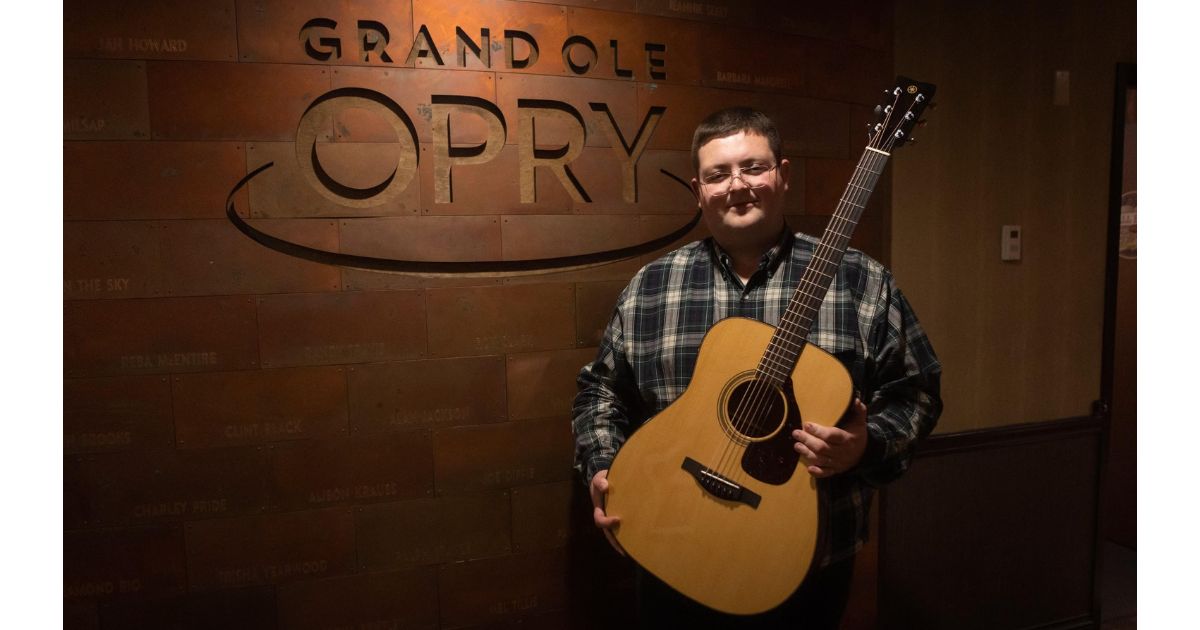
Jake Eddy is among a new generation of bluegrass musicians who are making a name for themselves on social media. Jake’s videos on Instagram and other platforms garner thousands of likes and even more views thanks to his technical skill, wit, and charisma. But Jake is not a mere internet sensation. His bluegrass roots run deep through his family in Parkersburg, West Virginia, where he grew up playing with local traditional music legends. While touring with the Becky Buller Band, he made his debut on the Grand Ole Opry stage, which led to Jake and his brother Carter accompanying bluegrass/jazz/klezmer mandolin legend Andy Statman on the Opry. Jake stays busy with a full teaching schedule in addition to his time on the road with Andy, his own band, or as a solo act. BGS caught up with Jake to learn more about his early interest in bluegrass, his experiences in music school, and his upcoming Yamaha custom guitar.

How did you get into playing music?

Eddy: My grandpa was a picker, and my mom played, and I had two cousins that fiddled on the Opry back in the ‘70s on my dad’s side. So it was just kind of the usual thing for bluegrass people from my region. I was just surrounded by pickers and wanted to be one.


View this post on Instagram


A post shared by Jake B. Eddy (@thejakeeddy)

When did you start on the guitar?

Banjo was really my very first when I was a kid. I started working on guitar simultaneously. Because of the technique, or maybe the lack of technique, being taught by old-timers around here, playing the banjo became uncomfortable and a little bit painful, and I could feel like it just wasn’t the best fit for me in the long term. I still do play banjo on some sessions and stuff like that, but as far as touring, playing banjo, it’s not in the cards for me. I prefer to play guitar anyway, so it’s okay.

When did you decide to make a career out of music? Or did it just sort of happen?

Yeah, it was pretty natural. I did the family band thing a little bit when I was real young. And then I got a call to go play banjo for Melvin Goins when I was in middle school. That experience was awesome, like going to bluegrass school. It was really crazy and had some great and terrible things both going on. But it was really cool because my parents let me go on the road under the condition that I would bring an adult with me at all times. They had played music so they were hip to what it can be like on the road. The deal ended up being that my grandpa would chaperone me on the road. So he came with me, and on the first show, Melvin had this blowout with the bass player, and the bass player quit. And I tell Melvin, like, “Hey, my grandpa is a bass player.” And he filled in on one show with us and got offered the gig. So we actually were both in the band for two years together. It’s a great memory, and it grew me up really fast, but it was cool.

That’s a great story. It’s hard to explain to other people what that experience is like as a kid. All the good and bad and how much you learn.

You can imagine. You know, those old-timers. It’s a different lifestyle.

How long did you play with Melvin?

I think it was two years. I think I got hired when I was 14. I think I was in 7th or 8th grade and probably quit when I was in the 10th grade or something like that.

Did you end up going to music school?

Yeah, I did music school for a little bit, and I was a horrible student. The usual, playing a bunch and giggling a bunch, but not going to class a whole lot, and just decided that it seems silly to me that a lot of the really great players I knew at music school were not doing very well at school. And a lot of the so-so players were passing with flying colors. So it just started to seem silly.

It’s definitely funny to go to school to theoretically get a job that you already have.

Yeah, man, that was the thing. They would get on me about attendance, and I would be like, I’m playing gigs. And I get it that you can’t bend the rules but I figured it wasn’t a fit for me.


View this post on Instagram


A post shared by Jake B. Eddy (@thejakeeddy)

Where were you going?

I was going to Ohio University in Athens. It’s this little, cool, artsy, open-minded kind of bubble in Ohio. And OU Music School, in my eyes, was a place for a lot of your local music educator-type people, but it also had this population of disgraced jazz players from CCM, which is a bigger school in Cincinnati. So there were some good players floating around, but just a weird scene.

Were you studying jazz then?

Technically the degree was Guitar Performance, maybe? Or guitar something. But yeah, I was in the jazz track, so all my ensembles and all my instructors were jazz players, and I had played that music a bit before. I learned things in music school, but if given the opportunity again, I don’t know if I would have gone that way.

You’re playing with Andy Statman now, right?

Yeah, a bunch. Man, it’s cool. I assume you’re hip to Andy’s playing because, like, all the mandolin nerds love him. He’s the coolest. I hired him to cut a couple of tracks that I wrote, and we ended up really hitting it off and we hung out some and decided to do a couple of one-off shows. And it just snowballed into doing some tours. Andy is Orthodox Jewish, so he doesn’t work weekends, so our touring is limited in some ways. But we’ve gotten to play quite a bit and we’re about to go out again in the spring, it’s looking like, and we got a record coming out on his label, so, yeah, some things happening there for sure.

What’s the material you play like?

Andy’s a huge Monroe buff, so there’s a lot of nights where we’re playing things like “Evening Prayer Blues” or “Tombstone Junction” and all these Monroe tunes, but they can quickly take a musical turn and he’s a pretty deep musician. It’s definitely traditional material, but it’s through the lens of a pretty free approach, I think is the way I’d put it.

What was your practice regiment growing up? How do you think you got so technically good?

I’m sure in a lot of ways my brain is totally broken and that’s why this has worked out for me. I think a lot of musicians are that way. I think if I was completely normal, I’d probably just like music in a hobbyist, healthy way. When I was a kid, I hesitate to put a number on it, but I’d say when I was really into soaking up everything, I was probably playing eight or 10 hours a day. That’s before school, after school. I would try to skip a class here and there to play, or I would skip lunch or I would fake sick at a gym and go get the guitar. I was always working an angle to be playing more. And then after school, playing until bedtime and playing gigs with the family band on the weekend.

It was an extreme focus on picking. I think I was lucky just being exposed to music a bunch. I worked really hard at it, but my parents made it seem cool and made it seem accessible. And I think that plays a pretty big part as well, right? There are still some days where I’ll go in my studio for eight or 10 hours with the metronome on full blast just going crazy in there. And then when it’s done, you feel totally drained. I feel like my brain is melted. That’s not how I tell my students to practice. I tell them to do something that’s manageable and that’s part of their normal routine. But I’m certainly not following that advice.


View this post on Instagram


A post shared by Jake B. Eddy (@thejakeeddy)

I’ve always felt like if somebody wants to get that good, they’re going to do that regardless of what tools they have. You can’t really convince someone to be that obsessed with it.

Yeah, man, I think so. It’s a blessing and a curse kind of thing. But I still feel a ton of amazement and wonder by the guitar and by music. And that’s the secret thing you can’t teach anyone. I still think music is so mesmerizing and just so damn cool.

You’ve been working with the Yamaha custom shop on a guitar. Can you tell me about that?

Yeah, I don’t have it in my possession yet, but I have a prototype that’s really good. I played some of their prototypes at the Fretboard Journal Summit in Chicago last year. I thought it was a good guitar and one of the better ones I played there that weekend, which was really surprising because Yamaha doesn’t historically have a huge reputation in the bluegrass world. So they called me and sent one and then they had me come down and play at IBMA. It’s just one of those luck things. Bumped into the right guys and it kind of snowballed. I went out with Jordan Tice and filmed some promo stuff for a new model and demoed the guitars. I think my custom’s going to be done any day now. They’re cool, man. And they’re not cheap guitars — these are nicer models. They’re not trying to be old-sounding guitars by any means. It’s modernly voiced and it’s cool.


View this post on Instagram


A post shared by Jake B. Eddy (@thejakeeddy)

When you say these guitars are “modernly voiced,” what did you mean by that?

In one sense it sounds new. It doesn’t sound particularly dry and woody like an old guitar might, but it’s really slick and it’s loud and it’s balanced. It’s great up the neck. It has a little more sustain than something like my old D-18. Talking about guitars is kind of like talking about wine tasting or something. It’s hard to explain.

Yeah. I always find the word choice very funny and completely arbitrary.

It means nothing but you can hear the differences when you play them. They’re really fast. When you play the note, it’s right there. It has good attack. It’s super-even and balanced. Those are the main kinds of things I like out of my D-18. But it’s a different voice. I think when the demos and stuff come out, it’ll make more sense when people can hear it.

What did you go for in your custom model? I feel like people are always really specific with custom instruments and I have no idea what I would ask for on something like that.

Yeah, I went with things that I knew were good. I think a lot of people, when they get a custom build, they have the tendency to try to be cutting-edge or to be a smarty-pants about it and be like, “Oh, I want this certain type of wood from this certain type of tree with the grain like this.” I just went for a mahogany guitar, spruce top. It’s really simple and lightweight. I think you can get carried away wanting a special guitar more than you want a good guitar. There’s no inlay on it. And I really pushed them for a double pick guard. I don’t know if they’re going to go for it because a lot of the aesthetic stuff is controlled by the guys in Japan. But fingers crossed. I’m excited to get it in my hands. If it’s anything like the prototypes, it’s going to be pretty sweet.


Photo Credit: Madison Thorn

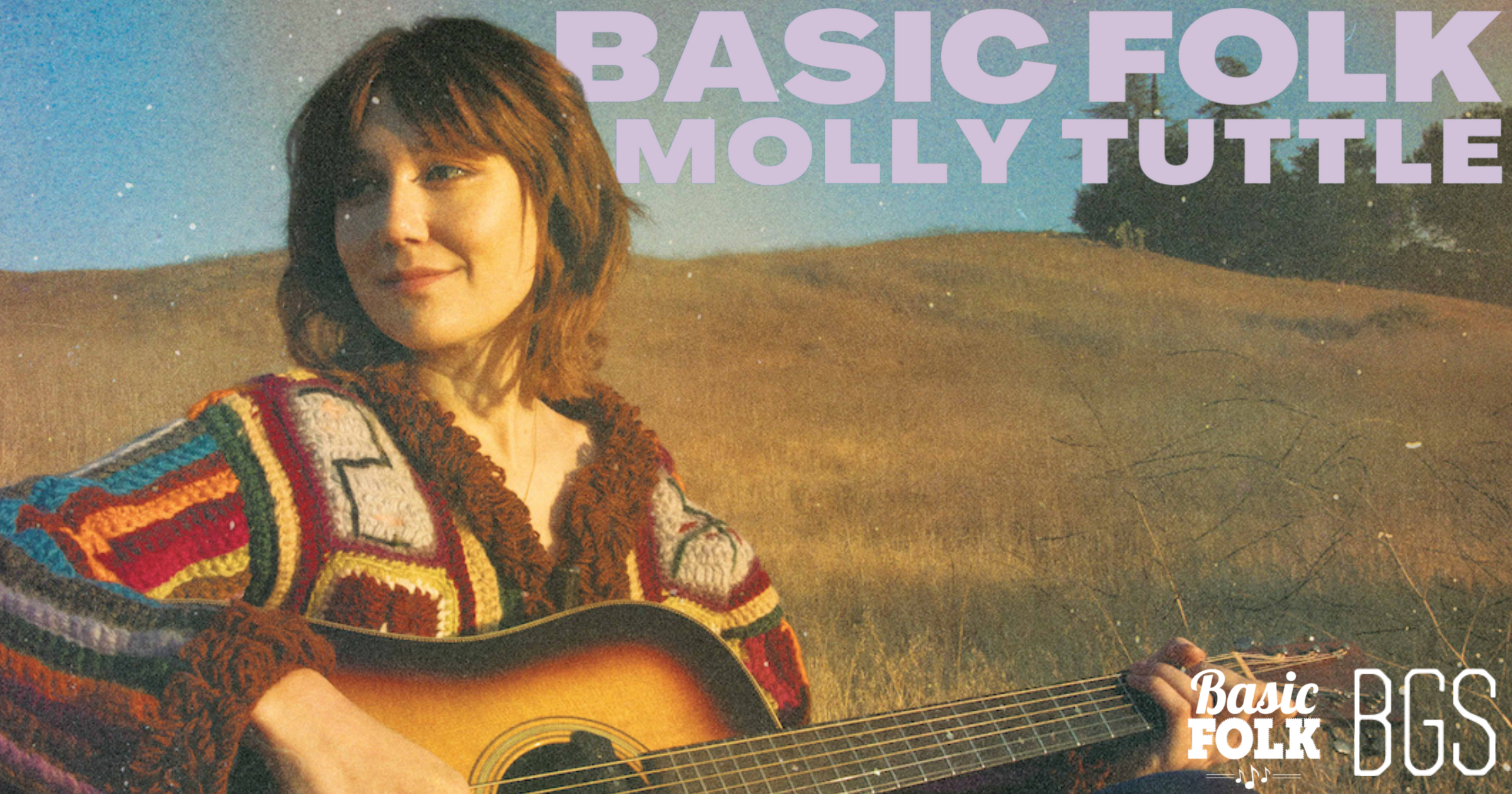
Basic Folk – Molly Tuttle

Growing up in Palo Alto, California, Molly Tuttle was surrounded by music. Her dad was a teacher at Gryphon Stringed Instruments, which is not-so-coincidentally where I got the pickups installed on my mini harp. Molly took to the guitar early and intensely, eventually earning a scholarship to the prestigious Berklee College of Music. But I think it was those early days growing up in California, attending bluegrass festivals with her family, basking in the glow of the jam, that set the tone for her warm and collaborative approach to playing music.

LISTEN: APPLE • SPOTIFY • STITCHERAMAZON • MP3

At Berklee, Molly formed a band called “The Goodbye Girls,” and cut her teeth touring in Scandinavia. Digging into The Goodbye Girls was a good launchpad for talking about what it means to be a female musician in Americana, as well as what happens when you explicitly call yourself an all-female group. As the first woman to win the IBMA Guitarist of the Year award, Molly has a unique perspective on this particular conundrum. It’s juicy.

I talked with Molly about her debut album, When You’re Ready, and her dazzling covers album …But I’d Rather Be With You before sifting through the many layers of her latest album, Crooked Tree. Crooked Tree features Molly’s brand-new band, Golden Highway. This new record is a study of bluegrass sensitively executed by one of the genre’s stars. Molly’s interpretations of bluegrass traditions like the murder ballad, shiny stacked vocal harmonies, and lightning fast guitar playing, are something to behold.


Photo Credit: Samantha Muljat

BGS Top 50 Moments: Del McCoury Plays Banjo With Sam Bush

One of the first-ever viral moments on BGS was a special behind-the-scenes Soundcheck video featuring Sam Bush and Del McCoury from their 2012 duo tour, “Sam and Del.” In it, the two legends prepare for the first night on the road at the Birchmere in Alexandria, Virginia, warming up both their instruments and their familial-like banter on stage:

“Friends, he got up out of the bunk this morning and his hair was perfect,” says Sam. “I don’t know how he does it.”

“Well I’ll tell you what, I laid it on the shelf overnight and just put it back on the next morning!” retorts Del, quick as a whip.

But somewhere around the 2:45 mark, magic happens. For the first time in nearly fifty years, Del prepared to play five-string banjo on stage. It was a moment that few had witnessed prior (even Sam), much less known he was capable of. Turns out, the Bluegrass Music Hall of Famer actually started his career in Bill Monroe’s band as the banjo player before being shuffled to guitar and backing vocals, his unmistakable high lonesome tone becoming his calling card.

“It’s just a love fest?” says Sam Bush of their time together on stage.

Same for us, Sam. Same for us.

Video credit: Natalie Fava of Wonderscope.

LISTEN: Rodes, “So Well”

Artist: Rodes
Hometown: Durham, North Carolina
Song: “So Well”
Album: All of My Friends
Release Date: October 22, 2021

In Their Words: “‘So Well’ was an idea that came to me on the drive home from work one night, that was then fleshed out on a guitar the next day. I was nearing the end of a tumultuous professional relationship and feeling frustrated and powerless. I think there are elements of it that can be interpreted as a breakup song, and in some ways it is. Ultimately, it’s a song about power imbalance and not having the right tools or access to bring someone to justice.

“We tried out a couple different arrangements for ‘So Well,’ but ultimately decided on one that centered on rhythmic acoustic guitar and a straightforward drum beat. I had the slide guitar line in my head, but I couldn’t quite translate it to the guitar while keeping it in tune. Ryan (Johnson, formerly of American Aquarium) stepped in and laid down a beautiful lead part that really anchors the whole song. I think he captured the mournful and resigned spirit of it perfectly.” — Rodes


Photo credit: Chris Frisina

LISTEN: Marcel Ardans, “Pencil Pusher”

Artist: Marcel Ardans
Hometown: Prescott, Arizona
Song: “Pencil Pusher”
Album: Traitor
Release Date: October 8, 2021

In Their Words: “Nearing the end of high school, my great-grandfather Stephen Carkeek filled out a survey for his senior yearbook. It simply asked for his hobby, ambition and fate. Stephen’s answer was wrought with truth. He responded, ‘harmonica, banjo tickler and pen pusher.’ The rest of his life was spent working behind a desk. Inspired by his inability to live out his ambitions, I wrote this fiddle tune after attending my grandfather’s funeral and finding Stephen’s yearbook in a now empty house.” — Marcel Ardans


Photo credit: Nick Pagan

From Death Metal to a Fishing Boat, How Billy Strings Finds Renewal (Part 2 of 2)

Billy Strings has had his foot on the gas since he was a teenager, bringing his prolific picking to hundreds of shows around the country each year and winning over a throng of devoted fans in the process. His bluegrass bona fides may be obvious from the outset — he’s quick to cite such greats as Bill Monroe, Doc Watson, and the Stanley Brothers as some of his first musical influences, and no honest spectator could deny his talent on the guitar and mandolin — but astute listeners will also note elements of rock, jam bands, and even heavy metal in his performances, especially as Strings bounds around the stage.

The Nashville-based, Michigan-raised musician’s latest album, Renewal, comes on the heels of an exceptional year: His Rounder Records debut, Home, won the 2020 Grammy award for Best Bluegrass Album. And even as much of the music industry was grounded from touring, his innovative approach to livestreams and digital performances moved the Pollstar Awards to dub him the Breakthrough Artist of the Pandemic. But that breakthrough was more than a decade in the making, and the forces that shaped Strings as a prodigious young picker are still at work today, pushing him creatively in the studio and on stage as well as calming him at home between gigs. Here, in the second half of our BGS Artist of the Month interview, Strings tells us about his upbringing, his latest influences, and the way he unwinds between shows.

Editor’s Note: Read the first part of our interview with Billy Strings.

BGS: Tell me about where you grew up. How do you see its impact on your work today?

Billy Strings: I was born in Lansing, Michigan on October 3, which is my grandpa’s birthday. My mother, who lived in Kentucky at the time, had gone up to Lansing to visit her dad on his birthday, and that’s when I decided to show up. [Laughs] So that’s why I was named Billy as well, because that was my grandpa’s name — I was his little birthday gift.

We lived in Morehead, Kentucky, for a couple of years before coming back home to Michigan, where I really grew up. I grew up in a little town called Muir, population 600. My dad is an incredible guitar player, so he taught me how to play. He was always showing me music when I was a little kid: Doc Watson, Bill Monroe, Lester Flatt, Earl Scruggs, Jimmy Martin, Larry Sparks, and stuff like that — a lot of good bluegrass. We’d hang out at this little campground and play music next to the river by the fire. That was my childhood, man, just sitting there picking by the river.

It was real good until I got to be a teenager and started to turn sour. I had to run off and figure out a new life. I took what my dad taught me when I was a little kid, and all of a sudden I realized that bluegrass is actually pretty sweet and people love this shit — that maybe I could do something with this; that it’s not just something that I do with my dad that I should be halfway embarrassed about.

Who are the artists that you feel really inspired by right now? And are those different than the ones that you feel like you were listening to a lot when you were a kid?

For the most part, it’s still Doc Watson — he’s the main nerve — and Bill Monroe, and Lester Flatt and Earl Scruggs, Ralph Stanley and Carter Stanley, the Stanley Brothers. But I listen to a lot of different shit. I listen to death metal, and lately, I’ve been getting into this music from Mali that Béla Fleck was showing me — some really amazing stuff. And Memphis trap: I’ve been listening to Young Dolph a bunch. There’s just an energy to it. I grew up around crack houses. I’ve seen that shit that they’re rapping about. It just gets me hyped: He’s talking about coming out of nothing and becoming a self-made millionaire. I listen to it before the shows sometimes to get myself hyped up.

You played in rock bands in high school — groups with music that might not sound a lot like what you’re doing today. Is there any lesson or anything from that time that you feel like you still turn to or still apply to the music that you make?

Yeah, performing live. I never learned how to perform in a bluegrass band. I learned how to perform in a metal band. I learned music by playing bluegrass when I was a little kid, but by the time I was doing it on stage it was in a metal band — we were headbanging and running all over the place — and I still can’t help but get into the music like that. I can’t just stand there and play.

You have been in Nashville now for a little while. Has anything that has surprised you about it, good or bad?

I really love Nashville. A lot of your favorite musicians, that’s where they live. You’ll see your favorite singer in the grocery store. I get calls for sessions, and it’s from people who I grew up listening to and who I’ve idolized for my whole life. Like Béla Fleck’s record just came out, and I played a handful of songs on that. I was so honored to play with David Grisman, and Chris Thile, Sam Bush, Stuart Duncan, and Edgar Meyer — all these cats that are just… well, I don’t feel like I’m really in that league. It really was an honor. And there’ve been several things like that! I went from listening to these cats on a record to being on a first-name basis with them… texting and being friends. It’s a trip.

What’s one thing that’s brought you joy recently?

Fishing. I love bass fishing. I grew up doing that with my dad as well, but I didn’t do it for a long time because I was so busy. When the pandemic hit, I started fishing again. I go out there in rain or shine. I just like it for the solitude. Last night, I was in front of thousands of people, and to come home and go out on my boat and be alone in nature — to check out the blue herons and the fucking ospreys, eagles, fish, everything doing its thing — it’s brought me a lot of joy, brought me down to Earth. I put my boat in at 5 o’clock in the morning when the sun is just coming up. I like being out there alone at that time of day. It’s just good for my mind.

And yet it’s so clear from your performances that interacting with listeners gives you a certain joy, too. What are the forms of feedback that you value most from your audience when you’re playing live?

Sometimes when we finish a solo, everybody starts cheering real loud, the whole place gets real loud. That feels good. But sometimes I look out there and I look around and I see individual people and I literally play to them. Last night, we played in Montana and I was looking around and there was this one dude just standing there with his beer just completely still. I didn’t even know if he was enjoying it or not. So I just walked up to the front of the stage and stared directly at him and I just started playing right to him. [Laughs] So he started laughing, and then he took a drink of his beer and started bobbing his head a little bit. I think he just started getting into it by the end of the show.

I’ll look for things like that. The audience is really in control of how I’m feeling up there. Sometimes, when they’re just on fire, I can’t help but have a good time. They feed us the energy, and we give it back to them. It’s reciprocal.


Photo credit: Jesse Faatz

Billy Strings Draws a Line in the Sand with Sobriety, Not Bluegrass (Part 1 of 2)

From carving out a name for himself on the road as a teenager to winning a Grammy for Best Bluegrass Album (2019’s standout Home), the prodigious 29-year-old guitar player Billy Strings has cultivated a devoted following and collected an impressive list of accomplishments along the way. His latest Rounder Records release, Renewal, capitalizes on the confidence and artistic growth those experiences have delivered, with experimental new instrumentation, contemplative lyricism, and trademark picking. Produced by Jonathan Wilson (Roger Waters, Father John Misty), the sixteen-track opus offers a glimpse at an artist who is continuously rediscovering himself.

“I’m going through a part in my life where I’m looking through the windshield instead of in the rearview,” he says. “I think of a new day, the morning light, a spider molting, or a snake shedding its skin: It’s a renewal.” In the first of our two part BGS Artist of the Month interview, we caught up with Billy Strings about those new beginnings — on the stage, in the studio, and in his day-to-day life.

BGS: Renewal is mostly acoustic, but it pulls from a lot of different sources of inspiration — and not all of those are necessarily bluegrass. Is there any particular moment on the record where you noticed the influence of a genre that may be unexpected to some listeners?

Billy Strings: “Hide and Seek” is a song that maybe draws more from my influence of playing in metal bands — trying to write a song that’s more like a metal song, but with acoustic instruments… using odd time signatures, diminished chords, and avoiding the major scale. I grew up listening to a lot of death metal, and a lot of that music is just not verse-chorus-bridge, verse-chorus-outro. The songs are like 10 different parts. They’re hyper-composed, and that stuff’s sort of neat.

Was there anything that you did in the studio that took you out of your comfort zone?

I mean, I wouldn’t say it was uncomfortable, but it was different playing synthesizers and different instruments hands-on. I think I gained a little confidence when I won that Grammy — the next time I went into the studio, I was the one calling the shots: “Hey, do you have a triangle? Let’s all come together and do a singalong.” I was the one coming up with the creative ideas and feeling confident in myself to do that. On “Heartbeat of America,” I’m playing some old synthesizer, playing with the pitch wheel and stuff. That shit’s fun.

Hellbender” stands out as a reasonably upbeat, fun song when you’re listening to it, but the lyrics are… kind of dark. What was going on in your head when you were writing that?

That song’s about a real bad headache and a real bad hangover — being lost in the demons of alcohol, not knowing where to stop, saying, “Fuck it, I’m going to drink until the night’s over.” I haven’t drank in over five years: I haven’t had a sip of alcohol because I had a real bad headache one day. So it’s not really about me, but I wouldn’t really call it a fictional song either. I have been there and done that: woken up like that. It’s about a guy who can’t freakin’ stop.

“Know It All” on the new album talks about learning from your mistakes. Has there been any kind of a difficult learning experience that you feel shaped you as an artist?

Well, maybe that headache I was talking about.

Oh yeah?

One day we had this awesome gig. A lot of people showed up, and we sold a bunch of merch, and I thought we were fucking rock stars. I had been up all night and drinking beer and liquor and a bunch of shit. We got to the bar after and I was all, “Old Fashioneds! Get one for everybody, on me!” I was raring and tearing. But the next day, we barely made it to our gig, because I was puking every 10 minutes. We made it there in time to set up our stuff and play — we had to set up our gear in front of the audience. This was at a time where my career was really starting to take off, and I saw that as an opportunity to draw a line in the sand.

How so?

I think it’s about being conscious of my surroundings, being aware of the vibe that people are giving, and also being aware of the vibe that I’m putting off. I don’t want to be a drunk asshole when some fan comes up to me and says, “Hey man I really enjoyed the show.” I want to be there. I want to be able to say, “Thank you, man. Thank you for coming. I fucking appreciate it.” I just came off four gigs back-to-back. We played Spokane, Washington; Portland, Oregon; Seattle; and then somewhere in Montana. And right now I’m on my way to Salt Lake City. I can’t do that if I’m drinking. It’s all I can do to take care of myself. There’s no time for that shit.

You won Breakthrough Artist of the Pandemic from Pollstar —probably the first time anybody was awarded something like that. What motivated you to try new things when you lost your outlet on stage? Was there anything that struck you as a special moment even remotely connecting with your fans?

I’ve been doing this since I was 19 and I went on my first tour across the country. It’s all I’ve really known, just keeping this going. I’ve been “striking while the iron’s hot” for 10 years. [Laughs] So when all of a sudden I don’t have anything to do, it’s like, “Well shit. We need to keep doing something to engage the fans. We can’t just stop.” We started doing little streams at my house, and then that moved to doing a streaming tour around venues and stuff, and then eventually the whole Capitol Theater run, which was six nights, including this whole experiment where we tried to interact with our fans through telekinesis. That was really special. Even though there wasn’t anybody there, it felt like we were really connected with the audience.

You are out there day in and day out, and I’ve also seen you talk candidly about having anxiety and nerves before going on stage. Is there anything in particular that you do to manage that?

I mean, it’s been a journey. I hit the road when I was 19, playing 200 gigs a year, and for a while there, I was invincible, untouchable. I thought I could drive the van, sell the merch, book the hotels, settle up at the end of the night, write the songs, perform the shows, do everything. It was all on my shoulders. But I hit a wall where all of a sudden, instead of being confident, strong, and untouchable, I was fragile and scared of the world. Anxiety really fucked me up. I started having these crippling panic attacks where my whole body would go into convulsions.

I’m not trying to be a tough guy. I’m trying to be an honest guy. It’s uncomfortable for me to pretend like I’m feeling any way that I’m not, so if I’m angry, sad, anxious, mad? You’re going to know it because I don’t want to hide that shit. I’ve been going to therapy ever since 2019 and it’s helped me a bunch. I had a lot of trauma from my childhood that I had to sort out so I could keep moving forward and stop looking back. That’s what Renewal is all about.

Editor’s Note: Read part two of our Artist of the Month interview here.


Photo credit: Jesse Faatz

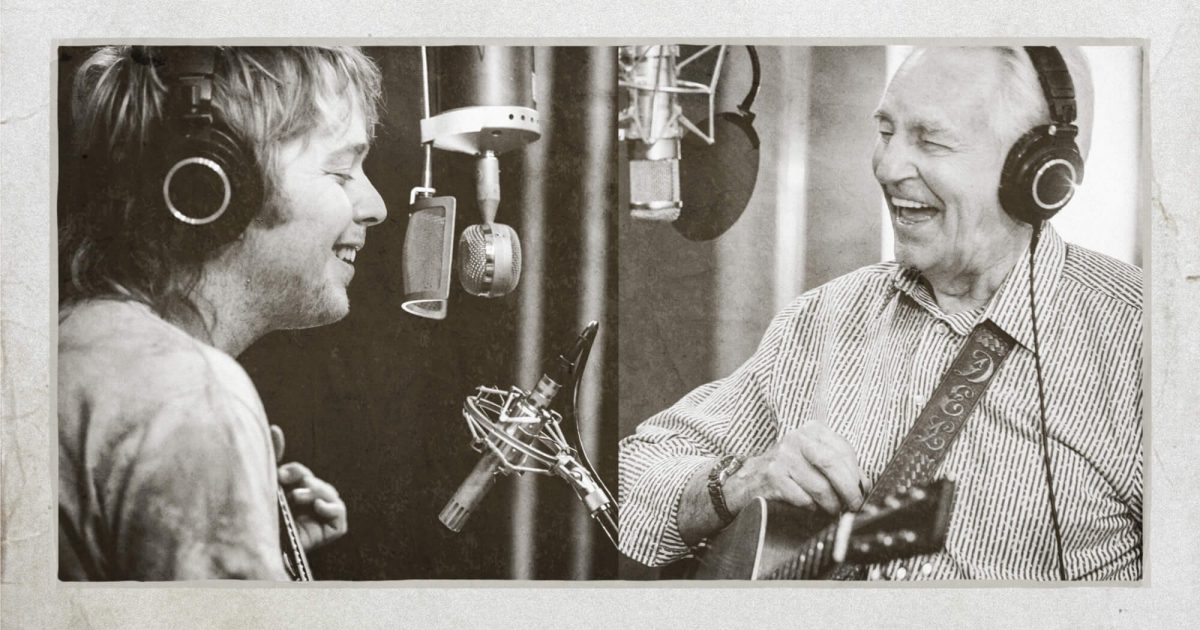
Billy Strings and Del McCoury Team Up for “Midnight on the Stormy Deep”

Simple and strong, this live performance of “Midnight on the Stormy Deep” encapsulates so much of what we love about bluegrass. A style-defining voice and top-shelf front man, Del McCoury sings tenor and strums his signature rhythm guitar on the tune as Billy Strings leads from behind a mandolin — a lesser-known instrument for the fiery flatpicker whose name and music have become synonymous with modern bluegrass.

A timeless bluegrass standard, McCoury and Strings’ fresh take on “Midnight on the Stormy Deep” is reverent and quietly respectful of the music’s traditions. The breaks and fills are baked into the sound of bluegrass while the forward, bright vocal tones of the two friends could be the textbook definition of traditional harmonies. Some might say that McCoury and Strings could hardly be any more different as artists, but their mutual respect and appreciation is evident in this figurative, bluegrass passing of the baton. Don’t miss their in-studio performance of “Midnight on the Stormy Deep.”


Photo courtesy of Rounder Records

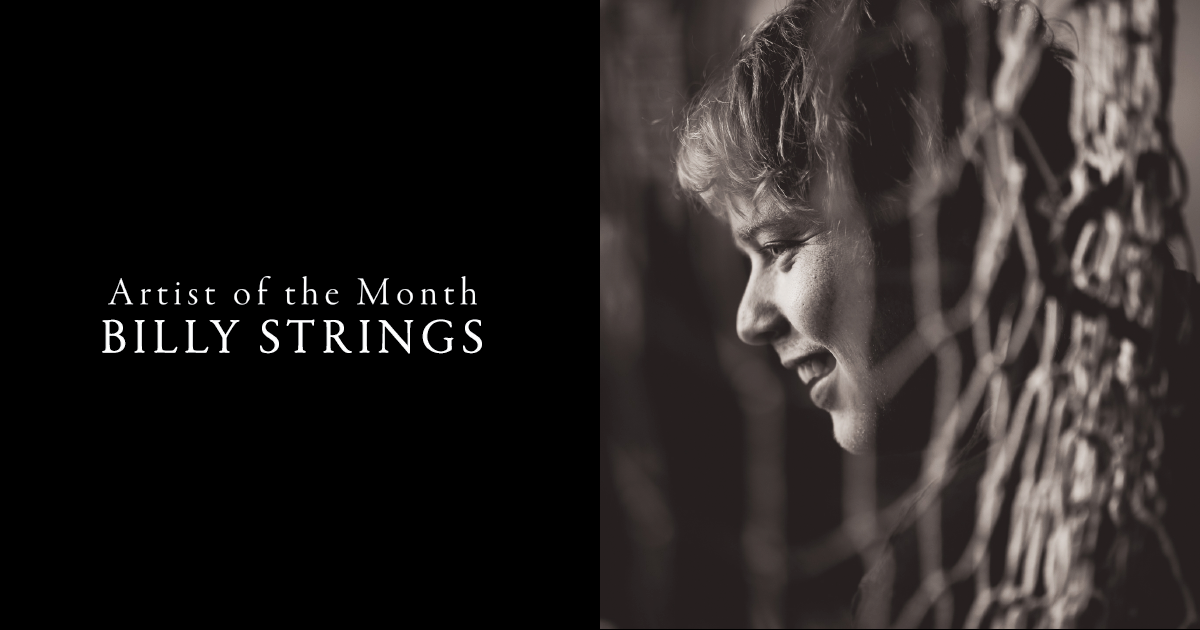
Artist of the Month: Billy Strings

Billy Strings takes things up a notch for Renewal, a long-awaited collection of original songs produced by Jonathan Wilson. But is it bluegrass? Or is it rock ‘n’ roll? Perhaps more on the psychedelic side? Truly there’s no right (or wrong) answer to these questions. As Strings himself puts it, “I’ve learned, you’ve just got to let the song do its thing. So that’s what I try to do — write songs and let them come out however they do.”

Billy Strings is no stranger to the festival circuit, bluegrass or otherwise. His career trajectory over the last few years has netted him international acclaim, a handful of IBMA Awards — including Entertainer of the Year at this year’s IBMA Awards show — and even a Grammy for his 2019 album, Home. A Michigan native who now lives in Nashville, Strings says, “I called my last record Home, and then a few months later that’s where we all got stuck. Right now, we’re heading back into opening back up, and doing some more touring with real concerts and real shows. Hopefully we can renew everything. I think it’s an interesting word. It reminds me of how every morning is a renewed day and another chance.”

With Renewal, Strings seizes upon the opportunity to surprise his listeners and to expand his own musical horizons. By winning the Grammy, he discovered a newfound confidence to consider every creative path that presented itself. Because he’s bringing in his touring bandmates Billy Failing (banjo, vocals, piano), Royal Masat (bass, vocals), and Jarrod Walker (mandolin, vocals, guitar), as well as guests John Mailander (violin), Spencer Cullum Jr. (pedal steel) and Grant Millikem (synth), Renewal is far more than just a singer-songwriter record, even if it exposes his own mindset more than any of his material to date.

“I listen to this album now and it’s emotional,” he says. “I could sit there and tweak it forever, but there’s a point where it’s like building a house of cards. Yeah, I could add an extra tower on top, but it might collapse. I’ve always doubted myself, and I still do, but this album makes me think, ‘Hey, you’re doing all right, kid. You just need to keep going.’”

Read our exclusive two-part interview with Billy Strings here, and enjoy our BGS Essentials playlist below.


Photo credit: Jesse Faatz

LISTEN: Alisa Amador, “Burnt and Broken”

Artist: Alisa Amador
Hometown: Boston, Massachusetts
Song: “Burnt and Broken”
Album: Narratives EP
Release Date: September 17, 2021

In Their Words: “This song is about rape culture and toxic masculinity: ‘What a world we live in with its endless charms / Blinded lies keep winning over open arms / Sticks and stones and systems built to cause you harm.’ However, this song can be used as a lens with which to examine myriad systems of oppression. Violence stems from fear, and fear grows from a lack of understanding. ‘The bruise of words unspoken’ illustrates the pain caused by an absence of conversation around these violences. Systematic violence is designed to trick you and distract you (‘a ruse, a plume of smoke’) from the reality: ‘the truth is burnt and broken.’

“The arrangement of this song is intentionally spare, like the exposed framework of a house after a fire. It is a fitting metaphor for this song: a hard look at the violence of misogyny, as Kaiti Jones, Hayley Sabella, and I stand among the wreckage, singing with broken hearts, and hot anger pulsing through us. We had to record our vocals apart from one another, but every time I hear this song, I feel stronger and broken open at the same time. Their voices are so poignant on this song.” — Alisa Amador


Photo credit: Jacquelyn Marie