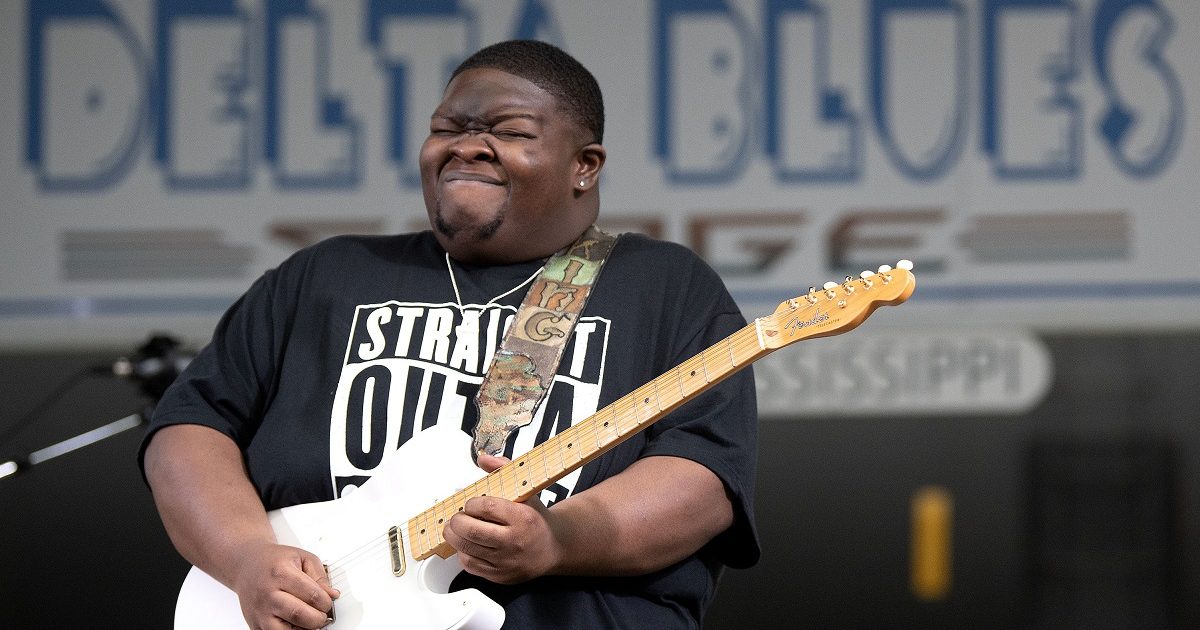
Artist:Christone “Kingfish” Ingram Hometown: Clarksdale, Mississippi Song: “662” Release Date: May 11, 2021 Label: Alligator Records
In Their Words: “‘662’ is an ode to my roots, a nod to the area where I was born and raised. This is a track that encompasses how a small corner of the Earth influenced my view of life and music. This song also points to the growth I have had since my debut album. As much as I have been fortunate to get ‘Outside of This Town’ [his breakout single], I do want people to know that the ‘662’ will always be a major part of who I am.” — Christone “Kingfish” Ingram
There’s a particular knowledge that is born only from a road-worn trek, like literature’s hero’s journey, where a protagonist adventures in pursuit of higher knowledge or power, someone like Captain Ahab or Tom Joad.
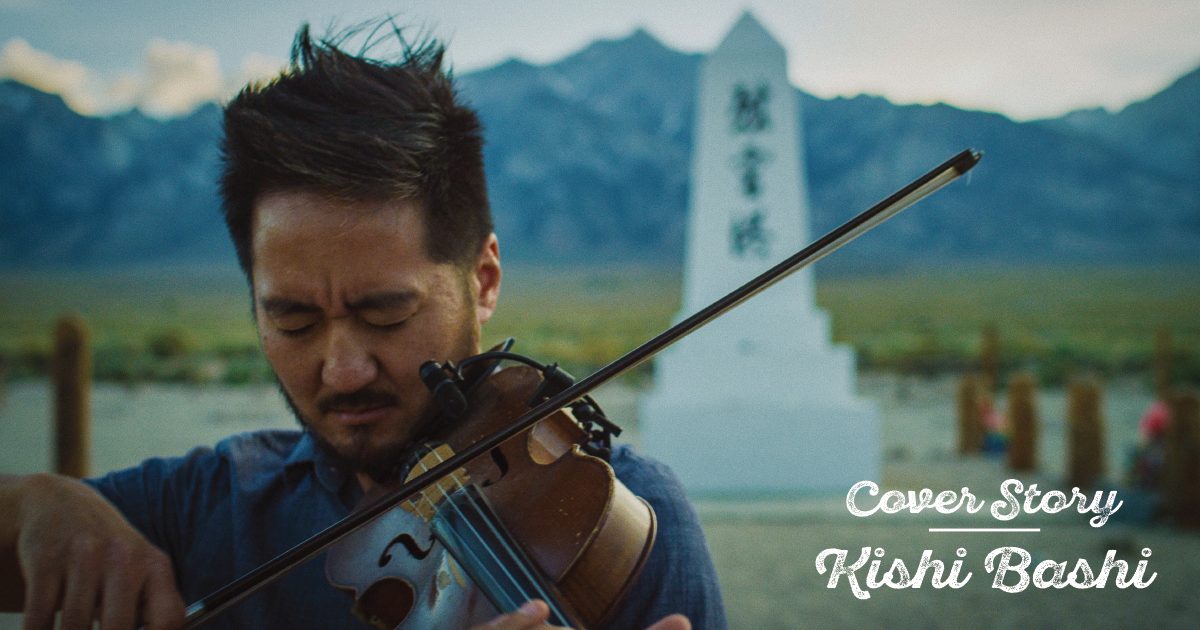
Kaoru Ishibashi, the musician known as Kishi Bashi, packed a camper during the pandemic and left his home of Athens, Georgia, wandering northbound through the American frontier that’s woven throughout the Western narrative. With newfound time and his daughter in tow, this journey was a personal exploration of Ishibashi’s own identity through the sprawling American terrain.
His trip took him to places like Heart Mountain in Wyoming, a World War II Japanese internment camp — a location he has visited many times during research for his upcoming documentary, Omoiyari: A Songfilm by Kishi Bashi, where he visits similar sites throughout the United States searching for the history that still persists today. The journey also carried him through the Ozarks and the Dakotas, and to small Montana towns like Emigrant — population 271 — just north of Yellowstone, and ultimately across the great expanse of the States to Oregon.
BGS chatted with Kishi Bashi about how this trip is intrinsically tied to his new EP, Emigrant.
BGS: What was the concept behind creating Emigrant? What drew you to creating the theme around the EP?
Kishi Bashi: I’ve been spending a lot of time in Montana the last several years — especially this year, since I had so much time. I took the camper out, took my daughter out, and we did this huge trip cross-country all the way to Oregon; we spread it out over a period of months. I got to enjoy nature in a way that I hadn’t in the past, to kind of imagine what it was like back then. A lot of rural places are pretty much intact; it pretty much is what it was like 100, 200 years ago. In Montana, it’s really cold, so there’s a reason not many people live there — but that’s changing. Emigrant is a town in Montana north of Yellowstone where a friend of mine had a cabin. I borrowed it from her family, and I stayed there for a few days and fleshed out a lot of the EP.
How is the title tied to the name of the town?
To be an emigrant is to leave somewhere in search of a better place to live. I found myself really searching my own identity, my own place in this country — as a minority or even as a musician in these COVID times — trying to find what makes me happy or what makes me a person. The symbolism was really great. [Emigrant] was a frontier town for a lot of people. It was literally the frontier of this violent place, both naturally from the weather, and it was a really cutthroat environment. I was also watching a lot of Deadwood before that — it’s up around there. It may not be historically accurate, but the vibe is definitely accurate. It was that frontier, settler, colonialism type thing. It was a really harsh place to live.
How did you plan your route? What were some of the lessons taken from the road trip?
With my daughter, we started in Athens, so we went up north, and there was a lot of driving. It was a good history lesson for her because we went to the Black Hills in eastern Wyoming — actually, that’s where Deadwood takes place — and how it was Sioux territory. We went to Mount Rushmore, and it was pretty unimpressive. There’s a Crazy Horse Memorial they’re building, which looks interesting and amazing. I was getting her to understand that this is a very complicated, nuanced, but violent history that existed in these lands.
I had the realization that if you live in a city — a town that’s been modernized over and over and over — you don’t feel what it was like back then. That paved road you stand on was a dirt road at one point. Before that, it was just a trail. You don’t really get to see that unless you go out to Montana or some rural area. We basically went straight up through Tennessee, Arkansas, South Dakota, and then cut over through Wyoming.
It sounds like this road trip was an American history lesson. Did you purposefully choose locations around Indigenous or Asian American histories?
Heart Mountain [in Wyoming] — where the internment camp was — I had been there many times. And my daughter as well; she has been there a couple times in the summer, because we’re filming there a lot for this documentary I’m doing. You can’t avoid Native American spaces in this place. It was interesting to see that a lot of the reservations were closed to outside travelers because their health infrastructure was so shoddy, and that people around them were bringing in COVID irresponsibly. That was heartbreaking to see; they were really desperate to keep it out.
Tell me about “Town of Pray.” Was it inspired by the actual town of Pray, Montana?
More by the name; the town of Pray is such a stoic name. I was reading this book — do you know who Jeremiah Johnson is? He’s this folk hero [also called John “Liver-Eating” Johnson], I think a real person, pioneer, Montana mountain man. I don’t know if you know the legend, but it’s such a violent place to exist. He had a Flathead [now known as the Confederated Salish and Kootenai tribes] wife, and she was murdered by the Crows. Then he went on a murderous rampage against the Crows, and then they respected him, and he joined forces against a different tribe. We have a very narrow narrative of what history is. When you see this violent history, it just makes me grateful that I don’t have to, like, kill other people to thrive, which may have been the case if you lived around there back then. You’re always watching your back. You’re always susceptible to trauma.
What are some lessons you hope listeners take away from this EP? Or lessons you learned through making it?
If people have the opportunity to go out and visit nature, get outside of your comfort zone and explore this country. And even more social justice issues, if you wander into any of these small towns, like in Montana — Bozeman used to be like 20 percent Chinese. Now it’s like zero. There’s a reason a lot of towns are white. After they built the railroad, they drove everyone out of town. Wonder why this country is not being shared by everyone?
You included two covers on your EP, [Dolly Parton’s “Early Morning Breeze” and Regina Spektor’s “Laughing With”]. Why were those chosen, and how do they tie into the overall theme?
One of the reasons was I definitely wanted to showcase female songwriters, because I looked at the Rolling Stone top 100 songwriters, and there were like two women in there — like Madonna and Dolly Parton. And it’s embarrassing. So I made an effort to do that. Of course, I love Dolly Parton just like everybody else. I always liked that song, and I thought it fit the vibe. The Regina Spektor song — I used to play for her; I was in her band — I always thought she was underrated, especially amongst musicians and as a songwriter. Lyrically, she’s brilliant, and she’s a huge inspiration for me. For the next generation of people who may not know her music, I wanted to point out that I have the deepest respect for her songwriting by covering her song.
Why lean into the folk or bluegrass genre for this EP?
It’s something I always wanted to do. This is also a disclaimer: I’m not a bluegrass musician. I don’t have much of a bluegrass situation amongst me, but I’m bluegrass adjacent. I went to Berklee College of Music and I studied with Matt Glaser, who’s an Americana teacher. But I played jazz violin. Gypsy swing, that’s my thing. I always loved bluegrass music, but I never felt, culturally, it was something I could attach myself to. I had this whole stigma, like imposter syndrome, of not being from a rural place. I’m a city dweller. It took me a while to own up to a fiddle tune.
As I became more comfortable with my own identity of being an American musician — an Asian American musician — I was like, “What if I just want to play something folky?” It was something I always wanted to do. So there are a lot of fiddle elements, especially in “Town of Pray.” If you think about “What is American music?” There’s jazz, there’s blues. Fiddle tunes come from a lot of Irish and Scottish roots in the mountains. American music is this huge conflagration of all these different cultures melding into each other. I think that’s the beauty.
And where’s my place in that? I’m an Asian guy playing a European instrument — violin — playing jazz, which is from the South with African American contributions. I always felt like I didn’t have a real identity as an American, so that’s probably why I felt so comfortable singing bluesy stuff, or putting a fiddle tune in there — just because I want to.
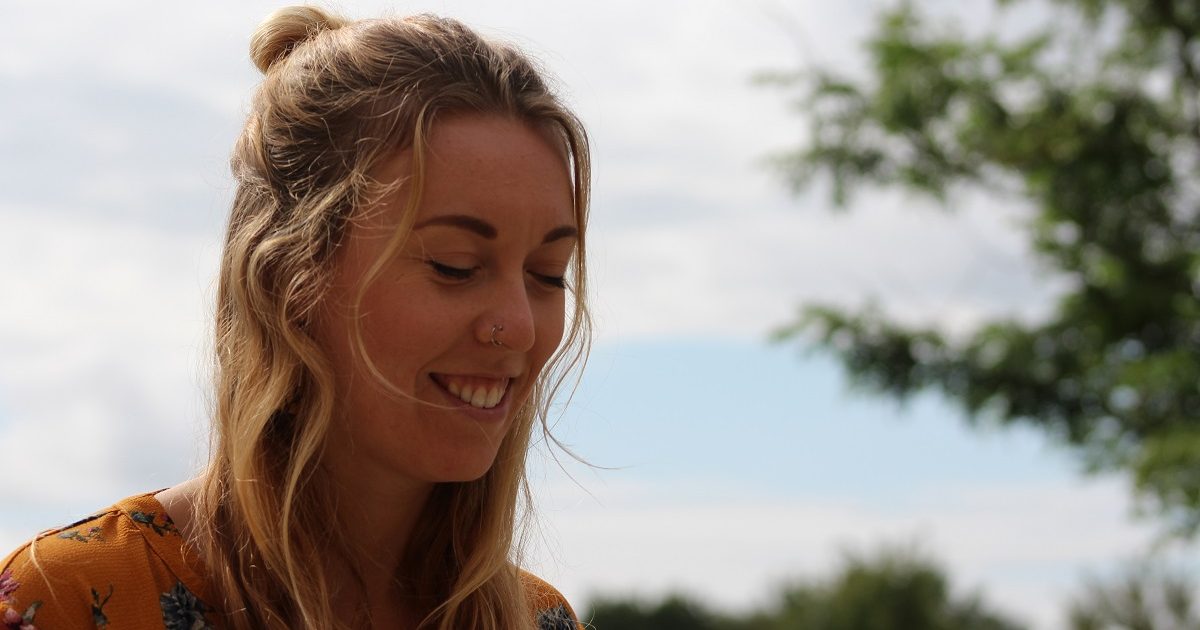
Artist:Reid Zoé Hometown: Toronto, Canada Song: “When I Go” Album:Shed My Skin Release Date: May 14, 2021
In Their Words: “On the surface, ‘When I Go’ is a song about dying — but it’s really all of the questions that come with being a human on this earth. It’s the acceptance that we don’t know everything, and that that’s okay. We are part of everything. It’s about the joy that can come with the realization that ‘nothing really matters. It was written during a time of really potent growth, and I hope it’s as healing for the listener as it has been for me.” — Reid Zoé
Welcome to the BGS Radio Hour! Since 2017, this weekly radio show and podcast has been a recap of all the great music, new and old, featured on the digital pages of BGS. This week, we bring you new music from our Artist of the Month, Allison Russell, an exclusive live performance by Madison Cunningham from BGS’ Whiskey Sour Happy Hour, and much more. Remember to check back every week for a new episode of the BGS Radio Hour.
Coming out of COVID isolation with fingers crossed and masks on, many artists are releasing new and exciting music. We’re particularly thrilled about Sunny War’s latest release, Simple Syrup. We caught up with the LA-based guitarist and singer for an edition of 5+5 and talked everything — from Elizabeth Cotten’s guitar playing to eating black-eyed peas with Nina Simone.
Singer-songwriter Ted Russell Kamp originally wrote “Lightning Strikes Twice” in the style of Billy Joe Shaver, as a honky tonk number. But, for his upcoming album Solitaire, he decided to rework the track, bluegrass style.
A student of singer-songwriter, multimedia artist, and scholar No-No Boy (AKA Julian Saporiti) once called his song “Gimme Chills” a “fucked up love letter to the Philippines.” No-No Boy agreed. The track is part history lesson and part tribute.
Yola’s roots-pop outing “Diamond Studded Shoes” is a song that explores the divides created to distract us from those few who are in charge of the majority of the world’s wealth. It calls on all of us to unite and turn our focus to those with a stranglehold on humanity.
BGS recently caught up with Kentucky’s own Dale Ann Bradley, discussing her recent album, Things She Couldn’t Get Over — her first release since departing group Sister Sadie. Each of the songs on the project deal with hard times, and finding the courage that gets us through. “Yellow Creek,” a song about the forced removal of Native Americans from their land, finds Bradley giving us a reminder to walk with empathy.
“Where I Belong” by singer-songwriter Josephine Johnson was inspired by characters from British Navy novels set during the Napoleonic wars. Love and high seas adventure, to be sure!
Inspired by their song “Gold,” The Wandering Hearts created a Mixtape for BGS, entitled The Golden Tonic, it’s a selection of songs that have helped them through tough situations, inspired them, and take them back to specific moments in time. They hope that the Golden Tonic will work its magic on the listener after this heavy and hard year.
In a recent 5+5, multi-instrumentalist and singer-songwriter Eli West discusses the influence of Paul Brady and Irish folk music, understated chaos in visual art, and drunk BBQ with Sting and Mark Knopfler.
Our Artist of the Month Allison Russell has already made a mark on the modern roots scene through various powerhouse groups, like Birds of Chicago and supergroup Our Native Daughters. Now, she’s stepping out with her first solo record, Outside Child. Stick around all month long for exclusive content from Russell.
Bhi Bhiman reimagines iconic rock song “Magic Carpet Ride” in the style of old country blues players – artists like Mississippi John Hurt, Lightnin’ Hopkins, and others who’ve played a huge role in Bhiman’s evolution as a guitarist.
Parker Millsap, one of our recent guests on The Show On The Road, is a gifted singer-songwriter who grew up in a Pentecostal church and creates a fiery gospel backdrop for his tender (then window-rattling) rock ‘n’ roll voice.
Last spring, on our debut episode of Whiskey Sour Happy Hour, Los Angeles-based, Grammy-nominated guitarist and singer-songwriter Madison Cunningham kicked off the entire series with an acoustic rendition of “L.A. (Looking Alive).”
From bluegrass mad scientist Stash Wyslouch, formerly of progressive string band the Deadly Gentlemen, here’s a traditional number turned upside down, taking a Bill Monroe tune and contrasting it with polytonal backup. Wyslouch told BGS that while he gravitates towards gospel standards in the bluegrass world, his own style drifts to the absurd and unexpected. Like a bluegrass Frank Zappa!
Singer-songwriter and pianist Bob Malone wrote “The River Gives” after the devastating 2016 flooding in West Virginia, but he never had a chance to produce the track like he wanted to – until now!
Marty Stuart’s new project, Songs I Sing In The Dark, is a collection of twenty songs that he curated that helped him through the tough times that we all saw in 2020. Stuart says this Willie Nelson song has followed him around since he first heard it over twenty years ago. “I think of it as an old friend, same as Willie. It’s a friend for the ages, and an excellent song to sing in the dark.
Photos: (L to R) Madison Cunningham by Claire Marie Vogel; Yola by Joseph Ross Smith; Allison Russell by Marc Baptiste
Artist:Sam Robbins Hometown: Portsmouth, New Hampshire, currently Nashville, Tennessee Song: “Raining Sideways” Album:Finally Feeling Young Release Date: May 14, 2021
In Their Words: “‘Raining Sideways’ is one of the songs that means the most to me on the album, and it’s probably the most requested song I get live. It all just sort of came out at once, and it unlocked a new depth in my writing. I had never tried to write a song about my dad, or my relationships to the men in my life. ‘Raining Sideways’ is weird, doesn’t have a real chorus or hook, but that’s what I love about it. It’s just a stream of consciousness song that is one of the most real things I’ve ever written.” — Sam Robbins
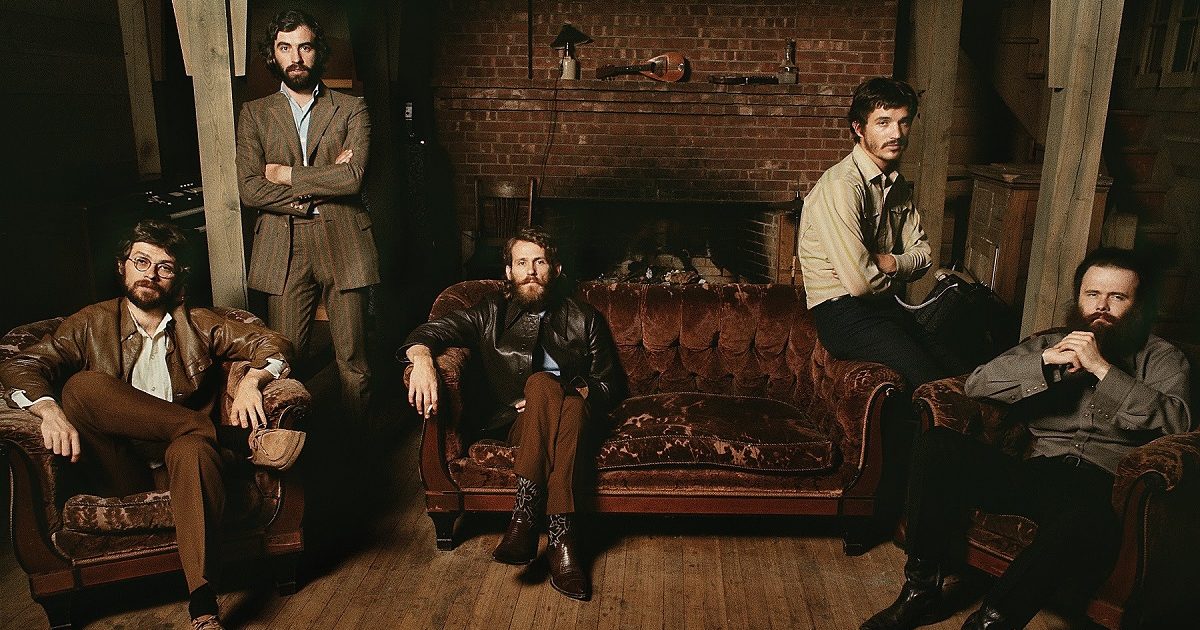
You may have heard The Band’s third full-length album, Stage Fright, but you’ve never heard it like this.
Released in August 1970, Stage Fright features two of the group’s biggest hits, its title track and “The Shape I’m In.” A year later, The Band embarked on their first European tour in five years after a regrettable outing backing Bob Dylan, during which folk fans booed the singer’s electric aspirations. Not sure what to expect, their 1971 European tour proved to be one of The Band’s most successful, as crowds all over the continent displayed frenzied adoration at their shows.
So to celebrate not only a classic album, but also the memory of a landmark tour, The Band has unveiled a 50th anniversary edition of Stage Fright. Its original multi-track masters are presented by Bob Clearmountain in a new stereo mix; guided by The Band’s Robbie Robertson, it’s also reissued in the originally planned song order. The set includes alternate versions of “Strawberry Wine” and “Sleeping,” plus seven unearthed cuts, compiled as Calgary Hotel Recordings, 1970, which capture a late night hotel jam session between Robertson, Rick Danko, and Richard Manuel.
The expanded album also offers a wealth of previously unheard recordings from that tour. Presented on a second disc (a simple continuation on the digital release), Live at the Royal Albert Hall, June 1971, bears witness to what was truly a peak performance for a group loved and revered by so many. The 20-song set, originally recorded to a four-track tape machine, has been remixed and remastered for a clearer experience of the electrifying performance, providing fans an opportunity to be transported right back to London, 1971. Hear The Band perform classics from their first three records as well as covers of Bob Dylan and Stevie Wonder with the deluxe 50th anniversary edition of Stage Fright.
It’s been a year and a month since I got back from my last tour in pre-pandemic times (as we now refer to it). I was winding through the Okanagan Valley in British Columbia, Canada, performing a run of seven shows. The month of March in the Okanagan usually has summer-like weather and the temperatures on this trip delivered and then some. Even though I was working, the mountains, valleys, and blue skies reflected in lakes made it feel like a vacation during those long drives with music humming along on the car stereo.
Working full-time as a touring musician is a really busy lifestyle. If you’re not writing new material you’re getting ready to release songs, you’re promoting songs, planning a tour, going on tour — the cycle is endless. As a result, some of the only time I have for my mind to rest somewhat idle is on the long drives between gigs. I see it as a bit of a gift. The music accompanying my travels helps me get a little lost for just a little while. Sometimes I arrive at the next place wondering “how the heck did I get here?” Here are some of the songs that I’ve enjoyed getting lost in. — Jeffery Straker
Jason Isbell – “Traveling Alone”
Often when I’m out on the road I’m traveling alone, or with a side-musician who is asleep in the passenger seat. Isbell sings about being a traveler missing someone he loves, and about reflections on some of the life decisions he’s made. “So high the street girls wouldn’t take my pay, they said come see me on a better day, she just danced away.” It’s perfect fodder for a freed up mind to wander within.
Joni Mitchell – “A Case of You”
Joni released this in 1971. When I first heard it I just loved that within the first few seconds of the song she sang “if you want me I’ll be in the bar”. Who writes like that? She does. I’ve never figured out the meaning of “I could drink a case of you and I would still be on my feet”. It’s perfectly vague. Does it mean “I could never get enough of you”, or does it mean “I’ll never be drunk on your love because it’s not enough”?
John Prine – “Egg & Daughter Nite, Lincoln Nebraska, 1967 (Crazy Bone)”
This is such a visual romp for me. Prine sings about how farmers would bring their daughters with them to town to sell eggs and the gals would head to the local roller rink. It’s so specific, but he delivers this great universal ponderance through chronicling this quirky event: “When you got hell to pay, put the truth on layaway, and blame it on that ol’ crazy bone.”
George Jones – “He Stopped Loving Her Today”
My grandma and grandpa loved this song and so many of the songs like this from the same era of country. It’s such a “story-song.” It’s so sad and the steel guitar with the string section accompanying it is such a perfect pairing. That ascending string line at the start of the chorus really heightens the emotions too; I hear it and wonder who thought of that line? George? The producer? George breaks into a spoken-word second verse and brings even more intimacy — you literally lean in closer to the speaker. Those feelings for the one he loves never go away until the day he dies. It just grabs you and doesn’t let go.
Brandi Carlile – “The Joke”
Stratospheric vocals, brooding piano, and a riveting story. It’s all here. Carlile is passing along some advice to young children who don’t quite fit in. They’re probably from the LGBTQ community, but certainly from any marginalized group. “Let ’em laugh while they can. Let ’em spin, let ’em scatter in the wind. I have been to the movies, I’ve seen how it ends, and the joke’s on them.” Riveting stuff and you want to hit repeat.
Lori McKenna – “The Lot Behind St. Mary’s”
In the wake of my mom passing away just over two years ago, I discovered Lori through her song, “A Mother Never Rests.” It’s perfect. And through that song I found this one that really struck me; it’s from the same album. She very fluidly goes back and forth between “younger days” and the present, both longing for the past and accepting the present.
Jeffery Straker – “Play That Song Again”
This is the latest single I released from my upcoming album; it’s a waltz. This song, like the album, is lyrically reflective. I figured that the waltz-time would add to that feeling — I find waltzes take me back in time. Lyrically the singer looks back at life’s ups and downs, but ultimately lands in a place of contentment with where he’s landed. I think that’s all we want to eventually be able to do — be comfortable with the path we’ve taken.
Leon Russell – “It Takes a Lot to Laugh, It Takes a Train to Cry”
This is a Dylan tune that Leon Russell recorded in 1971. Dylan recorded it in ’65. It’s the vibe that I love here, though I don’t actually know what it’s about. It’s got all sorts of sexual allusions in its swagger. Russell approaches it slower than Dylan and for me this tempo suits it perfectly.
Harry Nilsson – “Everybody’s Talkin’”
I moved to Belfast, Northern Ireland, for part of my university studies and lived in a house with some great singers. At late-night song and drink sessions this song was a favorite for two harmony-singing gals, Carol and Loraine. Every time I hear this I’m transported back to that old Georgian row house and I’m standing in the kitchen listening to them.
Dolly Parton – “My Tennessee Mountain Home”
There’s such beauty in the simplicity that Dolly conjures up with her words. In the very first verse you see her “Watch the kids a’ playin’ with June bugs on a string.” It’s lovely, and now I want to do that. It’s a different time and Dolly paints an idyllic picture of her roots. When I think back to my home, thankfully I have good memories of it too — and she sort of takes me there even though she grew up in a two-room log cabin and I did not. But that’s Dolly — taking something specific and making it wonderfully universal.
Gordon Lightfoot – “If You Could Read my Mind”
I wasn’t a huge Gordon Lightfoot fan in my teens and 20s, but once I hit my 30s I became rabidly into his poetry. This song is quite simply about the failure of a marriage but the language he uses to describe it just takes me somewhere else when I listen. All his talk of “ghosts from wishing wells,” “a paperback novel, the kind the drugstore sells,” and “a movie star getting burned in a three way script.” It just grabs me and doesn’t let go.
Paul Simon – “American Tune”
I once had the chance to sing this in a variety show in a big theatre in Toronto. I had to memorize the lyrics and chords for the performance so I got to know it really well. The chord progressions are just stunning and the melody sails along on top of it like the sun dancing across water. “I don’t know a dream that’s not been shattered or driven to its knees, but it’s all right, it’s all right, for we’ve lived so well so long.”
Madison Violet – “No Fool for Trying”
I’ve always loved these two gals from the first time I saw them in concert. Their chemistry is really magical through both their musicianship and their vocal harmonies. The arrangement on this song is really simple and the chug-chug-chug rhythm seems to pull me down the highway on long drives. It opens with the lyric: “There’s trouble on this road…” and you’re left curious as to what’s happened. It pulls you in like a good book.
David Francey – “Blue Sorrow and Then Some”
It’s a longing song and the title says it all. I really like the 6/8 feel. The tempo he’s chosen keeps it kind of light and almost cheerful, but with such a sad sentiment in the story being told. “…but sometimes I wonder, do you think of me?” His vocal performance helps you feel the fragility of it all.
Artist:Grace Pettis Hometown: Lives in Austin, Texas; grew up splitting time between Alabama/Georgia Song: “Paper Boat” (featuring Mary Bragg) Album:Working Woman Release Date: May 7, 2021 Label: MPress Records
In Their Words: “I literally dreamed up ‘Paper Boat.’ In my dream, I was in the audience at a Shawnee Kilgore show, and Shawnee was playing this strange, perfect gem of a song called ‘Once I Was a Paper Boat.’ The ceiling was decorated with paper boats on strings, and as Dream Me was soaking it all in, she had that desperate and frustrated feeling you get when you hear a song that is so good that you absolutely can’t stand it. I remember thinking in the dream that ‘Once I Was a Paper Boat’ perfectly explained something deep and true inside of me. It’s a coming of age song. It’s about girlhood. It’s about trying to fit in and learning the act. And the way it feels when we lose our innocence. Being a girl feels like being strong and fragile at the same time.
“In the studio, my producer Mary Bragg made the song into one of the only ballads on the album. We brought in our friend Kira Small to add some piano, which gave it elegance. But what really makes it work is Mary’s backup vocals. Her harmonies are sort of breathy and hummy, and singsongy. They take up just the right amount of sonic space, without overpowering the lead vocal, so that the song still has that vulnerable, raw thing to complement the lyric.” — Grace Pettis
There’s some serious sleight of hand going on with Tony Joe White’s new album, Smoke From the Chimney. Well, sleight of sound, really.
Listening, you can easily picture the sessions: the musicians playing together with White, taking cues from him as they spin out a tableau of characters and scenes that flow as if they were chapters in a book. It’s the latest volume in a legacy of witty, gritty songs stretching back more than 50 years to “Polk Salad Annie,” “Willie and Laura Mae Jones,” and “Rainy Night in Georgia.”
And leading it all with a sly grin is the Swamp Fox himself, as he’s known, with his still-strong, speak-sing baritone voice echoing his origins in the tiny town of Goodwill, Louisiana — a barely-there dot on the map a bit east of Shreveport.
Only one thing.
These sessions were done in the summer of 2019, a year after White died of a heart attack at age 75. Producer Dan Auerbach built the record around basic vocal-and-guitar demos that White had made over a period of years before he died. The illusion, though, is by design.
“I approached it very much the same way I would have any other album we do here,” Auerbach says from his Easy Eye Sound studio in Nashville. “I hired a band and we played live. And instead of Tony being in the room, he was in the headphones with us. You are hearing performances.”
He pauses.
“I’ve had people in the room that were less ‘there’ than Tony Joe was!” he says, laughing heartily.
The results are vibrant, a lovingly made set bringing out the full richness of White’s signature storytelling, steeped in his singular brew of soul, blues, rock and backwoods boogie. It’s the kind of stuff that over the decades led to his songs being recorded by dozens, from Elvis Presley to Waylon Jennings to Dusty Springfield to Tina Turner, but which had something extra when sung by White himself.
It’s not the only bit of deception going on in the album. There’s the matter of some of the most moving, affecting songs in the set. Take “Over You,” a heartwarming-turned-heart-wrenching ballad of love and loss. White sings touchingly of a relationship that started as friends at 7 years old, later growing into romance and a wonderful life together — until the woman, his soulmate, became ill and died.
Only one thing. Again.
“That’s not true,” says Jody White, the son of Tony Joe and, if you would have it from the song, the woman who died.
“No,” he says in a separate interview from his Nashville home. “My mom is still alive.” In fact, Tony Joe White and Leann White were married in 1964, raised three kids and were together until the day he died. “And they didn’t meet when they were 7,” Jody says. “There’s nothing true about ‘Over You.’”
It’s as big a whopper as the record-size widemouth bass that mercilessly taunts its would-be conqueror in “Bubba Jones,” another highlight of the new album. But even Jody, who at 46 has spent his whole life surrounded by his dad’s work and became his manager 20 years ago, could get sucked in to the depth of the song.
“That’s the great thing about Tony,” he says. “He’d write these songs and you’re like, ‘Oh man. Poor guy!’ Like he must have been going through it now.”
This is nothing new. There’s a lot of did-it-really-happen running though his vast, vaunted catalog. “There was a ‘Rainy Night in Georgia,’” Jody says, noting at least some truth behind the song his dad wrote, which was a big hit for soul singer Brook Benton in 1970. “But a lot of his best songs are just fictional tales. Sometimes you can’t differentiate. ‘Polk Salad Annie,’ is that a real girl or not? And ‘Over You’ is kind of the same thing.”
Smoke from the Chimney, in both the songs and sound, builds on a resurgence that started in the early 2000s when, after laying low some, White had resumed touring and recording, finding enthusiastic receptions among both older fans and new ones. Auerbach, now 41, was among the latter. “I was a little bit of a latecomer to his music,” Auerbach says. “But as soon as I heard his original version of ‘Rainy Night in Georgia,’ I was hooked.”
Having established himself both as half of the Black Keys and as an in-demand producer (his extensive credits include Yola, Valerie June, Ray LaMontagne, Lana Del Rey, the Gibson Brothers, and dozens more), Auerbach started pushing to produce a Tony Joe album years ago.
“Dan and I met probably 15 years ago,” Jody says. “And he said, ‘For the last 10 years I’ve been wanting to produce a Tony Joe White record.’ And it just didn’t happen. He only co-wrote with a few people, like Jamey Johnson. They would come out to the farm and sit by the fire with him. That sort of thing. He wasn’t going to go to a studio and collaborate with someone. It just wasn’t what he did.”
Even after Auerbach moved from Ohio to Nashville a while back, it still didn’t work out. “We did get a chance to meet, though,” Auerbach says. “We were on tour with the Black Keys and we were both on a festival in Australia. Hung out backstage. I played his Strat. We hung out and talked. Pretty awesome, actually.”
When Tony Joe White died, Jody’s job changed, he says, “from ‘What are we going to do next?’ to ‘What did he leave behind?’” What he found was daunting. “I discovered that there was probably more unreleased music than there was released music,” he says.
Sorting through the archives, Jody found hundreds of songs put down on tape over decades of time — experiments with electronic keyboards from the 1980s among them. Some will surprise even the most devoted fans. But he was drawn to several reels from a few years before his father’s death.
“There was really no rhyme or reason why he recorded all those songs in that period of time,” he says. “Some are old, some were new. It’s all over the place. But it was weird how they all lined up.”
In July 2019, he texted Auerbach the demo of the song “Smoke From the Chimney.” Auerbach loved it and asked for more. “I sent him probably 11 songs and he said, ‘They’re all perfect.’ My dad knew what he was doing when he recorded those songs together.”
The timing was perfect, too. Auerbach had an unexpected break in his normally crammed schedule, and about four weeks later he told Jody he had most of the songs finished. “I’ve never seen anything happen so fast,” Jody says.
Auerbach says it was simply a natural fit for him and his label, Easy Eye Sound, which is releasing the album. “He embodies everything I’ve tried to do, and everything Easy Eye is,” he says. “It’s steeped in what he was about — diversity and the love of music, of all kinds. He so obviously loved so much music. Diversity and soul. That’s what he had. Boy. Some people just got it, you know?”
It’s a mission for him.
“I’m figuring out the big part of the reason you find people who didn’t know about Tony Joe,” Auerbach says. “Tony Joe had no category, which made it hard for labels to market him. Calling him swamp-rock doesn’t do him justice. Country doesn’t do him justice. Calling him blues doesn’t do him justice. Which is maybe why we need to tell his story a little bit louder.”
That’s played out through the wide emotional and musical range of the nine songs he picked. From the wistful title track to the swamp-voodoo chooglin’ of “Boot Money” and the campfire-side “Scary Stories” to the border ballad “Del Rio You’re Making Me Cry.” The achingly evocative “Someone Is Crying” is arguably the album’s sentimental peak, with strings swelling over the story of a young girl walking into the sunset after seeing her village burn.
With the band he assembled, Auerbach threaded that diversity of material together, consciously connecting, or transcending, genres. There are slide guitars (some by him, some by Marcus King) and steel (Paul Franklin) — a little touch of George Harrison here (the title song), Duane Allman and Dickie Betts there (“Listen to Your Song”). There’s Ray Jacildo’s Hammond B3 organ, a foundation for a wealth of Southern traditions touched on throughout.
On that ensemble he hangs such touches as the background vocals by Mireya Ramos and Shae Fiol of the all-women mariachi ensemble Flor de Toloache and evocative fiddles by Ramos and veteran Stuart Duncan on “Del Rio You’re Making Me Cry;” the strings on “Someone Is Crying” are the work of Matt Combs. Ultimately, it’s all there to illustrate the stories White tells.
Speaking of… there’s the closing “Billy,” a farewell to a life of drifting and to a lifelong friend “just like a brother to me.”
That has to be real.
“Didn’t happen,” Jody says of the song that’s the oldest on the album, having been recorded by Waylon Jennings back in the 1970s. “My mom and I were laughing about that. She came over and listened and she is like, ‘I don’t know how he makes this stuff up.’ She and I were speculating over who Billy could possibly be. And he was never homeless, walking the streets. None of it happened. None of it ever happened.”
Photo credit: Jim Marshall (black and white); Leann White (color)
Artist:Amy Helm Hometown: Woodstock, New York Song: “Sweet Mama” Album:What the Flood Leaves Behind Release Date: June 18, 2021 Label: Renew Records/BMG
In Their Words: “‘Sweet Mama’ was written by the wonderful Steve Salett and features killer harp by the one and only Phil Cook. This track is a rock and roll cut made for you, with love, in Woodstock, New York!” — Amy Helm
Photo credit: Ebru Yildiz
This website uses cookies to improve your experience. We'll assume you're ok with this, but you can opt-out if you wish.AcceptRejectRead More
Privacy & Cookies Policy
Privacy Overview
This website uses cookies to improve your experience while you navigate through the website. Out of these, the cookies that are categorized as necessary are stored on your browser as they are essential for the working of basic functionalities of the website. We also use third-party cookies that help us analyze and understand how you use this website. These cookies will be stored in your browser only with your consent. You also have the option to opt-out of these cookies. But opting out of some of these cookies may affect your browsing experience.
Necessary cookies are absolutely essential for the website to function properly. This category only includes cookies that ensures basic functionalities and security features of the website. These cookies do not store any personal information.
Any cookies that may not be particularly necessary for the website to function and is used specifically to collect user personal data via analytics, ads, other embedded contents are termed as non-necessary cookies. It is mandatory to procure user consent prior to running these cookies on your website.