These Members of the Roots Community Embraced Innovation Amid a Pandemic

The roots music community, like the rest of the world, faced an uncertain future as the pandemic essentially wrecked everybody’s plans in 2020. However, a number of musicians and industry leaders figured out a way to navigate the uncharted waters with grace and bravery. The Bluegrass Situation invited five members of the roots community to share their thoughts on how they harnessed their creativity and embraced innovation over the last 12 months.

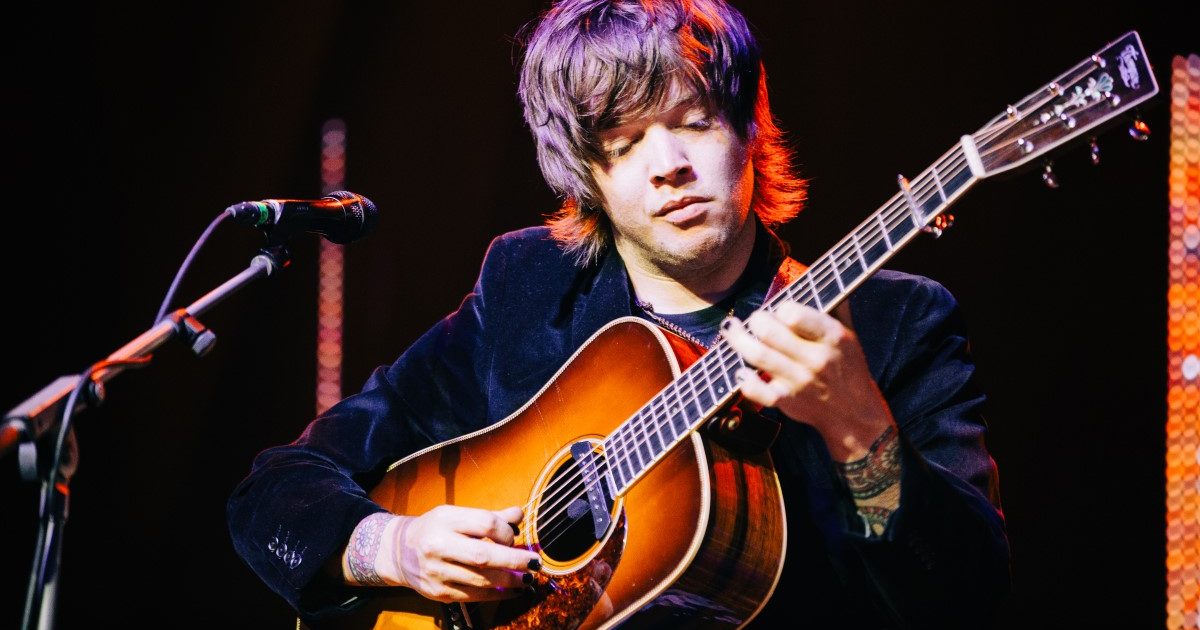
Billy Strings, Winner of “Breakthrough Artist of the Pandemic” at the 2021 Pollstar Awards:

It was almost kind of a welcomed break, you know? I was tired, man. We had toured our asses off and I was like, I don’t know if I can do this anymore. Then all of a sudden, this stuff happened and we got a big break. And now I realize how lucky I was. Now there’s nothing I’d like more than to be stuck in some hotel room somewhere after a gig with some random folks at 3 o’clock in the morning, just hanging out and having a good-ass time.

For one thing I wanted to get the quality [of livestreaming] better than what I could do at my house. It started with just me on my couch playing, and the next thing you know we’re doing that tour where we’re playing the Exit/In and gigs around Nashville. It was kind of cool and eerie and weird. I’m just thinking, I know there are people out there watching us, but they’re not here and I can’t see them. When you’re used to playing for crowds, it’s like, man, this sucks! [Laughs]

We did debut a lot of songs at the Capitol Theater when we did our gigs there in February. We played like 16 brand new songs when we were over there. … People will go on fan pages and say, “Holy shit, did you hear that song?!” I don’t want to pay attention too much to that, because it just feels like you’re playing for the internet, but then it is good to get a good little gauge on what songs they’re digging.


Mercy Bell, Singer-Songwriter and Cast Member of the New Documentary, The Sound of Us:

I think a fallow season is really important for everyone, or we’re producing from an empty well. Not of creativity, I think creativity is always there, but contrary to popular opinion of the tortured and manic creator, even artists need to sleep and drink eight glasses of water a day. Like all of us, I spent 2020 trying to survive. I had a nervous breakdown. I lost my job. I had a heartbreak. I turned to art, pop culture, movement, exercise, my cats, meditation, to keep me going. …

There was a period of time I didn’t know if I’d make it. I was in a pretty dark place before I got some new treatment for my mental health. I was obsessively walking 14 miles a day, really scared, really not wanting to be alive, in quarantine far from my family, unemployment wasn’t coming through. Scheduling livestreams gave me something to look forward to. Playing music to my supporters, all over the world, it made me feel less alone. I don’t know how any performance will ever beat that. We really needed each other. Singing to people gave me a reason to keep going in the most literal sense. And my supporters also kept me fed! All those $5 tips kept groceries in my fridge. And then Netflix and podcasts, Cardi B’s “WAP,” and my cat kind of saved me. It gave me something to look forward to. That’s the power of art and pop culture, and pets. It cuts through to places we can’t get to. It got me through each day, one day at a time.

Without giving too much away, The Sound of Us spotlights a variety of musicians and the incredible impact their work (or lack thereof because of COVID) has. Some of those highlighted include folks working to bring music to underprivileged neighborhoods, into prisons and hospitals, working on researching lost works of art from the Holocaust and other genocides, and of course, how musicians were affected by institutional racism and the pandemic. When I saw the screening, I cried all my eye makeup off. It’s an incredibly emotional and profound documentary. I am so proud to have been part of it.


Robert Meitus, Co-Founder and VP of Industry Development of Mandolin.com:

Roots music fans tend to have a strong connection with artists and a desire to connect frequently and deeply. Additionally, the nature of roots music itself is built around intimacy, vulnerability and honesty, so that desire for connection really runs both ways. Mandolin’s vision has always been to build a space in the digital world where the noise of the industry fades away; one where a musician and their fans can connect not only through a concert stream, but through other unique experiences like interactive/online VIP events, soundchecks and workshops with artists.

Specifically, Mandolin started with a name that is itself an acoustic instrument and a workforce full of people who had worked a lot with roots music, including among others: myself, representing as an attorney artists such as John Prine, I’m With Her, and Keb’ Mo’; Jason Wilber, longtime guitarist for John Prine; and Larry Murray, formerly of the Luck Reunion. The name and connections naturally led us to develop the roots music connections in our first year, although Mandolin’s technology and services are certainly applicable to all music genres.

I have been a bit surprised at the almost uniformly positive views about integrating streaming into the live festival experience. It helps that cameras have been in place on and around stages for many years already, largely for the IMAG projections on the sides of stages, so musicians are used to this. COVID introduced livestreaming technology and practices to the music world at a much faster rate than would have been the case otherwise, and we have all learned how technology can connect us around the world and accommodate those that may be challenged to attend an event in person. The result is that, coming out of the pandemic, I believe bluegrass and other festivals will be more interested in the hybrid livestream for all sorts of reasons. This may be a bold claim, but I would expect that almost every festival — roots or otherwise — will have a virtual experience component. Think about it: with a phone in hand, every single fan is a digital fan, whether they are streaming at home or on the festival grounds.


Jackie Venson, R&B/Soul Artist and Guitarist from Austin, Texas:

I was pretty well-versed in livestreaming pre-pandemic. I had a series called Jackie Venson Live on Thursdays, which was an effort to help sell tickets to my album release at the Paramount in Austin, Texas, in 2019. I saw the potential in it when it first came out in 2014. I attempted to livestream a concert from Berlin, Germany, but the technology just wasn’t there yet so it was a really bumpy experience. I remember feeling really grateful that the technology existed when the pandemic was ramping up so that I could keep performing once there was no option for in-person shows. There was literally nothing else to do, and when there’s nothing to do I lose my mind and default to the first thing I can think of, which in this case was filling the performance void with livestream performances.

I used my Austin City Limits TV performance as a platform for Black Lives Matter because that episode will be rerun and it’s important to me that this message doesn’t die. The response overall was positive; of course there were some naysayers but that’s why we need to keep repeating the message. During the pandemic I received overwhelming support and positive feedback from the Austin music community. Everyone was on the same page and it seems as though things are changing for the better. I will absolutely continue to stream from home when possible, and I plan to livestream some of my shows from the road for those who want or need to stay home. I think livestreaming will be a staple in the world of live music. It makes live shows accessible to those who are unable to come out due to economic, accessibility, or other issues. (Read the BGS interview.)


Aengus Finnan, Executive Director of Folk Alliance International:

Everything was upside down last year, but the greatest challenge was envisioning and delivering an event we had never done, with half the staff, all new software, no roadmap, and little sense of whether anyone would want to gather online 11 months into a Zoomed-out pandemic. Being able to offer a sliding scale registration fee, including free, was absolutely necessary given how hard hit our community was, and despite that approach, we exceeded our modest revenue goals to cover the costs of the new online systems we used. The most rewarding element was definitely having new artists and industry join us for the first time, and to see a sharp increase in BIPOC and marginalized community representation across all panels. That happened because we were able to extend invitations to participate in more accessible ways. We were also thrilled to finally provide honorariums to all panelists this year, which we are committed to continuing.

Personally, it’s a joy to see FAI play a part in curating, commissioning, and compensating artists for meaningful new content and partnerships, which is the central aim of our Artist In Residence program — playfully renamed Artists in (Their) Residences this year for the pandemic. There were certainly some artists we approached who simply don’t do co-writes, some for whom the online process felt odd, and others who, while flattered, were simply too busy with other projects or recordings. But for the most part, there was instant interest, especially when they knew that one of their peers had selected or recommended them. The cross-border collaboration as part of a bigger collective project, reflecting on a traumatic year, with the added element of raising awareness for The Village Fund to support the community rang a lot of “count me in” bells.

We are already full steam ahead with a hybrid event this year, and we’re not looking back. Our focus will naturally be on ensuring that the in-person event is top-notch and delivers the experience we all know and love, but there are thousands of people who can’t attend each year, for myriad reasons, and providing online content, as well as live-streamed and interactive content enables more community engagement, participation, and inclusion, and builds bridges and connections that folks will use as an entry point leading to the growth of our genre and industry. While daunting, we’re excited about the opportunity to innovate what we do and offer, and who we can reach.


Photo of Billy Strings by Emma Delevante
Turning 30, eTown Plans b’Earthday Show and Enters Colorado Music Hall of Fame

The long-running radio series eTown is famous for its finales, but upon reaching its 30th year, the focus is shifting to an upcoming all-star virtual b’Earthday concert on April 22 and the program’s deserving induction into the Colorado Music Hall of Fame. Of course there’s also an eagerness from everybody involved — staff, artists, and audience alike — to get back to staging shows at the beloved eTown Hall, a repurposed church that stands as a centerpiece of Boulder’s cultural community.

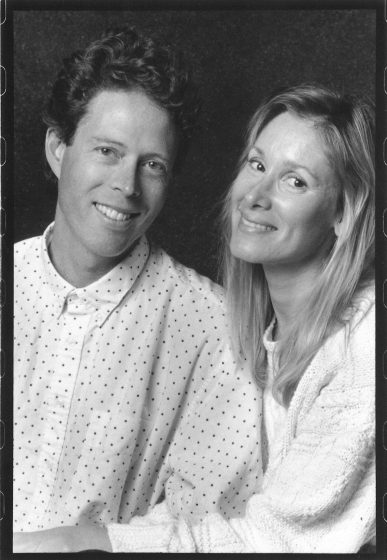
Community is key to Nick and Helen Forster, the founders of eTown. Their marriage has proved to be as sustainable as the environmental causes they support, and by never wavering from musical integrity, they have created a destination for musicians and music fans of every stripe. Helen carried a love of theater to eTown following her work with the early years of Telluride Bluegrass Festival. Nick Forster, who found acclaim in the band Hot Rize just before eTown launched, can recall browsing through microfilm in the library to do research for his guest interviews. Now, thanks to the internet, the whole world can feel part of the eTown tribe.

Calling in from Boulder, the Forsters filled in BGS about their ongoing creative venture, the common thread that all eTown artists share, and the warm family feelings behind the scenes.

BGS: What was the musical landscape of Colorado like back 1991?

Nick: In ’91, there were a lot of things that had come into their full power, including Telluride Bluegrass Festival, which is where Helen and I met. There was a pretty vibrant music scene in both Boulder and Denver, but if there was such a thing as the sound of Colorado, it was something around that lineup of the Telluride Bluegrass Festival or RockyGrass or Folks Fest. A loosely defined Americana vibe, with a little bit of a hippie slant. Colorado has always had that progressive, acoustic [feel]. … From John Denver on down, there has been a sense of Colorado being a place where a natural approach to music makes sense.

Helen, what drew you to bluegrass music?

Helen: You know, everything back then in Telluride was so organic that if you didn’t have a radio station, you got together and you started one. The festival started because these guys came back from the Walnut Valley Festival in Winfield, Kansas, and they loved it and said, “Why don’t we do this here?” So they did a Fourth of July celebration and a couple hundred people came. I think there were two or three local bands, and from that it grew into become an actual festival. By the second year of that, a couple of the founders had pulled out and I jumped in to just help, I guess. …

When I first got to Telluride, there were very few places to go, other than the bars. And there were some local bluegrass bands. That’s how I first discovered bluegrass. I was in my early 20s and we’d all jam into these basement bars and listen to the bluegrass. It caught my heart. It’s a beautiful form of music and I was so impressed with the talent and the ability of the players. Not only to play, but to jam. It was almost like jazz, in a sense, and it caught my attention then.

Nick and Helen Forster, 1991. Credit: Laura Lyon

Nick, around this time you had made your mark in Hot Rize, which was the first IBMA Entertainer of the Year back in 1990. So, with your background as a performer, how did you make touring artists feel at home at eTown?

Nick: I was in a unique position being on the road with Hot Rize for years. I had an understanding of what it was like from an artist’s perspective. We’d been lucky enough to play on the Grand Ole Opry, Prairie Home Companion, Austin City Limits, Mountain Stage, and all these shows. I was really enamored with live radio in front of an audience. And when I thought about all the gigs I played with Hot Rize, there were four things that I usually remembered: How was the sound? Was there a decent place to stay? Was the food good? And did the crew have a good attitude?

So, we started with that at eTown, recognizing that we were trying to do two different things. One, we were trying to help these artists basically promote their new records, because everybody who came to eTown was out there with a new record. But we also wanted to have the mission of why we were doing eTown be something they would connect with. And to be inspired by, or at least informed by. So the piece of our show that included conversation about climate change or community or sustainability was another thing that most musicians were really into. Musicians who were traveling have a good world view. A lot of them are avid readers and up to date on world affairs. This was not a giant leap for them to connect with the mission-related part of it.

Tell me about the spirit of collaboration at eTown. What do you like about having more than just the two of you putting a show together?

Helen: It’s interesting, because when I was a little kid, I was doing a lot of theatre. I came from that model that it’s not just the performers; it’s the stage manager, and the props mistress, and the person who manages the set changes. Everybody works together. It’s like a team experience when you do theatre, and having the great crew that we’ve had, I think it’s a great testament to eTown and the model that we created there of being open and [receptive] to our guests. …

That’s what a lot of artists would mention: “My gosh, what a breath of fresh air! We’ve been on the road dealing with disgruntled monitor mixers, then we come here and it just feels like family,” like you’ve been welcomed in. And quite frankly, since we closed the eTown Hall temporarily, now for over a year because of COVID, we all miss each other. Nick organized a Zoom call a couple of months ago so we could catch up and see each other. I know that our crew is really anxious for the hall to re-open so we can all come together again. It’s like a big, extended family.

What are you looking for when it comes to booking artists for eTown?

Nick: We’ve always tried to aim for music that is soulful. That’s music that has integrity, good songwriting, not too many bells and whistles. Not stuff that is overproduced, so you can feel the personality of the songwriter and the singer come through. Our booking philosophy was always, from the very beginning, about featuring some diversity. But for the first 600 or 700 shows that we did at the Boulder Theatre, that’s 800 or 900 seats that we tried to fill. So, sometimes it helped when we had people with name recognition as one of our guests.

We always tried to have one artist with name recognition and one artist that was emerging, and beyond that, maybe one band and one solo. Or one person is playing Americana music, and the other one is playing Celtic or Hawaiian or Afro-Cuban music. The diversity of artists was really important to us, particularly because of our finale. The end of the show was always a joint effort between our musical guests and a lot of times they didn’t know each other. They didn’t have a lot of common ground.

I come from the bluegrass world where, yeah, you’re just going to pick and jam and find a song and play. But particularly for songwriters who have been hiding in their bedrooms writing songs for three years, and then they come out and say, “I don’t know any other songs….” But the finale was always, in some ways, not just an opportunity to have something in real time. It had to be created that day, with those people, under pressure, to find a song, find a key, arrange it, split the words up, and rehearse it, then perform in a few hours later. It was pretty intense! But the other part of it was, eTown’s goal has always been about using music as a way to build community, and to remind people that our community is larger than we might think it is.

Over the last 30 years, music and technology have changed so much. When it comes to eTown, what would you say has remained the same?

Helen: There’s been an agreed goal of maintaining a certain amount of integrity and a certain amount of quality in the ultimate product that we have been putting out all these years, which is the radio broadcast and now podcast. Whether it’s the technical sound end of it, all the way to the content itself. I think that’s what’s kept it going as long as it has. There is this underlying devotion and striving toward excellence.


Lead photo of Nick and Helen Forster by Tim Reese

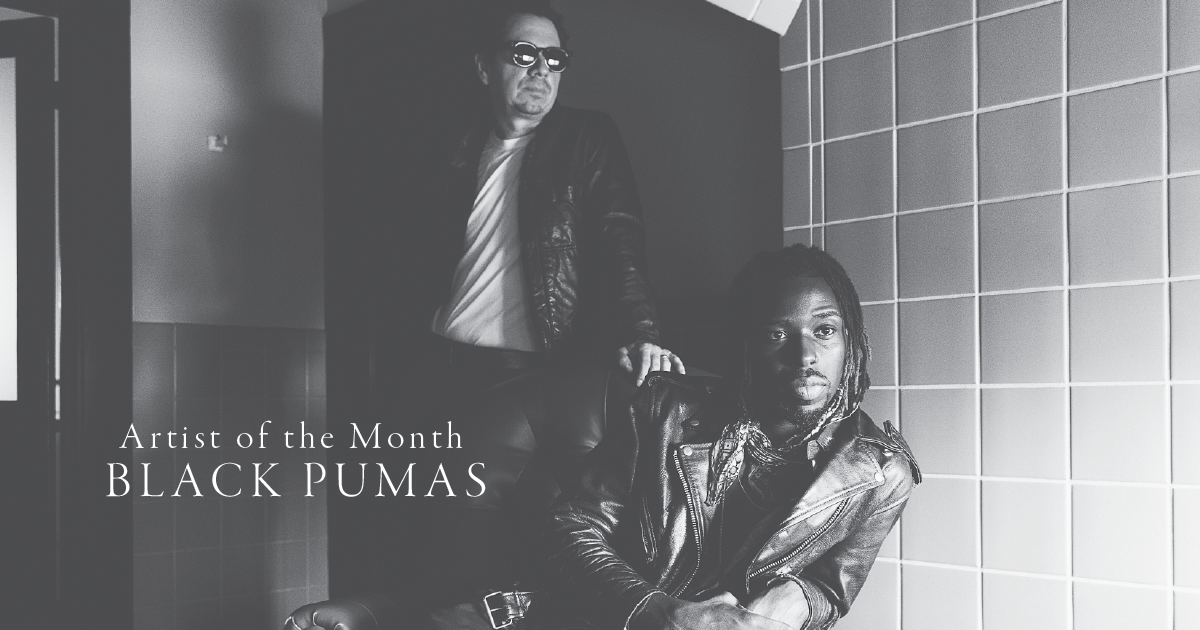
Artist of the Month: Black Pumas

Even without continuing to tour the world, Black Pumas have lost very little momentum since the arrival of breakout singles like “Black Moon Rising,” “Fire,” and “Colors.” The duo of Eric Burton and Adrian Quesada were shocked to land on the 2019 Grammy ballot as a contender for Best New Artist, and in 2020, they picked up nominations in three more categories: Best American Roots Performance and Record of the Year for the irresistible “Colors,” and overall Album of the Year for Black Pumas (Deluxe Edition). That expanded edition collects several new tracks, a few live versions of familiar favorites, and a must-hear cover of Tracy Chapman’s “Fast Car” — a favorite song of Burton’s to sing while he was busking on the Santa Monica Pier, and later in Austin, Texas.

Drawing on folk songwriting as much as soul groove, both men agree that the term American Roots fits their sound well. The Americana Music Association seconds that notion, as Black Pumas picked up that organization’s Emerging Act of the Year in late 2020. And in January, the band performed a dazzling and powerful rendition of “Colors” on the soundstage of Austin City Limits in recognition of the historic win of President Joe Biden and Vice President Kamala Harris.

“The first thing people think of when they say ‘Americana’ is not always music that’s influenced by soul music, but it’s great to be recognized by people that are open-minded music fans,” Quesada tells BGS. “This is every bit as much American music as country music, you know?” Burton adds, “Soul music is just as a part of American music as folk music and country music. This country is a massive melting pot of the different cultures… so we’re honored to be a part of the conversation as we make music in America.”

The two musicians met through a mutual friend as Quesada sought an exceptional singer to add lyrics and a voice to the instrumental tracks he was creating. Little did he know that Burton was around the corner, literally, where Sixth Street meets Congress Avenue. In our two-part interview (Read part one here. Read part two here.), they shared their influences, their first impressions of each other’s talent, and their hopes for the year ahead as our Artist of the Month. Meanwhile, enjoy our BGS Essentials playlist below.


Photo credit: Jackie Lee Young

Guitarist Jackie Venson Charges Down a Path of Joy, Vulnerability, and Shredding

Jackie Venson, Austin, Texas’s resident singer, songwriter, guitar shredder, and joy dispenser, took a couple of months to restart the locomotive momentum of her career after it was halted by the coronavirus pandemic in March of 2020. A summer of stepping up her touring and festival appearances trashed, she had to purposefully and intentionally consider a way forward. 

She chose the path less traveled, but she never trekked it alone. By the end of 2020, Venson’s totally independent team had landed her at number 10 on Pollstar’s Top 100 livestreamers chart for the entire year — higher than superstars Luke Combs, Brad Paisley, and even K-pop, heartthrob boy band BTS’s stream counts, with streams totaling more than 2.8 million viewers. 

“It felt like the train stopped and then I created work for myself,” Venson admits, describing an intentional pivot to virtual, streaming shows and alternative programming that never felt like she was giving up the most important parts of her art and expression. Just the opposite. Venson is a rare example of a musician who has utilized the pandemic to not only discover a new, novel way forward in an industry that promises burnout, extractive power dynamics, and the commodification of selfhood even in the best, most profitable cases. She also grew her fan base, her community, and found enough time to release five projects in the last calendar year, as well. 

Jackie Venson’s Shout & Shine livestream (viewable in the player above or here) — which highlights many of the entrancing, charming, entertaining aspects of Venson’s music, creativity, and most of all her stunning improvisation — will debut on BGS on Wednesday, February 3, at 4pm PST / 7pm EST. We began our interview talking about joy, which is not only present in every note of Venson’s playing, but is the first song of her Shout & Shine concert and the title track of her 2019 album. 

I wanted to start by asking you about joy. It feels so obvious and palpable in your music, especially in your playing style. Not just in how you’re so engaging and charismatic, and not just because it’s the title of your 2019 album, Joy. On “Surrender,” for instance, you sing, “Feet are so tired, but I keep running/ Heart is so heavy, but I keep singing.” That sounds like the radical act of choosing joy, to me.

JV: Well, it’s literally what I’m feeling while I’m actually playing the music. It’s just really cool to be able to play the guitar. I worked really hard to be able to play the guitar and when I look in the mirror I see the same face who started guitar, I guess ten years ago now, except this person can play the guitar! This person can play the guitar, and everybody likes listening to this person who can play the guitar. Not only is this person having a really good time doing something she set out to do ten years ago, but everybody else is enjoying it and having a good time on a base level — and by base level I mean, often they’ve just walked in the room. [Laughs] They weren’t there ten years ago! They’re enjoying it, objectively, and I’m sitting here looking at the depths of [the music] and then I’m watching other people, who don’t even know the story, just having a good time. That is pretty awesome and actually, I’m pretty sure that’s why most people set out to play instruments. They see somebody having fun doing it and they want to have fun, too. 

It sounds like gratitude is equally important to you. You’re clearly expressing so much gratitude for being able to do this thing that creates so much joy in your own life and in others’.

Well, absolutely. Gratitude is the foundation of joy. You can’t really have joy if you don’t have gratitude. 

One thing that jumped out at me from your livestreams and performances is the way you sing along with your guitar lines, the way you’re constantly in dialogue with yourself and your own voice. It made me think of the age old tradition of fiddling and singing along with yourself — and of course, it makes me think of jazz and bebop solos as well — but I wondered where singing along with the line in your head came from for you? 

My dad told me the best way to learn how to improv solos. I had been working on trying to improv from even the time I played piano from when I was like fifteen. I remember getting another piano teacher who knew jazz so that they could teach me how to improvise. Obviously, [Laughs] that’s the wrong angle. I was four years into playing guitar before I learned that I was approaching improvisation the wrong way. The funny thing is that my dad told me, when I was fifteen, he was like, “All you need to know about improvising is that you just think of a melody and you play it, and after you play the melody you thought of a few times, you start messing with it.” So you play it, and add a note here or subtract a note there, and he’s like, “That’s all you’ve got to do and then it’s a great solo!” Because a melody isn’t just playing notes randomly, it has purpose. You want your solos to have purpose. My dad told me that fifteen years ago and I just didn’t hear him. I wasn’t ready to hear him. It took the guitar and years and years of singing, as well, to put it all together and arrive at the destination my dad tried to usher me to. 

I’m a picker and a teacher as well, and I’m sure you’ve had this happen, you’ll get students who are so intimidated by the idea of improvising, I’ve had students just cry when you say, “Can you try improvising something?” 

It’s a touchy subject! It’s like singing, how people are way more sensitive about their singing. They’ll show you their drum licks all day, but you ask them to sing and they’re like, “Noooo!!” 

It’s the vulnerability! 

It’s a new level of vulnerability. But here’s the thing, it’s not very hard, all you have to do is just listen to a crapload of music, stuff a bunch of melodies into your brain, and then, just think about all of the melodies you know and think about them a lot. Always listen to music. Keep listening to the music you already have listened to and listen to new music. If you’re constantly listening then you’re going to be sitting on stage and everyone’s going to point to you to solo — say Cm going to F — BOOM! All of a sudden you’re playing, [Sings] “They smile in your face/ All the time they wanna take your place” on the guitar. You’re playing “Back Stabbers,” because suddenly  you’re going from Cm to F7 and you know it will sound good. You know? [Laughs] Because you’ve heard that melody and it’s not very hard! A beginner could play it. [Hums line] But you’re crushing it with some tone and everybody in the audience is thinking you’re a master. When really, what you’re playing is not that hard. It’s just musical. 

My jaw literally dropped when I was doing my research for this interview — you released five projects in 2020. Two double, live albums, the two volumes of Jackie the Robot, and also Vintage Machine. You also landed in the top ten of Pollstar’s livestream chart for the entire year. I hear you say “the train ground to a halt,” and I see a new train that didn’t just start up, but is roaring. I’m sure you see that, too. What does that pivot feel like now that you’ve got some retrospect. 

In that moment, it felt really busy, but it also felt kind of maddening. I was busy, but I was never leaving my house. Then it felt crazy. And in the next moment after that, the numbers started to juice. For a couple of months it was full stop, for a couple of months it was maddening like, “Wow, these numbers are really rad, maybe this is the way.” A couple of months after that I knew this was definitely the way. I stumbled upon the way. I was walking along on a path and then that path had like, a giant tree fall over it and I couldn’t go down it anymore. I saw this side path — you know when you’re in the woods and you see a path but you’re not sure it’s a path or if your eyes are just tricking you? 

“Is that a deer trail or is that actually a trail?”

Right. Is that really a trail? It’s like, “I don’t know… but there’s also a giant tree over the path I was on. Can’t go that way. I guess I’m going to go down this path, I hope there’s not too much poison ivy…” [Laughs]

That was the livestream path. There was maybe one creature that walked down this path, one way, one time. It appears there’s a path, but it clearly hasn’t been followed very often. That’s what it felt like, to be on this uncertain path, which then ends up opening up and it turns out I was right the whole time. The way I feel now is not the way I felt when it was all happening. The way I feel now is all because of having retrospect on my side. And the development — the direction things are going in. It’s a lot more clear than it was six months ago. 


I have found myself repeating throughout the pandemic that we should be building the world we want to exist after the pandemic while we’re in it. To me that’s what it sounds like you’re describing, finding this other path. Looking to the future, what will you be bringing with you from this time, into whatever a post-COVID reality looks like? 

The thing I’m taking with me is the fact that there’s never any need to be desperate, there’s never any reason to act out of desperation. There’s no person or contract to be signed that holds the “keys to the kingdom.” There is no kingdom. We are IN the kingdom. We just exist within different perspectives of it. Maybe your perspective in the kingdom right now is that you’re a baby band, you’ve just established yourself. You’re in the same kingdom as Beyoncé! You’re just standing in a different spot than her. There are thousands of spots you can stand in this kingdom. Beyoncé’s spot isn’t the only one that’s good. There are lots of places to stand! Millions of artists, that you don’t know about, are standing in pretty sweet spots in this kingdom that we all exist within, together. 

There’s no person that’s going to give you her spot. She got to her spot by her own weird, twisty trail to get there. Maybe a deer walked down it once! She took her own path. You’re not going to be able to recreate that, but she just took a path to get to a spot, not the kingdom itself. You consider that spot the kingdom, but we’re all in the kingdom already. The way we used to live had this weird illusion that we all had to climb these ladders, but really you just need to get where you want to be. You don’t need to climb that same ladder just because someone else climbed it, and they’re famous, and you’ve got to do what they did. It doesn’t make any sense, it’s completely futile, and you’re going to just be spinning in your hamster wheel, stuck in the same vantage point. There’s not one guy or gatekeeper who can unlock everything for you. There are people who will say they can, but what happens? You end up stuck at one spot, one vantage point. There’s no one person, one artist who has it all.


All photos: Ismael Quintanilla III

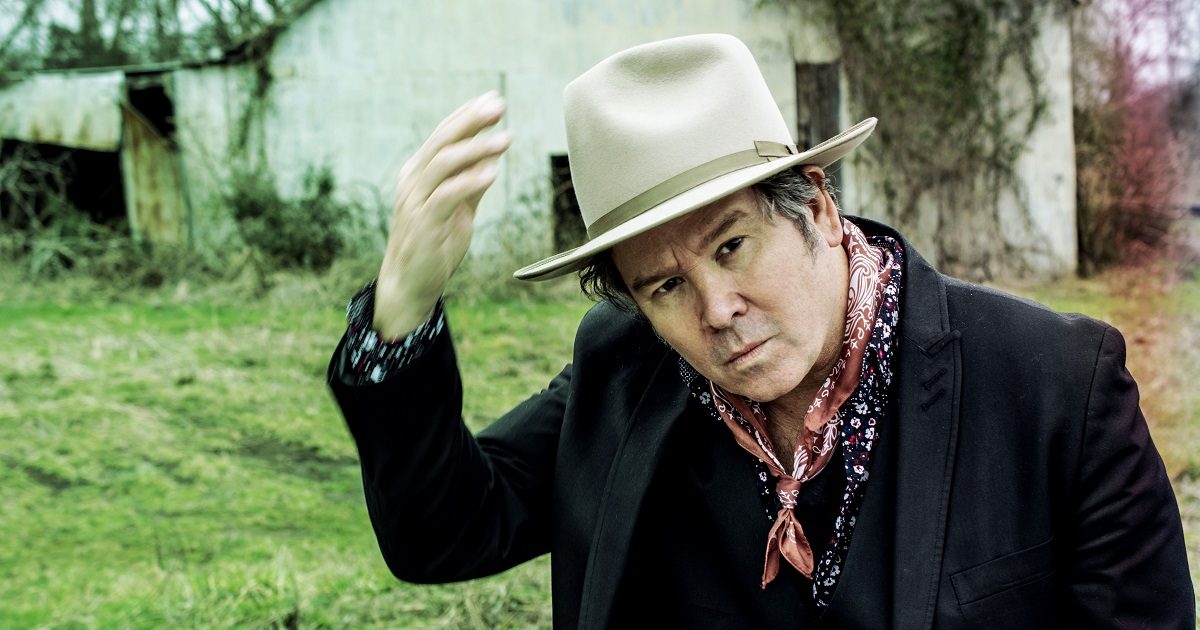
BGS 5+5: Grant-Lee Phillips

Artist: Grant-Lee Phillips
Hometown: Nashville, Tennessee
Latest album: Lightning, Show Us Your Stuff
Personal nicknames (or rejected band names): Pistol, Ranchero

Which artist has influenced you the most … and how?

Neil Young I suppose. His music hit me at just the right time. I had been playing guitar for two years when I first heard “Down by the River” and “Cortez the Killer.” I was 16. My ears were wide open. Young’s songs spoke to me like no other. He was also the first singer I saw in concert. All alone, with a rack of acoustic guitars, an upright piano on one side of the stage, a grand on the other, a pump organ. I was mesmerized.

What was the first moment that you knew you wanted to be a musician?

My family loved music. Hee Haw was a big one. We never missed a show. My grandma loved Elvis and Johnny Cash. The excitement I felt when Roy Clark played “Orange Blossom Special” or “Foggy Mountain Breakdown” on the electric guitar, I wanted to feel that all the time. The TV show Austin City Limits introduced me to Lightning Hopkins, John Prine and Tom Waits. I recall those moments like yesterday.

What’s the toughest time you ever had writing a song?

The hardest prolonged period of song wrestling was back in the ‘90s after Grant Lee Buffalo had put out a few albums. The pressure was on to deliver. The question was, deliver what to whom? I did my best to put all that noise out of my head. You can go from dancing on a ledge like Buster Keaton one minute to vertigo the next. Thankfully I had come across the film director Andrei Tarkovsky’s defiant book Sculpting in Light and that became a temporary manifesto.

What other art forms — literature, film, dance, painting, etc. — inform your music?

I paint a great deal these days. Landscapes and still life. It slows me down and demands another degree of focus. Composition involves strategic thinking but there’s a wild side to painting. I like that balance. It gives me insight to making music.

Which elements of nature do you spend the most time with and how do those impact your work?

Tennessee is one of the greenest states in the country. I’m never so in tune with my own spirit as when I surrounded by elms and oaks. During this pandemic our family has made a point to take a drive every day. We drive through the country, roll down the windows and breathe some fresh air. One of my other rituals involves drawing. Every day I set aside 20-30 minutes to sketch. I have notebooks full of trees, landscapes in the works. Trees, clouds — that’s my sanctuary. Some of these images find their way into my lyrics, which is just another way of painting a picture.


Photo credit: Denise Siegel-Phillips

Best of: Austin City Limits

As the longest-running music program in television history, PBS’s Austin City Limits holds a very special place in music history. While the show was originally developed by Bill Arhos, Paul Bosner, and Bruce Scafe to feature the thriving music scene in Austin, Texas, it is now famous for bringing a wide variety of musical genres into American living rooms each week. The Rock and Roll Hall of Fame Library and Archive is busy preserving 40-plus years of ACL footage, but here are five of our favorite performances you don’t want to miss:

Willie Nelson — “Bloody Mary Morning”

Let’s start where it all began! Willie Nelson made quite an impression on viewers and PBS, when he starred in the first episode of ACL recorded back in October 1974. We have him to thank for helping the show become the staple of music television it is today.

Shovels & Rope — “Bad Luck”

Husband-and-wife duo Michael Trent and Cary Ann Hearst give their all in this high-energy performance of “Bad Luck.” We think you’ll agree that the sped-up tempo of this live version makes it even better than the original studio recording. We can’t help but move along to the driving beat!

Rhiannon Giddens — “Julie”

In this web exclusive performance of her song “Julie,” Rhiannon Giddens breathes to life a conversation between a slave and her mistress during the Civil War, demonstrating her investment in the rich and complicated history of the South, as well as her enchanting storytelling abilities.

Shakey Graves — “Roll the Bones”

Austin native Alejandro Rose-Garcia, known professionally as Shakey Graves, exemplifies the wealth of hard-working musicians coming out of the Live Music Capital of the World today. For his ACL debut, Graves took to the stage with his electric guitar, suitcase kick-drum, and gritty voice for this crowd pleasing performance of “Roll the Bones.”

Sturgill Simpson — “I’d Have to Be Crazy”

It is only fitting to end with Sturgill Simpson’s cover of Willie Nelson’s “I’d Have to Be Crazy.” Simpson’s endearing demeanor and country twang do wonders in this tribute to the ACL Hall of Famer.

Watch Ashley Monroe Perform on ‘Conan’

Ashley Monroe performed "I Buried Your Love Alive," a killer new track from her recently released album The Blade, on Conan. You can watch the kick-ass performance below.

Other Roots Music News:

Rolling Stone has a stream of an unreleased Andrew Combs track, "Part Time Lovers (Full Time Fools)." 

• Grizzly Bear's Ed Droste had to quit Twitter after suffering harassment at the hands of angry Taylor Swift fans. 

• Langhorne Slim also stopped by Conan to perform "Strangers."

NPR's latest list of tunes in heavy rotation include BGS favorites Kasey Chambers and Humming House. 

Folk Alley has a new session with Charlie Parr. 

• Jason Isbell performed "Desperadoes Waiting on a Train" on Austin City Limits.