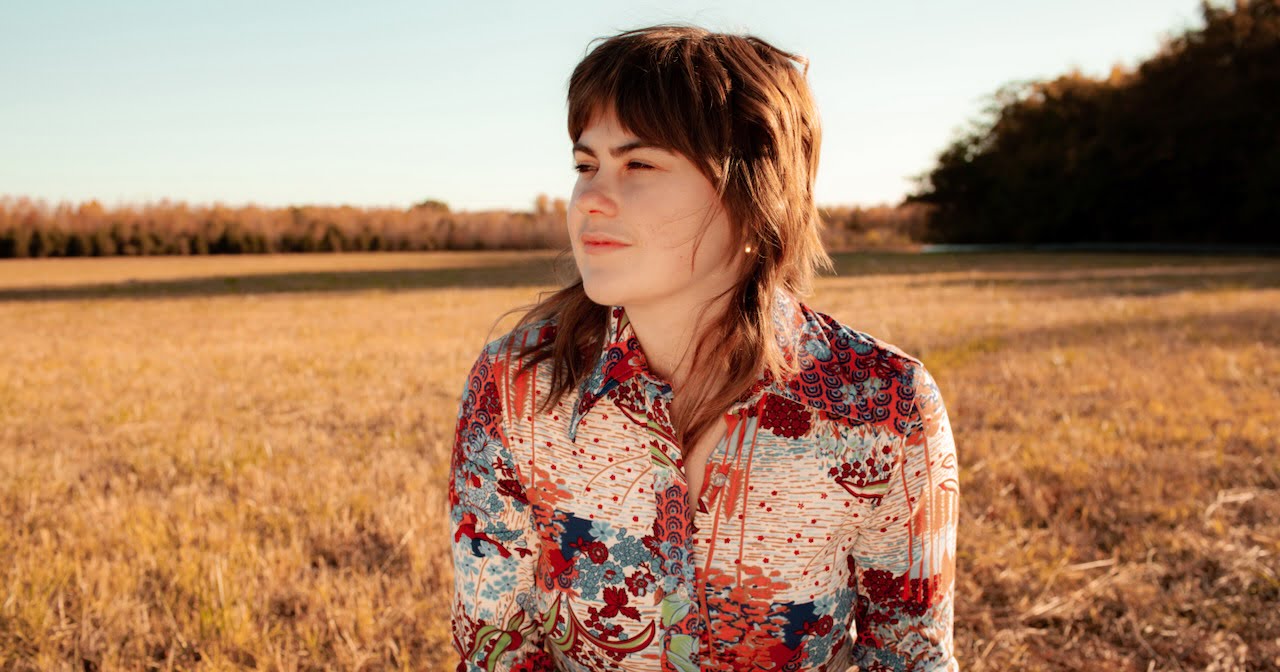
Bluegrass, Folk, and Country Communities Made Jobi Riccio

(Editor’s Note: This interview first appeared in full on Basic Folk. Listen on BGS or wherever you get podcasts. The following has been lightly edited for flow and clarity.)

Jobi Riccio has only begun to scratch the surface of what they have to offer on their debut album, Whiplash. The songwriting is centered around self discovery and mourning past lives, laid alongside super-smart country and pop melodies. Our hero grew up an outdoor kid amongst the woods of Red Rocks Parks Amphitheatre in Colorado.

A strong bluegrass community encircled her playing from a very young age in a way that encouraged her to pursue music as a career. She spent time in Boston attending Berklee College of Music, nestled in the folk community centered around the historic venue Club Passim. March 2020 hit. Jobi had to leave her newfound community and found herself back in her childhood bedroom.

While wrestling with all the complications of finding herself and her place in the world, they were letting go of their childhood and the sense of grounding that came with it. Eventually, they made their way to Asheville, North Carolina to work on Whiplash.

In the studio, she took her time making the album and discovered that indeed, she had a strong sense of vision for the music. The trust of her collaborators allowed her to trust in herself and create an album that is turning heads and making Jobi Riccio one of the most exciting young songwriters of 2023.

BGS: Thank you so much for being on Basic Folk.

Jobi Riccio: Thank you for having me.

Alright, let’s start. I wanted to talk about identity and give you the opportunity to talk about your identity, like how do you identify pronouns, orientation, any of that stuff that we want to address.

JR: Yeah, I use she/they pronouns. I identify as queer and identity has been something that feels like it’s been important and very complicated for me. It feels like something that I have spoken about and made a part of my career, and now I’m kind of feeling, a little bit, like it’s become too much of a focus in my career, actually.

It’s funny, because I was listening to your other podcast that [you do], I can’t remember–

It’s [Basic Folk Debate Club], an occasional crossover series with Why We Write.

Yes! I was like, you’ll know the person to plug – and I’m so sorry to Why We Write.

It’s based on actually something that Lizzie No was saying. I just really resonated with something that she said, which was it’s about who is asking those questions of me. It can feel like a fine line. It’s kind of “cool” right now to be a queer artist or a Black artist or an artist of color in the folk space.

When you’re with your community, that feels one way, or with people who are truly great. And then when you’re with people who it just seems like they need to check that box. It’s so obvious and it’s so painful and it feels like a betrayal of yourself. And [Lizzie] put it a lot more eloquently than all that, but if we’re really going down the discussion of identity, it’s important to me that I am open with my identity, but I also feel like there have been times where it’s been so hyper-focused on. In a way that it’s like, “Did you even listen to any of my songs or did you know what I mean?”

I really enjoyed that answer. Doing these interviews, sometimes I feel like I’m gonna ask and I think that the interview is gonna go one way or a question is gonna go one way and it goes the complete opposite way. I just get to enjoy the ride.

You are from Morrison, Colorado, which is outside of Denver – the same place as Red Rocks Parks and Amphitheatre. You were an outdoor kid. How do you think your early experience in nature has impacted the person you became?

I think that it’s something that I really value and need and it’s a processing tool for me, being out in nature. It’s almost equivalent to songwriting and writing in my journal. It’s honestly super hard here in Nashville, because I don’t feel like I can get that, in the way that I used to be able to walk to a hiking trail five minutes from my house. I was absolutely supremely spoiled with outdoor access as a kid. [I didn’t] know any better. Like, there’s going to come a time where you’re going to live somewhere the nearest mountains are two and a half hours away. That is rough. It’s something I have to really intentionally build into my life now.

I think that nature heavily informs me as a person. Musically, I feel like it shows up in my lyrics [and] images from home, talking about coyotes and cactus and etc. I feel like it’s so intrinsic to who I am as a person.

So nature ruined you.

For real. The nature ruined me. Colorado ruined me.

There has always been this strong draw to music for you – country radio, your parents and sister’s collection of music, and also making music on your own. Can you set the scene for what music looked like in your house? And when did you get a grasp on your own taste in music?

My parents definitely – we had like a home stereo and a big collection of CDs and I spent a lot of time just sort of putzing around my house as a little kid, opening cabinets, and looking at things and opening the encyclopedia and reading. I don’t know if anyone else feels like a really intrinsic part of childhood was just looking at things.

The CD collection in like, a big wicker basket was definitely a huge one for me. They felt like little gifts. I could open up the CD and then there was this extra thing I could pull out and there were liner notes and lyrics and I could read along. That was really big for me, because I was always really interested in lyrics.

My dad’s a huge Bruce Springsteen fan. We love the Boss and sometimes we can’t understand the Boss. And like, his lyrics are wonderful, too. I really feel like that was pretty formative to me, looking through my parents’ CDs and my sister’s CDs as well. My oldest sister had like a clear, hot pink, very early 2000s lockbox thing that she kept her CDs in. I very vividly remember going into her room and stealing CDs – The Killers, Coldplay, A Rush of Blood to the Head was a big one for me, Sheryl Crow, Tuesday Night Music Club, Yellow Ocean Avenue. Then like Emmylou Harris, Bruce Springsteen, Linda Ronstadt, the Eagles, James Taylor.

There is a strong bluegrass community where you’re from. You found it at an early age, playing mandolin when you were like eight or nine years old. Since then you’ve sought out musical community, so what did you learn from that first musical community? 

The bluegrass community was a big part of feeling supported for me in music. I was always a kid who sang and was like, the girl with a good voice in like my elementary school class or whatever, but I didn’t see myself as a musician until I really started playing mandolin. I had a teacher and he was super supportive and was like, “You’re really great at instruments, too.”

I feel like the bluegrass community in my hometown took me seriously even though I was a little kid running around at RockyGrass – and by “a little kid” I mean 16. I didn’t go to my first bluegrass festival until I was a teenager. I would go and sit and jam with adults and be taken seriously. I really looked up to [those who were] offering their support to me, that was immeasurable to [growing] my own self confidence at that age.

I mean, I was so insecure at like 15, 16. The first year I ever went to RockyGrass, which sort of became my home festival, I didn’t even go out and play with anyone. I just sat in my camper with my mom, because I was so scared and so nervous and having trouble with confidence. The next year, I was out like playing every night ’til like 2 or 3 a.m.

That’s a huge shift!

Yeah. I feel like community and music– I mean, no musician is an island. We’re nothing without the musicians who came before us and those who’ve supported us. Sometimes I look back on that time and wonder if I hadn’t gotten that nod in that jam from that older kid who was really good, who I thought was awesome; or from that artist who I worshipped, who told me I had a beautiful voice; or I had shared one of my songs with them, and they were encouraging of me writing. I wonder if I would have taken it this far?

Then I got to be in a really beautiful community space working at Club Passim in college, too. That also further helped bolster my confidence, especially playing solo. Because – as you know, as also somebody who worked there in a much different capacity – it’s very much like a solo listening room, singer-songwriter space.

I play solo [a lot] now on tour, because I can’t afford to bring out a band. I feel like I really garnered some valuable skills watching other people like Mark Erelli and Lori McKenna play solo at Passim and also having to do that myself, learning how to speak about the songs I had written and not be painfully awkward, but doing that in the loving embrace of that room.

You’ve talked about Sheryl Crow and The Chicks as having a huge impact on you. You picked up the mandolin after you first heard Nickel Creek – can you talk more about the influence Chris Thile and Sara and Sean Watkins had on you?

So, I first heard Nickel Creek on the radio on KBCO, which is like the AAA station.

Hell yeah, that’s a huge station. That’s where AAA was born!

Where AAA was born, famously, yes! That was my local radio station that I listened to as a kid. And they would play “Smoothie Song” by Nickel Creek. This was around the same time that I heard the Home album by The Chicks. I was listening to Top 40 country music and also hearing mandolin here and there. It’s so strange, because I don’t play the mandolin anymore. It’s just something I’m not interested in now – it makes me almost kind of sad to think of how this was such a big part of my life.

Then I really pivoted – and it’s like, I’ll never say never, but yeah, I started playing mandolin when I was 15, I wanted to play mandolin when I was about eight or nine years old, because that was when we got Why Should the Fire Die on CD as a family. When I started opening up the CD and reading the booklet and listening – that album is so cool, because there’s a little bit of almost a pop-punk thing to some of the songs, like “Somebody More Like You.” That was so of-the-time and I loved it. I couldn’t get enough of that.

Being introduced to this new palette of instruments that I really hadn’t heard played in this way. I was familiar with bluegrass to some extent, but it like bluegrass for me and my like angsty little 12-year-old self. And, you know, everybody’s angsty selves at any age. That struck such a chord in me…

The first song I heard by them was that Pavement cover.

And Pavement’s super emo! “Spit On a Stranger,” right?

Yeah, that’s it.

I loved that album, too. They were all older than me, but I didn’t really know that either because, like, they’re pretty young on the CD case. They’re probably [around] my older sister’s age, who is now 28. They’re not that close in age to me, but I did feel a kindred-ness that I feel like a lot of roots artists talk about, hearing them and the Chicks and being like, “Oh, this is cool! This is of the moment.” They’re incorporating sounds that we like from other genres, which is really what I think I’m trying to get with the whole pop-punk thing, though I know that can be kind of a “dirty” word, like pop country. I don’t think it should be, I don’t think any genre word should be.

And I definitely had like a three month period where I was like, “I’m in love with Chris Thile. I’m going to marry him.” That was a little, you know, short lived, but it was strong. His high, angelic voice really spoke to my prepubescent soul.

That’s so sweet.

You’re like, “I don’t know what to say about that!”

Thank you for sharing. No, it turns out it was Sara Watkins the whole time!

Right, yeah! Hiding in plain sight!

Your bluegrass wife.

(Editor’s Note: Listen to the unabridged Basic Folk episode featuring Jobi Riccio here.)


Photo Credit: Monica Murray
Basic Folk: Jobi Riccio Is an Outdoor Kid

Jobi Riccio has only begun to scratch the surface of what they have to offer on their debut album, Whiplash. The songwriting is centered around self-discovery and mourning past lives, laid alongside super smart country and pop melodies. Our hero grew up an outdoor kid amongst the woods of Red Rocks Parks and Amphitheatre in Colorado. A strong bluegrass community encircled her playing from a very young age, in a way that encouraged her to pursue music as a career. She spent time in Boston attending Berklee College of Music nestled in the folk community centered around the historic venue, Club Passim. Then March 2020 hit.

LISTEN: APPLE • SPOTIFY • STITCHERAMAZON • MP3

Jobi left her new community and found herself back in her childhood bedroom. She was “wrestling with all the complications of finding herself and her place in the world while letting go of her childhood and the sense of grounding that came with it.” Eventually, they made their way to Asheville, North Carolina to work on Whiplash. In the studio, she took her time making the album and discovered that, indeed, she had a strong sense of vision for the music. The trust of her collaborators allowed her to trust in herself and create an album that is turning heads and making Jobi Riccio one of the most exciting young songwriters of 2023. I loved talking to them about their origin, time in Boston and their continuing musical journey. Can’t wait for you to hear her new album!


Photo Credit: Monica Murray

It’s a Great Time to Be on the Golden Highway

(Editor’s Note: Explore more of our Artist of the Month content on Molly Tuttle here.)

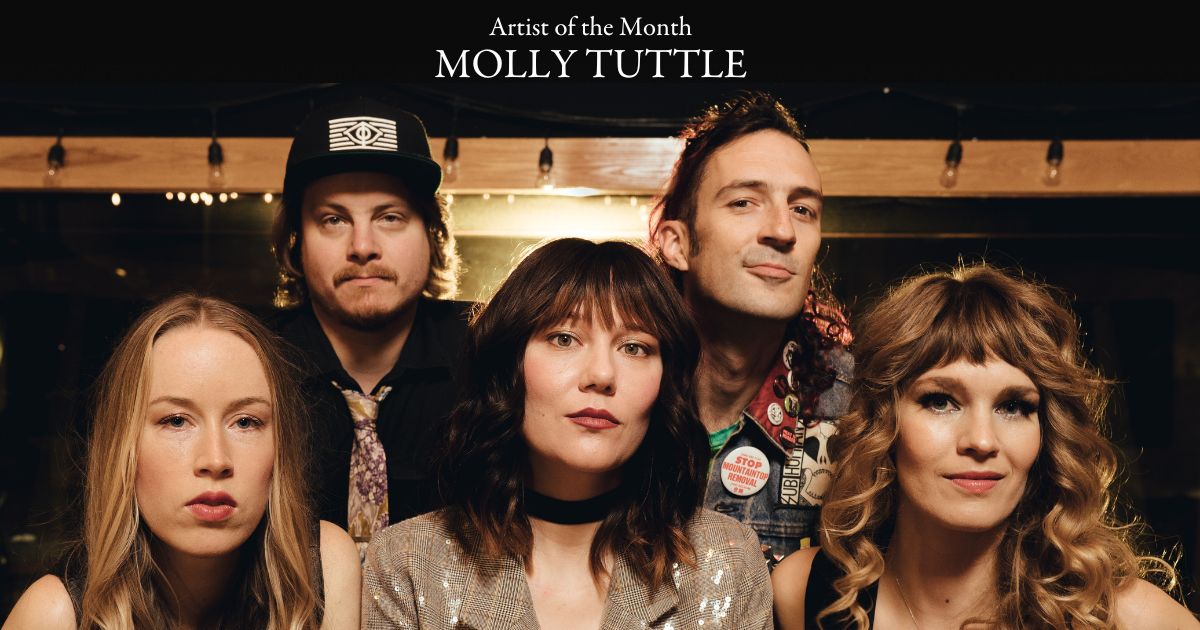
It’s halfway through 2023, and Molly Tuttle is having an incredible year. The Grammy-winning artist released her new record — made with her band, Golden Highway — on July 21 via Nonesuch Records. Only days before, Tuttle and Golden Highway were nominated in seven categories at the 34th Annual IBMA Bluegrass Music Awards.

In the middle of her ongoing tour, we caught up with Tuttle and the members of Golden Highway to celebrate her selection as July’s Artist of the Month and to go behind the scenes of making City of Gold. Luckily, it’s easy to make music with friends, and the entire group goes way back. Tuttle says Bronwyn Keith-Hynes (fiddle), Dominick Leslie (mandolin), Shelby Means (bass), and Kyle Tuttle (banjo), have been a part of her musical life for years.

“I’ve known everyone in the band since I was in my late teens, early twenties,” Tuttle explains via video call.

Tuttle and Keith-Hynes attended classes and bluegrass jams together at Berklee College of Music. She met Kyle Tuttle (no relation) at around the age of 17 at an IBMA jam, and met Means while she was in Boston with the all-women string band Della Mae. Tuttle says she and Leslie met as kids, when they would both play the same bluegrass festivals.

“When Molly told me what she was planning, and asked me to join the band and told me who else was going to be in it, I was thinking, ‘I’m already friends with all these people. This is gonna be really cool!’” Means said during our group interview.

When it came time to record City of Gold, the group worked with modern roots music icon Ketch Secor of Old Crow Medicine Show on much of the writing. Tuttle says there’s a definite Old Crow influence on the tracklist, which makes sense given “Down Home Dispensary” is a tune on the record originally written for the group best known for hits like “Wagon Wheel.” Tuttle said she initially worried the song was “too Old Crow” for Golden Highway, but is glad it ended up on the record. She and Secor got “into a good groove,” as she puts it, and churned out the tunes for City of Gold in about six months, often while driving in the car or passing around instruments during jam sessions. At least one track, though, was extremely collaborative. Tuttle, Means, Secor and Melody Walker (formerly of Front Country) all had a hand in finishing the tune.

Jerry Douglas, the iconic resonator guitar player who’s worked with almost every name in the bluegrass industry, produced the album. Tuttle said that whereas she had only a few studio days booked for her previous album, Crooked Tree, the group had nearly two weeks of studio time to work with Douglas this time around. When asked what it was like working with the legend, every member of Golden Highway said they’d had a great experience.

“Working with someone who’s a hero, there’s a lot of baggage that comes along with that,” Kyle Tuttle said. “But he’s the kindest dude. He supported us in a really cool way. It wasn’t hard or intimidating or anything like that. I thought it was easy and fun. Every now and then he’d play on a track with us.”

Whether it was encouraging Golden Highway to take breaks or telling funny jokes, the group agreed that Douglas made sure everyone was comfortable and having a good time. Keith-Hynes said Douglas told the band that NASCAR drivers walk slowly to their cars to slow down their nervous systems, encouraging the musicians to do the same on walks between takes.

“Jerry has been a huge musical hero to all of us,” Leslie said. “Getting to spend all that time in the studio was the thrill of a lifetime. We all knew we were in really good hands with him musically going in, but what I didn’t realize was how good of a hang Jerry is. He [was] filling up any moment of dead air with a great story to break the ice.”

On tour, the band’s camaraderie is just as apparent as it is in the studio, or as it was in the group’s music video for “Next Rodeo.” After Tuttle catches her no-good, fictitious cowboy boyfriend cheating, the band collectively decides to kidnap him and give him what for — although, of course, all in good fun. They say they haven’t (yet) had to kidnap anybody on tour, but that doesn’t mean the on-the-road lifestyle isn’t taxing. Kyle Tuttle said he missed a connecting flight the night before the album release show and was up all night driving to make it in time.

“I was checking into the hotel and the sun was already up,” Kyle Tuttle said. “[There was] orange sky and some palm trees. I thought, ‘Damn it’s pretty. I sure wish I was in bed right now.’”

While it’s a good time to be in Golden Highway, it’s also just a great time to be in bluegrass, the group says. All agreed that bluegrass is having a moment, and were happy to report multiple sold-out festivals with lineups that include country, folk, bluegrass, blues, and other roots artists. Means said it’s incredible to see bluegrass acts opening for bigger country artists, because it means the genre is a real selling point.

“I wonder if it’s a backlash to how crazy everything is with technology,” Keith-Hynes thinks aloud. “People want something real. Nothing is more real than people playing acoustic music on acoustic instruments.”

Tuttle said the internet has also really leveled the playing field, making more music accessible to all kinds of fans. Golden Highway has had its own viral moments on TikTok, the short-form video social media app. Earlier this year Tuttle posted a 2022 Halloween clip that has now hit nearly one million views; inspired by a track on the new album, “Alice in the Bluegrass,” the band members are each dressed as a character from Alice in Wonderland, with Tuttle starring as the Queen of Hearts.

“It took people by surprise to see this bluegrass band playing Jefferson Airplane in full Alice in Wonderland dress,” Tuttle said.

As for what’s ahead, the group says they hope to see everyone out on the road. Means shared that the band will announce more dates soon, and that they’ll be touring both coasts after the annual IBMA Bluegrass Music Awards in September. Tuttle and Golden Highway are currently nominated for Entertainer of the Year, Instrumental Group of the Year, Song of the Year and Album of the Year. Tuttle is also nominated for Collaborative Recording of the Year, Female Vocalist of the Year, and Guitar Player of the Year. Bronwyn Keith-Hynes is nominated for Fiddle Player of the Year.

City of Gold can be streamed online wherever you listen to music. Check out more of our Artist of the Month coverage of Molly Tuttle & Golden Highway here and here.


Photo Credit: Chelsea Rochelle

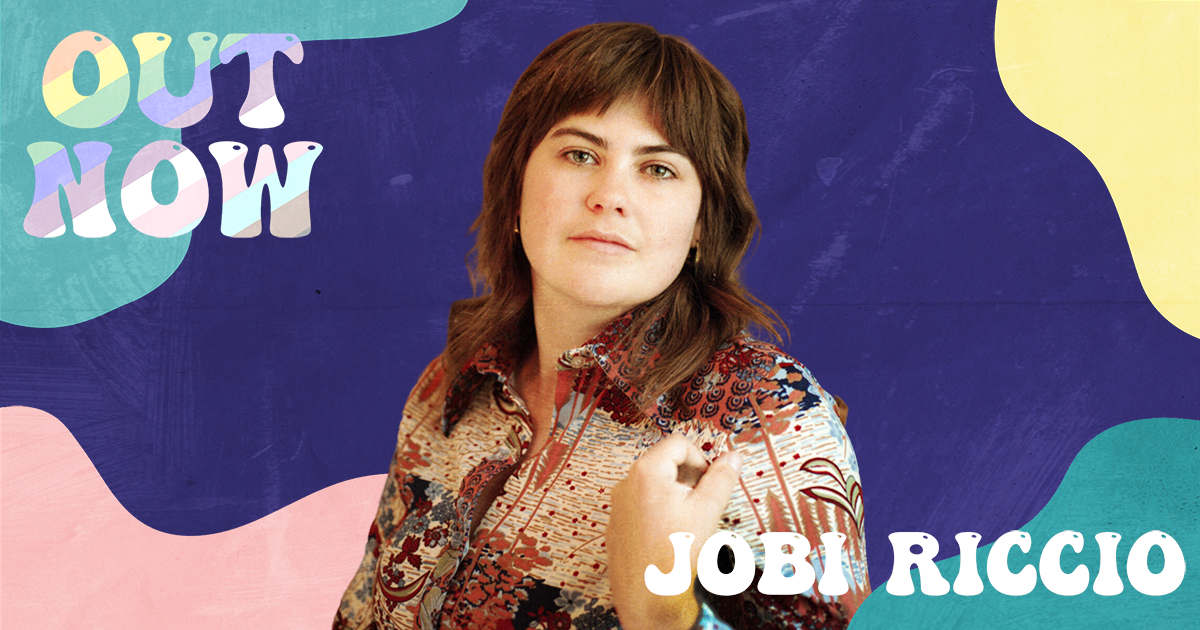
Out Now: Queerfest & BGS Announce New Column with Guest Jobi Riccio

Welcome to OUT NOW! We are so excited to bring you the latest LGBTQ+ folk, roots, bluegrass, country, Americana, and indie songwriters, artists, and musicians. Who am I to guide you through the queer music industry? My name is Sara Gougeon. I founded and run Queerfest, which supports LGBTQ+ music by hosting monthly showcases and an annual festival in Nashville, promoting queer-identifying artists and creating spaces for our community. In 2022 Queerfest was named “Best New Music Festival” by The Nashville Scene.

This column is designed to amplify the voices of queer songwriters, musicians, and industry leaders. I am so excited to share just how talented, creative, and supportive the queer music industry is. We are delighted that the release of this column aligns with Pride Month, but we are even more excited to support LGBTQ+ music consistently year-round, beyond just the month of June. 

Our first artist is one that I am proud to have known for years, and I can write with undeniable confidence that their music is at the start of a career filled with national tours, stunning releases, and larger followings sure to come. 

I met the amazing Jobi Riccio in college when we were students at Berklee College of Music in Boston. They’ve come a long way since then: a record deal with Yep Roc, touring, and the move to Nashville. But I knew from day one that their music was exceptional. It is always a complete honor to promote incredible queer music. 

Jobi’s carefully crafted lyrics turn songs into movies. Melodies blend with smooth vocals, and mournful fiddle solos lift between lines. It’s the kind of music I catch myself playing for hours before noticing that I’ve fallen so deeply for a few songs that I could listen to them on repeat forever. 

And with that, I am deeply proud to present OUT NOW: Jobi Riccio.

BGS: What would a “perfect day” look like for you?

Jobi Riccio: A day spent primarily outside in the sun with those I love that ends playing songs in a living room or around a fire is really hard to beat. I also love being alone exploring nature and any day I spend hiking, biking, kayaking or doing any outdoor activity completely alone is always perfect and healing. 

Why do you create music? What’s more satisfying to you, the process or the outcome?

It depends on the day. I love performing just as much as I love songwriting and I view both as a very gratifying way to connect with myself and other people.

Do you create music primarily for yourself or for others?

I honestly don’t know. I create music when I’m feeling something big and feel I need to or have the ability to express it.  I’m not sure if it’s completely honest to say I write entirely for myself because sometimes those big feelings I’m experiencing stem from a desire to connect with others. 

Who are your favorite LGBTQ+ artists and bands?

Rufus Wainwright, Aaron Lee Tasjan, and Caroline Rose all come to mind as LGBTQ+ artists I’ve had in heavy rotation, but also those I’m lucky enough to consider friends: Liv Greene, Erin Rae, Brennan Wedl, Brittany Ann Tranbaugh, Palmyra, and Olivia Barton are all queer artists/bands I’m very inspired by. 

Is “Green Flash ” based on real feelings/experiences?

I started “Green Flash” during late spring of 2020, when I moved back home with my mom in Colorado. Lots of these existential crisis-y type thoughts were swirling in my head throughout my senior year of college, and the onset of the pandemic just sent them into overdrive. Most musicians have a fantasy of quitting music at some point and leading a “simple life” and I was caught up in that idea as I had nowhere to play and no hope of touring in the future.  Sometimes I find my songs function similar to journal entries — questions I ask myself or little prayers out into the universe — and I think “Green Flash ” functions that way.

One of the main lines in Green Flash is “I’m still learning how to trust a heart.” How do you find a balance between being open to love/vulnerability/life and not getting your heart hurt?

I love this question, I ask myself it almost everyday. More and more I’ve learned to push myself to be vulnerable and honest even when it’s scary because I might be hurt, because it’s the key to real connection with others and is where the true beauty in life lies. Learning how to be authentically myself has a lot to do with learning to trust my heart and myself, and it’s very much a daily practice. All and all, I’d rather be hurt than live in fear of being hurt. 

What are your release and touring plans for the next year? 

I am releasing my debut record, Whiplash, on September 8 and I’m extremely excited to get this body of work into the world. I’ll be touring around the record this year and next! 


Photo of Jobi Riccio: Monica Murray

Basic Folk – Hanneke Cassel

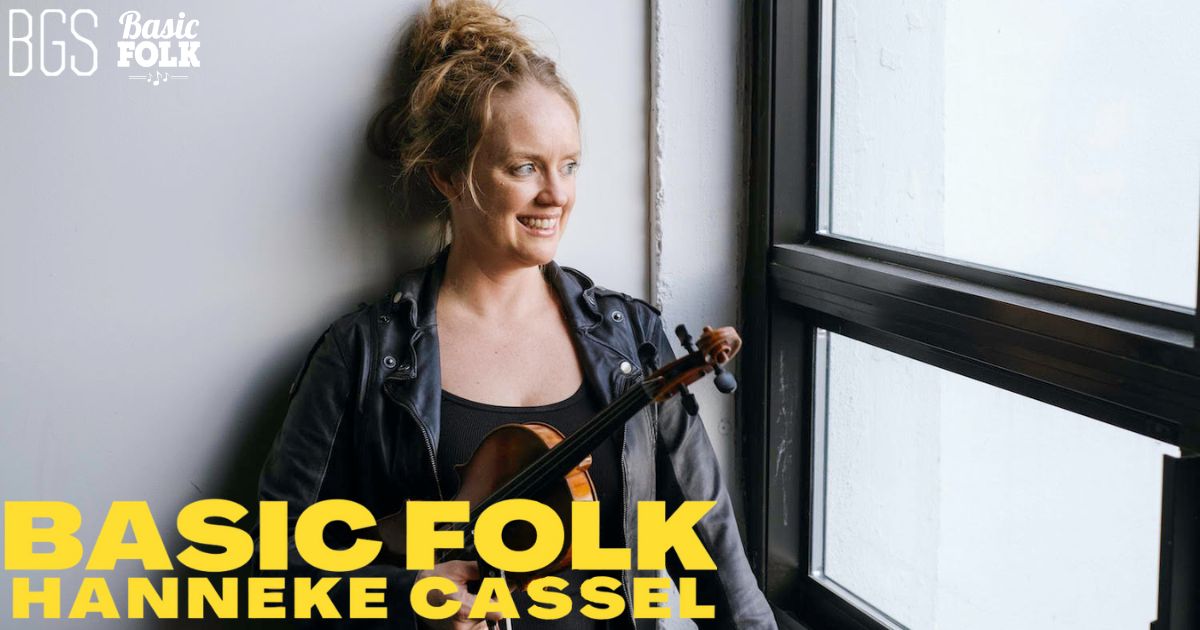
Fiddler Hanneke Cassel has been a big Celtic star for decades and comes to the pod to try and teach me the difference between Irish and Scottish music. Just kidding all you Hanneke-heads! But seriously, she helps me keep some things straight. She’s been fusing all different styles of music for a long time and her latest album Infinite Brightness weaves her signature flowing Celtic style along with traces of Americana, old-time (but she tells me she’s not an old-time or a bluegrass player), a hint of classical, and maybe even Texas Swing, which was how she first started on the fiddle. Well, she actually started playing classical and found it hard to read music, but eventually discovered a fiddling competition and fell in love with the instrument.

LISTEN: APPLE • SPOTIFY • STITCHERAMAZON • MP3

In our conversation, Hanneke reflects back on her youthful playing and how she decided to go to Berklee College of Music in Boston. Once there and along with Laura Cortese and Lissa Schneckenburger, she was at the forefront of a fiddle revolution that continues to this day in New England. She talks about her teachers who connected her to the music she loves most, the importance of encouragement from her peers and the inspiration for her to do the same for the next generation. Also, there are lots of Matt Smith references in this episode, so if you are not familiar: Matt Smith runs the historic Club Passim in Harvard Square, Cambridge and is the center point for many touring and New England folk musicians. There is no one like Hanneke! Her new album is a delight and I’m so happy to have her on the pod!


Photo Credit: Kelly Lorenz

Mandolinist Ethan Setiawan’s Influences Run the ‘Gambit’ on New Album

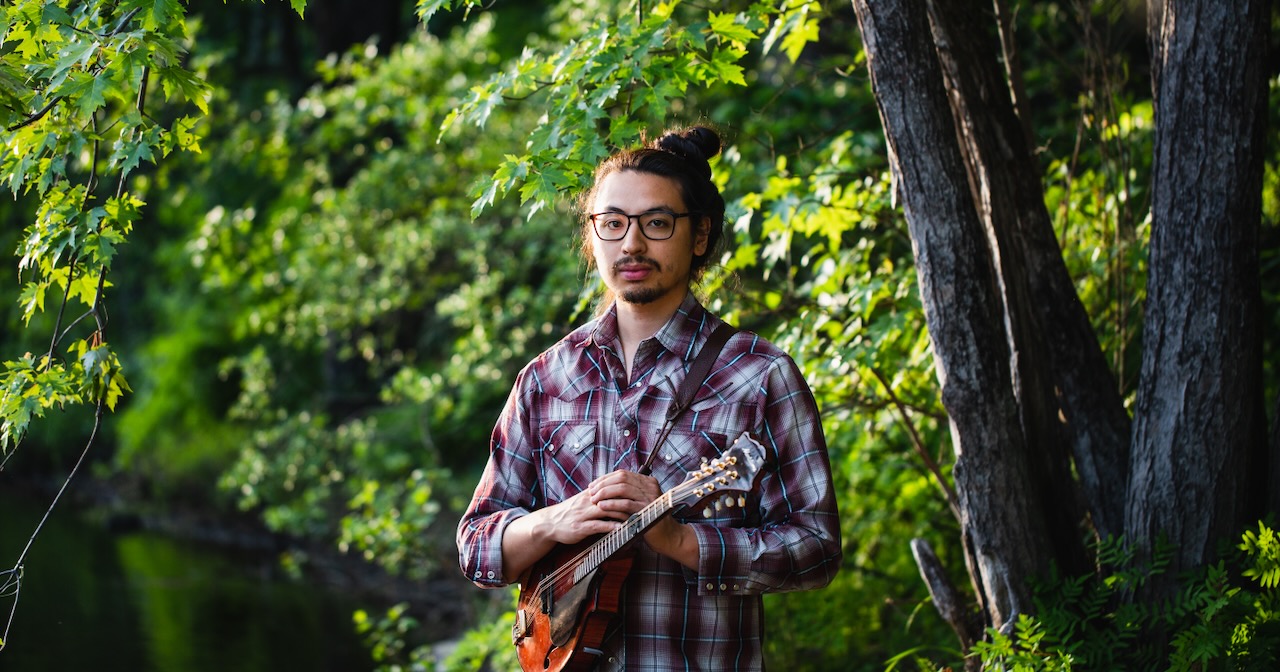
Ethan Setiawan knows the importance of a good pick. The Portland, Maine-based mandolin player has lately been experimenting with changing the entire sound of his instrument through one tiny, flat piece, pinched between his fingers. The material, girth, texture, and weight of his pick all play a crucial role in how his mandolin sounds, sometimes bright and plucky, or dark and full-bodied. “It’s good to have a sound and have gear that you like, but often the thing that helps me be more creative is just being able to change it up,” he says. “Change is helpful for your own growth and can really spark new ideas or keep things fresh.”

On his new record, Gambit, he finds himself somewhere in between, which is fitting given the way he fuses his entire musical background to create something completely new. It isn’t jazz, but it’s not not jazz. It’s bluegrass, but not in the traditional sense. It’s funk, but also old-timey. 

The Berklee College of Music grad could easily fool you into thinking he’s much older than his years. A seasoned bandmate to some of bluegrass music’s finest — including Gambit producer Darol Anger, whom he first met as a high school student — Setiawan is beginning to carve out space for his own songwriting. Written in Boston, workshopped in California, recorded in Maine, and then mixed in Nashville, Gambit, as its title suggests, is a joyful mixed bag of the many styles of music that have shaped him into one of the most formidable mandolinists of his generation. 

BGS: Darol Anger produced this record, and though you had been playing together for some time, this was your first experience working with each other in this capacity. What led to this partnership?

Ethan Setiawan: We’ve played a bunch of gigs over the years, and it just felt like a good next thing to do was to make a record with him. And he was on board thankfully. We had plans to [record] in August 2020, and then the pandemic started to happen, and it became apparent that wasn’t going to work. So eventually I did make this big road trip out to California where Darol was living at the time, and we had these really nice couple weeks out there, working through the material, just me and Darol kind of playing through the stuff, trying to solidify arrangements and get ideas down on paper to go into the studio with. And eventually in October, we made it into a studio, the Great North Sound Society Studio in Parsonsfield, Maine. We had this four-day session and worked probably 12 to 14 hours a day, every day. And sometimes sessions like those feel like work, you feel tired and drained after a day. But at least for me, those sessions felt really fun, really good. Part of that was not having played music with a band before that time for six months or whatever, and it was cool for me to see these tunes come together, and just working with Darol and seeing how he functioned in the studio. He put in the longest hours of everybody. He was up until 3:00 every night, replacing fiddle parts and working on everything. 

The tunes on Gambit are all originals, but there’s so much tradition rooted in these styles of music you’re playing. How do you reconcile that when trying to create your own compositions?

I do a lot of that, pulling from past traditions or old recordings. A lot of the compositional ideas and things that remain the same throughout the record are tunes by people like Matt Flinner and Béla Fleck, other people that have kind of pushed the envelope compositionally. On the record there’s kind of a whole, well, gambit of different styles. There’s old-timey music with fiddle and banjo, Appalachian string band [style] — and kind of in chronological order, I guess the influences would start there. Then you’d move into bluegrass, get into jazz and eventually fusion, funk, that kind of thing. Darol actually summed it up nicely. He was in the David Grisman quartet way back in the day, so he kind of had a hand in forming this style of music. He said something along the lines of, it felt like a journey through the past 40 years of his career. It just ended up this way that all these tunes grabbed from different areas of the past 40 years. The old-timey, the bluegrass, the sort of new acoustic, the jazz. And hopefully by merit of them being my tunes, they kind of hold together as a collection at the end of the day. 

How much of creating an original arrangement is improvisational?

For me, there’s always a lot of throwing paint at the wall. There’s a stage that kinda looks like that, where I write a lot of tunes or even just generate a lot of ideas, not even taking the tunes to a completed state. The way I write is kind of two stages: there’s the melody and there’s the harmony, these two sides of the composition. Basically, I write the melody and I try all different combinations of notes and phrase endings. With chords, I’m always trying different stuff. That does a lot to create a mood, I think, for the tune. For any one note, you could harmonize in many different ways, and for any one bar. So I think the important thing for me is just to try all the options, really try to be objective, and see what works the best and what feels the best. Mandolin is the main thing that I play, but I also play some guitar and some cello. So just getting off the instrument I’m most familiar with and getting onto something else can be really helpful in sparking some creativity. 

Given this wide range of styles of music you’ve played over the years, how do you describe your sound now?

I’d say that it’s sort of a furthering of the stuff that Darol’s been really involved in, this new acoustic sound. Which is not a label I totally love—just the sound of it—but it’s kinda what we got, I guess. It’s using the attitude of bluegrass in a lot of ways, but not being confined to the stylistic trappings of bluegrass if that makes sense. If you think about how Bill Monroe created bluegrass, he’s kind of the guy that finally took all these influences and put ‘em together and said, ‘here’s the thing.’ He wasn’t even trying to be original; he just was being original. He was just taking all the music that he liked and synthesizing it into what he wanted to hear. And that isn’t often actually the attitude of bluegrass musicians today, but it’s an interesting concept to me and a really interesting way to sort of look at music. So that’s the essence of bluegrass that I’m trying to go after.

How has your relationship with bluegrass evolved since your earliest experience with it?

I think bluegrass is kind of the underpinning of everything that I do, even if it’s not at the forefront of the final product. When I started playing mandolin, I started playing these old-time fiddle tunes, which pretty quickly brought me to bluegrass. When we’re talking about progressions, that is kind of the natural next step for somebody who’s interested in the tunes and the music and improvising especially. You’ll get drawn to bluegrass and then eventually to jazz and so on. That bluegrass vocabulary on the mandolin is really the basis of most of my writing and my playing. And I think that comes through on the record almost more in the way that we approach the tunes and treat how we play the tunes more than the compositions themselves. There are a couple tunes that are a little more bluegrass, but they’re always a little weird. There’s always something a little funky about them. It’s sort of the attitude of the thing that I think has stuck with me the most. 


Photo Credit: Louise Bichan

Basic Folk – Ken Yates

Ken Yates grew up in the college town of London, Ontario and he is truly Canada’s Next Top Model, by which I mean he is wonderfully talented, disarmingly nice, and from Canada, obviously. Ken is a Berklee College of Music graduate, and I took the opportunity to talk with him about that experience. Why would somebody choose to go to music school, what were you hoping to gain, and what did you actually get out of it, are questions that are fascinating to me, and Ken’s answers were super interesting. One takeaway I learned from his stories of Berklee is that even some of the most talented musicians feel like they have no idea what they’re doing.

APPLE • SPOTIFY • STITCHERAMAZON • MP3

Ken’s breakout 2016 album, Huntsville, earned him the Emerging Artist of the Year award at the Canadian Folk Music Awards. It was not just a huge and competitive honor, but it was also a defining moment where Ken started getting categorized as a folk artist.

Ken released a beautiful album, Quiet Talkers, in 2020, and instead of touring in support of that album, he had to do a bunch of covid-era online shows. I was impressed with how gracious and level-headed he seemed despite the crappy circumstances. This grace, perspective, emotional openness, and flexibility are a big part of what makes his new album, Cerulean, so special. Cerulean came out in 2022 and it bridges the gap between folk and indie rock, between skepticism and hope, between the pain of losing someone and the possibility of embracing what you have. Cerulean has a distinct groove, features vocals from Americana stars like Kathleen Edwards, Liz Longley, and Katie Pruitt, AND some of the prettiest production I’ve heard all year.


Photo Credit: Jen Squires

Basic Folk – Molly Tuttle

Growing up in Palo Alto, California, Molly Tuttle was surrounded by music. Her dad was a teacher at Gryphon Stringed Instruments, which is not-so-coincidentally where I got the pickups installed on my mini harp. Molly took to the guitar early and intensely, eventually earning a scholarship to the prestigious Berklee College of Music. But I think it was those early days growing up in California, attending bluegrass festivals with her family, basking in the glow of the jam, that set the tone for her warm and collaborative approach to playing music.

LISTEN: APPLE • SPOTIFY • STITCHERAMAZON • MP3

At Berklee, Molly formed a band called “The Goodbye Girls,” and cut her teeth touring in Scandinavia. Digging into The Goodbye Girls was a good launchpad for talking about what it means to be a female musician in Americana, as well as what happens when you explicitly call yourself an all-female group. As the first woman to win the IBMA Guitarist of the Year award, Molly has a unique perspective on this particular conundrum. It’s juicy.

I talked with Molly about her debut album, When You’re Ready, and her dazzling covers album …But I’d Rather Be With You before sifting through the many layers of her latest album, Crooked Tree. Crooked Tree features Molly’s brand-new band, Golden Highway. This new record is a study of bluegrass sensitively executed by one of the genre’s stars. Molly’s interpretations of bluegrass traditions like the murder ballad, shiny stacked vocal harmonies, and lightning fast guitar playing, are something to behold.


Photo Credit: Samantha Muljat

Basic Folk – Hannah Read

I have been wanting to talk to Scotland-born fiddler and current New Yorker Hannah Read on the pod for longer than Basic Folk has existed. I met her at the very fun camp Miles of Music in New Hampshire. We laughed our faces off all week and I was truly blown out of the water by her fiddling and singing. She’s just released a new duo album with the Scottish banjo player Michael Starkey, so it seemed like a good time to get Han on.

LISTEN: APPLE • SPOTIFY • STITCHERAMAZON • MP3

She grew up in Edinburgh as well as on the Isle of Eigg, a remote island off the western coast of Scotland, and she talks about how living simply as a younger person has impacted her adulthood. Growing up, there was a lot of music in the house: in terms of both listening and playing. Her mum played cello, sister played fiddle, and there was also a community of musicians on the island playing who she connected very deeply with. She started playing traditional Scottish music at the age of six and cites her biggest influences as the musicians surrounding the trad scene there. She made her way to America to attend Berklee College of Music in Boston and eventually moved to Brooklyn.

Her new album, Cross the Rolling Water, is filled with old-time fiddle and banjo duets with the Edinburgh-based Starkey. The two met at an Appalachian old-time session in Edinburgh in late 2019. She talks about their musical relationship as well as how Michael only has a flip phone, which is always hilarious to hear about from someone who’s on top of technology. Hannah’s hilarious, kind and has an infectious energy that carries from her personality to her music. Enjoy!


Photo Credit: Krysta Brayer

Would you like to help produce Basic Folk? You can contribute here – and you’ll get a ton of exclusive content as well!

Wes Corbett’s Banjo Needs: 10 Songs That Make Him Happy

Wes Corbett is a banjo player who wears many hats. The self-described “musically omnivorous bluegrass musician” is a true multi-hyphenate: 5-string aficionado (having released his solo album Cascade back in 2021), producer, former professor at Berklee College of Music, and musician with the likes of Joy Kills Sorrow, Molly Tuttle, and most recently Sam Bush Band.

Before hitting the road again with Sam Bush, the Washington native shared an exclusive playlist for BGS of “Wes Corbett’s Banjo Needs,” or as he puts it: the official home of all the songs that take him to his “happy place.”

“Fortune” – Adam Hurt


“Sliding Down” – Béla Fleck, Edgar Meyer, Mike Marshall


“Saint Elizabeth” – Kaia Kater


“The Hunt” – Kristin Scott Benson


“Milford’s Reel” – Noam Pikelny


“Your Love Is Like a Flower” – Flatt & Scruggs


“Come Back Darlin’” – The Bluegrass Album Band


“Poe’s Pickin’ Party” – Alison Brown


“The Over Grown Waltz” – Béla Fleck


“Goodbye, Honey, You Call That Gone” – Jake Blount


We’re giving away a Recording King Songster Banjo in honor of Banjo Month! Enter to win your very own RK-R20 here.