A New Generation of Bluegrass Stars Reflect on ‘O Brother, Where Art Thou?’

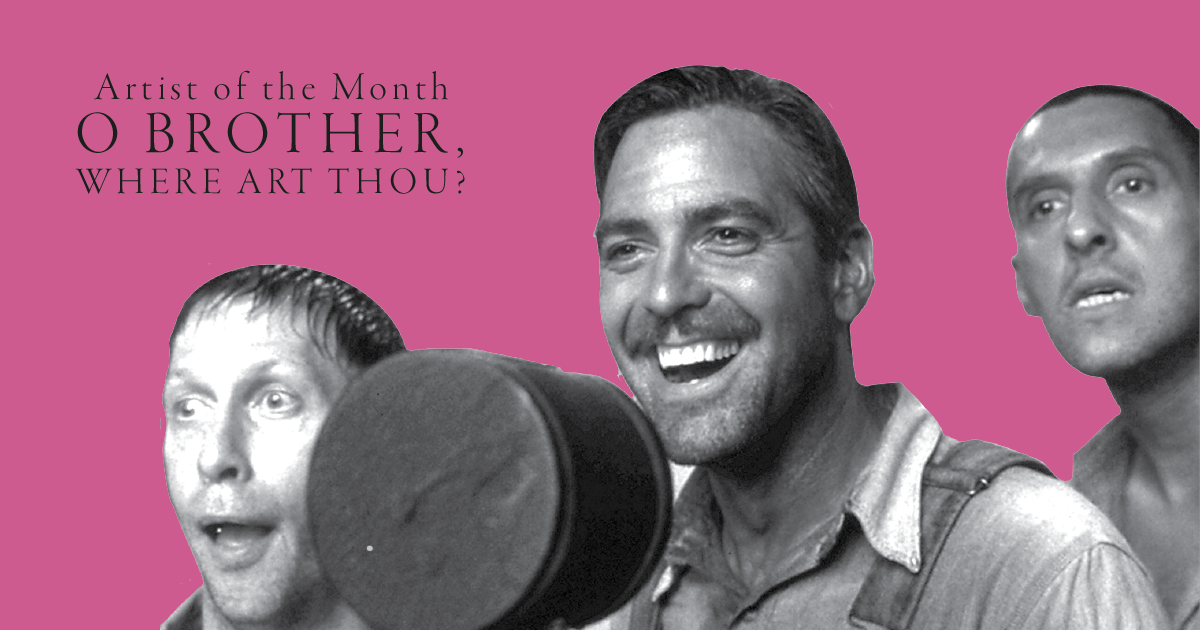
The soundtrack to O Brother Where Art Thou? was a phenomenon in the early 2000s, turning bluegrass musicians into superstars and creating an instant mainstream market for old-time music — from folk to gospel to children’s songs to prison chants to blues and everything in between. To celebrate the twentieth anniversary of its astonishing success and to wrap up our Artist of the Month series, we spoke to several musicians about the impact O Brother and its subsequent tours had on their lives and livelihoods.

Sierra Hull: “I grew up in a little town with maybe 900 people, and there used to be a poster section at the Walmart the next town over. You could flip through the posters and there would be pop stars like Britney Spears and Backstreet Boys. I was always convinced that one day I would find an Alison Krauss poster in there. She was as popular in my little kid brain as Britney Spears. So it was cool when O Brother came out and elevated some of those people who were already giants to me, like Alison and Dan Tyminski and Ralph Stanley.

“I was already playing, but I was too young to be touring yet. By the time Cold Mountain came out [in 2003], I was part of that tour. Alison was part of both soundtracks, and she invited my brother and me to go on that tour. So we got to help celebrate that second wave. I was 12, and it was really the first time for me to be out on tour, travel to so many different places, and play Red Rocks and the Beacon Theater in New York. Standing at the side of the stage and listening to Alison sing to hundreds of people every night every night was one of my favorite memories.

“It was amazing to watch people go crazy over Ralph Stanley every night. He had this dazzled suit jacket that he wore every night. Sometimes he would sit his banjo down while his band played and take that jacket off and throw it to me at the side of the stage. I would get to wear that dazzled jacket at the end of the show when everybody came out on stage. It’s one of the most special musical experiences I’ve ever had.”


Sara Watkins: “O Brother was something we somehow became affiliated with. Nickel Creek had just released our band’s first record on Sugar Hill, after years of doing just little homemade projects. Alison Krauss produced it, which had been out maybe a year and a half when O Brother came out. She was a big part of that soundtrack, of course, so our band was gaining a little bit of notoriety. I remember reading a huge New York Times spread, and we were listed among the people on that scene. We were part of that conversation, despite not having been part of the soundtrack in any way. We were just at the right place at the right time, and the awareness of the bluegrass scene just exploded. We were able to reach a different level very quickly. It was a huge advantage to our career. We already had some momentum, but the soundtrack really put the wind in our sails.

“T Bone Burnett [who produced the album], one of his brilliant skills is finding the right people for the right song. He brought in some incredible musicians in a way that really showed the musicianship in our community and made everyone really proud of our scene. We saw our heroes up there, and it was gratifying to see them celebrated by a huge audience. I remember feeling a new respect for Ralph Stanley with that vocal [on ‘Oh Death’]. That actually turned me on to shape-note singing. Someone told me his delivery was reminiscent of those old communities that did shape-note singing and those old preachers who used to sing that way. I’d never heard anything like it. And to this day, whenever I see Dan Tyminski, I make a point to stick around until he plays ‘Man of Constant Sorrow.’ No way I’m leaving before then.”


Dave Wilson (Chatham County Line): “I remember going with our old bass player to see O Brother in the theater. We snuck a bottle of whiskey in and sat in the back row and just laughed and drank. I remember thinking, ‘Bluegrass has arrived!’ We were already a band and playing small gigs around town, but we weren’t at a place where we had dedicated our lives to it. So it was kismet for us. That record came out, and the scene just exploded. Suddenly we had this huge advertisement out there in the world for the style of music we were playing. We definitely noticed a change. There were more strangers coming to see us play gigs, and they were really excited about it. One side effect was people would yell out for us to play ‘Man of Constant Sorrow.’ They did it enough to make me wonder if they had heard the soundtrack or just seen the movie. But we never played it. We didn’t know how! It would have probably shut them up if we had!

“I really got into the record. There are some badass arrangements on there. And it’s not corny. It’s not super traditional. I love that they reached out to the right people. It could have been bad. They could have gotten Toby Keith or someone like that. Oh god, I don’t even want to think about that! One of my favorite parts is that blues song by Chris Thomas King [a cover of Skip James’ ‘Hard Time Killing Floor’]. It makes for such a special moment. Later, they booked that concert film [Down from the Mountain, recorded at the Ryman Auditorium] at our old classic movie theater here in town, and I remember the boys going to see it and we were all just floored. That was almost bigger than the movie as far as having an impact in the folk music scene.”


Sam Amidon: “People in the folk world can be very protective of the music, which I think is valid. But my inclination is that if I find something I’m excited about, I want to share it. I want people to know about it. To have grown up in a world knowing a lot of the corners O Brother explores, it was beautiful to think about how many people all of a sudden were going to discover these field recordings and these great musicians. And I was thankful because until then, portrayals of traditional music in the mass media had just been so bad and so clichéd or so simplistic. Nothing had depicted this stuff on this scale before. Before then, if you told somebody you played banjo, they would think Deliverance. That was their frame of reference.

“For O Brother to do it without messing it up was a miracle. To see these different corners of American music — beyond just blues and bluegrass as the two major industry terms — was a very positive thing, especially because ‘folk music’ can be such a heterogeneous category. Nobody would even really know what you were talking about if it wasn’t bluegrass or blues. O Brother pointed to all of these different areas. It’s singing games and banjo songs and all these different things. O Brother is weirdly inclusive. It cast a wide net. Nowadays it’s easy to go to the soundtrack and hear more problematic elements of the whole Americana genre thing, but I think it’s good to remember that when it first came along, it was much more nuanced compared to what had come before.”


Woody Platt (Steep Canyon Rangers): “It’s interesting that the twentieth anniversary of O Brother is fairly parallel to the twentieth anniversary of our band. We formed in Chapel Hill, North Carolina, when we were seniors in college, right when the movie came out. We all had been exposed to bluegrass and old-time just by being Carolinians. We all had that music around when we were growing up, but none of us in the band really dove into it until we were in college. We’d only been following that music a few years when the movie came out. I’m not sure we were aware at the time of the impact that the movie and the tour had on bluegrass, old-time, string band, mountain music, but we could feel some excitement when we were playing bars on Franklin Street, which is the main drag in Chapel Hill. But we didn’t really have anything to compare it to. There was no before or after. It was just what we were doing, and that’s all we knew.

“I really enjoyed the movie, but I was a big fan of the album. Hearing Ralph Stanley’s voice in a film, or Dan Tyminski’s, or just seeing people I admired in that movie was pretty incredible. Looking back on it, it was good timing for us to be getting off the ground, and we were having so much fun and finding so much joy in it. The music we were playing had been a small niche, but all of a sudden it had this national interest. I have no doubt in my mind that the awareness of the music was fueled by the movie. It’s a fascinating phenomenon to think about, because it wasn’t marketed in any significant way. It just happened. It was just this thing where people were suddenly into this music.”


Molly Tuttle: “The movie came out when I was seven years old, and I remember my dad showing it to me when I was in grade school. I loved it, and the music really stuck with me because I already had an affinity for bluegrass and old-time music. Seeing it performed in a movie was new and exciting. My dad teaches bluegrass for a living, and when the movie came out, he had an influx of new students.

“It’s had a lasting impact on the popularity of bluegrass music. But I was so young that I didn’t know many of the musicians on the soundtrack by name, so it introduced me to a lot of artists who later became my favorites. And the Down from the Mountain documentary further familiarized me with people like Emmylou Harris and Alison Krauss. Many of those artists, like Gillian Welch and John Hartford, have been big influences on me, and that was my introduction to their music. I’ve performed ‘I’ll Fly Away’ and ‘Angel Band’ a number of times, and I got to do ‘Man of Constant Sorrow’ with Dan Tyminski at the IBMA awards one year.”


Dom Flemons: “I actually saw Ralph Stanley on the O Brother tour in Flagstaff, Arizona, in the year 2000. It was at this random high school. I saw the poster on a telephone pole when I was going to college there. I’d started playing the banjo by that point — six-string and four-string banjo, guitar, and harmonica. I remember the place was really packed out, and he gave this amazing performance. I just loved watching the man at work. When he sang ‘Oh Death,’ he pulled this piece of paper out of his pocket, put on his glasses, and made a joke about how old he was. And he just sang it off this piece of paper and blew our minds.

O Brother was very interesting, and I think it’s still a milestone album for several generations. A lot of the old folks who played those old styles and sang those old songs were starting to pass away, so the soundtrack ended up being a perfect vehicle for getting younger people into the music of the ‘20s and ‘30s. It reminded people of the really good old recordings that were available. That’s where I went. I found the old RCA Victor and Columbia recordings, and that was it for me.

“It’s a perfectly structured record, opening with the prisoners on the chain gang and then it goes to that beautiful ‘Big Rock Candy Mountain.’ And then you get into “You Are My Sunshine” with Norman Blake, and then Chris Thomas King presenting ‘Hard Time Killing Floor.’ That in itself was a revival of Skip James. People talk about Ghost World and Devil Got My Woman, but I think O Brother got it going. People just started casually bringing those songs back in at shows and festivals, and it seemed like a lot more people knew them. Of course they would sing them like the recordings on O Brother. Those are just things I observed before I was a professional musician, and it was amazing to see.”
 

Peter Rowan, Béla Fleck, Sharon Gilchrist, Josh Williams – Toy Heart: Remembering Tony Rice

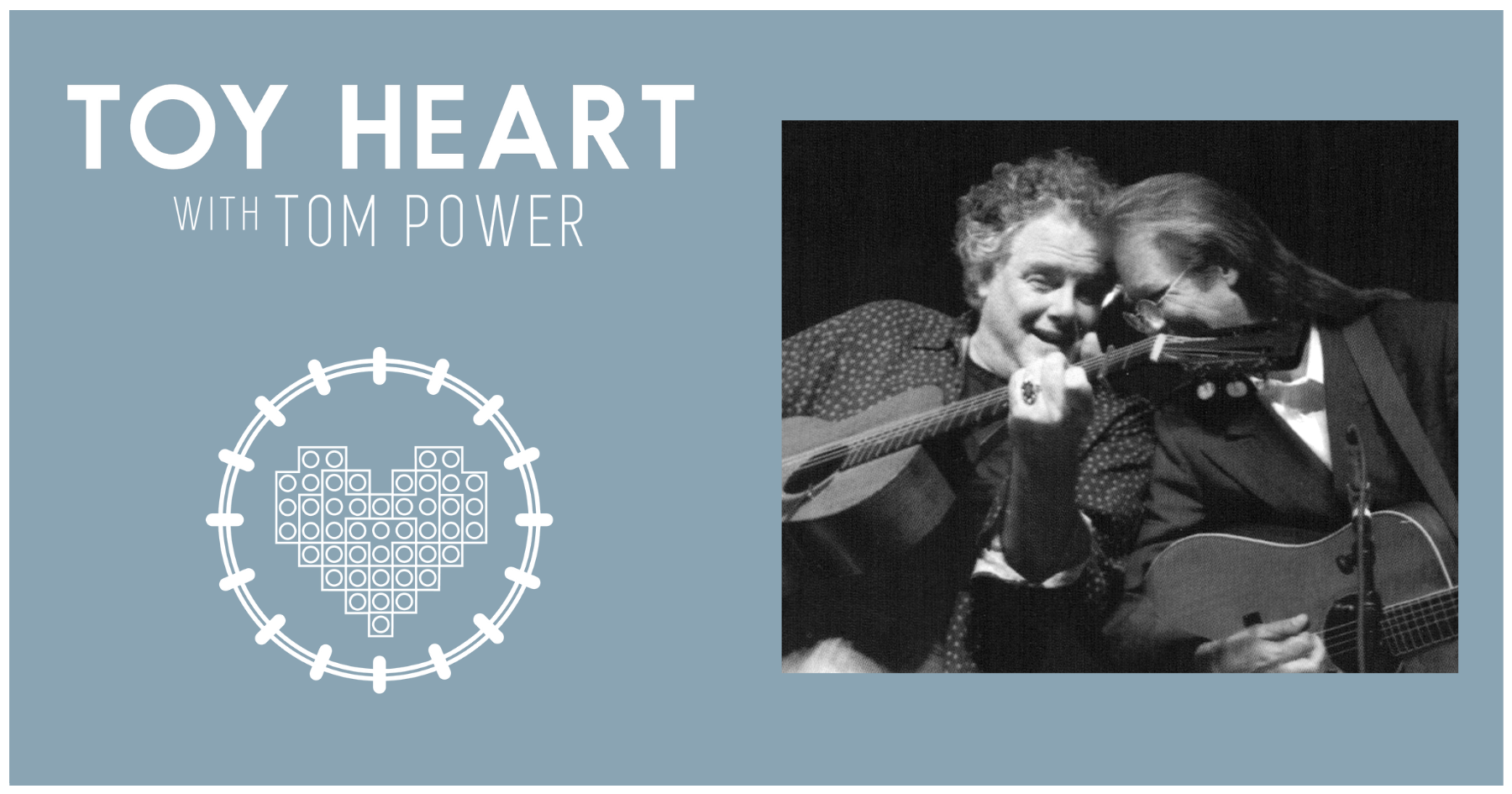
Host Tom Power speaks with Peter Rowan, Béla Fleck, Sharon Gilchrist, and Josh Williams all former bandmates, collaborators, and peers of Tony Rice, in the second edition of our special tribute, Toy Heart: Remembering Tony Rice.

LISTEN: APPLE PODCASTSSPOTIFYMP3

On episode 2 of our limited series, Toy Heart: Remembering Tony Rice, host Tom Power begins with Béla Fleck, talking about the making of two legendary albums: Drive and The Bluegrass Sessions: Tales from the Acoustic Planet, Vol.2. Fleck relates what it was like to work with Tony in studio and some wild stories about their touring together.

Also in the episode, mandolinist and instructor Sharon Gilchrist displays a rare perspective on Tony’s life. Something of a recluse, Tony would often drive by himself after gigs, hours and hours overnight. Gilchrist had the rare opportunity to join him for some of these drives and tells some stories of what she learned on those trips to and from Quartet shows. Later in the episode, a conversation with Peter Rowan about his early memories of Tony – and how he compared with his mentor Clarence White. To conclude, Josh Williams talks about being Tony Rice’s “voice” in his band, the Unit, how Tony helped him get through one of the darkest periods in his life, and why Tony was and is his hero.

Editor’s note: Heart part three of our special tribute to Tony Rice here


Photo credit: Michael Sheehan


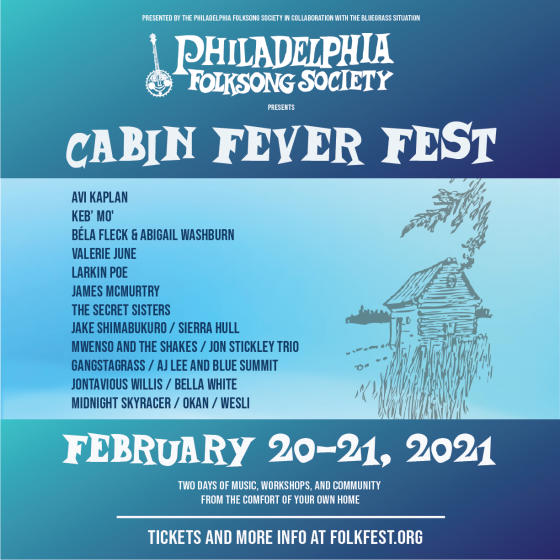
BGS & Philadelphia Folksong Society Partner on Cabin Fever Fest

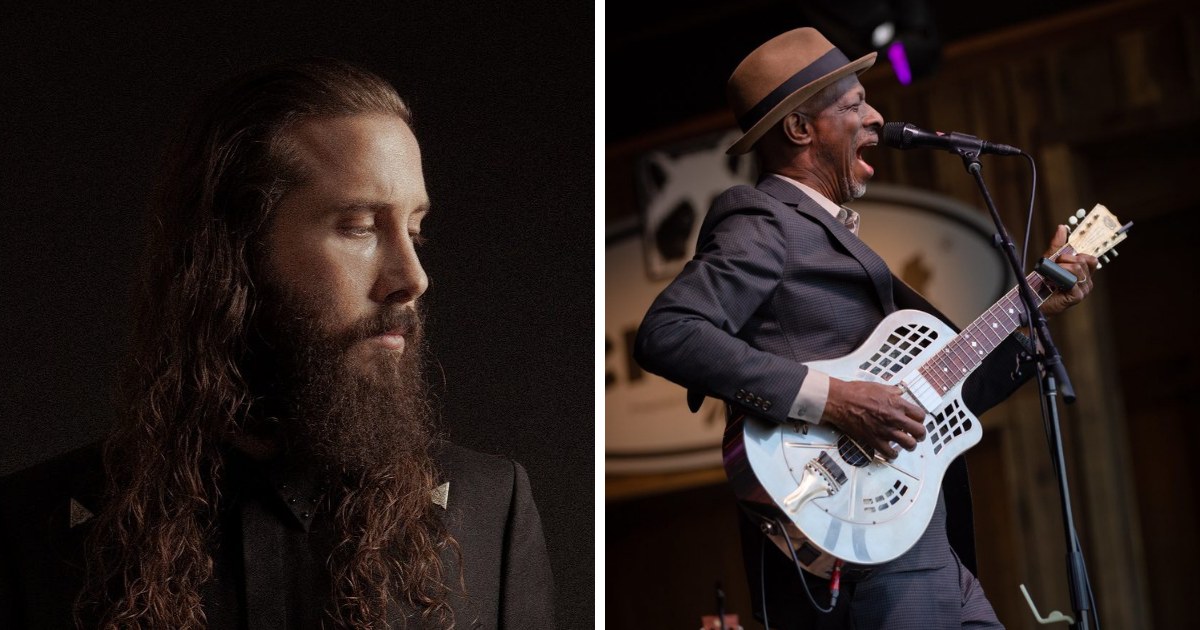
BGS has partnered with the Philadelphia Folksong Society, presenters of the oldest continuously run music festival in North America – the Philadelphia Folk Festival – on a special, winter digital music event, Cabin Fever Fest, to place February 20 & 21, 2021! Pandemic or not, this winter, everyone will have a cozy front row seat as PFS and BGS present this fully digital, interactive musical experience complete with multiple streaming stages and featuring performances by Avi Kaplan, Keb’ Mo’, Béla Fleck & Abigail Washburn, Valerie June, Larkin Poe, The Secret Sisters, and many more. (See full lineup below.)

Tickets to Cabin Fever Fest are available now, including early bird pricing valid until end of day tomorrow, January 30. Details and tickets are available at folkfest.org. Early Bird weekend passes to Cabin Fever Fest are available for just $35 for PFS Members and $40 for Not-Yet-Members. Your ticket gives you full access to the event from February 20 until February 28, to watch at your leisure and convenience. 

Building on what they’ve learned from their virtual festival forays last summer, PFS & BGS will once again bring a vibrant, online music festival experience directly to music enthusiasts’ homes to mark only six months left in the long wait until the 60th Annual Philadelphia Folk Festival in August of this year. Like the festival, Cabin Fever Fest will feature unforgettable original performances from national headliners, international stars, and local talent. Branching out from past Folk Festival programming, Cabin Fever Fest will also feature an emphasis on music workshops and performance that digitally bring us closer together during these difficult winter months of isolation. 

Whether you’re a seasoned performer wanting to strengthen your skills, curious about an instrument or style, want your children to participate in a music lesson, or just want to sing along, ALL attendees will be able to watch these amazing workshops, while VIP attendees will be able to participate in all of the workshops they choose.

Cabin Fever Fest will include performances by: Avi Kaplan, Keb’ Mo’, Béla Fleck & Abigail Washburn, Valerie June, Larkin Poe, The Secret Sisters, James McMurtry, Jake Shimabukuro, Sierra Hull, Mwenso & the Shakes, Gangstagrass, AJ Lee and Blue Summit, Jontavious Willis, Midnight Skyracer, Bella White, Wesli, OKAN, and more to be announced.

All ticket purchasers will be able to watch Cabin Fever Fest on demand until February 28, 2021. FAQ here.


Photo credit: Avi Kaplan by Bree Marie Fish; Keb’ Mo’ by Ryan Case.

What Was Tony Rice Really Like? Todd Phillips Reminisces With Robbie Fulks

No BGS reader needs a rundown of Tony Rice’s biography or accomplishments. Earlier this month I chatted with Todd Phillips, Tony’s close friend and bassist across multiple groups (David Grisman Quintet, Bluegrass Album Band, Tony Rice Unit) from 1975 to 1985. During these years Tony used inspiration from mid-century jazz and musical peers, along with his innate willpower, as levers to crack open a stunning new guitar vocabulary. In doing so he rose from a bluegrass badass to a global force, operating well above tribes and vogues.

When Todd emerged in the 1970s, bass guitar was a cross-genre norm. A young upright player who melded Scott LaFaro’s gracefulness with J.D. Crowe’s timefeel was a fairly wonderful anomaly in bluegrass. I started working with Todd in 2014, and grew close with him fast. He brought something rare — a relaxed whiphand — to the feel onstage. In the van, he indulged my ceaseless fanboy questions about the old days. An equable ex-stoner with a mildly grumpy edge, he’s as adept at building an instrument or a chicken coop as analyzing acoustic riddles, and his long experience working with people as unalike as Joan Baez, David Grier, and Elvis Costello gives him a high perch from which to reflect. He reminisced fluidly about Tony over the phone with me for two hours, stopping only twice, once overwhelmed by emotion and once to get a bottle of tequila. (Read more from our conversation at my blog.)

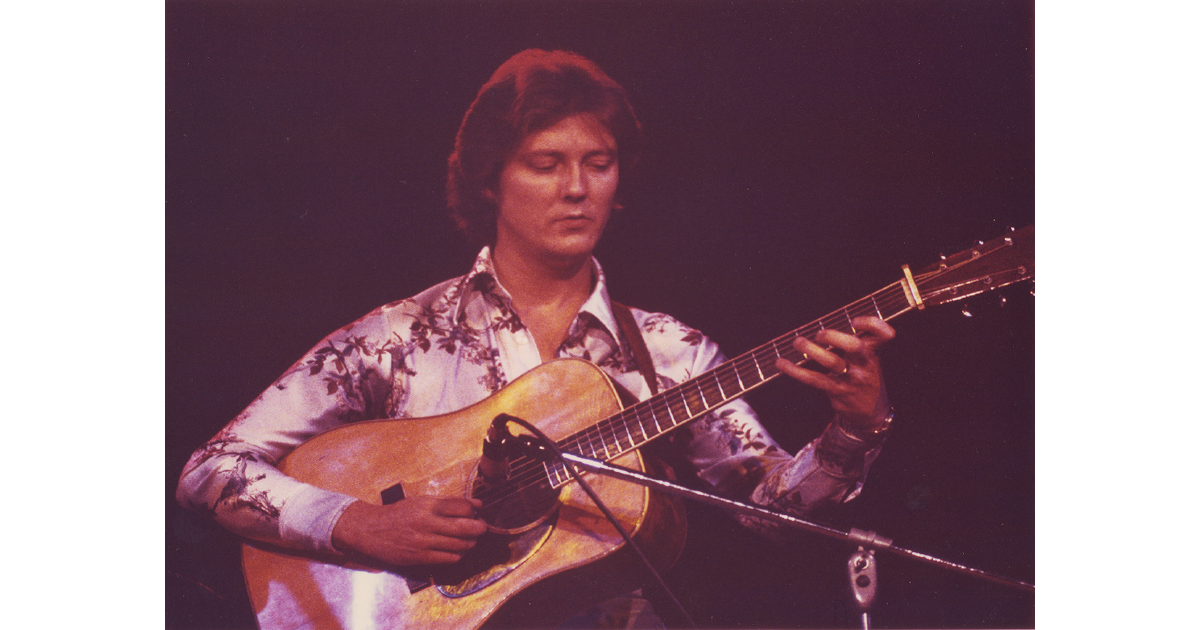
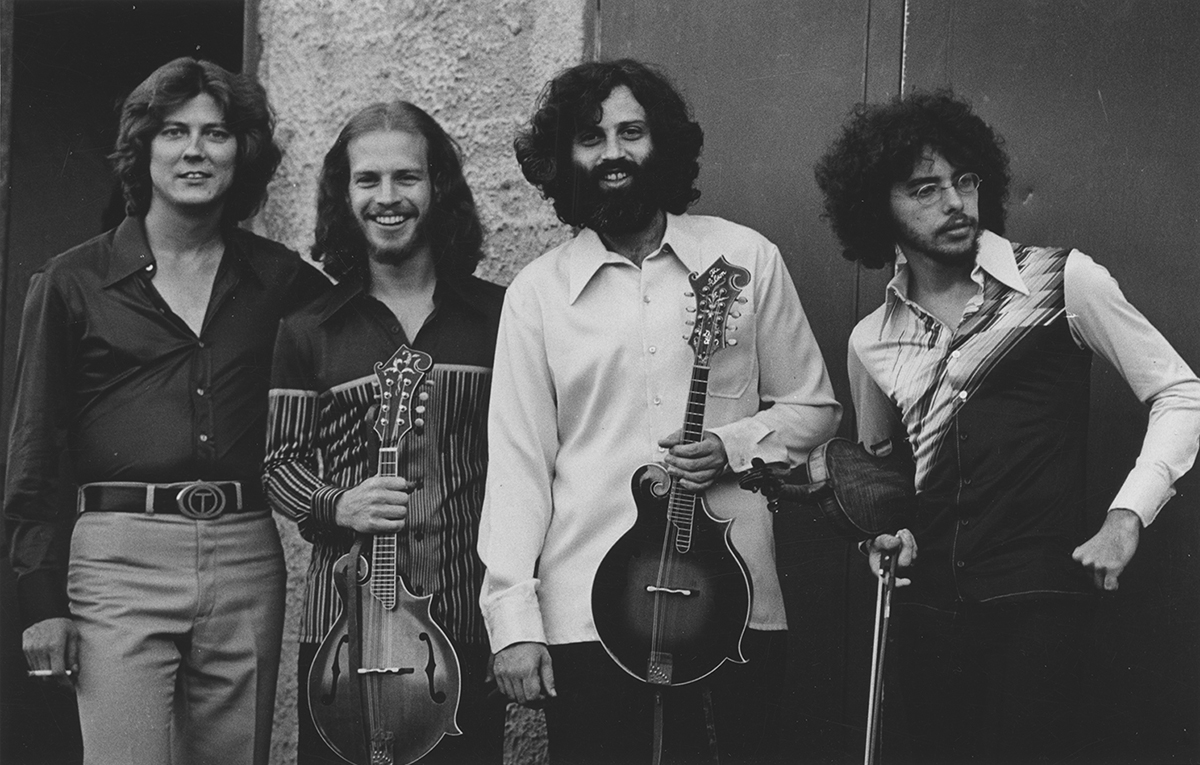
Members of David Grisman Quintet, 1977. L-R: Tony Rice, Todd Phillips, David Grisman, Darol Anger. (Photo by Jon Sievert.)

Robbie Fulks: I listened back today to California Autumn and other records I hadn’t heard for ages, and heard little passages that sounded uncharacteristic of Tony. Did gestures come into his vocabulary, stay there for a while, and then fade off as he went to concentrate on another idea?

Todd Phillips: That’s true, yeah. He would go through cycles, get on a kick. He’d get on riffs, like hearing Billy Crystal: “You look marvelous.” He’d say that 40 times a day, and a year later, drop it for some other riff. The vocabulary would change, according to the era.

That’s fascinating, to compare it to a non-musical example. So let’s dive in, go back to the start. Tell me about meeting Tony — when, where, and how you guys got underway with the Grisman project.

I was a beginning mandolin player, and I was certainly in over my head, playing mandolin with David, but he’d never heard me play bass, which I’d played since I was a little kid. This was 1974, and Clarence White had died the year before. And we just thought, this is a good band, we don’t need a guitar — no one else could fill Clarence’s shoes, and he’d be the only guy that would work in this thing. Then David came home from a Bill Keith recording session and said, “I just met the guy that could do it.”

(Photo by Todd Phillips)

Shortly after that, J.D. Crowe and the New South were on their way to Japan, and they stopped in San Francisco to play one gig. They hung with us for a couple days and… I had never hung with, um, that many guys from Kentucky all at once. [Laughs]

I’ve told you about that Mexican restaurant in Berkeley. The Californians — me, Darol, and David — and the Kentucky guys — J.D., Tony, Ricky, Jerry, and Bobby — were seated at one giant round table. First, Crowe ordered: “Six tacos and a Coke!” Then each New South guy ordered exactly the same. I guess they were used to the little three-inch tacos you can eat in two bites. So this big table ended up covered with plates full of giant tacos, surrounded by a pretty interesting mix of characters. I wish we had a photo. Polyester and tie-dye T-shirts all around.

After they came back from Japan, Tony gave J.D. his notice. He hooked up a little U-Haul trailer — clothes, suitcase, guitar, and stereo system — and got an apartment in Marin County. And we started rehearsing. At that point, we had what we had, but then Tony’s chemistry came into it. And it just catalyzed the whole thing. It was huge. Tony had to learn his harmony and a bunch of chords he hadn’t really played before — but we had to learn to play rhythm like J.D. Crowe. So we probably rehearsed for another six months before we went out and played our first shows.

Recording the first David Grisman Quintet album. (Photo by Todd Phillips)

Tell me about the first gig.

Our first show was in Bolinas [in Marin County], in the community center. We made our own posters and put them up all over Bolinas, so it was sold out. And no sound system. We wanted people to hear us just like we rehearsed. There were probably 200 people there.

So small room, gather round, and somehow the guitar projected through.

We played with dynamics — if Tony was soloing, we shut ourselves up. We got down light and tight under him. Since we hadn’t played through a sound system, we just did what we did every day anyway.

The first on-the-road thing, not long after, was in Japan. Our show was a bluegrass quintet with Bill Keith and Richard Greene, followed by a set of DGQ. Then, as soon as we got back from Japan, we recorded the first quintet record. So it still had that energy. We were still excited to hear it, too, every time — it would raise the hair on our arms! It was kind of a… strong existence. Life felt — pumped up, you know?

First photo of David Grisman Quintet, 1975. (Photo by Todd Phillips)

Close companions in an intense situation. A lot of people have been in a band or in the army. But on top of that, you guys were altering the course of music.

Yeah. Maybe it is a little like an army buddy. I was a cross between his bass player and his little brother. Also his babysitter, sometimes! He had left his old friends, and when he came to California, I seemed to be the guy he gravitated to. On off days, all of a sudden there’s a knock on the door at 10 a.m., and it’s Tony — “Hey man, let’s go the boardwalk, ride the roller coaster. Let’s go to the record store.” We went to the record store a million times. Came home with bags of records and stayed up all night listening — I mean, he taught me to listen close, whether playing music or just listening to records.

Any memories of the 1975 Grisman Rounder album sessions?

Tony was hilarious! We’d go out to eat, and he’d come back with a couple of cloth napkins. He’d fold one up and put it on his head, and put on sunglasses. Looking like a weird Quaker. And then drape another napkin over his left hand and go, “I don’t want anybody to steal any of my licks.” [Laughs] He’d leave that thing on his head, with the sunglasses, for like, three hours.

(Photo by Todd Phillips)

Have you heard guitarists who managed not to sound like Tony, in the years since?

Well, because Tony opened the door, after Clarence, you can’t help but sound like him as a bluegrass soloist. He found those avenues on a fingerboard that you can play with a strong attack and accurate, strong expression. A lot of it is mechanics. A D-28 with semi-high action, there are certain phrases that fall naturally under your fingers, and Tony found those. So I think a lot of guitarists use those avenues because — they’re there. You might hear different phrases but they’re not as strong. They might be more interesting, or more academically pleasing, but the effect — I haven’t heard it as strong as in those passages that Tony found.

Tell me about Manzanita.

There was no preparation that I remember. The guys came to Berkeley and we went to work. We ran a tune for 20 minutes, then recorded it maybe three to six times.

Béla Fleck said Tony didn’t like to rehearse much.

Yeah. Sink or swim.

David Grisman, Todd Phillips, Tony Rice (Photo by Todd Phillips)

Any road memories involving Tony?

He didn’t go out a lot. We went to Japan once, the three Rice brothers — Larry, Wyatt, Tony — and me. And Tony — maybe that’s when he started — he just never left his hotel room.

What was he doing in there?

Ordering room service. Later, traveling with the Unit, he’d stick to the room. I mean…he pretty much lived in front of his stereo, smoking cigarettes and drinking coffee. That’s what he thrived on.

How did you listen to music away from the home stereo back then?

In the early days, he drove a noisy Dodge Challenger. A muscle car, with a cassette player in the dashboard. We’d listen loud. And driving from Grisman’s house back to mine every night, it was pretty much all John Coltrane, the classic quartet.

Interesting!

Yeah, and later, a lot of Oscar Peterson. He’s like Tony: you recognize the phrases, and they’re strong as hell. Meticulous mechanics. Tony never studied music academically — but the sound of it. He took that in and it’d come out later somehow, the power and the attitude, more than specific notes or theory.

(Photo by Todd Phillips)

Did he have any relationship to the written page?

No. Not at all.

Tony cited Miles Davis and Eric Dolphy as favorites, but I don’t hear a strong kinship.

I think those were unique voices. Like Django, or Vassar.

Individualists.

I think that’s it. The attitude. He liked those kind of characters, like David Janssen — he really had an obsession with David Janssen. Or Lee Marvin.

Ha!

I’m not kidding! The Marlboro Man.

People that laid it down.

Exactly.

David Grisman Band in silhouette, 1976. (Photo by Todd Phillips)

I’m curious about the chemistry between Tony and other strong personalities. You’ve told me your take on the Skaggs-Rice dichotomy, the good and bad guys from everyone’s high school…

Yeah, Ricky would be class president and Tony would be Eddie Haskell. [Laughs] There’s a little of that, but musical respect bridges all gaps.

With David, did Tony slip easily into a sideman role?

The chemistry was — not volatile, but exciting. The New Jersey hippie and Mister Perfection. You know, when Tony was new to California, David’s living room was a real event. You never knew who you’d run into — Jethro Burns, Taj Mahal, Jerry Garcia. I think that excited Tony. He’d dig in his heels, just be who he is, and people respected that. He was…I guess I want to use the word “stubborn.” Clear-headed, with his vision.

Were cigarettes it for Tony, or were there harder things he liked to do?

No! He actually went light on the marijuana, compared to everyone else in Marin. He kinda puffed a little bit, just to participate.

Any whiskey?

No, he drank a few beers at home. I don’t remember any hard liquor at all.

New Year’s at Great American Music Hall, 1978-1979. (Photo by Jon Sievert.)

I read in The Guardian obit: “apprentice pipe fitter”…?!

Yeah! His dad was a welder, pipe fitter, and Tony and his brothers did that too.

What did he do to keep his fingers strong besides play?

Nothing. He bit his nails. He had no fingernails, and his fingertips looked like blocks of wood. Like the rounded end of a wooden dowel. The guy played a lot. He had hands that physically, mechanically, work in a different way. He could push down with his thumb, on his right hand, but also push up, with his first finger. You can look at YouTube and see it — a really strong muscular mechanism between thumb and index.

His down and upstrokes weren’t ascribed to the usual beats, weren’t automatized in the normal way — and were equally forceful.

Yeah. And rhythmically, a lot of triplet syncopation on the upstrokes. People just say “syncopation,” but technically it’s playing 3/4 against 4/4, like Elvin Jones’s drumming. You can’t tell if it’s in 3 or 6 or 4 or 2. It’s all of it. It’s all of it! And those subdivisions, I learned that from Tony — you slice that up in all kinds of ways, so those polyrhythms are all churning in your hands or head at the same time. That’s what generates good time, not tapping your foot. Tony had all those superimposed polyrhythms in him.

(Photo by Todd Phillips)

Bluegrassers work hard and live long, on the whole. And with so many players of your generation now in their 70s and performing as energetically as ever, Tony’s story looks more profoundly sad to me.

You know, I don’t know why Tony went the way he went. Why he couldn’t be as youthful as Sam Bush. Who knows, if there was some kind of a depression, or if that desire for perfection wore him out. You know? Because he did play with joy, but it was also that crazy obsession, to be perfect and accurate — maybe he was just too hard on himself.

He was hard on everybody around him. I know that I developed way more than I ever would have developed if I’d never known him. It was not that he was ever mean or harsh to me, but being around him, you put pressure on yourself to live up. I think everybody that played with him was like that. He jacked up the music to this level — and then it was your challenge to get up there with him. Being around him changed me forever.


Lede image by Heather Hafleigh. All photos provided by Todd Phillips and used by permission.

LISTEN: Joe Mullins & the Radio Ramblers, “Readin’, Rightin’, Route 23”

Artist: Joe Mullins & the Radio Ramblers
Hometown: Xenia, Ohio
Song: “Readin’, Rightin’, Route 23”
Album: Industrial Strength Bluegrass
Release Date: March 26, 2021
Label: Smithsonian Folkways

In Their Words: “The great Appalachian migration of the 20th century placed tens of thousands of families from the hills and hollers into the industrial region of southwestern Ohio. Three shifts a day produced steel, paper, automobiles and more, from Cincinnati northward to Hamilton, Middletown, Dayton and Springfield, in the Miami valley of Ohio. No one makes better music than homesick hillbillies and they picked and sang at neighborhood taverns, churches, radio stations and fairgrounds. My parents left Kentucky in 1964 and I was born in Middletown, Ohio, one year later. Dad was a fiddler and radio personality spotlighting bluegrass music for the entire region.

“‘Readin’, Rightin’, Route 23′ was penned by Dwight Yoakam early in his career. His roots travel US Route 23 from eastern Kentucky to the Columbus, Ohio region. My mother’s parents lived a few miles off Route 23 in Lawrence County, Kentucky, in a’ ‘holler.’ Our family made the trip from Ohio to see my mamaw and papaw Williams hundreds of times. This song’s second verse was so personal to me, it took a lot of rehearsal to sing through my emotions. Seeing their porch light burning brightly, as a kid, meant I was soon to welcomed into their loving arms. In these troubled times, it’s a memory I cherish and find very comforting.

“‘Readin’, Rightin’, Route 23′ is the opening track to the forthcoming album entitled Industrial Strength Bluegrass. The 16-song project will feature songs all connected to the rich history of bluegrass music created, written or recorded in my neighborhood, southwestern Ohio. I can’t wait until the world hears Dan Tyminski, Lee Ann Womack, Doyle Lawson and more artists performing songs draw from a deep well of classic bluegrass!” — Joe Mullins


Photo credit: Russ Carson

‘O Brother, Where Art Thou?’ Created an Instant Audience for Old-Time Music

The O Brother, Where Art Thou? soundtrack, which was just starting to pick up momentum twenty years ago this winter, was both a forethought and an afterthought. The Coen Brothers had an idea for a film and even a title borrowed from Preston Sturges’ 1940 comedy, Sullivan’s Travels, but no screenplay. They commissioned T Bone Burnett to assemble a sprawling playlist of old-time music for them to use as writing prompts — original recordings from the first half of the twentieth century as well as new recordings of old songs. He gathered some of the finest vocalists and players, including Emmylou Harris, Gillian Welch, Alison Krauss, and members of Union Station, as well as Norman Blake, Sam Bush, and John Hartford. In various combinations they produced around sixty tracks covering hillbilly plaints, gospel numbers, Protestant hymns, children’s songs, labor songs, even prison songs.

From that pool the Coens selected a handful of tracks that served as the skeleton for their screenplay, which became a Deep South retelling of The Odyssey. As three yokel chain-gang fugitives wander the backwoods and cotton fields and gravel roads of Depression-era Mississippi, they inadvertently become country stars thanks to a hasty version of “Man of Constant Sorrow,” originally recorded in 1917 by Dick Burnett and re-recorded for the film by Dan Tyminski. Along the way they encounter a parade of white-clad Christians singing “Down to the River to Pray,” a blues singer who regales them with a campfire rendition of Skip James’ “Hard Time Killing Floor,” and a KKK klavern performing a Busby Berkley routine in white sheets and hoods.

Whittled down to eighteen tracks, the soundtrack hit stores just a few weeks before the film, and it seemed designed to stand alone as an upscale release. As Luke Lewis, formerly chairman/CEO of Universal Nashville, told Billboard in 2015: “When we were putting it together, a bunch of us said, ‘This is probably going to be a coffee table kind of a CD, where people will leave it around and be proud to have it.’ That turned out to be pretty much true… A lot of people that don’t buy records at all, or buy one a year, bought that record.”

Still, no one figured it would sell any more copies than your typical soundtrack, and certainly no one predicted it would so completely eclipse the film. Its success has been astounding: It has sold nearly 9 million copies, hung around the upper reaches of the Billboard Top 200 for several years, won the Grammy for Album of the Year (beating out Bob Dylan and Outkast, among others), spun off a sequel, inspired a series of tours and live albums, and redefined a massive market for traditional music in America.

Twenty years later, the gulf separating film and soundtrack remains remarkably wide. The former is glib to the point of nihilism, as though every line of dialogue and every camera angle is surrounded by quote marks. The soundtrack, by contrast, is sincere to the point of evangelism, as though these old songs were pieces of secular scripture. The music plays everything straight, while the film can’t keep a straight face. The soundtrack became a phenomenon, while the film sits in the lower tiers of its auteurs’ sprawling catalog.

Both are products of a very particular time: They were released during that short window between two defining events — the hand-wringing spectacle of Y2K and the horrific televised tragedy of 9/11. With the benefit of twenty years’ hindsight, they represent a pop-cultural pivot from the irony that defined the 1990s and much of the Coens’ output to the “New Sincerity” that defined the 2000s.

Why did this niche soundtrack become such a massive hit? Some have credited the popularity of O Brother to fin de siècle jitters and a desire to return to a rosier, more comfortable American past (never mind that the past, especially the 1930s, was never rosy or comfortable). Others have chalked it up to a rejection of the late ’90s pop music excess embodied by Britney Spears and the Backstreet Boys.

Perhaps the best reason for its success is also the most obvious: This is a good album, and an accessible one. It’s a well-curated tour through old-time music, a sampler of rural American traditions that serves as a primer on the subject without sounding like a textbook. All of these different styles are presented with an eloquence that is homespun yet modern: a balance that highlights rather than dampens their charms.

Burnett puts such an emphasis on the human voice that even the instrumental tracks sound a cappella. He wants you to hear the exquisite grain in the voices of Emmylou Harris, Gillian Welch, and Alison Krauss on “Didn’t Leave Nobody But the Baby” as well as the weight pressing on Chris Thomas King as he moans through “Hard Time Killing Floor.” Curiously, Dr. Ralph Stanley had to convince the producer to let him sing “Oh Death” without banjo, which was absolutely the right call. His voice is high and keening, a serious a death, shaken by the very subject he’s singing about.

If there’s a breakout song on O Brother — something resembling a hit — it was this very intense performance, which remains one of the finest renditions of this very odd and oft-covered song. Stanley was 73 years old when the album was released, had been playing since 1946, and was already celebrated as one of the fathers of bluegrass, but O Brother gave his career a considerable boost, introducing him to a significantly wider audience. (That said, it always struck me as deeply disrespectful that the Coens have a Klansman lip-synching Stanley’s performance in the film, as though they feared the words might actually mean something.)

Stanley performed the song a cappella at the 2002 Grammys — imagine anything a cappella at such a glitz-bound ceremony — not long before the soundtrack won Album of the Year. It might have been the climax of the soundtrack’s shelf life, but it kept selling and kept selling. It created an instant audience for old-time music, and upstart string-bands found themselves with readymade audiences, many of them shouting “Man of Constant Sorrow” the way they once might have yelled “Free Bird!” Every artist on the album got a boost, especially Alison Krauss & Union Station, who crossed over from bluegrass to pop and launched a series of hit records with the aptly titled New Favorite in August 2001. Similarly, Welch, Harris, and even Stanley enjoyed boosts in album and ticket sales in the wake of O Brother.

As with any sweeping change, there are new opportunities as well as new losses. The alt-country acts of the 1990s had already lost much of their luster, but roots suddenly had no room for punk anymore. Gone were the dark, twangy experiments like Daniel Lanois’s Americana trilogy — Harris’ Wrecking Ball in 1996, followed by Bob Dylan’s Time Out of Mind the next year and Willie Nelson’s Teatro the year after that. All three proved that roots music could accommodate new sounds, that it could look to the future without completely letting go of the past, and all three stand among the best entries in their artists’ remarkable catalogs.

But O Brother seemed to wipe most of those new avenues away, turning roots music into something largely acoustic, uniform, polite, conservative — beholden to the past and largely dismissive of the present. Watching certain acts riding that wave was like watching Civil War reenactors march on a makeshift battlefield, and ten years later groups like Mumford & Sons and the Lumineers were using roots music to sell arena-size sentiments.

Another aspect of old-time lost in the O Brother wave: politics. Previous folk revivals had a populist bent, extolling the music as the sound of the people and as an expression of a specifically American community. Woody Guthrie and Pete Seeger were branded subversives and communists, while Dylan and his early ‘60s cohort found radical possibilities in Harry Smith’s legendary Anthology of American Folk Music. But no one on O Brother is in any danger of being branded a pinko. The film itself nods to issues of race and class, but without really commenting on them in any serious or specific way. The soundtrack, by contrast, foregrounds songs about yearning, about breaking free of turmoil and hardship to find peace and contentment. Often that can be humorous, as on Harry McClintock’s fantastical “Big Rock Candy Mountain,” but more often it’s poignant, as on Krauss and Welch’s “I’ll Fly Away.” It’s a collection more concerned with needs of the spirit than of the flesh, so any earthly implications are largely ignored.

The roots market that sprang up in the soundtrack’s wake was consequently blanched of anything resembling social commentary, despite there being so much to comment on. That wave of bands might have provided a counterpart to the entrenched political conservatism that defined mainstream country music of the early 2000s, but instead it offered merely escapism.

A few artists did manage to question this rosy thinking about the past, in particular the Carolina Chocolate Drops. They traced strains of Black influence, craft, and contribution to old-time music, which is generally considered to be white, and therefore expanded its historical scope and current impact. As players, however, they injected their songs with no small amount of joy, as though taking great delight in what these old forms allowed them to express. The group’s three primary players — Dom Flemons, Rhiannon Giddens, and Justin Robinson — have carried that particular balance into their solo careers.

Any of the soundtrack’s shortcomings weren’t the fault of the musicians, who play and sing these songs much more beautifully and sympathetically than the film ever demanded. Nor is it the fault of the songs themselves, which obviously spoke to people as clearly in 2001 as they did in 1937. And it continues to speak loudly in 2021: The coffee table product wasn’t designed to bear the burden of the market it created, but the songs still inspire subsequent generations well into a new century, with its own tribulations and hardships.


WATCH: The Dead South, “The Recap” (Live)

Artist: The Dead South
Hometown: Regina, Saskatchewan
Song: “The Recap” (Live)
Album: Served Live
Release Date: January 29, 2021
Label: Six Shooter Records

In Their Words: “It’s been tough not being able to do what we love. Playing live shows is a part of who we are and it has been ingrained in us to work hard and put on a great show night after night, and we miss the hell out of it! Putting out a live record is the next best thing to keeping these feelings alive and strong. We hope this live album brings people great feelings and sparks memories of unforgettable nights with us.” — Nate Hilts

“‘The Recap’ was one of the first songs we ever wrote. It was also the first music video we filmed. This song really helped kickstart this whole thing, and we’re happy it’s become such a fan favourite.” — Colton Crawford


Photo credit: Kris Luke

These Artists Take Irish Banjo Beyond Four Strings

Editor’s note: Tunesday Tuesday is changing slightly in 2021. What began in 2017 as a bi-weekly tune feature and short review will now be expanded into a monthly roundup of interesting, engaging, and groundbreaking instrumental music and the themes we trace within it. 

One of the most thoughtful and virtuosic clawhammer banjoists around, Allison de Groot (Molsky’s Mountain Drifters, The Goodbye Girls) has released a brand new video with fellow Canadian, guitarist Quinn Bachand. The two old-time musicians found themselves with free time hunkering down on British Columbia’s coast last fall and joined together on a gorgeous rendering of a couple of tunes — not rousing old-time or bluegrass fiddle melodies, though. Instead they chose a pair of Irish jigs: “Tom Billy” and “Trip to Athlone.” 

“I love working up fiddle tunes outside of the American old-time repertoire,” de Groot relays via email. She arranges old-time and bluegrass with a striking, clean precision and unmatched rhythmic pocket for a frailing banjo player — facets of her playing style which might not seem to lend themselves to the often staccato or triplet-heavy or frenetic flurries of licks and trills in Irish music. 

“When I’m playing in a new style,” she goes on, “I try to capture aspects of what makes the music special to my ear while still embracing the unique qualities of clawhammer banjo.” And on “Tom Billy” and “Trip to Athlone,” she does just that, impeccably so. De Groot is a player that at times can perfectly disappear into her source material, but her obvious embrace of clawhammer’s idiosyncrasies is what makes these Irish forays so entrancing.

 “Adapting jigs to the five-string banjo is not a historically new endeavour, but there is lots of room to explore clawhammer banjo in this setting. I find a lot of freedom in that space!” That freedom is perhaps the most charming aspect of this set of tunes — second only to the joy always apparent in de Groot’s picking. 

Though perceptibly rare, other banjo players have indeed been enticed by that very same freedom (de Groot is right that it’s not a new endeavor). The five-string banjo, especially post-Earl Scruggs, is an instrument with intrinsic qualities of innovation, acrobatics, and thinking outside the box. The physical instrument itself and the lore driving the mystique behind it lend it perfectly to Irish and Celtic folk music. 

Ron Block, longtime member of Alison Krauss’s band, Union Station, and an award-winning multi-instrumentalist, has long been an acolyte of five-string Irish banjo. On a 2018 duo release with Irish songwriter and picker Damien O’Kane entitled Banjophony, the pair explore not just the mind-bending beauty created by a five-string banjo’s interpretations of traditional Irish musical vocabularies, but also the ways in which the five-string and four-string instruments bump into each other — often delightfully — in these contexts. The linear-laid-out four-string banjo and the more bouncy, melodic five-string each naturally settle into their roles in this dialogue, like old-time and bluegrass’s primordial band structure of fiddle and banjo, but with more aggression and dissonance — and a heavy dose of the stark sort of beauty that grows from the spine-tingling friction between such gregarious and bold instruments.

Irish music fully embraced the banjo — the four-string iteration of the instrument, most often tuned in fourths (C, G, D, A) — by the mid-twentieth century, closing a transatlantic feedback loop that began in Africa, landed the banjo’s precursors in the Americas brought by enslaved Africans, and then transported the instrument in its modern form back across the Atlantic to Ireland. This conclusion occurred after the four-string banjo (and any/all banjos with varying counts of strings) skyrocketed to the height of fame in America’s popular music of choice throughout the nineteenth century: minstrelsy.

Its punchy volume, its bubbly, single-string triplets, the low buzzing of the wound strings were each folded into the greater sound of Irish folk so naturally, from the purest traditional instances to the most daring punk affectations. The banjo’s subversive, trailblazing tendencies are ripe for exciting forays and experiments. One such experiment is banjo player, builder, and inventor Tom Saffell’s behemoth Infinity 8-String Banjo.

In this 2007 video with acoustic Irish-bluegrass band Plaidgrass, Saffell demonstrates how the Infinity 8-String Banjo combines Irish banjo approaches on both four-string and five-string instruments. The two lower, wound strings, while droning or being picked, round out the natural high-end of five-string banjos, bringing in some of the punch and gravel we know and love in Irish banjo. Meanwhile, the higher strings — with one additional above the typical D first string — equip Saffell to efficiently execute Irish turns of phrase with a simple bluegrass roll of the right hand. 

Whatever it is about Irish banjo playing that just works, these pickers demonstrate there’s an entire world to be discovered not just in other genres that may be seen as outside of the norm for our instruments, but even more so in the space created between those genres. That’s as close to a definition of American roots music as we might get, the “melting pot” quality we all know and love, evident and flamboyant in each of these examples of Irish banjo on more than four strings. 


Photo credit: Patrick M’Gonigle  

Sam Bush, Jerry Douglas, David Grisman – Toy Heart: Remembering Tony Rice

Host Tom Power speaks with Sam Bush, Jerry Douglas, and David Grisman about their old friend and bandmate Tony Rice, in the first edition of our special tribute, Toy Heart: Remembering Tony Rice.

LISTEN: APPLE PODCASTSSPOTIFY • MP3

Critically acclaimed bluegrass podcast Toy Heart returns with a special, limited series, Toy Heart: Remembering Tony Rice. In the first installment of three, host Tom Power (CBC’s q) interviews Jerry Douglas, Sam Bush, and David Grisman, each lifelong friends and collaborators with Rice, who passed away unexpectedly on Christmas day. This extra-length episode includes reminiscing, storytelling, and remembrances of the flatpicking legend and Bluegrass Hall of Famer who not only blazed an innovative, often jaw-dropping trail in bluegrass – and all of American roots music – with his technical prowess, but also left a limitless musical legacy with his warm-honey voice, his tender songwriting, and his uncanny ability to inhabit each and every note he emitted, each and every stroke of his pick.

We hope you enjoy the first in this trio of episodes, Power’s and Toy Heart’s humble attempt to pay homage to a towering figure in bluegrass.


Editor’s note: Heart part two of our special tribute to Tony Rice here


‘Bluegrass at the Crossroads’ Series Displays a Big-Tent View of Bluegrass

Over the last several years, it’s been fun watching the rapid creative growth happening at sister labels Mountain Home Music Company and Organic Records. Their rosters are musically diverse — a reflection of the music-rich mountains of Western North Carolina where the label group is based — thanks to the effort they’ve put into signing adventurous bands that redraw musical boundaries on stage every night, along with artists that are able to sound like themselves while keeping tradition’s torches shining. The prevailing attitude in the building, among staff and artists alike, is decidedly forward-looking; the music these groups and artists create is mutually influential, and the territory between them fertile ground for collaboration.

Mountain Home’s new series of releases, Bluegrass at the Crossroads, takes advantage of this by putting these artists together in unique and intriguing combinations to record mostly new music. The label’s team gets that this homegrown stylistic breadth is a great asset, and they aren’t shy in their commitment to the highly cooperative, big-tent view of bluegrass that’s proudly on display in the series.

Bluegrass styles cover a remarkable amount of ground — from Red, White, and Bluegrass to Red Rocks, if you will — while still remaining totally recognizable as the genuine article. As a result, there’s enough range within the genre that a gap exists to be filled by an ongoing project of this kind. And, since touring has been largely benched for the time being, this is the moment to gather these threads together, invite great players into the studio for new creative partnerships, and press “record.”

Music in general has become so cross-pollinated that you never know what you’ll find on another musician’s playlist or turntable, and as more musicians and producers jump their creative tracks to explore different genres, bringing their tastes and vocabularies along with them, they’re invariably influenced by the new sounds and ideas they encounter, and they exert their own influence in return.

Bluegrass is good at absorbing new ideas while holding on to its identity — the sometimes regrettable, sometimes successful, move of giving the bluegrass treatment to rock and pop hits is a perfect example – and so, as the music grows, bluegrass musicians of all kinds freely pull new ideas from all directions, incorporate them into their own expressions of the style, and wind up with something that is still absolutely bluegrass.

It’s easy to pick out classical music, jazz, indie rock, folk, metal, even electronic music, in the sounds of some of today’s bands. Other bands choose reach into the past to create new interpretations of Celtic music, old-time, classic country, and Tin Pan Alley. Turn your ear to a record from any performer on Bluegrass at the Crossroads and you’ll hear these influences effortlessly knit into the songs and arrangements.

It’s not surprising, then, that Bluegrass at the Crossroads is good, but it is striking how much fun it is to listen to. One-off bands like these can be like wrapped presents: lots of promise on the outside, but what’s inside might or might not meet expectations. Happily, there’s nothing to be disappointed about on these tracks; they’re full of life, maybe given a boost by a collective sense of cabin fever.

It also likely helps that most of the material is new. A few tunes from the standard repertoire appear, but few of the songs have been heard before. This keeps a lot of baggage out of a performer’s approach to a tune — each one is a blank slate, with no so-called “definitive” version to consult, and that extra space leaves room for a kind of subtle magic to happen.

Bluegrass may have a restless heart, but it also tends to hew close to tradition where it can be found (if you don’t believe me, listen to five different bands kick off “Steam Powered Aereo Plane,” you’ll see what I mean), and songs with unwritten histories don’t have conventions that must be attended to. So players are more free to search for new ideas, calling on their wide-ranging taste and experience, to create statements that seem more personal, the best of which sound as if they had always been there — just like the best songs.

These sorts of moments are everywhere in this series, and even though the players are all going for it, they’re also paying close attention to each other. The level of ensemble play is high, there are moments that have the intensity of a live performance, and a feeling that everyone involved was making themselves fully present for the project. That sense of life can be hard to come by in studio recordings, and the energy that’s captured is a refreshing reminder of what playing music is really about. It comes at a time when I know a lot of us could use something like this, and I’m excited for more!

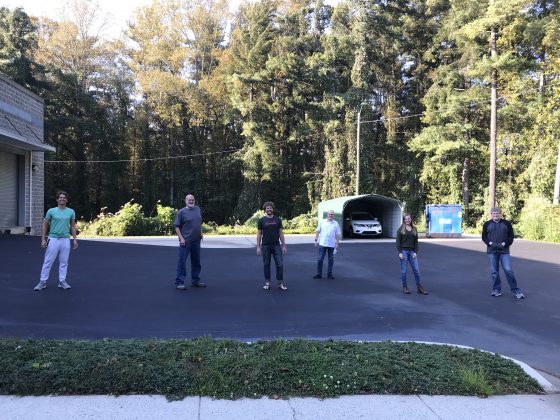
A socially-distanced Bluegrass at the Crossroads session. (L to R: Joe Cicero, Sammy Shelor, Travis Book, Jon Weisberger, Carley Arrowood, Wayne Benson)


SPONSORED CONTENT: Occasionally, BGS brings you content curated by featured partners and sponsors.
Photo and graphics courtesy Crossroads Label Group