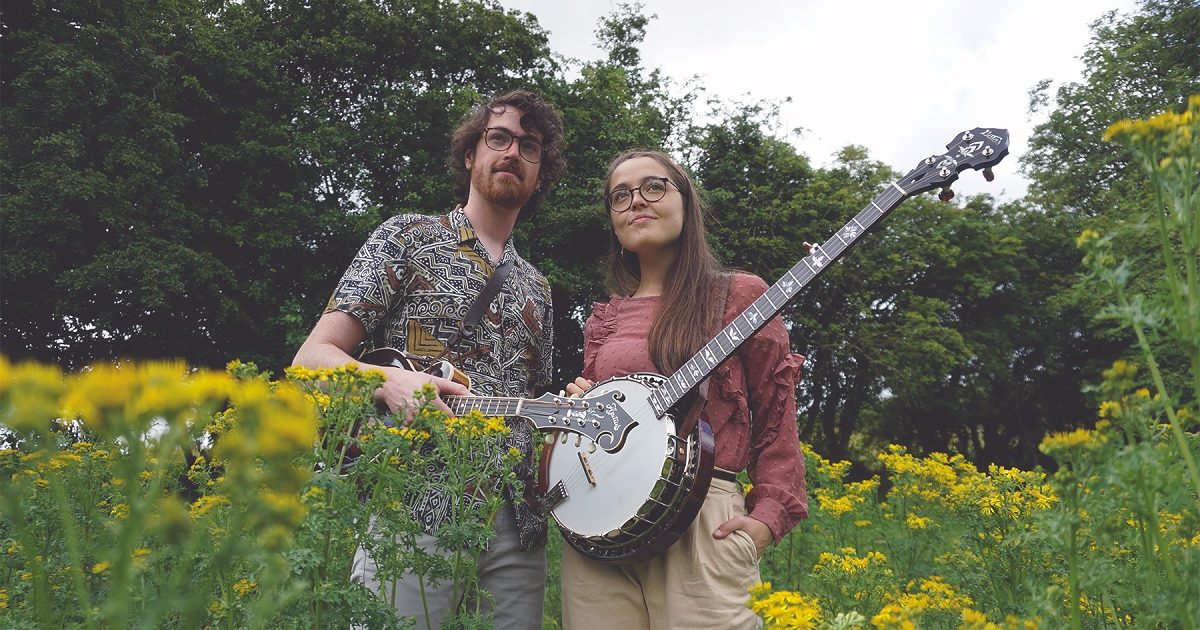
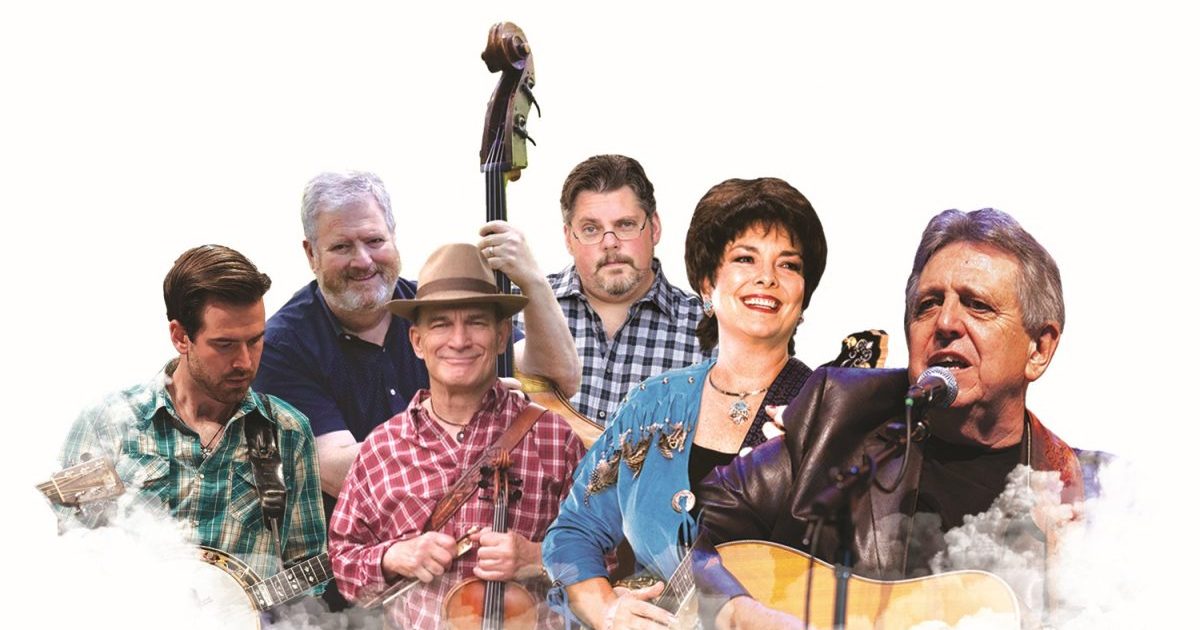
WATCH: Lizzy Long, “Final Curtain”

Artist: Lizzy Long
Hometown: Lincolnton, Georgia
Song: “Final Curtain”
Album: Dreaming Again
Release Date: May 1, 2020
Label: Vine Records

In Their Words: “‘Final Curtain’ is one of my favorite songs on my new Dreaming Again project. I made a special trip to Santa Barbara, California, with my producer, Wayne Haun, so we could write a few tunes with the great Joel Lindsey. Writing with Joel and Wayne is pure magic for me. This song is a metaphor for the ending of a relationship and ironically I like to close my concerts with it.” — Lizzy Long


Photo credit: Jeremy Ryan

First Generation: Meet the Bluegrass Music Hall of Fame’s Earliest Inductees

Though it’s not that hard to find some who will argue the point, bluegrass is widely held to have originated when banjo phenom Earl Scruggs joined Grand Ole Opry star Bill Monroe’s band in early December, 1945. Bill Monroe and His Blue Grass Boys — the possessive wasn’t just there for show — were already among the anchors of the radio show’s cast, but contemporary accounts (and a handful of bootleg recordings) make clear that, to the ears of an almost instantly enraptured audience, Scruggs’ rapid-fire banjo playing elevated the group’s sound to a new level.

Almost instantly, groups sprang up — or reoriented themselves — in pursuit of the new sound, and although banjo players and fiddlers were the most obvious converts, the truth is that virtually all of the intricacies the band brought to their sound were soon emulated. By the time Scruggs and guitarist/lead singer Lester Flatt left the Blue Grass Boys at the beginning of 1948, the quintet’s live performances and a handful of recordings had already inspired some notable followers, who, out of artistic desire and commercial necessity, quickly busied themselves in developing their own distinctive takes on the sound of the “original bluegrass band.”

As we near the 75th anniversary of this foundational origin story, BGS will be looking back across the sweep of those years — and first up, of course, a clutch of true pioneers that share a common accomplishment: they are the acts honored by induction into the IBMA’s Hall of Fame in its first five years and their plaques proudly hang at the Bluegrass Music Hall of Fame & Museum in Owensboro, Kentucky.


Bill Monroe (inducted 1991)

A complex personality with a skill set that included equal measures of innovation and synthesis, the mandolin-playing Monroe (b. 1911) moved from a mid-1930s duo with his brother to assembling a hot string band during World War II to fronting that original bluegrass band — an achievement which earned him his “Father of Bluegrass” title. Though it’s easy to discern the elements he brought together in that music — old fiddle tunes; Scotch-Irish ballads; African-American blues, jazz and gospel; western swing and more — his creativity extended beyond simply stirring them together and kept him a central figure from its inception until his death in 1996.

Indeed, while his early classics are essential to the bluegrass canon, even his late-life instrumental compositions have enjoyed a growing influence among today’s hottest young players. In fact, he collected his first Grammy for 1988’s “Southern Flavor.” Monroe was inducted into the Country Music Hall of Fame in 1970, and as the composer of “Blue Moon of Kentucky,” he joined the Nashville Songwriters Hall of Fame in 1971, received a Lifetime Achievement Award from the Grammys in 1993, and entered the Rock and Roll Hall of Fame as an early influence in 1997.

Representative tracks: “Blue Yodel No. 4,“I’m Going Back to Old Kentucky,” “Lord Protect My Soul,” “Midnight on the Stormy Deep,” “Southern Flavor”


Earl Scruggs (inducted 1991)

Though he wasn’t yet 22 years old when he joined Monroe’s band at the end of 1945, Earl Scruggs (b. 1924) was ready to step into the spotlight, and, with the exception of a stretch of ill health in the late 1980s and early ‘90s, he never relinquished it until his death in 2012. Unlike many instrumentalists who change their approach according to musical context, Scruggs believed that his picking style — built around right-hand patterns called “rolls” — could fit anywhere, and after his groundbreaking years with Monroe and then Lester Flatt, his career seemed devoted to proving the point.

Having created much of the musical vocabulary for bluegrass banjo picking, he moved on to playing with his sons in the Earl Scruggs Revue, a country-rock-bluegrass fusion band that was arguably more successful — at least in commercial terms — than Flatt & Scruggs had ever been. In the 21st century, Scruggs championed a broad variety of younger musicians while continuing to play those same sweet rolls he’d created as a young man. He was awarded a Lifetime Achievement Award from the Grammys in 2008.

Representative tracks: “Blue Ridge Cabin Home” (Flatt & Scruggs), “Foggy Mountain Chimes” (Flatt & Scruggs), “Travelin’ Prayer” (Earl Scruggs Revue), “The Engineers Don’t Wave From the Trains Anymore” (with Tom T. Hall), “The Angels” (with Melissa Etheridge)


Lester Flatt (inducted 1991)

With an expressive, emotive voice and an impressive array of demeanors that ranged from dry and sly to devout and down-home, rhythm guitarist Lester Flatt (b. 1914) was the perfect musical complement to Earl Scruggs, and their 1948-1969 output was at least as influential as Monroe’s. Flatt & Scruggs won a 1968 Grammy for their classic recording of “Foggy Mountain Breakdown.”

But where Scruggs was not only interested in playing with his sons, but also interested in putting his banjo into a wider range of contexts, Flatt preferred sticking to the country side of bluegrass. In the aftermath of their breakup, Flatt’s drawl deepened and slowed as he presided over a series of gifted lineups that included peers like Josh Graves and Vassar Clements, alongside young up-and-comers from banjoist Kenny Ingram to a teenaged Marty Stuart. Flatt & Scruggs were inducted into the Country Music Hall of Fame in 1985.

Representative tracks: “I’ll Never Love Another” (Flatt & Scruggs), “I’ll Go Stepping Too” (Flatt & Scruggs), “On My Mind” (Flatt & Scruggs), “You Are My Flower” (Flatt & Scruggs), “Gonna Have Myself a Ball”


The Stanley Brothers (inducted 1992)

The career of Ralph Stanley (b. 1927) and Carter Stanley (b.1925) illustrates both the profound impact that the original bluegrass band had on their peers, as well as the complementary artistic and commercial drives that impelled those successors to create their own unique style. In their first recordings, made while Flatt and Scruggs were still Blue Grass Boys, you can hear the Virginia-born Stanley brothers revamp their old-time string band approach into an approximation of the pioneers’ sound, yet within a matter of months, they had found a compelling variant.

The Stanley sound was built in part around Ralph’s stolid but driving banjo and soulful tenor singing, but even more around Carter’s mournful lead vocals and powerful songs. Over the years, while they moved from the Nashville-based Columbia and Mercury labels to scrappy (and multi-racial) Cincinnati indie, King, their sound became even more recognizable, as owner Syd Nathan hectored them into de-emphasizing the fiddle and leaning more into the innovative work of flatpicking lead guitarists like George Shuffler. The brothers’ partnership came to an end in late 1966 with the early, alcohol-related death of Carter; Ralph would continue on with his own twist on the Stanley Brothers’ sound until his death in 2016.

Representative tracks: “The Lonesome River,” “Our Last Goodbye,” “Let Me Walk, Lord, By Your Side,” “I’ll Just Go Away,” “Pig in a Pen”


Reno & Smiley (inducted 1992)

The first banjo player to follow Scruggs, albeit briefly, in the Blue Grass Boys, Don Reno (b. 1926) deliberately sought to create a distinct and instantly recognizable style of his own on the instrument. By the time his partnership with singer-guitarist Red Smiley (b. 1925) had settled into regular recording for King Records in the early 1950s, he had succeeded completely, and for good measure had done the same with flatpicked guitar solos, too. As Grand Ole Opry announcer Eddie Stubbs once put it, Reno & Smiley were a country band with a banjo instead of a steel guitar.

Though Reno could and sometimes would blister a banjo solo, many of the band’s signature numbers were heart songs, country shuffles, earnest gospel outings and more, including occasional flashes of rockabilly and jazz. Reno wrote many of them, sang tenor and occasional leads, and shared the instrumental limelight with their steady fiddler, Mack Magaha, and occasionally with one or another mandolin player, including his son, Ronnie. The partners split for a few years in the mid-‘60s, then reunited for a brief period before Smiley’s death in 1972. Reno continued to record and perform with partners ranging from Bill Harrell to his sons until he passed away in 1984.

Representative tracks: “I’m Using My Bible for a Roadmap,” “I Know You’re Married,” “Little Rock Getaway,” “Please Remember That I Love You,” “Just About Then”


Jim & Jesse (inducted 1993)

Though Jim McReynolds (b. 1927) and Jesse McReynolds (b. 1929) were born just a few dozen miles from the Stanley Brothers, the music of Jim & Jesse could hardly have been a more different kind of bluegrass. The duo’s singing was smooth and refined — especially guitarist Jim’s silvery tenor — while the instrumental sound was driven by Jesse’s innovative mandolin cross-picking and their overall approach by the latter’s eclectic tastes and influences (he appeared, for instance, on The Doors’ 1969 album, The Soft Parade).

The brothers were comfortable in reaching for a more countrified sound, helped by banjo players like Allen Shelton and Carl Jackson, who were adept at playing radio-friendly licks on a dobro-banjo as well as ‘grassier fare when that was called for. Smart businessmen as well, the duo were among the first to appear on television in the early 1950s, recorded an entire album of Chuck Berry songs in the mid-1960s, started their own label in the early 1970s, and remained a popular fixture on the Grand Ole Opry until Jim’s death on the last day of 2002. As of this writing, Jesse McReynolds continues to perform — and to innovate, too, with releases like a 2010 Songs of the Grateful Dead collection.

Representative tracks: “Pardon Me,” “Are You Missing Me,” “She Left Me Standing on the Mountain,” “Cotton Mill Man,” “Memphis”


Mac Wiseman (inducted 1993)

Nicknamed “The Voice With a Heart,” Virginia’s Mac Wiseman (b. 1925) was a founding member of Flatt & Scruggs’ Foggy Mountain Boys in 1948, but soon left to join Monroe (and Don Reno) in the Blue Grass Boys. By the early 1950s, he’d started his own career, recording for Gallatin, Tennessee’s Dot Records — and then going to work for the label. A consummate professional, he also served as a musicians’ union official for a time, and was a founding member of the Country Music Association. He frequently recorded material other than bluegrass, especially when rock ’n’ roll and the pop-country Nashville sound beckoned in the late 1950s and early 1960s, and throughout his career, he was never afraid to use a variety of instruments besides the archetypal bluegrass ones.

Still, as a performer, bluegrass was his bread and butter from the mid-1960s on, and rather than carry a band, he would recruit players from other acts (and occasionally skilled amateurs, too) and lead them on stage with a heavy guitar strum and a quick “watch me, boys!” Wiseman’s songbook included old folk numbers, songs he heard on the radio as a polio-stricken child, big band tunes, Music Row compositions and much more. In later years, he recorded several memorable projects that highlighted songs his mother had taught him and songs that told his life story, before his death in 2019.

Representative tracks: “I Still Write Your Name in the Sand,” “I Wonder How the Old Folks Are at Home,” “Mother Knows Best,” “My Little Home in Tennessee,” “’Tis Sweet to Be Remembered”


The Osborne Brothers (inducted 1994)

Bobby Osborne (b. 1931) and Sonny Osborne (b. 1937) were among the first of what might be called “semi-second generation” bluegrass artists; unlike those who preceded them in the Bluegrass Hall of Fame, neither had performed professionally before 1950. By 1954, though, they’d hooked up with Jimmy Martin for a memorable set of recordings, and 1956 found them signed on to MGM on their own. Together with singer-guitarist Red Allen, the Brothers — Bobby singing lead and playing mandolin, Sonny singing baritone and playing banjo — had come up with an inventive new vocal arrangement that put the spotlight pretty much on them alone.

Lest that sound too cold, it should be noted that they deserved it, for not only was Bobby a formidable lead singer and Sonny brilliant in the support role, but their fearless, try-anything (the two recorded separately with avant-garde jazz vibraphonist Gary Burton in the mid-’60s) instrumental skills were profoundly original. The Brothers joined the Grand Ole Opry and signed with Decca Records in 1964, and spent the next decade fusing bluegrass and country in a way that eventually earned them a CMA Vocal Group award. Irascible, opinionated, and both artistically and commercially successful, the Osborne Brothers were at the forefront of the music until Sonny’s 2005 retirement — and while Bobby continues to perform to this day, the influence of their duo continues to grow, too.

Representative tracks: “Once More,” “The Cuckoo Bird,” “Tennessee Hound Dog,” “Pathway of Teardrops,” “Sweethearts Again”


Jimmy Martin (inducted 1995)

East Tennessee native Jimmy Martin (b. 1927) hungered to perform with Bill Monroe as a youngster, then got his chance in 1949 when Mac Wiseman quit the Blue Grass Boys. As lead vocalist and guitarist, he helped to make some of Monroe’s most memorable recordings, then partnered in various settings with Bobby and Sonny Osborne before taking the helm of his Sunny Mountain Boys in the mid-1950s. A brash, colorful guy who could boast with the best and then back it up, Martin served in the cast of the Louisiana Hayride (alongside Elvis) and the Wheeling (W.V.) Jamboree before a growing bluegrass festival circuit threw him a lifeline in the absence of a Grand Ole Opry membership.

Among early Hall of Fame inductees, he may be considered more influential than most of his peers. Service in his Sunny Mountain Boys constituted the training ground for several generations of musicians, from banjo man J.D. Crowe to newgrass pioneer Alan Munde to Americana favorite Greg Garing — and his appearance on the Nitty Gritty Dirt Band’s Will the Circle Be Unbroken was legendary. Martin was an unstoppable force of nature who knew exactly what he wanted from a musician, yet was unable to clearly explain it. Still, he did well enough that his records are instantly recognizable, even when you’ve never heard them before.

Representative tracks: “That’s How I Can Count on You” (with the Osborne Brothers), “Rock Hearts,” “You Don’t Know My Mind,” “Tennessee,” “Freeborn Man”


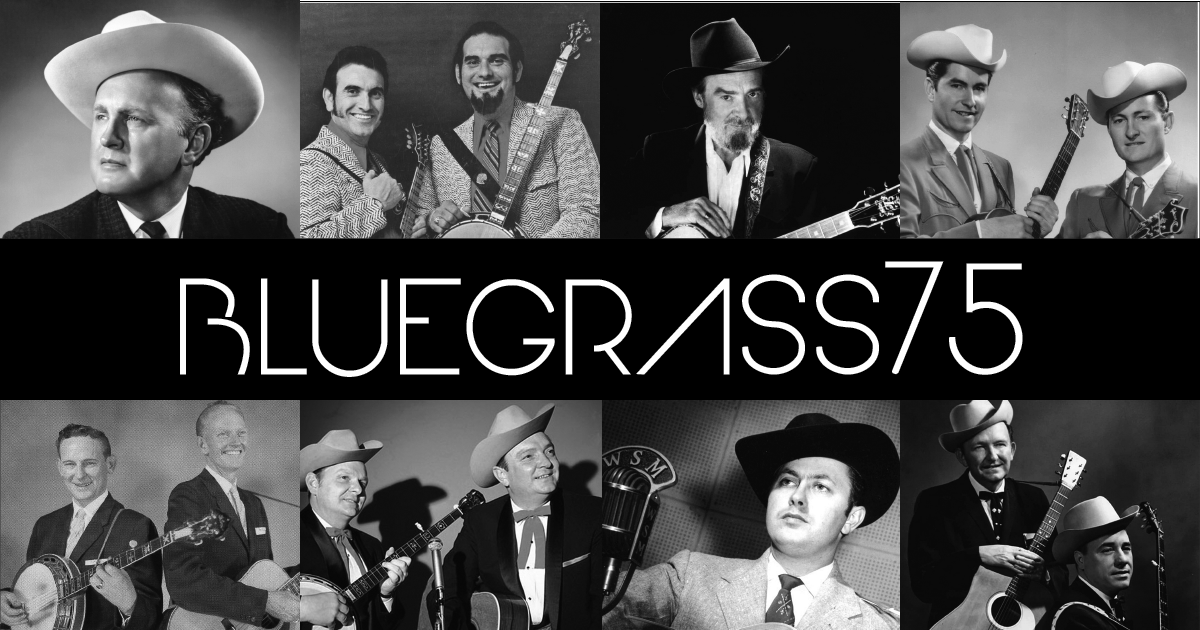
Pictured above, first row (L to R): Bill Monroe, The Osborne Brothers, Mac Wiseman, Jim & Jesse; Second row: Reno & Smiley, The Stanley Brothers, Jimmy Martin, Flatt & Scruggs

Bluegrass Turns 75

We’re taking a different approach to the Artist of the Month concept this September, as we acknowledge the upcoming 75th anniversary of bluegrass music. Many historians consider its origin to be that December night in 1945, as bandleader and mandolin master Bill Monroe established guitarist Lester Flatt and banjo picker Earl Scruggs as part of the Blue Grass Boys lineup during a Grand Ole Opry show at the Ryman Auditorium. At that pivotal moment, a new American art form was born.

https://www.instagram.com/p/BzLtd0NAoJE/

Although bluegrass is unquestionably rich in history, it is still evolving to this day. In an effort to cover all the decades since then, BGS will offer five posts this month about the evolution of bluegrass, from that indispensable first generation to the newest class of talented pickers. [Read about the first generation.] [Read about Rodney Dillard and the Dillards.] [Read part one of our New Grass Revival oral history. Read part two here.] [Read about 10 women who made bluegrass better in the ’80s and ’90s.] [Listen to our 21st Century Bluegrass playlist.]

Our staff has also collected our personal favorites from the immense bluegrass canon in the playlist below. We owe a lot to Monroe, Flatt & Scruggs, and all the musicians who have led us to this milestone, and we’re proud to reveal our theme this month as Bluegrass 75.


BGS 5+5: Stephen Mougin

Artist: Stephen Mougin
Hometown: Ashfield, Massachusetts
Latest album: Ordinary Soul
Personal nicknames (or rejected band names): Mojo

What’s your favorite memory from being on stage?

2006 was my first trip to Telluride with the Sam Bush Band. It was all “larger than life” from the ride in, to the amazing town, to the incredible lineup, to the unbelievable stage/sound/light crew. I remember walking out on stage (which is quite tall), getting set up, then looking out at the mountains just as the sun was setting. It was so breathtaking and surreal that I didn’t even notice the audience for at least three or four songs. Telluride is a special place and Planet Bluegrass makes it even better!

What other art forms — literature, film, dance, painting, etc — inform your music?

I was interested in shooting some interview videos for our record label so I purchased my first DSLR, learned about photography exposure, lighting, etc. and began my journey as a videographer. I really enjoy street, landscape, and architectural photography while I’m out on tour as a method to practice, and it makes for nice memories when I’m home. Our videography has grown to include music videos which I direct, shoot, and edit. There’s so much similarity between video light/color and audio frequencies/instruments, I feel like my visual understanding has informed my audio engineering and overall musicality.

Which elements of nature do you spend the most time with and how do those impact your work?

My pal Thayer Washer (a Nashville musician who toured with Connie & Babe and the Backwoods Boys in his younger years) wanted to take me bass fishing as a thank you for working on a project for him. Little did I know it would remain a fun, calming hobby, pushed forward with the addition of a jon boat and trolling motor. When I fish, I don’t think about ANYTHING other than where to cast, which lure, what rod technique to use, and where they might be. It is a necessary brain cleanse. I’m a workaholic and I often feel guilty for taking a few hours to go, but feel so much better when I do.

Since food and music go so well together, what is your dream pairing of a meal and a musician?

My two favorite singers are Frank Sinatra and Lester Flatt. I’d love to share a meal with both of them (can you imagine THAT conversation?) and I’d picture it as some sort of surf-and-turf involving large shrimp, a slab of steak, and a baked potato with a large dollop of butter. Though that’s not really my favorite meal, it seems like what those guys might eat (maybe Lester would pass on the shrimp…). We’d chat about memorable gigs and I’d have a thousand questions from vocal delivery to the hardships of touring in their time.

How often do you hide behind a character in a song or use “you” when it’s actually “me”?

As a voice teacher, I often encourage students to “get inside the song” by pretending to be the character. Dabbling in musical theater in my youth, followed by my classical voice training, naturally set the footprint for this particular technique. When I sing, I have a movie playing behind my eyeballs which helps me feel the truth in the song (even if it’s not “MY” truth). I’ve spent so much time working on song personalities, there’s really no “ME” in it… except that “I” am the character (if I’m doing my job well). The direct answer to your question lies in the particular songs one chooses to sing!


Photo credit: Elliott Lopes

BGS 5+5: Arlo McKinley

Artist: Arlo McKinley
Hometown: Norwood, Ohio
Latest Album: Die Midwestern (Oh Boy Records)
Rejected Band Names: Hatchet Wounds, Black Locust Inn, Thousand Dollar Car

Which artist has influenced you the most … and how?

With so many influences I could name, I always go back to Blaze Foley. His ability to put so much feeling and emotion into a simple song without ever taking himself so seriously. He always influenced me in my writing, and has been a reminder to always be myself.

What’s your favorite memory from being on stage?

I would have to say that performing and knowing that one of my heroes, John Prine, had taken the time out of his day in the middle of the week to come see me play would probably top the list. He came to watch the band play at the High Watt in Nashville. That was a night I’ll never forget.

What other art forms — literature, film, dance, painting, etc. — inform your music?

I read a lot when not listening to or writing music. Charles Bukowski, Hunter S. Thompson, Greil Marcus, Ted Chiang and many others. Ted Chiang writes very smart, socially-conscious science fiction that really stands out to me. I highly recommend checking him out if you haven’t already.

What was the first moment that you knew you wanted to be a musician?

That would have to be growing up in the Baptist church. Seeing that music could be so much more to people than just a sound and evoke real emotions in people appealed to me in a way that is hard to put into words. Along with that I grew up constantly surrounded by so many kinds of music that my family would be listening to. Country, punk, bluegrass, folk, metal, hip-hop, etc. It’s the only thing that I ever thought that I should be doing so I’d say the simple answer is, from the moment I discovered music I knew that’s what I wanted to do with my life.

If you had to write a mission statement for your career, what would it be?

It would be to keep pushing myself to grow as a musician, always pushing myself to never create the same album twice. It would be to also keep creating music that people can correlate to their own lives in one way or another.


Photo credit: David McClister

Interviewed by His Daughter, Mac McAnally Recounts a ‘Lifetime’ in Music

Mac McAnally is a highly-decorated and prolific multi-instrumentalist, producer, songwriter, and artist. He tours with Jimmy Buffett’s Coral Reefer Band, plays on countless sessions in Nashville and Muscle Shoals, and produces a number of independent artists, too. But more important to me, he’s my dad. And he’s a great one. On the occasion of the release of his new album, Once in a Lifetime, we discuss guitars, bluegrass, moments of social change, why he covered a Beatles song, and the process of making this record amidst a pandemic. And though I get to talk to him most days of my life, it is heartening to hear him put a fine point on his eternal optimism.

BGS: Growing up, music was constant in the house and one of the most pervasive cover songs you played was “Norwegian Wood.” What do you think it is about that song that sticks in your craw and drew you to record it?

Mac McAnally: As you know, I’ve always loved that song. In the very first line, from a lyric standpoint, “I once had a girl/Or should I say/She once had me,” you can tell any story in the world after that. That is something that I subconsciously try to do and have since the beginning.

Specifically, why I recorded it is because I bought an octave mandolin about four years ago. I did a show with Sarah Jarosz and she had one and let me play it and I thought, “I am going to have to get me one of these.” I always feel like I have to do something to justify the purchase so I play it on as many sessions as I can to try to amortize the cost, but I also came up with this new way to play it that is kind of a cool arrangement that I’ve never heard. I don’t in any way challenge the Beatles version and don’t mean any disrespect; I’m trying to find ways to justify the guilt of buying an octave mandolin.

On almost every record that you’ve made there’s a nod to bluegrass, like “Brand New Broken Heart” on this record. Who are some of your biggest bluegrass influences?

I have to preface this by saying I am a bluegrass fan, I am not a bluegrass player. Anything that I might be doing would just be trying to pay homage to what the greats can do. I’ve gotten to play with some of them, which I count high among the blessings of my life. When I wrote “Brand New Broken Heart,” I envisioned I would someday pitch it to Ricky Skaggs or Dailey & Vincent. I recorded it because I was a lazy song plugger who never pitched it to anybody.

Doc Watson was one of mine and my dad’s heroes. He was sort of my intro to real bluegrass. And all the way through my life, Emmylou Harris. We played her songs in bands when I was a teenager. Bryan Sutton is just frighteningly good. I can’t even fathom what he is doing, let alone try to do it myself. He inspires me to go get a pick out and play differently than I play because I love so much of what he does. And I’m crazy about I’m With Her.

What brought about recording “Changing Channels” for this record?

I have always loved that song. It is the second song that Jimmy (Buffett) and I wrote together. We wrote it in one my favorite places I have ever been. He had a spot down in Thomasville, Georgia, with a big porch. As you know I’m a porch guy. We sat out on the porch and wrote that song. He did a great version of it on Off the See the Lizard and I honestly never imagined myself cutting it but I love to play it. It has worked its way into my shows over the last ten years and his fan base will come up after and ask which one of my records the song is on. They had cash out trying to buy it and I don’t have it. You know better than anybody how terrible of a businessman I am, but eventually enough people tried to buy a version of it that I listened.

You have collected a lot of guitars, and in various ways: some saved from landfills, some gifted, some cast for you by friends and colleagues. How do you pick which guitars make your records?

It is certainly not an exact science but sometimes it is the guitar that the song came out of. The main thing that has always made me select guitars is if I think they have songs in them. I would happen to be holding them and a couple of my stories got mashed with them. In more cases than not, if I wrote a song on a guitar, that’s the one I’ll record. You end up learning over the years. In the same way when you are photographing someone, you learn what the best side of their face is. … A Gibson with dead strings is an awesome rock ‘n’ roll rhythm guitar. A Martin with new strings is an awesome fingerpicking guitar.

We are in a moment of social change. Music has the power to both inspire and record change. You moved to the Shoals in the ‘70s. Thinking back on those early days in the studio, what was it like in those moments?

Playing music in Muscle Shoals was extremely encouraging from the standpoint of equality. They didn’t really think of it in terms of race. Music transcended that. And I love that. And I still love that. I’m standing in Muscle Shoals right now proud to be part of that. You can be encouraged on some levels and discouraged on some levels and I am both of those things. I haven’t in my life ever thought that I was better or worse than anybody else and I look forward to that being a more prevalent vantage point for everyone.

I want to challenge you on that a bit. One of your dear friends and longtime collaborators, Ralph MacDonald, told you that he never felt comfortable coming to Muscle Shoals and we’ve heard from more folks that it wasn’t an inviting place to come collaborate, so a lot of those musicians opted for Detroit or Miami. With that added perspective, does it make you feel differently about the time?

Absolutely, it makes me more aware of the context. As I said, Muscle Shoals would have been advanced in terms of racial relations in the music community in the South. As I look back now, I realize that doesn’t mean it was great. It was just better relative to the surroundings.

Ralph and I, we were like brothers. He told me he would’ve been scared to death of a big red-headed dude from Mississippi. And he was a Black man from Harlem. I could not have imagined that we would connect on as many levels as we did. We both had misconceptions that got better. He was one of my heroes. He was one of the best percussionists that ever played. And I loved him. It is hard to get into racial discussions without stirring stuff up. But we made each other better. Music is one of the best ways to bridge across preconceptions. I think it’ll play a big part of getting us the rest of the way home. ‘Cause we ain’t there yet.

Stirring stuff up is the way we make progress.

That’s true and they are not easy discussions. I don’t think of myself as someone with prejudices, but when I think back, some of the things I laughed at growing up as a kid in Mississippi I’m embarrassed of. And I was mainly laughing because everyone around me was laughing, but when I think of what it was we were laughing at, it is embarrassing. I don’t really want to talk about it, I just want to be a better person, because I know it was wrong. But you are right. Talking about it is better. Air it out.

What does it feel like to release an album in a pandemic?

Well, not speaking ill of either thing, but I hope it is a one-time thing. I hope I never have to try to beat a pandemic album with a second pandemic album. My records are normally made in what I call “the cracks of time.” I make them in the cracks of my schedule because I work full-time as a Coral Reefer, a fair amount of time as a session musician for other people, writing songs for other people and producing other folks. But because of the circumstance of this record, it is really special to me because I got to sit and think about what I felt was important and what was not. I wouldn’t wish a pandemic on the world just to get extra time to make my record. I think maybe next time I’ll just take the time on my own.

Even in your darkest lyrics, there is a balance that shows your shining optimism. We are surrounded by a heavy dose of dark right now. Are you feeling optimistic?

Absolutely. I absolutely am. I wish we weren’t where we are right now and that everyone could see that it is better to find a way to coexist than it is to hate one another. I’m not someone who has any room for hate. As you recall, I don’t even like the word. I’ve probably pestered you about it for your entire life. Actual hate hurts me. We’ve been celebrating the life of John Lewis the last few weeks and John is a great example of figuring out a way to make it better by not hating the people who hated him. I think things are going to get better and I intend to try to help.


Erin McAnally is a regular contributor to The Bluegrass Situation

Photo Credit: Jeff Fasano

WATCH: The Foreign Landers, “Put All Your Troubles Away”

Artist: The Foreign Landers
Hometown: Split between Co. Armagh in Northern Ireland and South Carolina at the moment.
Single: “Put All Your Troubles Away”
Release Date: August 24, 2020

In Their Words: “Since we’ve known each other, Tabitha and I have had a foot in two different worlds — Tabitha being from Northern Ireland and myself having grown up in the States. During the past five months we’ve finally had the time and space to make some music together and to try to combine our backgrounds to create something different. The result is a new project that we’re calling The Foreign Landers. This is a song with a very timely message from John Hartford, and it will be the title track from our forthcoming EP to be released later this year. Be on the lookout for more singles soon.” — Tabitha and David Benedict, The Foreign Landers


Photo credit: Tabitha and David Benedict

WATCH: Adam Chaffins, “Who I Am” (Live)

Artist: Adam Chaffins
Hometown: 10 years+ Nashvillian (Eastern Kentucky native, from Louisa, Kentucky)
Song: “Who I Am” (Live)
Album: Some Things Won’t Last
Label: Chaffins Music

In Their Words: “A lot of my influence as a songwriter comes from torch songs. Keith Whitley sang a lot of them, like ‘I’ll Be Your Stepping Stone’ with J.D. Crowe & the New South. Songs of eternal pining for a love. ‘Who I Am’ is a torch song with a lot more brutal honesty to the torcheé. I started playing this version supporting John Hiatt on the road in 2019. It’s as bare-bones as a song can get.” — Adam Chaffins


Photo credit: Melissa Stillwell

LISTEN: The Dillards, “Old Road New Again” Featuring Don Henley

Artist: The Dillards
Hometown: Branson, Missouri
Song: “Old Road New Again” (featuring Don Henley on duet vocal; Herb Pedersen on harmony; Bernie Leadon on banjo)
Album: Old Road New Again
Release Date: August 21, 2020
Label: Pinecastle Records

In Their Words:Old Road New Again is a new adventure for The Dillards, who continue to contribute to the music scene. The song is a lyrical history of The Dillards’ appearance in the music and entertainment arena. The talented friends who participated on this project were among the innovators that changed the course of music history.” — Rodney Dillard

“I was a big fan of The Dillards. Wheatstraw Suite was a very influential album in my life. In fact, I drove through a snowstorm to hear them play in Fort Worth back in 1968. They were an interesting band.” — Don Henley


Photo credit: The Dillards