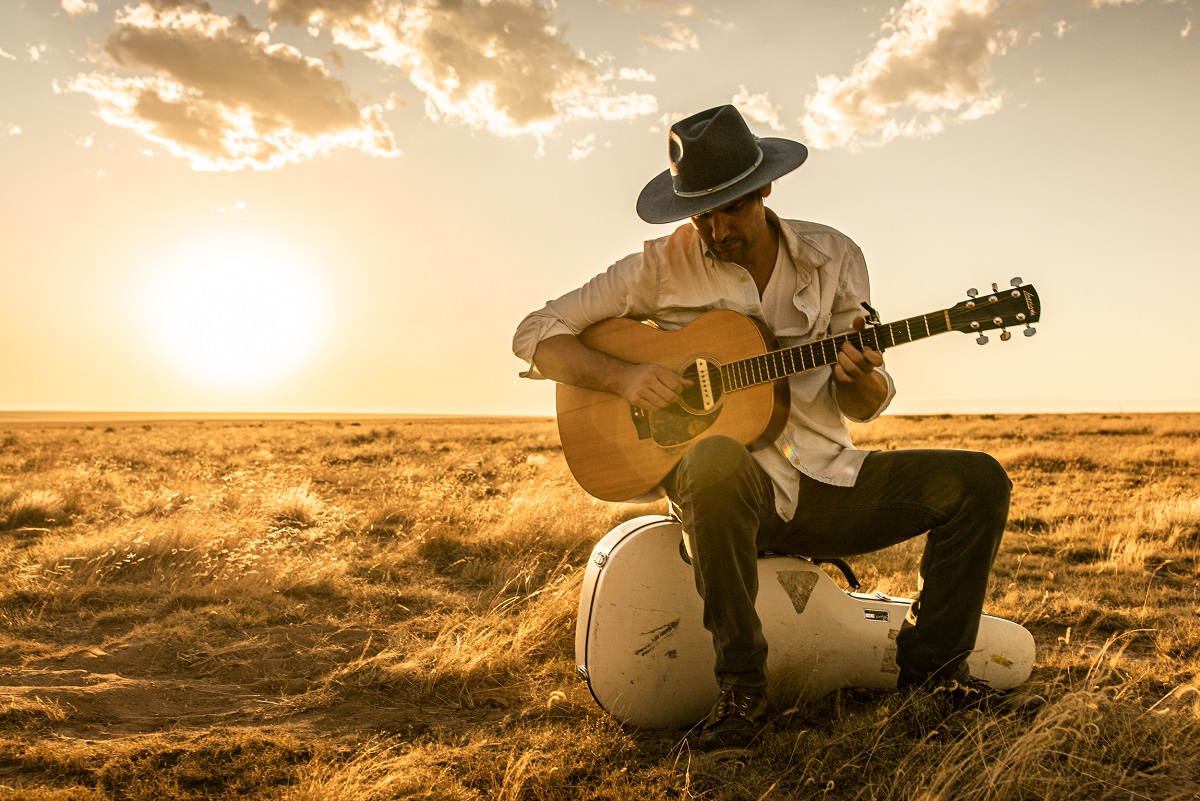
MIXTAPE: Daniel Rodriguez’s Songs of Authenticity

I love all types of music and song. How beautiful a thing to hear the invisible insides of someone shared outwardly. A culmination of dynamic forces, experiences and sensibilities dialed into pulsating, Pythagorean waveforms, giving color to the space in between. The only catch is we have to trust what we’re hearing is authentic. Whether it’s the tonal intention of a singer or the specific touch of an instrumentalist, the song has to move me in some way or else I’m changing the station. Authenticity is subjective to each listener where no authority exists, though goosebumps, tears, movement, lofty notions and inspiration have always been my litmus tests to playing something thrice or more.

Here’s a list of songs that have moved me in some way worthy of mention. Also, if you’re so moved, check out my album Sojourn of Burning Sun out on August 28. — Daniel Rodriguez

Bill Monroe – “Uncle Pen”

From what I hear, this song is Bill giving gratitude and paying tribute to his actual uncle, Pen [James Pendleton Vandiver]. Pen played the fiddle at family gatherings and inspired Bill to join the musical world. The song structure of “Uncle Pen,” though only a few chords, is kind of complex. It’s a jubilant song with a great melody and has those goosebumping, Appalachian harmonies that Bill and his band often showcased. Probably what I like most about the song is that it appears to skip a beat before the head of each verse. It happens during a G run directly after the chorus that impossibly lands at the head of the next section. Simple genius.

Gregory Alan Isakov – “Amsterdam”

I like pretty much all of Gregory’s songs and his recordings. Catching his band live or him solo is a remarkable experience. I’m lucky to call him a longtime friend and I keep my fandom of his music separate from that. Gregory paints imagery that is most times not specific, which leaves you, as a listener, more in an abstract state of mind. Yet he threads a powerful emotion throughout, which his voice and arrangements unavoidably invoke. He uses imagery of a woman often, which comes across as more a mythical character of the sacred feminine, rather than one of a romantic endeavor. This is apparent in “Amsterdam”: “That howling wind, she’s waving hi, her other hand’s in mine.” The song ascends towards the end in some epic way when Greg moves his voice up an octave and sings “Churches and trains, they all look the same to me now / They shoot you some place, while we ache to come home somehow.” Goosebumps to follow.

Bruce Springsteen – “Youngstown”

The Boss has never failed to paint us the pictures of the struggling American working class. Our popular culture seems to only highlight the celebrities and billionaires, and yet The Boss celebrates and sheds light on the untold stories of the common man, the backbone of our culture. His stories are always rich with the American story, full of its hypocrisies and triumphs. “Youngstown” paints a very real picture of the uphill and endless bogging down of industry and war. The arrangement has a suiting Americana feel, stripped down and intimate. The pedal steel and fiddle give an eerie voice to the emotion of the character in the story who sings, “My sweet Jenny, I’m sinking down, here darling in Youngstown.”

John Prine – “Lake Marie”

When John Prine passed on earlier this year I cried constantly for three days. I’ve been lucky enough to catch him live more than a few times at festivals that we both played. The authenticity in his delivery has healing properties that only a few possess. John touches on all the hidden sadnesses and joys of humanity, and gives color to the seemingly opaque hidden corners of the human condition. “Lake Marie” is a special song with all the ingredients: New love, tenured love, relationship struggles and cold-blooded murder. John delivers this story in a very light-hearted and humorous way. He speaks the verses and accentuates certain parts, which become vital to the song’s DNA. The chorus is maybe the best chorus ever written, beautiful and joyous, juxtaposed with a very brutal and tragic story.

Levon Helm – “The Mountain” (written by Steve Earle)

Just like any song that Levon sings of someone else’s, he makes it his own. That is very much the case with “The Mountain” by Steve Earle. Steve recorded a great version of this song with Del McCoury, but my favorite version is the one Levon sings. It’s about the coal industry brutalizing the natural wonder of a homeplace. Removing mountaintops from where once majestic mountains stood. Filling in swimming holes that you once could cool off from the summer’s heat within its cool mountain runoff. Levon brings you there to those mountains, and he takes you to that swimming hole, and then he shows you the pain of it being no more.

Gillian Welch – “Everything is Free”

When speaking of Gillian’s songs it would be prudent to also mention David Rawlings. The line is blurred when trying to understand who wrote what — and it’s fitting that their voices in harmony become an entity of grace and grit that is alive and well. “Everything Is Free” is a song that hits home for the majority of musicians and artists who are at large suffering in an age where the fruits of their labors are taken for granted. This is certainly reflected by our culture, which would ironically feel the worth of music in its absence. In regards to this, Gillian sings: “If there’s something that you wanna hear you can sing it yourself.”

Leon Bridges – “River”

I’m not a religious person, but I am spiritual. Even though Leon uses biblical terminology in this beautiful song of yearning, and being cleansed from your sins — it’s the intention of the song that shines through and transcends all the negative connotations that might come with organized religion. It’s the true Christian values that are evoked here, of actively wanting to become a better person. It sounds like it was recorded live around one mic in a big room and really captures a beautiful moment of music.

Bob Dylan – “Murder Most Foul”

Bob is my favorite artist and songwriter. I love all the phases of his expression. I don’t subscribe to picking a favorite era or compare everything he creates to what he produced in the 1960s. This brings us to “Murder Most Foul,” a recent release of his. It is a nearly seventeen-minute song that talks about the day and days that followed the assassination of John F. Kennedy. Bob beautifully describes this tragic and heightened moment in history, giving us a stream of consciousness of images peripherally and directly happening around the time of the assassination. The production of this song is very minimal which allows the lyrics to be absorbed and breathe.

Mandolin Orange – “Wildfire”

Growing up and residing in the hills of North Carolina, Mandolin Orange has lived and been more than aware of the culture that exists below the Mason-Dixon Line. Not buying into the rhetoric of those holding on to the nostalgia of the Confederacy, Mandolin Orange gives a historical and psychological look at the wildfire that unfortunately still is fueled today. “Wildfire” is a bit of medicine to us all, and carries a hope that some who might need the medicine most. Listen to this song that is served in the musical genre of its commonplace.

The Del McCoury Band – “Hot Wired” (written by Shawn Camp)

This song is a hoot. It’s very well-written, witty and might even spark a belly laugh or two. It talks about all the things the author’s girlfriend is capable of hot-wiring. My favorite lyric is “She might hot wire your Chevy, she might hot wire your Ford / And if she ever gets to Heaven she might hot wire the Lord.” Del breaks the bluegrass rules on this song and introduces an electric guitar after singing about his girlfriend hot-wiring his acoustic guitar to play like the “doggone Rolling Stones.”

Billie Holiday – “Strange Fruit” (written by Abel Meeropol)

This song is so powerful. Billie Holiday recorded it in 1939. The emotion and dynamics of her timing are delivered in a powerful and haunting way. The fruit that hangs from the trees is not fruit at all. [The song’s titular analogy references lynchings of Black folks.] It is perplexing to me that humanity can stoop so low to such an evil as to think one is inferior to another, where murder is rationalized within such a vitriolic mindset. In this specific case it is rationalized within the minds of pale complexion below the Mason-Dixon line. How those trees still stand and the fruit still hangs, though embedded within policy, social structures, the psychology of an unexamined people and history books with whole chapters missing. Music and song throughout time has been utilized to pass stories down and convey emotions. This is a song that passes down and conveys a traumatic truth; its shockwaves still crash on the shores of our everyday.

Josh Ritter – “Girl in the War”

This is one of my favorite songs. I’ve had the fortunate opportunity to play a bunch of shows with Josh and actually back him up on this song with my old band. I’ve heard him say in an interview that this song is about America. I’ll take his word for it. I’m not quite sure what the song is about myself, but I do know it’s a goosebumper. The recording of the song is stunning and I sure do like to play this song around the fire at gatherings.


Photo credit: Jesse Borrell
Nominees for IBMA’s 2020 Industry Awards and Momentum Awards Announced

The International Bluegrass Music Association has announced the nominees for this year’s IBMA Industry Awards and IBMA Momentum Awards, which will be presented during IBMA’s Virtual World of Bluegrass event. The announcement was made today on SiriusXM’s Bluegrass Junction channel.

The IBMA Momentum Awards will take place Tuesday, September 29; the IBMA Industry Awards will take place Wednesday, September 30, and will include the presentation of the 2020 Distinguished Achievement Awards. Specific times and additional details for both events, and for other IBMA World of Bluegrass 2020 virtual events, will be shared in the coming weeks.

IBMA INDUSTRY AWARDS

The Industry Awards recognize outstanding work in categories including Broadcaster of the Year, Event of the Year, Graphic Designer of the Year, Liner Notes of the Year, Writer of the Year, Sound Engineer of the Year, and Songwriter of the Year. Nominees are selected by specially appointed committees made up of bluegrass music professionals who possess significant knowledge of that field. The recipient of each award is decided on by the Panel of Electors, an anonymous group of over 200 veteran bluegrass music professionals selected by the IBMA Board of Directors.

The 2020 IBMA Industry Awards nominees are:

Broadcaster of the Year
Barb Heller
Michael Kear
Brad Kolodner
Peter Thompson
Alan Tompkins

Event of the Year
The 2019-2020 Emelin Theatre Bluegrass Concert Series – Mamaroneck, NY
FreshGrass – North Adams, MA
Bloomin’ Bluegrass Festival – Farmers Branch, TX
Augusta Heritage Center Bluegrass Week – Elkins, WV
Tell It To Me: The Johnson City Sessions 90th Anniversary Celebration – Johnson City, TN

Graphic Designer of the Year
Grace van’t Hof
Eric Barie
Michael Armistead
Carla Wehby
Lisa Berman

Liner Notes of the Year
Katy Daley – Live at the Cellar Door, The Seldom Scene
Bill Nowlin – The Early Days of Bluegrass, Various Artists
Katie Harford Hogue & Matt Combs – The John Hartford Fiddle Tune Project, Volume 1, Various Artists
Craig Havighurst – Bad For You, The SteelDrivers
Ted Olson – Tell It to Me: Revisiting the Johnson City Sessions, 1928-1929, Various Artists

Songwriter of the Year
Ronnie Bowman
Louisa Branscomb
Milan Miller
Jerry Salley
Donna Ulisse

Sound Engineer of the Year
Van Atkins
Adam Engelhardt
Randy LeRoy
Stephen Mougin
Jason Singleton

Writer of the Year
Bill Conger
Thomas Goldsmith
Derek Halsey
Justin Hiltner
Kip Lornell

IBMA MOMENTUM AWARDS

The Momentum Awards recognize musicians and bluegrass industry professionals who, in the early stages of their careers, are making significant contributions to or are having a significant influence upon bluegrass music. These contributions can be to bluegrass music in general, or to a specific sector of the industry. The Mentor Award, in contrast to the other Momentum Awards, recognizes a professional who has made a significant impact on the lives and careers of newcomers to the bluegrass industry. Starting with recommendations from the IBMA membership, nominees are chosen by a multi-stage process by committees made up of respected musicians and industry leaders in the bluegrass world.

The 2020 IBMA Momentum Award nominees are:

Mentor of the Year
Alan Bibey
Rick Lang
Scott Napier
Annie Savage
Valerie Smith

Industry Involvement
Malachi Graham
Adam Kirr
Kara Kundert
Jonathan Newton
Kris Truelsen

Vocalist
Tabitha Agnew
Amanda Cook
Victoria Kelley
Leanna Price
Melody Williamson

Instrumentalist (2 selected)
Tabitha Agnew
Thomas Cassell
Alex Edwards
Miles Quale
Lauren Price Napier
Liam Purcell
Sullivan Tuttle

Band
AJ Lee and Blue Summit (San Jose, CA)
Colebrook Road (Harrisburg, PA)
Midnight Skyracer (UK)
Seth Mulder & Midnight Run (East Tennessee)
The Slocan Ramblers (Toronto, Ontario)

“While most genres of music only award high profile artists and recordings, the bluegrass music community also celebrates other industry professionals and rising stars achieving excellence during the year,” said IBMA’s Executive Director Paul Schiminger. “The IBMA Industry Awards recognize the exceptional contributions of those talented professionals behind the scenes who are essential to bluegrass music. The IBMA Momentum Awards were added several years ago to shine a bright light on the many early-stage professionals making a huge impact in bluegrass music and the generous mentors providing them invaluable guidance and support. Congratulations to each and every nominee!”

In June, the IBMA and its Local Organizing Committee partners in Raleigh, North Carolina announced that due to ongoing health concerns relating to COVID-19, and the logistical challenges of creating a safe in-person event experience, this year’s IBMA World of Bluegrass will take place virtually, set for September 28-October 3.


Lead image courtesy of IBMA

LISTEN: Veranda, “Yodel Bleu”

Artist: Veranda
Hometown: Montreal, QC, Canada
Song: “Yodel Bleu”
Album: Yodel Bleu
Release Date: May 29, 2020

In Their Words: “‘Yodel Bleu’ is a song about using yodeling to cure the blues! It tells the story of this girl who’s so down that the only thing that brings her joy is yodeling when she’s all by herself. And who could blame her? Because let’s face it, it’s hard to be blue when you’re yodeling. Maybe what we all need right now is a good dose of yodel therapy. Isn’t there an old saying that says ‘You can’t yodel in a minor key’? The song is also a tribute to the great Jimmie Rodgers and his classic ‘Blue Yodel’ song series.” — Catherine-Audrey Lachapelle and Léandre Joly-Pelletier, Veranda


Photo credit: Kevin Beaulieu

BGS Launches Shout & Shine Video Series with Black Harpist & Songwriter Lizzie No

Like many of us, Lizzie No is weary of quarantine. Yet as the New York City musician and harpist joins BGS on the phone to talk about her life in pandemic isolation, her songwriting, her creative processes, and the growing pains intrinsic to all of the above, the joy in her voice cracks through the fatigued outer layers we all wear right now. A Black creator in traditionally white genres, No brings a distinct and important perspective to help guide longtime BGS column Shout & Shine into a new era.

In 2017, Shout & Shine began as an interview series dedicated to exploring identity, advocacy, and marginalization, along with the ways these paradigms filter into music and art, especially of roots varieties. Taking today’s civil unrest and righteous rebellions into account, we’ve purposefully refocused this column’s mission with the hope of giving a platform to Black musicians in roots music specifically, because these spaces too often relegate Black, Brown, Indigenous, and Asian voices to the sidelines.

Now, in addition to interviews and an upcoming podcast, BGS is proud to announce Shout & Shine will be moving to video! Lizzie No is our debut guest for the livestream version of Shout & Shine, which comprises short-form, intimate video performances by underrepresented and marginalized artists in Americana, folk, and bluegrass.

Lizzie No’s Shout & Shine set, presented by Preston Thompson Guitars, will feature a brand new song, “Mourning Dove Waltz,” and will be streamed live on BGS, our YouTube channel, and Facebook page on August 5 at 4pm PT / 7pm ET. In the meantime, read a little more about No’s songwriting, her approach to roots-driven harp, and her thoughts on tokenism — and why white folks perhaps shouldn’t feel free to lead that kind of conversation.

Editor’s Note: You can watch Lizzie No’s Shout & Shine performance in full below:

BGS: I wanted to start — and this is a little selfish — with “Mourning Dove Waltz,” because I’m an avid birdwatcher and in shelter-in-place everyone is watching birds! This song is not only about quarantine, but also the idea of being in an old space, but with new intention. Can you tell us a little bit about that song, through the lens of isolation, and creativity in isolation?

Lizzie No: That’s a brand new song and I think you can tell I wrote it during quarantine. I was never terribly interested in birds before March of this year. My mom always loved and delighted in them and I always thought it was very cute, but they never captured my attention. Right as we were truly locked down here in New York and a lot of people were making the decision to try to go somewhere else, it felt like there weren’t any rules anymore. I decided to stay here in my apartment and I ended up having so many hours, especially first thing in the morning, where I would just sit and try to make the day’s activities stretch out over the longest period of time possible so I wouldn’t go insane. 

That’s when I started to notice a couple of Mourning Doves had nested in my plant boxes on my balcony. It felt miraculous to get to watch them every single day through the balcony door. [They] laid two eggs, we watched them hatch, we posted about them on Instagram, we took name suggestions. It was this unfolding thing I didn’t think I cared about until I had this uninterrupted time where I didn’t need to be doing anything other than staying calm. I was pretty much on these birds’ schedule. I noticed when they took their breaks in the middle of the day and when mom and dad would switch places. Of course, this is so cheesy, but I felt a real loss when the babies grew up and flew away. As a songwriter, it led me to thinking about losing people. About losing a sense of connection. That’s what led to that song. 

The harp is one of my favorite instruments, but through no fault of its own — besides maybe its complexity — it’s not common in roots genres. How did you find it, and how did you infuse it into your songwriting and artistry?

After giving up on violin as a kid [Laughs] I thought harp was one of the biggest and weirdest and coolest-looking instruments. I took lessons for all of elementary, middle, and high schools and then I hit the point in high school where friends were starting bands and I wanted to be part of it. I wanted to be able to sing and play and strum along while singing, but I didn’t play guitar and I didn’t play piano; I played harp. Basically the harp just had to catch up with my evolving interests in the Indigo Girls and Brandi Carlile. That’s where I was at when I was 16. 

I didn’t really see any examples of people who were doing that — though now I know that there are. I think I saw videos of people like Joanna Newsom and Edmar Castañeda, people who weren’t playing the classical music that I was used to. Then I tried to just treat it like a bass, then trying to pick out a few chords. The motto being, “Nothing too fancy.” I wanted to get to a point where I could play and sing at the same time. That’s when I was first starting to write songs, so the skills developed together. 

I can notice that! I notice mainly because I play banjo and songwrite on banjo, and it’s such a different beast than writing on piano or guitar. There are so many similarities in the way you’re writing and backing yourself up. Especially in the way you’re comping on harp, it reminds me so much of banjo rolls — how John Hartford or Ashley Campbell or Béla Fleck, banjoists that might have more “composed” songs, might play. Do you see those similarities? 

That’s a very kind comparison! That’s the kind of music I listen to, but it’s funny because I don’t feel like I really have any harp inspirations to my playing — which is not to say I’m not inspired by great harpists, because of course I am, but that’s not really what influences me when I’m writing songs and figuring out how the harp is going to fit into the songwriting. Someone like Béla Fleck especially, I listen to his playing a lot and those are the types of textures and rhythms that I’m hearing when I’m writing on harp. Rather than something that actually contains a harp. [Laughs]

For the remainder of the year, our Shout & Shine series will be devoted to Black artists and part of that is in response to the current rebellion against racial injustice and police brutality — and also due to the heightened awareness of how Black voices and forebears in country and roots music have been erased for so long. Do you worry about this sudden uptick in enthusiasm and awareness resulting in more tokenization of Black artists? And I have to add a quick aside, because it is intrinsically tokenizing for me to ask that question, right? It’s a hard thing to unpack, so I’d love to hear your perspective on it. 

I really appreciate that and I appreciate you acknowledging that it’s difficult to talk about. Even assuming that it’s OK to have the conversation between a white person or a white journalist or a white audience or a white editor — whomever is doing the asking — and a Black artist is one of the problems. That being said, I’m happy to have it right now because I knew we were going to come into this conversation and talk about a whole bunch of topics. I’m happy to give my two cents: I think if non-Black listeners and fans and enthusiasts of the genre are thinking about [these issues], just know that those of us who deal with this day in and day out are going to be exhausted and aren’t going to be the best people to always go to. That’s a great place to start, knowing it’s so much heavier. It’s not intellectual, for us. It’s a lived reality. 

As far as tokenization goes, I do worry about it and I worry about it because I remember when I was in high school — I went to a really competitive boarding school — college acceptance letters were coming out and everyone was on edge. This is a time when we had Honesty Box on Facebook, where you could send an anonymous message — which, in retrospect, what a horrible way to let people bully each other. I remember getting a message that just said, “Affirmative Action” after I got into Stanford. It was so hurtful to me. Intellectually I knew that Affirmative Action is a wonderful program and it helps deserving people get into schools they deserve to get into. (I also had excellent grades and, you know, I’m smart as shit. So go away!) But it was hurtful to think that my peers didn’t see that in me and what they saw was my skin color. 

That’s such a trite way of putting it, but I think a lot of people maybe subconsciously think about Black artists in Americana, in spaces where Black people are not the standard, as “diversity hires.” They may even be for that. Like, “It’s great that we have these diverse perspectives!” They don’t realize that we are a fundamental part of these spaces and we deserve to be here. Just as much as everybody else. We have roots in these geographical regions and these genres that go just as deep as white artists. We shouldn’t have to rattle off our qualifications. 

There have been so many movements of Black artists who didn’t want to be called “Black artists” for this reason. They didn’t want to be put on the “Black Feminists” bookshelf and be marginalized [further] in that way. I definitely identify with that. I’m Black and I’m proud, in a very 1970s way, so I am proud to have the label of a “Black Americana artist.” I think my Blackness informs my work just as much as my hometown, my feminism, etc. 

I do worry about the swingback of resentment! That anonymous message of, “OK, when are we going to be done giving these people a hand?” Meanwhile, [Black folks] have been working twice as much for all of our careers. If anyone was wondering, we’re not going to stop asking for the door to be opened and we’re not going to stop kicking the door down just because people get tired of the trends. If people are about to get sick of it, well… you can leave. [Laughs] 

Who would you like to see on Shout & Shine? And maybe, beyond that, who are some artists or creators right now that you’re gaining inspiration, or joy, or energy from right now?

Lately I have been listening to mostly rock and I think it has changed how I think about my folk writing, so if I could be allowed to go a little bit outside of the genre…

I have been listening to The Beths a lot. They have a great new album out, [Jump Rope Gazers], and the lyrics are fantastic and their melodies are so fantastic, I’m probably going to try to cover one of their songs. I love catchy melodies — like, I love Carly Rae Jepsen, I listen to her constantly. 

A former bandmate opened my ears to new types, new ways of being a singer/songwriter. I don’t know if you know Bartees Strange but he used to play guitar for me. He does a really good combo of like, doing a really great solo show and he’ll do a full post-punk, indie-rock show. He and all of his collaborators are great. He just invited me and another New York artist, Oceanator, onto a live stream — she’s fantastic. She also plays solo and with a full rock band. Those are New York homies I listen to a ton. 

I love Sunny War’s playing. She’s a friend and she’s the best. Her live shows are the most mesmerizing thing ever. I’ve been loving listening to her as well. 

(Editor’s note: Tune in on August 5, 2020 at 4pm PT / 7pm ET for Lizzie No’s debut performance for Shout & Shine. On BGS, our YouTube channel, and/or Facebook.)


All photos: Gabriel Barreto

LISTEN: Newport Folk Festival Opens Bluegrass Archive for Saturday Stream

Where do you begin to talk about bluegrass at Newport Folk Festival? And how do you capture 60 years of musical magic in just one show? The curators of the festival’s archive have taken a very cool approach, pulling out musical highlights from their first decade as well their most recent decade for the upcoming Burnin’ & Pickin’ Bluegrass set.

The 90-minute show — featuring some recordings that have never before been released — will stream during the festival’s Revival Weekend on Saturday, August 1, starting at 1:37 pm ET. The list of performers on the show has not yet been announced, but considering the breadth of talent that the festival has hosted, you might hear iconic figures like Roy Acuff, Bill Monroe, and Doc Watson, or a new generation that includes Carolina Chocolate Drops, Old Crow Medicine Show, or Gillian Welch & David Rawlings. Legendary artists like Joan Baez, Johnny Cash, and Elizabeth Cotten could potentially show up on the set list, too.

One thing we do know: The Burnin’ & Pickin’ Bluegrass set will include this previously unreleased recording of Ralph Stanley and Ray Cline’s “Sally Goodin'” from 1968.

To honor the festival’s incredible heritage, please consider a donation to Newport Festivals Foundation, which in the last year has provided financial relief to over 400 musicians impacted by the pandemic and over 100 grants for music education programs across the country.

Billy Glassner, archivist for Newport Folk Fest, tells BGS, “Bluegrass has always been an important ingredient in the Newport Folk magic. From its first year in 1959 when Earl Scruggs brought the Cumberland Gap to the shores of the Narragansett Bay up through last years’ collaboration between Billy Strings and Molly Tuttle, that high lonesome sound has been a constant companion to the Newport Folk Festival.”

Glassner hints at more music to come from the vault, too. He adds, “The Newport Folk Archives house an embarrassment of bluegrass riches and curating this set proved to be a joyful yet challenging experience. The only way we were able to make the tough decisions of what to cut was with the knowledge that this is only the beginning of our efforts to make the recorded history of Newport more available to our fans.”

Tune in to Newport Folk’s Festival Revival Weekend from Friday, July 31-Sunday, August 2.


WATCH: Zoe & Cloyd, “Where Do You Stand”

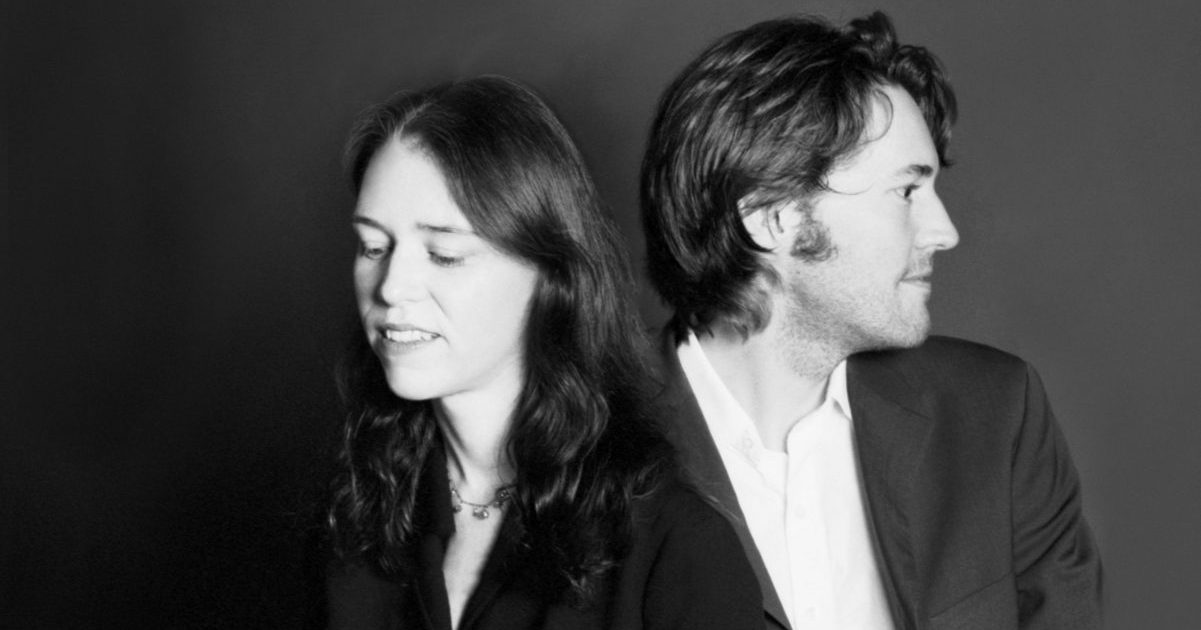
Artist: Zoe & Cloyd
Hometown: Asheville, North Carolina
Song: “Where Do You Stand”
Label: Organic Records

In Their Words: “‘Where Do You Stand’ is a commentary on the state of our national discourse. We had the idea for the line, ‘When all that’s left is left, right, or wrong’ in regards to the hyper-polarization we’ve been seeing for a while and we built the song from there. We wanted the song and video to be thought provoking and a call to action. Some people will always attempt to pit us against one another for personal and political gain but we can’t let divisive, inflammatory rhetoric win the day. For us to move forward, we must find common ground on which to build a path toward a just and sustainable future.

“We filmed the video not far from our house in Fairview, North Carolina, outside of Asheville. The old building with the painted tree is right along the road and we thought it was a quirky rural spot that contrasted nicely with the political imagery. The other location was an abandoned ball court that had some interesting delineated grass with a sort of ‘line in the sand’ vibe. It also looked a bit post-apocalyptic. The fence shots represent several concerns such as the border wall, the lack of voice and access in certain communities, and feelings of powerlessness to change the status quo.” — John Cloyd Miller


Photo credit: Sandlin Gaither

From Goat Rodeo to Songs of Comfort, Yo-Yo Ma Believes Music Builds Bridges

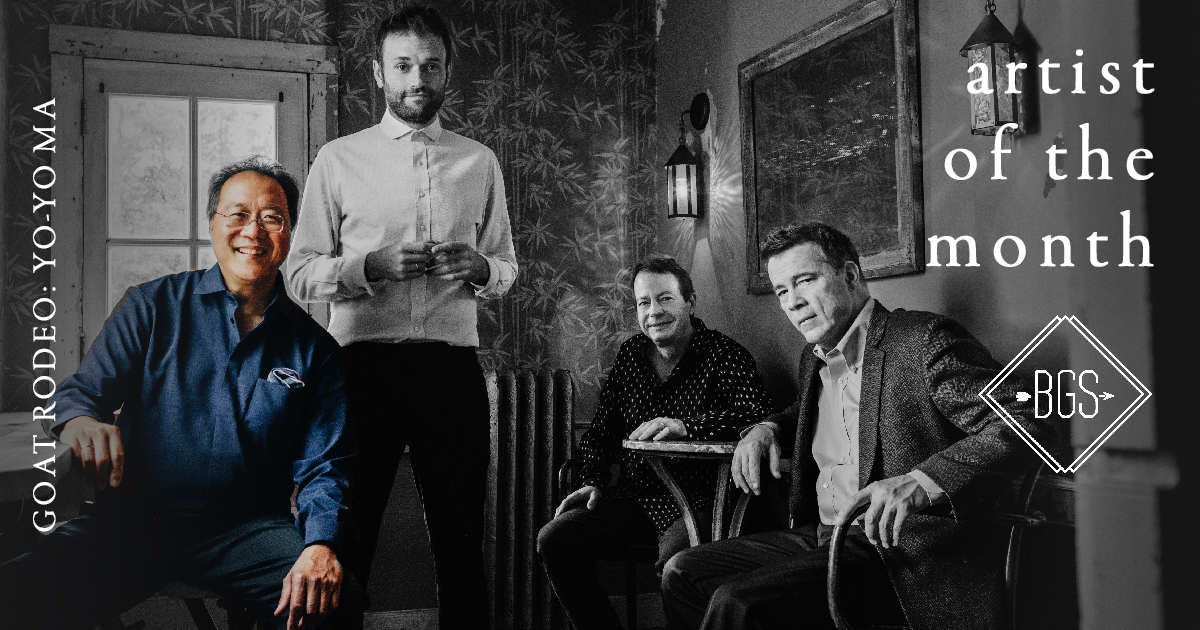
The world’s most famous cellist Yo-Yo Ma is spending the pandemic at home in Cambridge, Massachusetts, with his family. It has been a situation that he describes, rather humorously, as being an adjustment for everyone. “Two-thirds of my marriage has been on the road. Forty-two years and suddenly my wife sees me home every night, and every day and every morning.”

Yet he says the experience has been a real blessing, too. “All the tensions of being home and preparing to leave, or coming back home to recuperate and then leave again, are all gone,” he explains by phone, before adding “replaced by, of course, the incredible fractures and ruptures in our society.”

Besides pondering a “tsunami of crises,” Ma talks about the joys of getting the band back together — a lineup informally known as Goat Rodeo, which also encompasses Stuart Duncan, Edgar Meyer, Chris Thile, and special guest Aoife O’Donovan. This Artist of the Month interview is the fourth of four installments as BGS salutes the incredible and iconic musicians behind the ensemble’s second project, Not Our First Goat Rodeo.

BGS: Like the first album, Not Our First Goat Rodeo was recorded at James Taylor’s studio in the Berkshires. Was there a comfort level about returning there?

Totally. The studio is aesthetically beautiful. It is right there in the middle of the Berkshires, the middle of the woods, and it’s a barn that has been built for that reason. We work hard. We play hard. And going back to it is fabulous because everybody in the band is so busy. So, just to get the time from their busy lives to get together is a feat, but when we get together, it feels like we never left. So, add to the great acoustics and the set-up of the barn, another added feeling of “the band is getting back together again.”

Since it was in August, was there a summer vacation vibe?

It was like camp except we weren’t 12 years old. [Laughs] Adult camp! We spend all day together. We have meals together. But it was also work. I have to say that Edgar, Chris, and Stuart worked like dogs, way into the night. Working on scores, working on correcting things. They worked really, really, really hard, but we also had a really good time.

Although the four of you don’t play together often, it seems that a high level of trust exists within the group and with the audience.

That’s such a good question, because you are talking about both the external and internal relationship of building trust. It starts with the trust we have in one another, interpersonally. Between Chris and Edgar. Between Chris and Stuart. Stuart and Edgar. Edgar and me. If you were to draw a networking line between all of us, and Aoife included, it’s trust on every level. Trust and respect. I think the two go together. In that, if someone has a deep opinion about something, there’s going to be deep respect for that. We might try it and it might evolve into something else. There’s never an argument…

The trust also comes from the philosophy: it’s not “It’s my way, your way or the highway.” It’s more like “I know certain things and you know certain things and I love what you know and you like what I know and respect what I know.” So we are just working it out all of the time.

So that allows for the freedom of creativity, to follow a musical idea and see where it takes you?

You know, that other thing about that is where you place your ego. We live in a world where some people think their ego walks in front of them. And [with Goat Rodeo], every one of us has a pretty strong ego because otherwise we can’t go and perform. But the egos never lead. We actually make fun of our own egos or each other’s.

Another thing is, we all have strengths and vulnerabilities, [but] we never, ever pounce on anybody’s vulnerability. I’m the oldest guy there. I’m full of warts. You can probably make fun of me until the cows come home but I think they treat me nice. There’s respect but they never step on someone’s vulnerability. It’s like a great relationship — a great domestic relationship. We didn’t get into pushing buttons. We’re so clear about the work that needs to be done. That’s how you build trust. You accept the whole person, and you treasure the parts that they excel in. You don’t tramp on weaknesses. But while we have a lot of fun!

What is one recording that ranks as a G.O.A.T. (greatest of all time) for you?

When you ask a question like that, I can’t help but think about different time periods. If the well-lived life is the life that has been explored, then obviously at all times in your life you will have had different influences that have sparked new interests.

I will give you a musical example of recent vintage. There’s this 23-year-old musician named Jacob Collier from England. He’s almost self-taught. He sings. He plays dozens of instruments. He goes and creates. I find more and more as I get older and older, I am just stupefied by young talent in a way I never was. So someone like Jacob Collier comes along and he does harmonies in ways that are so astounding. I think he studied with Herbie Hancock and his level of inventiveness is so astounding. I feel like Salieri hearing Mozart for the first time. This guy just appears and he can spin and juggle 36 balls in the air while he’s talking to you. I just can’t take this! It’s just so amazing!

Chris is someone like that. Chris has that kind of mind. And I think working with Edgar gives me that sense of him. Because here’s this mind who is a perfectionist mind, in that he works things out in the perfectionist mentality where the abstract is really close to the reality. Usually I have an image of something and I’m going to translate that into a feeling, into a sound, and here it is. Edgar likes manipulating things in the abstract. That’s hard to do, because most of us like to work in the visible world, [which is a] tiny part of the spectrum in the universe.

So the invisible world, whether it is the larger universe or the micro universe, is something that most of us can’t experience… To go to trusting the abstract world, which we can’t see, and say that it’s real is very difficult. And so the question is, What is our faith in the invisible? That’s a big question. For me it is not a political question. It is a human question. As in, who do you trust and on what subjects? That’s very difficult because the world has become so complex.

And the world is so immediate and immense, and you are inundated from so many sides.

So, I grew up in three cultures, and each culture said, “We are the best!” I grew up as a 7-year-old — that is when I came to the States — saying, “Are you all crazy? You can’t all be right because you are claiming you’re the most right and that’s not logical!” So I had to figure out what that means. Just like, is bluegrass music the best? Is classical music the best? Is jazz the best? Is R&B the best? Is hip-hop the best?

I decline to think that way because that just gets me in trouble. Just because it doesn’t make sense. It doesn’t make sense logically. It doesn’t make sense to me sociologically. It doesn’t make sense to me as an American citizen because I take pride in all of the inventions we have made to the expressive world. And every new invention we have is a combination of a number of worlds.

You posted some music performances to your pandemic-inspired project, Songs of Comfort, to bring a little solace to people. How gratifying is it that it’s taken on a life of its own, with people around the world uploading videos?

One of the things that I have found out in this first trimester of the pandemic is how deeply people need one another. How deeply they need community. After lockdown, we see the beaches fill up, the bars fill up, and some people say that the economy must move. It’s totally understandable that we have that drive to be together. My way of thinking about it is to say, let’s be a community given the means we have.

In music, in service, it is always asking the question, “How can we help?” So it came from that impulse. That is a very natural impulse, which so many people have added to, or responded to, because we are all going through different versions of the same thing. We’re losing people. We’re stressed. We can’t find food. We can’t earn our living. We can’t plan. We can’t move around. We can’t be with one another.

But guess what? Music travels lightly. This is where the ephemeral is an advantage. It’s not something that needs to be moved by FedEx or a delivery person, but something we can transfer anywhere we want. It goes through walls. That’s why I say, in culture, music builds bridges because the bridges are not physical. Music doesn’t build walls; it builds bridges, because I can send you a link and there you have it.

I relished not only doing Songs of Comfort, but being able to Zoom into hospitals or getting to play for one patient. To send some music to one specific person to say, “I hear this is what you are going through. I’m so sympathetic. I’d like to send you this piece of music. Here it is. I recorded it on my phone.” And then send it to someone. That’s pretty personal. That to me is the essence of the aesthetic experience.

(Editor’s note: Read the remaining installments of our Artist of the Month interview series here.)


Photo credit: Josh Goleman

LISTEN: Gillian Welch, “Strange Isabella” and “Mighty Good Book”

Artist: Gillian Welch
Hometown: Nashville, Tennessee
Songs: “Strange Isabella” and “Mighty Good Book”
Album: Boots No. 2: The Lost Songs*
Label: Acony Records
Release Date: July 31, 2020

In Their Words: “We stashed these recordings away years ago. Their shortcomings, real or imagined, technical or compositional, no longer seem bothersome today. Hearing them now is like seeing snapshots that captured moments the more formal portraits missed. So here we are hurrying them for release before the next tornado blows the whole shoebox away.” — Gillian Welch and David Rawlings

*The 16 songs on Boots No. 2: The Lost Songs are unearthed from a cache of home demos and reel-to-reel recordings. Boots No. 2: The Lost Songs, Vol. 2 and Vol. 3 will follow in the coming months. The three-volume, 48-song collection was produced by David Rawlings and recorded between the making of 2001’s Time (The Revelator) and 2003’s Soul Journey. Released in 2016, Boots No. 1: The Official Revival Bootleg is a double album of unreleased outtakes, alternate versions, and demos from the making of Gillian Welch’s seminal 1996 debut album.


Photo credit: David Gahr

LISTEN: Ray Wylie Hubbard, “Hummingbird” (Feat. Peter Rowan)

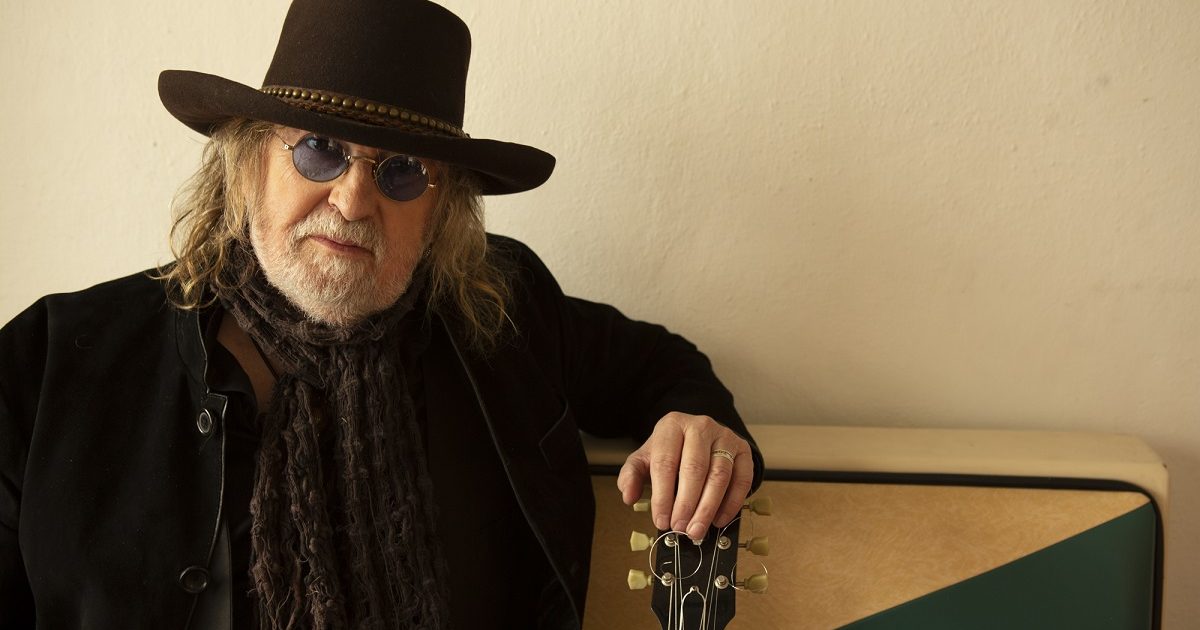
Artist: Ray Wylie Hubbard
Hometown: Wimberley, Texas
Song: “Hummingbird” (feat. Peter Rowan)
Album: Co-Starring
Release Date: July 10, 2020
Record Label: Big Machine Records

In Their Words: “My son, Lucas, gave me a Gibson Hummingbird guitar and one morning as I was playing it in our log home living room, there was a hummingbird zooming around my wife Judy’s feeder and the muse said, ‘Here ya go. It’s obvious…write it.’ So I did in about 20 minutes! As played it for the first time, I wondered who should play and sing on it and the only name that popped up in my head was…Peter Rowan! So I sent it to him and asked if he would play on it. I’m guessing he probably played his licks on a Martin D-18 but whatever it was, it was perfect and I am so grateful he said yes.” — Ray Wylie Hubbard


Photo credit: David McClister

WATCH: The Alex Leach Band, “Take the Long Way Home”

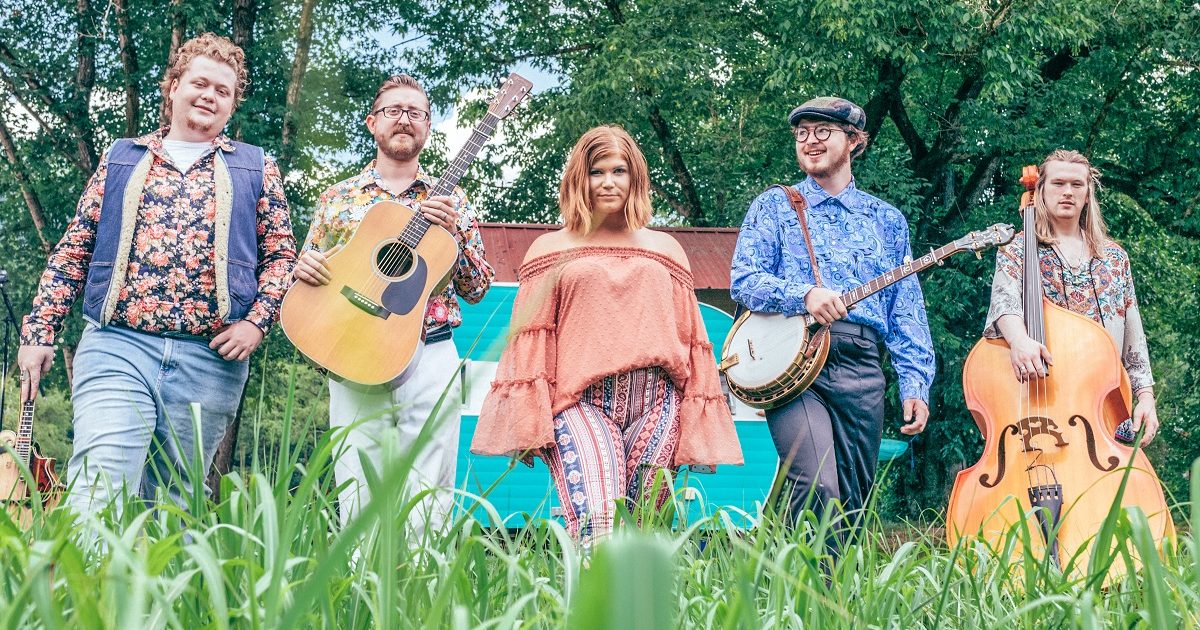
Artist: The Alex Leach Band
Hometown: Jacksboro, Tennessee
Song: “Take the Long Way Home”
Release Date: May 15, 2020
Label: Mountain Home Music Company

In Their Words: “After writing the song, my wife and I had a vision of how we thought the video would look. With plenty of help from our Mountain Home family and our band, we were able to make our vision a reality; complete with a ’60s, bright orange VW Microbus and bell-bottoms for all! Each of us got to unleash a bit of our inner, free spirit for the video, and we think the outcome gives off the perfect vibe. We hope you enjoy this groovy journey with us as we ‘Take the Long Way Home.'” — Alex Leach


Photo credit: Sandlin Gaither