Bluegrass Memoirs: ‘Industrial Strength Bluegrass’ and the Dayton Bluegrass Reunion (Part 3)

(Editor’s Note: Read part one of our series on the Dayton Bluegrass Reunion here. Read part two here.)

Working on CityFolk’s Dayton Bluegrass Reunion, I heard local terminology for the culture in which this music grew. “Industrial working-class Appalachian migrants” was rarely spoken. “Hillbilly” was said sometimes with disdain, sometimes with pride. The preferred in-group term was “briar.” Briars came from the Appalachian hills, transplants proud of their continuing organic down-home connections. I was told that the call letters of WPFB, where Moon Mullins had represented bluegrass for two and a half decades, stood for “We Play For Briars.”

Don Baker’s introduction to the second act of the reunion framed a dramatic shift of scene from Mullins’ milieu to a younger Dayton band: The Hotmud Family.

Inspired by the New Lost City Ramblers, this band began in 1970 playing old-time music based on pre-war hillbilly recordings. The band included Suzanne Thomas Edmundson, Dave Edmundson, and Rick Good, along with a succession of bassists. Suzanne, born in Dayton of Kentucky parents, was a second-generation briar. According to Jon Hartley Fox the Hotmuds were “perhaps the most significant band to emerge from the vibrant scene of the 1970s in southwestern Ohio” (Industrial Strength Bluegrass, 140-1). 

They began including bluegrass in their sound during a 1974 appearance at the Mariposa Folk Festival. In blending old-time and bluegrass, they placed special emphasis on vocal harmonies, something many old-time bands overlooked. Between 1974 and 1981 they made eight albums and appeared widely at bluegrass and folk festivals. Here’s their 1975 bluegrass/old-time blending of “Weary Blues,” a song originally recorded in 1929 in Atlanta by Chattanoogan Jess Young’s Tennessee Band as “Old Weary Blues”:

The Hotmud Family came to be associated with Dayton’s Living Arts Center, described by Hotmud banjoist Rick Good in Industrial Strength Bluegrass (153-57). Established in 1967 by the Dayton Board of Education, this facility offered after-school instruction in the arts for grades 5-12 students in East Dayton. 

In 1975 it began providing programs aimed at the local Appalachian-based culture. It turned to the Hotmud Family, now a nationally known band with an enthusiastic local fan base from their weekends at Sam’s Bar and Grill. At the Center, Hotmud gave lessons, ran a song circle, and led informal jam sessions. Once a week they held a live Country Music Jamboree, which was broadcast over WYSO, the Antioch College radio station. The Center closed in 1977, but the Jamboree continued with other performers at other local venues until 1986. 

Act Two of the Dayton Bluegrass Reunion opened with a solo rendition of “Red Rocking Chair” by former Hotmud lead vocalist Suzanne Thomas Edmundson. Then came the group’s reunion, when Thomas was joined by the other founding Family members Dave Edmundson and Rick Good along with bassist Gary Hopkins. They did three pieces and an encore. During the 1980s the band gave occasional reunion performances. This was one of their last.

For Act Three, Baker’s stage directions began: “Beer Sign On.” 

A borrowed neon sign hung onstage now lit up for the reunion of a band associated with Dayton’s bluegrass bar scene, the Allen Brothers.

Formed in the late ’60s to back their father Red Allen, they began performing without him and were touring in 1974 when brother Neal died. After a brief hiatus, the three other brothers (Harley, Greg, and Ronnie) carried on into the early ’80s, recording Rounder and Folkways albums. The new Smithsonian/Folkways album Industrial Strength Bluegrasswhich just won Album of the Year at the 2021 IBMA Bluegrass Music Awards — includes Harley Allen’s “Suzanne,” first recorded by the Allen Brothers in 1982, here recreated by Mo Pitney and Merle Monroe:

They continued to play together in the Dayton area into the mid-’80s, but by then Harley had begun a solo career, first joining banjoist Mike Lilly in a band Jon Hartley Fox calls “one of the best bluegrass acts Dayton ever produced” (Industrial Strength Bluegrass 136). In 1985 the Allen-Lilly Band closed a set at the Berkshire Mountain Bluegrass Festival. Harlan County native Lilly led the way into “Little Maggie” with coon dog and motorcycle as Frank Wakefield watched: 

Harley went on to a Nashville career as a singer-songwriter, winning two Grammys and singing on the O Brother, Where Art Thou? soundtrack hit “I Am a Man of Constant Sorrow” before dying at the age of 55. 

At the Reunion, the Allen Brothers put together a band with Harley on mandolin, Greg on banjo, and Ronnie on bass, with Wendell Barrett on guitar, and David Harvey on fiddle.

Here’s how they sounded with a similar band (different fiddler and mandolinist), with Monroe’s “Uncle Pen” enlivened by guitarist Harley Allen’s transformation of Jimmy Martin’s “G run” and a fancy ending, followed by a bluegrass trio rendition of the Paul Siebel’s classic “Louise.”

At the Reunion, they did three tunes and an encore. Then it was intermission time.

The second half began with Baker introducing Act Four, the Dry Branch Fire Squad. This band was led by mandolinist Ron Thomason, a Virginian who had migrated to the region as a child. Around since the mid-’70s, it’s still active today. Thomason came up in Dayton’s regional scene in the ’60s, working in bar bands and on the road with Ralph Stanley. 

Committed to traditional bluegrass, Thomason, now living in Colorado, has had many talented musicians in his band. He is famous for his emcee work, which regularly grows into humorous monologue. Baker’s directions for this act listed two pieces (including one gospel song), separated by:

“Rap — Ron Thomason”

Here’s a sample of Ron’s “rap” — a comic speech from a 2007 California festival:

At the time of The Dayton Bluegrass Reunion, Dry Branch had four albums on Rounder, the start of a long string with that label. Like the Hotmud Family, they were folk and bluegrass festival regulars. 

The band this evening consisted of Ron on mandolin, John Hisey on banjo, Mary Jo Leet on guitar, and Charlie Leet on bass. In 1987 a similar lineup recorded “Aragon Mill,” a Si Kahn song that Ron had learned while working at coal miner’s union rallies with Hazel Dickens:

Act Five brought on another performer still active today, Larry Sparks and the Lonesome Ramblers. Sparks had come up in the Dayton bar scene at about the same time as Ron Thomason. He worked with the Stanley Brothers and Ralph Stanley at the end of the ’60s and made his first album on his own in 1970s. He became a member of the Bluegrass Hall of Fame in 2015 and has a new album out on Rebel. 

At this concert his Lonesome Ramblers had a reunion dimension. Mandolinist and singer Wendy Miller, who’d played on Larry’s earliest recordings and was with the band through most of the ’70s, was back for this evening’s concert. Also in the band were banjoist Barry Crabtree and Larry’s son, Larry Dee, on bass. 

They did three songs: “Dark Hollow,” “Face in the Crowd,” and “Kentucky Chimes,” all regulars from his albums and concerts. He closed with an eight-tune medley of his other hits. There are many videos of Larry’s great singing and lead guitar work. Here’s one of my favorites:

Acts Six and Seven dramatized the transformations of Dayton’s foundational 1956 band — The Osborne Brothers and Red Allen.

Act Six was all reunion. Red Allen had been officially retired since 1984, although he’d recently recorded four tracks on Home Is Where The Heart Is, David Grisman’s new Rounder album, joined on these tracks by son Harley and banjoist Porter Church, who’d been in his band The Kentuckians. 

Red started this band in 1959 with mandolinist Frank Wakefield. In November 1961, in Nashville for the D.J. Convention, they cut six classic tracks at Starday with top bluegrass musicians of the day: Don Reno on banjo; Chubby Wise on fiddle; and John Palmer on bass. The whole great session is on YouTube: 

Sierra Hull reprises Wakefield’s “Mountain Strings” on the new Smithsonian/Folkways album Industrial Strength Bluegrass. The track was nominated for IBMA’s 2021 Instrumental Recording of the Year.

In the early ’60s Wakefield and Allen worked out of the D.C. area, with a radio show in Wheaton, Maryland. In 1964 they did a Folkways album in New York, produced by David Grisman and Peter Siegel. 

Soon after, Wakefield, whose innovative music is discussed by Ben Krakauer in Industrial Strength Bluegrass (182-183), began working with New York band The Greenbriar Boys and later he relocated to Saratoga Springs, New York. Here’s how he sounded in 2008 — still pushing the boundaries:

Red kept the Kentuckians going in the mid-’60s with a succession of great sidemen, among them banjoist Porter Church and mandolinist Grisman, who produced two albums of the Kentuckians on the County label.

In 1967 Red worked briefly for Bill Monroe and took Lester Flatt’s place in the Foggy Mountain Boys when Flatt had heart surgery. The next year he was in Lexington working with J.D. Crowe and Doyle Lawson.

By the early ’70s he was back in Dayton, working with his sons and playing locally what Rick Good calls “bargrass” (Industrial Strength Bluegrass 156). For tonight’s concert Red and Frank’s Kentuckians included Porter Church on banjo, Buddy Griffin on fiddle, Ron Messing on Dobro, and Larry Nager on bass. 

During Red’s four-song set, Red Spurlock and Noah Crase, banjoists who’d played with Red during his early years, sat in for choruses with the band. A reprise of Wakefield’s famous “New Camptown Races” brought guest David Harvey, son of Dorsey Harvey, another influential mandolinist, to play harmony.

The final segment, Act Seven, featured Dayton’s Grand Ole Opry stars, the Osborne Brothers. Two days before the concert the Dayton Daily News said the Osbornes had “achieved the greatest fame of those taking part in this tribute to the flowering of bluegrass music in Dayton.” It would be hard for anyone to follow them. After joining the Opry in 1964 they’d moved from Dayton to Nashville. During the late ’60s and early ’70s, a string of country hits (“Rocky Top” is the best known today) led to industry awards for their vocal work.

With this success the Osbornes’ recordings moved toward a contemporary country radio-friendly sound, mixing pedal steel, piano, fiddle, drums, and electric bass alongside their bluegrass banjo and mandolin. Their live sound also changed. In 1967 they added electric bass; in the early ’70s, a drummer. Next came electric pickups on banjo and mandolin. They did this to make themselves heard in the big country package shows they were playing, where all the other acts were highly amplified. Their “going electric” was viewed with alarm in the acoustic-oriented bluegrass festival world, but it only lasted for a few years.

Throughout these years, their unique vocals remained a constant. They continued to record and tour. Their repertoire drew largely from decades of recordings along with newer material. They now carried a straight-ahead bluegrass band including fiddle and acoustic bass.

This evening, playing with the Osborne Brothers were Paul Brewster on guitar and third voice in the trio, Terry Eldredge on bass, and Steve Thomas on fiddle.  They did four songs, all favorites from their earlier recordings, including a version of “Kentucky,” the Blue Sky Boys hit of the ’30s that they’d recorded for Decca in 1964 and which remained in their repertoire right up until Sonny’s 2005 retirement. Here’s an early ’90s Opry performance of it, introduced by Bill Anderson. The band includes future Grascals member Eldredge on guitar and third voice and Terry Smith on bass, along with second guitarist (and bus driver) Raymond Huffmaster, Dobroist Gene Wooten, and fiddler Glen Duncan. 

According to Baker’s stage directions, the closing act consisted of:

“Music — Medley”

An earlier draft reads:

“[medley in B natural: each unit from each of the 7 segments chooses a song which they play when their turn comes]”

My memory of this is vague, but I think that’s just how the Dayton Bluegrass Reunion ended, in B natural. But it wasn’t over quite yet. In that day’s Dayton Daily News columnist Nick Weiser had announced: 

“Following the Dayton Bluegrass Reunion at Memorial Hall, the Canal Street Tavern, located at 308 E. First St., will have a reception for the audience and the participants of the Bluegrass Reunion Show. Mark Bondurant will open the show at 9:30 with a reception to follow after the show. Many of the musicians from the Memorial Hall show are scheduled to get together and jam at the Canal Street Tavern reception. Admission is $1 at the door.”

I went with my camera…  Next time!

(Editor’s Note: Read part one of our series on the Dayton Bluegrass Reunion here. Read part two here.)


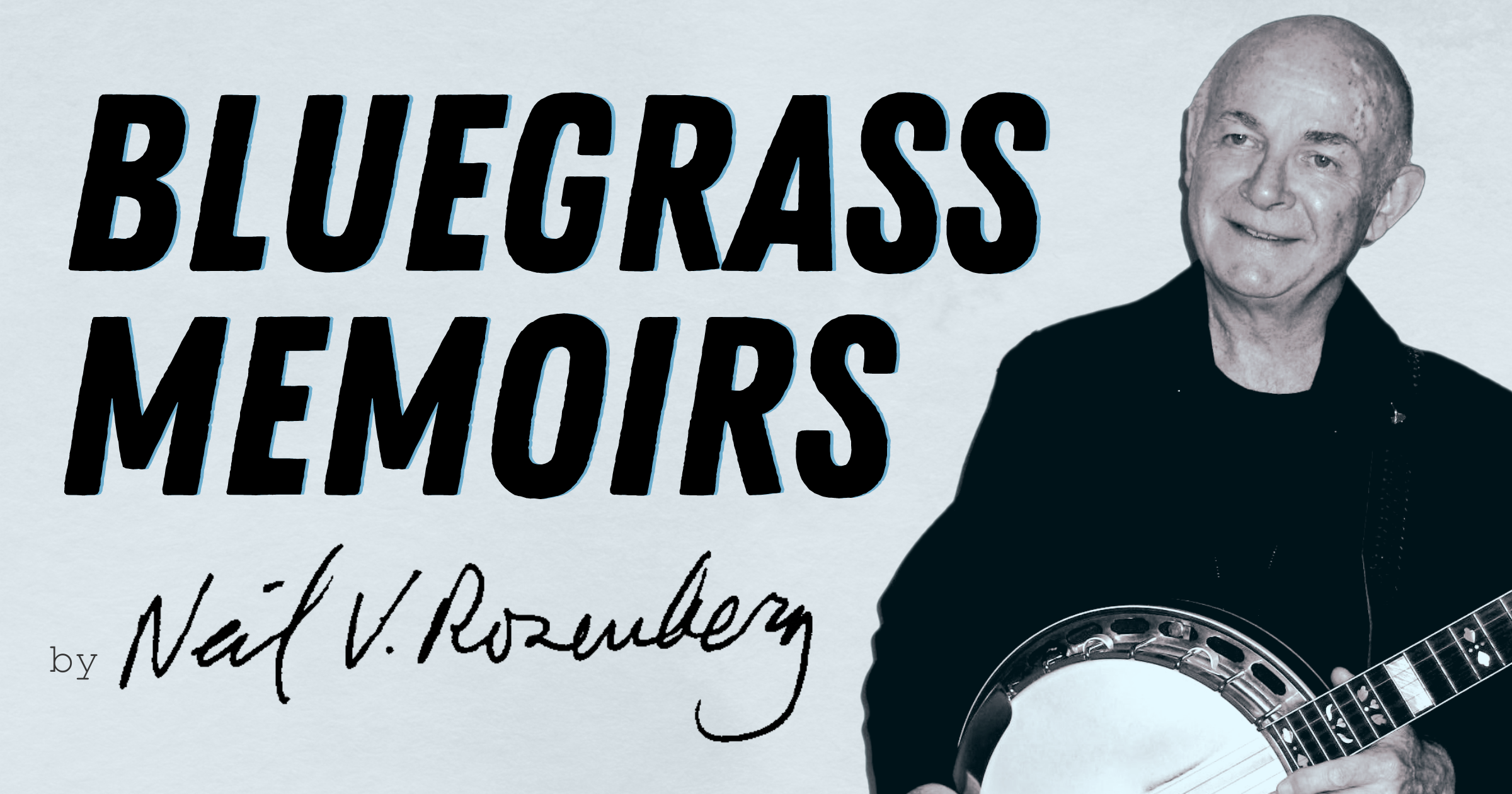
Neil V. Rosenberg is an author, scholar, historian, banjo player, Bluegrass Music Hall of Fame inductee, and co-chair of the IBMA Foundation’s Arnold Shultz Fund.

Photo of Neil V. Rosenberg: Terri Thomson Rosenberg.

Neil would like to thank Tom Duffee, Rick Good, and Al Turnbull.

The BGS Radio Hour – Episode 204

Welcome to the BGS Radio Hour! Since 2017, the weekly show has been a recap of all the great music, new and old, featured on BGS. This week, we bring you old bluegrass newly recorded by the Infamous Stringdusters, music from our Artist of the Month, Peggy Seeger, and so much more! Remember to check back every Monday for a new episode of the BGS Radio Hour.

The Brother Brothers – “Circles”

Celebrating their upcoming Calla Lily (available April 16), Adam and David Moss of the Brother Brothers joined us on a recent 5+5. We talked John Hartford, writing music for dance, and the inspirations and songwriting techniques behind these two brothers and their new album.

Johnny Chops – “Trouble With the Truth”

Austin-based Johnny Chops brings us a song this week from his upcoming Yours, Mine and the Truth EP. This song pretty much fell out of the sky and onto Chops’ paper in his writing room one morning. The video continues to tell the story of the song, building a dark and bleak vibe through dramatic and abandoned filming locations.

Sinner Friends – “Unforgivable You”

Sinner Friends don’t just sound like vintage bluegrass: they record like it too, down to just a few microphones, no editing, everything done right then and there. Recorded and released by Bigtone Records, the result is on par with those early bluegrass recordings that defined the genre. This week, they bring us a song from their newly released Sinner Friends Miss You (The Quarantine EP). 

Keb’ Mo’ – Yamaha x BGS Artist Session

For 2021’s Folk Alliance International and SXSW conferencesBGS teamed up with Yamaha to film performances from some of the artists we’re most excited about. Our first segment is from none other than Keb’ Mo’, playing a Yamaha FGX5 – modeled after the vintage FG180, Keb’s first guitar which he unfortunately lost in the Nashville flood of 2010. Aren’t we all just waiting on the medicine man these days? Keb’ performs two songs for us, “Every Morning” and “The Action.”

The Gina Furtado Project – “Kansas City Railroad Blues”

Gina Furtado brings us the “magic fire” of the banjo on this new single, finding the sound that first made her fall in love with the instrument. It’s the latest single in an exciting and excellent batch from Furtado and Mountain Home Music Company, produced by banjo phenom Kristin Scott Benson, and accompanied by Drew Matulich, Wayne Benson, and siblings Malia and Lu Furtado.

Ervin Stellar – “Nothing to Prove”

From Grand Rapids, Michigan, Ervin Stellars joined us on a 5+5 last week – that is, 5 questions, 5 songs. We talked everything from Wes Anderson and the Coen Brothers to waves and mountains. And let’s not forget his new album, Nothing to Prove.

Mimi Naja – “All You Know of Me”

Known for her work with Fruition, Mimi Naja recently dropped Nothing Has Changed, her first solo release since 2014. We caught up with Naja to talk about songwriting, inspirations, and a dream meal pairing of Thai with Khruangbin.

Peggy Seeger – “The Invisible Woman”

Peggy Seeger is our Artist of the Month for April here at BGS! Her just-released First Farewell is a goodbye to recording and the road, but she is not leaving that lineage behind. Coming from a musical family including the likes of Pete and Mike Seeger, the traditional continues, as Seeger enlists her sons Neill and Callum MacColl on the new album. Stay tuned all month long where we’ll be featuring Peggy Seeger!

The Alex Leach Band – “The Turntable”

Alex Leach has been adored by the Eastern Tennessee bluegrass community since he first started appearing at the WDVX radio station in Knoxville as a small child. Through the years, he’s played with Ralph Stanley, hosts a weekly show on WDVX, and now has his newest endeavor, The Alex Leach Band, who just released their latest album (produced by Jim Lauderdale), I’m the Happiest When I’m Moving. 

Acoustic Syndicate – “Sunny”

Acoustic Syndicate has been making music in Western North Carolina’s jamband scene for over two decades, but their latest studio endeavor is the first in seven years. “Sunny” is a promising first release with Organic Records, the band joined by Brian Felix on piano and Lyndsay Pruett on violin.

Elizabeth King – “Living in the Last Days”

Memphis-based Elizabeth King brings us this deeply thought number this week from her latest album of the same title. “Living in the Last Days” is about the trouble that so casually surrounds our current days, and King sings about it with a lot of conviction. The song should inspire us all to look a little more closely at what surrounds us, and what we can do to make this world a better place for all.

Bobby Osborne – “White Line Fever”

“White Line Fever” was a hit for Merle Haggard in the 60s, but had never been cut as a bluegrass song. That is, until Alison Brown and Bobby Osborne got a hold of it. One thing leading to another, and Jeff Tweedy wrote a second verse about Bobby (being the voice of Rocky Top) and his 60 years on the road as a musician. Mixing all of this with some A-list bluegrass musicians like Sierra Hull and Stuart Duncan, well… this is the result! As Brown says, “it was hard to believe the song hadn’t been a bluegrass standard all along.”

Cha Wa – “My People”

Joseph Boudreaux Jr, vocalist for Cha Wa, teaches us about ‘ancestral recall’ with this song, a phenomenon where people consciously or subconsciously draw on the experiences and lives of their ancestors to perpetuate a certain lifestyle or culture. “‘My People’ reminds us that no matter who you are — rich or poor, big or small — we’re all in this together as humans,” Boudreaux told BGS. “Cause one day we gon’ all be in the same boat.”


Photos: (L to R) Keb’ Mo’; Gina Furtado by Sandlin Gaither; Peggy Seeger by Vicki Sharp

LISTEN: Bobby Osborne, “White Line Fever” with Alison Brown and Special Guests

Artist: Bobby Osborne (feat. Alison Brown, Stuart Duncan, Trey Hensley, Sierra Hull, Tim O’Brien & Todd Phillips)
Hometown: Hyden, Kentucky
Song: “White Line Fever”
Release Date: March 26, 2021
Label: Compass Records

In Their Words: “When I first heard ‘White Line Fever’ it was a ballad-type song. When Alison discussed it with me, she said she wanted to do it in a bluegrass style. It’s a great song, and I enjoyed recording this version for Compass Records. I hope everyone also enjoys ‘White Line Fever’!” — Bobby Osborne

“On his birthday last year, I asked Bobby if he thought it would be fun to record a version of ‘White Line Fever’ which he was totally up for doing. The song was a hit for Merle Haggard who cut it in late 1960s with a mid-tempo country feel, but it always seemed to me that it would make a great bluegrass song. As Garry West (co-producer) and I started working on the re-arrangement we felt like it was missing a second verse, so we asked Jeff Tweedy if he would be up for writing some lyrics to tell the story of Bobby’s 60-plus year career on the road. He came up with the perfect handful of lines with nods to Bobby’s Kentucky roots and Ohio ties. We got some of our favorite bluegrass collaborators to cut the song (Stuart Duncan – fiddle, Sierra Hull – mandolin, Trey Hensley – guitar and harmony vocals, Todd Phillips – bass, Tim O’Brien – harmony vocals, with me on banjo) and, once we heard Bobby’s incomparable vocal in the track, it was hard to believe the song hadn’t been a bluegrass standard all along.” — Alison Brown


Photo credit: Jay Blakesburg

WATCH: Rock Hearts, “Don’t Let Smokey Mountain Smoke Get in Your Eyes”

Artist: Rock Hearts
Hometown: New England area
Song: “Don’t Let Smokey Mountain Smoke Get in Your Eyes”
Album: Starry Southern Nights (Produced by Ned Luberecki)
Release Date: October 30, 2020

In Their Words: “The first time Rock Hearts played ‘Don’t Let Smokey Mountain Smoke Get In Your Eyes,’ we knew we’d stumbled onto something special. It immediately drew each of us decades back to a time when we were falling in love with bluegrass. We each remember being younger and hearing this tune by major influences in our bluegrass lives, the Osborne Brothers. So, we wanted to include it on this album and reintroduce folks to the song as no one was covering it. Mainly, we wanted to include it to pay homage to a couple of our bluegrass heroes, Sonny and Bobby!” — Alex MacLeod, Rock Hearts


Photo credit: Alex MacLeod

First Generation: Meet the Bluegrass Music Hall of Fame’s Earliest Inductees

Though it’s not that hard to find some who will argue the point, bluegrass is widely held to have originated when banjo phenom Earl Scruggs joined Grand Ole Opry star Bill Monroe’s band in early December, 1945. Bill Monroe and His Blue Grass Boys — the possessive wasn’t just there for show — were already among the anchors of the radio show’s cast, but contemporary accounts (and a handful of bootleg recordings) make clear that, to the ears of an almost instantly enraptured audience, Scruggs’ rapid-fire banjo playing elevated the group’s sound to a new level.

Almost instantly, groups sprang up — or reoriented themselves — in pursuit of the new sound, and although banjo players and fiddlers were the most obvious converts, the truth is that virtually all of the intricacies the band brought to their sound were soon emulated. By the time Scruggs and guitarist/lead singer Lester Flatt left the Blue Grass Boys at the beginning of 1948, the quintet’s live performances and a handful of recordings had already inspired some notable followers, who, out of artistic desire and commercial necessity, quickly busied themselves in developing their own distinctive takes on the sound of the “original bluegrass band.”

As we near the 75th anniversary of this foundational origin story, BGS will be looking back across the sweep of those years — and first up, of course, a clutch of true pioneers that share a common accomplishment: they are the acts honored by induction into the IBMA’s Hall of Fame in its first five years and their plaques proudly hang at the Bluegrass Music Hall of Fame & Museum in Owensboro, Kentucky.


Bill Monroe (inducted 1991)

A complex personality with a skill set that included equal measures of innovation and synthesis, the mandolin-playing Monroe (b. 1911) moved from a mid-1930s duo with his brother to assembling a hot string band during World War II to fronting that original bluegrass band — an achievement which earned him his “Father of Bluegrass” title. Though it’s easy to discern the elements he brought together in that music — old fiddle tunes; Scotch-Irish ballads; African-American blues, jazz and gospel; western swing and more — his creativity extended beyond simply stirring them together and kept him a central figure from its inception until his death in 1996.

Indeed, while his early classics are essential to the bluegrass canon, even his late-life instrumental compositions have enjoyed a growing influence among today’s hottest young players. In fact, he collected his first Grammy for 1988’s “Southern Flavor.” Monroe was inducted into the Country Music Hall of Fame in 1970, and as the composer of “Blue Moon of Kentucky,” he joined the Nashville Songwriters Hall of Fame in 1971, received a Lifetime Achievement Award from the Grammys in 1993, and entered the Rock and Roll Hall of Fame as an early influence in 1997.

Representative tracks: “Blue Yodel No. 4,“I’m Going Back to Old Kentucky,” “Lord Protect My Soul,” “Midnight on the Stormy Deep,” “Southern Flavor”


Earl Scruggs (inducted 1991)

Though he wasn’t yet 22 years old when he joined Monroe’s band at the end of 1945, Earl Scruggs (b. 1924) was ready to step into the spotlight, and, with the exception of a stretch of ill health in the late 1980s and early ‘90s, he never relinquished it until his death in 2012. Unlike many instrumentalists who change their approach according to musical context, Scruggs believed that his picking style — built around right-hand patterns called “rolls” — could fit anywhere, and after his groundbreaking years with Monroe and then Lester Flatt, his career seemed devoted to proving the point.

Having created much of the musical vocabulary for bluegrass banjo picking, he moved on to playing with his sons in the Earl Scruggs Revue, a country-rock-bluegrass fusion band that was arguably more successful — at least in commercial terms — than Flatt & Scruggs had ever been. In the 21st century, Scruggs championed a broad variety of younger musicians while continuing to play those same sweet rolls he’d created as a young man. He was awarded a Lifetime Achievement Award from the Grammys in 2008.

Representative tracks: “Blue Ridge Cabin Home” (Flatt & Scruggs), “Foggy Mountain Chimes” (Flatt & Scruggs), “Travelin’ Prayer” (Earl Scruggs Revue), “The Engineers Don’t Wave From the Trains Anymore” (with Tom T. Hall), “The Angels” (with Melissa Etheridge)


Lester Flatt (inducted 1991)

With an expressive, emotive voice and an impressive array of demeanors that ranged from dry and sly to devout and down-home, rhythm guitarist Lester Flatt (b. 1914) was the perfect musical complement to Earl Scruggs, and their 1948-1969 output was at least as influential as Monroe’s. Flatt & Scruggs won a 1968 Grammy for their classic recording of “Foggy Mountain Breakdown.”

But where Scruggs was not only interested in playing with his sons, but also interested in putting his banjo into a wider range of contexts, Flatt preferred sticking to the country side of bluegrass. In the aftermath of their breakup, Flatt’s drawl deepened and slowed as he presided over a series of gifted lineups that included peers like Josh Graves and Vassar Clements, alongside young up-and-comers from banjoist Kenny Ingram to a teenaged Marty Stuart. Flatt & Scruggs were inducted into the Country Music Hall of Fame in 1985.

Representative tracks: “I’ll Never Love Another” (Flatt & Scruggs), “I’ll Go Stepping Too” (Flatt & Scruggs), “On My Mind” (Flatt & Scruggs), “You Are My Flower” (Flatt & Scruggs), “Gonna Have Myself a Ball”


The Stanley Brothers (inducted 1992)

The career of Ralph Stanley (b. 1927) and Carter Stanley (b.1925) illustrates both the profound impact that the original bluegrass band had on their peers, as well as the complementary artistic and commercial drives that impelled those successors to create their own unique style. In their first recordings, made while Flatt and Scruggs were still Blue Grass Boys, you can hear the Virginia-born Stanley brothers revamp their old-time string band approach into an approximation of the pioneers’ sound, yet within a matter of months, they had found a compelling variant.

The Stanley sound was built in part around Ralph’s stolid but driving banjo and soulful tenor singing, but even more around Carter’s mournful lead vocals and powerful songs. Over the years, while they moved from the Nashville-based Columbia and Mercury labels to scrappy (and multi-racial) Cincinnati indie, King, their sound became even more recognizable, as owner Syd Nathan hectored them into de-emphasizing the fiddle and leaning more into the innovative work of flatpicking lead guitarists like George Shuffler. The brothers’ partnership came to an end in late 1966 with the early, alcohol-related death of Carter; Ralph would continue on with his own twist on the Stanley Brothers’ sound until his death in 2016.

Representative tracks: “The Lonesome River,” “Our Last Goodbye,” “Let Me Walk, Lord, By Your Side,” “I’ll Just Go Away,” “Pig in a Pen”


Reno & Smiley (inducted 1992)

The first banjo player to follow Scruggs, albeit briefly, in the Blue Grass Boys, Don Reno (b. 1926) deliberately sought to create a distinct and instantly recognizable style of his own on the instrument. By the time his partnership with singer-guitarist Red Smiley (b. 1925) had settled into regular recording for King Records in the early 1950s, he had succeeded completely, and for good measure had done the same with flatpicked guitar solos, too. As Grand Ole Opry announcer Eddie Stubbs once put it, Reno & Smiley were a country band with a banjo instead of a steel guitar.

Though Reno could and sometimes would blister a banjo solo, many of the band’s signature numbers were heart songs, country shuffles, earnest gospel outings and more, including occasional flashes of rockabilly and jazz. Reno wrote many of them, sang tenor and occasional leads, and shared the instrumental limelight with their steady fiddler, Mack Magaha, and occasionally with one or another mandolin player, including his son, Ronnie. The partners split for a few years in the mid-‘60s, then reunited for a brief period before Smiley’s death in 1972. Reno continued to record and perform with partners ranging from Bill Harrell to his sons until he passed away in 1984.

Representative tracks: “I’m Using My Bible for a Roadmap,” “I Know You’re Married,” “Little Rock Getaway,” “Please Remember That I Love You,” “Just About Then”


Jim & Jesse (inducted 1993)

Though Jim McReynolds (b. 1927) and Jesse McReynolds (b. 1929) were born just a few dozen miles from the Stanley Brothers, the music of Jim & Jesse could hardly have been a more different kind of bluegrass. The duo’s singing was smooth and refined — especially guitarist Jim’s silvery tenor — while the instrumental sound was driven by Jesse’s innovative mandolin cross-picking and their overall approach by the latter’s eclectic tastes and influences (he appeared, for instance, on The Doors’ 1969 album, The Soft Parade).

The brothers were comfortable in reaching for a more countrified sound, helped by banjo players like Allen Shelton and Carl Jackson, who were adept at playing radio-friendly licks on a dobro-banjo as well as ‘grassier fare when that was called for. Smart businessmen as well, the duo were among the first to appear on television in the early 1950s, recorded an entire album of Chuck Berry songs in the mid-1960s, started their own label in the early 1970s, and remained a popular fixture on the Grand Ole Opry until Jim’s death on the last day of 2002. As of this writing, Jesse McReynolds continues to perform — and to innovate, too, with releases like a 2010 Songs of the Grateful Dead collection.

Representative tracks: “Pardon Me,” “Are You Missing Me,” “She Left Me Standing on the Mountain,” “Cotton Mill Man,” “Memphis”


Mac Wiseman (inducted 1993)

Nicknamed “The Voice With a Heart,” Virginia’s Mac Wiseman (b. 1925) was a founding member of Flatt & Scruggs’ Foggy Mountain Boys in 1948, but soon left to join Monroe (and Don Reno) in the Blue Grass Boys. By the early 1950s, he’d started his own career, recording for Gallatin, Tennessee’s Dot Records — and then going to work for the label. A consummate professional, he also served as a musicians’ union official for a time, and was a founding member of the Country Music Association. He frequently recorded material other than bluegrass, especially when rock ’n’ roll and the pop-country Nashville sound beckoned in the late 1950s and early 1960s, and throughout his career, he was never afraid to use a variety of instruments besides the archetypal bluegrass ones.

Still, as a performer, bluegrass was his bread and butter from the mid-1960s on, and rather than carry a band, he would recruit players from other acts (and occasionally skilled amateurs, too) and lead them on stage with a heavy guitar strum and a quick “watch me, boys!” Wiseman’s songbook included old folk numbers, songs he heard on the radio as a polio-stricken child, big band tunes, Music Row compositions and much more. In later years, he recorded several memorable projects that highlighted songs his mother had taught him and songs that told his life story, before his death in 2019.

Representative tracks: “I Still Write Your Name in the Sand,” “I Wonder How the Old Folks Are at Home,” “Mother Knows Best,” “My Little Home in Tennessee,” “’Tis Sweet to Be Remembered”


The Osborne Brothers (inducted 1994)

Bobby Osborne (b. 1931) and Sonny Osborne (b. 1937) were among the first of what might be called “semi-second generation” bluegrass artists; unlike those who preceded them in the Bluegrass Hall of Fame, neither had performed professionally before 1950. By 1954, though, they’d hooked up with Jimmy Martin for a memorable set of recordings, and 1956 found them signed on to MGM on their own. Together with singer-guitarist Red Allen, the Brothers — Bobby singing lead and playing mandolin, Sonny singing baritone and playing banjo — had come up with an inventive new vocal arrangement that put the spotlight pretty much on them alone.

Lest that sound too cold, it should be noted that they deserved it, for not only was Bobby a formidable lead singer and Sonny brilliant in the support role, but their fearless, try-anything (the two recorded separately with avant-garde jazz vibraphonist Gary Burton in the mid-’60s) instrumental skills were profoundly original. The Brothers joined the Grand Ole Opry and signed with Decca Records in 1964, and spent the next decade fusing bluegrass and country in a way that eventually earned them a CMA Vocal Group award. Irascible, opinionated, and both artistically and commercially successful, the Osborne Brothers were at the forefront of the music until Sonny’s 2005 retirement — and while Bobby continues to perform to this day, the influence of their duo continues to grow, too.

Representative tracks: “Once More,” “The Cuckoo Bird,” “Tennessee Hound Dog,” “Pathway of Teardrops,” “Sweethearts Again”


Jimmy Martin (inducted 1995)

East Tennessee native Jimmy Martin (b. 1927) hungered to perform with Bill Monroe as a youngster, then got his chance in 1949 when Mac Wiseman quit the Blue Grass Boys. As lead vocalist and guitarist, he helped to make some of Monroe’s most memorable recordings, then partnered in various settings with Bobby and Sonny Osborne before taking the helm of his Sunny Mountain Boys in the mid-1950s. A brash, colorful guy who could boast with the best and then back it up, Martin served in the cast of the Louisiana Hayride (alongside Elvis) and the Wheeling (W.V.) Jamboree before a growing bluegrass festival circuit threw him a lifeline in the absence of a Grand Ole Opry membership.

Among early Hall of Fame inductees, he may be considered more influential than most of his peers. Service in his Sunny Mountain Boys constituted the training ground for several generations of musicians, from banjo man J.D. Crowe to newgrass pioneer Alan Munde to Americana favorite Greg Garing — and his appearance on the Nitty Gritty Dirt Band’s Will the Circle Be Unbroken was legendary. Martin was an unstoppable force of nature who knew exactly what he wanted from a musician, yet was unable to clearly explain it. Still, he did well enough that his records are instantly recognizable, even when you’ve never heard them before.

Representative tracks: “That’s How I Can Count on You” (with the Osborne Brothers), “Rock Hearts,” “You Don’t Know My Mind,” “Tennessee,” “Freeborn Man”


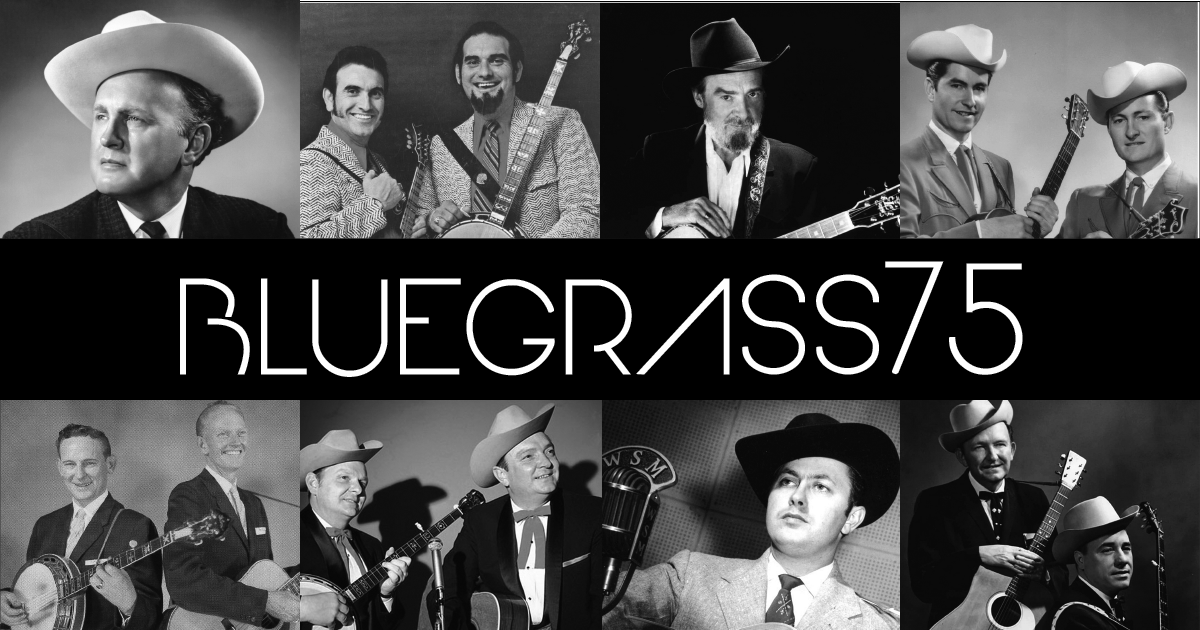
Pictured above, first row (L to R): Bill Monroe, The Osborne Brothers, Mac Wiseman, Jim & Jesse; Second row: Reno & Smiley, The Stanley Brothers, Jimmy Martin, Flatt & Scruggs

WATCH: Old Salt Union, “Tell Me So” (Feat. Bobby Osborne)

Artist: Old Salt Union
Hometown: St. Louis, Missouri
Song: “Tell Me So” (Featuring Bobby Osborne)
Album: Where the Dogs Don’t Bite
Release Date: August 16, 2019
Label: Compass Records

In Their Words: “‘Tell Me So’ was an old song idea we had that we brought back to life with the help of Bobby Osborne. You know, an honest tune with simple lyrics about daily frustrations and uncertainties. I think really the track pays homage to traditional bluegrass and parlor-style call-and-response.” — Justin Wallace, mandolin


Photo credit: Sekondtry

Taking the Wheel: A Visit With Rhonda Vincent

In no small part because of her bubbly personality, Rhonda Vincent has befriended some of the biggest names in bluegrass and country music. Dolly Parton asked her to sing harmony for an upcoming film soundtrack. Bernie Taupin gave her free reign to reimagine “Please” on an Elton John tribute album. Bluegrass heroes Bobby and Sonny Osborne set aside a 10-year break of performing together to appear on her newest album and DVD, Live at the Ryman. And she’s a frequent guest on the cable series Larry’s Country Diner, where she displays her talent for singing classic country among a roster of stars from the golden era.

Yet, beyond her upbeat demeanor, the real reason these legendary artists are reaching out is simple: Vincent is in top form with her musicianship and singing ability. In concert she glides to the high notes without straining, occasionally boosted by a little jump. She easily trades off between mandolin and fiddle, although she’s just as likely to let a band member from The Rage take the spotlight.

Off stage, Vincent maintains the tireless work ethic that’s carried her from being a child prodigy in Missouri to a Grammy-winning artist. (She picked up the 2017 Grammy for Best Bluegrass Album for a live album, All the Rage: Volume 1.) She leads her business with longtime husband, Herb Sandker, and keeps her hands on all facets of the industry – and now that means the steering wheel of the bus, too.

A few days after performing at her family’s Sally Mountain Bluegrass Festival in Queen City, Missouri, Vincent invited the Bluegrass Situation into her home studio in Nashville.

On stage, you appear to be so comfortable when you talk to the crowd. Why is that important for you to do?

I love that first of all. It’s something fun for me. It’s not something fun for everyone, I realize. But that is such a part of what we do. I love meeting the people. I think my first trip to Europe was to Finland in ’92-’94 or something like that with my family. And I’m thinking, That’s going to be such a different experience. I’m thinking I’m going to Mars or something. The terrain’s going to be different and the people are going to look a different way or something, I don’t know. I got there and it’s like “This looks like Missouri.”

But I found out the people were so special. The places may look the same, but the people are what can really make it special. And I like making it an experience. People are shocked because we meet and greet after every show, and they’re like “Oh my gosh, I actually get to talk to you?” Or they come and they can’t believe it and then they don’t say anything.

And then beyond that it’s not just a show, it’s not just a meet and greet, but now with Facebook and social media I get to stay in touch with them. Not that I can answer everyone, but I have set aside a little bit of time. Usually right before I go to sleep I have about 30 minutes and I try to answer messages or respond to people.

There’s a blind girl that lives in Portland, Oregon, and she sent me a message asking how to tune her mandolin. So I took my phone and made a YouTube video and [mock playing] ding, ding, ding, ding. I said “Cody, here’s E…” And I went through that and posted that and sent that to her. And from that, she flew all the way from Oregon to my family’s festival and she performed on stage with us at Sally Mountain last week. So it’s about relationships and loving these people because they love you so much and they love the music.


What is the audition process like to be in your band? How do you pick your musicians?

Mostly I guess I would see them. Like Hunter Berry, I saw him with Melvin Goins. What struck me about him, once again, he made himself accessible. He was backstage at the festival in Eminence, Missouri, and I would see him there every year, jamming for hours before they ever went on stage. Then he was with Doyle Lawson, the same thing. Then when I had an opening on fiddle, I called him up.

First of all their style has to fit the music and Hunter has that Benny Martin feel. He has that grit, and I loved that about his fiddle style. Mike Cleveland was in the band before Hunter, very similar styles, so the style had to fit. But just always being aware. I love to get out at SPBGMA or IBMA, wherever we are at festivals, and hear young talent because you just never know. …

It’s nice that you can be the one to make those decisions. You don’t have to say, “All right let me get back to my lawyer and my label.” This is kind of a family business for you.

It is, yeah. It’s what you see is what you get. The Live at the Ryman CDs came in recently. I went by myself and loaded up 6,000 CDs and loaded them in my car to bring them to the warehouse. The guy’s like, “Don’t you have somebody to do that?” And it’s like, “Yeah I do, but this is a good workout program.” And there’s a satisfaction going, “Wow! Look how nice I stacked those, and look how nice this is.” And you know what, I’m in charge of inventory.

Back to your question about musicians… it wasn’t always so easy to find musicians. When you’re starting out and you don’t have a lot of dates, I couldn’t seem to keep the band members. And it used to be where the agency would call and they’d go “Band of the week, band of the week.” So I heard this over and over. And also there’s being a female. I had a guy that I called to audition once. We set up an audition; he called back an hour later and he goes, “My wife’s not going to let me travel with you.” I mean, I’ve been married it’ll be 35 years on Christmas Eve, so I know where I stand. You know, we have fun, but there’s a line, and we’re not going to cross that line, no one is. If you do, you wouldn’t be here.

Early on, I’d be like, “Oh my goodness, I want to keep these musicians.” Or if there was an issue, I was really learning how to deal with that. Now as I have gotten more experience, I’ve been in the business longer and my tolerance level is gone. If you’re drinking now before the show, you’re fired. But you don’t have that at first. There’s a timeline for that. It’s like trying to get musicians, then trying to keep musicians, and I’ve been through all of that.

Another thing, I had done two mainstream country albums [in the ‘90s] and for the longest time, it’s like, “Are you country or are you bluegrass?” I was clearly playing bluegrass, but I was coming from that, and so I took a mentality of always proving yourself. I felt like I had to prove that yes I am bluegrass. Or [hearing] “Well you’re not going to stick with this.” One time my whole band quit, and people were like “Oh I guess you’ll give up.” It’s like “No, that’s when I call better musicians.” Thanks to my father always saying, “Don’t let anyone say you can’t do something. You just figure out how to do it.”

Did all the band quit within a week’s time?

On the same night.

Wow.

It was right after we won [IBMA] Entertainer of the Year. I think that was 2001, maybe, yeah. Then there’s the rumors: “Oh she’s hard to deal with, she’s impossible, she did this” So this is the best one I heard and I heard it a lot: That I threw an ashtray at Mike Cleveland, who is blind. That doesn’t even make any sense. Number one, there’s no smoking on the bus so we don’t have an ashtray – or if it was a beer or whatever, I don’t know. I’ve heard that a lot. I mean, it was sort of ridiculous, it’s like “OK, it’s untrue, but whatever you think.”

I’ve worked with so many different things, and different attitudes. It was like, “Oh my gosh, what is the problem this week?” When that changed, I regrouped and for the longest time I would sit there and go, “There’s no issues, there’s no problems. What’s going to happen?” It took a long time to finally relax and go “Great people, great musicians, and how awesome not to have some sort of a meltdown every week about something.” So yeah I am not immune to that and I have been around that, but the more that you progress – now don’t try that with me. Because I’m not going to forget it. There’s not going to be a tolerance for it.

I think leadership comes from the top down, and if you’re out there working really hard and meeting those expectations too, other people will rise to the occasion.

That’s true. And that comes with the fact that I don’t ask anyone to do something that I’m not willing to do myself. In fact I’m even working on getting my CDL’s for the bus.

Is that the driving license?

Yep. Yeah, I never in my life thought I would do that, but we have the electronic logs now, and we have a driver first of all, and then Mickey [Harris, the bass player] is the second driver. But when we went to Connecticut, and they have the timelines of how long they can drive, we nearly ran out of hours. I asked the rest of the guys and nobody was interested. And then I thought, “If I’m willing to ask them, I need to be able to do that myself.” I’ve been in driver training.

Really!

I have my permit and everything. I’m excited, I am so excited! It’s so empowering, it’s like, “If I want to go somewhere on my own bus, I’m going to be able to do that!”


Photo courtesy of Rhonda Vincent

WATCH: Special Consensus, “She Took The Tennessee River”

Artist: Special Consensus with Bobby Osborne, Becky Buller, and Josh Williams
Song: “She Took The Tennessee River”
Album: Rivers And Roads
Label: Compass Records Group

That Ain’t Bluegrass: Bobby Osborne

Artist: Bobby Osborne
Song: “They Called the Wind Maria” (originally from the 1951 Broadway musical, Paint Your Wagon)
Album: Original

Where did you first hear this song?

The first ones I ever heard do it were the Browns — Jim Ed and Maxine Brown. I kind of liked it then, but my brother and me didn’t want to cover it right then. It’s been a long time ago since I heard it. This project that Alison [Brown] came up with, with me and Compass Records, I thought about that song. My son and me were trying to get some songs together so we put it down on the list. The chord progression on it and the song itself, I’ve always really liked it. Of course, the Browns did a great job with the recording they had on it. I never did hear anybody else, maybe I didn’t listen, but I didn’t hear anybody else do it.

When I put it down on the list, Alison wrote me back, she said, “That was one that I wanted you to do!” [Laughs] So that turned out real good. Then I had to learn the thing, then. The melody and the harmony and all that on it. To me, it was just right down my alley.

What about the song made you think it would be such a great fit for bluegrass?

Well, it’s different from what most people would do, I think, in the story of it. A lot of people nowadays are doing arrangements like that, something similar to the way the melody and the harmony goes with that song. A lot of people are doing stuff that they didn’t do back when the Browns did it. If you went into a key that wasn’t just G, C, and D, you lost a lot of people, way back then. Nowadays, why, it’s not unusual at all.

My brother and me did some things — I don’t know if we were the first or not — but a lot of people in country music were doing that [sort of a thing]. But, as far as bluegrass goes, most of the time it was just plain Monroe-type music, Flatt & Scruggs, and the Stanley Brothers. A lot of folks didn’t go to those keys — what I always called it, the off-keys — with the melody of a song. My brother and I, we got tied in with that harmony we’d come up with and the endings that we had, everything just fit right into the melody of “Maria.” I was really familiar with that type of thing.

Fans might think, “He’s changed that around. I don’t like that kind of music.” But the song was written like that, so you can’t deny that. It fit us so good. Alison said it was always one of her favorite songs, too. Her being the producer, she asked me to do that, and it just tickled me to death. The more we worked with it, the better it got. It turned out to be a great recording.

You and your brother have always covered non-bluegrass songs throughout your career, and it’s kind of a tradition in bluegrass to take songs from outside the genre and repurpose them for bluegrass. Why do you think this is a tradition and why have you always made a point of recording these types of songs throughout your career?

You remember the song, “Once More”?

Yeah, of course!

We were doing just plain bluegrass, you know, Monroe-type and Flatt & Scruggs. Just G, C, D, bluegrass — three chords to it. Well, we were up in West Virginia, and a man up there by the name of Dusty Owens had a band and he had written that song, “Once More.” He had recorded it on a little label up there. He gave me one of the copies of it and, when I listened to it, I felt that would be a great thing for us to do with the harmony that we had. When we first recorded it for MGM Records, they were strictly [having us record] three-chord bluegrass.

I got the words to “Once More.” We had a couple hundred miles to drive home from Wheeling, and Red Allen was with us at the time — it was just three of us. We got to singing it just like we would normally do any other song, but there was just something missing with it. Of course, we were just doing regular harmony singing then. We had never featured a high lead on a thing in the world. My voice being the type that it was, it was made for high lead. We were just sitting in the car driving along. We didn’t have any instruments or nothing. We were just trying to learn the song. All of a sudden, I don’t know, I started singing the lead in a way-up-higher register. Red Allen was a tenor singer when he came to work with us, so he just started singing the tenor, but then it was the low part. My brother was good on the parts and chimed right in with the middle part and, boy, when we got to singing it like that, we knew right there we had run into some kind of harmony that we had never heard before. We had 200 miles to go and we sang that song all the way home so that we wouldn’t forget what we had learned. That’s how we came across that type of harmony.

When we went to Nashville to record again, we were dead set on putting that on a record, because that was brand new and it was different from Monroe, Flatt & Scruggs, and all that. It was so different from anybody. Wesley Rose was the A&R guy for MGM at that time, so we approached him with that type of harmony, and he looked at us and said, “You can’t do that. That’s some other kind of music and harmony besides bluegrass.” We had a talk and talk and talk. He said, “You put something like that out after what you’ve already done, you’re liable to lose your recording contract.” We were so set on it we said, “We’ll just take a chance on it, if you don’t care.”

When we recorded it, we had been using everything regular bluegrass people used — fiddle, mandolin, guitar, banjo, and bass. We figured the snare drum was perfect with bluegrass. We went back to [Wesley] and said we wanted to add dobro and drop the fiddle. Well, he had a fit over that, too. We hesitated to mention that there was one thing we’d like to do with the rhythm on it, the snare drum, but just the brushes. The guy says, “You’re getting completely away from bluegrass!” Well, no. It’s just going to match our singing. We finally talked our way into him letting us do “Once More” just like the recording is now. He was not happy with that at all.

Well, we all know how that turned out!

[Laughs] Back then, I think it was on the top 40 country, I believe. It made number 15 or 16 on the charts. We never heard another word out of Wesley. [Laughs] That right there led us into going deeper and deeper into that kind of harmony. It became our trademark.

What’s your favorite thing about performing “They Called the Wind Maria”?

I kind of like the hesitation between each line, you know? I like that because we were kind of used to that kind of thing and changing from one key to another. That’s one of the main things that really took the song off with me. The hesitation between each set of two lines. Then the tune of it, the melody to the song. When we put the three parts to it, it really dressed it up and made it even different from what the Browns did.

Now you know that ain’t bluegrass, right?

Well, after what me and my brother have done, there’s not much we can say to argue with what anyone thought! [Laughs] People still ask us about it.

When we switched from MGM to Decca Records, Owen Bradley was the producer over there. He knew about us and he latched onto [what we were doing] in a hurry. He said, “Do what you want to do. You know more about what you want to do than I do.” We got a taste of country to go along with the bluegrass, and he went right along with us. It really worked out pretty good. When we were allowed to just do what we wanted to with the harmony, the instrumentation, and the lyrics to the songs, when we got into that, it became a standard thing for the Osborne Brothers. A lot of other people jumped on that type of harmony in a hurry. It became a standard thing about every one of them wanted to do.

I love that on your latest record, Original, you’re carrying on that tradition of doing songs that some people might not expect to be on a bluegrass record.

Oh yeah, that was a thing we knew [from the begining] with one playing the banjo and one playing the mandolin and singing [in the Osborne Brothers]. There’s no way we’d ever get away from the sound of bluegrass instruments. What we had in mind was to play those instruments and make them fit with what we were doing. We were putting bluegrass and country music right together, and people just loved it. Our harmony singing fit bluegrass and country music, both. In one sense of the phrase, we had it made right there.

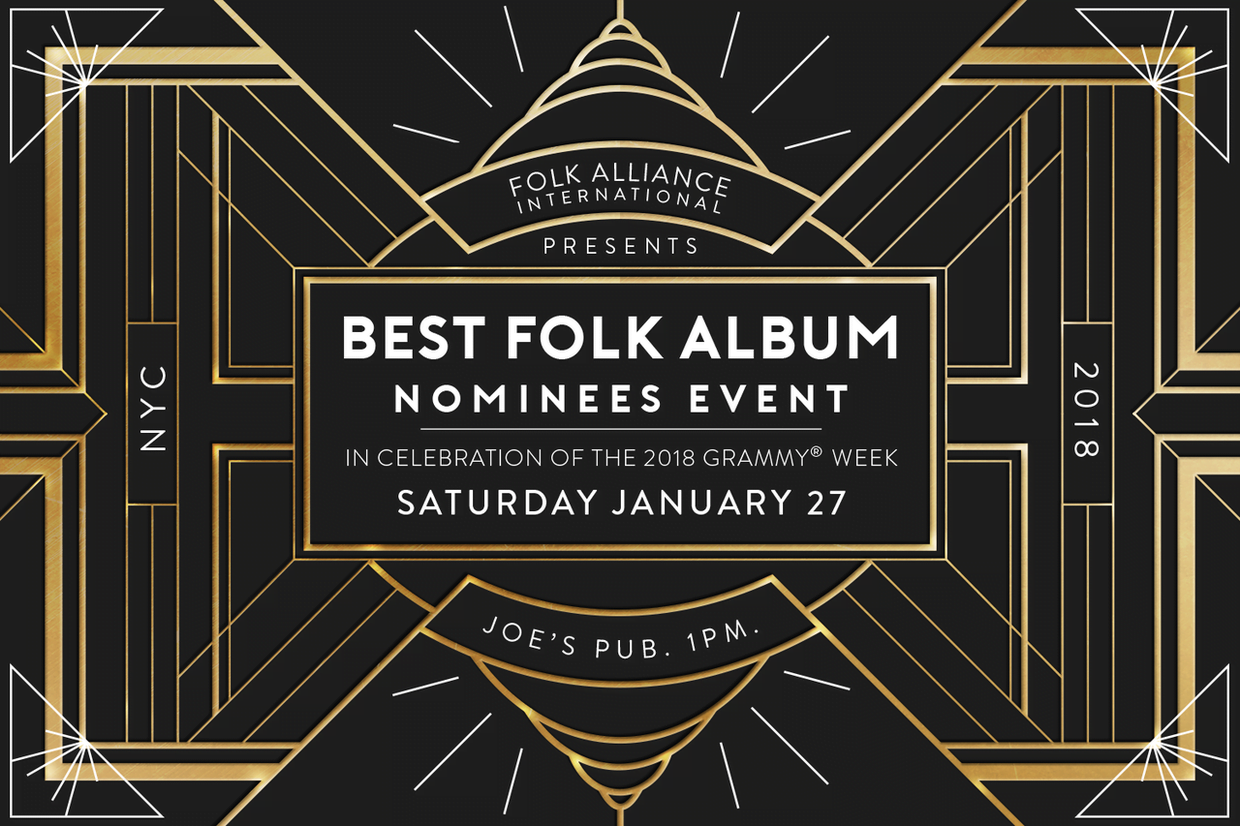
Folk Alliance International Celebrates Grammy Nominees in NYC

On January 27, Folk Alliance International kicks off Grammy weekend with a celebration of this year’s Best Folk Album nominees and other American Roots music artists. Hosted by singer/songwriter Rose Cousins, the event at Joe’s Pub in New York City will feature appearances and performances by Anaïs Mitchell, Bobby Osborne, Michael Daves, the Secret Sisters, Olivia Chaney (of Offa Rex), Guy Davis, Fabrizio Poggi, Dar Williams, and Ashley Campbell.

This year’s nominees for Best Folk Album:

Aimee Mann – Mental Illness
Offa Rex – The Queen of Hearts
The Secret Sisters – You Don’t Own Me Anymore
Laura Marling – Semper Femina
Yusuf / Cat Stevens – The Laughing Apple
EVENT DETAILS:
Saturday, January 27, 2018
Joe’s Pub
425 Lafayette Street
New York, NY 10003
1 pm – 3:30 pm
Tickets