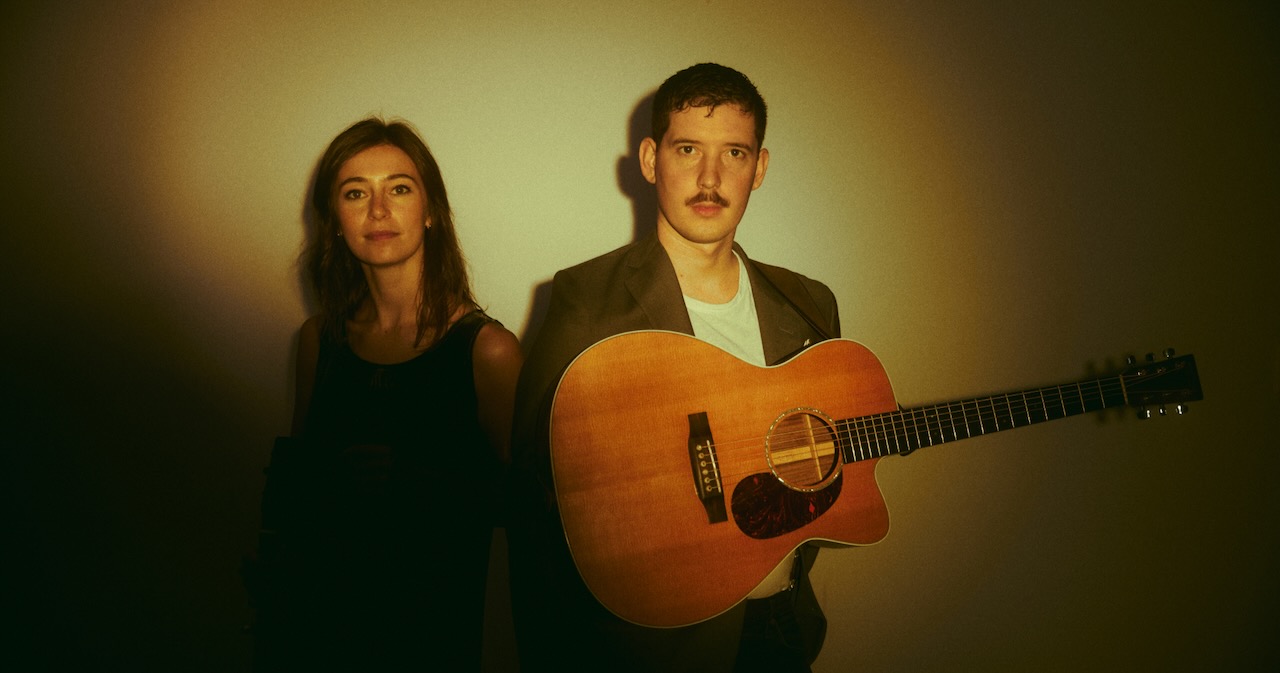
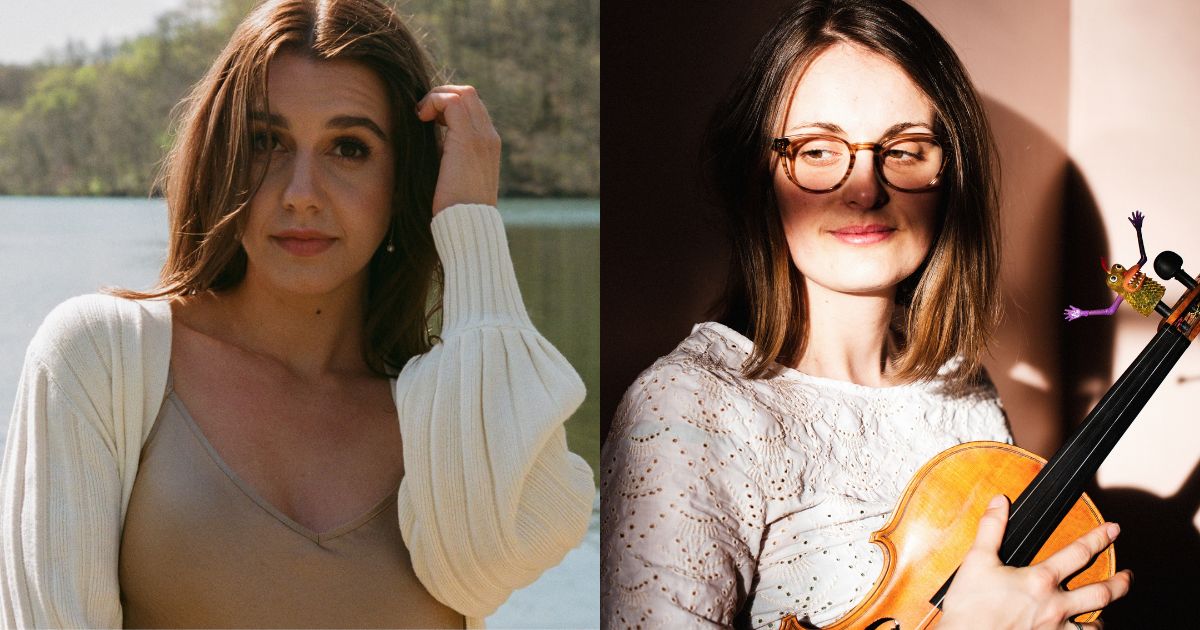
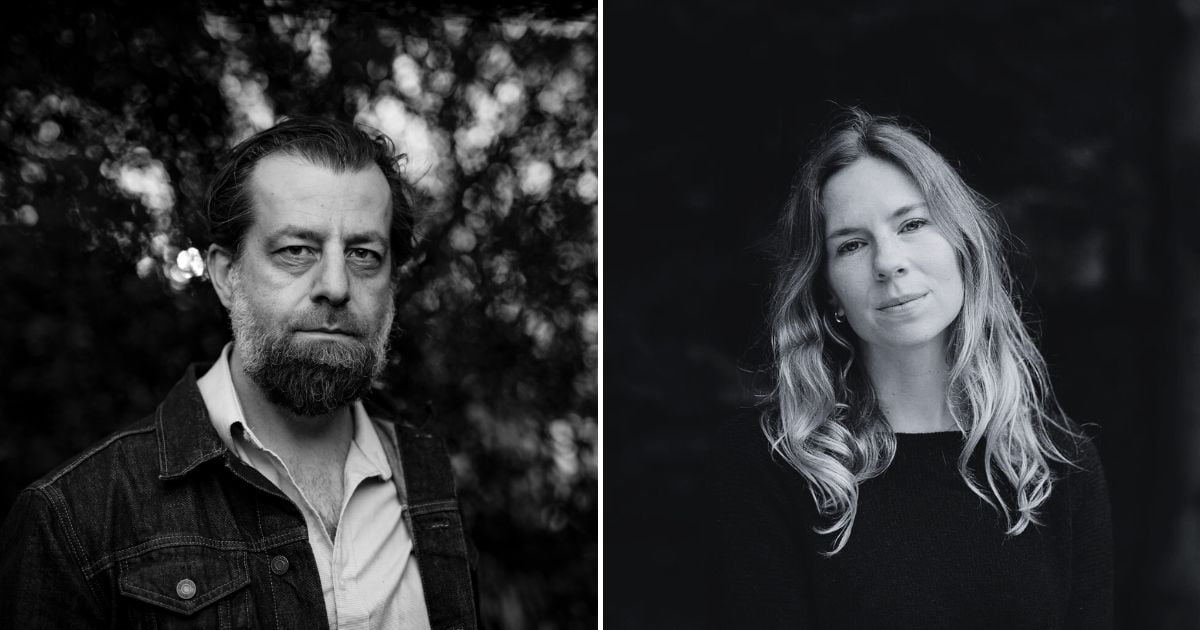
As a duo rooted in both Celtic and American traditions, we find the intersection of these worlds to be a rich and endlessly inspiring place. From the rhythmic drive of Irish & Scottish reels to the melodic storytelling of ballads, we’ve always been captivated by how these two traditions speak to one another. They each carry a sense of community and history, and both offer the chance to push boundaries and explore something new.
Our latest album, Now, O Now, wants to embrace this duality. It’s a reflection of our love for these traditions, but also a hope to continually reinterpret them. This Mixtape is a collection of the kinds of tunes and songs that have shaped our journey – music that evokes both the wild energy of a late-night session and the quiet contemplation of a solo walk through the woods.
These tracks are selected from the voices of friends, mentors, and heroes who have inspired our original music along the way. We hope you enjoy the mix! – Rakish
“6 Then 5” – Seamus Egan
We love to put this track on at the beginning of a long drive. Seamus continues to be a master of bringing together composition, sound design, and groove.
“Goodbye” – Sean Watkins & The Bee Eaters
This whole record is great; it combines Sean Watkins’ brilliance with the thoughtfulness of The Bee Eaters, who happen to be some of our favorite musicians in the world.
“765” – Rakish, Jamie Oshima
We composed these tunes and had the idea of having our good friend Jamie Oshima produce/remix the track. He’s an incredibly thoughtful and agile musician and brings such a unique aesthetic to new fiddle music. Thanks Jamie!
“Hidden Love/Sheila Coyles” – Four Men & A Dog
We listened to this album in the car recently and this track was so good that Conor had an epiphany about how it brought together all the elements of arranging music that inspire him: highly poetic language, mystery, and an excellent Irish tune.
“City In the North” – Maeve Gilchrist
Maeve is remarkable at seemingly everything she puts her hands to; this song highlights not only her virtuosity and inventive harmony, but also her narrative ability to weave melancholy and joy.
“Bull Frogs Croon (Suite)” – Aoife O’Donovan
This whole record is potent for so many reasons. Aoife’s setting of Peter Sears’ poems is a reminder of her singular gift for putting melody to text, and Jeremy Kittel’s string arrangements are some of the best we’ve ever heard!
“Jack Dolan” – John Doyle
Just of the grooviest versions of a ballad ever from the preeminent master of Irish guitar in the modern era.
“Imaginary People” – Viv & Riley
Viv & Riley are at the forefront of writing incredible original music inspired by their traditional music backgrounds. We’ve admired them for a long time and they always blow us away.
“6 O’Clock in the Morning” – Darrell Scott
Tristan Clarridge, who always has the best listening recommendations, turned us onto this album. This track stands out with its intense lyricism and amazing instrumental orchestration.
“Turn the Page Again” – Tim O’Brien
We’ve loved this song for so long. This whole album is incredible, but this track in particular has been a source of inspiration by bringing together Tim’s songwriting, John Doyle’s groove, and Casey Driessen’s improvisational style.
“We’ve Got Our Friends” – Maura Shawn Scanlin
Maura’s solo record impeccably brings together the many things she excels at (and some of the things this playlist hopes to demonstrate): instrumental acuity, lyrical thoughtfulness, and masterful arranging.
“Strange Vessels” – Caoimhin Ó Raghallaigh & Thomas Bartlett
Conor listens to this album all the time. It’s a source of inspiration and a reminder to make music that feels relaxed and to not use too many notes.
“Dear Starling” – Pumpkin Bread
This is a favorite tune from a band with some of our best friends we were a part of in our college days. Thanks for listening!
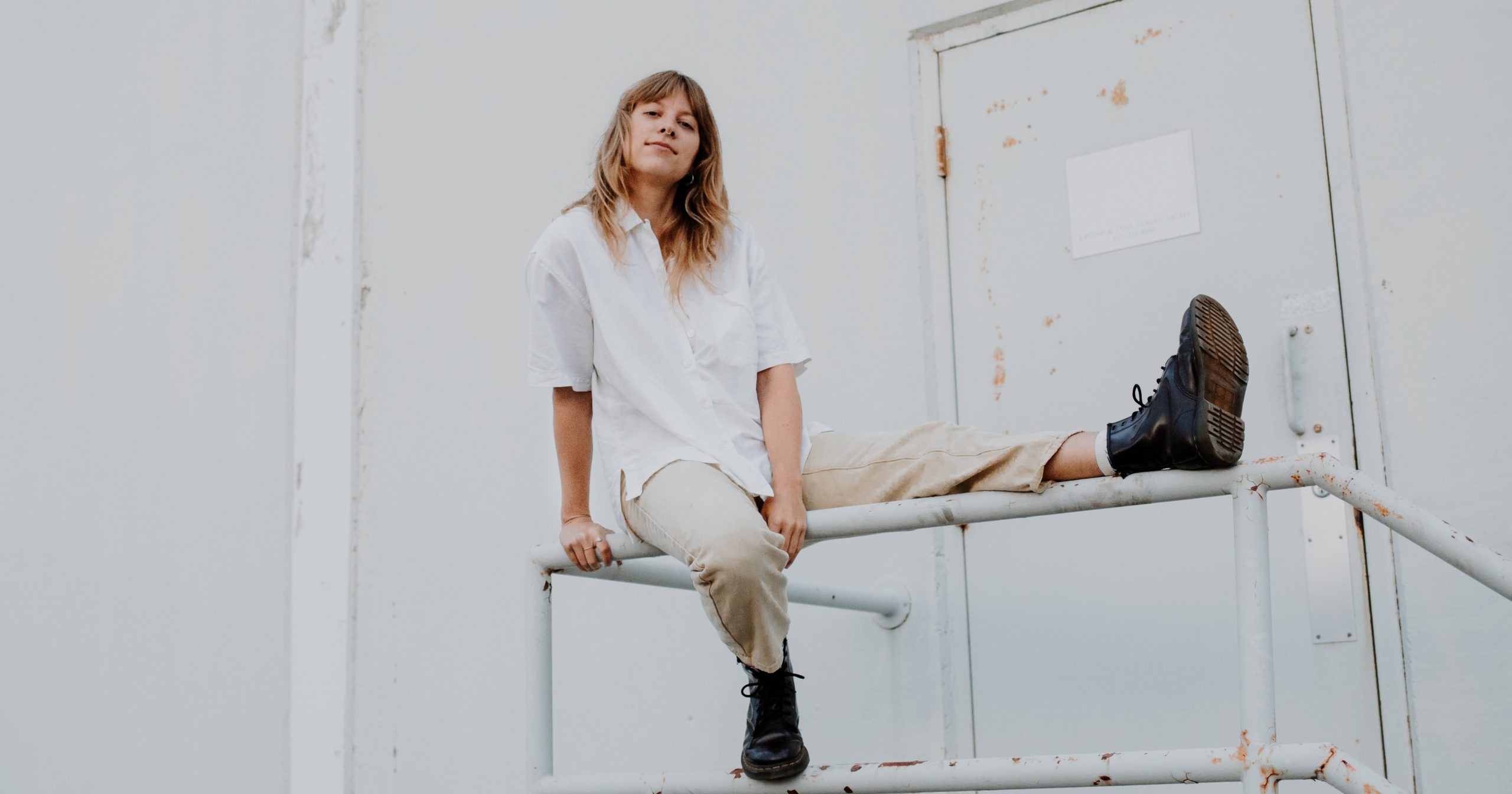
When I first heard Right On, the new album from Humbird, (the moniker for Minnesota-based singer-songwriter Siri Undlin), I thought immediately of Jason Molina and Magnolia Electric Co. There’s an emotional rawness in the production paired with a choral background vocal style on songs like “Fast Food” that reflects a Midwestern landscape to my ears. Imagine a million ears of corn singing to nobody in the blazing heat of summer, right beside a sprawling concrete strip mall.
“Quilted miles of iron and wheat / does it count, if it just repeats?” Undlin sings.
I had the privilege of talking to Undlin over the phone about her new album, while she was at home in Minnesota and I was in a parking lot outside of a Barnes & Noble somewhere in Maryland. The first thing I asked was if she was familiar with Molina’s work, and much to my surprise, she was not. So, I will have to assume that what I heard as historical reference is merely a shared landscape of influence and delicious, melancholy songwriting.
Throughout her new album Right On, Humbird explores the human desire to retreat into ease, safety, and ignorance, rather than put oneself at risk of being wrong. Undlin begins this exploration with the experience of heartbreak, but quickly zooms out to include topics of cultural conflict, destruction of natural ecosystems, societal priorities, and gun violence. All the while, these songs ask us not to know the answers, but to merely be willing to ask the questions.
On “Child of Violence,”she sings: “I could be a break in the chain / you could be a break in the chain / you could be a piece of the change / When you talk about it call it by it’s name…”
I have been a fan of Humbird ever since I saw her performance at the Mile of Music Festival in Appleton, Wisconsin, this past summer and I was thrilled to get to interview her about this album.
Central to this record is a kind of celebration of being wrong. Can you speak to the specific benefits of being wrong and what being wrong means to you?
Siri Undlin: I find that there is a carefulness and reservedness, a real fear of being wrong, that often gets in the way of important conversations, and prevents people from trying to learn and do better. The reality is that sometimes you’re wrong, but you still have a responsibility to show up and be a part of things.
Ah, that makes sense. So on the title track you sing, “You might be dead wrong… at least you’re trying…” This particular song seems to be about a romantic relationship, but in a broader sense, is this about avoiding apathy?
Yes, it’s a central message of the album, and honestly I need to hear it as much as anyone. There is a time for resting and rejuvenating, but I think it’s important to be really honest with yourself about whether you are in that process, or whether you are making excuses because it’s hard. You have to be able to get into the squishy middle of things and really dig in.
I’m from Minnesota and in the wake of George Floyd’s murder, which I have written about explicitly on other records, I’ve had to realize how slow change can be. You have that initial communal outrage, but then what happens a year later? What happens two years later?
Whether its a global event or personal event, I’ve done a lot of growing up and I can’t just ignore these things. It’s a kind of rugged realism that comes with this greater knowledge, which can be really beautiful, but there’s a reframing that just has to happen.
When you talk about rugged realism, it makes me think of your song “Cornfields and Road Kill,” which is one of my favorites on the album.
That is my favorite song to play live and has been for years. I just think it’s one of the more honest songs I’ve ever written. I was able to capture a lot of what I feel about the landscapes where I’m from and the complexities and subtle beauty of it.
There’s so many road songs, but there’s very few songs written about the landscapes of the Midwest; roadkill and monocrops, soy and corn, and animals that are dead is the reality of traveling and the landscape and the economy of the area. It’s this visual representation of the choices that we’ve made about culture and society.
I was just mad about that when I wrote that song. I wrote it as a connecting tool and a bridge rather than just rage… but it is also just fun to be loud and turn up the amps and be cathartic…
I feel like the Midwest is having a real artistic moment right now with Waxahatchee/Plains and Kevin Morby, how do you think the Midwest and specifically Minnesota influence your work?
It’s tricky, because it’s such a subtly nuanced place in a lot of ways. It’s home, first and foremost, which is an endless topic of analysis. But creatively, I do feel really inspired by the landscape of the prairie, because of its subtleties. It’s a landscape you really have to sit with and pay attention to in order to understand it. You have to really slow down. I also think there’s a lot of space for a creative community, which is really exciting when you take into account income inequalities and the densities of the larger cities. There’s space here to collaborate and there’s not really the infrastructure that super ambitious people are interested in, so they move away… I think it was Prince who said that “The cold keeps the shitty people away!” [Laughs]
I am blown away by the production on this record, you worked with Shane Leonard who is another artist heavily rooted in the Midwest. What was the process like working with him, and what did that collaboration bring to the project?
Shane is a dear pal who I have recorded with before, so we have an established workflow. I, along with two of my bandmates, had been playing these songs live for a couple years on tour by the time we went to record, so going into it we were aiming to capture the live feeling of these songs, very much trying for the sound of a band in a room.
In approaching the record, I thought, let’s just go and hang with Shane and record live to tape and try to capture that energy. Because we do tackle heavy and weighty topics, but at the end of the day we still have a blast playing together.
I loved recording to tape. Instead of going into it with infinite options it was like, “Here’s how we play it and just do your best.” That infused the whole process with some magic and adrenaline, and it was awesome.
Humbird is a pretty fluid project, there’s a cast and crew of folks who are always shifting based on people’s lives, but I made the record with Pete Quirsfeld (drums) and Pat Keen (bass) and the three of us have been playing together for six-ish years. So these are road worn and comfortable songs that were ready to be captured.
I read that you spent a year doing research as a Watson Fellow. I’m interested to hear about what you were studying and how that has influenced your own music?
Yeah, the Watson Fellowship is this insane opportunity you basically do research on a topic of your choosing for a year. In my case, I was comparing Celtic and Nordic traditions and their storytelling. Historically, so much happened via trade routes and conflict, particularly in the balladry tradition and saga tradition, you will find that similar motifs and melodies crop up across folklore traditions that are also so specific to certain places.
I spent a year shadowing storytellers and musicians, compiling this bank of folk tales and ballads. I was doing a lot of writing and researching and playing music already, but I didn’t actually know that making music could be a job. When I went and did this research and was shadowing all these folks who were essentially doing DIY touring, or playing or performing in community spaces, witnessing how they move through the world I realized, “Oh my god, you can do this?”
One person I spent a lot of time with is Brendan Begley, on the west coast of Ireland. The Begley family are these incredible musicians on the Dingle Peninsula. It was the first time I was exposed to a DIY arts culture… it was so mush part of the fabric of life there and when I came home I realized I want to make art this way, I don’t want to do it academically. I feel like often in the classroom you’re in the business of taking art apart and I wanted to actually create it.
Speaking of the ballad tradition, when I heard your song “Ghost on the Porch,” it sounded like a brilliant remake of an old ballad a la Sam Amidon, but in this case it is actually an original song. I find your songwriting to be more through-composed in a storytelling way than a typical commercial song might be. Do you draw on that ballad tradition in a conscious way or do you hear that influence?
That is actually a song that started as a short story, a fairy tale of sorts. I love to write fiction and non-fiction and it generally happens on a Humbird record that one or two songs per album are drawn from a short story or some other writing format. I’ll write out prose and then think, actually this could be a song.
Anytime you’re writing fiction your own life is in there, but I have not personally had the experience of a ghost of my own likeness standing on the porch telling me to run for my life, which would be terrifying.
Sometimes with writing, it’s almost like dreaming, where you don’t know where things come from!
This week, BGS readers enjoyed two brand new, exclusive sessions – one from our friends at Yamaha Guitars featuring JigJam guitarist Jamie McKeogh and the other featuring songwriter/filmmaker Scott Ballew, direct from last summer’s Rootsy Summer Fest in Falkenberg, Sweden.
But that’s not all, we also have a handful of excellent track premieres from songwriters and musicians like Louise Bichan, Alaina Stacey, and Lily Kershaw. It’s all right here on BGS and, honestly, You Gotta Hear This:
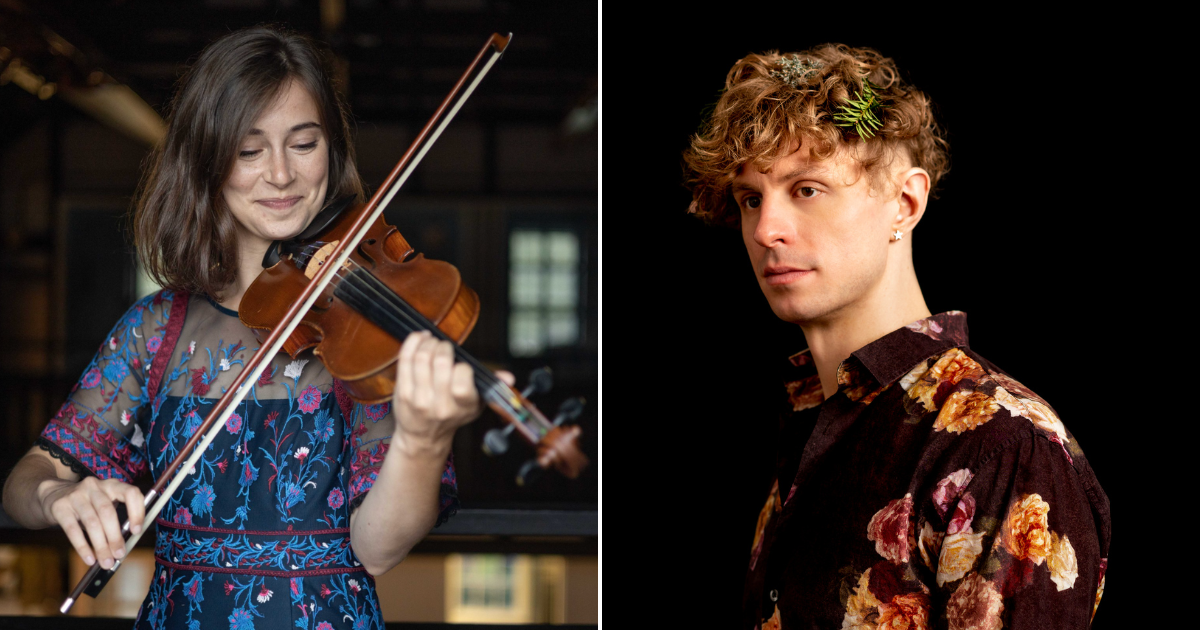
Louise Bichan, “Coldstream”
Artist:Louise Bichan Hometown: Orkney, Scotland will always be home, but for now it’s Cornish, Maine Song: “Coldstream” Album:The Lost Summer Release Date: March 4, 2024 (single); April 5, 2024 (album) Label: Adhyâropa Records
In Their Words: “I wrote ‘Coldstream’ for my aunt and uncle and all of my cousins in Aberdeenshire, in the northeast of Scotland. Uncle Syd grew up playing the fiddle, but it was never cool at the time – he hid the fact that he did! Nowadays, he writes songs and plays a lot of tenor guitar, among other things, and it’s always a joy to visit Aberdeenshire and play a few tunes with him.” – Louise Bichan
Track Credits: Louise Bichan – fiddle Ethan Setiawan – mandolin Brendan Hearn – cello Conor Hearn – guitar Produced, engineered, and mixed by Ethan Setiawan. Mastered by Peter Atkinson.
In Their Words: “This is the first song I wrote with my now bandmate and writing partner, Sam Gyllenhaal. First co-writes are sort of like first dates: You go in with hope & expectations and sometimes you find true love, and sometimes it crashes and burns and becomes a great story to tell later. Luckily, I found true songwriter love with Sam. I was trying to create new starts and say yes to new things, so I went into our first write and opened my heart to the possibility of a new beginning. Sam met me there 100%. I think it came out in this song – the desire to make a fresh start, to have a do-over, and to be the best version of yourself that you can be. Of course, you can’t go back in time. With every epiphany comes the mistake that gave it to you in the first place.” – Alaina Stacey
Track Credits: Written by Alaina Stacey & Sam Gyllenhaal. Alaina Stacey – Vocals, background vocals Josh Hunt – Drums & percussion Todd Lombardo – Acoustic guitar, high strung guitar Matt Pierson – Bass Dustin Ransom – Keys, background vocals Evan Redwine – Electric guitar, programming, engineer, mixing, producer
Video Credits: Tiffany Roberts – Female lead Caleb Shore – Male lead Directed, Produced, Edited and Colored by Rob Bondurant.
Lily Kershaw, “Americandream”
Artist:Lily Kershaw Hometown: Los Angeles, California Song: “Americandream” Label: Nettwerk Music Group
In Their Words:“As I started to resurface from years of prolonged depression in my 20s, a friend one day was telling me about her American dreams. When she asked me what mine were, I told her I didn’t have any. She couldn’t believe that I didn’t have dreams of things I wanted to do in my life. I mean, I loved writing music and sharing it with people, but after battling with depression for so long, there was no place I wanted to go or thing I wanted to do. I had sort of given up. I wrote this song after having this conversation with her that very night. I was in the midst of recording my upcoming album, so I brought it in the next day to the studio finished, and it fit the album perfectly. I love the optimism at the end. I was really singing that to myself… the idea that it’s not too late, and I can still have dreams and live them.” – Lily Kershaw
Yamaha Sessions: Jamie McKeogh
It was early fall when we met with JigJam guitarist Jamie McKeogh just outside of Nashville, Tennessee to capture this brand new, exclusive Yamaha Session.
For his first selection, McKeogh picked up his gorgeous custom Yamaha acoustic guitar and performed “Streets of London,” a song written by Ralph McTell and popularized in bluegrass circles by Tony Rice. McKeogh laughs as he plays through a handful of takes of the tune, trying to remember the order of the verses and hoping he’ll do Rice and McTell justice with his slightly Celtic-infused rendition. His voice is warm and cozy, accompanied by free and tender transatlantic flatpicking that references Rice as often as it explores brand new sonic territories. “Streets of London” shines with McKeogh’s – and JigJam’s – classic treatment, processing American roots music through a Celtic and Irish bluegrass lens.
Last summer in Falkenberg, Sweden, videographers from I Know We Should shot a series of gorgeous sessions during Rootsy Summer Fest ’23, peeling off from the festival with artists from the lineup to capture intimate recordings of fleeting live performances. For the latest in our Rootsy Summer Sessions series, singer-songwriter and filmmaker Scott Ballew performed two songs on the banks of the Ätran overlooking the historic Tullbron bridge and fly fishermen stalking their quarry in the fast flowing water.
“Alright, I’ll try a river song…” Ballew says, introducing an original with a perfect subject for the setting. The selection is “Tent Song” from his 2021 critically-acclaimed debut album, Talking to Mountains. He continues with “Blue Eyes,” from 2022’s follow up to Talking toMountains, entitled Leisure Rodeo.
(Editor’s Note: Musician, forager, and ‘Can I Eat This?‘ host Sean Rowe recently chatted with singer-songwriter and instrumentalist Hannah Read for BGS about her new instrumental fiddle album, The Fungi Sessions, which was inspired by her mycologist father, who passed away in 2020. Their conversation has been lightly edited for flow and clarity.)
Sean Rowe: This is really cool for me, because obviously BGS had secret reasons for pairing us together and I think they made a good choice. I feel like we have some interesting things in common…
Let’s start with your origin. You were born in Scotland, correct? Whereabouts?
Hannah Read: Yep. I was born in Edinburgh. It’s a gorgeous city. I mean, it really is. I was born in Edinburgh, grew up there, and then I also lived on the Isle of Eigg, which is a wee island off the west coast of Scotland. When we lived there – I lived there with my mom and my sister – there were 60 people living on the island. Now it’s up to 120. It’s this incredible, incredible island, and that’s where I really got into music. We lived there full time when I was seven in a little house completely off the grid with no running water or electricity. Music just became my thing at that point.
That was kind of my Edinburgh – Edinburgh to Eigg and back. We were back and forth a lot until I was 18.
SR: I definitely want to talk about this new album, but before we get into that, can you tell me a little bit about the music you grew up with and also how it changed or evolved when you moved to the States?
HR: I grew up playing trad music. I’m heavily immersed in that scene. As I’m sure you’re well aware, the Scottish trad scene is thriving and has been thriving forever – at least in my lifetime. I was very involved in that. I was also very involved in the Scottish jazz scene. That was a big part of my upbringing.
My mum played music growing up. She played cello and we were around a lot of music. My dad was not a musician, but he listened. His record collection was absolutely bonkers and he had hitchhiked across America three or four times in the late ‘60s, early ‘70s, and was super into all the folk revival stuff. I was hearing a lot of that growing up, a lot of California folk stuff. It’s funny that I’m living here now, but a big part of my upbringing was listening to a lot of that stuff, alongside going and seeing any acts that were coming over from America, doing the circuit over there. [At] about 15 or 16 years old, I got super into jazz singing. And actually, I went to Paris and studied jazz vocals for a year when I was 18. I did like a one-year diploma there. Then I went over to Berklee College of Music, because my underlying thing, even when I was doing that, was that fiddle music was my true calling.
SR: And why the fiddle? What does it do for you?
Hannah Read: Oh, the fiddle. When I play the fiddle – I was actually playing yesterday and I had put it into a different tuning, it’s like F B, F B, this tuning that I’d just heard about a couple of nights ago. It doesn’t always do this, but the way it just kind of evokes so much, it’s such a deep resonance in my body, basically. I think I felt that my whole life when I’ve been playing the fiddle, being able to play with people, the community. The fiddle has opened up so many doors for me, it’s just become my whole community.
A couple of weeks ago, I was in Louisiana at Blackpot Festival. There’s this fiddle player called Rosie Newton who lives up in Ithaca and she was down there. She’s a great Cajun and old-time player and we hadn’t actually played tunes before, but we sat down and kind of like locked our knees [together] and played tunes. The way she plays, I was so interested to actually sit with her and play music. As you know, when you are playing just locked [in], there’s nothing in my mind as magical as when a fiddle on fiddle groove together.
SR: Aside from music, I’m also a forager. I have been for many years. I know that your father was a mycologist, how did you get into that world? What are some of your early memories around it? Your dad, I assume maybe he took you out on field trips, showing you things. Tell me about it.
HR: We were around it from when I was born, and I’ve been thinking about it a lot recently, obviously. You know, things from the salt shaker and pepper shaker in our house [were decorated] with little mushrooms. There was mushroomy stuff all over the walls – not in like a, “Bleh, we’re surrounded by mushrooms!” way, it was subtle, but it was very much there.
Dad had a lab at Edinburgh University. So when we would spend our weekends going to dad’s house, we would spend our weekends running around the labs at Edinburgh University. [I remember] the distinct smell of being in the biology lab at the university and checking out the new microscopes.
SR: Did you think it was weird? Compared to what your friends were doing or was it strange to you?
HR: My dad was so passionate, he was contagious. I think his passion for mycology, mushrooms, and his work has been a massive influence on me and my work and the passion that I have towards music and what I do. I mean, it’s an obsession, he was obsessed. Completely obsessed. And I am pretty obsessed with what I do, as well.
I remember going down to Newcastle, dad had some colleagues down there, friends down there, that we would go on forages in the woods with. He would also come over to Eigg and we would go out and look at mushrooms. We were always going off and getting chanterelles and puffballs. It was just what we did. He was always pointing them out. However, I think because it was Dad’s thing, and it was [always] around us, I never took the time to go, “Hmm, I’m going to learn more about this myself,” because I was surrounded by it. When people would talk about being into foraging or mushrooms suddenly I’m like, “Oh yeah, me too!” But, until dad passed away – three and a half years ago, at the beginning of the pandemic – and suddenly mushrooms. It almost felt like dad died and suddenly all this whole world opened up for me, because everybody was stuck at home and able to delve into these curiosities like fungi and being out in nature more, it became this thing. I was like, “Oh, this actually is my thing.”
But I don’t know that much about it. That was a funny bit. You know, the Fantastic Fungi film coming out and all of the buzz around that, and I actually did not realize until the last couple of months that my dad was friends with all of these people and I had met them all. I had met Paul Stamets. Dad was the president of the Royal Mycological Society – also the British Mycological Society. He was president, so he actually organized the 2010 world meeting which happened in Edinburgh at Usher Hall. All of these people came and I met them all then.
I played at the opening and closing event and I was around all of these people, but I never put two and two together until a couple of years ago when these films were coming out and there was all the buzz and until the album was about to come out. I had one of Dad’s colleagues say, “I’ll send the album to Paul Stamets and Merlin Sheldrake” – and all these other people.
So, over this time it had crossed my mind, “I’d like to learn more about this stuff.” I didn’t have the knowledge and I can’t quite talk about mushrooms – because there’s so many people that know way more than me, I feel underqualified – but anytime it came up and someone was like, “I do a lot of foraging,” and I’d [respond], “Oh, you do? I don’t, but I did.”
In the spring, the day after the anniversary of my dad passing, I was contacted by a mycologist at Edinburgh University called Dr. Edward Wallace. The topic of the email just said “Fungi music?” I was like, “What?” It just said, “I would love to commission you to write an album of fungi-inspired music. What do you think?”
Right away I was like, “Yes, this sounds amazing.” Turns out he’s about my age, he is also a fiddle player, and had been to see me play and I’d announced, “I’m playing a tune called ‘Waltz to a Fun Guy,’ which was this tune I wrote for my dad” – which was just a simple little waltz that was on my old-time record.
[Wallace] heard that and he thought, “I would love to hear more of this stuff with more of a focus.” That’s really where it came from. There was a grant from, the Welcome Trust, which is a trust in London, and they funded a full album. They gave me the opportunity to do whatever I wanted. It’s been a really, really interesting process. It came out of nowhere and it actually came at a perfect time… I gave myself a week in May to write the whole thing, because I felt that it was really important for this album to feel organic and feel really grounded and capture a moment in time.
SR: Putting limitations on yourself can sometimes really boost creativity – and art itself, I think, by the limitations. I think that has a lot to do with the kind of thought that’s involved, the analytical side of things can wreak havoc when overdone. When I record, I will record in completely new environments with all new people that I haven’t met before. Could be a total disaster, but it’s the act of creating these limitations that I think make for a kind of danger, it’s a kind of unknown territory. But that can also open things up in a way. It also makes me think of foraging.
This is kind of funny, but I have this kind of superstition where I always joke to myself that if I prepare too much to go out foraging, I’m not going to find what I’m looking for. It’s those moments when I’m really not even looking for that thing, or I’m open to whatever happens, that I find something good – and then I might not even have anywhere to put the stuff to take it back home. There’s a sort of magic in that. The limitations, that’s a really interesting idea all around I think.
HR: I totally agree with that.
SR: When you were approached with this idea for this album, did you immediately think, “Oh yeah, instrumental”? Or did you have to work this out in your brain, whether or not you were going to write songs or do it instrumental?
HR: Great question. My initial reaction was [all over the place]. I just had so many ideas, off the bat. I remember calling my sister after getting that email being like, “I can do this– Oh, could be a children’s album–, Oh, it could be this– Oh, it should be accessible for this…” But it came together slowly more and more. I got a bit more anxious about it and I was like, “Actually, Let’s keep it simple.” Nobody’s asked me for anything. I can do whatever I want here. Nobody is asking me for songs. Nobody is asking me for tunes. Then I was like, “I don’t actually know enough to write songs that will feel authentic.” It feels almost icky to me, writing about something that’s a very precious thing that I actually don’t have the knowledge to back up.
So I thought, keep it simple. I’m going to write, I’m going to just capture each tune. I want to capture a feel of some sort of different species. I actually reached out to one of my dad’s colleagues, Pat Hickey, who he used to work with at Edinburgh. He’s a scientist still based in Edinburgh, but not at the university. He and my dad used to make all these beautiful videos of mycelium growing, time lapse videos of them growing under these incredible microscopes. I asked him if he could send me a bunch of stuff and I just started watching those and seeing what came up.
If it was going to be lyrics and if stuff was going to naturally come that way, great! But it wasn’t. It was just instrumentals. I thought, “Great. This is going to be an instrumental record.” Volume 2 might have lyrics, but it also might not. I might collaborate with a poet, somebody who does have more knowledge on this stuff.
I think it would have been a very interesting, different thing if I had gone down the lyric route – and that door is not closed. I’m super keen to, I think that would involve collaboration. I would love to work with someone who does actually know a lot about it.
SR: Before we go through a few of the tracks, the first thing I’m very curious to know is about the interludes, because the little bit I read about them was that they include dirt and bark decomposing. How were those sounds acquired? It’s very cool.
Hannah Read: My friend, Charlie Van Kirk, lives up in Round Pond, Maine. He and I have been collaborating for years, but I really wanted the album to have something else – rather than just instruments. I wanted the listener to be taken on a journey.
I feel like there’s millions of fiddle tune records out there, but I’m glad that you went for a walk and listened to it. For me, [the goal was] having tracks and links that pull you down to the underworld or the undergrowth, where your imagination can go wherever it wants to go. Like the sounds of leaves. I gave Charlie full creative control with this. He’s a percussionist as well. I just wanted him to just go for it and see where it took him and just break up the album [with] little breathers. I really trust him as a collaborator and his musical instincts. The next album, I think might have significantly more of those sounds, I think they’re a crucial part of the album.
SR: If it were a film, they would be like a sort of filter on a film. A certain color that sort of wraps all of the songs together.
Let’s go through the tracks. When “Silverphae” comes on I get this ominous sense from it, but not a sinister kind of ominous. It’s more like a mysterious kind of feeling, but also inviting, like there’s something to see here. “Panellus Dancer” is the next track, that’s the one that’s in waltz [time], so there’s obviously a connection with dance. Are you referring to the glowing mushroom in this?
HR: There’s this book, which was my dad’s, but there’s a whole section on bioluminescent mushrooms and there are videos that go with it. I’m actually going to share some of the videos online soon. They’re so beautiful, you’ll love them. They’re just amazing.
SR: Totally get that. It kind of reminds me of jellyfish actually, in a way – the grace of it all. And that was another feeling I got from it, there’s a mischievous that came up for me, a playfulness to it, and also joy. I love that one.
I thought “Stinkhorn” was funny, because I do have an experience with that mushroom and I think for most people, the smell comes to mind. But it’s such a celebratory song, I thought it was funny because what immediately came to my mind was kids smelling the stinkhorn and running to go get their friends. You know how kids do that? They love to have each other smell something that smells horrible. That was the image I was picturing, but why so happy about stinkhorn? Tell me about it.
HR: “Stinkhorn” is a bit of a curve ball in the record, because I know what a stinkhorn looks like. I know that they can be slightly repulsive. I just find them funny. They’re funny things. And I also just think the name “Stinkhorn” is a great old-time [tune] name. I was watching stinkhorn mycelium and it’s so beautiful, it’s absolutely stunning. These videos, it’s absolutely beautiful, it’s kind of the opposite of what the stinkhorn physical model looks like.
SR: I felt like it had to be some kind of comedy in there – and it is funny too. It makes me think of the phallic nature of a lot of mushrooms. It’s almost like nature is joking around, like it ran out of ideas to you know to for a unique design. So it’s like I’ll just use this. I got a kick out of that one.
The next song is definitely a departure from the last one, but I was curious about the title, “Celia.” Is that someone’s name or is that related to mushrooms somehow?
HR: That was related to mycelium!
SR: I wasn’t even paying attention to the title of the album when I was listening to it, but I wrote down a couple of things and one of them was “interconnectedness.” Also the mechanistic imagery of nature. In other words, these sort of woven tapestries – mycelium is like exactly what I’m describing here.
I remember I had a psilocybin experience a while back – I know a lot of people share this kind of thing too – where you’re seeing a lot of connectedness in things, like gears in nature. That’s what was going on in my head during “Celia.” So well done.
The next one, “Valley Fever,” from this I got a deep sense of solitude, almost like trying to shut out the noise of life and look closer. Which, is very much a common theme that comes over me in nature, but I felt like this one was powerful. It was like drawing me into a quiet that the other songs hadn’t necessarily done as much.
HR: That is very interesting. This one was written to create a lone feeling. It feels very Western. I was drawing from a few images that I’d been given that were quite orange and they felt like the desert. I was rolling with that. I was writing it [imagining] Utah, and a horse, like just a lone cowboy riding on a horse.
But the more I got into it, the more I was struggling with the name. Struggling, because that [western place] was where I’d been taken with it. I was like, “How does this link in? Is this random?” And then Edward [Wallace] was like, “There is a fungus that is only found in the desert, and it’s called Valley Fever.”
SR: That’s so cool.
HR: I feel like it does have a very lonely feeling and it feels sparse. And it feels sparse in the way we did it just fiddle and guitar and upright bass.
SR: I love that. This next song, “Nick’s,” is my favorite. I’m assuming that’s your father’s name? Nick? To me, this is the most melancholy song on the record. For me, melancholy is a different kind emotion than depression or sadness. It’s not those things. There’s a kind of sadness in it, but it’s almost like an acceptance at the same time. There’s a real beauty in that collective feeling, those things that work together to create that feeling of melancholy. It has a transient quality to it, too. It’s almost like a storm that comes in and is only there for a moment and then blows out, you know?
HR: God, well you nailed it on the head! That’s the one that I wrote the last day in the studio. I listened to everything else that we had done and I was like, “We’re missing this.” We need– I need this feeling. And that was the feeling. A feeling of a cathartic piece at the end of the album.
Because, it is a tribute for me. I wouldn’t have just made a mushroom-related album. I wouldn’t have come up with that if it hadn’t been for my dad. It wouldn’t be interesting. Why should I do that?
I didn’t know the rest of the order of the album at this point, but I knew I wanted to end the album with “Nick’s” and leave the listener with that [melancholy, cathartic] feeling. Because I feel like there’s also a hopefulness in that last track. It’s a very fragile piece for me.
The album came out 20th of October and on the 19th, the day before it released, I played the album at a launch show in Edinburgh. Played the whole thing top-to-bottom with the banjo player, Michael Starkey, who’s on the record, and Patrick Hickey, who I was talking about before, did a video for every track.
By the time it got to that last piece, it was so emotional. That piece is incredibly emotional to play, but it feels so important at that point, at the end of the whole suite. I was shocked and actually overwhelmed and very surprised to feel that way in the live performance. Suddenly, the emotions, I was trying to keep it together, but that’s what music is. That’s why I do this.
I’m really happy to hear that you enjoyed it, that’s a very special tune for me.
SR: I can imagine. I’m sure your father would be really proud of that – and of the whole record, but especially that one. Such a beautiful melody and you really captured the feeling.
Photo Credit: Sean Rowe by Joe Navas; Hannah Read by Samuel James Taylor.
Artist:Hildaland Hometown: Portland, Maine Song: “The Selkie of Sule Skerry” Album:Sule Skerry Release Date: October 25, 2023 (single); November 3, 2023 (album) Label: Adhyâropa Records
In Their Words: “‘The Selkie of Sule Skerry’ is an old folk tale of which there are many versions. We love a rendition sung by Kris Drever in the band Fine Friday on their 2002 record, Gone Dancing. We took inspiration from this, wrote our own melody, and had a lot of fun with the arrangement. Ethan played both mandola and the electric mandocello on this one, we worked up a string arrangement together, and had Dan Klingsberg record some double bass for us, and Sam Kassirer laid down some synth.” – Louise Bichan
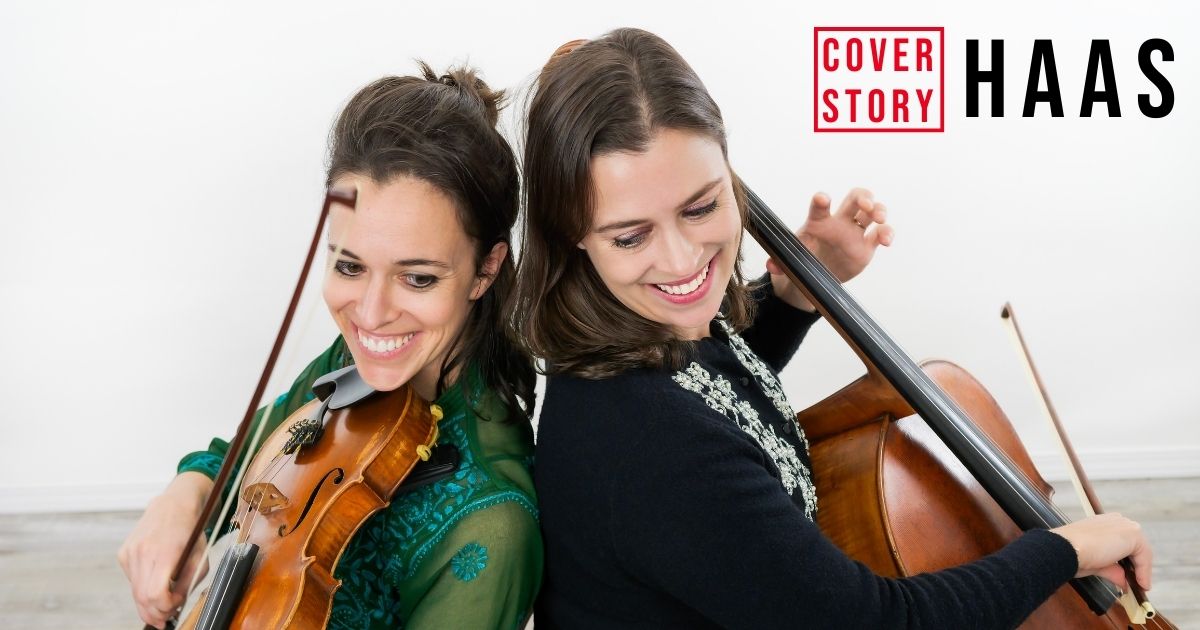
What changes about the oft championed phenomenon of “family harmonies” when the voices entwined together are not voices at all, but strings, plucked and bowed and fingered? It’s a question that immediately comes to mind as you hear the first notes of Haas, the recent duo album released by sisters, fiddler Brittany Haas and cellist Natalie Haas. It’s also a question that immediately came to mind as we chatted via Zoom last month.
“I feel like I connect more deeply with Brittany than anyone else from a rhythmic standpoint,” Natalie responds after a thoughtful pause. “That’s not so much the family harmony thing, but it does play into everything.”
The familial blend they’ve established as adults – in many ways, Haas is their first deliberate and intentional music making as a pair since their teen years – defies any and all boundaries and language, as they swap melodic hooks and call and respond and toggle between accompanying and leading, adding texture and tenderness or vigor and enthusiasm. Their interplay is as comfortable and cozy as you would expect these two sibling virtuosos to be together, their reunion the not-so-subtle underpinning that makes the entire collection of tunes and sets sparkle.
This is family harmony – and family rhythm – but unspooled, complicated, and set to a new acoustic, Celtic, chambergrass sound that defies categorization. Haas also gently and kindly stands in implied opposition to more masculine, performative, and competitive musicians and groups in similar spaces. It’s a brilliant, crave-able album that showcases how much can be accomplished musically when one’s goal isn’t just the cooperative music one creates, but the space one opens up with another in which you cultivate that cooperative music.
I wanted to start by just asking y’all how long it’s been since you put out music together, or since you’ve been in like a creative space together? How does it feel to be “reunited” in this way?
Natalie Haas: We sort of played together as kids in chamber music groups and youth symphony together. And we went to fiddle camps together – that was how we got excited about maybe doing music as a career. That would sort of continue throughout the year, because the way for us to continue all that excitement and motivation that we got at fiddle camps was for us to play together.
We did the odd gig together as teenagers, like farmers markets, school performances, and that kind of thing. Then we sort of went our separate ways and we’re both very busy doing our own thing, but we took every chance we got when other people would hire both of us to be on their gigs. We always said yes because we just wanted to hang out with each other. So this is like the first time that we’ve done anything like this and it’s pretty exciting.
The way that your musical paths have diverged, they don’t feel like they’re that separate from each other. It feels like the vocabulary that you both draw from is very similar. When you started sitting down to think about doing an album together, what changed about the way that you thought about music separately or together?
Brittany Haas: That’s a cool question. I think, it all felt kind of new in a way, but also so familiar, you know? Because it’s us. We have made a lot of music together. I think on my side, it was really cool because Nat already had a bunch of tunes. So some of [our collaboration] was just like, schedule based, it was like, “Okay, we know we want to do this thing, because we’ve been getting odd gigs.” It was really like motivated by the fact that we had shows coming up, and that was a reason to be like, “Let’s have new material for that.”
Then we were like, “Here’s our days when we can put together material.” Nat had just done a writing session where she had all this new stuff ready to go. These are the tunes that she’s cranking out and they feel very much like they come from something or some place that is like so near and dear to me, because it’s from our shared fiddle-camp upbringing. That’s like the source, the well, where the tunes come from, even though they’re new and different. It feels like very homey, I guess? The kind of tunes. And then I think we’ve just both grown a lot over the decades as musicians and as arrangers. We like bring more stuff to the table than when we were teenagers.
NH: I should certainly hope so! [Laughs]
That is the goal. [Laughs] That leads really naturally to my next question, which was going to be about material curation, especially because you both have demanding schedules that kept you apart, I’m sure, during the album creation to some degree. What was it actually like when you were like setting aside that time, like you’re talking about, to get together to make the music? What was the curation process like? It’s all originals, but one, yes?
NH: Yes. And yeah, that’s the nice thing about us both being busy is when you set aside a block of time, that’s all you are focused on. Brittany had all these amazing musical ideas and made all of my tunes better the minute she got her hands on them. The arranging process, it was pretty easy, because we’re both, comfortable switching back and forth between roles. I was just amazed at how much we got done in such a short amount of time, both in the arranging process and in the recording process. It all felt very easy. [Laughs]
BH: We did the bulk of it together, I think we had like a week or maybe slightly under a week when we first met to gather the material. And wasn’t that before we even knew we were making a record then?
NH: Oh yeah, that was preparing for a tour. Our first adult sister tour.
BH: No, no, no – second.
NH: Oh, second. Yeah! Because we toured Ireland. Right. We were playing all of these trad tunes, our shared repertoire from our of teenage years. And then for [Haas], we decided to make it all original. For the most part.
BH: Do you remember the moment when we actually said, “Let’s record this”?
NH: Uh… well, I think we toured it first. Then Brittany brings her handheld recorder to all of those gigs and recorded everything. We listened back to it and decided that it was actually pretty good and that we should make something of it. I think we had another tour coming up, of Australia, and we decided it would be fun to have something for people to take away with them.
BH: At that point, we didn’t meet again until a few days before the studio. We had arranged the material and toured it, so we kind of had it under our hands pretty good. And then a long amount of time passed, but during that time it was good to listen back to stuff and decide what we wanted to change.
We had like a couple days of rehearsals and revisions. That was from listening and emailing and saying like, “I have this idea about this. What do you think of that?” Then we had like three days in the studio before it went back to email, because Natalie lives in Spain and we’re also both busy doing stuff. So it was emailing like, “Do you like this take?” and, “Is it okay if I edit out the second B part on this?”
Did you trip into or over any sort of feeling like, “This reminds me of when we were playing together as kids” or did it feel like you were getting back on the bicycle in a way?
BH: I’d say mostly yes. It’s just really easy. I think in other collaborations, people aren’t always so willing to just try anything. We have this basis of, “I love you no matter what, and even though you’re being really annoying and you’re asking me to do something I don’t want to do, I’m still going to do it, because might as well.” It’s an ease of communication, which I think mostly comes from family. [Laughs]
NH: We were never really a band as kids. We did the odd gig, but it was always just for fun. Our parents weren’t pushing us into performing together. So yeah, no bad memories, really, associated with playing together as kids. But we do have the ease of having this shared history of fiddle camps and learning from the same kind of mentors.
BH: Since we’re both like primarily collaborators, this project was like running our own band. As adults we’ve both come into our own and we’ve probably become more opinionated about musical things as a result of that. So it’s fun to meet again where there’s a lot of give and take.
What do you think of the term, “chambergrass?” Is this album chambergrass? Is that even a thing?
BH: I like the term, but I’m not sure it applies here. I also don’t mind it applying here. I guess maybe that wouldn’t have been what I would have gone to, because from my perspective, it just feels so much more Celtic. It’s still in that sort of “past of American music,” that’s more over there in the Celtic Isles. It doesn’t feel very grassy, but I mean, that’s a part of me as a musician. So, it’s not like it’s not in there.
NH: It does feel like chamber music to me. Yeah… I’m not familiar with all of the myriad grass terms. [Laughs]
BH: We grew up going to Valley of the Moon Fiddle Camp, where there were a lot of genres meeting. So the boundaries were very blurred, and both of us having worked with Darol [Anger] from a young age, he’s all about blurring and negating the idea of boundaries. It’s everything, it’s all of that, it’s all the influences and where they’re going. I know the current Celtic world less than Nat does, but it seems like a lot of the forward-thinking, new tunes on stringed instruments are happening in chambergrass, the new acoustic realm, so it’s definitely an influence on both of us.
NH: It does have a Celtic bent, but it is Celtic from an American perspective – because we’re American. I’ve listened to a lot of stuff in the new acoustic realm – like Brittany said, all of our influences are coming out, and it’s hard to define a genre.
BH: I think Nat, for all of her “I don’t totally play bluegrass” sense of self, she can and she does sometimes. Some of the bluesier tunes that she writes lend themselves to that area.
You make very in-the-moment music, there’s a lot of improvisation, there’s a lot of dialogue, and this kind of music can often feel very – it’s silly to say this cause you’re literally performers – but it can often feel very performative and like there’s a lot of hubris in it. I also feel like new acoustic music, newgrass, jamgrass, and that sort of “Let’s jam out together, let’s be in the moment together!” music, it can often feel really masculine and toxic. How do you go about creating this space you’ve made together, to have those moments, to be together and present and making music, but it doesn’t feel like you’re being self-absorbed or self important?
BH: That is something I think about when I’m listening to music – and sometimes when I’m playing it. Sometimes I do feel like I’m uncomfortable, like that’s not something that I want to do. Even though you think that that’s what the music calls for in this moment, it can feel a little bit too masculine.
It’s like, “No, I don’t want to take a really long solo there.” I think I’m embracing that it’s okay to say, “No, I’m not gonna do that.” It’s a tricky one, because a lot of our heroes in that realm of creating this newer music, they’re men, and that nature is informing the music that they’re making and the way that they’re arranging it. It does have that hubris thing built into it. On some level, that is important and it does work well, for stepping into the moment and taking a great solo. You kind of have to have that attitude. But, it’s not necessarily masculine or feminine. Like it doesn’t have to be either one. It could be both.
What we’re trying to do, it’s a little more tune- or melody-based than based on soloing, so it lends itself well to a tight arrangement. That may not be the right term, because it still is loose, there still is a conversation going on. But, if there is a solo it’s pretty short, it’s this little thing we’re going to do to give a breath of fresh air here. It’s not like, “And now, we will rip for 50 more bars!”
“And now everybody look at me!”
BH: Yeah! I think in a duo especially, because we’re very equal and we like sharing, that’s just kind of part of the vibe. Even when Natalie’s filling more of an accompanist role, it’s still such a powerful, interesting sound. It’s so varied that it doesn’t fade into the background. It’s super interesting all the time. It’s like both voices are very equal, even if mine is higher.
NH: It’s interesting because, like Brittany said, a lot of our heroes are men. That’s definitely a generational thing in the Celtic music world, because like, the people that we grew up sort of – I don’t want to use a phrase like “hero worshipping” – that we admired and wanted to copy were mostly men, with a couple very key exceptions. But then, my generation in the Celtic music world is almost exclusively women. There are some men doing it, but it’s very different than the bluegrass thing.
Also like Brittany said, soloing is not as much a part of it. That changes the dynamic a little bit. But it is kind of a melody>accompaniment hierarchy going on. But I wouldn’t say that that’s necessarily a male thing, I don’t know.
As Brittany said before – and I hate to associate this with just feminine energy – but both of us coming from being collaborators in our other projects rather than soloists, per se, you could say that that is the more feminine approach, maybe, to music making. It does feel very equal because the melody playing is getting passed back and forth all the time. And it does feel very conversational, even though the soloing thing is not as prominent as it might be in some other genres.
I think that’s part of why you can listen through y’all’s entire album and it doesn’t feel stale, it doesn’t feel boring, while it also doesn’t feel like it’s trying too hard. It doesn’t feel like you guys have something to prove.
NH: That’s part of the thing with having done it at this point in our lives, it doesn’t feel like we have anything to prove anymore. We’re doing it because we want to, not because we’re trying to prove anything to the world.
Artist:Elias Alexander, Maura Shawn Scanlin, Ramblxr Hometown: Portland, OR Song: “Wildflower” Album:Wildflower (single) Release Date: June 1, 2023 (single); June 7, 2023 (video)
In Their Words: “‘Wildflower’ combines a fiddle tune with a lo-fi disco groove to take the listener on a journey through a field of wildflowers to a sunset dance party with friends. I’ve always loved the presence and emotionality that Maura brings to her fiddle playing. When she sent me this newly composed reel that she had written within the bagpipe scale, I took a lot of time to listen to the tune and tease out the corners of the melody. Like many tunes in the bagpipe scale, the tonality could be interpreted a number of different ways, but as I played around with it, I found this sort-of disco counter melody emerging.
“During the lockdowns of 2020 and 2021 I became obsessed with music production, in the way that term is used in pop and hip-hop (i.e. beatmaking), and I’ve been most drawn to the kind of lo-fi groovy bedroom pop sounds of artists like Clairo or Dominic Fike.
“Electronic drum beats, synths, and other pop production techniques are often eschewed in folk and traditional music, but I think it’s time we re-evaluate that. These tools are technology, in the same way that the violin is technology, and they all serve as tools for expression of the human spirit. I started my project ‘Ramblxr’ as a way to bridge the two worlds of acoustic traditional music and electronics, with the goal of staying true to my musical roots, taste, and evolving sensibilities.
“Maura laid down some beautiful strings, and we both hummed the countermelody to bring the track to a climax that feels like a sunset dance party with friends in a field of wildflowers in early June. I hope you enjoy the ride!” – Elias Alexander
Photo Credit: Elias Alexander by Anna Colliton; Maura Shawn Scanlin by Louise Bichan.
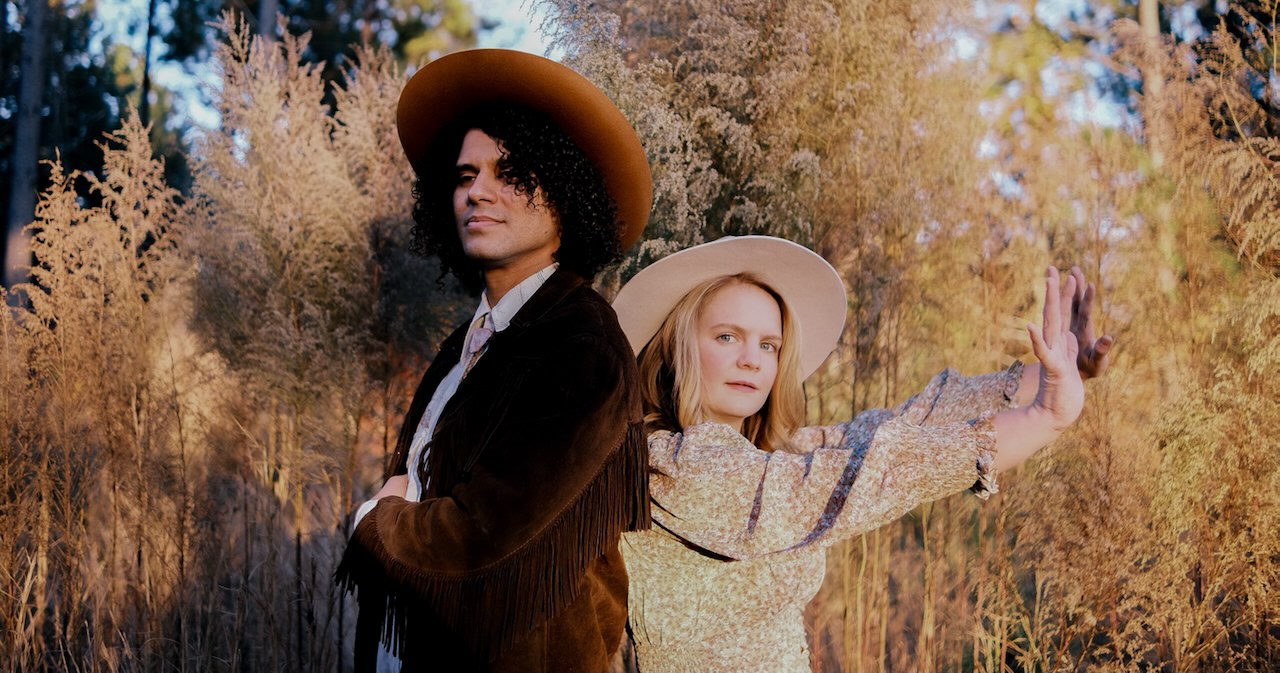
Americana duo Violet Bell‘s new album, Shapeshifter – out October 7 – tells a story of the mythological selkie, a mermaid-like creature from Celtic folklore that embodies a form that’s half woman, half seal. In their retelling and reshaping of this ancient folk narrative, they tease out its connections to the transatlantic journey of American roots music, to the cultural and social melting pot of the “New World,” and to agency, intention, and self-possession.
A concept album of sorts, the music is remarkably approachable and down-to-earth, while the stories and threads of the record tell equally ordinary and cosmic tales. At such a time in American history, with fascism once again on the rise and attacks on bodily autonomy and personal agency occurring with greater frequency at every level of governance, Shapeshifter offers a seemingly timeless lens through which to engage with, understand, and challenge the overarching social and political turmoil we all face on the daily. Moreover, it’s an excellent folk record, demonstrating Violet Bell’s connections to North Carolina, Appalachia, and the greater communities that birthed so many of the genre aesthetics evident in the album’s songs.
Shapeshifter is a gorgeous exercise in community building, an artful subversion of societal norms, and a stunning folktale packaged in accessible, resonant music with a local heartbeat and a global appeal. Read our interview with duo members Lizzy Ross and Omar Ruiz-Lopez and listen to a brand new single from the project, “Mortal Like Me,” below.
BGS: I wanted to start by asking you about community, because I know it’s always very present in your music making. I feel it, definitely, in Shapeshifter. Not only because you’ve got Joe Terrell and Libby Rodenbough (Mipso), Joe Troop, and Tatiana Hargreaves on the project, but because I can feel that community is a tent pole of this record. What does community, musical and otherwise, mean to you in the context of this project?
Lizzy Ross: It was such a wild time to be making the record because it was March of 2021, so vaccines hadn’t quite happened yet and we had all been on lockdown for about a year. We were obviously really missing our community and the live music community. There was also this strange thing, where our friends who would normally always be on the road all the time were at home. So we had an incredible opportunity to call up people, like calling up Tati and Joseph and Libby and Joe Troop – who lived in Argentina but came home because of COVID! The way that it worked out, people were around and we were able to convene and make this album in circumstances that probably wouldn’t have been possible, because everybody would have been on the road.
Omar Ruiz-Lopez: Or, [we would have had them] recording remotely. Which is not the same. One of the reasons why I play music is because of the community. That ability to bring people together and share music and hold space together, the energy that comes from that is so vital to the human experience. Getting to create that space, to bring an album to life, there’s not much else in this world that I live for, besides that. Getting the opportunity to bring everybody together, especially after such a big isolation, was so life-affirming and helped bring me back to why I make music in the first place.
That’s definitely palpable in the music itself, but also in the overarching viewpoint that y’all have within this record. I also find that it’s very grounded. You might have heard BGS just released our first season of a podcast called Carolina Calling, about North Carolina’s history through music. One of the through-lines that keeps coming up in all of our interviews is that North Carolina specifically has such a strong sense of musical community. Even though this is kind of a story record and kind of a concept record, it feels very grounded in North Carolina and in the South.
LR: Omar and I are kind of mongrels from the non-South. But we’ve come and steeped ourselves in this land and these traditions and this community, so I think that what our music reflects is the internal sort of “musical diet.” Our musical diet is probably atypical when you consider what most people think of as North Carolinian or Southern music. The music we were listening to going into this even, we were listening to a lot of Groupa–
ORL: Groupa is a Scandinavian folk band that makes these albums based on music from different countries, like Iceland, Finland, and Sweden. I feel like anything that’s not from here is called “world music,” but their brand of folk music is very beautiful and out there and organic and grounded in the different traditions they represent on their albums. It’s mostly instrumental music, it’s pretty powerful. We were listening to that a lot, as well as Julia Fowlis, a singer who sings in Gaelic primarily. Those cultures – Scottish, Irish, Scandinavian folk – they’re related to the music here like old-time, bluegrass, and Appalachian folk traditions of fiddle and banjo.
To bring it back to the question, I’ve been here for twelve years. I was born in Panama and raised in Puerto Rico listening to Spanish and Latin folk. When I say Spanish, I mean Spanish-speaking, the language of our colonizers. But there’s something still not-from-Spain in the native, Indigenous musical and cultural influences in that music. Like in Bachata and Cumbia. Then I moved to the States and fell in love with rock ‘n’ roll and more of the singer-songwriter tradition here.
LR: Originally I came here for school. I grew up in Annapolis, Maryland, where I didn’t really find a musical community. There was one, I just didn’t find it. When I came to North Carolina it was the first time I saw people gathering together over a potluck and music, with like shape note singing and like the Rise Up Singing book. Having this experience of big, group harmonies I had this realization more and more that music could be a part of my daily life in a way it hadn’t been as a child. Or, rather, as a way of public, shared daily life. Because it was always part of my life, but it was part of community life here in North Carolina. That was a big element of how music and North Carolinian music in particular drew me in and captured my heart.
Can you talk a bit about the central storyline of this album and how you picked up the mythos of the selkie and turned it into this project?
LR: The story of the selkie came to us and it’s something that is in the culture, it’s floating around. Many folks have seen the movies Song of the Sea or The Secret of Roan Inish. The first song that came to me, Omar and I were at the beach one day and I was playing on the banjo and this song came out. It was “Back to the Sea.” We were in the Outer Banks of North Carolina at that time, at the ocean, and I was kind of just listening for who this character is and what they are saying. It was a selkie. It was a selkie singing of getting to return home.
I would say that coming home to ourselves is one of the central themes of this album and one of the themes the selkie story really brings into focus. The whole myth is centered around a being, a mystical ocean being, who gets yanked out of her native waters and forced to live in a world that doesn’t understand her and wasn’t built around her existence. To me, there’s a really clear connection. That story is a medicine for the cultural wound of when we don’t fit into the prescribed paradigm of power. If we don’t fit into white supremacy or if we don’t fit into normativity or if we don’t fit into patriarchy. It’s the sense of feeling like we have to cut off parts of ourselves that aren’t compatible with those power structures so that we can be acceptable to the power structure at-large.
This story says, “No, don’t do that.” You can reclaim the parts of yourself that you’ve had to orphan in order to survive. You can reconnect to those pieces of you and you can come home to yourself. It speaks to integrating who we are, the characters of the land and the sea in this story are really powerful to me. The sea, to me, is this cosmic force. It’s a pervasive, creative, destructive, loving, mysterious force that the selkie comes out of. It doesn’t follow the rules of the land-bound world. To me, it’s like the structures and hierarchies of our culture – whether it’s capitalism or something else.
One of my questions was going to be about how queer the record is, and not just Queer with a capital Q, but also a lowercase Q, the idea of queerness as just existing counter to normativity. But it’s not just a story of otherness, it’s a story of otherness in relationship to embodiment. In the South right now especially, but in this country in general, embodiment is under attack. Whether we’re talking about COVID-19 or abortion access or trans rights. There’s something in this record that speaks to all of that.
LR: I think one of my experiences [that informed this music] is that I’m in a female body. There’s a line in one of the songs, “I Am a Wolf” – that song is two parts. First is the fisherman speaking, he’s kidnapped the selkie, taken her out of her native waters, he’s made her come be his bride, and he’s like, “Why isn’t this working?” It sucks, he’s lonely, he thought things would be better. The second half is the selkie responding and she says, “I am a wolf, not a woman.” That’s the first thing she says. That was something I said at one point, when I was connecting with a sense of deep grief and rage within myself around what I felt were the prescribed cultural parameters of my existence.
ORL: The people who made this album were mostly by BIPOC people and [people who fall outside those norms]. Joseph Sinclair and I are not white and Joe, Tati, [Lizzy], and I are not straight. I feel like a lot of different perspectives went into making this album. We didn’t just get white, straight dudes to make this album and it felt good that way, getting different musical perspectives on this. We could have just made it ourselves, that’s the other thing. I’m a multi-instrumentalist and Lizzy is a harmony singer, we could have overdubbed to kingdom come. Part of the reason why we got all these people together into the same room is because of their unique perspectives on the traditions they brought to the table.
LR: This thread about embodiment is really important and by asking this question you’re helping me articulate something that I’ve been sitting with for months, a year, as I’ve been thinking about the writing and the words and characters in this story. And also, what is it for me in this story that I’m trying to unravel with this album. Also on a cultural level, what are we talking about here?
The selkie, her skin is taken away from her in a moment of innocent revelry. The story starts with her dancing in the moonlight on a rock and that’s when the fisherman steals her skin. When I think about the people that I know and love, I think a lot of these systems are violent towards people whether or not they fit within the system’s perception of dominant power. When I think about the six-year-old version of a person or whatever version of a person was able to un-self-consciously dance or feel good or go into their mom’s closet and put on her clothes and makeup and not feel ashamed – there’s a different version of this for literally every person and what that means. That innocent revelry, it’s experiencing oneself not through the eye of an external observer but through the juicy presence of embodiment and joy and a sense of wholeness and rightness in your being.
Everybody’s had the experience of having their “skin” stolen from them. When you get yanked out of your sovereignty, your joy, your bliss. You get catcalled, you get shamed, you get this or that. There’s violence done to you, whether it’s physical or not, there’s that sense of losing your skin, when we start to separate from ourselves and regard parts of ourselves as less than. I think that dysphoria is a really important part of this story and this album. When we don’t experience ourselves or feel ourselves as the cultural perceptions tell us we’re supposed to be, whether it’s a question of gender or color, this feeling of not being at home in our bodies, I think that was a lot of what really resonated with me, even unconsciously, about the selkie. One of the ways that it took root and grew in my consciousness and eventually in our shared consciousness, between me and Omar and the folks who are on this music.
As a picker I have to talk about “Flying Free” and “Morning Girl,” because I think having instrumentals on this record makes so much sense. I have some ideas about how they fit into the story, not just based on the titles, but also based on how the tunes are so evocative like the rest of the project. Why, on a record that feels like a concept record, why instrumental tunes?
LR: Words are our inheritance from so many of the same structures that can oppress us. And they’re also our freedom. Words allow us to develop and communicate concepts and they also contain hierarchies and power structures that we may or may not really need. The name of the song, “Flying Free,” and the fact that it’s instrumental, to me it’s like this somatic sensation of the selkie plunging back into the sea and the joy of being reunited with her home waters. Which to me is her sense of self, her sense of worth and safety and agency.
ORL: Sound, organized sound inside of space, one of the powerful things about it is that we are able to attach emotion to it. It’s kind of beautiful how two people could feel similar things listening to one piece of music. When it came time to put together the songs for this album, there were a handful of tunes that came up that weren’t asking for words. But that totally helped paint the picture of the world of the selkie and what she was going through.
Fiddler and singer-songwriter Lily Henley’s latest album, Oras Dezaoradas, is a full-on celebration of her Sephardic Jewish Heritage. The lineage of Sephardic people can be traced back to the Iberian Jews expelled from Spain and Portugal in 1492. For Jewish people, there are many diasporas and lots of different ethnic heritages and practices that have been adopted and blended from many other groups along the way. Lily’s heritage is different from the Ashkenazi Jewish people, which is the most represented Jewish sect in the United States, who can be traced back to Eastern Europeans. Lily graciously gives a very brief overview of the diaspora (which is pretty amazing to take in) and the geographical and cultural differences.
Lily grew up moving around a lot and talks about how that act of moving from place to place impacted her as a young person and how it still affects her. She found a sense of belonging and home at the fiddle camps she attended alongside other musicians her own age. At camp, she learned to play Celtic, old-time and Cape Breton style tunes. While at home, she played traditional Sephardic tunes sung in the Ladino language, also called Judeo-Spanish, which is a combination of Spanish with Hebrew, Arabic, and Turkish elements spoken by less than 100,000 people. As an adult, she was inspired by living in Tel Aviv for three years and immersed in Sephardic culture. She was awarded a Fulbright research grant and is currently an artist residency at the Cité Internationale des Arts in Paris. She recorded her latest album in Paris: on a label run by a Sephardic community leader while being embraced by and collaborating with the Sephardic community there. OH! Lily has another new non-Ladino album on the way: Imperfect By Design coming January 2023. It’s an Indie-Folk anthology about love, belonging, independence, and change. Look out for that and enjoy this deeply educational conversation!
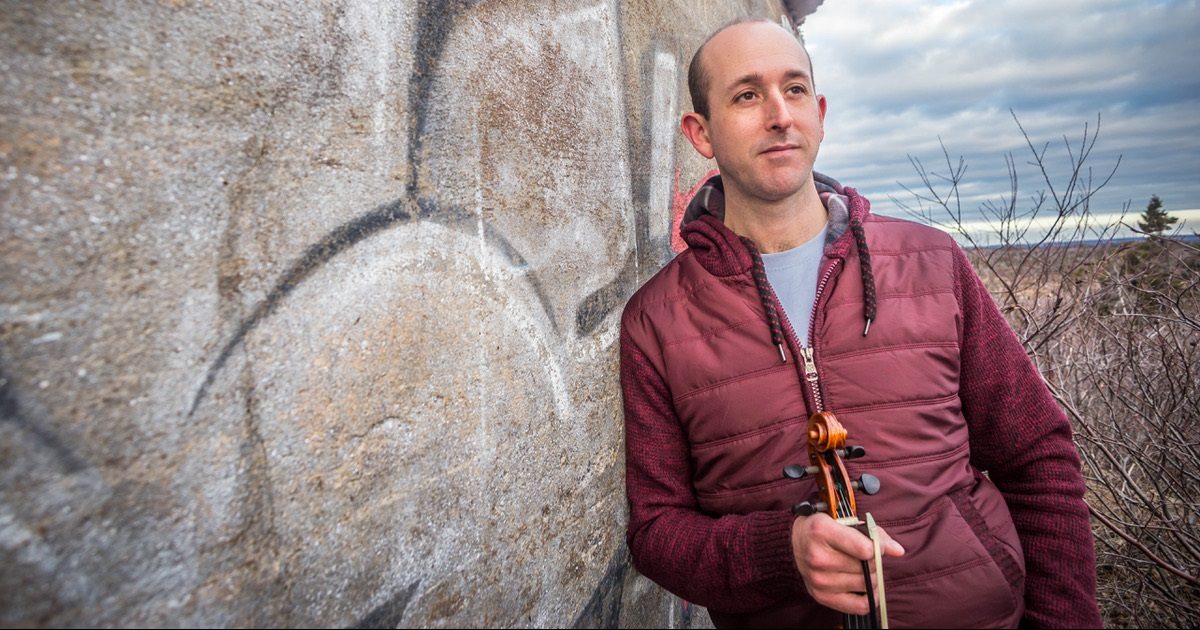
In Their Words: “This tune has pretty much become a meditation for me. Playing it gives me a sense of feeling calm and grounded, and I think the new video really enhances those feelings for the viewer. There’s the common element of feeling isolated, which I think everyone can relate to these days, and the healing benefits of being among nature. The ocean is also symbolic of how my Scottish ancestors came to America, and the tradition of fiddle playing that I grew up with.” — Brad Reid
This website uses cookies to improve your experience. We'll assume you're ok with this, but you can opt-out if you wish.AcceptRejectRead More
Privacy & Cookies Policy
Privacy Overview
This website uses cookies to improve your experience while you navigate through the website. Out of these, the cookies that are categorized as necessary are stored on your browser as they are essential for the working of basic functionalities of the website. We also use third-party cookies that help us analyze and understand how you use this website. These cookies will be stored in your browser only with your consent. You also have the option to opt-out of these cookies. But opting out of some of these cookies may affect your browsing experience.
Necessary cookies are absolutely essential for the website to function properly. This category only includes cookies that ensures basic functionalities and security features of the website. These cookies do not store any personal information.
Any cookies that may not be particularly necessary for the website to function and is used specifically to collect user personal data via analytics, ads, other embedded contents are termed as non-necessary cookies. It is mandatory to procure user consent prior to running these cookies on your website.