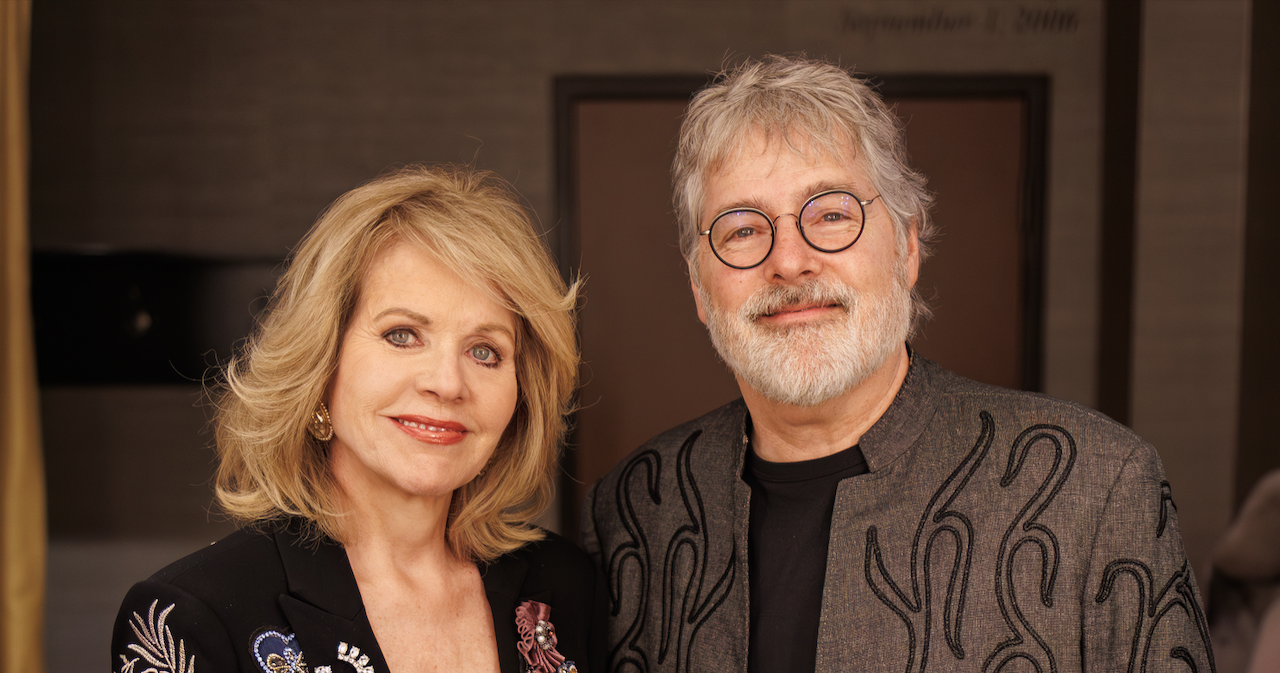
Renée Fleming and Béla Fleck in Conversation

Renée Fleming, Béla Fleck, Appalachia, and an all-star bluegrass band. Though the knee-jerk reaction to this list might be to play “one of these things is not like the other,” there is much more to this premise than meets the eye – and ear.

Fleming is one of the most renowned opera singers of the modern day, but the internationally acclaimed soprano has a long history of musical curiosity and often enthusiastically indulges thereof. From this trait alone, she and Béla Fleck found a resonance within one another, embracing and making music beyond the bounds of their respective claims to fame. This resonance sparked an idea that endured for more than 20 years, culminating in The Fiddle and the Drum, an album of Appalachian songs sung by Fleming and produced by Fleck – one that, more than anything, reveals a journey of familiarity and discovery for both artists.

The pair joined BGS on a phone call to delve into the musical, historical, and personal connective dimensions of this record. The memories shared are rich and many. Some extend as far back as Fleming’s preteen years. Others revive Fleck’s contemplations of how each song might come to life through Fleming’s vocal prowess. Every one of their recollections is imbued with immense mutual respect and awe for each other as well as the album’s many collaborators; it’s clear they both appreciate the gifts each and every person brought to this record.

Our conversation isn’t without painful realities, as the album’s focus on love and loss and war prompts reflections on fights and fatalities happening today. But, ultimately, it’s a conversation colored by a range of emotions and experiences, not unlike the very music of The Fiddle and the Drum itself.

Renée, you’ve spoken extensively about your upbringing and how you formed your relationship with a lot of folk music and folk artists. In that vein, how would you describe the initial perspective you formed about the music of folk, bluegrass, and Appalachia during the younger formative years of your life?

Renée Fleming: I think it was in middle school that they offered a guitar class – which I think is a fantastic way to get kids interested in music, because it’s an instrument you can carry around and you can read tablature pretty easily and pretty quickly. So that got me interested in [music], but also some of the music that I really genuinely liked [and got me interested] came a little later, including my discovery of Joni Mitchell in junior high school and high school. Then I was exposed to it through my family as well, because my grandfather was a fiddler and a drummer, so we had very eclectic tastes in music. I just was constantly exploring. [I] wrote a lot of songs and wrote a lot of music, starting probably when I was 12 years old, and it just branched out from there.

Where did Béla Fleck initially come into the picture for you?

RF: I was already a fan of Béla because of Béla Fleck & the Flecktones. In college, I really started singing jazz with a big band and also with the trio every weekend, so I was a big fan of his [at that time].

Obviously everything worked out the way it was meant to, but you still carry those glimpses into other worlds – folk, jazz, and so on – and it helped somewhat shape where we are now. I think it’s really brought a lot of extra color, showing people that [music] doesn’t have to be so rigid and doesn’t have to be about genres and specific labels and I think that’s something that really shines through with The Fiddle and the Drum.

Béla Fleck: I think we all have a tendency to pigeonhole people and put them into a black-and-white kind of a concept. You know, “They do this, they don’t do that,” but people are nuanced and love all kinds of things, especially when growing up and you’re open, you’re trying things and figuring out where you’re going to land.

I was also a huge fan of Joni Mitchell, and I was a vocal major in school, even though I couldn’t sing worth a darn and was secretly working on the banjo in the closet. But being exposed to classical music in high school – and my stepfather is a cellist, so I was listening to string quartets and stuff when I was a kid. People might be surprised by that, or maybe not, considering the kind of music I like to do, which is very varied. But I think it makes all the sense in the world that all of these other interests make Renée an even better opera singer, if that’s the right thing to call her. But the bigger your world is, the more you can bring to the specific things that you do.

RF: I never heard that you were a voice major before. I love that.

BF: Don’t think I’m gonna sing, because I want to protect you from awful pain, agony, despair.

RF: I don’t believe it.

BF: Nobody ever gave me a voice lesson, but they started me on French horn. I got into my school playing guitar and then it became clear that I wasn’t going to be able to play the French horn. They said, “Listen, you could just go stand in the chorus and still be in the school.”

So they put me back in there, but they needed tenors. I wasn’t a tenor so I just kind of screamed, looked at the music, and tried to figure out what they were singing and sing along. Then, when I got to my final year, they said, “Oh, we found out we’re doing Rhapsody in Blue for the semi-annual concert, and we found a banjo part so you can get out of chorus. If you want to get out of chorus, you can play this banjo part on the final concert.” I was like, “I think I’ll stay in chorus.” I liked it at that point.

Then on the last day of school, the chorus teacher – a woman named Mrs. S, who was an amazing vocal teacher – she had never spent any time with me, but she got me in front of the piano and said, “Stand up straight, sing from your diaphragm!” And she gave me a few quick things she made me do and I was singing like a bird. I was like, “Holy cow, I wish you had given me a lesson when I started at the school. I would actually be able to sing!” She knew exactly what I needed to do. It was remarkable.

Speaking of singing technique, Renée, when you were preparing to record the songs for the album, where on the spectrum of vocal expression did you anticipate needing to steer your voice?

RF: I think it was Béla who kind of clocked that a lot of the songs we were choosing kind of fell in line with [themes of] love and loss – and war, as well.

One of the things that I do, especially when I’m singing outside the classical genre, is I try to avoid an obviously classical sound. That, typically for me, means the upper register. But we worked it in some songs and you just have to be mindful of vibrato. It’s really thinking about style and, for me, that’s the same as when I’m singing on a program of French art song versus an Italian aria. So I may sound the same, but the style is completely different.

What struck me as I listened to the album was just how subtle and yet impactful the differences in how you sing can be. It’s just shaping and forming your voice around the mood that needs to come through. And I visualized that, if your voice was some kind of an entity or something that could be shaped, that you just have this beautiful ability to mold it and manipulate it into exactly the shape and form and size it needs to be to express whatever the music calls for.

RF: I like to record. I like the idea of focusing only on what we hear and not adding so many other elements like you do in a live performance, where it’s also your acting and your movement and how you look and your facial expression. This is a very much more focused activity and we would do many versions of the same song. I left it to Béla to choose which versions he liked. I had almost no complaints about the choices he made.

BF: I loved to hear your voice on all the takes. And then sometimes there would just be a magic moment of, “Oh my god, the song is really happening here. We’ve got to make sure this is part of the final takes.”

I have a frustration when you have something killer that happens in one portion of the take and then the rest of the take isn’t as good. I like to find those magic moments and have them all end up on the record. But I also think for Renée, there’s an unconscious element to being a musician. [To Renée:] You’re inspired by a moment, and sometimes it’s hard to put into words all the things that you’re [doing]. You put the material in front of yourself, you decide [to] embody it, and the music is correct and things are happening in the right way – you just know what to do. And it’s hard to say how you know.

Renée and I worked really, really hard on our craft, but I think the craft is there to serve something that’s a little harder to quantify, which is just what the unconscious – what our bodies and our souls – wants to doubt when it’s time to make the music.

RF: And it has to do with the expression. I’m also thinking of specific pitches and words that relate to the song, but [to Béla:] I was really thrilled to hear how much you could vary what you were playing. Sometimes your harmonies would just come from another world and I’d say, “Wow, that’s so cool. Béla can kind of put in a jazz harmony once in a while.”

BF: You also pushed for that. I remember the first arrangements you said, “I think this could be more interesting.” And then in the moment, I had to come up with a better arrangement, a more interesting arrangement, for the first song on the record [“He’s Gone Away/Storms Are on the Ocean”]. I’m really proud of it. I think if you hadn’t pushed and I hadn’t reacted, we wouldn’t have ended up with that arrangement, which was quite unusual for that song, and then that kind of led the way to being a little bit more open.

It’s funny, when I’m playing with the Flecktones, or Chick Corea, or somebody like those folks, I feel very open harmonically. When I’m playing music that’s more traditional, I’m very careful not to get too harmonic. So, when I discovered this was a safe place to explore a little bit and look for just the right kind of harmonic additions to the basic chords, it was very freeing and inspiring. And of course, getting to work with a great vocalist like Renée… I’ve been a big fan of female vocalists since Joni Mitchell and Joan Baez and Linda Ronstadt and all of these people. I saw that there was a lot of art to working with a great vocalist like that. I was eager to have that opportunity and thankful to get a chance to try and figure out how to make it work from my end.

RF: It’s funny you say that, because I’m a huge fan now of Hazel Dickens, and you said that you had worked with her. Because there’s something so plaintive about the way she sings, it’s like Roscoe Holcomb, too. There’s something– I can’t describe it. It’s authentic and it’s immediate simplicity. I just absolutely love it.

BF: We used to talk about the “ancient tones” in the bluegrass world, and Bill Monroe had this quality. It might not always be perfectly in tune but it didn’t matter. It was just so pure and so powerful. And Hazel has that. It’s like it’s coming from another planet, almost. It’s so deep and powerful the ordinary rules don’t apply. It’s something else.

RF: I agree.

Connecting this topic of the intangible with the themes of the record, how are you both feeling about the album’s thematic focus, given the various experiences of war and loss that are happening in the U.S. and abroad?

BF: What happened was, we had a certain amount of songs we were committed to and we were excited about, and we were looking at quite a large list of additional songs that might finish out the record. That’s when I started looking at the original six songs we had recorded and thought, “You know, there really is a thematic arc.” Some of these songs were not working for me, and I couldn’t explain why until I put my finger on the fact that the six songs that we’d already recorded were telling me a story. When I explained what I was seeing to Renée, she said, “Oh, I see that. That makes all the sense in the world.”

It kind of starts with a romantic relationship that leads to commitment and then the man, in this case, goes off to war and doesn’t make it back. The woman is left on her own, maybe with a child, and then in the end, there’s a rumination about life and the way it goes like this often in the world. So that’s the story arc. Basically, to me, that is about when you make a man your boss, you give yourself up. You give up your beauty. You give up your individuality and all the promise that you could be if you weren’t in that kind of a relationship, you know what I mean? And in a way, the woman in this story is taken advantage of by bigger forces, a war.

Well, this stuff is happening every day, all over the world. And we’re in a big one right now, and there’s a lot of questions as to whether we should be there. Those questions usually come out a few years after the war is over, and everybody will say, “Oh, this was a terrible idea, and here’s why.” You don’t have to be a genius to know that we’re going to be saying the same thing about a lot of these conflicts before long. So to me, it just makes the record have that much more meaning. It’s happening right now, just like it always does – this is what people do. This is what mankind does. And it’s very disappointing that it keeps going back to this place.

RF: [My and Béla’s] generation has been fortunate that, in a way, we’re too young to have really understood what was happening in Vietnam. A lot of this repertoire really relates specifically to Vietnam. But there’s also the Civil War. And every once in a while, things really fall apart. We’re in a period now where the same thing is happening. And it’s really not useful. It’s not going to move the needle for Iranian citizens – it might even make it worse for them. So I just think it’s tragic when leaders feel like the only alternative is war.

BF: Renée also mentioned she wasn’t sure that “Scarlet Tide” would fit with the other songs, but we went ahead and did it because we both loved it. And then when we looked at what we had – again, those first six songs – it made all the sense in the world. The songs were leading us in a direction, one that, unfortunately, mirrored what mankind does.

RF: And my heart goes out also to people in the Ukraine. There are always conflicts happening around the world. There have been so many reasons for these things, it’s shocking that sometimes it’s just [plain] political. I find that really sad.

It certainly has just felt like a very heavy time, for quite a long time. So even though the themes on this album are rather heavy and emphasize a lot of the sadness that’s going on, I think it’s also very cathartic.

BF: It’s funny how in blues and bluegrass, sometimes you’ll sing the most terrible lyrics – little girl and the awful, dreadful snake or a guy killing a woman – and make this very happy, jolly song about it. It’s bizarre! And in blues, a lot of time you’re singing the saddest things, but it’s uplifting somehow to bring them out in the open and treat them maybe in a different way that allows you to experience them differently and work them through in different ways. Some bluegrass songs are really, really sad but they’re so jaunty you don’t quite realize it.

RF: Well, it’s also that we are practicing grief. That’s one of the things that scientists have come up with, that sad songs really help us process and learn how to process actual grief, because we’ll all experience it.

BF: I think also having kids – we’re both parents – but you realize that people process grief in really different ways. Some people don’t show it for a long time, but then it comes out. It’s handled in a lot of different ways.

When you were putting the music together, what kind of unexpected creative sparks came up amongst the two of you and also among the large group of immensely creative artists that are contributing to the album?

BF: I think with music, you can be over prepared because there’s a lot of things that happen very spontaneously when you have musicians of this caliber – people like Sam Bush, Jerry Douglas, Stuart Duncan. Just like Renée colors every take differently, they’re going to do the same. They’re going to be very responsive. Things are going to happen on the floor. Someone’s going to want to stay on the floor in the studio while we’re doing takes, someone’s going to say, “Yeah, I don’t know, that part’s not working for me.” And we’re going to solve it in a matter of seconds and something’s going to work.

It’s a very emotional place to get into when you’re recording, especially songs like this. As we’re all listening to Renée, we’re all inspired by how she’s singing them. They’re different than we’re used to hearing. So we’re playing differently than we’re used to. But we also come up with an arrangement, develop it, and do it a few times so we really think we have something and try not to rush through it. But there’s a tendency for things to really work out very quickly.

So with the producer role that I was in – and Renee didn’t have that experience with these folks, although she has with a lot of other musicians that are improvising musicians – where the parts are not written down and they’re very spontaneous, she was able to ride those waves very well. And whenever she spoke up, she gave me a lot of latitude, a lot of rope. But whenever she spoke up with any comment, it was always dead on the money. It was going to make it better. We listened and we tried to incorporate everything we could to make it her music.

RF: I think also that collaboration, for me– the example I would use is working with a conductor is, at best, very intuitive. You’re reading each other’s signals that you’re giving musically, in terms of dynamics, and it’s never the same way twice. I think that was true in this process as well. And having Béla, who had really created the structure for each of these arrangements, helped to anchor everything.

But to have those other musicians playing – they’re the crème de la crème of Nashville I think, and the singers as well. I mean, the way Dolly Parton was able to add her voice to the track I had already created [“In the Pines”] and just blend in amazingly, but then to also add so much to it. And the same was true for Jerry Douglas. Aoife O’Donovan, I already knew and had worked with her already on a project at the Kennedy Center. I didn’t know Sierra Hull and Sarah Jarosz, who are also just extraordinary musicians and terrific artists. For me, it was really a delight to be working with so many truly great musicians.

I’ve been fortunate to see Béla perform live in other genres with other musicians. [To Béla:] You never do anything easy, because I just wondered at your ability to manage these polyrhythms and changing meters, and then also to keep track of where you are. I mean, it just boggles my mind.

BF: Thanks. I feel like the banjo is like a percussion instrument. Like a tuned percussion instrument, similar to maybe a marimba. The rhythm of things is very fundamental to what makes me tick and what makes the banjo tick, because we don’t have sustain. So everything’s all about where you place the note.

So when they say, if you [lose or] don’t have a sense, your other senses become stronger – I think, as a banjo player, we have certain limitations that are almost like senses we don’t have. We can’t take a note and hold it for a long time. It’s just not possible. So we get better and better at timing and rhythm. If we’re on top of it, and we understand that, then we become rhythmicists.

It’s more challenging for me to do music with a lot of space, because I can’t do it. Banjo won’t do it. So notes will hang in the air for a little while. I can’t sustain like a piano with the whole pedal or things like that, but I find ways to work around it. In this case, I got to play the band. I couldn’t sustain, but I sure know who could. Jerry Douglas, Stuart Duncan, they know how to hold a note and have it mean something. It’s not just a length, it’s a feeling and a depth. So, I know I can step out of the way.

I mean, for a record that you’re kind enough to want my name on the record as an equal, I felt like I was really playing more of a producer role most of the time, and I really enjoyed that opportunity.

As the producer for the album, did you have a vision for the overall sonic profile of the music? Was there a particular way you envisioned blending the typical folk and bluegrass instrumentation with Rénee’s voice before you hit the record button?

BF: I did have the experience of hearing her sing live, doing opera in China. But I also listened to her recordings before taking the project on, because part of me was wondering, “Well, can she do this? Is this going to work?” I listened to some of her recordings and I heard some stuff that she did with Bill Frisell on one of her records, where she used a lower range. It was almost like a different person. I was amazed at how much I loved it. I love hearing her do her opera thing, because it’s the best it can be. It’s just so good. It’s like how I was not a basketball fan, but when Michael Jordan played, I wanted to watch.

I feel like Renée is like that with opera. Even if you don’t know about opera, or the form is strange to you and you’re not sure what you think about it, when you get a chance to hear her, do it. You want to see it. You want to do it, you want to hear it. I knew she was a world-class singer, but I didn’t realize that she had this other gear that was possible for her in her low range. I’m not trying to say that the opera stuff isn’t unbelievable. It’s just in a different language. It’s a different world of music. It’s a role. She plays these roles on every song.

I just didn’t know if she could translate her honest, personal humanity to these songs. And when I heard these Bill Frisell tracks, I went, “She can, she can! And it’s not a bluegrass/country singer doing their thing. It’s a whole different authenticity. I guess I didn’t know at that time that she had it in her family, and that it was music that she’d heard the whole time. So she wasn’t sitting there thinking or singing down to it, “Well, I can do this. This is easy. I do hard stuff.” She wasn’t like that. She was like, “I’m committing. I’m really going to do this thing.” So I was very impressed by her professionalism but also in the way she could summon up the emotion that felt true and authentic.

I think the album will just keep reinforcing to the listening population out there that people should embrace differences, embrace new, and embrace change – and maybe even embrace the unknown.

BF: I think it’s important to remember that it’s not just the idea that’s good or bad, it’s how it’s done. The same idea could be a disaster if it’s not done the right way.

We have something called a mashup, when you take two people that do completely different things and you throw them onto the same song and they alternate doing their thing. To me, that can be fun and enjoyable, but it’s not a true collaboration – where the artists actually have to change, grow, and listen to each other. You have to actually learn things. I look for those kinds of collaborations, where you’re doing something different from what you normally would do in order to play with this person.

But again, and you can talk about politics [in the same framing], too. Sometimes it’s not the thing that they’re doing, it’s the way that they’re doing it that is either good or bad. When you put musicians together from different musical worlds, often we can figure something out. We can work something out.

When I play with musicians from different parts of the world, people get really excited and happy. I do, the other musicians do, and we find a common ground. We find some way to play together. The people around that are there hearing it are uplifted by the idea that, “Hey, you guys worked it out.” And again, that’s what we need to do politically, too. We need to find ways to reach each other and connect with each other and listen to each other. It doesn’t need to be as hard as it feels like it is.

My most uplifting times have been playing with musicians from other cultures or from other musical worlds and finding common ground – finding a way to be yourself, together, and accommodate each other in that aural space.


Photo Credit: Madison Thorn
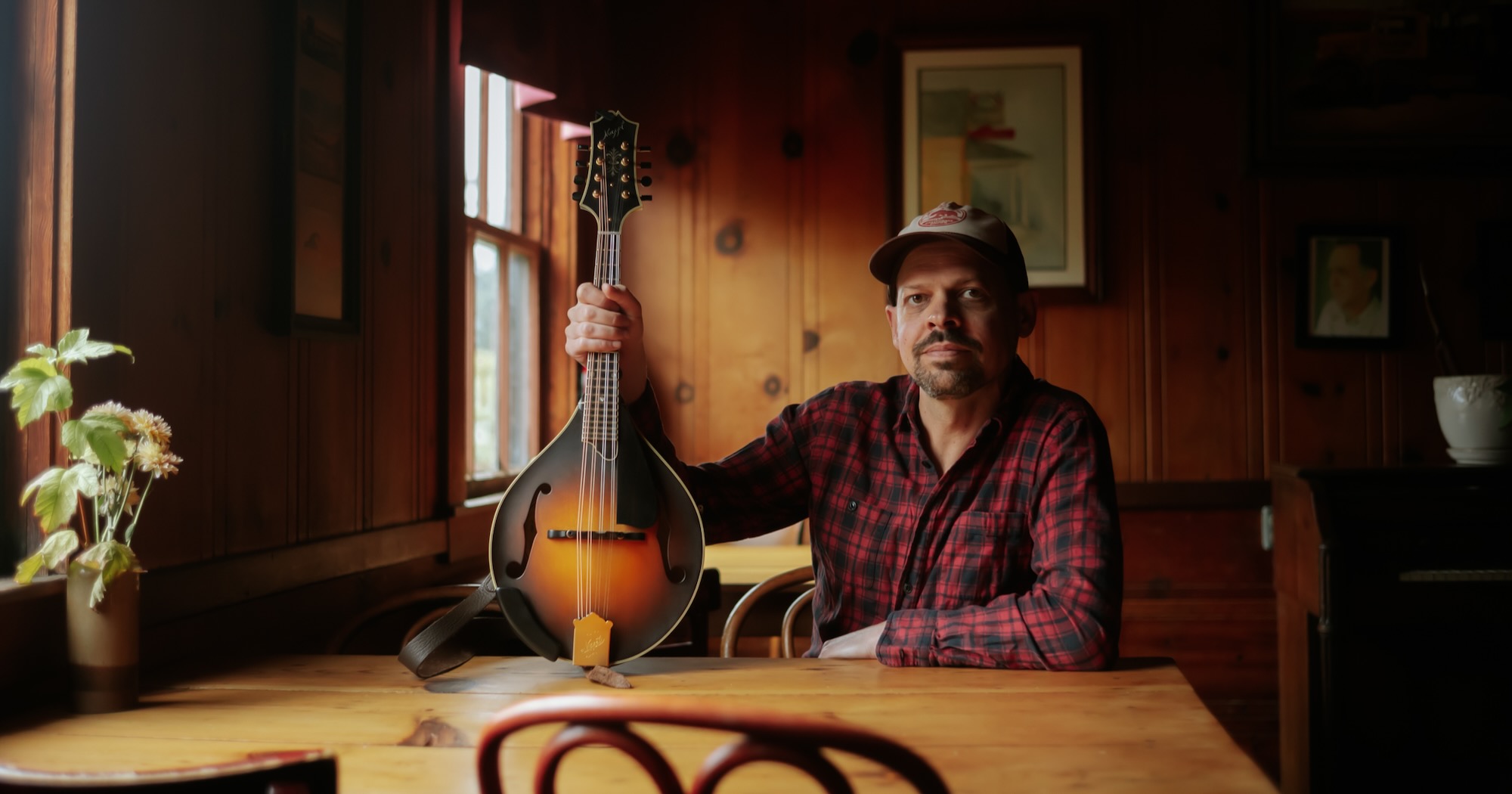
BGS 5+5: Jesse Appelman

Artist: Jesse Appelman
Hometown: Oakland, California
Latest Album: Where We Go (released February 20, 2026)

If you had to write a mission statement for your career, what would it be?

For me, music is about community, connection, and collaborative creation.

It’s about the intimacy of singing harmony with someone, or finding musical ideas that only occur to me because of what someone else just played. I’m in awe of people like Keith Jarrett who can carry a full solo show, but my musical voice only feels complete in collaboration. I play best when I have things to respond to.

I leave most festivals with at least one new real friendship, forged through a shared language and the vulnerability of playing music together. There are not a lot of spaces where this can happen so easily, especially once you’re past your 20s, and they only exist because people keep showing up and participating.

I’m most interested in the music that results when musicians prioritize the collective sound while still bringing their full and unique personality to the table. When everyone listens and tries to make everyone else sound better rather than demonstrating their own ability. It’s easy to take for granted the ability to sit down with strangers and create music in real time but we are so lucky to get to do it.

Genre is dead (long live genre!), but how would you describe the genres and styles your music inhabits?

I don’t think anyone involved in this record ever discussed what genre of music we were making. Not John Mailander, who produced the album, and not the band (Eli West, Sami Braman, and Emily Mann). We talked a lot about the how and the why. We talked about density and space, groove, melody, interaction, texture, and flow. Nobody asked if they should be playing these tunes like bluegrass, old-time, Americana, or anything else.

So what kind of music is it? It’s the sound of these particular musicians playing these tunes, trusting their ears and instincts, and adding their unique personalities to the stew. Bluegrass is certainly in there, and old-time, and probably some jazz and classical, but it’s not a conscious “little bit of this and little bit of that,” it’s just what comes out when we play without thinking too hard.

I remember listening back to the tunes at the end of the first day in the studio and John said something like, “Isn’t it cool how you can do all this planning and arranging and preparing, but you have no idea what the album will sound like until you start making it?”

Some musicians immerse themselves in a single tradition or lineage and spend a lifetime going deep inside it. I listen to a lot of stuff like that, and it’s some of my most beloved music, but when I play I’m most interested in what happens when you agree on priorities and principles, and let musical identity emerge. My priorities come from lessons learned from musicians in my West Coast string band community. Some get called innovators, some traditionalists, but all share a commitment to deeply-felt, collaborative, and highly personal music-making.

Music is an activity and genre is a labeling system; the best I can do is focus on the activity and get the right people together and trust that the result will sound like us.

If it needs a label, maybe string band music that breathes?

What rituals do you have, either in the studio or before a show?

I have a loose mental checklist that I try to review before I go on stage or into the studio or even to a jam. I don’t succeed at all of them all the time but it’s a north star to aim for.

The first is from Chick Corea:

1. Play only what you hear.
2. If you don’t hear anything, don’t play anything.

This is simple and sometimes really hard. To me it means that every note should exist in my mind before it comes out of my hands – whether it’s a particular texture when playing backup or a phrase in a solo. Even down to the tonal color, dynamics, and articulation. This takes deep focus and deep listening both outward to the band and internally to your own ideas. When I listen to my favorite improvisers – Jim Hall, Stuart Duncan, Keith Jarrett, David Rawlings – I hear this level of intentionality.

The second is from John Hartford: “Style is based on limitations.” This means giving myself permission to play within my actual capabilities rather than the ones I wish I had. If I have to take solo over something that is outside of my comfort zone in terms of tempo, harmony, or whatever, I search for the most musical solution available within the boundaries of my own technical and conceptual limitations. This might be something simpler and more spacious than what I might feel like I’m supposed to play, and consequently truer to my own voice.

The rest of the checklist: Stay relaxed in mind and body. Listen deeply at all times. Never sacrifice groove or tone to execute an idea. Never go on autopilot when playing behind someone else’s vocal or solo. Search for the most beautiful idea, not the cleverest.

Which elements of nature do you spend the most time with and how do they impact your work?

My happiest place outside of music and family is underwater. I scuba dive and snorkel for the same reasons I play music. It feels like a portal into another universe. Diving requires an intentionality of every movement that I try to apply to making music. Your time underwater is limited by the air in your tank, and the more you exert, the faster you breathe. Every muscle movement costs you air and time, and the best divers carry themselves in the water with a calm and economy of movement that is almost meditative. It’s a flow state that slows your breathing and lets you focus your attention fully on the environment around you. I make my best music when I find that same state and put most of my awareness on what’s happening around me.

I find a lot of inspiration in California’s landscapes and colors. Kelp forests, rocky coasts and windswept coastal meadows with washed-out browns and green, golden hills dotted with green oaks, the pale gray granite of the High Sierra. There’s an aesthetic minimalism to these environments that I think shows up in some of my music, like “Lyell Fork,” a stream that flows from a glacier on a high peak in Yosemite and flows through alpine meadows and over granite slabs before joining the Tuolumne River. Or “Montaran” which is a stretch of coast south of San Francisco. In both cases I thought those tunes sounded like how those places feel.

What would a perfect day as an artist and creator look like to you?

Waking up to my kiddo climbing in bed for a cuddle. Breakfast, immediately followed by some quiet unstructured time with an instrument in my hands with an extremely good cup of coffee, before all the details of life fill my brain. A hike or bike ride with my wife. Some silly afternoon play time with my kid. Cooking mapo tofu for family dinner. Tunes and songs in the evening with a few dear friends. Someone else sends all my emails for the day.


Photo Credit: Giant Eye Photography

Béla Fleck’s Stunning Solo GRAMMYs Performance of “Rhapsody in Blue”

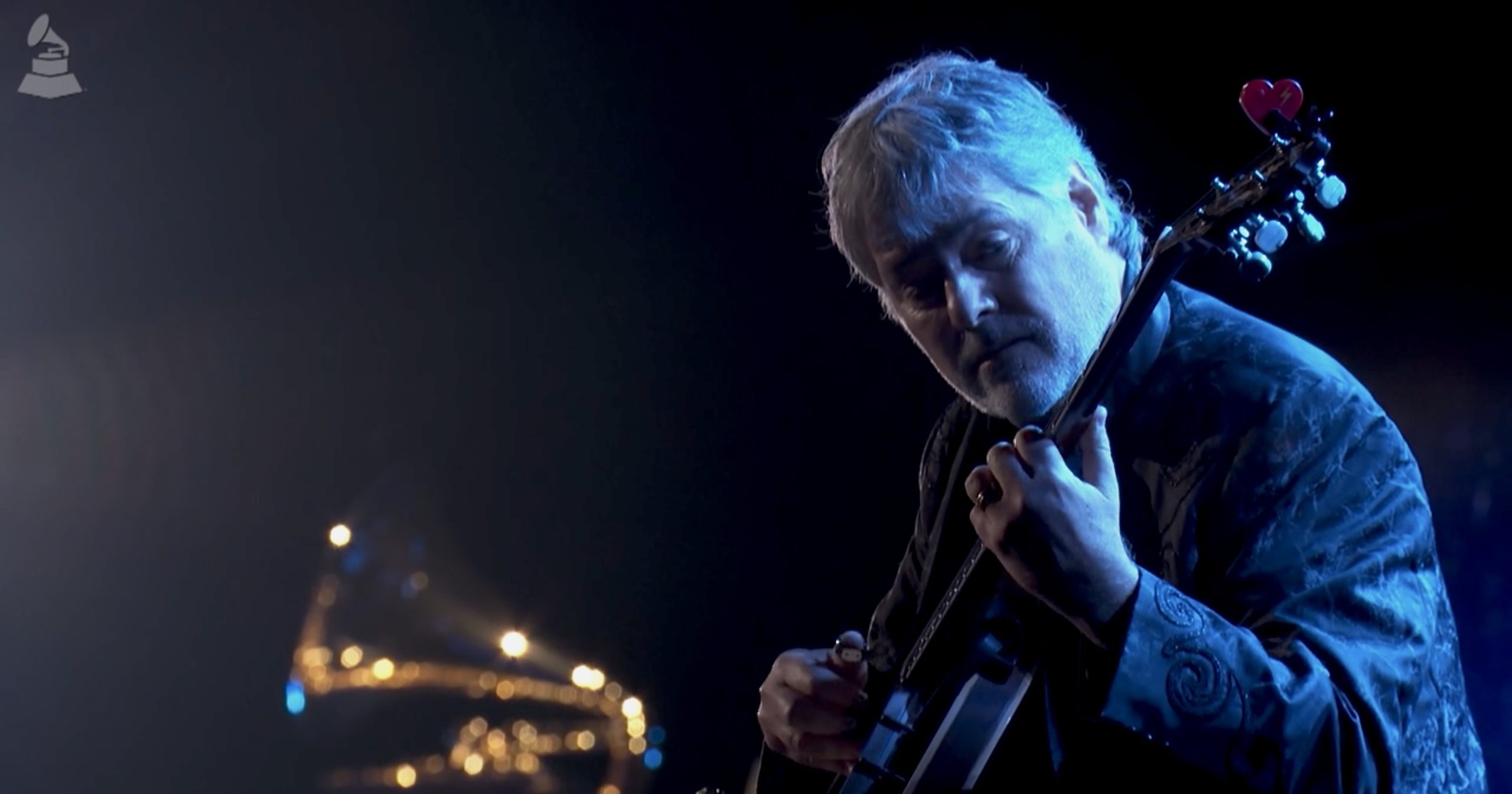
Every year, the GRAMMY Awards bring us bigger, brighter, and more jaw-dropping stage performances. (Think Chappell Roan atop a gigantic pink pony this year, or Billie Eilish performing amidst an indoor recreation of the Southern California hills.) But the GRAMMYs stage also hosts dozens of more intimate performances during its annual awards show and premiere ceremony, like “Rhapsody in Blue” by prolific banjoist and composer Béla Fleck. (Watch an official clip from the premiere ceremony broadcast here.) With nothing but his banjo to accompany him, Fleck brings a stunning liveliness to this over-100-year-old tune originally composed in 1924 by George Gershwin.

It’s not often that we get to see such straightforward and understated performances at major awards shows like the GRAMMYs. Fleck isn’t accompanied by anyone else on stage at the premiere ceremony. It’s just him and his banjo atop a stool, with a single instrument mic for sound. Even so, the whole arena is silent and enraptured for his performance. As he plays, Fleck seems completely present with the music, following its many twists and turns combining jazz, classical, and ragtime elements.

You’ll probably recognize “Rhapsody in Blue” (it would be hard not to), as it’s been featured in everything from The Simpsons to Baz Luhrman’s 2013 film adaptation of The Great Gatsby (F. Scott Fitzgerald was famously a fan of the song). Fleck’s performance is anything but tired, redundant, or stale. Instead, the tune feels entirely alive and refreshing, a welcome acoustic interlude amidst the day’s fanfare. We can’t help but think Gerswhin would approve. As Fleck finishes, the GRAMMY winner gives a grateful nod and a humble smile, as he holds his banjo up on his knee.

Fleck is one of the most-nominated artists in GRAMMY history, with 47 total nominations to date and 18 wins – including his most recent win this year for Best Jazz Instrumental Album for his 2024 release with Chick Corea, Remembrance. After checking out the behind-the-scenes video of “Rhapsody in Blue” (above) shot by renowned bassist Leland Sklar from his position waiting behind Fleck on stage with the house band, we highly recommend heading over to the GRAMMYs page to watch the official video of Béla Fleck’s performance.


See the entire list of this year’s Country & American Roots Music GRAMMY winners here.

You Gotta Hear This: New Music From Wood Box Heroes, Ashby Frank, and More

This week, our premiere round-up is chock-full of amazing new music. From a Chris Stapleton co-write from bluegrass-meets-country supergroup Wood Box Heroes to a Terry Baucom tribute from bluegrasser Ashby Frank, plus songs from Americana singer-songwriter Jack McKeon, guitarist Yann Falquet, and Asheville’s Holler Choir.

Plus, don’t miss exclusive premieres from banjo magnates Alison Brown and Steve Martin, and a posthumous release from Chick Corea with his friend and collaborator Béla Fleck.

It’s all right here on BGS – and really, You Gotta Hear This!

Wood Box Heroes, “Cannonball”

Artist: Wood Box Heroes
Hometown: Nashville, Tennessee
Song: “Cannonball”
Album: 444
Release Date: March 15, 2024 (single)

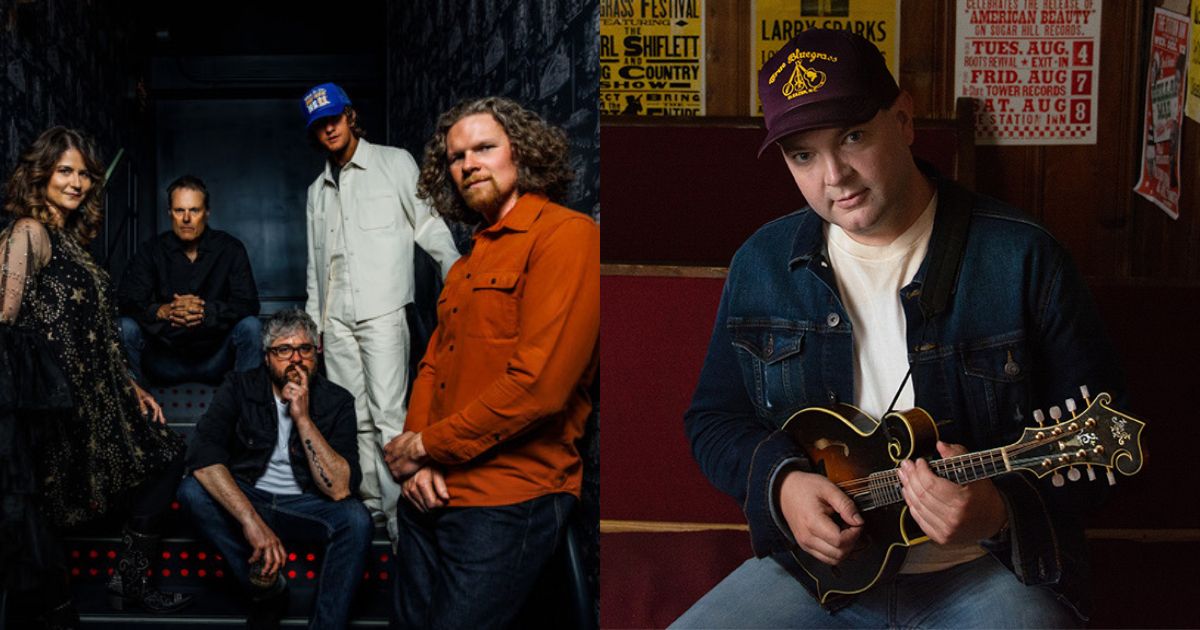
In Their Words: “‘Cannonball’ is a song I wrote a while back with Chris Stapleton. I was trying to figure out a new way to talk about the ‘love and war/love as war/love is war’ theme and of course, Chris helped to bring that to life so well. I never made a demo, just the voice memo. Hearing Chris’s amazing singing on it could be a daunting thing for lots of artists to get past, but I knew Josh Martin could handle it, so I pitched it to the Heroes for this project. It took a while to sink in with them, but I’m beyond thrilled with the treatment they gave it!” – Barry Bales

Track Credits:

Barry Bales – upright bass, vocals
Jenee Fleenor – fiddle, vocals
Josh Martin – guitar, vocals
Matt Menefee – banjo
Seth Taylor – mandolin, vocals

Produced by Wood Box Heroes.
Recorded by Brandon Bell at Sound Emporium; Nashville, Tennessee.
Mixed by Brandon Bell.
Mastered by Eric Conn at Independent Mastering; Nashville, Tennessee.


Ashby Frank, “Knee Deep in Bluegrass”

Artist: Ashby Frank
Hometown: Nashville, Tennessee
Song: “Knee Deep In Bluegrass”
Release Date: March 15, 2024
Label: Mountain Home Music Company

In Their Words: “‘Knee Deep in Bluegrass’ is a tune written and originally recorded by my friend and former Mashville Brigade bandmate, banjo legend Terry Baucom. Sadly, Terry passed away in December. When we recently gathered to start recording my next album, it happened to be the day after his funeral. All of us had Bauc and his wife, Cindy, on our minds. Remembering this song, I messaged Cindy, asking if it would be ok to record a slightly modified version of ‘Knee Deep’ as a tribute to him and she graciously approved. Bauc was performing at the first festival I ever attended in Denton, NC. His style and persona has been an inspiration to me ever since that first meeting. I think Matt Menefee, Travis Anderson, Jim Van Cleve, Seth Taylor, and Tony Creasman really nailed their parts on the tune. I hope our recording brings back fond memories for anyone who knew Terry and will honor him as he so richly deserves.” – Ashby Frank


Jack McKeon, “Last Slice of Heaven”

Artist: Jack McKeon
Hometown: Chatham, New York; currently residing in Nashville, Tennessee
Song: “Last Slice of Heaven”
Album: Talking to Strangers
Release Date: June 21, 2024

In Their Words: “I was working at a house in Williamson County, on a stretch of road that is flanked by two separate but equally cookie-cutter developments. Across from this house and squarely in the middle of all this new, was a vacant field, a decrepit barn festering in the corner. At some point that field must have meant food, crops, and a living. Now it seems to only conjure the image of an older person sitting on a potential windfall when they sell out to a developer. But with all that money comes the death of the beautiful things that made that life worth living. My boss noticed me looking at this field and facetiously said, ‘Oh, didn’t you know? These developments all come with their own complimentary field to look at.’ I wrote this song to give a voice to the person I imagined holding on to this ‘Last Slice of Heaven,’ a character at odds with the transformation around him who’s fighting to hold on to his own identity in spite of ‘a world that’s always changing what it means to be the same.'” – Jack McKeon

Track Credits:

Jack McKeon – Guitar/vocal
Ashby Frank – Mandolin/harmony vocal
Vickie Vaughn – Upright bass/harmony vocal
Christian Sedelmyer – Fiddle
Justin Moses – Banjo
Engineered by Sean Sullivan at the Tractor Shed Goodlettsville, Tennessee.
Mastered by Justin Perkins at Mystery Room Mastering.

Video Credit: Brooke Stevens


Yann Falquet, “Courage”

Artist: Yann Falquet
Hometown: Brattleboro, Vermont
Song: “Courage”
Album: Les secrets du ciel
Release Date: March 15, 2024 (single); May 3, 2024 (album)

In Their Words: “I moved from Québec to New England a couple of years ago. My instrumental background was compatible with the fiddle styles I encountered here (Appalachian, Irish, Scottish, etc.), but I quickly realized that I had to rethink the way I approached songs. Back in French Canada, traditional singers often perform unaccompanied, and rely heavily on others in the room to participate in the ‘response’ part of call-and-response songs. For this project, I began reframing these songs into a more English or American ‘folk singer’ format, and had a lot of fun coming up with interesting guitar parts in DADGAD tuning. I then collaborated with producer Quinn Bachand and a bunch of fantastic musicians to add extra musical layers to the song.

“‘Courage’ comes from the repertoire of the Voyageur folks who paddled across North America, using songs to keep paddling in rhythm. It tells the story of a young soldier who abandons war for the pursuit of love, knowing well the consequences if he gets caught.” – Yann Falquet

Track Credits:

Yann Falquet – Guitar, voice
Julia Friend – Voice
Keith Murphy – Pump organ
Trent Freeman – Violin
Quinn Bachand – Violin, bass pedal

Quinn Bachand – Producer, engineer
Charles-Émile Beaudin – Mixing engineer
Philip Shaw Bova – Masterin engineer


Holler Choir, “Hamlet Blues”

Artist: Holler Choir
Hometown: Asheville, North Carolina
Song: “Hamlet Blues”
Album: Songs Before They Write Themselves
Release Date: January 12, 2024

In Their Words: “I can’t speak to everyone else’s tastes, but for the purpose of songs that I perform and have written, ‘Hamlet Blues’ is my most timeless song. I know this because 10 years after having written it, it’s just now seeing a definitive release, and it feels no less personally relevant than the day I wrote it.

“There’s a very intentional juxtaposition between the carefree energy of the music and the existential crisis portrayed in the lyrics. It’s a cognitive dissonance that I’ve experienced in different settings many times in life, and I chose to channel that energy into this song. There’s a smiling nihilism that can be found at any college bar. Kids drinking to excess, with little regard for what’s happening tomorrow. Seemingly happy people, sitting on a fault line that is long overdue. I wanted to capture the dread that was the humming drone in my head beneath whatever pop song was blaring over the bar speakers at the time. I don’t find this sentiment any less relevant for bars I go into as an adult.” – Clint Roberts


Alison Brown & Steve Martin, “Bluegrass Radio”

Artist: Alison Brown & Steve Martin
Hometown: La Jolla, California (Alison); Waco, Texas (Steve)
Song: “Bluegrass Radio”
Release Date: March 15, 2024
Label: Compass Records

In Their Words: “This little tune brings a ton of joy to me. Alison’s playing is flawless, and my singing is flaw-full.” – Steve Martin

Read more here.


Chick Corea & Béla Fleck, “Remembrance”

Artist: Chick Corea & Béla Fleck
Hometown: Nashville, Tennessee
Song: “Remembrance”
Album: Remembrance
Release Date: May 10, 2024
Label: Béla Fleck Productions (Thirty Tigers)

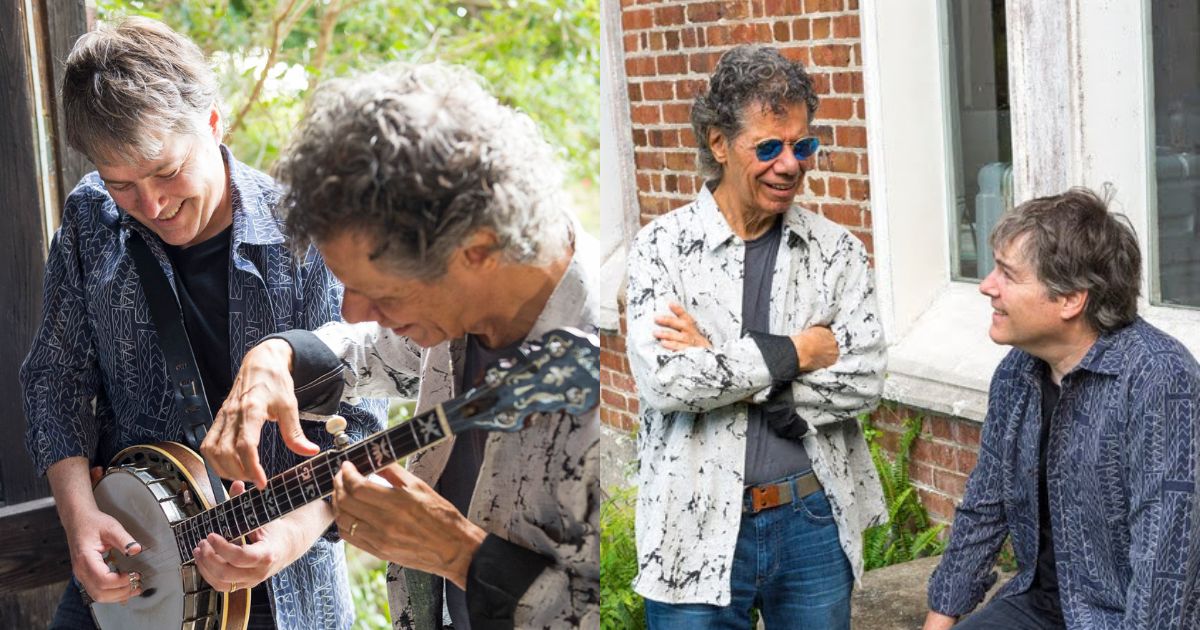
In Their Words: “’Remembrance’ is one of the last pieces of music Chick ever recorded. It’s just one of those perfect Chick Corea tunes. It sounds to me like a New Orleans funeral march, even though it has a Latin component, like everything he did tended to.” – Béla Fleck

More here.


Photo Credits: Wood Box Heroes by Eric Ahlgrim; Ashby Frank by Melissa DuPuy

LISTEN: Chick Corea & Béla Fleck, “Remembrance”

Artist: Chick Corea & Béla Fleck
Hometown: Nashville, Tennessee
Song: “Remembrance”
Album: Remembrance
Release Date: May 10, 2024
Label: Béla Fleck Productions (Thirty Tigers)

In Their Words: “’Remembrance’ is just one of those perfect Chick Corea tunes. It sounds to me like a New Orleans funeral march, even though it has a Latin component, like everything he did tended to.”  – Béla Fleck


Photos by C. Taylor Cruthers and Taylor Cottrell

Béla Fleck: “It’s Clear to Me That Bluegrass Is Still My Defining Element”

Novelist Thomas Wolfe famously declared that you can’t go home again. But then again, Wolfe is not remembered as a musician who played bluegrass, a style that’s all about going home again.

So it is that Béla Fleck’s new album is a homecoming, and an ambitious one at that. A third installment in Fleck’s long-running bluegrass trilogy, My Bluegrass Heart (Renew/BMG Records) is his first bluegrass album of this century. It’s a double-disc effort with an all-star cast – from old hands like Sam Bush and Jerry Douglas to new stars including Sierra Hull, Molly Tuttle, Chris Thile, Billy Strings, and more – with a running time not much shorter than the first two volumes put together.

“It’s hard to get around,” Fleck says. “As much as I may pretend to be something else, I am bluegrass at heart and that’s okay. It’s something I’m proud of and have come to embrace more as time goes on. Part of that is aging – do something when you’re young and you may not want that to be what defines you. Bluegrass just seemed like too obvious a pigeonhole for a banjo player when I was starting out and there was so much other music I loved, too. But after a lot of exploring, it’s clear to me that bluegrass is still my defining element.”

The album title of My Bluegrass Heart is actually a riff on an unexpected source, the late jazz pianist Chick Corea, a sometime collaborator of Fleck’s. One of Fleck’s favorite Corea albums was 1976’s My Spanish Heart, an ironic title because Corea was of Italian rather than Spanish descent.

“He was a guy from Boston with a natural affinity for Latin music, which was central to who he was even though he did not have legit entry in terms of ethnicity,” Fleck says. “That resonates for me. I’m from New York, of Eastern European and Russian descent with no natural connection to folk or bluegrass. So I’m defining myself with music that’s not necessarily my heritage, but being an outsider helps you bring new things to the idiom. When I go off to study Indian music, I can come back and write this album’s ‘Vertigo,’ which has very Indian rhythmic devices. Finding a way to insert Indian music or jazz or classical into bluegrass is very satisfying.”

The roots of My Bluegrass Heart go all the way back to Fleck’s first bluegrass album, 1988’s Drive, which he made with a core group including Bush, Douglas, Stuart Duncan, Mark Schatz, and most notable of all the late great guitarist Tony Rice (to whom the new album is dedicated, along with Corea). That same cast appeared on the 1999 follow-up, The Bluegrass Sessions: Tales From the Acoustic Planet, Vol. 2.

Had Fleck had his way, the same crew would have convened for volume three, and it would have come out many years ago. But the holdup was Rice, the troubled but brilliant guitarist who died in 2020 on Christmas day after years of health struggles.

“Playing bluegrass with Tony Rice was such a profound, dramatic upgrade from anything I’d ever experienced before,” Fleck says. “I wanted to do it again and reached out a lot over the years, but there was no response. I was puzzled and disappointed. Hurt, even. But come to find out that a lot of his other friends were going through the same thing with him as he started to isolate. He was not confident about playing anymore, so he shut it down and withdrew. And at a certain point, I heard about some close musician friends of mine who were starting to have hand problems. I thought, ‘If I don’t do this soon, some people I want to play with might not be able to anymore.’”

To that end, Fleck convened the surviving cast from his first two bluegrass forays, while adding young guns like Strings and Tuttle as well as other longtime pals including Tony Trischka, David Grisman, and Michael Cleveland. There’s plenty of firepower throughout these 19 tracks, especially on “Slippery Eel” — the first-ever studio work featuring the pairing of Strings and Thile. Fleck did his best to come up with something that would challenge those two, but notes that, “Of course they made it look easy.”

All 19 tracks are instrumentals, with a conservatory feel akin to Punch Brothers (several of whom appear) or the Kruger Brothers. But there are vocals of a sort, between-song quips and jokes by various players.

“This is such a community record and I thought it’d be cool for people to know this bluegrass community through these voices,” Fleck says. “You know, Sierra Hull talking, Tony Trischka and Jerry Douglas laughing, Sam Bush being silly, David Grisman being David Grisman. I think people in the bluegrass world will know every voice. When I’d play the record for people, they would always tell me, ‘I hope you keep that stuff in. It really humanizes it.’ I’m really excited and satisfied with everything about this record. The community aspect, hearing everybody play and talk, makes me happy. It’s like a love letter to the bluegrass community. If there’s ever been any doubt I love this music, there’s this.”

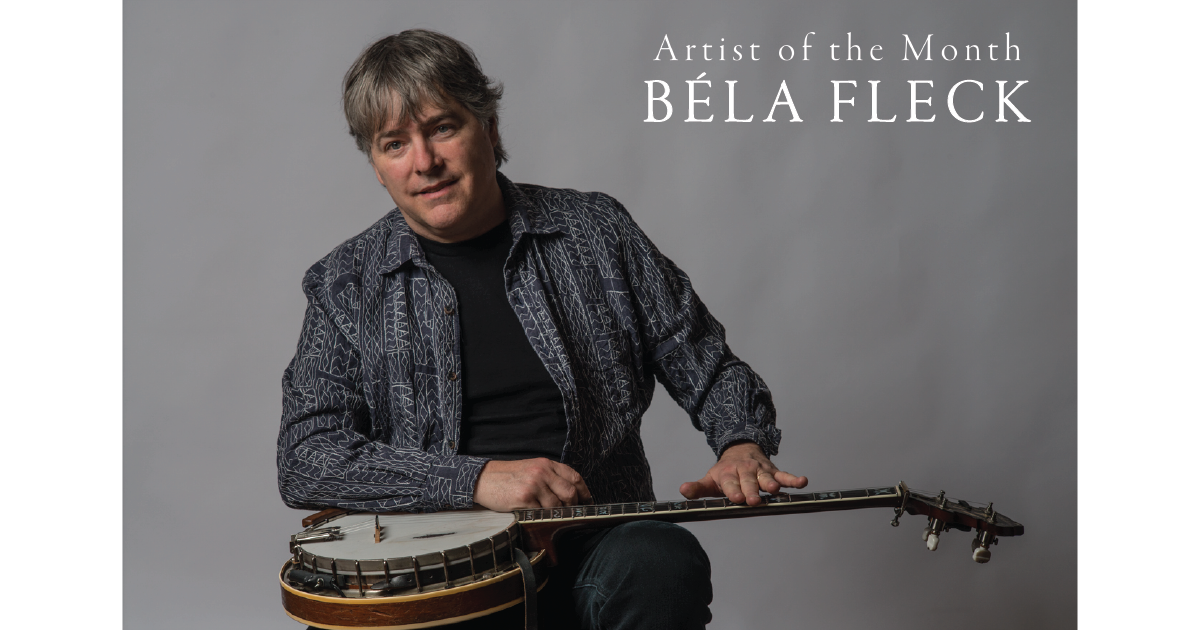
Editor’s note: Read about more about our Artist of the Month, Béla Fleck, here.


Photo credit: Alan Messer

New Grass Revival: Four Members Look Back on Their ’80s Albums (Part 2 of 2)

A beloved band that was perhaps ahead of its time, New Grass Revival will be inducted into the Bluegrass Hall of Fame during the IBMA Bluegrass Music Awards on October 1. In the second half of our oral history with New Grass Revival, we hear from band members Sam Bush, John Cowan, Béla Fleck and Pat Flynn. Read the first half of the interview, which is part of our celebration of the 75th anniversary of bluegrass.

In 1981, founding members Courtney Johnson (who died in 1996) and Curtis Burch left the band after a long tour with rock ‘n’ roll star Leon Russell. As a result, New Grass Revival began its newest incarnation with Béla Fleck and Pat Flynn.

Sam Bush: Courtney and Curtis were older than me and John and they were just burned out. We had worked harder on the road with Leon than we’d ever worked in our lives.

Pat Flynn: New Grass Revival had established a following on the circuit in the late ’70s, but Leon Russell had sucked them into his orbit and taken them away from the bluegrass world. So by the time that band [lineup] broke up, they really had to start over.

SB: I had met Béla in a band he played in called Tasty Licks, and Béla had hired me as the fiddler on his first album, Crossing the Tracks.

PF: Béla was a smart kid. He thought, “If I’m going to come out with a solo album and nobody knows who I am, why don’t I hire high-profile people to play on it?” That’s a smart move!

Béla Fleck: I liked the original band when I heard it, but I admit I was attracted to smoother and jazzier stuff at the time. I have matured a bit since then and now I am a huge fan of the early band, their bravery and iconoclastic spirit, and a poetic expression of their time and place. They were committed to the moment and improvising, and taking the music to a new place that resonated with a lot of folks who loved bluegrass, but it didn’t totally represent them.

SB: Pat and his friend Scott Myers had opened for New Grass Revival on the Colorado tours we did. We loved his guitar playing because it wasn’t like the bluegrass players. He was a rock electric guitar player that could do it on acoustic.

PF: I’d moved from Los Angeles to Aspen, Colorado, and got to know the band at Telluride. Sam had a hand in writing some songs, but they really didn’t have an in-house songwriter. I had always written songs for the bands I was in. And Béla brought a unique and original instrumental vision. So all of a sudden you had two new people that could supply original material.

SB: They were the two musicians who could bring the next step of another sound for us. I called Garth [Fundis, the band’s producer] and said, “You’ve got to come hear these new pickers we’ve got, this is something, this is really good.” I knew it was too hot for me to handle — I didn’t feel I was qualified to produce the four of us. We needed another ear, an outside opinion, because we had so many ideas between the four of us.

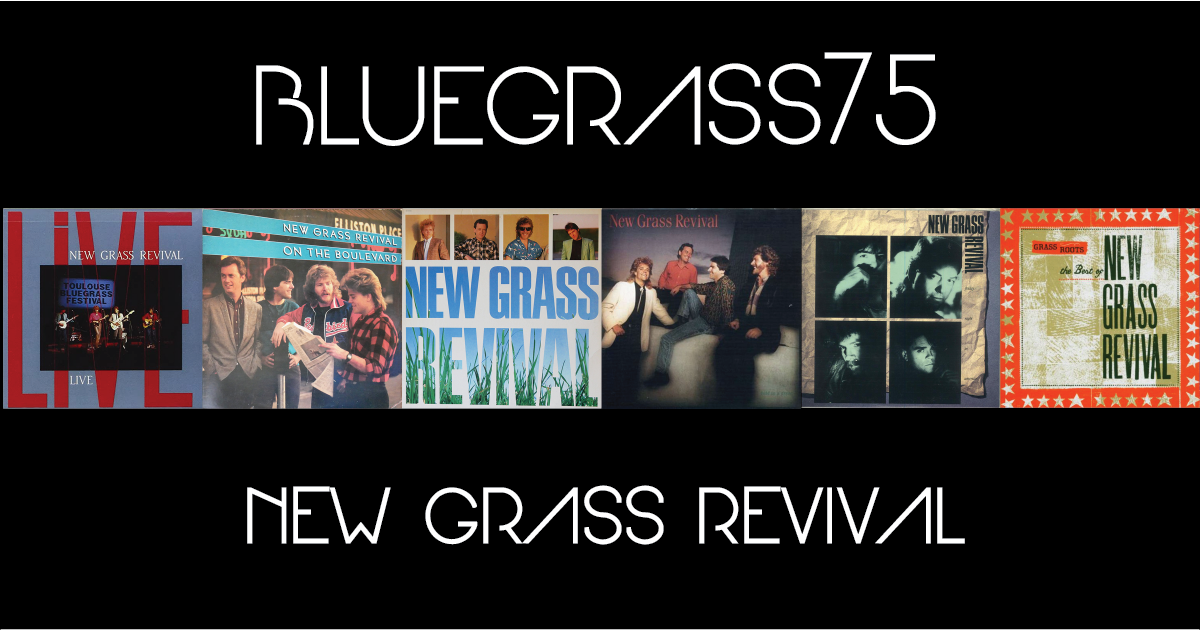
PF: On the Boulevard was the first album we released in the US, but we’d done a live album in France almost a full year prior. Technically Live in Toulouse was the first album we made as a new band.

JC: We’re playing like a well-oiled machine; it’s really a good record. It has one of Sam’s instrumentals on there called “Sapporo” that might be 11 minutes long!

SB: The idea of “Sapporo” started when the band went to Japan for the first time. It was my favorite city over there; it was also my favorite beer. A mandolin player over there taught me a five-note Japanese scale and that is a recurring riff you hear us play as we jam.

JC: The first year we were together with Béla and Pat, the energy and the love and everything was way up, confidence was high. And On the Boulevard is one of my favorites. There’s no drums, it’s just the four of us.

PF: It was very fresh. I remember the recording sessions at Jack’s Tracks studio in Nashville. We had a decent budget from Sugar Hill, enough to record comfortably and take our time. I experimented with different guitars and arrangements. We were able to bring the music into the magnifying glass of a studio and really look at it in depth.

JC: The dynamic of the band had changed so much, because Béla was already miles ahead of everybody in terms of his ability to play. He practiced all the time. In the old band, I was in charge of shoveling coal into the engine and Sam was flying around on top painting whatever picture he wanted to paint. Courtney and Curtis, they were kind of like myself, advanced support players. But now you’ve got two other players who can play at the same level of Sam. So we could take this train anywhere. We could get off the tracks.

PF: I had brought some songs with me to the band and I was very happy with “On the Boulevard.” I had written it prior to joining. It was pretty much autobiographical. I’d been living in Thousand Oaks, California, and there’s a boulevard that runs through the middle of the Valley, and as I watched it from the window it was like its own little world, a parade of passing people. It was one of the earliest things we worked out.

SB: My songwriting partner Steve Brines had died a sudden death of a heart ailment he didn’t know he had. So Steve was gone and I was still writing instrumentals, but I lost my enthusiasm for songwriting.

PF: I was especially happy with “One of These Trains,” the way the material came out, and the band took to it so naturally. I was encouraged that I was in the right place with the right people. I loved Sam’s instrumental “Indian Hills,” and John did a great blues number called “Just Is.” We were discovering each other’s powers and personalities as musicians and friends. I remember it very fondly. We were struggling for employment to connect with the old fans and that album was a big help — when it came out, we created a pretty big buzz.

SB: Toni Foglesong told her husband Jim, who was the president of Capitol Records Nashville, “I heard a band that makes a sound like nothing I’ve ever heard before.” So, Jim came to hear us and he said, “I want you guys to record. I don’t know how we’re going to sell you but I want you to be yourselves.”

Two studio albums followed: New Grass Revival in 1986, and Hold to a Dream in 1987.

SB: Every time new people joined, we encouraged them to bring their influences into the music. When Pat joined he was influenced by those Southern Californian songwriters like Jackson Browne, and the country-rock Telecaster picking he knew. One song where I specifically hear Pat’s southern rock influence is “In the Middle of the Night,” on the ’86 album.

PF: I was very involved in the country-rock sound like the Eagles and the Flying Burrito Brothers and the songs I wrote were well-fitted for a bluegrass approach. I didn’t have to make adjustments musically or lyrically, just in the area of arrangements. I had to make sure the songs I wrote had great solo spots for the instrumentalists and I had to fit the songs to whoever was singing, either John or Sam. So I started to instinctively shape my material where there was plenty of room for improvisational playing and also good range of vocals for those two.

BF: This band was full of guys with very different musical influences. If you didn’t want to be challenged, it was the wrong place for you. Some folks surround themselves with people that love all the same stuff they do, and that can work too. But in New Grass Revival, we were all into different stuff, which we brought to the band to see if we could get our favorite stuff included.

SB: Béla is a jazz player and when he came in his favorite musician was Chick Corea. I had his records, but they didn’t make so much sense to me until then.

BF: I think my interest in jazz gave me some cool tools to work with in a bluegrass context. I wrote a tune called “Metric Lips” [on Hold to a Dream], which was partly in jig time. I feel like that main melody had some Chick Corea influence. Sam was highly influenced by John McLaughlin and his great bands. One of them was Shakti, a collaboration with Indian musicians. This seemed to encourage his interest and ability in odd meters, which I also was quite fond of exploring. So if you look at “Metric Lips,” you have Irish music, Indian music, and fusion jazz represented, along with some raging bluegrass. It’s puzzling that it actually works, but in my opinion, it does.

PF: When you’re in a bluegrass band, it’s blend or die! You’re cramped inside a van together and you’re sleeping feet to nose. You’re in a very confined space together more than you are with your significant others back at home.

JC: We called our bus The Bread Truck. We’d bought it from a dry cleaning business. It wasn’t like the 36-footers I had in the Doobie Brothers; it was less than half of that, closer to a van.

PF: John slept half the time, I would be reading a book or writing a song, Sam would be listening to reggae or some weird eclectic thing, Béla was always fiddling with a new tune.

BF: For me it’s the intention and commitment to the ideas that make them work in this band. The same ideas might not work for a band that didn’t play so confidently. Of course we loved bluegrass and that was the common denominator. Each guy also played with a savage fervor or intensity, and perhaps that was another denominator.

PF: We could really charge each other up with the solos. We admired each other, and when somebody threw a flaming ball out there it would be a challenge. And in that exchange, gosh, we became so much better players. I remember listening back to tapes and thinking I lifted myself up and above myself. We all did.

BF: The new band with me and Pat was a somewhat cleaned-up version of the band. We still improvised and pushed hard, but we also were going for a supercharged, seamless tightness.

PF: The thing I remember that we developed between the first two albums was a hardcore consistency. We could turn it on and it would just come on full-bore despite whether or not there was a good sound system or the weather was bad or the crowd was sluggish. We could always count on each other to present a united front. There were no weak links. We just locked into that energy and never lost it.

BF: And we made singles for country radio, which is hard to imagine the early group doing.

SB: We knew we were going into a country market, but I think there’s a misconception that Capitol Records changed us, when in fact the change came from us. We were the ones that said, “We’ll try this song,” and maybe we wouldn’t have tried it in the past.

BF: We were still too out there for it to work, but we were trying to take the music closer into the mainstream, and that was bringing a lot of new people into the scene and showing them what bluegrass could produce.

PF: We would laugh about that in a sad way. The jocks would come to us and say, “I love your stuff, I listen to it at home,” and we’d say, “What about playing it on air?!” They’d say “Yeah, but it’s bluegrass….” We finally got “Callin’ Baton Rouge” into the top 40 which opened up a lot of shows and airplay for us. But we ended up disbanding before we could really bring that home.

SB: For our last album, Friday Night in America, Wendy Waldman became our producer and we really tried all kind of things on that. It’s hard for an athlete to know when to stop, but I really think our last record might be our best one.

PF: I saw a deepening musically. John’s vocals had got better and better, but he also doesn’t get the props for his bass playing. He was a terrific player — listen to his work on Friday Night in America, see how he connected the melodies, the tone he got and the way he tied together the four instruments. They would get noticed, but the glue was John.

SB: John and I had been together 15 years and we were burned out. We lived on the road and I was suffering responsibility overload. And we couldn’t possibly accommodate all that Béla was writing, the type of tunes he was writing. I physically couldn’t play them and neither could the rest of us! We all loved each other, but it was time for him to go on, he needed to express himself. Because at that point it’s not about making money, it’s about musical happiness and your satisfaction.

PF: We’d got together in 1981, and we played our last job as a band on New Year’s Eve, the last day of 1989. We were opening for the Grateful Dead at the Oakland Coliseum, 10,000 people inside and 5,000 outside. That night was particularly memorable — on the right side of the stage sitting nearest Béla was Bonnie Raitt, on the left side, near to me, was Jane Fonda — and I’d always thought what a shame we didn’t release that. Years later someone walked up to me and said, “Remember when you guys opened for the Dead?” I said yes. He said, “Have you got a copy of that set?” I said no. He said, “Do you want one?” A tape of our concert had leaked out among the Dead fans. I contacted a friend at Capitol Records and then that set was remastered and released on a two-CD set called Grass Roots, which has stuff you wouldn’t find on our records. It had its rough spots as a live tape, but you’ll hear that energy and visceral connection we had with each other on stage, you sure will.

(Editor’s note: Read part one of our New Grass Revival Bluegrass 75 feature.)