Alison Brown: Record Label Founder and Bluegrass “Lifer”

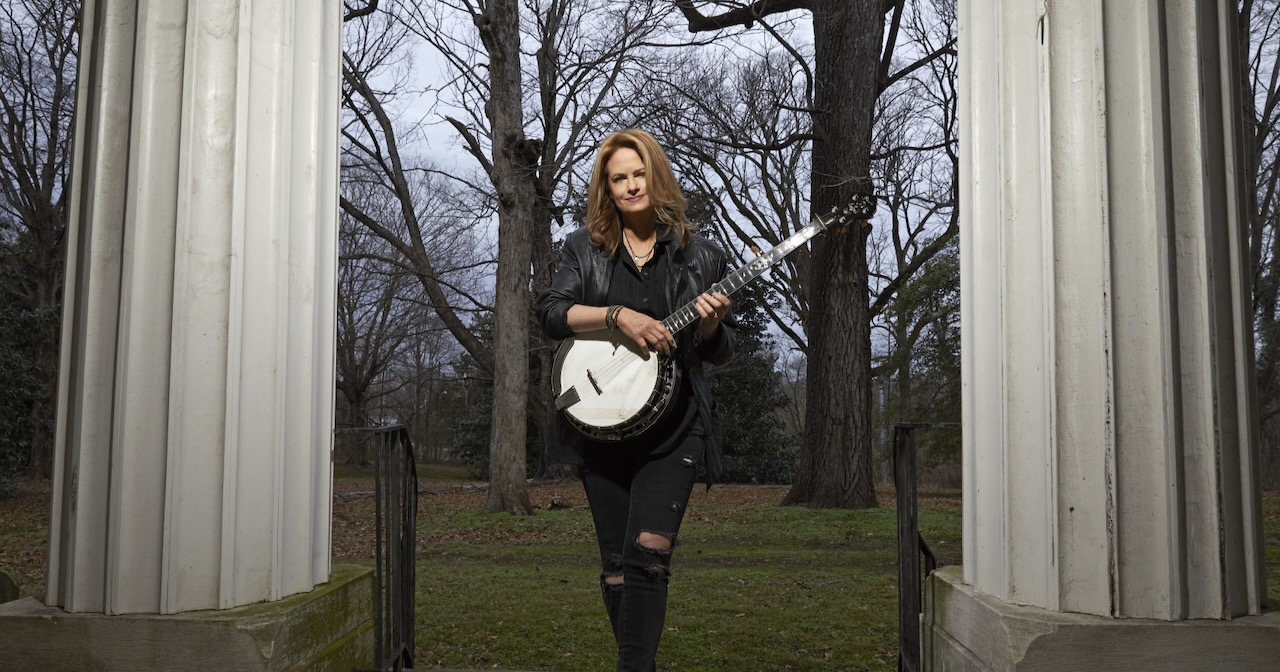
When a craftsman pauses to reflect, students of all skill levels benefit from the lesson. Alison Brown’s latest album, On Banjo, released May 5 on Compass Records and is a masterclass; it’s also a study on where the instrument has been and where it’s going.

Brown is a Compass co-founder and a GRAMMY Award-winning artist and producer. A self-described “lifer” in the bluegrass community and an IBMA “First Lady of Bluegrass,” she eagerly explores what the five-stringed instrument can do outside typical genre parameters. The new record is packed with star-studded duets with comedian Steve Martin, mandolin player and fellow First Lady of Bluegrass Sierra Hull, and fiddle legend Stuart Duncan.

The result is a varied, rich track list we couldn’t wait to ask Brown about.

BGS: Let’s walk through some of the tracks and collaborations on On Banjo. What kind of music inspired the duet with Anat Cohen?

AB: Anat Cohen is a clarinetist; she was born in Israel and lives in New York, but she’s well-known in jazz circles for Brazilian choro. I actually watched lots of videos of Anat on YouTube.

I reached out. I said “I know we don’t know each other, but would you consider doing this?”

What’s it like working with a famous comedian like Steve Martin in a musical context?

I’ve had the good fortune to go out and do some shows with him and Martin Short. There’s inevitably some time to jam in the dressing room, so it’s fun to play with Steve in that context, too.

Steve’s a great banjo player with a really beautiful touch and a delicate, sweet tone. He loves playing in double C tuning. Banjo players usually tune to a G, but you can drop the fourth string to a C and tune the second [string] up to a C. It’s an old tuning that clawhammer guys use a lot.

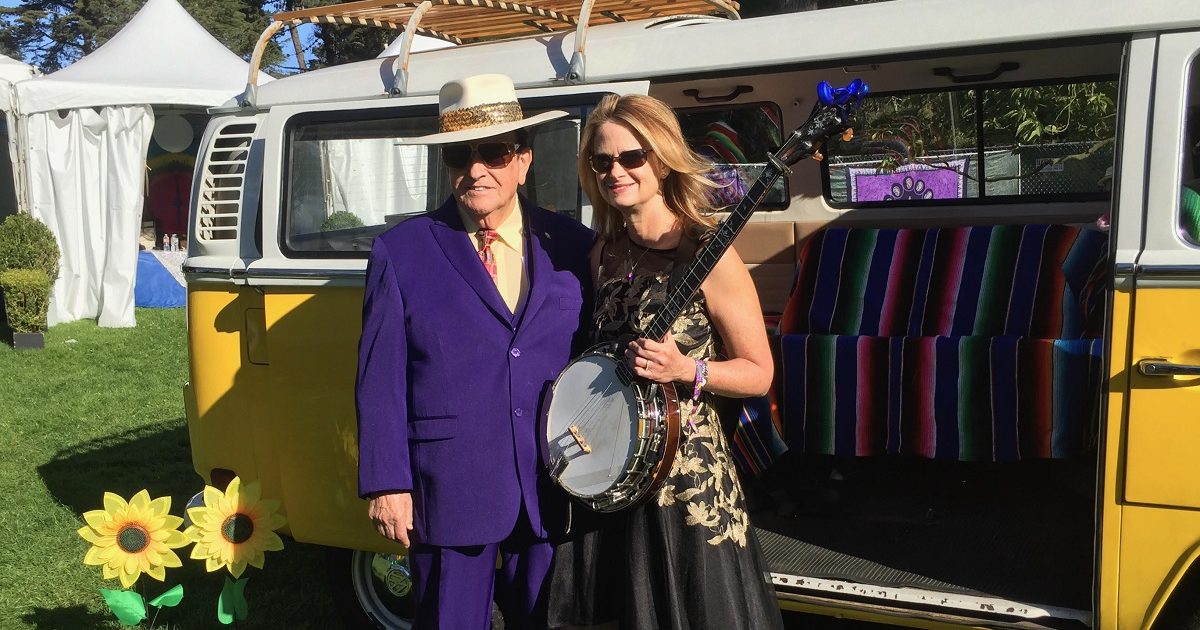
The way “Foggy Mountain Breaking,” came about is I wrote the A section. It was during the pandemic. I asked Steve, “Do you wanna write a B part?” He sent me a perfect B section 24 hours later. We figured out a bridge together. It’s named after a lyric in a John Hartford song and is obviously a riff on “Foggy Mountain Breakdown.”

How does it feel to work with younger bluegrass talents like Sierra Hull? Is it gratifying to have a feminine duo on that track?

I wrote that tune hoping Sierra would be up for learning and recording it with me. I’m a huge fan of her mandolin playing; she’s another one with such a delicate touch. Her fingers just really dance over the fingerboard.

It required her to play every fret on the first string of the mandolin and she did it flawlessly. She said she’d never had a chance to work on such complicated music with another woman. So it’s a really special thing. It’s always a delight to play with Sierra, but to do a duet with her was like chocolate and more chocolate.

How do you balance two strong, independent main instruments like banjo and fiddle together, such as with Stuart Duncan?

Banjo and fiddle are just so complementary. They say a banjo and fiddle make a band, and they do.

I’ve known Stuart since he was 11 and I was 12. We go way back. And on this tune I want to give a tip of the hat to Byron Berline and John Hickman. Growing up in Southern California when we did in the ’70s, those two were the guys that everybody worshiped at the feet of. I wanted to try and capture some of that spirit, and I wanted to do it with Stuart.

Who is this album for, and what do you hope listeners take away from it?

That’s the existential question of the banjo player. And it is a bit of a challenge when you take the five-string banjo and go somewhere else with it. Earl Scruggs perpetuated a style and brought it to the masses that was just so electric. Most people think that’s all the banjo does and they don’t worry about its history before that. There’s a lot of voices inside the instrument; the bluegrass one has become the loudest one most recently.

It’s so interesting because at the beginning of the 1800s the banjo was found on plantations. Then white people appropriated that music in minstrel shows, performing in blackface. It’s deep in terms of what it says about our history and America’s original sin.
It went from being a Black instrument to being a white lady’s instrument. The Black voice of the instrument and the female voice of the instrument were both disenfranchised. There are gorgeous old photos of women in the 1890s holding banjos, and there were female banjo orchestras. I’m excited to see that re-emerging.

You started Compass Records with Garry West almost three decades ago. What’s on the horizon, and what are your goals?

All the labels were run by business people, not musicians. We said, “Why can’t musicians run a label for other artists?”

The other part is really wanting to build a label that can have a cultural impact and Garry and I are both invested in roots music. I’ve been a member of the bluegrass community since about 10 years old. I’m a lifer. The whole economy of the record business has been turned upside down and stirred and shaken eight times. We want to make sure this music not only survives but thrives into the future.

You mentioned growing up in SoCal. How is bluegrass there different from Appalachia?

There would be Eagles’ songs in set lists. It was wide open. When I first came east with Stuart and his dad, we drove around and did the festivals in 1978 or so, but it was rooted in the first generation bands’ repertoire.

On that trip we entered a band contest in Oklahoma and we played something we learned from a Richard Green record. It was a funky fiddle thing in E. I remember somebody coming up afterwards and saying “We don’t appreciate you knocking the music.”

What did you learn while making On Banjo?

The deep dive to find new melodies, and that process of discovery of the instrument, is the process of self-discovery. You get to the end and it teaches you something new about yourself.


Photo Credit: Russ Harrington
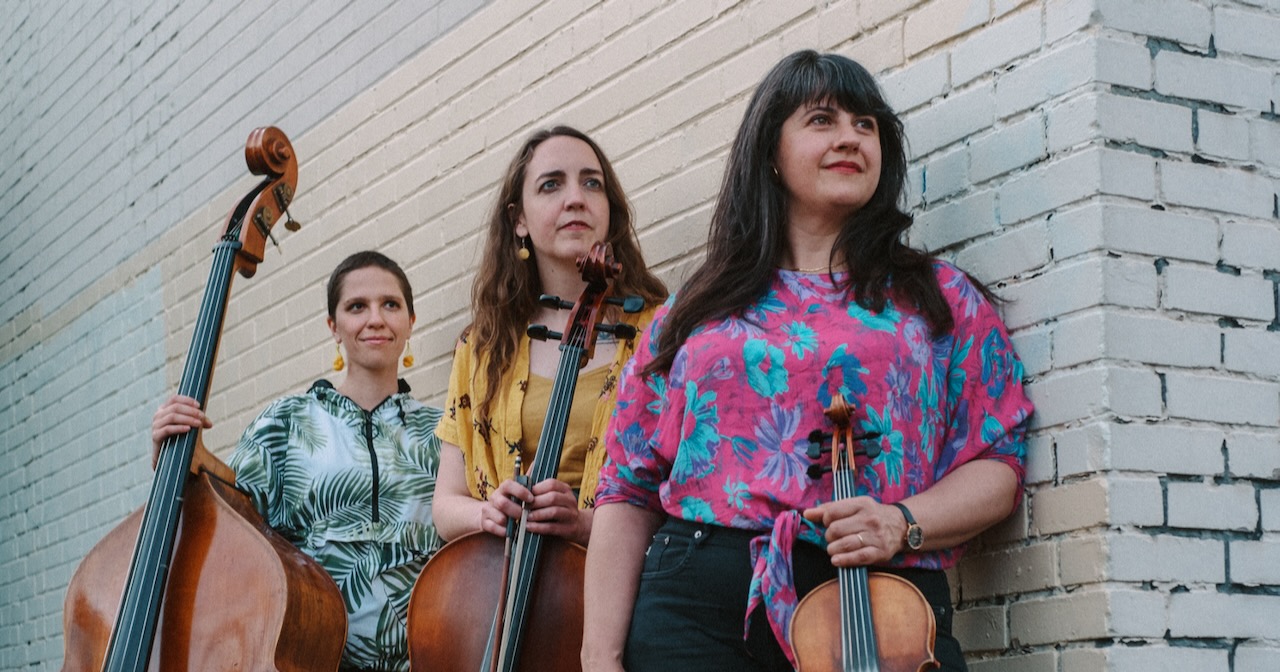
WATCH: Laura Cortese & the Dance Cards, “Three by Three”

Artist: Laura Cortese & the Dance Cards
Hometown: San Francisco, CA / Ghent, Belgium
Song: “Three by Three”
Release Date: April 28, 2023
Label: Compass Records

In Their Words: “…The song tells the story of a walk [my daughter and I] took together in early Spring 2021. I used her favorite syllables from an old Dutch children’s song in the chorus to see if she noticed. And … she did! The first time I sang it for her, she sang along. So naturally, we had her join in on the track itself.

“After the recording of ‘Three by Three’ in Colorado with Jayme Stone, we headed to Oregon on tour. While there, we were invited by boutique microphone maker, Ear Trumpet Labs, to take a tour of their workshop and film a video using their beautiful hand-built microphones. It had a been a rainy day, but just as we started to play, the sun came streaming through the big glass window at the back of the workshop.” – Laura Cortese


Photo Credit: Marc Ripper

WATCH: Missy Raines, “These Ole Blues”

Artist: Missy Raines & Allegheny, featuring Danny Paisley with Darol Anger, Shad Cobb, and Ellie Hakansan
Hometown: Short Gap, WV
Song: “These Ole Blues”
Album: Highlander
Release Date: Fall 2023
Label: Compass Records

In Their Words: “I found this gem of a tune while taking a deep dive into Loretta Lynn’s catalog. Loretta wrote the perfect bar room country shuffle, but I immediately thought it could be a great bluegrass crooner and I knew exactly who I wanted to sing it with – Danny Paisley! I grew up listening to Danny and his father, Bob Paisley, sing together. Danny’s high lonesome edge defines a lot of what is bluegrass to me. Recording this duet with him was a personal bucket list item checked off and everything about the song fits perfectly into the theme of my new album, Highlander, which should be out later this year.

“The project is about paying homage to the earliest sounds that inspired me and this version of ‘These Ole Blues’ feels both authentic and genuine to my very core. Rounding out the track are the triple fiddles of Darol Anger, Shad Cobb, and Ellie Hakanson as well as the other members of my band, Allegheny: Tristin Scroggins (mandolin), Eli Gilbert (banjo) and Ben Garnett (guitar).” – Missy Raines


Photo Credit: Natia Cinco

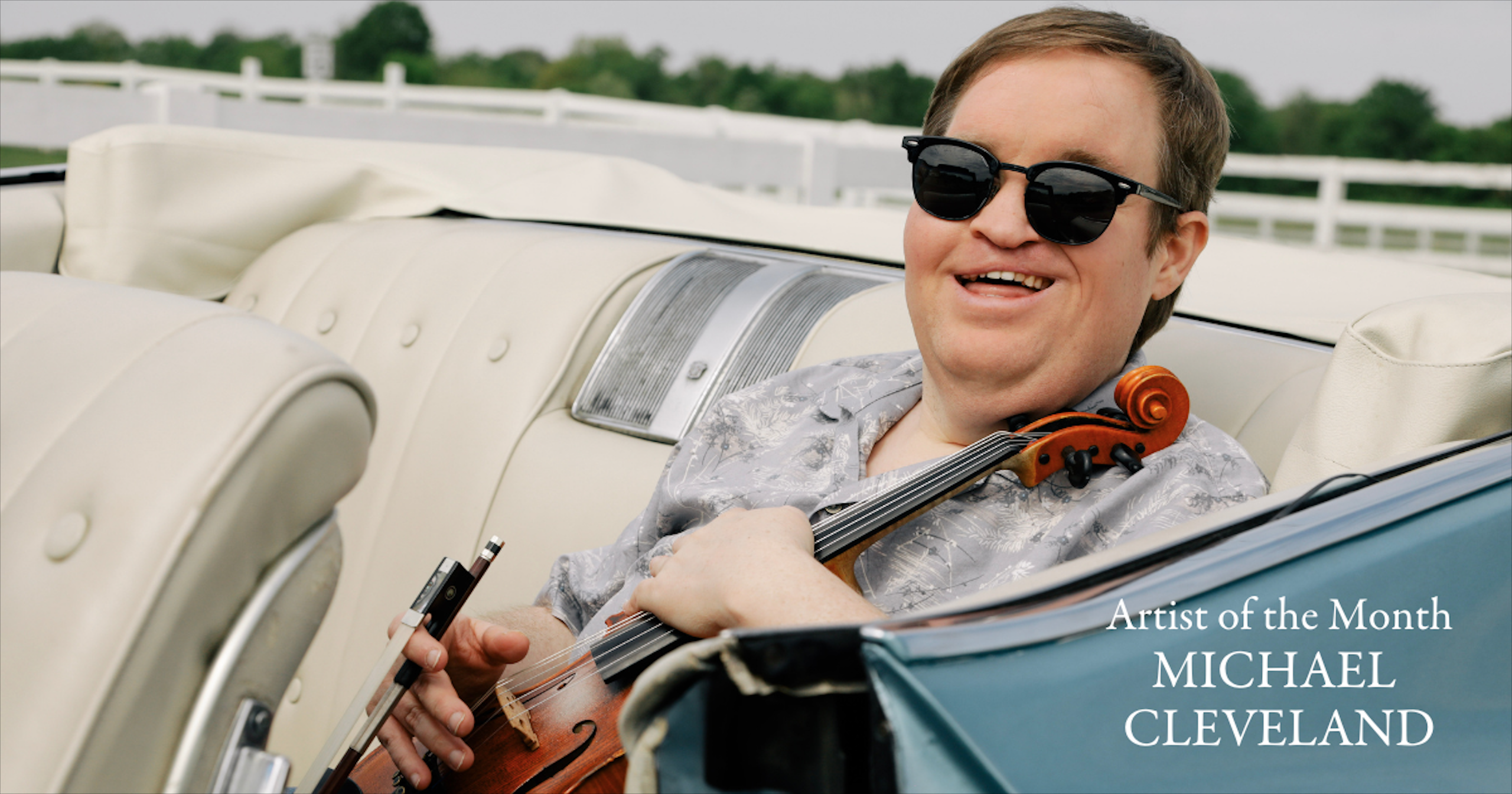
On ‘Lovin’ Of The Game’ Michael Cleveland Brings His Bluegrass Community to the World

The entire world is learning what the bluegrass community has always known: Michael Cleveland is a once-in-a-lifetime talent. Cleveland has long enjoyed critical acclaim inside the bluegrass circles he grew up in – he is a 10-time winner of the IBMA Fiddle Player of the Year Award – but, given this genre’s inward-facing bent, his fiery, impassioned playing has most often reached listeners and fans who are already diehard acolytes. 

Now, with his sixth studio release, Lovin’ Of The Game, Cleveland’s star is objectively rising. Recent collaborations with stratospherically famous pickers like Béla Fleck and Billy Strings – both of whom appear on the new project – along with several jaw-dropping viral videos have demonstrated to the world beyond bluegrass conferences and festivals that Cleveland is worth paying attention to. 

And it’s all thanks to his truly unique voice on his instrument. The American public, and roots music fans across the globe, understand rip-roaring fiddle just as well as they relate to a speedy banjo breakdown or a screaming, arena rock guitar solo. With every note Cleveland pulls from his fiddle, there’s a grit, an ease, endless emotion, and a winking sparkle that all at once conjure the aggression of Charlie Daniels and the tenderness of “Ashokan Farewell.” It’s infinitely appealing, even to uninitiated fans, and it’s a delectable gateway drug, a window into a vibrant instrumental tradition that most folks only interact with casually. With Cleveland’s playing, every listener is given permission to love the most elemental parts of bluegrass, old-time, and country music – and to feel like it’s something they discovered for themselves. 

They are certainly discovering it. Six albums down and Cleveland is continuing to put one foot in front of the other, with constant innovation and enthusiasm, and a long view that envisions endless opportunities for new albums, new collaborations, and new music to be made. All the while, he’s bringing hundreds and thousands of new fans into these rootsy genres. Michael Cleveland shows all of us how much joy – and fire – can be found in the Lovin’ Of The Game

This is your sixth studio release – it’s not a “sophomore album” or a third or fourth record, even – you’ve got quite a lot of miles under your feet at this point and have made quite a few albums. What’s your perspective at this point, looking back and looking ahead? 

MC: What I wanted to show with this album and with [the last album,] Tall Fiddler, is that I still love and will always play traditional bluegrass, but I can and like to do a lot more than that. I wanted to definitely show that on this record, because a couple of people that I talked to recently – Béla Fleck being one of them, I heard Béla say in an interview, “I wasn’t really sure if Michael would want to play with me.” And I thought, “Who wouldn’t want to play with Béla Fleck!?” It’s kind of a no-brainer! I get what he’s saying, though, in the sense that a lot of people are comfortable in what they do, they’re happy doing that, and they might not want to stray too far from that. That’s not necessarily the case with me. I wanted to have some different stuff on this record, a lot of traditional bluegrass, but some things that push the envelope a little bit and let people know that I do like to do more than just straight-ahead bluegrass.

As far as straight-ahead bluegrass albums, to be quite honest with you, the albums that I did early on – like Flamekeeper and Let ‘Er Go, Boys! – as far as straight-ahead bluegrass goes, those would be my favorite albums. Not because of anything that I did on those albums, but because of the band. The bands on those albums and the groove that they play is like no other. Audie Blaylock, Jesse Brock, Jason Moore, who we recently lost last year, Tom Adams, Charlie Cushman, and people like that – I dunno if there’s a way to top those albums. We could do different material, but the groove and the feel that those guys played is like no other. So, the thing is to do something that’s a little different from that.

I view your fiddling as so innovative and cutting edge; when we hear you play, we’re hearing your musical thoughts just pouring out on your instrument. You can be couched so firmly in “tradition” and still be innovative, but then on the outside looking in, when a listener isn’t necessarily a diehard bluegrass fan, your playing can feel just traditional. Now that you’re getting well-deserved notoriety not just in bluegrass, but further afield too, how does it feel to try to show people your musical perspective when traditional bluegrass means different things to different people? 

You know, that’s my favorite audience, and I think a favorite audience of my band, to play to. We like to play bluegrass festivals and we always hope to play bluegrass festivals, but man, I like to play bluegrass for people that have never heard it before. Any time I’ve ever done that it’s been well received. If it’s put in the right situation, like seeing what Billy Strings is doing now. He’s playing traditional bluegrass and thousands and thousands of people are hearing that that have never heard it before or would have never paid attention to bluegrass. 

We did a couple of shows with the Louisville Orchestra here. We’re talking the Kentucky Center for the Arts’ Whitney Hall. I think it held like, 2,400 people. And it was a full house! Some of them probably knew what bluegrass was, some of them were there to see us, but I would guess that a far larger number of people were there and probably didn’t know what bluegrass was or what to expect. It went like gangbusters! [Laughs] It really did. Any time I’ve been in a situation like that where bluegrass is presented to an audience that isn’t familiar with it, it’s great. That’s what I like to do more than anything these days. 

It’s hard to look at it objectively, given that it’s me, but it gives me hope that there’s a future for bluegrass. And that it’s not just the stereotype that people think of – that it’s Deliverance. I think mainly, it’s encouraging to see new people getting into it, whether it’s me or Billy Strings or anybody else. I think that’s a good thing. 

Bluegrass is so much about community, it feels like a family. Your albums are so collaborative, whether they’re centered on your band Flamekeeper or not. I sense your community represented so strongly on this record, you’re working with Jeff White producing again, you’ve got old and new friends on the record. But I also wanted to give you a chance to talk about Bill Wolf and Eddie Wells, friends of yours in music who recently passed on and you dedicated the album to.

For records like this, it’s so fun for me to not only get to collaborate with people that I’ve worked with in recent years, but to find the right song that would suit these situations. It’s one thing to have Billy Strings or somebody come in and sing something, and they could sing anything and it would be good, but to find a song that they can actually own and it sounds like something they do, that’s a little harder. My producer, Jeff White, he’s a huge help in picking songs. I have to say this time, we had a lot of good songs to choose from. 

The community thing– number one, I like to get my favorite players, people that I really enjoy playing with whether they’re a “name” or not. My buddy Cody Looper, he played on “Five Points.” I love playing with Cody. He played in my band for about a year or so and he has a job where all of a sudden he wasn’t able to get time off so he had to leave the band. We all hated it, and we still keep in touch and get together to play every once in a while. Anytime I can have him on something I like to do that, because he’s just so fun to play with. Like Lloyd Douglas on Fiddler’s Dream, he played banjo on that album. Lloyd is another one of those guys that maybe not a lot of people are aware of, but he’s just as good as a lot of the people out here killing it.

It’s about who will fit the song. That’s very important to me. It’s got to fit, whoever you get on it has gotta be somebody who can contribute to the song – not just a name. 

And you mentioned Bill Wolf and Eddie Wells, they’re two guys who I’ve probably known since I was really little. Oddly enough, I didn’t really get to know them until I was older. Then Bill, I think, retired from Ford around ‘96 or ‘97 when I had my local band and we started playing together. Those two guys, when I wasn’t on the road, through high school and even up until a couple of years ago, if I was hanging out and jamming at a festival or doing some local gig or having a jam at the house, those two guys would be there. I learned more about music, dynamics as a band, how to play together as a band, and singing trios from those two – Bill Wolf and Eddie Wells and my other friend Cecil Jackson, those three guys singing together was the best. They’d sing Country Gentlemen stuff like no other. I learned a lot and played a lot of music over the years with those two guys and they passed away really not too far apart from each other. I miss them a lot and I wanted to do this album in memory of them and as a way to say thanks for all I learned being around them and all the good times we had together. 

One song that really jumped out at me on the record is a special version of “Temperance Reel,” which I’ve heard Luke Bulla perform over the years. I love how Luke and Tim O’Brien’s voices are blending together on the track – I love how stripped down it is. Can you talk about recording that one? 

I had heard Luke Bulla sing that song a few years ago, I think it was in 2017. Jeff White and Laura White were married and Jeff asked me to be the best man at his wedding. I went down there for that and they had a rehearsal and the night of the rehearsal it was also Ronnie McCoury’s birthday, so there was a big picking party over at this house. Everybody was there. Just about everybody you can think of in Nashville who played bluegrass was there. Luke sang this song and I remember hearing it and really liking it. While working on the album, Jeff was doing a bunch of dates with Lyle Lovett and Luke was in the band. Jeff mentioned that Luke was singing “Temperance Reel” and I happened to ask, “Has he ever recorded that?” Jeff said yes, but he hadn’t released it or something like that. I knew it would sound good with three fiddles and it was my idea to keep it to just the fiddles, we just had to see if we could make it sound full enough to work. 

There’s something about Luke and Tim’s voices, they’re so reedy that they really sound like they’re blending with the fiddles and the bowing. 

It’s wild! I couldn’t be happier with how it turned out. I love not only Tim’s singing, but the part that he plays, the third part on the fiddle. It’s got this Celtic thing to it, too, that really added a lot to the whole track. 

What’s next? What are you excited for? I know you’re deep in the throes of releasing this album, and you’re gaining so much momentum and getting great national press …

Man, I don’t know what’s going to come of this but we’ve never had so much go on at the time of an album release. [Laughs] I’m thrilled about what’s happening so far. It’s already so much more than we would have dreamed of. It will be cool to see what happens. 

I do a lot of session work here at the house, people hire me to work on tracks and I’ve got a studio at home, so I record pretty much every day that I’m home. And the band has a pretty busy summer lined up and I’ve got some more dates with Béla Fleck and My Bluegrass Heart coming. Lots of stuff going on! And I’m working on some new projects that hopefully we’ll be able to tell you about pretty soon. 


Photo credit: Amy Richmond

LISTEN: Colin Hay, “Wichita Lineman”

Artist: Colin Hay
Hometown: Topanga Canyon, California
Song: “Wichita Lineman”
Album: I Just Don’t Know What To Do With Myself
Release Date: August 6, 2021
Label: Compass Records

In Their Words: “‘Wichita Lineman’ was the first song where I realized the importance of the written song, in and of itself. Before that, I had always put artists and songs together, like Bob Dylan, The Beatles, The Who, The Kinks, and many others, who all primarily wrote and performed their own songs. ‘Wichita Lineman’ spoke of things I could only wonder at. The geographical vastness of the land, the hopes and dreams of the man working the line, and indeed of all people who inhabit this country. And, a love story contained within achingly beautiful music and melody. I can’t think of a better song.” — Colin Hay


Photo credit: Paul Mobley

They’ve Got You Covered: 10 Tributes You Need to Hear

2020 was a year of many things – COVID-19, existential elections, the shuttering of the music industry, and on and on – but one common, non-catastrophic throughline of the musical variety was cover songs. Many musicians and artists, finding themselves with more free time than usual and more standard-fare albums and cross-continental tours back-burnered, took the opportunity to explore live records, collaborations, and yes, covers. From Molly Tuttle to Wynonna, livestreams to socially-distanced shows, covers became an unofficial pandemic pastime. 

Now, in 2021, many of these cover projects conceived and created in 2020 have made it to store shelves – digital and otherwise – and we’ve collected ten tributes worth a listen:

Shannon McNally covers Waylon Jennings

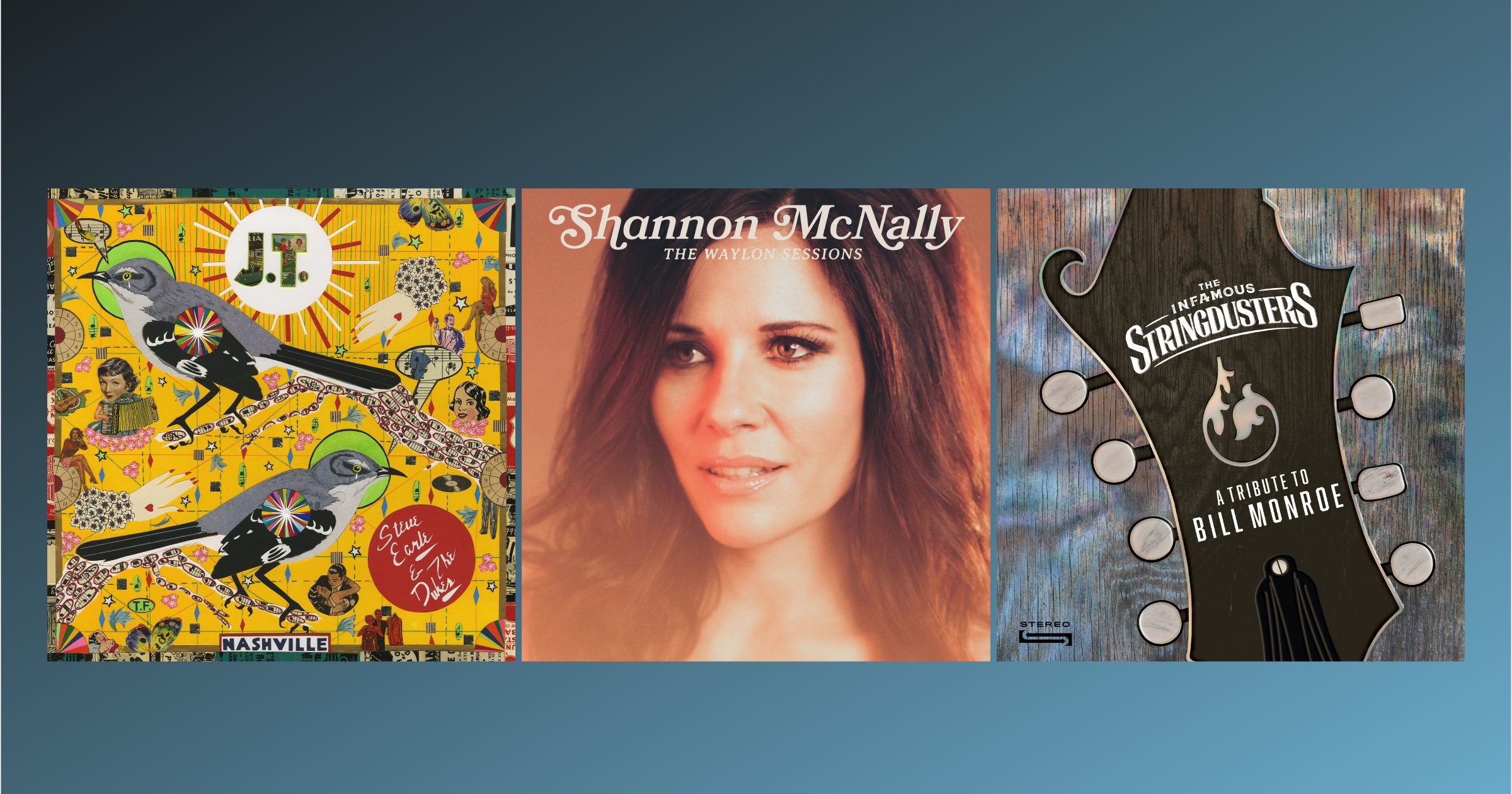
It’s fitting that Shannon McNally released The Waylon Sessions on Compass Records, whose headquarters now occupies “Hillbilly Central.” As Tompall Glaser’s former studio, the building helped give rise to country’s outlaw movement and it’s where Waylon himself recorded. With guests like Jessi Colter, Buddy Miller, Rodney Crowell, and Lukas Nelson, the project recontextualizes Waylon Jennings’ material, which is usually associated with hyper-masculine wings of the country scene. As McNally puts it in a press release, “What Waylon Jennings brought to country music is what country music needs right now, and that unapologetic and vulnerable sense of self are what women are tapping into artistically right now as the industry evolves.” 


Steve Earle covers Justin Townes Earle

Many a musical child has covered their parents’ catalogs in retrospect, but it’s rare that we see the reverse. A gorgeous, gutting, and laid-bare album, Steve Earle’s J.T. is a ten-song tribute to his son, Justin Townes Earle, who passed away suddenly in August 2020, shocking the Americana and folk communities. Earle’s signature emotion bristles and crackles throughout the project, giving Justin Townes’ songs an even stronger quality of visceral electricity. Proceeds from the album will go to a trust for Etta St. James Earle, Justin Townes’ daughter and Steve’s granddaughter. 


The Infamous Stringdusters cover Bill Monroe

Spread out from North Carolina to Colorado and beyond, the Infamous Stringdusters utilized home recording from their respective studios during the pandemic to accomplish musical creativity their jam-packed schedule hadn’t really allowed in the “before times.” Their brand new EP, A Tribute to Bill Monroe, returns the virtuosic jamgrass outfit to territory familiar to those who first found the group when they were cutting their teeth, striding out from traditional bluegrass into the vast, expansive newgrass-and-jamgrass unknown. The project illustrates that the true strength of this ensemble is found in utilizing traditional bluegrass aesthetics for their own creative purposes. For example, you might listen through the entire record without realizing the Stringdusters made a Bill Monroe tribute album without mandolin!


Mandy Barnett covers Billie Holiday

Mandy Barnett is a cross-genre chameleon; between her talent, her voice’s timeless Americana tinge, and her appetite for classics — from Nashville staples to the American songbook — she often finds herself reaching far beyond Music Row and classic country to R&B, standards, and in her most recent release, Billie Holiday covers. Every Star Above was recorded in 2019, pre-pandemic, and includes ten songs from Holiday’s 1958 Lady in Satin album – songs previously also covered by Frank Sinatra, Dinah Washington, and many, many others. The project feels akin to Linda Ronstadt’s pop and big band forays, never fully detached from Barnett’s country roots, but built atop their solid foundation. In another Ronstadt-esque move, Barnett partnered with recently departed jazz arranger Sammy Nestico; Every Star Above was the award-winning composer’s final project.


Charley Crockett covers James Hand

Country-western crooner Charley Crockett is truly prolific, having released nine full-length albums in the past six years. As the story goes, before his friend, acclaimed Texan singer-songwriter James “Slim” Hand passed away unexpectedly about a year ago, Crockett promised he would record his songs. “Lesson in Depression” captures the sly, winking quality of the best sort of sad-ass country, which isn’t burdened by its own melodrama. While it’s certain Crockett (as Tanya Tucker would put it) would have rather brought Slim his flowers while he was living, there’s a poignancy in how 10 For Slim – Charley Crockett Sings James Hand, like Earle’s J.T., immediately demonstrates how these impactful musical legacies will live on.


Lowland Hum cover Peter Gabriel

Lowland Hum’s album covering Peter Gabriel’s So — which they’ve cutely and aptly entitled So Low — began as a passing joke, but the folk duo of husband-and-wife Daniel and Lauren Goans followed the passion and fun that led them to Gabriel’s hit 1986 release, quickly unspooling the passing whim into inspiration for a full-blown project. “We already loved the iconic record, but in translating Gabriel’s melodies and otherworldly arrangements,” they explain on their website, “we fell even deeper in love with the songs, Gabriel’s voice, and his uncanny ability to fully inhabit both vulnerability and playfulness…” Their “quiet music,” minimalist approach is well suited to the material and the entire project is incredibly listenable, comforting, and subtly envelope-pushing.


Chrissie Hynde covers Bob Dylan

After The Bard released “Murder Most Foul” and “I Contain Multitudes” early in 2020 (and in the pandemic) founder, singer, songwriter, and guitarist for The Pretenders Chrissie Hynde was inspired to once again revisit Dylan’s catalog – a limitless fount of material with which she was already intimately familiar. Her new album, Standing in the Doorway, features nine Dylan tracks recorded with fellow Pretenders guitarist James Walbourne – almost exclusively via text message – and for their coronavirus YouTube video series. Hynde opts for deeper cuts, showcasing her affinity for swaths of Dylan’s career often overlooked by other would-be cover-ers. This classic, “Tomorrow is a Long Time,” feels appropriately sentimental and longing, a perfect encapsulation of the day-to-day of the realities of the pandemic, filtered through a Bob Dylan lens and Hynde’s distinctive voice. 


Various Artists cover John Lilly

John Lilly is a songwriter’s songwriter. Based in West Virginia, his original music has been covered by modern legends like Tim O’Brien, Kathy Mattea, and Tom Paxton. April In Your Eyes: A Tribute to the Songs of John Lilly gathers various artists from the folk, old-time, and bluegrass communities – in West Virginia and otherwise – spotlighting the incredible depth and breadth of Lilly’s catalog. The title track is stunningly rendered by Maya de Vitry and Ethan Jodziewicz, who were connected with Lilly originally through West Virginia’s iconic old-time pickers’ gathering affectionately referred to as “Clifftop.” Paxton, O’Brien, and Mattea all make appearances on the project, as do Brennen Leigh & Noel McKay, Bill Kirchen, and many other members of Lilly’s musical family and inner circle, giving the project an intentional and intimate resonance.


American Aquarium cover ’90s Country Hits

BJ Barham’s American Aquarium dropped a surprise album, Slappers, Bangers, & Certified Twangers: Volume One in May. Featuring ten covers of some of the band’s favorite ‘90s country hits, it’s a dose of all-star-tribute-concert packaged in a pandemic-friendly stay-at-home-form – and available on John Deere Green vinyl, of course. One particularly sad casualty of the coronavirus pandemic has been these sorts of musical nostalgia bombs – when was the last time any of us attended a theme night or tribute show at say, the Basement East in Nashville or Raleigh, NC’s The Brewery? – and Slappers, Bangers, & Certified Twangers has us in the mood to attend the first ‘90s country covers live show possible now that things are finally reopening.


Various Artists cover John Prine

A year without Prine seems far, far too long to travel with such a Prine-shaped hole in our musical hearts. But his presence and legacy certainly still loom large; the Prine family has announced “You Got Gold: Celebrating the Life & Songs of John Prine,” a series of special concerts and events held across various venues in Nashville in October. Oh Boy Records is also planning to release a new tribute record, Broken Hearts and Dirty Windows: Songs of John Prine, Vol. 2, to coincide with You Got Gold. The first two tracks from the project that have already been unveiled feature Sturgill Simpson performing “Paradise” and Brandi Carlile’s rendition of “I Remember Everything,” which you can hear above. Each month until October, the Prine family and Oh Boy will release another song from the project, unveiling special guests who each pay tribute to Prine, his songs, and the enormous vacuum his loss has left in the roots music industry.


LISTEN: The Bittersweets, “Livin’ on the Edge”

Artist: The Bittersweets
Hometown: Nashville, Tennessee
Song: “Livin’ on the Edge” (Aerosmith cover)
Release Date: June 11, 2021
Label: Compass Records

In Their Words: “After wearing this record to death as a kid and subsequently growing away from it, ‘Livin’ on the Edge’ came on the radio at some point during the last year and we looked at each other and said, ‘Oh my gosh — this could have been written in 2020.’ We set out to create a version of the song for today, converting a ’90s Aerosmith hard rock song into a meditative acoustic folk ballad. And we must meditate on these important questions. From the persistent fight for racial justice to the pandemic to the eventual storming of the Capitol, it really feels like we are all living on the edge right now, staring at a precipice that will either remind us who we are or ultimately be our demise.” – Chris Meyers, The Bittersweets


Photo credit: Fairlight Hubbard

LISTEN: Shannon McNally, “This Time”

Artist: Shannon McNally
Hometown: Long Island, New York
Song: “This Time”
Album: The Waylon Sessions
Release Date: May 28, 2021
Label: Compass Records

In Their Words: “‘This Time’ was written by Waylon. He didn’t write all of his songs. In fact, he probably didn’t write most of them, but the ones he did write were his best. I believe he was talking about a personal relationship with a lover, but as I sing it, I think of it as my relationship to the music business and my personal struggles with it as a woman and an artist. I particularly love the Wurlitzer intro and how the kick drum and acoustic guitar come in sounding like a sunny day. All of Waylon’s grooves remind me of horse gaits. This one is a full canter and the harmonica is the river running beside it. This song is the high point or key to me getting into the headspace that permits me to sing the rest of the album. For me there is relief in its directness. It’s my favorite song on the album.” — Shannon McNally


Photo credit: Alysse Gafkjen

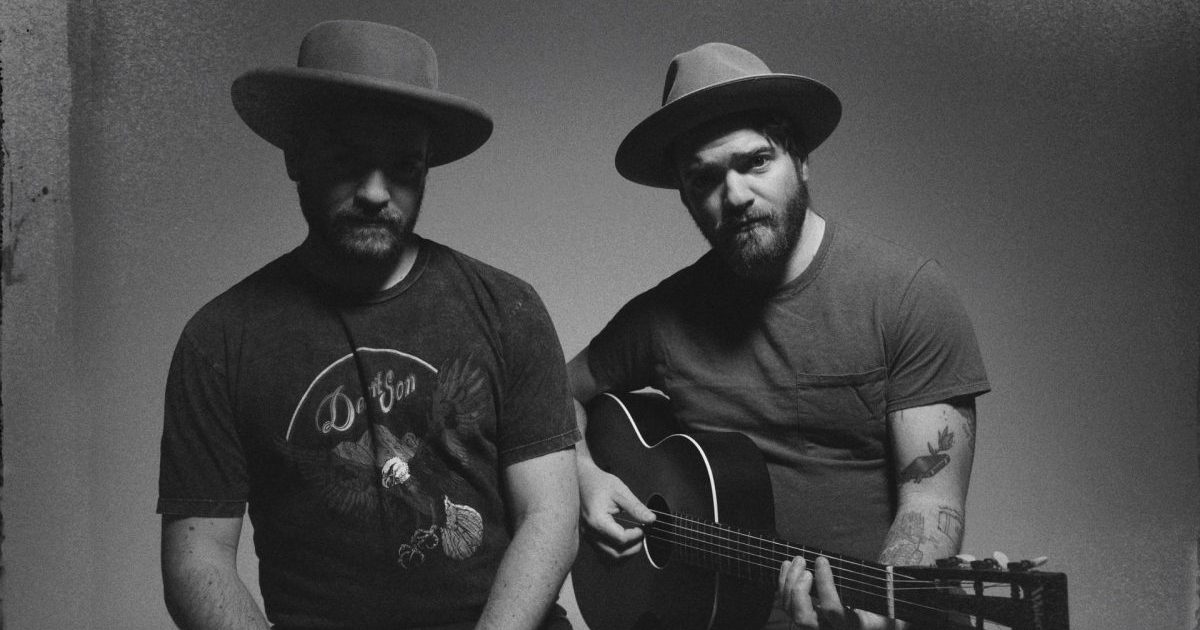
BGS 5+5: The Brother Brothers

Artist: The Brother Brothers (Adam and David Moss)
Hometown: Peoria, Illinois
Latest Album: Calla Lily (out April 16, 2021, on Compass Records)

Which artist has influenced you the most … and how?

If I have to pick one, which is quite difficult, I’d have to pick John Hartford. I constantly admire, rediscover, and celebrate the effortlessness with which music and words flow out of him. When he writes, he writes about what he knows, and we are convinced to join him in his love of steamboats, old time Nashville, and so many other things that I’d normally walk on by. His musicality is so honest and of himself, and damn, it just sounds so good. He doesn’t subscribe to any “rules” and yet he’s so completely inside a style. — Adam

What other art forms — literature, film, dance, painting, etc. — inform your music?

I have done a fair share of composition for dance, which has opened a whole new universe of creativity to me — the idea that movement, once catalogued, becomes an intentional means of expression has such a real and vibrant quality that no other art form can ever hope to encapsulate. Working with ballet dancers is amazing because the rigid tradition and pure athleticism of the art form creates an amazing palette that can really get inside different kinds of music, and the creativity flowing from choreographers of modern dance in NYC and around the world is just something so otherworldly but yet incredibly accessible. For some reference, I would recommend Batsheva Dance Company and the surrounding tradition of Gaga, and Nederlands Dance Theater. And of course the ever famous and incredible stewards of George Balanchine, the New York City Ballet. — David

Which elements of nature do you spend the most time with and how do those impact your work?

This last year we’ve both been displaced by the pandemic and as a result have continuously traveled. Now, David is living with his fiancée and their dog in a scamp trailer, spending every day entirely surrounded by nature. I’m currently living in California and surfing every day. When you make your life in nature, you can’t help but let the waves and your wetsuit influence your rhythm and rhyme. The sunset is an impossible thing to describe, but we can keep trying. — Adam

What’s the toughest time you ever had writing a song?

There isn’t really such a thing as “a tough time writing a song,” in my experience. Songs, for me, are things found and worked out. If the process feels difficult, it usually requires waiting and trying different avenues. If you asked, “What is the longest it’s taken to write a song?” The answer would be a very very long time. — David

Since food and music go so well together, what is your dream pairing of a meal and a musician?

Honestly, I can’t imagine a better pairing than Russ & Daughters’ smoked fish spread and dancing to one of the hottest klezmer bands in NYC. Second only to that would be another trip to Lafayette, Louisiana, to spend another weekend at Blackpot Festival, hanging with our Cajun friends down there, playing music and eating the contest-winning gumbo, jambalaya, and gravies of the year. — Adam


Photo credit: Shervin Lainez

LISTEN: Bobby Osborne, “White Line Fever” with Alison Brown and Special Guests

Artist: Bobby Osborne (feat. Alison Brown, Stuart Duncan, Trey Hensley, Sierra Hull, Tim O’Brien & Todd Phillips)
Hometown: Hyden, Kentucky
Song: “White Line Fever”
Release Date: March 26, 2021
Label: Compass Records

In Their Words: “When I first heard ‘White Line Fever’ it was a ballad-type song. When Alison discussed it with me, she said she wanted to do it in a bluegrass style. It’s a great song, and I enjoyed recording this version for Compass Records. I hope everyone also enjoys ‘White Line Fever’!” — Bobby Osborne

“On his birthday last year, I asked Bobby if he thought it would be fun to record a version of ‘White Line Fever’ which he was totally up for doing. The song was a hit for Merle Haggard who cut it in late 1960s with a mid-tempo country feel, but it always seemed to me that it would make a great bluegrass song. As Garry West (co-producer) and I started working on the re-arrangement we felt like it was missing a second verse, so we asked Jeff Tweedy if he would be up for writing some lyrics to tell the story of Bobby’s 60-plus year career on the road. He came up with the perfect handful of lines with nods to Bobby’s Kentucky roots and Ohio ties. We got some of our favorite bluegrass collaborators to cut the song (Stuart Duncan – fiddle, Sierra Hull – mandolin, Trey Hensley – guitar and harmony vocals, Todd Phillips – bass, Tim O’Brien – harmony vocals, with me on banjo) and, once we heard Bobby’s incomparable vocal in the track, it was hard to believe the song hadn’t been a bluegrass standard all along.” — Alison Brown


Photo credit: Jay Blakesburg