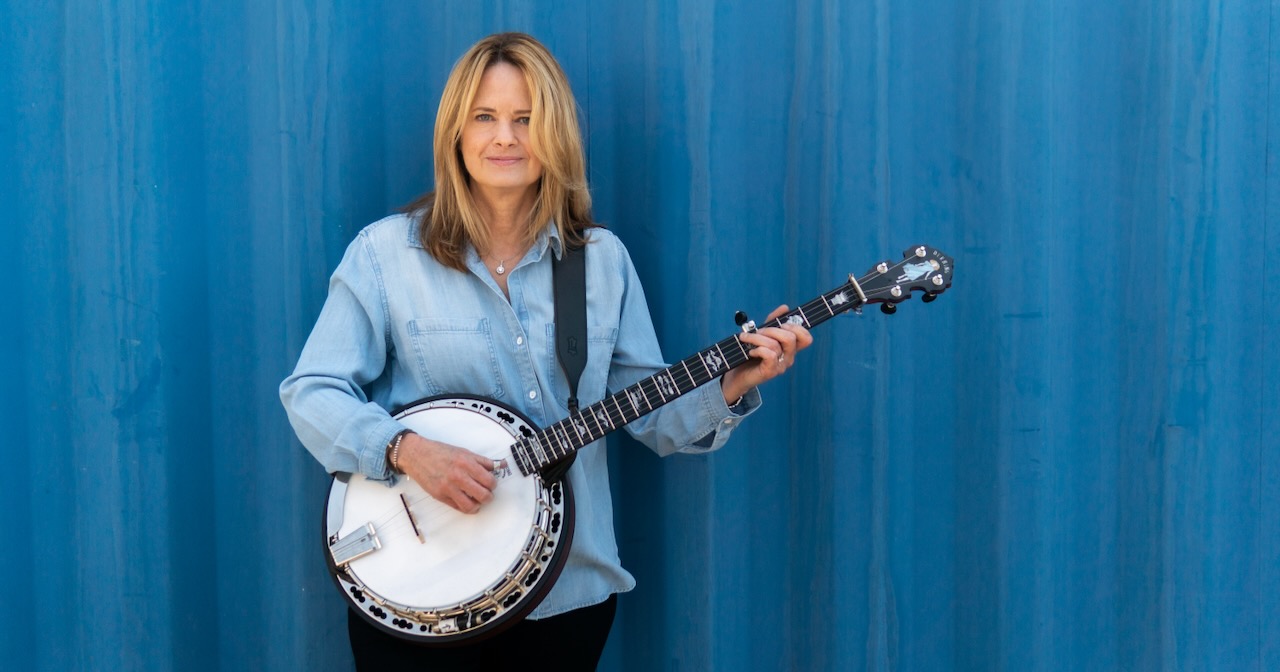
First & Latest: 34 Years Later, Alison Brown Still Finds ‘Simple Pleasures’ on Banjo

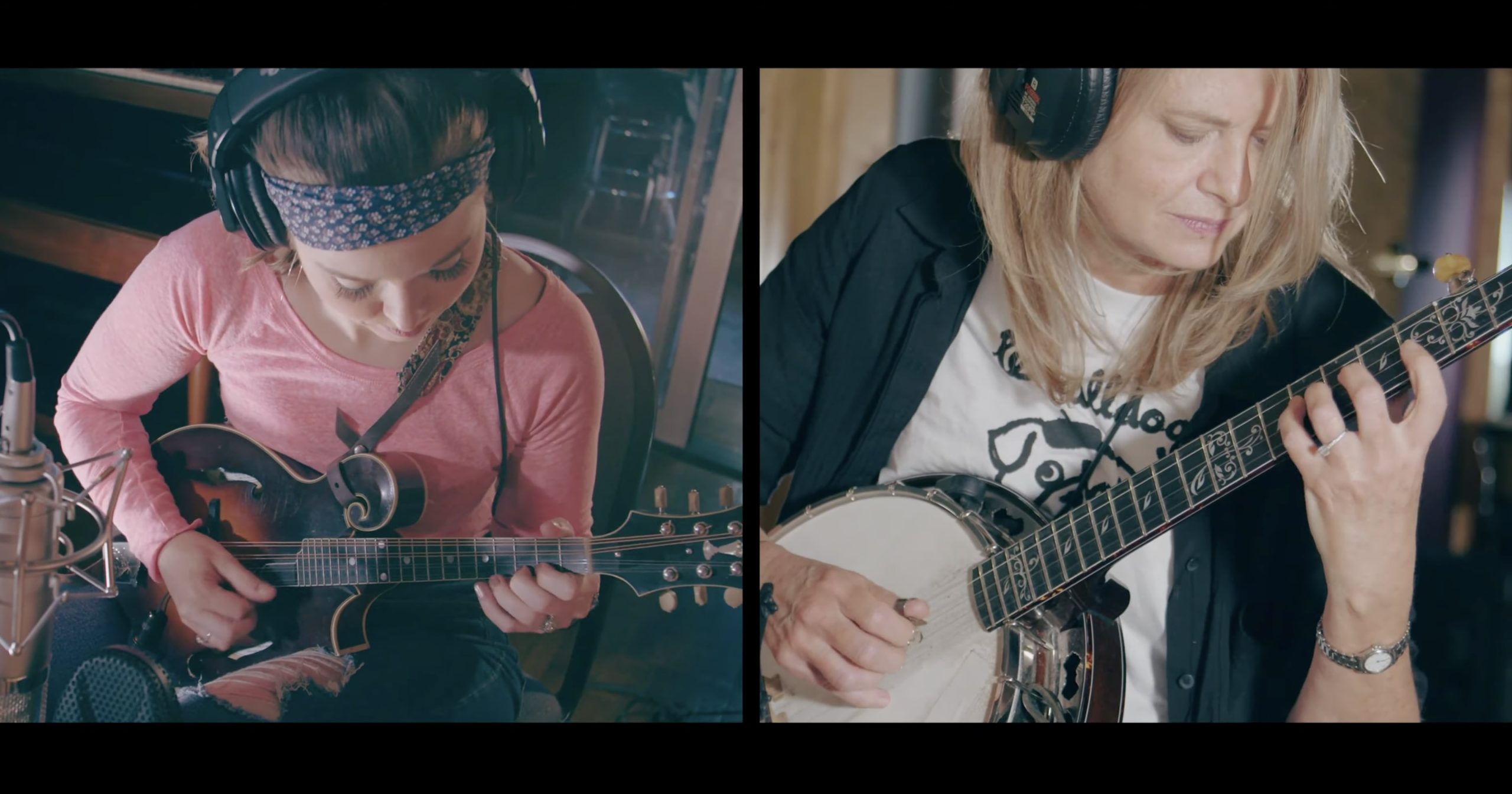
In 1990, when banjo player Alison Brown released her debut album, Simple Pleasures, she had no idea where her career could or would lead. GRAMMY nominations, IBMA Awards, touring and performing with Alison Krauss, Michelle Shocked, the Indigo Girls, Steve Martin, and many more, founding a record label that would become a keystone in roots music – none of these impressive accomplishments were on her horizons, literal or hypothetical. Brown just wanted to play the banjo.

She had recently left her job in investment banking and wanted to give her musical career a legitimate go of it. Tasking herself with intentionally writing an album’s worth of original tunes, over the years from 1988 to the project’s release on Vanguard Records in ‘90, Brown pushed herself sonically, aesthetically, and compositionally. The result was demonstrably spectacular and effortlessly cutting-edge.

Simple Pleasures, which was produced by David “Dawg” Grisman and included Alison Krauss, Mike Marshall, Joe Craven, and more among its cast of collaborators, would help launch Brown’s now decades-long career as a bluegrass and roots music multi-hyphenate and business leader. Simple Pleasures broke the ground, fertilized it deeply, and helped cultivate one of the most innovative and forward-looking careers ever accomplished by a five-string picker.

Now, some 34 years after its original release, that debut album has been reissued – on vinyl and digital, with a handful of digital-exclusive bonus tracks recovered from a cassette tape of demos. The project is a delightful time capsule and a perfect representation of the vast and varied musical ground Brown has covered over the intervening years. She may not have known it then – she readily admits, as a picker in her twenties, she was just taking this “banjo thing” day by day – but Simple Pleasures would lay the groundwork for all of her many successes in the music industry and in bluegrass.

For a special edition of First & Latest, we spoke to Alison Brown by phone about her first release and her latest – which just so happen to be the same album, the original and the new reissue. It’s essential listening for bluegrass, banjo, and roots music fans.

Simple Pleasures was originally released in 1990, 34 years ago. I wanted to start by asking you about your frame of mind now versus then, about what’s changed in the interim. What’s changed regarding how you view yourself as a creator and as a banjo player? Looking back, in retrospect, do you recognize the person you were then? What do you remember about your frame of mind when you first put the album out?

Alison Brown: It was this time in my life during which I was writing this music and then trying to get a record deal; I had just left my investment banking job and had taken this bizarre leap of faith, which I didn’t necessarily get a lot of support for. My parents weren’t saying, “Hey, I think you should quit your investment banking job to play banjo.” [Laughs] It really was a leap of faith.

I just couldn’t stop thinking about the banjo. So, I gave myself the challenge of seeing if I could write an album’s worth of music that would hold up and just try to make a record. And then, in the course of working on that, I wrote these tunes and joined Alison Krauss & Union Station. By the time we recorded the tunes, I’d been in her band for a year. I was really at the beginning of what has become my career path since then, but when I was doing it, I didn’t really know how it would be received or if it would get any props or even if it would be any good. All the validation that came on the heels of releasing this, and then everything since then, has made me a much more confident musician than I was when I wrote the music and recorded the record.

Before this album, were you already writing tunes? Was that something that you always did? Or was this an intentional practice shift for you? Was making an album of your own tunes something you had always been working towards or was it part of that purposeful transition from investment banking to banjo?

That is a really good question. I had never written much music up until that point, but I’d always wanted to. Stuart Duncan and I did a record called Pre-sequel. That was like a teen record, but we had a couple original tunes, stuff like “Possum Gravy on Grandma’s Beard” and “The Great Lasagna Rebellion.” It was like teen stuff.

Anyways, I really had wanted to challenge myself to see if I could write some “real music” – that isn’t really quite the right word, but some more substantial tunes and some tunes that really took the instrument maybe to a new place, which took my voice to a new place. That was a lot of this exercise and those 12 tunes. I didn’t know if I could write them or even if they would be any good, but that was like the beginning of this kind of process of self discovery.

When you look at the credits list – Mike Marshall and David Grisman and Alison Krauss and more – you can see some of the fingerprints of you and your community, but it was a kind of a longer process of you writing and getting to the point of recording, right?

I’m trying to remember… yeah, probably from the time I started writing the tunes was maybe middle of 1988 and then we recorded them beginning in 1990. So yeah, there was definitely some time in there–

Was there some extrapolating in your head of, “What are these songs going to sound like? Who is going to play them?” What do you remember about deciding on how you were going to make the tunes and who was going to make them with you? Because I have a feeling that was just as important a part of the process as having the material to record.

Once the door opened for me to work with David Grisman, to produce the record and play on it, then I was pretty much like, “What do you think, David?” But I knew I wanted to have Alison on the record and I knew I wanted to have Mike, ‘cause I love his music no matter what he’s playing. I’m the head of the “Mike Marshall Plays Guitar Fan Club.” [Laughs] I love his guitar playing. And Mike was in the Bay Area, so that made perfect sense.

But then, in terms of bringing in the flute or percussion, I hadn’t really thought about those things. When I listen to this record now, it’s surprising really how much of a footprint the record created for what we’re doing now. ‘Cause we’ve got a rhythm section and flute in the band. In some ways, it feels like after all this time we’ve come full circle, at least back to the seed that record planted, sonically, for the music.

That’s so interesting, to be able to look back and trace that throughline, when at that point it may have felt like a one-off to have those instruments and those styles represented in the music. And now it’s present through lots of your work.

Yeah, it is really interesting. There’s obviously things that weren’t included [on Simple Pleasures]. We’ve had piano in the band pretty much since the beginning and we didn’t have piano on that record, obviously. But I don’t know, somehow that doesn’t seem as much of a template thing, the idea of percussion elements and certainly the flute. David really brought that – and the idea of incorporating cello. I’m not sure I was really thinking about those things. My thinking was probably more in the bluegrass-rooted box.

One of the things that’s definitely changed from the original Simple Pleasures to the reissue over those 30-some years is these bonus tracks that you’ve added – such a time capsule. I wanted to ask you about their… I want to say provenance, but I don’t mean to be that formal. Like, how did you hold onto the demos over time, did you always have them in your back pocket?

You know, as we were working on re-master I kept thinking I knew I had a cassette of the demos. I just dug around and I found it! That’s where the actual takes came from, but that between-take talking, to me, is my favorite part of the whole thing. Just hearing Mike and David and Richard Greene, who produced those demos, talking to each other – I just think that’s the coolest thing. That came off the 2-inch tapes that we had. But the 2-inch tapes, we didn’t have the final mixes of the demos. So, it just worked out that we dumped the cassette tapes into this computer and tried to sweeten it a little bit and that’s what we used.

Looking back, this was a big transition point for you with a GRAMMY nomination, winning IBMA Banjo Player of the Year as the first woman to win an instrumental award. Of course this would end up a seminal album and was a really important kickstart for your incredible career. But at that point, back in 1990, were you worried about it? What was your frame of mind as far as expectations for what this album could do and where it could go?

I’m sure that I had no expectations. [Laughs] It was just something that I really wanted to do myself. I wanted to see, could I write a bunch of music and would it stick together? And, can I get some great people to play on it? I was just happy that all those things came together and I got it on a label.

It was just so cool to be on Vanguard Records. The Welk Music Group had bought that catalog and they had just started signing artists. I was one of the first artists they signed to the Vanguard imprint. All that was enough, but then to get a GRAMMY nomination was completely a surprise. I didn’t expect that at all, or the IBMA recognition. That validation was huge, obviously, and it would be for anybody, but for me it was just so huge. I actually took my parents with me to Radio City Music hall for the GRAMMYs and that went a long way toward them accepting my career 180. [Laughs]

It seems like this was definitely proof of concept for, “I can do this banjo thing. I can make banjo records. I can do this as a career.”

And in retrospect, I completely agree. In the moment, none of those things [were certain]. That’s what they say, “Hindsight’s 20/20.” And that’s so true; when you’re in the moment, you just don’t know how it’s going to turn out. Then it turned out great! I feel so lucky every day that I get to play music or create music or help somebody else create music, all that is just such a gift. Because it was not a foregone conclusion, I could easily have gone back to investment banking or something else with my tail between my legs. I’m just so grateful that isn’t the case.

At this point in your career, people think of you as a multi-hyphenate, as somebody who runs a label, is so active in the industry, and picks a really mean banjo. But this project predated Compass Records by several years. Were you already planning that sort of multi-prong, multi-hyphenate approach then? Or do you think it would be a surprise to 1990 Simple Pleasures Alison that you are the multi-hyphenate you are now?

Yeah no, I did not know it was [in my future], I think I was really just taking it a step at a time. At that particular point in time, my goal was just to write tunes and play in Alison [Krauss’] band. Then, when I left her band, I was really at this juncture again. My parents kept saying, “We really think you’d enjoy going to law school!” I was on the edge of applying to Vanderbilt Law School when I got a call from Michelle Shocked looking for a band leader for her world tour in 1992.

So no, I definitely didn’t have the multi-hyphenate, as you put it, plot hatched at all yet. That’s really something that came during that time that I spent with Michelle and then Garry West, who was playing bass in the band [with her as well]. We connected on a personal level, on a business level, and we started talking about “the good life.” Like, how do you make a life out of music? That’s when we started envisioning the different spokes of the wheel, and one of them was a record label and one of them was playing banjo and touring. That 1990s Alison was really just taking in a day at a time.

There’s this quality that musicians talk about a lot, almost to trope-ish levels, of not liking listening to themselves, not liking going back and hearing their own musical ideas or their own creativity from the past. It can be cringey! When you hear your young adult voice on the banjo now, what’s your reaction? Do you bristle at it? Do you feel inspired by it or do you have a moment where you’re like, “I can’t believe that I played that or I did that”? You’ve been inhabiting these tunes to remix and re-master them, not just rubber stamping a reissue. What does that feel like, to be going back and forth between who you are now and who you were then?

I really thought it was going to be like a lot of cringey stuff, like listening to those tracks and thinking, “Oh god, why did I play that?” Instead, I had a completely different feeling, because I felt like I could hear and really remember both the joy of figuring out that I could do this thing and the uncertainty of, “I don’t know if it’s any good or if it’s going to connect with anybody at all.” I can hear both of those things, but at the end of the day, what I felt most was just wishing I could reach back in time and give myself a pat on the back [and say,] “It’s going to work out okay and you’re on the right path.”

Because I think that’s the thing, we’re all looking for our true path. Sometimes it’s really hard to see, and for me, it was definitely hard to see. I really thought that I would be like a respectable business person and instead – well, I hope I’m a respectable business person, but it’s certainly not what I expected to be! [Laughs] I really thought, banker, lawyer, doctor, that kind of thing.

Your portfolio as a banjo player, label head, and producer is so diverse. And I wondered if you feel that’s directly correlated to being a woman who plays the banjo, or if you think there’s something else that’s driven that or informed that? Because I firmly believe marginalized folks in roots music – really anyone who’s not a straight white man – we often have to have very diverse career paths just to make a living, to make ends meet.

One thing I do notice is that big opportunities that opened up for me early on, they were all created for me by other women. That’s really not lost on me – whether it was Alison Krauss or Michelle Shocked. It wasn’t a male band leaders inviting me in. I think that’s really significant and that’s one of the things that I think is interesting about the times we’re in now, the fact that there’s much more diversity – even though it’s not as much as we would like to see. But there are women peppered throughout the ecosystem of the bluegrass community. We’re really in a position to empower and bring up the next generation, where we weren’t so much before. That makes it a really exciting time. I know that’s something that I love to look for opportunities to do.

If I’m producing a record, I want to bring those other voices into the room and let’s raise the next generation. ‘Cause when you come out of investment banking, you can see how adept the guys are at bringing on the next generation of guys, but women in corporate situations just historically haven’t [had the same access]. There are many reasons, it’s not their shortcoming. I think it’s just the circumstances, but now it doesn’t have to be that way. I find that particularly exciting.

34 years later, these folks who played on Simple Pleasures are still part of your community and are collaborators of yours. Back then, were you thinking, “All right, these are my ride or dies! We’re going to go the distance together.” Or was it like, “I can’t believe I get to be in a room with these folks and I hope we can do it again”? How does it feel now to look back and have decades-long relationships with these folks that you made the album with and to have that community be such a present part of the music that you continue to make and the records that you put out?

It’s amazing to look back and to think about the fact that I’ve known Mike Marshall since, gosh, I think I was a teenager the first time I met Mike? To have 50-year-long relationships with some of these people, it’s an amazing thing and it’s such a gift. I think one of the best things about our community is that people can have careers that extend over decades and you can have friendships with people that extend over half a century or more. I’ve known Stuart Duncan since he was 10, so I’ve known him for half a century. It’s crazy and wonderful too. And it’s such an amazing aspect of our community.

I don’t know if it’s the same in other kinds of music, but I think the intergenerational aspect of bluegrass music and roots music just creates for some amazing lifelong friendships. I think it’s not uncommon for people to start when they’re 10 years old – or, Stuart started playing this music when he was six or seven. When I met him when he was 10, he was already a hotshot fiddle player. The fact that you can get into this music as such a youngster, keep playing it, and there’s room for you even when every hair on your head is gray, it’s just a great thing. I think in popular music the window is more narrow.

But in this music, people want to see you play your music whether you’re six or whatever age. How old was Bobby Osborne? He was 92! The record that I did with Bobby, Original, we was 86/87-years-old when we recorded that record. You wouldn’t see an 87-year-old pop artist probably making a record.
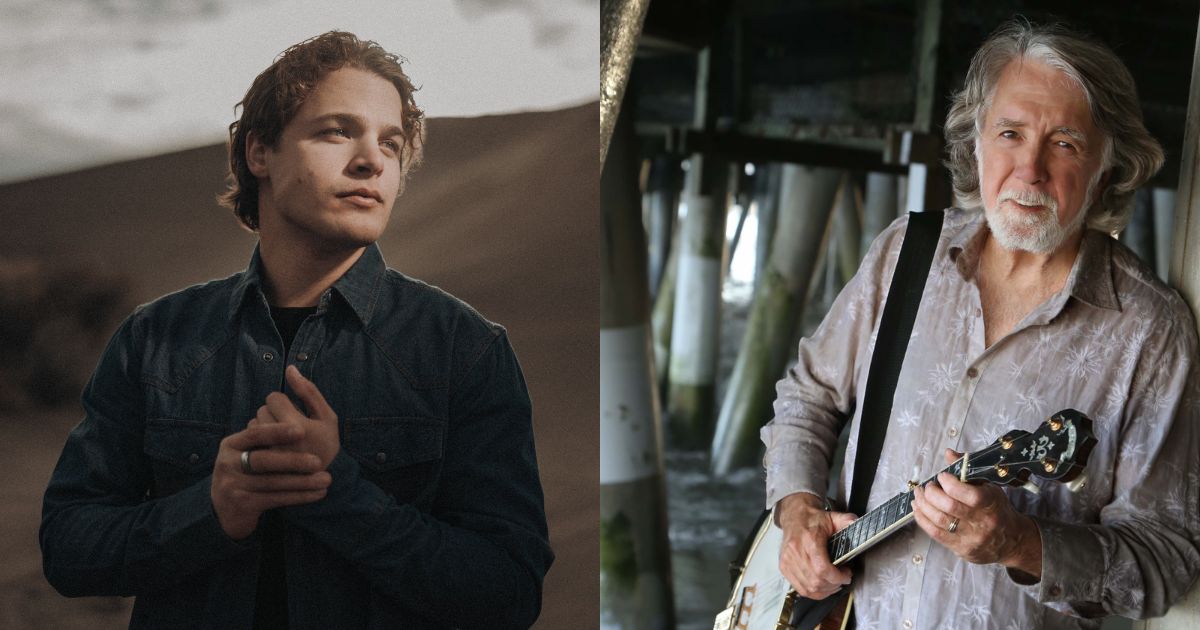
You Gotta Hear This: New Music From John McEuen, Tom Paxton, and More

This week, banjoist and Nitty Gritty Dirt Band founding member John McEuen kicks off our You Gotta Hear This round up with a track from his brand new album, The Newsman: A Man of Record. Check out his adaptation of a Robert Service poem, “The Cremation of Sam McGee” below.

Plus, we’ve got track premieres from gritty country outfit Tylor & the Train Robbers, from Claire Lynch singing Tom Paxton for an upcoming album, Bluegrass Sings Paxton, from the Stetson Family contemplating mortality, and from the Onlies a rendering of a classic old-time ballad.

Don’t miss our video premiere from Max McNown, too, which posted to BGS just yesterday. It’s all right here and, if we do say so ourselves, You Gotta Hear This!

John McEuen, “The Cremation of Sam McGee”

Artist: John McEuen
Hometown: Oakland, California
Song: “The Cremation of Sam McGee”
Album: The Newsman: A Man of Record
Release Date: April 12, 2024
Label: Compass Records

In Their Words: “Using sound effects, music I composed, and some ‘recording tricks’ with instruments, I concocted the back up for one of my favorite poems, ‘The Cremation of Sam McGee.’ My (late) older sister would sometimes tell her 8-10 year old brother, me, this favorite Robert Service poem from 1906, captivating me with the story of a place unknown. I later found it in my high school English book and fell in love with it again. It takes me away to that strange time in these miners’ lives, and while starting kind of morose, manages (in my opinion, anyway) to reach a ‘happy ending’ with Sam finally getting warm! Trying to make the ‘definitive’ version of this classic was a challenge. It is one of my best ‘works.’ I am hoping each time a listeners hears it they will hear something different show up in the mix, as I planned it to be ‘with surprises’ like that.” – John McEuen


Claire Lynch, “I Give You The Morning” (by Tom Paxton)

Artist: Claire Lynch from Bluegrass Sings Paxton
Hometown: Toronto, Ontario, Canada
Song: “I Give You The Morning”
Album: Bluegrass Sings Paxton
Release Date: April 12, 2024 (Single)
Label: Mountain Home Music Company

In Their Words: “Claire Lynch has one of the most recognizable and expressive voices in bluegrass. We knew we wanted to have that voice on the album and her choice of ‘I Give You The Morning’ was a great call — it’s got an old-fashioned ballad construction, a deliciously unusual yet natural rhythm to the first lines in each verse, a captivating melodic rise in the refrain, and an evocative lyric. And, the band has just the right balance of strength and delicacy to complement those same qualities in her approach. It’s a performance that brings out so many aspects of what makes Tom Paxton’s songs so memorable, and I can’t think of a better way to introduce this project to listeners!” – Jon Weisberger, co-producer

“Since the early 1960s, when bluegrass and the emergent folk revival first crossed paths, arguably no songwriter from the latter world has seen more of their songs adopted by the former than Grammy Lifetime Achievement Award recipient Tom Paxton. From early covers of his epochal ‘The Last Thing On My Mind’ by Bluegrass Hall of Famers, The Dillards and the Kentucky Colonels, to regular performances of ‘Leaving London’ by IBMA Entertainer of the Year Billy Strings, to Ashby Frank’s version of ‘Can’t Help But Wonder Where I’m Bound,’ which landed a place among the 30 most-played tracks on bluegrass radio in 2023, Paxton’s creative visions have echoed in bluegrass studios, on bluegrass stages and in bluegrass jam sessions for generations.

“Now a broad-ranging group of artists in and around bluegrass are paying explicit tribute to this vital legacy in a new Mountain Home Music Company collection — Bluegrass Sings Paxton — that places these classic songs alongside less familiar, but no less finely crafted material from the Tom Paxton songbook, including new songs written especially for the project.” – Mountain Home Music Company

Track Credits:
Claire Lynch – Lead vocal
Darren Nicholson – Mandolin, octave mandolin
Deanie Richardson – Fiddle
Chris Jones – Acoustic guitar
Kristin Scott Benson – Banjo
Nelson Williams – Upright bass


Tylor & the Train Robbers, “Workin Hands”

Artist: Tylor & the Train Robbers
Hometown: Boise, Idaho
Song: “Workin Hands”
Album: Hum of the Road
Release Date: April 12, 2024 (single); May 3, 2024 (album)

In Their Words: “I wrote this one around a guitar riff I had been playing with for a while. The riff is busy, but something about it stuck in my head and I decided to write a song to match it. I wanted to keep the intensity of that guitar part and extend to every instrument in the band, pushing us all musically. Everyone in the band worked to find the right parts that brought it all together. The vibe is inspired by bands like Barefoot Jerry and the Amazing Rhythm Aces, it’s unpredictable and keeps you on your toes. It’s definitely not a song I would ask someone to sit in with us on unless they came prepared, but it’s become a favorite for us to play live. I think it really showcases the musicianship of everyone in the band.” — Tylor Ketchum

Track Credits:

Tylor Ketchum – Lead Vocals and Rhythm Guitar
Jason Bushman – Bass Guitar and Harmony Vocals
Tommy Bushman – Drums and Harmony Vocals
Rider Soran – Lap Steal Guitar
Johnny Pisano – Electric Guitar
Cody Braun – Hand Claps and percussion
Katy Braun – Hand Claps
Jonathan Tyler – Hand Claps and percussion

Recorded at Yellow Dog Studios in Wimberley, Texas.
Producer – Cody Braun
Engineer – Adam Odor
Mixed by Jonathan Tyler.
Mastered by Adam Odor.


The Stetson Family, “Make Me Ashes”

Artist: The Stetson Family
Hometown: Melbourne, Australia
Song: “Make Me Ashes”
Album: The Stars, If You Look Closely
Release Date: April 19, 2024

In Their Words: “‘When it’s time to meet my maker, come the fire or the hole…’ – the words ‘fire or the hole’ come from a conversation I had with a woman who was the owner of a Vietnamese restaurant in Melbourne where my family and I went every Wednesday night for many years. When my mum passed away, Lisa, the lovely Vietnamese owner, asked me in broken English, ‘Does your mum have the fire or the hole?’ Meaning, ‘Will she be cremated or buried?’ I loved her humble way of asking, it was so heartfelt. It got me thinking about when it’s my time, will I have the fire or the hole? This song lets people know I’ve chosen the fire.” – Nadine Budge

Track Credits:
Nadine Budge – Writer, lead vocal, rhythm guitar, resonator guitar
John Bartholomeusz – guitar, harmonies
Colin Swan – banjo, harmonies
Greg Field – fiddle, mandolin, harmonies
Luke Richardson – double bass, harmonies


The Onlies, “Matty Groves”

Artist: The Onlies
Hometown: Nashville, Tennessee; Durham, North Carolina; Whitesburg, Kentucky
Song: “Matty Groves”
Release Date: April 12, 2024

In Their Words: “A couple years ago, our friend Sonya Badigian sent a recording of Doc Watson playing this song and recommended we learn it as a band. Before going into the studio, Leo spent many weeks singing the long, epic poem which tells the story of Matty Groves stealing Lord Daniel’s wife and the dramatic duel that later ensues. This story dates back to 17th century Northern England, closely related to Child ballad #81, ‘Little Musgrave and Lady Barnard.’ When we got together to work up an arrangement, a driving fiddle melody emerged to accompany the lyrics. We recorded it late at night in a small studio in Eunice, Louisiana, with the help of incredible engineer Joel Savoy and the unmistakable bass groove of Nokosee Fields.” – Sami Braman

Track Credits:
Leo Shannon – lead vocal and guitar
Vivian Leva – harmony vocal and guitar
Sami Braman – fiddle
Riley Calcagno – banjo
Nokosee Fields – bass


Max McNown, “Worry ‘Bout My Wandering”

Artist: Max McNown
Hometown: Bend, Oregon
Song: “Worry ‘Bout My Wandering”
Album: Wandering
Release Date: April 12, 2024
Label: Fugitive Recordings x The Orchard

In Their Words: “‘Worry ‘Bout My Wandering’ was probably the most difficult song for me to write as it’s so personal. It came from being far away from my family and thinking about my mom and wondering how she feels about my life and the direction it’s taken. Shooting the video in my beautiful home state of Oregon was very important to me… I just always want to make my family and hometown proud.” – Max McNown

More here.


Photo Credit: John McEuen by Henry Diltz; Max McNown by Benjamin Edwards.

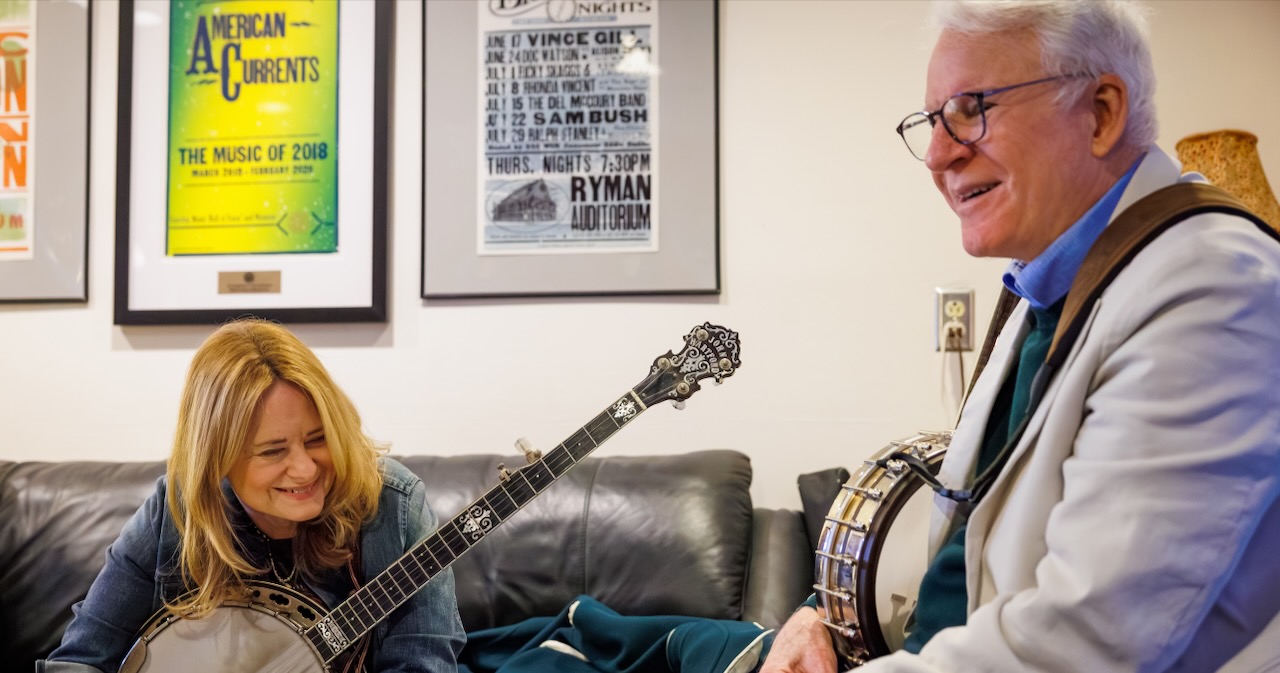
WATCH: Alison Brown & Steve Martin, “Bluegrass Radio”

Artist: Alison Brown & Steve Martin
Hometown: La Jolla, California (Alison); Waco, Texas (Steve)
Song: “Bluegrass Radio”
Release Date: March 15, 2024
Label: Compass Records

In Their Words: “This little tune brings a ton of joy to me. Alison’s playing is flawless, and my singing is flaw-full.” – Steve Martin

“I’m so grateful to all the DJs for playing ‘Foggy Morning Breaking’ and for inspiring Steve to write the lyrics to ‘Bluegrass Radio.’ Thanks to Sam, Stuart, Trey, and Todd for the great playing – and to Steve for the outstanding twin banjo picking.” – Alison Brown

Track Credits:

Steve Martin – vocals, banjo
Alison Brown – banjo
Sam Bush – mandolin, harmony vocals
Stuart Duncan – fiddle
Trey Hensley – guitar, harmony vocals
Todd Phillips – bass

Recorded and mixed by Matt Coles at Compass Sound Studio, Nashville, TN.
Additional recording by Matt Coles at Echo Mountain, Asheville, NC, assisted by Julian Dreyer.
Mastered by Randy LeRoy.
Produced by Alison Brown and Garry West.


Video Credit: Filmed at Compass Sound Studio by Joseph Spence
Additional footage shot by Josh Blake and Shane Peters at Echo Mountain
Edited by Joseph Spence
Photo Credit: Madison Thorn

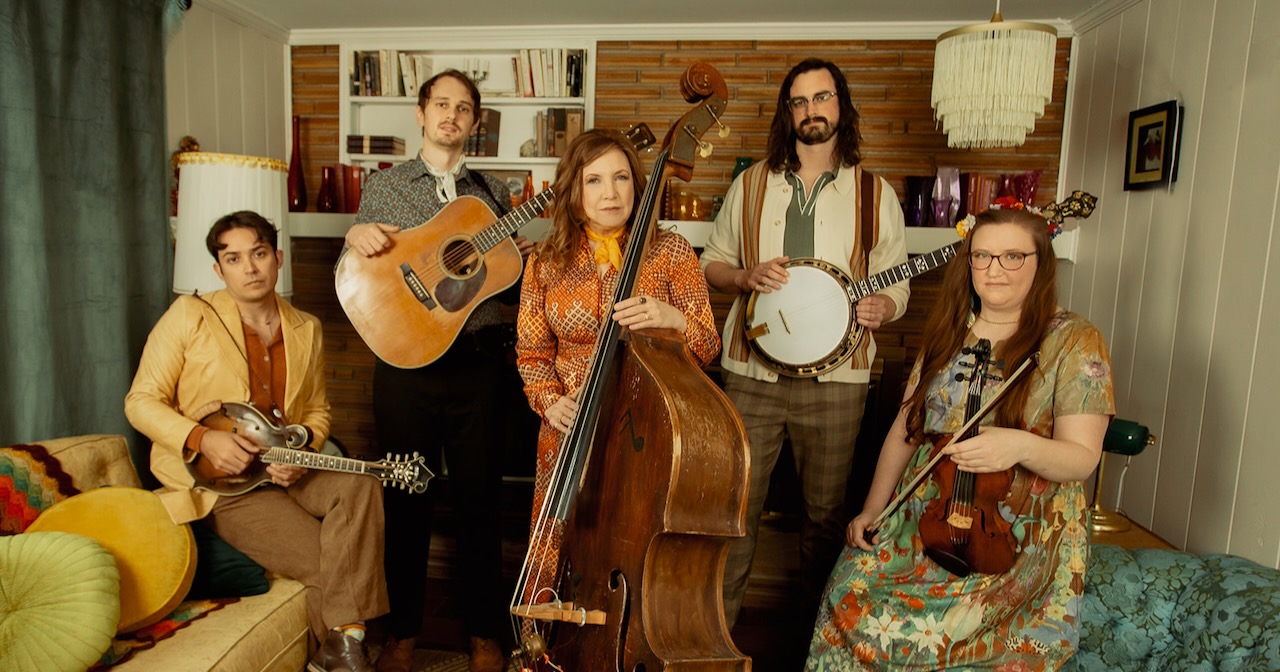
Missy Raines & Allegheny’s ‘Highlander’ is Effortlessly Bluegrass

Missy Raines is one of the winningest musicians in the 30+ year history of the International Bluegrass Music Association’s annual awards. She’s a 10-time recipient of the Bass Player of the Year trophy and has taken home a couple of Collaborative Recording of the Year and Instrumental Recording of the Year awards, too. She’s been an omnipresent creative in bluegrass, in Nashville, and in American roots music as a whole for the majority of her life. Even so, many are heralding her new album, Highlander, made with her new band, Allegheny, as a “return to bluegrass.” The thing is, Raines never left.

It’s true that she spent more than a handful of years touring with an experimental, new acoustic-inflected string band, The New Hip, intentionally devoting more than a decade to highlighting her songwriting, her role as front person, and her smoky, patina-ed alto. Throughout that time, no matter how far afield the music may have explored beyond the stone walls and steel bars of bluegrass, Raines always had both feet firmly planted in the genre. While fronting and touring the New Hip, she remained a mainstay at bluegrass and acoustic camps across the country, founded and performed with several bluegrass and old-time supergroups, and “moonlit” as a bassist-for-hire for a laundry list of notable bluegrass, country, and Nashville stars.

So, however exciting it may be – and, it is truly, very exciting – that Raines and Allegheny have intentionally guided her sound back to traditional, straight ahead, mash-tastic bluegrass for her new album, Highlander, it’s important to remind Raines’ audience, the new initiates and diehards alike, that whatever music may emanate from the strings of her upright bass or from her tender and expressive voice, she has always been and will always be bluegrass. And effortlessly so. Highlander isn’t so much a return to the genre as it is a reminder that Missy Raines’ goal in music, first and foremost, is to make great bluegrass music for great bluegrass folks – her kind of folks.

This is your first album with the new band and I wanted to talk about how your creative process and how your collaboration process looks nowadays. I sense a lot of changes in how you’ve approached making music as an ensemble, but I wonder how it has felt to you, on the inside of the sonic and lineup shift from the last album to this new lineup, with Missy Raines & Allegheny?

Missy Raines: The collaboration process we have within this band, Allegheny, and for this album is the collaboration process that I’ve always dreamed of and wanted to have in a band setting. You know, I wanted to have my own band for years and years and then, after I waited a really long time, when I finally did do it in like 2009, I had in my mind that it would be like this, that it would be this collaborative thing and I’d have people who were invested. The short story is that I have that now, and that’s the beauty of it.

In the past, I did have elements of that, for sure. There were definitely folks who came into the different configurations that I had who were invested and collaborative. [That] was definitely there, but I will say, to have a moment in time when you have actually like five people sitting in the room and they’re all equally invested – that is pretty magical.

So yeah, the process for this record was very different than for Royal Traveller, because on Royal Traveller I didn’t really have a band when I started that recording. I was sort of ending the New Hip and I knew that that record wasn’t going to have the sound that the New Hip had, it was going to be very mixed, in terms of styles. There were all these different guests on every single song and there was no one solid backing band, because I actually wasn’t touring at the time. All of the main decisions and stuff were basically made by me and [producer] Alison Brown.

I think part of why this album feels so strongly like a band album is not just because of the Missy Raines & Allegheny rebrand, but also because you’ve been playing with this lineup – Ben Garnett, Eli Gilbert, Ellie Hakanson, and Tristan Scroggins – now for several years. This project feels like it was made by a band. And I think part of that feeling comes from you having worked together for as long as you did before you made the album.

I think it does. I don’t know if it also has anything to do with the fact that me, just by default– yes I’m the leader, but I’m also a bass player and my tendency and my way of thinking about any band is I come into it as a support player, because that’s what I’ve done all my life. This came up the other day online, because we’re getting lots of really great reviews from the record. Like one reviewer called my “backing” band “magnificent.” They are magnificent, but I don’t think of them as a backing band. I told them that and of course, Tristan said, “Well, that’s what we are.” And I was like, “No!” I still don’t think of [the band] that way. I don’t know if it’s just because I’m maybe still a little uncomfortable being out front, or it’s a combination of things.

It’s also just been this bass player mentality that – not that bass players can’t be out front, it’s just like, “No, we’re making this stuff together. We’re making this together.” And so I don’t see it as me standing up there doing something and they’re backing me up. I feel that if I’m not playing with them and they’re not playing with me, then we have nothing.

What was the process like as you sat down with this sequence of songs and were imagining who you wanted to have guest on the album? How did you navigate that with your producer, Alison Brown? This is a stout lineup of special guests appearing with you and Allegheny.

The only thing I knew in the very beginning, before I even talked to Alison about making the record, was that I wanted to do “These Ole Blues” with Danny Paisley. [Laughs] That was already in my head. I had this vision, I heard Loretta Lynn’s version of it and then I also knew that I wanted to change it a bit to make it more bluegrass. And it came out exactly the way I was hoping. I wanted to sing it with Danny Paisley. That was an easy one. Well, all of them were easy, because when we sat down we just listened, thought about the song, and thought who would be the right singer. And, who would also represent what it was that I was trying to say with this record.

Like, Dudley Connell on “Ghost Of A Love.” Of course, he’s playing with the Seldom Scene these days – he’s just so good that he can do anything. And no one loves the Seldom Scene more than me, but what I was looking for was Johnson Mountain Boys Dudley. [The Seldom Scene] was one of the big inspirations to this band, but so were the Johnson Mountain Boys and nobody captures that better than Dudley.

And I did want to say something about Laurie Lewis, too.

I wanted to ask you about “I Would Be a Blackbird,” the track that features Laurie, so yes, please, let’s definitely get into that!

So, Nathan Bell, he’s a friend, a great songwriter, and he wrote “American Crow” [from 2013’s New Frontier]. He wrote “I Would Be a Blackbird.” He’s written several songs with bird themes, but this song, he actually sent to me literally years ago and I loved it, but I couldn’t make it happen before, because it just didn’t fit whatever I was doing at the time. But it found its way to this band and it felt right.

Then again, when we thought about who I should sing with it, I thought of Laurie Lewis and it was perfect. I also really wanted Laurie to be part of this record because she was so much a part of Royal Traveller, she wrote “Swept Away” and it was like the star of that album. Laurie said to me, “You need to record ‘Swept Away,’ you should do that! It would be a great song for you.” So that felt extra special, that she thought of me for that.

When I was just starting out to play, when I was a teenager and stuff, I didn’t really know much about her music, because at that time I was such an east coaster and she was such a west coaster. I didn’t really know much about what was going on out there. But then soon after that, when I started hearing more of her music, got to meet her, and heard Love Chooses You, that was one of the first moments that I had in my mind that made me go, “Oh, you know… I would like to do something like this on my own someday.”

And then she became a really dear friend! Anyway, it was just really important to have her on this record.

I wanted to ask you about “Who Needs A Mine?” Not only because of Kathy Mattea joining you on that track, but also because of your ties to West Virginia and the very ideas behind Highlander. When I first heard you play that song probably a year and a half ago now, I think my jaw hit the floor. It’s such a perfect song and it’s so clearly in this tradition of women songwriters from West Virginia, from Central Appalachia, and the Mid-Atlantic who use folk songs and folk lyrics as a vehicle to speak truth to power. For me, it’s the focal point of the record. I think it’s one of the best socially aware and politically aware bluegrass songs that’s ever been written, in my humble opinion.

Wow. Well, your humble opinion means a lot over here. So, thank you.

I definitely thought of Kathy immediately, because of the West Virginia part, but also because she has championed this drug crisis for a long time. Her own life has been affected by it, personally, with family members. She speaks openly about that and has done a lot of really great things. That resonated with me.

One of the really extra special things that happened the day that Alison brought us together in the studio, I walked in and [Kathy] was there and she looked at me and she said, “I really, really love this song.”

I felt the sincerity in her voice. Like she said, it is really, really meaningful and powerful. I was just overwhelmed with that. Then she also said, “And it’s really nice to hear another alto singer!” [Laughs] I thought, “Well, that’s cool that you would even put me in the same breath as you.” I’ve always been drawn to singers like her, with the range of her voice and stuff. It seemed like a very natural fit for the song.

And as for me wanting to write it, I’ve been thinking about this song for probably the last five, six years or maybe a little bit more. I tried to write this song on my own, right from the beginning, but I realized that I was just way too close to it and I needed to have some perspective. I still wanted to have a bit of control over it, because I knew what I wanted from it. But I realized I also needed somebody to give me some perspective. So, I thought of who I knew that I would like to write with and who would get it and come from that same place, and I very wisely chose Randy Barrett. He was absolutely perfect to help me write that.

Of course, you know I cited Hazel, because she’s such a hero and my ties to West Virginia will be forever. I honestly don’t ever see myself living back there ever again, but on the other hand, I will always cherish all the things precious from my early life there. This issue is just so incredibly important to me and the reasons it happened – that people can Google, as to why this is such a horrific and atrocious thing. And it wasn’t just by accident, [opioid marketing] was actually targeted.

I’m glad you bring up Hazel. I think she is such an important touch point for this song. And I also think of Jean Ritchie, but there’s also this current moment happening where songwriters and roots musicians from rural places are taking up similar issues in their music. I’m thinking of Dori Freeman’s “Soup Beans Milk and Bread,” of Willi Carlisle’s “When the Pills Wear Off.” I think that there’s this really important moment of songwriters telling stories about these regions that are critical and that are seeking justice and a better future, but are also approaching it from love.

There’s something really interesting about “Who Needs A Mine?” because it feels like there’s some sarcasm and sass in it, but I still sense that the song is very, very loving – even in the way that there’s bitterness and anger in it. Do you see that too?

I love that you bring that up, because I was just sitting here thinking that I grew up listening to Hazel and hearing her songs, mostly about poverty and about mining and black lung and all of the travesties that came with the mining industry. While I knew that was part of my state’s history, it really wasn’t part of my own story, because my family weren’t miners. They were farmers and they were railroad men, but they weren’t actually miners.

The part of West Virginia where I grew up had more strip mining than it did deep coal mining. And so there was some level of understanding for me, but at the same time, I was fascinated. When I was a teenager, I used to read all the stories about the mines and unionization – and Mother Jones. I was really into that. And again, one of the reasons that I loved Hazel is because she championed all of that so much. At the same time, it wasn’t my story. When I started becoming emotionally involved with what was happening in the world today, seeing the West Virginia that I knew and the devastation when I go back home to see my family. I hear the stories about the drug infestation and all that. I see the poverty and see the children and all those things. Then I started getting angry and started getting upset about it. I realized this is my story. This is my time. This is what’s happening now. We all thought that the mines were going to be the worst thing that ever happened to us, but we at least kind of lived through that.
And in many ways, we triumphed through that. But now, this is more powerful – a pill that makes you feel like nothing, a pill that takes you out of reality is way more powerful than anything else.

I love the joke going around regarding this lineup of your band being “Mashy Raines.” I think it’s hilarious.

[Laughs] Thank you.

I think it’s interesting, because it seems like people use that joke to note how trad this band sounds, because you’ve spent a lot of time dabbling on the fringes of bluegrass. So it’s notable that you’re making bluegrass straight down the middle with this lineup. I think part of why it works so well is because you’re using this really trad aesthetic with such emotionally intelligent songs.

That is exactly what I was trying to go for, to have this hopefully artistically and intellectually interesting subject matter on top of really traditional sounds and aesthetic. That’s the most fun in the world to do, and hopefully you get some messages across without folks even knowing it.

I understand why some people might think this is new for me or something, the mashing thing, but we, of course, know that it’s not. I’ve been doing this for a long time, but it’s just that a lot of the mashy stuff or the real traditional stuff I started out with. I was doing it back then, you know, when not everything that anyone ever did was recorded and put online. There’s so much of that in my history that only the people who were there will remember. When I finally did start to make records and stuff, either on my own or with other people, yeah, it tended to be a lot more explorative, for sure. I had already played a lifetime of traditional bluegrass before I even made my first album.

The New Hip was bluegrass, but I never tried to make it be bluegrass. I just knew that I was bluegrass and I was a bluegrass bass player and I was playing this other kind of music. The entire time, I was thinking of all of it as a bluegrass bass player. In my mind, I never left bluegrass, but I do understand how it was perceived that way by some.

When Highlander started coming out, I started seeing the stuff being written and they were using this “return to bluegrass” thing. I fought it a little bit, at first. But now I’m like, “It’s okay, because you’re right.” This is unique. This band and this sound, it is unique. In that regard, it is a definite return to something that I haven’t done for a long time – with a specific sound that we have now. It’s exactly what I was looking for, but because of the people involved, it’s better than I ever imagined it could be.


Photo Credit: Natia Cinco

Four Women Producers and Engineers On Studio Challenges and Successes

Over the past couple of decades, the music industry has seen more women rising to become leaders in audio engineering and producing. However, even as access, acceptance, and opportunity continue to improve, women are still painfully underrepresented in these career paths, making up just five percent of engineers and producers worldwide. Over the past few weeks, I’ve talked to a handful of these remarkable women, in person at coffee shops, over the phone, and via email, about how they built their careers and the challenges they have faced in a male-dominated industry. These women are trailblazers, often without career models to follow, often the only woman in the room when they work. Their tenacity, talent, and dedication are evident, and I feel honored to share their stories.

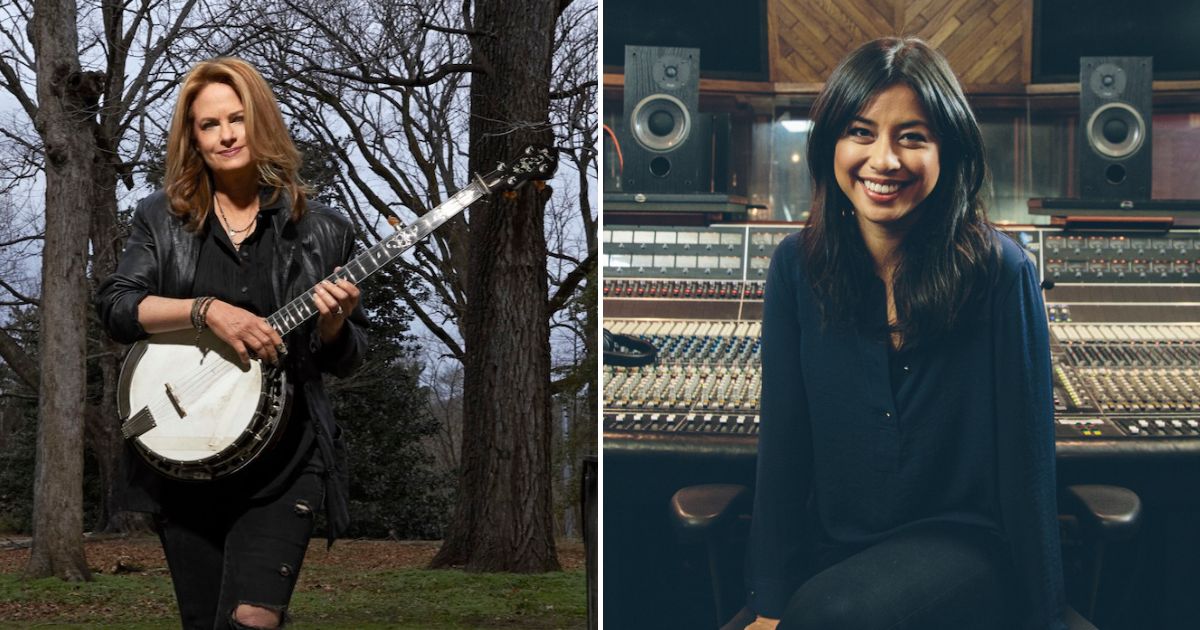
As a musician who came up in the the bluegrass scene, the first female producer I ever knew of or worked with – and now that I think of it, the only female producer I’ve worked with who was not hired by me – is the legendary Alison Brown, virtuosic banjo player and co-owner of Compass Records. Since Brown has seen a lot of generational change over her tenure in Nashville, I thought I should start by getting her perspective.

Brown had already solidified her reputation as an instrumentalist, winning IBMA’s Banjo Player of the Year award in 1991 and touring with Alison Krauss, when she decided to start a record label along with her husband, Garry West. “We were talking about how to have a sustainable life in music,” she said, “And it was one of those napkin drawing in a coffee shop moments.”

The two were on tour in Sweden with Michelle Shocked, for whom Brown was the bandleader. “When I look back, I can see how a lot of the opportunities I had were carved out for me by other women. I was about to go to law school when Shocked asked me to be her bandleader and then we went on a world tour. At Compass, I never thought of myself as a producer, Garry was more interested in that role. But when Dale Ann Bradley was going to make an album she asked me to produce it, so I said yes, and that’s how I started producing.”

Since then, Brown has produced seven Grammy-nominated records, as well as winning a Grammy for her own song, “Leaving Cottondale,” off of her 2000 record, Fair Weather.

When asked about her production style, Brown interestingly observes that she may come at it from a traditionally female perspective, by observing and predicting other people’s feelings and needs. “Especially in the studio, you need to make people feel at ease…” she explains. “Ultimately your job is to draw the best out of the musicians. Everyone has that thing they’re afraid of having to do under the microscope, but the goal is to make the musician feel comfortable enough to reach out and hit something new.”

“Sometimes with the older guard guys, I’ll say, ‘OK, lets try to play through the chart’ and they will act like they don’t understand me. ‘What did she say? What does she want to do?’ … Like they want someone to translate it for them, because it’s coming from a woman. It’s annoying, but I know they’re acting that way because they are nervous and they don’t want to look stupid. So when I’m producing, I try to intuit those things about people, and stay focused on the end goal of making a great record.”

Engineer and producer Shani Gandhi has been in Nashville since 2011, and has been been nominated for two Grammys, winning Best Engineered Album (Non-Classical) for her work on Sierra Hull’s 2020 album, 25 Trips, which she engineered, mixed, and co-produced with Hull. Originally from Singapore, Gandhi was raised in Perth, Australia. She moved to the U.S. in 2007 to attend Ithaca College, where she received a BA in music with a concentration in sound recording technology.

Gandhi was drawn to engineering and production because of her love of music and her simultaneous dislike for performing. “As a kid, I didn’t even know that that side of music existed as a career, but once I found the Audio Engineering Society, I immersed myself in it, I was obsessed.”

Gandhi told me about her philosophy for building a community you can learn from and create with. “It’s really important to have a strong community of both mentors and peers,” she explains. “I had people that I was looking up to that were holding me to a very high standard, and then I had friends and colleagues where we were all working really hard and trading favors, and that’s how I built my freelance career. So you need really good people at all levels to make it work. You don’t want to feel like the smallest person in the room all the time, but you also need someone around to tell you, ‘I know you think what you’re doing is really cool, but it’s really not,’” she laughs.

Although she works on every stage of recording and producing, Gandhi’s great love is for mixing. “My approach is to always remember that it’s not my record, it’s the artist’s art when it comes down to it and they’re the ones who have to live with it for the rest of their lives. I do like things to be lush and tall and wide and pristine. I don’t go immediately to that tape or garage sort of sound, but I can do it. If that’s what the artists wants, that’s what the artists gets.”

Also hailing from Australia, producer and engineer Clare Reynolds – AKA Lollies – came to Nashville via LA, where she was signed as a songwriter for hip-hop producer Timbaland’s company. She essentially taught herself production and engineering on the job. “I was in a lot of big studios with big producers over those three years. It was really intense, I was almost always feeling out of my element, but I learned a lot. I would be writing the song, but also watching the others work, asking questions like, ‘Why are you using that mic?’ ‘How are you getting that sound?’ And trying to absorb everything they were doing.”

In Los Angeles, Reynolds tells me, she learned how to enter a room like a man: “I was with so many different, very big personalities that were at the top of their game and their egos were massive. They were just hyped … and if you want to be respected, you can’t go in tentative, you can’t code yourself as female. You have to act how they act, which is to say, you can’t care if other people like you. I would have this attitude like, ‘We don’t need to be friends, but we’re gonna write the best song ever.’”


Reynolds says that she will always love writing songs, but at least for now, production and engineering have taken a hold on her. “I will be forever learning,” she says, “But I do think that my experience with writing helps me approach the audio side from a very musical and song-based perspective.”

Engineer and producer Diana Walsh echoed Reynold’s sentiment about the typical energy in a recording studio. “With women being so critically underrepresented in these technical roles, it can sometimes take a minute for the gender biases in the room to dissipate,” she told me. “My focus is always on doing great work, and treating everyone in the room with the same respect I expect in return.”

Growing up in Houston, Texas, Walsh played guitar, but was always more interested in how she could record her guitar than how she could perform with it. Her mom bought her very first Shure SM57 microphone, which still gets used today in her sessions.

Walsh recorded her own music at home before heading to Belmont University to study music business, with an emphasis on production. While in school she started freelance recording for friends and classmates and after graduating, she began working at the historic RCA Studio B, where she is now the Studio Manager, as well as maintaining a busy freelance engineering schedule.


View this post on Instagram


A post shared by Diana Walsh (@dmwalshmusic)

Her engineering and production credits include Matchbox 20, Amanda Shires, JD McPherson, and Sister Sadie. Walsh believes that representation is key for getting more women into the studio: “Working at RCA B, I have the opportunity to talk to a lot of school groups. After our sessions, I often speak with the students and ask about their goals for their future in music. Through these conversations, I’ve been thrilled to hear that more and more young women are taking an interest in engineering/producing.”

Throughout my conversations with each of these women, one point they all emphasized was the importance of staying focused on making great work in the face of difficult environments. “Nobody can argue with good work,” they each told me in their own way. And as we continue to see beautiful records being made by women, I have to agree.


Photo Credit: Alison Brown by Russ Harrington; Shani Gandhi by Joshua Black Wilkins.

Preview: The BGS Scoop on AmericanaFest, September 19-23 in Nashville, TN

AmericanaFest is HERE! The annual festival, business conference and roots-music extravaganza will once again take over Nashville beginning today, September 19, through Saturday, September 23. While of course we’re most looking forward to our event presented with Queerfest, the Good Ol’ Queer Country Jamboree, on Saturday from 3 p.m. to 6 p.m., the entire week is filled to the brim with must-see, must-hear, must-do events, panels, showcases, parties and hangs.

As we do most years, below we lay out a variety of items starred by BGS staff on our AmericanaFest apps – which, BTW, is a festival and conference essential. You can add performances, panels, and keynotes to your own personalized scheduled complete with lineups, panel rosters, details and more. Plus, you’ll be able to easily see which events require special tickets or advance RSVP directly in the app and which are accessible with your conference badge or festival wristband. Download the official app on the app store here. Download via Google Play here. See the full AmericanaFest daily schedule in your browser here.

We want to hear from you, too! Which AmericanaFest events and shows are you most excited for? Which of the more than 200 showcasing bands and artists are at the top of your lists?

Panels, Parties, & Events

Check-in and pass pick-up begin today, Tuesday, September 19, at 12 noon at the Westin Nashville in the Gulch, but most panels and conference programming gets rolling tomorrow, on Wednesday. If you thought ahead, you already RSVP-ed to the Country Music Hall of Fame & Museum’s conversation and performance by two of our faves, Rosanne Cash and John Leventhal, this afternoon at 3 p.m. They’ll chat about their careers plus the 30th Anniversary re-issue of The Wheelhear a track from that project on BGS here.

There are quite a few more conversations, panels and events we’re eyeing this week around Nashville:

Roots & Branches – Kentucky Music – WED. SEPT. 20 10:00 AM @ The Westin Vanderbilt III

Kentucky poet laureate Silas House – who recently wrote the story behind Tyler Childers’ sensational new music video – will chat with fellow Kentuckians and musicians S.G. Goodman, Kelsey Waldon and Nat Myers about “the history, legacy and current state of Kentucky’s music and the way it has helped to shape American music…” The bluegrass state means more to American roots music than just bluegrass and these folks know it. An enlightening conversation is sure to be had.

Where the Action Is: Americana Artists and Activism – WED. SEPT. 20 11:00 AM @ the Country Music Hall of Fame & Museum Ford Theater *RSVP REQUIRED*

Moderated by veteran BGS contributor Jewly Hight and hosted by the Country Music Hall of Fame, this conversation will feature performances by Adeem the Artist, Mya Byrne, Autumn Nicholas and Allison Russell, all artists who leverage their music making in Americana spaces to advance activist causes, social justice and representation and inclusion. The event promises to connect the present and each of these artists to this vibrant tradition in roots music and folk.

Hillbillies and Hot Dogs – WED. SEPT. 20 11:30 AM to 2:00 PM @ Compass Records *RSVP REQUIRED*

Our friends at Compass Records and No Depression host one of the best hoedowns every year at AmericanaFest, replete with hot dogs and the recording studio that birthed the Outlaw movement. Hear music by Robbie Fulks, Kelly Hunt, Mattie Schell and the business queen of banjo herself, Alison Brown.

NMAAM Songwriters Rounds – WED., THURS., FRI. SEPT 20, 21, 22 12:00 PM to 1:00 PM @ National Museum of African American Music

A music conference and festival in Nashville is the perfect time to visit the National Museum of African American Music, which opened during the pandemic and has slowly but surely built momentum and an audience for the history, culture, and tastemaking of African American music. And situated right in the heart of Nashville’s lower Broadway neighborhood, it’s the perfect venue to make such points. NMAAM’s daily writers rounds will feature artists and songwriters like AHI, guitar phenoms Joy Clark and Yasmin Williams, BGS One to Watch Julie Williams and more.

An Intimate Conversation with Nickel Creek & Sarah Silverman – WED. SEPT 20 1:00 PM @ RCA Studio A *RSVP Required*

You read that right! Nickel Creek and Sarah Silverman in conversation at RCA Studio A moderated by Jewly Hight!? Pinch us! Clearly one event not to miss this week. RSVP is required, hope yours has been submitted long ago!

Indigenous Americana – WED. SEPT 20 4:oo PM @ the Westin SoBro I & II

You are still on stolen land. While you occupy the historic lands of the Cherokee, Shawnee and Yuchi this week, set aside time to appreciate, ingest and center Indigenous music makers, their songs and their stories. This panel conversation on the future of the thriving Indigenous music community will feature Amanda Rheaume, Crystal Shawanda, Nicole Auger of the Indigenous Music Summit and Trenton Wheeler. More events for/about Indigenous music below.

Kentucky Bluegrass, Past and Future – THURS. SEPT. 21 2:30 PM @ the Westin Gulch I & II

From our friends at the Bluegrass Music Hall of Fame & Museum in Owensboro, a conversation about the arc of bluegrass in the bluegrass state featuring BGS contributor Craig Havighurst, Bluegrass Hall director Chris Joslin, fiddler Jason Carter, the legendary Sam Bush, educator and picker Scott Napier, and Jessica Blankenship of the Kentucky Music Hall of Fame.

Who Are the Gatekeepers of Americana Anyway? – THURS. SEPT. 21 4:00 PM @ the Westin Gulch I & II

If your immediate reaction to this panel title is skepticism, this is definitely for you! The roster of Omar Ruiz-Lopez (of Violet Bell), Rissi Palmer and Yasmin Williams immediately indicate this conversation will critically unpack and explore the construction of Americana as a format, just how multi-cultural the music really is, and why that strength is worth spotlighting while we dismantle systems of gatekeeping and exclusion.

Transgender Artists Arriving and Breaking Through in Americana – FRI. SEPT. 22 1:00 PM @ the Westin Gulch I & II

Just a few short years ago there were almost no LGBTQ+ spaces at AmericanaFest, so we’re ecstatic to see a trans-specific space like this opened up at the conference. Hear from Ally Free, Cidny Bullens, Mya Byrne, Paisley Fields and moderator Marcus K. Dowling on historic and current challenges and opportunities for trans, non-binary and gender non-conforming Americana musicians.

From ‘Queer Jolene’ to ‘Pay Gap’: Teaching Social Issues Through Americana in the Classroom – FRI. SEPT. 22 3:30 PM the Westin Gulch III

Using two songs as a springboard, scholar-musician Nadine Hubbs and showcasing artist Beth Bombara will be joined by Aimee Zoeller, Ethan Anderson, and renowned writer/thinker Tressie McMillan Cottom to discuss the use of Americana music and texts to teach and highlight current issues of race, class, gender, sexuality and identity in university and college classrooms and academic spaces.

Americana Honors & Awards


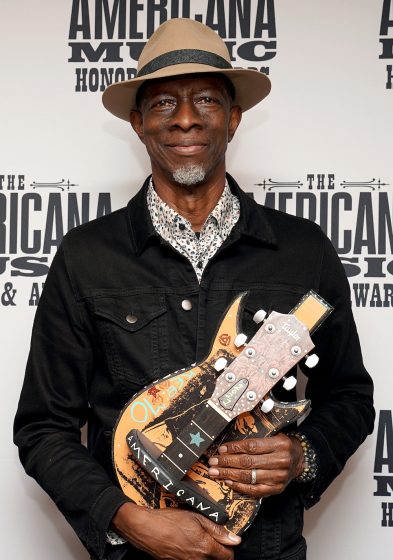
Keb’ Mo’ attends the 20th Annual Americana Honors & Awards in Nashville, Tennessee. (Photo by Erika Goldring/Getty Images for Americana Music Association)

The marquee event of the week, the 22nd Annual Americana Honors & Awards will take place on Wednesday evening beginning at 6:30 p.m. See the full list of honorees and nominees here. The awards show promises appearances and performances by so many Americana friends and neighbors: Adeem the Artist, Allison Russell, Brandy Clark, Jessi Colter, Marty Stuart, Nickel Creek, William Prince, Sunny War and many, many more. Recipients of this year’s Lifetime, Trailblazer and Legacy Awards include The Avett Brothers, George Fontaine Sr., Bettye LaVette, Patty Griffin and Nickel Creek.

Not able to be in the sacred pews of the Ryman Auditorium for the show? You can watch online via Circle All Access’s YouTube Channel or the Americana Music Association’s Facebook page.

Good Ol’ Queer Country Jamboree at Soho House Nashville

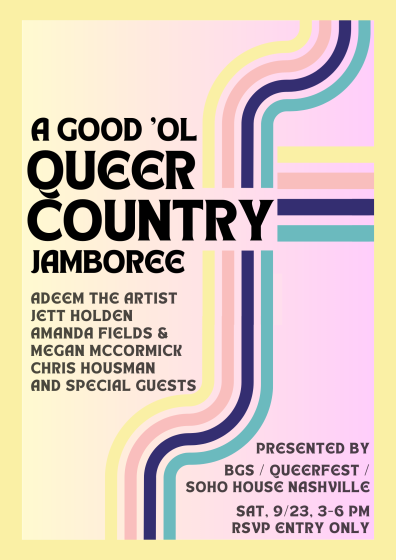
A rare opportunity to utilize the gorgeous facilities of Soho House Nashville at this members-only and conference passholders-only event! Plus, enjoy the absolute best in queer country being made today as we celebrate the announcement of BGS’s new outlet, Good Country, coming in 2024! Space is limited, so make sure your RSVP is in for the Good Ol’ Queer Country Jamboree featuring music by Adeem the Artist, Jett Holden, Amanda Fields & Megan McCormick, Chris Housman and special guests.

You can get more information and RSVP here.

The Good Ol’ Queer Country Jamboree
Featuring Adeem the Artist, Amanda Fields & Megan McCormick, Jett Holden, Chris Housman, and more.
Saturday, September 23, 3 p.m. – 6 p.m.
Soho House Nashville

Showcases, Artists & Bands

Here are just a handful of the showcases, lineups, artists and bands we’ve got our eye on this week:

Americana Proud: A Voice for All – TUE. SEPT. 19 8:00 PM & 9:30 PM @ the City Winery

Hosted by singer-songwriter Autumn Nicholas and Nashville-based drag queen Vidalia Anne Gentry, Americana Proud will bring two showtimes of their highly-anticipated showcase to the City Winery on Tuesday evening, the first at 8 p.m. and another immediately following at 9:30 p.m. Hear from artists and musicians such as ISMAY, Jobi Riccio, Kentucky Gentlemen, Palmyra and many more.

Bourbon & Bluegrass – FRI. SEPT. 22 4:oo PM to 6:30 PM @ the Vinyl Lounge

Join us and our friends from Visit Owensboro and LogStill Distillery for one of our most favorite pairings, bourbon and bluegrass presented by BGS! Fresh off of our rollicking time in Kentucky at Bourbon & Beyond, we’ve still got a hankering for whiskey and tunes – this time from Mama Said String Band and the Owensboro Bluegrass Band. Join us Friday afternoon at the Vinyl Lounge in Wedgewood Houston!

Willi Carlisle

We can’t get enough of this lonesome troubadour’s poetic, old-timey country. He’s in and out of Nashville quick this week, so catch Willi Carlisle’s official showcase at the Vinyl Lounge on Thursday, Sept. 21 at 8:00 p.m. (Read our most recent feature on Carlisle here.) Now THAT’S good country!

Michael Cleveland & Flamekeeper

Fiddler Michael Cleveland burnt down our BGS Stage at Bourbon & Beyond last weekend when he brought on his friend and ours, Billy Strings, as a surprise guest. Later that evening during Strings’ main stage set, he brought Michael out in front of 40,000 roaring fans. We LOVED that moment – don’t miss his official showcase with his band, Flamekeeper, at Analog at the Hutton Hotel on Thursday, Sept. 21 at 9 p.m.

Jessi Colter

This legend of country has a new, Margo Price-produced album, Edge of Forever, out on October 27, so it’s the perfect week to check her off your live performance bucket list. Colter will have an official showcase at 3rd & Lindsley on Wednesday, Sept. 20 at 10 p.m., plus she appears as part of Mojo’s Music City Mayhem on Thursday, Sept. 21 between 3 and 6 p.m. Also some good country.

Della Mae

We’ve been keeping up with Della Mae lately – from Earl Scruggs Music Festival to Bourbon & Beyond to AmericanaFest! – and we’ve loved every second. If you haven’t heard their new four-person lineup, it’s worth checking out this week. If you’re not in Nashville at the conference, stream their newly released Neil Young cover instead. (Below!)

Liv Greene

AmericanaFest is all about discovery and if you haven’t discovered this singer-songwriter yet, this week is your chance. Hear Greene’s award winning songwriting – which is equally winsome and pining while gritty and bluegrassy – on three different occasions throughout the week: Tuesday, Sept. 19, 8 p.m. at Americana Proud at City Winery; their official showcase on Thursday, Sept. 21 at 10 p.m. at the City Winery Lounge; and during the Tribute to the Songs of 1973 Part 3 on Friday, Sept. 22 at 10 p.m.

Jaimee Harris

You know what Jaimee Harris’s music is? Good country! It’s all over this AmericanaFest lineup, for sure. Harris will have your heart firmly in hand with her grounded, earnest and effacing nostalgia. It feels so country and effortlessly Americana, but with endless queer, subversive wrinkles. Get acquainted with Harris and her latest album, Boomerang Town, at several different performances during the week: Tuesday, Sept. 19, 8 p.m. at Americana Proud at City Winery; Thursday, Sept. 21, 4:30 p.m. at the Lone Star Shindig at the Bobby Hotel; Friday, Sept. 22, 1:20 p.m. at Bowery Vault for SHC East Coast Social Club; her official showcase on Friday, Sept. 22, 8 p.m. at the City Winery Lounge; Friday Sept. 22, 11 p.m. at the Basement East for A Tribute to the Songs of 1973; and Saturday, Sept. 23 at Dee’s Country Cocktail Lounge at 1 p.m.

Lola Kirke

All of Lola Kirke’s exes live in LA, so luckily she’s in Nashville this week! Kirke was a highlight of our BGS Stage last week at Bourbon & Beyond in Louisville before heading to AmericanaFest, where you can see her at SiriusXM Outlaw’s Americana Most Wanted guitar pull on Thursday, Sept. 21 at 12 p.m.; also see her official showcase at the Blue Room on Thursday, Sept. 21 at 10 p.m.; and at Imogene + Willie’s Round Up – a free, unofficial, buzzworthy event certainly worth a drop-by at least – on Friday, Sept. 22 at 7:15 p.m.

Native Guitars Tour – Voices of Native Americana – THURS. SEPT. 21 12:00 PM to 4:00 PM @ The Blue Room

Native leaders in music, art and fashion will bring authentic songs and stories to the Blue Room at Third Man Records on Thursday afternoon. Hear from Dach Martin, Jir Anderson, Levi Platero Band, Mike Bruno & the Myriad Mountains, Mozart Gabriel, Olivia Komahcheet, Rico Del Oro, Sage Bond and Scotti Clifford. From Native blues to crooning country and everything in between.

Emily Nenni

Get your boot scootin’ in while you’re in Nashville with honky-tonker Emily Nenni, whose country & western picked up a few tricks and twists in California’s Bay Area before landing in Music City. Nenni will jam a handful of Nashville shows into a packed tour week that takes her away from and back to AmericanaFest in the blink of an eye. Hear her at Honky Tonk Tuesday at the American Legion in East Nashville on Tuesday, Sept. 19; plus an appearance at Musician’s Corner at Centennial Park on Friday, Sept. 22 at 4:35 p.m.; and her official showcase at Eastside Bowl on Saturday, Sept. 23 at 10:30 p.m.

Autumn Nicholas

Nicholas has already appeared on this preview in a few places, and rightly so, as the North Carolinian Black Opry alumnus continues to build momentum behind their stratospheric voice and introspective, emotive songs. Hear the voice Nashville has been buzzing about for months – and that will open for Jason Isbell at the Ryman this fall – throughout the week: Tuesday, Sept. 19 at Americana Proud at City Winery, 8 p.m. and 9:30 p.m. shows; “Where the Action Is” panel at the Country Music Hall of Fame on Wednesday, Sept. 20 at 11 a.m.; and their official showcase at the Basement on Friday, Sept. 22 at 8 p.m.

Queer Cowpoke Roundup – SAT. SEPT. 23 2:00 PM to 5:00 PM the Groove

On your way to/from the Good Ol’ Queer Country Jamboree at Soho House on Saturday, stop by the Groove record shop in East Nashville for another LGBTQ+ centered event, the Queer Cowpoke Roundup! With music by Austin Lucas, Julian Talamantez Brolaski, Julie Nolen, Melody Walker, Mercy Bell, Secret Emchy Society, Shawna Virago and Wiley Gaby plus a special tribute to the legacy of Lavender Country and Patrick Haggerty to kick it all off.

Jobi Riccio

We are sweet on Jobi Riccio’s new album, Whiplash, a showcase of powerful, talented songwriting done up in checkered gingham and starchy denim and the perfume of broken in leather. We’ve had our eye on Riccio for a few years now, so it feels gratifying to watch the music industry discover and get behind the Berklee graduate. Hear Riccio perform during the Americana Honors & Awards on Wednesday night, but also elsewhere during AmericanaFest: Tuesday, Sept. 19 at Americana Proud at City Winery at 9:30 p.m.; Thursday, Sept. 21 at WMOT Day Stage at Eastside Bowl at 4 p.m.; and her official showcase will be at Exit/In on Thursday, Sept. 21 at 8 p.m. (Plus, Riccio’s social media tease a “to be announced” appearance on Friday, September 22, so keep your eyes peeled.)

The Shindellas

Americana is all about making music outside the lines, about exploring the rootsy fringes of these genres we all hold dear. The Shindellas are one of the most exciting groups to come out of Nashville in recent memory, but because of their glitz, polish and crisp production values they’re rarely categorized as Americana – which they certainly can lay claim to, through blues, R&B, soul and so much more. Their new Louis York-produced album, Shindo, drops in October, so make sure you catch them this week on Saturday. You’ll be glad you did! See the Shindellas at the 11th Annual Thirty Tigers Gospel Brunch at the City Winery, Saturday, Sept. 23 11:00 a.m. to 1:00 p.m.; and their official showcase at the Basement East on Saturday, Sept. 23 at 7 p.m..

Dan Tyminski

The man, the legend, he needs no introduction to the BGS reader (except, perhaps, when introduced as his mononym, Tyminski). Hear Dan fresh off his Bourbon & Beyond appearance on the BGS Stage with his new bluegrass band lineup, who are certainly worth a listen, at their official showcase on Thursday, Sept. 21 at 10 p.m. at the Analog at the Hutton Hotel. This new lineup of pickers backing up the famed voice of George Clooney on O Brother, Where Art Thou? are one of the most exciting things to come from Tyminski, musically, in the last handful of decades.

Yasmin Williams

If you’ve never seen Yasmin Williams play guitar, prepare to have your mind blown. Her approach to the instrument doesn’t just wow her audiences, it wows her fellow guitarists as well, from Bryan Sutton to Tommy Emmanuel. We’ve been fans of Williams for more than a few years, since before her Shout & Shine appearance even, and we’re glad to catch her again this week at AmericanaFest: “Wide Open Spaces – The Rise of Ambient Americana” Panel, Thursday, Sept. 21, 1 p.m. at the Westin Gulch I & II; “Who are the Gatekeepers of Americana Anyway” Panel, Thursday, Sept. 21, at 4 p.m., the Westin Gulch I & II; NMAAM Songwriters Round Friday, Sept. 22 at 12 p.m.; and her official showcase Thursday, Sept. 21 at the Blue Room at 9 p.m.


Poster graphic and photo of Keb’ Mo’ courtesy of the Americana Music Association.

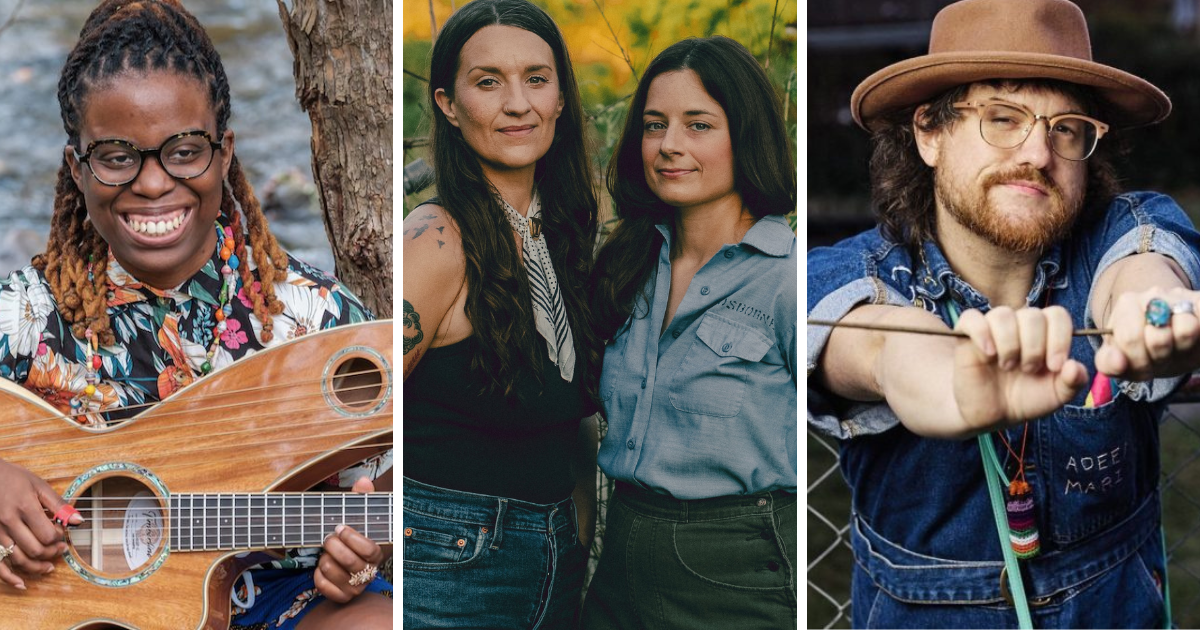
Lead images: Yasmin Williams by Kim Atkins Photography; Amanda Fields & Megan McCormick by Lindsey Patkos; Adeem the Artist by Shawn Poynter; Michael Cleveland by Amy Richmond.

LISTEN: Missy Raines & Allegheny, “Fast Moving Train”

Artist: Missy Raines & Allegheny
Hometown: Short Gap, West Virginia
Song: “Fast Moving Train”
Album: Highlander
Release Date: September 22, 2023
Label: Compass Records

In Their Words: “Train songs have long been a staple in bluegrass music and finding a good one – that sounds like it could have been around since Jimmie Rodgers’ day, but is actually new – is a rare gem. ‘Fast Moving Train’ is exactly that kind of song. It describes the lure of life as a traveler and the unrelenting longing to see what’s on the other side. It’s all about the journey and not so much about the destination — with the hope that you’re ‘gonna ride these blues away.’

“The song was written by the extraordinary, multi-talented Shad Cobb. I first heard it while I was playing in the Helen Highwater Stringband with Shad, David Grier and Mike Compton a few years back. I tucked it away in my mind as one of those songs I knew I wanted to sing one day and waited for the right time to bring it to life. That time is now! It came together so naturally with this band that it immediately fell into regular rotation on our setlist. We’re so excited to share it with everyone.” – Missy Raines


Photo Credit: Stacie Huckeba

WATCH: Kelly Hunt, “On the Bayou”

Artist: Kelly Hunt
Hometown: Memphis, Tennessee
Song: “On the Bayou”
Album: Ozark Symphony
Release Date: September 8, 2023 (single); October 13, 2023 (album)
Label: Compass Records

In Their Words: “I see this song as a kind of modern-day adaptation of the ‘Evangeline’ tale, a centerpiece of Louisiana folklore, which I first encountered through Longfellow’s poem by the same name. This particular song emerged just a couple weeks before heading down to make this record with producer Dirk Powell at his Cypress House studio in Breaux Bridge, Louisiana. I felt compelled to revisit the ‘Evangeline’ poem and was struck anew by how deeply her story resonated with me and seemed to mirror my own. On a whim, we ended up cutting it for the record, and I went on to film an accompanying music video for it in the bayou-strewn countryside close to where the album was made. The chorus is an invocation of sorts: ‘Evangeline, tell me what you know…’ A plea for guidance across time and space from one lovelorn woman to another, and a summoning of the same lodestar that, as the story goes, led Evangeline to the live oak on the banks of Bayou Teche where her search was fulfilled.” – Kelly Hunt


Photo Credit: Makemade

First & Latest: Special Consensus’ 40+ Year Career

(Editor’s Note: BGS is excited to debut a brand new column and feature series, First & Latest, which examines the discographies of artists, musicians, and bands by comparing and contrasting their first album against their latest album.)

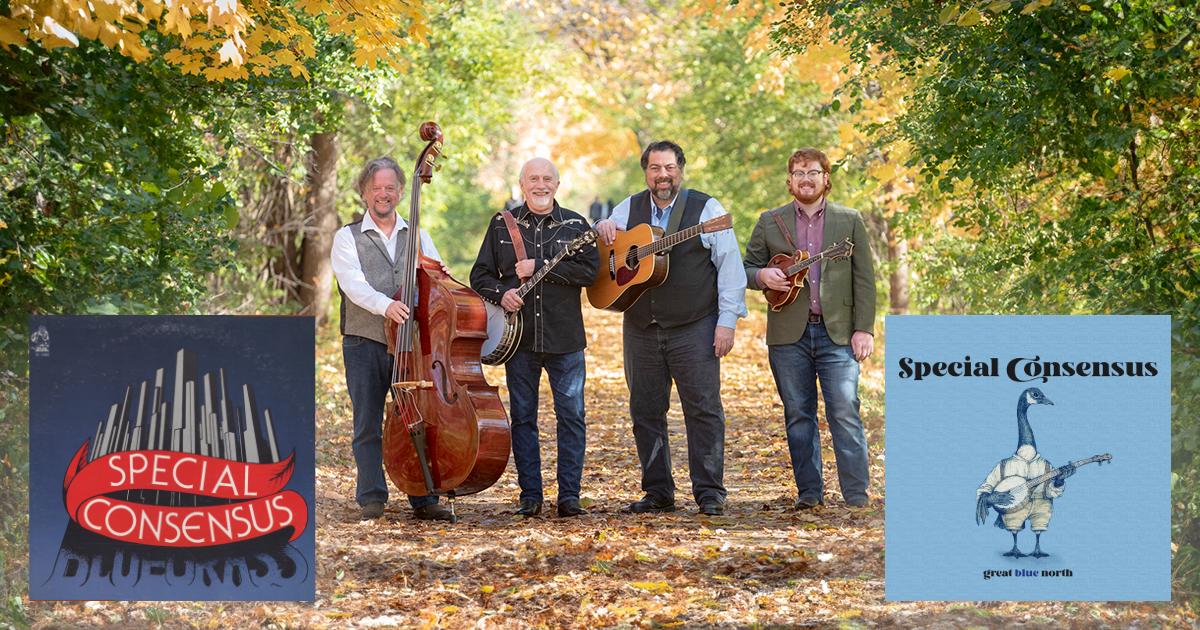
Chicago-based, long-running bluegrass outfit Special Consensus have been making records since 1979, when they released their debut, self-titled album. Since then, they’ve put out about 20 records – and they’ve criss-crossed the country and the globe spreading their modern-yet-traditional, hard-driving sound. Banjo player Greg Cahill, who is also a bluegrass industry leader and community builder, is the band’s sole remaining original member and, across those decades, has been the linchpin, the keystone of what has become a true legacy act.

To mark the occasion of their latest release, Great Blue North (released May 12 on Compass Records), we compare and contrast the band’s debut record with this new project with Cahill – it’s First & Latest, from BGS.

What goes through your mind when you hear a song from that first record, like “Like a Train?”

Greg Cahill: I cannot believe it was so long ago! This was our first time in a recording studio and we knew nothing about the process of making a record. It was truly a complete learning experience and we had a wonderful engineer who was a master at finding the exact place to punch in, and he even manually lined up and spliced the ¾” tape on one of the songs so we could use the first part of the one pass and the second part of a later pass. The album is pretty basic and far from top notch, but we did our best and actually sold a good number of that vinyl record.

At that point, did you ever think this band would have such longevity?

We had no idea about where our journey would take us. Special C actually formed sometime in 1973 – two of us were grad students and two had full time jobs. By 1975, I had finished my masters degree and was playing in local pubs and venues while working a full time job in social work, and all I wanted to do was play the banjo. It was 1975 when bass player Marc Edelstein and I decided we wanted to try playing full time – to play and tour as much as possible to get this bluegrass bug out of our system and go back to “real” jobs/life in a couple years. The other two members decided not to join us for this ride, so we found a guitar player and a mandolin player and quit our day jobs to devote full time to playing music. Marc left the band a few years later but the plan didn’t work for me – the bluegrass “addiction” only became stronger. I just “kept on keepin’ on” with no set time limit on my musical journey and now here I am today, never dreaming I would still be going strong with no set end time.

What do you think has been the key to your spanning the decades in bluegrass – besides yourself, that is!

I have been most fortunate to have had some great musicians/people in the band over the years – and still do have wonderful bandmates. Of course I have experienced the ups and downs of playing full time – it was always worrisome when a band member left or when there were slow times but we always found side jobs and teaching opportunities to keep us moving forward. I guess I am just too stubborn to even think about not playing because I love making music so much.

There’s an energy, a drive, even in this earliest recording that you’ve continued to carry with you. Where do you think that comes from? It reminds me of classic Seldom Scene and Johnson Mountain Boys, like you’re always leaning a bit forward into the groove.

I found bluegrass music through folk music (Kingston Trio; Peter, Paul and Mary; Limelighters, etc.) and eventually Pete Seeger – whose music prompted me to buy a long-neck 5-string banjo and then a 6-string guitar and then a 12-string guitar. I played in a folk trio with friends in college, and one day I heard “The Ballad of Jed Clampett” and immediately knew I had to learn how to play the bluegrass banjo. I found the Earl Scruggs book and was obsessed with playing the banjo every free moment of my life and it was his drive and perfect tone and timing that overwhelmed me. Then I heard J.D. Crowe and he became my model and eventually my mentor of sorts, even before I ever met him. This was in the early 1970s. New Grass Revival also grabbed my ear, and I spent hours trying to learn J.D. solos but also Courtney Johnson licks, determined to not lose the drive when playing non-Scruggs/Crowe licks because at that time many folks felt that Scruggs style playing was the only “right” way to play the 5-string. It has always been about the drive for me – and I learned that from J.D. as well – he always had drive, even on slow songs that he played with superb finesse.

“The Singer” feels like that classic move of a bluegrass band playing a country song, can you talk a bit about what you remember about choosing that track and recording it?

We were city boys playing in big city pubs and venues where the general public had no idea what bluegrass music was. Although we always loved the traditional bluegrass songs and tunes, we felt we had to play some material that the general public might recognize and eventually really like our brand of bluegrass music. So we included old rock songs, country songs, and jazzy swing songs in the repertoire along with the traditional songs. I would say we actually became more traditional over the years, because we were building a local and then national and then international audience while maintaining a varied repertoire.

When I heard “The Singer” I immediately wanted to include that song in our repertoire – the song is so well written, the words are so poignant, especially knowing that Neal Allen wrote the song about his father Red Allen and also that Neal died of pneumonia while on the road. As Bill Monroe would say, “It’s a powerful number.”

Now, about the latest album, Great Blue North, what inspired you to cross the Great Lakes for this album and do Canadian bluegrass?

We are so fortunate to be on the Compass Records label and especially to have Alison Brown as our producer. When we begin preparations to record, the four of us and Alison begin our search for new material. We are basically on a bi-annual release schedule with the label and one of the songs Alison thought would be a good song for us to include on our 2020 release was “Blackbird,” written by the great Canadian songwriter/singer/guitar player J.P. Cormier. We loved the song but as we gathered material for that release the theme shifted to featuring a nod to Chicago, where the band has been based since beginning in 1975, because 2020 was the 45th band anniversary. Hence the 2020 “Chicago Barn Dance” release. We knew we would record “Blackbird” at some point, and after the pandemic shut-down we wanted to let folks know we were still alive and well and anxious to get back on the road, so we recorded “Blackbird” and Compass released it as a single. As we began the search for material for a new recording, Alison mentioned that it might be a good time to give a nod to our Canadian friends — since we have played there so much over the past three decades — and we all agreed. We then decided to include only songs written by Canadian writers and also to ask many of our Canadian musician friends to perform with us on some of the tracks.

Do you think being such a long-running Midwestern-based group informed the new album for you? And your connections to this material?

I think we may have had more opportunities to tour in Canada because of our Midwestern base. We did not play the big festivals when we first began touring there – we played shows for bluegrass associations and community centers in Toronto, Ontario (only an 8+ hour drive from Chicago), Winnipeg, Manitoba (13+ hour drive) and Calgary, Alberta (25-hour drive). We would head directly to Toronto or work our way through Minnesota to the Canadian gigs, which helped us get invited to the festivals. We also learned about the Canadian songwriters through so many of the great Canadian musicians whom we met and became friends with through this networking.

To me, a throughline between your first and latest albums is the arrangements, the way your band is always playing as a tight-knit ensemble, not just a handful of instruments sounding simultaneously. Where do you get the inspiration for the way your individual parts play off of and dialogue with each other?

I think we have always been focused on the power of tight and interesting arrangements. This again goes back to the fact that because we are from Chicago – not a bluegrass hub in the eyes of the general public – we had to make sure to keep the attention of the audience and not have songs begin to all sound alike. The arrangements give the band the opportunity to be more creative and to showcase the tight vocal and instrumental harmonies. I have always wanted an outside/non-band member producer to give us an objective opinion about the sound, the material and the performance. We have always had very good producers and I must say that Alison Brown is a phenomenal producer who has brought the band to another level. From our perspective, she basically considers each song on our recording to be unique and “special” – there are no “filler” tracks, and we spend however much time necessary to make each track stand out.

“Snowbird” will go down as one of Special C’s tastiest cover songs, do you have favorite covers from across the years? It’s kind of a hallmark of your band!

Although we try not to be seen as a cover band, we have chosen to cover some songs from artists that we feel we can make sound like a bluegrass song, and especially sound like a Special C song. We have been most fortunate to have been given some great songs by many great songwriters over the years and we have also chosen some songs from other genres that we thought we could have fun recording and that our fans would enjoy hearing. “Snowbird” was one of the first songs on our list once we decided on the Canadian theme after recording “Blackbird” – my wife had suggested that song many times and now it seemed like the perfect song to feature Greg Blake’s fabulous voice. Some of the covers we have done on past recordings include “Viva Las Vegas,” “Ramblin’ Fever,” “Dream of Me,” “I Cried Myself Awake,” “Big River,” “Sea of Heartbreak,” “Looking Out My Back Door,” “Sweet Home Chicago,” “City of New Orleans,” our entire Country Boy: A Tribute to John Denver recording, “Alberta Bound” and several other songs on the Great Blue North release.

I must say, that as the years pass so quickly and the time between the first record and the current recording becomes so long I realize how fortunate and blessed I have been to be able to keep making music with so many wonderful musicians/people/friends. At times I have felt that the first recording was below the professional level but because of this interview and going back to listen to it, I now truly understand that we can only do our best throughout this journey, be thankful that we are able to keep growing and learning and appreciate our accomplishments no matter how insignificant they may seem at any given time.


Photo Credit: Jamey Guy

Alison Brown and Sierra Hull Swap Licks on Classical-Flavored Tune

Two of the most accomplished musicians in bluegrass – certainly two of the most notable women players in the history of the music – have joined together on a mind-blowing chamber-grass duet. Alison Brown, the first woman to win the Banjo Player of the Year Award from the IBMA, and Sierra Hull, the first woman to win Mandolin Player of the Year, joined forces on Brown’s recent album, On Banjo, and a classical-influenced original tune, “Sweet Sixteenths.”

Both Brown and Hull are virtuosic players adept in many styles and “Sweet Sixteenths” shows just how effortlessly they bring bluegrass improvisation and energy into what’s regarded as a more stoic format, creating an exciting, jaw-dropping, impossibly complicated – yet, totally down to earth – sound. Their synchronicity is just as impressive, inspiring a sort of wonder that chamber-grass is well known for: How much of this is planned out, and totally written-through, and how much is off-the-cuff and in the moment?

Bluegrass pickers are so well equipped to confound and delight us with these sorts of questions and that fact is no more apparent than in this live, studio performance video by Brown and Hull. We hope you also enjoy “Sweet Sixteenths.”