Bluegrass Gospel,
Arena-Style

This feature ought to start with a laundry list of our subject’s accomplishments, but rootsy country hitmaker Dierks Bentley’s résumé and inventory of accolades, awards, and trophies would be far too long to include. After 30+ years in Nashville, Bentley has more than made it and his particular brand of country – down-to-earth approachability, bro-ey (while remarkably non-toxic) good-time vibes, honeyed crackling vocals, an unwavering sense of humor, and fierce love for bluegrass virtuosity – has now gained such a strong gravitational pull, it continues to shift Music Row. (For the better, of course.)

In June, Bentley released his eleventh studio album, Broken Branches, and launched an eponymous continent-spanning tour with everybody’s favorite, fellow trad country lover Zach Top, and swampgrass North Georgia duo the Band Loula in tow. Broken Branches features guests like Miranda Lambert, Riley Green, John Anderson, and more and – like all of the albums in his expansive Dierkscography – quite a few string band- and bluegrass-inspired moments, as well.

The Broken Branches Tour, which has been clipped and shared thousands and thousands of times on social media over the past several weeks, includes many hits, striking sets and theatrical tech, cameos from the infamous Hot Country Knights, and, yes, plenty of bluegrass. On the set list, Bentley and Top duet on an incredible “Freeborn Man” – we’re leaving out spoilers here so you can catch the tour’s scant remaining dates yourself and still be delighted. Bentley also performs the title track from his hit bluegrass album, 2010’s Up On The Ridge, and Logan Simmons and Malachi Mills of The Band Loula join him elsewhere in the set for a delicious bit of church.

@thebandloula the broken branches tour is in fulll effectttt 🥹🤧 y’all come see us with @dierksbentley and @Zach Top ♬ original sound – The Band Loula

Singing a Bill Monroe bluegrass gospel number in tight, intricate three-part harmony may seem like an odd choice for a big mainstream country arena show, but longtime fans and listeners of Bentley will know this is no aberration. This is the norm. Whatever the sonics of his music, from the most poppy and radio-ready country to the more Americana-coded to straight-ahead bluegrass, classic rock, and New Orleans grooves (and back again), Bentley brings bluegrass with him everywhere he goes. He brings its pickers, legends, and unsung heroes, too, uplifting them for all to enjoy.

When Mills, Simmons, and Bentley step to the center stage of an enormous auditorium or amphitheater to sing “Get Down On Your Knees and Pray,” depicted behind them on towering LED screens is a little log cabin dive bar with a neon cross steeple and a flickering “open” sign. As they lead the audience in the stark, convicting, hair-raising number – with grit and heart and endless spirit – you realize, yes, this is church. This is gospel. This is country and bluegrass, front porch music and arena music. This is Saturday night and this is Sunday morning.

It’s hard to imagine all of these intricate roots music details not only being palpable in a show of this scale, but they’re also measured, vulnerable, and intimate – traits not known as hallmarks of either country or bluegrass. It’s here that we find exactly the conglomeration of reasons why Bentley retains such widespread appeal and adoration from fans of all entry points. While neither he nor any other artist is universally loved, Dierks Bentley accomplishes being the modern country “everyman” not by diluting himself and his personality beyond recognition, but by purposefully, creatively, hilariously – and spiritually! – putting all of himself on the line in his music.

Before the Broken Branches tour launched earlier this summer, Good Country sat down backstage with Dierks Bentley and the Band Loula during a break from tour rehearsals, after the trio had just run through “Get Down On Your Knees and Pray.” We spoke about what bluegrass means in a country context, the appeal of gospel to folks of any (or no) faith, tent revivals and camp meetings, the joys and vulnerabilities of singing harmony, and much more.

Obviously, Dierks, across your entire career you’ve had a relationship with bluegrass. And not just Up On The Ridge, which we just heard you rehearse a bit of for the Broken Branches Tour. You’ve got records and posters on the wall at the Station Inn here in Nashville, you namecheck Keith Whitley on the new album. You’ve worked with the McCourys over and over, Charlie Worsham, an excellent bluegrass picker, is in your band. There are so many more bluegrass touchpoints. Your bluegrassy CMA Awards show appearance last year was very popular with our audience.

And for y’all, the Band Loula, you call yourself “swampgrass.” The harmonies clearly have the grit and the gospel of bluegrass and the timbre of how your voices blend together reminds me of bluegrass.

It might be an obvious question to ask, but I figured we could go around the circle here and get each of your takes on what does the genre mean to you? What’s your relationship with bluegrass? What does bluegrass mean to you in the constellation of country music that you make now?

Dierks Bentley: When I think about bluegrass, obviously it’s the music and all that, but really it’s just people with acoustic instruments gathering to play and sing together. I never really did a lot of stints on my own, solo. Probably I’m not good enough, but bar gigs where I was just doing cover songs never really interested me. I always liked being in a band. I love the way this instrument talks to that instrument, this voice talks to that voice, and this voice gets added and– “Whoa!”

Like the Osborne Brothers, they’re switching harmonies. Sonny is singing the high tenor, then the next thing you know, he is on like a low baritone part. The voices, the way they move around. That’s the main thing, that’s what drew me in when I walked into the Station. And there were guys my age. I always thought bluegrass was kinda like Hee Haw stuff. I walked in and I was like, “Oh my God, there’s guys my age.”

It was about just playing songs together. And they were doing a lot of Merle Haggard songs, George Jones songs mixed in. Johnny Cash songs mixed in with Stanley Brothers, the Osborne Brothers, and all that too. So it was just, “Wow.”

It’s more about the community of people congregating through and with their instruments. And using those to have fun – and drinks as well. [Laughs] Lotsa drinks, a lot of moonshine back then. The real stuff! No label on it.

Not 30 proof. [Laughs]

DB: That’s what it means to me and that’s what I hear in [The Band Loula’s] music, a lot of, if you want to call it, “front porch” picking music. Picking their roots – you know, deep, Southern gospel-y kind of roots, the mixing of that, and those voices together.

That’s what bluegrass has always been to me. It’s about the community as much as it is about the instrumentation and the bands. It’s the great community of people.

(L to R): Logan Simmons and Malachi Mills (of the Band Loula) confer with Dierks Bentley during rehearsals for the Broken Branches Tour. Photo by Zach Belcher.

Logan Simmons: I’ll say something that comes top of mind for me. I spent my whole life going to tent revivals. It’s not just, “I go and it’s summer camp, ’cause somebody made me.” It’s like the pinnacle of who I am.

I really believe that it’s the pillar of my family. We go for about 10 to 15 days every year. It’s beside my nanny’s house, and all it is, red-back hymns and bluegrass. The service happens every night and you go for about an hour and a half before service starts, before preaching starts, to hear bluegrass, gospel bands.

That’s how I learned harmonies, hearing all my godmothers and aunts sing the wrong ones around me. [Laughs] And you’ll hear somebody over there, Linda’s like [sings operatically and off-tune] and she’s not on it at all. But I was at least learning something and I feel like with my roots in general, it already infused that bluegrass sound into my life.

Then when Malachi and I became friends and started making music together. He has a lot of Motown roots. I think, blended together, the blues and bluegrass just made something beautiful. And, on top of that, the family harmony we have together. We’ve been friends forever, half our lives.

Malachi Mills: It all comes back to blues, yeah. And just like you said, that cross-pollination of the different genres. North Georgia is like the southern point of Appalachia. Like she said, it really influences the music we make by our harmonies. That’s the biggest thing we take from it. I love bluegrass music, but I’m not like a bluegrass buff. I would lose at bluegrass trivia. [Laughs] But it’s just in our bones and in the harmonies that she was talking about. Growing up in church and everything influences the way that we sing together and the notes that we pick whenever we’re singing harmonies. One of the biggest things that I love about bluegrass is the rhythm and pocket. And the intonation of the instruments. Bluegrass players choose to be intentional about [all of] it, the pocket, the timing, the tuning. It’s all so dead on. The details matter when you’re making records.

Dierks Bentley and band give Good Country and members of the media an exclusive sneak peek at their Broken Branches Tour set at rehearsals in May 2025 in Nashville. Photo by Zach Belcher.

I think that’s one of the reasons why it’s striking that y’all have this bluegrass song as part of this big, arena-sized stage show. Because for me, translating those details in such a big space and in such a broad format could be really hard.

Then I hear and see y’all singing in three parts with a neon cross behind you and suddenly yes, this is church. This is what it is. Any close-singing harmony vocals are great, but when it really sounds like bluegrass to me is when you can hear the reeds of your voices match up when you’re harmonizing. That was a really beautiful moment.

Could you talk a little bit about capturing those details for a big audience in big rooms like this – or even outside, in amphitheaters. How do you take a Bill Monroe gospel song and translate it to that space?

DB: Well, there’s “Bluegrass” Ben Helson out there walking the hallways. Ben and a couple other guys in the band have played with Ricky Skaggs. Ben played with Ricky and Tim [Sergent] still plays with Ricky. I always say, if you can graduate from the Ricky Skaggs school of bluegrass and country music, you’re probably a pretty good musician. He also played with Rhonda Vincent.

I’m a big Del McCoury fan. They did [“Get Down on Your Knees and Pray”] and Del has such a cool version of it. We were just kinda thinking of songs to do with these guys that would be great using their voices. Like [they] said, they’re the blues and bluegrass. I’m still trying to figure out their sound. It’s such a unique mixture; it’s so Americana in the way that in this country we have this melting pot of stuff. We thought it would be cool to do a little three-part thing, so that one came up.

Marty Stuart also did a really cool version of that song. But Ben [Helson], our guitar player really came up with that [arrangement], leaning into the swampy stuff they do. Gave it that feel, a little Southern – I don’t know what the vibe is there, but that telecaster is playing and it just has a cool kind of dirty, bluesy vibe to it. Then working up the harmonies, there’s just something about hearing a cappella bands.

I remember seeing Billy Strings at a bluegrass festival years ago and the band all stopped – no one knew who he was back then. Bryan Sutton had told me who he was, so I was where he was. He played like a Thursday set in the middle of the day. They had just done three songs and then they stopped and did a four-part harmony thing. There’s just something about it that’s so powerful. It goes straight to your soul.

The oldest version of entertainment there was was probably harmonizing. Finding people, seeing how your voices sound together, it’s a weird, cool thing. Singers talk about it all the time, in any genre of music about how seeing how we sound together is an intimate thing.

It’s vulnerable and it’s immediately establishing that community that you’re talking about. “We may not be a band, but now we’re a thing.”

DB: I feel like I blend well with anybody, because I’m like the condition. I sing it pretty straight here and allow the people around me to really do their stuff. I’m just gonna hold the line. There’s like nothing special about my voice, but it’s good to blend with ’cause other people have these amazing voices. They can do a lot of movement and a lot of great vibrato. I’m like the dumbest Del McCoury School of Bluegrass [student], just find that note and put everything into it. [Laughs]

Not to mention, introducing people to bluegrass as well – I love that. You have a chance to be a bridge to your heroes and that is always fun. People have been that to me, Marty Stuart probably the biggest. You get into Marty Stuart’s music and you find out who he likes, and then, whoa! He brings you back there. So [I hope] this turns somebody onto Bill Monroe. That’s pretty cool.

Dierks Bentley has a quiet moment on stage during rehearsals for the Broken Branches Tour. Photo by Zach Belcher.

Country – a lot like blues, R&B, and the early days of rock and roll – it has this often tempestuous and inspiring relationship between the fun of Saturday night and the conviction of Sunday morning. So seeing y’all sing that song in front of the depiction of a church as a dive bar, complete with a neon cross and a flickering “open” sign – to me that’s “a little bit holy water, a little bit Burning Man” epitomized. You guys are embodying that relationship between the sacred and the secular here. And that duality is all over your new album, too, Dierks.

MM: I’ll say, I think that one of the biggest things that contributes to that is the goosebump, hair-standing-up-on-your-arm feeling. It’s knowing that you have a part in something and whenever you sing and play bluegrass music together, you have to give way to one another on stage. So it’s the whole stage saying we’re doing this very intentionally in unity, in harmony.

And everybody in the crowd, whether they know that or not, they feel it. That’s what I think people feel. Even if you’re not a believer and maybe the message that’s being said [doesn’t apply], but you still resonate with serving each other. With being present, which is a strong energy. I think that’s what makes me excited about playing this song. I don’t know what’s gonna happen emotionally for me whenever that moment happens, ’cause it’s gonna be so much of that unified energy.

DB: Unified energy is a good way of putting it. It’s unified and it really is energy.

We’re pretty involved with the church. I have an older daughter who’s involved in the church and another middle daughter who doesn’t believe it like I did. But there’s something divine that you just can’t ignore, whether you believe it or not – just look at a sunset, look at a flower, look at a fish, look at so much unnecessary beauty in the world. There’s just some energy that exists and you can’t deny it when you sing a song like this. It just taps [something] on anybody. Recognizing how small you are in this world and the power of whatever version of prayer you do.

LS: I liked how you said it joins secular and holy together and that actually made me think of the tent revival, as well. I think growing up in Appalachia, like Malachi said – I wish I could just teleport you there so you could experience!

DB: That would be cool, a tent revival – I can’t even imagine.

I haven’t been to a camp meeting or revival in so long!

LS: Everybody’s invited to camp meeting. I don’t know if you’d love it. Our tent – I say tent, it’s like a shack on a square, it’s like a big square, four sides. So we’ll say, “Are you on the upper line or the lower line?” We’re on the upper line, which is not a good thing. It’s like you think upper line is like uppity people or something, but it’s not. Our shack is the oldest and [most] untouched of the whole campground. It was built in 1846.

DB: Wow!

LS: So there’s holes in the roof and like, my bunk bed, I get water drops on my head if it rains. There’s hay floors, there’s no air, and there’s a lot of us, so it’s all packed in there. But camp meeting is where I learned my first Bible verses and where I smoked my first joint. [Laughs] So it all marries together how you said, like holy and secular at the same time. I think of that picture of going to the gospel tent revival, going to camp meeting, singing those red-back hymns, doing all those things – but then also learning the grit of growing up.

I just loved when you said joining those things together, because that was such a representation of my upbringing. Yeah, it’s a little bit holy water, a little bit Burning Man. It’s definitely Saturday nights and Sunday mornings – and the tent revival is where I feel like those two worlds are so evident.

Dierks, in all you’ve done across your career there are all these bluegrass moments. The country that you “grow,” it’s mainstream, it’s radio-ready, but it’s like there’s bluegrass in the “soil” you grow it in, so you can always taste bluegrass in everything you do. Like on the new record, “Never You” with Miranda Lambert feels that way and “For As Long As I Can Remember”–

DB: There’s a little “Circles Around Me” by Sam Bush [reference] there at the top of that song.

Oh my gosh, yeah! Exactly what I’m talking about.

You said a little bit earlier turning people onto your heroes always feels great, but for you, from your own perspective being that guy that used to just hang out at the Station Inn and now being the Dierks Bentley and going on tour in sheds and arenas and amphitheaters… Why do you keep bluegrass with you?

Dierks Bentley: It is selfish in a lot of ways. I have such a great band and I just take so much joy watching them do cool stuff that I can’t do. It’s like our guitar player, Ben, he’s just an unbelievable flat picker. Charlie Worsham’s in our band and Charlie won the CMA Musician of the Year. He is just an incredible musician. Dan [Hochhalter] is an incredible fiddle player. Tim is so underutilized. Our steel guitar player – who plays banjo and everything else – he’s one of the best singers to me. Hearing him is like hearing Merle Haggard. He sings like nobody else, but he’s also so underutilized. And Steve’s been playing with me since 1999.

It’s just a great group and we love bluegrass music, featuring that, and having the music part of the show. I like being in a band setting, so just getting to be around it and hear these instruments swirling around me playing, I think it’s just cool.

I got a chance to play ROMP Festival last year and I feel lucky to be friends with guys like Jerry Douglas and Sierra Hull and have them come up on stage and play with us. I still think bluegrass music is the punk rock of country. It’s just the coolest genre of music there is.

It’s gotta be centering or grounding to a certain degree just to have that as something you can go back to, to feed yourself and fill yourself back up even while you’re touring.

DB: Absolutely. In the show we go from playing Tony Rice to John Michael Montgomery. We play bluegrass with the Hot Country Knights with costumes on. It’s just it’s all very selfish! It’s like, “How can I have a lot of fun in the next 90 minutes?”

I wanna do our radio country. I want people singing songs back, because that’s a great feeling. I want to get a little bluegrass in there. Just see if we get away with that. Then, can we try to get canceled on the way out? [Laughs] I dunno. It’s really fun for me. And having these guys [out with us] and getting to harmonize with them, it’s gonna be really fun. Check back in a few months, see how it turned out.


Want more Good Country? Sign up to receive our monthly email newsletter – and much more music! – direct to your inbox.

All photos by Zach Belcher.

Dierkscography

In 1994, a not yet 20-year-old Dierks Bentley threw all caution to the wind when he packed up his dorm room at the University of Vermont with hopes to never return. Bentley’s relocation would not only forever change the course of his life – it would go on to catalyze his tremendous impact on roots music at large.

After a trip with his father to Nashville made quite the impression, Bentley decided to complete his college degree at Vanderbilt, dedicating his studies to English (the major most proximal to songwriting). After graduating, Bentley continued to foster both his musical education and career; his day job entailed archiving old country performances at The Nashville Network (in fact, his diligent field work even got him banned temporarily from the Grand Ole Opry), while his evenings were filled with bar gigs and songwriting sessions. After five years of grunt work, 2003 saw Bentley release a self-titled album with Capitol Records. His first single, “What Was I Thinkin’,” made waves on the country charts. Since then, Bentley has been responsible for the release of 20 No. 1 country singles and 10 additional studio albums, the latest of which, Broken Branches, arrived in June.

While Bentley’s career has seen major commercial country success, his deep respect for expansion and immersion has made him a beloved fixture within bluegrass, as well.

Of his instrumental move to Nashville, Bentley has shared, “I moved to Nashville in 1994 – I was trying to find that seed of truth, that authenticity, that thing ‘country music’ that I had in my head. And I got here and it was definitely different than I expected it to be. It’s big business, a lot of money.

“Luckily, for me, I found a little bar called the Station Inn where bluegrass music existed – and I found what I was looking for. Just the sound of a five-piece bluegrass band blew my mind. And they’re not trying to take meetings all the time and meet producers, and get their foot in the door. It’s funny, I moved to Nashville looking for country music, but I found bluegrass.”

Whether it’s his proclivity for cross-genre conversation, songwriting prowess, or patinaed tenor delivery, Dierks has proved himself a mainstay favorite for country, Americana, and bluegrass fans – here at Good Country and BGS, and beyond. In honor of his recent album release and his huge Broken Branches tour with Zach Top and the Band Loula concluding this month, we present you with our Dierkscography, a non-comprehensive compilation of more than 15 songs meant to show off some of our favorite Dierks gems from across genres sampled from the many years of his remarkable career.

“Never You” featuring Miranda Lambert, Broken Branches (2025)

Dierks’s new album, Broken Branches, arrived fresh off the press with a slew of impressive collaborators, from Riley Green to Stephen Wilson Jr. Dierks fondly calls the record a “special” display of “making music in the studio with our buddies.” Country giant and longtime collaborator Miranda Lambert joins Bentley on this banjo-driven track, with the pair’s velvety duet vocals imbuing tenderness and warmth into one of the album’s only love songs.

“High Note” featuring Billy Strings, Gravel & Gold (2023)

This rip-roaring tune off of Bentley’s tenth studio album features a whole handful of bluegrass greats. Not only does Billy’s high tenor soar above Dierks gravelly tones during choruses, his famous flatpicking joins the likes of Sam Bush, Bryan Sutton, and Jerry Douglas for a superjam ending.

Of the collaboration, Dierks recalls, “Bryan Sutton first tipped me off to Billy Strings about seven years ago, mentioning that the future of bluegrass was in good hands. I was totally blown away the first time I saw him. I’ve cut songs like these since my first record, and I knew I wanted to have him on this one, I’m such a huge fan. It was a lot of fun to have him, Jerry, Sam, and Bryan all passing licks around – having them all on this record means a lot to me personally.”

“American Girl” (2024)

Who doesn’t love an Americana “American Girl”? Bentley delivers this country-fied Tom Petty classic alongside some BGS favorites, including Chris Eldridge on guitar and Noam Pikelny on banjo. Dierks reprised the hit single joined by Bronwyn Keith-Hynes, Sierra Hull, and Molly Tuttle on stage at the 2024 CMA Awards, bringing down the house.

“For As Long As I Can Remember,” Broken Branches (2025)

The country canon has seen its fair share of heartache, murder, trains, and drinking. Also on his latest release, “For As Long As I Can Remember” shirks these motifs in favor of something a little more wholesome – a warm and adoring ballad dedicated to the strength of enduring familial bond. An ode to his brother and father, Dierks reminds that respect and love can be country, too.

“Train Travelin’,” Dierks Bentley (2003)

With many of his nascent Nashville days edified by nights at the Station Inn and in the surrounding bluegrass scene, iconic bluegrass family the McCourys quickly became repeat collaborators for Dierks. Their features pepper many of his earlier albums, dating all the way back to his debut self-titled release in 2003. “Train Travelin’” would become the first of many, with other gems such as Good Man Like Me (Modern Day Drifter, 2005) and Last Call featuring Ronnie McCoury (Feel That Fire, 2009) dotting the road to Bentley’s eventual bluegrass-centric album, Up On The Ridge.

“Up On The Ridge,” Up On The Ridge (2010)

The titular track off of Bentley’s bluegrass-inspired album is thrumming with energy, both quickly-paced and haunting with its descending melodic hook. Up On The Ridge was Bentley’s fifth studio album, featuring a star-studded list of bluegrass collaborators including Alison Krauss, Punch Brothers, Chris Stapleton, Tim O’Brien, Sam Bush, and beyond. Del McCoury even joins forces with Bentley and Punch Brothers to deliver a deliciously grassified cover of U2’s “Pride (in the Name of Love)” further evidencing the album as a culmination of both tradition and innovation.

“Freeborn Man,” (Live, 2025)

Another of our favorite timeless covers, Dierks has been adorning his Broken Branches Tour this summer with his vigorous take on “Freeborn Man.” This rendition includes a fiery feature by Zach Top, nearly toppling the stage with talent.

“Hoedown for My Lowdown Rowdy Ways” featuring Dierks Bentley, Lowdown Hoedown (Jason Carter, 2022)

With Jason Carter fiddling his heart out on Dierks’ records since 2003, it’s of course a polite roots custom for Dierks to return the favor. Released as part of Carter’s second solo album, Lowdown Hoedown, “Hoedown for My Lowdown Rowdy Ways” has Dierks singing harmony and strumming away on the bluesy breakdown. Lowdown Hoedown also features a tender Jamie Hartford number, “Good Things Happen,” that Dierks Bentley covered on his 2005 album Modern Day Drifter, yet another frame of conversation between the two artists.

“Prodigal Son’s Prayer” featuring The Grascals, Long Trip Alone (2006)

This acoustic tune features the bluegrass sensibilities of the Grascals, a long-running group lauded for their instrumental prowess. The song loosely follows the parable of the prodigal son, ultimately centering themes of repair and reconciliation. The song also features the stomps and hums of incarcerated individuals from Charles Bass Correctional Complex, who had been in Bentley’s producer’s Bible studies course at the time.

“Free and Easy (Down The Road I Go),” Long Trip Alone (2006)

From the same release, this breezy banger remains a hallmark of Bentley’s career, even after nearly two decades since it dropped. The fifth of his singles to top Billboard’s Hot Country charts, “Free and Easy (Down The Road I Go)” lures in listeners with its fast-paced country twang and life-affirming sentiment.

“Beautiful World” featuring Patty Griffin, Feel That Fire (2009)

No stranger to incredible collaborators, Dierks Bentley asked iconic folk and country singer-songwriter Patty Griffin to accompany him on this track, gushing, “Her voice is one of a kind and she’s such an important figure in the American music scene… She’s just amazing. And so I asked her.”

The result is a tender homage to the beauties of the world, largely inspired by his wife, who was pregnant with their daughter at the time of the song’s conception. “You hear people sometimes say, ‘Man, I can’t imagine bringing a child into this world. It’s so bad.’ That’s just such a negative outlook,” Dierks says. “You cannot live your life with that viewpoint of the world. Yes, there are a lot of things that are wrong, but it is a beautiful world, and you need to find the positive in it.”

“Heart of a Lonely Girl,” Home (2012)

From Bentley’s sixth studio album, Home, comes this spirited, emotionally deep number. The narrative song was penned by the infinitely talented Charlie Worsham, who would go on to join Bentley’s touring band a decade later – and you can currently see him on stage each night during the Broken Branches tour.

“Trip Around the Sun,” featuring Dierks Bentley, I Built a World (Bronwyn Keith-Hynes, 2024)

Fiddler Bronwyn Keith-Hynes first connected with Bentley through Molly Tuttle & Golden Highway, the popular bluegrass group that opened for him several times on tour. She’s also married to Jason Carter, so Dierks wasn’t just a professional collaborator, but a member of her personal Nashville network, as well. It’s no surprise, then, that she’d end up on stage with him at the CMA Awards and, in the same year, he would guest on her acclaimed and GRAMMY Award-nominated album, I Built a World.

“Mardi Gras” featuring Trombone Shorty, Black (2016)

Soaked in Louisiana charm, this tune was inspired by Dierk’s 2015 galavant on a Mardi Gras parade float. Featuring the indelible hornsmanship of Trombone Shorty, the track grooves along with bluesy undertones. “Getting Trombone Shorty to do his thing on it, what a great guy. I love working with him. He is so laid-back and so good at what he does,” Bentley boasts of his collaborator.

“Travelin’ Light” featuring Brandi Carlile, The Mountain (2018)

Featuring the powerhouse vocals of Americana giant Brandi Carlile, this tune appears on Bentley’s 2018 album, The Mountain. The collaboration between the two icons came to fruition after Bentley saw Brandi perform at Telluride Bluegrass Festival, inspiring him to approach her about dueting on the track.

“Sun Sets in Colorado,” Gravel & Gold (2023)

Written reflecting his pandemic move to Colorado (though he has since returned to Nashville), Bentley released this tune on Gravel & Gold. The song shouts out New Grass Revival and Telluride in a verse: “Sing an old new grass song with me/ Telluride along with me,” while also featuring New Grass Revival founding member Sam Bush on mandolin. Bryan Sutton also joins in on the studio recording, yet another sparkling collab with bluegrass greats.


Want more Good Country? Sign up to receive our monthly email newsletter – and much more music! – direct to your inbox.

Photo Credit: Robby Klein

Good Country, Good Community

Editor’s Note: Each issue of Good Country, our co-founder Ed Helms will share a handful of good country artists, albums, and songs direct from his own earphones in Ed’s Picks.

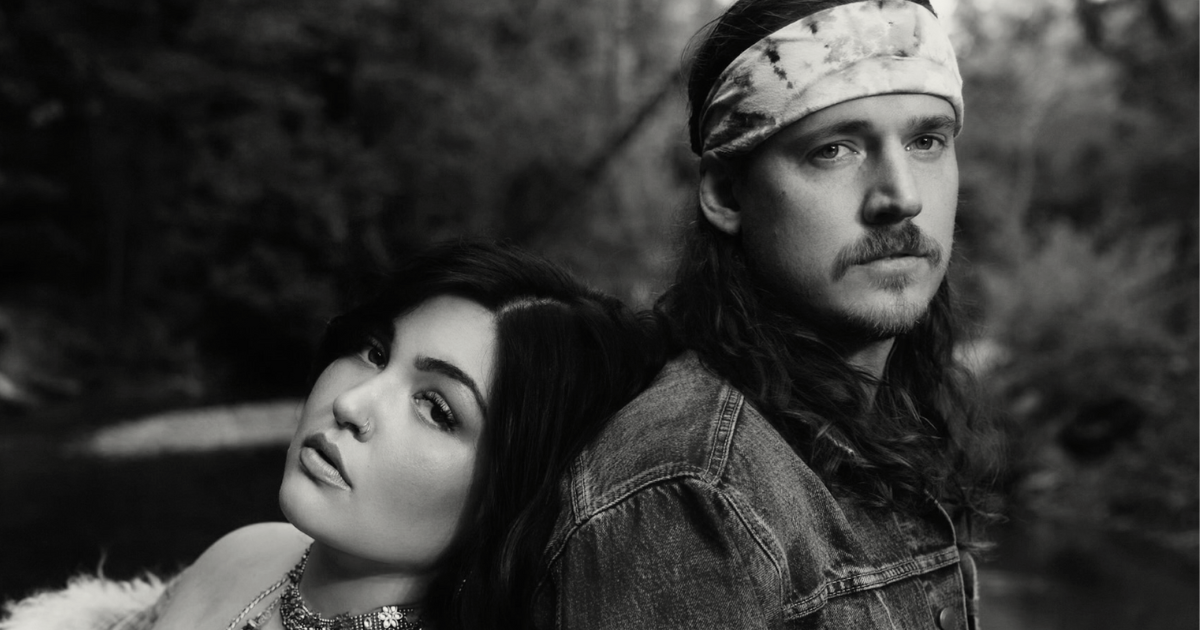
Gospel-infused, blues-inspired “swampgrass” from North Georgia, this Americana duo reminds of the Civil Wars, the SteelDrivers, and the Secret Sisters. Even so, they certainly have a sound all their own. Their new EP, Sweet Southern Summer, arrives August 22.

Read more about the Band Loula in conversation with Dierks Bentley here.


Our old favorite Timmy Ty has done it again! Snipe Hunter is a masterpiece of traditional postmodern Appalachian music. It’s hilarious and heartfelt, entirely unserious and devastating, too. No matter the textures and genres he references in his work, Tyler has always been Good Country (and very bluegrass, too).

Tyler Childers is our Artist of the Month. Dive into our coverage here.


Greensky Bluegrass

Bluegrass and jamgrass fans rejoiced in late July when our longtime pals in Greensky announced their upcoming album, XXV, marking 25 years of this incredibly impactful string band. With the announcement they released “Reverend,” featuring their Michigan compatriot Billy Strings. Here’s to the new album – and to the next 25 years! We can’t wait.


Robert Earl Keen & Friends: Applause for the Cause

The Texas Hill Country floods devastated fertile territory for roots music and Good Country in west Texas in early July. The artistic community has responded en force, quickly assembling quite a few star-studded benefit shows, concerts, and on-the-ground relief efforts.

Robert Earl Keen – together with a host of partners and sponsors – has convened a superlative lineup for just such an event, Applause for the Cause, to be held August 28 in New Braunfels, Texas. Featuring appearances by luminaries such as Tyler Childers, Miranda Lambert, Cody Jinks, Ray Wylie Hubbard, Kelsey Waldon, Jamey Johnson, and many more, the show almost immediately sold out. The good news is you can watch the performances via streaming (Amazon Music, DIRECTV, Veeps) and REK’s YouTube channel. The even better news is you can still donate directly to the Community Foundation of the Texas Hill Country, beneficiaries of the evening, to support the cause.


Trisha Yearwood

Yes, Trisha Yearwood is a country legend of stage and screen, but did you know she’s a stellar songwriter as well? Her brand new album, The Mirror, reflects this fact with 15 tracks all co-written by the Grand Ole Opry member. Plus, the collection features guests like Jim Lauderdale, Charles Kelley, and Hailey Whitters. THIS is Good Country!


Want more Good Country? Sign up to receive our monthly email newsletter – and much more music! – direct to your inbox.

Photo Credits: The Band Loula by Sara Katherine Mills; Tyler Childers by Sam Waxman; Greensky Bluegrass by Dylan Langille; Robert Earl Keen by Emma Delevante; Trisha Yearwood by Russ Harrington.

Tyler Childers: The Backstory (In Songs)

Tyler Childers has taken an unlikely path to the top via live performance, not radio singles. He’s become an improbable arena-level star by ignoring typical Nashville bromides – equal parts Patterson Hood’s working-class Southern blues, Chris Stapleton’s bluegrass bonafides, and Woody Guthrie’s progressive populism. After all, you’re not gonna call your touring band The Food Stamps unless you lean left, at least a little.

Like Billy Strings, Childers has become enough of a sensation for his appeal to extend beyond the Americana-adjacent world, too. Last year, he even turned up onstage for a live cameo with pop star Olivia Rodrigo in his Kentucky stomping grounds to do his song “All Your’n.” It went over like a house on fire.

Since country radio is finally, belatedly catching on with “Nose On The Grindstone,” lead single to Childers’ fine new Rick Rubin-produced LP Snipe Hunter, let’s take a look back to where he came from.

How’d this happen, anyway? Like this.

“Hard Times,” Bottles and Bibles (2011)

Going back to the beginning, “Hard Times” was the song that opened Childers’ full-length debut Bottles and Bibles. It’s an actual hillbilly elegy that definitely sets a tone, with finely detailed lyrics that unfold like a short story. Simultaneously stoic and emotional, Childers’ quavering vocal about a holdup gone wrong makes him sound like a protagonist who somehow regrets both everything and nothing at all: “And if the Lord wants to take me, I’m here for the taking/ ‘Cause Hell’s probably better than tryin’ to get by.”

“Long Violent History,” Long Violent History (2020)

Bluegrass roots and of-the-moment progressive activism makes for an unusual combination, but here we are. “Long Violent History” is the title track to a bluegrass album and it’s the only original and non-instrumental track on the record. Evoking “Faded Love” at the outset and “My Old Kentucky Home” on the outro, it’s a rural Southern score for the Black Lives Matter protests that swept America in 2020.

“It’s the worst that it’s been since the last time it happened,” Childers sighs at the outset, resigned to the inevitability of violence happening again. For good measure, Childers made a supplemental spoken-word video (below) explaining the necessity of BLM: “If we didn’t need to be reminded, there would be justice for Breonna Taylor, a Kentuckian like me, and countless others.”

“Jersey Giant” – Elle King (2022)

If Childers ever records his own version of “Jersey Giant,” he’ll have to hustle to top Elle King’s cover. As with the similarly themed “Me and Bobby McGee” (written by Kris Kristofferson, but owned for the ages by Janis Joplin), King just completely inhabits the song’s bittersweet, longing anguish. “I left town when we were over… Just didn’t feel the same” – the way she pauses a beat between lines is just chef’s-kiss perfection. There are numerous cover versions of “Jersey Giant” out there, but this is the one that’s going to linger.

“Luke 2:8-10,” Rustin’ In The Rain (2023)

Remember the big pivot-point moment of truth in the classic holiday cartoon A Charlie Brown Christmas – the “Lights, please” speech that his friend Linus makes? Childers must have grown up with that, too. Linus spoke these Bible verses, Luke 2:8-10, which Childers transposes to the key of honky-tonk in this song with his drawl in full effect. You can almost imagine the “Peanuts” dancers doing a two-step to it.

“Purgatory,” Can I Take My Hounds to Heaven? (2022)

Childers’ ambitiously wide-ranging 2022 album Can I Take My Hounds to Heaven? featured eight gospel songs, each done in three different versions dubbed Hallelujah, Jubilee, and Joyful Noise. The latter category tricked each tune up with samples and remixes, which might be the closest Childers has ever come to hip-hop electronica (at least so far!). In this guise, the title track from his 2017 project Purgatory cuts the sort of groove you’d expect to hear in New Orleans.

“The Heart You’ve Been Tending,” Harlan Road – NewTown (2016)

What does it mean that so many of the best covers of Childers’ songs are by women? Who’s to say, but here’s another great one, from the Kentucky band NewTown’s Harlan Road album. “The Heart You’ve Been Tending” is in waltz time, with fiddler/singer Kati Penn’s vocal shining bright as a lighthouse cutting through a foggy mountain breakdown.

“In Your Love,” Rustin’ in the Rain (2023)

Another multimedia project of sorts, this song from Childers’ Rustin’ in the Rain started out as a relatively conventional devotional love song. Then he enlisted collaborators including his fellow Kentuckian, author Silas House, to make a video that casts “In Your Love” as a sort of country music version of Brokeback Mountain set in coal-mining country. As beautiful as it is heartbreaking.

“Matthew,” Country Squire (2019)

Childers has always been wildly eclectic and this song from his Country Squire LP is a prime example. “Matthew” is yet another working-class waltz, with enough bluegrass savvy to drop bluegrass legend Clarence White’s name in the lyrics – plus an actual sitar as oddball sound-effect mood-setter at the beginning of the song. Somehow it makes perfect sense.

“Bottles and Bibles (Live),” Live on Red Barn Radio I & II (2018)

With or without a band, Childers has always been a riveting performer. This live version of the title track to his 2011 studio debut closed out 2018’s Live on Red Barn Radio I & II and it’s just voice and guitar. All the better to focus on the tale of a preacher as wayfaring stranger pondering the difficulties of keeping to the straight and narrow: “But they ain’t had to walk with the weight that you’ve hauled/ They don’t know you at all, but they think that they do.”

“Coal,” Bottles and Bibles (2011)

What might Bruce Springsteen have been like if he’d grown up in a Kentucky coal-mining family? You can imagine him turning out like the narrator of this song, which sounds way too timeless to have originated in this century. It’s pure working-class desperation: “We coulda made something of ourselves out there, if we’d listened to the folks/ That coal is gonna bury you.”

“Oneida,” Snipe Hunter (2025)

To be a Childers fan is to accept that he does have some idiosyncratic boundaries. There are songs from his live shows he’s never recorded, like the previously mentioned “Jersey Giant”; or popular recorded songs he has sworn off playing live, including the now-widely-seen-as-problematic “Feathered Indians.” For the better part of a decade, one of his unrecorded orphans was “Oneida,” a longtime fan favorite that’s like a Harold and Maude for the country set. Lo and behold, a recorded version finally surfaced as one of the best songs on Snipe Hunter. Dreams do come true.


Find more of our Artist of the Month coverage of Tyler Childers – including our Essentials Playlist – here.

Photo Credit: Sam Waxman

Finding Lucinda: Episode 8

In the latest episode of Finding Lucinda, Ismay drives to Nashville to share the incredible never-before-heard tape they found during their road trip journey with friend Buddy Miller. Miller is known to have contributed essential parts to Lucinda’s breakthrough, Car Wheels On A Gravel Road. Ismay reviews the commonly told story about the making of this record, how fraught it was, and realizes that there actually is important history to uncover – history that reveals a more interesting and unexpected truth about why this record was so challenging to make. Ismay discusses Lucinda’s history in L.A., where she met a critical collaborator Gurf Morlix and subsequently made her albums Sweet Old World and Lucinda Williams.

LISTEN: APPLE • SPOTIFY • AMAZON • MP3

Produced in partnership with BGS and distributed through the BGS Podcast Network, Finding Lucinda expands on the themes of Ismay’s eponymous documentary film, exploring artistic influence, creative resilience, and the impact of Williams’ music. New episodes are released twice a month. Listen right here on BGS or wherever you get podcasts.

Finding Lucinda, the documentary film that inspired and instigated the podcast, is slated for release in the fall. Both the film and podcast showcase never-before-heard archival material, intimate conversations, and a visual journey through the literal and figurative landscapes that molded Lucinda’s songwriting.

Credits:
Produced and mixed by Avery Hellman for Neanderthal Records, LLC.
Music by Ismay.
Artwork by Avery Hellman.
Nashville Recording: Recorded at Hummingbird Hill Studio.
Sound Recordist: Rodrigo Nino
Producer: Liz McBee
Director: Joel Fendelman
Co-Director & Cinematographer: Rose Bush
Special thanks to: Mick Hellman, Chuck Prophet, Jonathan McHugh, Sydney Lane, Don Fierro, Jacqueline Sabec, Rosemary Carroll, Lucinda Williams, and Tom Overby.


Find more information on Finding Lucinda here. Find our full Finding Lucinda episode archive here.

John Dickson on Only Vans
with Bri Bagwell

John Dickson has been fostering the Texas music scene for over five decades and is the brains behind one of the best country music festivals in the United States. John joins me on Only Vans to talk about the 40th anniversary of MusicFest, which is held annually in Steamboat Springs, Colorado.

LISTEN: APPLE • SPOTIFY • AMAZON • MP3


You Gotta Hear This: New Music From Jack Schneider, Elexa Dawson, and More

Bluegrass and folk, Americana and country – it’s another excellent serving of new music in our weekly roundup!

Beloved long-running bluegrass group Lonesome River Band have a new single out today, “Square Dance Friday Night,” which you can hear below. Written by LRB member and artist-songwriter Jesse Smathers, it’s the perfect track for New Music Friday whether or not a square dance is in your future – and of course, one should be. You’ll also find a preview of an upcoming track from singer-songwriter Elexa Dawson, “Roots Grow,” in our collection. Drawing on connections to land and ecology, it’s a string-Americana examination of the cycles of life; it readily shows how and why Dawson can often be found on the folk charts.

Don’t miss Kentucky’s Nicholas Jamerson joined by Rachel Baiman on his new song, which drops today. “How Sunday Feels” is more than apt in its vibey, grooving observations of toxicity and duplicity in religion and belief systems. Impeccable guitarist, singer, and songwriter Jack Schneider, who’s a delightful collapser and combiner of genres and eras, also debuted a new single this week as well.  Check out”Stone’s Throw Away,” a Barbara Keith cover that fits Schneider – and his upcoming album, Streets Of September –downright perfectly, shining with an indie-folk gilt.

We also have a special video treat this week, as we’re picking up and sharing a few performance videos from singer-songwriter Rachel McIntyre Smith from her Honeysuckle Friend Sessions series, which has been running on her social media and YouTube channel since October. Starting today and continuing over the next several weeks, we’ll share a series of three Honeysuckle Friend Sessions by McIntyre Smith and her musical friends and collaborators celebrating her recent EP. This edition features Smith in duet with Rebecca Lee Daniels offering a lovely rendition of Dolly Parton’s “Coat of Many Colors.”

Wherever you like your roots music to grow, there’s always a superb song just a stone’s throw away in our weekly roundup. You Gotta Hear This!

Elexa Dawson, “Roots Grow”


(Click to listen)

Artist: Elexa Dawson
Hometown: Emporia, Kansas
Song: “Roots Grow”
Album: Stay Put
Release Date: August 15, 2025 (single); September 12, 2025 (album)
Label: Turns Out Records

In Their Words: “‘Roots Grow’ is a celebration of the cycles of life. It can’t be all ‘love and light’ all the time. When times get hard, I look to the world around me, to the trees and animals, and I see lots of things that thrive in darkness. I think we can channel that energy and get through the dark times facing us with the help of the tree folk, who are a lot older and smarter than we are.” – Elexa Dawson

Track Credits:
Elexa Dawson – Vocals, acoustic guitar
Melissa Tastove – Vocals, shaker, djembe
Peter Oviatt – Vocals, shaker, claps, Juno 6 Polyphonic synth, banjo
Kelby Kimberlin – Bass
John Depew – Claps, mandolin
Sarah Bays – Melodica


Nicholas Jamerson, “How Sunday Feels” featuring Rachel Baiman

Artist: Nicholas Jamerson
Hometown: Prestonsburg, Kentucky
Song: “How Sunday Feels” featuring Rachel Baiman
Album: The Narrow Way
Release Date: August 8, 2025 (single); September 12, 2025 (album)
Label: Cloverdale

In Their Words: “This song was inspired by some keyboard warriors who use religion as a weapon of condemnation, rather than a tool of liberation from their own ego. Universally, I hope anyone who’s using their beliefs, whether religious, political, or philosophical, as a shield to judge and harm others will hear this song and maybe stop and think before speaking so critically about others.” – Nicholas Jamerson

Track Credits:
Nicholas Jamerson – Vocals, acoustic guitar, songwriter
Rachel Baiman – Fiddle, vocals, songwriter
Josh Oliver – Electric guitar, organ
Steve Haan – Bass
Mark Raudabaugh – Drums


Lonesome River Band, “Square Dance Friday Night”

Artist: Lonesome River Band
Hometown: Floyd, Virginia
Song: “Square Dance Friday Night”
Release Date: August 8, 2025
Label: Mountain Home Music Company

In Their Words: “‘Square Dance Friday Night,’ written by our bandmate Jesse Smathers, is a story of years gone by in rural America. Growing up in the 1970s, I played so many square dances and gatherings attended by the unique characters described in this song. So many friendships were built in the VFW halls and community centers that lasted forever. Music and dancing was the main source of entertainment for working class folks and it was the way to end the week with celebration!” – Sammy Shelor

“The tie between playing music and dancing is a huge part of the culture along the Appalachian mountains. Growing up, I remember cutting my teeth playing music for dancers at local venues along the North Carolina/Virginia line. It has always been a beautiful community event. ‘Square Dance Friday Night’ is your invitation to a night full of fun and tells of some of the interesting characters you may meet while there.” – Jesse Smathers

Track Credits:
Sammy Shelor – Banjo
Jesse Smathers – Acoustic guitar, lead vocal, songwriter
Mike Hartgrove – Fiddle
Adam Miller – Mandolin, harmony vocal
Kameron Keller – Upright bass
Rod Riley – Electric guitar


Rachel McIntyre Smith, “Coat of Many Colors” featuring Rebecca Lee Daniels (Honeysuckle Friend Sessions)

Artist: Rachel McIntyre Smith with Rebecca Lee Daniels
Hometown: Oliver Springs, Tennessee
Song: “Coat of Many Colors”
Latest Album: Honeysuckle Friend (Deluxe)
Release Date: August 13, 2025 (video); June 27, 2025 (deluxe EP)

In Their Words: “Rebecca Lee Daniels is one of my favorite singer-songwriters, so I was thrilled when she agreed to be part of my series, the Honeysuckle Friend Sessions. Since moving to Nashville, she has become one of my closest friends in the music scene. We chose this song because we are both East Tennessee girls who love Dolly Parton. I think we recorded this in just one or two takes, because it’s such a go-to song for both of us. I’m so excited for BGS to partner with me on three sessions in this series. Keep an eye out in two weeks for another Honeysuckle Friend Session right here on BGS as part of ‘You Gotta Hear This.'” – Rachel McIntyre Smith

“It’s so meaningful to sing with one of my closest friends and collaborators – on my favorite Dolly Parton song, no less! Rachel and I share a common thread with Dolly in that we’re all three Appalachian women raised in the foothills of East Tennessee. As an artist who writes and releases Appalachian- and bluegrass-centric music, being featured in BGS is more meaningful than I can put into words and I’m so grateful to Rachel for the opportunity!” – Rebecca Lee Daniels

Track Credits:
Rebecca Lee Daniels – Guitar, vocals
Rachel McIntyre Smith – Vocals

Video Credit: Filmed and edited by Rachel McIntyre Smith.


Jack Schneider, “Stone’s Throw Away”

Artist: Jack Schneider
Hometown: Atlanta, Georgia
Song: “Stone’s Throw Away”
Album: Streets Of September
Release Date: August 6, 2025 (single); September 19, 2025 (album)

In Their Words: “My mission as a singer-songwriter is not to just perform my own compositions, but to preserve the music that inspires me, especially the hidden gems that deserve to find their way out into the world.

“Discovering Barbara Keith, who wrote and originally performed ‘Stone’s Throw Away,’ was serendipitous. I was in New York record-shopping with guitar historian Maple Byrne and it was he who stumbled upon a copy of Barbara Keith’s self-titled record. He insisted that I check it out, so I bought it at his recommendation. When I listened, it was almost spiritual how deeply Barbara’s songs moved me, specifically ‘Stone’s Throw Away,’ because of the line, ‘Georgia never looked so good as it does in Tennessee.’ Every now and then someone else’s words align with your own lived experience and this song is a perfect example of that for me.

“Recording it on my new record was also serendipitous. I had made a 4-track cassette demo of this song at one point, purely for my own amusement, and when my producer Matt Andrews (Gillian Welch, Dawes) came across the demo in a folder, we put it in the mix. Matt, never having heard the original version, liked how well it connected to the narrative theme of the other songs we’d selected. I am thrilled with how it turned out. Above all I am just hopeful to be able to draw more people’s attention to the music of Barbara Keith. She is incredible and I hope this version of her song does it the justice that it deserves.” – Jack Schneider

Track Credits:
Jack Schneider – Electric guitar, lead vocal
Camille Thornton – Electric guitar, vocal harmony
Wendy Moten – Vocal harmony
Dominic Billett – Drums
Jared Manzo – Bass
Matt Andrews – Organ


Photo Credit: Jack Schneider by Annie Loughead; Elexa Dawson by Lifeleak Visuals.

Cody Jinks:
“You Never Stop Coming of Age”

For Texas country star Cody Jinks, his latest album – the fiery and rough-around-the-edges, yet poignant and sorrowful In My Blood – is a liberation of sorts. Not of sound or scope, but of self.

It comes from the eternal quest to find balance within the body, mind, heart, and soul of a singer-songwriter, one trying to understand just what it means to be human in the modern, chaotic world – which is why “Better Than the Bottle” was purposely placed as the opening track on the record.

“Been layin’ things down one habit at a time/ Never thought we’d get old…” Jinks rumbles through the melancholic number. “Now we’re damn sure tryin’/ And makin’ the most of the time that we have left.”

With his sobriety in recent years, Jinks has been taking a hard look at what he sees in the mirror. It’s not about having regrets or cringing at one’s past. Instead, it’s taking personal accountability and professional inventory of the wisdom gained from your existence in real time, all while the calendar on the wall seemingly changes faster and faster each year.

Now 44, Jinks is more focused on what’s just around the corner than continually looking back over his shoulder at the ups and downs along his life’s journey. It’s about a clear head, a keen focus on what matters most – family, friends, fellowship, the freedom to create and perform.

It sounds like you’re in a really good place right now.

Cody Jinks: Yeah. Well, whenever you’re a late bloomer like me, it takes you [til] later in life to figure things out. It’s a practice. I mean, obviously the last couple years I’ve been trying to work on myself, work on my family. I think it’s helped a lot creatively, as well. None of it’s been easy. It’s not like anything’s ever peaches and cream or roses or whatever. The music business is tough, and if it was easy, everybody would do it. I spent much of my marriage while I was on the road. Having been off the road the last four or five years, [not touring] as much as I used to be, I’ve learned that being a great husband and father is even harder than being in the music business.

And it all ties into everything though, because that creative side is also a big balancing act, where you need that outlet in your life.

Well, not only the creative outlet, it’s that I used to think that I was writing songs that are being vulnerable and they actually came across as being angry. There was an edge to [the older songs], where this new record really sounds like a guy that’s 45 years old that got tired of the fighting system. You get tired of just fighting everything. And I’ve obviously been fighting the music business my entire career. It’s kind of what I built my thing on.

And, at the same time, I had started bringing the guy in the music business home – that’s who my wife and kids had to live with, as well. So, we’ve been correcting some stuff like that. I’ve been getting some really vulnerable songs out of it. You never stop coming of age. No matter how old you get – when you’re in your teenage years, when you get in your forties – life is a continual movement, man. And if you are not moving forward, you’re going backwards. So, vulnerability is a strength to an extent.

How does that play into the album? I would surmise that the opening track [“Better Than the Bottle”] was purposely placed there.

I was actually going to speak to that track specifically, because that was the second-to-last song written for this record. I wrote it with a friend, Tom McElvain. We both quit smoking cigarettes. We quit doing recreational drugs. We’ve written together a lot over the years. I’ve got several songs with his name on it, but [“Better Than the Bottle”] was a real conversation.

He came over one morning, and in 20-plus years of friendship, it was the first time we had ever been around each other stone cold sober. We were talking about how we used to live versus how we’re trying to do things now and who we’re trying to be now for ourselves and for the people that we love, the friends that we lost along the way that didn’t pull out of it. We’re old enough to have friends that have died from it now. That song made its way to the first slot because it was everywhere – that song’s true. Tom was over here that morning in January and you talk about two grown men in their 40s and 50s just laying all out, teary eyes. Dude, we fucked a bunch of shit up in our lives and there’s a lot. At this point, we’re trying to atone for a lot of things.

That’s one of the beauties about getting older – perspective. There’s this kind of weird intrinsic value to hitting this age, where you still have mobility and your wits about you, but you also got some road miles on the tread.

[Laughs]. Yeah. At 40, I tell people the “check engine” light comes on. It’s not usually that serious, but you gotta change some things. It might be time to trade in the Lamborghini and get an F-150, slow down a little bit.

You have a family, as well, with these personal responsibilities and people that want you around for a long time.

That was really the big player. I quit smoking for my kids. I’d still probably be smoking cigarettes if it weren’t for my kids. I quit drinking for myself and for everybody around me. But, the cigarettes, I finally got that licked about five, six years ago. That was the one my doctor said, “Your kids are gonna thank you.”

This year also marks the 10th anniversary of your breakout album [Adobe Sessions]. I don’t know if you’ve been thinking a lot about the last 10 years, who that person was when you broke into the national scene and then who you are right now.

[I’m] a lot more patient [these days]. It’s been 10 years, [and back then] we’d been [playing for] 10 years by the time that breakout record came out. [I] still have hunger in this business, I just put in a smarter, more calculated manner these days.

I also found it interesting that you’ve mentioned Ray Bradbury as an inspiration for In My Blood. Can you speak to why that is and what he represents for you?

Yeah, absolutely. The focal point of the record, it’s a travel life, right? That’s where the record takes you, on this up-and-down journey of life. And, in that life, in everyone’s life, every fork you come to in the road, you take one way or the other, which leads you to another fork in the road. By the time you’re done, you’ve taken a bunch of forks, you’ve taken a bunch of different roads, and hopefully you took more good forks than you did the bad.

We planted a Ray Bradbury-inspired song (“Something Wicked This Way Comes”) right smack dab in the middle of this damn record, because it was the perfect frickin’ spot for it. It’s the only song that was snuck in the record that wasn’t really based on my life. If you’ve read the [Bradbury] book Something Wicked This Way Comes, it’s part of a series called the Green Town Trilogy. They’re all really good [books], but that one stands out. It’s my favorite. It’s a brilliant book. It’s good and evil.

We all have the same wants, needs, desires. What’s good for us? What’s not good for us? Is it good for me if I try to do this to obtain this or achieve this or to be this or to look like this? And those are the decisions that we make every single day. I had just read the book and I came up with this really badass little blues riff. It feels like a carnival ride.

That also plays into one of the things about getting older, which is that you choose to keep moving forward. When you’re younger, you might feel the pressure. And as you get older you realize there’s a lot of things you don’t need to worry about.

Yes. My parents had told me, “Don’t sweat the small stuff.” And then, when you’re at the age we’re at, the big stuff you thought when you were 20, 25 years old, you’re [now] like, “Well, that’s small stuff.” And then, by the time you get to our parents’ age, they’re looking at stuff we’re worried about in our 40s and they’re thinking, “Oh, that’s small stuff.” We’re gonna get to the point, hopefully, where we’re looking at [things] going, “Ah, man, why was I worried about that?”

Case in point, the other night we had a very mild water leak in the upstairs [of our house]. My daughter came downstairs at two o’clock in the morning and there was dripping on a custom turntable in our living room. This was nobody’s fault. And I got upset about it. We stopped the leak. We dried the water up. I woke up the next morning and there’s flooding in Central Texas and there’s like a hundred families who have lost their children. Let’s not sweat the small stuff, man. Some people got real problems.

There’s probably a lot of weight that’s come off your shoulders in the last couple years, whether it’s personal or professional. Obviously life’s a continued journey. Whether you want to participate in it or not, that’s up to everybody on their own. But, it feels like you’re kind of leaning into life in a really good way right now.

Yeah, I’m living it more, as opposed to getting up and butting heads with [life] every day.

How do you square that with the outlaw image that the media puts on you? Because there’s stereotypes that get equated into that. At your core, you’re a singer-songwriter, you’re a country musician.

You know, my whole career, they’ve been calling me [an “outlaw”]. Look, I know they need an “outlaw,” whatever. I’ve never called myself an outlaw. That was something the media called me, and I just agreed. I’ve kind of gone with it. It’s okay. It’s easy to call me that. I’m not an outlaw, dude. I’m a punk.

And underneath all of that is still your punk rock and metal blood.

Yeah. It’s too big a piece of me. It’s just who I am. It’s the way I run my organization. It’s a family. It’s us against the world. We don’t belong with anybody, so we belong to everybody.


Photo courtesy of The Oriel.

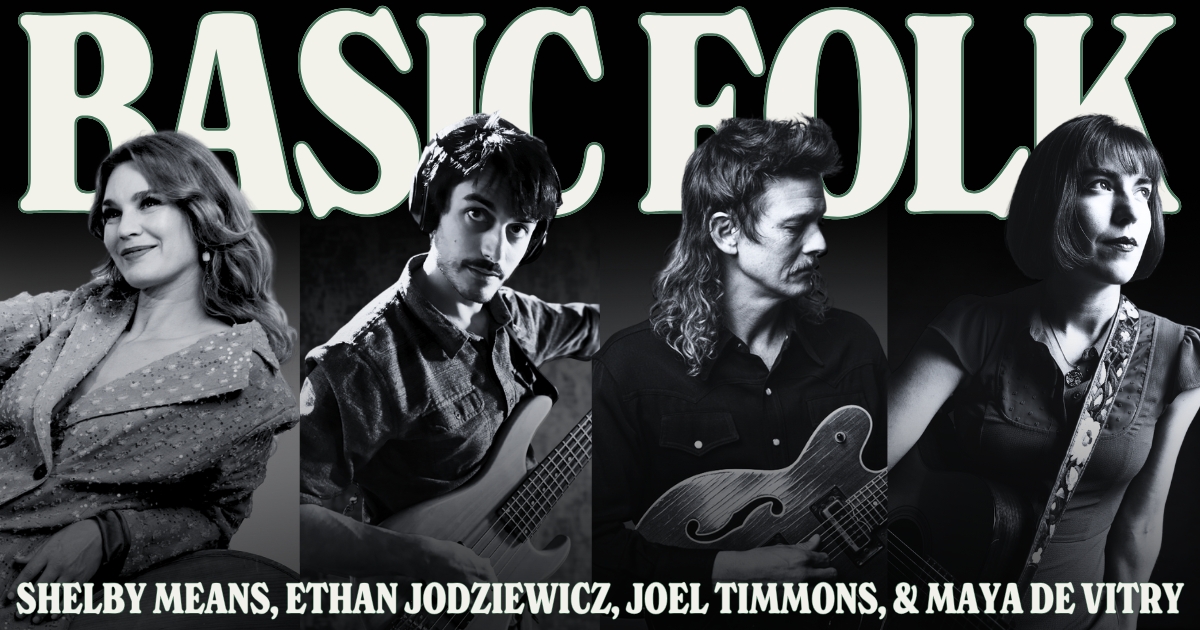
Basic Folk: Olive Klug

Olive Klug and I recorded this interview in my closet while they were in Portland, Maine, to play a show. Along with their band Cori, Haley, and Payton they stayed with us and it was a real pleasure to be around them for a few days. You can tell that Olive is at their best around their band and it is a true collaboration on stage. Shoutout to the whole crew for leaving such a remarkable impression on me and my wife and for assembling some baby furniture while they were staying at our house.

In our conversation for Basic Folk, Olive takes us on a journey through their musical upbringing, exploring their childhood influences, including their father’s eclectic taste in ’60s and ’70s rock and folk. Olive discusses their love for Joni Mitchell and Taylor Swift, which inspired them to learn guitar and develop their own musical tastes. They provide insights into their early internet presence on platforms like YouTube and Tumblr, and how these shaped their creative expression and online identity.

LISTEN: APPLE • SPOTIFY • AMAZON • MP3

Olive also touches on their experience of transitioning to a music career, going viral on TikTok, and the emotional and practical challenges that come with it. Additionally, they delve into how their psychology background and neurodiversity inform their songwriting, live performances, and day-to-day life. Our conversation wraps up with thoughts on the productive chaos of touring, the importance of community in the folk world, and their aspirations for long-term, sustainable growth in the music industry. Everyone belongs at the Olive Klug show. They leave their glow wherever their travels take them.


@oliveklugThe gay cowboys keep leaving nashvillea title=”♬ original sound – Olive Klug” href=”https://www.tiktok.com/music/original-sound-7519310944065817375?refer=embed” target=”_blank” rel=”noopener”>♬ original sound – Olive Klug


Photo Credit: Alex Steed

Artist of the Month:
Tyler Childers

Next to fellow Kentuckians Sturgill Simpson and Chris Stapleton, you’ll be hard pressed to find a singer more influential on the Commonwealth – or on all of Appalachian music – than Tyler Childers.

The Lawrence County-born artist first began cutting his teeth on dark corner stages inside diners across Eastern Kentucky and in grainy YouTube videos prior to laying the foundation for the cult-like following that’s been enamored with him since with 2011’s Bottles & Bibles and 2016’s Live On Red Barn Radio I & II. The following year he burst onto the national scene with his Simpson-produced studio debut, Purgatory.

From a voice as gritty and raw as the black gold he sings about on songs like “Nose On The Grindstone” and “Coal” to lyrics that shatter stereotypes and perceptions cast down on his home region by those outside of it, it’s easy to see why Childers’ music has become a soundtrack for not just part but all of Appalachia.

Whether it be the combination of humility and holler-bred antics within Purgatory, the intimate honky-tonk vignettes of Country Squire, the fiddle tunes of Long Violent History, the gospel-fueled experimentation of Can I Take My Hounds To Heaven? or the spiritual embodiment of Elvis on Rustin’ In The Rain, Childers has found success by shaking expectations at every turn, keeping old fans on their toes and bringing new ones in along the way.

When violence perpetrated by police was front and center during the aftermath of George Floyd’s death in 2020, Childers opted to cap off that fiddle album with its only vocal track, the protest anthem “Long Violent History.” During a heated societal moment, he approached the tune from an angle of empathy rather than pretentiousness as he tried contextualizing everything going on with past events like the Battle of Blair Mountain. Then in 2023 he had his first hit on country radio with “In Your Love,” an epic love tale that he recast as a gay one with the help of then Kentucky Poet Laureate Silas House in 2023.

While some fans have been turned off by his “political” statements, his viewpoints ultimately led to more people going down the rabbit hole of Childers’ catalog than ever before. This growth has culminated in sold-out shows at fabled venues like New York City’s Madison Square Garden, Lexington’s Kroger Field, London’s O2 Arena and the Los Angeles’ Hollywood Bowl. It also resulted in recording a track for last year’s TWISTERS soundtrack, collaborating with Olivia Rodrigo for a cover of “All Your’n” during a GUTS tour stop in Kentucky, and performing during The White House’s Fourth of July celebrations in 2024. Close to 10 years removed from his breakthrough moment, the singer is as popular and influential as ever.

That influence is sure to grow with the release of his latest studio album, Snipe Hunter. Recorded with and produced by Rick Rubin in Hawaii in early 2024, the 13-song compilation charts the red-headed stranger’s creative and spiritual coming of age with stories of the band’s success. The project is sprinkled with a bit of anti-capitalistic sentiment (“Eatin’ Big Time”), a yearning to escape on a trek to India (“Tirtha Yatra”), his fear of Koalas (“Down Under”) and hunting for whitetail deer (“Dirty Ought Trill”).

Much like its predecessors, Snipe Hunter captures Childers signature sound while also sounding like nothing he’s released before it, a fact no doubt aided by Rubin’s knack for crafting material that sticks to the cultural zeitgeist like superglue. Songs like “Nose On The Grindstone” and “Oneida” – a story about falling for an older woman – have been in Childers’ performance rotation, on YouTube playlists for years, and traded as coveted bootlegs, but the versions captured for Snipe Hunter, with their additions of organ, synths, and other studio toys, has each feeling reborn and completely new again.

Collectively, the album feels rooted in country funk bands of old like Goose Creek Symphony just as much as it incorporates more modern influences like Charlie Brown Superstar (whose remixes for Can I Take My Hounds To Heaven? are sublime) and Eric Church, serving up the perfect combination of past, present and future sounds in the process while sticking to the deeply personal Appalachian flavoring that has long highlighted his grand storytelling.

To celebrate the release of Snipe Hunter, we’ve named Childers our Good Country and BGS Artist Of The Month for August. Throughout the month, we’ll celebrate Childers by going back into our archives for all-things-Tyler, plus we put together a retrospective look at his catalog of songs and recordings here, have shared a thoughtful examination of whether or not Snipe Hunter was created as a musical “prank,” and of course, don’t miss our Essential Tyler Childers Playlist, below.


Photo Credit: Sam Waxman