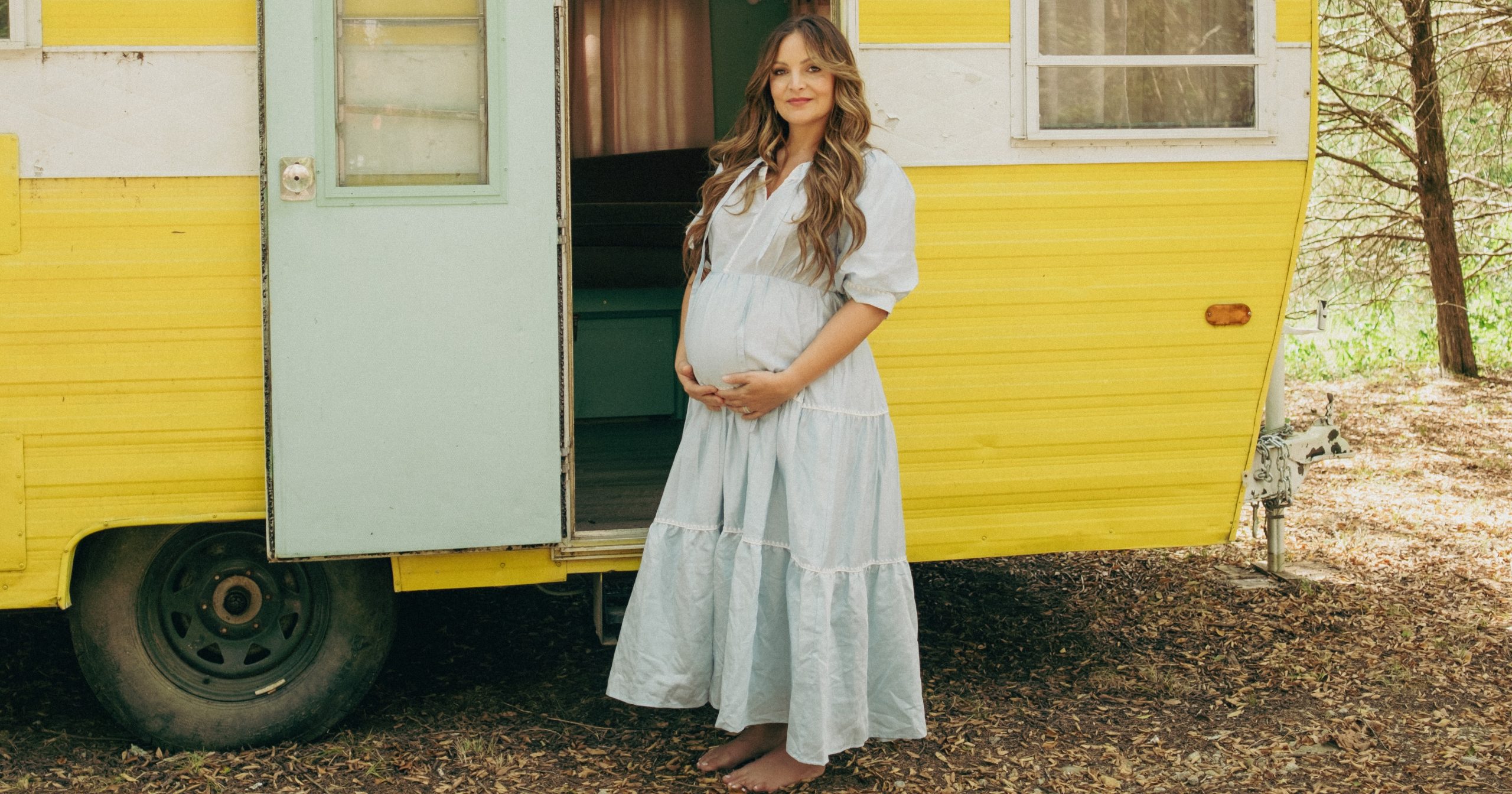
Sitting here in my baby’s room, feeling her kick in my belly while looking around at the dusty pink painted walls, baby owl wallpaper, refurbished 1960s furniture, a painting from her great grandmother on one wall, and her name – shared by two other great grandmothers – on the other wall, I’ve never been more certain that I’m exactly where I am meant to be in my life at this moment. Beulah Anne Chaffins. We love her so much already.
Like so many women in the music industry, I put off having a family thinking when my career takes off, then I’ll have my family. But “takes off” is so subjective, especially when you’re constantly moving the finish line for yourself. Earlier this year, I realized that if I kept waiting, I could literally wait myself forever out of the opportunity to have a family. I’m about to play Bourbon & Beyond, the biggest festival I’ve ever played, and I will be almost 8 months pregnant. It’s funny that this is actually the most outlaw thing I’ve ever done.
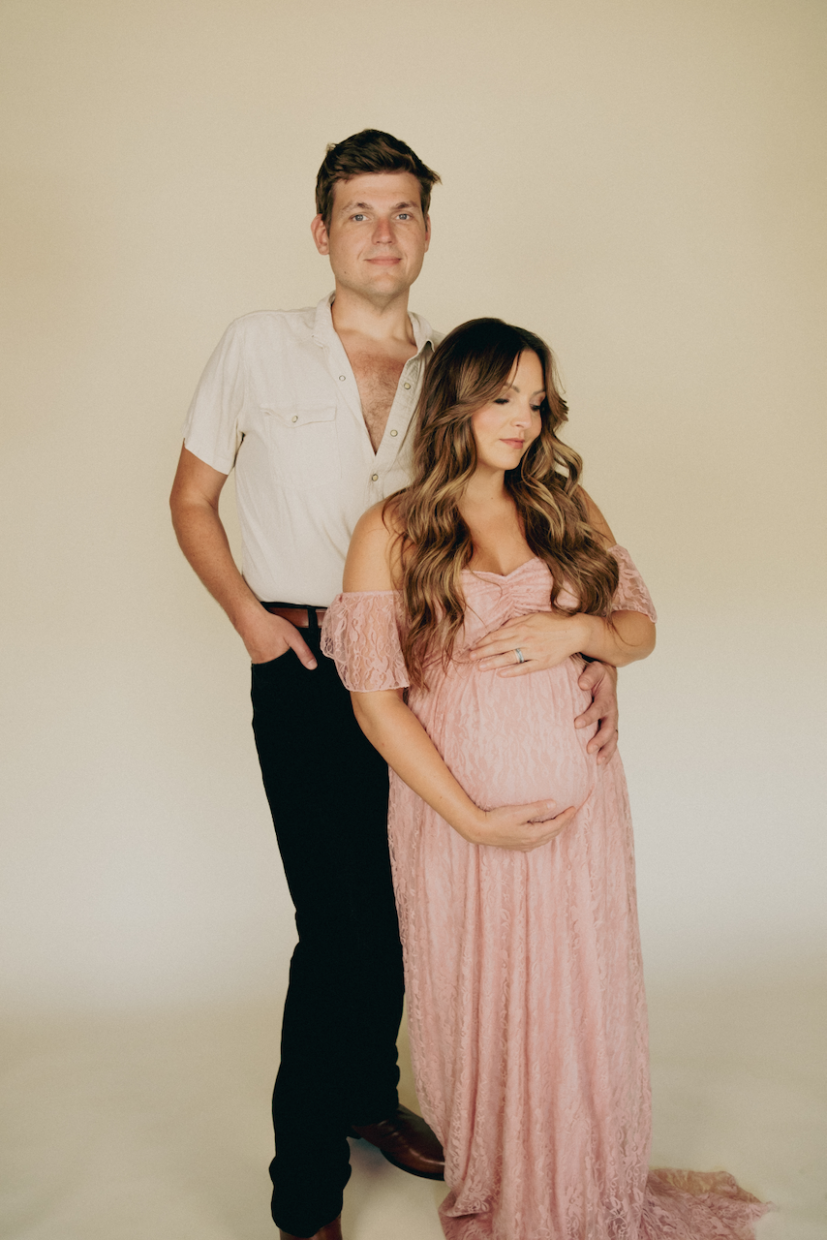
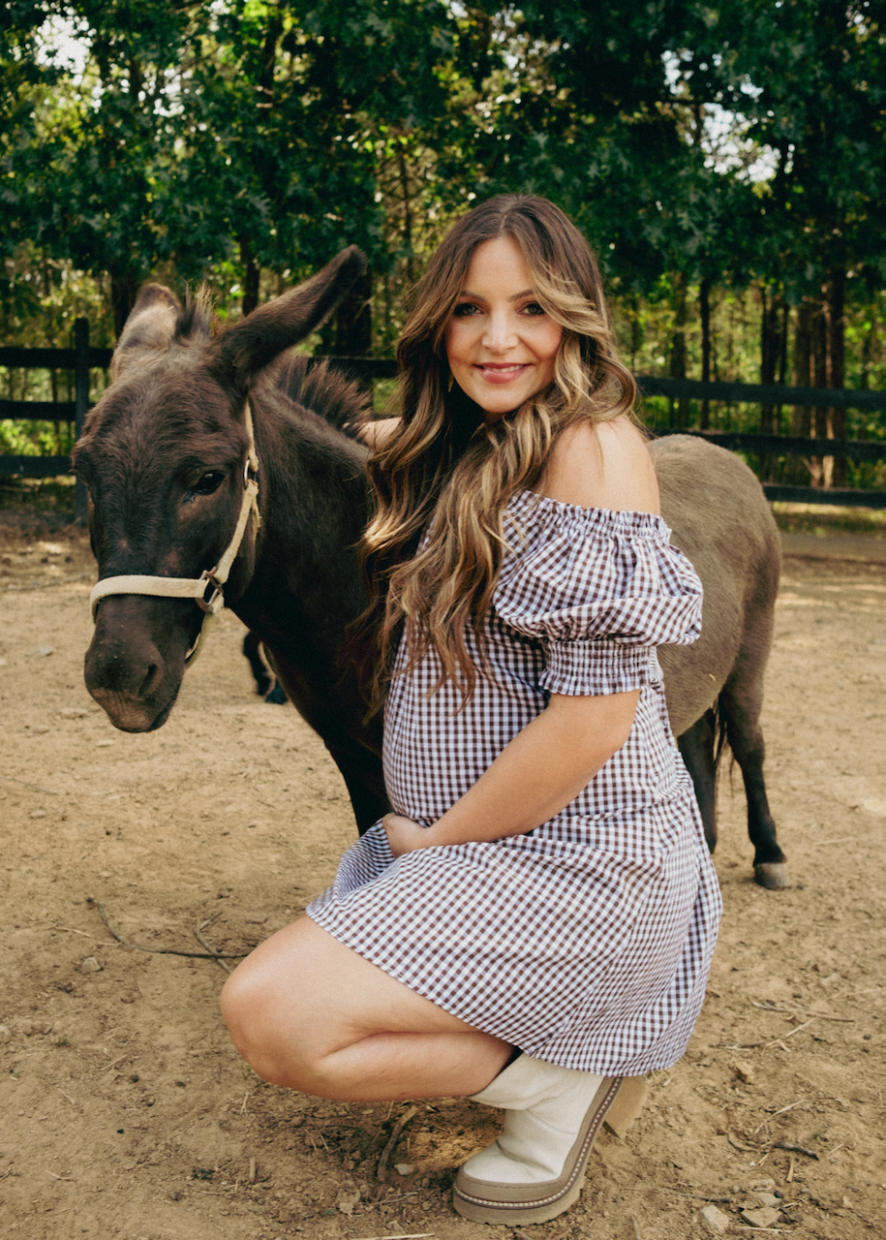
I didn’t grow up in a musical family. “Playing music” to my parents meant turning on the radio. I’m really excited to bring my daughter into a world of music. My husband, Adam Chaffins, and I do everything together. We garden, take care of our animals, travel, tour, write songs, and make records together. Beulah Anne already lights up when she hears us sing and play. I can feel her ball up in my belly, close to my guitar, and kick and turn as her daddy sings.
I put together a playlist of songs that I believe will be great to play for Beulah Anne when she finally gets here! It’s full of uplifting songs that don’t make us want to beat our heads against the wall. I know, I know, that will come eventually when she’s able to choose, but maybe if we start by instilling good taste early, it won’t be so bad? Wishful thinking? Maybe! – Brit Taylor
“Oo-De-Lally” – Roger Miller
Should be on any children’s playlist.
“Little Green Apples” – Bobbie Gentry & Glen Campbell
This wasn’t meant to be a kid’s song, but it is such a great love song and the melody is so simple and easy to remember. Adam and I love singing this one together.
“The Big Rock Candy Mountain” – Harry McClintock
The O Brother, Where Art Thou? soundtrack is one of my favorite albums. There’s something about the old timey sound of this one that makes me feel like we’ve travelled back in time when things were just more simple.
“Didn’t Leave Nobody but the Baby” – Gillian Welch, Alison Krauss, and Emmylou Harris
This is from the same soundtrack. I can see myself singing this one to baby Beulah, trying to get her to sleep. Maybe I’ll leave out a line or two!
“You’ve Got a Friend in Me” – Randy Newman
An amazing way to let your kid know they’re not alone. I love this one by Randy Newman from Toy Story.
“Here Comes The Sun” – the Beatles
Could put anyone in a good mood.
“You Are My Sunshine” – Norman Blake
There’s so many great versions of this song, but I love this one by Norman Blake on the O Brother soundtrack. The Dobro gets me.
“(Let Me Be Your) Teddy Bear” – Elvis
This is a requirement for any children’s playlist I make. My daddy would play this one for me – along with every other Elvis song ever recorded.
“Build Me Up Buttercup” – The Foundations
Another one my Dad would play and sing to me. I remember loving this one and naming one of our dogs Buttercup!
“I Love” – Tom T. Hall
Tom T Hall was a poet and also from my hometown of Hindman, Kentucky. I love this one from his children’s record.
“Love is Like A Butterfly” – Dolly Parton
This has such a whimsical vibe! I love having this one in the mix. It transports you to a fairytale land.
“What A Wonderful World” – Louis Armstrong
I want Beulah Anne to always be able to see the beautiful things in the world. I don’t want her to be afraid of it. Perspective is key and songs like this can do just that.
“God Only Knows” – The Beach Boys
Adam and I sang this song on a Valentine’s Day livestream when he surprised me by proposing! My answer was a big fat “yes,” obviously. I can see us singing and dancing to this one with Beulah in our arms!
“(They Long to Be) Close To You” – The Carpenters
I always loved the Carpenters when I was little. My mom would play them for me. Especially at Christmas. Karen Carpenter’s voice is like a warm hug. There’s just something dreamy about this song, and I love the lyrics.
“Top Of The World” – The Carpenters
I want Beulah Anne to have a positive outlook on life. I want to instill positive self-talk, so when she hears her inner voice it’s encouraging instead of scary or mean. I hope starting her off on music like this will help her always feel more like she’s on top of the world instead of down in the gutter, even in the hard times of life.
“Ol’ Blue” – Willie Nelson
A must. Beulah’s first dog will be our dog, Blue, so this one was definitely a sure bet.
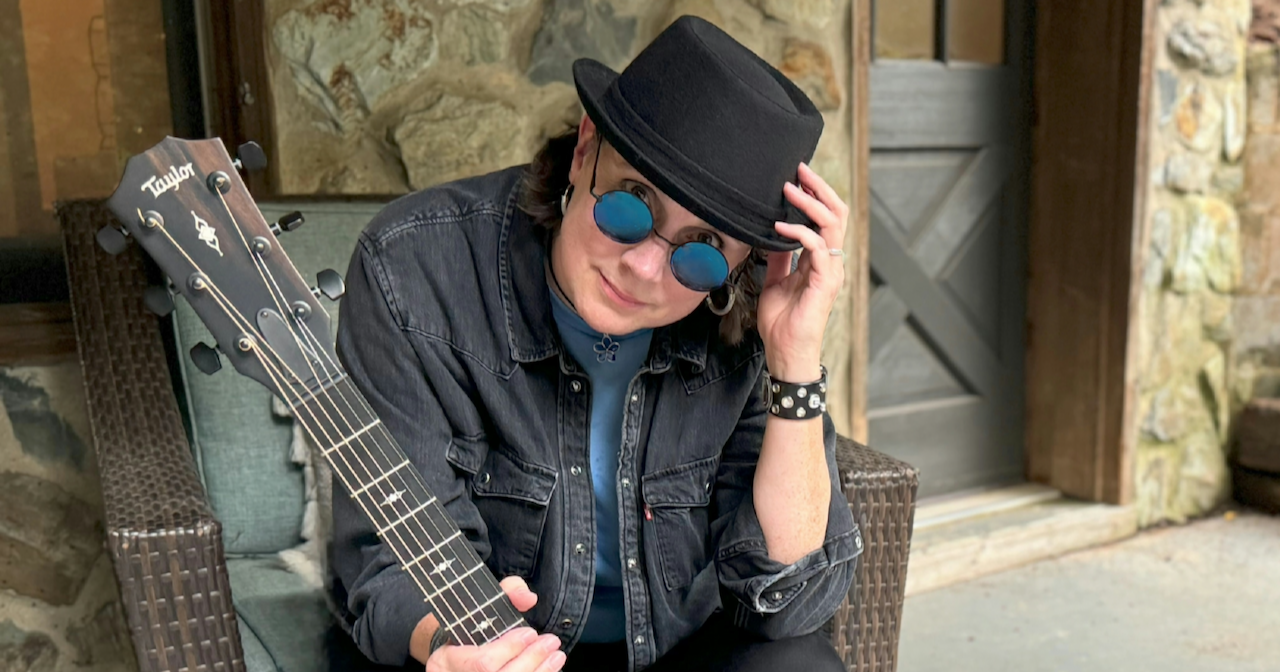
Artist:Diane King Hometown: Nashville, Tennessee (grew up in Beverly, Ohio) Latest Album:SKY (releasing September 19, 2025) Personal Nicknames (or rejected band names): D-Music
Which artist has influenced you the most – and how?
I actually have five or six artists who have had a big influence on my songwriting and artistry. But, to pick one: it’s Olivia Newton-John. I heard her song, “Let Me Be There,” on our country radio station in southeastern Ohio when I was around 8 years old. I remember it vividly. We had just pulled into the grocery store parking lot as the song began to play. I asked my mom if we could listen to it before going into the store. She happily obliged and, at the end of the song, the DJ said, “That’s Olivia Newton-John,” and my life was changed.
Specifically speaking to her musical talents, the two things I love most are her beautiful voice and her flawless harmonies. I love vocal harmony and her albums are full of them! But, Livy is so much more to me than a singer or musical artist. In addition to loving her angelic voice, I love her kindness and gentle spirit. And, frankly, she was a light for me. As a young girl, I watched her career and accomplishments and I knew there was something outside of the hills where I was growing up.
Here’s an interesting story. When I was working with Harlan Howard we were going to lunch one day and he asked me who I received my “calling” through. I remember just looking at him and pausing, because I hadn’t known anyone before who understood that, receiving your calling to music through another artist. I knew exactly what he meant. After pausing, I said, “Olivia Newton-John,” and in my mind I reflected back on that day in the car at 8 years old, listening to “Let Me Be There.” Harlan nodded and said, “Yep! I met her once; she was a sweetheart and a great singer!” He proceeded to tell me he received his calling through Ernest Tubb over the radio listening to the Opry in a barn loft in Michigan. It was a moment, for someone to fully understand how another artist can have such profound meaning in your life. That person for me is Olivia Newton-John.
What’s your favorite memory from being on stage?
My favorite memory is going to be when I stand in the circle of the Grand Ole Opry to sing my songs on the live show for the first time!
What’s the most difficult creative transformation you’ve ever undertaken?
I had a five-year battle with and recovery from lymphoma. I had a significant amount of trauma to my neck and throat with multiple procedures and surgeries in that area. Once I finally turned the corner on that cancer battle and the healing began, my voice performed differently. That has been and still is a big adjustment for me. Singing is certainly not as easy as it used to be “BC” (before cancer, as I call it), but I keep at it! I’m so grateful to be writing, singing, and recording again!
What is a genre, album, artist, musician, or song that you adore that would surprise people?
These are some songs that will likely surprise you that stop me in my tracks when I hear them. When they’re playing, I have to stop whatever I’m doing and just listen and be in the song. I can’t function in any other way.
“Uptown Funk” – Bruno Mars “Nessun Dorma” – Aretha Franklin “Dancing Queen” – ABBA “Play That Funky Music White Boy” – Wild Cherry “Shake It Off” – Taylor Swift “Shoop Shoop” – Whitney Houston “Simply the Best” – Tina Turner “Addicted to Love” – Robert Palmer “Deborah’s Theme” – Chris Botti
Since food and music go so well together, what is your dream pairing of a meal and a musician?
I so love this question! I can’t even tell you how many times my co-producer, Stephan Oberhoff, and I would use food metaphors to communicate with each other what we wanted to hear when recording a song. Such as me saying, “Stephan, it needs to sound more lush, like a creamy, rich alfredo sauce with a subtle hint of salt.” Or, “Can you make it sound warmer – it needs a dash of nutmeg.” So, yes, I agree that food and music go well together, in many ways! To answer your question: Dolly Parton and fried chicken (with some spice) and waffles with real maple syrup, a side of mashed potatoes with butter, sweet iced tea, and a piece of homemade apple pie a la mode!
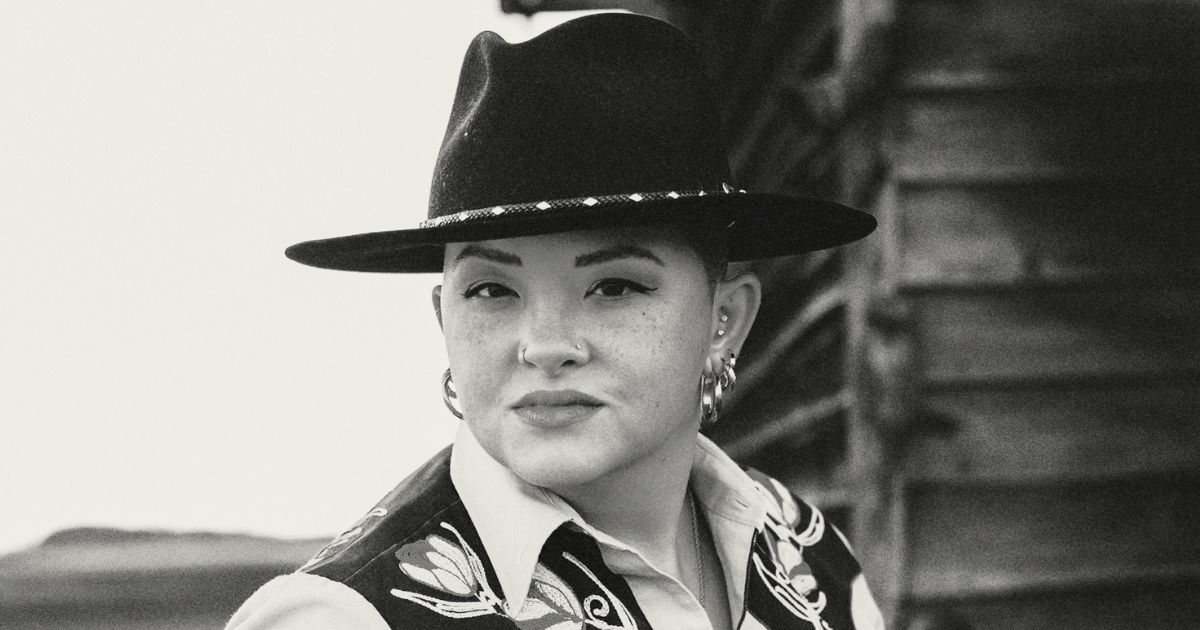
Rebecca Porter has earned some much-deserved praise in the past couple years as she has emerged on the national singer-songwriter scene. Following the release of her 2023 EP, Queen of the Local, she drew the eyes and ears of BGS and Good Country’s founder and was invited to perform at Mountain Stage. Not bad for an artist who had only released five songs total.
Now, however, Porter is back with a full-length album, Roll With The Punches, which released August 8. It’s a concept recording that introduces her life story as if it were a 1970s Western film. If that seems an unlikely concept for a Guam-born, Shenandoah Valley-raised singer-songwriter, Porter concedes that maybe it is – at least on the surface.
In her recent conversation with Good Country about the project, Porter talked about how the concept came together, why she thinks people assume her music is going to sound different than it does, and what she hopes listeners gain from tuning in.
Where did the concept for this album come from? Did you have the idea first, or did the songs sort of come together in this way that started to feel cinematic?
Rebecca Porter: Yeah, I had most of the songs written. Some of them I wasn’t playing out, though, because I wasn’t really sure where they fit or what their purpose was. I started writing “Roll with the Punches” and it felt like it went with some of these other songs. We hadn’t even started talking about recording an album. [But] when I put “Roll with the Punches” with these other songs, they all were autobiographical. I felt like they really could be pieced together in this concept and be brought to life through Western cinema.
I grew up watching spaghetti westerns with my stepdad and family, but [this theme] felt like a way to take control of a narrative that [people may not] see coming from a woman – a woman of color – the term itself, “roll with the punches,” turning that on its head with the record and the songs. [It’s about] not just going with the flow or with what’s said that I’m allowed to have and changing what that actually means for me.
I’m sure people ask you all the time about coming from your cultural heritage as a Southern Pacific Islander and growing up in Appalachia. What is identity to you? What’s your relationship with the concept of identity? Did that have anything to do with this album?
When I talk about the concept itself, I try to be intentional about saying that this is my interpretive lens of Western cinematography, because I’m certainly not an expert on Western cinematography. This is just something that I grew up watching and really loved and enjoyed but, like many things, I just didn’t see myself in. I very much loved what it brought about in the way that I connected with it.
Then, my mixed heritage: Being from Guam, having more Indigenous heritage, growing up in rural Virginia from a young age, my parents divorcing. I very physically represent my Pacific Islander heritage, but I’ve been raised in this rural Appalachian state.
I actually just did a radio interview and was talking about not understanding as a child, but understanding [better] as an adult, with the help of therapy, like, “What is my identity? Are there clear boundaries?” [It’s] like the analogy of the person spinning all the plates. There’s all these moving pieces and it’s complicated. There’s trauma involved. [I’m] embracing that I can be more than one thing. Therapy has really helped me take hold of two or more things to be true at once.
A personal struggle is [wondering,] “Am I a good representation of my ancestors, whoever that is?” You know, physically, I really identify and represent my Chamorro heritage, but I wasn’t raised in Guam. I was raised in the States … by my grandmother, who I have identity and connection struggles [with] at times. My mother and I have gone through a lot in our lifetime together and she’s a huge supporter of mine, but there are very big and real aspects of my life – and who I am as a person, [how] I experience the world – that she doesn’t understand. So then how do I deal with that and how do I process that?
You roll with the punches?
You know, I have to admit, as a white lady in Maine, I feel an obligation to underscore identity for the purpose of representation, but I also recognize that my ability to understand that question and how to word it is clunky at best.
I appreciate you asking. I mean, I’ve certainly been in spaces where people immediately think that I don’t belong or there’s this othering. And then I’ve been in spaces where I’m with people who will just come up and ask, “Why did you pick country music?” or “Why did you decide to do this and not this other kind of music – or your music?” It’s like… A) What does that mean? And B) I grew up in rural Virginia, so this is my music.
Let’s talk about the songs on this album, which are so fantastic. What I love about this album is that it does everything country music does. It’s speaking for the average everyday person on a working-class level – like “The Laundry Pile” and “Payday Loans.” But it also doesn’t get trope-y. I wonder if that is a happy accident, or if it’s something you worked really hard on with editing and crafting these songs.
Sometimes it’s a happy accident. With those songs, particularly, I tried to be really intentional about the things I was saying and how I was saying them. [I was] coming from a real place and personal experience with those things. Laundry is something I struggle with. The day I wrote that song, I had piles of laundry that needed to be done and, mentally, I could not get with the program. You have these things you need to do. They’re simple mundane tasks, you know. “Why is this such a big deal?” So I sat on the edge of the bed and I wrote this song.
In my mind, the topic of authenticity … bring[s] it back to identity. You know, people have questioned the authenticity of me singing country music or, you know, my relationship with [country]. You can hear these songs and feel and know that they’re real and they’re coming from a very real place, real experiences. I may not “look like I sing country music” to some people, but that isn’t where the authenticity comes from in my mind.
“Payday Loans” is the same. You know, payday loans were just part of my childhood. I was really struggling with finances as an adult. [I was stuck in] these cycles that I had learned as a young child – the weight of financial stability. I have a five-year-old and I was trying to reconcile how I talk about and deal with money or financial things in front of my son. … Payday loans were this big weight that I was aware of at a very young age. [I thought of] how terrible that entire system is, but then also how it affected me from that time into adulthood.
Listening to you talk about that as a sort of enculturation goes back to the topic of identity. Realizing what you grew up with, what you want to carry forward, what you want to hand to your children, and what you want to let go of.
Identity is all over this record. I didn’t hear it to that depth until you were just explaining payday loans, but it’s really there as a through line. Do you feel like that was a common thread in this album, tying everything together? Reckoning with what you have been handed and, and what you want to give?
One hundred percent. Roll with the punches. I don’t have to just take what I’ve been handed or allowed to have or been given. I’m finding ways that I can make changes for myself and for my son, or if I ever have more children. [I’m] able to break those cycles.
I want to go back to “The Laundry Pile.” I could be projecting, but it feels straight out of the Dolly Parton canon. It’s a small thing, but it’s also so big – literally and figuratively. You get to this line, “That shit ain’t getting put away.” It’s sort of a resignation, but it’s also empowering to be able to make a decision about it.
That makes the song feel bigger than, “Oh my God, I don’t want to do the laundry.” Was that what you were trying to figure out with the song? Or was it really like, “I’m going to write one for the laundry pile, because I don’t want to fold the laundry?”
It was intentional. I think, when I first started writing it, I [thought,] “This is kind of silly.” But you have to make a decision: Are you going to beat yourself up [about] laundry or not?
You know, you have to decide how you’re going to deal with the situation. The option isn’t just, “You have to get it done.” You can sidestep it or you can save it for another day.
What do you hope people walk away from this project with, once they’ve really dug into it?
I want people to see something that hits home for them, either on a musical level or through the lyrics. I want them to feel seen. I want them to know that everything’s going to be OK. There are ways that we all have the capacity to make changes in our lives. We don’t have to just deal with what we’ve been given and keep going with the flow. You might cause upset, whether it’s personally or externally, but you don’t have to accept what people are willing to give you, or what you’re surrounded by.
That certainly does not mean it’s easy to make changes, but I just want people to feel seen and feel, I guess, even the slightest sense of empowerment. There is something that can change even the smallest piece of their day or where they’re at in a relationship. That there’s some music out there [for them].
Photo Credit: Heather Goodloe
Want more Good Country? Sign up to receive our monthly email newsletter – and much more music! – direct to your inbox.
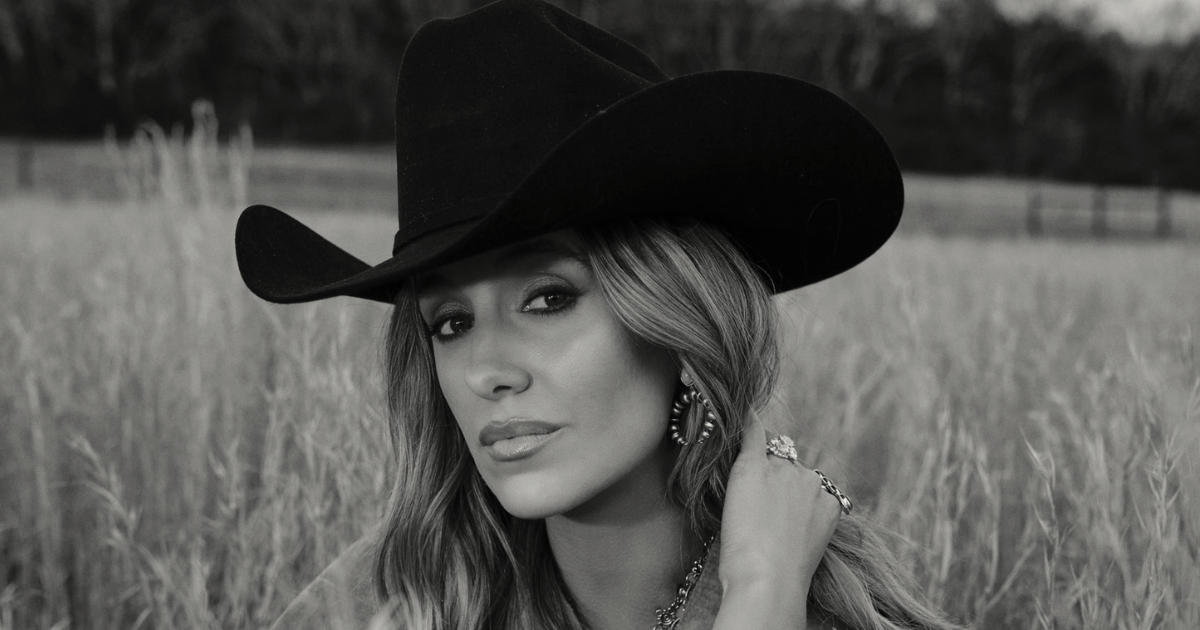
On Monday, September 8, 2025 the Country Music Association announced the nominees for the 59th Annual CMA Awards. With six nods a piece, country stars Lainey Wilson, Megan Moroney, and Ella Langley tied each other for the lead in total nominations at the longest-running country music awards show. The CMA Awards will be broadcast live from Nashville’s Bridgestone Arena on Wednesday, November 19 at 8 p.m. EST on ABC and will be available to stream the next day on Hulu.
Following Wilson, Moroney, and Langley in nominations is a quickly rising star at the very top of most listeners’ minds these days, Zach Top, who will vie for awards in the Single of the Year, Album of the Year, Song of the Year, Male Vocalist of the Year, and New Artist of the Year categories. Fiddler Jenee Fleenor, a five-time winner of Musician of the Year, is nominated again in the category this year, alongside guitarists Brent Mason, Rob McNelley, and Derek Wells and pedal steel genius Paul Franklin.
In addition to Top and Fleenor other notable nominees from the bluegrass and Americana worlds include the War and Treaty (Vocal Duo of the Year), Chris Stapleton (Entertainer of the Year, Male Vocalist of the Year, Music Video of the Year), and the Red Clay Strays (Vocal Group of the Year).
Shaboozey is nominated for the second year in a row for New Artist of the Year, and relative newcomer to the genre Post Malone gained two nominations this year (remarkably, one less nomination than in 2024), for F-1 Trillion (Album of the Year) and “Pour Me A Drink” featuring Blake Shelton (Musical Event of the Year).
It’s clear that whatever your preferred subspecies of country music, this year’s batch of nominees for the CMA Awards holds more than enough variety to satisfy your tastes. From the most polished radio-ready pop country to gristly full-bore rock and roll, from high femme glamor bops to ’90s vocals (and of course the hairstyles, too), there’s plenty of Good Country to be found among this year’s nominations.
Find the full list of nominees for the 59th Annual CMA Awards below:
ENTERTAINER OF THE YEAR
Luke Combs Cody Johnson Chris Stapleton Morgan Wallen Lainey Wilson
SINGLE OF THE YEAR
“4x4xU” – Lainey Wilson Producer: Jay Joyce Mix Engineers: Jason Hall, Jay Joyce
“Ain’t No Love In Oklahoma” – Luke Combs Producers: Luke Combs, Chip Matthews, Jonathan Singleton Mix Engineer: Chip Matthews
“Am I Okay?” – Megan Moroney Producer: Kristian Bush Mix Engineer: Justin Niebank
“I Never Lie” – Zach Top Producer: Carson Chamberlain Mix Engineer: Matt Rovey
“you look like you love me” – Ella Langley & Riley Green Producer: Will Bundy Mix Engineer: Jim Cooley
ALBUM OF THE YEAR
Am I Okay? – Megan Moroney Producer: Kristian Bush Mix Engineer: Justin Niebank
Cold Beer & Country Music – Zach Top Producer: Carson Chamberlain Mix Engineer: Matt Rovey
F-1 Trillion – Post Malone Producers: Louis Bell, Charlie Handsome, Hoskins Mix Engineer: Ryan Gore
I’m The Problem – Morgan Wallen Producers: Jacob Durrett, Charlie Handsome, Joey Moi Mix Engineers: Charlie Handsome, Joey Moi
Whirlwind – Lainey Wilson Producer: Jay Joyce Mix Engineers: Jason Hall, Jay Joyce
SONG OF THE YEAR
“4x4xU” Songwriters: Jon Decious, Aaron Raitiere, Lainey Wilson
“Am I Okay?” Songwriters: Jessie Jo Dillon, Luke Laird, Megan Moroney
“I Never Lie” Songwriters: Carson Chamberlain, Tim Nichols, Zach Top
“Texas” Songwriters: Johnny Clawson, Josh Dorr, Lalo Guzman, Kyle Sturrock
“you look like you love me” Songwriters: Riley Green, Ella Langley, Aaron Raitiere
FEMALE VOCALIST OF THE YEAR
Kelsea Ballerini Miranda Lambert Ella Langley Megan Moroney Lainey Wilson
MALE VOCALIST OF THE YEAR
Luke Combs Cody Johnson Chris Stapleton Zach Top Morgan Wallen
VOCAL GROUP OF THE YEAR
Lady A Little Big Town Old Dominion Rascal Flatts The Red Clay Strays
VOCAL DUO OF THE YEAR
Brooks & Dunn Brothers Osborne Dan + Shay Maddie & Tae The War And Treaty
MUSICAL EVENT OF THE YEAR
“Don’t Mind If I Do” – Riley Green (featuring Ella Langley) Producers: Scott Borchetta, Jimmy Harnen, Dann Huff
“Hard Fought Hallelujah” – Brandon Lake with Jelly Roll Producer: Micah Nichols
“I’m Gonna Love You” – Cody Johnson (with Carrie Underwood) Producer: Trent Willmon
“Pour Me A Drink” – Post Malone (feat. Blake Shelton) Producers: Louis Bell, Charlie Handsome
“You Had To Be There” – Megan Moroney (feat. Kenny Chesney) Producer: Kristian Bush
MUSICIAN OF THE YEAR
Jenee Fleenor – Fiddle Paul Franklin – Steel Guitar Brent Mason – Guitar Rob McNelley – Guitar Derek Wells – Guitar
MUSIC VIDEO OF THE YEAR
“Am I Okay?” – Megan Moroney Directors: Alexandra Gavillet, Megan Moroney
“I’m Gonna Love You” – Cody Johnson (with Carrie Underwood) Director: Dustin Haney
“Somewhere Over Laredo” – Lainey Wilson Director: TK McKamy
“Think I’m In Love With You” – Chris Stapleton Director: Running Bear
“you look like you love me” – Ella Langley & Riley Green Directors: Ella Langley, John Park, Wales Toney
NEW ARTIST OF THE YEAR
Ella Langley Shaboozey Zach Top Tucker Wetmore Stephen Wilson Jr.
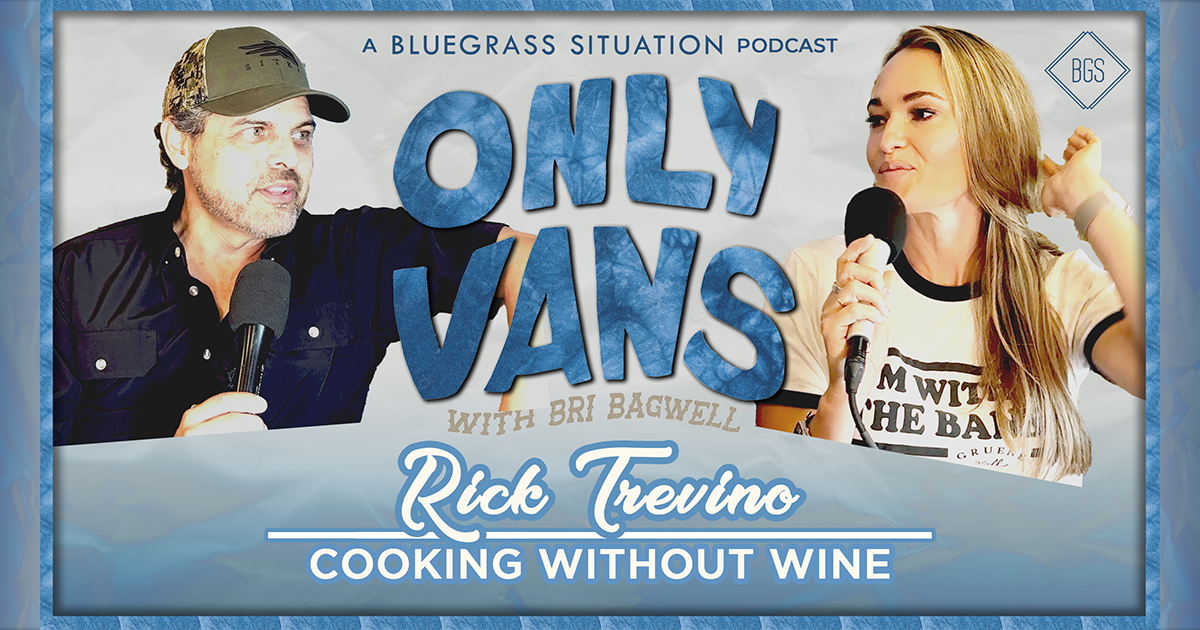
Today on Only Vans, a living legend. A wordsmith. A wine connoisseur. Rick Trevino joins me in the van to talk about his whole experience of life thus far. We discuss wine, his getting signed Cinderella story, speaking Spanish, tropical music, writing on piano versus guitar, having a writing partner, and his awesome family, too.
Rick Trevino is a dang living legend in my book and when his cousin and tour manager Gibby (who has filmed some of my music videos) told me Rick wanted to be on the podcast, I almost died. Then Rick and Gibby showed up with a bottles of wine and whiskey for us and I actually did die.
I think what’s cool about this casual conversation with Rick is that he has gotten to write, record, and sing among so many legendary people – so much so that he just talks about everyone on a first-named basis. Raul is Raul Malo from The Mavericks, for example, and Flaco is of course Flaco Jimenez, rest in peace.
I re-listened to the Los Super Seven records that I had forgotten Rick was a part of, and man, y’all gotta dive back into those! And also all of Rick’s catalog, but especially get to a live show. Thanks for the chat and gifts, Ricky!
You Gotta Hear This! We’ve got bluegrass, Americana, folk, and so much more for you in our weekly roundup of new music and premieres.
Kicking us off, Western North Carolina bluegrass greats Balsam Range dust off an old track, “Virginia Girl,” from member Caleb Smith’s archive solo album for their own rendition – with a special “vintage” banjo solo added in. From just down the mountains in upstate South Carolina, bluegrass and roots duo the Foreign Landers share their lovely new song, “Smell the Rose,” which reflects on the good, simple gifts we all receive while walking through life (if we’re open to receiving them!).
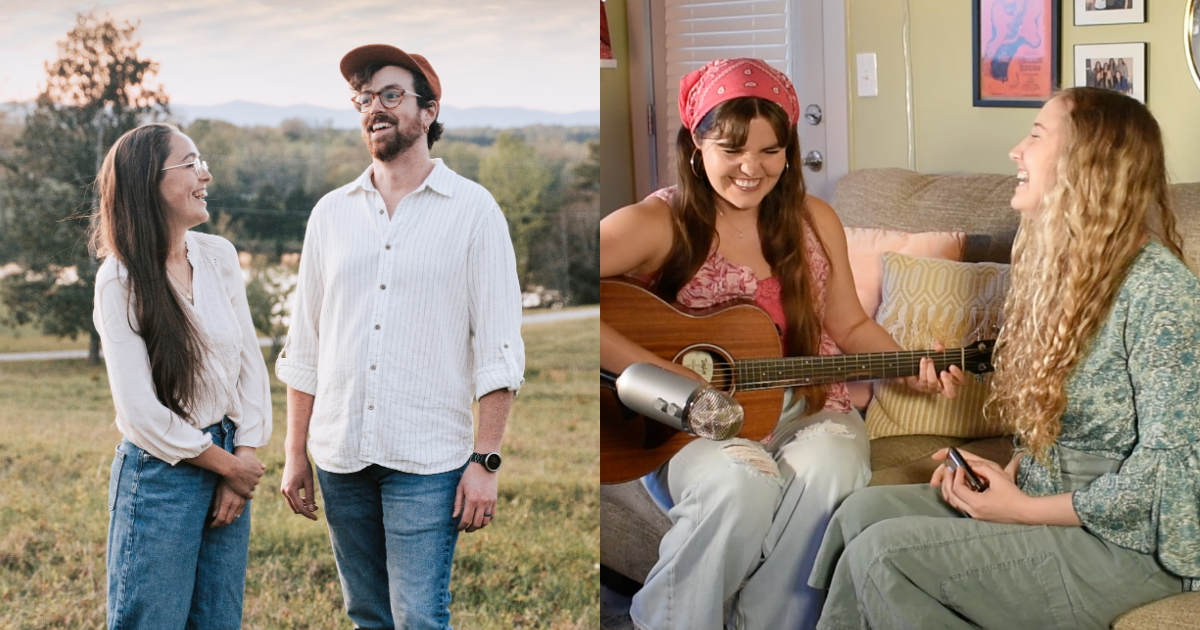
Elsewhere in our collection, another folk-Americana duo, Oliver the Crow, return with new music for the first time in a few years, offering a new video for “Burn It Down,” a song about finding redemption in starting over, starting fresh. And Rachel McIntyre Smith – who has been sharing a mini-series of cover song performance video collaborations on BGS over the past few weeks – unveils an impeccable cover of Kacey Musgraves’ “Slow Burn” with fellow artist Sammi Accola joining in.
Don’t miss Natalie Del Carmen singing “El Cortez,” an energetic country-folk song about spending time with her father and the rarity of still enjoying first-time experiences as an adult, when such firsts are much more common as a child. You’ll also hear singer-songwriter Jared Dustin Griffin fingerpicking and growling through “Shovel,” a new track that meditates on sacrifices and all you can gain from the labor of putting yourself aside.
Bringing us vibey indie roots rock, Liam Kazar contemplates “The Word The War” on his new single from his upcoming album, Pilot Light. You can watch the video for this musical exploration of loneliness and the journey (rather than the destination) below. And finally, from all the way across the globe, the High Street Drifters of Melbourne, Australia, introduce their down-under bluegrass to BGS with “Words for Leaving,” a song about distance, longing, and goodbyes – sweet and bittersweet.
It’s a stout collection this week and we’re excited for you to get to it. You know what we say every time– You Gotta Hear This!
Balsam Range, “Virginia Girl”
Artist:Balsam Range Hometown: Haywood County, North Carolina Song: “Virginia Girl” Release Date: September 5, 2025
In Their Words: “In 2013, I was putting together some tunes for a solo album. Patton Wages was my first call to help me with his killer banjo playing. I first met Patton at Everett’s Music Barn in Suwanee, Georgia, around 2005 and I immediately was a fan. We became friends and stayed in touch. He became Balsam Range’s first call if Marc Pruett ever needed to miss a gig and Patton always filled Marc’s great picking with greatness of his own.
“I wrote ‘Virginia Girl’ in March of 2013 and it was slated to be on my solo album along with “God Knows,” “The Touch,” a few more originals, and a few standards. Patton, Aaron Ramsey, Adam Steffey, and Nicky Sanders helped me create the album. I’ve sat on the tune and the album since 2013, frequently revisiting it when Balsam Range needed a tune to add to one of our albums, but ‘Virginia Girl’ has remained unused for 12 years… until now! Balsam Range recut the tune and I had an idea to see if we could fly Patton’s original banjo cut from 2013 to our new 2025 cut and it worked flawlessly, as if it were meant to be. Our engineer Clay Miller at Crossroads Studios in Asheville, North Carolina, worked his magic and did such an awesome job! Patton, I’m honored that you agreed to this and I’m honored to be your friend! We hope you enjoy ‘Virginia Girl.'” – Caleb Smith
Track Credits: Caleb Smith – Acoustic guitar, lead vocal Tim Surrett – Upright bass, harmony vocal Patton Wages – Banjo Marc Pruett – Banjo Don Rigsby – Fiddle, harmony vocal Alan Bibey – Mandolin
Natalie Del Carmen, “El Cortez”
Artist:Natalie Del Carmen Hometown: Los Angeles, California Song: “El Cortez” Album: Pastures Release Date: September 12, 2025 (song); January 30, 2026 (album) Label: Torrez Music Group
In Their Words: ‘”El Cortez’ was written for my dad, so I knew early on that I had to get it right. Last holiday, I gambled with him in Vegas for the first time at the El Cortez Hotel. It was such a fun time together. When you’re young, your first experiences go over your head because everything is a first. But then you become an adult and the pool of opportunity to have first experienced memories gets smaller. I have more respect for my parents now than I ever could have understood as a kid. It’s about getting familiar with all the ways you feel rich in life that really don’t involve money.” – Natalie Del Carmen
Track Credits: Natalie Del Carmen – Vocals, acoustic guitar, banjo Nick Antonelli – Bass Amelia Eisenhaeur – Fiddle Jordan Ezquerro – Organ Tanir Morrison – Drums, percussion Amelia Eisenhauer – Percussion
The Foreign Landers, “Smell the Rose”
Artist:The Foreign Landers Hometown: Travelers Rest, South Carolina Song: “Smell the Rose” Release Date: September 12, 2025
In Their Words: “‘Smell the Rose’ was written with our good friend Danielle Yother as a reflection on the good gifts we’re given in this life – things like music shared with friends, laughter around a campfire, sunsets, or driving down a beautiful highway with the windows down. Those moments are full of beauty, but they also slip away with time. In writing this song, we wanted to capture both the joy and the ache of that truth. For us, it points to something deeper: a reminder that while all good things here fade, they’re signposts that lead us to the one source of lasting love and beauty – God himself. Our hope is that this song encourages listeners to savor those fleeting gifts while also looking beyond them to the greater hope we have in him.” – The Foreign Landers
Artist:Jared Dustin Griffin Hometown: San Francisco, California Song: “Shovel” Album:The Perseverance of Sisyphus Release Date: September 26, 2025 Label: First City Artists
In Their Words: “‘Shovel’ was born in the heat of July 2020, my hands fumbling through unfamiliar fingerpicking patterns until the song unearthed itself. The melody came slow, like digging through hard earth, and the lyrics followed in a single, fevered afternoon. It’s a meditation on sacrifice – how we bury parts of ourselves for something greater and the toll that takes. In the shadow of calvary this song wields its own blade, turning over the soil of belief and what it costs.” – Jared Dustin Griffin
Track Credits: Jared Dustin Griffin – Guitar, harmonica Heather Little – Harmonies Fergal Scahill – Fiddle, mandolin Nathan Alef – Piano Matt Greco – Piano, organ Dave Campbell – Banjo Frank Swart – Bass Derrick Phillips – Drums
The High Street Drifters, “Words For Leaving”
Artist:The High Street Drifters Hometown: Melbourne, Australia Song: “Words for Leaving” Release Date: September 3, 2025
In Their Words: “‘Words for Leaving’ began its life at a lonely bus station in between where I was headed and who I was saying goodbye to. We wanted the track to carry that bittersweet feeling, balancing lyrical tenderness with the bluegrass pulse moving you down the road. Every instrument is a part of the dialogue, echoing the goodbyes we say to loved ones knowing that loving someone always carries the possibility of losing them. Being in Australia, so far from much of the rest of the world and with so much distance between places and people, gives this track a weight I think a lot of people will connect with. The push and pull between heartache and hope.” – Justin Vilchez, mandolin
Liam Kazar, “The Word The War”
Artist:Liam Kazar Hometown: Chicago-raised, Brooklyn-based Song: “The Word The War” Album:Pilot Light Release Date: November 7, 2025 Label: Congrats Records
In Their Words: “I can’t say I know exactly what the word is, what the war is. Utter loneliness at the mountain top, perhaps? Not that I’ve ever been there. Something close to knowing and loving the path, not the destination. Poor sleepless queen and her sleepless nights alone, but whatever, that’s her problem. Get me to the riff!” – Liam Kazar
Video Credits:Directed, produced, and edited by Austin Vesely. Kevin Veselka – Director of photography Featuring Emily Neale.
Artist:Rachel McIntyre Smith and Sammi Accola Hometown: Oliver Springs, Tennessee Song: “Slow Burn” Latest Album:Honeysuckle Friend (Deluxe) Release Date: September 10, 2025 (video); June 27, 2025 (deluxe EP)
In Their Words: “I have had the pleasure of sharing the stage with Sammi Accola at writers rounds over the years, but we had never hung out one-on-one until this recording. I truly felt like we became friends during this session. I think that’s evident in the video. We got lost in the groove of this Kacey Musgraves classic and had so much fun with it. This is the final video in the three-part series with BGS as part of You Gotta Hear This, but the Honeysuckle Friend Sessions continue on my YouTube channel!” – Rachel McIntyre Smith
“I love how naturally it came together – Rachel and I had a completely different song in mind, but the moment I saw the Kacey Musgraves vinyl on her living room wall and we started talking about the mutually loved album, the choice felt easy. ‘Slow Burn’ is just the best – gorgeous, full of harmonies, and somehow both light and grounding. In the middle of a hectic week, it was the perfect song to play. A reminder to slow down, appreciate the people in our life, and laugh at lines like, ‘Grandma cried when I pierced my nose,’ relishing our twenty-something years. I love collaborating with Rachel and celebrating the power and simplicity of a great lyric.” – Sammi Accola
Video Credits: Filmed and edited by Rachel McIntyre Smith.
Watch more Honeysuckle Friend Sessions on BGS here and here.
Oliver the Crow, “Burn It Down”
Artist:Oliver the Crow Hometown: Nashville, Tennessee Song: “Burn it Down” Album:A Feather in a Hurricane Release Date: September 5, 2025 (single); November 28, 2025 (album)
In Their Words: “‘Burn it Down’ is a song about starting over – a song about building something great and how that sometimes means taking down whatever’s in its place. To illustrate this point, this is my fourth rewrite of a song using this same chorus. Over many years of scratching out verses and starting over, my life itself became a bunch of fresh starts. Maybe this is what led to the final version you hear today – one of the more stripped-back and bare songs from an album of mostly larger, fuller production.” – Ben Plotnick
Track Credits: Ben Plotnick – Fiddle, songwriter Kaitlyn Raitz – Cello Anthony da Costa – All other sounds, producer
Video Credit: Kaitlyn Raitz
Photo Credit: the Foreign Landers by Nicole Davis; Rachel McIntyre Smith and Sammi Accola courtesy of the artists.
This time on Basic Folk, we are checking in with country singer-songwriter and Color Me Country radio host Rissi Palmer and Americana/country artist Miko Marks. The two close friends both came up as Black women in country music in the early part of the 21st century where they experienced gatekeepers and discrimination in the industry, but undeniable love from listeners. Both stepped away from music for several years, but have since come back and found their audiences, artistic grooves, and industry independence. We last spoke with the pair in 2023 (you gotta go listen to that convo if you missed it!) and we have wanted them back on ever since!
Rissi and Miko dive into who they think is making waves and positive change in country and Americana. We talk about rising pop-country singer Tanner Adell and her 2023 hit “Buckle Bunny,” a song that’s clearly written for a different kind of country music fan (read: young Black women). Rissi mentions having Mississippi country sensation KIRBY on her show recently and promises her Miss Black America to be a monster of an album. There was a lot of consensus on the podcast that Madeline Edwards has released the best album of 2025 with her record Fruit, where she digs into the extreme grief and extreme joy she experienced after her brother passed away.
Elsewhere, we also touch on the pair’s experiences at Rhiannon Giddens’ inaugural Biscuits & Banjos fest in Durham earlier this year, an event dedicated to reclamation and exploration of Black music. We talk about Alice Randall’s new compilation, My Black Country – The Songs of Alice Randall, a collection of Randall compositions recorded by Black women – including selections performed by both Miko and Rissi. We talk about audiences in London versus the US, a contrast BF co-host Lizzie as well as Rissi and Miko have experienced first hand. In fact, Rissi has been curating a Color Me Country stage at The Long Road Festival in Leicestershire, England, for the past four years. We hope you learn something new, get some insight into what’s happening in Americana for musicians who are Black, and gain some joy from listening to Rissi and Miko’s hilarious banter.
Fresh off two back-to-back GRAMMY-winning albums, guitar virtuoso, songwriter, and artist Molly Tuttle is heading in bold new directions with her fifth solo release, So Long Little Miss Sunshine. A California native now based in Nashville, Tuttle embodies many sides of herself while staying rooted in where she comes from – both musically and geographically.
Already highly decorated as an instrumentalist (including two International Bluegrass Music Association awards for Guitar Player of the Year and the Americana Music Association’s Instrumentalist of the Year), Tuttle continues to captivate with her signature tone while stretching the boundaries of the genre that launched her. And she does it all with reverence and a playful sense of self-exploration.
From the scorching opener “Everything Burns” to the crush-worthy pop bop “That’s Gonna Leave a Mark” (co-written with Better Than Ezra frontman Kevin Griffin), the album weaves together personal reflections and observations of the world around her. It’s a colorful puzzle that reveals the many pieces of Tuttle.
When BGS sat down with her to discuss the album via Zoom, it was clear that her boundless curiosity about life and what’s next musically fuels everything she does. She spoke about her songwriting process, her reverence for her roots, the inspiration behind the album’s visual aesthetic, and how she’s already working on her next project.
You’ve called this record a departure, but to me it also feels like a distillation of all the people you’ve been, all the places you’ve gone, and all of who you are. Even though you’re experimenting with different genres, it feels cohesive—like you’re telling a story about yourself over a really diverse musical bed. Almost as diverse as the wigs on the cover of the record. Was there a lightbulb moment when this project came to life for you, or was it more of a gradual process?
Molly Tuttle: It was kind of a gradual idea. About a year ago, I was finishing the songs for this record. The first one I wrote was “Golden State of Mind,” a few years back, but for a long time, I just had this big batch of songs that didn’t feel like a cohesive grouping. Then last year, there was a light bulb moment where suddenly the songs really started flowing again, and it felt like I’d found this new voice – though it still connected to earlier songs like “Golden State of Mind” and “Everything Burns.” I reworked those older ones and then wrote about two-thirds of the record in the last year.
Making Crooked Tree and City of Gold helped me gain the confidence to do something different this time and not feel tethered to any particular style or genre. Those bluegrass records were me paying tribute to the music I grew up with, and once I did that, I felt free to branch out—try something bold and ambitious sonically while still tying it back to where I came from. I wanted to tie it to my past work but also really spring forward and try something new.
Did you have any trepidation about that shift?
I wasn’t really nervous, but we did have a lot of conversations about it – mainly between me and Jay Joyce, who produced the record. He first saw me play at the Ryman with Golden Highway, which was a bluegrass show, though we always stretched the boundaries a bit. The next day, he called me and said, “I think we should still incorporate your banjo playing and some acoustic elements.” That’s when we brought in Ketch [Secor] to play fiddle, banjo, and mandolin.
We wanted to make sure it didn’t feel like too far of a departure and that it still sounded like me. So we decided to make this a guitar record. Every song has guitar solos and I’m the only soloist on the album. That was new for me, and really exciting.
How did you end up working with Jay? Did you seek him out? Were you a fan of his work?
I actually wasn’t super familiar with him at first. I’d heard music he’d produced, but hadn’t connected it to him by name. During the pandemic, my manager, Ken Levitan, suggested I meet with Jay. Ken thought we’d work well together since Jay’s not only a producer, but also a great guitarist.
I played him some songs and liked his vibe, but at the time, I felt pulled to make Crooked Tree because I had those songs ready to go. Still, I always kept Jay in the back of my mind and really wanted to work with him eventually. Last year it fell into place: I sent him my new songs, we met again, and then started pre-production in the fall. I’m glad that I’d had that rapport with him for the last few years rather than just meeting him when we started making the record.
What was the studio experience like? Did it feel different from your past records?
Very different. We spent so much time on pre-production – more than I ever had before. We worked on arrangements, added solos, and rewrote bridges. By the time we brought in the band for a week of tracking, we already had these really fleshed-out demos. I’d played and sung a lot of my parts. Jay had been programming and I think Ketch had even played some of his parts already. We had a ton of tracks ready to go when we went into record.
Some of my demo takes even made it onto the final record, because I was just so relaxed, not feeling the pressure of having a set number of days to get it all done.
Much of this album was co-written with your partner, Ketch. What does writing with someone who knows you so well unlock for you?
Over time, we’ve developed a shared voice that feels like both of us. Earlier songs sometimes sounded more like his voice or mine, but now it feels like ours. He sees my daily life, so he can suggest ideas I might not have thought of, and that keeps the process flowing and honest.
Are you approaching the tour for this record differently than past tours?
It is going to be a little different. We’ve got some amazing special guests and openers joining us, and I’m excited to collaborate with them onstage.
The band is also super versatile: Ellen Angelico plays pedal steel, Dobro, banjo, and more, and Mary Meyer plays fiddle, mandolin, keys, and guitar. That range allows us to move between full-on rock moments and stripped-down acoustic sets, which fits perfectly with the mix of songs from this new record and my older ones.
The visual aesthetics of this record are striking. How did you land on the album cover concept?
Honestly, I didn’t have an idea at first. I was brainstorming on Pinterest and even asked a friend to pull tarot cards about it. She told me, “I think you already know the cover in your mind – you just need to uncover it.” Around that time, my friend Fletcher Moore sent me this grid of women with different hairstyles, and I was also looking at Let It Be by the Beatles. I thought, “What if I did something like that?”
This is the first time I’ve appeared without a wig on an album cover. I’ve worn wigs on all my past covers, but I wanted this one to feel more personal, like, “Hey, this is the real me.” At the same time, wigs are still a part of who I am. I wear them often, sometimes multiple in a day if I’m going to different things. What once felt like a source of insecurity when I was a kid now feels like a source of creativity.
So that inspired the cover, along with my song “Old Me, New Wig.” We had fun tying different hairstyles to songs – like a hippie look for “Summer of Love,” a goth look for “The Arsonist,” and even a Dolly Parton-inspired one. It was really fun but at the same time, I’m always nervous. I don’t want to distract from the music by making it all about the hair, but I like to have fun and experiment with it. It is something that feels unique to who I am.
That’s amazing. What inspired you musically and otherwise while making this record?
Playing with people like Sheryl Crow and Dave Matthews over the past few years has been hugely inspiring. I think you can hear echoes of artists like them.
As for books, I love California literature and that ends up inspiring some of the songs on the record. Angle of Repose [by Wallace Stegner] inspired some of this record and City of Gold. Joan Didion is another big one for me – her writing about California is just gorgeous.
You’re clearly prolific. Are you already working on what’s next?
After I finish a record, I usually take a little break from writing, just to focus on preparing the new music for live shows. But now I’m back at it – I’ve got about two-thirds of another record written already. I love being in the studio and I’m always chasing that feeling of making an even better record than the last. Touring slows down my writing a bit, but when I’m home, I’m already dreaming about what’s next.
Last question: from what I can tell, some fans feel a sense of ownership over your bluegrass identity. How has the reaction been to this new music?
Mostly supportive and loving, especially when I play the songs live. But yeah, when I released the first single, “That’s Gonna Leave a Mark,” probably the poppiest track on the record, some people online were like, “Oh my God, Taylor Swift!”
And it is not like I am never playing bluegrass again. Our shows are still half, if not more, bluegrass! I’ve stopped looking at online comments, because it’s not a real snapshot of what people are thinking and feeling.
But this is what I wanted to do. I wanted to shake things up. I feel like this record is full of little surprises. And if people are talking, that means they are paying attention. It means they care. If nobody said anything, I would be worried.
Author and artist Jenny Odell begins her impeccable book, How to Do Nothing, immediately driving to the heart of the matter:
Nothing is harder to do than nothing. In a world where our value is determined by our productivity, many of us find our every last minute captured, optimized, or appropriated as a financial resource by the technologies we use daily.
The book is a striking, heartfelt argument for a realignment of societal and personal priorities that decenters social media, the “attention economy,” and the ways each of our individual “rat races” have now penetrated every aspect of our own lives and our each and every waking moment. In Chapter 1, “The Case for Nothing,” Odell continues,
Currently, I see a similar battle playing out for our time, a colonization of the self by capitalist ideas of productivity and efficiency. … The removal of economic security for working people dissolves those boundaries – eight hours for work, eight hours for rest, eight hours for what we will – so that we are left with twenty-four potentially monetizable hours that are sometimes not even restricted to time zones or our sleep cycles.
These paradigms of and assumptions about “productivity” immediately jumped into my mind when I first heard singer-songwriter Caroline Spence’s lovely new album, Heart Go Wild. Released August 29, it marks Spence’s return to independently releasing music – on her own terms and retaining ownership of her own intellectual property (and the productivity that birthed it).
Over 12 original tracks, Spence is meditative and introspective, angry and tender, grateful and underappreciated, clamoring for justice and toying with the idea of giving up. There’s self-cajoling and there’s self-acceptance. There are aspirations, too, but the undercurrent of this collection isn’t ambition or climbing Music Row ladders or seeking any sort of superlative recognition. More than perhaps any of her other delicious albums – which also carry through many of these same themes – Heart Go Wild seems to be an exercise in songcraft, music-making, and album production that’s more in the vein of “doing nothing” than “doing everything, for everyone, 100% of the time.”
So, while these songs will surely elicit tears, spur daydreams, trigger longing, and untether dozens of emotions, overall they feel like one long, therapeutic sigh. A “deep breath out” to purge years of being underestimated or overlooked or underserved by record label execs, an exhale to eliminate any traces of ambition only for ambition’s sake, and to say goodbye – once and for all – to making art in order to meet the expectations (or profit margin targets) of others.
Since Spence’s most recent prior album, 2022’s True North, the shape of her professional life and network isn’t the only way her day-to-day has changed. She married her life partner, together they started a family, and the rocky relationship she had with the music business and its executives was just one facet of many in a deep self-searching and realignment of her musical and artistic priorities.
You can hear this shift in – or perhaps, recovery of – her values system in each of these songs. Spence has learned that “doing nothing,” that is, working outside of the machinations of the music industry, has always been her preferred method. And, just as she tends her bulbs, wildflowers, and hydrangeas, rain by rain, day by day, season by season, she now brings the same sort intention to her entire music-making process.
Odell continues in How to Do Nothing, “Our very idea of productivity is premised on the idea of producing something new, whereas we do not tend to see maintenance and care as productive in the same way.”
These songs – whether “Confront It,” “The Sound of You,” “Soft Animal,” “Dried Flowers, Old Habits,” and many others on the LP – indicate a deep, in-her-bones understanding that maintenance, stillness, rejuvenation, and feeding one’s soul – and the souls of your loved ones – is always productivity. Does it pad the pockets of suits in Nashville board rooms? Certainly not. Can it birth one of the best albums of the year? It does seem so!
Heart Go Wild is full of redemption – and the labors required to bring about a “blank slate,” a fresh starting point, and a re-solidified foundation. It may not feel like a totally new turn for diehard Spence fans (either sonically or textually), but there is still a palpable sense of the dust being shaken off and a new and endless creative horizon coming into view – tempting, tantalizing, and ready for Spence to gallop off toward.
As often as these songs are sad and self-challenging they are bold and dripping with agency. There are many moments of looking back and asking, “Why? How?” and “Did it need to end up this way?” Which are that much more impactful alongside their counterparts that say, “I know who I am,” “I know where I’m going,” and “I know who I’m bringing with me.”
Heart Go Wild places at its center – first and foremost – the loved ones Spence will elect for her songwriting and album-producing “board room” in her mind: her loving husband, their child, her family, her friends and peers, and her endlessly faithful rescue dog, Roxy. Spence is looking forward, utilizing the clarity she did gain from looking back to establish a new sort of workflow.
Externally defined productivity clearly won’t have the power over this critically acclaimed and musician-and-artist-beloved singer-songwriter anymore. (Though this writer is skeptical it ever truly did have that power to begin with.) Spence, like many of us, has spent the last few years, especially post-COVID and in the midst of growing her family, to learn how to constructively do nothing.
Now, with this stunning set of songs, she’s passing along those lessons to us. And, as we’ve already established, this kind of nothing isn’t nothing at all, no matter how hard it is to do. This kind of doing nothing is doing everything.
Caroline Spence is our Artist of the Month! Check out our Essential Caroline Spence playlist below and stay tuned as we share content on Spence, her music, and her songwriting throughout the month. We also have a very special “in conversation” interview feature with Spence and Lori McKenna. Follow on social media, too, as we dip back into the BGS archives for all things Caroline Spence all month long.
I seriously love sad songs and it’s honestly so hard to keep this Mixtape short. Every time I think I’m done, I remember another song that deserves a spot. Some songs are perfect for those late-night lonely vibes, while others hit harder on a rainy day. I just think sad music has this special kind of beauty that happy songs can’t match. It’s dramatic, emotional, and somehow comforting at the same time.
Honestly, this Mixtape feels more like a mood diary than just a list of songs. Even now, I know I’ve left off some that should be here which means I’ll probably end up making a “Part 2.” At this point I might as well admit I’m the CEO of sad playlists. But hey – you can never really have too many sad songs, right? – Jaelee Roberts
“Desperado” – The Eagles
“Desperado” is a song that has grabbed me by my heart strings for my whole life. The melody alone just has that sad and lonesome feel that I love so much. A line in the lyrics that always jumps out at me is, “You better let somebody love you before it’s too late.” That grabs my heart in the best way.
“Marie” – Blue Moon Rising
The first time I heard this song it stopped me in my tracks. The way Keith Garrett sings it is absolutely the epitome of lonesome. The song is about a man struggling his entire life to make ends meet and finally he gets a glimpse of happiness through a woman he meets, Marie, and she and their unborn baby pass away. Townes Van Zandt’s lyrics paint a heartbreaking picture of poverty and loss.
“He Stopped Loving Her Today” – George Jones
George Jones is my all-time favorite and this is an obvious choice, but such an important one! This song has often been called “the saddest country song of all time” and I might just have to agree with that. A short explanation is that a man lost the love of his life and he was never able to get over her until he passed away – that’s when he finally stopped loving her. That is absolutely gut-wrenching, but I am obsessed with the song and love it so much.
“I’m So Lonesome I Could Cry” – Hank Williams
I am a huge Hank Williams fan and I have always listened to this song when feeling sad. The way his voice almost cries when he sings it just gets me in my heart and feelings every time I hear it. I am a bit of a country music history nerd and I study a lot about the lives of my heroes and learning about him and this song – the lyrics are so sad and hit even harder when you get into the story behind writing the song. He wrote it after he and his wife Audrey split up amongst his struggles with addiction… it’s heartbreaking.
“Are You Lonesome Tonight” – Elvis Presley
I have loved this song since I was a little girl. Elvis was my first love and I can remember this song being one of the first songs to ever make my heart feel sad. I was just a little kid and thinking, “Oh my goodness, is he okay?” The cry and emotion in his voice is so tragically beautiful and it’s a go-to sad song when I need to hear one. The lyrics are so sad. When you hear his voice say, “…And if you won’t come back to me, they can bring the curtain down…” it breaks my heart every time.
“Lonesome Town” – Ricky Nelson
The first time I heard this song I was hooked. The melody, the lyrics, his hauntingly sad voice made my heart hurt in the way you want it to hurt when listening to a sad song. I really love this song!
“Both Sides Now” – Joni Mitchell
This song is filled with the most beautiful imagery. It’s about viewing love one way and then having your heart broken and seeing love a different way – seeing it “from both sides now.” It’s such a perfectly crafted song and Joni’s voice is so sad and raw on this track.
“Let Me Be Lonely” – Jaelee Roberts
When I first heard this song I knew I had to record it. If you can’t tell, sad songs are my absolute favorite songs and this one hit me hard. I am so honored I got to sing this one. I love the way that it all came together with the way the fiddle sounds so sad and then accompanied by the crying steel guitar (my favorite sound in the world). I love the harmonies that the writers of this song, Kelsi Harrigill and Wyatt McCubbin added. It just completed the lonesome feeling. My favorite lyric in the song is the opening line: “Don’t come knockin’ on the door/ That smile’s not welcome here anymore.”
“Chasing Cars” – Snow Patrol
I actually first heard this song during a heartbreaking scene of one of my favorite TV shows and I remember feeling so sad. Every time I hear this song I feel like I’m in a sad music video. Lyrically, the song is just so great. I love the chorus when it comes in strong and says, “If I lay here, if I just lay here, would you lie with me and just forget the world?”
“Manhattan” – Sara Bareilles
I am a huge Sara Bareilles fan and this song has always had a hold on me. It’s one of the first songs that made me want to play piano. Her voice and the piano work together to make such a beautifully sad song. The song is about finding love, sharing their lives together in Manhattan, and letting that other person have that special place when the relationship ends. The way it’s written is just genius, really.
“Weekend In New England” – Barry Manilow
The melody of this song is what first caught my ear’s attention and then Barry starts singing and it’s just so beautiful. I have loved this song since I was just a young girl and have always listened to it when I feel sad. It’s just a classic sad song and you cannot go wrong with listening to it over and over.
“Heartbreaker” – Dolly Parton
I can still remember sitting in the backseat of our car in the driveway at home – small enough that I wasn’t allowed in the front seat yet. My mom would turn on WSM and we’d sit there together listening to the Grand Ole Opry until it was over. I’ll never forget one night when Little Jimmy Dickens had just finished his segment and the Opry signed off. The DJ came on playing music and that’s when it happened – Dolly Parton’s “Heartbreaker” came on. In that moment, my world stood still. I had never felt so heartbreakingly sad from a song, yet so completely happy at the same time. It was the first time music truly hit me that hard and it’s stayed with me ever since. “Heartbreaker, couldn’t you be just a little more kind to me?” So, so good.
“Misery and Gin” – Merle Haggard
This is another song that I have loved as long as I can remember. The music and melody starts off and then you hear Merle’s voice come in singing, “Memories and drinks don’t mix too well/ Jukebox records don’t play those wedding bells…” What a perfectly sad scenario! Merle Haggard is one of my favorites and could sing anything and make it sound sad, which I love so, so very much. This song is so lonely, but so beautiful and the lyrics are everything a sad lonesome song should be.
“Cry In The Rain” – Jaelee Roberts
This song is so beautifully written. Penned by two incredible songwriters – Billy Droze and Chris Myers – it tells a sad story about being heartbroken over someone, but refusing to let them see your tears. Instead, you hide your pain and only let yourself cry in the rain. I really love this image – it’s sad, strong, and poetic all at once. To me, that’s what makes the song so special. I feel truly honored to have had the chance to record it and tell the story in my own voice.
“Between an Old Memory and Me” – Keith Whitley
Keith Whitley had a way of singing that made you feel every single word, as if he lived inside the stories he told in his songs. In this song especially, when he sings the line, “I don’t want to talk about it, why can’t they just let me be?” you can literally hear the raw desperation and aching sadness in the cry of his voice. It’s lonesome, it’s haunting, and it’s heartbreak wrapped in melody. I love this song with my whole heart – it’s everything I admire about Keith Whitley’s music.
Photo Credit: Ava Renee Photography
This website uses cookies to improve your experience. We'll assume you're ok with this, but you can opt-out if you wish.AcceptRejectRead More
Privacy & Cookies Policy
Privacy Overview
This website uses cookies to improve your experience while you navigate through the website. Out of these, the cookies that are categorized as necessary are stored on your browser as they are essential for the working of basic functionalities of the website. We also use third-party cookies that help us analyze and understand how you use this website. These cookies will be stored in your browser only with your consent. You also have the option to opt-out of these cookies. But opting out of some of these cookies may affect your browsing experience.
Necessary cookies are absolutely essential for the website to function properly. This category only includes cookies that ensures basic functionalities and security features of the website. These cookies do not store any personal information.
Any cookies that may not be particularly necessary for the website to function and is used specifically to collect user personal data via analytics, ads, other embedded contents are termed as non-necessary cookies. It is mandatory to procure user consent prior to running these cookies on your website.