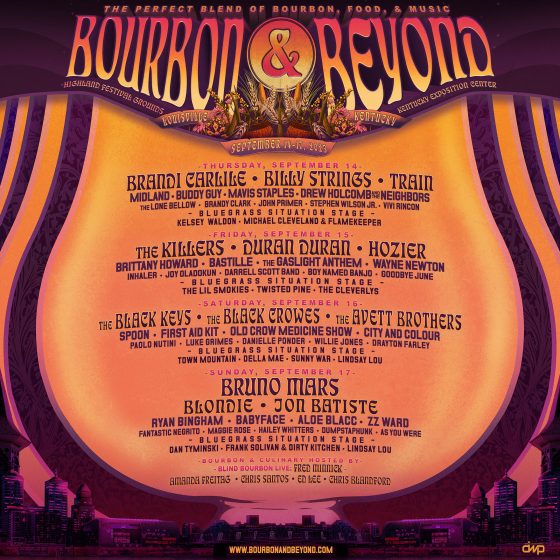
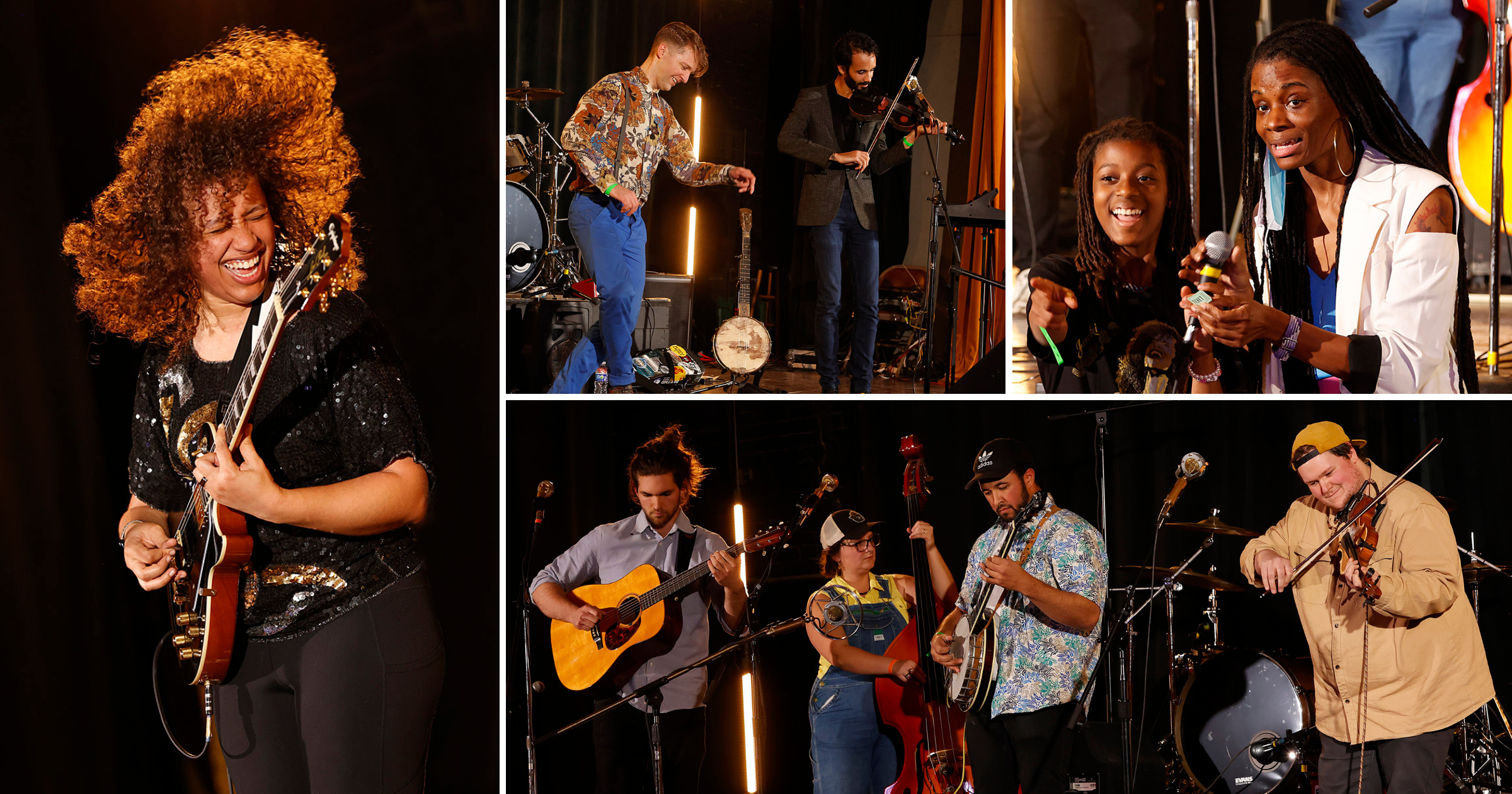
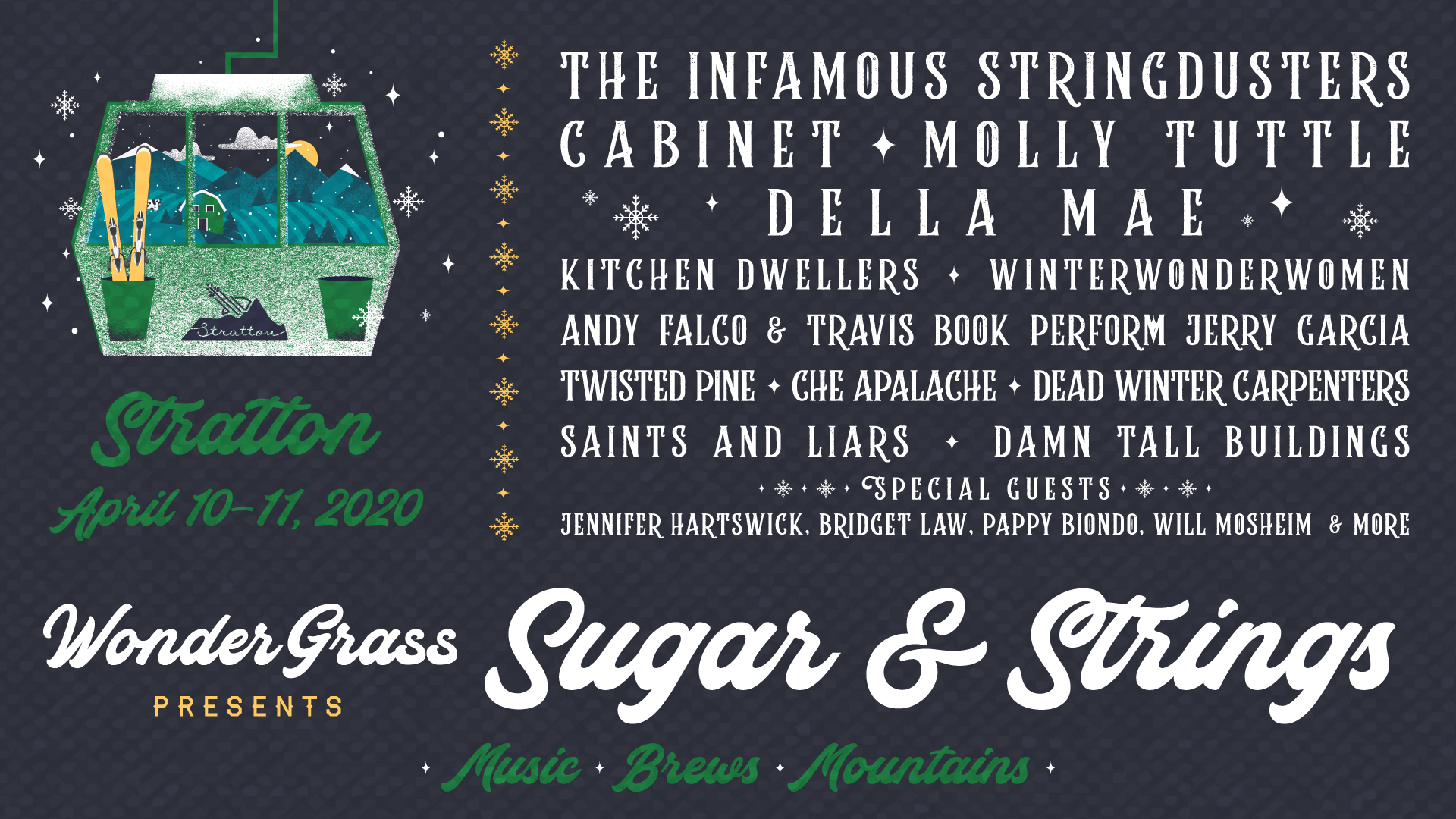
BGS is excited to announce the full lineup and schedule for our Bluegrass Situation Stage at Louisville, Kentucky’s Bourbon & Beyond – for our sixth year in a row! Since 2017, BGS has curated a bluegrass-forward roster for the premier bourbon, food, and music festival’s only music stage outside of their main stages, Oak and Barrel. The 2023 edition of Bourbon & Beyond will be held September 14 through 17 at the Highland Festival Grounds at the Kentucky Expo Center. Tickets are still available.
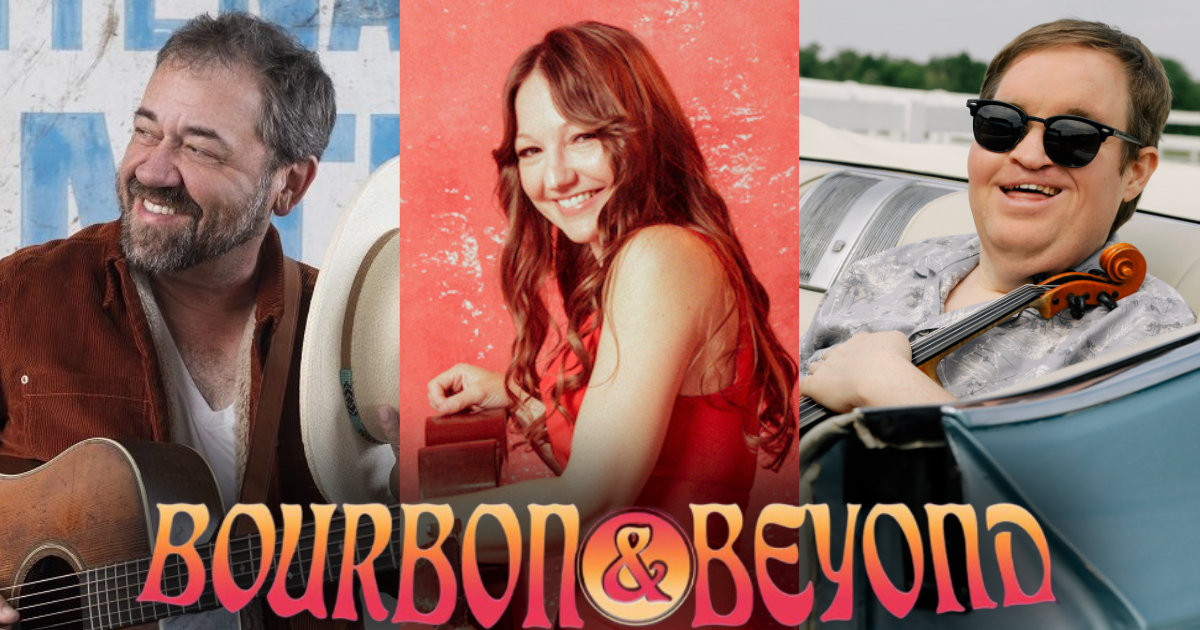
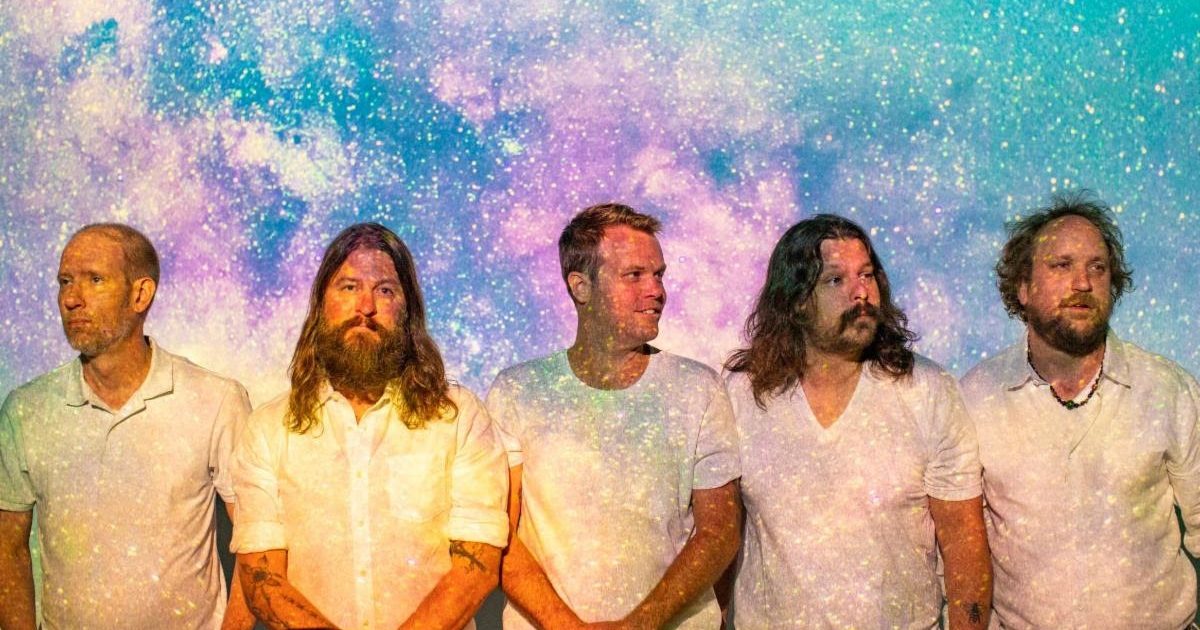
Each evening of the event, the BGS Stage will culminate with performances by Kelsey Waldon (Thursday), The Lil’ Smokies (Friday), Town Mountain (Saturday) and Dan Tyminski (Sunday). The full schedule includes performances by Michael Cleveland & Flamekeeper, Lindsay Lou, The Arcadian Wild, Della Mae, Sunny War, Twisted Pine and more. See daily BGS Stage schedules below.
This year, as in the past, there are acts and bands all across the Bourbon & Beyond schedule that feel like they were pulled directly from the pages and stories of BGS. On the Oak and Barrel stage roots music fans can hear artists like Jon Batiste, Billy Strings, Midland, Brandi Carlile, Brittany Howard, Joy Oladokun, Darrell Scott Band, Fantastic Negrito, Hailey Whitters, Brandy Clark, Mavis Staples, the Avett Brothers, Old Crow Medicine Show, and so many more.
But that’s not all! For the foodies and bourbon hounds alike, there will be wall-to-wall culinary demonstrations, bourbon experiences, and more featuring celebrity chefs such as Edward Lee, Amanda Freitag, Chris Santos, Sara Bradley, bourbon expert Fred Minnick, and many others. If you’re curious which Kentucky straight bourbon whiskeys will be available for sipping and guzzling at the Big Bourbon Bar, it’s pretty much every distiller you could ever crave: Angel’s Envy, Bardstown, Brother’s Bond, Bulleit, Doc Swinson’s Whiskey Collection, Elijah Craig, Four Roses, George Dickel, Green River, Heaven’s Door, Jack Daniel’s, Jefferson’s, Kentucky Peerless, Larceny, Legent, Maker’s 46, Michter’s, Middle West Spirits, Monk’s Road, Old Forester, Rabbit Hole, Resilient Bottled in Bond, Starlight Distillery, Wilderness Trail and Willett Distillery.
Bourbon and bluegrass and beyond – what more do you need? We hope you will make plans to join us in Louisville for the 2023 edition of Bourbon & Beyond!
The Bluegrass Situation Stage – Daily Schedule
Thursday, September 14
5:45 p.m. – Kelsey Waldon 4:15 p.m. – Michael Cleveland & Flamekeeper 3 p.m. – Two Runner 1:45 p.m. – Clay Street Unit 12:30 p.m. – Myron Elkins
Friday, September 15
5:45 p.m. – The Lil’ Smokies 4:15 p.m. – The Cleverlys 3 p.m. – Twisted Pine 1:45 p.m. – Lola Kirke 12:30 p.m. – Armchair Boogie
Saturday, September 16
5:45 p.m. – Town Mountain 4:15 p.m. – Della Mae 3 p.m. – Lindsay Lou 1:45 p.m. – Sunny War 12:30 p.m. – Armchair Boogie
Sunday, September 17
5:45 p.m. – Dan Tyminski 4:15 p.m. – Frank Solivan & Dirty Kitchen 3 p.m. – The Arcadian Wild 1:45 p.m.- Lindsay Lou 12:30 p.m. – Pixie & The Partygrass Boys
Photos L-R: Dan Tyminski by Scott Simontacchi; Kelsey Waldon courtesy of the artist; Michael Cleveland by Amy Richmond
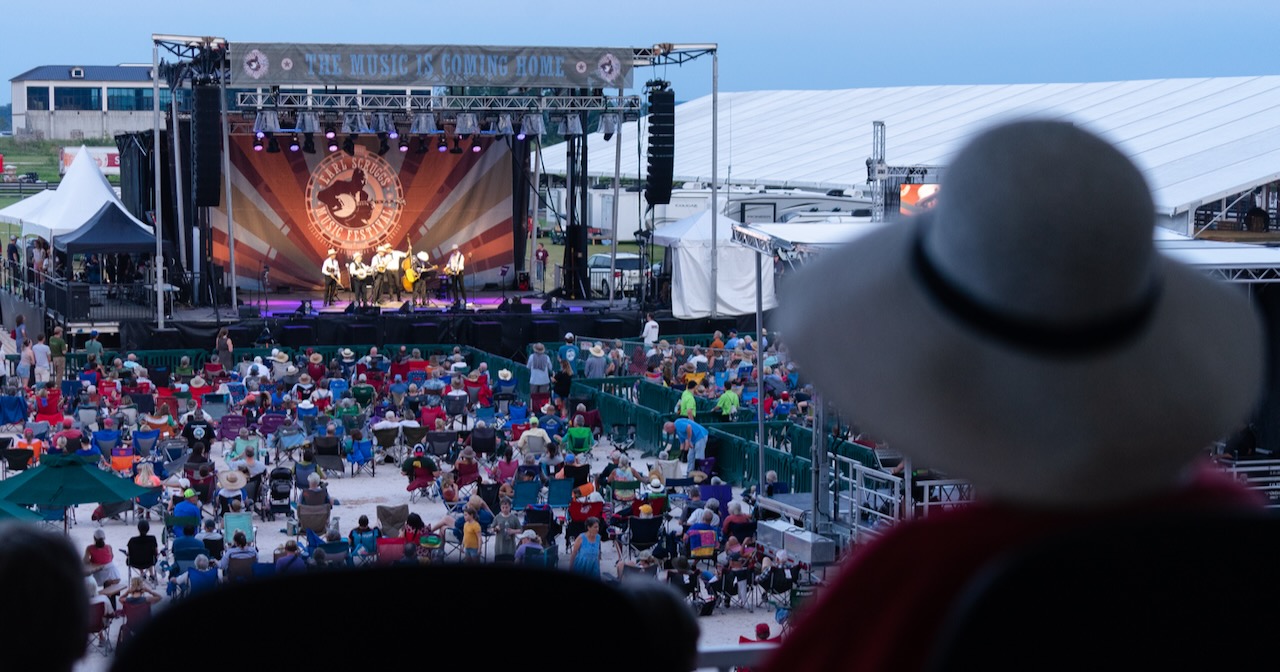
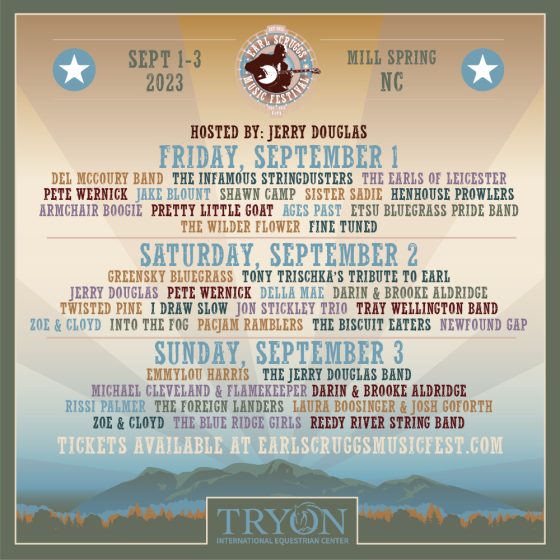
The BGS Team is excited to return to Western North Carolina for the second year of the Earl Scruggs Music Festival at the Tryon International Equestrian Center in Mill Spring. Held September 1, 2, and 3, the event will be hosted by Jerry Douglas and will include headline sets by the Infamous Stringdusters (Friday), Greensky Bluegrass (Saturday), and Emmylou Harris (Sunday) plus, on Saturday at 3:30 p.m., don’t miss the Earl Scruggs Revue Album Tribute hosted by Tony Trischka and sponsored by BGS. The showcase will spotlight an album by Earl Scruggs’ iconic late-’60s to ’80s group featuring his sons, the Earl Scruggs Revue, and will include appearances and performances by many special guests pulled from the festival’s expansive bluegrass and roots lineup.
In preparation for the festival this weekend and our trek to beautiful Western NC, check out a few of our preview picks for each day of the event:
Thursday, August 31, 2023
It’s the day before the real fun begins at the Tryon International Equestrian Center, but you’ve already pulled into town and you’re rearin’ and ready to go – what to do? Travel down the road about 30 minutes and visit Shelby, North Carolina, Earl Scruggs’ hometown, and the incredible Earl Scruggs Center. It’s open every day of the festival until 4 p.m., but hours vary some so check before you visit.
Not only does the Center co-present the festival, but it’s housed in the former Cleveland County Courthouse in the center of the Shelby town square. It’s an adorable small town with an outsized impact on American roots music – Don Gibson is from Shelby, as well; Nina Simone is from Tryon, just down the road. (Visit her homeplace on your way back to Mill Spring.) We focused on Shelby for an episode of our podcast made with Come Hear NC titled Carolina Calling. Listen to our Shelby episode while you drive!
Ready to head to the Equestrian Center to check out the festival footprint and do some reconnaissance? You’re in luck! The official festival events don’t commence until Friday, but on Thursday there will be a FREE concert on-site and restaurants and vendors will be open from 6 to 9 p.m.
Friday, September 1, 2023
The day is finally here! Gates open at 8 a.m. and the fun begins at 10 a.m. with restaurants, vendors, experiences, workshops, performances, and so much more.
Don’t miss “Secrets of Scruggs-Style” on the Legends Workshop Stage at 11 a.m. featuring Tony Trischka, Charlie Cushman and Pete Wernick – arguably three of the best living scholars and emulators of Scruggs – a perfect way to kick off his namesake festival. At 3 p.m. on the main stage, affectionately dubbed “Flint Hill Stage,” J.T. Scruggs and Jerry Douglas will do an official festival welcome leading directly into a Banjo Kickoff by Gena Britt, Charlie Cushman, Rob McCoury, Pete Wernick, Tony Trischka and Ben Wright.
We’ll also be making a point to catch Foggy Mountain Stage sets by Jake Blount (5:30 to 6:30 p.m.) and Shawn Camp (8:30 to 9:30 p.m.) plus Flint Hill Stage appearances by Sister Sadie (4 to 5 p.m.), Del McCoury Band (7:30 to 9 p.m.), and the Stringdusters closing out the night at 9:30 p.m.
Don’t go back to your campsite or your hotel yet, though! Foggy Late Night begins at 10:30 p.m. with Armchair Boogie.
Saturday, September 2, 2023
If your schedule is too-tight and you can only make one day of ESMF 2023, Saturday is the day not-to-miss. It’s wall-to-wall, superlative programming across all of the stages at the event.
On the Legends Workshop Stage we’re eyeing “High Lonesome Songs: Then & Now” at 11:30 a.m., a songwriting workshop featuring Louisa Branscomb, Celia Woodsmith and Jon Weisberger. But you may have to split your time between Legends Workshop and Flint Hill, because Tony Trischka’s tribute to Earl Scruggs – EarlJam! EarlJam! – begins on the main stage at 12 p.m. Stick around, because banjo phenom and innovator Tray Wellington brings his tight and tidy band to the main stage directly after EarlJam. Wellington’s languid drawl is only one of many traits of Scruggs’ he carries on with his innovative sound and truly traditional right hand approach.
We’re super excited to see our friends Della Mae (Flint Hill Stage, 8 p.m.) and Twisted Pine (Foggy Mountain Stage, 8:45 p.m.), but the highlight of day two for us will certainly be the Earl Scruggs Revue Album Tribute show on the Foggy Mountain Stage at 3:30 p.m. It will feature a star-studded lineup hosted by Trischka and his band and featuring songs from a classic Earl Scruggs Revue performance. (Hint above.) Our own managing editor Justin Hiltner will be emceeing and updating y’all on the event on our socials, so be sure to follow along.
At Foggy Late Night we’ll be dancing along to Della Mae past midnight! See you there?
Sunday, September 3, 2023
When Sunday morning rolls around, we, too, will be wondering where the weekend went so fast. But don’t worry, there’s still a full day of music and fun before the post-festival depression starts to creep back in.
Sunday begins, appropriately, with Gospel Brunch hosted by Darin & Brooke Aldridge and immediately following, singer-songwriter and host of Apple Music’s Color Me Country, Rissi Palmer will “take us to church” on the Flint Hill Stage, too. If you’ve never had the chance to experience Palmer’s heartfelt, modern, and soulful country stylings you won’t want to miss her set. For an infusion of a faith tradition less prominent in roots music, check out Zoe & Cloyd on the Foggy Mountain Stage at 4:30 p.m. Their latest album, Songs of Our Grandfathers, combines bluegrass, fiddle music, old-time and Jewish folk and klezmer.
On the Legends Workshop Stage at 1 p.m., get up close and personal with festival host and the worlds premier resophonic guitarist Jerry Douglas before his main stage set with his band at 3:45 p.m.
Then, to close out your weekend full of amazing music, excellent hangs, and so much fun, settle in for Emmylou Harris’s headline set on the Flint Hill Stage at 5:30 p.m. As her final notes fade into the Western North Carolina air, cheer up – you don’t have to go home yet! Reedy River String Band will give us one last hoorah for their Foggy Mountain Stage performance from 7 p.m. to 8 p.m.
As you drive back home after the second annual Earl Scruggs Music Festival we hope, like ourselves, you’ll be making plans to return next year (perhaps as you listen to Carolina Calling).
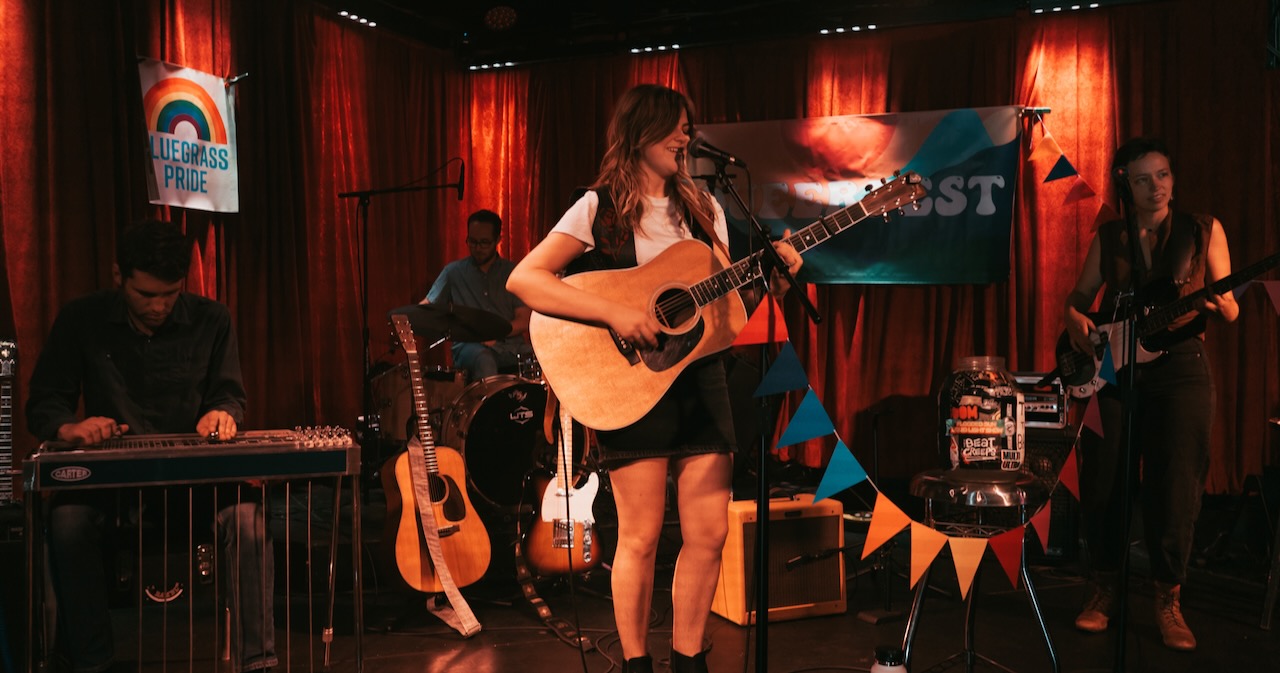
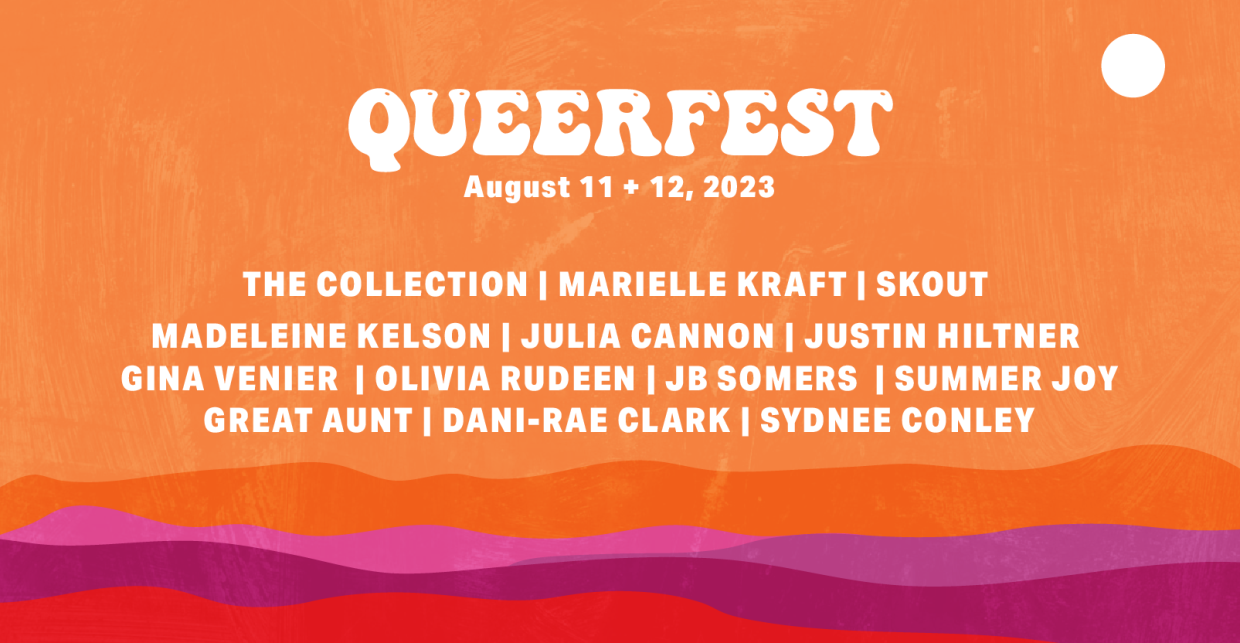
On August 11 and 12 Queerfest returns to Nashville, Tennessee, after its first in-person event in 2022 was named Nashville Scene’s Best New Music Festival. The multi-venue festival and celebration of queer folk, roots music, and indie will take place at three popular Nashville music venues – the 5 Spot, Dee’s Country Cocktail Lounge, and the Basement East – and will feature over eight hours of programming from LGBTQ+ identified musicians from across the genre landscape. (Full lineup and schedule below, tickets available here.)
In anticipation of this year’s event, we spoke to festival founder, community builder, singer-songwriter, and BGS contributor Sara Gougeon, founder and director of Pineworks Creative, about Queerfest, its growth, and why queer-centered communities are so vital, not just in Music City but in the music industry in general.
Congratulations on your second in-person Queerfest and your third ever! What are you looking forward to during this year’s festival?
SG: I’m so stoked about the lineup and the community. There are SO many phenomenal LGBTQ+ artists on this year’s lineup. And I’m so excited to bring the community together again in a way that supports queer music, artists, and organizations. I’m really looking forward to soaking up that energy.
Are there particular artists on the lineup you’re excited to have this year? Who are some of the artists and bands you think the QF audience will be most excited to discover?
I’m honestly excited for the lineup as a whole. As a songwriter and musician myself, I’m very particular about the artists and bands that I chose to book. If I had to choose one stand out band, it’d be The Collection. Their live show has this electric live energy and they also just seem so genuine. I’m stoked to be booking them. I love highlighting great music all around – regardless of how big the artist is. Sydnee Conley and Dani-Rae Clark are two up-and-coming artists who might not be as well known and their music blows me away. And Great Aunt who is coming all the way from Australia!
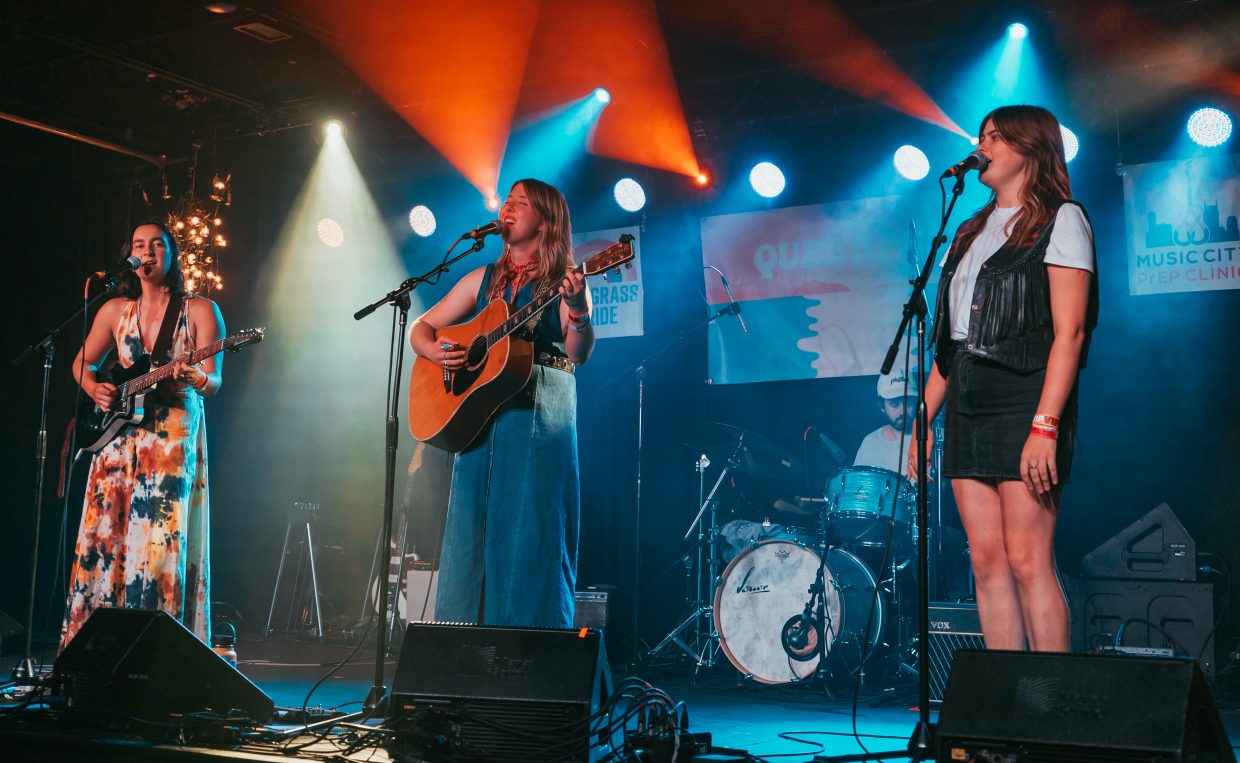
Liv Greene (center) performs with Jobi Riccio (right) and Christine Wilhoyte (left) at Queerfest 2022
How would you describe the growing and blossoming queer music scene in Nashville, and more broadly, in the music industry as a whole?
What an interesting question. There’s been so much growth and acceptance within the industry. I’m always blown away by how many phenomenal queer artists there are in Nashville. The industry as a whole is definitely seeing more artists come out.
It’s actually incredible to talk to artists who are a few generations older about that growth. I’ve heard stories from artists who were kicked off their label after coming out. Unfortunately, there’s a lot of history of that sort. But it’s been so incredible to build spaces, highlight queer music, and watch the industry become more inclusive in many ways.
Why do you think it’s so important to create and hold spaces like Queerfest for LGBTQ+ musicians, artists, and fans?
I decided to start Queerfest because of a personal need. I couldn’t find community spaces. And I was surprised that there weren’t places highlighting queer artists. And yet I noticed that there are SO MANY phenomenal queer artists, and so many queer people in general looking for inclusive spaces.
Queerfest and BGS have partnered on a column, Out Now, which was also created to hold space for LGBTQ+ folks in music. Who is on your wishlist to interview for Out Now? Is there anyone you dream of booking on a future Queerfest?
Oooh! I am so excited that we started Out Now! I’d love to interview Katie Pruitt and Joy Oladokun. Oh, and she’s definitely more in the popular music genre, but it’d be amazing to feature Fletcher one day.
And there are so many other artists: Becca Mancari, Jaime Wyatt, Shelly Fairchild, Palmyra, Aaron Lee Tasjan, SistaStrings, Leith Ross, Corook, Shelly Fairchild, Olive Klug.
And these artists who played the 2021 virtual festival: Mary Gauthier, Jaime Harris, The Accidentals, Izzy Heltai.
I’d love to have all of these acts both in-person and on Out Now!
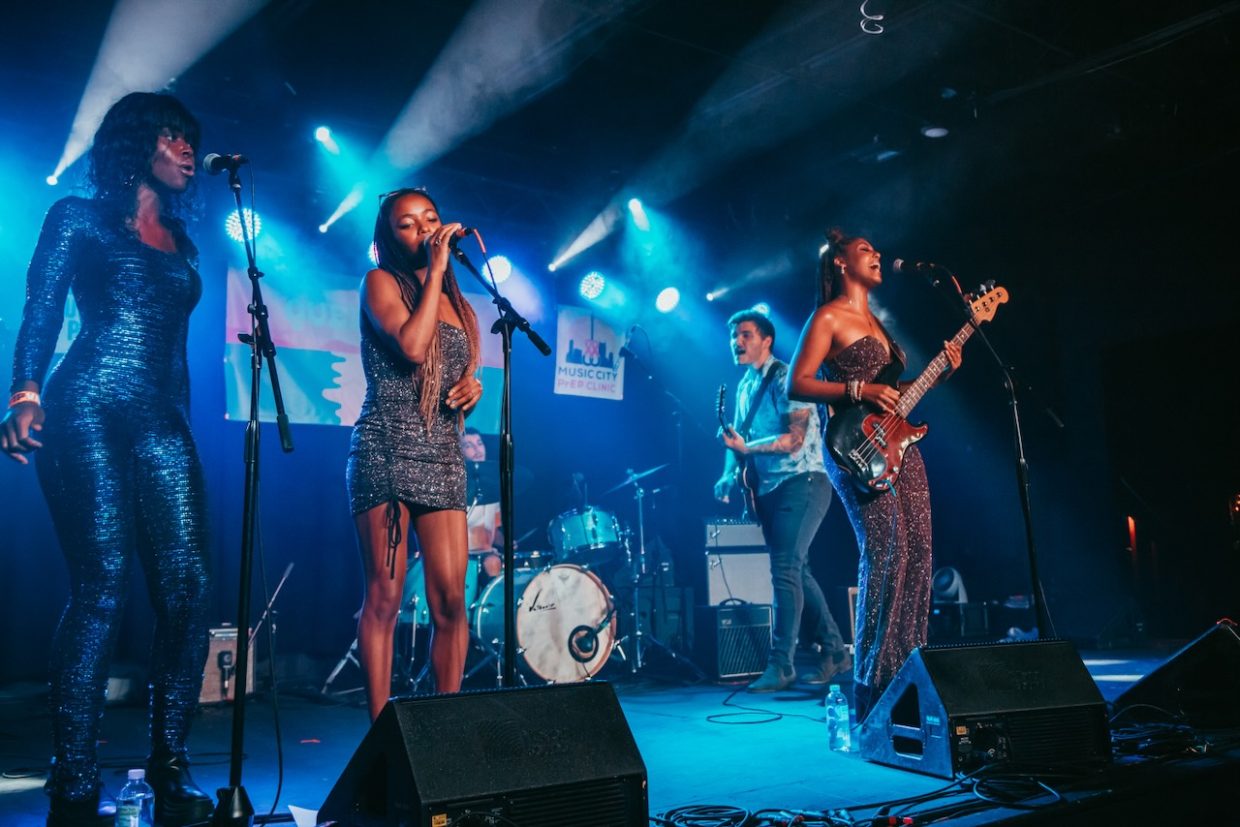
Carmen Dianne (right) performs with band at Queerfest 2022
Do you have any advice for queer folks out there trying to find community and belonging in Nashville and in music?
Come to Queerfest!! But also, there are a lot of pockets of queer community/events/organizations popping up. Check out Outdoorsy Queers – I founded this community group with friends. We host hikes, climbs, park days, roller skating hangs, and more!
Other ways to connect with queer community in Nashville:
A small, enthusiastic audience of first arrivals chat in excited, hushed tones as they listen to Hubby Jenkins soundcheck into a pair of Ear Trumpet Labs microphones in the ballroom at Fort Worth, Texas’s Southside Preservation Hall. It’s an unseasonably cool Saturday afternoon in March, with crystal blue skies and wispy clouds backgrounding the historic Fairmount-Southside district. Over the next nine hours, ten musical acts will grace the stage. Many of them are already in the room, contributing to the light buzz and chatter; this already feels like a generative space.
In its third year, the Fort Worth African American Roots Music Festival (known lovingly as FWAAMFest) has a very specific vision within the Americana/folk/old-time/bluegrass festival space: to highlight the depth and breadth of contemporary African American roots music and, by doing so, underscore the seminal, vital contributions of Black folks to every single roots genre in this country. Presented by Fort Worth-based non-profit Decolonizing the Music Room (who BGS has collaborated with on multiple occasions), the event carries forward the organization’s mission, explained artfully and succinctly by DTMR founder Brandi Waller-Pace as she kicks off the day introducing Hubby Jenkins: “To center Black, brown, Indigenous, and Asian voices in music and related fields.”
“There are so many eyes and ears on culture and the arts in Fort Worth,” she continues. “And I want Fort Worth to be at the forefront of the conversation…”
Hubby Jenkins began the day’s many conversations with a couple of banjo tunes, because, he admitted, “I’m a little nervous and [banjo tunes] make me feel cozy.” It was indeed a lovely, cozy easing into the day’s marathon lineup of music and presentations. During his set Jenkins picked guitar, banjo, bottleneck slide guitar, and played bones. And, he plays the festival’s first of many gospel numbers, “Jonah in the Wilderness,” inviting the audience to sing along, grounding his performance in the history of the Southside Preservation Hall space and these rootsy genres’ origins.
Kicking off the day with a gospel-filled set in a historic former church made so much sense, calling each of us as listeners to be active participants in the day’s festivities and also in its mission: to recenter these community-based musics on the folks who gave rise to each of them, reminding us we each have a role to play in telling a fuller, more just history of these musics.
Next up on the lineup is Justin Golden, who jokes that he and Hubby run into each other on gigs constantly and have the same repertoire, but from the outset his similar-seeming act couldn’t have felt more different. Working within the same vernacular and with such broad overlap, Golden and Jenkins are each still so distinct and unique – and illustrate the wide variety intrinsic to Black and African American roots musics, even within one form. Golden’s first number is an original, “I Hate When She Calls.”
He peppers older, classic Texas blues numbers – though he admits this is his first time in Texas – throughout heartfelt, poetic, and direct originals. His music’s foundation is fingerstyle blues, but with modern crispness, timeless touches, and a crystalline, focused singing voice.
Festival-runner and founder Brandi Waller-Pace stepped back on stage, this time as performer, for the next set of the day with songwriter, composer, and banjoist Kaïa Kater as the debut performance of their duo, Sable Sisters. They swap out banjos and guitars and a bass, singing folks songs and originals with nearly familial harmonies. A double clawhammer banjo cover of Stevie Wonder’s “Happier Than the Morning Sun” is their set’s highlight, with the legendary Justin Robinson’s guest appearance to play a set of old-time tunes ranking an honorable mention. Other festivals would be wise to consider booking Sable Sisters; if duo supergroups were a thing, this is one. Superduo? You get my meaning.
Between each set of music, as the stage was changed over, representatives from partner organizations, sponsors, and community leaders spoke to the audience, which slowly grew from a couple dozen into a small-but-mighty one to two hundred attendees. Tables in the lobby featured literature, information, and calls to action for DTMR, FWAAMFest, and these partner orgs – and from the back of the ballroom wafted the tantalizing aromas of Lil Boy Blue BBQ. (If only all music festival barbeque offerings were this legit.)
After Sable Sisters’ set concluded, the next event was a live podcast taping featuring a collaboration between Rissi Palmer, of Color Me Country Radio on Apple Music, and Garrett McQueen of Trilloquy Podcast. The conversation was titled “Redefining ‘Classic’” and featured Palmer, McQueen, and their FWAAMFest lineup-mates Jake Blount, Demeanor, Hubby Jenkins, and Dr. Angela Wellman. Palmer and McQueen took turns prompting their panelists to consider ideas around canon, genre lines, what terms like “classical” really mean, and so much more.
A theme that emerged throughout the taping was how often there aren’t hard, fast, concrete answers to these big, zoomed out questions about justice, representation, art, creation, space/placemaking, and community building. The panelists and hosts encouraged and challenged each other and themselves, reminding all of us that engaging in these kinds of conversations is part of the process and having the space – like FWAAMFest – to engage, build, and hold community like this is so important.
It’s not lost on myself or perhaps anyone else in attendance just how much gratitude each of these participants have at being enabled to be in this FWAAMFest space. Each of the performers and speakers, in their own way and in their own words, effortlessly carried the event’s mission with them as they brought themselves to the space, wholly and vulnerably and powerfully.
The podcast recording gear struck, rapper and banjo player Demeanor took the stage for his first ever full-band set – and it was revolutionary. During the Trilloquy x Color Me Country conversation Demeanor (given name Justin Harrington) stated so eloquently that “Rap is folk music, because hip-hop is an indigenous Black American art form… From the porch to the stoop.”
He and his band immediately and indelibly illustrated his point with an energized, powerful set based on sometimes spitfire, other times free flowing rap lyrics with poppy, sung verses and choruses. It’s lyrical, content rich, witty and sharp. Demeanor’s writing and production style are full of forward motion, punctuated by arena rock guitar and Wooten-like bass lines. While often centered on banjo, the five-string is not the only way roots music oozes from these songs. Their lyrics and hooks are sharp and the vocals are strong – his singing isn’t an afterthought or simply in service of a hook. Several songs were from an upcoming unreleased album, including one stand-out track said to feature Rhiannon Giddens (his aunt) and Charly Lowry.
The delight of Demeanor gave way to the delight of dance and musical dialogue, as longtime friends and jaw-dropping collaborators Jake Blount and Nic Gareiss took the stage. Blount began the set solo, accompanied starkly by low, droning synth sounds gently, languidly warbling through half tones as he sang, dirge-like, above the sound bed, commanding silence. Blount brings us back to gospel, again looking backward to look forward, and in just a couple numbers the droning synth gives way to droning fiddle.
Gareiss and his singular approach to percussive dance and traditional step-dancing injects energy and joy into the crowd, who’ve been listening and engaging for almost six hours now. Audience members are on their feet, often with phones out, disbelieving the stunning musicality of Blount and Gareiss together, sixteenth notes perfectly, bafflingly in sync.
Nic dancing to Jake’s fiddle recalls the interconnectedness of Irish step dance and Black percussive dance traditions. Where cultures, practices, and folkways overlapped at the lowest of classes in America’s urban centers, dance flourished and Irish step dance cross pollinated with Black movement traditions and Appalachian and southern steps. Over the past century and more, movement and roots music have often been compartmentalized, privatized, and sequestered from each other. Bringing them back together in this intentional way is not just a radical act given the identities represented – in this duo and in this day of programming – but simply by existing together, with intention, Blount’s and Gareiss’s talents underline what these musics were initially created to do, say, and be.
The vibe in the Southside Preservation Hall ballroom at this point was reaching “full blown party,” and when the first of the festival’s headliners, Tray Wellington Band, took the stage the energetic momentum was raised further still. For all intents and purposes a straight-ahead bluegrass band, Tray Wellington’s four-piece group demonstrated this IBMA Award winner has found his voice. His critically-acclaimed album Black Banjo certainly feels mature and fully-realized, but this was the first this writer had caught Wellington’s band since long before that record was released. The growth they’ve sustained, musically and as a unit, in the interim is remarkable. They execute chamber music level virtuosity, but with bluegrass bones. With Katelynn Bohn (bass), Josiah Nelson (mandolin), and Nick Fallon Weitzenfeld (guitar), Tray references Dawg, Béla, New Grass Revival and many more, but with an underpinning that feels as bluegrass as Appalachia – say Johnson City, TN, where he’s from.
They play a Kid Cudi cover, which is promised to be on an upcoming release, and the audience descends into mayhem as the melodic hook is slowly recognized in ripples throughout the crowd. Whether covering hip-hop or playing an old-time tune, these pickers demonstrate amazing soloing: modern, in-the-moment musical ideas without ego or self-absorption. And with Tray’s right hand anchoring all of the above, it reminds of Earl Scruggs in his Revue days – solidly bluegrass, but intimating musical ideas that come from so far afield, way beyond what we consider bluegrass territory.
Chambergrass, or whatever you want to call it, is seen as more “high-brow” or “intellectual” given its adjacency to conservatories and storied music schools, but this style of virtuosic playing is so well placed within the musical vocabularies of people from the region that birthed string band traditions. And in this context it can be executed with equal ease, aplomb, and athleticism, and with a much more grounded approach.
A quiet, slightly exhausted euphoria tingles through the stalwarts of the crowd who remain for Jackie Venson’s no-holds-barred FWAAMFest finale. Waller-Pace returns to the stage one final time to introduce the night’s last headliner, with her daughter Sparrow (who waits patiently to get her Jackie t-shirt signed at the end of the night.)
Venson is accompanied only by drummer Rodney Hydner – and her signature DJ sampler that allows her to play along with tracks, sound beds, background vocals, and play solos over loops. Even with just a two-person act, her trademark joy immediately washes over the entire room and re-energizes the crowd. Venson’s songs are soaring, anthemic, and huge, matched only by her broad grin as she smirks and laughs at herself and her own playing like it’s an inside joke.
Perhaps the best guitarist of her generation, certainly the best rock-blues guitarist of the past thirty years, the internet is in a four to six week feedback loop of discovering and rediscovering Venson’s playing at the moment, with her Tweets and TikToks seemingly going wildly viral about once a month. She’s been retweeted and signal boosted by a who’s who of Twitter personalities and musicians, and it’s all because hers is a singular voice, perspective, and skill.
Watching her improvise over each song recalls Nic Gareiss’s dancing from earlier in the evening. When you’re watching something so visceral and in the moment, you can’t help but inhabit that moment with them. And many of us do inhabit these moments with Venson by moving, standing, dancing, reveling in the ever-present joy of her music.
Venson’s brand of modern blues is unconcerned with divorcing itself from the blues of the past (and of the present) that some feel is stoic, stuffy or dusty, and out of step with modernity. Her brand of blues, no matter how distant it has traveled from its roots, still honors the sounds of old-time and ragtime and down home blues, because it knows where it came from and to what it’s connected. Venson’s connections to Texas and Austin further reinforce this point – and help place Venson and her style of playing squarely within “guitar culture,” too.
At one point during her performance Venson marveled at how the FWAAMFest gathering was, in her words, “Pretty legendary!! You’re going to be talking about this in 10 years, telling people you saw everybody on this lineup here today.”
It was a feeling that began creeping up much earlier in the festival, that what we were present for wasn’t just a community music festival, it was so much more.
Black, Brown, Indigenous, Asian, and Disabled folks – artists and creators and movers and musicians – continue to offer and model ways to hold the past within ourselves while looking ahead to the future, a duality that modernity and westernism struggles to acknowledge or inhabit. What’s striking about this conglomeration of creators and musicmakers on this lineup at this festival is that they make it look easy. It seems effortless to understand, uplift, and uphold a mission like FWAAMFest’s. Partly because the participants all are stakeholders in that mission to begin with! With their music, their insights, and their storytelling these musicians and thinkers demonstrate the past is the future and the future is the past. Roots music – the kinds that center the experiences, stories, and seminal contributions of Black, Brown, and Indigenous folks – can spotlight and move through this dichotomy better than so many art forms, while remaining grounded firmly in the present.
FWAAMFest’s success wasn’t simply because it’s a festival with a novel, substantive mission. It was a soaring, generative, forward-looking success because it focuses on what “the mainstream” perceives as a niche within a niche within a niche – African American roots music – and shows all of the possibilities, all of the many universes of artistic expression endemic to such a niche. The specificity here is not prohibitive or exclusive, it’s unfailingly, infinitely expansive. In sound, genre, content, tradition, and beyond.
As Jackie Venson said, we all will still be talking about 2023’s Fort Worth African American Roots Music Festival for many years into the future.
Editor’s note: Follow Decolonizing the Music Room on social media to catch footage from FWAAMFest 2023 as it’s released and make sure to DONATE to support their mission and future FWAAMFests!
On Wednesday, August 2, 1972, after an overnight ferry voyage, I arrived in North Sydney, Nova Scotia. A four-hour drive brought me to Fred and Audrey Isenor’s mobile home in Lantz, 50 km (30 miles) north of Halifax. It was just after 7 pm, and they already had company, including gospel singer Lloyd Boyd, known as “The Radio Ranger,” and Charlie Fullerton, a dobroist and bassist whose sound system was to be used at the Jamboree.
Other friends of Fred’s dropped in that evening – men and women active in the local country music scene who shared his interest in bluegrass. I was the center of attention, the imported expert on the eve of Nova Scotia’s first homegrown bluegrass event. In my diary I noted:
Immediately I was quizzed on my knowledge of instruments, principally, D- series 45 style Martins but other things as well. Fred’s F-5 pulled out, my F-4 and Mastertone looked at.
Owning a prewar Gibson or Martin was a mark of serious interest in bluegrass. The big fancy Martin D-45 was the top of that guitar-maker’s line. Only 90-some were made from the early ‘30s to 1942; these were owned by famous country stars, including bluegrass great Red Smiley. In the late ‘60s Martin began making the D-45 again. Lloyd had one.
I noted another visitor:
Carl Dalrymple, a C&W bassist and guitarist about to go on the road with his sister-in-law [Joyce Seamone] who has a number one Canadian Country hit, “Testing, One, Two, Three,” came [by]. He’s a D-45 owner, too.
Carl’s son Gary, then three years old, already introduced by his father to bluegrass, became one of the second generation of musicians nurtured at the Festival which grew out of the coming Friday’s Jamboree. In 1993 Gary, a mandolinist, joined The Spinney Brothers, one of Nova Scotia’s most successful bands. I was honored to have them play during my 2014 induction into IBMA’s Bluegrass Music Hall of Fame.
By the early ‘70s, bluegrass in the Maritimes had been embraced by the young, working-class, rural country musicians who formed most of the “spread out” Canadian bluegrass community Vic Mullen had told me about. This night at the Isenors’ was my introduction to a new world of musical friends and acquaintances.
As the evening wore on, the focus shifted from instruments to music making. We jammed; I noted:
We played lots of gospel songs, few bluegrass standards, I did requests for Peggy [Warner, a budding banjo picker]. Tempos were slow generally.
This was not like bluegrass jams I’d experienced during the 1960s working and hanging out at Bean Blossom. In a sense, it was a step back in time for me. In my college years, fifteen years before, I’d first learned about bluegrass through recordings. It was a distant thing.
Then I moved to Indiana, met Monroe at Bean Blossom. By the time I moved to Canada the festival movement had attracted new audiences. Mid-’60s youth had embraced folk music; that drew some of them into bluegrass — the beginning of a process of gentrification that I’ve written about in Bluegrass Generation (pp.240-42). In 1972, this hadn’t happened yet in Atlantic Canada.
The next afternoon, Thursday the 3rd, Fred took me into Halifax. Knowing I was a professor of folklore, he wanted to show me a new shop in town, the Halifax Folklore Centre. He introduced me to the owners, the Dorwards, who, I noted:
Looked at my F4 (fret wire needed, if they are to do a fret job). I got the J&J instrumental LP. Lots of blues records. Fred and Tom Dorward, the owner, get on well.
I don’t recall much talk about the Jamboree. Months later, Fred confided to me that in promoting the event, they’d failed to connect with the Halifax university students who were into folk music. Dorward would play a role in that regard at the Festival, which grew out of the Jamboree. Next, I noted:
…we went to CBC to see about placing ads, and then to an electronics distributor for a mike.
Later I added to this note:
…a local fiddler who was supposed to play in Friday’s festival — Russ Topple — had unexpectedly gone to the U.S. (Wheeling) so when we stopped at the CBC … Fred put my name on the ad as visiting banjo picker. Everyone knows that I worked with Monroe, most think that means as a banjo picker. Lots of questions about the banjo (“old Mastertone”) etc.
After supper we went to farmer John Moxom’s place out in the country at Hardwoodlands, the festival site, about 14 km (8.7 mi) east of Lantz, to help Charlie Fullerton set up his sound system. I noted:
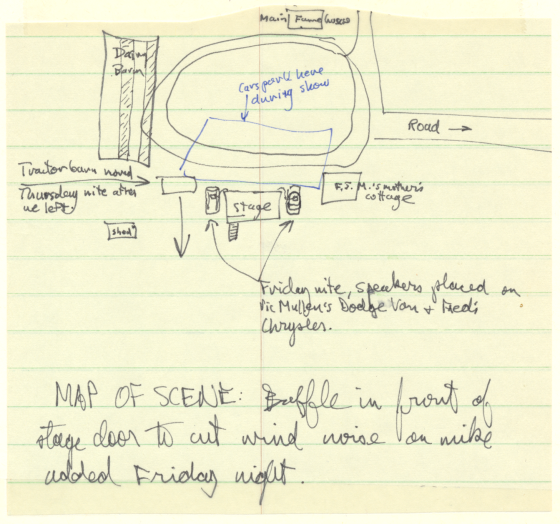
Farmer J.M. has built outdoor covered stage about the size of and dimensions of that at Roanoke. On 4 posts 6’ high; 18’x10’ floor with covered sides (except for the last 4’ at front). Roof slopes from 10’ at the front to 7’ at the back. Rough steps off the left corner rear. We end up setting speakers on Fred’s ’66 Chrysler roof beside the stage for separation. See map of festival site on the following page.
A hand-drawn map of the layout of the first Canadian bluegrass festival. Excerpt from Rosenberg’s personal journals.
The evening ended with a rehearsal at the home of Don and Joyce Peck, Fred’s bandmates. I noted:
Charlie subbed on bass for Fred’s partner (in his Lantz music store, Country Music Sales), Bruce Beeler, who works as a chef on the CN RR.
After dinner the next day (Friday the 4th), Fred and I returned to his home after visiting more of his musical friends, to find The County Line Bluegrass Boys had arrived. They would be playing at Jamboree that evening. They were from Lunenburg County, down on Nova Scotia’s South Shore. I noted:
The mandolin player and the banjo player (Mel Sarty) are the central figures in the group — first got into Bluegrass when they were 11-12 years old in the early sixties, when a relative bought the Bluegrass Gentlemen LP by chance. Have learned entirely by records. … They do quite a bit of four-part singing.
Vic Mullen, Nova Scotia’s best-known bluegrass musician, was the emcee that evening at the Jamboree. The audience was mainly in cars, parked in front of the stage. Applause came in the form of honks and flashed lights. Three Nova Scotia bands appeared.
The Pecks with Fred and Bruce on bass opened. Vic and I helped add a bluegrass touch to their sound with fiddle and banjo. A number of other singers and pickers joined us for guest appearances. Next came the County Line Bluegrass Boys.
The Boutilier Brothers closed the show. They came from a musical family; their grandfather was a well-known old-time fiddler in the region, and the two oldest brothers, Bill and Larry, began their professional career with their father, also a noted fiddler. They were inducted into the Nova Scotia Country Music Hall of Fame in 1999.
By the early 1960s they were singing brother duets and appearing with Vic Mullen on banjo. With the help of Mullen, they made four LPs (all had “Bluegrass” in their title) on the Rodeo label between 1963 and 1967, by which time a third brother, Ken, had replaced Vic on banjo. The brothers had retired several years before, but came out of retirement specially for the Jamboree.
When Fred and Vic surveyed the results of the Jamboree, they decided to try another the following year. This time they would announce it as “the second annual BLUEGRASS FESTIVAL at Hardwoodlands, N.S., July 27, 1973.” The Boutiliers and the Country Line Bluegrass Boys appeared again; more widely advertised, it was successful and drew enough bluegrass enthusiasts that in 1974 Fred and Vic brought Tom Dorward into their planning and began working on a two-day event.
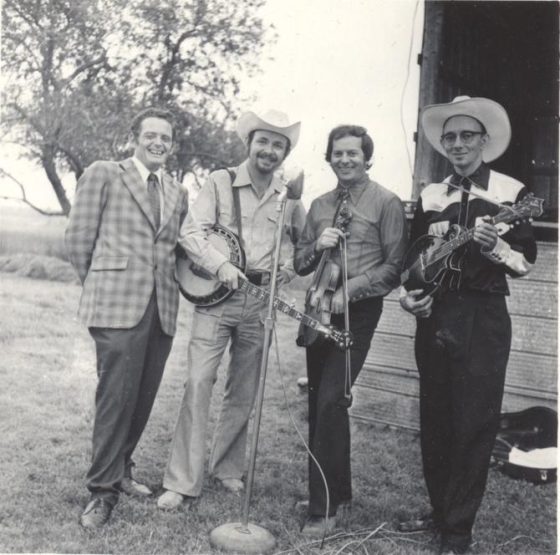
John Moxom, Neil Rosenberg, Vic Mullen and Fred Isenor at Hardwoodlands, N.S., July 1973
For the next five years, I traveled to the Festival annually from Newfoundland to help Fred and the gang, running instrumental workshops, emceeing, and appearing with our St. John’s-based band, Crooked Stovepipe.
As the Festival took off, young musicians began appearing. Eventually a fourth generation of Boutiliers became involved. In the 1980s these young pickers added Vic Mullen to their band, and, with his encouragement, took on his old band name, calling themselves Birch Mountain Bluegrass Band. In 2001, 2002, and 2004 they won the East Coast Music Association’s “Bluegrass Album of the Year” award.
Another second-generation band developed out of the County Line Bluegrass Boys. In 1973 banjoist Mel Sarty’s brother Gordon joined the band as bassist and in the 1980s he and his three daughters created a new band, Exit 13. Lead vocalist, songwriter, and banjoist Elaine Sarty fronted the group. They won the ECMA “Bluegrass Album of the Year” in 1997 and 1998. Here’s a profile of the band that appeared in the ‘90s on a national prime time CBC show, “On The Road Again.“
This, of course, was all to come! I knew nothing of the Jamboree’s bluegrass festival future when I left the Isenor home on Saturday August 5, 1972, continuing my research trip. Heading west on the Trans-Canada Highway, a half-day’s drive brought me to Woodstock, New Brunwick, near the Maine border. There I visited a student and her family who’d invited me to see the Don Messer Jubilee at Old Home Week, Woodstock’s annual fair.
The event was held in a large building in Connell Park, the fair site. It had three components: the Jubilee concert, a fiddle contest, and a dance.
The concert followed the format of Messer’s television broadcasts, with fiddle tunes prominently featured along with songs by the band’s remaining vocalist Marg Osburne. Her singing partner, Charlie Chamberlain, had died less than a month before. This was one of the Jubilee’s last public performances; Messer would pass in March 1973.
The fiddle contest, which Messer judged, was won by Mac Brogan, a fiddler from Chipman, NB. Here’s a sample of his fiddling, very much in the Don Messer style, from his 1984 album:
Finally, chairs were cleared away and Messer and the Jubilee orchestra played for dancers. Although Messer continued on the fiddle, several of the other musicians switched to wind instruments. The music was mainly a sentimental reprise of popular songs from the big band era that they’d played for dancers during their salad days in the ’40s and ’50s.
After the dance I introduced myself to Mac Brogan, telling him I was interested in researching old-time and country music in Canada and asking if he would be willing to talk to me some time for an interview. He consented and gave me his address. It would be over a year before I’d have time to do the interview, but this, along with my conversations with Fred and Vic, marked the start of what would become a decade of studying the connections between country and folk music in the Maritimes.
On Monday the 7th I was off again, heading into New England, en route to southern bluegrass scenes.
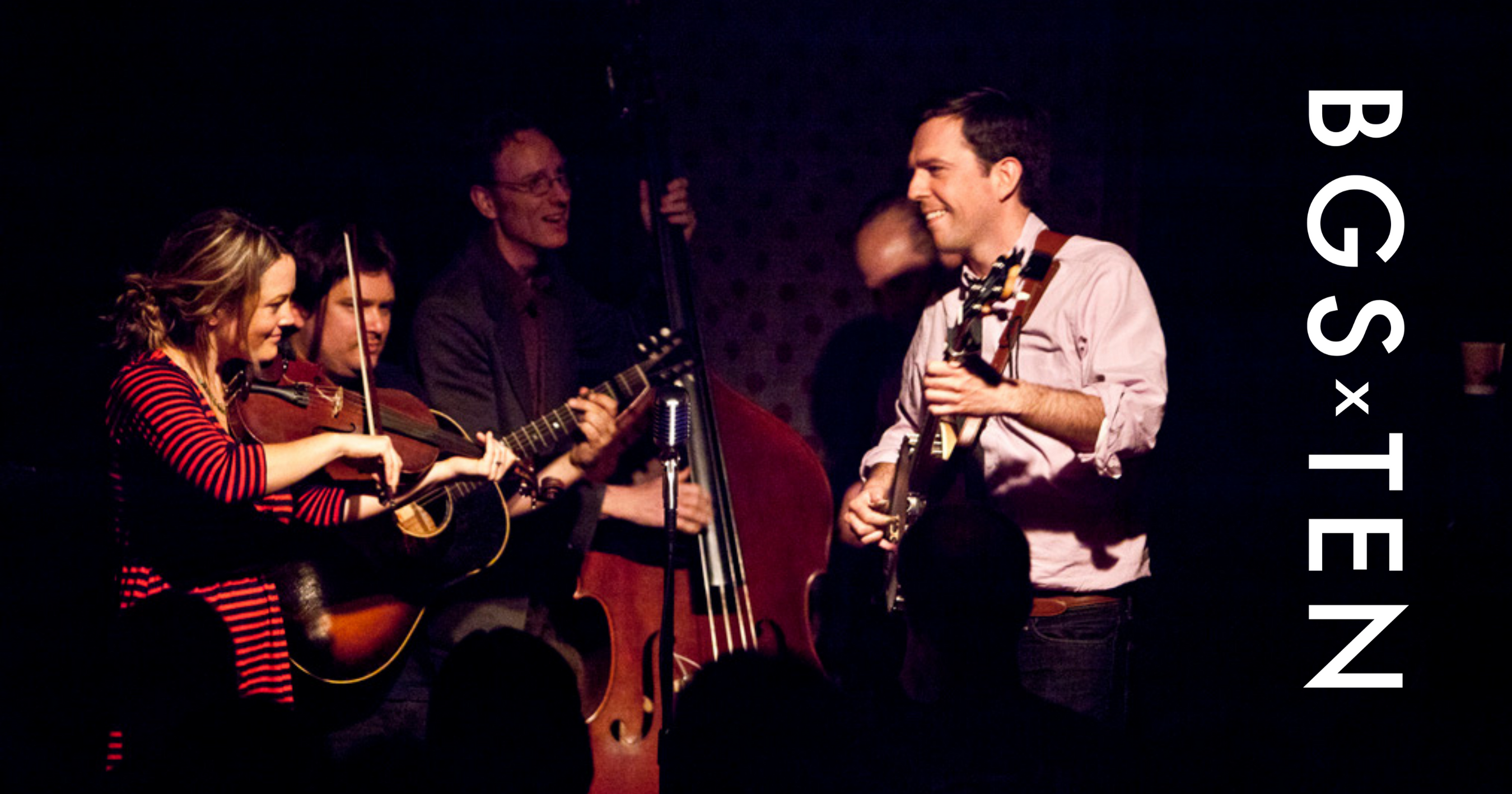
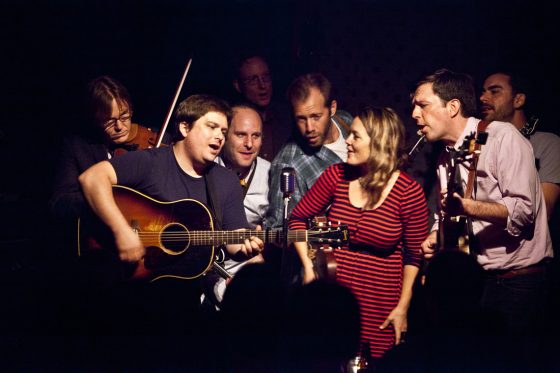
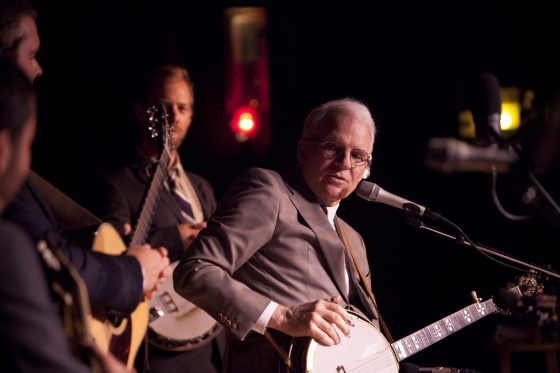
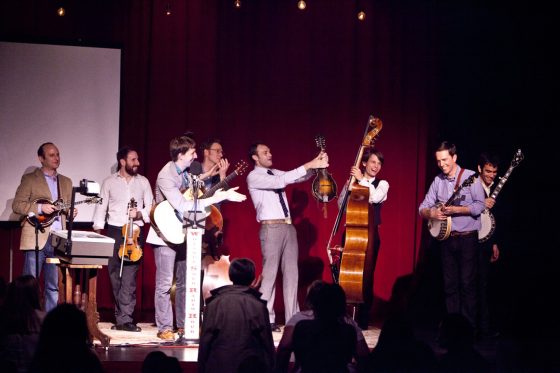
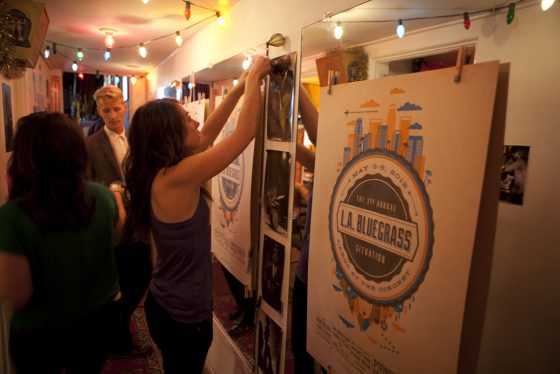
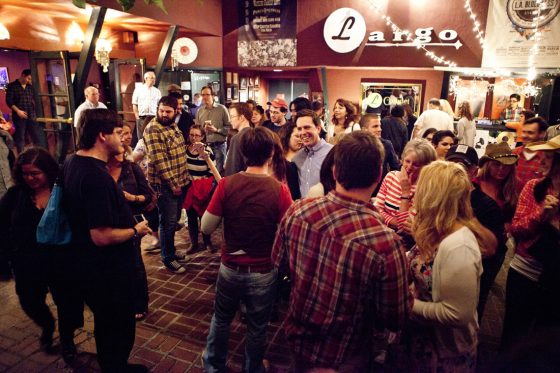
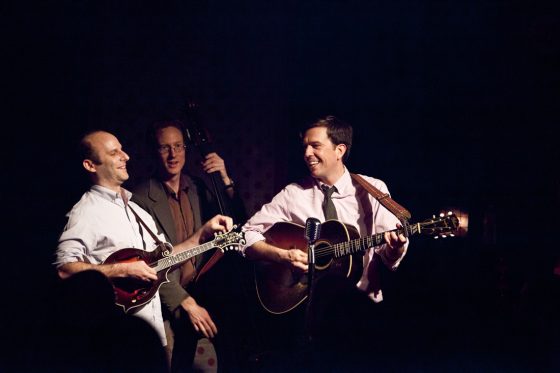
It was 2010 when the true origins of “The Sitch” first materialized. For five days in May, BGS founder Ed Helms congregated a lauded lineup of roots artists at the storied Largo at the Coronet Theatre in Los Angeles. That first annual LA Bluegrass Situation festival included the likes of Steve Martin and the Steep Canyon Rangers, The Watkins Family Hour, Gillian Welch, Will Ferrell, Jackson Browne, The Infamous Stringdusters, and Ed’s Whiskey Sour Radio Hour variety showcase.
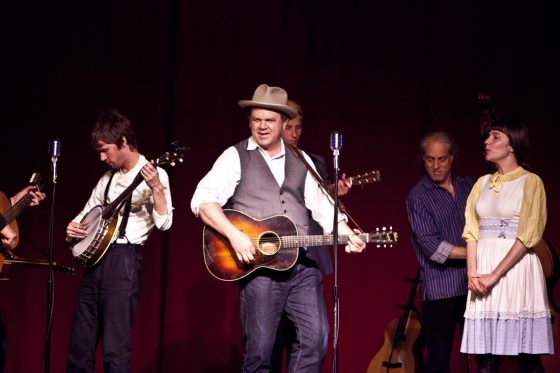
In the festivals that followed, LABS brought in the likes of Nickel Creek, John C. Reilly, the Punch Brothers, Willie Watson, and many others before broadening to bigger venues across Los Angeles. The online iteration of “The Bluegrass Sitch” wouldn’t come to fruition for another two years, but the heart of it was all there, on stage at Largo, from the very start.
In Their Words: “I enlisted the help of my buddy Chris Gelbuda to help turn a bunch of ideas that I had had into my first lyrical venture for Greensky. This song is essentially about what it was like to have my life, career, and world slammed to a halt by the COVID-19 pandemic. It was really emotionally shocking to have everything we’ve worked for and built ripped out of our hands almost overnight. With all of that in mind, we decided that the musical vibe of the song should take on the air of the first song that we would want to play when we get back on stage in front of thousands of people dancing and partying in a field at a festival… I think we got pretty close!” — Anders Beck, Greensky Bluegrass
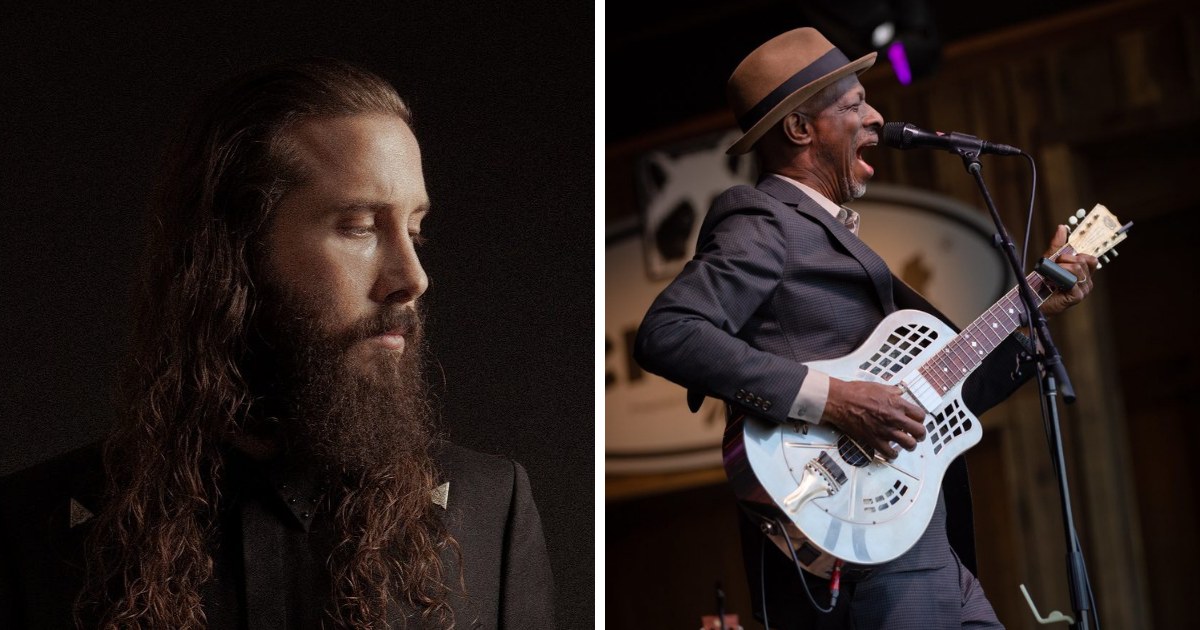
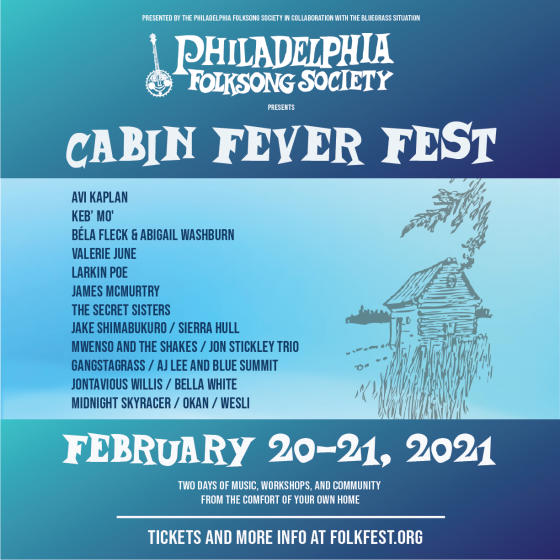
BGS has partnered with the Philadelphia Folksong Society, presenters of the oldest continuously run music festival in North America – the Philadelphia Folk Festival – on a special, winter digital music event, Cabin Fever Fest, to place February 20 & 21, 2021! Pandemic or not, this winter, everyone will have a cozy front row seat as PFS and BGS present this fully digital, interactive musical experience complete with multiple streaming stages and featuring performances by Avi Kaplan, Keb’ Mo’, Béla Fleck & Abigail Washburn, Valerie June, Larkin Poe, The Secret Sisters, and many more. (See full lineup below.)
Tickets to Cabin Fever Fest are available now, including early bird pricing valid until end of day tomorrow, January 30. Details and tickets are available at folkfest.org. Early Bird weekend passes to Cabin Fever Fest are available for just $35 for PFS Members and $40 for Not-Yet-Members. Your ticket gives you full access to the event from February 20 until February 28, to watch at your leisure and convenience.
Building on what they’ve learned from their virtual festival forays last summer, PFS & BGS will once again bring a vibrant, online music festival experience directly to music enthusiasts’ homes to mark only six months left in the long wait until the 60th Annual Philadelphia Folk Festival in August of this year. Like the festival, Cabin Fever Fest will feature unforgettable original performances from national headliners, international stars, and local talent. Branching out from past Folk Festival programming, Cabin Fever Fest will also feature an emphasis on music workshops and performance that digitally bring us closer together during these difficult winter months of isolation.
Whether you’re a seasoned performer wanting to strengthen your skills, curious about an instrument or style, want your children to participate in a music lesson, or just want to sing along, ALL attendees will be able to watch these amazing workshops, while VIP attendees will be able to participate in all of the workshops they choose.
Cabin Fever Fest will include performances by: Avi Kaplan, Keb’ Mo’, Béla Fleck & Abigail Washburn, Valerie June, Larkin Poe, The Secret Sisters, James McMurtry, Jake Shimabukuro, Sierra Hull, Mwenso & the Shakes, Gangstagrass, AJ Lee and Blue Summit, Jontavious Willis, Midnight Skyracer, Bella White, Wesli, OKAN, and more to be announced.
All ticket purchasers will be able to watch Cabin Fever Fest on demand until February 28, 2021. FAQ here.
Photo credit: Avi Kaplan by Bree Marie Fish; Keb’ Mo’ by Ryan Case.
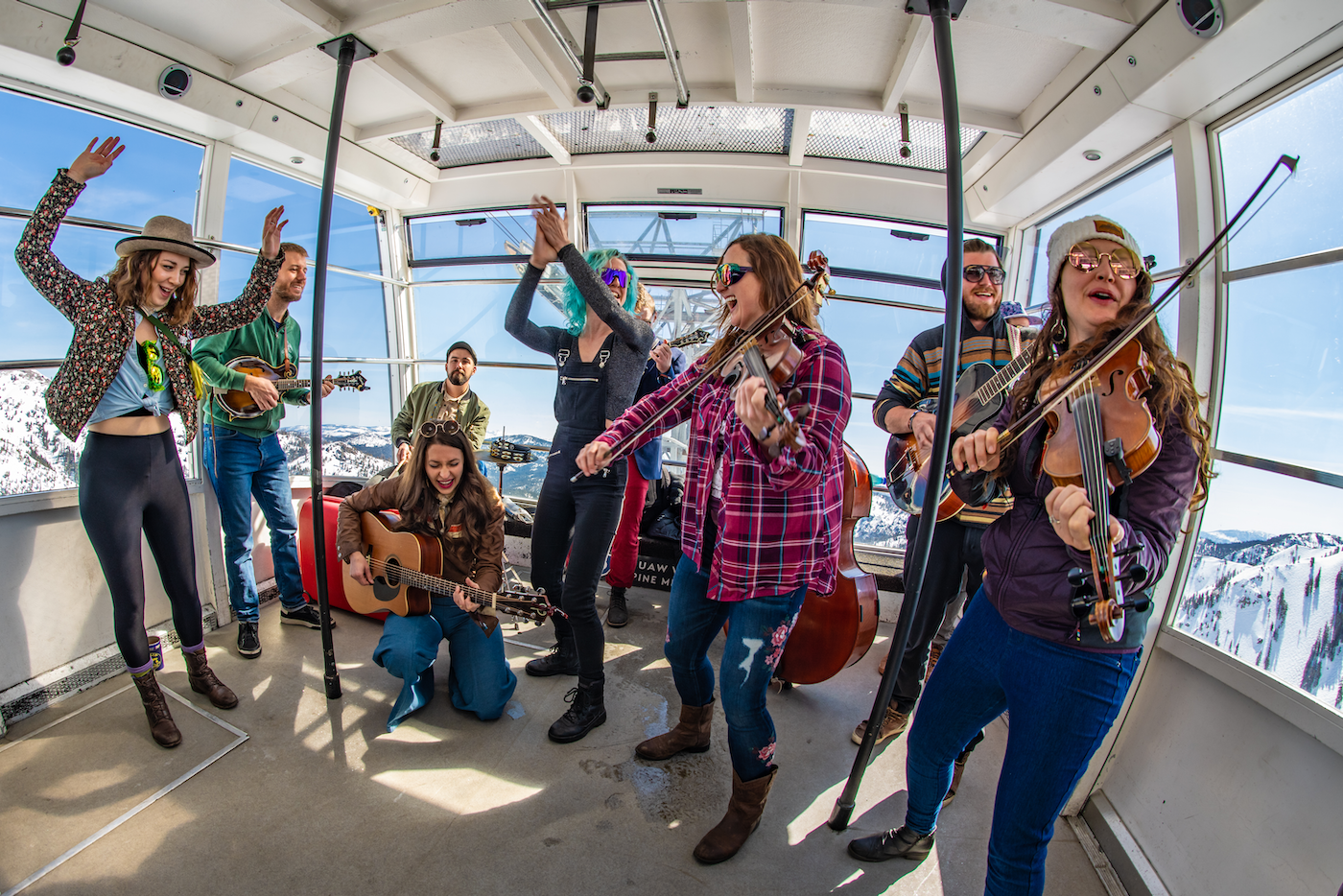
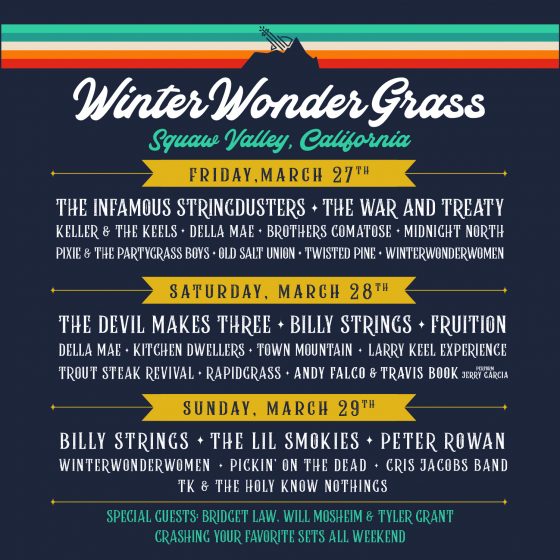
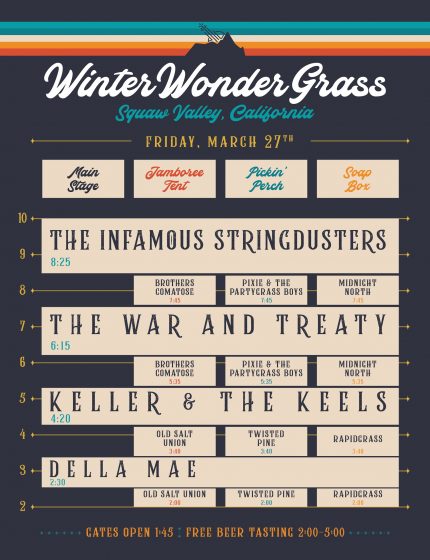
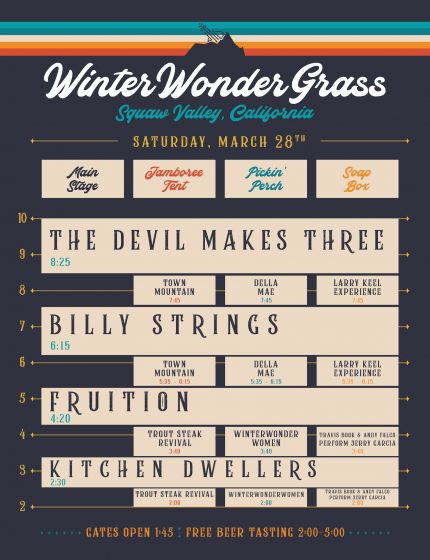
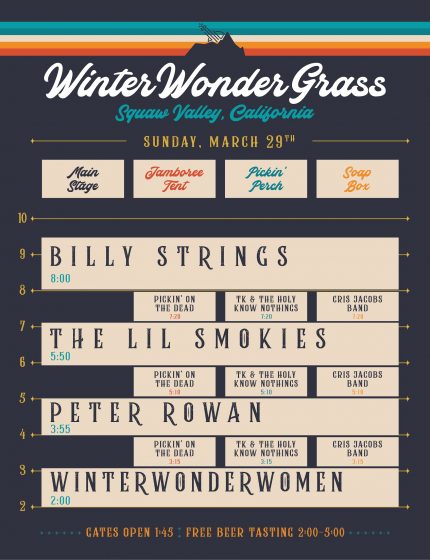
WinterWonderGrass 2020 is on the horizon and BGS is excited to share the official daily schedule for their California edition, taking place March 27-29th in Squaw Valley, California.
WinterWonderGrass California is excited to present not one, but two headlining sets from rising star Billy Strings, who was named International Bluegrass Music Association’s Guitar Player of the Year in 2019.
In conjunction with the daily schedule announcement, WWG plans to release a limited quantity of single-day tickets starting Thursday, January 23, and weekend General Admissin passes will move to tier 2 pricing the same day. Tickets and more info available here.
“WinterWonderGrass continues to honor the pillars of bluegrass while creating space for the evolution of the genre to flourish. I feel this lineup speaks to that ethos,” festival founder Scotty Stoughton remarks in a press release. “I’m super excited to see first time bands like The War and Treaty, Cris Jacobs Band and Twisted Pine as their jaws drop from the stunning Squaw Valley views surrounding their stage. It’s also an honor to watch Billy Strings continue to grow, and welcome back legends like Peter Rowan.”
Sentimentally, Peter Rowan himself adds, “When the music hits the crystal air at WinterWonderGrass and echoes off the mountains, we are home.”
Gates open at 1:45 PM each day during the 3-day music festival with Friday and Saturday nights’ programming will last until 10:00 PM, and Sunday ends slightly earlier around 9:30 PM. Performances across the Soapbox, Pickin’ Perch and Jamboree stages will see many artists perform two consecutive sets, and each night, performances on the Close Pick stage will close the festival.
VIP tickets to Steamboat’s stop are already sold out, but fans are encouraged to check out the official fan-to-fan ticketing exchange powered by Lyte if they’re in search of tickets as more of the dates and tiers sell out.
This website uses cookies to improve your experience. We'll assume you're ok with this, but you can opt-out if you wish.AcceptRejectRead More
Privacy & Cookies Policy
Privacy Overview
This website uses cookies to improve your experience while you navigate through the website. Out of these, the cookies that are categorized as necessary are stored on your browser as they are essential for the working of basic functionalities of the website. We also use third-party cookies that help us analyze and understand how you use this website. These cookies will be stored in your browser only with your consent. You also have the option to opt-out of these cookies. But opting out of some of these cookies may affect your browsing experience.
Necessary cookies are absolutely essential for the website to function properly. This category only includes cookies that ensures basic functionalities and security features of the website. These cookies do not store any personal information.
Any cookies that may not be particularly necessary for the website to function and is used specifically to collect user personal data via analytics, ads, other embedded contents are termed as non-necessary cookies. It is mandatory to procure user consent prior to running these cookies on your website.