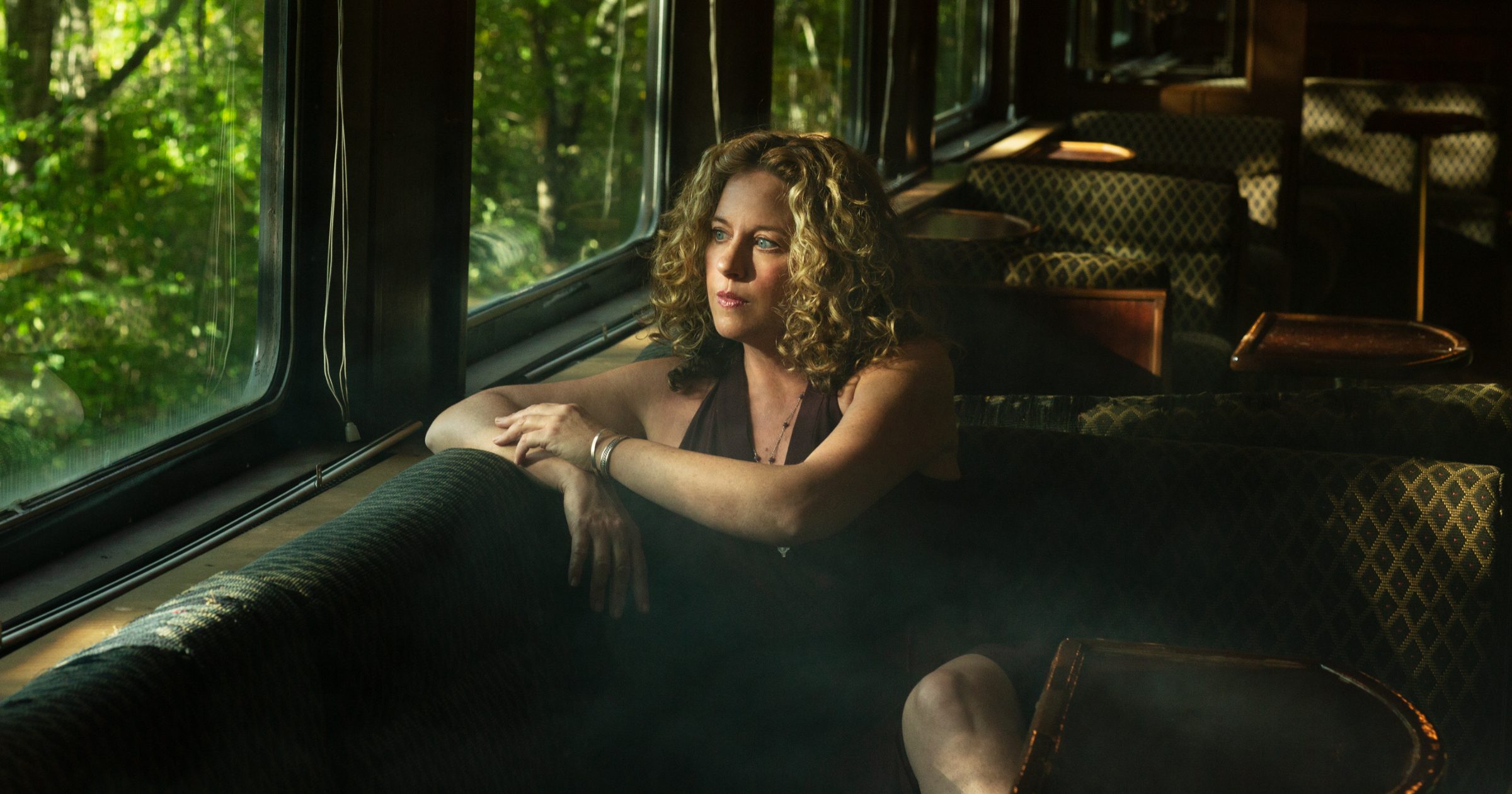
WATCH: Eliza Gilkyson & Lynn Miles, “What If We”

Artist: Eliza Gilkyson & Lynn Miles
Hometown: Eliza: Taos, New Mexico; Lynn: Ottawa, Ontario, Canada
Song: “What If We” from Folk Alliance‘s Artists In (Their) Residences program
Release Date: June 14, 2021

In Their Words: “When Aengus Finnan first approached me about a co-write I was leaning towards not doing it due to my sort of Covid Contraction State of Being last year, but as soon as he suggested Lynn Miles as my co-writer all the doors and windows swung wide open. I am such a fan of Lynn’s music and she also happens to be a great friend. The whole process was as easy and as fun as I imagined it could be. Lynn had a song idea already percolating so she sent me some rough thoughts and it totally triggered ideas from me, so we just traded back and forth and I think gave each other space to do our thing and respect during the process. She also challenged me on some lyrics at one point and I just went with her thoughts and actually learned something different in my writing process. Never too old to learn something new! So it was a positive experience all around and I look forward to playing the song out at some point.” — Eliza Gilkyson

“Eliza is one of my songwriter heroes so I’m thrilled that we wrote this song together!” — Lynn Miles


MIXTAPE: The Foreign Landers’ Transatlantic Story

Each of us having grown up on either side of the Atlantic, our common interests and musical influences could not have been more similar. All of these tracks hold sweet memories in our years of being a couple, and each artist has definitely influenced our sound as The Foreign Landers. David and I thought we’d share some of our transatlantic story together through a few of our favorite songs. — Tabitha Benedict, The Foreign Landers

Paul Brady – “The Lakes of Pontchartrain”

This is one of our favorite tracks of all time. This version of the popular ballad is from Paul’s album Nobody Knows: The Best of Paul Brady rereleased in 2002. With Paul’s flawless storytelling ability and tasteful guitar playing, it makes it a joy to come back for a re-listen.

Crooked Still – “It’ll End Too Soon”

David and I have been big Crooked Still fans for a long time and they will often be our first choice of car music on any long journeys. Here’s a beautiful song written by banjoist Greg Liszt for Aoife O’Donovan that is just so sweet to the ears. This was one of the last songs they recorded before the band stopped touring in 2012 and it appears on their EP Friends of Fall.

Tatiana Hargreaves – “Foreign Lander”

This is where the inspiration for our band name “The Foreign Landers” was drawn from. Aside from having more of a story behind our name than just that, we both love this old song and especially love this version from Tatiana Hargreaves debut album Started to Ramble released back in 2009.

Alison Brown – “Fair Weather”

This title track of Alison Brown’s album Fair Weather released back in 2000 is a common favorite of ours. Vince Gill features on lead vocals and guitar, Alison on banjo, Stuart Duncan on fiddle, mandolin, and vocals and Gene Libbea on Bass and vocals.

Ron Block – “Ivy”

Well, we knew we had to involve some of Ron’s writing and performing in this mixtape. We love this track, “Ivy,” off his album Walking Song. This is a perfect album for all year round, with guest appearances from a host of our favorite players.

The Weepies – “I Was Made for Sunny Days”

I first was introduced to The Weepies through hearing them on the radio back in Northern Ireland many years ago. My family instantly fell in love with their songs and sound, so I was so delighted to introduce David to their catalog when we were dating. Another favorite for long drives and singing along in the car. Here’s a real feel good song of theirs called “I Was Made for Sunny Days” from their album Be My Thrill released back in 2010.

The Boxcars – “You Took All the Ramblin’ Out of Me”

We just had to stick some good bluegrass in this mix of songs, and we’re so glad we chose this one. When David and I started dating, we would sing this to each other, and it has to be one of our favorites from the Boxcars album It’s Just a Road released in 2013.

Hot Rize – “You Were on My Mind This Morning”

At one of our first-ever performances about three years ago at the well-loved Cantab Lounge in Cambridge, Massachussetts, David sang lead vocals on this track written by Hot Rize. They recorded this on their 2014 release When I’m Free.

Dori Freeman – “If I Could Make You My Own”

We are big fans of Virginia-based singer-songwriter Dori Freeman, and especially love this track of hers from her 2017 release Letters Never Read. We recorded a cover of this song on our honeymoon on the Isle of Skye about two years ago now, so it holds a sweet spot in our relationship!

John Reischman – “Little Pine Siskin”

One of our favorite tunes off John’s album Walk Along John! John had been touring with the wonderful Greg Blake in Ireland back in January/February 2018, right when David took his first visit to Northern Ireland, and right when we started dating. We went to see them at a wonderful show at the Red Room in Cookstown. It was just a couple of days prior to making things “official.” I remember David playing this tune on that visit and it brings back happy memories!

The Foreign Landers – “I’m Not Sayin’”

We discovered this Gordon Lightfoot song from the late great Tony Rice on his album Tony Rice Sings Gordon Lightfoot. We have both loved this song for many years, and knew that when he would start a duo we would definitely be covering this one. We recorded this version on our EP Put All Your Troubles Away that we released in May 2021. We’re so thankful we did and hope you enjoy it!

David Benedict – “Colonna & Smalls”

David released this tune on his solo project The Golden Angle in 2018, named after the specialty coffee shop in Bath, England, back when we were dating. He has the amazing David Grier and Mike Barnett playing on this track with him.

Cup O’Joe – “Till I Met You”

David and I also tour and record with my two brothers in Cup O’Joe, our band based out of Northern Ireland. I wrote this song back in 2018, and recorded it on Cup O’Joe’s most recent album, In the Parting. I wrote this one with David in mind, not thinking that he would be playing mandolin on it a few months later!


Photo courtesy of The Foreign Landers

Robert Macfarlane and Johnny Flynn Join Forces for ‘Lost in the Cedar Wood’

It was a week into lockdown last March that Robert Macfarlane got in touch with Johnny Flynn. The pair were already good friends. Macfarlane is a Cambridge University academic and a bestselling author; his many books, such as The Old Ways and The Wild Places, have helped shape a renaissance in nature writing. Flynn – as well-known for his acting as his albums – writes songs that reverberate with an inescapable yearning for the rural and the pastoral. Britain’s landscape is a place of solace and inspiration for both.

The early days of the pandemic were disturbing, disorienting, frightening. They were also quiet. The nation stayed home and traffic all but ceased: towns fell as silent as the countryside, birdsong had never sounded louder. Macfarlane asked Flynn if he’d like to write a song together and the act of creating together was something to cling to amid the tumult. “It started as just a song,” said Flynn, “and then it became a few songs… but it held me in place and kept me from completely spinning out.”

This May they released the result of their labours: an album, Lost in the Cedar Wood. The combination of Flynn’s folk sensibility with Macfarlane’s sense of place is so sympathetic that you can’t quite believe it’s their first collaboration. But then, Flynn had been reading Macfarlane’s books long before they first met. And Macfarlane was listening to Flynn’s albums like A Larum and Country Mile as he wrote. The author, in fact, thanked the musician in the acknowledgement pages, “because they were the songs I was listening to when I was out walking, and I knew every chord by heart.”

Eventually, a mutual friend introduced them; their first meeting was, in the most English of ways, at a friendly game of cricket. Their shared love of nature and passion for conservation sparked instant bromance. All three of those things manifest in the music they’ve made together.

“Rob was sending me articles about the pandemic being created by deforestation,” says Flynn, “but we were also talking about all the literature that people were reading with a new interest or perspective – Daniel Defoe’s Journal of a Plague Year, or Shakespeare’s King Lear.” Thinking of Anais Mitchell’s Hadestown, based on the Orpheus myth, they wondered what other stories might be worth exploring. Flynn looks at Macfarlane and laughs: “And you said ‘There’s always Gilgamesh’ – as if that was too obvious.”

A 4,000-year-old poem about a Sumerian king, written in cuneiform and discovered on tablets in the ruins of an ancient Assyrian library, might not seem that obvious a starting point to everyone. But it is, as Macfarlane points out, “the oldest story in world literature,” and its potent themes cast extraordinarily contemporary parallels. In the poem two warriors, Gilgamesh and Enkidu, defy the gods by cutting down a sacred forest, bringing calamity upon themselves. “The most powerful myths have a prescient as well as a retrospective vision to them,” says Macfarlane. “And that combination of ancient and urgent pushed us on.”

The songs were written back and forth via WhatsApp and voice memos: “There’s an incredible ease to writing with Johnny,” says Macfarlane. “I never worry much, and we trust each other to say if something isn’t working. I call it the Johnny Flynn song machine. I type out a bunch of words, send them over and they come back as this unbelievable song.”

Macfarlane would like to make clear, at this point, that he can’t play a note; he describes himself as having “all the musical abilities of a deckchair” (“Not true!” says Flynn). When it comes to collaboration with musicians, however, this deckchair has an impressive résumé. He has written a libretto for a jazz opera, had his poems turned into protest songs, and worked with a supergroup of British folk talent – including Kris Drever, Julie Fowlis and Karine Polwart – to create Spell Songs, a musical adaptation of his and Jackie Morris’s book The Lost Words.

Those experiences taught Macfarlane a great deal. “I’ve learned that good lyrics are about letting go, about cutting out order,” he says. “My teacherly prose writer’s inclination to bring grammar to everything has to be left at the door. And a year working with Johnny has brought me to the point where I’ve learned to let the light into language.” He’s particularly pleased with the song “Uncanny Valley,” to be released on seven-inch later this year, “about how things don’t join up with each other in the year we’ve just lived through.”

That sense of dissociation permeates Lost in the Cedar Wood, where melodies expand and contract like our perceptions of time during lockdown. The album doesn’t retell the Gilgamesh narrative – it’s more a series of meditations inspired by it – but Flynn and Macfarlane aren’t shy of tackling its epic themes like death and rebirth.

This should not imply that listening to it is a heavy experience: quite the opposite, in fact. What’s astonishing about the record is how much delight there is in it, from the instantly catchy resonator riff of the opening track “Ten Degrees of Strange” to the modal funk of “Bonedigger.” It often manages to be moving and funny at the same time, as in the plaintive lyrics of “I Can’t Swim There”: “My friend Harry’s got legs to spare/But I can’t find my body, I’ve looked everywhere.”

That sense of light and dark is beautifully mingled in “The World to Come,” which begins with an owlishly haunting melody and ends in a mighty accelerando, gathering speed until it’s a wild, whooping chorus of multiple voices – including Macfarlane’s. “In his wonderfully inclusive way Johnny did recruit me into some distant backing vocals,” he laughs. “And that song is effectively a party — not at the end of the world, but maybe at the beginning of a better world to come. So Johnny was encouraging us into the kitchen — whack the taps! jump up and down! There’s a cutlery basket that goes down at the end and the rawness of that in the record is wonderful to hear.”

The majority of the tracks were recorded in an off-grid cottage on the borders of Dorset and Hampshire, the recording equipment run off batteries powered by solar panels. “I love those albums like Music from Big Pink and The Basement Tapes,” says Flynn, “where you’re feeling the room where it was recorded. And for this one we were in the middle of forestry land, so there was the sound of chainsaws cutting pine trees coming through the windows, and we’d jump out of the window to record birdsong, and we were really in the sonic universe of the stories we were telling.”

Also singing on the album is Flynn’s nine-year-old son Gabriel. That inclusion was important to Flynn – not just because Gabriel is a promising young musician, but because parenting was such an intrinsic part of Flynn’s life, and even his creative process, in the past year.

“I was getting up before the kids in order to write and I’d be halfway through an idea when they piled down for breakfast,” he grins. “Often Rob would get a phone demo of me trying to sing a song and halfway through I’m shouting at the kids…”

“Daddy, where’s the marmalade?” says Macfarlane, recalling the interruptions.

“It was intense,” adds Flynn, “worrying about three kids, but the lovely thing about having them at home was getting to really go into every aspect of their thought process and their day.”

Macfarlane nods. “Stepping out of work into the arms of my eight-year-old, as he runs down the garden, that’s a nice commute.” He pauses. “I hope something like that stays, after lockdown.”

Because that’s the real question behind this album: what have we learned from humanity’s most recent crisis, and how will it change us? When Gilgamesh loses Enkidu as a result of their sacrilegious actions, he begins a new quest for the secret of eternal life. It’s no spoiler to reveal that he doesn’t find it: appreciating what he already has is more to the point.

It is not lost on Flynn and Macfarlane, for instance, that Gilgamesh is a story of close male friendship – even if, as Macfarlane jokingly points out, one of the characters dies horribly and the other’s a brutal despot. You can picture them together, Flynn and Macfarlane, on their much-prized walks through the English countryside, talking of this and that, and coming up with their next creative ideas.

It has, they agree, been a joyful process, and this joint project is surely the first of many. It may have forced them to confront some of their greatest fears for the natural world and the planet on which we live, but it has also endowed them with fresh hope.

Macfarlane also hopes that people don’t feel they need to know anything about Gilgamesh to enjoy the songs – or treat it as a pandemic album. “The days and months of lockdown do soak through its pores but they’re never named,” he says. “I hope in five years time anyone can put their ear to it and not feel they need a key to understand it.”


Photo credit: Hanna-Katrina Jędrosz

The BGS Radio Hour – Episode 209

Welcome to the BGS Radio Hour! Since 2017, this weekly radio show and podcast has been a recap of all the great music, new and old, featured on the digital pages of BGS. This week, we bring you new music off of the beautiful new album Outside Child from Allison Russell, as well as bluegrass songs to celebrate springtime, and much more! Remember to check back every week for a new episode of the BGS Radio Hour.

APPLE PODCASTS, SPOTIFY

Kishi Bashi – “Waiting For Springtime”

To start off this week’s roundup, we visit our conversation with Athens, Georgia-based Kaoru Ishibashi, better known as Kishi Bashi, about his new EP Emigrant. When COVID hit, he and his daughter packed into a camper and hit the road, from the southeastern U.S. all the way to Oregon, over a period of several months. Along the way, he fleshed out the songs that became Emigrant through visiting places like the Ozarks, the Dakotas, and Montana, including Heart Mountain: a World War II Japanese internment camp he visited many times during the production of his documentary Omoiyari: A Songfilm by Kishi Bashi.


Reid Zoe – “When I Go”

This new track from singer-songwriter Reid Zoé is, on the surface, a song about dying, but really it’s about all of the questions that come with being a human on earth.

Full Cord – “Right In Step”

With a catchy melodic hook and low-tuned banjo, “Right in Step” is a lovely bluegrass tune full of love, hope, and togetherness – hopefully a respite from the uncertainty of the pandemic.

Sean McConnell – “Price of Love”

It’s been said that everything in this world comes with a price. For Nashville’s Sean McConnell, that price is reflected in loving someone — be it family, friend, or significant other — and the eventuality and certainty of you losing them. Yet still, he suggests, most of us are willing to take that risk for love, to give up our hearts completely. It’s the price that our heart pays for love in return.

The Deep Dark Woods – “How Could I Ever Be Single Again?”

A new song from pan-Atlantic singer-songwriter The Deep Dark Woods was inspired by English folk band Steeleye Span. Featuring Kacy Anderson on fiddle, the tune asks the titular question, “How Could I Ever Be Single Again?”

Sam Robbins – “Raining Sideways”

“Raining Sideways” is one of Sam Robbins’ most-requested songs, a stream of consciousness lyric that’s one of the most raw and authentic he’s ever written.

Lera Lynn – “A Light Comes Through”

A recent episode of The Show on the Road featured a deep dive with silky-voiced, southern gothic-folk songwriter Lera Lynn. Stick around to the end of the episode to hear Lynn introduce her favorite broken-romance number, “So Far.”

Graham Sharp – “Truer Picture of Me”

BGS recently caught up with Steep Canyon Rangers’ banjo player and songwriter Graham Sharp about the release of his new solo record, Truer Picture. We talked about Steve Martin’s influence on the Rangers and Sharp himself, as well as his approach to songwriting, nature inspirations, and the way literature and music coincide.

Our Native Daughters – “Quasheba, Quasheba”

Our Artist of the Month for May, Allison Russell, wrote this song for her many-times-great-great-grandmother Quasheba, who survived being enslaved, being ripped away from everything she knew, the horrible Middle Passage, having her children taken, and more. Russell says her art and a loving community have inspired her to connect with her ancestors and find connection through intergenerational strength, resilience, and transcendence, despite intergenerational trauma and abuse.

Grace Pettis – “Paper Boat”

Singer-songwriter Grace Pettis literally dreamed up “Paper Boat,” a song about coming of age, trying to fit in, and losing our innocence. She’s joined by her producer, Mary Bragg, on tender harmony vocals.

Allison Russell – “The Runner”

We spoke with our May Artist of the Month, Allison Russell, about the inspiration behind and creation of her honest and stunning album Outside Child, including this track “The Runner.” Read our two-part interview here.

Lost & Found – “Wild Mountain Flowers for Mary”

We hope, wherever you’re reading this from, that snow, frost, and the cold are truly retreating, giving way to longer days, warmer weather, and the gorgeous, humid, cicada-soundtracked days of summer. But, before we get to full-blown bluegrass season – and, hopefully, our first live music forays since COVID-19 shut the industry down in early 2020 – let’s take a moment to intentionally enjoy spring with 12 bluegrass songs perfect for collecting a wildflower bouquet, romping and frolicking in the meadow, and pickin’ on the back porch while the evenings are still cool.

Accidentals – “Wildfire”

The Accidentals spoke with BGS on loving and learning from Brandi Carlile, singing on stage with Joan Baez, the magic in meeting strangers and finding common ground, and much more in this edition of 5+5.


Photos: (L to R) Lera Lynn by Alysse Gafkjen; Allison Russell by Marc Baptiste; Kishi Bashi by Max Ritter

In a Hypnotic Video, Rhiannon Giddens & Francesco Turrisi Add Life to “O Death”

Upon the release of their new record, They’re Calling Me Home, Rhiannon Giddens and Francesco Turrisi delivered a beautiful music video for their rendition of the old American tune, “O Death.” The video features a series of scrolling paintings done by Maeve Clancy, an Irish artist who specializes in these “crankie rolls.” It’s a suitable vehicle for illustrating Giddens’ performance, as the images match not only the drama of the story but also the pacing of the lyrics and rhythms. In this hypnotic, pre-electricity style, “O Death” comes to life with its own magnetism. It’s the latest installment in the North Carolina native’s ongoing collaborations with Turrisi, a gifted Italian multi-instrumentalist.

During the pandemic, Giddens and Turrisi stayed at home for more than a year in Ireland, and They’re Calling Me Home echoes the many ways that a tumultuous 2020 had many of us yearning for the comforts of home, of the past, or of those that were called home from this world. NPR’s Here and Now raved about They’re Calling Me Home, saying “Rhiannon Giddens’ newest album goes back in time to soothe the soul of listeners today.” In a Q&A with Garden & Gun, Giddens says, “I love the idea of old technology plus new technology. Maeve is cranking one long piece of paper from one side to the other. I hope people realize that! She’s responding to what’s going on in the song. And she found a certain style and then had to draw it so it has the same tempo as the song. I love getting inside another artist’s world for a bit.”

Watch the beautiful visual representation of “O Death” below.


Photo credit: Karen Cox

LISTEN: Satsang, “Malachi”

Artist: Satsang
Hometown: Red Lodge, Montana
Song: “Malachi”
Album: ‘All. Right. Now.’
Release Date: June 4, 2021
Label: SideOneDummy Records

In Their Words: “The day my son Malachi was born, they said his bilirubin count was bad and they suggested we keep him under this crazy blue light throughout the night. My wife and I couldn’t do it. While my wife slept, I held him on my chest overcome with joy and thinking about what he could be and what I could be to him. His mom woke up in the middle of the night and I handed him over, and as they slept I just watched the two of them. I pulled out my notebook and wrote down what would become this song.” — Drew McManus, Satsang


Photo credit: Greyson Christian Plate

Artist of the Month: Chris Thile

Chris Thile found solace during the pandemic in a church — more specifically, a remodeled one that now houses Future-Past recording studio in Hudson, New York, where he and his family were temporarily living in the summer of 2020. “I went in there to look at the space and instantly felt so at home,” Thile said upon announcing his new album, Laysongs. “I loved the amount of sound around the sound. I had two sonic collaborators on this record: the tremendous engineer Jody Elff and that church.”

With a suggestion from Nonesuch Records’ Chairman Emeritus Bob Hurwitz to make a record that was both spiritual and a snapshot of the pandemic, Thile decided to pursue the idea, putting together six originals and three covers with only his voice and his mandolin. In April, he introduced the project with the lead single, “Laysong.” As he noted, “It is a lifelong obsession of mine, even post-Christianity, what the impact of that kind of devotion to any organized religion is.”

Laysongs offers the three-part “Salt (in the Wounds) of the Earth,” which was inspired by C.S. Lewis’s The Screwtape Letters; a song Thile wrote about Dionysus; a performance of the fourth movement of Béla Bartók’s Sonata for Solo Violin; “God Is Alive, Magic Is Afoot” based on Buffy Sainte-Marie’s adaptation of a Leonard Cohen poem; a cover of bluegrass legend Hazel Dickens’ “Won’t You Come and Sing for Me;” and an original instrumental loosely modeled after the Prelude from J.S. Bach’s Partita for Solo Violin in E Major. Thile’s wife, actor Claire Coffee, serves as co-producer.

It’s the latest creative endeavor from the MacArthur Fellow, whose exceptional career spans far beyond his solo work. From Nickel Creek and Punch Brothers to a pair of Goat Rodeo albums and the much-missed Live From Here series, Thile remains one of acoustic music’s most visible figures. You can read part one of our Artist of the Month interview here. Read part two here. Meanwhile, enjoy our BGS Essentials playlist, a tip-of-the-iceberg hint at the remarkable breadth of this masterful musician.


Photo credit: Josh Goleman

John Hiatt, Jerry Douglas Band Dial It In on “Mississippi Phone Booth”

For his new album, accomplished singer-songwriter John Hiatt is partnering with an all-time great of the bluegrass and folk music world — none other than Jerry Douglas. Hiatt’s raucous style and bluesy inclinations marry perfectly with the natural grit and soulful voice that Douglas pulls from the dobro.

Recorded in RCA Studio B in Nashville, Leftover Feelings returned Hiatt to his earliest days in town when he lived in a $15-a-week rented room on Music Row. “I was immediately taken back to 1970, when I got to Nashville. You can’t not be aware of the records that were made there… Elvis, the Everly Brothers, Waylon Jennings doing ‘Only Daddy That’ll Walk the Line.’ But that history wasn’t intimidating, because it’s such a comfortable place to make music.”

Their captured performances are truly spontaneous instances of creation and expression, not bogged down by the weight of calculation or correctness. For example, “Mississippi Phone Booth” struts completely on its own, with the same grease as classic blues records. Watch the new music video from John Hiatt with the Jerry Douglas Band below.


Photo credit: Patrick Sheehan

On ‘American Quilt,’ Paula Cole Wraps Herself in Music That Reflects Her Life

Paula Cole has long explored the musical territories that inform her work, making it nearly impossible to define her. Singer-songwriter? Yes. Pop star? Yes. Interpreter of jazz standards? Yes. She’s collaborated with country legends, toured with internationally acclaimed artists, and occasionally dropped completely out of sight. Because she’s so hard to pin down creatively, Cole has managed to transcend her commercial zenith of the ’90s, when songs like “Where Have All the Cowboys Gone” and “I Don’t Want to Wait” were inescapable.

Twenty-five years later, Cole is in the spotlight again with American Quilt, which sets her impressive vocal range to standards like “Bye Bye Blackbird” and “You Don’t Know What Love Is.” It isn’t quite a jazz album, and although her writing skills are on display in “Steal Away/Hidden in Plain Sight,” it isn’t quite a folk record either. Instead it’s a reflection of the influences that shaped her musical direction early on.

“Even when I explore jazz, I like it to be a little more raggedy and raw and rootsy,” she says. “I just wanted the album to reflect all that I am, and I realized, gosh, all of these songs are different from another. How do I unify it? That’s when I remembered my mom, who is a visual artist and she’s a quilter. And I realized that the quilt is the perfect metaphor for the album, that they’re all patches of an American quilt. That’s how the title was born.”

The metaphor works for the spectrum of songs on the album, yet it’s also appropriate for the warmth and comfort it provides. Some songs are more familiar than others – and her rendition of “Shenandoah” is particularly exquisite – but it’s an album best enjoyed as a whole. By dismissing the expectations of how long a song should be, and by showing reverence without replicating what everybody else has already done, Cole has produced a sweeping and immersive listening experience. She called in to BGS from the music room in her Massachusetts home, with a photo of Dolly Parton smiling over her shoulder.

BGS: Your version of “Wayfaring Stranger” is beautiful. What made you want to record it for this album?

Paula Cole: I learned of it through listening to Emmylou Harris, and loving and adoring her. Her Roses in the Snow album was really important to me developmentally. We were on Lilith Fair together in the ‘90s and would sing on each other’s sets. And I’ve been on a few benefit concerts that she’s asked me to play. I love her so dearly. I think she’s an important American voice and we should all be talking about her much more. She kind of saves music because she brings it back to the traditional aspect of it. She keeps us whole and she keeps us real by bringing integrity back to the music.

The song came to me very intuitively and I thought, “A ha!” I can reveal some of my influences and also bow to someone who was important to me. Also I was so fed up and traumatized by the music business and it was Emmylou who told me, “Don’t quit.” You know, I took a seven-and-a-half year hiatus and thought about leaving the music business, but she was the one who said, “Hang in there.” It just happened too fast. She had this motherly wisdom for me and it made sense, and I’ve thought of her so much over my life. I love her very much.

Roses in the Snow is a familiar bluegrass album for a lot of our readers. Are you a bluegrass fan?

I just love music. So, if you asked me, “Do you like jazz?” I would say, “I love music.” [Laughs] My dad played bass in a polka band on weekends when I was little, then he would go home and play Duke Ellington on the piano or he would play obscure folk songs on banjo in my house growing up. It was always a mixture. I love all music. I love bluegrass. I love acoustic music. I love music where musicians are playing real instruments, so that’s one defining factor to me — real instruments! I’ve been touring with upright bass now for several years and I can’t go back.

Did your dad teach you how to play banjo?

No, darn it! [Laughs] I guess I could have picked it up. I mean, he played everything. He could do hambone and play nose flute and upright bass and guitar and banjo and piano. Just really a renaissance man. He exposed me to all music and there were no classifications. That was something more that non-musicians did. Musicians would fluidly move from music to music and just find the joy in all of it. He taught me that.

When I was listening to “Nobody Knows You (When You’re Down and Out),” I was curious, does that mirror your own experience to some degree? Like, you’re living the good life as a millionaire, then you find that your friends vanish when the circumstances change.

Oh sure, I’ve known that. False friends, false fans, false everybody comes to you when you’re successful. They’re flattering and they’re obsequious. They have ulterior motives, so it’s hard, and of course I’ve experienced that because I’ve been up and down and side to side…. [Laughs] All over the business! And I wanted to come back home and have a personal life and have truth and family and let the trappings fall, and to be honest.

So, I chose to walk away in a sense from that shiny pop world because it wasn’t me. I was introverted and shy. I didn’t feel like this big pop star. I was very much a musician of integrity that wanted to have a long career and a rich catalog. I had to walk away to reset and reinvent myself. So, yes, of course I relate to that song. Also I relate to Bessie Smith, and so many fantastic singers are coming from the river of Bessie Smith. You hear Billie Holiday and Janis Joplin — Bessie Smith was their favorite singer. She combines all of that beautiful roots music. And the songs from the Prohibition era speak to me, those hard times, they speak to me.

Sometimes I will ask musicians about their first guitar, but for you, I’m wondering, do you remember your first piano?

Yeah, I remember the first piano, oh my gosh. It was covered in chipped, baby blue paint. I grew up in Rockport, Massachusetts, and my dad was a teacher at a state college, and we did not have much money. I wore hand-me-downs and we got things at Goodwill. In New England — freezing cold New England — we would really skimp on the heat to save money, and they put the piano in what they called the cold room. It was like a mud room. You walk into that room and take off your coat, and the piano was in the back. And it was cold! It was cold-ass cold! And there’s my first piano.

I was quite dedicated to music, to be playing in a freezing cold room in New England. Literally, we had some fish at one point and they froze! That’s how cold our house was. We had a potbelly stove and it was just hard. We were looking for ways to save money. It wasn’t always that hard. My dad ended up changing jobs and doing better, but my childhood was formative for me. I started working at a really young age. I was waitressing at 14 and I’ve always worked. It’s not nice, struggling like that, but that piano is indelibly etched in my mind with the back of the cold room. The chipped blue piano, out of tune! [Laughs]

Did you grow up with a lot of songbooks around?

Yes, and one of my missions while my father is still alive on the planet is to comb through his fake books and real books, especially of his folk standards. He has some really interesting, cryptic and eclectic, folk books that I would love to go through. That’s on one of my do lists of life.

To me, “Good Morning Heartache” sounds like it could be a sad country song, but it was made famous by jazz singers. How did you learn that one?

It’s in the real book of standards. Those books were around, and I have a real book of standards on my piano now. Even when I was touring, or had hits, or didn’t have hits, or mothering and not being in music, I would go back to the real book just for comfort and learning. I’d let my hands go on the piano and the shapes of the chords and learn songs. I first learned “Good Morning Heartache” by reading it out of a book but then I heard Billie Holiday and even modern singers do it. A lot of people have done it. But I love it because it feels to me like one of those songs that crosses genre, just like you said. It feels to me like it could be a jazz ballad, a country ballad, a soul ballad – and often it’s recorded by R&B singers. I love that it’s universal, and I love sad music. I’m not very good at happy music. [Laughs]

You close this album with “What a Wonderful World,” which offers a lovely and optimistic message. Was that an intentional decision for you to wrap up the album with that song?

Sequence is extremely important to me, so I probably spent at least a month listening to heads and tails of the songs, and all the different possibilities and combinations. And yes, it is the perfect punctuation of the journey of an album format. I love albums – I think in albums. I don’t think I’ll ever be a singles releaser. I’ll always be an album writer and album producer. I love the art of sequence.

Again, this is a song that transpires over genre and it appeals to all audiences. It unifies people. And it was written specifically for Louis Armstrong because he unified Black and white audiences. He was a genius if ever there were one. His ability to improvise within chord changes was profound. He was joyful and elevating. I play it in a somber way, and I hear sadness in my voice, and I think it’s melancholic and ironic in a way, but yeah, we must hold on to hope. We must hold on to that thread of hope for our children and our grandchildren to make this world better.


Photo credit: Ebru Yildiz

LISTEN: DoomFolk StarterKit, “Look at Miss Ohio”

Artist: DoomFolk StarterKit
Hometown: Portland, Oregon
Song: “Look at Miss Ohio”
Album: Like You Mean It Records Sampler Vol. 1
Release Date: May 21, 2021
Label: Like You Mean It Records

In Their Words: “Recording any of Gillian Welch’s work is such an honor. ‘Look at Miss Ohio’ holds this fantastic tension between societal and familial pressures and a deep desire to find new ways of living. The line that pushes me over the edge is ‘I know all about it so you don’t have to shout it / I’m gonna straighten it out somehow.’ There’s so much there — it’s a line you might shout at a parent defensively, but it is also packed with utter humility and self-awareness. For me, this song depicts the story of someone choosing to embrace ambiguity while living with the hope that it’s going to shake out alright, somehow. Making peace with the fact of uncertainty is a theme that’s found its way into some of my own songs here and there. I’ve tried to represent that in this cover with a balance of lightness and melancholy in the arrangement.” — David Swick, DoomFolk StarterKit


Photo credit: Emily Barrett