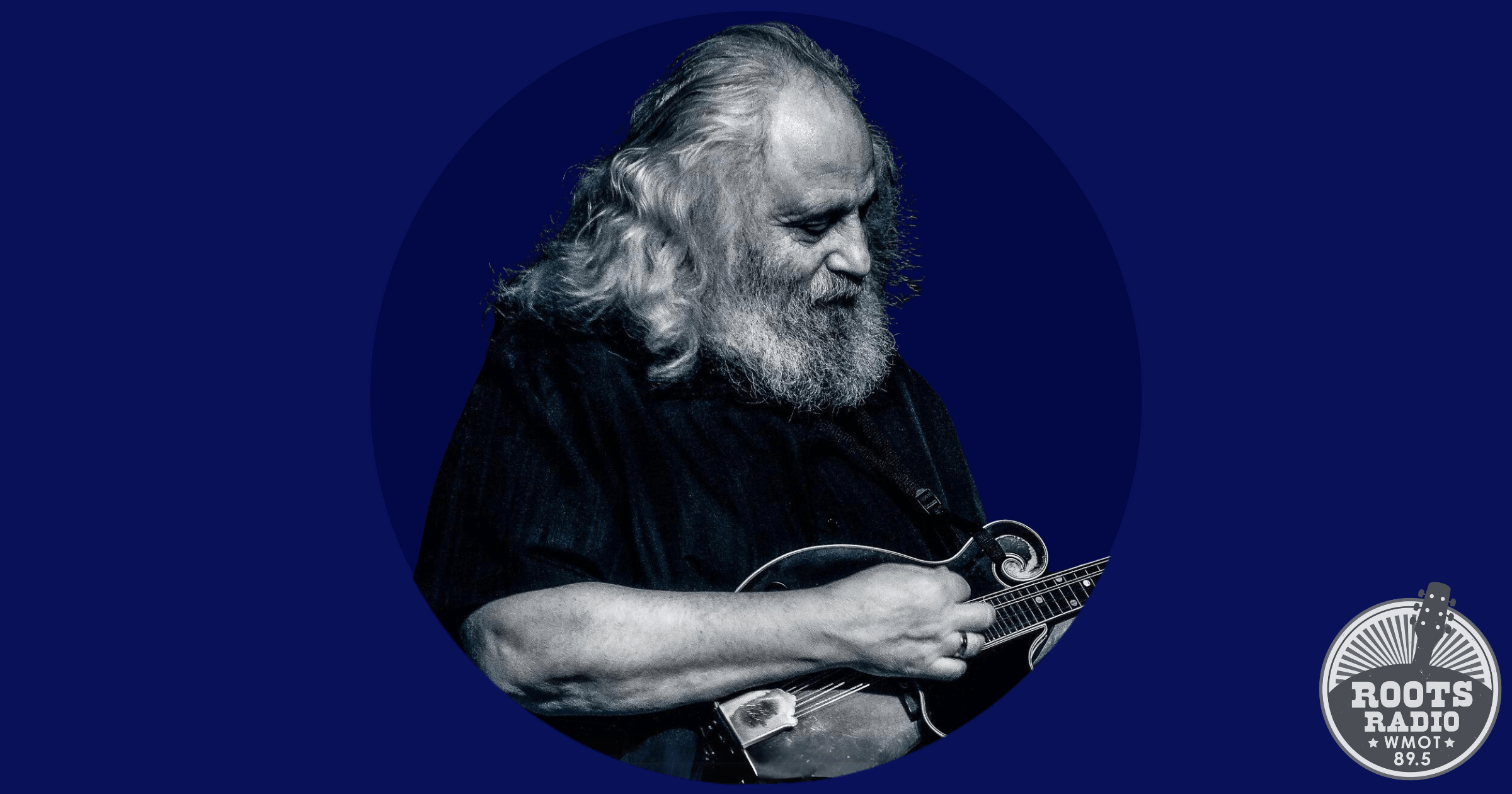
David “Dawg” Grisman Recorded His Own Journey to the Bluegrass Hall of Fame

(Editor’s Note: This story was first published in November 2023 by our friends at Roots Radio WMOT 89.5. Visit their website to hear the best in listener-powered independent American roots music and to read more by journalist and producer Craig Havighurst.)

Sixty years ago, an 18-year-old David Grisman made his way to a place called the Coral Bar in West Paterson, New Jersey. He brought with him a portable Wollensak reel-to-reel tape recorder and a good measure of youthful chutzpah. He found the dressing room of his quarry – bluegrass stars the Osborne Brothers – and asked Sonny and Bobby if it would be okay if he recorded their show that night.

“And Sonny Osborne looked at me and said, ‘You can record the show. But if that ever comes out on a record, I’ll find you and I’ll kill you.’”

Grisman, now 78, recounts this memory at his home in Port Townsend, Washington. It’s a turn-of-the-20th century house with high ceilings, period furnishings and beguiling, music-themed paintings on the wall by David’s wife Tracy Bigelow Grisman. I got to visit the master mandolinist this summer, just weeks before he was announced as one of 2023’s inductees into the Bluegrass Music Hall of Fame, an honor that was consummated in late September during the IBMA Awards.

While he was hailed by the bluegrass establishment for his “distinctive and influential” mandolin playing, his visionary advances in string band music, and the creation and cultivation of an offshoot of bluegrass so particular that Jerry Garcia dubbed it “Dawg Music,” Grisman’s legacy also includes a lifelong passion for recording acoustic music. Taking cues from his mentor, the folklorist Ralph Rinzler, Grisman has captured live shows, friendly jams, and studio sessions across six decades. Many of his best tapes have been released since 1990 on his own record label, Acoustic Disc.

Artist-owned labels are rare enough in their own right, but there may never have been a label that documented an artist’s own influences and output across time as abundantly as Acoustic Disc does for Grisman. He’s reissued historic music that touched him, including that of mandolinist Dave Apollon and Argentine jazz guitarist Oscar Alemán. He’s documented his personal mandolin heroes and pals like Jethro Burns and Frank Wakefield. But at its core, Acoustic Disc is a catalog of Grisman’s various collaborations, as leader of his David Grisman Quintet, in his influential bluegrass supergroup Old and In The Way, and in duos with Jerry Garcia, Del McCoury, Andy Statman, Tony Rice, and Doc Watson.

For several decades Grisman partnered in the label with longtime friends Harriet and Artie Rose, but in 2020 he and Tracy acquired full ownership and took it all digital, which Grisman says “has allowed me to triple my production of new releases.” The newest, out last week, is a 50th Anniversary Edition of Old & in the Way Live at Sonoma State, recorded in November of 1973. That follows on a recent digital release of an informal 1976 session that Grisman calls the New Smokey Grass Boys with Darol Anger on fiddle, Tony Rice on guitar, Todd Phillips on bass and Robert Bowden on banjo. Also recent, the six-volume collection Dawg Works covering all of Grisman’s instrumental compositions recorded with a who’s who of acoustic and bluegrass pickers.

Acoustic Disc (encompassing the legacy CD releases in physical and digital form) and its sister label Acoustic Oasis (all download) offer a thread of immersive snapshots from the life of a man who seemed to be everywhere that mattered in bluegrass from the early 1960s into the 21st century. And we might not have this rich portrait of Grisman’s influential career if fortune hadn’t brought him early on into the world of renowned folklorist, artist manager, and promoter Ralph Rinzler as he grew up in Passaic, New Jersey.

“I was really into early rock and roll. You know, Chuck Berry and Buddy Holly and Jerry Lee Lewis and Elvis,” Grisman said. “It was being born really. And so I was one of those young, impressionable kids. But around 1958 or ‘59 it started evaporating. Buddy Holly got killed, you know? Little Richard got either busted or became religious. Elvis went to the Army. And pop music got very vapid.”

Into the vapid void came folk music, first the polite kind like the Kingston Trio but soon this rougher, richer sound called bluegrass began to reach teenaged Grisman. He and some friends formed a folk music club at his high school, and the cousin of his favorite teacher came to talk and demonstrate records and instruments. That was Ralph Rinzler, and the encounter changed Grisman’s life. Rinzler, 10 years older, hosted late night listening sessions at his home, which happened to be four blocks away, sharing music by Jimmy Martin and the Stanley Brothers, until Grisman’s mother telephoned to call her son home.

In 1961, Rinzler invited Grisman along on a road trip to the New River Ranch for an outdoor show with Bill Monroe and the Bluegrass Boys and another blazing mandolinist named Frank Wakefield. “There was a small backstage. I heard them play mandolin duets,” Grisman said. “And that really blew my mind. The whole experience blew my mind.”

In Rinzler, Grisman had latched onto a key figure in American folk music. He was a mandolinist with the popular Greenbriar Boys at Gerde’s Folk City in Greenwich Village. He’d go on to manage Monroe and Doc Watson, promote many shows, and run the Smithsonian Folklife Festival and Folklife Program. His passion as an archivist rubbed off.

“I got this all from Ralph, you know? He was going on these field trips, finding these musicians and recording them,” Grisman says of their early years together. “For a while, Ralph lent me his Nagra, the premier portable Swiss tape machine. I made a tape of Jesse McReynolds and Bobby Osborne playing duets in a shed outside a show in Maryland in 1965 that I still have.”

So Grisman was thinking like a producer by the time he started at New York University in Greenwich Village, and at age 18 he officially became one. First he took a recorder to Wakefield’s Hyattsville, Marylad home where he captured an informal jam session with great songwriting bluegrass star Red Allen. His young partner on that trip Peter K. Siegel, another acolyte of the music, worked with Grisman to gather the personnel and repertoire for the album Bluegrass by Allen, Wakefield and the Kentuckians on Folkways Records in 1964. The jam tape, which Grisman used as a practice guide for his own mandolin playing, was released by Acoustic Disc on CD and download as The Kitchen Tapes.

Grisman produced two more Red Allen albums and played in his band for a bit before the next major shift in his life, one that reflected the times. In 1967, he conspired with fellow bluegrasser Peter Rowan to go electric with the psychedelic folk-rock band Earth Opera. They made two albums for Elektra before disbanding, and by 1970, Grisman had moved to the Bay Area, where he’d spend most of his life. A fellow he’d met back east in ‘64 or so was out there making quite a name for himself in rock and roll, but Grisman knew that Grateful Dead guitarist Jerry Garcia’s first instrument was banjo and that he was good at it. That led to the first project that truly set Grisman apart as one of the great influencers of bluegrass music.

It wasn’t Grisman’s tape recorder that was running on October first and eighth of 1973 at the Boarding House in San Francisco, but Owsley “Bear” Stanley knew what he was doing as sound engineer for the Grateful Dead. Grisman was on stage with Garcia on banjo, Peter Rowan on guitar, Vassar Clements on fiddle and John Kahn on bass. The set lists blended classic repertoire with Rowan originals like “Panama Red” and “Midnight Moonlight” that would become standards.

Ten tracks from those two live sets were put out in 1975 on the Dead’s in-house record label as Old And In The Way, which became by some reckonings the best-selling bluegrass album of all time. With its reach from rock and roll through the songwriting sensibility personified by Rowan and the daring improvisation of Vassar Clements, it was certainly among the most influential. Grisman released both shows in their entirety for the first time as Live At The Boarding House – The Complete Shows in high definition digital download. It’s an extraordinary time capsule of a pivotal confluence in roots music.

The Mill Valley, California house where Grisman settled became a hub for musicians where the mandolinist got to work out the sound and approach he’d been thinking about for years, one grounded in the sounds of stringed instruments working together more than the high lonesome singing of traditional bluegrass music.

“At some point early on, we realized that we could play instrumentals if we made it interesting enough,” said Grisman about a stretch in a band with the innovative fiddler Richard Greene. “And so we would do ‘Lonesome Moonlight Waltz’ (by Monroe). We’d do a Duke Ellington tune. We’d do Django (Reinhardt) and Stéphane Grappelli tunes. We started mixing it up. And then I guess I always had this composer in me. And as soon as I had this outlet for it, I had a list of tunes.”

Original tunes and another reel-to-reel tape recorder played a role in bringing Grisman together with Tony Rice, an early ’70s hotshot bluegrass guitarist whose Kentucky tutelage with traditional band J.D. Crowe & the New South was coming to an end.

“I had put together an album of the music I had written – all these tunes that I later did with my first quintet. And I had this tape with me. And Tony wanted to hear it and we’re in this living room filled with people,” is how Grisman remembers their first encounter. So instead, they did some picking, and Grisman was astonished, overwhelmed with memories of the master flatpicker Clarence White, who had recently been killed by a drunk driver. (“I figured I’d never hear that (style) again,” he said.) Eventually, Grisman was able to play his recorded music for Rice. “I put the tape on,” said Grisman. “And he listened to it and said, ‘I’d give my left nut to play that music.’”

That extreme sacrifice wouldn’t be necessary. A short time later, Rice had decamped for the Bay Area and joined what became the David Grisman Quintet with Todd Phillips on second mandolin and a young Bay Area fiddler named Darol Anger (now a Nashvillian). Soon, the great Mike Marshall took over the second mando seat with Phillips shifting to bass, where he’d have an outstanding career. With this, Dawg Music really took off, with its fusion of bluegrass, gypsy jazz, and classic swing. It was all instrumental, with all the architecture and improvisational freedom of a jazz band, played on bluegrass instruments, propelled by a fierce sense of timing and dynamics. Acoustic Disc offers a triple-length, 20-year retrospective DGQ compilation and a 1979 live show at the Great American Music Hall.

Also in that decade, Grisman decided to build a studio in his home, a rarity at the time. A San Francisco recording studio he’d worked at was closing down and he was able to make a deal for the recording console and tape machine, opening up the prospect for sessions that could be spontaneous and unbounded by budget. The most historic of them might be his duo recordings with Jerry Garcia. The two had been out of touch for about a decade when Garcia sponsored Grisman for an artist grant from the Dead’s foundation, which prompted a call and a get together.

“(Jerry) walked in the door, and he said, I know what we should do. We should make a record. And so I said, Wow, I just started a record company, and I have a studio in the basement. He said, Great, we’ll do it for you. And we walked downstairs. And I put two microphones up, and I still have the tape of what we played for the first time,” Grisman said. “Anyhow, it’s just been kind of serendipitous like that. And then we did over 40 sessions for the next five years until he passed away.”

The seminal release in 1991 was simply called Garcia Grisman, with vocal/instrumental arrangements including the blues standard “The Thrill is Gone,” Irving Berlin’s “Russian Lullaby,” and an acoustic “Friend of the Devil.” Like Old And In The Way, this album circulated like mad among open-minded bluegrass and roots aficionados who adored its mellow swing, its fascinating repertoire, and the chance to hear Jerry Garcia play acoustic guitar in a manner so different from the Dead. They also released a jazz forward album called So What and an ostensible children’s album called Not For Kids Only that became, according to Grisman, his label’s all-time best-seller.

In early 1993, Tony Rice spent a few days at Grisman’s home making an album that tapped those masters’ love of great vintage instruments. Tone Poems featured 17 instrumentals, each with a pairing of guitars and mandolins made between the 1890s to the 1990s. (Acoustic Disc offers an expanded edition.) And what else to do in the evenings but invite Jerry Garcia over to meet and pick with Tony Rice? Recordings from those picking parties circulated among bluegrass nuts for years as bootlegs but were finally released formally as The Pizza Tapes, and Acoustic Disc offers the complete recordings as a 170-minute download. Other iconic duo sessions paired Grisman with Doc Watson (Doc And Dawg was another guidepost album for me and others) and Grisman with Del McCoury.

Grisman moved from California to a small seaside town on the Olympic Peninsula about a decade ago, but he still has a studio where Dawg magic happens. One recent project with implications for Grisman’s family legacy is the Dawg Trio with dissident banjo player and songwriter Danny Barnes (also now a Puget Sound resident) and Grisman’s son Sam on bass. Their collection Plays Tunes & Sings Songs is a multi-generational romp that shows the grooving power of Sam, who has his own Sam Grisman Project, a band that’s touring with a mix of original music and Dawg meets Dead repertoire.

While Grisman avows that he’s never been a Grateful Dead fan per se, being generally uninterested in electrified music, he’ll forever be part of the Dead’s story and reach because of his relationship with Garcia. As such, Grisman will play a key role in the upcoming exhibit Jerry Garcia: A Bluegrass Journey, which opens in March of 2024 in Owensboro, Kentucky. It will tell the story of Garcia’s acoustic roots, including Old and In The Way and the Grisman/Garcia sessions, establishing what a historic relationship it was.

Speaking of museum-worthy stuff, Grisman told me that he donated most of his studio multi-track masters to the Southern Folklife Collection at UNC Chapel Hill a while ago. The rest of the archive lives in his climate-controlled studio, where he works with Tracy and a small team to produce releases for Acoustic Disc and Acoustic Oasis. The growing collection assures us that Grisman’s diverse musical legacy will be available in perpetuity. They’re even talking about releasing that Osborne Brothers bootleg tape from 1963 – with permission of course.

(Editor’s Note: Read more writing by Craig Havighurst and listen to The String at WMOT.org)


Craig Havighurst is WMOT’s editorial director and host of The String, a weekly interview show airing on WMOT 89.5 Mondays at 8 pm, repeating Sundays at 7 am. He also co-hosts The Old Fashioned on Saturdays at 9 am and Tuesdays at 8 pm. Havighurst has been a regular contributor to BGS over the past decade. 

Photo Credit: Eric Frommer

Cover Story: Brittany and Natalie Haas on Sharing Melody, Rhythm, and Space

What changes about the oft championed phenomenon of “family harmonies” when the voices entwined together are not voices at all, but strings, plucked and bowed and fingered? It’s a question that immediately comes to mind as you hear the first notes of Haas, the recent duo album released by sisters, fiddler Brittany Haas and cellist Natalie Haas. It’s also a question that immediately came to mind as we chatted via Zoom last month.

“I feel like I connect more deeply with Brittany than anyone else from a rhythmic standpoint,” Natalie responds after a thoughtful pause. “That’s not so much the family harmony thing, but it does play into everything.”

The familial blend they’ve established as adults – in many ways, Haas is their first deliberate and intentional music making as a pair since their teen years – defies any and all boundaries and language, as they swap melodic hooks and call and respond and toggle between accompanying and leading, adding texture and tenderness or vigor and enthusiasm. Their interplay is as comfortable and cozy as you would expect these two sibling virtuosos to be together, their reunion the not-so-subtle underpinning that makes the entire collection of tunes and sets sparkle.

This is family harmony – and family rhythm – but unspooled, complicated, and set to a new acoustic, Celtic, chambergrass sound that defies categorization. Haas also gently and kindly stands in implied opposition to more masculine, performative, and competitive musicians and groups in similar spaces. It’s a brilliant, crave-able album that showcases how much can be accomplished musically when one’s goal isn’t just the cooperative music one creates, but the space one opens up with another in which you cultivate that cooperative music.

I wanted to start by just asking y’all how long it’s been since you put out music together, or since you’ve been in like a creative space together? How does it feel to be “reunited” in this way?

Natalie Haas: We sort of played together as kids in chamber music groups and youth symphony together. And we went to fiddle camps together – that was how we got excited about maybe doing music as a career. That would sort of continue throughout the year, because the way for us to continue all that excitement and motivation that we got at fiddle camps was for us to play together.

We did the odd gig together as teenagers, like farmers markets, school performances, and that kind of thing. Then we sort of went our separate ways and we’re both very busy doing our own thing, but we took every chance we got when other people would hire both of us to be on their gigs. We always said yes because we just wanted to hang out with each other. So this is like the first time that we’ve done anything like this and it’s pretty exciting.

The way that your musical paths have diverged, they don’t feel like they’re that separate from each other. It feels like the vocabulary that you both draw from is very similar. When you started sitting down to think about doing an album together, what changed about the way that you thought about music separately or together? 

Brittany Haas: That’s a cool question. I think, it all felt kind of new in a way, but also so familiar, you know? Because it’s us. We have made a lot of music together. I think on my side, it was really cool because Nat already had a bunch of tunes. So some of [our collaboration] was just like, schedule based, it was like, “Okay, we know we want to do this thing, because we’ve been getting odd gigs.” It was really like motivated by the fact that we had shows coming up, and that was a reason to be like, “Let’s have new material for that.”

Then we were like, “Here’s our days when we can put together material.” Nat had just done a writing session where she had all this new stuff ready to go. These are the tunes that she’s cranking out and they feel very much like they come from something or some place that is like so near and dear to me, because it’s from our shared fiddle-camp upbringing. That’s like the source, the well, where the tunes come from, even though they’re new and different. It feels like very homey, I guess? The kind of tunes. And then I think we’ve just both grown a lot over the decades as musicians and as arrangers. We like bring more stuff to the table than when we were teenagers.

NH: I should certainly hope so! [Laughs]

That is the goal. [Laughs] That leads really naturally to my next question, which was going to be about material curation, especially because you both have demanding schedules that kept you apart, I’m sure, during the album creation to some degree. What was it actually like when you were like setting aside that time, like you’re talking about, to get together to make the music? What was the curation process like? It’s all originals, but one, yes?

NH: Yes. And yeah, that’s the nice thing about us both being busy is when you set aside a block of time, that’s all you are focused on. Brittany had all these amazing musical ideas and made all of my tunes better the minute she got her hands on them. The arranging process, it was pretty easy, because we’re both, comfortable switching back and forth between roles. I was just amazed at how much we got done in such a short amount of time, both in the arranging process and in the recording process. It all felt very easy. [Laughs]

BH: We did the bulk of it together, I think we had like a week or maybe slightly under a week when we first met to gather the material. And wasn’t that before we even knew we were making a record then?

NH: Oh yeah, that was preparing for a tour. Our first adult sister tour.

BH: No, no, no – second.

NH: Oh, second. Yeah! Because we toured Ireland. Right. We were playing all of these trad tunes, our shared repertoire from our of teenage years. And then for [Haas], we decided to make it all original. For the most part.

BH: Do you remember the moment when we actually said, “Let’s record this”?

NH: Uh… well, I think we toured it first. Then Brittany brings her handheld recorder to all of those gigs and recorded everything. We listened back to it and decided that it was actually pretty good and that we should make something of it. I think we had another tour coming up, of Australia, and we decided it would be fun to have something for people to take away with them.

BH: At that point, we didn’t meet again until a few days before the studio. We had arranged the material and toured it, so we kind of had it under our hands pretty good. And then a long amount of time passed, but during that time it was good to listen back to stuff and decide what we wanted to change.

We had like a couple days of rehearsals and revisions. That was from listening and emailing and saying like, “I have this idea about this. What do you think of that?” Then we had like three days in the studio before it went back to email, because Natalie lives in Spain and we’re also both busy doing stuff. So it was emailing like, “Do you like this take?” and, “Is it okay if I edit out the second B part on this?”

Did you trip into or over any sort of feeling like, “This reminds me of when we were playing together as kids” or did it feel like you were getting back on the bicycle in a way?

BH: I’d say mostly yes. It’s just really easy. I think in other collaborations, people aren’t always so willing to just try anything. We have this basis of, “I love you no matter what, and even though you’re being really annoying and you’re asking me to do something I don’t want to do, I’m still going to do it, because might as well.” It’s an ease of communication, which I think mostly comes from family. [Laughs]

NH: We were never really a band as kids. We did the odd gig, but it was always just for fun. Our parents weren’t pushing us into performing together. So yeah, no bad memories, really, associated with playing together as kids. But we do have the ease of having this shared history of fiddle camps and learning from the same kind of mentors.

BH: Since we’re both like primarily collaborators, this project was like running our own band. As adults we’ve both come into our own and we’ve probably become more opinionated about musical things as a result of that. So it’s fun to meet again where there’s a lot of give and take.

What do you think of the term, “chambergrass?” Is this album chambergrass? Is that even a thing?

BH: I like the term, but I’m not sure it applies here. I also don’t mind it applying here. I guess maybe that wouldn’t have been what I would have gone to, because from my perspective, it just feels so much more Celtic. It’s still in that sort of “past of American music,” that’s more over there in the Celtic Isles. It doesn’t feel very grassy, but I mean, that’s a part of me as a musician. So, it’s not like it’s not in there.

NH: It does feel like chamber music to me. Yeah… I’m not familiar with all of the myriad grass terms. [Laughs]

BH: We grew up going to Valley of the Moon Fiddle Camp, where there were a lot of genres meeting. So the boundaries were very blurred, and both of us having worked with Darol [Anger] from a young age, he’s all about blurring and negating the idea of boundaries. It’s everything, it’s all of that, it’s all the influences and where they’re going. I know the current Celtic world less than Nat does, but it seems like a lot of the forward-thinking, new tunes on stringed instruments are happening in chambergrass, the new acoustic realm, so it’s definitely an influence on both of us.

NH: It does have a Celtic bent, but it is Celtic from an American perspective – because we’re American. I’ve listened to a lot of stuff in the new acoustic realm – like Brittany said, all of our influences are coming out, and it’s hard to define a genre.

BH: I think Nat, for all of her “I don’t totally play bluegrass” sense of self, she can and she does sometimes. Some of the bluesier tunes that she writes lend themselves to that area.

You make very in-the-moment music, there’s a lot of improvisation, there’s a lot of dialogue, and this kind of music can often feel very – it’s silly to say this cause you’re literally performers – but it can often feel very performative and like there’s a lot of hubris in it. I also feel like new acoustic music, newgrass, jamgrass, and that sort of “Let’s jam out together, let’s be in the moment together!” music, it can often feel really masculine and toxic. How do you go about creating this space you’ve made together, to have those moments, to be together and present and making music, but it doesn’t feel like you’re being self-absorbed or self important?

BH: That is something I think about when I’m listening to music – and sometimes when I’m playing it. Sometimes I do feel like I’m uncomfortable, like that’s not something that I want to do. Even though you think that that’s what the music calls for in this moment, it can feel a little bit too masculine.

It’s like, “No, I don’t want to take a really long solo there.” I think I’m embracing that it’s okay to say, “No, I’m not gonna do that.” It’s a tricky one, because a lot of our heroes in that realm of creating this newer music, they’re men, and that nature is informing the music that they’re making and the way that they’re arranging it. It does have that hubris thing built into it. On some level, that is important and it does work well, for stepping into the moment and taking a great solo. You kind of have to have that attitude. But, it’s not necessarily masculine or feminine. Like it doesn’t have to be either one. It could be both.

What we’re trying to do, it’s a little more tune- or melody-based than based on soloing, so it lends itself well to a tight arrangement. That may not be the right term, because it still is loose, there still is a conversation going on. But, if there is a solo it’s pretty short, it’s this little thing we’re going to do to give a breath of fresh air here. It’s not like, “And now, we will rip for 50 more bars!”

“And now everybody look at me!”

BH: Yeah! I think in a duo especially, because we’re very equal and we like sharing, that’s just kind of part of the vibe. Even when Natalie’s filling more of an accompanist role, it’s still such a powerful, interesting sound. It’s so varied that it doesn’t fade into the background. It’s super interesting all the time. It’s like both voices are very equal, even if mine is higher.

NH: It’s interesting because, like Brittany said, a lot of our heroes are men. That’s definitely a generational thing in the Celtic music world, because like, the people that we grew up sort of – I don’t want to use a phrase like “hero worshipping” – that we admired and wanted to copy were mostly men, with a couple very key exceptions. But then, my generation in the Celtic music world is almost exclusively women. There are some men doing it, but it’s very different than the bluegrass thing.

Also like Brittany said, soloing is not as much a part of it. That changes the dynamic a little bit. But it is kind of a melody>accompaniment hierarchy going on. But I wouldn’t say that that’s necessarily a male thing, I don’t know.

As Brittany said before – and I hate to associate this with just feminine energy – but both of us coming from being collaborators in our other projects rather than soloists, per se, you could say that that is the more feminine approach, maybe, to music making. It does feel very equal because the melody playing is getting passed back and forth all the time. And it does feel very conversational, even though the soloing thing is not as prominent as it might be in some other genres.


I think that’s part of why you can listen through y’all’s entire album and it doesn’t feel stale, it doesn’t feel boring, while it also doesn’t feel like it’s trying too hard. It doesn’t feel like you guys have something to prove.

NH: That’s part of the thing with having done it at this point in our lives, it doesn’t feel like we have anything to prove anymore. We’re doing it because we want to, not because we’re trying to prove anything to the world.


Photo Credit: Irene Young

LISTEN: Painted Mandolin, “Shine On”

Artist: Painted Mandolin
Hometown: Santa Cruz, California
Song: “Shine On”
Album: Sweet Rain
Release Date: August 1, 2023
Label: Blender Logic Arts

In Their Words: “‘Shine On’ was the first song I wrote for our record, Sweet Rain. Written early during the pandemic, there is a sense of those times – a collective consciousness of the unknown, being alone and wondering what’s to come; lots of questions. I tried to answer those feelings with a sense of hope, beauty, and what brings us together. A deep confidence that we can survive and thrive, with the help of our community. Nature really comes through and I was inspired by that beauty during these times. It was quieter, so the bird songs seemed louder. I remember gathering outside that fall to see the comet together – that was uplifting – and spending time on my friend’s land, and swimming in the creek, that reminded me: ‘Talk to me, shed your fears, shine on.'” – Larry Graff (guitar, vocals)

“Larry’s eloquent description and interpretation of the lyrics of his song ‘Shine On’ sets a stage of images, hopes and dreams, framed by the music we created. A tender and optimistic groove provides a happy cadence to the improvised solos of mandolin and guitar, only to modulate at the end into a conversation with overlays of musical thoughts towards a positive resolve, as we all navigated our feelings throughout the pandemic.” – Joe Craven (mandolin, violin, percussion, vocals)


Photo courtesy of Painted Mandolin

LISTEN: Jeremy Garrett, “How Low” (feat. Bonnie Sims)

Artist: Jeremy Garrett
Hometown: Loveland, Colorado
Song: “How Low” (featuring Bonnie Sims)
Release Date: July 7, 2023
Label: Organic Records

In Their Words: “‘How Low’ is a cover of a solo artist named José Gonzalez. He describes the song as being about ‘mindless consumerism.’ I fell in love with the vibe this song encompasses and had a vision to see what it would be like to produce the song as a bluegrass-type ensemble piece. I brought in a couple of special guests for this one — Bonnie Sims of Taylor and Sims, Everybody Loves An Outlaw, and Big Richard is my singing partner (and she tears it up!) I also had Ryan Cavanaugh guest on banjo. I hope you dig it!” – Jeremy Garrett


Photo Credit: George Trent Grogan, Mountain Trout Photography

Zoe & Cloyd Made a Traditional Album – But Not the Way You Think

If you were to try to typify bluegrass as being about any one singular thing, that one thing might be family. Not just biological family, but musical family, chosen family, and the way the music survives generation to generation, passed down as a folkway and aural tradition. Often, though not always, this music is a family tradition, passed along family trees like an heirloom or like more typical family businesses.

John Cloyd Miller and Natalya Zoe Weinstein, bluegrass duo and band leaders of Zoe & Cloyd, have made a brand new album that, on the surface, might just seem like a standard bluegrass album paying homage to the folks who came before them, their forefathers. But Songs of Our Grandfathers is so much more complicated and nuanced, wrinkling a format that’s as old as these genres themselves: the tribute album. 

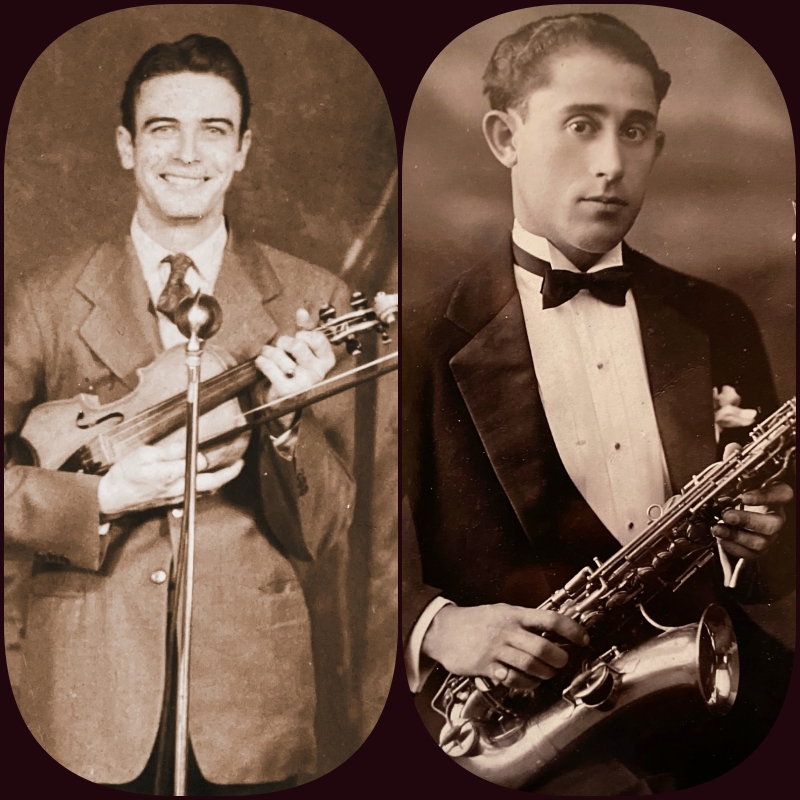
On the new record, released in May on Organic Records, John and Natalya pull songs from the catalogs of their musician grandfathers. Miller’s grandpa, Jim Shumate, was a renowned Western North Carolina fiddler who played a stint in Bill Monroe’s Blue Grass Boys and can be accurately credited with helping get Earl Scruggs the banjo gig that made him famous. Natalya’s grandfather, David Weinstein, was a working klezmer musician who fled unrest in Russia, moving to the U.S. 

The artful way this pair of musicians and life partners combine the styles of their families, of their youths, and of their present lives together, as touring, professional musicians, feels expansive, rich, and bold, like newgrass that’s never been newgrassed before. But, there’s a timelessness here, a patina, that speaks to the greater tradition this record can lay claim to perpetuating. (Thank goodness.) 

Songs of Our Grandfathers isn’t just nostalgia, heritage, lineage, legacy- and canon-building. It’s not just carrying on tradition for tradition’s sake. It’s effortlessly and wholly bluegrass because it innovates, it complicates, and it challenges its listeners to think outside of preconceived notions of what bluegrass, string band, and old-time music are. Because that’s exactly what bluegrass’s grandfathers, grandmothers, and grandparents were doing as they invented this music. 

We began our phone chat about the new album discussing each of their grandparents and their musical idiosyncrasies.

Can we start by talking about Jim Shumate? His presence is throughout the record and he’s influenced you both, can you tell us a bit about him and his music making? 

John Cloyd Miller: He was born in 1921 in Wilkes County, North Carolina, on a mountain called Chestnut Mountain. He started playing fiddle as a young boy, as a teenager. His older brother Mac, who was 10 years older – the same age as Bill Monroe – got him his first fiddle, which is a fiddle he kept his entire life and we actually have, now. It’s an old Sears & Roebuck Strad copy, but he played some tone into it! His Uncle Erby played fiddle so he heard him a lot growing up and then he got into Arthur Smith and all that kind of stuff. He moved to Hickory when he got older, when he was a young man, and was playing on the radio down there when Bill Monroe heard him and asked him to be in the Blue Grass Boys. That was the time that Stringbean was in the band and Sally Ann Forrester, too.

When Stringbean decided to leave the band and go off with Lew Childre, Bill needed a banjo player and it’s now a pretty well known story that Jim knew a banjo player – he knew Earl Scruggs – and really pushed, begged him really, to audition for Bill. Earl was pretty reluctant to do it, but he did, and the rest is history. Later on, when Flatt & Scruggs broke off [from the Blue Grass Boys], Jim was their first fiddler, as you know. He recorded on their Mercury sessions. But he didn’t like touring, he wasn’t a touring kinda guy at all. He had four kids at home – three at the time, when he was younger, and one later. 

Natalya Zoe Weinstein: He liked Mama’s cookin’. 

[both laugh]

Jim Shumate, L (John Cloyd Miller’s grandfather); David Weinstein, R (Natalya Zoe Weinstein’s grandfather)

JCM: He did! He liked his own bed and grandma’s cooking, for sure. He liked to go up on the mountain. He worked in the furniture industry pretty much his whole life, but he also had his hand in the music. He ran a place called “Cat Square,” kind of a small town sort of Hickory Opry, a music show. He was always playing. I have photos of him through the late ‘40s and through the ‘50s with all sorts of people, Don Reno – all those guys. He made records and he had his own band called Sons of the Carolinas, which had George Shuffler in it and some other guys. He was always playing. He played with Dwight Barker and the Melody Boys; he did some sides with Don Walker, who he played with before he met Bill Monroe. He was always making music. 

After Flatt & Scruggs it was largely regionally, because he wasn’t out touring, but he said people would always come by. Any time guys like Lester and them were in town they would always drive the bus and park it right in the yard. He was always in the music, but his influence was not felt as widely later on, I think because he wasn’t out [touring]. He did come back to recording in the ‘90s and made five cassettes for Heritage Records and those got disseminated kind of regionally. Michael Cleveland cut one of the songs that was on one of those tapes a year or so ago. People know his music, but we enjoy getting his legacy out there a bit more. He’s got such a unique style and certainly was influential. 

He was a great songwriter, too! He was my main musical influence. I heard him play a ton growing up. He was so bluesy and slidey, he was a real master of syncopation, which is something that got ingrained in me. People always forget about his songwriting, but the way I grew up, I always thought that being a musician meant that you sing stuff, you write songs. You pick, too, but you do all of it. It was just part of being musical and I think that came from him as well. 

It makes me think of, well, I talk a lot about how the most “bluegrass” someone can be is being innovative and being themselves, whether that comes across as “traditional bluegrass,” genre-wise or not. 

JCM: That’s really insightful and it’s so true, when you look at those early players – everybody always looks at the first generation and, that’s good, that can be very grounding, but those guys were all unique! They were all unique artists, they had their own styles – sure, they were listening to one another, but Lester Flatt doesn’t sound like Bill Monroe who doesn’t sound like Carter Stanley. They don’t sound like each other!

Natalya, I wanted to ask you about your grandfather, too. If you could tell us a bit about the musical influences that represent him on this record, as well. 

NZW: He passed away when I was fairly young, my dad had me when he was fifty-one, so my grandfather was quite older than me – I think I was eleven when he passed away. [My father and he] had an interesting relationship; he wasn’t always a well-liked man. He escaped a lot of violence and poverty in Russia, so he wasn’t a very kind man and my dad didn’t have a very close relationship with him. I don’t have any audio recordings of his music, I have a couple of audio interviews that my dad and uncle did with him, but I don’t have any recordings of his music. 

My dad was moving a few years back and found all these old music notebooks from my grandfather. He asked me, “Do you want these old, handwritten, junky notebooks?” And I was like, “Yes!! Please give those to me!” [Laughs] That was the source, for me, for my grandfather’s music. I didn’t have one-on-one experiences with him, I didn’t have recordings of him, so these notebooks are really the only link to his music that I have. We have about five or six notebooks that have songs in them – they’re pretty hard to decipher, they’re forty or fifty years old. They have all different kinds of material in them, from klezmer to mambos and tangos even to “Tennessee Waltz,” which shows up in one of them as a jazz standard. He also played some classical music, he didn’t do just one singular thing. Klezmer players were like the wedding band musician of their time, where they had to play a bunch of different styles based on who their audience was. 

JCM: We definitely got a little bit of a sense of who he was from these audio interviews that her uncle and dad had made with him. We got to hear his voice, you know he didn’t speak English very well so it’s mostly in Russian and Yiddish. You get a sense of some of the stuff he saw, in these interviews. You can tell it hardened him. 

NZW: He had a tough life for sure, he struggled a lot and music was really the only thing [he did]. He wasn’t really educated. He talked about how when he came here [to the U.S.] he tried to be a plumber and he tried to be an electrician, but he kept making mistakes. He said, “I couldn’t do anything except play music.” He felt almost like he was stuck with it. He loved it and he was passionate about it, but I got the sense that it was his only option. 

There’s a similar energy from both grandfathers around being musicians, but not just in a traditional touring, “road dog,” sort of lifestyle. 

NZW: You’re right, and they were both kind of skeptical of the past. 

JCM: They both came from very humble beginnings. My grandfather didn’t have any education, either. Natalya’s grandfather, apparently, escaped the Bolshevik revolution on a hay wagon. He was a teenager and they were trying to conscript him into the army to fight – it’s crazy stuff! 

Bluegrass is always considering lineage and tradition and how those things are passed along. One of the things that I think is really interesting about it is there aren’t a lot of marginalized identities represented in the historical record of bluegrass, but there are Jewish identities represented. There’s not a whole lot of representation as you go back through the years, but it’s there. How do you connect the music you’re making, that’s infused with Jewish influences and has that cultural identity, to past Jewish music makers in bluegrass and string bands? You’re clearly thinking about lineage and family with this record, and that’s so bluegrass, but through a different lens with your Jewish identity and the other cultural music styles on the album, too. 

NZW: David Grisman was one of my biggest musical influences early on, he was a big bridge, for me, between my dad – who plays jazz – and the bluegrass connection as well as the Jewish connection. We talk about how this album was inspired by Songs of Our Fathers, the 1995 album by David Grisman and Andy Statman. Andy Statman, who played on the record, is another one – one of the first shows that John and I went to see when we met in Asheville in 2005 or 2006 was to see Andy Statman at the Black Mountain Center for the Arts, which is this tiny little listening room. It was an incredible show, I remember just being blown away. I remember thinking, “Wow! What a cool fusion.”

JCM: That was the first time we heard that fusion with klezmer music. He was also playing clarinet, he was playing mandolin. He is the bridge between these kinds of music. David doesn’t do as much klezmer, but those two guys together for sure. 

NZW: John and I both came into bluegrass through the Grisman/Garcia connection then I kind of worked my way back from there. Someone gave me a burned CD of Bill Monroe and I was like, “Oh my God, what is this!?” [Laughs]

JCM: So many people have stories like that. That Old & In The Way album was such an influential record, it was like the number one selling bluegrass record for a long time. 

NZW: Yeah, the way I got into bluegrass, I was out in Tacoma, Washington, for an anthropology conference in college and somebody at my hotel was like, “I’ve got an extra ticket for Wintergrass, which is happening right next door.” I said, “Okay, cool!” So we go and I saw Old & In The Gray there [Peter Rowan, Vassar Clements, Grisman], it was an incredible experience. I didn’t really know what I was seeing at the time, because I was so new to bluegrass, but that was my “Ah ha!” moment. Someone handed me a fiddle and I dunno, I played “Angeline the Baker” and that was it! [Laughs]

JCM: When I first heard Grisman play mandolin, his tone and everything, that was like sinking a hook into me. That’s why I even wanted to play mandolin. I wanted to work on getting tone like that! He was a huge influence on so many of us.

Going back home one time, when I had been living out West or whatever, I was listening to Old & In the Way or something and I asked, “Grandpa, do you know this stuff, like ‘Pig in a Pen,’ and all this?” And he was like, “Oh yeah! I know everything on this record!” And he would play them, and that was so cool to me. I hadn’t quite made the connection before. He asked me, “Who’s playing fiddle on that record?” And I said, “Vassar Clements!” He says, “Oh yeah, that’s a good friend of mine!” I was like, “WHAT!?” 

[both laugh]

JCM: I was just this stupid, deadhead college kid – I mean, I’m still a deadhead – but it really clicked. This is a bridge between grandpa’s world, which had always seemed like something in the past, to my world as a young, coming-of-age musician, realizing, “Oh, it’s all the same stuff!” 

To an uninitiated listener, they might hear your record and they might hear the influences that aren’t “traditional bluegrass” as modern cross-pollinations, as something that’s coming from you both and your generation and your own creativity. But, I really wanted to unpack the lineage of the music, because I can sense even in the playing on this album that colors “outside the lines,” it’s clearly part of this bigger tradition in bluegrass of being a bridge between these kinds of disparate parts. Even this “nontraditional” album you’ve made is based on so much tradition – familial tradition, cultural tradition, musical tradition. 

NZW: I think we wanted to honor those traditions and where these songs came from, but we also wanted to put our own spin on it. We hope our grandfathers would have liked that! 

JCM: [Jim Shumate] was very much a traditional musician, but he was always innovative at the same time. Some of the things he did in the ‘50s were very jazzy, with electric guitars playing with him. And he always loved Natalya’s playing. You know, Natalya came from a classical background and anytime she would play something classical for him– 

NZW: Or a waltz. 

JCM: He just loved to hear her play. They didn’t sound like each other, they had very different styles, but he was always very open and he loved everything. 

NZW: I think he would like [the album]. John’s mom texted us yesterday as she was listening to it and said, “I think grandpa would’ve enjoyed that!” So hopefully our grandparents aren’t rolling over in their graves. 

[Both laugh]


Photo Credit: Sarah Johnston

LISTEN: Tone Dog, “Lonesome Bicycle Farmer”

Artist: Tone Dog
Hometown: Durango, Colorado
Song: “Lonesome Bicycle Farmer”
Release Date: December 9, 2022

In Their Words: “I wrote this tune as a flatpicking ode to John Coltrane’s classic quartet of the early to mid ’60s (Coltrane, McCoy Tyner, Elvin Jones, Jimmy Garrison). So much of the bluegrass tradition is steeped in the idea of getting at the ‘roots’ of the sound, the ancient tones and the original innovators. With the continual rising wave of jamgrass I thought it would be really cool to honor what I consider to be the ‘roots’ of the jam tradition, mid-’60s free jazz. As a drummerless improvising trio, it takes a lot of trust in one another to be able to keep the train moving — we have to believe in the shared vision of where the tune is going and commit to its unexpected twists and turns. I think that spirit comes through the recording and stays true to the spontaneous and creative ethic that both bluegrass and jazz uphold.” — Alex Graf, Tone Dog


Photo Credit: Carrie Phillips

BGS Class of 2021: Our Favorite Albums, Made With Intention

This collection of albums is not simply a “best of” 2021. That would be selling every single collection included herein far too short. These roots and roots-adjacent releases each stood as a testament to the music makers and communities that spawned them. Not simply in the face of a globe-halting, existentially challenging pandemic, but in the face of an industry, government, and culture that would just as soon have all of us pretend the last two years — and beyond — simply didn’t happen. 

These artists and creators refused to let the pandemic define their artistic output through it, while simultaneously acknowledging, processing, and healing from the pandemic through this music. Not a single album below is a “pandemic record,” yet every single one is a resounding, joyful balm because the intention in each is not simply a reaction to a global disaster or an attempt to commodify it or its by-products. Not a single one is an attempt to “return to normalcy.” They’re each challenging us as listeners, in both overt and subtle ways, to walk into our collective new reality together, wide-eyed and open-armed, and with intention.

Daddy’s Country Gold, Melissa Carper

It was a sly move on Melissa Carper’s part to give her album, Daddy’s Country Gold, a title that works on so many levels, nodding to the passing down of sounds, to her road nickname and to her ability to casually loosen postwar country perceptions of masculinity and femininity. In her songs and performances, her gestures are even more beguilingly subtle. Enlisting a fellow upright bassist to produce with her, the Time Jumpers’ Dennis Crouch, Carper claimed western swing and early honky-tonk eras as her playground, and the shrewd, crooning intimacy of Billie Holiday as her guide. Carper sings in a slight, reedy rasp, deftly phrasing her lines and curling her words to suggest the lasting nature of longing and fleeting nature of pleasure. She’s written a movingly clever ballad of broken commitment (“My Old Chevy Van”), elegantly pining tunes of both torchy and down-home varieties (“I Almost Forgot About You,” “It’s Better If You Never Know”) and whimsical fantasies of rural homesteading, sometimes making clear that she’s cast a female partner in those stories (“Old Fashioned Gal,” “Would You Like to Get Some Goats?”) Her artful knowledgeable nudging of tradition is a revelation. — Jewly Hight


Music City USA, Charley Crockett

Few artists in the last few years have us as fired up as Charley Crockett. His unapologetically individual sound and aesthetic shine through once again on his 2021 release, Music City USA. The irony, of course, is that the album sounds nothing like most of what comes out of modern-day Nashville. It’s an amalgamation of influences both old and new — blues and classic country and soul with a peppering of Texas-tinged Americana on top. Charley Crockett absolutely represents what the future of Music City sounds (and looks) like in our book. — Amy Reitnouer Jacobs


Home Video, Lucy Dacus

We must forgo the existential “Is it roots?” question at this juncture, simply because this stunning and resplendent work by Lucy Dacus refused to be excluded from this list. Perhaps the superlative album of 2021, in a year filled to bursting with objectively and subjectively superlative albums, Home Video is impossibly resonant, relatable, down-to-earth, and touching — despite its intricate specificity and deeply vulnerable personality. Dacus’ queerness, and the beautiful, humane ways it refuses categorization and labels, is the crack beneath the door through which the light of this gorgeous, fully-realized universe is let into our hearts. Her post-evangelical pondering; the challenging while awe-inspiring abstract, amorphous gray zones she doesn’t just examine, but celebrates; the anger of rock and roll paired with the tenderness of folk and the spilled ink of singer-songwriters — whether taken as a masterpiece of genre-fluid postmodernity or an experiment on the fringes of roots music, Dacus’ Home Video establishes this ineffable artist as a subtle, intellect-defying (and -encouraging), empathetic genius of our time. — Justin Hiltner


My Bluegrass Heart, Béla Fleck

It’s been over twenty years since the eminent master of the banjo, Béla Fleck, recorded a bluegrass record. My Bluegrass Heart completes a trilogy of albums (following 1988’s Drive and 1999’s The Bluegrass Sessions) and is as much a who’s who of modern bluegrass – featuring the likes of Billy Strings, Chris Thile, Sierra Hull, Bryan Sutton, Molly Tuttle, Michael Cleveland, Sam Bush and many others – as it is a showcase of Fleck’s still-virtuoso level talent.

But as much as My Bluegrass Heart is an album for a bluegrass band, we would be hard pressed to call it a bluegrass album (in the best possible way). As he has done countless times before, Fleck effectively breaks every rule and pushes every boundary by surrounding himself with fellow legendary rule breakers, creating something wholly beautiful and unique in the process.Amy Reitnouer Jacobs


A Tribute to Bill Monroe, The Infamous Stringdusters

Bluegrass loves a “back to bluegrass” album, no matter how far an artist or band may or may not have traveled from bluegrass before coming back to it. On A Tribute to Bill Monroe, the Infamous Stringdusters cement ‘80s and ‘90s ‘grass – “mash” and its subsidiaries – as an ancestor to the current generation of jamgrass. Or, at the very least, it cements that these two modern forms of bluegrass cooperatively evolved. It’s crisp, driving, bouncing bluegrass that’s as much traditional as it isn’t. Sounds like quintessential Stringdusters, doesn’t it? Their collective and individual personalities ooze through the Big Mon’s material, which is what we all want cover projects to do, in the end: Cast classics in a new light, into impossibly complicated refractions. And, in this case, infusing postgrass sensibilities back into the bluegrass forms that birthed them. — Justin Hiltner


Race Records, Miko Marks & the Resurrectors

One of the best bluegrass albums of the year most likely would not be “binned” as bluegrass, and that this album is titled Race Records demonstrates exactly why. Miko Marks returns to the primordial ooze aesthetic of country, old-time, blues and bluegrass — without a whiff of essentialism — and accomplishes a Bristol Sessions or ‘40s-era Grand Ole Opry sound that’s as firmly anchored in the present as it is elemental. Marks’ musical perspective has always highlighted her awareness that the death of genre, as it were, is nothing new, but a return to the traditions that birthed all of these roots genres, many of which can be attributed to the exact communities race records originally sought to erase. Marks & the Resurrectors joyfully and radically occupy songs and space on Race Records. The result is as light and carefree as it is profound; it’s devastatingly singular yet feels like a sing along. All quintessential elements of bluegrass and country. — Justin Hiltner


Dark in Here, Mountain Goats

John Darnielle sings at the velocity of a firehose torrent, and he writes songs with titles like “Let Me Bathe in Demonic Light” and “The Destruction of the Superdeep Kola Borehole Tower.” But rather than death metal, Mountain Goats play elegantly arranged folk-rock dressed up with saxophones and the occasional keyboard freak-out. Dark in Here, the best of five Mountain Goats albums released the past two years, coheres into tunefulness despite the clashing contrasts — especially “Mobile,” a gently gliding Biblical meditation on hurricane season, and also Darnielle’s prettiest song ever. Perfect for the whiplash jitters of this modern life. — David Menconi


In Defense Of My Own Happiness, Joy Oladokun

I don’t know if I’ve ever been so immediately captivated by an artist as I was when I first heard Joy Oladokun’s single, “Jordan,” earlier this year. On that song — and every other one on In Defense of My Own Happiness that I played over and over this year — her clear voice and searingly personal lyrics emerge as a calm, universal call to pursue something better, melting down her own painful past and re-molding it in the image of self-love, inner peace and … well, joy. Oladokun is indeed building her own promised land, and we’re all lucky to bear witness. — Dacey Orr Sivewright


Outside Child, Allison Russell

One might assume an album covering the subject of abuse could intimidate a listener with its potential heaviness. While Outside Child does indeed venture into the depths of those dark experiences, Allison Russell gleans profound lessons learned and treasures discovered from each and every detail of her experiences in her youth. The result is ethereal and uplifting — and a release of trauma through a bright musical experience swelling and overflowing with hope for the future. — Shelby Williamson


The Fray, John Smith

Most artists are pretty keen to play down the idea of a “lockdown record,” because they’re worried it will limit the music’s appeal or longevity. But the emotions John Smith pours into The Fray — born of that period when we were all taking stock of our lives, and wondering what to do next — will hold their currency for a long while yet. It’s honest, yes, but also pretty soothing on the ear, showcasing Smith’s fullest sound to date — both heart’s cry and soul’s balm at once. — Emma John


See You Next Time, Joshua Ray Walker

I wasn’t out after “Three Strikes.” Instead, I was all in. With the steel guitar weaving like a drunkard in a Buick, it sometimes seems like this Dallas musician’s third album is about to go off the rails, along with the lives of the people he’s created in these songs. It never does, though, and that’s a credit to Joshua Ray Walker’s commanding vocal and a willingness to bring his dry sense of humor to the country music landscape. From the pretty poser in “Cowboy” to the unsightly barfly known as “Welfare Chet,” these folks feel like true honky-tonk characters. — Craig Shelburne


Simple Syrup, Sunny War

“Tell me that I look like Nina,” sings Los Angeles singer-songwriter Sunny War in “Like Nina,” the keystone song of her fourth album, Simple Syrup. The Nina in question is, of course, Nina Simone. The look is the “same sad look in my eyes,” though in concert War often flashes a bright, disarmingly shy smile — that of a young Black artist demanding to be taken on her own, singular terms, not the terms of cultural expectations. She continues: She can’t dance like Tina, sing like Aretha, be styled like Beyoncé. But she can see injustice, seek love and respect, seek a sense of self, and sing about it, captivatingly, with her earthy voice and folk-blues-rooted fingerpicking, enhanced by a small cadre of friends led by producer Harlan Steinberger. Like Nina? No. Like Sunny War. — Steve Hochman


Sixteen Kings’ Daughters, Libby Weitnauer

There’s a new artist on the folk scene — Libby Weitnauer. Weitnauer is a fiddle player, violinist, singer and songwriter raised in East Tennessee and currently based in Nashville. Her debut EP and first solo effort, Sixteen Kings’ Daughters, was produced by Mike Robinson (Sarah Jarosz, Railroad Earth) and presents centuries-old Appalachian ballads that have been recast into a lush and unsettling sonic landscape. Weitnauer’s high lilting voice is reminiscent of Jean Ritchie, and she glides with ease atop eerie backdrops of electric guitar, bass, fiddle and pedal steel. A strong debut to say the least, and we’re excited to hear more. — Kaïa Kater


Urban Driftwood, Yasmin Williams

Watching Yasmin Williams play guitar can boggle your mind. She uses her full body to coax noise from the instrument, her fingers pounding on the strings, her feet clicking out counter rhythms in tap shoes, one hand even accompanying herself on kalimba. As impressive as her technique is, it’s less remarkable than her facility for compositions that are melodically direct yet structurally intricate. Urban Driftwood is a carefully and beautifully written album, and Williams’ songs lose none of their flair when she transfers them from the stage to the studio. Dense with earworm riffs and evocative textures, the album represents a crucial pivot away from the increasingly staid world of folk guitar, which has recently been dominated by white men indebted to the historical American Primitivism pioneered by John Fahey. Williams is opening that world up to new sounds and influences, insisting that her guitar can speak about our present moment in ways that are meaningful, moving, and subversive. — Stephen Deusner


LISTEN: Marcel Ardans, “Pencil Pusher”

Artist: Marcel Ardans
Hometown: Prescott, Arizona
Song: “Pencil Pusher”
Album: Traitor
Release Date: October 8, 2021

In Their Words: “Nearing the end of high school, my great-grandfather Stephen Carkeek filled out a survey for his senior yearbook. It simply asked for his hobby, ambition and fate. Stephen’s answer was wrought with truth. He responded, ‘harmonica, banjo tickler and pen pusher.’ The rest of his life was spent working behind a desk. Inspired by his inability to live out his ambitions, I wrote this fiddle tune after attending my grandfather’s funeral and finding Stephen’s yearbook in a now empty house.” — Marcel Ardans


Photo credit: Nick Pagan

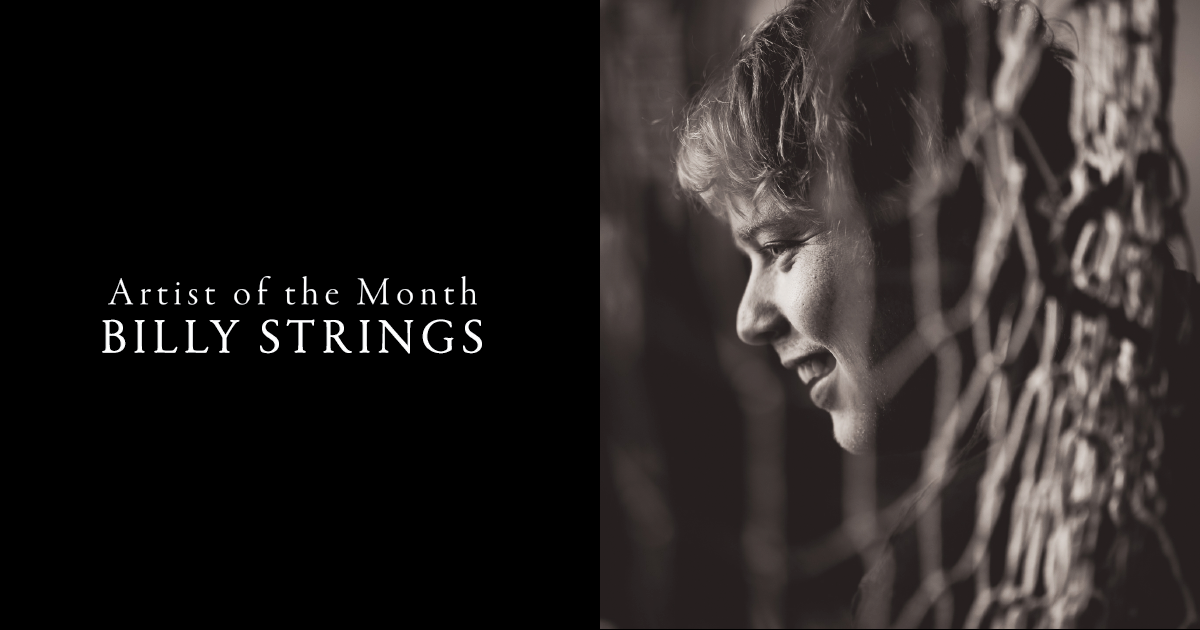
From Death Metal to a Fishing Boat, How Billy Strings Finds Renewal (Part 2 of 2)

Billy Strings has had his foot on the gas since he was a teenager, bringing his prolific picking to hundreds of shows around the country each year and winning over a throng of devoted fans in the process. His bluegrass bona fides may be obvious from the outset — he’s quick to cite such greats as Bill Monroe, Doc Watson, and the Stanley Brothers as some of his first musical influences, and no honest spectator could deny his talent on the guitar and mandolin — but astute listeners will also note elements of rock, jam bands, and even heavy metal in his performances, especially as Strings bounds around the stage.

The Nashville-based, Michigan-raised musician’s latest album, Renewal, comes on the heels of an exceptional year: His Rounder Records debut, Home, won the 2020 Grammy award for Best Bluegrass Album. And even as much of the music industry was grounded from touring, his innovative approach to livestreams and digital performances moved the Pollstar Awards to dub him the Breakthrough Artist of the Pandemic. But that breakthrough was more than a decade in the making, and the forces that shaped Strings as a prodigious young picker are still at work today, pushing him creatively in the studio and on stage as well as calming him at home between gigs. Here, in the second half of our BGS Artist of the Month interview, Strings tells us about his upbringing, his latest influences, and the way he unwinds between shows.

Editor’s Note: Read the first part of our interview with Billy Strings.

BGS: Tell me about where you grew up. How do you see its impact on your work today?

Billy Strings: I was born in Lansing, Michigan on October 3, which is my grandpa’s birthday. My mother, who lived in Kentucky at the time, had gone up to Lansing to visit her dad on his birthday, and that’s when I decided to show up. [Laughs] So that’s why I was named Billy as well, because that was my grandpa’s name — I was his little birthday gift.

We lived in Morehead, Kentucky, for a couple of years before coming back home to Michigan, where I really grew up. I grew up in a little town called Muir, population 600. My dad is an incredible guitar player, so he taught me how to play. He was always showing me music when I was a little kid: Doc Watson, Bill Monroe, Lester Flatt, Earl Scruggs, Jimmy Martin, Larry Sparks, and stuff like that — a lot of good bluegrass. We’d hang out at this little campground and play music next to the river by the fire. That was my childhood, man, just sitting there picking by the river.

It was real good until I got to be a teenager and started to turn sour. I had to run off and figure out a new life. I took what my dad taught me when I was a little kid, and all of a sudden I realized that bluegrass is actually pretty sweet and people love this shit — that maybe I could do something with this; that it’s not just something that I do with my dad that I should be halfway embarrassed about.

Who are the artists that you feel really inspired by right now? And are those different than the ones that you feel like you were listening to a lot when you were a kid?

For the most part, it’s still Doc Watson — he’s the main nerve — and Bill Monroe, and Lester Flatt and Earl Scruggs, Ralph Stanley and Carter Stanley, the Stanley Brothers. But I listen to a lot of different shit. I listen to death metal, and lately, I’ve been getting into this music from Mali that Béla Fleck was showing me — some really amazing stuff. And Memphis trap: I’ve been listening to Young Dolph a bunch. There’s just an energy to it. I grew up around crack houses. I’ve seen that shit that they’re rapping about. It just gets me hyped: He’s talking about coming out of nothing and becoming a self-made millionaire. I listen to it before the shows sometimes to get myself hyped up.

You played in rock bands in high school — groups with music that might not sound a lot like what you’re doing today. Is there any lesson or anything from that time that you feel like you still turn to or still apply to the music that you make?

Yeah, performing live. I never learned how to perform in a bluegrass band. I learned how to perform in a metal band. I learned music by playing bluegrass when I was a little kid, but by the time I was doing it on stage it was in a metal band — we were headbanging and running all over the place — and I still can’t help but get into the music like that. I can’t just stand there and play.

You have been in Nashville now for a little while. Has anything that has surprised you about it, good or bad?

I really love Nashville. A lot of your favorite musicians, that’s where they live. You’ll see your favorite singer in the grocery store. I get calls for sessions, and it’s from people who I grew up listening to and who I’ve idolized for my whole life. Like Béla Fleck’s record just came out, and I played a handful of songs on that. I was so honored to play with David Grisman, and Chris Thile, Sam Bush, Stuart Duncan, and Edgar Meyer — all these cats that are just… well, I don’t feel like I’m really in that league. It really was an honor. And there’ve been several things like that! I went from listening to these cats on a record to being on a first-name basis with them… texting and being friends. It’s a trip.

What’s one thing that’s brought you joy recently?

Fishing. I love bass fishing. I grew up doing that with my dad as well, but I didn’t do it for a long time because I was so busy. When the pandemic hit, I started fishing again. I go out there in rain or shine. I just like it for the solitude. Last night, I was in front of thousands of people, and to come home and go out on my boat and be alone in nature — to check out the blue herons and the fucking ospreys, eagles, fish, everything doing its thing — it’s brought me a lot of joy, brought me down to Earth. I put my boat in at 5 o’clock in the morning when the sun is just coming up. I like being out there alone at that time of day. It’s just good for my mind.

And yet it’s so clear from your performances that interacting with listeners gives you a certain joy, too. What are the forms of feedback that you value most from your audience when you’re playing live?

Sometimes when we finish a solo, everybody starts cheering real loud, the whole place gets real loud. That feels good. But sometimes I look out there and I look around and I see individual people and I literally play to them. Last night, we played in Montana and I was looking around and there was this one dude just standing there with his beer just completely still. I didn’t even know if he was enjoying it or not. So I just walked up to the front of the stage and stared directly at him and I just started playing right to him. [Laughs] So he started laughing, and then he took a drink of his beer and started bobbing his head a little bit. I think he just started getting into it by the end of the show.

I’ll look for things like that. The audience is really in control of how I’m feeling up there. Sometimes, when they’re just on fire, I can’t help but have a good time. They feed us the energy, and we give it back to them. It’s reciprocal.


Photo credit: Jesse Faatz