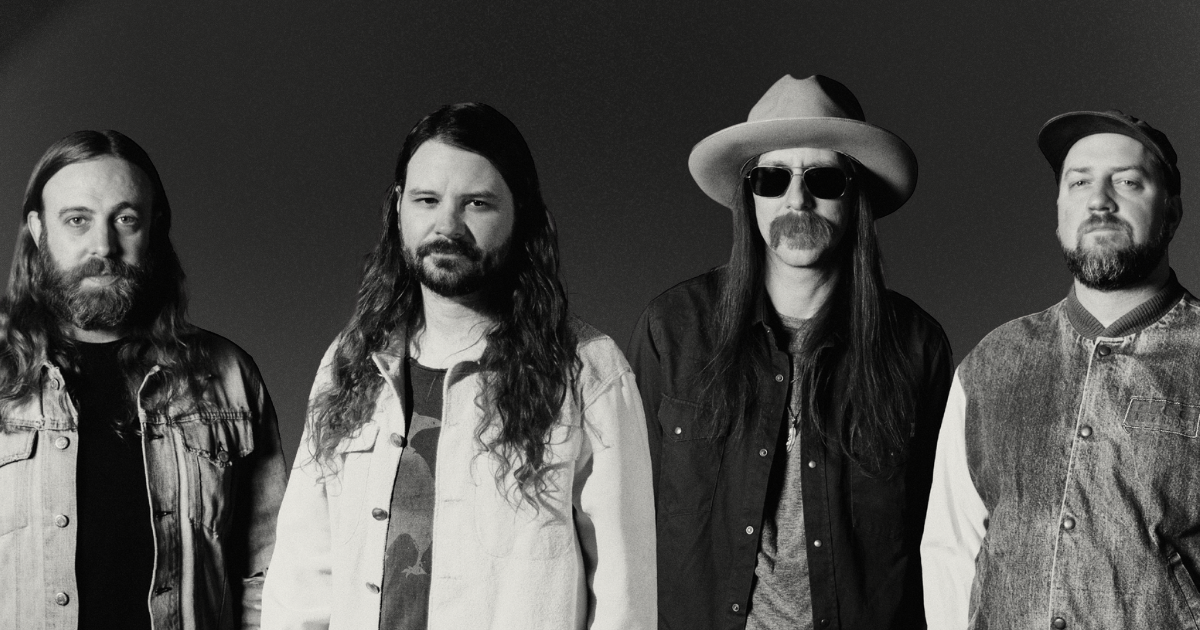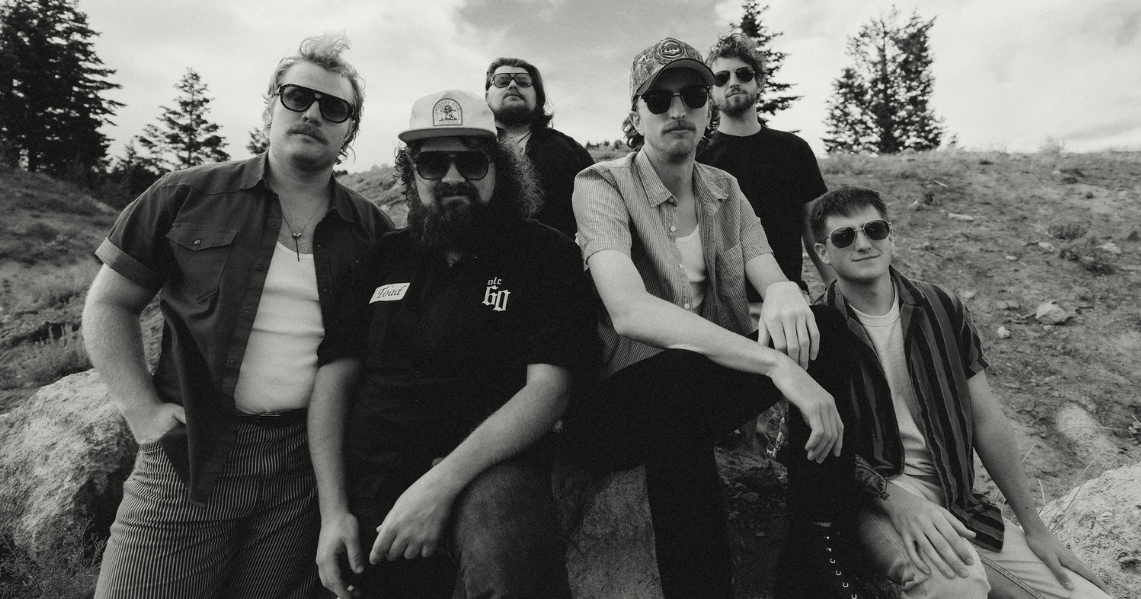
Ole 60 Bring Their Smokestack Town to the World

Pairing the slouchy charm of indie grunge with roots-rocking, small-town punk energy, Ole 60 spent 2025 becoming one of the most intriguing new acts in Americana.

With their debut album Smokestack Town – plus some fun-loving video content, huge opening-act performances with Zach Bryan, and first-time trips to Lollapalooza, the Ryman, the Grand Ole Opry, and more – the six-piece band came a long way from their blue-collar hometown of Hawesville, Kentucky. They even finished off the year with their biggest show yet, selling out their first-ever arena gig with an Owensboro homecoming. But there’s still more to do.

Inspired by a world of shift work and shitty luck, and powered by a rusty Toyota rolling on four bald tires, frontman and primary songwriter Jacob Ty Young fills his songs with vividly conflicted characters. Soaring garage-pop singalongs stand alongside sucker-punch ballads of screwing up and flaming out, each one struggling with the urge to get the hell out while still loving where you’re from. It’s a feeling anyone nursing big dreams in a small town will recognize, and Ole 60 shares it with a fresh voice.

In late January, Young told Good Country about the band’s quick rise and biggest year yet, while looking ahead to what comes next. There’s already a level-up tour underway and new music in the works. But Young pledges not to forget where they got their start – a pizza shop game room in a Smokestack Town.

In 2025, Ole 60 was out on tour, did big shows with Zach Bryan, made an Opry debut and released your first album. What’s it been like processing all that in the last month or so?

Jacob Ty Young: You try to take it in as it’s happening, but it’s a lot easier once you have some time to think. … I think it was definitely the best year we’ve had and now that we’ve had some time off, I’m eager to get back out and start touring again.

And I’ve been writing a lot. After putting out that first record, it was something that we’d never really done before. It was our first time making an album and we learned a lot of things and I think that everybody’s in the headspace that this next one’s going to be even better, so we’re working hard.

What was the common bond that brought you all together musically? You blend influences all the way from Smashing Pumpkins and Metallica to John Prine, right?

Five of the six of us are all from the same little small town in Kentucky, or bordering towns within about 30 minutes of each other. I kind of knew everybody before we started the band. We just got together and started jamming. I’m a huge Smashing Pumpkins fan. Most of the guys are big metalheads. They love Metallica, Black Sabbath, Primus, all that stuff. I think everybody bonded over just our love for rock music. There is obviously some country influence, but I never really considered it that. We were just a garage band, and it’s hard to not bond when you’re sitting there in a garage playing cover songs. The Pumpkins, Stone Temple Pilots, Black Crowes. It was that kind of grunge stuff that really glued us all together.

You can hear that still, and then there’s a rootsy folk side to it, too. When did you start writing songs?

I’ve been writing songs my whole life, but nothing ever really serious. I would write funny songs when I was in high school and I wrote a song about our basketball team one time, just as a parody thing. And I always really enjoyed playing guitar and being creative. I was into visual art and graphic design for a while. Then I kind of went through some stuff in my personal life and decided I wanted to sit down and write some songs about it. That ended up being the first EP [three twenty four]. That would’ve been 2023, I think. I always loved guys like John Prine and Bob Dylan and even Billy Corgan of the Pumpkins, just the uniqueness of the songwriting. I think for lyrics, I look to those guys, and then for the music we kind of look all over the place.

I hear there’s a pizza shop in there somewhere, right? We keep seeing pizza references in the socials and songs. Is the shop like an easter egg for you?

Yeah, I think so. I worked at a pizza restaurant in Hawesville, Kentucky, for about four years when I would come home from school. And then there’s another guy in the band, Ryan, his brother owned the pizza restaurant, so he worked there as well for years. When we first started practicing, rehearsing, and getting ready to go around playing bar gigs, we would rehearse in the back of Galaxy Pizza after close. We’d set up all our equipment back in the arcade section and jam until one in the morning. And then we got our bass player, Colby, and he had a garage, so we moved to his garage. But yeah, I grew up right next to Galaxy and it’s kind of a staple in our hometown, so we just try to let that side of us show through our content and all the visual side of stuff.

Tell me about putting the album together. Smokestack Town was one of my favorites of the year, so congratulations on how it came out. What did you want? I mean, creating a debut album is a pretty big moment. It might seem like an overwhelming task, so what were you going for?

We didn’t have a hardcore plan. I was just writing songs and I got six of ’em that I was really proud of. We went recorded and I was like, “Okay, I think this could be an album.” So I was writing as we were recording the album, and then the last song that I wrote was “Smokestack Town.” I was like, “That seems like a good name.”

I just wanted to push ourselves and try to do something different sonically than we had before. We got together with Jacquire King who produced it, and he’s one of the best of the best. He took my vision and ran with it and we’re very happy. We just wanted to put ourselves out there and let people in, see what kind of music we listen to.

That’s interesting, because it’s been presented as a concept album. But it sounds like you were building the concept as you went.

If it’s a concept album, it’s more so on the visual content side of things, because we’ve been putting out these little short videos of character acting. Taking the lead from the Foo Fighters.

Totally!

But there were just a lot of overarching themes in the record about home. Missing home, being homesick, being young. Plus that idea of small town, kind of dystopian … but not really.

Right, you wrote all these characters who are definitely small town people, with small town stories. But the thing I appreciate was they’re not stereotypical tailgate anthems or “I’m so country.” Nothing like that. Where were you coming from?

After I left Galaxy, I worked in an aluminum mill for a year and a half, and my dad works at the paper mill. Hawesville is a very industry-driven town. I think it’s different from your typical country town because it’s so labor-driven and everybody’s proud to be union and blue-collar. It’s less sitting on tailgates and drinking beer and more going to work a 16-hour shift and coming home and sleeping.

I wanted that to come through, because in country music it is a lot of sitting out in the boonies, drinking beer, and sitting on a tailgate. But I wanted to write my experience growing up in my little country town. There’s nothing to do, so we just ran around all the time and went to all these different places and got into trouble there. I wanted to write about that side of stuff, and less about the country stuff.

Being a new band coming into the indie and roots music scene, did it feel like there’s a lot of opportunity and energy out there?

Everything’s been so great. We kind of blew up on social media and I don’t know if any of us were ready for that to happen, but it did. I think that the reception’s been great. We went out and started headlining shows fairly early and we were selling them out. That’s a great feeling, because when you do blow up like that on social media, it’s hard to really put a gauge on what that means – until you go out and play a headline show and you see the crowd and they’re singing, and you go play a festival with all these big names and it’s your first time out there, and the crowd’s into it. And that’s kind of how it was.

True, and you finished last year with a huge statement in Owensboro, right? Hometown show, New Year’s Eve. Your first arena show and you sold it out. What was the feeling like on stage?

It was weird because it was both the most nervous I’ve ever been and the most comfortable I’ve ever been. You look out in the crowd, you see people you know, and you don’t get that a whole lot when you’re touring. It was just super cool. I got to sleep at the house I grew up in. The whole day just felt good. It was nice to be home and have family coming in and out and friends. Just the perfect way to end the year.

Y’all cleaned up nicely in the tuxedos. Did you put some extra polish on the performance, too?

Yeah, I thought it was New Year’s, we might as well get some tuxedos. I thought everybody looked nice. I want to do it more often. I dunno how the other guys feel about it. We’ll see.

@ole60music🗣️ said it don’t hurt and I called your bluff♬ original sound – Ole 60

You’re getting back on the road for the Smokestack Town Tour this winter. What’s everybody looking forward to? What’s the vibe?

The new year feels like a fresh start to change the show and really put a lot of thought into what we want to do with it. We’ve got some new production stuff, new lighting, and I’m really excited for everybody to see it. I think everybody just wants to go out there and every night needs to be the best show we’ve ever played. We’re playing bigger shows this year and we’re super excited, super grateful.

Earlier you said you’ve been writing, can you give us a hint about what’s been inspiring lately?

Yeah, I’ve been listening to a lot to indie rock, and what I listen to comes through in what I write. So definitely it sounds like Ole 60, but it’s new, and I’m still kind of figuring it out. But I’m really excited that the direction everything’s headed. I don’t have any idea about timelines for new music, but I have been writing a lot and I’m really excited about all of it.

Jacob, thank you for the time. I’ll leave you with the big picture – I always ask people what they hope listeners take away from their work. So what’s that look like to you?

I just hope that our story can be inspiring to others through the fact that we came from a town where after you graduate, you either go to college, you go to the military, or work in a factory, and that’s your options. And there’s always other options out there. You just got to put your head down, work hard and good things will come.


Photo Credit: Wales Toney
WATCH: Bryan Sutton, “The Devil Went Down to Deep Gap” with Billy Strings

Artist: Bryan Sutton with Billy Strings
Hometown: Nashville, Tennessee
Song: “The Devil Went Down to Deep Gap”
Album: From Roots to Branches
Release Date: January 9, 2026 (single/video)
Label: Mountain Home Music Company

In Their Words: How do you see Doc’s playing influencing both yours and Billy’s?

“I think beyond the specific influence of Doc’s guitar playing that informs most every note Billy or I may play, I know that we both are students of Doc’s complete artistry. To say Doc is just the most influential flatpicker ever is limiting. He brought so much to the table in his honest and emotional singing, his song choices and writing, banjo and harmonica playing, and Travis-style fingerpicking. He was not comfortable being labeled or limited within a specific genre. His onstage persona was true to him. Without being a ‘showman,’ he was informational when the song needed it and willing to share whatever emotion he might be experiencing. It’s also important to note that Doc and Merle’s duo playing has been a huge part of the overall focus for things Billy and I have done together. I know for both Billy and I, Doc provides a lifetime of inspiration, influence, and learning.”

How do you pay tribute to that in this song and video?

“First and foremost, this is kind of a silly or fun thing, along with being a somewhat serious tribute to Doc Watson. I wanted to use the song to have fun with the guitar shredding and good versus evil battle, but also imagine an origin story of how Arthel Watson could have become the ‘Doc’ we all have loved. Maybe it’s a gospel song in the way that Doc, even and especially in his blindness, can ‘see’ through the Devil’s lies. Ultimately, Doc carries his triumphant message to the world, and influences us all with wonderful and heartfelt music.”

It sounds like you had this concept before talking with Billy about it. How did the concept and song come to be, from start to finish?

“It was listening to Charlie Daniels’ original ‘The Devil Went Down to Georgia’ with my youngest daughter, Lily. She has very eclectic and broad musical tastes. I’ve loved sharing music with her and checking out what she has discovered. We found some other covers of the original and one that stuck with me was Jerry Reed’s interpretation, where he makes Johnny a guitarist instead of a fiddler. I have been working on a duets record for some time, collecting recordings here and there with my pals, and knew I wanted to do something different with Billy, as he and I have a whole record of duet playing.

“Billy and I also share a love for heavy metal. I was trying to think of a way he and I could do something connected to this duets project that would allow us to play acoustic and electric. It all kind of came together when I realized this song would allow for that. The Doc origin story came about thinking how to make this not just a cover, but more personal and fun. It’s also another subtle tribute to Doc, who would oftentimes change or add lyrics to a song in order to make it fit for him. I fashioned the story, made a little demo, and sent it to Billy. He was into it and we were off.

“I feel fortunate that Del was into playing the Devil. I also am so happy to have T. Michael Coleman and Sam Bush on the track, who played many years on the road and studio with Doc. My pal Jerry Roe, who is Jerry Reed’s grandson, plays the drums, connecting to the Reed version that inspired me. Once I had the concept and demo for the song, I knew it had to be an animated video and discovered Pat Bradley of Springshoe Animation. It was wonderful working with him to take what had been in my head and be able to visualize it. Ultimately, all this came about a little piece at a time, and I’m so happy to share it with the world.” – Bryan Sutton

Track Credits:
Bryan Sutton – Acoustic guitar, electric guitar, vocal
Billy Strings – Acoustic guitar, electric guitar, vocal
Del McCoury – Vocal
T. Michael Coleman – Electric bass, harmony vocal
Sam Bush – Mandolin
Jerry Roe – Drums

Video Credits: Animation by Pat Bradley, Springshoe Animation.


Lead image courtesy of the artist.

Brent Cobb
Ain’t Rocked In a While

He might be a renowned lyricist and self-proclaimed songwriter-singer (not singer-songwriter). His typical sound may simmer with a supremely chill mix of country, blues, and soul. But Brent Cobb got his start with the crunchy thunder of guitar-driven rock ‘n’ roll and his seventh album takes him back.

Tapping the raw rage of garage rock, the distorted domination of ‘70s proto-metal, and more, Ain’t Rocked In a While finds this GRAMMY-nominated master of phrase returning to a world where the guitar riff is king – his first love as a musician. Co-produced with Oran Thornton and recorded live, 10 songs combine Cobb’s laid-back style with the immortal edge of bands like Black Sabbath, Metallica, and heavier inspirations still. But while old metalheads do tend to get rusty, this project is razor sharp.

Speaking with Good Country, Cobb explains the change of pace, as well as his abiding love for the rock ‘n’ roll spirit and new appreciation for classic-rock lyrics. Plus, the long-haired country boy explains how Ain’t Rocked In a While could fairly be considered “dad rock.”

I want to get the story behind this record. Ain’t Rocked in While is one of those projects that really seems to do what it say it’s going to do. How much of a creative release was this for you?

Brent Cobb: Well, this project was cool because I was focused more on riff and just really digging back into the foundation of what I grew up on. My first band was a rock band with my best friend Justin, who played guitar. He was real into Pink Floyd and AC/DC and Black Sabbath, and had me learning all those songs to sing. So when I was writing riffs and lyrics for this album, I sort of went back and was rediscovering those songs that I grew up learning.

Back then, even though I was learning the lyrics, I was just learning them to sing it. I wasn’t really paying attention to what they were saying and I didn’t think of those songs as very lyrical songs. I just enjoyed the groove. With this go ‘round, it really took all the pressure off of trying to write a lyrical song – which in turn made the lyrics come way easier. It also made me aware of just how lyrical those old classic rock songs were.

Oh, right!

I didn’t notice it or I didn’t appreciate it, but I don’t guess you would as a teenager. So that was the whole process – I was just trying to write a riff album and wanted to rock a little and show the audience a reference for a live show when they came, but wound up writing lyrical songs anyway.

I guess you just can’t help it. You’ve always been known as a storyteller and a songwriter first, and you even did a gospel record just a few cycles ago. Where does hard rock fit into your listening habits?

It all has always coexisted in my little world. My mom’s from Cleveland, Ohio, and my uncles – her brothers – they were all rockers into Led Zeppelin, The Beatles, and just the classic stuff. But then here, my dad was in a band with his brother – my other uncle – and my dad would cover the early ‘50s and ‘60s rock ‘n’ roll and my uncle would do classic country. So I grew up around that, but if you looked at any of my playlists, it’s just always been real eclectic that way for sure. For this album, Master of Reality [by] Black Sabbath was probably the biggest influence and the one that I would keep returning to for inspiration. And not just in riffs, but in the way that they structured that album to ebb and flow.

This might be a hard question to answer, but how heavy do your tastes get? What do you think would be the hardest hitting band in your collection?

Oh man. Well, [for] modern [artists], I’d probably say the band Sleep. Have you ever listened to much of them?

I don’t think so. I’m going to have to check that out right after this.

It’s like stoner metal. That’s probably the hardest stuff that I’ll listen to right now. But I don’t know – I mean, Sabbath is so hard still to this day. Those first five albums are unreal. … With Sleep, that’s some heavy stoner metal.

Yeah, I’m looking on Spotify right now. They’ve got songs like “Marijuanauts’s Theme.” [Laughs] That’s an awesome title.

Dude, I know! But that stuff is like, you can go find sections of old Sabbath songs and it’s kind of like [Sleep] built a whole sound on little sections of Sabbath songs. But then if you go further, it’s all blues – that’s all it is.

For any true rock record, the recording itself is so important – trying to capture the energy. I know you recorded live-to-tape and that seems like the rock ‘n’ roll dream, right? Was that experience different from digital recording?

Well, honestly, each of my albums have always been recorded to tape except Keep ‘Em On They Toes. But with that said, it is a modern world and we still record to tape and then dump all that into Pro Tools to where it’s easier to edit, then take that and dump it all back to tape. You get the original physical, sonic difference that is recording to tape when each tape is completely different, because the needle’s hitting different, the amp was hotter, or whatever. But then we fast forward to the modern world to where we can just really be quicker and more efficient.

I think we had 10 days blocked off to record, and then I got sick on the first two days. And then Oran [Thornton], my co-producer and head engineer, he got sick for two days. And so we wound up recording in seven or eight days.

That is a plus of the modern age for sure. In any case, it came out sounding really tight – you recorded as a band, right?

That’s right. It’s the touring band [The Fixin’s] I’ve had for a while now. … The studio we recorded at in Springfield, Missouri, was this little bitty, almost broom-closet size live room, and they were all in the main live room together. I did want to isolate myself, so I was in an even smaller little isolation booth with a window where we could still see each other. … I obviously am not as experienced in singing those type songs and playing those type riffs at the same time, so I knew I was going to screw up some lyric phrasings and I didn’t want to mess everything else up. So I was the only thing I isolated.

Where’d that title track come from? “Ain’t Rocked In a While” – this definitely has that Black Sabbath feel, stretching out to five minutes.

Straight up. It started because I had bought my son a little drum kit for his fourth birthday a couple years ago. He just loves the drums … and then I would set my amp up and get my guitar out and we’d just be jamming in his room. One day he was like, “Dad, play some rock ‘n’ roll guitar.” And I’d hit a little lick and he’s like, “No, no, rock ‘n’ roll.” I’d play another little lick. And he said, “No, dad, like Mattman” – which is [the Fixin’s guitar player] Matt [McDaniel]. I was doing the best I could, really just trying to prove to him that daddy could rock.

That’s funny!

So I came up with that “Ain’t Rocked In a While” riff and then it turned into me proving to my son, “I have rocked before, boy. It just ain’t been a while.” I thought it would be funny, but I also thought, “Well, all of us are sort of that way.” I’m nearly 40 and a father of two, so you could definitely consider this album Dad Rock, but all our kids don’t know. We all had some rock eras, whether that be in life or musically or whatever it is.

Well, you still got the hair, so I think it’s easier to make that case.

[Laughs] Hell yeah. It’s funny you say that. My mama just yesterday, she used to be a hairdresser and had her own business, and she was like, “You need to let me cut your hair.” And I was like, “Look, I’m going to keep it growing until it don’t grow no more.” I’m barely gray and I ain’t thinning too much yet. Until that happens, I’m going to keep rocking the long hair.

A little earlier you mentioned how [hard rock is] all blues at the bottom, right? I think that really comes through in a song like “Do It All the Time.”

Man, I’m going to have to give my son some co-writing credit on this album, I guess. That riff did come out very Skynyrd-esque, but … I was actually trying to do my best James Gang feel with the riff, the melody, and the double vocals on that chorus. That early James Gang stuff is so badass – but I think Skynyrd also was probably trying to do their best James Gang on some of their stuff.

Anyway, the idea of that song is from when [my son] Tuck was even younger, we’d be like “Oh man. Look dude, you ate all your food!” And he would say, “I did it, and I do it all the time.” So I always had that. I started saying “I do it all the time!” And then I don’t know how much I should say, but sometimes when you’re parents, you and your other half may not be on the same page. … You’re just both sleep-deprived and sometimes it’s hard to see. And so I think we were having a little moment of that and I was going, “I tried then and I try now and I try all the time. I did it and I do it all the time, babe!” So that’s where it came from.

Okay, one more thing here. For fans who come out and see you live, do you think this is going to change the shows? Are you guys going to rock out more or what?

I mean the only way that we’ll rock out more is we just have more songs to rock out to. But no, in every album that I’ve ever put out all the way back to 2006 with No Place Left to Leave, there’ve always been rock leaning songs in my catalog – including songs that others have recorded; some of the Whiskey Myers stuff, or The Steel Woods stuff. For a little bit there seemed like a disconnect, because I don’t think [people at my shows] were aware of that rock stuff, but it’s just a funner show to me and for us especially.

Now we just have more to pull from, and for people who show up, it’s the same show. I try to do songs from every album and I’ll take requests, too. I don’t turn those down. But now, I think people will show up and they won’t be taken by surprise at all if it does drop.


Photo Credit: Jace Kartye

Rapt Reflects On Life’s Many Endings With ‘Until the Light Takes Us’

Jacob Ware is a bit of a weirdo. Known onstage these days as Rapt, the singer-songwriter has a way of coming up with an album title and writing the entire record around a central sentiment. His fifth studio album – titled Until the Light Takes Us – serves as a direct response to a 2008 heavy metal documentary of the same name.

“I just thought, Until the Light Takes Us is such an evocative title. A few people have commented on that over the years as being unhinged – that I come up with the album name first and then write the album,” he says, adding that the documentary details “all the horrible shit in the ’90s of the black metal scene in Norway.”

From the gentle trickle of one-minute opener “Over Aged Borders” to the dreamy “Fields of Juniper,” Rapt’s latest album drenches in the notion of endings and existence. Heartbreak. Death. Suffocating blackness. Each song, as heavy as it might be, seems to coat the album with both dark and light – stemming from his confrontation with the end. 

Rapt’s delicately-spun indie-folk is awash in luminescent piano, aching between flaky layers of acoustic guitar. Ware finds himself scattering like a tumble weed, squeezed somewhere between the throaty ache of Carrie Elkin and scratchy pangs of yearning (akin to Bonny Light Horseman in their rawest form). His head swims in thoughts of death, leading his writing to root around in the afterlife. It’s a far cry from his heavy metal days, a sharp red underline to this chapter of his life. “I’m always slightly aware of mortality because I’ve had a lot of health issues, in my teenage years and early twenties, like epilepsy. It’s wild. It pulls the rug out from under your life daily, and you don’t know when the next seizures come in,” he says.

“I haven’t had a seizure for eight years now, so I’m blessed. But that shapes you on a subconscious level,” he adds. “It sets up your foundation to be ready for the next thing to happen. In a way, the next thing that happens is an end of something, so I think my subconscious has always thought about the finality of things. That’s probably where that sort of writing interest has come from. In a way, every single song I’ve ever written is about that. I don’t really know how to move away from that.”

Hopping on a Zoom call, Ware spoke with BGS about the afterlife, how the album grew, and the varied creative fulfillment compared to heavy metal music.

Does writing around a title help you stay focused on what you want the album to be?

Rapt: I think so. I’ve definitely done this where I write that phrase and put it up around wherever I’m living. Even if I’m not listening to music, I’ll walk past the album title a few times a day. The edge of my wardrobe is visible and the title I’m responding to now is written on it. One of the last things I look at at night and one of the first things I wake up to in the morning is… I don’t want to reveal it.

[Until the Light Takes Us] is not a breakup record by any means. I’ve noticed a few bits of press here and there, which may have lent it to being that, but it absolutely isn’t that. I feel like a completely different person to my music. I don’t relate to my own music. I would say it’s an album of endings, really. More so than a sort of breakup album. By the time I’ve finished one thing, something else is usually well on its way. And it’s always been like that for me.

What is your feeling about the afterlife?

I tried to look into religions a few years ago, but I have no faith system. I was brought up in a house without a faith system. It’s very hard for someone to start to believe in something unless it was in their very formative years from a caregiver. I expressed it in the title track. I’ve always thought that the afterlife is a sort of peaceful black. I have a sneaky suspicion that the afterlife is a hell of a lot like what it was like before we were born. I quite like to imagine this sort of sizzle reel, where you hang out with your highlights. That’s what I hope is going on.

Science doesn’t ask, science doesn’t answer everything. There are things that science gets pretty fucking close. But there are things that science can’t touch. I try and be mindful of that; I would call myself an agnostic. I think being 100 percent atheist is actually ignorant. We don’t know – we’re 99.9 percent sure. There’s just that 0.1 percent that I think is worth thinking about sometimes.

That’s touched on in the title track. I don’t know where I’m going, but I know that I’ll see my neighbor and my loved ones. I like to think that there’s a highlight reel. And that’s it, really. I’m talking about this as if I planned to write it. I didn’t. It’s the only successful time I’ve ever managed to just write something without thinking about it and letting my subconscious go. I cannot just open my subconscious.

I find lyric writing takes me months. The title track probably took a year to write. Very occasionally, I can get half a song written in an afternoon, but that happens about once every three years. The song “Until the Light Takes Us” is quite insular, and it’s almost says everything that you could say within a song about the afterlife.

“Until the Light Takes Us” is one of the seven-minute songs on the album. Did you have that intention or did it sort of grow by itself?

I just think I couldn’t make it any shorter. I don’t think I really tried to fight it being seven minutes, but I’m sure that there’s been a longer version of it. I just whittled it down and down, until I couldn’t whittle it down without doing it disservice. And I knew it would suffer for that. I just think that song is destined to be heard when it’s needed.

With endings, there’s always grief. Does that grief still linger with you or has songwriting helped you exorcise that?

That’s hard to answer for me, because I don’t recognize the human that wrote a lot of the songs. I think it might be an epilepsy thing. The medication I take for epilepsy gives me very odd memory and I remember weird little things. I have no memory of so much of my life, and I mean that in the present, as well. The word “remember,” if I really think about that, it’s just like a blur of things. I don’t remember things vividly.

One big thing for me is I cannot paint images in my head. If I shut my eyes and try and picture my best friend’s facial features or a partner’s facial features, or even a fucking apple, at best it’s a Van Gogh-looking painting, so I think it’s quite hard for me to answer that question.

I’m sure it does happen on a subconscious level. I’m sure I do successfully process things through creativity, but it doesn’t help that much. I’ve still got my shit in my head, but a lot of the record is very positive for me. I had depression up until my mid-twenties. I don’t have it anymore. I just don’t. I think life is a beautiful thing. And I think there’s a lot of positive in the record. I think it’s a very odd record in that it’s not… I don’t think it’s depressing and negative. “Until the Light Takes Us” is a positive song. It starts and ends with a letter to myself.

That song is about growing apart from someone because you bonded with them through a shared depression and when one of you isn’t depressed anymore, that bond breaks. That’s what that song is about. But all of this is hindsight. I wrote this in 2022 to 2023. So this all feels very considered and fucking artistic and it’s not. I’m just looking back and trying to work out what the fuck was I was thinking.

Now that you’ve been sitting with the album for a while, what is your takeaway from the creative process?

I guess, just to trust my instincts. I didn’t write it consciously… I think, in a way, I never cared about this record, because I had a lot of stuff going on in my personal life. This was just me keeping the engine going creatively, and then I turned around one day and had a record done. I didn’t know what it was about at the time. I sat on it for a year until I was ready to release it. My biggest takeaway is probably just I don’t fucking care anymore. Just don’t overthink it. If I had to give a tagline to that question: I’m too old to make it as a fucking fresh-faced person and I’m too young to be wise.

I’m right in the middle and when you’re stuck in the middle, you either quit or you just don’t care anymore. And I think I’m in the “don’t care anymore” phase. I’m not going anywhere. The only other takeaway is that I’m not going to do an album for a while. I never thought I’d say that, but I’m going to just do singles for the next two years. I say that, but I’m excited. It feels liberating. When you’re in album land, you’re there at least a year and a half. It’s interesting. I think that might change my writing a bit because I’m not trying to fit a song into a collection of songs.

With your past work being metal, how does the creative fulfillment differ from your current style?

I think metal is very good for connecting with people’s frustrations in life. And it’s good anger management shit. When you’re playing some real heavy fucking music and you slow it right down and you get a groove going, then you look up and the audience are like throwing each other around the room. There’s something cool about that. I think the biggest difference with metal is that the ceiling is a lot lower and reachable with metal. And I think there’s something really special about that.

My biggest thing I enjoy is my audience is far wider in this genre. Metal is very male-dominated and you get used to just looking up mostly at a room full of dudes, beards, and black shirts head banging long hair. And that’s great. That’s a beautiful thing. But I think I slightly prefer the more diverse crowd that I’ve played to. My last thing is also the age thing. There’s a huge age range in the people that turn up at the shows I play now. And that’s a really beautiful thing as well. In France, I had a very elderly lady come up to me and she said, “‘Fields of Juniper’ made me think about something I’ve not thought about in 50 years.” If there’s a reason to keep going, then that’s it.


Photo Credit: David Nix

BGS 5+5: Lily Kershaw

Artist: Lily Kershaw
Hometown: Los Angeles, California
Latest Album: Pain & More
Personal Nicknames (or rejected band names): My family calls me Lou or Lulu

What was the first moment that you knew you wanted to be a musician?

Hearing Simon & Garfunkel’s “The Sound of Silence” for the first time. I was 8, in the back seat of my parents car, and the world just stopped. I wanted to write like them.

What’s the toughest time you ever had writing a song?

The toughest time I’ve ever had writing a song was on a song of mine called “Depreshmode.” I initially wrote it in less than 30 minutes, but it ended up taking me 18 hours (I tallied!) to get it into its final shape. About halfway through those 18 hours I thought something inside me had broken. I was like, “Am I ever going to write again?” I did, of course, write again and I am super happy with and proud of the final shape of “Depreshmode.”

What has been the best advice you’ve received in your career so far?

Just finish the song. You can always go back and edit. You can go back and edit for 18 hours if you want, but you can’t edit something that doesn’t exist. So just finish it.

Does pineapple really belong on pizza?

Yes, but not with ham. If you’re going to add pineapple to pizza, let it be the only topping. Now I want pizza!

What is a genre, album, artist, musician, or song that you adore that would surprise people?

I really love the song “Mary On A Cross” by Ghost. It was my most-played song a couple years ago. I was also surprised to find this out! I kind of think of it as rock opera, but the internet has called their music things like black metal and doom metal. I think most people, myself included, would be surprised to know how much I love it!


Photo Credit: Cort Wilson

BGS 5+5: Kiely Connell

Artist: Kiely Connell
Hometown: Hammond, Indiana
Latest Album: My Own Company

What’s your favorite memory from being on stage?

When I got to play The Chicago Theater. I grew up in the region my whole life and things like that feel so far out of reach. The last show I saw at Chicago Theater before I played on that stage was Iggy Pop! If you would’ve told me back then that 5 years later I’d be standing on that stage I would not have believed you.

What other art forms – literature, film, dance, painting, etc. – inform your music?

Reading is always a huge help for me. I’m a big fan of Neil Gaiman, and Anne Sexton, and sometimes just being still and reading something they wrote can help inspire me to write something different. I feel the same way about film. A month ago I was watching that new movie, The Iron Claw, and I was taken aback by all of the memories and feelings that came flooding in. That film is way heavier than I anticipated.

I’m also a lover of visual art and one of my favorite artists is a man they call “The Master of Macabre,” Ivan Albright. I first saw his work at the Art Institute of Chicago and I was just awestruck. I’m not sure I’ve ever been drawn to a painting as much as I was drawn to his painting titled “Into the World There Came a Soul Called Ida.”

What was the first moment that you knew you wanted to be a musician?

I started writing songs at the end of high school, but it wasn’t until college in my dorm room when I realized this was what I was meant to do. The support I got from my peers was unbelievable. Any time I played an open mic the entire theater department would show up just to hear me play three songs. I learned that I could take everything I love about theater and apply it to my music.

What is a genre, album, artist, musician, or song that you adore that would surprise people?

I love doom metal AKA “stoner rock.” I’ve seen the band Pentagram multiple times and I even have a photo with the lead singer Bobby Liebling. I talk about the band on my phone fairly often to the point where my phone started auto-correcting the word “like” to “Liebling.”

Since food and music go so well together, what is your dream pairing of a meal and a musician?

I’d want to have a greasy spoon diner breakfast with Tom Waits. Ideally there would be plenty of classic retro diner décor and bottomless cups of coffee, so he’d have all the fuel necessary to indulge me with a detailed history of his greatest endeavors. The 2003 film, Coffee and Cigarettes, gave us a taste, but I’d still like to experience it one on one in person.


Photo Credit: Alysse Gafkjen

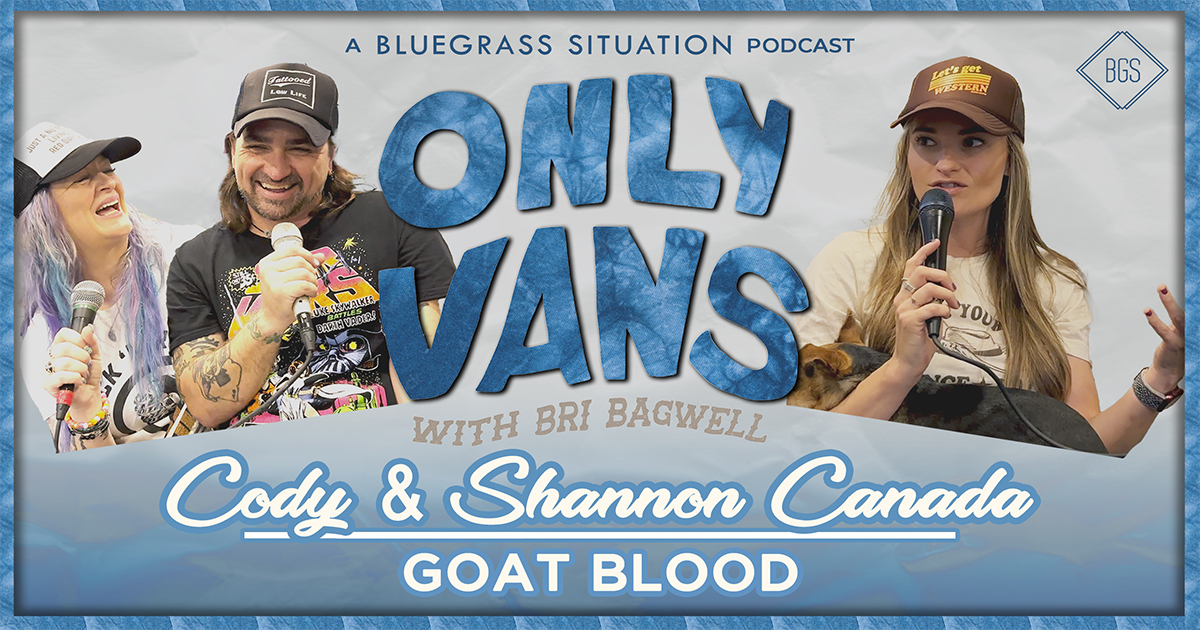
Cody & Shannon Canada on Only Vans with Bri Bagwell

(Editor’s Note: BGS is proud to announce the addition of Only Vans with Bri Bagwell to the BGS Podcast Network! Read more about our newest podcast coming on board here.)

In the latest episode of Only Vans, Texas country artist and host Bri Bagwell chats with friend, mentor, and famed lead singer of Cross Canadian Ragweed, Cody Canada and his wife/manager Shannon in the bus, covering a wide variety of topics like racial injustice, partying, the metal music scene, and shifting priorities after having kids.

LISTEN: APPLE • SPOTIFYAMAZON • MP3

Find Cody’s music, tour dates, and merchandise here.

Only Vans would like to thank CH Lonestar Promo for being the best merch company in all the land!

Intro music: “Free Man” by Bri Bagwell
Outro music: “Elle” by Cody Canada & The Departed


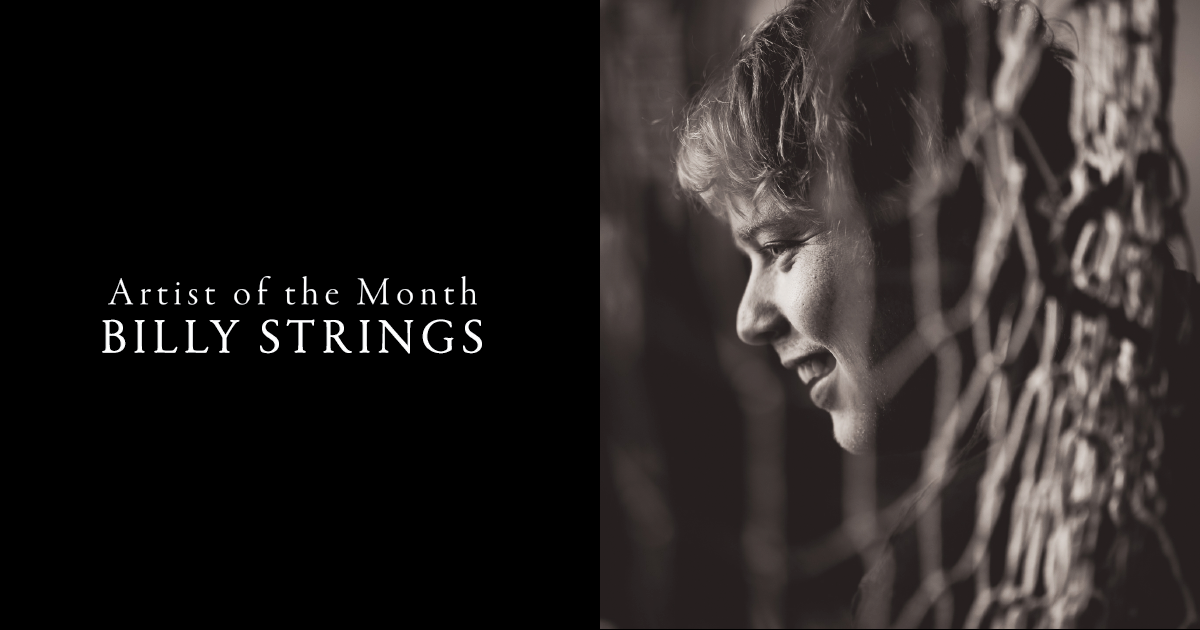
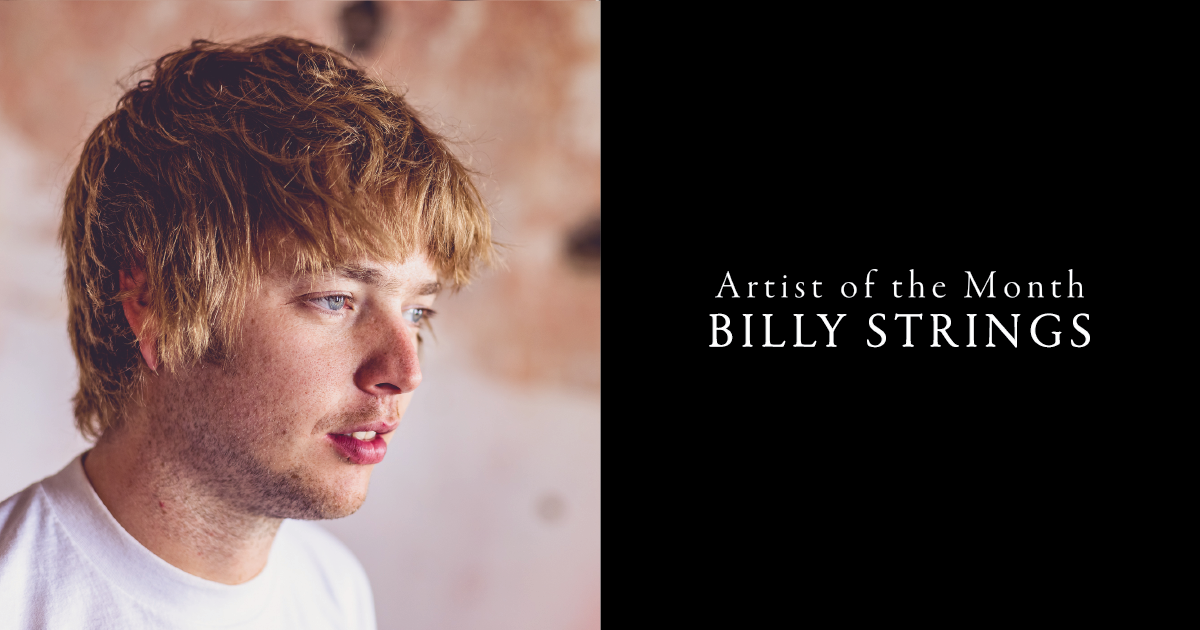
From Death Metal to a Fishing Boat, How Billy Strings Finds Renewal (Part 2 of 2)

Billy Strings has had his foot on the gas since he was a teenager, bringing his prolific picking to hundreds of shows around the country each year and winning over a throng of devoted fans in the process. His bluegrass bona fides may be obvious from the outset — he’s quick to cite such greats as Bill Monroe, Doc Watson, and the Stanley Brothers as some of his first musical influences, and no honest spectator could deny his talent on the guitar and mandolin — but astute listeners will also note elements of rock, jam bands, and even heavy metal in his performances, especially as Strings bounds around the stage.

The Nashville-based, Michigan-raised musician’s latest album, Renewal, comes on the heels of an exceptional year: His Rounder Records debut, Home, won the 2020 Grammy award for Best Bluegrass Album. And even as much of the music industry was grounded from touring, his innovative approach to livestreams and digital performances moved the Pollstar Awards to dub him the Breakthrough Artist of the Pandemic. But that breakthrough was more than a decade in the making, and the forces that shaped Strings as a prodigious young picker are still at work today, pushing him creatively in the studio and on stage as well as calming him at home between gigs. Here, in the second half of our BGS Artist of the Month interview, Strings tells us about his upbringing, his latest influences, and the way he unwinds between shows.

Editor’s Note: Read the first part of our interview with Billy Strings.

BGS: Tell me about where you grew up. How do you see its impact on your work today?

Billy Strings: I was born in Lansing, Michigan on October 3, which is my grandpa’s birthday. My mother, who lived in Kentucky at the time, had gone up to Lansing to visit her dad on his birthday, and that’s when I decided to show up. [Laughs] So that’s why I was named Billy as well, because that was my grandpa’s name — I was his little birthday gift.

We lived in Morehead, Kentucky, for a couple of years before coming back home to Michigan, where I really grew up. I grew up in a little town called Muir, population 600. My dad is an incredible guitar player, so he taught me how to play. He was always showing me music when I was a little kid: Doc Watson, Bill Monroe, Lester Flatt, Earl Scruggs, Jimmy Martin, Larry Sparks, and stuff like that — a lot of good bluegrass. We’d hang out at this little campground and play music next to the river by the fire. That was my childhood, man, just sitting there picking by the river.

It was real good until I got to be a teenager and started to turn sour. I had to run off and figure out a new life. I took what my dad taught me when I was a little kid, and all of a sudden I realized that bluegrass is actually pretty sweet and people love this shit — that maybe I could do something with this; that it’s not just something that I do with my dad that I should be halfway embarrassed about.

Who are the artists that you feel really inspired by right now? And are those different than the ones that you feel like you were listening to a lot when you were a kid?

For the most part, it’s still Doc Watson — he’s the main nerve — and Bill Monroe, and Lester Flatt and Earl Scruggs, Ralph Stanley and Carter Stanley, the Stanley Brothers. But I listen to a lot of different shit. I listen to death metal, and lately, I’ve been getting into this music from Mali that Béla Fleck was showing me — some really amazing stuff. And Memphis trap: I’ve been listening to Young Dolph a bunch. There’s just an energy to it. I grew up around crack houses. I’ve seen that shit that they’re rapping about. It just gets me hyped: He’s talking about coming out of nothing and becoming a self-made millionaire. I listen to it before the shows sometimes to get myself hyped up.

You played in rock bands in high school — groups with music that might not sound a lot like what you’re doing today. Is there any lesson or anything from that time that you feel like you still turn to or still apply to the music that you make?

Yeah, performing live. I never learned how to perform in a bluegrass band. I learned how to perform in a metal band. I learned music by playing bluegrass when I was a little kid, but by the time I was doing it on stage it was in a metal band — we were headbanging and running all over the place — and I still can’t help but get into the music like that. I can’t just stand there and play.

You have been in Nashville now for a little while. Has anything that has surprised you about it, good or bad?

I really love Nashville. A lot of your favorite musicians, that’s where they live. You’ll see your favorite singer in the grocery store. I get calls for sessions, and it’s from people who I grew up listening to and who I’ve idolized for my whole life. Like Béla Fleck’s record just came out, and I played a handful of songs on that. I was so honored to play with David Grisman, and Chris Thile, Sam Bush, Stuart Duncan, and Edgar Meyer — all these cats that are just… well, I don’t feel like I’m really in that league. It really was an honor. And there’ve been several things like that! I went from listening to these cats on a record to being on a first-name basis with them… texting and being friends. It’s a trip.

What’s one thing that’s brought you joy recently?

Fishing. I love bass fishing. I grew up doing that with my dad as well, but I didn’t do it for a long time because I was so busy. When the pandemic hit, I started fishing again. I go out there in rain or shine. I just like it for the solitude. Last night, I was in front of thousands of people, and to come home and go out on my boat and be alone in nature — to check out the blue herons and the fucking ospreys, eagles, fish, everything doing its thing — it’s brought me a lot of joy, brought me down to Earth. I put my boat in at 5 o’clock in the morning when the sun is just coming up. I like being out there alone at that time of day. It’s just good for my mind.

And yet it’s so clear from your performances that interacting with listeners gives you a certain joy, too. What are the forms of feedback that you value most from your audience when you’re playing live?

Sometimes when we finish a solo, everybody starts cheering real loud, the whole place gets real loud. That feels good. But sometimes I look out there and I look around and I see individual people and I literally play to them. Last night, we played in Montana and I was looking around and there was this one dude just standing there with his beer just completely still. I didn’t even know if he was enjoying it or not. So I just walked up to the front of the stage and stared directly at him and I just started playing right to him. [Laughs] So he started laughing, and then he took a drink of his beer and started bobbing his head a little bit. I think he just started getting into it by the end of the show.

I’ll look for things like that. The audience is really in control of how I’m feeling up there. Sometimes, when they’re just on fire, I can’t help but have a good time. They feed us the energy, and we give it back to them. It’s reciprocal.


Photo credit: Jesse Faatz

Billy Strings Draws a Line in the Sand with Sobriety, Not Bluegrass (Part 1 of 2)

From carving out a name for himself on the road as a teenager to winning a Grammy for Best Bluegrass Album (2019’s standout Home), the prodigious 29-year-old guitar player Billy Strings has cultivated a devoted following and collected an impressive list of accomplishments along the way. His latest Rounder Records release, Renewal, capitalizes on the confidence and artistic growth those experiences have delivered, with experimental new instrumentation, contemplative lyricism, and trademark picking. Produced by Jonathan Wilson (Roger Waters, Father John Misty), the sixteen-track opus offers a glimpse at an artist who is continuously rediscovering himself.

“I’m going through a part in my life where I’m looking through the windshield instead of in the rearview,” he says. “I think of a new day, the morning light, a spider molting, or a snake shedding its skin: It’s a renewal.” In the first of our two part BGS Artist of the Month interview, we caught up with Billy Strings about those new beginnings — on the stage, in the studio, and in his day-to-day life.

BGS: Renewal is mostly acoustic, but it pulls from a lot of different sources of inspiration — and not all of those are necessarily bluegrass. Is there any particular moment on the record where you noticed the influence of a genre that may be unexpected to some listeners?

Billy Strings: “Hide and Seek” is a song that maybe draws more from my influence of playing in metal bands — trying to write a song that’s more like a metal song, but with acoustic instruments… using odd time signatures, diminished chords, and avoiding the major scale. I grew up listening to a lot of death metal, and a lot of that music is just not verse-chorus-bridge, verse-chorus-outro. The songs are like 10 different parts. They’re hyper-composed, and that stuff’s sort of neat.

Was there anything that you did in the studio that took you out of your comfort zone?

I mean, I wouldn’t say it was uncomfortable, but it was different playing synthesizers and different instruments hands-on. I think I gained a little confidence when I won that Grammy — the next time I went into the studio, I was the one calling the shots: “Hey, do you have a triangle? Let’s all come together and do a singalong.” I was the one coming up with the creative ideas and feeling confident in myself to do that. On “Heartbeat of America,” I’m playing some old synthesizer, playing with the pitch wheel and stuff. That shit’s fun.

Hellbender” stands out as a reasonably upbeat, fun song when you’re listening to it, but the lyrics are… kind of dark. What was going on in your head when you were writing that?

That song’s about a real bad headache and a real bad hangover — being lost in the demons of alcohol, not knowing where to stop, saying, “Fuck it, I’m going to drink until the night’s over.” I haven’t drank in over five years: I haven’t had a sip of alcohol because I had a real bad headache one day. So it’s not really about me, but I wouldn’t really call it a fictional song either. I have been there and done that: woken up like that. It’s about a guy who can’t freakin’ stop.

“Know It All” on the new album talks about learning from your mistakes. Has there been any kind of a difficult learning experience that you feel shaped you as an artist?

Well, maybe that headache I was talking about.

Oh yeah?

One day we had this awesome gig. A lot of people showed up, and we sold a bunch of merch, and I thought we were fucking rock stars. I had been up all night and drinking beer and liquor and a bunch of shit. We got to the bar after and I was all, “Old Fashioneds! Get one for everybody, on me!” I was raring and tearing. But the next day, we barely made it to our gig, because I was puking every 10 minutes. We made it there in time to set up our stuff and play — we had to set up our gear in front of the audience. This was at a time where my career was really starting to take off, and I saw that as an opportunity to draw a line in the sand.

How so?

I think it’s about being conscious of my surroundings, being aware of the vibe that people are giving, and also being aware of the vibe that I’m putting off. I don’t want to be a drunk asshole when some fan comes up to me and says, “Hey man I really enjoyed the show.” I want to be there. I want to be able to say, “Thank you, man. Thank you for coming. I fucking appreciate it.” I just came off four gigs back-to-back. We played Spokane, Washington; Portland, Oregon; Seattle; and then somewhere in Montana. And right now I’m on my way to Salt Lake City. I can’t do that if I’m drinking. It’s all I can do to take care of myself. There’s no time for that shit.

You won Breakthrough Artist of the Pandemic from Pollstar —probably the first time anybody was awarded something like that. What motivated you to try new things when you lost your outlet on stage? Was there anything that struck you as a special moment even remotely connecting with your fans?

I’ve been doing this since I was 19 and I went on my first tour across the country. It’s all I’ve really known, just keeping this going. I’ve been “striking while the iron’s hot” for 10 years. [Laughs] So when all of a sudden I don’t have anything to do, it’s like, “Well shit. We need to keep doing something to engage the fans. We can’t just stop.” We started doing little streams at my house, and then that moved to doing a streaming tour around venues and stuff, and then eventually the whole Capitol Theater run, which was six nights, including this whole experiment where we tried to interact with our fans through telekinesis. That was really special. Even though there wasn’t anybody there, it felt like we were really connected with the audience.

You are out there day in and day out, and I’ve also seen you talk candidly about having anxiety and nerves before going on stage. Is there anything in particular that you do to manage that?

I mean, it’s been a journey. I hit the road when I was 19, playing 200 gigs a year, and for a while there, I was invincible, untouchable. I thought I could drive the van, sell the merch, book the hotels, settle up at the end of the night, write the songs, perform the shows, do everything. It was all on my shoulders. But I hit a wall where all of a sudden, instead of being confident, strong, and untouchable, I was fragile and scared of the world. Anxiety really fucked me up. I started having these crippling panic attacks where my whole body would go into convulsions.

I’m not trying to be a tough guy. I’m trying to be an honest guy. It’s uncomfortable for me to pretend like I’m feeling any way that I’m not, so if I’m angry, sad, anxious, mad? You’re going to know it because I don’t want to hide that shit. I’ve been going to therapy ever since 2019 and it’s helped me a bunch. I had a lot of trauma from my childhood that I had to sort out so I could keep moving forward and stop looking back. That’s what Renewal is all about.

Editor’s Note: Read part two of our Artist of the Month interview here.


Photo credit: Jesse Faatz

Guitarist Yasmin Williams’ Techniques Are Second Only to Her Songs

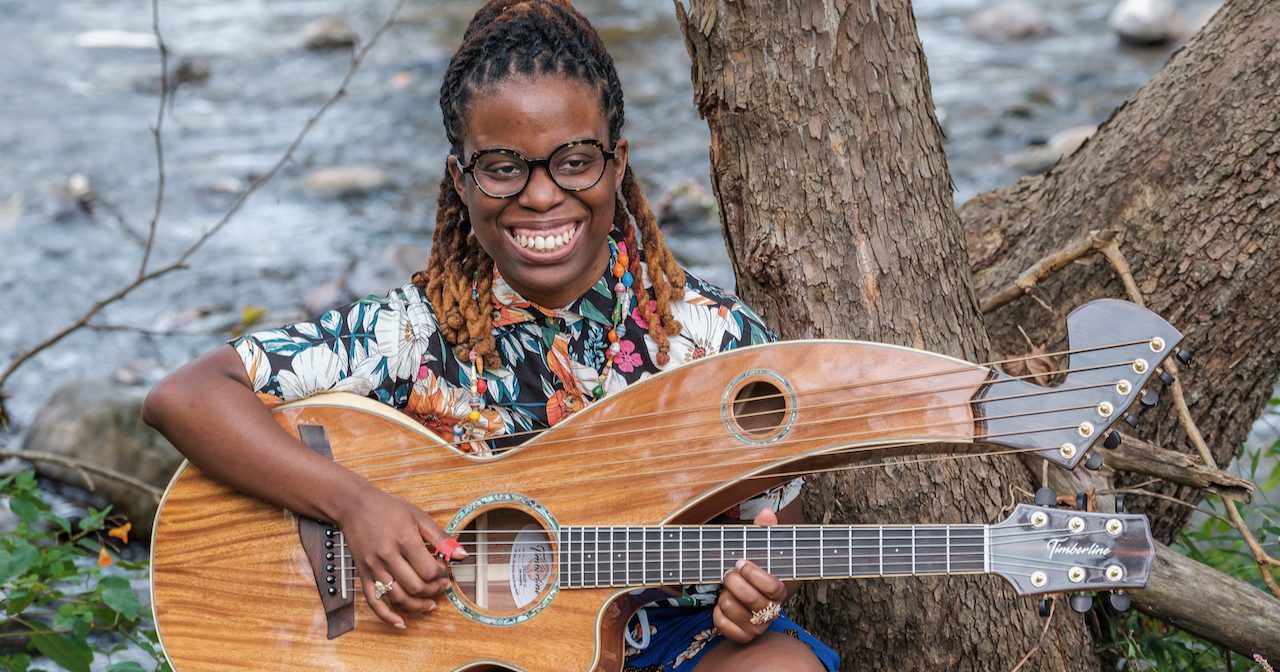
Guitarists spend lifetimes — often gleefully, sometimes manically, or at times frustratingly — finessing techniques, especially with their picking hand. Entire careers can be made or broken by the idiosyncrasies of one picker’s striking and sounding strings. Fingerstyle guitarist and composer Yasmin Williams has mastered myriad forms of right-hand styles, each complicated enough for multiple lifetimes’ worth of study. But she doesn’t merely alternate techniques between pieces; to a transcendentally perplexing degree she effortlessly alternates her entire picking hand approach mid-song.

On her 2021 release, Urban Driftwood, a collection of thoughtful, dynamic, and engaging instrumentals written for fingerstyle guitar and harp guitar, Williams makes many of these technique-swaps while the compositions charge forward, each one earning tailor-made right-hand approaches. As a result, the songs don’t feel encumbered when Williams, mid-melody, goes from right hand fingerstyle to bowing her strings with a cello bow, or plunking out notes on a kalimba taped to her guitar’s face, now positioned laying across her lap. She utilizes hand percussion and tap shoes to fill out arrangements, interposing Afro-descended instruments from around the world into her compositions, and she picks up, puts down, and readjusts her stable of musical tools in realtime — as a foley sound effect artist, prop master, or choreographer might. 

In guitar-centered communities — which are, it’s worth pointing out, largely white, straight, and male — where the overwrought, complicated, and mind-bending are regarded as the highest value currencies, you might expect the intricacies of Williams’ compositions, and the physicality of these impressive, visually striking techniques, to be the entire point of the music. But, as Williams explains in our interview and demonstrates indelibly in her Shout & Shine livestream performance — which will air on BGS on March 31 at 4pm PDT / 7pm EDT  (watch above) — the acrobatics of her playing are merely a means to an end. While entrancing, each fresh, inventive way Williams creates a dialogue with her instrument is merely a tool for her to execute each individual song, as close to how she hears it in her head as possible.

We began our conversation discussing this phenomenon and how it’s an active, deliberate choice on the part of Williams to serve her own songs.

BGS: There isn’t nearly as much variation in right hand or picking techniques in bluegrass and old-time as you use – tap, lap tapping, fingerstyle, harp guitar, I’ve even seen you bowing your guitar. So many of these contemporary guitar styles that you switch back and forth between are so different from each other, so what ties them all together for you? What does it feel like when you’re thinking about switching between these styles?

YW: I don’t really think about it much at all! Unless it’s logistically for a live performance, like, “Oh, I need to put my bow here, I need to put my kalimba here.” That [stage choreography] is really the only context in which I think about it. These different techniques, I just use them for whatever the song requires. They’re more like compositional tools. It’s more like I’m trying to find the sound that’s in my head or I’m trying to find a sound that’s different from [how] my guitar [already sounds], something to supplement whatever I’m writing. It’s not really like, “I want to make a lap tapping song!” It’s not conscious like that. These techniques are kind of my inventions and I only really come up with them to well, finish the song, basically. 

I’ve never really been technique-forward – yeah, guitar culture is very nerdy and I’ve never been very into that, at least in terms of the techniques, I don’t usually care what people are doing. [Laughs] I care more about the result. However you choose to get there is cool, too! But I don’t really scout other people’s techniques or anything. 

It makes me think of Elizabeth Cotten, who you have mentioned in past performances and interviews as an influence of yours. She was left-handed and played “upside down and backwards,” playing the guitar the way she needed to play it. 

[Laughs] Yes! She just figured it out, she was determined! Elizabeth Cotten and Jimi Hendrix kind of served the same purpose for me. They’re both extremely unique, I love that about them, and they really didn’t care about how they were “supposed” to do things, they weren’t bogged down by tradition. Elizabeth Cotten, I love her because, somewhat obviously, she’s a Black woman who plays guitar fingerstyle, which is very cool — and banjo, too. How she played, I can’t figure it out! It’s fun to figure out and to watch, but it’s even cooler to not watch her play and just listen. All of her tunes are so catchy. She’s great, I’d love to be as great of a songwriter as her one day, hopefully.

Some of the songs on Urban Driftwood feel so huge and expansive, but some feel so introspective and meditative, despite the fact that most tracks have very similar, stripped down, simple instrumentation and arrangements. It’s not a lot of production and arranging. How do you accomplish that dynamic range? What is your own dialogue with your instrument like during the creative process, during recording and writing?

That’s a really interesting question! But, I don’t know! [Laughs] Sorry to say that, but I really need to think more about this. 

Some songs, I definitely did want to be more introspective, like “I Wonder.” That was definitely one I wanted to be very intimate. And I did think about, in a live setting, how I wanted the song to feel more quiet and more intimate than other arrangements. “Swift Breeze” is another one I wanted to have an edgier sound. I don’t really think about it, I guess I’m just extremely tunnel-visioned. At the time of writing or recording a song I only think about what the song needs. Whatever that particular song that I’m working on in that moment needs. I didn’t think about live performance at all until after the album was already out and finished, which was probably not the best idea, [Laughs] I’m kind of regretting it now, but I’m working it out. 

I did think about the arrangement for “Urban Driftwood” a lot. I didn’t want to use tons of overdubs or multi-tracks on many of the songs [on the album], because I don’t really “believe” in it, I guess. That one, I wanted it to sound expansive, but also I wanted it to be able to work in a more intimate setting, too. But even so, I’m not really thinking about it that much.

The guitar, when you take it out of the context of the average player’s experience — which is usually playing with a pick and using three or four chords — when you remove it from that context so many new and exciting ideas have to start flowing, like when you pick up a bow instead of a pick. What is your experimentation like when you’re composing/writing?

I tend to repeat things I like over and over again. I can do that for hours. [Laughs] It’s a bit of a mess, it’s not the most efficient way to write something, but I can make up a melodic line that I really like and play it for hours and hours and hours. Other things will start to form while I’m playing that. Then I’ll record it, or write it down in notation, whatever I need to do to remember it. That process can go on for months before I even finish a song. 

I love experimenting. I love finding new, different things to use. Like a hammered dulcimer hammer or a bow or tap shoes, which are something else I use. Those were another example of problem solving. Now I’m into pedals a lot more so I’m experimenting with those, too. There are tons of great pedals out there, so it can be pretty difficult. It’s another world on its own! I’ve always been an experimental player, ever since I started playing. 

Who are you listening to now who inspires you? And who – you already mentioned Jimi Hendrix and Elizabeth Cotten – do you look to and who influences you from past generations? 

I kind of want to go back to where I’m from [in Northern Virginia], Chuck Brown is an influence — maybe not directly, I don’t really model my playing after his at all. He’s a guitar player from the D.C. area, he plays go-go music, a kind of regional style of music here. I’ve always loved him, from when I was a kid. 

Libba Cotten, obviously, is a huge influence. I wish I had known about her when I was younger. I think I could’ve saved a lot of time by not trying to be something I was never going to be. I really wanted to be a shredding, metal-type guitarist. I think that’s what I associated the guitar with–

Is that where the tapping came in? 

Yeah! 

That’s amazing. There are a lot of post-metal pickers in bluegrass! We have quite a few. 

[Laughs] I mean, I used to play Guitar Hero and that had so many rock songs and metal songs on it and tapping stuff. A bit of southern rock, too. But it was really rock- and male-centered and it would’ve been great to find Elizabeth Cotten sooner. That would’ve been great. I still like Paul Gilbert, I still like Buckethead, all of them, but it definitely would’ve been better if I had found Libba Cotten or Sister Rosetta Tharpe or Algia Mae Hinton sooner. 

Ah! I love Algia Mae, when you mentioned tap shoes earlier I immediately thought of her and the tradition of buck dancing and clogging connected to finger-picking. 

I know! I didn’t know anything about that until recently! I didn’t really know anything about that until the past couple of years, I’ve definitely gone down the rabbit hole of all of that now, though.

I guess I am listening to more guitar music these days than I ever have before. When I first started playing I didn’t really listen to any, because I didn’t really like it, the fingerstyle stuff and the technical stuff. Whatever you want to call it. But now, it’s great. There are a lot of contemporary players I really enjoy, I love Daniel Bachman’s stuff. [The band] The Americans have cool stuff. Chuck Johnson and Sarah Louise. There are a lot more people releasing music that isn’t just a derivative of what already exists in the guitar canon or in traditional guitar scenes. 

This topic has come up recently — in my interview with Jackie Venson and also with Sunny War — but more and more when I find myself engaging with contemporary guitar music, it’s made by women. To a degree, I think the music women are making in fingerstyle guitar and in “guitar culture” right now is just not what you hear like… in the halls at NAMM. As a queer person, I think I avoid guitar culture a lot because it feels so toxically masculine. Do you feel that, too?

Yeah, I feel that now that I’m in the scene more. When I released my first album — and before that, when I was just learning and coming up — I didn’t feel anything like that, because I think I just ignored it. I didn’t really care. (I still don’t really care.) [Laughs] There are nicer sections in the guitar world as well as more “competitive” or kind of douchey sections. [Laughs again] Like the guy who will turn my amp on, cause he thinks I can’t turn it on. That happens a lot

Looking ahead to the future, with vaccines rolling out and it feeling like we’re at this transition point from pre-COVID to the beginning of post-COVID — and you’re gaining so much momentum with this record even during the shutdown — what are you looking ahead to? And what does this transition from “before times” to “after times” feel like to you? 

I’m actually kind of thankful for it. It’s giving me time to reflect — not only on the album’s success, but it’s giving me time to not worry about shows. I can plan and build a team around me and become more “professional” [to be ready] when touring does start up and venues do start opening again. 

Creatively and musically I am all OVER the place! [Laughs] I’m writing a piece for a berimbau group called Projeto Arcomusical, the berimbau is an old, Afro-Brazilian instrument. I’m really excited for that, I can finally use my college degree and be a composer for once. I’m working with another group, based in NYC, called Contemporaneous, arranging songs from my new album for a summer concert, which is fun. I’m working on new music, trying to write more harp guitar stuff, playing my twelve-string guitar more. My head’s all over the place, really. 

I definitely feel a sort of rejuvenation now that I’ve gotten past the “WTF is going to happen?” Now I’m just like, “Whatever happens happens,” and I’ve gotta make new music!


Photo credit: Kim Atkins Photography