Watch a Brand New Video From Americana Firebrand Sierra Ferrell

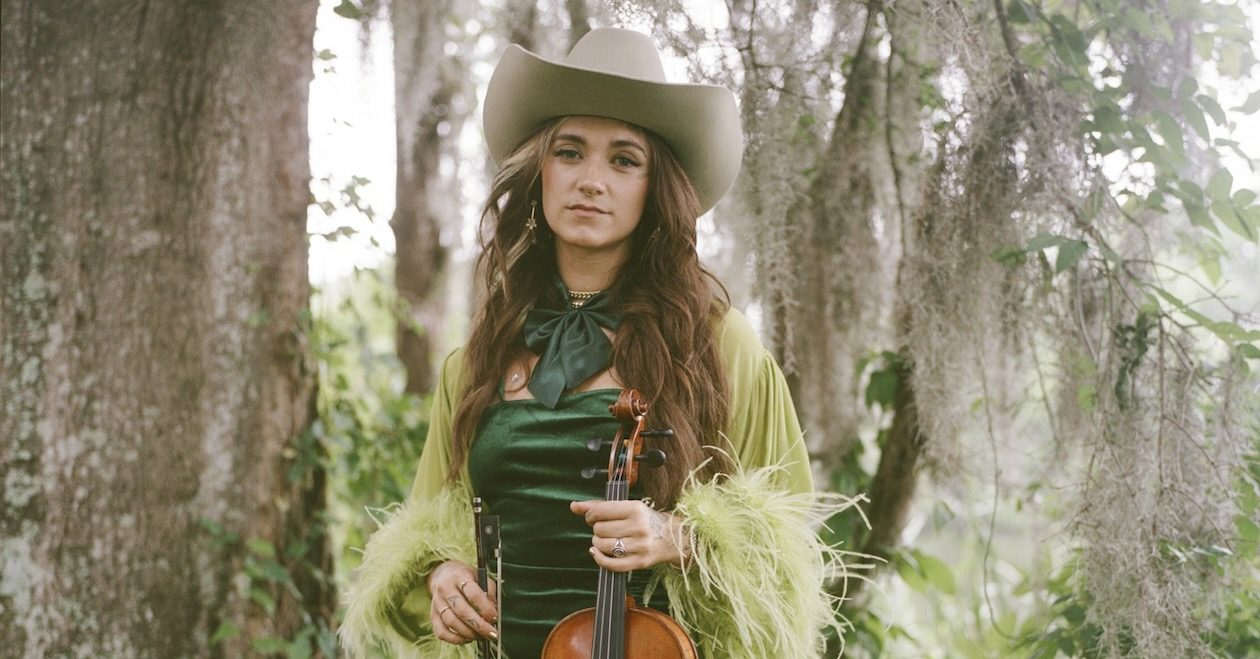
With a brand new, to-be-announced album coming in 2024, Americana singer, songwriter, and “musical vagabond” Sierra Ferrell has released “Fox Hunt,” a galloping, gothic track with a storybook-style animated video. (Watch above.) It’s one of her most sonically mainstream single releases to date, reminding of groups like the Lumineers — a shimmering polish on the deeply patina-ed, gritty sounds drawn from her West Virginia raising.

Ferrell is one of the fastest rising stars in American roots music, with a tour schedule and dance card filled to bursting. Listeners place her in musical constellations with such high energy and “back to basics” artists like Billy Strings, Molly Tuttle, Zach Bryan, Margo Price, and more – many of whom she calls friends and collaborators. But Ferrell, in a twist of homophonics, brings a feral and untethered mastery into her music, a quality that continually has fans begging for more. Her performance of femininity – and as often, her subversion of it – recalls other mountain music mavens like Dolly Parton, Ola Belle Reed, Wilma Lee Cooper, and Loretta Lynn, but with their often aspirational facades – qualities of each of their professional brands – exchanged for a devil-may-care attitude that’s just as deliberate and intentional. It’s as much an extension of Ferrell’s agency as any of the women who came before her donned their own rhinestones, big hair, and striking make-up as representations of their individuality.

2024 will undoubtedly find Sierra Ferrell notching many more career milestones as her ever-growing audience will be hanging on for every rollicking, frolicking note.


Photo Credit: Bobbi Rich

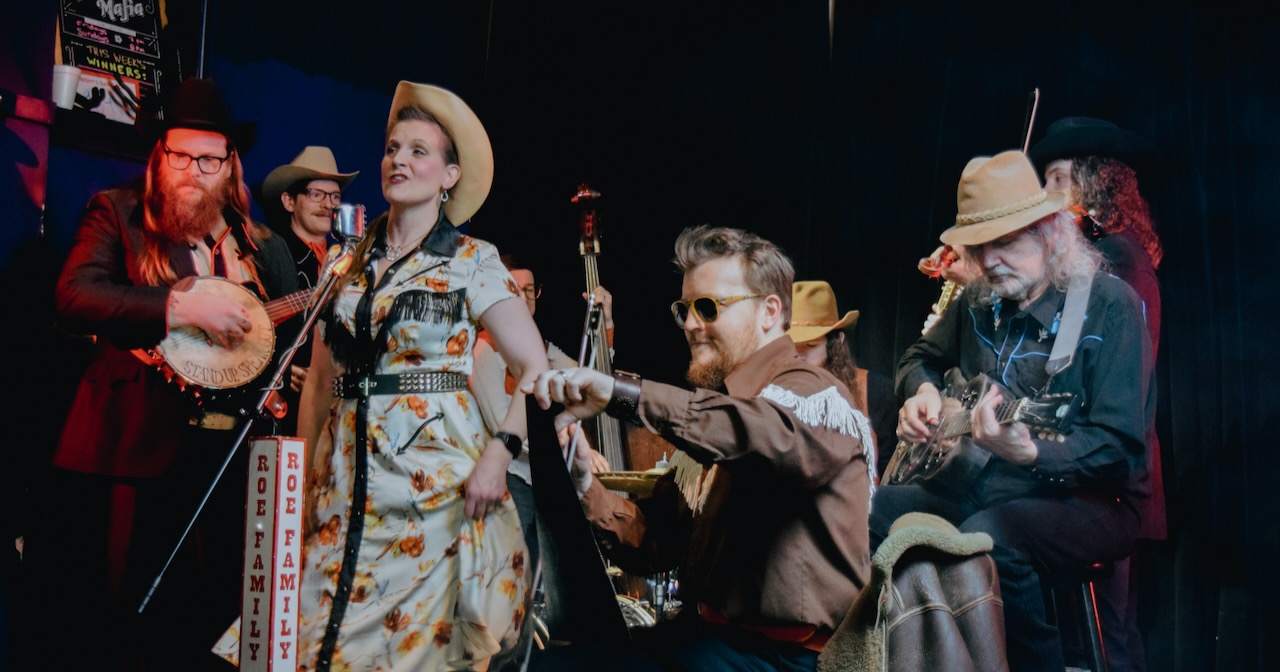
WATCH: The Roe Family Singers, “Loretta Lynn Blues”

Artist: The Roe Family Singers
Hometown: Minneapolis, Minnesota
Song: “Loretta Lynn Blues”
Album: Sisters And Brothers
Label: Bonfire Music Group

In Their Words: “‘Loretta Lynn Blues’ is a tribute to both Loretta Lynn herself and the songs she wrote. There was a time when country music was made by real people, speaking about real, everyday issues. Folks like Loretta Lynn, Dolly Parton, and Hazel Dickens had everybody singing along and, more importantly, gave a voice to folks who didn’t have one before.

“Today’s country music is dominated by manufactured pop stars who, at best, sing about nothing and, at worst, use their gigantic platforms to amplify their messages of racism and misogyny.

“We wanted to write a song that gets back to the roots of what country music was and what it still could be. All while honoring one of the greatest there ever was: Loretta Lynn.

“The title is a reflection of how we thought Ms. Lynn would feel about today’s country music: after spending so much of her career singing songs like ‘One’s On the Way,’ ‘Rated X,’ and ‘The Pill,’ we figured she’d feel kind of down to hear modern country music singing about beers, my best girl, beaches, dogs, and pickup trucks.” – The Roe Family Singers

Track Credits:

Dan Gaarder – guitar
Dave Gustafson – mandolin
Noah Levy – drums
Eric Paulson – bass
Kim Roe – vocals
Quillan Roe – banjo
Rich Rue – steel guitar
Annie Savage – fiddle & back-up vocals

Stage Band:

Erik Brandt – accordion
Dave Gustafson – mandolin
Jake Johnson – fiddle
Brody Kucera – drums
David F. Robinson – guitar
Kim Roe – vocals
Quillan Roe – banjo
Rina Rossi – bass
Rich Rue – steel guitar
Adam Wirtzfeld – musical saw


Photo Credit: Katie Viles
Video Credits: Ryder Seeler – director, editor; Adam Olson – director of photography; Leah, Seth, and Tristan – film crew

Loretta Lynn Receives a CMT Tribute by Brandi Carlile, Keith Urban, and More

One of the most beloved performers in country music history earned an eloquent and emotional tribute in a live CMT taping titled Coal Miner’s Daughter: A Celebration of the Life & Music of Loretta Lynn. Presented without commercials at the Grand Ole Opry House in Nashville on Sunday night (October 30), the broadcast offered tributes from Little Big Town, Darius Rucker, and many other artists who admired her. Enjoy a few musical highlights below.

Editor’s Note: Two additional CMT commercial-free encore airings on Wed., Nov. 2 at 8p/7c & Sun., Nov. 6 at 11a/10c.

Brandi Carlile sings “She’s Got You,” which Loretta Lynn also recorded as a 1977 tribute to her late friend, Patsy Cline. Carlile returned to the stage to perform “Coal Miner’s Daughter” with The Highwomen and guest Brittney Spencer.


Alan Jackson sings “Where Her Heart Has Always Been,” a song he originally composed for his mother. He told the audience that Lynn always reminded him of his own mother, and that he felt the song’s message applied to Lynn, too.


Margo Price is one of many female artists who admired Loretta Lynn for her songwriting ability and tell-it-like-it-is approach to lyricism. With a pure country delivery, she sang one of Lynn’s most controversial hits, “The Pill.”


Lynn’s granddaughter Emmy Russell joined Lukas Nelson for “Lay Me Down.” Lynn recorded the ballad with Lukas’ dad, Willie Nelson, in 2016. Russell also recalled how Lynn would often bring her from side stage to sing a few songs.


George Strait, the King of Country Music, saluted a fellow member of country music royalty with “Don’t Come Home A-Drinkin’ (With Lovin’ on Your Mind).” The feisty single, which Lynn co-wrote, became her first No. 1 country hit in 1967.


Tanya Tucker kept it country for her homage to Loretta Lynn, singing “Blue Kentucky Girl.” Although Lynn didn’t write the song, it perfectly captured her own Kentucky roots, and became one of her earliest hits on Decca Records in 1965.


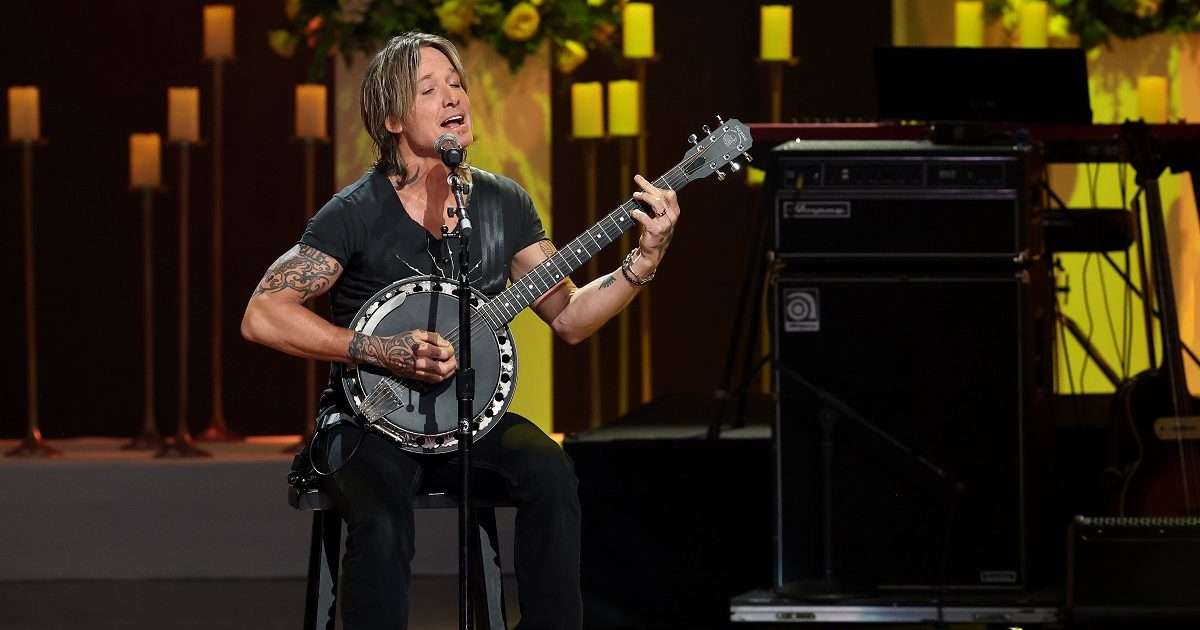
Keith Urban carried his Ganjo to the Grand Ole Opry stage to deliver a charming rendition of her 1971 hit, “You’re Lookin’ at Country.” Urban also shared a playful voicemail and reminisced about being her date at an awards show.


Jack White revived the title track of Van Lear Rose, one of Lynn’s best-loved and most acclaimed albums. As the 2005 project’s producer, White helped bring Lynn back into the spotlight and shared the Grammy for Best Country Album.


Photo Credit: Terry Wyatt/Getty Images for CMT

LISTEN: Brit Taylor, “Kentucky Blue”

Artist: Brit Taylor
Hometown: Hindman, Kentucky
Song: “Kentucky Blue”
Album: Kentucky Blue
Release Date: October 28, 2022
Label: Cut A Shine / Thirty Tigers

In Their Words: “‘Kentucky Blue’ is a universal feeling that we’ve all felt at one point or another. Hardship and loss — whether it is of a person, a goal, or even a dream — is inescapable. It happens to every one of us. I think right now the country music community is feeling more Kentucky Blue than ever with the loss of Loretta Lynn and Leslie Jordan. Loretta Lynn paved a path for female artists like no other before her, and Leslie carved out a lane for the LGBTQ community to be seen and respected in the country music format. I hope ‘Kentucky Blue’ brings comfort to other people like it does to me.” — Brit Taylor


Photo Credit: David McClister

WATCH: Plains, “Hurricane”

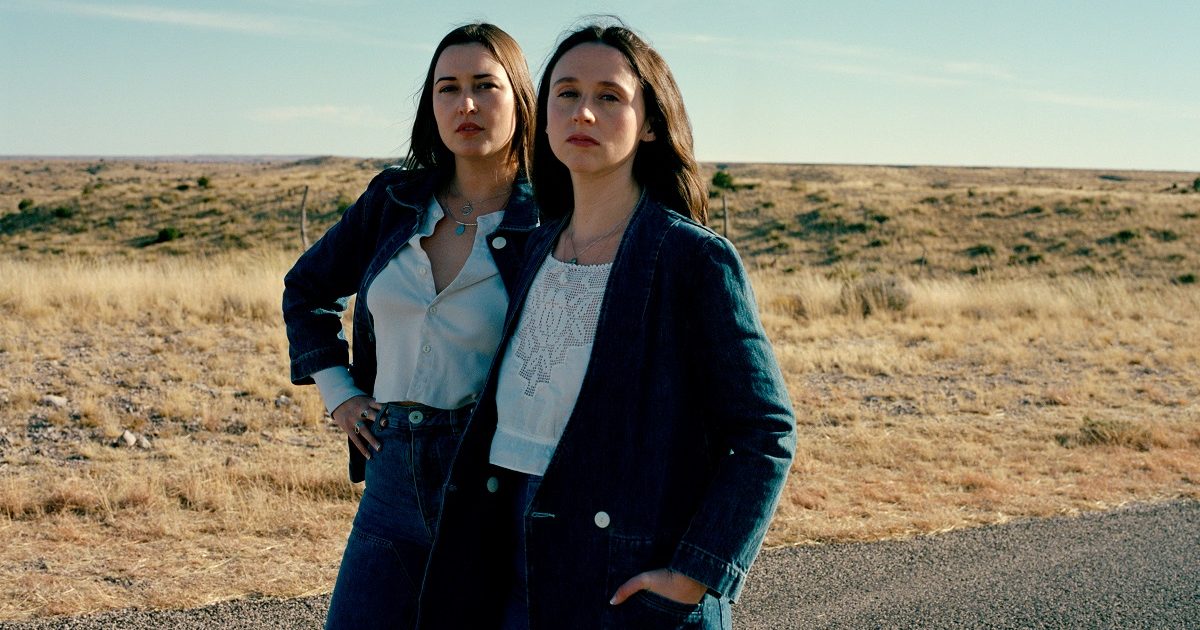
Artist: Plains (Katie Crutchfield & Jess Williamson)
Song: “Hurricane” (video directed by Aidy Bryant)
Album: I Walked With You a Ways
Release Date: October 14, 2022
Label: ANTI- Records

In Their Words: “I had always had a vision of Aidy’s involvement in this video that really ended with just getting her in the room. I trusted that she had the answer for the perfect way to visually accompany this song and from the jump she just deeply understood our vision, at moments better than we could have even explained it ourselves. I’m thrilled that she was so generous with her time and creative energy and I’m thrilled with how this turned out.” — Katie Crutchfield (Waxahatchee)

“‘Hurricane’ was the last song that was written for our record. We knew we needed one more, and when Katie brought ‘Hurricane’ to the table we both knew the album was complete. It was incredible for me to watch this song reveal itself; from the early moments of Katie playing it for me on an acoustic guitar just days before we went to make the album, and then blossoming in the studio with the band into this total banger with huge choruses. Aidy’s video is the perfect companion for this tune, and we had a blast working with her and her team to make the visual world for this one come to life.” — Jess Williamson

“I’ve been a fan of Waxahatchee and Jess Williamson for a long time so when Katie asked if I would direct a music video for Plains I jumped at the chance. We had a talented, hardworking crew and paid homage to Loretta Lynn’s ’70s TV performances. I’m also going to drive the bus for their tour, so see you on the road!” — Aidy Bryant


Photo Credit: Molly Matalon

WATCH: Caitlin Rose, “Nobody’s Sweetheart”

Artist: Caitlin Rose
Hometown: Nashville, Tennessee
Song: “Nobody’s Sweetheart”
Album: CAZIMI
Release Date: November 18, 2022
Label: Missing Piece Records

In Their Words: “For a long time I was doing a little series on Instagram where I would punchline all of the old sheet music I was collecting. There’s a 1924 tune called ‘Nobody’s Sweetheart’ and I added ‘and nobody’s fool’ as a crack. I ended up taking it down because I knew it would be a really fun one to write. Daniel Tashian just happened to be on my schedule that week and was the perfect musical cohort to explore this. I wanted something anthemic and fun (and easy) to play in sets and that definitely scratched the itch.

“Similarly, the video just came out of wanting to ride horses and, more specifically, that I always thought Nobody’s Sweetheart was a perfect racing name. We were able to film at the Loretta Lynn Ranch thanks to some amazing friends. Crystal Lynn patiently guided me through an entire week’s worth of riding lessons in one day. I’m so thankful to the Lynn family for one of the best days I’ve had in a long time and for this perfect opportunity to become a born-again horse girl.” — Caitlin Rose


Photo Credit: Laura E. Partain

For Bluegrass Fans, Kentucky Offers a Commonwealth of Tourist Attractions

Kentucky music is currently having a moment, but it’s far from the first time. Before artists like Tyler Childers, Sturgill Simpson, and Chris Stapleton made it big, folks like Bill Monroe, Loretta Lynn, Keith Whitley, Crystal Gayle, Tom T. Hall, Patty Loveless, Ricky Skaggs, Dwight Yoakam, and countless others helped build up the Bluegrass State’s rich musical foundation spanning bluegrass, country music, and more.

With so much talent having originated from Kentucky, there’s no shortage of destinations around the Commonwealth to consume this musical history. From the Mountain Arts Center in Prestonsburg in the southeast to the Muhlenberg Music & History Museum in the west, Lexington’s Red Barn Radio and beyond, every nook, cranny and holler throughout the state is full of destinations beckoning to be explored by music fans. We’ve compiled more than a dozen of these attractions below in an epic road trip that could be called the Kentucky Music Trail.

Central Kentucky

Opened in 2002, the Kentucky Music Hall of Fame & Museum in Mount Vernon features exhibits showcasing talent from throughout the state ranging from country and bluegrass trail blazers like Bill Monroe, Loretta Lynn and Keith Whitley along with Black Stone Cherry, The Kentucky Headhunters and Exile, among others. The museum is open from 10 a.m.-5 p.m. daily with an admission of $10.


Also sitting on the same 55-acre property is the Renfro Valley Entertainment Center. First opened in 1939, the massive barn features two unique performance halls that host country, gospel and bluegrass music annually from April through December. Additionally, the venue has been the home of Renfro Valley Gatherin’, a syndicated radio program airing on Sunday nights at 9:30 p.m. EST, since 1943. The show is the third oldest continually broadcast radio program in America and the second longest continuously running such program featuring country music, behind only the Grand Ole Opry.

Back inside the Hall of Fame & Museum, one of the most prominent exhibits is one showcasing Woodsongs Old-Time Radio Hour, an internationally syndicated radio program hosted by folk musician Michael Johnathon in front of a live studio audience at the historic Lyric Theatre in Lexington on most Monday nights at 7 p.m. Launched in 1998, the entirely volunteer-run production spotlights musicians across all genres performing their songs and sharing the stories behind them. Now over 1,000 episodes in (and counting), the program has featured artists like Sam Bush, J.D. Crowe, The Black Opry, Riders in the Sky and Billy Strings. Each show also features a “Woodsongs Kid,” helping to encourage and grow the next generation of Kentucky songwriters.

Another radio program based in Lexington and featuring talent from around Kentucky, Appalachia and the southeast with a similar mix of conversation and performance is Red Barn Radio. Founded in the early 2000s at Renfro Valley’s little red barn (from which the show draws its name), co-founder Ed Commons helped lead the show’s move to its current home inside LexArt’s headquarters in downtown Lexington in 2005. The show has taken off since moving there, hosting everyone from Sam Bush to J.D. Crowe, Tom T. Hall, John R. Miller, Arlo McKinley, Sierra Ferrell, Sunday Valley (led by a young Sturgill Simpson) and Tyler Childers. In the case of Childers, his performance on the show became so revered that he ended up releasing it as a live album, Live on Red Barn Radio I & II, in 2016.

Eastern Kentucky

Out east on the campus of Morehead State University you’ll find the Kentucky Center for Traditional Music (KCTM), a school teaching the next generation of bluegrass and old-time musicians the nuances, history and business side of the music. Founded in 2000, the center offers the only Bachelor of Arts in Traditional Music in Kentucky along with a minor in traditional music. It also features an extensive digital archive of Kentucky and Appalachian traditional music, a recording studio, sound-proofed classrooms and rehearsal spaces. Alumni from the school include Linda Jean Stokley and Montana Hobbs of The Local Honeys, current professor and pedal steel player for Nicholas Jamerson, Thomas Albert; Lauren and Leanna Price of The Price Sisters, and current Assistant Director, Archivist, Instructor and member of Tyler Childers’ band, Jesse Wells.


Just over an hour southeast of the KCTM you’ll find the U.S. 23 Country Music Highway Museum. Located just off of U.S. 23 in Staffordsville just north of Paintsville, the museum features memorabilia from Tyler Childers, Chris Stapleton, Loretta Lynn, The Judds, Patty Loveless, Dwight Yoakam, Billy Ray Cyrus, Tom T. Hall and other artists hailing from the counties that the highway passes through in Eastern Kentucky. The area known as the “Country Music Highway” is distinguished as having the highest number of charting country musicians calling the area home per capita than anywhere else in the world. Admission to the museum is $4.

After another half-hour drive through the area’s Appalachian mountain back roads and hollers you’ll come across Loretta Lynn’s birthplace at Butcher Hollow in the old coal mining community of Van Lear. The humble mountainside cabin features four rooms to explore—one bedroom for Loretta, younger sister Crystal Gayle and her five other siblings; a bedroom for her parents, a tiny kitchen and a cozy dining room—all covered wall to wall in pictures and other collectibles from the Coal Miner’ Daughter’s childhood and life as a musician. Tours are $5 and are typically guided by members of Lynn’s family who still call the holler home.


About a mile up the road from Lynn’s home you’ll find Webb’s Grocery, a general store constructed by the Consolidated Coal Company in 1918 when Van Lear’s coal output was near its peak. In addition to stocking ice cold Coca Cola, Mallo Cups and other quick bites the shop also is stuffed with tons of pictures of Loretta Lynn and her family including a massive banner reading “Welcome Loretta Lynn.” A journey to Butcher Hollow offers not only an incredible look back on the upbringing of one of country music’s most iconic voices, but also a look back on the mountain towns ravaged by the boom and bust of the coal industry that back in the day helped to power our entire country.

Another 30 minutes south of Van Lear is the Mountain Arts Center (MAC) in Prestonsburg. Opened in 1996, the building features a 1,000-seat concert hall, a state-of-the-art recording studio, loads of rehearsal space and will soon be the home to the TV and radio headquarters of CMH23, an organization dedicated to educating people on the history of artists from the Country Music Highway and giving a platform to up-and-coming musicians from the region. According to Executive Director Joe Campbell, the MAC and CMH23 are also partnering with The Country Network on Live From CMH23, a show that will focus on rising artists from around the state.


The MAC is also the home of a family variety show called Billie Jean Osborne’s Kentucky Opry, as well as the Kentucky Opry Jr. Pros. (an educational program for aspiring entertainers ages 6 to 18) and the Appalachian Arts & Entertainment Awards. Kentucky Opry alumni include Chris Stapleton’s longtime bassist J.T. Cure, Jesse Wells, Tyler Childers’ piano/keys player Chase Lewis, Brit Taylor, Marleena Vanhoose and Rebecca Lynn Howard.

Western Kentucky

Just under two and a half hours west of Lexington via the Western Kentucky Parkway is Rosine, a small town in Ohio County with its claim to fame being the birthplace of the Father of Bluegrass, Bill Monroe. In the heart of Rosine, you’ll find several landmarks commemorating the artist starting with the Bill Monroe Museum, which houses countless instruments, outfits, fan letters, photos, personal furniture and even Monroe’s personal Cadillac DeVille in a constantly growing and evolving collection. The museum is open Monday-Saturday from 10 a.m.-4 p.m. Admission is $3-5.


Less than a mile up the road from the museum is the Rosine Barn Jamboree, which hosts free bluegrass jams every Friday night from mid-March through mid-November. A stone’s throw away from the barn sits the Rosine Cemetery, where you can’t miss the grave of Monroe. Featuring an obelisk-style monument and adorned in flowers, Monroe’s grave stands tall over the quaint hillside cemetery as, even in death, he watches over the town that helped to define him. The cemetery also includes several of Monroe’s family members including Birch and Charlie Monroe and Pendleton (Uncle Pen) Vandiver.

Also nearby is Jerusalem Ridge, Bill Monroe’s homeplace. On the compound you can see Monroe and other family member’s childhood homes. Restored in 2001, Bill’s home features guided tours Monday-Saturday from 9 a.m.-4 p.m. and Sundays from 1-4 p.m. The site also features several stages and plays host to the Jerusalem Ridge Bluegrass Celebration, a festival taking place annually in September with some of the region and country’s best traditional bluegrass bands.

Less than an hour west of Rosine in Central City you can learn about icons like John Prine, The Everly Brothers, Merle Travis, Ike Everly, Mose Rager and Kennedy Jones at the Muhlenberg Music & History Museum. In addition to the traditional museum the building features a 1950s era jukebox serving up hits from the aforementioned artists that call Muhlenberg County home along with a towering Everly Brothers monument just outside. It also houses the Kentucky Motorsports Museum.


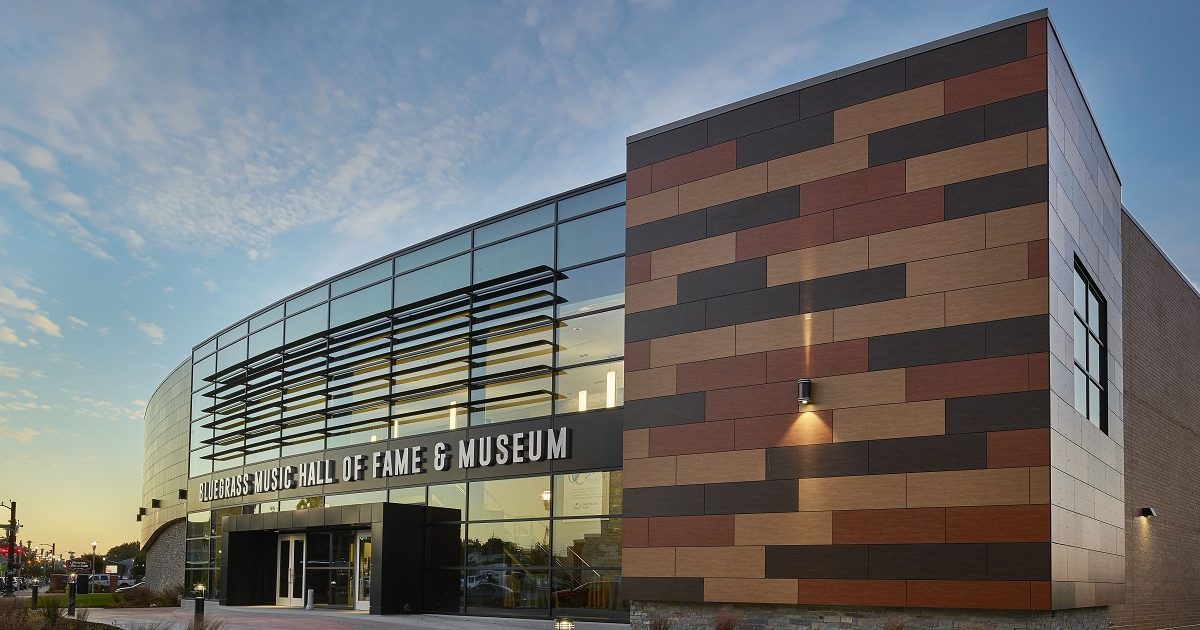
Just under an hour north of Central City is the last stop of our Kentucky Music Trail tour at the Bluegrass Music Hall of Fame & Museum along the banks of the Ohio River in Owensboro. The latest jewel of Owensboro’s transformed downtown, the $15.3 million building opened in October 2018 not only houses the museum and hall of fame, but also the 447 seat Woodward Theatre, a gift shop and several private event spaces along with a 1,500-seat outdoor amphitheater to boot.

When it comes to the museum, the biggest of bluegrass fans could easily spend a day diving into everything the facility has to offer. A self-guided audio tour will inform you on the ins and outs of each exhibit, the roots and impact of artists to bluegrass music, the nuances of the music and more, helping to fully immerse and indulge visitors in the music. On display are items from the likes of Rhonda Vincent, Bill Monroe, Billy Strings, Sam Bush, The SteelDrivers’ fiddler Tammy Rogers, Flatt & Scruggs, The Steep Canyon Rangers, J.D. Crowe, Hee Haw, bluegrass’ cinematic coronation O Brother, Where Art Thou? and more.


Other facilities in the museum include a pickin’ parlor where guests can play on pre-tuned guitars, mandolins, banjos, upright bass and more along with a transcribed and searchable interview database provided in partnership with the University of Kentucky’s Louie B. Nunn Center for Oral History, a massive display honoring banjo maker Jimmy Cox and the Hall of Fame itself. The prestigious space contains 68 plaques honoring those instrumental to bluegrass from its roots to its golden age and everywhere in between. Much like the museum, it offers a tremendous look back at the genre’s roots, where it is now and how it got there.

The same could be said for all of these destinations. I was already in love with my home state prior to visiting all of these places, but after having done so I’ve grown an even greater appreciation for the state, its musical roots and trailblazing artists. I’m confident that you will too upon making the trip for yourself.

Growing Up in Bluegrass, Carly Pearce and Sonya Isaacs Come Full Circle

Carly Pearce and Sonya Isaacs can both trace their musical roots back to bluegrass, even as their individual careers have introduced them to fans beyond that genre. A rising country star, Pearce is a native of Taylor Mill, Kentucky, who just released her third album, 29: Written in Stone. She cites Isaacs — a sterling vocalist and instrumentalist in the gospel group The Isaacs — as one of her biggest vocal influences. Meanwhile, the Isaacs salute some of their own favorite songs with The American Face, a new album blending new material and well-chosen covers. These artists’ professional paths converged this fall when Pearce and, later, The Isaacs, were welcomed into the cast of the Grand Ole Opry.

Calling in to BGS, Carly Pearce and Sonya Isaacs converse about their formative years as musicians, their education in bluegrass harmony, and their immediate response to “Easy Going,” a cool collaborative cut on 29: Written in Stone.

BGS: Let’s start by talking about “Easy Going.” Carly, what was it about the song that made you want to bring in Sonya and Ben Isaacs to sing with you?

Pearce: When I was writing this song, I could hear the harmony. I grew up loving music and harmony and all of those things. As soon as we finished writing it and knew that we wanted it to be on the project I just heard The Isaacs. I grew up loving them and loving their harmonies. Nobody sings harmony better than the Isaacs family, so I asked Sonya.

Sonya, what did you think when you first heard the song?

Isaacs: I love Carly’s voice, too, and I was like, “Well, I’m sure anything that she wants us to sing on will be amazing. And knowing how she loves harmony singing, I thought, “This is gonna be really fun.” Of course, she’s one of the most incredible female vocalists of all time, I think. So, when she played us the song, I flipped out over it. I absolutely loved the song, and I was like, “I can’t wait to get in the studio!” … It was a good a vocal exercise, a good stretch! [Laughs] And it was a challenge because she’s so good, but that’s my favorite kind of session. We had a blast and I love the song.

I like the arrangement because you’re giving the musicians a chance to step out and do what they do best. It feels like a band record in some ways.

Pearce: Yeah! They were all so inspired in the studio by the song and I remember telling Shane McAnally and Josh Osborne, my producers, “Hang on, hang on, and let them do their thing.” I love instrumental bluegrass music, so I wanted to have that element and that feel in the song.

I do want to explore the bluegrass background that you both have. Sonya, can you kind of tell me how bluegrass fits into your overall musical direction?

Isaacs: Yeah. Our dad has been playing bluegrass all of his life. He’s 74 now and he grew up loving bluegrass. The Stanley Brothers, Bill Monroe, all of the legends of bluegrass. Dad loved it first, and when Carter Stanley passed away, my dad actually filled in for him with Ralph for a while and sang Carter’s part. He really fit that style. Dad always instilled a love for bluegrass music, especially traditional bluegrass music, into us kids. He taught us how to play our instruments. He was very key in teaching us the first things we ever learned. Over the years, with our own writing and different influences and artists that we’ve discovered along the way that had a little more of a contemporary sound, our style morphed and changed a little bit away from the more traditional bluegrass sound, but it’s always been the root of everything that we’ve ever loved.

Let’s talk about your dad a bit because the Isaacs just won an IBMA Award for a recording of “Garden Tomb,” which he wrote. I’m curious how that song came back into the forefront.

Isaacs: Dad moved to Kentucky about 20 years ago after he and Mom divorced. He hasn’t really traveled with us or been in the recording part of what we do for all those years. But, of course, he made pop-up appearances when we were around. So, Joe Mullins reached out to us — we love Joe Mullins and the whole Mullins family — because he was doing this project called Industrial Strength Bluegrass and wanted the Isaacs to be a part of it. [The project was named IBMA Album of the Year in September.] Joe has always loved the song “Garden Tomb” that my dad wrote many, many years ago. It was one of our earlier hits that we had many years ago. So, we thought it would be a good idea to do that song.

Our dad is, to me, one of the most underrated legends of bluegrass music. Mainly I think because he chose to do gospel instead of mainstream bluegrass, he was overlooked a lot. So we said, “We’ve got to get Dad in here to sing on this.” And then we decided to add the Oak Ridge Boys, to give it even more of an inclusive feeling. They agreed to come in and they were so proud of it. And my dad felt so honored that it was his song that was on this project. We’re very proud of this whole album — and to be from Ohio. This whole album is artists that are from Ohio or lived in Southern Ohio. It was a full-circle thing for us.

Carly, I know you joined a bluegrass band around the age of 11, right?

Pearce: I did, yeah. I sang in a bluegrass gospel band. That’s how I got my start on stage, outside of the childhood talent shows and things like that. I fell in love with it and feel like I understood what it meant to really be able to sing. I learned a lot of things in those years I was in that band, traveling around and watching bands like the Isaacs. There is no faking that harmony in that music! I think it made me a better singer today because of it.

You’re both known now for singing with other people. Carly, you’ve had a couple of hit duets, and Sonya, you’ve been singing with your family for a long time. Did bluegrass help you build that foundation, in terms of being able to blend your voice with another voice?

Isaacs: Absolutely. Anybody that can sing the third part with the Louvin Brothers, or with Ralph and Carter Stanley, it really teaches you to sing harmony and to find the part. You can listen to a Ralph Stanley song and hear all his vocal licks, and you can compare it to a Mariah Carey vocal lick. Even though they’re completely different styles, they’re both working their vocal cords and it takes a great skill and talent to be able to do the runs and licks that they do. So, absolutely, growing up singing along with those old records and finding that third part was very instrumental in me learning to sing harmony.

Pearce: For sure. The joy, for me, of singing is sometimes getting to collaborate with other vocalists and people that I love and adore. I’m such a fan of their voices. Sonya knows this, but so much of what I feel like people know my voice could be — kind of the flip into my head voice — is because I was trying to emulate Sonya’s voice when I was growing up, going to watch her sing. That’s why singing with her is so special for me.

Isaacs: Aww. It’s crazy because… how old are you Carly?

Pearce: I’m 31.

Isaacs: So, I’m 16 years older than her. It’s so funny for me to hear her say that she grew up listening to the Isaacs, and emulating me, because I don’t feel like I’m that much older, but I am. I’m just in denial, I guess, but I am so honored that she would say that! [Laughs]

Speaking of influences, Carly, you have Patty Loveless on your record, singing with you on “Dear Miss Loretta.” What was going through your mind when you heard her voice come in on that song?

Pearce: Oh, I sat in my car and bawled my eyes out. Patty and Sonya are two of my biggest influences and to have them be so gracious to be a part of my album, it’s something you dream of.

And it’s a song about Loretta Lynn no less. You really went for it, making Kentucky proud. Growing up, were you pretty well aware of the bluegrass history in Kentucky?

Pearce: Oh, for sure. My grandpa played clawhammer banjo and I grew up listening to Flatt & Scruggs and Bill Monroe and Ralph Stanley. I definitely understood how many people come out of the state of Kentucky, like the Judds. I think that’s where I really started to fall in love with music — by listening to people who came from Kentucky.

Sonya, on The American Face record, you have six songs from the past and an equal number of new songs. Are there any of those that you’d want a bluegrass fan to check out?

Isaacs: The instrumentation on this record, and that we’ve always done, leans toward that contemporary acoustic sound with the addition of a few extra instruments like piano. But our roots are always going to be that acoustic sound, and that’s how we are live. But I think “We Can Work It Out” — the Beatles cover that we did — is very acoustic and fun. We have a song “More Than Words” that was originally recorded 30 years ago by a rock ‘n’ roll group called Extreme. We did that stripped down with just upright bass, some snaps and vocals. I guess it’s not really considered a bluegrass song but the vocals are definitely influenced by that. There are quite a few songs on here that the bluegrass fans would really, really like.

It feels like you’re both having this moment, where you received an invitation to join the Grand Ole Opry and you’re winning industry awards. People are really noticing both of you right now. What are you enjoying the most about this time in your career?

Pearce: I’m sure that Sonya would say the same thing, but moments like becoming a member of the Grand Ole Opry — that’s something that I wanted and dreamed of and hoped for my whole entire life. And now to say that I am a part of that family is so surreal for me. All of these things, the childhood dreams, are coming true. You hope that when you’re writing music and singing and doing all of these things that it’s impactful and that people are going to care. And the fact that I feel like people care is so special.

Isaacs: Ditto to that. That’s a great answer. Again, it goes back to growing up. Dad instilled a great love for bluegrass music but hand-in-hand with that is that old classic country sound. I think nowadays, the classic country would fall more into a bluegrass category than even current country, because it’s changed and evolved so much since those days. Dad always instilled in us in love for the Grand Ole Opry as well, so it was full-circle again to be inducted and to be an Opry sister with Carly. We’ve known her for years and we’ve written together and we go way back. It is a really neat time to get to share these moments.


Photo credit: Nicole Sherwood
What Amythyst Kiah Is Really Singing About in “Black Myself” (Part 2 of 2)

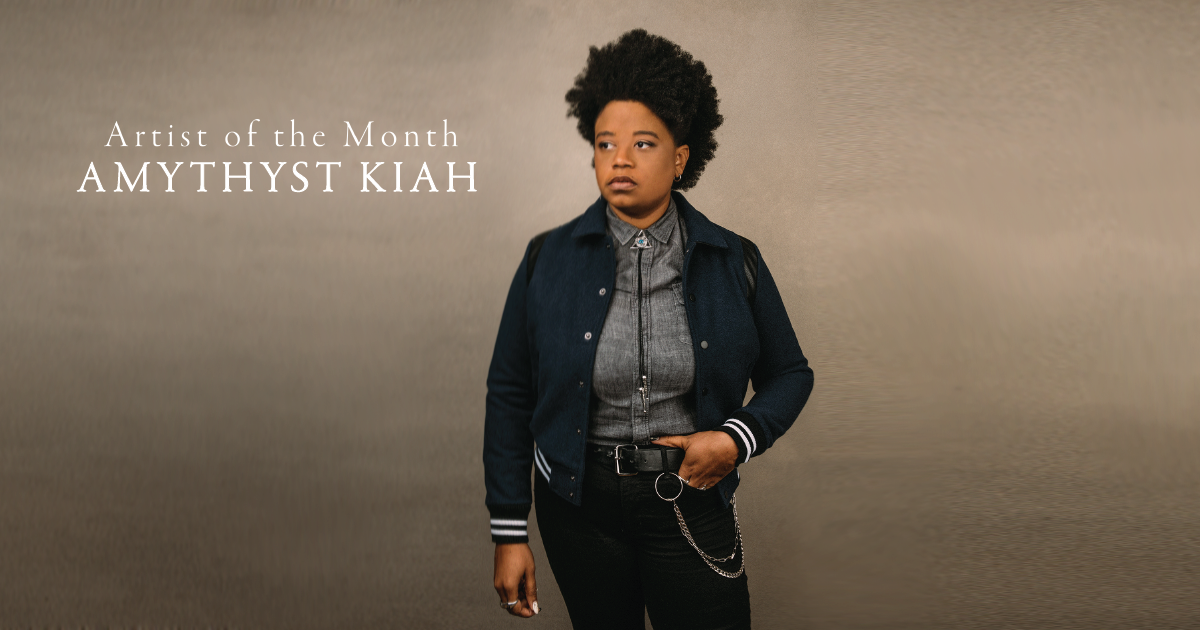
When Amythyst Kiah was a teenager in the suburbs of Chattanooga, Tennessee, she wanted to be “the guitar-playing version of Tori Amos.” Locked away in her room with her headphones pulled over her ears, poring over liner notes and listening intently for every nuance in her favorite records, she found solace in the way Amos told her darkest secrets in her songs and how she turned that vulnerability into something like a superpower. It made her feel less alone, especially as a young, closeted Black girl in a largely white suburb. Tori Amos helped her survive adolescence.

Kiah didn’t grow up to become any version of her hero. Instead, she simply became herself. Her new solo album, Wary + Strange, ingeniously mixes blues and folk with alternative and indie rock, devising a vivid palette to soundtrack her own songs that tell dark secrets. It’s one of the most bracing albums of the year, grappling with matters both personal (her mother’s suicide) and public (the struggles of Black Americans). “Now, when I’m in my mid-thirties,” says Kiah, “it’s amazing to make a vulnerable record and then have people at my shows tell me that my music helped them heal, helped them get through some hard times. To have someone connect with my music is really powerful.”

Editor’s Note: Read the first half of our BGS Artist of the Month interview with Amythyst Kiah here.

BGS: These songs are rooted in your own life and your own experiences, but they do seem like there is something universally relatable in them. Is that something you were thinking about or striving for?

Kiah: Yeah. To have someone connect with my music is really powerful. But that’s been hard to process that idea, because for the longest time I had so much social anxiety and depression and low self-esteem. I didn’t think that much of myself and couldn’t imagine that anybody really cared about me. It’s all stuff related to mental health. Obviously there are people who cared about me. I just couldn’t see it. Now, I’ve come around and maybe fully grasped my value as a person and what I have to offer the world, and that has been very reaffirming. I have a better sense of who I am and why I’m here. And it feels good to make music that helps people get through hard times.

What is it like to revisit the tough times in these songs night after night?

I’ve spent some time thinking about that, and I don’t really know how I’m doing it, to be perfectly honest. A big part of it is that I spent a really long time repressing my emotions and keeping my feelings to myself. So writing a song about how I’m feeling is a sign that I’ve processed it. Not that I’m moving on or I’m done with it, whatever I might be writing about. But I’ve confronted it. I’ve learned from it. And now I can continue with my life and move forward.

A big part of my life has been living in the past and not being fully present in the moment. In order to be present, you have to be able to process stuff that’s happening to you in that moment. Otherwise, you make decisions based on something that happened before. So, a song is a representation of me processing something and understanding what happened to me. Singing that song night after night, it doesn’t feel like I’m necessarily reliving it every time. Because I’ve already processed it. That’s my working theory right now. It might change.

That’s something I think about a lot, because as a listener I can play a song based on the mood I’m in. But as an artist, you’re locked into these songs. You can’t not play them.

I get what you’re saying. The way people listen to music is really fascinating to me. My partner and I, we approach music very differently. My approach has always been to listen to things that reflect my mood. When I was younger, that meant listening to a lot of really sad, depressing songs. Somehow that made me feel good. I’m a very critical listener of music and I like to listen to all the different intricacies. I’m not someone who has a vast library of music, but I’m obsessed with certain sounds and ideas so I will listen to an album and pick apart every detail.

But my partner listens to music to shut her brain off. Her favorite artists are very different from mine. She loves a lot of pop music, like Taylor Swift. To her it’s feel-good music. You break it out and sing along. But she also listens to a lot of classical music, too. She’s got that ability to go back and forth with her listening vibe. That was surprising to me at first, because I used think, “How can people listen to happy music? Don’t they know what’s happening in the world?” I would deliberately avoid happy music because I was personally insulted by it. But thanks to my partner, I can totally see that perspective where you’re listening to music that doesn’t reflect the mood you’re in because you’re trying to snap out of it.

Did that change how you listened to music?

As I’ve gotten older and my mental health has gotten a lot better, I can appreciate listening to something that is just meant to be fun. It doesn’t have to be a super serious moment. I think I learned how to be a lot less pretentious about what I listened to and why I listened to it, and I learned to be a lot less judgmental about other people’s listening habits.

Some lines in these songs sound very defiant of religion — like in “Black Myself,” when you sing, “Your precious God ain’t gonna bless me.” Can you talk about that aspect of your songwriting?

With “Black Myself,” the idea was that each verse would be from the perspective of a specific type of person. So the first verse with that line is from the perspective of an enslaved person. They’re singing about wanting to jump the fence, wanting to be free, wanting to be with the one they love. If an enslaved person had a relationship or a marriage, it was never legally recognized. There was always a chance that they might get sold to different people and they’d never see each other again. Whatever bonds they had could be broken, like they were just cattle. The line about “Your precious God ain’t gonna bless me,” that’s a direct reference to the way that pro-slavery people used Christianity as a way to justify enslaving people.

There was a Bible specifically written for enslaved people — it was even called the Slave Bible — and the people who edited it made sure to only leave in the verses that talk about being obedient. All the verses that talk about autonomy and freedom were removed. The sole purpose was to get enslaved people to be content being slaves, so they wouldn’t revolt. But they were basically saying, “God wants you to be enslaved. He wants you to serve your master. He wants you to be treated like a subhuman.” That is not a God that I would ever want to believe in or ascribe to. That line is that character saying that’s wrong.

I’ve had one or two instances where someone got upset at that line, because they felt like I was being disrespectful to God without really understanding the context in which it’s being said. But I don’t agree with that. There are people all over the world with different belief systems, and at the end of the day, if what you believe in makes you a better person and makes you have respect for humanity, that’s wonderful. If you believe in humanity, that’s what important to me. But why would God be OK with telling someone they have no freedom? But any time you make art, there’s always going to be people who see one thing but not everything else surrounding it. And they base an opinion on that. Not everybody’s going to understand the whole picture.

I read about your performances in Europe, where the crowd would sing “Black Myself” back to you. It definitely seems to reinforce that idea of having a conversation with the song.

I was at the Cambridge Folk Festival with Rhiannon [Giddens], Yola, and Kaïa Kater. We put together a set where we’re singing our own songs and then singing harmonies for everybody else’s. There had to be 500 or 600 English white people in this tent, and it was the first time I’d really noticed other people singing the song or singing that line, “I’m black myself.” I remember thinking, “What planet are we on?” One of my biggest reservations about that song was that people would hear it and think, “Oh, that’s just for black people.” But to me, when someone’s telling a story, it’s meant for everyone to hear. Systemic racism is something that affects everybody in different ways, so we all need to be part of the conversation if we’re going to make things better and look out for each other.

Did you get any other negative responses to the song?

My big concern was that there would be some backlash from white people who weren’t really listening to the song or thinking about it. I was afraid they’d try to make a point like, “If this was called ‘White Myself,’ you’d be canceled.” And there have actually been some comments like that, which completely disregards the fact that the song is about Blacks. It’s about overcoming adversity despite being Black. So if someone can’t hear the words of the song and actually understand what’s happen, that says more about them than it does about me or the song. So I have no apologies for it.

But there are white people who understand what the song is about and they’re singing in solidarity. They know that it’s about human experience. And just because you didn’t personally experience some of this stuff doesn’t mean you’re not allowed to sing along with it. I had a similar conversation the other day with somebody about the song “Coal Miner’s Daughter” by Loretta Lynn. I’m not a coal miner’s daughter. I didn’t grow up in the coal mines. But I love that song and I love to sing that song. It’s a great song about someone else’s experiences. Empathy is such an important quality in that regard and we need allyship in order for things to get better.

Editor’s Note: Read the first half of our BGS Artist of the Month interview with Amythyst Kiah here.


Photo credit: Sandlin Gaither

The BGS Radio Hour – Episode 203

Welcome to the BGS Radio Hour! Since 2017, the Radio Hour has been our weekly recap of all the great music, new and old, featured on the pages of BGS. This week, we’ve got music from CeeLo Green to Loretta Lynn! Remember to check back every week for a new episode.

APPLE PODCASTS, SPOTIFY

Loretta Lynn feat. Margo Price – “One’s On The Way”

Loretta Lynn’s original cut of this song made it to No. 1 on the charts in 1971. When Margo Price teamed up with Lynn to celebrate the latter’s 50th anniversary of “Coal Miner’s Daughter,” Price chose this song specifically, suggesting how legendary it was for Lynn to have sung about women’s rights and birth control in the country music of the ’70s. It’s still legendary today.

Todd Snider – “Turn Me Loose (I’ll Never Be the Same)”

“Turn me loose, I’ll never be the same!” is a phrase that rodeo cowboys used to yell when they were ready – something Snider first heard from Jerry Jeff Walker, but fitting himself perfectly. He asked the cosmos to provide a rock to put is foot on, and so the story goes, the new album from Todd Snider: First Agnostic Church of Hope and Wonder. 

DL Rossi – “Tumbling”

From Grand Rapids, Michigan, DL Rossi brings us a song from his upcoming album, Lonesome Kind. It’s a kind of youthful innocence, warming up to the harsher realities of life. And while we can’t opt out of our hurtful experiences, as Rossi suggests, we can share them to encourage one another.

Aaron Burdett – “Arlo”

North Carolina-based singer and songwriter Aaron Burdett compiled this song by noting quotes that his friend Arlo would say, collecting them for over 10 years. Arlo isn’t necessarily the character in the song, Burdett says, but character, someone who always has a bold thing to say.

CeeLo Green – “Slow Down”

CeeLo Green brings us a video for “Slow Down” from his latest album, CeeLo Green is… Thomas Calloway. From the writing of the song, to the recording and then making of the video, it was a completely expressive process for Green, who called it an “out of body experience.” Ironically titled, the song pulls the listener even closer into the climactic height of the record.

Natalie D-Napoleon – “Gasoline & Liquor”

Driving through the rural Mojave, D-Napoleon passed a sign that read “Gasoline and Liquor.” While she knew it would be a song, she thought it sounded like a man’s song, one written via passing lines back and forth with her husband. The video reflects the landscape of the “Wild Wests” of both the American desert and Western Australia, the places between which this artist splits her time.

Danny Paisley and the Southern Grass – “Date With an Angel”

Danny Paisley is the current reigning prince of Baltimore-D.C.-area bluegrass, a scene with rich history dating back to the 1950s. This week, Paisley and his band the Southern Grass bring us a song from their upcoming release, Bluegrass Troubadour. 

Aoife O’Donovan feat. Kris Drever – “Transatlantic”

Aoife O’Donovan is no stranger here at BGS, or anywhere in the roots community for that matter! Her work with artists like Crooked Still, I’m With Her, and the Goat Rodeo Sessions proves why that is. This week on BGS, she teams up with Scottish artist Kris Drever to bring us a message that we’ll all be together again.

Brigitte DeMeyer – “Salt of the Earth”

BGS caught up with Brigitte DeMeyer from San Francisco this week on a 5+5 – that is, 5 questions, 5 songs. We talked musical inspirations, songwriting techniques, and her mission statement: being herself.

Will Orchard – “Rita”

For Boston-based Will Orchard, this song is about trusting impulses, and the constant questioning of whether or not those feelings are valid. Written on tour in two parts separated by almost year, Orchard was able to combine them with the perspective of time, earning a place on his newly released album, I Reached My Hand Out. 

Helena Rose – “What’s Killing You is Killing Me”

Helena Rose wrote this song while struggling to tell a loved one how she felt about their addiction. Rose offers this song to others who have loved ones battling addiction, giving hope to the struggle, and showing that there is a light at the end of the tunnel.

Valerie June – “Smile”

As March has slipped away and we welcome April, we bid farewell to our March Artist of the Month, Valerie June. This song comes from her latest album, The Moon and the Stars: Prescriptions for Dreamers.

The Bones of J.R. Jones – “Bad Moves”

In celebration of his latest album, A Celebration, we caught up with the Bones of J.R. Jones for a 5+5, talking about performance memories, art forms, and songwriting techniques. Jones’ curated playlist brings us everything from Nina Simone to Bruce Springsteen to the White Stripes.

John Smith – “Friends”

The pandemic was hard on us all, no doubt, but for Wales-based John Smith, it just kept bringing the punches. Trying to make sense of it all, Smith brings us The Fray, his latest album in a 15-year career, teaming up with artists and friends like Sarah Jarosz and Bill Frisell.


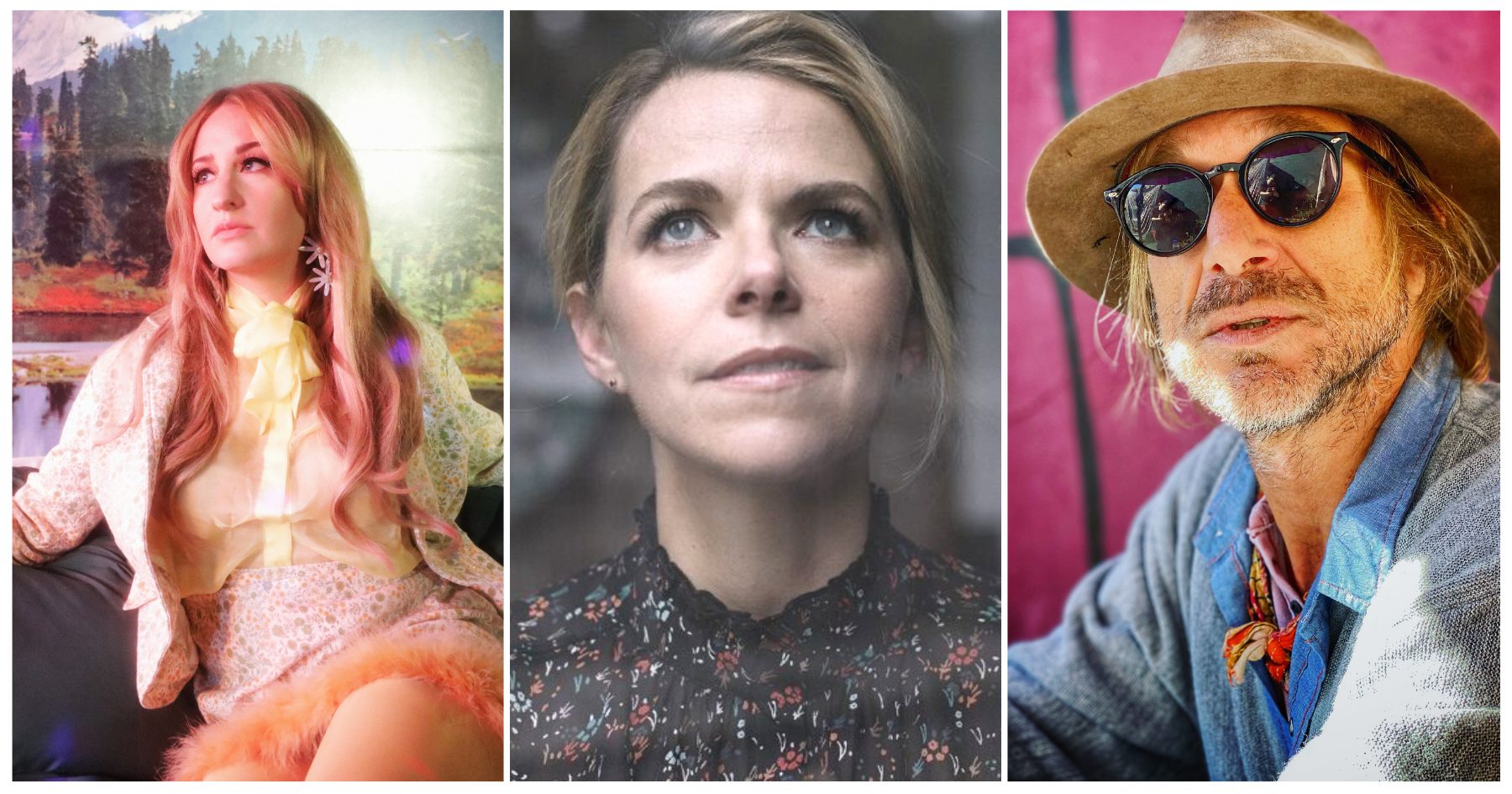
Photos: (L to R) Margo Price by Bobbi Rich; Aoife O’Donovan by Rich Gilligan; Todd Snider by Stacie Huckeba