BGS Wraps: It’s the Rootsiest Time of the Year

Each year, the BGS Team likes to “wrap up” the year in music by featuring holiday, seasonal, and festive tunes and songs throughout the month of December. It’s a perfect way to generate holiday cheer while shining a light on some of the high quality new – and timeless! – seasonal music we’ve got playing on repeat each winter. And, it gives us the chance to infuse our veteran/stalwart holiday playlists with some new life, too.

This year, we’ll be sharing songs, albums, shows, and events each day for the first three weeks of December, a musical bridge to bring us to the peak holiday season, the end of one year, and the beginning of another. Check back each day as we add more selections to these weekly posts, highlighting roots music that will soundtrack our solstice, Christmas, Hanukkah, Kwanzaa, and New Year.

What are you listening to this time of year? Let us know on social media! You can scroll to find our complete BGS Wraps playlist for 2024 below. Check out Week 1 of BGS Wraps here and Week 3 of BGS Wraps here.


Megan Moroney, “All I Want For Christmas Is a Cowboy”

Artist: Megan Moroney
Song: “All I Want for Christmas is a Cowboy”
Album: Blue Christmas …duh (EP)
Release Date: November 1, 2024

In Their Words: “Well since it comes out tonight, I guess now would be a good time to let y’all know I recorded a lil 3 song holiday EP that features 2 original songs & a cover of a classic. It’s called Blue Christmas …duh.

sleigh, I guess.” – Megan Moroney, via social media

From The Editor: “Megan Moroney was everywhere in 2024 – and we certainly didn’t mind! Three CMA Awards nominations, her sophomore album, Am I Okay?, reached No. 9 on Billboard‘s Hot 200 chart, she’s MusicRow‘s Breakout Artist of the Year, and so much more. Plus, she released this excellent holiday EP, Blue Christmas …duh, in November featuring two new originals and her rendition of the classic made popular by Elvis. We adore Moroney’s brand of high-end, sequin-studded, mainstream country. Catch her and her music on the Am I Okay? Tour in 2025!”


Spencer Hatcher & Aubrie Sellers, “Mr. and Mrs. Santa Claus”

Artist: Spencer Hatcher & Aubrie Sellers
Song: “Mr. and Mrs. Santa Claus”
Release Date: November 1, 2024

In Their Words: “‘Oh, yeah, you bet. Uh… ho ho ho and stuff’ 🎄 ‘Mr. and Mrs. Santa Claus’ is out now!!” – Spencer Hatcher & Aubrie Sellers, via social media

From The Editor: “Decked out in their holiday best and performing in front of a classic Airstream trailer, bluegrass influencer Spencer Hatcher and garage country artist Aubrie Sellers play the mother and father of Christmas for their new single, ‘Mr. and Mrs. Claus.’ Throwing it back to the ’70s in more ways than one, their rendition pays tribute to George and Tammy’s cut of the song released in 1973. It combines so many things we love about bluegrass, country, and roots music – from the steel guitar and tasty harmonies to the retro trimmings and honky-tonkin’ tempo. We’re even here for the iconic knotty pine wood paneling! Perfect for BGS Wraps.”


Sierra Hull, “The First Snowfall”

Artist: Sierra Hull
Song: “The First Snowfall”
Release Date: November 8, 2024

In Their Words: “‘The First Snowfall’ is the B side from my upcoming limited edition 7” vinyl release, Holiday Favorites V1  … Can anyone guess which classic artist I discovered this song from?” – Sierra Hull, via social media

From The Editor: “Every seasonal playlist deserves a selection of songs about the season, as well as the festive holidays we celebrate during it. So we were especially excited to hear impeccable mandolinist Sierra Hull’s rendition of this Bing Crosby classic, ‘The First Snowfall,’ when it dropped last month. With a newgrass groove that skips and hops along, Hull and her crack band bring a modern glitz to the number. Don’t miss the A side of her special holiday single release, too – it’s ‘Country Christmas’ pulled from the catalog of one of Hull’s heroes, Loretta Lynn. Bluegrass winter leads to bluegrass Christmas, and we wouldn’t have it any other way.”


Blind Boys of Alabama & Jay Buchanan, “I Heard the Bells on Christmas Day”

Artist: Blind Boys of Alabama & Jay Buchanan
Song: “I Heard the Bells on Christmas Day”
Release Date: November 29, 2024

In Their Words: “Get in the holiday & shopping spirit with ‘I Heard the Bells on Christmas Day.’ Produced and arranged by Hall & Oates Music Director Shane Theriot, we sing it alongside rocker Jay Buchanan of Rival Sons.” – Blind Boys of Alabama, via social media

From The Editor: “Every holiday needs soul. Who better to provide a bit of a Christmas slow burn – besides a yule log – than the Blind Boys of Alabama with Rival Sons’ Jay Buchanan? ‘I Heard the Bells on Christmas Day’ has limitless pocket and a funky, slow dance groove. A brand new addition to our Non-Crappy Christmas Songs playlist? Most certainly! This rockin’, soulful, Americana-steeped rendition of a holiday classic is just too good.”


William Prince, “The Sound of Christmas”

Artist: William Prince
Album: The Sound of Christmas (EP)
Release Date: October 18, 2024

In Their Words: “Produced by the wonderful Boy Golden, featuring the talents of Alyshia Grace, FONTINE, Cody Iwasiuk, John Baron, Stephen Arundell, Keiran Placatka, Matt Kelly, Kris Ulrich, Austin Parachoniak, Kaitlyn Raitz, Ben Plotnick, and with beautiful artwork from Roberta Landreth, these songs were a treat to put together for you and I hope you enjoy them as much as we enjoyed making them. … Happy early holidays, folks.” – William Prince, via social media

From The Editor: “Christmas arrived right on time – in mid-October – via this delicious three-song EP from First Nations country singer-songwriter William Prince. We’ve covered Prince quite a bit over the years, relishing the plains patina and down-to-earth quality of his albums and songs. The Sound of Christmas is a bit more polished, shiny, and draped in tinsel (especially the primed-for-Times-Square title track), but the other tracks on the project, ‘Silver Bells’ and ‘Don’t Go Leaving Me (It’s Christmas Eve),’ still display plenty of that signature grit and duality. Here’s a sound direct from (what we now call) rural Canada that’s also very much ready for the mainstream.

“Something else we love about The Sound of Christmas: Prince is selling 1000-piece jigsaw puzzles of the festive, holiday village cover artwork for the EP. Adding it to our holiday gift list now!”
You Gotta Hear This: New Music From Aaron Burdett, Nic Gareiss, and More

Here’s a flock of brand new songs and videos you gotta hear! This week, our premiere round-up includes Americana, fiddle tunes, percussive dance, good country, string band excellence, and more.

Don’t miss new tracks like “Second Best,” from Americana singer-songwriter and Steep Canyon Rangers vocalist Aaron Burdett, and “China Camp,” a fiddle tune written by Paul Shelasky and performed by Amy Kassir with Jake Eddy and more. Also, Wisconsin’s own Them Coulee Boys drop “I Am Not Sad,” a song that grapples with mental health from their upcoming 2025 album, No Fun In The Chrysalis.

We’ve got some superlative videos this week, as well! Percussive dancer and folk musician Nic Gareiss dances us through a gorgeous, queer rendition of a Gillian Welch song, “Back Turn and Swing,” and alt-folk trio Palmyra have brought a live field recording of “Fried,” a song from their brand new EP, Surprise #1. Meanwhile, Eilen Jewell pays tribute to Loretta Lynn and spotlights the progress and regression of the last 50 years of reproductive rights activism with a cover of “The Pill.”

To wrap us up, we don’t want you to miss the latest AEA Session, premiered in partnership with AEA Ribbon Mics on BGS earlier this week. This edition of the series features Brit Taylor & Adam Chaffins, performing live at Americanafest last month.

It’s all right here on BGS and, certainly, You Gotta Hear This!


Aaron Burdett, “Second Best”

Artist: Aaron Burdett
Hometown: Saluda, North Carolina
Song: “Second Best”
Release Date: October 25, 2024
Label: Organic Records

In Their Words: “You might say ‘Second Best’ was a song 30 years in the making. I’ve had this line from an old David Wilcox song rattling around in my head since the ’90s. It always struck me as a phrase that could be interpreted in many different ways. So I eventually started playing with that idea and bouncing it off various scenes and situations. A year or so ago I landed on the one (or two) that ended up in the recording, along with the original Wilcox line that inspired the chorus. Some songs arrive quickly, and some arrive much more slowly!” – Aaron Burdett

Track Credits:
Aaron Burdett – Vocals, acoustic guitar
Kristin Scott Benson – Banjo
Carley Arrowood – Fiddle
Tristan Scroggins – Mandolin
Jon Weisberger – Upright bass
Wendy Hickman – Harmony vocals
Travis Book – Harmony vocals


Nic Gareiss, “Back Turn and Swing”

Artist: Nic Gareiss
Hometown: Lansing, Michigan
Song: “Back Turn and Swing”
Release Date: October 25, 2024

In Their Words: “When I heard Gillian Welch’s song ‘Back Turn and Swing,’ I was immediately drawn to the way it brings the listener into the scene of a dance event: musicians tuning up, someone cooking potluck food to pass around, the excitement in the air, folks eager to get up onto the floor. The lyrics evoke the feeling of the square and contra dances I grew up attending in the rural Midwest. At the same time, as a non-binary queer person, I feel bodily unease around how the song sets up the dualistic gender of the attendees.

“Many folk dances these days have adopted expansive and inclusive dance calls, like using ‘larks and robins,’ ‘lefts and rights,’ etc. (shoutout to Michigan’s Looking Glass and Ten Pound Fiddle contra dances, Detroit’s queer square dance, Asheville’s Old Farmer’s Ball, and Brooklyn’s Gayli). Yet I’m still compelled to check beforehand that the caller – the authoritarian voice at the front of the hall telling people what to do with their bodies – is onboard with same-sex couples dancing together or trans and genderqueer people expanding these roles. This past summer a partner and I were at a dance when someone in their 20s asked us mid-set, ‘Who is the man?’ This reminded me that there’s still work to do; inclusivity still requires advocacy and allyship to help all feel welcome in the dynamism of the dance floor.

“Speaking of dynamic, as a child I saw John Hartford and was both astonished and inspired by the soundscapes he could create; dance, music, and song all embodied in one person. I aspire towards that dance-as-music in this video, where I added a few lyrics to the last verse.” – Nic Gareiss

Video Credits: Filmed by Blake Hannahson. Audio mixed by Jaron Freeman-Fox.


Eilen Jewell, “The Pill”

Artist: Eilen Jewell
Hometown: Boise, Idaho
Song: “The Pill”
Album: Butcher Holler: A Tribute To Loretta Lynn
Release Date: October 22, 2024 (single); November 15, 2024 (album)
Label: Signature Sounds

In Their Words: “The amazing thing about ‘The Pill’ is that it still feels edgy today, nearly 50 years after its original release. Loretta infused it with so much sassy defiance that, even now, when I sing it live and reach the phrase ‘now I’ve got the pill,’ some fans pump their fists while others clutch their pearls. It still strikes a nerve, a testament both to how effective this song is and how little progress we’ve made in this country in terms of reproductive rights.

“Loretta still holds the prestigious record for the singer of more banned radio hits than all other male country artists in the twentieth century combined. And ‘The Pill’ was the most banned of all of her songs, which is saying a lot. By recording and performing it live, I hope to do my part to spread the word about the importance of public access to family planning as an integral part of a woman’s right to the pursuit of happiness. It’s hard to believe this fight is still going on, but until it’s over I’ll be here for it.” – Eilen Jewell

A note from the artist: A percentage of sales from “The Pill” will be donated to Planned Parenthood.

Video Credits: Bill Hurley at The Fallout Shelter in Norwood, Massachusetts


Amy Kassir, “China Camp”

Artist: Amy Kassir
Hometown: Durham, North Carolina. Currently lives in San Rafael, California.
Song: “China Camp”
Album: Bread and Butter
Release Date: October 25, 2024

In Their Words: “‘China Camp’ is a great tune by the legendary California fiddler Paul Shelasky. I first heard it on the 1983 Good Ol’ Persons record, I Can’t Stand to Ramble, and I’ve been obsessed ever since. While so many tunes on my album are ‘bread and butter’ fiddle tunes I grew up playing in North Carolina, I wanted to include a tune that represents the rich musical legacy of California, which has been my home for the last 10 years. I’m so thankful Paul gave me his blessing to record this tune.

“This recording features Jake Eddy on guitar and banjo, Korey Kassir on mandolin, and Carter Eddy on bass. It’s such an exciting tune to play, and we had a lot of fun bringing it to life.” – Amy Kassir


Palmyra, “Fried”

Artist: Palmyra
Hometown: Richmond, Virginia
Song: “Fried”
Album: Surprise #1 (EP)
Release Date: October 24, 2024
Label: Oh Boy Records

In Their Words: “As we have ventured into playing bigger stages and festivals, our sound has expanded significantly. While the core of Palmyra remains the three of us, we’ve been experimenting with a larger four-piece sound, as heard on the recorded version of ‘Fried’ on our new EP, Surprise #1, with Oh Boy Records. ‘Fried’ is our most ambitious acoustic experiment, starting with a drum set and a hypnotic repetitive guitar lick. Recording the song acoustically with one microphone in a field was a fun way for us to find the core of the tune. It was a challenge to see how many elements we could strip away and still keep the groove. We like to call ‘Fried’ our ‘jam band’ song, and we hope even this field recording gets you on your feet.” – Palmyra

Track Credits:
Written by Sasha Landon, Mānoa Lewis Bell, and Teddy Chipouras.
Sasha Landon – Mandocello, voice
Teddy Chipouras – Guitar, voice
Mānoa Bell – Upright bass, voice
Jake Cochran – Drums

Video Credit: Elliott Crotteau


Them Coulee Boys, “I Am Not Sad”

Artist: Them Coulee Boys
Hometown: Eau Claire, Wisconsin
Song: “I Am Not Sad”
Album: No Fun In The Chrysalis
Release Date: October 29, 2024 (single); February 28, 2025 (album)
Label: Some Fun Records

In Their Words: “‘I Am Not Sad‘ is the last song on the record and captures the theme of accepting change this record focuses on. I’ve struggled with my mental health my whole life, dealing with depression, anxiety, and issues with self worth. I’ve embraced those issues in my songwriting, hoping to shine a light on things that we all go through from time to time. We have plenty of songs that talk about these issues, but this one is the first that accepts them.

“The song is built around the phrase ‘I am not sad anymore, at least not today.’ It’s a celebration of the happiness in the moment, while acknowledging that there’s times when it’s harder. It’s about being thankful for the good times, and letting them stack up on one another for when the bad times come. It’s a declaration, a moment of catharsis, while knowing that it won’t always be like that.

“Sonically it starts sparsely, with elements of the band being added with each verse, like confidence growing in one’s self as you begin to believe. It’s self-assured, with strummed mandolin and piano a backdrop for growth. When the bridge lyrically introduces the idea that these positive feelings might not last, the musical interlude represents the choice to embrace that realization. An ethereal, almost dream-like backdrop sets up the catharsis of the last verse. When the last verse hits, it invites all the good feelings back for a triumphant jam. It’s loud and snarls in the face of the hard times. It’s meant to soar and it does.” – Soren Staff


AEA Sessions: Brit Taylor & Adam Chaffins, Live at AmericanaFest 2024

Artist: Brit Taylor & Adam Chaffins
Hometown: Hindman, Kentucky (Brit), Louisa, Kentucky (Adam); now, both call Nashville home.
Songs: “Little Bit at a Time,” “Holding On Holding Out,” “Trailer Trash,” “The Best We Can Do Is Love,” and “Saint Anthony”

In Their Words: “It was fun playing and talking about new songs on some incredible sounding AEA gear with Brit Taylor on the Bell tone sessions!” – Adam Chaffins

“Brit and Adam’s songs are personal, yet universal. They are warm in person and it’s clear they spend a lot of time together singing, playing, and writing. Their vocals weave and intertwine so effortlessly.” – Julie Tan, AEA Ribbon Mics

More here.


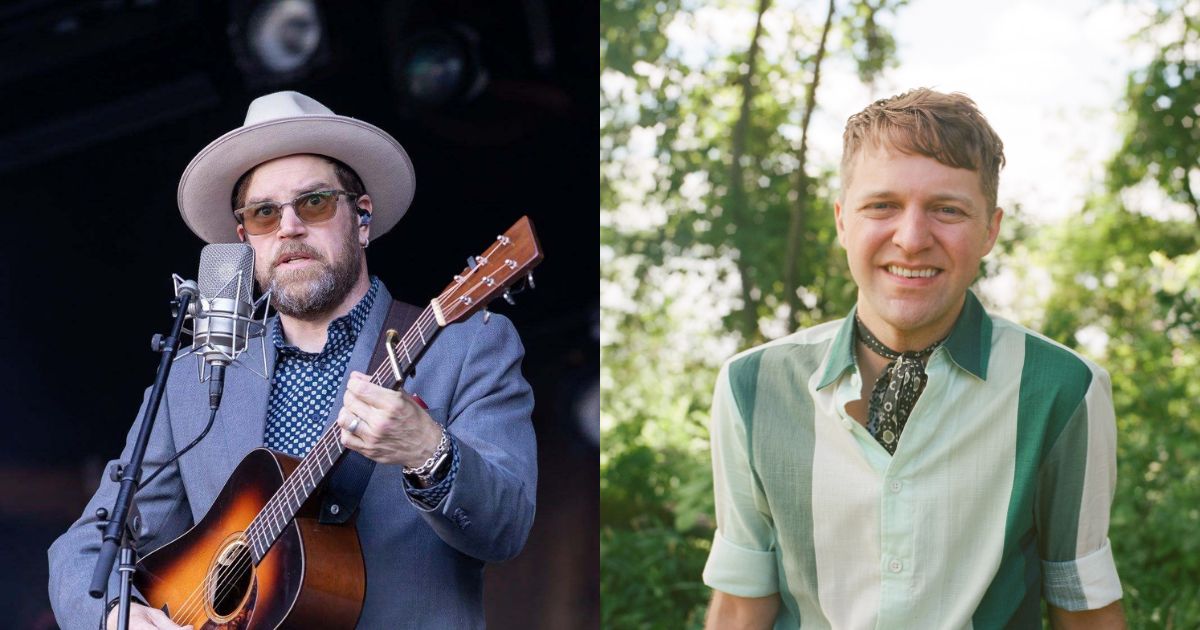
Photo Credit: Aaron Burdett by Mike Duncan; Nic Gareiss by Blake Hannahson.

These Berklee Students Helped Create Ensembles for Women and Non-Binary Folks

“Bluegrass music is a truly American artform. It reflects the culture and the time in which it’s created, and as with many traditional artforms, a preservationist stance is held on a pedestal. Bluegrass music’s history is very gendered, and when this happens, the music can’t reach its full potential.”

My teacher Laura Orshaw told me this.

There has been no shortage of amazing women bluegrass musicians to come out of the roots department at Berklee College of Music. Gillian Welch, Sierra Hull, Molly Tuttle, Bronwyn Keith-Hynes, and on and on. I’m going into my senior year at Berklee this fall as a mandolin principle, and one of the reasons I went to Berklee was how inspired I was by these women and their music.

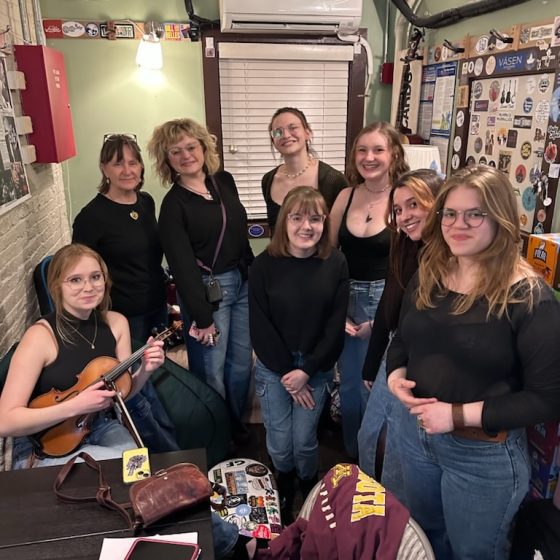
Towards the end of my sophomore year, my friend Katelynn Casper – a brilliant bluegrass fiddler – came up with an idea. She wanted to start a bluegrass ensemble of all women and non-binary folks. Katelynn approached Matt Glaser, the artistic director of the American Roots Music Program, about helping us create a class in which we would study and perform in a group. Excited by the prospect, he brought in Laura Orshaw (the Po’ Ramblin’ Boys) to be our mentor. In the past few years, there had been a strong influx of women who came to Berklee and wanted to play roots music, so it didn’t take us long to find people who wanted to join the project.

The ensemble started in October of 2023 with about 12 members, enough for us to break into two ensembles. I got to be in both groups, in one as mandolinist and the other as bassist. Our focus between both groups was to play music mostly written by women who we looked up to and were maybe overlooked.

Through the course of our year together, we moved through a catalog of songs and tunes written by our heroes and then delved into original material. We wrote songs and tunes together and on our own and fleshed them out as a band. It was an empowering experience to be a part of and it was beautiful to watch my friends explore a new kind of confidence in their music.

This past April, the American Roots Music Program sent all of us down to Washington, D.C. In June of 2022, the Smithsonian Center for Folklife and Cultural Heritage opened up an exhibit entitled Music HerStory: Women and Music of Social Change. Laura had caught wind of the exhibit and wanted us to visit, so we could witness its content and impact. The exhibit explored many women who were significantly overlooked in music, but yet the world would have been drastically different had their music not been a part of it.

We heard and read stories of when Loretta Lynn put out “The Pill” and how much of an uproar it caused; stories of how Elizabeth Cotten had to put her music on hold to raise her children and didn’t come back to it until she was in her 60s, putting out “Freight Train” and “Oh Babe It Ain’t No Lie” and still was not given much credit.

Walking through the exhibit, I couldn’t help but think about all the different musical influences I have and how so many of those influences were inspired by these women, but how that was never really talked about.

On the same trip, we also got the privilege of going to Smithsonian Folkways Recordings and learning about some of the history of their record label and how it came to be. When we were checking it out, both ensemble bands did a little recording in the archives to commemorate the trip. Playing our originals and covers written by powerful women was an incredible experience. We were surrounded by original recordings and records that made bluegrass and old-time what it is now and some of the music that brought each of us to the genres to begin with.

While we were down in D.C., we also got the chance to hang out with Kimber Ludiker (fiddle) and Avril Smith (guitar), two members of Della Mae. In both groups, the inspiration from Della Mae was so apparent – we all learned many of their songs. Getting to stand up and play their songs with them was a mind-blowing experience.

Taking part in this project has been such an inspiring experience. As a kid who grew up in the bluegrass and old-time world, there weren’t always a lot of women to play music with, so to get the opportunity to dedicate time each week to just sit down with a group of deeply passionate women and non-binary folks who are also such remarkable roots musicians was an indescribably moving experience.

A common conversation amongst us during that time was how freeing and comfortable it felt to play music in a setting like this. Whether or not you think about it, music as a whole is an intensely male dominated world – and bluegrass isn’t any different.

“Here’s a question that crossed our minds every week,” Laura said. “‘What would bluegrass be like without patriarchy or bias?’ The answer comes through music, not essays, and this project certainly chipped away at our goal.”

Being in this ensemble, I learned a lot about myself. Being surrounded by a community of women and non-binary folks playing music taught me a lot about my confidence as both a person and a musician. Being in that environment gave me an amazing place to explore.

“When Matt [Glaser] asked me to be the curator of this project, I couldn’t have guessed how impactful and enlightening it would be for me. Working in an all-women and non-binary band filled a void for all of us – creatively, academically, and socially,” Laura continued. “Students shared experiences of the not-so-glamorous parts of working in a male-dominated field. They studied the music and songs of their heroes, who sometimes got overlooked in other classes and ensembles. They wrote songs, arranged music, and tried on different leadership roles in the band.

“But most of all, they encouraged and inspired each other to be better musicians. The mutual dedication and enthusiasm were palpable in every rehearsal.”

It’s been an experience of a lifetime to learn the music I love with a group of women who want to push the boundaries of the genre. To sit with a group of people who understand the intricacies of being a woman or gender non-confirming person playing bluegrass – or even music in general – was a very comforting experience. We all grew so much as people and musicians.


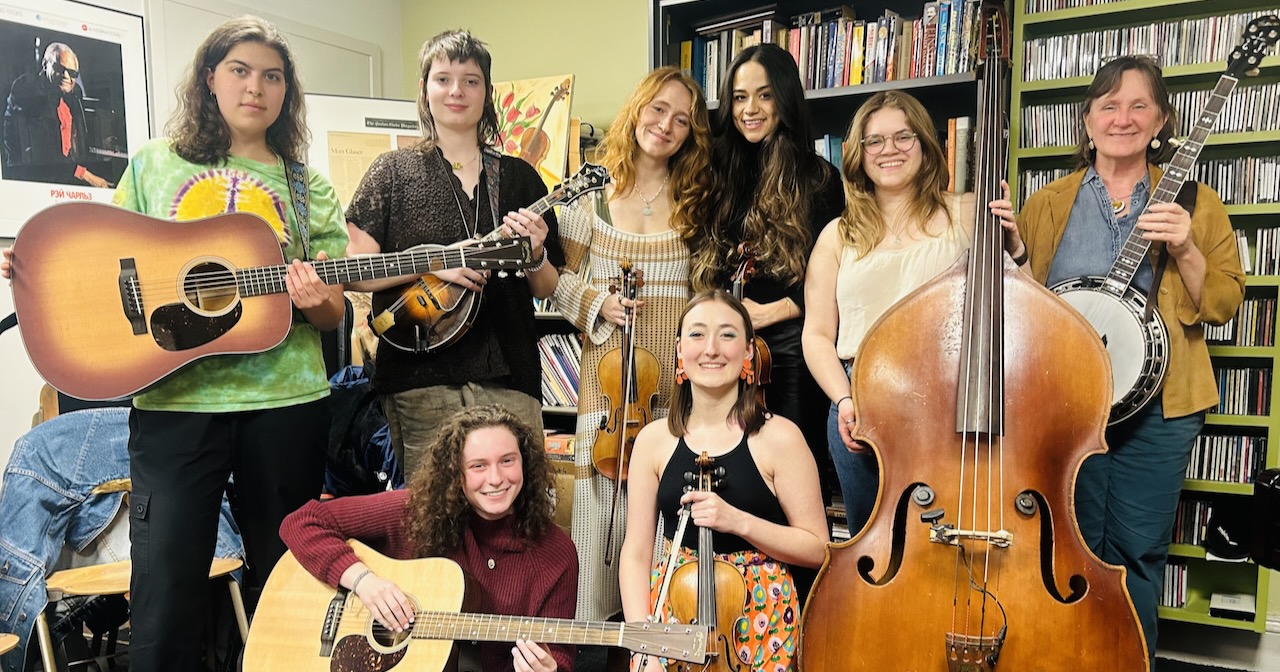
Photos courtesy of Emma Turoff. Lead image: Ensemble, No Man’s Land. Inset image: Ensemble, Ain’t That Just Like A Man.

Country’s Cool Again: Lainey Wilson’s ‘Whirlwind’ Will Blow You Away

(Editor’s Note: Be one of the first to read our Good Country email newsletter, including exclusive features, interviews, and articles by signing up on Substack today.)

Few artists have changed country music like Lainey Wilson.

The bell bottom-wearing, slow-talking singer-songwriter from small-town Louisiana has taken the genre by storm since dropping her breakout third studio album, Sayin’ What I’m Thinkin’, in 2021, and she’s reshaped the country music industry along the way. With Wilson’s highly anticipated fifth studio album, Whirlwind, due August 23, she’s bound to shake things up once again.

If you’ve engaged with just about any form of media in recent years, chances are you’re already familiar with Wilson, who also starred on the fifth season of the wildly popular Paramount Network show Yellowstone. She’s racked up a room’s worth of trophies, including a Grammy, six ACM Awards and seven CMA Awards, including the coveted Entertainer of the Year award in 2023, which made her the first woman to win the honor since Taylor Swift’s win in 2009.

And somehow, in a genre that infamously allows mostly men to dominate charts and radio air time, Wilson has found mainstream country success commensurate with her critical acclaim. She’s notched four number ones on country radio when many women can’t even get their music played. She’s lent assists to big names like HARDY (2022’s “Wait in the Truck”) and Jelly Roll (2023’s “Save Me”), and for a while seemed to be country’s favorite feature – since 2021, she’s also collaborated with Dolly Parton, Lauren Alaina, Ernest, and Cole Swindell.

So, what is it about Wilson that resonates with so many people?

Her breakout single, 2020’s “Things A Man Oughta Know,” is a great place to start. Wilson’s voice is undeniable – like Parton or Loretta Lynn, Wilson has an inimitable sound and style – and a ballad like “Things A Man Oughta Know” gives her ample room to shine. Her voice is nimble and elastic, rich and dynamic. She knows when to stretch a note for emotional effect, like when she sings, “How to keep it hidden when a heart gets broke,” bending the final syllable to reinforce its ache. Lyrically, the track epitomizes the grittier side of Wilson’s persona, as she shows herself to be as adept at love as she is “chang[ing] a tire on the side of a road.”

That tune first appeared on Wilson’s 2020 EP, Redneck Hollywood, and would be reprised on Sayin’ What I’m Thinkin’. It would prove to be no fluke, too, as the LP released to near-universal acclaim. While much of commercial country music was steeped in pop and hip-hop influences, Wilson’s music was traditional but forward-thinking, sounding like AM radio classics, but from a fresh perspective.

It seemed as though Sayin’ What I’m Thinkin’ made Wilson an overnight success, but like most artists who come to Nashville seeking a big break, she had paid serious dues. After graduating high school, Wilson moved to Nashville from Louisiana in 2011, living in a camper van while she found her footing in town.

She’d honed her musical chops as a kid, first discovering a love for music as a young child. As she grew older, Wilson’s dream of pursuing a career in music grew, too, and by the time she was a teenager she had regular gigs as a Miley Cyrus impersonator, showing up at weekend birthday parties to perform for kids.

That would be good practice for building a career in Nashville, as grinding it out at local writers’ rounds, bars, showcases, and open mic nights is, for most artists, a Music City rite of passage. Nashville’s “10-year town” reputation, which posits that an artist must keep at it for a decade to break through, proved true for Wilson, who had spotty success between 2011 and 2021 before finally clearing the hurdle.

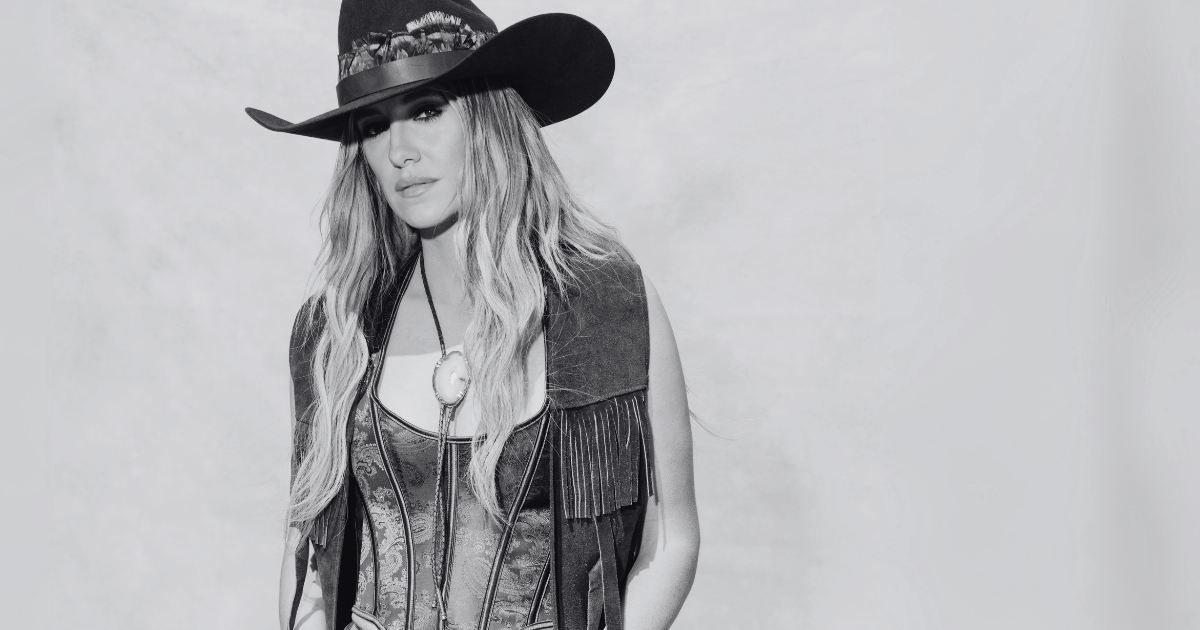
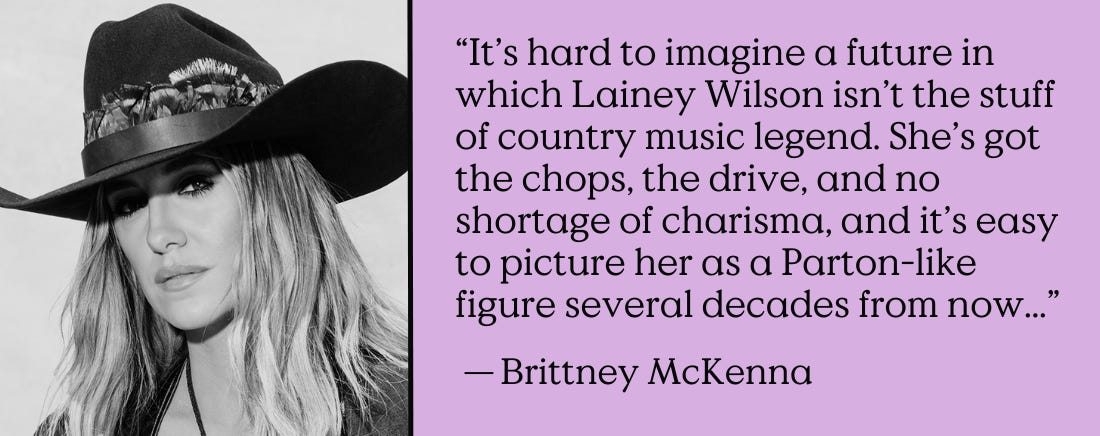
Image: Lainey Wilson. Quote: "It's hard to imagine a future in which Lainey Wilson isn't the stuff of country music legend. She's got the chops, the drive, and no shortage of charisma, and it's easy to picture her as a Parton-like figure several decades from now..." – Brittney McKenna

Wilson would follow Sayin’ What I’m Thinkin’ just a year later, eschewing a more traditional two to three years between records in favor of maintaining her momentum. Bell Bottom Country did just that and then some, catapulting Wilson from up-and-coming country star to household name.

The album, with its retro, Stevie Nicks-coded cover photo, also further developed the Lainey Wilson brand, which is more hippie than hillbilly. (Or rather, it’s both – the second track is called “Hillbilly Hippie,” after all.) Her bell bottoms quickly became part of her iconography, like Dolly Parton’s colorful makeup or Brad Paisley’s traditional cowboy hat. The imagery matches the mood of the music, as even Wilson’s more somber songs still have a sense of looseness, of freedom.

Perhaps a product of her decade-plus in the game, that ease is evident on Bell Bottom Country hit “Watermelon Moonshine,” a spiritual descendent of Deana Carter’s “Strawberry Wine” that is sure to be a country classic. Steeped in nostalgia and illustrated with vivid imagery (“kudzu vines,” “old farm ruts,” “a blanket ‘neath the sunset”), the song is a tender ode to young love, balancing youthful abandon with the melancholy of hindsight. It’s also a showcase for Wilson’s melodies, which are sticky but not cloying, and just poppy enough to catch the ear without distracting from the story.

Bell Bottom Country also birthed “Heart Like a Truck,” a massive hit for Wilson thanks, partially, to its use in a Dodge Ram commercial. The song is, blessedly, proof that a “truck song” can still be creative, as Wilson likens her aching heart to a truck that’s “been drug through the mud.” It’s also one of Wilson’s most powerful vocal performances, letting her play with dynamics before letting go and wailing toward the end of the song.

Wilson uses Bell Bottom Country to show off her broader musical ambitions, too. “Grease” is syncopated and funky, reminiscent of more recent work from The Cadillac Three or Brothers Osborne. “This One’s Gonna Cost Me” flirts with arena rock, made epic with production from Jay Joyce, famous for his work with Eric Church. And Wilson surprises with a vibrant cover of “What’s Up (What’s Going On),” the iconic 4 Non Blondes hit.

Such sonic detours hint at what might come with Whirlwind, whose title no doubt references the wild last few years of Wilson’s life. Lead single “Hang Tight Honey” is tight and catchy but sonically complex, with girl-group vocals and a rockabilly beat accompanying Wilson’s soulful, swaggering delivery. “4x4xU” recalls the mid-tempo drama of the best Lee Ann Womack songs, though with a funkier groove. And on “Country’s Cool Again,” Wilson reminds that her country roots run deep, with a deliciously twangy chorus that more than earns the song’s Garth Brooks and Brooks & Dunn references.

Despite these country bona fides, Wilson has still faced accusations of inauthenticity, particularly around her thick Louisiana accent. In a January interview with Glamour, she says, “I think sometimes, especially when people were first getting introduced to me, they heard my accent and immediately thought, ‘There’s no way this girl could be that country.’ The truth is, you can say anything you want to about me, but when you start talking about my accent, I’m ready to fight somebody because then I start feeling you’re talking about my family.”

Debates about authenticity in country music are a dime a dozen, though they tend to be directed at women artists more often than their male counterparts. You don’t hear skeptics of, say, Morgan Wallen’s accent or Tennessee roots, or of Jelly Roll’s history with incarceration. But a quick search of “Lainey Wilson fake” turns up video after video dissecting her accent, most of which barely – if at all – engage with her actual music.

For her part, Wilson seems largely unfazed by doubters and detractors. In that same Glamour piece, she later shares, “When you grow up somewhere like I did with the kind of people that I did, you can’t help but to be country. You can’t escape it no matter if you move eight hours away like I did. Country music was the soundtrack of our lives. We lived it out.”

While Wilson’s musical talents will always be her biggest draw, her larger-than-life personality is a close second. She’s a famously electric live performer, vamping across the stage and bantering with fans with such ease it seems second nature. That she does this without missing a note is what elevates her artistry – that CMA Award isn’t called “Entertainer” of the Year for no reason.

It’s hard to imagine a future in which Lainey Wilson isn’t the stuff of country music legend. She’s got the chops, the drive, and no shortage of charisma, and it’s easy to picture her as a Parton-like figure several decades from now, ushering in and supporting a new generation of country artists whose reverence for and innovation of the genre will help keep it alive.

Until then, at least country’s cool again.

(Editor’s Note: Don’t forget to sign up to receive Good Country direct to your email inbox.)


Photo Credit: Eric Ryan Anderson

BGS 5+5: Malachi Graham

Artist: Malachi Graham
Hometown: Portland, Oregon
Latest Album: Caretaker

What’s your favorite memory from being on stage?

The Portland release show for my new album Caretaker in January was both surreal and sublime, in the best way. It was a month and two days after I had emergency brain surgery, necessitated by a rare blood infection called Lemierre Syndrome. I had only just regained use of my left side in rehab, I wasn’t allowed to lift more than 10 pounds or bend over and there was a historic ice storm in Portland just starting to thaw. Honestly, it was a little absurd to play the show and keep the date, but it didn’t feel reckless, because I had a community to catch me. Bandmates who insisted on lifting my gear, physical therapists who taught me how to play guitar again, a loving partner to change the bandages on my head, incredible parents who housed me and my band through the ice storm so we could all practice together, and so many supportive faces in the audience.

Caretaker is about trying to hold it all together, on behalf of other people, whether they ask you to or not. It’s about how that gets messy, about when that’s generous, and when that’s self-serving. My health crisis turned the meaning of the record on its head for me and taught me to receive care myself, to fall apart and trust I’ll be held. I tumbled into the web of care we weave for each other, that catches us when we least expect to need it. My friends, my family, my partner, and my bandmates were all there for me in every way that night. It was hard to make it through the songs without weeping with gratitude for being alive. I’ll never forget it.

What other art forms – literature, film, dance, painting, etc. – inform your music?

I read once that the four qualities of excellent songwriting are texture, detail, wit, and truth. My very favorite songwriters are masters of all four — artists like Aimee Mann, Loretta Lynn, Eef Barzelay, Anna Tivel, and Jolie Holland.

Another art form that’s a study in the same principals? Miniature making! Lately I’ve been enthralled by dollhouse building and the creation of tiny worlds. Miniature artists pay attention to the smallest details that make something feel realistic and truthful, even if a scene is an imaginary place. The very act of building something tiny in meticulous detail is inherently whimsical and a bit absurd. It requires sharpness and ingenuity, and a scale of thinking that’s totally different than the day-to-day.

All of that feels akin to songwriting for me. I got to dabble in miniature making myself in the new music video for my song “We Made a Home,” which I built and filmed in a little yellow dollhouse at 1:12 scale. My favorite part was hand-building the tiny lifelike details of a cohabitating relationship in decline, from mini Rainier Beer cans, to mini self-help books, to mini dirty dishes. I also made a tiny Ear Trumpet Labs microphone case. (When I’m not making music, I’m the business manager at Portland microphone workshop, Ear Trumpet Labs.)

N.B., miniature making takes a lot longer than songwriting.

How often do you hide behind a character in a song or use “you” when it’s actually “me?”

This has been an evolution for me. My early forays into songwriting felt more driven by an observational, sometimes academic curiosity, influenced by poetry, history, and family stories about my matriarchal ancestors. My first EP, Selfish, includes songs inspired by the 1934 Hays Code, Marconi’s theories of radio transmission, and my grandmother cleaning out the eaves of her house. I wrote and learned a lot from other people’s perspectives before I’d experienced much life myself. I still enjoy writing from other people’s perspectives as a practice in empathy and curiosity, but I find that my most emotionally resonant songs have more to do with my own experiences. It takes a different kind of bravery and vulnerability to write in the first person, and that has felt scary to do sometimes. On songs like “Montreal” and “Before Pictures,” even if the exact thing that’s happened to the narrator hasn’t happened to me, there’s a deeper truth or feeling I’ve experienced that I can get at best through a fictionalized story.

What has been the best advice you’ve received in your career so far?

Don’t be afraid to get weirder! My friend Jamie Stillway, a masterful guitarist and fearless sonic explorer, told me this about six years ago and it really stuck with me. I was feeling a bit trapped in particular instrumental and songwriting styles, because I assumed it was what people wanted to hear from me. I used to keep my musical selves neatly divided; I play and write in a synth pop band called Small Million and as a solo songwriter under my own name, and when I was younger I was more afraid to blend those worlds or explore the space between them. My musical start was all in folk and Americana music. The tradition and depth of songwriting in those genres is still a huge inspiration to me, but I’ve tried to give myself permission to be more faithful to a song and a feeling than to any genre in particular in my arrangements. The track “As Is” was written as a straight-ahead country song, but we recorded it played on an electric guitar looped backwards, played by two people at the same time with a screwdriver as a slide. A team of magical friends and collaborators helped me rip my songs apart and put them back together again to make them so much better, stranger, wilder than I ever could have imagined.

Which elements of nature do you spend the most time with and how do those impact your work?

Truth be told, I’m a bit of an indoor kid, so I guess… the air. But really, sincerely, I do spend a lot of time thinking about the air around me and inside of me, and how I interact with it through my breath. In singing, in practicing mindfulness, in both movement and stillness, breath is the element that calls me home into my own body. That helps me to remember that the body itself is an element of nature, and our breath is the place where the wild elements of the air and the self meet.

I often find myself exploring themes of both the body and the breath in my lyrics, as a window to intuition and self-trust, on songs like “Wonderful Life” on Caretaker, or “Be Wrong” and “Lightswitch” on my last Small Million record, Passenger. This really came full circle in my recent health crisis when I found myself on heavy oxygen in the ICU, and breath became something even more precious and sacred to me. My lung capacity as a singer really ended up saving my life— I’m still unpacking my gratitude and awe of that.


Photo Credit: Kale Chesney

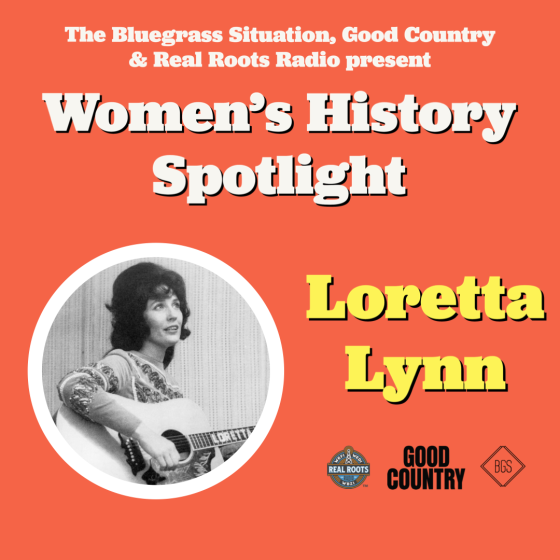
Women’s History Spotlight: Ola Belle Reed, Loretta Lynn, and More

Each year, March is Women’s History Month, and BGS, Good Country, and Real Roots Radio partnered all last month to highlight a variety of our favorite women in country, bluegrass, and roots music with our Women’s History Spotlight.

Each weekday in March at 11AM Eastern (8AM Pacific) on Real Roots Radio, host Daniel Mullins has been celebrating a powerful woman in roots music during the Women’s History Spotlight segment of The Daniel Mullins Midday Music Spectacular. You can listen to Real Roots Radio online 24/7 or via their FREE app for smartphones or tablets.

Then, each Friday we’ve hosted a recap here on BGS featuring the artists highlighted throughout the previous week. No list is comprehensive, but we hope to feature some familiar favorites as well as some trailblazers whose music and impact might not be as familiar to you.

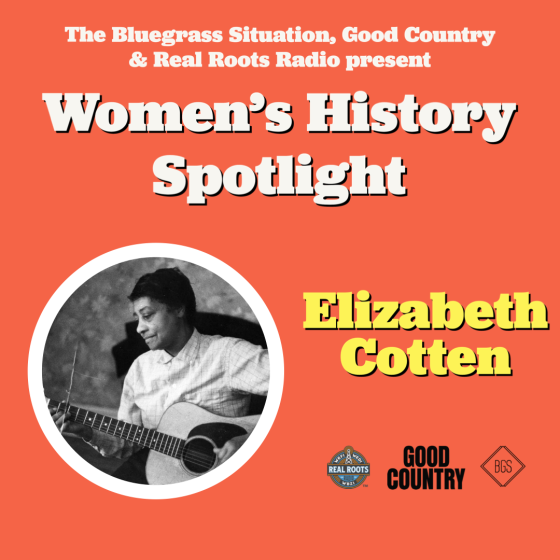
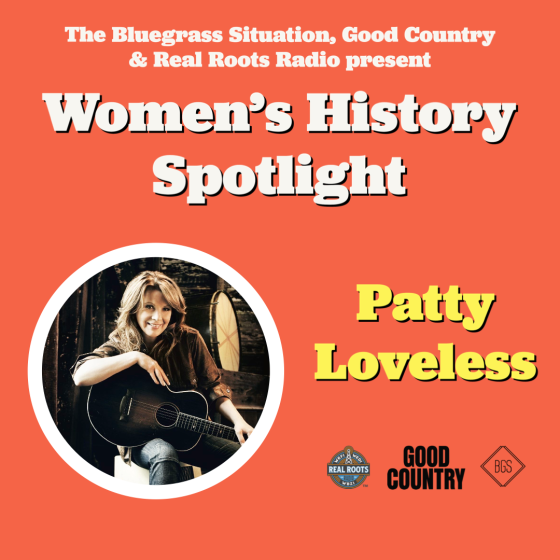
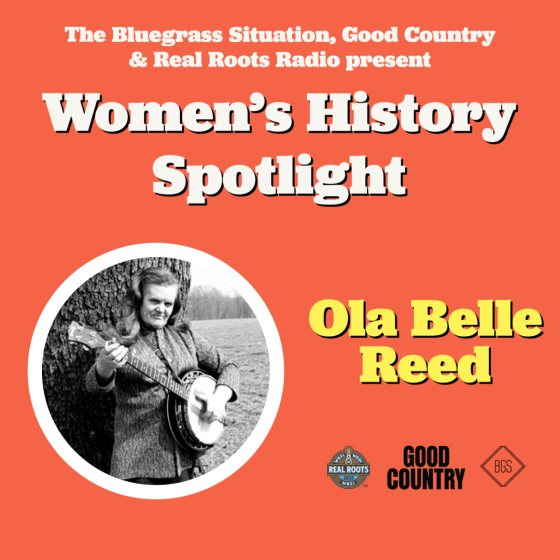
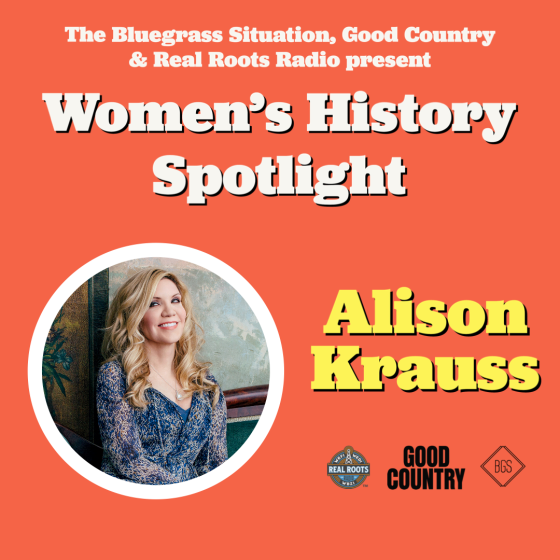
Let’s look back at March and the vibrant history of women in roots music with our final edition of our Women’s History Spotlight, featuring Elizabeth Cotten, Patty Loveless, Ola Belle Reed, Alison Krauss, and Loretta Lynn.

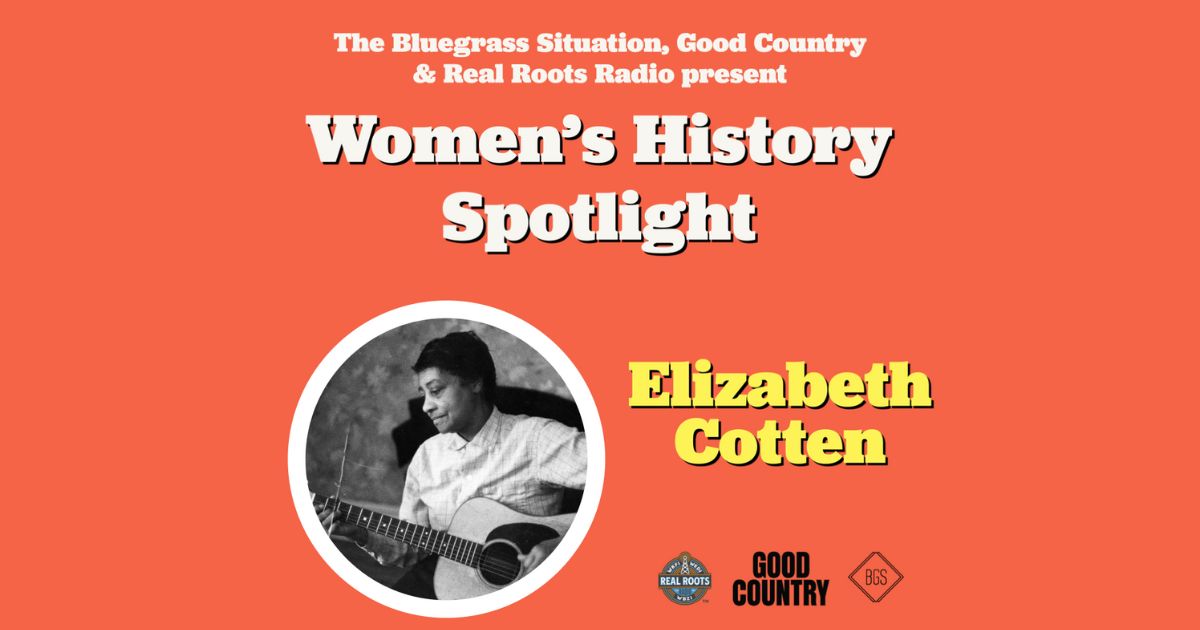
Elizabeth Cotten

Born in 1893, this North Carolina native had a profound impact on American roots music. While she learned how to play the guitar as a child, and even then began writing songs, she shelved her musical dreams and became a domestic worker, but fate had other plans for Elizabeth Cotten. Decades later (in her sixties), she became a housekeeper for the Seeger family following a chance encounter at a department store. The Seegers, of course, are known through roots music circles for the family’s reputation as talented musicians and respected musicologists, featuring Mike Seeger of the Bluegrass Music Hall of Fame, Peggy Seeger, their half-brother Pete Seeger, and more. With the family’s love for music, Elizabeth dusted off her guitar, which she hadn’t touched in decades.

The Seeger family was blown away by Elizabeth’s talent. She had a unique approach to the instrument, due to her being left-handed she would play the instrument upside-down, resulting in the strings being inverted, and allowing her to play the melody with her thumb and the bass lines with her fingers. Additionally, her signature style including some unique alternating bass lines, a technique which is now referred to as “Cotten-style.” Mike Seeger would record Elizabeth for Smithsonian Folkways, introducing her music to the world, including her original composition, “Freight Train,” which has been covered countless times, including by Bob Dylan, Joan Baez, Mac Wiseman, Jim & Jesse, Doc Watson, and more! Other hits of Elizabeth’s include “Shake Suagree” and “Oh Babe It Ain’t No Lie,” which have been recorded numerous times throughout roots music. With the popularity of the Folk Revival, Elizabeth would perform with acts such as Muddy Waters and Mississippi John Hurt, and would eventually win a Grammy in 1984, before passing away at the age of 94 in 1987.


Patty Loveless

The pride of Elkhorn City, Kentucky and a 2023 inductee into the Country Music Hall of Fame, Patty Loveless was a leader of country music’s new traditionalist movement of the ’80s and ’90s, which also saw many successes for fellow Kentuckians Ricky Skaggs, Dwight Yoakam, The Judds, and Keith Whitley. The daughter of a coal miner, Patty’s neo-traditional sound was mixed with rock and roll attitude and plenty of mountain soul. Over 40 of her singles reached the Billboard Country Singles charts, including “On Down The Line,” “Timber, I’m Falling In Love,” “I’m That Kind of Girl,” “Blame It On Your Heart,” “Here I Am,” and dozens of others.

Like many country artists (especially women), Patty’s commercial success declined at a time when the artistic quality of her music did not. Her stunning rendition of Shawn Camp’s “The Grandpa That I Know” from On Your Way Home moved my father to tears for years, and I know that he was not alone in that. For many, her pair of Mountain Soul albums are still essential listening. On these projects, she celebrates her Kentucky roots with bluegrass-flavored albums littered with special guests including Earl Scruggs, Del McCoury, Travis Tritt, Ricky Skaggs, and more. Patty’s six minute-plus interpretation of the Darrell Scott-penned hit, “You’ll Never Leave Harlan Alive,” has haunted listeners for over 20 years. Even if it never tickled the Billboard Country Singles chart, there’s a reason Chris Stapleton recruited Loveless to perform the anthem with him during the 2022 CMA Awards — because it still showcases her mountain soul at its finest.


Ola Belle Reed

Picking up the clawhammer banjo as a youngster, Ola Belle Reed brought the music she heard growing up in Grassy Creek, North Carolina with her when her family migrated to the Maryland-Delaware-Pennsylvania area. Ola Belle Reed would entertain Appalachian migrants in the region with various bands, winning them over with her powerful mountain music. (She even turned down an offer to join Roy Acuff’s Smoky Mountain Boys!) The region’s Appalachian population supported Ola Belle, founding a few of the region’s more popular music parks over the ensuing decades, including New River Ranch in Rising Sun, Maryland and Sunset Park in West Grove, Pennsylvania.

Ola Belle Reed would find a new audience on Wheeling, West Virginia’s WWVA in the 1960s. In addition to presenting Appalachian music to new audiences, her legacy includes many original songs that sound as old as the hills. Songs like “High On A Mountain,” “I’ve Endured,” and “You Led Me To The Wrong” have been recorded by Del McCoury, Marty Stuart, Tim O’Brien, Robert Plant & Alison Krauss, Jason Carter, and more! Ola Belle Reed suffered a stroke in 1987. The following year, she became the first woman to be recognized with a Distinguished Achievement Award by the International Bluegrass Music Association. She passed away in 2002.


Alison Krauss

One of the most Grammy-awarded artists of all time (27 trophies and counting), Alison Krauss’s angelic voice has taken bluegrass to new heights, while she has become one of the most transcendent vocalists of her generation, branching into country, Americana, adult contemporary, rock, and more. A member of the Grand Ole Opry (the historic radio program’s youngest cast member at the time of her membership) and the Bluegrass Music Hall of Fame (currently the youngest Hall of Famer), Alison was a bit of a violin prodigy as a youngster, becoming enamored with bluegrass when she was exposed to bands like J.D. Crowe & The New South and The Bluegrass Album Band under the tutelage of John Pennell.

She recorded her debut album for Rounder Records when she was just a teenager and by the time she reached adulthood, she blossomed into a full-blown roots music star. The success of her solo albums and records with Union Station returned bluegrass to mainstream country circles at a time when it was desperately needed, providing a shot in the arm for the genre and introducing legions of new fans to the music. Krauss joins names like Flatt & Scruggs and The Osborne Brothers as some of the handful of artists to take bluegrass into the mainstream consciousness. Her ethereal voice has also resulted in highly touted collaborations with Robert Plant, James Taylor, Kenny Rogers, Brad Paisley, Shenandoah, Don Williams, and more.


Loretta Lynn

Country music’s most awarded woman artist, Loretta Lynn completely broke the mold. Nashville had had “girl singers” before, and there had even been female artists singing songs about women’s issues, but often they had been written by men (a la “It Wasn’t God Who Made Honky Tonk Angels.”) To have a woman artist singing songs about women’s issues written by a woman was absolutely groundbreaking, and frankly, it intimidated many men in the industry. While now beloved country standards, Loretta sang controversial songs about a wife’s right to say “no” (“Don’t Come Home A Drinkin’ (With Lovin’ On Your Mind)”), birth control (“The Pill”), the stigma attached to divorced women (“Rated X”), beating the tar out of women chasing after her husband (“Fist City”), and more. Coincidentally, all of the songs I just mentioned hit number one even though they were banned by some country radios stations – except “The Pill” which peaked at number five.

In addition to songs that connected to women, her heartfelt numbers about growing up in poverty in Butcher Hollow, Kentucky endeared her to fans as well and instilled a sense of pride in folks with similar backgrounds — “They Don’t Make ‘Em Like My Daddy Anymore,” “You’re Looking At Country,” and the autobiographical “Coal Miner’s Daughter.” Her vulnerability in not only openly dealing with issues in her own marriage, but unpacking her own mental health on the big screen with the Coal Miner’s Daughter biopic opened the country music industry’s eyes to so many issues that women were wrestling with behind closed doors until Loretta Lynn. Loretta continued making fabulous music late in life (check out “Miss Being Mrs,” where she sings about being a widow), until her passing at the age of 90 in 2022. For these reasons and more – and with all due respect to Kitty Wells – there’s a reason that many country music enthusiasts view the late Loretta Lynn as the Queen of Country Music (myself included).

For our final bonus video as we conclude this fun series, here is the story behind Loretta writing “You Ain’t Woman Enough.” Loretta was as real as it gets!


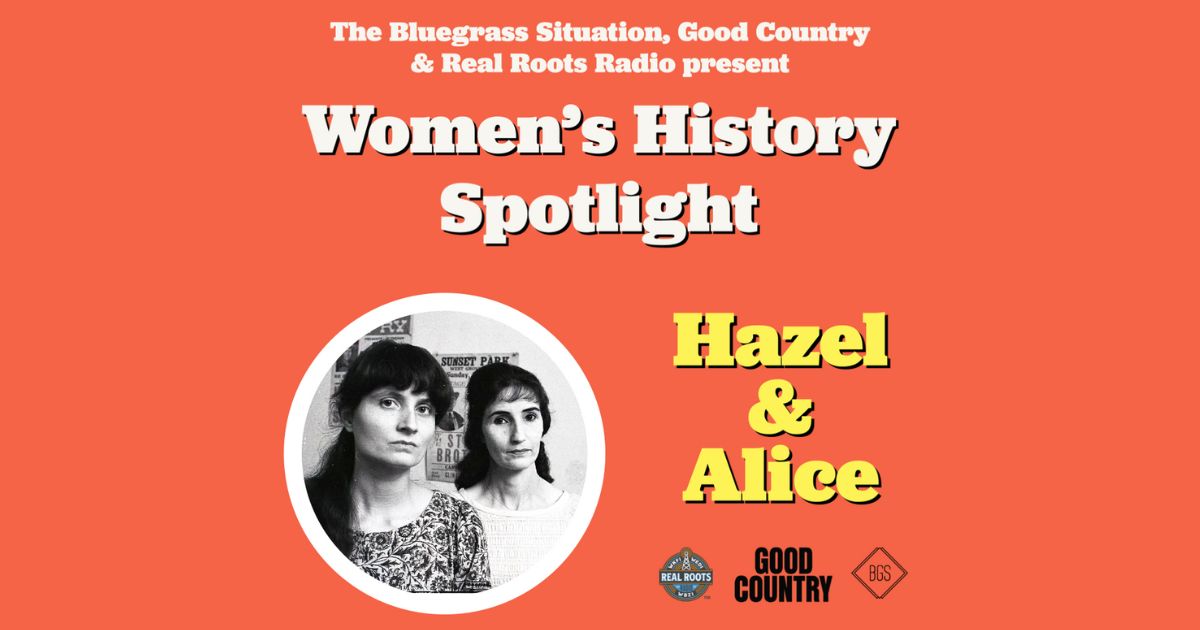
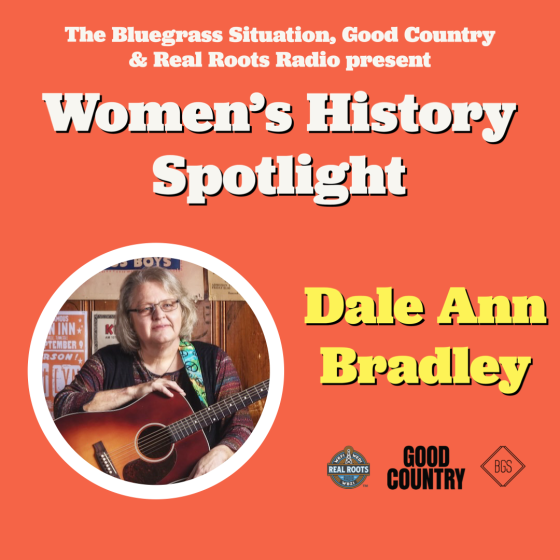
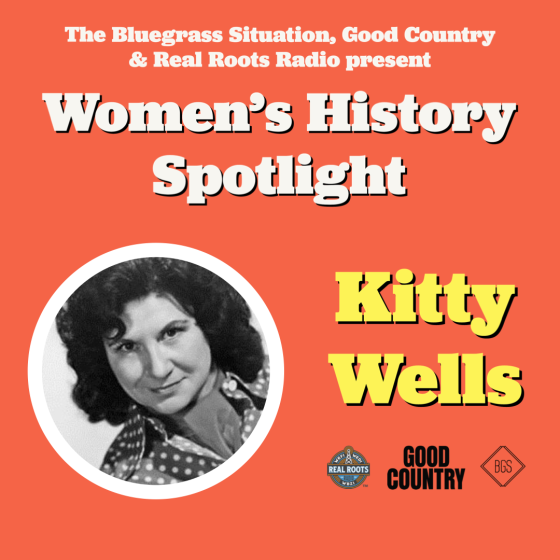
Women’s History Spotlight: Hazel & Alice, Dale Ann Bradley, and More

March is Women’s History Month, and BGS, Good Country, and Real Roots Radio have partnered to highlight a variety of our favorite women in country, bluegrass, and roots music with our Women’s History Spotlight.

Each weekday in March at 11AM Eastern (8AM Pacific) on Real Roots Radio, host Daniel Mullins will be celebrating a powerful woman in roots music during the Women’s History Spotlight segment of The Daniel Mullins Midday Music Spectacular. You can listen to Real Roots Radio online 24/7 or via their FREE app for smartphones or tablets.

Then, we will have a Friday recap here on BGS featuring the artists highlighted throughout the previous week. No list is comprehensive, but we hope to feature some familiar favorites as well as some trailblazers whose music and impact might not be as familiar to you.

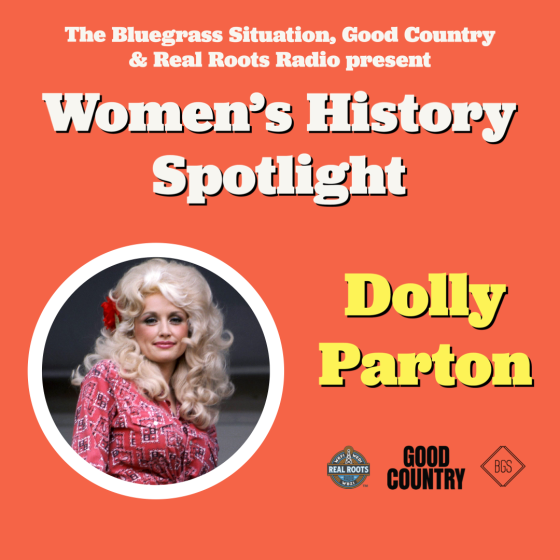
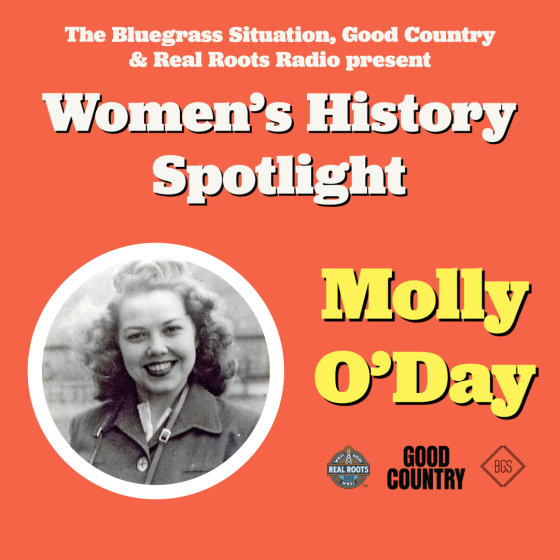
This week’s edition of our Women’s History Spotlight features musicians and artists like IBMA Award winner Dale Ann Bradley, the legendary Dolly Parton, Bluegrass Music Hall of Fame inductees Hazel Dickens & Alice Gerrard, early country hitmaker Kitty Wells, and Kentuckian-West Virginian Molly O’Day. Tune in next week for the final installment of our Women’s History Spotlight!

Dolly Parton

You knew it was coming. You can’t tell the story of country music (or American pop culture) without Dolly Parton. Growing up in Sevier County, Tennessee, she is not just the Queen of the Smoky Mountains, but quite possible the Queen of the Universe (if there was such a ridiculous title). Her rags-to-riches story will continue to be told and re-told for generations. Aside from her beautiful voice and philanthropic work (the millions of books that she gives to children through Dolly Parton’s Imagination Library is her proudest achievement), there are numerous other aspects about Dolly Parton that are remarkable.

Her business acumen is frequently praised, but it still bears repeating. Aside from her numerous endeavors (including Dollywood), it’s often worth remembering that she fought to regain control of her own career and decision-making from Porter Wagoner after her star began shining brighter than his scope of influence. (Remember, it was the ending of this business relationship that was the impetus behind Dolly writing one of her most famous songs, “I Will Always Love You.”) Call it a business decision or just genius, but Dolly’s ability to juggle embracing her role as an undeniable sex symbol and avoiding being labeled as “unwholesome” by conservative crowds has to be one of the most difficult tightrope walks in American entertainment.

Vanity Fair’s 1991 article “Good Golly, Miss Dolly did a deep dive into the dichotomy of Dolly’s role as a sort of clean sex symbol: “Dolly, in her openness, demystifies sex. ‘One of the things that makes the image work is that people understand that I look one way, but am another, that there’s a very real person underneath this artificial look,’ she theorizes. ‘It’s not like I am a joke. People can laugh at me, but they don’t make fun.’ … Indeed, Dolly Parton has become the billboard for sex without being the product itself.”

It is the way that she ensures that the “very real person” that is Dolly Rebecca Parton doesn’t get lost in the glitz, glamor, and boob jokes that is part of the reason why she is so endearing and universally beloved by folks from all walks of life; in a world where polarization is en vogue, Dolly is one of the few topics on which everyone agrees! She epitomizes the best of us.


Hazel Dickens & Alice Gerrard

Members of the Bluegrass Music Hall of Fame, Hazel Dickens & Alice Gerrard were an unlikely pair who blasted down doors for women in bluegrass. Hazel hailed from the mountains of West Virginia, while Alice was from across the country in Seattle, Washington. Alice attended Antioch College in Yellow Springs, Ohio, where she was exposed to folk and bluegrass music. While a student there, she helped coordinate bringing The Osborne Brothers to the Antioch campus, making history as the first major bluegrass concert held on a college campus! After college, she wound up in the D.C. area, becoming active in their flourishing bluegrass scene, where she became friends and musical partners with Hazel Dickens – who had moved to the region with her family to find factory work years earlier.

Hazel & Alice became some of the first female bluegrass bandleaders and recorded some classic albums for Smithsonian Folkways and Rounder Records before embarking on successful solo careers by the mid-’70s. With Hazel’s mountain sound and Alice’s more folk-oriented sensibilities, their music appealed to both traditional bluegrass fans and those who were being introduced to the genre via the Folk Revival. Their original material which highlighted a woman’s perspective were critical in bringing a voice to women in the bluegrass canon. Decades later, their music and legacy is still rippling across American roots music, with artists as diverse as Rhiannon Giddens and Dudley Connell still celebrating their influence and impact.


Molly O’Day 

Born Lois LaVerne Williamson, country pioneer Molly O’Day was born in Pike County, Kentucky. She would become a popular radio star in West Virginia by the early 1940s, eventually leading Molly O’Day & The Cumberland Mountain Folks. Her band crossed paths with Hank Williams on the radio circuit and Molly even sang quite a few of his songs on radio and later in the recording studio. Molly learned “Tramp On The Street” from Hank Williams and it would land her a recording contract with Columbia Records. (Fun Fact: Her band at the time of her first Columbia recording session featured a young Mac Wiseman on bass!)

In an era when the term “hillbilly music” was still commonly used, Molly’s music, retroactively, could have country and bluegrass labels applied to it. Her powerful voice felt just as at home on an ancient balled like “Poor Ellen Smith” as it did on soul-stirring gospel songs like “Matthew 24.” By the early 1950s, Molly and her husband grew weary of life in the limelight and essentially retired from the music business, both dedicating their life to ministry. She would record a few gospel albums for some small record labels in the ensuing years, but her final album was released in 1960. She would pass away in the late 1980s, but she left a mark on country music and earned the respect of her peers at a time when the list of female country pioneers was relatively short.


Dale Ann Bradley

Revered as one of the most heartfelt bluegrass singers of her generation, this Kentucky songbird’s career started in earnest as a member of the Renfro Valley cast in her home state of Kentucky. The Renfro Valley Barn Dance was an extremely popular barn-dance style radio program in the 1930s and it spurred the creation of Renfro Valley as a country music entertainment destination in Kentucky. This helped kickstart the careers of folks like Steve Gulley, Jeff Parker, Dale Ann Bradley, and more by the 1990s.

While at Renfro Valley, Bradley would eventually join The New Coon Creek Girls, one of bluegrass’s only “all-girl” bands at the time, and aptly named after The Coon Creek Girls, a pioneering female string band of the 1930s who also started on The Renfro Valley Barn Dance.

Dale Ann’s soulful voice, largely influence by the Primitive Baptist tradition which she grew up around, quickly gripped the bluegrass world, leading to a successful solo career for the last three decades. In addition to recording songs that hearken to those familiar with mountain people and mountain ways, the appeal of Dale Ann’s voice has led her to adapt songs from outside of the genre to her style of bluegrass, tackling tunes from Tom Petty, Bobbie Gentry, The Grateful Dead, Jim Croce, and everyone in-between! Her diverse material has led me (and many others) to the conclusion that no matter the material, if Dale Ann is singing it, I already know I’m going to like it!


Kitty Wells

Hailed as the original Queen of Country Music, Kitty Wells hit a massive reset button on the role of women in country music after the massive success of her breakthrough hit, “It Wasn’t God Who Made Honky Tonk Angels.” Written by J.D. Miller, it was penned as the antithesis of Hank Thompson’s hit, “The Wild Side of Life.” After writing the song, the search began for a woman to sing it. Kitty Wells had pursued a country career, to little avail, and had essentially consented that maybe it wasn’t in the cards for her, when she was contacted to record the song. “It Wasn’t God Who Made Honky Tonk Angels” would become the first Number One hit by solo female in country music history, and its status as one of the most iconic country songs of all time only grows.

This explosion of success led to many other hit records by Kitty Wells, and opened the doors for those who would follow in her wake like Jean Shepard, Loretta Lynn, Dolly Parton and more! You can’t celebrate Women’s History Month without honoring the gal who famously sang the line, “It’s a shame that all the blame is on us women!” (Still kind of bummed that Margot Robbie didn’t sing that line in Barbie. Seems like a missed opportunity to me!)

As an added bonus, here’s another cool version from 1993, where Dolly Parton, Loretta Lynn, and Tammy Wynette recruited Kitty Wells to join them on a new version of this country classic on their collaborative album, appropriately entitled Honky Tonk Angels.


MIXTAPE: Brit Taylor’s ‘Kentucky Bluegrassed’ Inspirations

I grew up deep in the hills of the Appalachian Mountains in Eastern Kentucky where, I’m pretty sure, that on a quiet, cool, foggy morning after the rooster crows, you can hear the faint strumming of a mandolin or banjo echoing through the hollers. My home was near the famed Country Music Highway, Route 23, and that set the bar high for me, even at an early age. With local artists such as Patty Loveless, Loretta Lynn, Dwight Yoakum, The Judds, Ricky Skaggs and Keith Whitley and songwriters like Larry Cordle, later joined by artists like Chris Stapleton and Tyler Childers, there was always an incredible standard of music and songwriting to strive for. It also encouraged me, because if it could happen for their hillbilly asses, then why not mine?

Kentucky Bluegrassed is a sister record to my sophomore album produced by Sturgill Simpson and David Ferguson. My husband Adam Chaffins and I, along with an incredible crew of pickers (Rob Ikes, Stuart Duncan, Seth Taylor, Matt Menefee, Dominick Leslie) reimagined five songs from the Kentucky Blue album and added three new songs, to boot. Although Kentucky Blue and Kentucky Bluegrassed are kin, they have their own unique personalities and can stand separately as two distinct independent projects. Kentucky Bluegrassed is exactly what the title implies. It is “grassed” versions of some songs from the Kentucky Blue record.

I’ve never claimed to be a grasser, but I’ve always loved the genre. A lot of my favorite country acts growing up either started with bluegrass music and went to country or started in country music and went to bluegrass. My favorite country artists always drew from bluegrass inspiration and instrumentation and blurred the lines of country and bluegrass music. This Mixtape is comprised of songs that I grew up listening to and that inspired the sounds and writing on Kentucky Bluegrassed. Brit Taylor

“Pretty Little Miss” –  Patty Loveless
(Songwriters: Traditional, additional lyrics by Emory Gordy Jr. and Patty Loveless)

It’s 2006 in Prestonsburg, Kentucky, and I’m standing side stage at the Mountain Arts Center waiting for my cue to prance out on stage in an old, ugly vintage dress, silly hat, and no shoes. I always picked Patty songs to sing, whether they were bluegrass or country. I loved them all. During this particular summer show season of the Kentucky Opry Junior Pros, I chose to sing Patty Loveless’ “Pretty Little Miss.” There’s something raw and painfully beautiful about the way that Patty Loveless sings. She feels every note and you feel it with her.

Patty is a wonderful songwriter and a hell of a song hound. She surely knew how to sniff good songs out, and Patty and Emory (husband/producer) knew exactly what to do with them when they found them. Whether she writes the song or finds a great song to sing, she knows how to empathize with the song’s character and you can hear it. Unlike some of her more heart-wrenching songs (like my personal favorite, “You Don’t Even Know Who I Am,” written by Gretchen Peters), “Pretty Little Miss” is funny and fun, plus she wrote it! And she sings the shit out of it. Patty Loveless, like Dolly Parton, knows how to get into character and have fun.

“Busted” – Patty Loveless (Songwriter: Harlan Howard)

Written in 1962 by one of my favorite songwriters of all time, Harlan Howard, this song has been recorded and re-recorded. From Johnny Cash and the Carter Family to Waylon Jennings to Ray Charles and more, this song has been done again and again for good reason. In 2009, my queen Patty Loveless comes along and grasses the hell out of it. Each interpretation of this song is different from the last in pretty drastic ways. That’s one of the things I love about music and production. Music is like water, it can literally fit into whatever mold you want to pour it into. You just have to have some imagination. It’s songs like this that inspired me to write and record my song, “Rich Little Girls.” And it is artists like Patty Loveless and producers like her husband Emory Gordy who inspire me to not be afraid to reimagine a song completely different from its original presentation.

“Truth No. 2” – The Chicks (Songwriter: Patty Griffin)

This entire album is an inspiration for Kentucky Bluegrassed. The songwriting is impeccable as are the production and the playing. The album is full of incredible songs by writers like Darrell Scott, Tim O’Brien, Marty Stuart, Patty Griffin, and others. The tracks could have easily been recorded on a Chicks traditional country record, but I love that they decided to do them this way. I love the melody of this particular song and the extended intro with the fiddle hook. I also love the space in this song. They didn’t fill every “hole” with a lick. They let the song breathe. These are definitely concepts we were mindful of when recording Kentucky Bluegrassed. Where can we let it breathe? What’s the signature lick here and who’s playing it? Heavy on the dobro and fiddle, please.

“I’m Gone” – Dolly Parton (Songwriter: Dolly Parton)

No one can tell a story quite like Dolly. This whole record – Halos & Horns – is a lesson in storytelling. Dolly is always an inspiration. Her ability to connect with her audience through her lyrics, honest stories, and light-heartedness will always be something I strive to do in my own music. This is one of those records that I remember begging my mom to take me to the Walmart in Prestonsburg to buy!

“Big Chance” – Patty Loveless (Songwriters: Emory Gordy Jr. and Patty Loveless)

Lyrics in Patty’s “Big Chance” such as, “Looka here mama, looka here daddy/ This is my true love, we’re gonna get married/ Ain’t a gonna hem-haw, ain’t a gonna tarry/ This is my big chance, we’re gonna get married/” are what inspired me to be confident in my own Appalachian dialect, enough so that I put words like “sworpin’” in my song “Saint Anthony,” regardless of if other people were going to understand it.

“Marry Me” – Dolly Parton (Songwriter: Dolly Parton)

I love the perspectives and simplicity in songwriting on both “Big Chance” by Patty and “Marry Me” by Dolly. The character in Dolly’s song sounds like she might be 13-years-old, hollering to her folks about how she’s gonna run off and marry this new feller! I love that the character sounds so young and also like she just met the boy yesterday. It just lends itself to sweetness and innocence with a light-hearted humor.

I wanted a song about getting married on my bluegrass record simply because my heroes had them on theirs. I love the personality and the very matter-of-fact, bossy lyrics of these songs – and that’s what Adam Wright and I were going for when we wrote my own song, “Married.”

“A Handful of Dust” – Patty Loveless (Songwriter: Tony Arata)

This is another one of those songs that has been recorded again and again by multiple artists and for good reason. It was first recorded by Dolly Parton, Linda Ronstadt, and Emmylou Harris in 1993 and then by Patty Loveless on her 1994 country album. Then she cut it again on Mountain Soul II where she grassed it! Charley Worsham and Lainey Wilson also just released their own version of the song. I honestly couldn’t pick a favorite version if I tried. It’s hard to mess up a song this great. I chose this version for the playlist because it’s grassed and very much an inspiration for grassing several of my own songs.

I realize I have a lot of Patty Loveless songs on this playlist, but that’s because she is honestly who inspired Kentucky Bluegrassed the most. I listened to her songs on repeat growing up and still find myself doing so today. If you have heard Kentucky Bluegrassed and are now listening to these Patty songs from the Mountain Soul records, you will definitely hear some similarities. Rob Ickes, who plays Dobro, and Stuart Duncan, who plays fiddle, who were on both Mountain Soul records also play on my Kentucky Bluegrassed album.

“Don’t Cheat In Our Home Town” – Keith Whitley, Ricky Skaggs
(Songwriters: Ray Pennington and Roy E. Marcum)

Both Ricky Skaggs and Keith Whitley are from near the Country Music Highway in East Kentucky, and you can hear the hillbilly twang in their voices, especially when they’d sing together. This song is wonderful. The harmonies just kill me. If you want a lesson in singing bluegrass harmonies – hell, any harmonies for that matter – this is the record to listen to and learn from. When people tell me they don’t like bluegrass, I always tell them they just haven’t listened to the right records yet. This is one of the first albums I send them to. The self-deprecating lyrics along with the simplicity of the music with its quirky upbeat instrumentation might seem to be a contradictory songwriting and production combo, but that’s just one of the unique and beautiful things about bluegrass music that I love so much.

“Rank Strangers” –The Stanley Brothers (Songwriter: Albert E. Brumley)

My Papaw Hillard Anderson introduced me to bluegrass music when I was just a kid. Truth be told, he liked to put on a Stanley Brothers 8-track tape, drink a little too much Crown Royal and have himself a good cry – or maybe just raise some hell. One of the two. Man, I miss him. When I turned 16 and got my driver’s license, I got us tickets to go see Ralph Stanley at the Mountain Arts Center in Prestonsburg. I picked him up over on Beaver Creek in my little red Mustang and off we went. I think my driving scared him to death. But it was all worth it when we got to see Ralph sing and play. I was able to charm my way backstage because the volunteer door people already knew me from my singing at the Kentucky Opry. I got my Papaw a picture signed by Ralph Stanley himself.

Papaw passed in 2009. I sang to him and strummed my guitar as he died. I wish he could have been here to hear this record more than any record I’ve ever made. But I know he’s got a front seat in Heaven. When I recorded Kentucky Bluegrassed, I took two of my Papaw’s old, scuffed-up Stanley Brothers 8-tracks tapes with me. I set up a little hillbilly altar with the two tapes, some tigers eye, Kentucky agate, clear quartz, and other crystals, a rabbit’s foot, some incense, and a glass of bourbon. I wanted to make sure he knew he was welcome there with us. He was there. I could feel it.

“You’ll Never Leave Harlan Alive” – Patty Loveless (Songwriter: Darrell Scott)

I’ll probably spend the rest of my life trying to write a song this good. Nothing captures where I’m from as much as this one does. It just sounds like East Kentucky. It sounds like the coal mines. It feels like home. The first version of this song that I heard was by Patty Loveless on her first Mountain Soul record. I try to sing it sometimes, but it hits pretty close to home. By the last verse I’m normally in tears. My Papaw was a coal miner, and my husband’s father was a miner, too. Growing up, coal mining was about all there was to do for work around home. So hearing this song just always hits hard.

I hope you enjoy this playlist of tunes that inspired Kentucky Bluegrassed, from the songwriting down to the instrumentation. Songs like these will never grow old or sound dated because they’re too original. They don’t chase any trends of the times. They just are what they are.


Photo Credit: Natia Cinco

Country’s Genderf*ck Tradition

(Editor’s Note: Sign up here to receive Good Country issues when they launch, direct to your email inbox via Substack.)

Country music’s gender politics have always been, well, kind of fucked up. The genre itself is rooted in class-based declarations of authenticity and individualism, all while negotiating assimilation into urban life. Like any other large group of people, country music artists are by no means monolithic, and the genre’s approach to gender – especially femininity – is diverse. But for all the treacly love songs and mincing breakup songs, the ones where country divas’ lives are at the mercy of men, there are songs that flip that dynamic right on its head.

Stephanie Vander Wel’s Hillbilly Maidens, Okies, and Cowgirls illustrates how this dichotomy has existed since the genre began. Country music has always sold the story of rugged individualism, and that sense of individualism has paved the path for women who present themselves as more rugged than the “Pollyannas” they’re expected to be. That tradition continued well into the classic country era; Loretta Lynn’s “The Pill” and Tammy Wynette’s “D-I-V-O-R-C-E” masterfully display centering women’s agency, while couching that drive in humor and a catchy tune.

It’s no coincidence that if you ask someone on the street to name a country music artist, they’re most likely to list a woman. Dolly, of course, or the ‘90s run of divas like Shania, Faith, or The Chicks. As has been oft-discussed, this generation of country stars tapped into the ‘90s exuberance for individual freedom while questioning the traditional ties that bind us to our scripted gender roles. Faith Hill’s “Wild One” and, of course, The Chicks’ “Not Ready to Make Nice” portray a femininity that is self-confident: there will be no more shrinking behind men in too-large ten-gallon hats.

Marissa Moss and Dr. Jada Watson have extensively documented the decline in women’s presence on mainstream country radio since the aughts. But that doesn’t mean women are shutting up, and we are starting to see queer women, as well as nonbinary and trans artists, use their inspiration from the ‘90s to continue using country music to challenge gender norms. Roberta Lea’s “Too Much of a Woman” is brash, rejecting any sexist norms that would expect her to dim her light. Jessye DeSilva’s “Queen of the Backyard” and Paisley Fields’ “Periwinkle” are touching tributes to young people who know they don’t fit in and never will. Desert Mambas’ “Buzz Cut Blues” is a nod to Leslie Feinberg’s legendary no novel Stone Butch Blues, making good on country music’s promise of non-normative gender performance with a meditation on moving through the world as a transmasc person.

Throughout the century’s worth of country music canon, there is one throughline: this genre that celebrates outlaws and misfits must always celebrate women, femmes, non-men, and others who are doin’ it for themselves.


Photo of Dolly Parton from the Michael Ochs Archives.

Sign up here to receive Good Country issues when they launch, direct to your email inbox via Substack.

Moving & Returning

(Editor’s Note: Sign up here to receive Good Country issues when they launch, direct to your email inbox via Substack.)

I bet in the next few years, an expert taxonomist will come by and tell us exactly what country music is – and that this definition will create endless arguments. In the last few months, this argument about what exactly country music is has been growing louder. Jason Isbell has been fucking around with Nashville for decades, playing the field between rock, country, southern rock, country rock, and classic country. (He has recently said that he considers himself a rock singer). Adeem the Artist, the infamous cast iron pansexual, says that they are a folk singer. Willi Carlisle, a folk up-and-comer, has released Critterland, a certainly country album. On the other hand, Maren Morris released two singles last fall which were about burning Nashville to the ground, yet they’re perhaps the most country songs of her career – in terms of how she tells stories, how the bridges work, her vocal tones, and even some of the instrumentation. It seems lately, country is both everything and nothing.

Amanda Fields’ 2023 project deepens this ongoing problem. The album, What, When and Without, is a complex artifact of her own wrestling with genre, history, and biography. It slides into that complex sorting of genre and feeling that is key to Nashville right now. Fields calls this a country album – lushly produced, thick with strings, and dense with vocals, reminding one of an updated countrypolitan record – but sorting out what that means comes with a history of playing and listening.

Fields has a reputation on the bluegrass circuit, often an insular genre with an insistence on a certain kind of purity. She recognized how those questions of purity often don’t pay the bills, and her first major recordings were on a series of bluegrass cover records, called Pickin’ On – recorded by prominent bluegrass studio musicians, there are dozens of them, the artists covered include the expected (Bob Dylan, Johnny Cash), the unusual (Blink 182), to the fully flummoxing (Modest Mouse). Though Fields did not play on all of these records, she talks about them as an integral understanding of herself as part of a musical team: “When I look back on my experience within the ‘genres’ I’ve taken part in, I think about the groups of people I worked with… When I worked on Pickin’ On, I got that gig because of who I was hanging out with and playing music with at the time. I sang ‘gospel’ when I was growing up, because that was the community within my proximity.”

Proximity is a complex question for Fields. She has close ties to the bluegrass community, and there is something intriguing about the idea that genre is a social category – one about who one is near, or what the audience and the performer agrees to participate in. Yet there is a kind of roving that occurs here too; for Fields, roving is both a history of moving around geographically and, as she says here, moving from music that she considers bluegrass or gospel or country.

Fields moved around a lot as a child. Though she was born in Appalachia and currently lives in suburban Nashville (right next to Loretta Lynn’s old house), the line between these two legendary destinations was not direct.

Asking Fields about these roots – expecting a standard line in response – she honestly describes the complexity of her raising: “I’m originally from the mountains and it was my anchor growing up, but my dad moved us around a lot. He was one of those people who felt there was more to life than what was available to us living in that area, so he took job opportunities that carried us away from the mountains. I didn’t like that, because I was always longing to be ‘home’ with the rest of our family. I lived for summers and holidays when I got to be in Virginia and East Tennessee. Playing and listening to country and bluegrass music was my way to experience home when I couldn’t be there physically.”

This moving and returning is a common note for country musicians. Listening to her talk about the juxtaposition of moving, returning, being forced to leave, and finally finding home in an idea more than a place, I am reminded of Tanya Tucker or Merle Haggard. Tucker’s early childhood had a father who moved her from Arizona to Las Vegas to finally Nashville, chasing an acting and singing career. She broke out as a singer who fused a desire for rock and for country. It is similar to Haggard’s talk of moving – to California with his family as a consequence of economic disenfranchisement – and spending the rest of his career chasing economic stability. That idea was perhaps best written about in his tragic ballad “Kern River,” with its opening line, “I grew up in an oil town, but my gusher never came in.” (A Fields original from well before What, When and Without, “Brandywine,” strikes a similar note.)

This connection to Tucker, Haggard, and other classic country singers suggests that Fields landed not necessarily in a place, but as she says, in a music which has tight connections to place. What, When and Without, a classic country album, is infused with this kind of nostalgic listening.

Asked about her relationship to figures like Loretta Lynn or Haggard, she answers carefully: “Most of the music that really stirs my soul is older. I listen to all my friends’ new music and I’m always hunting something fresh to connect with, but on a day-to-day basis, I’m usually listening to the same stuff I’ve always loved. I’m talking Tammy Wynette, Loretta Lynn, Conway Twitty just about everyday. Classic country is what excites me (especially when I discover something I haven’t heard) and those familiar sounds and voices help me regulate my body’s nervous system.”

The album, rooted in those sounds, contains a deep knowledge of genre. Its ability to move between old school country, bluegrass chops, and deep, modern desire is one of its strengths. Figuring out how to sound both modern and historical is something Fields achieves with some skill. If her commitment to genre has a loose, rootless quality – or at least one which floats and lands depending on aesthetic or social need – then how she considers time has a similar quality.

Maybe her early commitment to bluegrass, a genre who remembers more than it forgets, and faces backwards as much as it faces forwards, and which was complicated by how hungry those covers were, suggests one way of bridging eras. But, her recent work, crafting contemporary studio craft with the careful polish of Studio A aesthetics is another. Asking her about memory and nostalgia, she again answers carefully: “One thing that was very intentional with the album was the pace. I think that going slowly is nostalgic in a way, because society and industry move so fast nowadays. I usually walk slowly and I talk slowly compared to most of my peers. My body responds to tempo and dynamics and I wanted to invite the album’s listeners to slow down with me.”

The slowness of the album can be heard in how she starts many of the tracks. There is often an instrumental intro where one waits a significant time for the vocals to be introduced and on occasion there are gaps, where her vocals recede and the band takes over – though the band itself is also quiet. There is a quality, listening to the work, of a kind of courtly two-step, the band asking Fields to dance, and vice versa.

The very first song, “What A Fool,” begins with brushed drums, and has a quite lovely open-ended moment where the pedal steel becomes central. On “I Love You Today,” the old-fashioned cheating song, heartbreak is introduced via an elegant, western swing sound, not outside of Lovett at his best. The last song, “Without You,” plays drums as solid and regular as a heartbeat. It’s another heartbreak song.

The pedal steel is crafted by Russ Pahl, who has been playing for decades. He has been nominated by the Academy of Country Music for his work on the steel guitar three times and for specialty instrument once, between 2004 and 2021. Before that, aside from being an in-demand studio musician, he was part of legendary Great Plains, another band who was excellent at moving between genres, across time, and throughout modes.

Talking to Fields about Pahl, she noted how good he was at not only playing, but matching vibes in the studio: “He came across very quiet and contemplative in the studio and I think he ‘got’ the vibe right away. After a song or two, he said, ‘…this ain’t Zip A dee Doo Dah.’ And it wasn’t. It was an album created in the midst of global pandemic [and] a time of great suffering for society and for myself personally.”

What, When and Without sounds like Fields has had some rough times, even outside of the lockdowns (regardless of how dense the record sounds, there is a yearning in the vocals that have a certain lockdown edge); but there is also an irony in this loneliness. Megan McCormick, who co-wrote on and produced the record and plays in Fields’ band, shows great intimacy throughout the project – there is a reason for this, McCormick and Fields are personal as well as professional partners. They sound good together, and the track where McCormick sings backing vocals, “Moving Mountains,” is the highest energy, most open of the entire record. It’s a great love song – but it’s a love song which calls to Mother Maybelle Carter as an avatar of country music, as a figure outside of space and time, which can tell the narrator how to love after years of heartbreak.

When asked about McCormick, Fields is still a little coy, but her commitment to their lives and sounds is made clear: “She really has a special gift and believing in her as a producer, as well as trusting her intuitions and abilities, has allowed me to grow as an artist. She’s my toughest critic, because that’s what I’ve asked of her. She’s also my constant cheerleader. We thrive when we get to travel together and both enjoy that feeling of being untethered that you get when you’re on the road.”

One can hear some of the untethered quality in Fields’ work, the road as untethering as much as time or genre, but the closeness that she has with McCormick is another kind of tethering, be it a consensual one.

Throughout the album, there is a quality of choosing which traditions are valuable, which are worth keeping, and which ones might have outlived their usefulness. When she talks about her childhood as a Pentecostal, she says: “I am very spiritual, still, and that energy I saw in church growing up is no different than the energy I feel when I’m composing music or playing music with other people with whom I am ‘tuned in.’”

She is definitely tuned with McCormick, their close contribution seen in how they work together – the harmonies without necessarily the negative consequences of some of that church life. She continues: “Those are universal aspects of the human experience that transcend dogma, class, and denomination and that’s what I carry on and value from my experience in church.”

One can see the universal quality in Fields’ work, and it contains interesting juxtapositions. A rootlessness across genre or time, which lands on something contemporary sounding; or a heartbreak record which rests on multiple commitments to one person; or even a religious tradition which widens and deepens.

Maybe we don’t need that taxonomy. An audience knows what a country record is.


Sign up here to receive Good Country issues when they launch, direct to your email inbox via Substack.

Photo Credit: John Brown