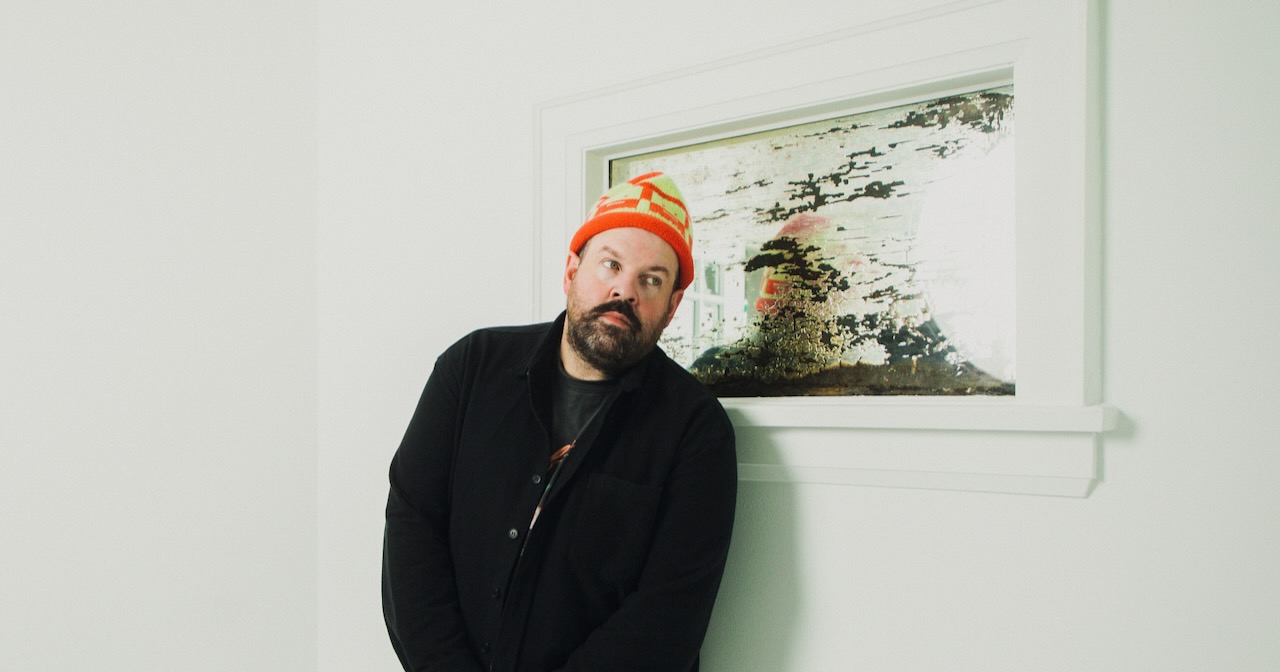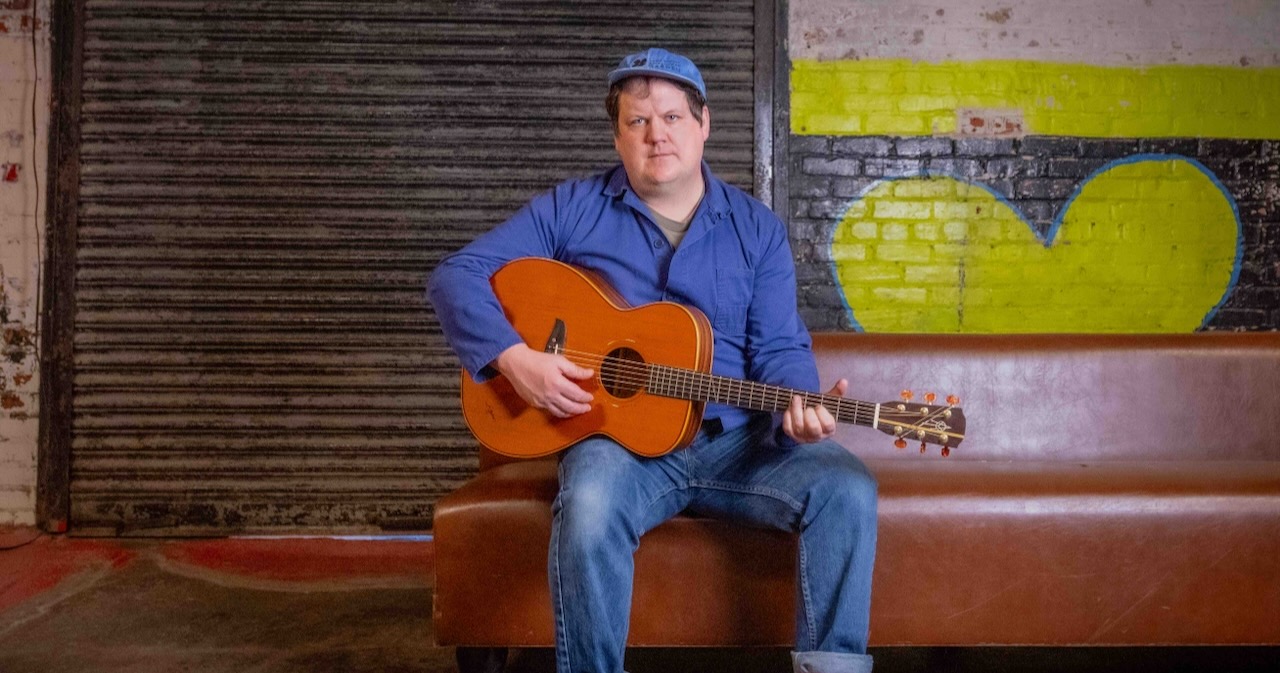
Genre is dead (long live genre!), but how would you describe the genres and styles your music inhabits?
I like to describe my music as rock meets country, though I have some ’90s alternative and pop influences in there. To mash all those up into one genre, I settle on calling it alt-country.
How often do you hide behind a character in a song or use “you” when it’s actually “me?”
All the time. It’s almost impossible to exclusively divorce my own emotions and experience when creating a character. It’s very freeing, though, and I like to weave in and out of not just the character’s perspective, but the perspectives of other people I know, too, as well as mine.
What’s the toughest time you ever had writing a song?
I wrote a song called “Back of My Mind,” which is about my father who passed away when I was young. I cried my way through writing it and relived a lot of the grief I hadn’t felt in years.
What is a genre, album, artist, musician, or song that you adore that would surprise people?
I love Enya. I put it on when I am super stressed, need to fall asleep, or just want to feel some mystical vibes. Last time I visited Ireland, I fulfilled a dream and put it on full blast as I drove along the Irish west coast taking in the scenery.
Does pineapple really belong on pizza?
I fought it for so long and one day I was high and hungry enough to be talked into it. It was an instant love affair. I’ve since branched out into being open to other fruits on a pizza. Fig, pear… though I might draw the line at watermelon.
After getting a preview of Alisa Amador’s new album, Multitudes, I was excited to catch up with her and hear more about it. The production and strings on songs like “Nudo de raíces” and “Extraño” reminded me of the work of Brazilian artist Tim Bernades, someone I have recently been addicted to. When I brought that up in our interview, Alisa got very excited and showed me a playlist she had made on which Bernardes was the first featured artist – as it happens, she is also a huge fan!
Thus, our conversation started off with a bang of enthusiasm for Bernardes’ Mil Cosas Invisíveis – while it turns out Amador’s Multitudes string parts had been recorded before she ever heard the Bernardes record – and we continued by talking about her life as the child of touring musicians, her guitar inspirations, and how she interacts with songwriting as a bilingual musician.
Multitudes is full of wide, spacious arrangements with lyrics that shoot straight to the point: “I love my life/ But I hate it sometimes,” she sings on “Love Hate Song.” On “Milonga Accidental” she sings, “Cuando miro el agua / Cuando miro el cielo / Cuando miro el agua otra vez…” Roughly translated, this means: “When I look at the water / When I look at the sky / When I look at the water, once again.”
Through our chat, I learned the reasoning behind these direct and simple lyrics – and how her reasoning differs depending on the language she’s working in. Amador is an artist that has found a rare confidence in the way she makes music. I couldn’t help but feel inspired by her calm demeanor and rooted presence. I soon learned that she had been on a long journey to reaching that place for herself.
I want to ask you about your time growing up playing with your parents, who are folk musicians in the band Sol y Canto – what did you take from those experiences and what did you want to do differently?
Alisa Amador: My parents are Latin folk musicians who are touring to this day. They are amazing, and I would not be the musician I am without that primary education. It’s interesting to think about what I’d want to do different, I am always wondering that without being conscious of it I think.
The big thing is just trying to take care of myself better. I think the culture of the music industry is that of completely running yourself into the ground and then some. It seems that being an artist and being a human are often at odds with each other…
I just witnessed my family work so hard, and not have a lot of breaks or self care or healing factored in, we were always [in] survival mode and worrying about money constantly. Although, at the time, that part didn’t traumatize me at all, I don’t know why.
As a kid we just had such a rich life; traveling everywhere, seeing live music, being around people who really care. Getting to experience that much art from such a young age, while really taking touring life in stride, it was a fantastic way to grow up. But I do look back and realize how exhausted and how stressed my parents were and I don’t want that for myself.
So is this something that you realized more recently? Given that as a kid you didn’t feel affected by it?
I think there was a moment – because what my bio says about winning NPR Tiny Desk contest, that just at the moment I was going to give up, that is really true. I was going through the logistics of leaving music, it was terrifying and really painful, but I was at a point in my career that I had done everything for everyone else and had no idea how to advocate for myself. It had ruined me; I was playing gigs where I didn’t feel safe and not being paid wages that were sustainable. … Consequently, I felt like a life in music was not feasible for me.
When I got that call that day from NPR, I almost told them to call someone else. Eventually I decided to say yes, but I had to treat that “yes” as a total reset, a complete reimagining, almost a starting over, and this time I had to take care of myself.
With this reset, did the actual music you were making change at all, or was it only your intentions with how it would be made?
I had been in a period of writers block for two years and I didn’t come out of that for another year after winning the Tiny Desk Contest. I felt like an imposter, I was like, “Little do these people know that I don’t write songs anymore…” But I chose to relearn how to write songs and to try to meet myself where I was, instead of trying to making something perfect or good.
I just had to remember, how did I start writing? I was 15 and struggling, I didn’t know how to coexist with painful things, and I started writing because it helped me get through it. I didn’t write because it needed to be good or I needed to sell it. At that time, I had all these other creative practices, [like] journaling and dancing around my room, and I had let go of all of them during that period, and I felt like I couldn’t make anything. I wasn’t ready to process what I had been through.
When I did starting writing again, it had to come from this place of childlike curiosity and wonder and I had to tell myself every time I wrote, “It will probably be bad.” And letting it be bad is what allowed me to write anything at all.
As a bilingual writer, you have access to another tool – choice of language – that many of us don’t have. How and why do you approach your songs in one language or the other, and how does it color them?
I heard Allison Russell talk about this in an interview. I’m paraphrasing, but I think she said something like, “Writing in different languages is like accessing different channels of the unconscious …” and similarly, I feel like I don’t make a conscious choice about what language I write in, but it could come from a different place.
I have noticed that writing in English, it tends to be more conversational. I just tell what I’m feeling, literally, and try to trust that the feelings will reach people, as long I’m being honest.
When I’m writing in Spanish, even though it’s my native language, I’ve always lived in the U.S., so I just have a limited vocabulary. There was a period of time where I was only speaking Spanish at home, it was the strict language at home, so I think it’s my childlike language, but it gets used in new and poetic ways. Whatever words can capture that feeling are the ones that I’m gonna stick to, because I don’t have that many to choose from! I don’t have trick phrases or literary devices, and maybe I have a little less judgement in Spanish as well. Limitation is really a gift in that way.
That’s really interesting! So with that in mind, how do you feel about language translation with songs? Is it helpful or harmful to the meaning?
I actually love translating and when the first album review came out from No Depression about Multitudes, the headline was “…Alisa Amador is Found in Translation.” I was so happy about that. Because really, my best language is Spanglish, switching in between is where I’m most comfortable, and that in-between-ness is where I’m always existing.
In my parent’s band, they would often give a translation of the song for an English speaking audience; my dad would play the progression of the song and my mom would stand there dramatically, looking fabulous, telling the lyrics in a beautiful way, always within the frame of the chord progression.
So I really enjoy giving a translation before singing the songs now as well, and so many people have come up to tell me they love it. The translation being in time with the song makes it possible for them to even follow along while I sing it in Spanish.
There’s something so metaphorically perfect about that, because when you’re living in between you feel like you’re always missing something, but there’s something gained from that, too, because it makes it possible to give grace when someone isn’t understanding, or bring them in when they aren’t feeling heard. And that is what I’m able to do when I give a translation.
Can you tell me about your guitar style? It’s really beautiful. Who or what influences the way you play? And how did you learn?
I started because I idolized my dad. He is a classical guitarist and he’s trained in flamenco. As a kid I studied flamenco dance, too, so I used to dance while he would play. He gave me one of his old foot stools and I played nylon-string guitar for a long time, that was my first instrument. I just studied folk songs like “Monster Mash” and “Blackbird” and “American Pie.” My dad was super technical, but I didn’t study with him, and I knew I wanted to become a better guitarist.
Then in college, I saw a musician just playing solo electric guitar and singing and I had no idea an electric could sound like that. I love electric – but nylon-string acoustic will always be the origin of my playing, so I approach the electric guitar that way. Resonance is really important to me and noticing how chords feel. A lot of my writing is just simple chords and adding and taking away notes. I’m very much still learning guitar, I’m in this stage of guitar learning where I get lost in self doubt, so I practice whatever I play live so much in order to feel confident performing.
I’m sure there’s a lot of Spanish language folk music that folks in the “Americana” scene are really missing out on, myself included. What are some other artists that sing in Spanish or in other languages, that you think folks should know about?
One of my big inspirations for the overall sonic work of Multitudes was the album Domus by Sílvia Pérez Cruz. I listened to it obsessively seven years ago without realizing it was the soundtrack of a film, Circa de Tu Casa, which is about the real housing crisis in Spain. [Pérez Cruz also stars in this film.]
Something I thought Cruz did so well on this record is that she is so feelings-oriented. What she feels is what dictates how she sings the song, which is a philosophy that I share. But she also has this riveting voice, so it’s all about telling a story. The production on the record completely holds what she’s singing, but it is also musically and technically beautiful. You want to have a record you can turn to again and again and notice new things to love.
Is there anything else you want readers to know before we end?
I guess I’d like to give a gentle reminder to human listeners, to the people listening and reading, that you really matter to independent artists. Every listener is the life force behind our careers. When someone comes to a show, and then comes back with a friend or presses play on a record they’ve not heard before, those things are what make my job possible, so thank you to the individuals of the world who press play and pay attention!
Chris Smither has been Peter Mulvey’s mentor since back in 1993, when a young Mulvey opened for the already seasoned Smither. The blues and folk legend liked what he heard and enjoyed their similarities in creativity and quirks; he took that young man on the road with him. Their musical partnership has survived the digital age, the pandemic, parenthood, and the indictment of a former president. Along the way each has worked to influence their best habits and life lessons on the other. As far as mentor-mentee relationships go, this one is for the history books.
In this rare joint interview on Basic Folk, we address the important questions: Why do they delight in calling each other by their last names? Smither shares that he was first called by his last name in Paris when he was in school. The two debate who has the better hometown, Milwaukee or New Orleans. Actually, it’s not so much a debate as a reflection on New Orleans music, since that is clearly the better spot to grow up as a musician.
Mulvey reflects on their musical differences, citing some of his main inspirations to be Kendrick Lamar and Ani DiFranco, versus Smither’s affinity for Joni Mitchell and Bob Dylan. There are nods to David “Goody” Goodrich, Jeffrey Foucault, Kris Delmhorst and the woman behind it all, Carol Young (AKA Smither’s long-time manager, AKA his wife). We break down how each feels about fatherhood and try to get Smither to spill his secret to longevity. Spoiler alert: It’s not from remaining still.
Smither’s 20th album, All About the Bones, is out now. Peter Mulvey’s latest is the acoustic retrospective, More Notes From Elsewhere.
Photo Credit: Chris Smither by Jo Chattman; Peter Mulvey by Paul Reitano.
Artist:JEMS Hometown: Los Angeles, California Latest Album:Back Around Personal nicknames (or rejected band names): Wild Valley Dream Weavers, lots of others!
Which artist has influenced you the most – and how?
I grew up with Joni Mitchell. For every season of life, her music feels like the soundtrack. I find myself returning to songs and finding new meanings as my scope continues to broaden and deepen. Her voice is unapologetically her own and I am so inspired by her journey. – Emily
What was the first moment that you knew you wanted to be a musician?
When my dad played me the song “Eleanor Rigby” I had a major lightbulb moment. I don’t think I had realized how powerful music as storytelling was until then. I must’ve been 8 or 9 and my imagination burst wide open. – Jess
Probably when I started playing the songs I was writing as a kid for my Dad. He was both kind and critical in ways that confirmed that I wanted to work on and share my songs with not just him, but everyone. – Sarah Margaret
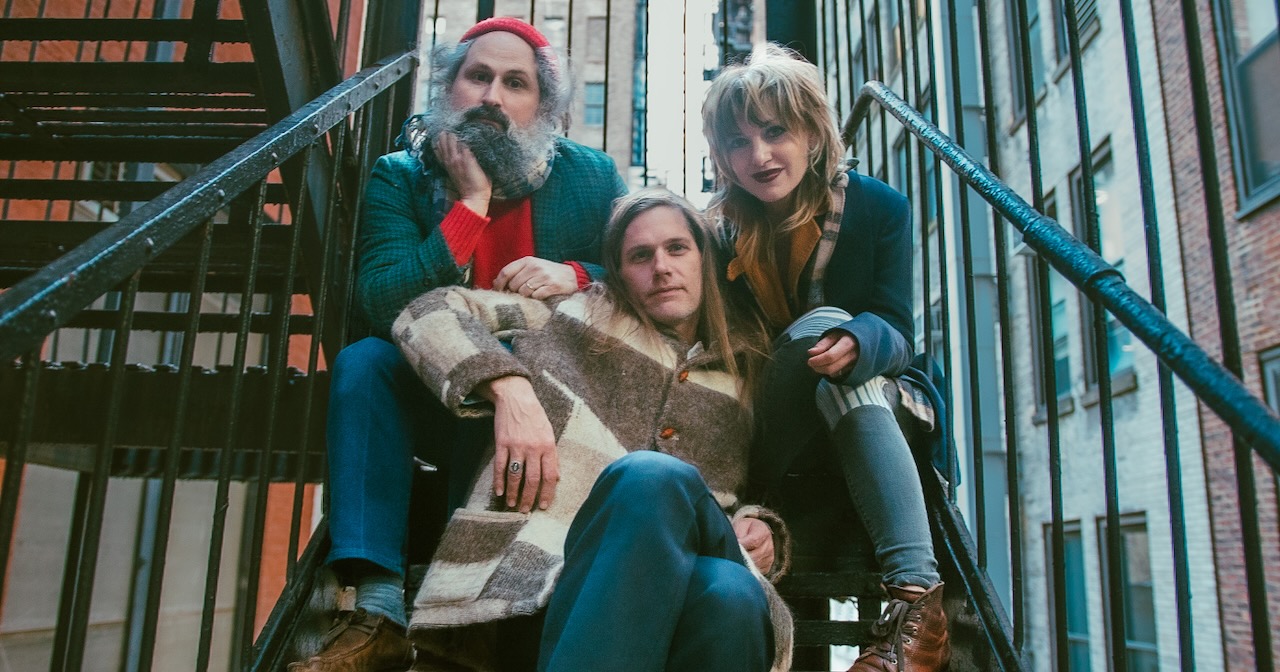
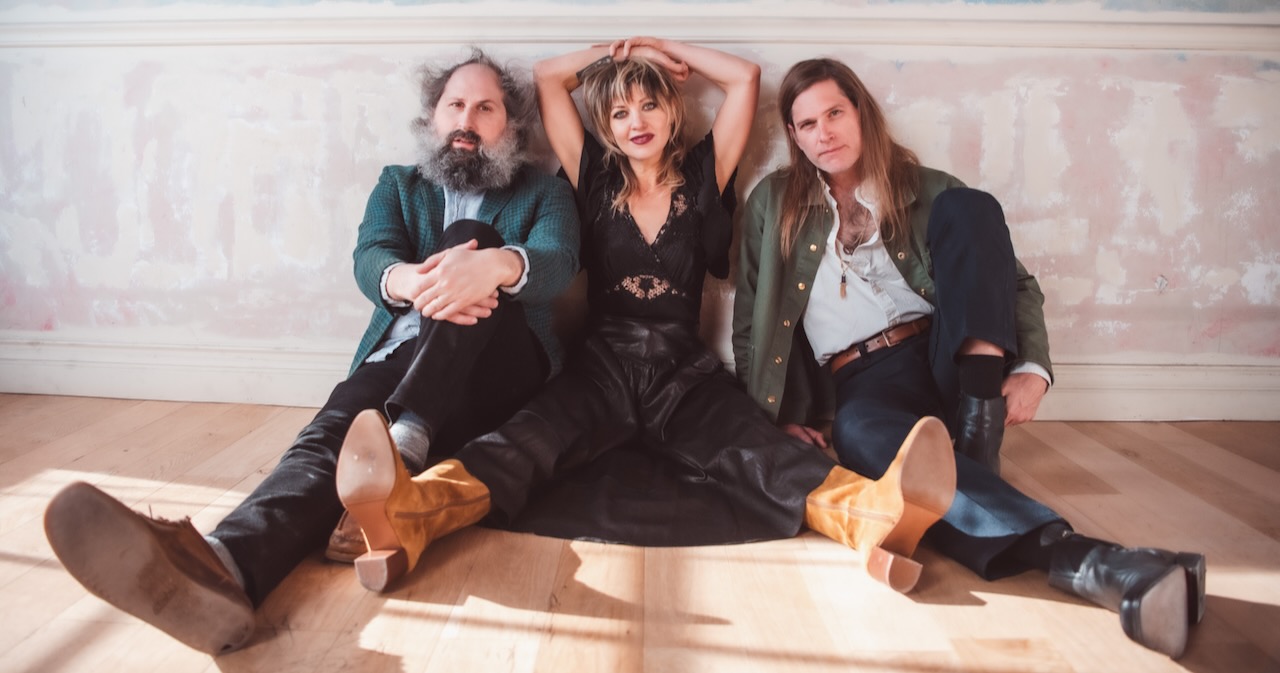
Genre is dead (long live genre!), but how would you describe the genres and styles your music inhabits?
We each have distinct vocal timbres and have been influenced by the genres we grew up listening to, from jazz and soul to indie rock to classical and film scores to folk and Americana. That diversity adds a richness to our blend and has influenced how we approach melody, harmony, and storytelling. As a trio, we live in the folk world, but lean into many other lanes depending on the instrumentation and production of each song.
If you didn’t work in music, what would you do instead?
I’d be a hairdresser. I cut and color hair for fun/therapy and I truly love it. Although I don’t know if I’d love it as much if I had to do it… – Jess
I’d be a private chef. I love going to farmer’s markets, learning from local farmers and artisans, and expressing myself through food. Maybe it’s the French in me! – Emily
A marine biologist, or boat captain, or something that lets me be in and around the ocean all the time. – Sarah Margaret
If you were a color, what shade would you be – and why?
Gold! I’d don’t know why, but I’ve just always felt like the sunshine. – Jess
Olive green. I’d like to be as warm, relaxing, and grounded as that color! – Sarah Margaret
It’s a serendipitously Canada-filled day on You Gotta Hear This, where singer-songwriter Rose Cousins brings us a brand new track, “Forget Me Not,” with a beautiful accompanying visualizer, plus Alex Mason impressively performs “Broken Bottles” live from a canoe, and Bob Sumner and posse line-dance it up in a new video for “Motel Room.”
That’s not all, though, as we’ve got alt-country, bluegrass, and more from the southern side of that border, too. Don’t miss Reckless Kelly performing “Keep Lookin’ Down The Road” in a brand new, self-shot video that features gorgeous landscapes and stunning drone footage. Derek Vanderhorst brings us the title track to his upcoming album, Be Kind, as well, with a ringer cast of collaborators including Steve Poltz.
To round out our collection this week, we’re re-sharing two premieres from earlier in the week on the site. The Doohickeys brought us zombie-fied Good Country with “Rein It In Cowboy” and virtuosic pickers Steven Moore and Jed Clark paid tribute to what would have been Frank Wakefield’s 90th birthday with their rendition of “New Camptown Races.”
It’s all right here on BGS and, to be perfectly honest, You Gotta Hear This!
Rose Cousins, “Forget Me Not”
Artist:Rose Cousins Hometown: Halifax, Nova Scotia, Canada Song: “Forget Me Not” Release Date: June 28, 2024 (single) Label: Nettwerk Music Group
In Their Words: “‘Forget Me Not’ is the romance of spring unfolding into summer as it pulls us into its presence. Nature asking us to pay attention and come along. Spring is my favourite season and I’ve now gotten to see it four times in a row in the same place which touring kept me from doing for years. It’s been like falling in love in a new way with an old flame.” – Rose Cousins
Reckless Kelly, “Keep Lookin’ Down The Road”
Artist:Reckless Kelly Hometown: Austin, Texas Song: “Keep Lookin’ Down The Road” Album:The Last Frontier Release Date: September 13, 2024 (album) Label: No Big Deal Records
In Their Words: “‘Keep Lookin’ Down The Road’ is a reflection of the past and an appreciation for the present, but most importantly, it’s an optimistic look ahead. I wrote it with my brother Gary and our buddy Jeff Crosby during our annual songwriting retreat that we jokingly refer to as the ‘hitscation.’ I came up with the line on the way there. sang a few lines into my voice recorder, and we worked out the rest over the next couple of days. Once we were in the studio, I chopped up a couple of verses and used the best lines to shorten it up a bit to match the theme of the record, which is, in a nutshell, ‘Don’t bore us, get to the chorus.’
“As technology advances by the second, I’ve wondered for a while how close to a pro-shot music video I could film using just an iPhone and a drone. Since the expense of filming a music video can sometimes outweigh its visibility, I decided to find out. Using the limited videography and editing skills I’d picked up filming the pandemic-inspired ‘Music from the Mountains’ and ‘Quarantine Kitchen’ shows, I set up time lapses of sunsets, sent the drone up to capture areal views of the mountains in my high desert backyard, and tried to time sunrises and sunsets for the cringiest part – standing in a field of sagebrush all alone, Uncle Rico style, filming myself singing and playing the song in front of a tripod. Luckily, my locations were so remote that nobody drove by and saw this old man making selfie videos like some 14-year-old influencer.
“I shot a lot of B roll road scenes, filmed at an old junkyard in the woods, waterfalls, national monuments, and in huge valleys surrounded by mountains on all sides. I tried to use the scenery as the main focus and also borrowed my brother Gary’s old Dodge truck to match the timeless vibe I was going for. It was a lot of work and took a lot more time than I thought it would, but it was fun and it turned out pretty cool, and I have a newfound appreciation for why these things cost so much. I’m not sure if I matched the quality of a high-end production, but for the cost of a tank of gas or two it’s close enough for RK!” – Willy Braun
Track Credits: Written by Willy Braun, Gary Braun (Micky & The Motorcars) and Jeff Crosby.
Wily Braun – Lead vocals, rhythm guitar, harmonica, percussion Cody Braun – Fiddle, harmony vocals, mandolin, tenor guitar, synth, percussion Jay Nazz – Drums, percussion Joe Miller – Bass guitar Geoff Queen – Lead electric guitar, pedal steel guitar Bukka Allen – Hammond B3 organ, piano, harmonium Kelley Mickwee – Harmony vocals
Produced by Jonathan Tyler, Cody Braun, Willy Braun. Engineered by Joseph Holguin. Mixed by Jacob Sciba, Cody Braun, Jonathan Tyler. Mastered by Jacob Sciba. Recorded at Arlyn Studios, Austin, Texas. Additional recording at Clyde’s VIP Room, Austin, Texas.
Video Credit: Produced, directed, filmed, and edited by Willy Braun. Filmed on location in Idaho.
In Their Words: “‘Broken Bottles’ is a song about how when memories form, especially when we’re younger, they can take on an almost mythical quality in our imaginations and dreams. Then as we grow older and that spell of innocence is broken, we leave them behind, only to return to them again later when they likely don’t resemble anything like what they originally looked like. After losing my mom, writing songs became a way to preserve memories, even painful ones from when I was a kid. Sometimes even difficult memories can sweeten and soften with time. I was exploring a lot of open tunings with this new album, and felt a bit like Dylan on Blood On The Tracks – something about playing in open D on this Martin opened up a new space and new ideas for me and reminded me of being a teenager exploring the same tunings. It’s funny how things make their way back around.” – Alex Mason
Video Credit: Bradley Pearson, Don River Music
Bob Sumner, “Motel Room”
Artist:Bob Sumner Hometown: Vancouver, British Columbia, Canada Song: “Motel Room” Album:Some Place to Rest Easy Release Date: September 6, 2024 Label: Fluff and Gravy Records
In Their Words: “There is a rapper/DJ named Channel Tres. Everything Channel does is cool. He drips cool. I’m a big fan of his music, his aesthetic, and his videos. He has a video for a tune called ‘Weedman.’ It’s Channel and his homies hanging out in a home ordering weed from their dealer. Throughout the video they break into dance routines. It’s chill af. It’s funny. It’s joyous. It doesn’t take itself too seriously. I wanted that for ‘Motel Room.’
“I wrangled two of my close friends, Logan Wolff & Matty Beans. I knew they’d be down. My partner Mica Kayde choreographed a dance routine for us. With my director Dana Bontempo and his partner Zara, we loaded into my pickup truck, brought Endo my tripod dog (and best friend), and spent three days on a road trip messing around. We danced in front of a motel called El Rancho in the interior of B.C. We went to the Armstrong Fair & Rodeo. We laughed a lot, mostly at ourselves, and we had the time of our lives doing it. It’s no Channel Tres, but I think we did what we set out to do. The video turned out to be a joy. It’s fun. It’s funny. It encapsulates those magical carefree years I spent with my friend. At the end of the video the character ends up alone in a motel room wantonly gazing out the window. We felt that was a part of the story we couldn’t leave out.” – Bob Sumner
Derek Vanderhorst, “Be Kind” (featuring Steve Poltz)
Artist:Derek Vanderhorst Hometown: Golden, Colorado but moving to Nice, France in September Song: “Be Kind” Album:Be Kind Release Date: July 12, 2024
In Their Words: “I wrote ‘Be Kind’ in a fun, humorous way to address serious issues that are dividing friends and family and loved ones. Racism and intolerance are making their way into our everyday experience and becoming somewhat normalized. The divisiveness is becoming so overwhelming that it’s now hard to have these serious conversations and I wanted to send the simple message of acceptance, love, and kindness – as well as [pointing out] differences are what makes life so great and worth living.
“As Gen Xers, we need to be open, aware, and embrace all the progress and change, not forgetting our generation’s great changes. We sometimes need to remember that we need change to have stagnant waters.” – Derek Vanderhorst
Track Credits: Derek Vanderhorst – Music, lyrics, guitar, vocals Steve Poltz – Vocals, guitar John Mailander – Fiddle, mandolin Frank Evans – Banjo Brook Sutton – Bass Jamie Dick – Percussion
The Doohickeys, “Rein It In Cowboy”
Artist:The Doohickeys Hometown: Los Angeles, California Song: “Rein It In Cowboy” Album:All Hat No Cattle Release Date: January 24, 2025 Label: Forty Below Records
In Their Words: “We wrote ‘Rein It In Cowboy’ after Haley got her butt grabbed in a bar… He copped a feel and we copped a song. The unsettling vibe you get from a creepy guy groping you is eerily similar to the feeling zombies evoke, which is why our video draws inspiration from our love of classic zombie films like Night of the Living Dead and Dawn of the Dead. We had a blast coming up with t-shirt pick-up lines and other visual jokes throughout the video. With the help of our friends, we crafted a visual narrative we’re truly proud of and can stand behind (and grab).” – Jack Hackett, The Doohickeys
Artist:Steven Moore & Jed Clark Hometown: Jed Clark lives in Nashville, Tennessee, originally from Searcy, Arkansas; Steven Moore lives in Saint Clairsville, Ohio, originally from Bethesda, Ohio. Song: “New Camptown Races” (by Frank Wakefield) Release Date: June 26, 2024
In Their Words: “We are very excited to share our music video of ‘New Camptown Races,’ a tune by the late Frank Wakefield (June 26, 1934 – April 26, 2024) that has become a bluegrass standard. The idea for this video began at SPBGMA 2023, when we jammed to ‘New Camptown Races’ with both of us playing it in B-flat without using capos. We laughed and agreed that we needed to record it and maybe do a video shoot of it someday. It wasn’t until a year later at SPBGMA 2024, when we met up again, that we really solidified plans to make the video happen. Our hopes were to record the video and put it out on June 26, 2024 in honor of Frank’s 90th birthday. Unfortunately, the world lost Frank two months before he turned 90, but we decided to still aim to put out the video on what would have been Frank’s 90th birthday, in his memory…” – Steven Moore
If you’re looking for recommendations for desserts, might I suggest asking folk music and comedy savant Steve Poltz? This man loves gluten and carb-heavy sweets. He also loves collaborations, camaraderie, creativity and using humor in music. It all began for Poltz – or Poltzy as his friends call him – in his birthplace of Halifax, Nova Scotia, making him an official Canadian. He spent his formative years in Palm Springs and Los Angeles where due to his stutter, allergies, and asthma, he learned to talk fast to get himself out of trouble. His sense of humor was cultivated in part by his funny parents as well as radio and television. He was particularly taken with The Smothers Brothers, Laugh-In, and the novelty songs he heard on Dr. Demento’s radio program, which solidified his own aspirations for being silly as hell in his own writing. Along the way, he picked up the guitar at six years old and it’s been by his side ever since.
After he moved to San Diego to attend college in the ’80s, he formed the cow-punk band The Rugburns with Robert Driscoll. The group, which Steve has described as “really slow speed metal,” developed a cult following across the U.S. in the early ’90s. It was at that time when Poltz met Jewel, who was a struggling musician in the San Diego scene. The two dated (they remain friends to this day) and ended up co-writing one of the biggest songs of the ’90s with “You Were Meant For Me.” After a brush with a major label (thanks to all the Jewel stuff), he remained an independent artist who developed a reputation for a singular live performance experience.
In 2014, he actually had a stroke onstage, which temporarily caused him to lose his vision, his ability to read, and also gave him a new outlook on life. Also: post-stroke, he found a late-in-life obsession with the Grateful Dead. In 2016 he and his wife, Sharon, moved to Nashville, where he discovered that he actually does like the Nashville co-writing thing. He’s written songs with people like Molly Tuttle and Billy Strings. His friend Oliver Wood (The Wood Brothers) produced his most recent record, Stardust and Satellites. Here’s to Steve Poltz!
To welcome you to the end of the week, we’ve got a slate of superlative premieres from across the roots music landscape.
Below, find new tracks from singer-songwriters – Maya de Vitry, who sings a song from her upcoming co-written with Caitlin Canty, as well as Lucy Isabel bringing “A Hero’s Welcome.” We’ve also got a few Western North Carolinians in our round-up, including bluegrass mandolinist Darren Nicholson playing a song about a true mountain man, John Colter, and Amanda Anne Platt & the Honeycutters offering “Big Year.”
Plus, guitarist Jacob Johnson is joined by Willie Nelson & Family harmonica player Mickey Raphael on an acoustic Allman Brothers cover and Tommy Emmanuel pays tribute to Chet Atkins’ 100th birthday with a video BGS premiered earlier this week.
It’s all right here on BGS – and You Gotta Hear This!
Maya de Vitry, “Odds of Getting Even”
Artist:Maya de Vitry Hometown: Lancaster, Pennsylvania Song: “Odds of Getting Even” Album:The Only Moment Release Date: July 12th, 2024 Label: Mad Maker Studio
In Their Words: “I wrote ‘Odds of Getting Even’ with my dear friend Caitlin Canty at a kitchen table in Nashville, several years ago. I was borrowing a friend’s snare drum at the time and having so much fun just grooving on that drum and singing. We were really moved by an article laying on my table, it was about the late Sharon Jones. Her story is powerful – her devotion to music in spite of so many years of rejection and really outright dismissal by the music industry – and then her battle with cancer, and performing in the midst of treatment… Against so many odds, she persisted in making her music. And singing was the only thing that could take her pain away.
“The band Della Mae made the first recording of this song on their 2020 Headlight album. It’s a real honor and thrill to hear another band bring your song to life. Then, Caitlin recorded her own version on Quiet Flame, which came out last summer. One of the things I love most about making records is making a collection of songs that feel like they magnetically want to live alongside each other, like companion plants or something – and this one just absolutely belongs in the song garden of The Only Moment. And to hear Phoebe Hunt on harmony vocals… well I just think Phoebe is an absolute legend. I’m so lucky to get to sing with her.” – Maya de Vitry
Track Credits: Maya de Vitry – Vocals, acoustic guitar, synth Phoebe Hunt – Harmony vocals Anthony da Costa – Electric guitar Ethan Jodziewicz – Bowed upright bass Dominic Billett – Drums
Lucy Isabel, “A Hero’s Welcome”
Artist:Lucy Isabel Hometown: Nashville, Tennessee Song: “A Hero’s Welcome” Album:All The Light Release Date: June 28, 2024 (single); October 11, 2024 (album)
In Their Words: “‘A Hero’s Welcome’ is the only song on the album that wasn’t written specifically for the album. I taught myself to play guitar in college and started writing music pretty much right away. ‘A Hero’s Welcome’ was the first song that I ever felt proud of writing; I felt like I had found my voice. While I was in the process of writing the bulk of this album, I hung out with a college friend who reminded me of ‘A Hero’s Welcome.’ I suddenly realized that it was a perfect fit for All The Light and I added it to the track list. It’s been really fun to revisit this song that I wrote as a 21-year-old and hear how it’s transformed through the production process.” – Lucy Isabel
Track Credits: Written by Lucy Isabel Fortune-Cabrera. Produced/mixed by Jared Anderson. Mastered by Preston Cochran. Lucy Isabel – Vocals, BGVs Jared Anderson – Guitar, bass, pianos, percussion Andy Ellison – Pedal Steel
Jacob Johnson, “Jessica” featuring Mickey Raphael
Artist:Jacob Johnson Hometown: Greenville, SC Song: “Jessica” feat. Mickey Raphael Release Date: June 21, 2024
In Their Words: “It’s an unwritten rule for musicians that if your darlin’ (that’s how we say “significant other” or “partner” in the South) is named after a famous song, you must learn the song and you must use it to serenade them. Unfortunately, my wife was named after a 7-minute Allman Brothers jam. Eventually, I got serious and put together a solo/acoustic version of ‘Jessica’ that I later played as she danced with her dad at our wedding reception on May 31, 2019. It’s been knocking around in my head since then and earlier this year I decided it was time to flesh out the arrangement with some collaborators.
“Jack Ryan and Stephen Campbell from the dangerously hot Marcus King Band laid down a groovy, breathing foundation on drums and bass respectively, and Aaron Bowen supplied tasty keyboard lines throughout. In addition to the main melody, I played the second solo on my trusty Takamine acoustic guitar, but I knew I wanted to feature another special guest for the first solo section. I was completely blown away when my first choice, Mickey Raphael, legendary harmonica player for Willie Nelson and Family, agreed to participate. Mickey has played on some of my favorite albums of all time, and his lyrical, melodic style was just what the track was asking for. Having part of his magic on one of my tracks has been on my musical bucket list for many years.
“Of course, this entire project was created with lots of love and respect for its composer, the great Dickey Betts, who we lost not long after production was completed. If you know Southern music, you know he was one of the greats. Though I never had the opportunity to meet the man, I hope that my arrangement and attention to the details of this composition can honor his legacy in some small way.” – Jacob Johnson
Track Credits: Jacob Johnson – Guitars Mickey Raphael – Harmonica Jack Ryan – Drums Stephen Campbell – Bass Aaron Bowen – Keyboards Produced by Jacob Johnson. Recorded by Shane Nelson at Asaph Studios & Mike McCarthy in Jack Ryan’s Garage. Mixed by Shane Nelson at Asaph Studios, Greenville, South Carolina. Mastered by Anna Frick at Ally Sound.
Darren Nicholson, “Big Sky”
Artist:Darren Nicholson Hometown: Canton, North Carolina Song: “Big Sky” Release Date: June 21, 2024 Label: Mountain Home Music Company
In Their Words: “This is one of my favorite cuts of my entire recording career. I feel there’s a special spirit in the song and the way it turned out. It’s based on the true story of early American explorer, John Colter. He was a member of the Lewis and Clark Expedition and became the first known person of European descent to enter the region which became Yellowstone National Park. There’s several fascinating periods of his life and career. I became aware of him through a fabulous book about his survival and harrowing adventures called Colter’s Run. He was one of the first true mountain men. This was the inspiration for the song when Charles Humphrey and myself set out to write it. I also think it would make a great film. I feel the musicians knocked it out of the park in regard to capturing the mood and old-time essence. Hope you enjoy!” – Darren Nicholson
Track Credits: Darren Nicholson – Mandolin, octave mandolin, lead vocal, harmony vocal Tony Creasman – Drums Kristin Scott Benson – Banjo Zach Smith – Upright bass; Colby Laney – Acoustic guitar Deanie Richardson – Fiddle David Johnson – Dobro Kevin Sluder – Harmony vocal Jennifer Nicholson – Harmony vocal
Amanda Anne Platt & the Honeycutters, “Big Year”
Artist: Amanda Anne Platt & The Honeycutters Hometown: Asheville, North Carolina Song: “Big Year” Album:The Ones That Stay Release Date: August 9, 2024 Label: Mule Kick Records
In Their Words:“I wrote the first line of this song in 2018, after what felt like a really big year. I would revisit it from time to time, trying to find the rest of the words. And while I was doing that, the years just kept getting bigger and bigger. Good stuff, bad stuff, life just gets overwhelming at times. And of course there was a global pandemic. I’m still waiting on a smaller year, but maybe I’m also learning how to ride the wave a little better.” – Amanda Anne Platt
Track Credits: Amanda Anne Platt – Acoustic guitar, lead vocal Matt Smith – Dobro Rick Cooper – Electric guitar, vocal harmony Kevin Williams – Piano, vocal harmony Evan Martin – Bass, drums, percussion, vocal harmony
Produced by Scott McMicken and Greg Cartwright, FrogHouse Productions, and Amanda Anne Platt.
In Their Words: “The one and only Chet Atkins would be celebrating his 100th year if he were still here in body. We miss him. We love his playing, we remember all the great lessons and wisdom he handed out freely to us. We always use his example as the one written in stone. My fellow CGPs, John Knowles and Steve Wariner, have their own experiences and memories to share, and they have lived a different life to me. Yet, because of our love for Chet’s music, we are forever joined, like family…” – Tommy Emmanuel
“Nobody tells it like it is,” Anna Tivel sings on “Disposable Camera,” the first single from her new album, Living Thing. The song radiates with the joy and pain of reality, climaxing with the lines:
That big black train is rolling And that deep down scream is growing A hurricane come howling A shot heard from the mountain A blessing and a burden I swear this will be worth it…
Which are followed by a melodic and cathartic yell. I don’t know how I first came across Tivel’s music, but when I found the song “Blue World,” I got stuck on it. I listened to it over and over, trying to take in every aspect of it, break it into pieces, open it up like a watch so that I could understand how this perfect song ticked. It is still the most beautiful meditation on dying that I’ve ever heard. “You come to the heavy gate and you open it all alone…” is a line I think about often. To me, it sounded like she herself was telling it like it is.
A few weeks after discovering “Blue World,” I was on tour with Kris Drever, who is one of my favorite folk musicians from Scotland. We were trading new music discoveries and I played him that song, after which he became obsessed with it. We traveled around listening to “Blue World” and talking about death for the rest of the tour. Giving someone a new song to love is a special kind of transaction. It’s a gift for the new listener, but also a point of pride to have found something that someone else also finds meaning in – especially when the recipient of said gift is a musician you admire. New song discoveries are an unmatchable currency, a communication beyond words.
“Blue World” sent me on a journey through Tivel’s catalogue, with hours spent listening to Small Believer, The Question, and Outsiders, before the release of her latest record on March 31. With Tivel’s latest collection, I have to come to the conclusion that someone does tell it like it is and that person is Anna Tivel. I spoke with her over the phone for BGS about the inspiration behind her songs and the unique circumstances that led to her production choices on Living Thing.
I’ve been a fan of your work for a long time and I’m curious to know what feels new and different about this record than your past work?
Anna Tivel: I think there are two main things. I’ve worked with Shane Leonard before [who produced Outsiders and The Question], but this is the deepest collaboration we’ve ever done. There is so much of his heart and his sonic experimentation in these songs.
We made this squarely in the pandemic years, so there was no way to call upon a band for live tracking. It was just me and him in his studio. He went insane trying all kinds of sounds, playing all different instruments, and I scribbled extra verses on napkins as I heard what he was coming up with. We worked all day, every day and I slept on his couch for a month. I tried to say yes to everything and I learned so much. I really feel like the sounds feel different than what we’ve worked on before.
The other thing is that going through that year, I was craving soaring choruses… more melody and rise and rhythmic happenings that I normally do. Maybe it was a result of just sitting and looking at the same window for so long. I usually write long and dark monotonous stories with no chorus at all, but I think I craved a little more hope and joy. In general I feel like less people died on this album than usually die my albums… it’s still melancholy as fuck though.
Knowing that these songs were written and recorded during that very existential time, and now that they are being released into a different time, do these songs feel different to you than they once did?
Yeah, it’s interesting, the whole process of putting out a record. I really got stuck in the machine for a little while so it took quite a long time for this album to come out.
They are older songs now in my soul, but the project still feels really fresh. I think because Shane drew them into this more alive, sonic world. It was really exciting and fun to explore joy and rhythm and movement, especially in that isolated time. It felt good to have some hope and just wiggle around and try to feel the good parts of being a human.
So coming back to it now, it feels new and exciting to take them out on the road with a band. It’s making me realize it’s fun to have some songs that we can really move into, rather than building up from the ground.
One of my favorite tracks from your new record is “Desperation” – “Real life is far from fair, you tried and tried and got nowhere/ It’s like somebody rigged the whole damn thing/ Bloody knuckles, empty hands, you want to fight, but all you ever had/ Is desperation.” Can you tell me a little about what led to that song?
I think that one came out of the heart of that pandemic time, watching people, and having an awareness of how close many folks are to the edge, simultaneously knowing how the people pulling the strings aren’t the ones close to the edge.
Maybe your kid gets sick, and you miss work, and then that’s that, you’re evicted, and into the car. You don’t choose what you’re born into and if you’re born with the short end of the stick, it’s so hard to imagine anything but that reality.
You can see getting stuck, because that imagination isn’t generously shared by the people that own it. But if people that are living in a different world reach out to help it can really change the situation. Sometimes that means helping people believe that a different reality is possible. You have to go into your mind to create what you need. It’s sort of the same idea as representation, in the sense that if you’ve seen people that feel like you in very different situations than you, you can imagine yourself into a different situation.
I want to work on making that imagination more widely available.
That’s an amazing point, and a great one to keep in mind especially for artists. Artists can and have played that role for people, I believe. Does this same idea carry through for the song, “Disposable Camera?”
I like songwriting because you’re sort of always looking inward… You think you’re reflecting the world, but so much of yourself gets in there and the things that you’re learning into. A lot of this album is about getting free, getting loose of the way that you’ve taken in that it “should be,” the way that you should express yourself or the way you should move…
A lot of friends in the pandemic were having kids or trying to have kids and I was thinking about how, when we were all born, our parents were these people. [I was] realizing that everyone making babies has no idea what is going [to happen] and it’s kind of beautiful that it’s this big wheel of nobody knowing what they’re doing. Everyone is kinda hoping that someone else will be like “this is what it is,” but maybe the not knowing is actually a freedom. It feels scary to think you’re supposed to be certain, but you aren’t yet. The freedom is that nobody actually is certain and that’s not going to change.
I was listening to your song “Kindness of a Liar” and thinking about how important escapism was in 2020 and 2021. How badly I needed books and TV shows to get lost in so that I could come back to the present and have energy to cope with what was happening. Is that what this song is about to you?
In this batch of songs I was thinking a lot about what is truth, what is honest, what is listening, and what is being able to have nuance in all of those realms. You don’t just stay certain. To be able to move and shift and read situations and try to be learning in real time, messily, is very different from saying, “This is a fact and I’m going to hit everyone over the head with it until I’m proven wrong, and then I’m going to pretend I never said it.”
To try and tell stories to one another that are compassionate and messy – sometimes telling a story that might not be true is the most gentle and kind thing you can do while something hard is happening.
I think it’s about recognizing how much we crave each other’s stories and being really aware of how we paint the world for each other. The more artfully and more compassionately we tell each other’s stories the more we connect, and it’s not about trying to prove our point.
The most loving thing you can do is to share your mind and heart with people in the most nuanced way. And maybe there’s some fiction and lore in that.
If you didn’t work in music, what would you do instead?
I would work in construction or be a lawyer or a therapist.
If you were a color, what shade would you be – and why?
I would be green – green represents plants and herbs that heal us. I’d like to be the person that saves a person’s day
What would a perfect day as an artist and creator look like to you?
Cooking and having good healthy meal, editing projects I produce for friends, playing soccer with friends, having a cocktail in a dive bar watching a local band perform.
What was the first moment that you knew you wanted to be a musician?
It was when I was like 12, I went to this school that had a choir and when I listened to them sing, it was amazing then I knew I have to try singing. That’s where singing starts for me, but wanting to be a musician was never a plan, I just went with the flow of life and ended up being one… none of my friends even believe I sing.
Which elements of nature do you spend the most time with and how do those impact your work?
Gardening and soccer always reminds me that life is not all about just work, it calms my mind; when I get back to work I feel less pressured by the whole work system and pace.
You Gotta Hear This! We’ve got an excellent collection of premieres for you today on BGS, including two new music videos and a new tribute track, too.
Check out a brand new video for “Homeward” by Natalie Spears, off her upcoming album, Hymn of Wild Things, which is set for release June 28. Also, don’t miss a fiery, Tarantino-esque video from India Ramey for “Baptized By the Blaze,” the title track of her new record coming in August.
To round us out, bluegrass singer-songwriter and radio personality Chris Jones pays tribute to iconic folk songwriter Tom Paxton with a rendition of “The Last Hobo” from the stacked Bluegrass Sings Paxton project.
It’s all right here on BGS and You Gotta Hear This!
Natalie Spears, “Homeward”
Artist:Natalie Spears Hometown: Carbondale, Colorado Song: “Homeward” Album:Hymn of Wild Things Release Date: June 28, 2024 (album) Label: SleeLee
In Their Words: “‘Homeward’ is a soulful manifesto about returning to oneself. It can be so easy to lose ourselves in relationships and this song is about coming home to our own being. I left Colorado during the pandemic to be with my partner on the East Coast. When things hit rock bottom, I packed the car and headed west. Miles of empty flatlands, cornfields, and numbing road noise only made my static mind chatter louder, constantly questioning, ruminating in self doubt. When the Rocky Mountains finally came into view, my whole body let go. I pulled into a McDonald’s parking lot to write these words, ‘That muddy road was getting old and keeping on just kept me down, I was one step forward, two steps back, now I’m heading homeward bound.'” – Natalie Spears
Track Credits: Natalie Spears – Vocals and keys Bradley Morse – Bass Kevin Matthews – Drums Eric Wiggs – Audio engineering and mixing
Video Credit:Erik Fellenstein Payden Winner and Eric Fellenstein – Camera operators
Chris Jones, “The Last Hobo” (From Bluegrass Sings Paxton)
Artist:Chris Jones Song: “The Last Hobo” Album:Bluegrass Sings Paxton Release Date: June 14, 2024 (single) Label: Mountain Home Music Company
In Their Words: “It was such an honor to get to participate in the Bluegrass Sings Paxton project as both studio guitarist and as a vocalist on ‘The Last Hobo.’ I was immediately drawn to this song, which struck me as a classic Tom Paxton story song of travel and love lost. It’s the kind of song that pretty much sings itself. Plus, I’ve just always wanted to sing a song that mentions Tucumcari, New Mexico.” – Chris Jones
Track Credits: Chris Jones – Acoustic guitar, vocals Darren Nicholson –Mandolin Deanie Richardson – Fiddle Kristin Scott Benson – Banjo Nelson Williams – Upright bass
India Ramey, “Baptized By the Blaze”
Artist:India Ramey Hometown: Nashville, Tennessee (by way of Birmingham, Alabama) Song: “Baptized By the Blaze” Album:Baptized By the Blaze Release Date: June 14, 2024 (single); August 23, 2024 (album) Label: Mule Kick Records
In Their Words: “This is a song about how I made the choice to put myself through the pain of getting off an anxiety drug that I was seemingly hopelessly addicted to, going through excruciating withdrawals, confronting my childhood trauma, and starting my healing journey in order to step into my personal power and become a better version of myself. It’s about phoenix energy. It’s about the death of the old me that was a slave to my trauma and the birth of the new me who is living a full and happy life without fear.
“My healing journey felt like a phoenix building its own funeral pyre, setting itself on fire, and being reborn as a more powerful version of itself in the flames. I took that myth and put it in a sort of Tarantino-esque, Faster Pussycat vibe, because that’s what I like, and made the car the ‘pyre.’ Alan Collins, my friend of over 15 years, is a VFX genius and he shot and edited the video.” – India Ramey
Track Credits: Produced, mixed and mastered by Luke Wooten at Station West Studios. India Ramey – Lead vocal Seth Taylor – Acoustic guitars Tommy Hardin – Drums Alyson Prestwood – Bass guitar Scotty Sanders – Pedal steel James Mitchell – Electric guitars
Photo Credit: India Ramey by Stacie Huckeba; Natalie Spears by Emily Teague.
This website uses cookies to improve your experience. We'll assume you're ok with this, but you can opt-out if you wish.AcceptRejectRead More
Privacy & Cookies Policy
Privacy Overview
This website uses cookies to improve your experience while you navigate through the website. Out of these, the cookies that are categorized as necessary are stored on your browser as they are essential for the working of basic functionalities of the website. We also use third-party cookies that help us analyze and understand how you use this website. These cookies will be stored in your browser only with your consent. You also have the option to opt-out of these cookies. But opting out of some of these cookies may affect your browsing experience.
Necessary cookies are absolutely essential for the website to function properly. This category only includes cookies that ensures basic functionalities and security features of the website. These cookies do not store any personal information.
Any cookies that may not be particularly necessary for the website to function and is used specifically to collect user personal data via analytics, ads, other embedded contents are termed as non-necessary cookies. It is mandatory to procure user consent prior to running these cookies on your website.