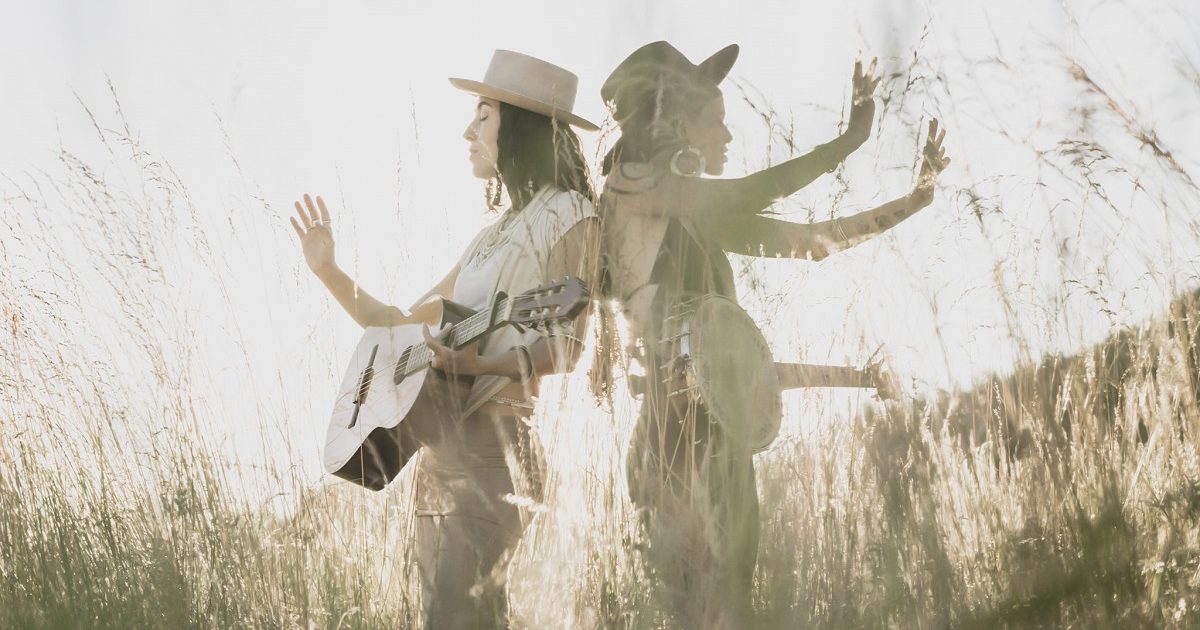
Hear Six of Our Favorite Instrumentals on IBMA’s Second-Round Ballot

We debuted Tunesday Tuesday in January 2018 for a pretty simple reason. Roots music has a world-class stable of talented pickers, and unlike other more commercial genres, that talent is something of a prerequisite. Whether blues or bluegrass or country or folk, there’s something about American roots music that goes hand in hand with virtuosic playing ability. It’s one of the main reasons BGS loves string band music. 

The 20 tunes that advanced to this year’s second-round IBMA ballot in the Instrumental Recording of the Year category showcase a wide range of the talent that draws us to instrumentals, so why not go through a half-dozen of our favorites? Some of these folks have been featured in their own Tunesday Tuesday before, some are newcomers, but two things unite all of them: You’ll be tapping a toe and looking up whether your IBMA membership has lapsed or not after listening to any of the following instrumentals. 

“Bish Bash Bosh” – David Benedict

An outlier in this category for more than one reason, mandolinist David Benedict’s “Bish Bash Bosh” is a breath of fresh air thanks to its tender intro, its languid tempo, and the musical wiggle room afforded to the track by each. Fiddler Mike Barnett and IBMA Award-winning veterans Missy Raines (bass) and David Grier (guitar) are each sensitive, empathetic sounding boards for Benedict’s themes, unspooling and embellishing them expertly. More tender-yet-gritty instrumentals in this category going forward, please!


“Big Country” – Gena Britt

Can’t get much more bluegrass than a tune like “Big Country” and Gena Britt’s right hand! The Sister Sadie banjo player’s solo album, Chronicle: Friends and Music, showcases not only her spotlessly crisp, bread-and-butter approach to Scruggs-style banjo, but her singing voice and her sparkly group of musical friends, too. It’s refreshing to hear banjo playing that’s truly unconcerned with ego, while remaining happily in a pretty much traditional lane. If it ain’t broke, after all… 


“Princess and the Pea” – The Gina Furtado Project

Two incredible, banjo-playing Ginas/Genas back to back! Gina Furtado’s debut record with her band, the Gina Furtado Project, features this delightfully medieval, fairy tale tune with a more-joyful-than-most minor-key motif. Furtado reminds all of us that her playing contains many more influences than we often assume, with subtle call backs to Tony Rice and John Carlini-tinged eras in bluegrass’s new acoustic circles. Even the tune’s production guides listeners’ ears in this direction. It’s another excellent sonic “ear break” on the ballot.


“Soldier’s Joy” – Jesse McReynolds (Feat. Michael Cleveland)

A Bluegrass Hall of Fame inductee and the oldest living member of the Grand Ole Opry, Jesse McReynolds epitomizes what it means to be a bluegrass legend and forebear — and he’s still picking. On a recording with umpteen-time IBMA Award-winning fiddler Michael Cleveland, McReynolds shows his audience exactly why he deserves every accolade he’s received and more. Given his age (McReynolds will turn 91 this year) and inevitable decline in mobility and dexterity, you’d expect a gracious caveat herein to allow for the recordings “warts” and “raw moments,” but damn if his playing isn’t as clean as ever! An award-winning, award-deserving mandolinist, no doubt.


“Chickens in the House” – Deanie Richardson

That fiddler, educator, and multi-instrumentalist Deanie Richardson does not have an IBMA Award unto herself yet is a true injustice. Also a member of Sister Sadie with Gena Britt, Richardson has been a lifelong presence in bluegrass and fiddle contest scenes around the US, and has toured with Vince Gill, Patty Loveless, Bob Seger, and been house fiddler on the Grand Ole Opry. “Chickens in the House” features some timeless fiddling chicken imitations, as well as a languid backstep feel that clicks up a few BPM as the band goes, so watch your feet should they get to shufflin’ without your say-so.


“Guitar Peace” – Billy Strings

Until snagging his first proper IBMA Awards just last year for Best New Artist and Guitar Player of the Year, flatpicking phenomenon Billy Strings has gone generally underappreciated by voting members. His crowds, his shows, and his fans are extraordinary in bluegrass, jamgrass, and similar communities – the roots music sphere continues to watch his ascent with something like a slack jaw. Though it’s unlikely he’ll dominate this year’s IBMA Awards, this trance, solo acoustic guitar track, “Guitar Peace,” which features a calming, buzzing drone and plenty of Strings’ trademark six-string acrobatics, deserves the nod. 


Photo credits: David Benedict by Louise Bichan; Gena Britt courtesy of the artist; Gina Furtado Project by Sandlin Gaither; Jesse McReynolds still; Deanie Richardson by Kerrie Richardson; Billy Strings by Shane Timm. 
BGS Long Reads of the Week // June 5

Welcome to another conglomeration of diverting, entertaining, and engaging long reads! The BGS archives never disappoint. As we share our favorite longer, more in-depth articles, stories, and features to help you pass the time, you should follow us on social media [on FacebookTwitter, and Instagram] so you don’t miss a single #longreadoftheday pick! But, as always, we’ll put them all together right here at the end of each week if you happen to let one sneak by you, too.

This week’s long reads are educational, meandering, inspiring, and much more. Read on:

On New Duet Album, Laurie Lewis Gathers Old Friends and Close Companions

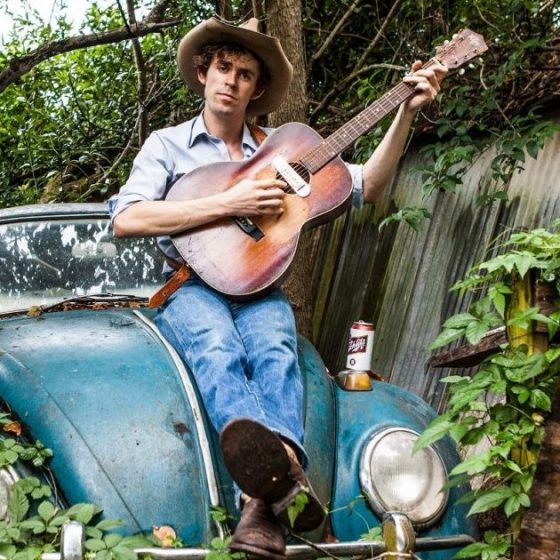
May went by in a blink of an eye (how did this happen!?) and we had to say goodbye to our Artist of the Month, Grammy and IBMA award-winning multi-instrumentalist and songwriter Laurie Lewis. In our two-part May AOTM interview, Lewis gave us insight into the making of her new duet album, and Laurie Lewis, and talks a little bit about wanting to measure up to others’ view that she’s a trailblazer and role model in bluegrass. [Read more]


For First Solo Album, Sam Doores Opens the Map of Musical Influences

In a meandering feature we follow singer/songwriter and lifelong troubadour Sam Doores from the Bay Area to New Orleans to Berlin to his first solo album, which is filled with echoes of everything from Tin Pan Alley to the Mississippi hill country, from jazz to psychedelic-folk-rock. The Hurray for the Riff Raff alumnus has co-created some of the last decade’s most arresting socially-conscious anthems with HFTRR, and he’s also made sparkling folk- and country-derived excursions with his own band, the Deslondes. [Read more]


The Ebony Hillbillies: Becoming Part of the Music

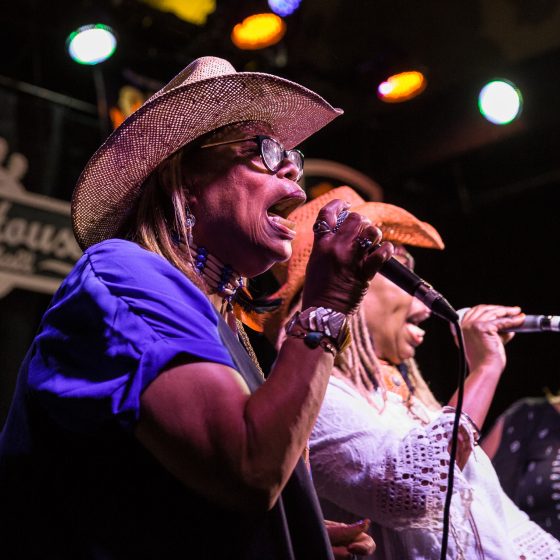
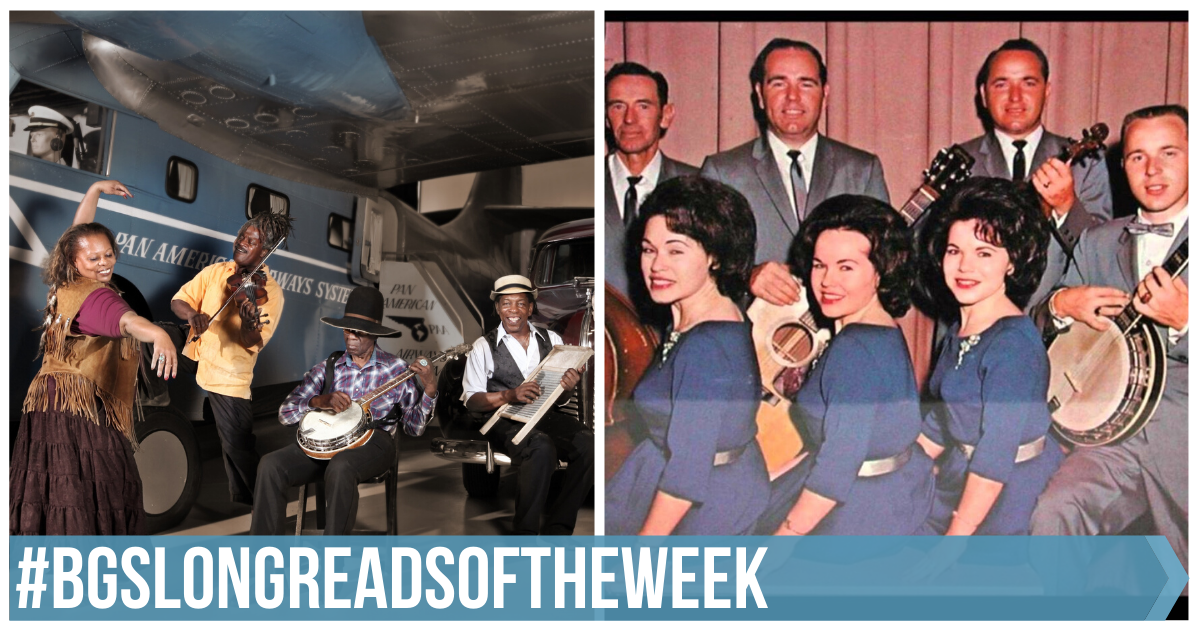
In 2017, Henrique Prince and Gloria Thomas Gassaway — of the legendary and long-running New York-based, Black string band, the Ebony Hillbillies — gave us an excellent primer on how Black folks ostensibly invented bluegrass music. We could all use a reminder of this fact, given how Black contributions to old-time, bluegrass, and string band musics are more often than not erased — and this true, more fleshed out narrative enables us, the roots music community, to unabashedly lift up Black stories and Black lives in full voice at this current moment of crisis. [Read the interview]


7 Bluegrass Family Bands You Need to Know

Bluegrass Bands

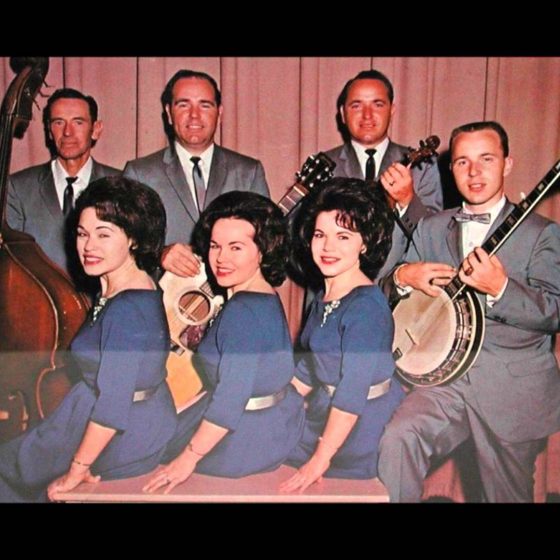
From the Monroe Brothers and the Stanley Brothers to Cherryholmes and Flatt Lonesome, the matching outfits, tight harmonies, and long-lasting careers of family bands are an integral part of what makes bluegrass bluegrass. Here are a few lesser-known, underrated, or too-often-forgotten family bands that you ought to spend some quality time with — a classic from the BGS archives. [See the list]


Canon Fodder: Tracy Chapman, Tracy Chapman

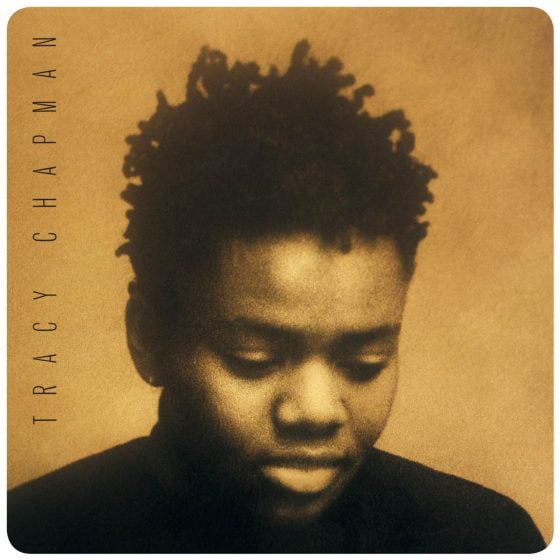
Tracy Chapman’s music is ceaselessly relevant, it’s true. Still, her self-titled, 1988 album has a much more broad, eclectic musical palette than we often give it credit for. Its themes surrounding her Blackness continue to distinguish her from her peers and most common comparisons, demanding a more nuanced approach to considering the ongoing impact of Tracy Chapman. [Read our archived edition of Canon Fodder]


Christian Sedelmyer, “Brain Scan”

If you have happened to spend any amount of time inside an MRI machine (as this writer has), you’ll know it’s not a particularly comfortable experience. Claustrophobia is almost guaranteed, as your body is ushered into a tiny, cramped tube where patients are instructed to lay impossibly still for as long as the gigantic magnet and coils rotate, whine, and grind around your body. If you’re lucky, and your particular imaging orders don’t require otherwise, some MRI machines are equipped with music through magnet-safe earbuds (“What Pandora station would you like to listen to today?”) or, in one rare case for this writer, Netflix was projected through a series of relayed mirrors to allow Parks & Recreation to appear within the machine.

MRI machines are loud, and the noise is not particularly pleasant. Bumping and squealing and repetitive clunks and bangs become like a sound bath, as your brain attempts to make sense of the cavalcade of random noises. Some patients pick out sounds and gibberish syllables from the noise (I often hear “DAD! DAD! DAD! DAD! DAAAAD!”), while others simply let the cacophony wash over them hypnotically. Others cannot help but be swept away by the adrenaline-boosting, horror film-esque atonal soundtrack.

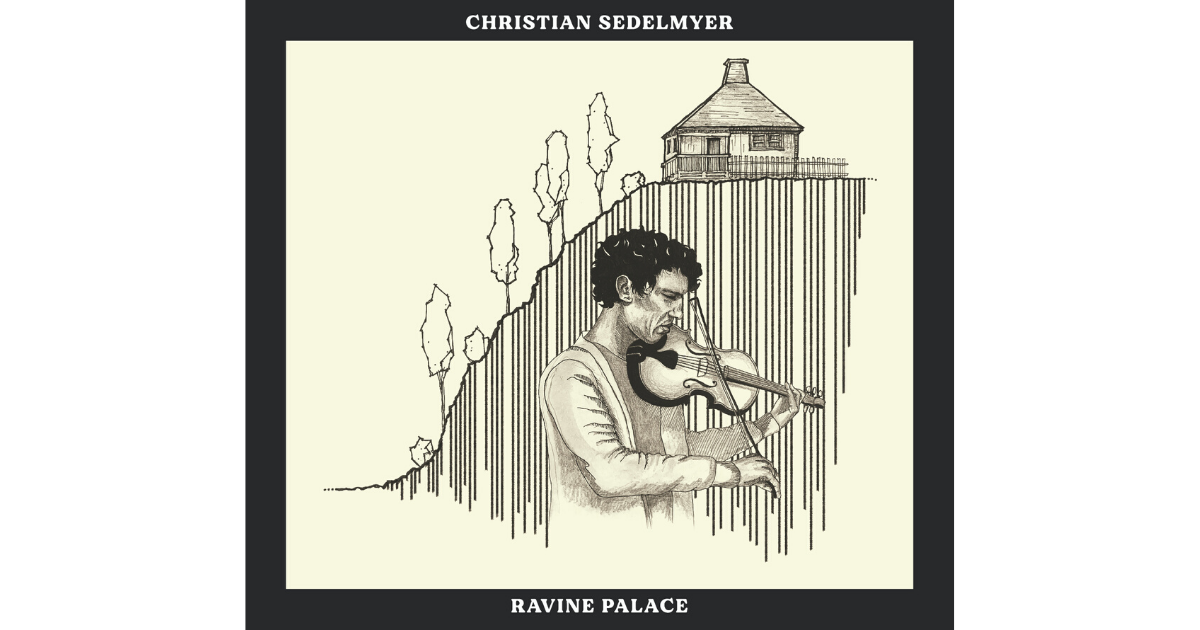
On his brand new solo album, Ravine Palace, Grammy-nominated fiddler Christian Sedelmyer (Jerry Douglas Band, 10 String Symphony) proffers a gorgeous alternative to that soundtrack. “Brain Scan” is a tune that certainly calls to mind the prerequisite din of an MRI machine, but with slippery bowed chromaticisms and Sedelmyer’s signature musical wit — plus a healthy dose of joy, something often suspiciously absent from radiology departments. Andrew Marlin (Mandolin Orange) on mandolin, Eli West (Cahalen Morrison & Eli West) on guitar and clawhammer banjo, and Clint Mullican (also Mandolin Orange) on bass follow along with rapt attention, combining the detail-affixed listening of chamber music with the sly lilt and energy of old-time.

Even while the foursome toys with the dissonant themes of the melody throughout the tune the aesthetics here will always be more palatable, enjoyable, and irresistible than a gigantic piece of magnetic medical equipment — no one is surprised, here — but “Brain Scan” still captures the anxieties, uncertainties, and inevitabilities of such a procedure uncannily. In a package any listener would be happy to encounter, whether through scan-safe earphones or not.

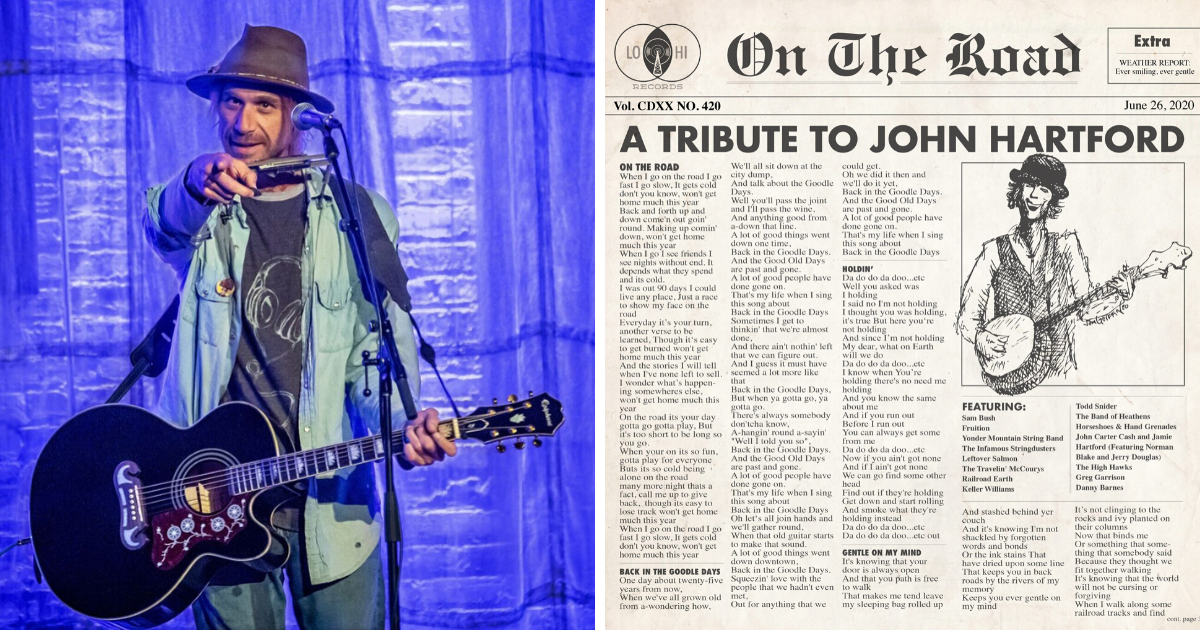
LISTEN: Todd Snider, “I Wish We Had Our Time Again” (A Tribute to John Hartford)

Artist: Todd Snider
Song: “I Wish We Had Our Time Again” (John Hartford cover)
Album: On The Road: A Tribute To John Hartford (to benefit MusiCares)
Release Date: June 26, 2020
Label: LoHi Records

In Their Words: “John Hartford was a leader on three sides of our town — the bluegrass side, the hippie side, and the troubadour side. I can’t think of anyone else like that. He wrote poetry, played banjo, and exuded freedom at as high of a level as you can. I appreciated getting to be the one who sang this song, because it’s exactly where I am in my life. Me and my friends starting singing in the ’90s and made all the music we could, still do, but now we’re kinda grey and rooting for the younger ones, and wishing we had our time again.” — Todd Snider


Photo credit: Rich Chapman

WATCH: Old Crow Medicine Show, “Quarantined”

Artist: Old Crow Medicine Show
Hometown: Nashville, Tennessee
Song: “Quarantined”
Release Date: May 15, 2020

In Their Words: “Hey Bluegrass Situation friends, the Old Crows are wishing you all health and wellness this spring. We’ve been going a little stir-crazy here in Nashville as of late, but thankfully the healing power of music has been particularly strong and the band and I have felt some deep cleansing thanks to new songs and projects. The latest is a tune written and recorded under self quarantine, with a little homespun video that embraces the crazy homeschool dad feeling so pervasive around my house. So… sit back, put on your face mask, and pucker up!” — Ketch Secor, Old Crow Medicine Show


WATCH: Lena Jonsson Trio, “Rallpersgubben kör timmer”

Artist: Lena Jonsson Trio
Hometown: Järvsö, Sweden
Song: “Rallpersgubben kör timmer” (“Old man Rallper drives timber”)
Album: Stories from the Outside
Release Date: May 2, 2020.
Label: Hedgehog Music

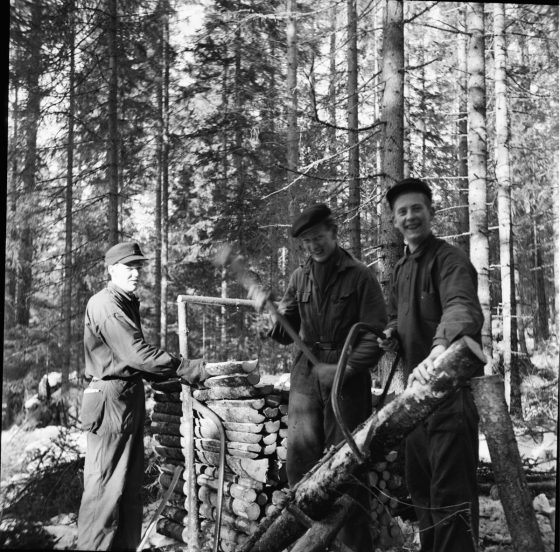
In Their Words: “I was visiting my parents’ house, where I grew up, over Christmas and they had been looking at old archive photos from the village. It was photos of people, houses, and forests. There was one specified photo of Rallpersgubben that caught my attention when he was working in the forest with some friends. It was such a nice document on that time and life in the village, so I got really inspired and wrote this tune.” — Lena Jonsson


LISTEN: Turkeyfoot, “In the Mountains”

Artist: Turkeyfoot
Hometown: Denver, Colorado
Song: “In the Mountains”
Album: Promise of Tomorrow
Release Date: June 5, 2020

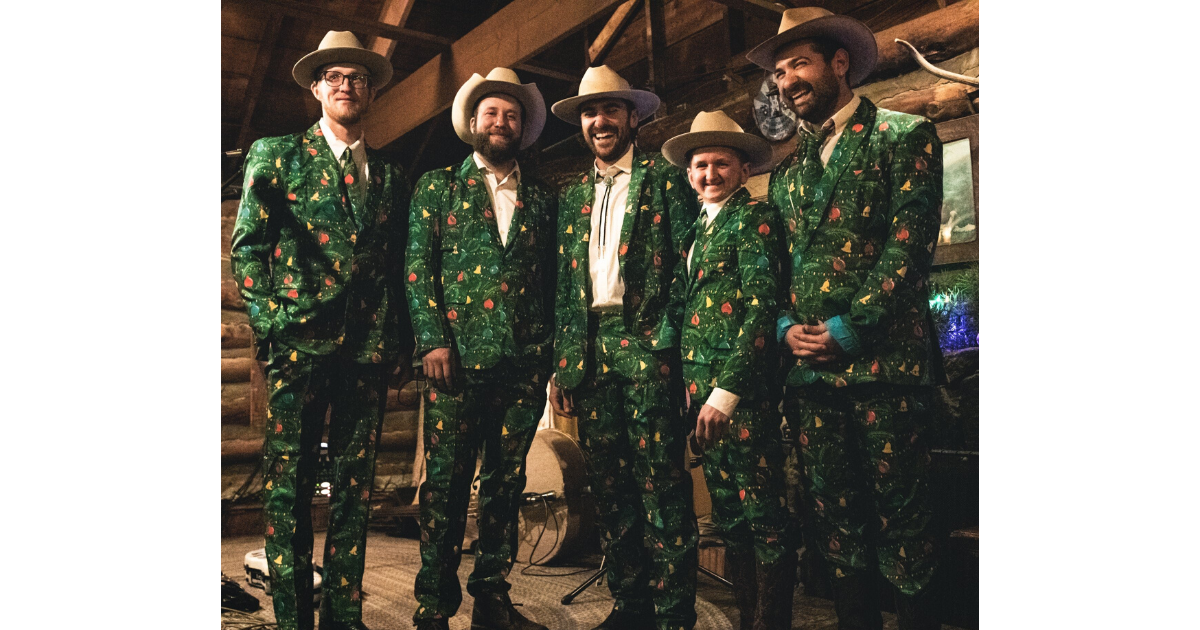
In Their Words: “‘In the Mountains’ is a song following the old-school bluegrass vein of ‘cabin songs,’ but with a bit more modern feel to the arrangement and dynamics. The song was written by guitar/dobro player Dave Pailet and arranged collaboratively by the members of Turkeyfoot. An isolated cabin buried deep in the winter snow and the surrounding mountainside serve as the backdrop for a story of loss, mourning, and a burning question, forever unanswered. We hope you enjoy this single and invite you to check out our first full-length album released on June 5th!” — Turkeyfoot


Photo credit: Chris Weist of Woodbelly

Building on Double Banjo, The Lowest Pair Concoct ‘The Perfect Plan’

The Lowest Pair may be best known as a double-banjo folksinger duo, yet their new album is a full-band effort that somehow sounds like a complete departure without actually straying from home. It’s a fitting theme, considering that the release of The Perfect Plan – their sixth album in seven years – arrives during a global pandemic. BGS spoke with bandmates Kendl Winter and Palmer T. Lee as they were isolated in separate homes in Olympia, Washington.

“We’re supposed to have been on the road now — a couple of festivals the past couple of weeks,” says Winter, who spent this past winter in Antarctica working at a scientific research station and running the annual South Pole Marathon, in which she set a women’s time record. “We were thinking we were going to hit the ground running and now we’re just hitting the ground, trying to figure out how to promote the record in this new paradigm.”

On the bright side, with any luck, the fact that everyone is stuck at home will provide plenty of time to digest The Perfect Plan’s complex instrumentation and intuitive arrangements, worked out with multi-instrumentalist and producer Mike Mogis (Bright Eyes). Although previous efforts feature the stripped-down duo sound fans have come to enjoy in their live sets, this project is a little more aurally ambitious. Listeners still get their banjo and acoustic guitar, but these are afloat amid bass, drums, and electric guitar with all its effects.

“We wanted to hear what [our music] would sound like with a bigger sound,” Winter says. “We went into the studio pretty open to what Mogis was thinking, in terms of production. I think we both have dreamed about having drums and bass behind us. It’s not as easy to do on the road, but it was kind of a fantasy record.”

Lee, a Minnesota native who spent his winter at a writing retreat in Wisconsin, agrees. “We’ve definitely been talking about doing bigger band stuff in different ways over the years. Logistically, it’s a bit of a challenge and a bit of a gamble, I suppose. Being a duo, you keep your overhead pretty low. It’s just simpler that way. But it’s definitely been a dream of ours for a while.”

The Lowest Pair began when Winter and Lee were playing in other groups. They spotted each other at a bluegrass festival. “I remember seeing Palmer’s string band and noticing a kindred thing he was going for,” Winter says. “He played the banjo but differently from other people, putting more notes in it. He has a soulful voice, saying stuff that isn’t very common in bluegrass music. He had a song about tea and I had a song about tea, about drinking tea. I felt like … we’re going for similar things from really different places, with different vehicles.”

That night, they spent hours jamming around a campfire. Though they continued to follow each other on social media, it was another five years before their paths crossed again. Both were considering solo projects and decided instead to join forces, ultimately naming their duo after a John Hartford poem.

Winter remembers: “Palmer got a hold of me and said, ‘You look like you need a singing buddy.’ He proposed the idea of doing an album together. As soon as we started singing together people responded immediately. Both of us were like, ‘Well, we’ll just do this.’ We kind of had shows lined up before we even had a band, because I had been working on a solo project and no one really minded that I came with somebody else.”

As it happened, when that summer wrapped, Lee had studio time booked with Dave Simonett of Trampled by Turtles as producer. “I was going to do a solo record and then I [told Dave], ‘Hey, I’m working on this new project. Let’s do this instead.’ That’s when 36 cents happened,” Lee says of the duo’s 2014 debut album.

A string of quickly-released projects followed as Winter was on a roll, churning out great songwriting for one recording after another. Somewhere along the way, the duo got into a rhythm, barely even needing to break from a tour in order to jump into a studio and produce another album. But the idea of, at some point, slowing down long enough to put a full-band effort together kept gestating. They wanted to explore sounds beyond bluegrass, to see how their songs might be able to stretch them in new directions.

By the time they visited Mogis’ studio in Omaha last year, they knew almost instinctively that it would be the place. Though Winter and Lee stuck to the core of their sound on The Perfect Plan, balancing their banjos and vocals, there are a few tracks where they veered especially far from the norm.

On “Morning Light,” for example, Winter played most of the instruments herself while Lee simply added vocals. “We decided not to have banjo on the track,” she says. “That was one we actually did [with] layers and built it up. We had a vocal line that was … kind of an obnoxious vocal line that didn’t really work. We wrote lyrics for that song during the time we were there. That one got fleshed out in the studio. But, most of [the songs] we performed all together with the band, so it was really like, ‘Learn the song and let’s go.’”

“Mike had the demos for a couple of months before we came in,” Lee adds. “He had all sorts of ideas and had some musicians in mind. Then it kind of just happened organically. Kendl and I started playing through the songs and everyone would start jamming. It was pretty awesome.”

Mogis encouraged the duo to bring their own drummer, so they roped in Minneapolis mainstay J.T. Bates (Bonny Light Horseman, Big Red Machine). Fans of bluegrass know well that banjos and drums don’t always mix, as the latter can so easily overpower the percussive tonality of the former. Luckily Bates’ subtlety is so on-point his rhythms seem to follow the duo’s acoustic strings, rather than the other way around.

Lee explains, “On that ‘Wild Animal’ track, for instance, we just started jamming. Rather than drive the song in a particular direction, J.T. was able to find the best way to accent what was already happening.”

“Sometimes as we arrange, we fill up the space according to how we’re going to play as a duo,” adds Winter. “On the one hand, it gives us endless options. On the other hand, it gives us really limited options as to how many different sounds we can do as two people. But I think we left some space on these tunes to let people be creative. We didn’t want to get in there and have too strong an idea [of how everything should sound] because we knew Mike was magic and we wanted him to have a voice in it.”

Thanks to this somewhat laissez-faire approach, the arrangements are deeply intuitive, an extension of the intimate pairing of the duo itself. Rather than drown out the delicate subtlety that makes the Lowest Pair such a stirring band in the first place, The Perfect Plan centers the duo well and allows their unique vibe to lead the way.

The result is so sonically pleasing, it can be easy to forget there are so many people in the room behind the group. Winter and Lee had planned to pull that studio band together for a few live dates once the album dropped, but that part of the release schedule is on hold for now. Luckily, there’s plenty of richness on this album to dig into in the coming weeks.

But if The Perfect Plan is the album the Lowest Pair has been building up to for years, don’t mistake the duo for having hit their stride.

“A stride implies it was kind of smooth,” says Winter, provoking laughter from her bandmate. “I think we just got hooked on each other and the project has a momentum. I think we just kind of rolled into a lifestyle where this is what we do.”


Photo credit: Sarah Kathryn Wainwright

WATCH: Midnight Skyracer, “Average Faces”

Artist: Midnight Skyracer
Hometown: Stroud, UK
Song: “Average Faces”
Album: Shadows on the Moon
Release Date: June 5, 2020
Label: Island Records

In Their Words: “I got the seed of inspiration for this song after overhearing a conversation outside a pub: a man’s futile attempts to chat up a woman starting with ‘I’m sure I know you from somewhere,’ with her response being ‘I don’t think so, I’ve just got one of those average faces.’ A couple of days later I wrote a rough outline of a chorus and a first verse and then roped in my twin sister (and guitarist in the band), Charlotte to help form it into a full song before sending it to the rest of the band.

“This one really came together in the studio when we added the drum track, the only part on the album not played by a band member. It was actually one of the very last things we did. We were in our final couple of hours at Real World Studios and had packed down all the mics and dividers we’d had set up for the week so that our brilliant engineer, Josh Clark, could get his drum kit set up. He was just about to go in for his first take when he smacked his head hard on one of the heavy counterweights used to balance the overhead mics. Josh may have been slightly concussed, but he nailed the part all the same!

“For the video for this song we had initially booked in to use quite a different venue, but having waited outside that one for an hour or so (eventually it turned out that the owner had had a family emergency and left their phone at home) Eleanor and Leanne started wandering about town asking in every pub, bar, and restaurant, if we could use their space to film a music video. The wonderful people at Cru Wines, Bradford on Avon, very kindly obliged and let us use their upstairs room for the day. We were all very good and held off drinking the delicious glasses of wine we used as props until we’d finished filming!” — Laura Carrivick (fiddle and dobro), Midnight Skyracer


Photo credit: Elly Lucas

WATCH: Rising Appalachia, “Stand Like an Oak”

Artist: Rising Appalachia
Hometown: Atlanta, Georgia
Song: “Stand Like an Oak”
Release Date: April 22, 2020 (Earth Day)

In Their Words: “I wrote this song for a loved one going through the wave and arc of depression and anxiety, someone whom I wanted to sing a reminder to to find her roots and footing when the wind blows strong. Mental health is a gripping mountain for so many people to climb, and this song honors that journey as well as the people who pull us up out of it. Now, in the time of corona, we are seeing the necessary roles of music and healing practices in our abilities to see through this pandemic and stay steady on our course of compassion and strength. This song sings, like the mighty oaks, of claiming your little piece of earth fiercely when the storms pass through.” — Chloe Smith, Rising Appalachia

“‘Stand Like an Oak’ is a song to remind us of our innate sturdiness and deep roots in this vital dark soil of earth, the innate presence and stability of the oak tree as our model and muse of calmness in the great storms. In a time of so much unknown and anxiety around what is to come we must remember that we always have the tools of the deep ground beneath us, and the ritual for rushing waters to wash away that which does not serve us. Lean into this quiet, earthly realm to fortify and strengthen. ‘Leave it by the angels of the water…'” — Leah Smith, Rising Appalachia


Photo credit: Hemmie Lindholm