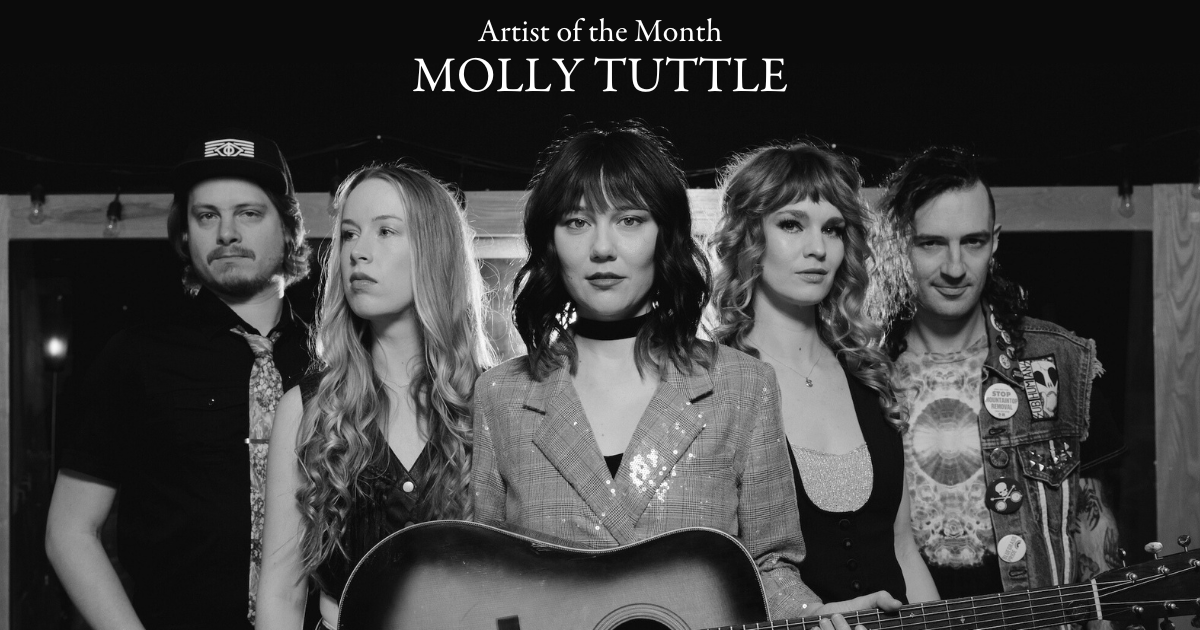
Artist of the Month: Molly Tuttle

Folks in the bluegrass world have been watching Molly Tuttle’s star rise since long before her Grammy-winning 2022 album, Crooked Tree, has added even more momentum to the award-winning flatpicker’s career. Though we first crossed paths much earlier, we spoke to Tuttle initially in 2017 for an edition of Deep Sh!t that put her and guitarist James Elkington on the phone together. Even then, Elkington went out of his way to laud Tuttle’s playing, placing it on the same level as his own. (Tuttle, in a turn of mutual admiration, praised Elkington’s picking above hers, of course.)

This is a consistent phenomenon in musicians, songwriters, producers, and instrumentalists who encounter Tuttle’s work: They are all astounded by it; They all feel and hear genius within it. Tuttle is sometimes – no, often – your favorite musician’s favorite musician. Certainly your favorite musician’s favorite flatpicker.

At numerous points over the years since that first interview, the BGS team has latched onto songs and recordings by Tuttle. We’ve had the privilege of inviting her to join BGS lineups and stages and we’ve published more than a handful of interviews, as well, watching and documenting a career and creative output that continue to enjoy rapid-yet-meaningful growth. From our earliest premiere of “Good Enough” all the way to anchoring a BGS Cover Story, as Tuttle has advanced through the music industry, we’ve watched and written about those changes and the distance she’s traveled.

It’s fitting, then, as Tuttle and her band, Golden Highway, ready a second album on the heels of the wildly successful Crooked Tree, that they should at last be named BGS Artist of the Month. We know listeners and fans, whether brand new or veteran, will understand and appreciate how much pleasure and joy we have gained over the years from Tuttle’s songs, her creative vision, her passion, and perhaps above all, her fiery picking. It makes naming Tuttle our Artist of the Month that much more gratifying, highlighting the real reason we make BGS in the first place: our community.

After having a star-studded roster on Crooked Tree helmed by producer (and guest artist) Jerry Douglas, Tuttle has focused her vision slightly for City of Gold, which releases July 21 on Nonesuch Records. Douglas returns as co-producer. The new album, like the former, drips with the imagery, mythos, and mystique of California, drawing on West Coast influences like the Grateful Dead, Laurie Lewis, Kathy Kallick, and folk revival, troubadour singer-songwriters. But, instead of a rotating cast of characters and besides a stout handful of featured artists, this record centers Tuttle and her full-time road band, Bronwyn Keith-Hynes (fiddle), Dominick Leslie (mandolin), Shelby Means (bass), and Kyle Tuttle (banjo).

This lineup and the material of the Golden Highway era all seemingly mock the rare critics and naysayers of Tuttle’s music, who, especially in the earliest days of her career, could sometimes be heard describing her songs and singing as toothless or lacking energy or grit. At their sold out theater and club headline shows or in front of thousands at music festivals, Molly Tuttle and Golden Highway’s performances are jaw-dropping, electric (literally and figuratively), and enormous – fully realized. It’s jamgrass without valorizing toxic masculinity; it’s “MASH,” but with taste; it’s a shredfest, but it’s also emotive and vulnerable and theatrical.

That Tuttle’s found her stride while “returning” to bluegrass – whether intentionally, subconsciously, or merely as a framing and narrative device – is striking and impressive. There are many songs, stages, and Artist of the Month features yet to be conquered down the Golden Highway.

Watch for a special Artist of the Month episode of Basic Folk later in July featuring Tuttle as well as an interview with her band, Golden Highway. For now, enjoy our Essential Molly Tuttle Playlist.


Photo Credit: Chelsea Rochelle

LISTEN: Jeremy Garrett, “How Low” (feat. Bonnie Sims)

Artist: Jeremy Garrett
Hometown: Loveland, Colorado
Song: “How Low” (featuring Bonnie Sims)
Release Date: July 7, 2023
Label: Organic Records

In Their Words: “‘How Low’ is a cover of a solo artist named José Gonzalez. He describes the song as being about ‘mindless consumerism.’ I fell in love with the vibe this song encompasses and had a vision to see what it would be like to produce the song as a bluegrass-type ensemble piece. I brought in a couple of special guests for this one — Bonnie Sims of Taylor and Sims, Everybody Loves An Outlaw, and Big Richard is my singing partner (and she tears it up!) I also had Ryan Cavanaugh guest on banjo. I hope you dig it!” – Jeremy Garrett


Photo Credit: George Trent Grogan, Mountain Trout Photography

Alison Brown and Sierra Hull Swap Licks on Classical-Flavored Tune

Two of the most accomplished musicians in bluegrass – certainly two of the most notable women players in the history of the music – have joined together on a mind-blowing chamber-grass duet. Alison Brown, the first woman to win the Banjo Player of the Year Award from the IBMA, and Sierra Hull, the first woman to win Mandolin Player of the Year, joined forces on Brown’s recent album, On Banjo, and a classical-influenced original tune, “Sweet Sixteenths.”

Both Brown and Hull are virtuosic players adept in many styles and “Sweet Sixteenths” shows just how effortlessly they bring bluegrass improvisation and energy into what’s regarded as a more stoic format, creating an exciting, jaw-dropping, impossibly complicated – yet, totally down to earth – sound. Their synchronicity is just as impressive, inspiring a sort of wonder that chamber-grass is well known for: How much of this is planned out, and totally written-through, and how much is off-the-cuff and in the moment?

Bluegrass pickers are so well equipped to confound and delight us with these sorts of questions and that fact is no more apparent than in this live, studio performance video by Brown and Hull. We hope you also enjoy “Sweet Sixteenths.”


WATCH: Bibelhauser Brothers, “Place In The Sun”

Artist: Bibelhauser Brothers
Hometown: Louisville, Kentucky
Song: “Place In The Sun”
Album: Close Harmony
Release Date: June 15, 2023

In Their Words: “In the past few years, Louisville, Kentucky has been shaken to its core, amid a global pandemic, racial inequity, gun violence, and the fallout surrounding the death of Breonna Taylor. Our hometown, seemingly a microcosm of the country at large, has struggled with social justice and a level of political unrest not seen since the 1960s. During a time when it felt impossible to find bits of optimism on social media I stumbled upon a video from way back in 1969. It was an epic duet with Stevie Wonder and Tom Jones singing ‘Place In The Sun.’ In the video, the two superstars traded off singing powerful lead vocals, then switched back and fourth singing harmony parts. This reminded me of how Aaron and I have traded singing parts on many of our songs over the years. The lyrics gave me hope that we might soon find ourselves moving to a better place, and the image of Stevie & Tom singing together at the height of the civil rights movement was beyond inspiring. I knew right away, this was a song we should sing together, and I hope our interpretation of it moves and inspires a new generation.” – Adam Bibelhauser


Photo credit: Winston Garthwaite
Video credit: Brennan Clark

WATCH: Larry & Joe, “Linda Barinas”

Artist: Larry & Joe
Hometown: Durham, North Carolina
Song: “Linda Barinas”

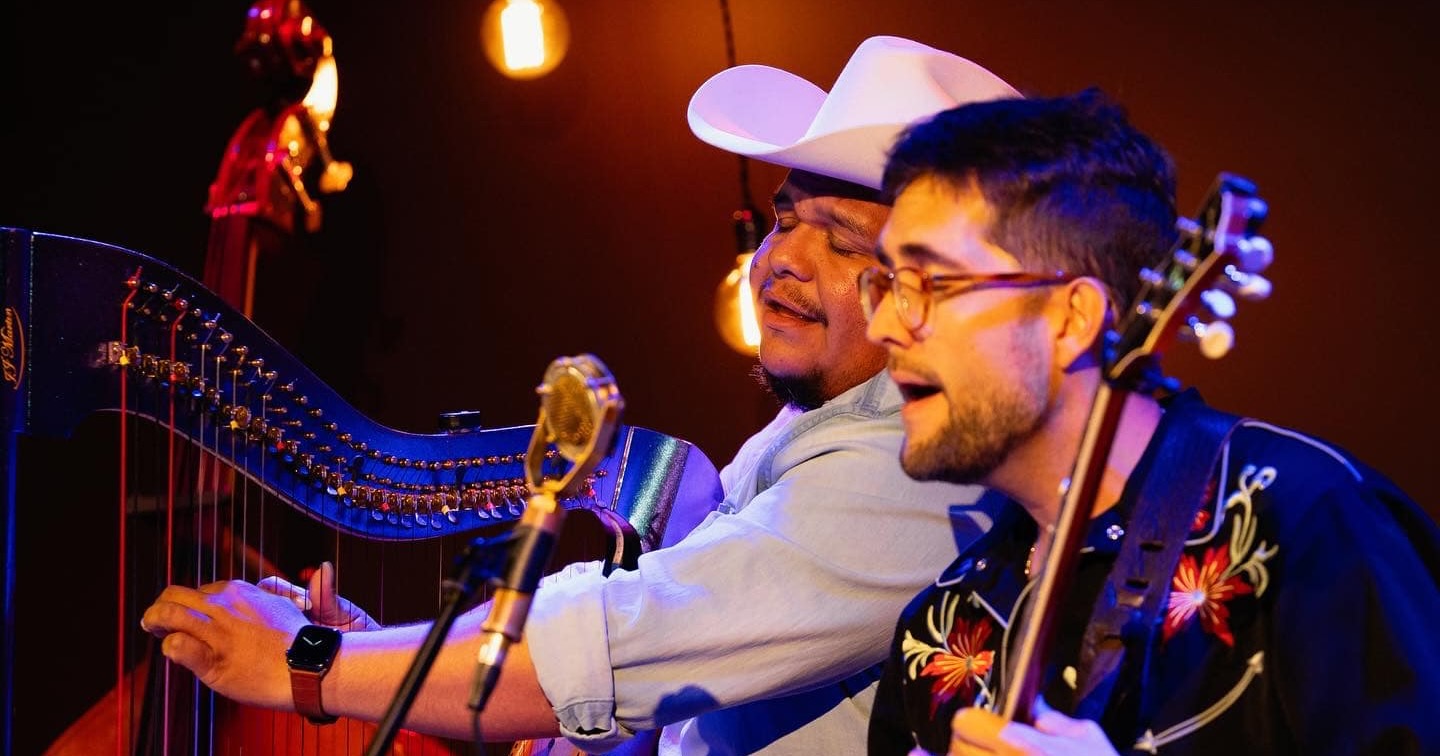
In Their Words: “’Linda Barinas’ is a song so well known that most Venezuelans can sing along.

“Eladio Ramón Tarife composed ‘Linda Barinas’ to honor his homeland, Barinas. It’s part of the Llano region and where this style of music, llanera, originated.

“The typical música llanera rendition would include harp, cuatro, maracas, bass and vocals, which makes our harp and banjo version quite unorthodox. Nonetheless, many Venezuelan traditional musicians have taken note of how seamlessly the five-string banjo melds with their instrumentation.

“Though Venezuela and Appalachia are thousands of miles apart, our folk traditions aren’t so different, and the sounds of our strings come together like old friends. Who would’ve thought?” – Joe Troop


Photo Credit: Billie Wheeler

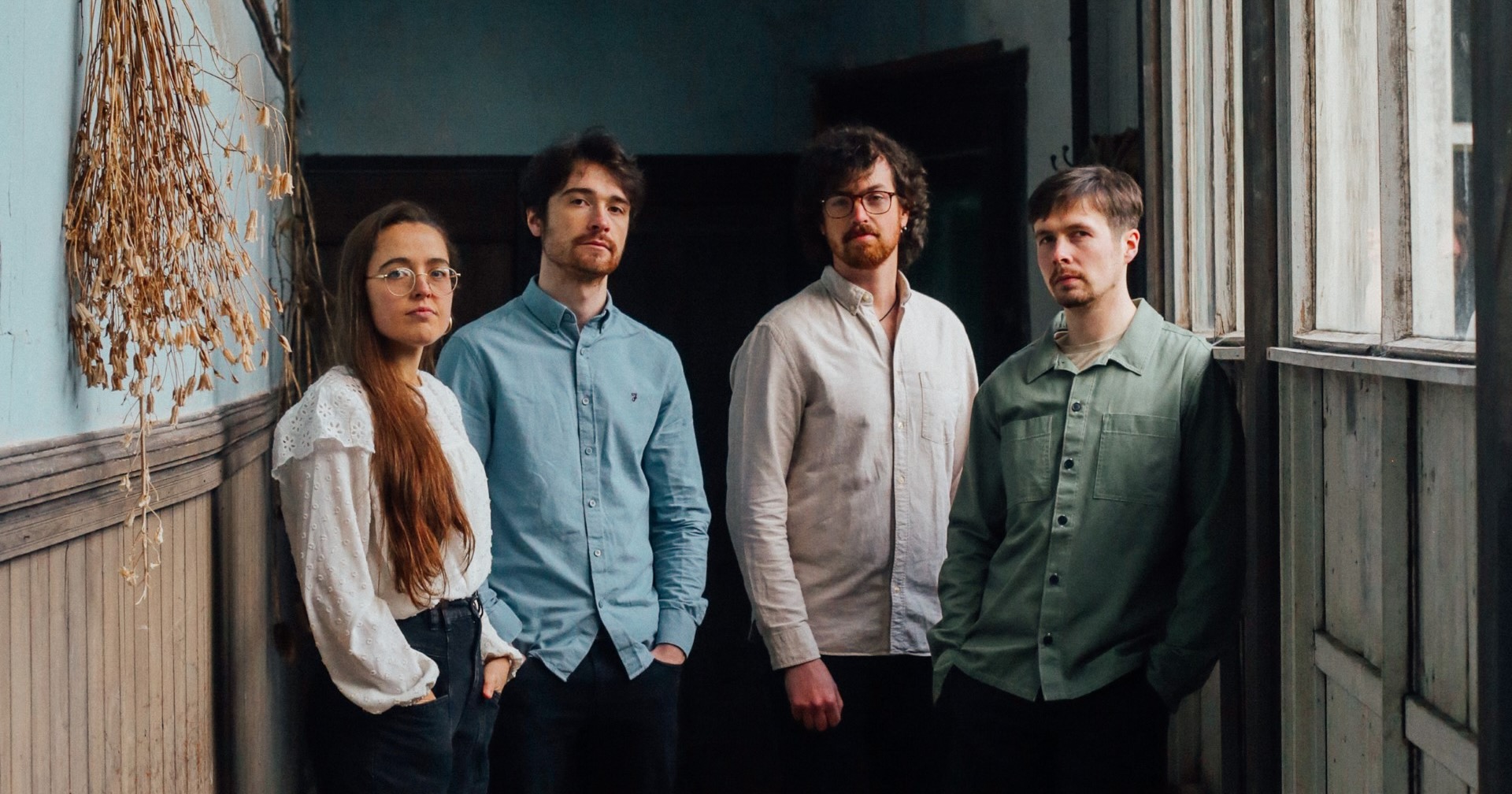
WATCH: Cup O’Joe, “Weathered & Worn”

Artist: Cup O’Joe
Hometown: County Armagh, Northern Ireland
Song: “Weathered & Worn”
Album: Why Live Without
Release Date: June 16, 2023

In Their Words: “All of us in the band take much inspiration from the areas we have grown up in, especially us three siblings who had spent most of our life in County Armagh, which is labelled the Orchard County of Ireland. So, there really had to be a song on this new album featuring our awe and love of trees.

“This song was written from the viewpoint of someone who is asking how this huge tree outside his window continues to stand firm and grow strong amidst the storms and the many years it has seen come and go. They are glad that its branches have sheltered their grandkids, and likely their great grandkids, but there is still a restlessness, an uneasiness, that someday, they, and it will stand no more. ‘But when I’m gone, we’ll still cry out together shouting, just waiting for the day of truth.’ The quietness and questions go hand in hand, to point us to the greater picture — that we can live in the hope that all things will be made new.” – Tabitha Benedict


Photo Credit: Katie Loughrin Photography 

Alison Brown: Record Label Founder and Bluegrass “Lifer”

When a craftsman pauses to reflect, students of all skill levels benefit from the lesson. Alison Brown’s latest album, On Banjo, released May 5 on Compass Records and is a masterclass; it’s also a study on where the instrument has been and where it’s going.

Brown is a Compass co-founder and a GRAMMY Award-winning artist and producer. A self-described “lifer” in the bluegrass community and an IBMA “First Lady of Bluegrass,” she eagerly explores what the five-stringed instrument can do outside typical genre parameters. The new record is packed with star-studded duets with comedian Steve Martin, mandolin player and fellow First Lady of Bluegrass Sierra Hull, and fiddle legend Stuart Duncan.

The result is a varied, rich track list we couldn’t wait to ask Brown about.

BGS: Let’s walk through some of the tracks and collaborations on On Banjo. What kind of music inspired the duet with Anat Cohen?

AB: Anat Cohen is a clarinetist; she was born in Israel and lives in New York, but she’s well-known in jazz circles for Brazilian choro. I actually watched lots of videos of Anat on YouTube.

I reached out. I said “I know we don’t know each other, but would you consider doing this?”

What’s it like working with a famous comedian like Steve Martin in a musical context?

I’ve had the good fortune to go out and do some shows with him and Martin Short. There’s inevitably some time to jam in the dressing room, so it’s fun to play with Steve in that context, too.

Steve’s a great banjo player with a really beautiful touch and a delicate, sweet tone. He loves playing in double C tuning. Banjo players usually tune to a G, but you can drop the fourth string to a C and tune the second [string] up to a C. It’s an old tuning that clawhammer guys use a lot.

The way “Foggy Mountain Breaking,” came about is I wrote the A section. It was during the pandemic. I asked Steve, “Do you wanna write a B part?” He sent me a perfect B section 24 hours later. We figured out a bridge together. It’s named after a lyric in a John Hartford song and is obviously a riff on “Foggy Mountain Breakdown.”

How does it feel to work with younger bluegrass talents like Sierra Hull? Is it gratifying to have a feminine duo on that track?

I wrote that tune hoping Sierra would be up for learning and recording it with me. I’m a huge fan of her mandolin playing; she’s another one with such a delicate touch. Her fingers just really dance over the fingerboard.

It required her to play every fret on the first string of the mandolin and she did it flawlessly. She said she’d never had a chance to work on such complicated music with another woman. So it’s a really special thing. It’s always a delight to play with Sierra, but to do a duet with her was like chocolate and more chocolate.

How do you balance two strong, independent main instruments like banjo and fiddle together, such as with Stuart Duncan?

Banjo and fiddle are just so complementary. They say a banjo and fiddle make a band, and they do.

I’ve known Stuart since he was 11 and I was 12. We go way back. And on this tune I want to give a tip of the hat to Byron Berline and John Hickman. Growing up in Southern California when we did in the ’70s, those two were the guys that everybody worshiped at the feet of. I wanted to try and capture some of that spirit, and I wanted to do it with Stuart.

Who is this album for, and what do you hope listeners take away from it?

That’s the existential question of the banjo player. And it is a bit of a challenge when you take the five-string banjo and go somewhere else with it. Earl Scruggs perpetuated a style and brought it to the masses that was just so electric. Most people think that’s all the banjo does and they don’t worry about its history before that. There’s a lot of voices inside the instrument; the bluegrass one has become the loudest one most recently.

It’s so interesting because at the beginning of the 1800s the banjo was found on plantations. Then white people appropriated that music in minstrel shows, performing in blackface. It’s deep in terms of what it says about our history and America’s original sin.
It went from being a Black instrument to being a white lady’s instrument. The Black voice of the instrument and the female voice of the instrument were both disenfranchised. There are gorgeous old photos of women in the 1890s holding banjos, and there were female banjo orchestras. I’m excited to see that re-emerging.

You started Compass Records with Garry West almost three decades ago. What’s on the horizon, and what are your goals?

All the labels were run by business people, not musicians. We said, “Why can’t musicians run a label for other artists?”

The other part is really wanting to build a label that can have a cultural impact and Garry and I are both invested in roots music. I’ve been a member of the bluegrass community since about 10 years old. I’m a lifer. The whole economy of the record business has been turned upside down and stirred and shaken eight times. We want to make sure this music not only survives but thrives into the future.

You mentioned growing up in SoCal. How is bluegrass there different from Appalachia?

There would be Eagles’ songs in set lists. It was wide open. When I first came east with Stuart and his dad, we drove around and did the festivals in 1978 or so, but it was rooted in the first generation bands’ repertoire.

On that trip we entered a band contest in Oklahoma and we played something we learned from a Richard Green record. It was a funky fiddle thing in E. I remember somebody coming up afterwards and saying “We don’t appreciate you knocking the music.”

What did you learn while making On Banjo?

The deep dive to find new melodies, and that process of discovery of the instrument, is the process of self-discovery. You get to the end and it teaches you something new about yourself.


Photo Credit: Russ Harrington

The Travis Book Happy Hour: Graham Sharp (Steep Canyon Rangers)

Graham Sharp has had the kind of career any banjo player dreams of. He started the Steep Canyon Rangers in college with a group of friends, immediately discovered he had a knack for songwriting, and the rest is history in the making. Twenty-three years, nine albums and a Grammy Award later, the Steep Canyon Rangers (behind the strength of Graham’s songwriting), have established themselves as one of the best bluegrass and Americana bands of their era. I was grateful for the chance to talk with this insightful artist, play some really beautiful music, and reminisce about our shared history. I hope you enjoy this episode of The Happy Hour.

LISTEN: APPLE • SPOTIFY • STITCHERAMAZON • MP3

This podcast is an edited distillation of the full-length happy hour which aired live on June 8th of 2022. Huge thanks to Graham Sharp and Julian Pinelli.

Timestamps:

0:05 – Soundbyte
0:34 – Introduction
2:56 – On the Carolina Guitar Celebration & Tony Rice
4:26 – “Home From the Forest”
8:46 – Introducing Graham Sharp
10:00 – Interview 1
25:54 – “Can’t Get Home”
30:06 – Interview 2
43:50 – “Coming Back to Life”
49:28 – Fiddle music!
54:35 – “Generation Blues”
58:17 – Outro


Editor’s note: The Travis Book Happy Hour is hosted by Travis Book of the GRAMMY Award-winning band, The Infamous Stringdusters. The show’s focus is musical collaboration and conversation around matters of being. The podcast is the best of the interview and music from the live show recorded in Asheville, NC.

The Travis Book Happy Hour Podcast is brought to you by Thompson Guitars and is presented by Americana Vibes and The Bluegrass Situation as part of the BGS Podcast Network. You can find the Travis Book Happy Hour on Instagram and Facebook and online at thetravisbookhappyhour.com.


Photo Credit: Sandlin Gaither Music Photography

WATCH: The Lonesome Ace Stringband, “Crossing the Junction / Deer River”

Artist: The Lonesome Ace Stringband
Hometown: Toronto, ON / Horsefly, BC
Song: “Crossing the Junction / Deer River”
Release Date: June 2, 2023

In Their Words: “The Junction is the neighborhood in Toronto that John and I live at either end of. In the early days of the pandemic, one of us would have to cross the Junction every time we wanted to get together to play music. There was such an uncertain and ominous vibe to everything at that time, even something as simple as walking across your own neighborhood seemed fraught and uncertain. I think you can feel that tension in this tune we wrote together.

“The second tune in this medley is named after a river I grew up fishing in Eastern Ontario. There are lots of waterfalls, and plunge pools as the river runs from pool to pool – I think you can hear it tumble along, especially in the first part of this tune.” – Chris Coole


Photo Credit: Joel Louis Varjassy

The Travis Book Happy Hour: Cristina Vane

I’d been searching for the right guests for the Happy Hour when a couple Instagram posts caught my eye. Two former guests had posted video of Cristina Vane playing the Station Inn in Nashville. I was struck by her distinct presence, slide blues style, and unique voice. Once I dug in I was also intrigued by her history and the path that had brought her to Americana music. I was relieved when she accepted my invite and it took us no time at all to fall into an easy rapport. I hope you enjoy this interview as much as I did.

LISTEN: APPLE • SPOTIFY • STITCHERAMAZON • MP3

This podcast is an edited distillation of the full-length happy hour which aired live on July 28th of 2021. Huge thanks to Cristina Vane and Mike Ashworth.

Timestamps:

0:05 – Soundbyte
1:15 – Introduction
2:32 – Bill’s introduction
3:50 – “Gentle on My Mind”
7:10 – Mike & Travis rap about John Hartford
8:00 – Monologue
10:03 – “I Will Lead You Home”
13:05 – Interview w/ Cristina Vane
29:34 – “Prayer for the Blind”
32:00 – “Heaven Bound Station”
34:06 – Interview w/ Cristina Vane
49:51 – “Rise Sun”
52:50 – “Talk About Suffering”
55:00 – “Make Myself Me Again”
58:20 – Outro


Editor’s note: The Travis Book Happy Hour is hosted by Travis Book of the GRAMMY Award-winning band, The Infamous Stringdusters. The show’s focus is musical collaboration and conversation around matters of being. The podcast is the best of the interview and music from the live show recorded in Asheville, NC.

The Travis Book Happy Hour Podcast is brought to you by Thompson Guitars and is presented by Americana Vibes and The Bluegrass Situation as part of the BGS Podcast Network. You can find the Travis Book Happy Hour on Instagram and Facebook and online at thetravisbookhappyhour.com.