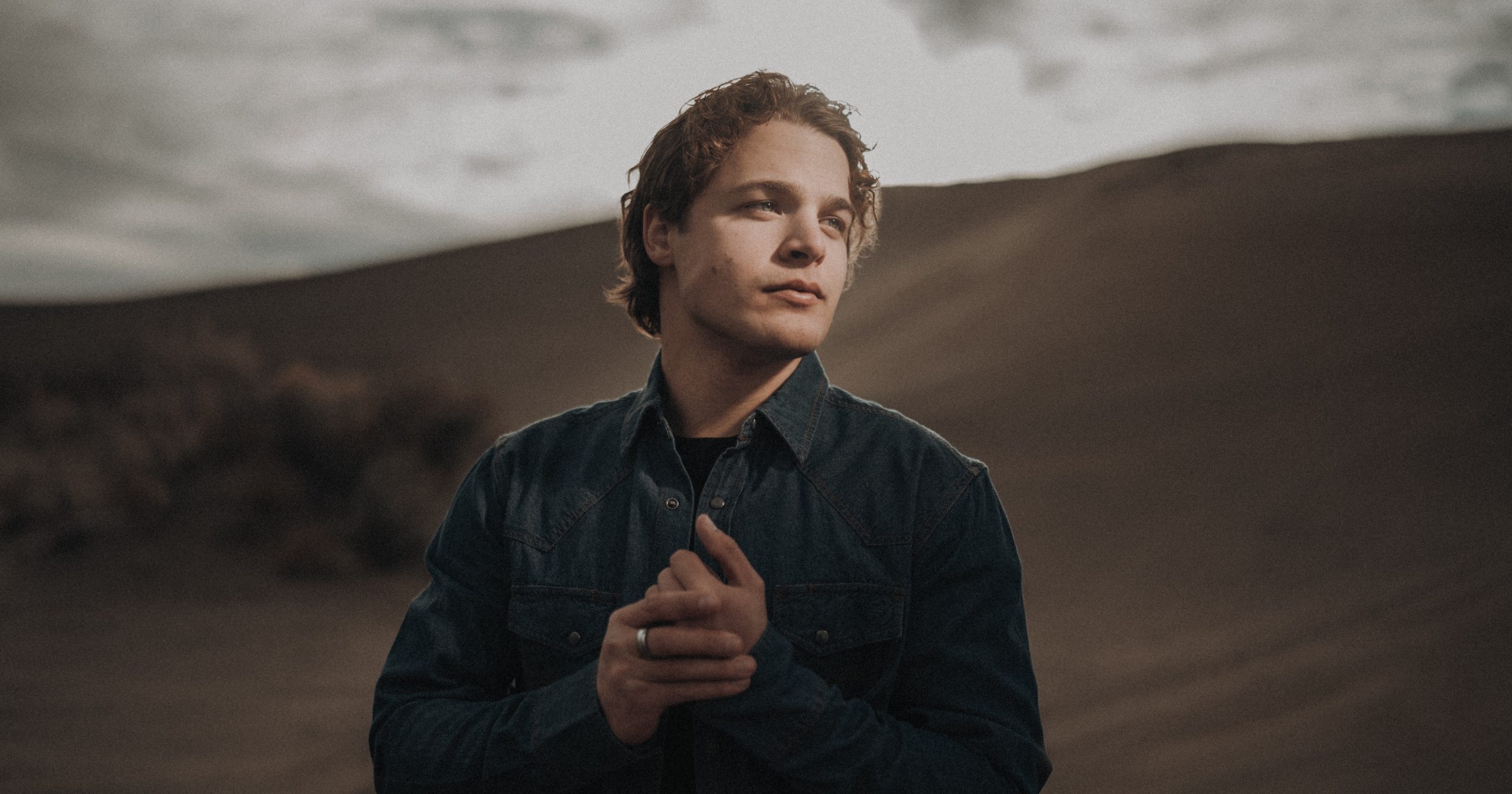
You Gotta Hear This: New Music From Ana Egge, Jaelee Roberts, and More

In the words of Chris Stapleton, “What are you listening to?” This week, our premiere round up is full of music we’re very excited to bring to your speakers and earphones.

Below, check out new videos from Ana Egge, Ordinary Elephant, and our brand new Rootsy Summer Session featuring Jim Lauderdale performing at a cute music shop in Falkenberg, Sweden. Plus, we’ve got new tracks from Jaelee Roberts, Parker Smith, Wyndham Baird, and Will Kimbrough. To top it all off, Phillip Lammonds performs “Forever Ain’t That Far Away” with his pal, the legendary Pam Tillis.

There’s so much to enjoy in our latest premiere round up, and if we do say so ourselves – You Gotta Hear This!


Ana Egge, “Door Won’t Close”

Artist: Ana Egge
Hometown: Ambrose, North Dakota
Song: “Door Won’t Close”
Album: Sharing in the Spirit
Release Date: May 17, 2024
Label: StorySound Records

In Their Words:“‘Door Won’t Close’ is about confronting an abusive person. One of the hardest things I’ve done in my life. I stood up to him on behalf of my sister and nephew. I opened the door to what he’d done by telling the truth and not allowing myself to be shut down by fear. Then I left the door open by telling his wife and friends about it. The song is mostly in conversation with his wife — her denial of his abuse and her support of him.” – Ana Egge

Track Credits:

Ana Egge – Vocals, acoustic guitar, harmony vocals
Michael “Squeaky” Robinson – Pedal steel
Alex Hargreaves – Fiddle
Rob Heath – Drums
Lorenzo Wolff – Bass
Devon Yesberger – Organ, Wurlitzer

Video Credits: Directed, filmed and edited by Haoyan of America.
Special thanks Alden Harris-McCoy and Cole-Berry Miller.


Jaelee Roberts, “Stuck In The Middle With You”

Artist: Jaelee Roberts
Hometown: Murfreesboro, Tennessee
Song: “Stuck In The Middle With You”
Release Date: April 5, 2024
Label: Mountain Home Music Company

In Their Words: “‘Stuck In The Middle With You’ is a song that I have loved for a really long time and I’ve been keeping it in mind to record, because I felt like it would be so much fun to cover. Of course I love the original version by Stealers Wheel (written by Gerry Rafferty and Joe Egan), but when I was pretty young I found Keith Urban’s version from the ’90s with his band, The Ranch, and I was really hooked on it. I have literally listened to it hundreds of times and it never gets old. I love all genres of music and I recorded a ’70s rock song (“Landslide”) on my debut album and people really seemed to enjoy it, so I wanted to include a song from that era on my new album, too. I knew ‘Stuck In The Middle With You’ was the one. I’m excited that it just happens to be the first single!

“I have to say that I am absolutely thrilled with how this song turned out with the help of my producer and bass player, Byron House, and all of the other STELLAR musicians: Ron Block on banjo/guitar, Cody Kilby on guitar, Andy Leftwich on mandolin, Russ Pahl on dobro, and John Gardner on percussion along with backing vocals by John Cowan.

“It was truly amazing to hear this come to life and I really think we made it our own by combining two awesome versions and throwing in a twist or two for a new take on ‘Stuck In The Middle With You.’ I hope it makes you smile and maybe even want to get up and dance!” – Jaelee Roberts

“Jaelee’s voice is THE GOLDEN THREAD shining so brightly in what feels to me like a well-woven tapestry of mighty fine playing, all supported by this classic groove. Her version of ‘Stuck In The Middle With You’ was every bit as fun to play and produce as I hope it will be for you to hear! So grateful to be working with Jaelee Roberts!” – Byron House, producer


Parker Smith, “Air Stream”

Artist: Parker Smith
Hometown: Atlanta, Georgia
Song: “Air Stream”
Album: Short Street
Release Date: June 7, 2024

In Their Words: “My brother and I drove up to Unicoi State Park with his two kids, a couple of cots, one tent, and not enough warm clothing. We debated not making the trek, because the weather was supposed to dip below freezing, but we didn’t want to disappoint his kids, who were looking forward to it. When we rolled up to the campsite, our neighbors, an elderly couple, were sitting outside in a couple of crazy creek chairs with their dog in front of an Airstream.

“I’ve always wanted an Airstream camper, and I am big into double meanings to a fault when it comes to song lyrics; ‘Air Stream’ also refers to the cold snap we were experiencing in North Georgia. We said maybe two words to the couple, but it was so interesting how we interacted with neighbors pretty much the same at home and on vacation. We overheard them bickering with each other and then making up at the end of the night. It was also interesting to see how they had everything figured out with some warm shelter and supplies, and we were out here roughing it with two young kids in a cold tent. We ended up having a great time outdoors, swinging on hammocks and making a fire, but the kids were complaining and shivering in the middle of the night, and we ended up leaving at 5 a.m. to head home.

“My favorite line in the song is ‘growing cold together, blaming it on the weather’ in the last verse. This line can be interpreted in several ways, and I liked substituting ‘cold’ for ‘old.’ This verse is when the song gets quiet, and the vocals are upfront before all the instruments tumble back in for the last chorus. Sonically, the song has a floating quality, especially with the sound of the pedal steel and the faraway fiddle solo. I wanted a simple chorus that people could sing along around a campfire, and my producer Colin had a great idea for me to overdub my vocals an octave apart to give it that vibe. ‘Air Stream’ has been a fun one to play live.” – Parker Smith

Track Credits:

Parker Smith – Guitars, vocals
Trygve Myers – Bass
Christopher Case – Keyboards
John Kingsley – Pedal steel, lap steel, fiddle, slide guitar
Colin Agnew – Drums, Percussion, Background Vocals

Mixing & production – Colin Agnew
Mastering – Bob Weston, Chicago Mastering Service


Wyndham Baird, “Meet Me By the Moonlight, Alone”

Artist: Wyndham Baird
Hometown: Brooklyn, New York
Song: “Meet Me By the Moonlight, Alone”
Album: After the Morning
Release Date: May 31, 2024
Label: Jalopy Records

In Their Words: “I learned ‘Meet Me By The Moonlight’ from The Carter Family when I was about 20 years old. When I first heard The Carter Family it felt like I was listening some long lost relatives. They sounded like they had been my great grandmother’s neighbors. Taking up Maybelle’s picking style set me free from the doldrums of riffing. Her playing taught me how to make the guitar sound good enough all by itself. That being said, Eli Smith’s autoharp lends our recording of ‘Moonlight’ some rocking chair rhythm and Samoa Wilson’s harmony vocal sounds somehow like a roll top bread box.” – Wyndham Baird


Will Kimbrough, “Every Day”

Artist: Will Kimbrough
Hometown: Nashville, Tennessee
Song: “Every Day”
Album: For the Life of Me
Release Date: April 5, 2024 (single); May 3, 2024 (album)
Label: Daphne Records, Soundly Music

In Their Words: “David Henry and I wrote ‘Every Day’ trying to create something carefree and joyful. We pulled it off! I needed it then and we need it now. Favorite lyric: ‘Singing in the sunshine. Laughing in the pouring rain. Gonna have a good time. Everybody it’s a sunshine day.'” – Will Kimbrough

Track Credits: 

Bryan Owings – Drums
Chris Donohue – Bass
Will Kimbrough – Vocals, guitar, keyboards


Ordinary Elephant, “I See You”

Artist: Ordinary Elephant
Hometown: Lafayette, Louisiana
Song: “I See You”
Album: Ordinary Elephant
Release Date: May 3, 2024
Label: Berkalin Records

In Their Words: “We can talk to anyone in a song. Time, space, beliefs, viewpoints — none of those can keep the ‘I’ from having a conversation with the ‘you.’ The ‘you’ can be Gandhi, a grocery store clerk, the President, or your dog. It can also be yourself, perhaps at some future point in time.

“I started this song a few months into my journey with sobriety. Because there were things I couldn’t escape from seeing about myself. And there were, and are, so many things I don’t yet know, or know how to figure out, but there’s a sense of what I want this unraveling to look like when it’s sewn back together.

“Being in the moment and accepting who and where we are is valuable, and I believe that getting better at this is a practice that can hold a lot of happiness. But it also seems that if we don’t look ahead and think of a future self, it can be difficult to grow in ways that feel meaningful. So this is a talk with that future self, letting her know that I see her.” – Crystal Damore

Video Credits: Directed & edited by Syd Horn & Olivia Perillo.
Cinematography & color by Olivia Perillo.
Honest Art Productions, Lafayette, Louisiana.

Phillip Lammonds, “Forever Ain’t That Far Away”

Artist: Phillip Lammonds
Hometown: Nashville, Tennessee
Song: “Forever Ain’t That Far Away”
Album: Cowboy Things
Release Date: April 5, 2024
Label: Freestone Records

In Their Words: “It’s a song that I wrote with Matt Wynne – a great singer-songwriter from Missouri and just a great guy. We were co-writing one day and we didn’t really have anything. We were working around in the writers room and he said, ‘You know, the afternoon is not that far away,’ and I said, ‘Wait a minute…’ and we backed into this title, ‘Forever Ain’t That Far Away.’ It’s turned into one of the coolest songs. One of the greatest things about this song is that on the record, Pam Tillis sings the background vocals on it. There is no question you can hear her. She is amazing, and she’s still the same star she’s ever been.” – Phillip Lammonds

Track Credits: Written by Phillip Lammonds & Matt Wynne.
Produced by Lee Brice.
Co-Production by Gabriel Klein, Gideon Klein, Phillip Lammonds.
Engineered & Mixed by Cody Labelle, Gabriel Klein, Gideon Klein.

Video Credit: Brooke Stevens


Rootsy Summer Sessions: Jim Lauderdale

This week, we bring you a brand-new installment of our Rootsy Summer Sessions, which were shot last year in gorgeous Falkenberg, Sweden, during Rootsy Summer Fest ’23. The videography team behind I Know We Should set aside time during the summertime roots music festival with Nashville renaissance man, Americana magnate, and hit songwriter Jim Lauderdale while on his trip to Scandinavia.

For his first performance, he performs “The Road Is a River,” a song from his 2018 album, Time Flies, in an adorable local music store, Liljedahls Musik. Joined by his band, including recording artist and fiddler Lillie Mae, guitarists Craig Smith and Frank Carter Rische, Jay D. Weaver on bass, and Dave Racine on drums, they cheerfully lope through the darker tinges of the song, harmonizing in three parts on the track’s foreboding and certainly apocalyptic lyrics. “The Road Is a River” demonstrates the ease with which Lauderdale combines styles, textures, and sonics with his deep understanding of history and a literary reckoning with the machinations of the earth – natural and unnatural.

Read more and watch the entire session here.


Photo Credit: Ana Egge by Lorenzo Wolf; Jaelee Roberts by Eric Ahlgrim.

Aoife O’Donovan & Dawn Landes on Basic Folk

Aoife O’Donovan and Dawn Landes are long-time friends. Coincidentally, they both have new albums with strong feminist themes, so I wanted to interview them together and talk about WOMEN.

Aoife’s album, All My Friends, is specifically centered around Carrie Chapman Catt, a prominent leader in the suffragist movement. Inspired by speeches and letters, one song of Aoife’s, “War Measure,” is based on a letter of support from Woodrow Wilson to Chapman Catt. This album also marks the biggest project Aoife has worked on with her husband Eric Jacobsen, who conducts the Orlando Philharmonic and the Virginia Symphony Orchestras. It’s also the first record she’s released since becoming a mother. Of her song “Daughters,” she says she sings “as a modern woman, not wanting to leave the fight to the daughters of our daughters.”

LISTEN: APPLE • SPOTIFY • STITCHERAMAZON • MP3

Dawn Landes, also a mother, has a broader focus with her new album, The Liberated Woman’s Songbook. It features songs from the 1971 songbook of the same title, intended to inspire second wave feminists’ women’s liberation movement, and modern feminism of the 1970s. The songs span from 1830 (“Hard is the Fortune of All Womankind”) to 1970 (“There Was a Young Woman Who Swallowed a Lie,” “Liberation, Now!“), showcasing how women of the past expressed political activism in the struggle for gender equality.

Both Aoife and Dawn released their albums during Women’s History Month, which led us to a discussion of what that choice means to each of them. We also talk about protest signs, the Taylor Swift movie, gender stereotypes, and of course, all waves of feminism. Chatting about the 19th Amendment, we acknowledge that this only allowed white women to vote, which then leads to talk of how suffragists and feminist protest songwriters – like Meredith Tax – contributed to and gleaned inspiration from the civil rights movement.

Aoife and Dawn are legends! We start with what their internal dialogues were like when first undertaking these ambitious and important projects and end with Aoife putting Barbie on blast. All and all, this one’s a winner.


Photo Credit: Dawn Landes by Heather Evans Smith; Aoife O’Donovan by Sasha Israel.

Artist of the Month: Leyla McCalla

Since her solo debut in 2014, Vari-Colored Songs: a Tribute to Langston Hughes, multi-instrumentalist, composer, songwriter, and thought leader Leyla McCalla has routinely and consistently expanded her own sonic universe. But these have not been gratuitous or ambitious artistic reinventions. Instead, the cellist and multi-instrumentalist intentionally and organically brings in new and exciting textures, influences, stories, cultural touch points, and text paintings into her work. On April 12, she’ll continue in a similar vein, once again broadening her own endless musical horizons with a brand new record, Sun Without the Heat, available via ANTI-.

After Vari-Colored Songs, a collection of thoughtful, dense, and engaging adapted Hughes poems, Haitian folk, and originals, the critically acclaimed and “fan favorite” collection, A day for the hunter, a day for the prey (2016), brought in still more French, Haitian Creole, and bilingual material, underpinned by string band sounds that recalled her days performing and recording with the Carolina Chocolate Drops – but with many iconoclastic wrinkles and touches uniquely her own. At no point has there seemed to be any floundering or self doubt, musically and otherwise, in McCalla’s releases, but still their progression points to a growing confidence, an indelible sense of self, and an unwavering commitment to telling often untold stories. Time and again, she plumbs the depths of her own soul, her family, her lineage to discover and honor narratives regularly left in the shadows.

Sun Without the Heat certainly finds McCalla – who is based in New Orleans – covering exciting, tantalizing new ground that  neither feels entirely new or, again, like any sort of attempt at frivolous reinvention. Instead, this album is a re-distillation of the personal journey – whether inward or outward – that McCalla has invited us to join her on since Vari-Colored Songs. Over 10 tracks, Sun Without the Heat is fiery while inviting, with limitless sparks and an intractable gravity. Building on her Haitian roots, which remained front-and-center in 2019’s incredible The Capitalist Blues and also anchored her theatrical sort-of-concept album, Breaking the Thermometer (2022), on Sun Without the Heat McCalla again subverts antiquated ideas around “world music” and global folk by grounding Afrobeat, Ethiopian music theory, Brazilian Tropicalismo, and more in her American folk and string band expertise.

The result, like on The Capitalist Blues and Breaking the Thermometer, is as charming as it is dense, crave-able and nutritious, entirely one-of-a-kind while obviously interconnected with so many constituent musical traditions. There are clearly lessons learned and perspectives gained from her time collaborating with supergroup Our Native Daughters – with Amythyst Kiah, Allison Russell, and Rhiannon Giddens – here, too. On the new album, with her arm-length resumé at her disposal, McCalla remains the industrial-strength adhesive holding together all of these seemingly disparate parts. Sun Without the Heat’s current singles, “Scaled to Survive” (listen above), “Tree,” and “Love We Had” are a perfect aural triptych to demonstrate McCalla’s deft combination of inputs to create a singular output.

It’s nearly impossible to overstate the impact the Carolina Chocolate Drops and its now legendary alumni have had on American roots music and global folk. Giddens, Dom Flemons, Rowan Corbett, Justin Robinson, and more each continue to increase their audiences’ scope of understanding well after their time in the Grammy Award-winning group. But the niche McCalla has carved out and built a home for herself within since branching out from the band is truly her own.

Sun Without the Heat is timeless while Afrofuturist, essential but never essentialist. This is folk music crafted in the spirit of folk musician activists the world over since time immemorial. When you listen to McCalla, whether Sun Without the Heat or Capitalist Blues, or any of her five studio albums, you can rest assured what you’re hearing is truly idiosyncratic, while she never lets her listeners mistakenly assume she and she alone is the sole arbiter of these sounds, genres, and traditions. It’s a deft balancing act that perhaps only she can execute with such ease and such entrancing music.

All month long, we’ll be celebrating Sun Without the Heat and Leyla McCalla as our Artist of the Month. Enjoy our Essential Leyla McCalla Playlist below and stay tuned for our AOTM interview to come later in April.


Photo Credit: Chris Scheurich

BGS 5+5: Kendl Winter

Artist: Kendl Winter
Hometown: Olympia, Washington
Latest Album: Banjo Mantras
Personal nicknames (or rejected band names): “Lower half of The Lowest Pair”

What other art forms – literature, film, dance, painting, etc. – inform your music?

I like this question, because I think everything you do, witness, consume, walk by, dance with, or touch informs your (my) music. Most books I’m reading make their way into my lyrics directly or indirectly. I know I’ve quoted or misquoted from E.E. Cummings, Richard Brautigan, Hafiz, Ursula K. Le Guin, Octavia Butler, Rumi, Rebecca Solnit, Thich Nhat Hanh, and probably so many others. All the authors and poets and spiritual leaders I’ve read or listened to and been moved by have woven their ponderings into mine and in turn the tumble of words that spill out onto my morning pages is often informed by those thoughts.

I watch a lot of film and I love movement. I go for long runs in the Northwest – or wherever I currently am – and the landscape informs my music, or the highway does, or the venue. I’m (we) are so porous and regularly trying to make sense of the cocktail of experience I’ve been sipping on. That said, this is an instrumental record, so for me it’s a new kind of transcription or interpretation of the collage of experiences in my head.

What was the first moment that you knew you wanted to be a musician?

My Hebrew school teacher back in Arkansas said he had a video of me as a 5 year-old singing to a stick of butter. In second grade, I wrote a song about landfills and saving the birds. My folks were both classically trained musicians, one a high school string teacher, and the other a low brass professor, so I had music and the example of disciplined musicians practicing around me all the time. As kids, my sister and I were often crawling through the orchestra pit in the Arkansas Symphony or falling asleep in the balcony.

I loved punk music and dabbled with guitar and drums though high school, although I don’t think I actually knew I wanted to be a musician until my early 20s, when I had just moved to Olympia. In the Little Rock area of Arkansas and in Olympia, Washington there was/is such a vibrant DIY scene for music. Some of my first attempts at performing were in Olympia and I had only written half-songs, so they were very short and with a lot of apologies.

What’s the toughest time you ever had writing a song?

I would say lately has been the toughest time for me, writing lyrics at least. Maybe that’s why I’ve been enjoying the spaciousness of instrumentals for a while with the Banjo Mantras. It’s felt less exacting to let my art be more ethereal and open to interpretation. Something about the last five years has made me feel less sure about what to share, in terms of my own verbal songwriting. I think I’m more self conscious or potentially private and maybe more aware of my voice in a way that makes me feel a bit uncertain of what more can be said from my vantage. Songwriting has always been such a huge piece of how I interpret life, though, and it’s an integral piece of my personal process. So I’m still writing, just having a more difficult time sharing it.

If you had to write a mission statement for your career, what would it be?

If I had to write a mission statement for my career, I guess it would be to let curiosity and interest/passion lead me. My music has never been easy to put in a genre and my voice and songwriting has changed over the years. It’s been great to work in the Lowest Pair, because my bandmate Palmer T. Lee is similar in that his sound is difficult to box in, and that both of us have roots and interest in traditional sounds, but are always curious about expanding upon the subject matter and textures in our duo. The Banjo Mantras are just an expansion of that I think. I love the sound of a solo banjo and wanted to share some of the meanderings I found in various tunings and grooves. But yeah, I think my mission statement would involve personal growth, following curiosity and passion, a focus on heart-centric themes, and a goal for connection.

Which elements of nature do you spend the most time with and how do those impact your work?

I spend at least an hour most days going outside for a run or walk. I live in one of the most beautiful places, the PNW, so a short jaunt from my house and I’m next to the Puget Sound inlet full of kingfishers, seagulls, blue herons, and mergansers depending on the season. Low tides and high tides, I see and hear eagles swooping about and on a rare sunny horizon I can see the Olympic Mountains. The other day, I came home with a sticky pocket full of cottonwood buds for my housemate to make a salve with. The nettles have just begun showing this spring. I go for regular wanderings and collect pictures and sounds and try to make a regular practice of noticing things. Less like a practice, and more like just the way my days are, but I recognize it as an integral part of my centering practice.


Photo Credit: Molley Gillispie

Women’s History Spotlight: Ola Belle Reed, Loretta Lynn, and More

Each year, March is Women’s History Month, and BGS, Good Country, and Real Roots Radio partnered all last month to highlight a variety of our favorite women in country, bluegrass, and roots music with our Women’s History Spotlight.

Each weekday in March at 11AM Eastern (8AM Pacific) on Real Roots Radio, host Daniel Mullins has been celebrating a powerful woman in roots music during the Women’s History Spotlight segment of The Daniel Mullins Midday Music Spectacular. You can listen to Real Roots Radio online 24/7 or via their FREE app for smartphones or tablets.

Then, each Friday we’ve hosted a recap here on BGS featuring the artists highlighted throughout the previous week. No list is comprehensive, but we hope to feature some familiar favorites as well as some trailblazers whose music and impact might not be as familiar to you.

Let’s look back at March and the vibrant history of women in roots music with our final edition of our Women’s History Spotlight, featuring Elizabeth Cotten, Patty Loveless, Ola Belle Reed, Alison Krauss, and Loretta Lynn.

Elizabeth Cotten

Born in 1893, this North Carolina native had a profound impact on American roots music. While she learned how to play the guitar as a child, and even then began writing songs, she shelved her musical dreams and became a domestic worker, but fate had other plans for Elizabeth Cotten. Decades later (in her sixties), she became a housekeeper for the Seeger family following a chance encounter at a department store. The Seegers, of course, are known through roots music circles for the family’s reputation as talented musicians and respected musicologists, featuring Mike Seeger of the Bluegrass Music Hall of Fame, Peggy Seeger, their half-brother Pete Seeger, and more. With the family’s love for music, Elizabeth dusted off her guitar, which she hadn’t touched in decades.

The Seeger family was blown away by Elizabeth’s talent. She had a unique approach to the instrument, due to her being left-handed she would play the instrument upside-down, resulting in the strings being inverted, and allowing her to play the melody with her thumb and the bass lines with her fingers. Additionally, her signature style including some unique alternating bass lines, a technique which is now referred to as “Cotten-style.” Mike Seeger would record Elizabeth for Smithsonian Folkways, introducing her music to the world, including her original composition, “Freight Train,” which has been covered countless times, including by Bob Dylan, Joan Baez, Mac Wiseman, Jim & Jesse, Doc Watson, and more! Other hits of Elizabeth’s include “Shake Suagree” and “Oh Babe It Ain’t No Lie,” which have been recorded numerous times throughout roots music. With the popularity of the Folk Revival, Elizabeth would perform with acts such as Muddy Waters and Mississippi John Hurt, and would eventually win a Grammy in 1984, before passing away at the age of 94 in 1987.


Patty Loveless

The pride of Elkhorn City, Kentucky and a 2023 inductee into the Country Music Hall of Fame, Patty Loveless was a leader of country music’s new traditionalist movement of the ’80s and ’90s, which also saw many successes for fellow Kentuckians Ricky Skaggs, Dwight Yoakam, The Judds, and Keith Whitley. The daughter of a coal miner, Patty’s neo-traditional sound was mixed with rock and roll attitude and plenty of mountain soul. Over 40 of her singles reached the Billboard Country Singles charts, including “On Down The Line,” “Timber, I’m Falling In Love,” “I’m That Kind of Girl,” “Blame It On Your Heart,” “Here I Am,” and dozens of others.

Like many country artists (especially women), Patty’s commercial success declined at a time when the artistic quality of her music did not. Her stunning rendition of Shawn Camp’s “The Grandpa That I Know” from On Your Way Home moved my father to tears for years, and I know that he was not alone in that. For many, her pair of Mountain Soul albums are still essential listening. On these projects, she celebrates her Kentucky roots with bluegrass-flavored albums littered with special guests including Earl Scruggs, Del McCoury, Travis Tritt, Ricky Skaggs, and more. Patty’s six minute-plus interpretation of the Darrell Scott-penned hit, “You’ll Never Leave Harlan Alive,” has haunted listeners for over 20 years. Even if it never tickled the Billboard Country Singles chart, there’s a reason Chris Stapleton recruited Loveless to perform the anthem with him during the 2022 CMA Awards — because it still showcases her mountain soul at its finest.


Ola Belle Reed

Picking up the clawhammer banjo as a youngster, Ola Belle Reed brought the music she heard growing up in Grassy Creek, North Carolina with her when her family migrated to the Maryland-Delaware-Pennsylvania area. Ola Belle Reed would entertain Appalachian migrants in the region with various bands, winning them over with her powerful mountain music. (She even turned down an offer to join Roy Acuff’s Smoky Mountain Boys!) The region’s Appalachian population supported Ola Belle, founding a few of the region’s more popular music parks over the ensuing decades, including New River Ranch in Rising Sun, Maryland and Sunset Park in West Grove, Pennsylvania.

Ola Belle Reed would find a new audience on Wheeling, West Virginia’s WWVA in the 1960s. In addition to presenting Appalachian music to new audiences, her legacy includes many original songs that sound as old as the hills. Songs like “High On A Mountain,” “I’ve Endured,” and “You Led Me To The Wrong” have been recorded by Del McCoury, Marty Stuart, Tim O’Brien, Robert Plant & Alison Krauss, Jason Carter, and more! Ola Belle Reed suffered a stroke in 1987. The following year, she became the first woman to be recognized with a Distinguished Achievement Award by the International Bluegrass Music Association. She passed away in 2002.


Alison Krauss

One of the most Grammy-awarded artists of all time (27 trophies and counting), Alison Krauss’s angelic voice has taken bluegrass to new heights, while she has become one of the most transcendent vocalists of her generation, branching into country, Americana, adult contemporary, rock, and more. A member of the Grand Ole Opry (the historic radio program’s youngest cast member at the time of her membership) and the Bluegrass Music Hall of Fame (currently the youngest Hall of Famer), Alison was a bit of a violin prodigy as a youngster, becoming enamored with bluegrass when she was exposed to bands like J.D. Crowe & The New South and The Bluegrass Album Band under the tutelage of John Pennell.

She recorded her debut album for Rounder Records when she was just a teenager and by the time she reached adulthood, she blossomed into a full-blown roots music star. The success of her solo albums and records with Union Station returned bluegrass to mainstream country circles at a time when it was desperately needed, providing a shot in the arm for the genre and introducing legions of new fans to the music. Krauss joins names like Flatt & Scruggs and The Osborne Brothers as some of the handful of artists to take bluegrass into the mainstream consciousness. Her ethereal voice has also resulted in highly touted collaborations with Robert Plant, James Taylor, Kenny Rogers, Brad Paisley, Shenandoah, Don Williams, and more.


Loretta Lynn

Country music’s most awarded woman artist, Loretta Lynn completely broke the mold. Nashville had had “girl singers” before, and there had even been female artists singing songs about women’s issues, but often they had been written by men (a la “It Wasn’t God Who Made Honky Tonk Angels.”) To have a woman artist singing songs about women’s issues written by a woman was absolutely groundbreaking, and frankly, it intimidated many men in the industry. While now beloved country standards, Loretta sang controversial songs about a wife’s right to say “no” (“Don’t Come Home A Drinkin’ (With Lovin’ On Your Mind)”), birth control (“The Pill”), the stigma attached to divorced women (“Rated X”), beating the tar out of women chasing after her husband (“Fist City”), and more. Coincidentally, all of the songs I just mentioned hit number one even though they were banned by some country radios stations – except “The Pill” which peaked at number five.

In addition to songs that connected to women, her heartfelt numbers about growing up in poverty in Butcher Hollow, Kentucky endeared her to fans as well and instilled a sense of pride in folks with similar backgrounds — “They Don’t Make ‘Em Like My Daddy Anymore,” “You’re Looking At Country,” and the autobiographical “Coal Miner’s Daughter.” Her vulnerability in not only openly dealing with issues in her own marriage, but unpacking her own mental health on the big screen with the Coal Miner’s Daughter biopic opened the country music industry’s eyes to so many issues that women were wrestling with behind closed doors until Loretta Lynn. Loretta continued making fabulous music late in life (check out “Miss Being Mrs,” where she sings about being a widow), until her passing at the age of 90 in 2022. For these reasons and more – and with all due respect to Kitty Wells – there’s a reason that many country music enthusiasts view the late Loretta Lynn as the Queen of Country Music (myself included).

For our final bonus video as we conclude this fun series, here is the story behind Loretta writing “You Ain’t Woman Enough.” Loretta was as real as it gets!


You Gotta Hear This: New Music From Laurie Lewis, Lonesome River Band, and More

This week, to mark New Music Friday, we have a bevy of brand new music videos from folks like bluegrass legend Laurie Lewis, bassist Nate Sabat, country outfit Jenny Don’t & The Spurs, and flatpicker Rebecca Frazier, who gathers an all star lineup for a new track set to a brand new video. The Reverend Shawn Amos also brings us a delightfully psychedelic visualization to pair with a modern blues and gospel inflected track, “It’s All Gonna Change (For The Better),” that highlights how life on this planet is a gift, not a given. (We couldn’t have said it better ourselves.)

Plus, you won’t want to miss a brand new heartbreakin’ track from first class bluegrassers, Lonesome River Band. And, if you missed our post featuring The Bygones earlier this week, you can check out the duo’s song, “If You Wanted To,” below as well.

It’s all right here on BGS and, to be quite honest, You Gotta Hear This!

Laurie Lewis, “Long Gone”

Artist: Laurie Lewis
Hometown: Berkeley, California
Song: “Long Gone”
Album: Trees
Release Date: March 29, 2024 (single); May 31, 2024 (album)
Label: Spruce and Maple Music

In Their Words: “I have loved ‘Long Gone’ since I first heard Bill Morrissey sing it a couple of decades ago. Recording it was a blast, and I think that as a ‘returning’ song, it is particularly resonant in these post-pandemic times. We’ve all be long gone, from each other and the world at large. Every time I hear Brandon Godman’s fiddle kick-off, I get excited all over again, to be returning from the virtual to the corporeal world.

“Making this video was about the most fun there is, driving an aging 5-speed stick shift truck up and down Sonoma County backroads in the late winter green of Northern California. I love my job!” – Laurie Lewis

Track Credits: Written by Bill Morrissey.

Laurie Lewis – Guitar and lead vocals
Brandon Godman – Fiddle
Patrick Sauber – Banjo
Hasee Ciaccio – String bass

Video Credit: Bria Light


Lonesome River Band, “Hang Around For The Heartbreak”

Artist: Lonesome River Band
Hometown: Floyd, Virginia
Song: “Hang Around For The Heartbreak”
Release Date: March 29, 2024
Label: Mountain Home Music Company

In Their Words: “This song was sent to us from my good friend, Barry Hutchens, who has been writing some material with his son, Will, and Jerry Salley. I call it a ‘Happy Heartbreak’ song as the chorus goes, “If we chase this feeling down whatever road it leads us/ We’ll never have regrets about a chance we didn’t take/ But if we’re just pretending this might be a happy ending someday/ I’ll still hang around for the heartbreak.” It’s a great perspective put together by Barry, Will, and Jerry and it feels like classic Lonesome River Band. We hope you enjoy it as much as we do!” – Sammy Shelor

Track Credits:

Adam Miller – Mandolin, lead vocal
Sammy Shelor – Banjo, vocal
Jesse Smathers – Acoustic, vocals
Mike Hartgrove – Fiddle
Kameron Keller – Upright bass


Nate Sabat, “Sometimes”

Artist: Nate Sabat
Hometown: New York, New York
Song: “Sometimes”
Album: Bass Fiddler
Release Date: March 27, 2024
Label: Adhyâropa Records

In Their Words: “Until last September, I was playing a completely different version of this song. Written by the great Abigail Washburn, my initial version was essentially a bass-and-voice rendition of the original. In a prep session with my producer Bruce Molsky, we both agreed that it just wasn’t landing. He pulled out a fretless banjo, and suggested I try leaning into a bluesy, modal sound instead. That idea lit a fire in me, and two hours later we had something completely new.” – Nate Sabat

Track Credits:

Nate Sabat – Bass, vocals
Recorded at Spillway Sound in West Hurley, New York.
Engineered and Mixed by Eli Crews.
Produced by Bruce Molsky.
Mastered by Dave Glasser at Airshow Mastering.


The Reverend Shawn Amos, “It’s All Gonna Change (For The Better)”

Artist: The Reverend Shawn Amos
Hometown: Dallas, Texas
Song: “It’s All Gonna Change (For The Better)”
Album: Soul Brother No. 1
Release Date: May 3, 2024
Label: Immediate Family

In Their Words: “There’s a famous comedy bit from George Carlin addressing humans’ disgraceful treatment of Earth. It ends with the punchline, ‘The planet is fine. The people are fucked.’ This song takes a page from Carlin’s book of dark humor. It’s a conversation amongst non-human life counting down the days until these dumbass humans are out of the way. It’s also a simple reminder to ‘WAKE UP!’ as Spike Lee would say. Life on this beautiful planet is a gift – not a given. You dig? Say it with me, ‘We got to all stand up, ain’t gonna take too long. Keep your mind strong.'” – The Reverend Shawn Amos

Video Credit: David Sheldrick


Jenny Don’t & The Spurs, “Pain In My Heart”

Artist: Jenny Don’t & The Spurs
Hometown: Portland, Oregon
Song: “Pain In My Heart”
Album: Broken Hearted Blue
Release Date: June 14, 2024
Label: Fluff & Gravy Records

In Their Words: “Inspired by the writing style of Johnny Paycheck and his classic delivery of telling a story while the band keeps it rollin’ on. I love how some of those old classic country singers charm their way through a song where even though they might be in the wrong you still want ’em to win in the end. ‘Yeah, I know, I’m a jerk – but I love ya. Come on, come back home…’ (Not me personally! But you get the idea…)

“While my usual inspiration when it comes to songwriting tends to lean towards the female icons of the genre, for this album, I veered towards more male influences such as Chris Isaac, Lee Hazelwood, Johnny Paycheck, Buddy Holly, John Fogerty, and Link Wray. These diverse songwriters contributed to the inspiration behind the album.

“I’d also like to emphasize that while I take the lead in songwriting, the songs wouldn’t have evolved into what they are without the invaluable input, musical direction, and insight from my bandmates, Kelly Halliburton, Christopher March, and Buddy Weeks. I’m truly grateful for their contributions and thrilled to have collaborated with them on this fun album.” – Jenny Don’t

Track Credits: Written by Jenny Don’t.

Jenny Don’t – Vocals, rhythm guitar
Kelly Halliburton – Bass guitar
Christopher March – Lead guitar
Buddy Weeks – Drums
Rusty Blake – Pedal steel guitar

Recorded at Revolver Studio in Portland Oregon by Collin Hegna, September 2023.


Rebecca Frazier, “Make Hay While the Moon Shines”

Artist: Rebecca Frazier
Hometown: Nashville, Tennessee (originally Richmond, Virginia)
Song: “Make Hay While the Moon Shines”
Release Date: March 25, 2024
Label: Compass Records

In Their Words:“Growing up in Virginia and spending much of my childhood by the Chesapeake Bay, I’ve always felt an ethereal connection to the moon. To me, it feels like there’s magic in the air when the moon is full. Getting together with Jon and Bob to write this song was a reflection of that excitement – we were all laughing and cutting loose as we came up with double entendres. We wanted to express that light-hearted, anticipatory feeling of a spirited full moon night – after all, the song is a twist on the phrase “make hay while the sun shines,” which means “get your work done.” What is the opposite of that?

“Bill Wolf produced the track with his innate talent for bringing out the best in musicians – he did such an intuitive job bringing musicians in the room who would create and build the climactic moments with their improvisation. I was floored by the performances of Béla, Stuart, Barry, Sam, and Josh. Christopher Gunn’s videography was beyond my imagination. He captured the imagery of a lighthearted, spirited mood while maintaining a dream-like quality, and I think it’s beautiful.” – Rebecca Frazier

Track Credits: Written by Rebecca Frazier, Jon Weisberger, and Bob Minner.

Produced by Bill Wolf.
Rebecca Frazier – Guitar
Béla Fleck – Banjo
Sam Bush – Mandolin
Stuart Duncan – Fiddle
Barry Bales – Bass
Shelby Means – Harmony vocal

Video Credit: Christopher Gunn Creative


The Bygones, “If You Wanted To”

Artist: The Bygones
Hometown: Brooklyn, New York & Nashville, Tennessee
Song: “If You Wanted To”
Album: The Bygones
Release Date: April 4, 2024
Label: Tonetree Music

In Their Words: “‘If You Wanted To’ encapsulates the feeling of longing for acceptance and approval from someone you love that has known you through many chapters of life. People change and grow over time, and one of the biggest pains is when the ones closest to you don’t grow with you or want to get to know the current person you are. Over time, I’ve realized that you can’t make someone see you and love you for the current walk of life you’re in and not for a previous version of yourself, they have to choose to get to know you. Sometimes the ones you love just want to hold on to the version of you they knew that is no longer here.” – Allison Young


Photo Credit: Laurie Lewis by Irene Young; Nate Sabat by Jules Miranda.

Appalachian Bluegrasser Missy Raines Explains The West Virginia Thing

Acclaimed bluegrass musician Missy Raines is also a very cool and funny lady, originally from West Virginia – not far from the Maryland border and the city of Cumberland. First of all, I had questions for her about why people from West Virginia are so into their state. She gets into that and also explores the influence of the vast and varied bluegrass music scene she found there, as well as the scene in nearby Washington, D.C..

LISTEN: APPLE • SPOTIFY • STITCHERAMAZON • MP3

Raines has made a significant impact on the genre, earning 14 International Bluegrass Music Association awards, including 10 for Bass Player of the Year. Her latest album, Highlander, showcases Raines’ mastery of the bass alongside an ensemble of top-tier musicians from Nashville – her home base for the last 34 years – and plenty of special guests, too, blending traditional bluegrass with innovative twists.

Throughout our conversation, Raines reflects on her deep connection to Appalachian culture and the Appalachian Mountains, which have profoundly influenced her music. We explore her experiences performing live at music festivals and the evolution of bluegrass music as a genre and community. We recount the passion her family felt for music, touching on the story of her mom and aunt crying their eyes out over John Duffey leaving their favorite bluegrass band, The Country Gentlemen.

Raines also talks about taking care of her late brother Rick, who died of HIV-AIDS in 1994 at the age of 39. Through that experience, she was empowered to help others whose loved ones were also dying and suffering from HIV and AIDS. With her unique blend of banjo and fiddle music, and her activism in a normally conservative genre, Raines continues to push the boundaries of the genre while staying true to its roots, making her a trailblazer in the world of Americana and folk music. Our conversation was in depth, fun and enlightening – I had high hopes for this one and I was not disappointed!


Photo Credit: Stacie Huckeba

LISTEN: The Bygones, “If You Wanted To”

Artist: The Bygones
Hometown: Brooklyn, New York & Nashville, Tennessee
Song: “If You Wanted To”
Album: The Bygones
Release Date: April 4, 2024
Label: Tonetree Music

In Their Words: “‘If You Wanted To’ encapsulates the feeling of longing for acceptance and approval from someone you love that has known you through many chapters of life. People change and grow over time, and one of the biggest pains is when the ones closest to you don’t grow with you or want to get to know the current person you are. Over time, I’ve realized that you can’t make someone see you and love you for the current walk of life you’re in and not for a previous version of yourself, they have to choose to get to know you. Sometimes the ones you love just want to hold on to the version of you they knew that is no longer here.” – Allison Young


Photo Credit: Brett Warren

Aoife O’Donovan and Sara Watkins Discuss the Making and Meaning of ‘All My Friends’

Bearing witness to friends and collaborators Aoife O’Donovan and Sara Watkins in conversation is reminiscent of listening to their frequent musical partnerships, like their trio I’m With Her (with Sarah Jarosz). In moments, they blend perfectly, finishing each other’s sentences. They dance around each other, giving space for thoughtful responses and further questions.

In an artful, deeply reverent, and candid conversation, they delved into the intricacies of creating O’Donovan’s new release, All My Friends. The project originated from a commission by the Orlando Philharmonic Orchestra in 2019 and blossomed into what O’Donovan refers to as a “song burst,” inspired by the life and work of American Suffragette, Carrie Chapman Catt, and the centennial of the 19th Amendment.

The project propelled O’Donovan into unfamiliar territory as a songwriter and what emerged is a beautiful elegy to the women of the past who fought for the right to vote. It’s an homage to women of today – and future generations.

BGS spoke via Zoom with Artist of the Month O’Donovan from her home in Orlando and with Watkins joining from her home in Los Angeles.

Aoife O’Donovan: Hey! How are you?

Sara Watkins: I’m good. How are you doing?

AO: I’m so good. I love that I’m having an official conversation with one of my best friends. It’s sort of weird.

SW: When they called me to ask if I would be interested in interviewing you, it was an hour after I had just sent you that raving text about how much I adore the album and the music. I’m so blown away by it.

AO: Oh, my gosh! You’re so sweet! I love you!

SW: I’m not sweet, and you know that.

AO: You are. You’re a nice person. You just sometimes don’t hug strangers. That’s like your only quirk.

SW: I’ve been listening to the record since you sent it to me. But this week, I’ve been getting to really dive in and have the fun of trying to get inside your head a little bit. From that opening line, from the opening gesture at the beginning of the album, it’s just this gorgeous way of encompassing the whole record so beautifully. But it’s also so open. It’s not a thesis statement, but it powerfully contains the whole album. And I just wonder, where did that particular thing come from? And when did you know that that was going to be the way to start?

AO: It’s funny, that opening phrase, just the idea of “All my friends, all my friends,” that idea came to me many years ago, like maybe in 2018. I just had the melody and the chords and I kind of sat with it. It never was anything except for that. When I started working on the idea of this record, when Orlando (Philharmonic Orchestra) asked me to write 5 songs to commemorate the centennial of the 19th Amendment, I didn’t even go back to that tiny phrase immediately. I started elsewhere.

I started to write this other music, and then I remember sitting at the piano, actually at Full Sail, in the studio that I worked at here and I remember those words, “All my friends,” that was all that it was. I started thinking about what that meant, as even just a very simple, very kind of trite, almost overused lyric. There are tons of songs called “All My Friends.” There are movies called All My Friends. There’s a book that I just read called All My Friends Are Going to Be Strangers. It’s not a very original 3-word statement. But there was something about those words together with those chords, that all of a sudden felt like they belonged in this project. This is about the women who were before and the women who are yet to be born. It felt like this big circle all of a sudden of humanity and womanhood.

SW: It’s powerful on its own and then also with the context of the movement. I don’t often think of movements like that with friends. We think about it for younger generations. Let’s change policies to help younger generations, or to help the American people, but to put the word “friends” on it just makes it so heartbreaking. I just get sisterhood through this whole record in the most powerful way.

In “Daughters,” I have these 2 different visions of what’s happening in that song. With the way the band and the orchestration wrap around your guitar playing – the band does such a great job. You’ve played with Griffin Goldsmith, and with Alan Hampton a ton. The trio entity is so complete and so complementary to the songs and then to add to it, the way that you have the orchestration coming into play and the choir in such supportive ways. I had two images. One was this vision of a battlefield. Like when we were in grade school, where we talked about Gettysburg, or these legendary Revolutionary War battle sites and you see that field where the people are, and then you see these flanks coming in from the sides. That’s how that song feels to me.

AO: That’s like exactly what I was imagining when I wrote it. I’m not joking; that exact image of just being on a battlefield. And then, like the other voices coming in, or like the other people coming in to sort of fill the ranks. That’s exactly what I was envisioning. That’s so funny.

SW: It’s incredible.

AO: I’m so glad that that came across.

SW: It does. And it’s a credit to the arrangement, where you have the choir come in and there’s this rumbling support, or this foundational support from the orchestration before. When that chorus comes in, it just feels like you’re surrounded by kinship or by the sisterhood of support. And then the next verse opens up, and you’re alone again, or like fairly alone and you have to carry this battle by yourself, for yourself. It’s an individual fight. But then, going back to that “all my friends” lyric, it just feels like all of those entities are your friends coming to support you in your time of need.

AO: Exactly. That’s it exactly it. I feel like for me, when I made this record, and even now getting ready to put it out, it’s so specific and it’s so deeply personal. And it’s so not a record of like, “Check out this jam!” It’s just not that kind of record at all. And it’s not meant to be. I’m so glad that you listened to it in this way. This is what my hope for this record is, that people will be able to have the time to sort of process what it is. And these images and that exact thing of going into a battlefield. But then, there are moments when everything is stripped back, and you are sort of alone. But you’re also singing for your friends and for your community and for your mothers and your grandmothers and their mothers and their grandmothers. But also for the daughters of the daughters of the daughters. It just feels like this circle keeps on going.

In that song, specifically having the girl’s chorus, and on the whole record it was such an important thing for me to have the voices of young women, and not necessarily harmony vocals by my peers. I just felt there was something about the innocence of this young voice. The experience of getting to do it live with the Brooklyn Youth Chorus, and in Massachusetts, and even getting to do it in Glasgow with the girls’ chorus, it’s really powerful. It’s hard not to cry, even as a performer. It’s something about seeing young girls up on a stage, ready to give something. It just feels deeply emotional.

SW: And they are giving to you and you are getting to experience that support literally. Being on stage can feel very alienating and very vulnerable. It is a little bit of a fight sometimes within yourself if nothing else.

I feel like this is just such a powerful statement: grappling with change and growth. And obviously, that’s something that needs to be continually grappled with. It’s not like, “Oh, the change happens, and now we’re done. Check it off the list.” It’s a continual engagement, and it’s hard.

With “America Come,” when you get to that point in the album, it feels like the industrial revolution to me.

AO: Yes. I love that.

SW: Especially because you’re singing the words, “manpower, womanpower.” I feel like the machine is running.

AO: Right. I feel like that song with the, “dun, dun, dun, dun, dun, dun,” it becomes very steady. It is like the machine is running. That’s one of the songs on the record that really is so much about Carrie Chapman Catt, the suffragist who I was inspired to write about and write from the perspective of. That song is really heavily lifted from an actual speech that she gave. Some of those phrases are verbatim from her speeches.

That idea of this question, “What is this democracy for which the world is battling?” I feel like that’s a question that we can still ask ourselves. What are we doing here? What does this mean? What is America? I feel like that’s just such a deep question, and to be asking that in 1919 or 1918, or whenever that speech was from, and then to still feel it in 2022 – when I was writing this, it felt so relevant I feel like it’s almost eerie. We can’t give up the fight. We can’t stop. You don’t just check something off the list. As you said, it just kind of keeps going.

SW: And in that way, the album encompasses all the humanity, the micro versions of this, where for instance, in the institution of marriage, or a long-term relationship, or friendships, family, or whatever, it is about checking in every so often: “Wait! Life is running away with us. What do we want? What do we want in choosing this city, this school, this town, this job, this house?”

And that happens on individual levels. Like in my own life, I think, “Have I gotten away from this thing that I cared about five years ago? Have I checked in about this?” I feel like with the content of this album, I found myself thinking about the country, and I found myself thinking about me. Especially, with the more introspective song “The Right Time.” That’s the one where she talks to herself a little bit?

AO: Yeah, exactly. She’s like, “Don’t give them anything to laugh about.”

SW: Like a pep talk.

AO: Yeah, exactly that. It is a pep talk. That’s kind of my idea, about what she or anybody in her position would be going through as a woman with so much to offer, such a big brain, and so much potential. But, what do you have to climb over when you’re living in a time where you’re not valued and the only jobs available are to be a teacher in a one-room school house, or to leave the town that you grew up in? And people are going to look at you. People are gonna make fun of you if you’re a smart woman. People still make fun of smart women. It’s so weird.

Sara, we’ve talked about this a lot, being women in music, about how I feel like I’ve been so lucky and so respected throughout my career as a musician. You know I’ve always felt very valued and have very rarely been made to feel “less than” due to my gender. I feel so lucky that I’ve been in a community of musicians who have really supported me. But I know that that’s not the case for many musicians, and across other fields it is absolutely not the case.

SW: Yeah. I feel I have had a similar experience with that support. I can only imagine that in that era, when community really was the people around you – not people somewhere on the internet, in a town across the country that you can kind of connect with. She could physically rally the people in her region by convincing newspapers to publish things.

AO: By like getting up on stage and giving speeches or by writing a letter to the President and getting responses. Obviously, she’s not the only one. There were many women who were powerful and were doing amazing things. They just had to try so much harder, and that is what’s interesting. I think having a daughter in this time of life, in the 2020s, you want to give them the tools to always feel that they have the confidence and awareness to think of themselves as equal and powerful.

SW: Tell me about the research you did for this. So, the idea was presented to you and commissioned by The Orlando Philharmonic. Is that right?

AO: By the Orlando Phil, yep! So the OPO asked me in 2019. They said, “It’s the centennial of the passage of the 19th Amendment.” A lot of orchestras in the U.S. were asking female composers to write music for concerts they were doing. They were trying to diversify their programming. And when OPO asked me to do a piece, I was sort of like, “Why me?” That’s something I’ve never done before, writing an orchestral piece to be performed as a commission. It just felt like, that’s not how I operate. You know what I mean, I’m a songwriter. But I said, “Yes, that would be a good challenge.”

I didn’t think about it for a while, and then COVID happened, and everything kind of got crazy. I was like, “I’m never gonna write another song again, maybe this is it, maybe I’m done making music.” And then when I got down here to Florida, I started to regain some sense of artistic confidence and inspiration. I started to write a little bit of Age of Apathy that fall and then started to work on this 20- to 25-minute piece of music. So I went into the studio and really started to write it. But without text. I didn’t really even know what the text was going to be about yet. I wrote all the music first, because I had to get it to the orchestrator, Tanner Porter, who orchestrated all the charts for me. That was gonna take a lot of time.

That was November and the concert was supposed to be in May. I needed to get her the music. So I was working, working, working, and didn’t have any text. I wrote all the vocal parts and all the music sketched out to what I wanted it to be. We talked a ton about, “Hey, I want this to open with brass, and I want strings to come in here, and I want this line to be played on cello, and these are the brass lines that I want.” I would make these demos where I would play all that stuff for her, and then she orchestrated it. She also put together all the interludes that sort of stitch the songs together, which are so cool.

It was really fun to have this blank slate without any lyric goal or hesitancy to hold me back. I had simultaneously been doing research, reading, and figuring out what I wanted it to be. “All My Friends” is really just an imagining of the moment when these movements met up in Tennessee to get these votes ratified. And they did march. And they did plead their case and were ultimately successful. But those images are from my own head, like a reimagining of vague historical events.

SW: Let me just jump in really fast just to say that I love how much space you gave for yourself in imagining that imagery. I feel like my own temptation would be to report and do the research and make it rhyme. I feel like you’re the perfect artist for this kind of commission, because of the way that your melodies can float above or without the constraints of rigid time that a lot of us songwriters are tempted to do. The way you carry a line – I don’t think you always realize how extraordinarily unique it is. I think that because of the way that you do music like that, it lends itself to an orchestral project where we’re not dealing with 8-bar phrases and the occasional extra 2 bars and things.

I feel like you are the perfect singer-songwriter to receive this kind of commission. I am so happy that you indulged in that vision of the world, of the people descending into Tennessee, and what the fog was like and what the air was like. Because that is what the feeling was like and that’s the story. It’s not just, “on this date this happened.” I’m glad that you put yourself in the story, because that gave so much room for the arc and the heart of the thing and makes me wanna listen. If I had done this, it would sound like an eighth-grade book report.

AO: No, come on, give yourself more credit, Sara! I don’t have any idea what Carrie Chapman Catt was like personally, because I didn’t know her, but I felt like I could give her dialogue. You can make her personality be whatever it is that you want her to be.

I just read this amazing book called Wolf Hall. I was so fascinated by how the writer, [Hilary Mantel], makes Thomas Cromwell, this character, from the 1500s, feel like this modern, empathetic, shrewd, conniving, and complicated character. That also could have felt like an eighth-grade book report about Thomas Cromwell, but the author injected life into him. That’s the cool thing when you are an artist and when you are a writer, that’s what we do for people who were real or people who we’re making up. You’re taking these embellishments, and you’re telling a story with them.

With the song “Crisis,” [Carrie Chapman Catt] gave a speech called “Crisis” in 1916, and I read that speech and thought, “Oh, my God! This!” Yes, she’s using archaic language, and nobody speaks like this, but how can I imagine her as almost like a bluegrass singer getting up there and saying, “Alright, gather around girls. I’m gonna tell you about what’s going on and what we’re gonna do about it.”

Once I realized I could make it my own because this is my piece, it sort of like set me free into this new creative territory.

SW: And the way that you’re talking about “Crisis,” just the word itself makes you think of ominous minor chords and tension. And with those beautiful horns and flutes, it is just this wonderful, hopeful dawn of a movement. The dawn of a new time is here while you’re singing about the crisis. I love the optimism that’s contained in that and how you acknowledge that everything is all together.

AO: Exactly. One of my favorite things about “Crisis” is I really wanted there to be mandolin on it. It just has that folky feel to it. I had connected with Sierra Hull, who obviously, I’ve known for years and years, but we hadn’t really played that much music together, and I remember being on Cayamo in 2022, and really jamming with her for the first time. And then, you know, fast forward to eight months later I was like, “Oh, I think Sierra would totally kill this song.” I love her playing on it. It just has the right amount of weight to it.

SW: On “War Measure,” I’ve never heard you sing like you do on that chorus. The way you pull down those notes!

AO: It’s hard. It’s actually really hard for me to sing like that. It hurts my voice. But that’s actually my favorite one to do live, because there’s something about singing those lines, “If they pass this amendment to our constitution, we are gonna be talking about revolution.” That’s funny, because I had written that song without the lyrics. And then when I put the lyrics in, I was like, “Oh, this is actually, really rad.” It made it fun.

SW: I bet that was really fun. It makes sense that you wrote the lyrics after a lot of the music, because you get so much in there. It feels like you have room to expand the lines in ways that you might not if you’re writing it down on paper, right? And you get to really chew on certain lines for longer. I feel like there are some lines that get the time that they want to have rather than the time that might have been allotted to them.

AO: Exactly. It was odd, but I’m really glad that it worked out like that.

SW: I love “Over the Finish Line.”

AO: With Anaïs [Mitchell], who is a genius.

SW: And such a wonderful voice to have on here, both in terms of tonality – because you sound amazing together – but also because her songwriting voice has been a voice of movement, a voice of awareness. I love that choice.

AO: The idea kind of came after the fact. I recorded the song and I wanted there to be another voice. I didn’t want it to be me singing harmony with myself. I wanted something starkly different, tonally, from my voice. I’ve known Anaïs for almost 20 years. We’ve been in this same scene and the same world, but we’ve never really done anything together. It worked out so well. I love what she did and how she moves around through the melody and the unison part at the end of the song. I felt connected to her.

SW: I love how it is not the kind of harmony part where you are trying to blend them together. It is very much two individuals choosing to sing together. There are places where your phrasing is different and you’re shortening different lines. It is a perfect example of what you have throughout this record with the children’s choir and the orchestration. To have this lovely duet moment is another version of the sisterhood of letting everyone be themselves rather than needing to have it all looking so pretty and clean and tidy. It is like, “We are existing together, and it’s a beautiful thing.”

AO: Exactly.

SW: It is so well done.

AO: Thank you so much, Sara.


Photo Credit: Sasha Israel

MIXTAPE: Liberated Women by Dawn Landes

My new album, The Liberated Woman’s Songbook, reimagines folk songs about women’s activism from a songbook published in 1971 at the height of the Women’s Liberation Movement. Songbooks were the playlists of the past. Before people could burn CDs or make mixtapes, if they wanted to share songs they would make books or zines. When I was researching for this project, I consulted a lot of songbooks and zines from the late ’60s and early ’70s and found so many delightful things! Here are a few of my favorite finds (most pre-dating 1971, when the book was published). – Dawn Landes

“Hard is the Fortune of All Womankind (1830)” – Dawn Landes

This traditional ballad was often sung at protests during the Women’s Liberation Movement in the late ’60s and early ’70s. It was recorded by Peggy Seeger in 1954 and Joan Baez in 1961 under an alternate title, “The Wagoner’s Lad.” The lyrics date back to its first printing by English song collector Cecil Sharp.

“Single Girl, Married Girl” – The Carter Family

I first heard this Appalachian song when I worked at a bookstore in NYC and would constantly listen to a Carter Family CD on repeat. Apparently Sara Carter didn’t like the song and didn’t want to record it in 1927, but I’m so glad she did!

“I’m Gonna Be an Engineer” – Peggy Seeger

This masterpiece was written in the ’70s by the great Peggy Seeger, an incredible musician, writer, and keeper of the folk tradition (also, the sister of Pete Seeger). She’s been an advocate for women’s rights throughout her long career and has recorded many folk songs on women’s issues.

“Lady, What Do You Do All Day?” – Peggy Seeger

Seeger’s epic retort to Ewan MacColl’s question at the top of the song is worthy of its own film. MacColl and Seeger were musical and life partners for 30 years and made so many amazing recordings together. Check out her memoir, The First Time Ever, for some wild stories about the two.

“It’s My Way” – Buffy Sainte-Marie

This was the title track to Buffy Sainte-Marie’s debut album in 1964. That whole album is mind-blowing, but this song stands out to me. It’s so self-assured and strong. She’s still performing it in her 80s and even released a rock version in 2015.

“You Don’t Own Me” – Lesley Gore

Lesley Gore was 17 years old when she recorded this in 1963! One of the song’s two writers, John Madera, said its sensibility was shaped by his upbringing and participation in the civil rights movement.

“Oughta Be A Woman” – Sweet Honey In the Rock

Bernice Johnson Reagan said, “June Jordan wrote the words to ‘Oughta Be a Woman’ after I talked about my mother.” I really love the narrators voice in the writing and the uplifting voices of Sweet Honey In the Rock singing this.

“Silver Dagger” – Joan Baez

This song casts such a spell and Joan Baez is one of my all time favorite singers.

“Which Side Are You On (1931)” – Dawn Landes

Here’s a labor song mashup that combines Florence Reece’s lyrics from “Which Side Are You On” with Aunt Molly Jackson’s “I Am a Union Woman.” I’m singing the part of Florence Reece and Kanene Pipkin (of The Lone Bellow) is singing the Aunt Molly lyrics. Both women wrote protest songs during the “Bloody” Harlan County, Kentucky miners strike.

“Custom Made Woman Blues” – Hazel Dickens & Alice Gerrard

I’ve been lucky enough to spend some time with Alice Gerrard and she told me that the first time she and Hazel Dickens performed this song at a women’s festival the audience clapped so loud they had to play it again! Immediately! Legends.

“I Am Woman” – Helen Reddy

The production on this song really places me exactly in the year 1971, when The Liberated Woman’s Songbook was published and Helen Reddy’s song was about to become a huge part of the soundtrack to the Women’s Liberation Movement. There’s a great documentary about her life and this song on Netflix.


Photo Credit: Heather Evans Smith