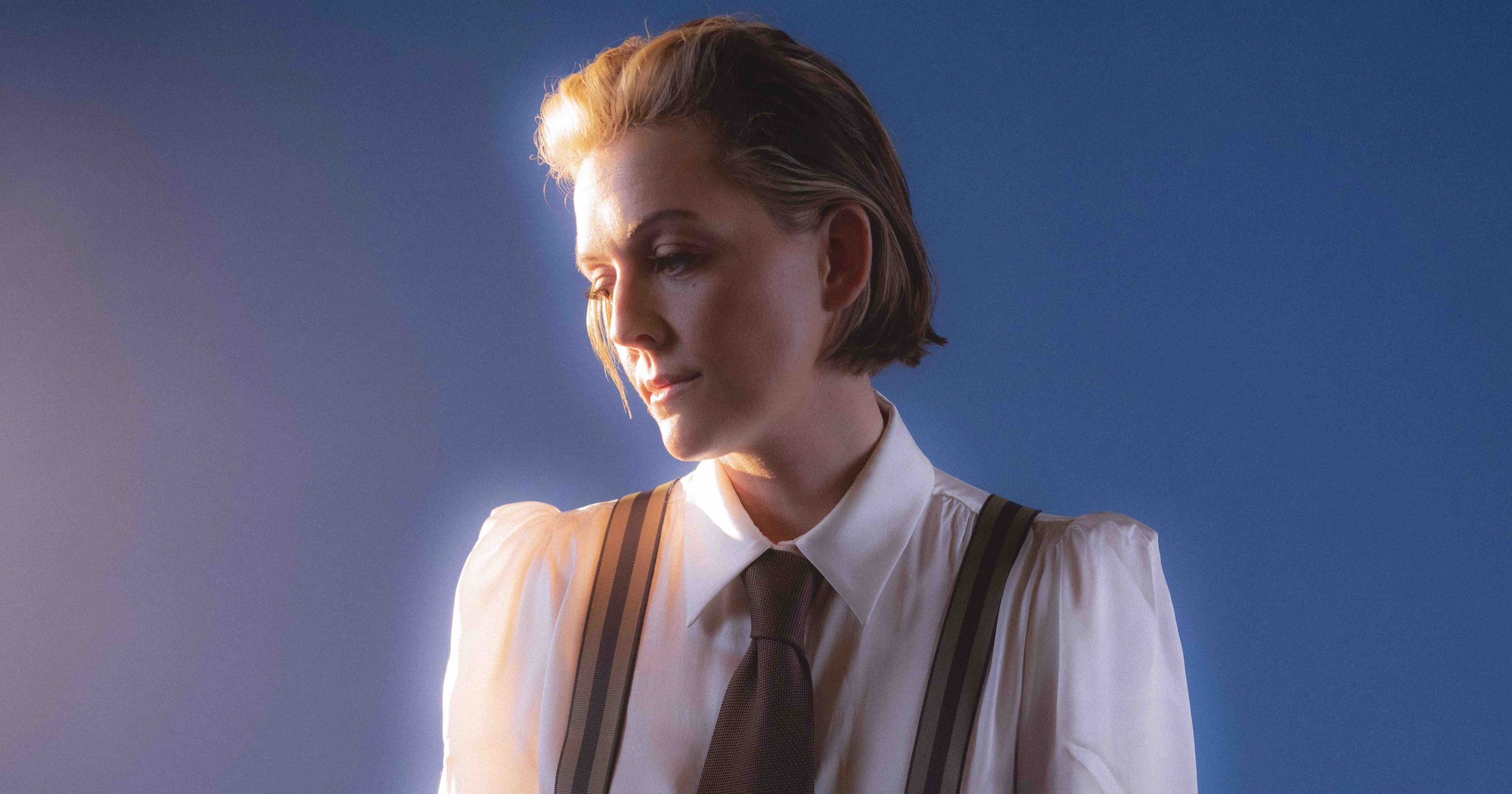
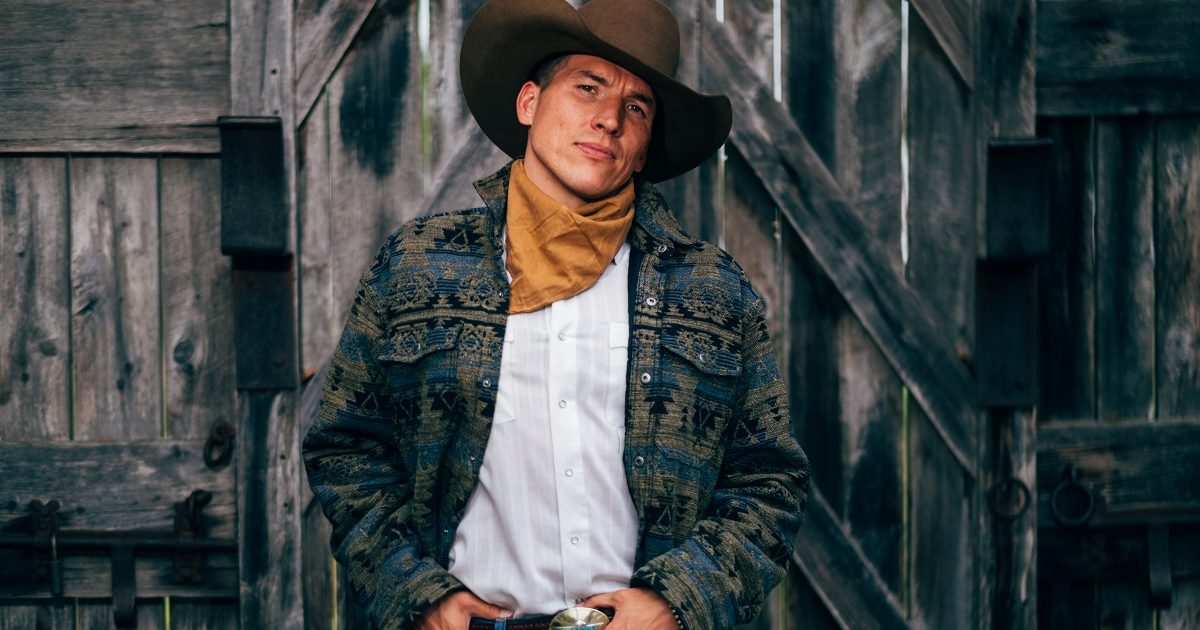
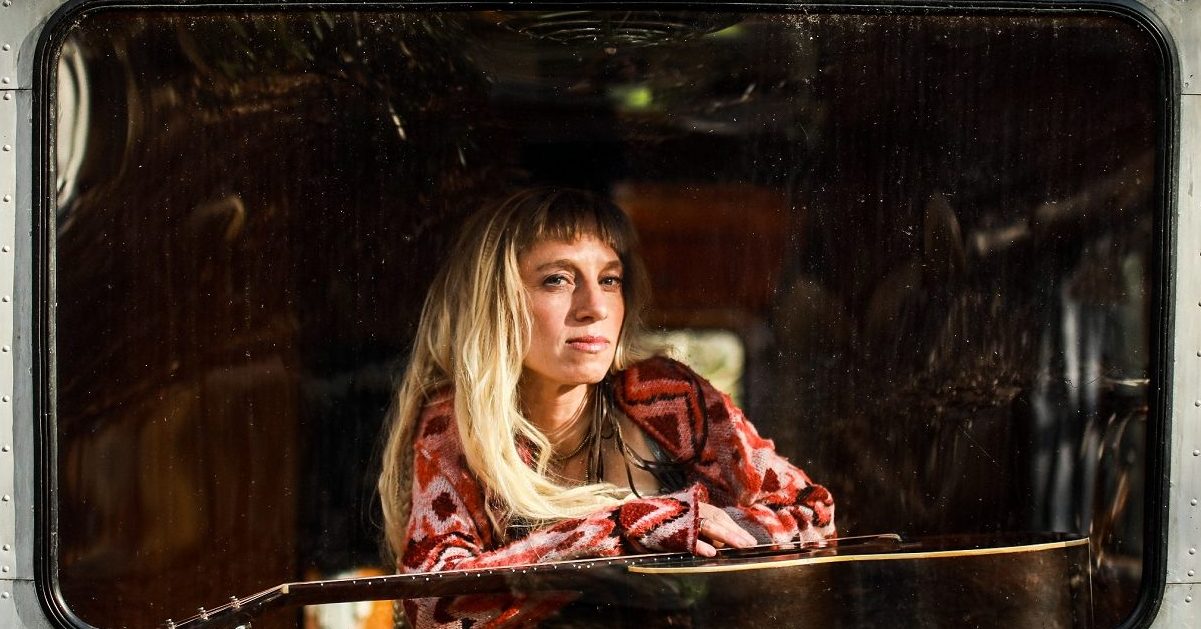
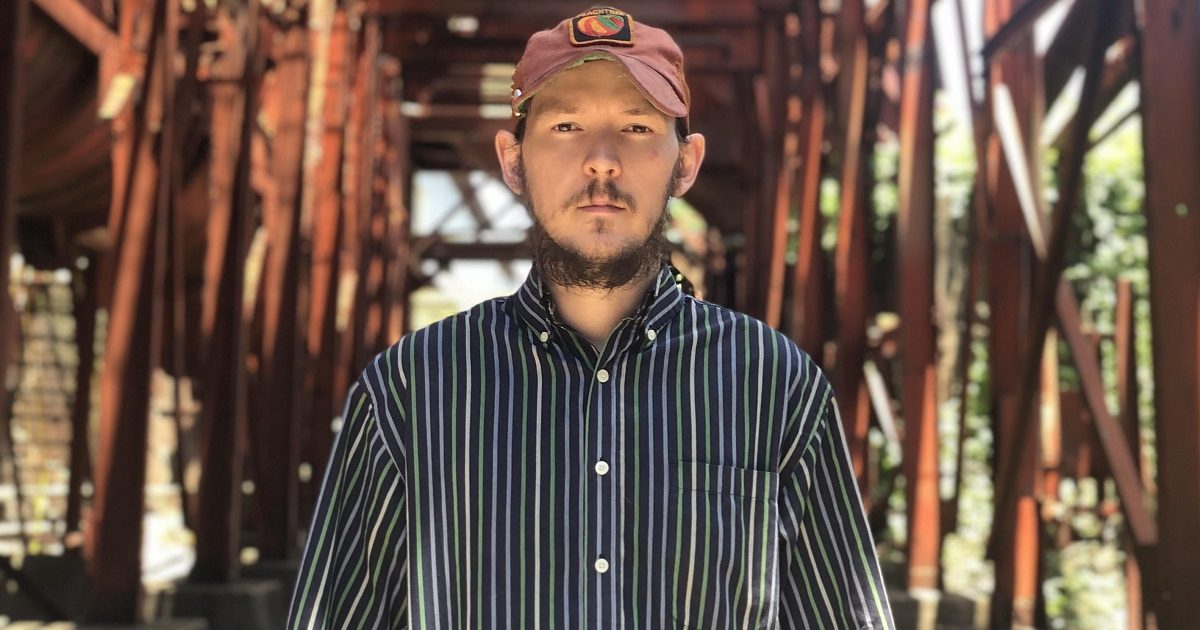
WATCH: Hollow Coves, “Blessings”

Artist: Hollow Coves
Hometown: Gold Coast, Australia
Song: “Blessings”
Album: Blessings EP
Release Date: June 11, 2021
Label: Nettwerk Records

In Their Words: “‘Blessings’ is a song of gratitude. It’s about recognizing the little blessings that life has to offer. If we don’t take a moment to acknowledge them, we can often miss them. Practicing gratitude is known to be good for mental health, yet anxiety and depression seem to be more and more prevalent in our generation. I think we are just too distracted to stop and take time to practice gratitude. We hope this song helps people realize that there are blessings all around if you just look up and take the time to think about how much we have to be grateful for.” — Ryan Henderson and Matt Carins, Hollow Coves


Photo credit: @Leniflashes

WATCH: Tré Burt, “Sweet Misery”

Artist: Tré Burt
Hometown: Sacramento, California
Song: “Sweet Misery”
Album: You, Yeah, You
Release Date: August 27, 2021
Label: Oh Boy Records

In Their Words: “To me, the chords sound melancholic but also have this really sweet and playful quality about it but also like that innocence is being hounded by some utterly miserable force of nature. When I was writing this song, I already knew what the chords would say if they could talk, so the lyrics reflect that. Sometimes songs can feel like it’s something hung up in a museum, meant to be observed behind a velvet rope from 10 feet away. My songs are as much yours as they are mine. I wanted to try and show that.” — Tré Burt


Photo credit: Allan Baker

WATCH: J.M. Clifford, “Kick the Drum”

Artist: J.M. Clifford
Hometown: Allendale, New Jersey
Song: “Kick the Drum”
Album: On a Saturday Night
Release Date: August 26, 2021

In Their Words: “’Here’s to the music that we make at night till we feel alright.’ I honestly don’t know what would have become of me if I hadn’t fallen in with the bluegrass community at Sunny’s Bar in Red Hook, Brooklyn in 2017. The music and the musicians got me through some very dark times. This is really a love song to that whole scene. This was the first tune I wrote for the record (although it went through about a hundred revisions). In fact, it’s the first thing I had written in a long, long time. Stylistically it was very different from anything I had done before. I integrated some of the prominent features of the old folk and bluegrass music I’d been immersing myself in with my singer-songwriter background and landed on something that felt fresh to me. That approach informed all of the songs that came after it.” — J.M. Clifford


Photo credit: Nicole Mago

With Acoustic Authority, Kings of Convenience Bestow ‘Peace or Love’

Two guys with acoustic guitars singing quietly — it’s not as easy as it looks. For the Norwegian acoustic duo Kings of Convenience, a lot of forethought went into the simplicity that shines through Peace or Love. Because it is sonically spacious, the album feels like a respite in an increasingly loud world. The comforting vocal blend, the lilting melodies, and concise songwriting are all wonderfully intact, carried over from their prior project a dozen years ago.

With impeccable rhythms and an eye for detail, the collection feels cozy and even encouraging at times. But upon listening closely to the lyrics, it’s clear that band members Erlend Øye and Eirik Glambek Bøe are no strangers to conflict. Note the album title: It’s Peace or Love, without an “and” in sight.

Plus, there’s a rough imagery inherent in a title like “Rocky Trail,” the album’s sprightly lead single that finds the narrator admitting to missing the warning signs in a relationship and wishing for another chance.

“‘Rocky Trail’ represents a certain kind of groove that we do a lot, which is of course inspired by bossa nova,” says Øye, speaking on behalf of the duo for the first half of a Zoom interview with BGS. “It features Eirik’s trademark technique. He has a very specific technique of playing that allows him to be as quietly funky as he is. I think it is also quite layered, like onion shells. There are a lot of details in that song, so I think it rewards recurrent listening.”

For example, one can hear a propulsive rhythm in the verses, not unlike the one-foot-in-front-of-the-other mindset of a challenging hike, and then in the middle there’s a downward glissando that makes it feel like this relationship just tumbled back to square one. Or is that overanalyzing?

“Hmm, I wish I had thought of all that,” Øye says with a laugh. “Coincidence!”

While both musicians have a number of side projects, Kings of Convenience have always managed to come back around. Asked about finding common ground in the music they enjoy, Øye says, “Although we think of ourselves as very different, in reality being together all those years – although we didn’t always hang out together all the time – we influence each other a lot with all the music we’ve gone into.”

He continues, “Just as an example, when Eirik started coming around with these bossa nova ideas, that was already in the first year of us working more or less like Kings of Convenience in ’98. My first reaction was, ‘Oh noooo. What is this elevator music?’ But then, you know, that’s how you grow, by accepting something you have a preconceived notion of. I’m recently playing a lot with some Italian friends of mine and they are particularly inspired by Latin American music, in addition to Italian music. So, just following them, trying to pick up what they do, that’s how you get inspired – and I bring that into Kings of Convenience. Without knowing it, you inspire each other.”

When the topic turns to country music, Øye says he once read an interview with R.E.M.’s Peter Buck about playing country sessions and finding different ways of getting from G to F to C. “I remember thinking that’s interesting,” he says. “I do like this aspect of country music, basically trying to dig even more around an already very dug place, and not being afraid of that. OK, it’s not the first song in the world that goes F, C, G, but that’s not so important. I think that’s the one division in Kings of Convenience where we still disagree, that I’m more sympathetic to the country music side of making music, while Eirik is very into the idea that a chord progression should be unheard of.”

But will that ever get resolved?

“It doesn’t have to be resolved,” Øye concludes. “It’s part of our ongoing creative dynamic.”

That dynamic is much more complicated to capture in a studio than one might expect. Anything from the age of the guitar strings to the length of one’s fingernails can derail a session. That’s part of the reason Peace or Love was recorded over the span of five years and in five cities, almost always in person.

About to explain how they finally got the best version of “Rocky Trail” after many, many attempts, Glambek Bøe pops up in the Zoom call. After some cheerful greetings, Øye teases that “my main contribution to that song is the end part, with the guitar solo, and also my contribution is my incredible patience of recording the song so many times!”

Recreating the scene for comedic effect — “This is going to be the one, I promise you!!” — Øye graciously signs off, ushering Glambek Bøe into a conversation about the songwriting component of Peace or Love, specifically the encouraging messages nestled within some pretty sad songs.

“A lot of our songs are sad and they bring people in touch with their sorrow,” he says. “So I wanted to also give some uplifting words sometimes. I mean, once we’ve made people sad with our sad songs – when we have their attention – it’s a nice moment to give them a little pat on the back and a piece of advice. I like that type of songwriting, which is actually advice writing. You’re writing down advice for people. And for me, some artists have been giving me advice throughout my childhood and my young years, especially The The. I listened to him a lot as a teenager. He gives a lot of advice and I cherished that. It was important advice for me.”

One nugget of wisdom in “Love Is a Lonely Thing” is emblematic of the duo’s interplay. The lyric that suggests “It will seem a fair idea / If you make it their idea” was Øye’s idea, yet it’s a trick that Glambek Bøe admits to using in the band.

“It’s funny how it describes something I often do with him, because in our relationship, Erlend tends to disagree with whatever I bring to the table. He will automatically disagree, and then I will need to let time pass, so he will forget that it was my idea – and he will start thinking it was his idea. And basically any progress that we’ve done in the field of Kings of Convenience happened through that protest phase, the oblivion phase, and then then ‘thinking that it’s your idea’ phase. So, the lines were written by Erlend but they’re very descriptive in how I see our relationship in the band.”

The musician Feist joins “Love Is a Lonely Thing” and “Catholic Country” as a third voice, yet she also served as a cheerleader. “She is our favorite singer and we respect her very much as a songwriter and artist,” Glambek Bøe says. “She didn’t actually write any of these songs, but she was in the studio telling us these songs were great. And that was very important because at that time we were starting to lose hope that there was any quality in any of these things that had been recorded during five years.”

Asked about those underlying effects in “Rocky Trail,” Glambek Bøe listens with amusement to the theories, but ultimately agrees with Øye.

“We’re a lot more dumb than that,” he says with a laugh. “A lot of times when we do something great, it’s pure accident. But we’re able to recognize the art in our mistakes. I think that’s our main quality. We are not masters of our trade, but when we do say something in a beautiful way, we are capable of recognizing, ‘Wait, that was actually pretty good!’”

There’s an element of familiarity that comes into play, too, and it stretches back into the late ‘90s, when they connected as budding musicians in Bergen, Norway, and began to write songs together. Even now, there’s a mystery about why it still works, and Glambek Bøe says he is perfectly content with that.

“I don’t know exactly what his contribution is going to do to my playing, but something happens in that meeting, and none of us are in control of it,” he says. “Being together as songwriters, we stumble upon accidents more frequently, because I will write a verse and Erlend will write a second verse and he will misinterpret what my point was. But that misinterpretation brings out another quality in the song, and then I realize that makes it so much better.”


Photo Credits: Lead photo courtesy of Grandstand HQ; Inset photo by Salvo Alibrio

LISTEN: L.A Edwards, “Here Comes My Train”

Artist: L.A. Edwards
Hometown: Julian, California
Song: “Here Comes My Train”
Album: Blessings From Home Volume 2
Release Date: June 4, 2021
Label: Bitchin’ Music Group

In Their Words: “‘Here Comes My Train’ is a song that I’ve had for several years. I finally got around to finishing it when I was writing for Blessings from Home in Puerto Rico over Christmas holiday. There was lots of drinking and dancing so it came out pretty upbeat. It’s about young love, setting out to find your fortune, the idea of making a name for yourself, and the arrogance of youth. It would have turned out a lot different if I had finished writing it a few years ago as a younger man.” — L.A. Edwards


Photo credit: Miller Hawkins

Folk Hero Reggie Harris Faces a Moment of Reckoning ‘On Solid Ground’

Reggie Harris is a songwriter, storyteller, educator, and folk icon. No, literally. This year, Harris was awarded The Spirit of Folk Award from Folk Alliance International — as well as W.E.B. Du Bois Legacy Award by the Du Bois Legacy Festival in Great Barrington, Mass. His career as a folksinger has spanned four decades, with musical collaborators and activist compatriots such as Pete Seeger, Dr. Kim Harris, C.T. Vivian, Cathy Fink & Marcy Marxer, Greg Greenway, David Roth, and many more. BGS is proud to host Harris on the sixth episode of our Shout & Shine livestream series on Wednesday, June 23 at 4pm PDT / 7pm EDT. (Tune in here via the video player below, our YouTube channel, or our Facebook page.)

The joy and hope evident in Harris’ 2021 release, On Solid Ground, stem from a rooted sense of perseverance and from his intentional decision to face each and every moment, in the moment, and to find hope within each. It’s why such heavy topics don’t feel gargantuan or burdensome as they make appearances and anchor songs on the album. Harris, watching the social, political, and racial reckonings that bubbled onto the sidewalks and streets of every city in America over the course of the last year, didn’t sit down or give up in the face of the unclimbable summit of translating that reckoning into song. 

Instead, Harris draws upon the wisdom, insight, and hope given to him by his own elders and communities throughout On Solid Ground. In choosing to keep himself open in each moment, Harris found himself receiving inspiration, nuggets of ideas and stories, glimpses of songs and arrangements in so many of those moments, simply because he was there, with a still heart and still soul, to receive them.

On Solid Ground feels solid and grounded, but also soars – unencumbered by whatever aspects of its content and lyrics might be perceived as pitfalls or minefields to so many. Harris, as only a folksinger-storyteller can, weaves a reality that can indeed rise to the occasion of this twenty-first century civil rights movement. We just have to choose to be present to usher in that reality — which, it’s important to note, will have an excellent soundtrack.

BGS caught up with Reggie Harris over the phone on May 28, Memorial Day weekend and the 100th anniversary of the Tulsa Massacre.

BGS: I wanted to start off with “It’s Who We Are,” which leads off the album. It makes the point that the political and social turmoil of the last few years aren’t really anything new, but rather are pretty natural outgrowths of who we’ve always been — as a culture and as a society. I wonder if you could talk a little bit about why you wanted to reinforce that point and kick off your album with that song? You’re making the point that this isn’t an aberration, this is who we are. 

RH: [Laughs] I do a lot of work, a lot of educational and historical performing — both in schools and around the country — and the question always comes up, with audiences of all ages, “How far have we come?” And, “Who are we?” These things happen around the country, incidents like George Floyd and Breonna Taylor, and also the incident in New York City with the Coopers — Amy Cooper and [Black birder, Christian Cooper]. People are constantly tweeting as if [these incidents] are one-offs, that each is an aberration. So I’d been working on writing a song for a while that basically says our nation was founded with white supremacy and racial issues from the very beginning. And we have been struggling with that. Obviously, we have made some progress over time, but we see that these things are so temporary — and the proliferation of them over the last two years particularly, and through the pandemic, really brought it to the fore. 

I kept looking at all of that, and I started writing that song– I’m not a writer that likes to just put things out there, constantly pointing out all the difficult and sometimes dangerous events. I love to tie into hope and I couldn’t talk my way through it. I wrote about twenty-seven verses. And it was getting more and more dark all the time! [Laughs] 

Even this week, we’re acknowledging the massacre in Tulsa, Oklahoma, a hundred years ago. All of those — there are so many of those incidents and events, I really wanted to say, “Yes. This is our legacy, this really is who we are.” But, there is something about what is happening, particularly with young people, particularly in the last year. So, when I saw people flooding into the streets all across the nation, in Portland, Louisville, and all these places I saw the diversity of faces and the diversity of ages. I thought, “You know, something has changed.” We’ve had a lot of false starts in our nation, but that became the critical point when I sing, “Yes, we can change! / Reshape the future of our reality.” We can define ourselves. Any way we choose to.

I have to admit, when I finished recording the song, I turned to Greg Greenway, my co-producer, and said, “I don’t know if I want to put this first.” [Laughs] We went back and forth and back and forth and finally — I was actually going to begin with Malvina Reynolds’ “It Isn’t Nice” and Greg turned to me one day and said, “No, this is the album statement. I think we gotta just put it out there.” And I said yes, and there you go! You need to have some courage in the work that you do. I’ve been looking to people like C.T. Vivian and John Lewis and all the sacrifices that people like Fannie Lou Hamer made. And all the amazing icons of civil rights history. 

As I was thinking about this point — that this is exactly who we are and always have been — I was listening to “Let’s Meet Up Early,” and there’s a lyric, “It ain’t no mystery… don’t try to act surprised.” 

[Laughs]

So this is a point you are making indelibly across the record! [Laughs]

Yes, well it is. And this came out of about three weeks of just sitting at home, watching the nation unravel. I wrote “On Solid Ground,” because that’s kind of where I live, you know, in the spirituals, saying that we can make it through this, we can persevere. But we can’t make it through it if we don’t acknowledge it. 

Exactly.

I’m glad you bring up perseverance, because something I find striking about the record is that even though the songs do feel that they carry strong messages and morals, and explicit calls for justice and equity — and perseverance — they don’t feel too heavy, they don’t feel burdened by the gravity of the issues they confront. Like, “Maybe It’s Love” is very whimsical and wry and sweet. And you just mentioned “On Solid Ground,” which is gorgeous, but really also fun, a cappella, bouncy and bubbly with cheer. How do you strike that balance, when you’re thinking about writing music that has a strong sense of conviction like this, but you do want it to also evoke hope and joy?

I feel very blessed to have come up in a community in Philadelphia and throughout that demonstrated having hope. The folks that I grew up with, in Philadelphia, my elders, and then as I progressed not only as a person, but as a musician I have had such amazing [role models]. If you look at the musicians — and all those folks in my community, they’d sing, “Ain’t gonna let nobody turn me ‘round!” And, “Oh, Freedom:” “Before I’d be a slave/ I’d be buried in my grave/” 

One day we will be free. And we’re going to keep working at this. 

We had C.T. Vivian at a conference I helped to put on in 2015 and he said, “We knew that we were working for something bigger than ourselves. We knew that we needed to have good leadership — and we did. We knew that we were working in the frame of love. For something, not against.” I try to keep those messages at the forefront of my writing, at the forefront of my performing. I know that a lot of white Americans have trouble embracing a lot of this because it brings up a lot of guilt, or it brings up this feeling there’s this huge thing you weren’t aware of. I just want to say to people: There are forces and systems that are trying to make sure you don’t know about this stuff. You’re not to blame for not knowing, but once you know — I think it was Maya Angelou that said, “When you know better you do better.” [Laughs] 

I look at that and my own role in this is just to pass along what was given to me. I came up in a community that understood the nature of perseverance, that understood the nature of hope and working towards hope realizing that you’re not going to get everything at once. But, you might get some of it and then you pass that along. I think the songs, for me, are conduits to giving away this gift that I’ve been given. As I write I just always try to remember that people always gave me hope – and they did it mostly through songs. 

As I was reading some of the song inspirations and contexts in the liner notes, I noticed you seem to really keep yourself so open to inspiration and new song ideas. You mention that “Come What May” came to you right after one of your regular livestreams and you began writing “Tree of Life” you were teaching. How do you keep your mind — and your heart — open to those kernels of inspirations, when new song ideas present themselves to you?

I’m not a writer who’s working at it all the time. I know friends of mine, folks who sit down every day and they either write a song or they tape something. I’ve never been that way, I really have kind of evolved into a person who’s eyes-wide-open in the moment. I’m very much focused on what’s happening around me and focused on noticing those opportunities. That’s one of the things that doing a lot of work with kids [has honed]. You really have to be present with kids. [Laughs] You come in with an idea of what you want to do, but if it feels at all like you aren’t including them or that you aren’t present, they’ll entertain themselves! I think I’ve developed a real sense of being in the moment, being charged with seeing those small windows of opportunity. Of course, I had a lot more of them in the pandemic! [Laughs] At home an unbelievably impressive amount of time. 

A lot of it is also balancing. I’m very careful not to watch the news early in the day. I think my liver transplant, in 2008, really shifted me, in a way. It changed the temperature of my observations in the world. I think that it’s really benefited my writing, because as I approach life living hour by hour, I notice things. I live out in the country, so I have time and atmosphere to hear myself think. Particularly with the time I started writing the album, right at the end of March [2020]. I’m kind of in my own element, I’m watching, carefully and selectively, what’s happening in the world, but I’m also in an environment where my heart and soul could get quiet. I love what happens when those two things occur. It allows me to then go to that other place and to find the message. 

A lot of times when you start to write a song, you think you know what you’re going to say. [Laughs] And the song has another idea altogether! It might be pulling things out of your subconscious you might have been working on for months — or years! It could be a thought I jotted down in my journal, or some phrase that I had been playing with. I think, for several of the songs, I was doing these online performances and it could just be the look in some peoples’ eyes as I sang a song. Or some comment someone would leave. Someone once said, “I wasn’t going to tune in, but you look hopeful.” I thought, “Wow, what a responsibility.” I try to carry that responsibility and be accountable for not making things… harder than the world. 


Lead photo: Courtesy of Reggie Harris
Inset photo: Anthony Salamone

WATCH: Andrea von Kampen, “Water Flowing Downward”

Artist: Andrea von Kampen
Hometown: Lincoln, Nebraska
Song: “Water Flowing Downward”
Album: That Spell
Release Date: August 6, 2021
Label: Fantasy Records

In Their Words: “The way I approached the writing of this song was different than usual. I wrote the lyrics one afternoon to an old hymn tune called ‘Beach Spring.’ I had just watched the film Parasite and was feeling restless to create and get my thoughts out and these tumbled out but I knew the hymn tune never really worked. I filed it all away and four months later my brother David and I thought about co-writing the last song on the record and I remembered these lyrics. I sent them over and by early July we had our song. I love the moodiness of the piano and strings and the sound of a perpetual movement.” — Andrea von Kampen


Photo credit: Mark Cluney

Jamestown Revival Mine the Legacy of Louis L’Amour in “Prospector’s Blues”

Folk-rock duo Jamestown Revival‘s new project provides an interesting study in the intersection of music and literature, as band members Jonathan Clay and Zach Chance wrote songs inspired by the work of American novelist Louis L’Amour. Titled Fireside with Louis L’Amour, the creative genesis of the EP brings to life an intriguing concept that will draw in any and all folk enthusiasts.

To tease the EP, the band released an official video for “Prospector’s Blues,” derived from the short story, “Trap of Gold.” The song follows a miner whose feverish hunt for riches finds him an early burial beneath the weight of his own recklessness. Like the story, the song imparts a nonchalant, “business as usual” attitude toward the tragedy of greed, as the train-like groove rumbles right through the parable in the lyrics. Acoustic guitar, pulsing rhythm, and Old West allegory — what’s not to love? Check out the video for “Prospector’s Blues” below.


Photo credit: Paul Pryor

LISTEN: Cat Clyde & Jeremie Albino, “Hello Stranger”

Artists: Cat Clyde & Jeremie Albino
Hometown: Toronto, Ontario, Canada
Song: “Hello Stranger” (The Carter Family cover)
Album: blue blue blue
Release Date: May 21, 2021
Label: Cinematic Music Group, Majesticsilk (CAN)

In Their Words: “It’s amazing to think the first recording of this old folk song was done about 80 years ago. It feels sad, but also beautiful. Playing with the perspectives brings out the vulnerability in the song. We’re all strangers really — but great connection can come from this knowing and an openness can unfurl that may not be there with someone you are already close to.” — Cat Clyde & Jeremie Albino


Photo credit: Second Prize

LISTEN: Maggie Pope, “The Bird Painter”

Artist: Maggie Pope
Hometown: Philadelphia, Pennsylvania
Song: “The Bird Painter”
Release Date: June 25, 2021

In Their Words: “‘The Bird Painter’ was written after a conversation I had with a songwriting mentor of mine: Steve Varney, frontman of Kid Reverie, and banjoist/guitarist for Gregory Alan Isakov. It was a nod to my love of ‘train songs’ as we called them… those that have a steady, relatively unchanging chord progression as a foundation. Humble little tunes that invite the listener to embark on more of a meditative, introspective journey rather than incorporating a more traditional song structure with a big chorus (which is also fun).

“Steve ended up producing this one, arranging and adding almost all of the elements beyond my own vocal and acoustic guitar; that cool electric slide, his warm vocal, and a tambourine that suddenly made me realize that tambourine sounds are some of my favorite sounds in the world. Music will do that sometimes. My dear friend (and another musical mentor) Adam Monaco then topped things off with a perfectly simple piano addition that somehow and inexplicably captures my love of twinkly lights. Music will do that sometimes, too.” — Maggie Pope


Photo credit: Robert Stolpe