WATCH: Grammy Nominee Don Bryant’s Tiny Desk (Home) Concert

After decades writing and performing incredible music, soul icon Don Bryant has earned his first Grammy nod in 2020. This past Juneteenth, the veteran bluesman released his newest album, You Make Me Feel, on Fat Possum Records. Nominated for Best Traditional Blues Album, the record is nothing less than a physical incarnation of rhythm and blues.

The project is also aptly titled, as Bryant’s work imparts a gamut of feelings and emotions — love and joy most predominantly shine through the timelessness of his voice and story. With production and arrangements reminiscent of an old soul record, the simplicity of the music is on display in a recent Tiny Desk (Home) Concert by Bryant. Backed by only an electric guitar and a pianist, the songs fly out of the speakers with unbridled power and emotion.

A decorated songwriter, Bryant holds deep connections to the roots of such powerful music, singing life into just about anything. With only the first few notes of this performance you’ll be entranced! Listen to You Make Me Feel wherever you get your music and watch Bryant’s Tiny Desk (Home) Concert below.


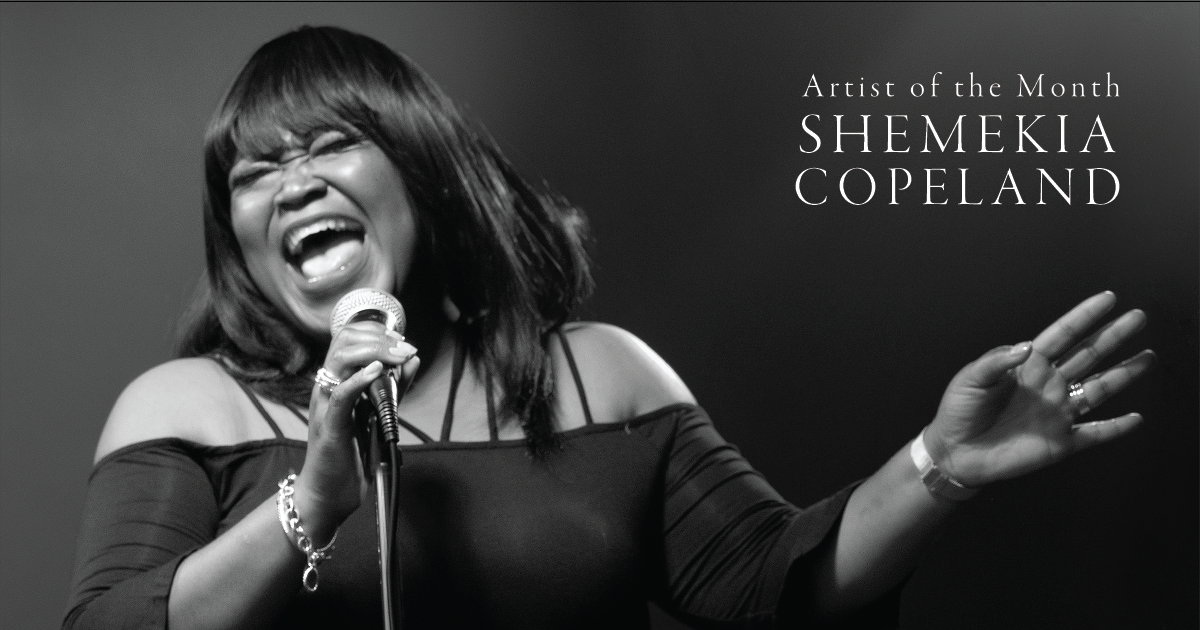
Artist of the Month: Shemekia Copeland

When it comes to modern blues, Shemekia Copeland is at the top of her game. Uncivil War, her newest release on Alligator Records, offers a number of topical songs, ranging from gun rights (“Apple Pie and a .45”) to LGBT affirmation (“She Don’t Wear Pink”). Yet as the album progresses, she delivers a few straight-up blues songs like “No Heart at All” and “In the Dark” that could have fallen anywhere in her decades-long career — or found a home with the generation of blues artists that inspired her. Throughout, her voice is strong, drawing you in to hear firsthand what’s on her mind.

Recorded in Nashville with producer Will Kimbrough, Uncivil War gives Copeland a chance to clearly speak her truth. From the historical narrative of “Clotilda’s on Fire” (with an electrifying guitar solo from Jason Isbell) to the philosophical title track (which features acoustic all-stars Sam Bush and Jerry Douglas), Copeland consistently comes across as persuasive, but not abrasive. The message of one of the album’s finest moments, “Walk Until I Ride,” is indeed empowering — but the fact that she needs to walk in the first place is not lost on the listener.

“You know, being angry doesn’t do us any justice,” Copeland told NPR in October. “I spent my time being angry and pissed off and mad about it. But at the end of the day, you know, that just doesn’t help anything.” That determination to channel her emotions into her music paid off in 2019 as she picked up multiple wins in the Blues Music Awards and Living Blues Critic’s Poll on the strength of her prior release, America’s Child. Since 2000, three of her albums have also received Grammy nominations.

In the weeks ahead, BGS will feature a two-part interview with Shemekia Copeland, where she reflects on the influence of her blues musician father, Texas legend Johnny Copeland, as well as the statement she’s making with Uncivil War. (Read part one here. Read part two here.) Author and journalist Alan Paul, who conducted these interviews, also provides us with the BGS Essentials playlist for November Artist of the Month, Shemekia Copeland.


Photo credit: Mike White

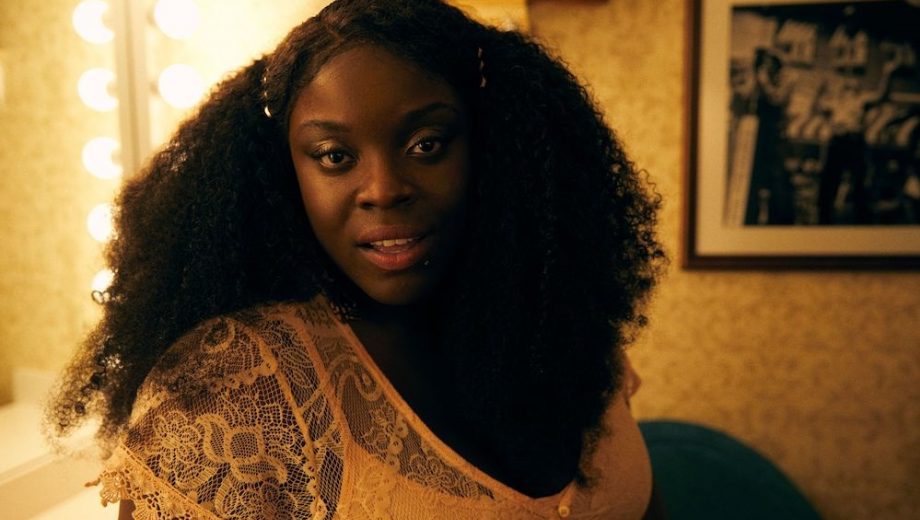
LISTEN: Yola, “Hold On”

Artist: Yola, with Brandi Carlile and Natalie Hemby on backing vocals, Sheryl Crow on piano, and Jason Isbell on guitar
Hometown: Bristol, England
Single: “Hold On”
Release Date: October 9, 2020

In Their Words: “‘Hold On’ is a conversation between me and the next generation of young black girls. My mother’s advice would always stress caution, that all that glitters isn’t gold, and that my black female role models on TV are probably having a hard time. She warned me that I should rethink my calling to be a writer and a singer…. but to me that was all the more reason I should take up this space. ‘Hold On’ is asking the next gen to take up space, to be visible and to show what it looks to be young, gifted and black.” — Yola

Editor’s Note: A portion of profits from sales of the track will be donated to MusicCares and National Bailout Collective.


Photo credit: Joseph Ross

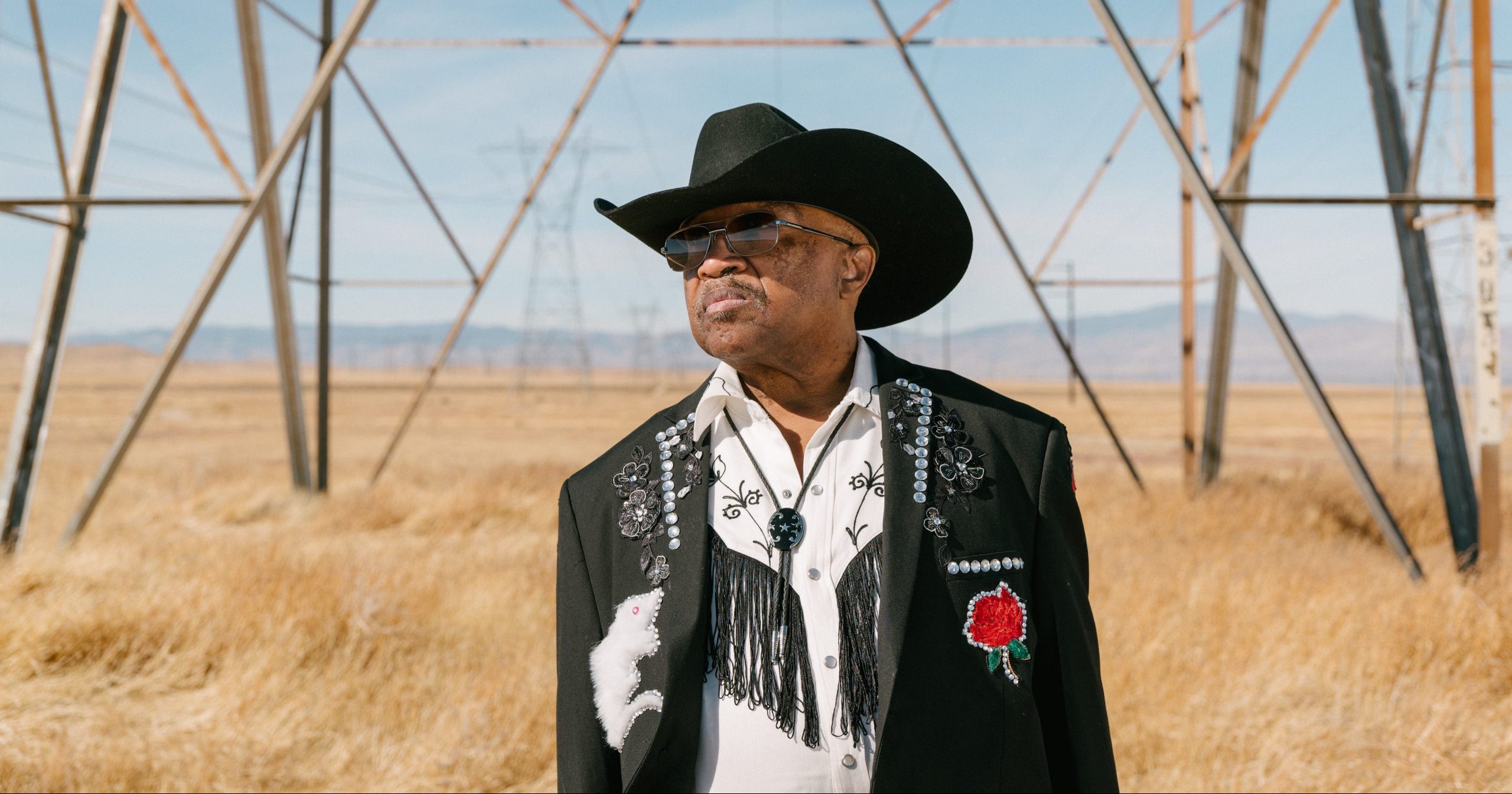
WATCH: Go Behind the Scenes of Swamp Dogg’s ‘Sorry You Couldn’t Make It’

In the winter of 2019, bona fide soul man Jerry “Swamp Dogg” Williams made his return to Nashville after nearly 50 years away from Music City. His aim was to cut a new record, and a slew of artists joined him in collaboration, chief among them guitarist Jim Oblon, singer/songwriter Justin Vernon, and the late great John Prine. The music that came from those winter sessions feels like a time machine right back to the late 1960s.

The album, titled Sorry You Couldn’t Make It, is a shade more country than Swamp Dogg’s other material, but his warm, rough voice wears his many years on its sleeve, allowing him to sit comfortably in the common core of soul, country, and blues. Portions of the album have moxie for miles while others hold abundant sincerity and sadness. NPR’s Fresh Air reviewed one song, “Sleeping Without You is a Dragg,” which was joined by two other selections from other artists classified as beautiful, comforting songs. A reminiscent sound ties the whole record together beautifully.

A Noisey mini-documentary about the star-studded recording sessions for Sorry You Couldn’t Make It shows humorous, casual, behind-the-scenes moments from the album’s creation. While Dogg had the bad luck of the COVID-19 lockdown slow its rollout, don’t let this music slip through the cracks of your social media timelines!


Photo credit: David McMurry

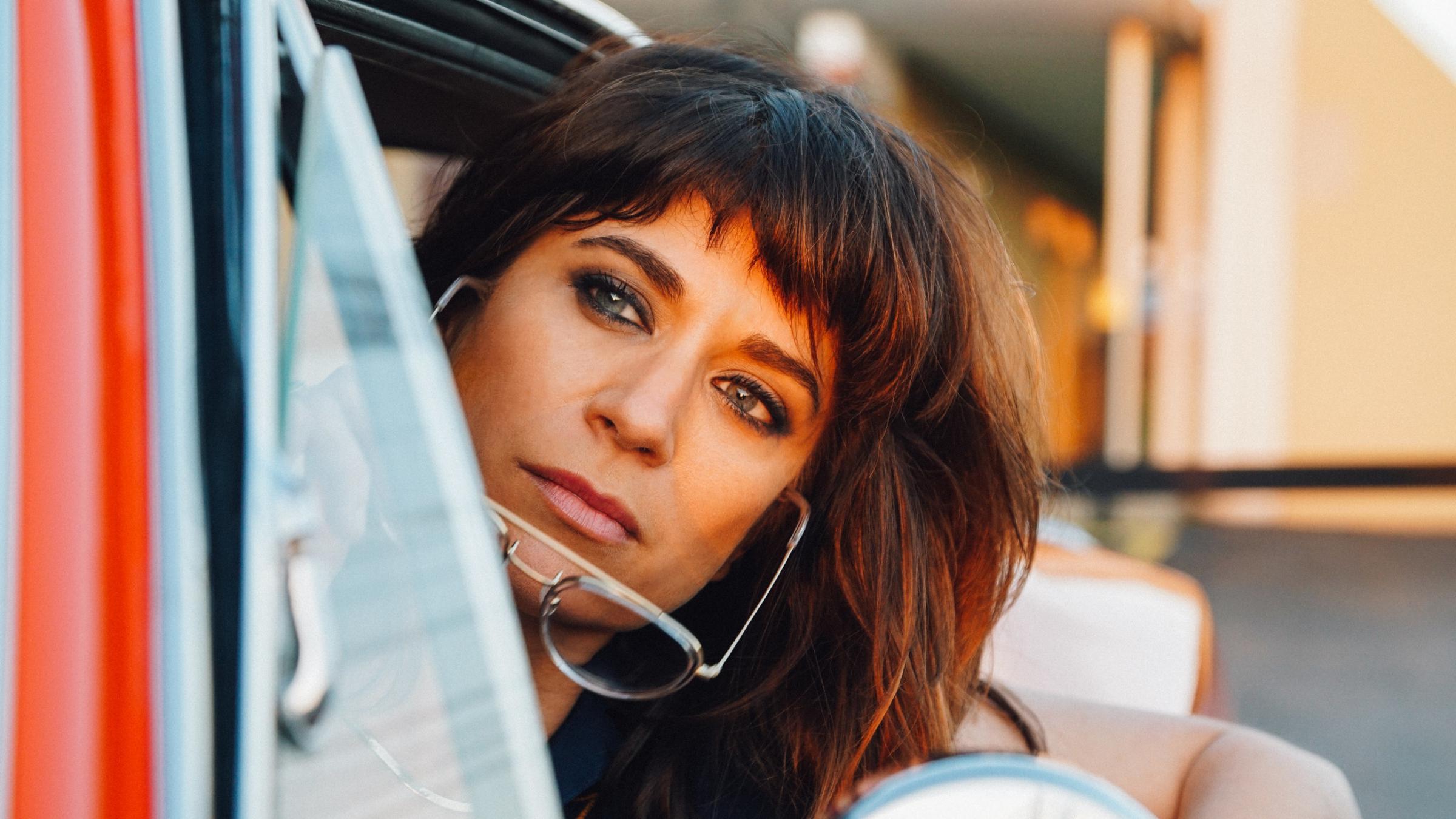
The Show On The Road – Nicole Atkins

This week on The Show On The Road, a conversation with Nicole Atkins, a singer/songwriter  out of Neptune City, New Jersey who has become notorious for making her own brand of theatrical boardwalk soul. 

LISTEN: APPLE PODCASTSSTITCHERSPOTIFYMP3

The Show On The Road host Z. Lupetin fell in love with Atkins’ newest, harmony-rich record, Italian Ice, which came out spring 2020 and was recorded in historic Muscle Shoals, Alabama. Both rumblingly ominous and joyously escapist, standout songs like “Domino” make the record a perfectly David Lynch-esque summer soundtrack of an uneasy 2020 scene that vacillates between fits of intense creativity and innovation and deep despair. Toiling below the radar for much of her career, Atkins is finally enjoying nationwide recognition as a sought-after writer and producer; Italian Ice was co-produced by Atkins and Ben Tanner of Alabama Shakes.

While some may try to shoehorn Nicole Atkins into the Americana and roots-rock categories, one could better describe her as a new kind of wild-eyed Springsteen, who also mythologized the decaying beauty of New Jersey’s coastal towns like Asbury Park, or a similarly huge-voiced, peripatetic Linda Ronstadt who isn’t afraid to mix sticky French-pop grooves with AM radio doo-wop, ’70s blaxploitation R&B and airy jazz rock like her heroes in the band Traffic. If you watch her weekly streaming variety show, “Live From The Steel Porch” (which she initially filmed from her parents’ garage in NJ, but now does from her new home in Nashville), you’ll see her many sonic tastes and musical friends gathering in full effect. Italian Ice features a heady collection of collaborators including Britt Daniel of Spoon, Seth Avett, Erin Rae, and John Paul White.

After playing guitar and moving in and out of hard-luck bar bands in Charlotte and New York — many of which that would find any way to get rid of their one female member — Atkins’ bold first solo record Neptune City dropped in 2007 and three more acclaimed LPs followed, including her twangy, oddball breakout, Goodnight Rhonda Lee in 2017 on John Paul White’s Single Lock Records.

Much like the tart and brain-freezing treat sold on boardwalks around the world, Atkins’ newest work is a refreshing and many-flavored thing and demonstrates that, in a lot of ways, the show-stopping performer, producer, and songwriter has finally embraced all the sharp edges of her personality.


Photo credit: Anna Webber

On ‘Blackbirds,’ Bettye LaVette Honors Black Women Who Inspire Her (Part 2 of 2)

When Bettye LaVette sings “I Hold No Grudge,” she brings the weight of all her years to it. The 74-year-old vocalist draws out certain notes, delivers certain lines almost in a speaking voice, as though she wants to show us how difficult, but also how essential, it can be to let things go. “Deep inside me there ain’t no regrets,” she declares, “but a woman who’s been forgotten may forgive but never, never forget.” She draws out that second “never” to underscore its harsh finality, to remind you that she’ll live with the memory of this slighting forever.

“I Hold No Grudge” has never been merely a song about romantic betrayal — not when Nina Simone recorded it for her landmark 1967 album, High Priestess of Soul, and not when LaVette recorded it more than sixty years later. This new version sounds like it’s addressed to anyone who stood in LaVette’s way so many years ago, in particular those executives at Atlantic Records who saw fit to shelve her debut album in 1972 without so much as explanation, much less an apology. That decision crushed her and thwarted her promising career. “That’s exactly what it is,” says LaVette. “I probably have some grudges, but they aren’t big enough to make me stop. I’ve not been defeated. I’m extending the olive branch once again.”

“I Hold No Grudge” opens her latest album, Blackbirds, which collects her interpretations of songs made famous by Black women in the 1940s and 1950s, including Dinah Washington, Ruth Brown, Nancy Wilson, and Billie Holiday. She calls them “the bridge I came across on,” referring to that era between big band blues of the 1940s and rhythm & blues of the 1960s, when these artists were pushing popular music in new directions.

With a small band led by producer-arranger Steve Jordan, LaVette runs through deep cuts like “Blues for the Weepers,” a song first sung by Ruth Brown (and later made famous by Lou Rawls). It’s a song dedicated to “all the soft-singing sisters and torch-bearing misters,” she sings. “They just come to listen and dream.” She understands that we go to songs now for the same reasons we did sixty or seventy years ago: to find sympathy and solace, but also to find a way forward, perhaps some promise of a better life.

The most familiar tune on Blackbirds is likely “Strange Fruit,” popularized by Billie Holiday ninety years ago at Café Society in New York City and covered by countless singers ever since. As a result it’s difficult to make the song sound new and urgent, yet LaVette manages to do just that. Against her band’s dolefully trudging rhythm, she tilts the melody forward just slightly, as though pulling us toward some horrific destination, and she shreds the syllables of the song’s climactic declaration: “Here is a strange and bitter crop.”

That middle word is frayed almost beyond recognition – “stra-ya-ange” – to make the song’s metaphor sound tragically real. LaVette recorded it nearly a year ago and was startled when it became so heavily relevant again. To hear her sing “Strange Fruit” in 2020 is to be reminded that the injustices so many Americans are protesting — the murders of George Floyd, Breonna Taylor, and too many other Black men and women — are not new or specific to the current era.

In the second installment of our Artist of the Month coverage, LaVette talks about growing up with a jukebox in her living room, giving these formative artists their due, and how Paul McCartney fits into all this.

(Editor’s note: Read part one of our Artist of the Month interview here.)

BGS: This record is rooted in the history of popular music. Can you tell me about this particular period and what it means to you?

LaVette: People — especially white people — they throw “rhythm and blues” and “blues” together a lot. And now today, they’re throwing “rhythm and blues” toward young blacks and young whites who want to sound black. When people talk about rhythm and blues, they go back about as far as Etta James, but these women are the bridge that Etta came across on as well. Rhythm and blues was a music that came from blues, of course, and from gospel. When people ask me the difference between “blues” and “rhythm and blues,” I always tell them that you can cry to blues, but you can dance and cry to rhythm and blues.

It’s a short bridge, from about 1948 or ’49 to the burgeoning of Atlantic and Motown’s rhythm and blues, which was about ’61 or ’62. That’s when I came along. We took away the saxophones and added more guitars. We took the blues guitar and sped it up and put it in our tunes. The people who took us from the late ‘40s into the early ‘60s are rarely mentioned, and that’s why I chose this group of women.

I didn’t even know there were Black women who sang, other than Lena Horne and Dorothy Dandridge. And then, hearing LaVern Baker and Ruth Brown and Little Esther, I don’t know whether it gave me hope or whatever, but it really surprised me. I didn’t know that women who sung in such a bawdy way even existed.

When did you first hear these women?

When rhythm and blues came about, that was when I was young and I was dancing. That was when I was coming up and my sister was a teenager. We had a jukebox in our living room in Muskegon, Michigan, which is where I was born, and it had all the current tunes of the day, which my sister played daily when she got out of school. They were all rhythm and blues songs. You know, they weren’t into jazz — they were either blues or rhythm and blues songs on the jukebox. And gospel and country-western, no less. At one point, my favorite singers used to be Doris Day and Dale Evans.

Wait, you had a jukebox in your living room?

My parents sold corn liquor in the ‘40s and ‘50s. Muskegon was extremely segregated, so if you wanted a drink after dinner or after work, you had to come by my house. These were homes that had been built for the soldiers returning from the Second World War. So they were theoretically projects, but they hadn’t started making them out of brick yet. They looked more like barracks, and everybody’s house was just alike.

It was living room, dining room, small kitchen, two bedrooms, and a bathroom. My parents sold corn liquor and chicken sandwiches and barbeque sandwiches. There was no gambling. Nobody could cuss but my mother. But they could get shots and pints and half pints. And the jukebox was there in the living room where most people’s couch probably was. I was about 18 months old when I learned all the songs on the jukebox — all of them.

How did you choose the songs for this record?

I keep several files. Or, I should say, my husband keeps them for me. I’ve got all kinds of files. I’ve got a country and western file. I’ve got a strictly George Jones file. What I do is, I offer my label two or three ideas based on these files, and they tell me which one they like best. So I have some ideas that I like, and that way I don’t have to take their suggestions. If they find one they believe in and are willing to spend money on, I’ve got the songs already in.

I had this file here of standards, some of which I had done when I did little gigs in places around, just me and a keyboard player. Some of them, like Nancy Wilson’s “Save Your Love for Me,” I had done in other venues that most people haven’t seen me in, because they didn’t come where I was. A song like “I Hold No Grudge, which I heard eighteen years ago, it’s been in my file since then. I thought, if I ever get a chance to do that kind of album, I will do that tune. I wasn’t going to throw it away.

When did you discover that song?

I was living in Detroit, and I was getting my hair done. Usually in Black salons, there’s a radio on that plays Black music, and this song came on. I had never heard it before! And because Detroit is one of the places where I can pick up the phone and call whoever is playing whatever it is and I’ll know them, I called them up and she told me it was Nina Simone. And I said, well, if I ever get the chance, I’m gonna record that tune. That was eighteen years ago.

Just a few years ago I performed at a party for David Lynch, the movie producer, and this gentleman came up to me and said, “I loved your performance. My name is Angelo Badalamenti, and I do all the music for David Lynch’s films.” My husband, who loves David Lynch’s films, was ecstatic. Angelo says, “I have a tune. Years ago, I used to work with Nina Simone, and I wrote this tune for her that I think would be perfect for you.” I said, “What’s the name of it?” “‘I Hold No Grudge.’” I said, “I know you aren’t going to believe this, but I’ve had plans to do that tune for the last fifteen years!” So when I got the opportunity to do this album for Verve, I got in touch with Angelo and sent it to him, and he said he could hear Nina listening to it, closing her eyes, and saying, “Yeah, she got it.” Of course that made me feel very good.

Another song I wanted to ask you about is “Strange Fruit,” which seems sadly very timely right now.

But it just became timely! When we recorded it back in August, it was one of the oldest tunes on the album. And then all of this mess broke out, and the tune became timely! But all of this wasn’t going on when we recorded it. That’s not why we recorded it. We recorded it to fill in the Billie Holiday slot. While we were waiting for the album to come out, all of this happened. And it was just timely — as if we went to look for a tune to describe what’s going on now. So it’s bad that it’s timely — it’s awful that it’s timely — but it’s timely.

I knew the tune had not lost any of its power, and I knew I had to do it completely different from Billie. I’m blessed to work with Steve Jordan because he doesn’t hear these songs the way they were originally recorded. He hears them the way I sing them, because his age is closer to mine. He was born and raised in Harlem, and he grew up with these rhythm and blues tunes. He knew that I wanted “Strange Fruit” to be terse and sad and black and dark, and when we finished recording the music, I said, “Steve! I didn’t want it to sound exactly like they’re standing by the tree playing this song,” but it does. It’s just haunting. That’s the thing that makes Steve so important to me.

The outlier on the album is your interpretation of the Beatles’ “Blackbird.” What made that song fit this project?

The reason that I chose it — and I chose it for the title — is because many Americans don’t know that Brits call their women birds, and Paul is talking about a Black girl that he saw standing up on a picnic table singing one night in a park. He’s talking about a Black girl singing and I thought that that would just be perfect for it.

(Editor’s note: Read the first half of our Artist of the Month interview with Bettye LaVette.)


Photo credit: Joseph A. Rosen
 

How Bettye LaVette Finally Learned to Let The Songs Sound Like Her (Part 1 of 2)

When Bettye LaVette covered “Your Time to Cry” nearly fifty years ago, she wrung every ounce of hurt and drama from the lyrics, but especially on the chorus. She stretches out the word “time” until it breaks into two syllables, implying a similar emotional break that doesn’t undercut the song’s determination, but shows what cost she has paid for it. It’s a riveting performance, a raw, southern soul slow burner that should have established her as one of the finest R&B voices of the 1970s.

During those same sessions, she also covered Neil Young’s “Heart of Gold” and John Prine’s “Souvenirs,” among other tunes, yet for reasons that were never made clear, Atlantic Records shelved the project, declining to promote “Your Time to Cry” as a single or to release her debut album. That has been a defining moment in LaVette’s long career — and one she subtly and slyly addresses on her new album, Blackbirds. She is the woman wronged, the embodiment of the music industry’s disregard for talent, especially that of Black women. For three decades LaVette continued to work, developing and strengthening her voice and expanding her repertoire. She explains, “When people say I had a resurgence, I want to say, ‘No, I never stopped. You just didn’t come to where I was!’”

Now, nearly fifty years after recording “Your Time to Cry” in Muscle Shoals, Alabama, she has become one of the finest and most accomplished singers in R&B or any other genre for that matter, with a string of albums that showcase her stylistic range as well as her deep understanding of pop history. After releasing a comeback record on the tiny Blues Express label in 2003, she caught the ear of Andy Kaulkin at Anti- Records, who signed her as a new artist at the height of the soul revival of the 2000s.

Since then, she’s covered The Who for the Kennedy Centers Honors ceremony (famously bringing Pete Townshend to tears), recorded with Drive-By Truckers (back in the Shoals, for an album appropriately titled The Scene of the Crime), and reimagined Dylan tunes so thoroughly even his own bandleader didn’t recognize them. And those original Shoals sessions did finally get an official release, first in 2000 on a small Dutch label and again in 2018 from vinyl specialists Run Out Groove.

Blackbirds is among her most powerful albums: a collection of songs by female artists active from the late 1940s through the early 1960s, including Nancy Wilson, Dinah Washington, and Nina Simone, whom LaVette refers to collectively as “the bridge I came across on.” It’s an album that celebrates these artists, but also emphasizes their shared experiences as Black women in the music industry. “Every broken promise broke my heart,” she sings on “Book of Lies,” a song made famous by Ruth Brown. Her voice is lower than it was in 1972, but no less expressive, and she makes that sentiment more than just romantic; it’s also a professional lament, addressed to the industry that derailed her career so long ago.

We spoke with LaVette about Blackbirds in our second half of the interview; here, she tells BGS about her early hopes and disappointments.

BGS: What was your impression when you were down in Muscle Shoals? Had you been there before you recorded?

LaVette: No! What would I be doing there?! What would you go there for, if you weren’t going to record? They had to win me over. I’d wanted to record in New York and Chicago. I always wanted to be very bougie. But after I had accepted how different my voice was — how un-girly-like it was — I identified more with Solomon Burke and Wilson Pickett and Otis Redding. After I was down there for a day, I was absolutely as happy as I could be. They were absolutely wonderful — and wonderful to me. When I got back to Detroit, I could not stop talking about them, especially with the way they wrote and read music.

Were you ever told why your ‘72 sessions were never released?

That has been one of the big mysteries in my career. I can think of that album and my dog Mickey, that I had when I was 11, and just burst into tears at any time. I had Brad Shapiro, who was Wilson Pickett’s producer. I had the Swampers, who I had wanted. I was at the label that I had loved. But when they told me they weren’t going to release the album, I got up under the dining room table and stayed three or four days. My friends brought me food and wine and joints. I’m telling you, I’m about to cry now. It was to be my first album, after having already had a string of singles. For years, all I had was “Your Turn to Cry.” Whenever people would come in with their latest whatever-it-is at my house or at a party, I always kept that song handy, maybe on a cassette. I’d say, “I made a record that was really, really good one time. Y’all wanna hear it?”

I just found out — when I say “just found out,” I meant in the last twenty years, maybe — that it was a split between Ahmet Ertegun and Jerry Wexler. Jerry Wexler was on my side and Ahmet was on Aretha’s side. For the longest time I never knew what happened. I had no idea, and it sounded so stupid, for thirty years, to tell people, “I have no idea.” Many people had heard “Your Time to Cry,” and they said, “If that stuff is anything like this, I can’t understand.” When Atlantic put “Your Time to Cry” out, it was just out. They didn’t mention it to anyone. They just put it out. What you wanted at a label was to have one of everything, and maybe a junior one of everything, too. So they could see where that wouldn’t work with me and Aretha. I think Diana [Ross] is probably the reason I was never at Motown. Those personalities wouldn’t have worked.

Judging by reissues from those sessions, you had already worked up a pretty diverse repertoire.

My manager, Jim Lewis, who was the assistant to the president of the musicians’ union in Detroit and a trombone player with the Jimmie Lunceford Orchestra, was a hard, hard taskmaster. When we started to work this management thing out, he said, “You’re cute. You’ve got a cute little waistline and a cute little butt, but you’re going to have to learn some songs, because there’s a possibility you may not be a big star.” That’s not a given, but you can be a singer for the rest of your life, if you will learn a lot of songs. He said, “You’re a different kind of singer, and you should learn that.”

How so?

I’ve accepted that I sound more like James Brown than Doris Day. But I used to think I had to sound the way Nancy Wilson sounds, which discouraged me from even wanting to learn how to sing. The thought that I could sing it and it didn’t have to sound beautiful didn’t even occur to me, until Jim came along. He told me, “Just let ‘em come out of your mouth. They’re gonna sound like you.” So I had to satisfy myself with the songs. I had to choose songs that I really like, and I would tell people, “Do you like the song or do you like the record? Because those are two different things.”

Jim made me learn a lot of songs. He insisted I learn “Lush Life,” which permitted me to be comfortable at the Carlyle Hotel for ten years. He insisted I learn “Sweet Georgia Brown” and “God Bless the Child,” which put me in the lead role in Bubbling Brown Sugar. He made me learn country and western. Otherwise, I would have been fighting with the local songwriters over them giving songs to Aretha and not giving them to me, you know? I was able to say, “Hey, I can go on and just be real good.” So I approach what I’m doing a little differently. I thought Jim was telling me to sing these songs like these people, but he just wanted me to sing them how they came out of my mouth. However they come out, sing them like that. Now that I’ve accepted that, I’m not so concerned about how it sounds, but how I feel about the song. That helps me present it. I’m very grateful to him.

That comes through on these sessions from 1972, where you’re covering Neil Young and John Prine and doing a song that Bowie was doing at the same time. There’s that range.

Well, it was after that that I did “What Condition My Condition Is In” by Kenny Rogers and the First Edition. And that got me another record contract. Kenny Rogers came to Detroit and Jim said, “Why don’t you take it and let him hear it?” I didn’t think he’d like it, but Jim said, “You don’t know how it’ll sound to him.” So I took it to him and Kenny loved it. His brother, Lelan Rogers, was just starting a record label called Silver Fox, and they flew me down to Nashville. I was with them for four or five years, but still no album. All these albums were set to come out and didn’t come out.

After finally breaking out in the 2000s, you established yourself as an interpreter of songs. What do you bring to a song? How do you make something familiar sound like you? Or is that even something you’re thinking about at this point?

That isn’t something that I plan or set out to do. When I hear the song and start to sing it, that’s just the way I sing it. The thing that makes it new is that it’s different. I doubt I could come up with anything new. But it is different, and so I need for people to change their attitude about it. That was one of the things with Interpretations, my British rock album. The thing that helped me the most recording that album was that I didn’t know most of the songs. I had never heard most of them. They didn’t play them a lot on Black radio. So all I did was just lift the lyrics and sing them the want I wanted to.

Michael Stevens was brilliant, and he did the arrangement of “Love, Reign O’er Me” by The Who that I did for the Kennedy Center Honors. When I went to rehearsal, they got ready to go into the tune, and I told him, “I can’t sing it like that.” And he said, “Well, sing it the way you want to sing it.” So I sang the song to him a cappella, and he took a break and after a while came back and redirected everybody. He’d been listening to this song for thirty years — since he was a teenager! — and I’d only been listening to it for three or four days.

Something similar happened on the Bob Dylan album, Things Have Changed. We had Bob Dylan’s guitarist, Larry Campbell, playing on it, and he had a ball. He said, “I’ve wanted to hear these a different way for seventeen years!” Because he knew about the inner workings of each one of the tunes, more than any of us, he started to find clever little things, probably, that he had always wanted to play, and he played them for me.

How was working with these songs on Blackbirds different?

Working on this album was intimidating, in that I didn’t want to bastardize any of the songs or cast them off. I didn’t want to do anything to them just for the sake of doing something, you know? That was kind of daunting. But that’s the thing that makes Steve [Jordan, producer] so important to me. When we develop an arrangement, what I usually do is I’ll get my keyboard player to go in the direction that I want to take the song.

When Steve hears me with the piano, singing it the way I want to sing it, that speaks to him to put something else in there. He no longer hears Billie Holiday’s interpretation of “Strange Fruit,” and he arranges what he hears in his head, not what the other record was. I’m not going to change any of the notes — I’m just going to put them in different places and say them differently, so you can’t follow that trajectory that you know from the record. It has to be different.

(Editor’s Note: Read part two of our interview with Bettye LaVette.)


Photo credit: Joseph A. Rosen
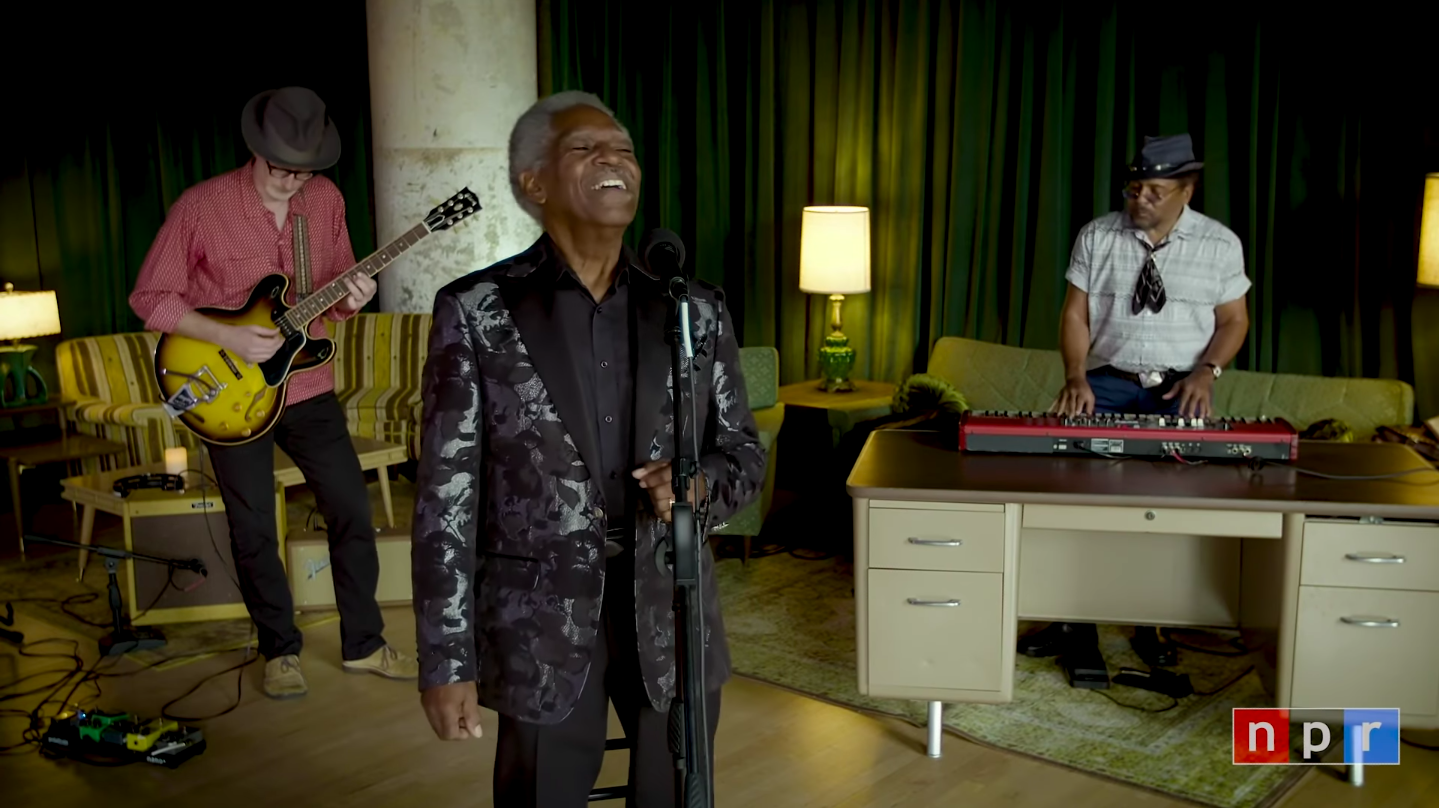
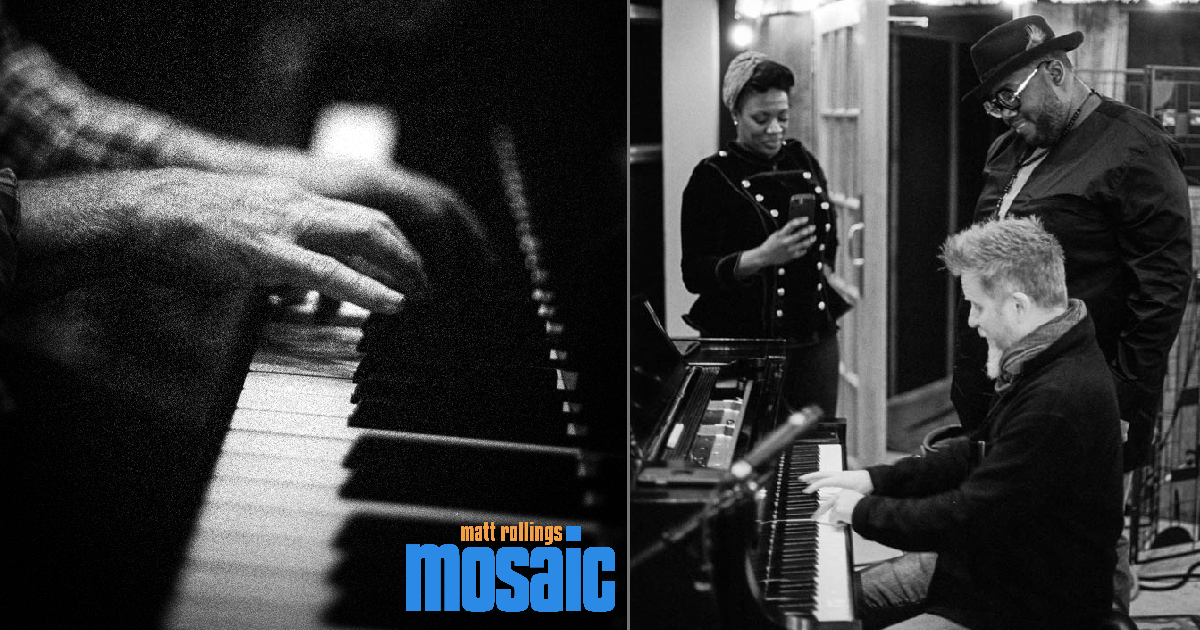
WATCH: Matt Rollings, “Wade in the Water” (Featuring The War and Treaty & The Blind Boys of Alabama)

Artist: Matt Rollings
Hometown: Nashville, Tennessee
Song: “Wade in the Water” (Featuring The War and Treaty and The Blind Boys of Alabama)
Album: Matt Rollings Mosaic
Release Date: August 14, 2020
Label: Dualtone Records

In Their Words: “Michael and Tanya [of The War and Treaty] and I had decided to record ‘Take Me to the Mardi Gras,’ the Paul Simon classic, for the record. We spent a few hours — Michael, Tanya, Jay Bellerose and I — and wound up with an amazing take of the song and I was thrilled. After listening to the playback of ‘Take Me to the Mardi Gras,’ I spontaneously asked if they’d be willing to try something else. I had been nursing an idea about the old spiritual, ‘Wade in the Water.’ My first real jazz piano influence, Ramsey Lewis, recorded it on his 1966 album of the same name, and I’ve always loved it. After hearing what Michael and Tanya had done with the Paul Simon song, I was dying to hear them sing it.

“I printed the lyrics out and we went for it. This is the first and only take we did of the song. It was so good that we didn’t even try it a second time. After adding acoustic bass, it still didn’t feel quite complete… some background vocals were needed. I thought, ‘Who would the ultimate singer(s) be for this?’ It occurred to me that a real-deal gospel quartet would be perfect and The Blind Boys of Alabama would be the ideal candidate. Somehow I was able to catch them while they were in Muscle Shoals, recording on another project. So I drove down there from Nashville on the appointed day and recorded them on the track. They brought just the magic that was needed. The way they blended with Michael and Tanya is amazing… like they were in the same room singing together. After that, the song was done.” — Matt Rollings


Photo credit: Michael Wilson

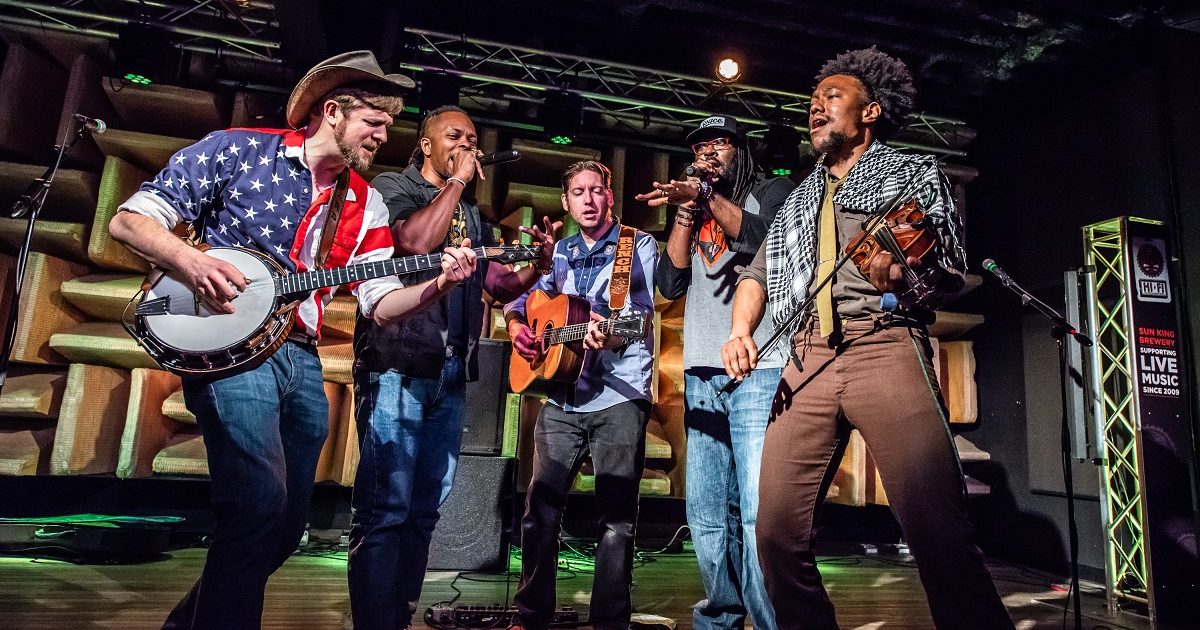
BGS 5+5: Gangstagrass

Artist: Gangstagrass
Homebase: Brooklyn, New York
Latest album: No Time for Enemies
Personal nicknames: Rench the Mastermind, Dolio the Sleuth, R-SON the Voice of Reason, Danjo, B.E. Farrow

What rituals do you have, either in the studio or before a show?

Back in the Before Time when we were on tour, before getting on stage we huddle up and put our fists in the center, and one of us will start giving a pump-up speech — equal parts church revival preaching and championship game coach pep talk, with some swearing thrown in, and then shout “Gangstagrass!” while we lift our fists up, very much like a little league team huddling before a game. Before that, Dolio the Sleuth does 300 push ups to get the adrenaline going, R-SON creates an R2-D2 replica out of toothpicks and glue, and I set up a poison capsule triggered by a Geiger counter next to a radioactive atom so that we play the entire set in a quantum state. But our huddle is always a good little energy focuser to bring us together for a moment before we step on stage. — Rench

Which elements of nature do you spend the most time with and how do those impact your work?

Earth. I’m a country boy, born and raised in a tradition of pulling nourishment from and communing with the outdoors, so I spend a lot of time in my garden. It helps to keep me grounded and centered, and serves as a sacred space, a place where I can take the gifts of sunlight, soil, and water to raise and enjoy my private Eden. That spiritual centering allows me to focus my pen into channeling the energy I want to deliver unto others … and whenever I can: water. Because I’m from a place on the Gulf, I feel my most comfortable when near a body of water. I tune in to the rhythm of the waves or the trickle of the currents and it turns to music in my mind. — Dolio the Sleuth

What other art forms — literature, film, dance, painting, etc — inform your music?

Comic books. All day. It’s rare to find a verse of mine that doesn’t have at least one comics reference. The comics universe is full of interesting characters and references that allow for it to fit and be used a hundred different ways for a hundred different meanings. The best part is when someone in an audience catches one of those references. It makes me know that they’re paying attention and digging what I’m saying. — R-SON the Voice of Reason

What was the first moment that you knew you wanted to be a musician?

I grew up listening to my dad play in a bluegrass band, so music was always in the house. I think I wanted to be a musician as early as I could want anything. — Danjo

If you had to write a mission statement for your career, what would it be?

Special butterflies fly to special places so always follow the oddest path. — Farrow


Photo credit: Melodie Yvonne

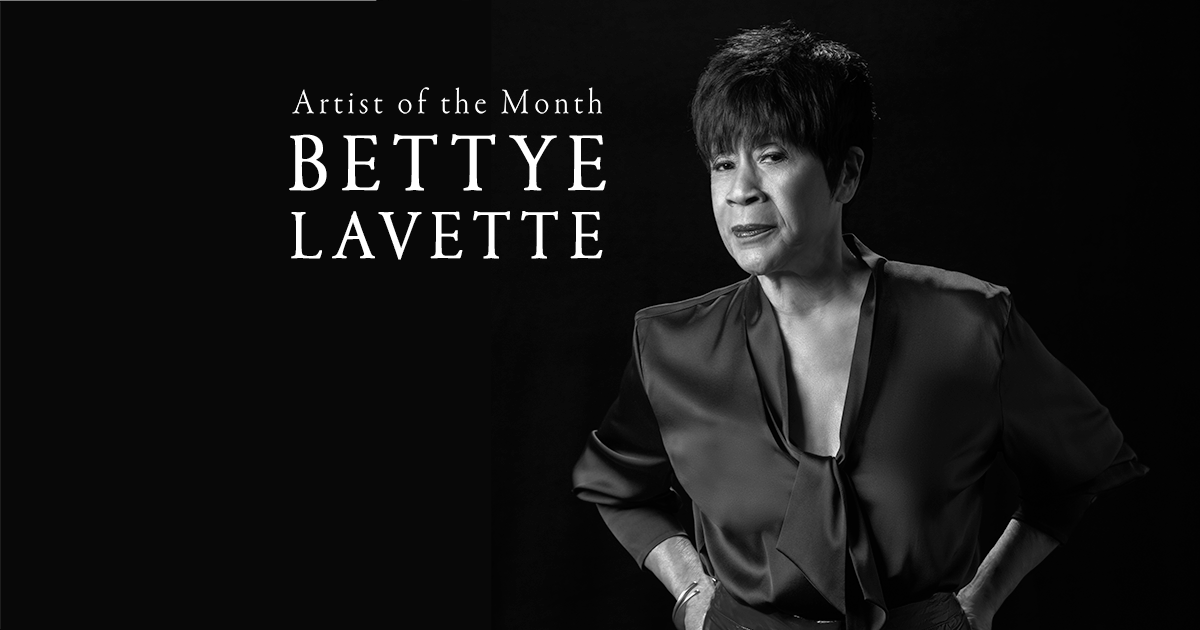
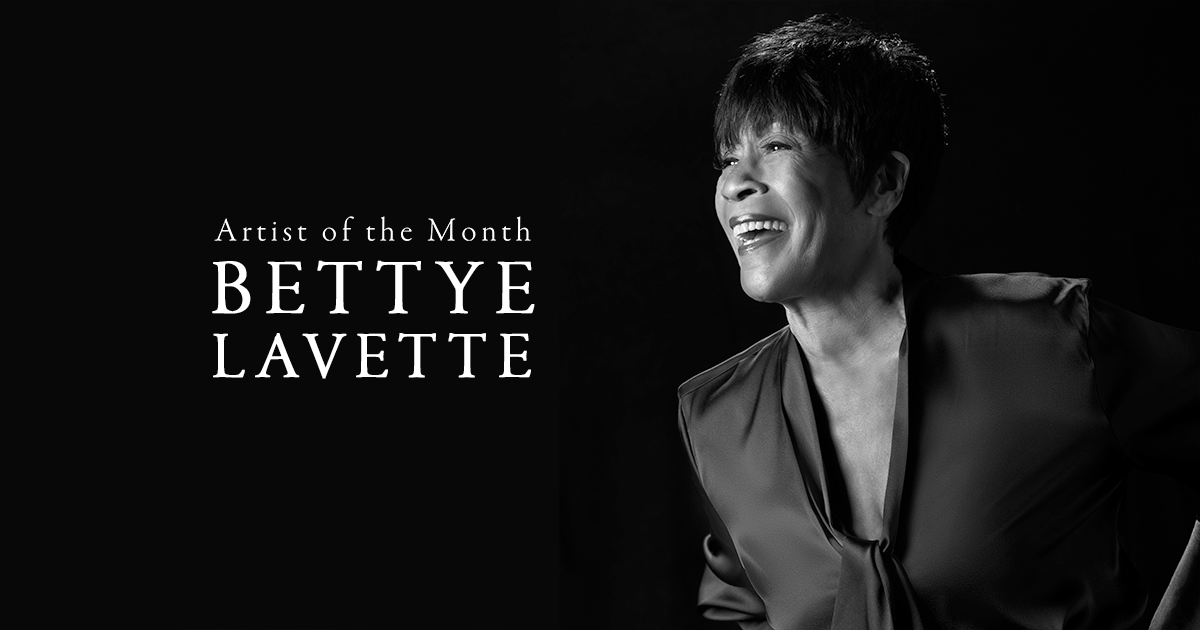
Artist of the Month: Bettye LaVette

The very definition of persistence, Bettye LaVette is among the newest inductees into the Blues Music Hall of Fame, yet she pulls her material from nearly every imaginable corner of music. In addition to her distinguished R&B output that dates to the 1960s, she has interpreted the greats of folk and country music, ranging from Bob Dylan and Patty Griffin to George Jones and Dolly Parton. Now the five-time Grammy nominee is honoring many of the Black women who inspire her with Blackbirds, a collection that takes its name from the Beatles standard. However, as LaVette has stated before, Paul McCartney wrote the song about a Black woman (as British slang refers to a girl as a “bird”). In LaVette’s rendition, though, she is the one who’s been waiting… and waiting… and waiting for this moment to arrive. And, in a specific allusion to this moment in history, to be free.

Set for release on the venerated Verve label, Blackbirds alights on August 28, though the Detroit-raised diva has already issued a stunning rendition of Billie Holiday’s “Strange Fruit,” as well as Nina Simone’s “I Hold No Grudge” and Sharon Robinson’s “One More Song.” (Songs recorded by Ruth Brown, Lou Rawls, Dinah Washington, and jazz vocalist Nancy Wilson are featured on the album, too.) Read our two-part interview — part one here, part two here — with this candid and compelling entertainer, who’s now based in New Jersey and enjoy our BGS Essentials playlist of August’s Artist of the Month, Bettye LaVette.