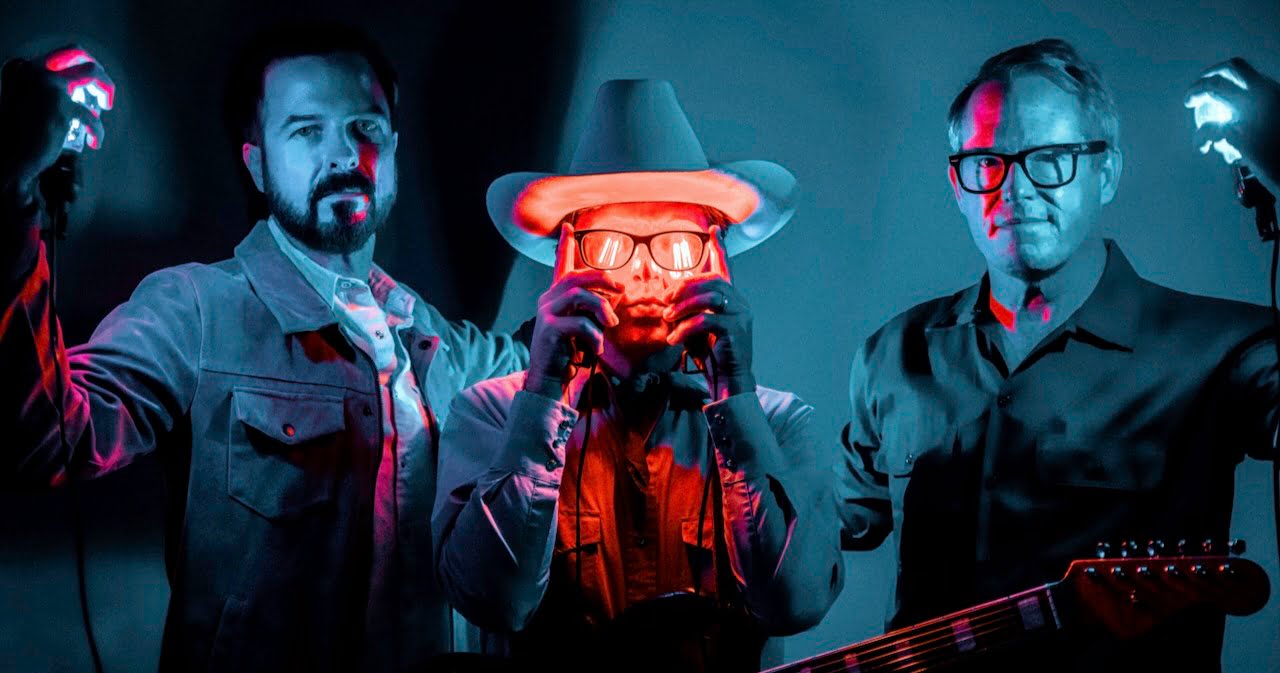
Do you remember the human being you were in 2017? When the “first” North American total solar eclipse of the 2000s criss-crossed the United States, stunning millions of sky-gazers? Do you remember how dissimilar life felt then? When you look back, do your memories contain the same person you are now, or is there a vast difference between who you were then and who you are today?
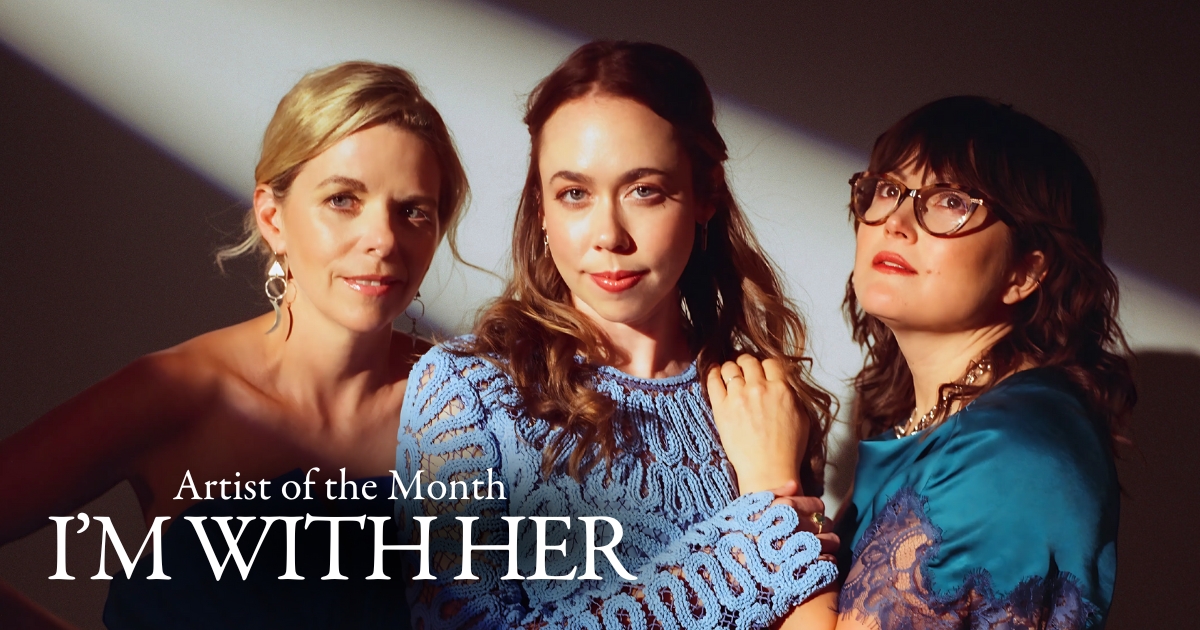
In 2017, I’m With Her – an iconic assemblage of award winning roots musicians Sarah Jarosz, Aoife O’Donovan, and Sara Watkins – were already a band, but a tangible group identity had yet to fully coalesce – and external viewers, listeners or fans or industry professionals, couldn’t tell if this was a temporary “supergroup” or something greater and long-lasting. Yes, they first collaborated as a trio in 2014 at Telluride Bluegrass Festival and their chemistry, musically and otherwise, was immediately palpable. They wrote, toured, and released music together in 2015, 2016, and 2017, appearing on Prairie Home Companion, Live From Here, and festival and venue stages all across the country and around the world. “Crossing Muddy Waters,” a John Hiatt cover and their first release together under the “I’m With Her” moniker, was released in ’15; “Little Lies” followed in ’17. Then, their acoustic cover of Adele’s “Send My Love (To Your New Lover)” performed live with Paul Kowert on tour with Punch Brothers became a smash viral hit later that same year, barely a month after the moon then blocked out the sun.
By all measures, I’m With Her were a very different group 8 to 10 years ago. Neither Watkins nor O’Donovan were yet mothers. The trio had not yet been nominated for a GRAMMY (“Call My Name” would snag a gramophone for Best American Roots Song in 2020). They wouldn’t put out their debut album, See You Around, until 2018. Yet today, on the precipice of what is somehow only their sophomore album, Wild and Clear and Blue (out May 9 on Rounder Records), whether deliberately looking back or relying solely on one’s memories and recollections, it might seem like I’m With Her has always had this outsized presence and impact in bluegrass, folk, and Americana.
Auspiciously, the celestial and grounded, fantastic and natural Wild and Clear and Blue was tracked in New York State coincidentally during/under the more recent total solar eclipse of 2024. The track of that heavenly alignment almost directly crossed the studio where the trio were crafting the new album with producer Josh Kaufman (Bonny Light Horseman, the National). Leave it to the stars, the universe, and these three otherworldly musicians to convene to build yet another masterwork under such an unlikely omen as an eclipse. The results are truly magical. O’Donovan, Jarosz, and Watkins are already writers and pickers who draw heavily on the natural world, the earth, and their own bodies, hearts, and minds not only as intellectual tools, but also as biological beings to fashion their particular style of roots music. It’s difficult not to see how the ’24 eclipse – along with their journeys together over the last decade – greatly informed this new collection.
Solidarity, women uplifting women, motherhood and family, communion with the world around them, connection to nature, challenging the painful realities of our current day-to-day, and – perhaps above all – convivial, heartfelt fun run through Wild and Clear and Blue like shimmering, cosmic rays of light. Where their past releases together have been quite stark and stripped down, often utilizing only as many voices and instruments as the trio themselves could wield in realtime, Wild and Clear and Blue is expansive, confident, and bold. Are these the same humans who first began creating together only just over a decade ago?
Of course not. None of us are the same beings we were back then. Certainly not I’m With Her. They’re GRAMMY winners now, all three married and beginning families, O’Donovan and Watkins by now veteran moms. They’ve had multiple eras together as a band and multiple solo releases unto themselves, individually, too in the meantime. The miles have sped away underneath their feet as they code switch between being an ensemble and being individual artists – while racking up accolades, awards, and listeners as a collective and separately, too. They’re seen alongside other so-called supergroups like boygenius, Bonny Light Horseman, and more; not as novelties or accessories to the “real” artistry of their constituent work unto themselves, but as a sum greater than their parts. Rightfully so!
How lucky are we to be witnesses to that growth, to each of these women’s ceaseless commitment to challenging themselves – and their communities – to move forward, to crest that next mountain, to sculpt that as-yet-undiscovered song from shapeless musical clay? How lucky are we that these three women bathed in the ancient, timeless light of a solar eclipse and alchemized their experiences into this resplendent album?
The path of this incredible trio, unlike the planets in the sky, has been anything but linear – or concentric, or predictable. Still, there’s endless insight and so much joy to be gained from inhabiting this intersection, the confluence of so many occurrences: the trajectory of the group; the track of a total solar eclipse; the Wild and Clear and Blue writing and recording sessions; the terrifying and shocking burning of our planet; the rapid return of abject fascism in this country; the consideration of how to be artists – family members, mothers, community builders – amid all of these realities. It’s a bewildering intersection, but one we’ve all become undoubtedly familiar with since 2014… since 2016… since the sun disappeared in 2017 and 2024.
Wild and Clear and Blue is a soundtrack for togetherness. For being present. For capturing the infinitesimal moments that make life what it is. It’s no surprise I’m With Her were able to create such an awe-inspiring and heartening second album with these celestial (and terrestrial) ingredients. It’s impeccable roots music made for bathing in the ancient light, for standing at the fault line, for staring into the wild and clear and blue with courage, with love, and with songs.
And, we’ll be dipping back into the BGS archives for all things I’m With Her throughout the month of May! Each of the trio’s members have been featured as AOTM individually and/or in other groups and we have plenty of playlists, articles, interviews, and even Sitch Sessions to return to featuring their supreme talents. Buckle up for a transcendental Artist of the Month celebration.
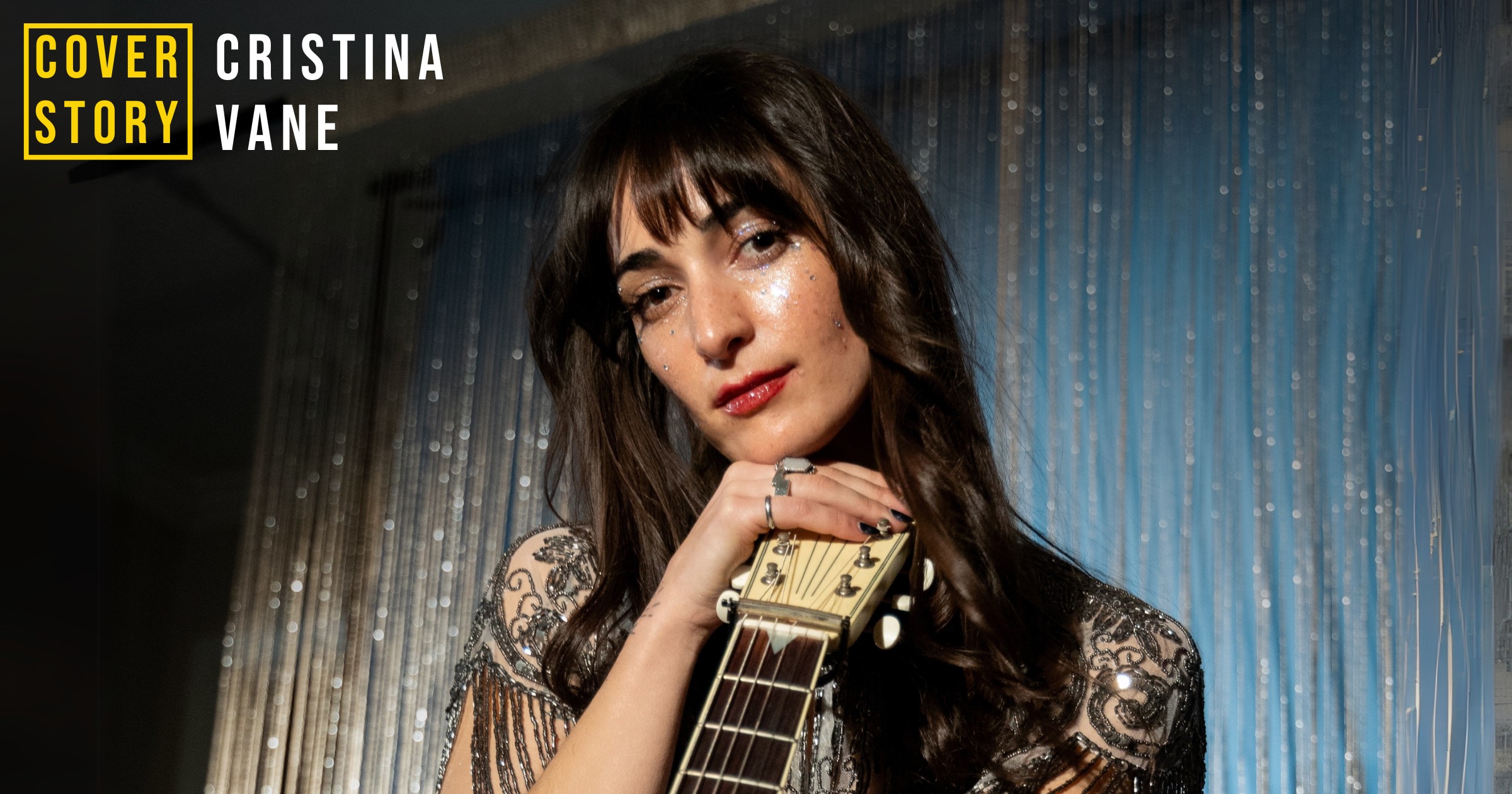
A blues, old-time, and Americana alchemist, singer-songwriter-instrumentalist Cristina Vane has just released a striking new album, Hear My Call, a collection that defies categorization and tidy genre labels.
Something of a roots music influencer – though she perhaps would never self ascribe that title – Vane has built a remarkable following around her agnostic approach to borderless, post-genre roots music that effortlessly calls back to eras before all of these styles were stratified and separated.
Vane’s Americana agnosticism stems from a variety of inspirations and inputs, but is largely derived from circumstances, taste, and whim. On the seventh track of Hear My Call, “My Mountain,” she sings along with loping frailed banjo:
I was born across the sea At the feet of the mountain I left young and it left me Lost a piece of my grounding I watch you and how you speak Belonging is astounding I watch you, but what of me? The history that I’m bound to…
She’s referencing her upbringing in Europe, born at the foot of the Alps and raised in Paris before moving to the U.S. in her youth. What does it mean to be a purveyor of “mountain music” when the mountains you claim are not Appalachia or the Ozarks or even Celtic highlands? How can you be an expert and interpreter of these art forms, while ultimately sensing – consciously and subconsciously – that your identity is not or cannot be interwoven with them? Perhaps it brings a certain unbridled freedom and ease? Or perhaps it means your entire relationship to the musics you love will be informed by this kind of daunting existential question: Can you belong?
For Vane, it’s clearly a smattering of many factors that has led her to this delicious and carefree combination of styles, sonics, and songs. She is truly an expert on blues, bluegrass, old-time, and beyond, spurred to excellence on one hand by her feeling of imposing in these traditions and on the other by a devout love and gratitude for the people who also inhabit these spaces and who passed the art along to her.
Cristina Vane may have not felt truly at home in the roots music scenes that claim her until recently or maybe she needed to still grow, easing into her current confident, unapologetic sense of self. At any rate, she’s ready for the world to hear her call – and to understand that she alone decides who she is, how she sounds, and where she belongs. Whether “her mountain” is found in the Alps, in the southeastern United States, in Los Angeles, Music City, or anywhere else. Vane knows that she, too, is a part of these timeless traditions and that, above all else, could be the primary reason she moves between these folkways so gracefully and entrancingly.
Your sound feels like it hearkens back to a time before roots music was split up into all of these different genres, when blues and folk and old-time and bluegrass and country were all technically considered the same thing. I feel like you combine sounds in a really similar way. How do you approach your sound? To me it feels like you’re pretty agnostic, you are very fluid in the way you approach genre. Especially with this album, as it feels so fully fleshed out, built up, and lush.
Cristina Vane: It is a really fine line to walk and I’ve had this struggle since forever where I just don’t want to choose. I don’t feel like I should have to really, either, and I do think that’s what I was hoping would come across in all my albums. Specifically this one in many areas of my life, includes this question of, “Who am I?” “Where am I from?” “Who am I in my community?”
“Who am I” applies to genre as well. Every time I feel this voice of self-doubt that’s like, “It’s just too confusing. If you wanna be appealing to more people and get better opportunities and festivals, they have to know what you are.”
Every time that comes up it’s a difficult feeling, but I ultimately always just say “fuck you!” [Laughs] It’s really affirming that you feel positively about that because I also agree, in the sense that I come from the ‘90s and 2000s, listening to different music and genre was important, but not in the way that I feel like it can get tiresome in Americana music. Where there’s this legacy and tradition that you have to uphold if you’re gonna fit within the parameters of a genre. Whereas, in indie music you can do whatever you want and if it sounds kind of like the other bands in the genre, then I guess you’re indie!
I guess I approached the older traditions with some hesitancy, because I knew that traditional-leaning people are [going to question me]. “You’re not really a blues woman” and “You’re not really a bluegrass artist” and “You’re not really an old-time player.”
Honestly, I think one of the people that, in a lot of ways inspired me on my first album to just stay the course, was Sarah Jarosz. It was more than the fact that she played different instruments and didn’t feel bound to be just a mandolin player. She’s just so talented, obviously, and I think it was very full circle when her last album came out and it was a completely different world than the string band sound stuff. I was like, “See? We all have it in us to want to explore different things.”
To answer your question a little more directly, I don’t worry about genre. If I wrote this song and I am proud of the song, I want to flesh it out in a way that just intuitively feels good to me. That being said, there are some songs where I lean towards more bluegrass, but there’s also a song like “Storm Brewing,” where it’s a clawhammer song. I wrote it on the banjo and then when we dressed it up, it just felt really good to put some electric guitar in there. I’ve added drums to everything because that’s how I wanna play my live show.
I love that you mention Sarah Jarosz, because that’s definitely an artist that this album reminds me of, but also Larkin Poe, Bonnie Raitt and Susan Tedeschi specifically, because you have these big bluesy modern tracks, but you’re a picker as well. I think that changes the music, when the bones of it or the origins of it are coming from someone who’s an instrumentalist-performer-songwriter-vocalist.
I also think that’s part of why the music, even though it comes from a variety of genre backgrounds, feels so engaging and charming, because you can play around with those sounds freely. Even if you were just playing the songs solo, just you, yourself, and your instrument – whatever instrument that may be – they would still work, but they also work fully realized.
Can you talk a little bit about how being a picker informs you and inspires you as a songwriter and as a frontwoman?
You kind of already hit on it. From the outset every song starts with me and my instrument – and they usually start either like “Storm Brewing” in a tent in Utah or like “Getting High in Hotel Rooms” getting high in hotel rooms in Las Vegas. I sit down with an instrument and the music always comes first.
“Everything Is Fine” actually started as a more fingerstyle thing on my resonator [guitar]. I wrote the words and then I was feeling the chorus. The vibe is more rock, and I wanted a strumming electric guitar. So it can be malleable, but pretty much [most of the time] it’s like, “I wrote this riff on this instrument and now I’m gonna write some words to it.” Then, in the case of this album, I bring it to my touring band, who I trust immensely and we can collaboratively work, play around with it, and they give their input as well.
Let’s talk about the title track. “Hear My Call” is like Ola Belle Reed meets Gillian Welch meets modern, head-bobbing bluegrass mash. I love that. I thought it was interesting to pick this one as the title track, given that it’s one of a handful of string band songs on the record among many much “harder” sounding tracks. I wanted to know more about the inspiration behind it, choosing it as the title track, and having it be the keystone of the project. How did you write it and how did it all come together?
You know, I’m actually deeply dismayed to say that I don’t even remember when exactly I wrote this riff! I think I was on a very long, grueling West Coast tour, but you know the West Coast is also always filled with magic. I’m very partial to the nature and landscape out West. I would’ve definitely written the riff first and then I started just hearing this chorus over and over. I was playing it at soundchecks.
I guess I didn’t even think about choosing a song that best represents the album. I was struggling to name the album, just because it’s hard to do that. Do I choose another title or do I do a title track? But I actually chose it because this whole album [is about] the way I was mentally, the way I still am feeling about my place in music, my place in the world, and the general sort of comfort level I have with being exactly who I am.
I’m in a time of changing my energy from being an observer and a student of a lot of different cultures and musics, from looking at other people and taking all of that with deep gratitude, realizing that I have a story as well. The unique blend of things that make up my cultural history, and geographical history – all of those things I should be proud of and not uncomfortable with. Until the last couple of years, I was just uncomfortable with how complicated everything is in my my personal history and my musical influences and not knowing how to marry being a girl from Paris that went to Princeton with being someone who loves down-home music. I just spent [a lot of] time almost apologizing for things that I really can’t change [about myself].
“Hear My Call” is reflective of the shift that happened. Maybe it’s just growing into yourself and realizing I’m actually proud of where I’m from and I’m happy to have had the experiences I have. I have learned a lot from other people, but other people can maybe also learn from me. It’s not all just “take take take.” I can give something back. It’s an assertion of reclaiming space. That’s really what this song is about.
It’s interesting to hear you say that you’re giving yourself permission to be exactly who you are and love the music you love and make the music you make, because I think part of the “trad” music world is that we’re all policing ourselves all the time.
I actually didn’t realize it, but I think a lot of what influenced how I went into the studio [for this album] was that, around that time and a little before, I was delving deep back into the music I listened to when I was, let’s say, 11 to 18. After so many years of being a true student of the blues and then old-time – like, “I have to learn every tune and I have to read all the books!” Well, I wanted to. I went back into this music that felt so familiar and not being stupid and young anymore thinking, “I can’t listen to Blink-182, ‘cause it’s not cool.” I missed The Strokes and Bon Iver and Elliott Smith and all these things that, while I’ve always loved them, I kind of pushed to the wayside as all this new music came in, which is natural.
I loved this feeling around the time of doing this album of just reconnecting with my teenage self and remembering that that [music] has [also] informed the way I write. I want it to be just as present as someone that I discovered much later, like Gillian Welch. I’m hoping that mix comes across, to some extent.
I also wanted to ask about your “online community.” You have a huge social media following and you have so many amazing collaborators that you make content with. Personally, I think part of why you’re able to approach genre without being contained by categories is because you have built this direct-to-consumer business model. You’re directly interfacing with so many of your listeners, so none of them are gonna be surprised to see you code-switch on a project, genre-wise or sonically.
It jumped out at me that the way that you operate online – creating on your own terms with the door open and the window shades up so that everybody can be part of that process and also take ownership of it – must somewhat allow you to do what you want. You aren’t beholden to anybody but yourself, especially given that you’ve created this ecosystem and this community for yourself and your fans already know that’s what to expect from you.
Wow, I just love doing interviews, ‘cause I feel like when they’re insightful people like you they’re telling me things about myself! Because that’s so, so insightful and I have never thought about it that way!
So much has been dictated by circumstance or necessity – and partially just me being batshit crazy and honestly not scared of anything. [Laughs] Like, I would go on the beach in Venice, [California] when I lived there and busk. Instead of playing songs that would make me a lot of money, I played my own songs over and over and over, because I was like, “I’m playing my guitar. I need to get good at it. I think it’s cool and they’ll think it’s cool, too.”
When I first went on the road, I was like, “Well, I’m gonna bring my electric guitar, because my acoustic is gonna explode when I’m in Zion and Moab and all these crazy places.” I was on the road for six months in a tent, mostly. That was a big factor in choosing why a lot of my songs are performed on electric. Then I brought my banjo, ‘cause I liked it and I was like, “I don’t really care if it’s confusing, but I’m gonna like play my blues stuff.”
This is actually going to offend people if you print this, but I would play through my [Fender] Blues Junior and then I would just plug my banjo into it, because, “It’s an amplifier and it fucking works, so…” [Laughs] It didn’t sound that bad actually, to be honest with you, but yeah, I would be playing some random brewery somewhere that I’ve never been and I would go from playing Son House to “Angeline the Baker,” because that’s what I was learning at the time.
I guess in some ways, of course I’m like everyone else and I worry deeply about what people think of me and how I am perceived, but in other ways, I just don’t care. That can be really freeing. I think that’s carried over a little bit. I had experimented with paring myself down – “OK, I need to just be a blues player” and then I would show up to the gig and there would always be one or two people that were disappointed I didn’t bring the banjo. And vice versa when I just did the string band stuff, it felt like I was missing a huge part.
I mean there was no way I was gonna not play my guitar. That’s like my main instrument, but there was a time in Nashville where I was just playing with a string band and I didn’t ever play my resonator. I just played acoustic and the banjo. It didn’t feel complete. I don’t have it figured out. I don’t know that there is a “figuring out” that’s going to happen. I’m just gonna play what I like.
Yesterday, the 67th Annual GRAMMY Awards show was held in Los Angeles, handing out dozens of awards across the primetime broadcast and premiere ceremony while highlighting the city’s ongoing response to last month’s extreme wildfires, which displaced hundreds of musicians, artists, industry professionals, and creatives. The marquee event was kicked off by Dawes – whose sibling frontmen, Taylor and Griffin Goldsmith, had homes, their studio, and countless instruments and equipment destroyed in the blazes. They performed a moving rendition of “I Love L.A.” with a host of special guests.
Throughout the show, audience members were encouraged to support MusiCares Fire Relief, a collaborative fundraiser launched by the Recording Academy and MusiCares in partnership with Direct Relief, the California Community Foundation, and the Pasadena Community Foundation to help expand wildfire relief efforts across the broader Los Angeles community. Despite the somber shadow cast by the disaster over LA and its creative community, the show was convivial, joyous, and restorative – and included more than a few show-stopping and jaw-dropping moments.
As usual, the crème de la crème of roots musicians could be found across both the pre-telecast and primetime awards, scooping up golden gramophones in seemingly endless varieties of categories. The evening’s big winners in the Country & American Roots Music categories included superstar Beyoncé, who finally picked up her first Album of the Year win, as well as becoming the first Black woman to ever win Best Country Album. She also won the trophy for Best Country Duo Performance with Miley Cyrus for “II Most Wanted,” bringing her GRAMMY Awards totals to 99 nominations and 35 wins – the most wins of any recipient in the history of the awards.
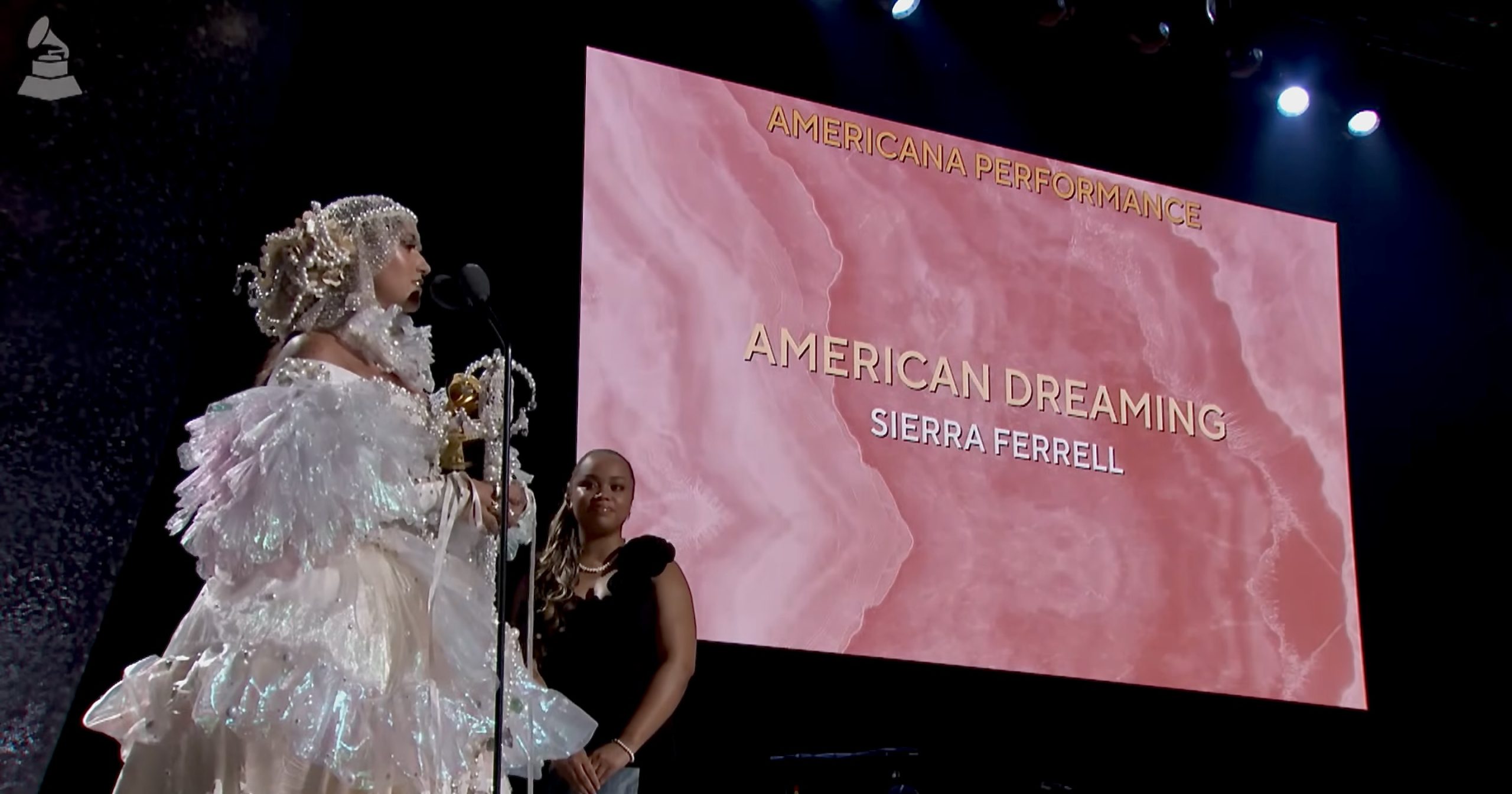
Sierra Ferrell, a West Virginia native and firebrand bluegrass and country starlet quickly on the rise these past handful of years, was indisputably the day’s other big winner, scoring in each of the four categories in which she was nominated. She quickly followed her very first GRAMMY win with three more, landing awards for Best Americana Album, Best American Roots Performance, Best Americana Performance, and Best American Roots Song – an honor she shares with her co-writer, musician, songwriter, and vocalist Melody Walker (Front Country, BERTHA: Grateful Drag).
The award for Best Bluegrass Album was yet again snatched by the world’s premier flatpicker, Billy Strings, for Live Vol. 1, logging his second win at the GRAMMYs after seven nominations over the last five years.
Pop phenom Chappell Roan won Best New Artist, Kacey Musgraves took home Best Country Song for “The Architect,” Chris Stapleton racked up his 11th GRAMMY win for Best Country Solo Performance, and Woodland, the latest album by Gillian Welch & David Rawlings, was recognized as Best Folk Album. Chick Corea won a posthumous award – Best Jazz Instrumental Album – for Remembrance, a duo project helmed by banjoist Béla Fleck that was released in honor of his hero, friend, and collaborator.
The GRAMMYs yet again demonstrate that the impact of bluegrass, folk, Americana, and country on the mainstream music industry cannot be overstated. Congratulations to all of the winners and nominees for the 67th GRAMMY Awards!
“16 CARRIAGES” – Beyoncé “I Am Not Okay” – Jelly Roll “The Architect” – Kacey Musgraves “A Bar Song (Tipsy)” – Shaboozey “It Takes A Woman” – Chris Stapleton
Best Country Duo/Group Performance
“Cowboys Cry Too” – Kelsea Ballerini with Noah Kahan “II MOST WANTED” – Beyoncé featuring Miley Cyrus “Break Mine” – Brothers Osborne “Bigger Houses” – Dan + Shay “I Had Some Help” – Post Malone featuring Morgan Wallen
Best Country Song
“The Architect” – Shane McAnally, Kacey Musgraves & Josh Osborne, songwriters (Kacey Musgraves) “A Bar Song (Tipsy)” – Sean Cook, Jerrel Jones, Joe Kent, Chibueze Collins Obinna, Nevin Sastry & Mark Williams, songwriters (Shaboozey) “I Am Not Okay” – Casey Brown, Jason DeFord, Ashley Gorley & Taylor Phillips, songwriters (Jelly Roll) “I Had Some Help” – Louis Bell, Ashley Gorley, Hoskins, Austin Post, Ernest Smith, Ryan Vojtesak, Morgan Wallen & Chandler Paul Walters, songwriters (Post Malone Featuring Morgan Wallen) “TEXAS HOLD ‘EM”– Brian Bates, Beyoncé, Elizabeth Lowell Boland, Megan Bülow, Nate Ferraro & Raphael Saadiq, songwriters (Beyoncé)
Best Country Album
COWBOY CARTER – Beyoncé F-1 Trillion – Post Malone Deeper Well – Kacey Musgraves Higher – Chris Stapleton Whirlwind – Lainey Wilson
Best American Roots Performance
“Blame It On Eve” – Shemekia Copeland “Nothing In Rambling” – The Fabulous Thunderbirds featuring Bonnie Raitt, Keb’ Mo’, Taj Mahal, & Mick Fleetwood “Lighthouse” – Sierra Ferrell “The Ballad Of Sally Anne” – Rhiannon Giddens
Best Americana Performance
“YA YA” – Beyoncé “Subtitles” – Madison Cunningham “Don’t Do Me Good” – Madi Diaz featuring Kacey Musgraves “American Dreaming” – Sierra Ferrell “Runaway Train” – Sarah Jarosz “Empty Trainload Of Sky” – Gillian Welch & David Rawlings
Best American Roots Song
“Ahead Of The Game” – Mark Knopfler, songwriter (Mark Knopfler) “All In Good Time” – Sam Beam, songwriter (Iron & Wine featuring Fiona Apple) “All My Friends” – Aoife O’Donovan, songwriter (Aoife O’Donovan) “American Dreaming” – Sierra Ferrell & Melody Walker, songwriters (Sierra Ferrell) “Blame It On Eve” – John Hahn & Will Kimbrough, songwriters (Shemekia Copeland)
Best Americana Album
The Other Side – T Bone Burnett $10 Cowboy – Charley Crockett Trail Of Flowers – Sierra Ferrell Polaroid Lovers – Sarah Jarosz No One Gets Out Alive – Maggie Rose Tigers Blood – Waxahatchee
Best Bluegrass Album
I Built A World – Bronwyn Keith-Hynes Songs Of Love And Life – The Del McCoury Band No Fear – Sister Sadie Live Vol. 1 – Billy Strings Earl Jam – Tony Trischka Dan Tyminski: Live From The Ryman – Dan Tyminski
Best Traditional Blues Album
Hill Country Love – Cedric Burnside Struck Down – The Fabulous Thunderbirds One Guitar Woman – Sue Foley Sam’s Place – Little Feat Swingin’ Live At The Church In Tulsa – The Taj Mahal Sextet
Best Contemporary Blues Album
Blues Deluxe Vol. 2 – Joe Bonamassa Blame It On Eve – Shemekia Copeland Friendlytown – Steve Cropper & The Midnight Hour Mileage – Ruthie Foster The Fury – Antonio Vergara
Best Folk Album
American Patchwork Quartet – American Patchwork Quartet Weird Faith – Madi Diaz Bright Future – Adrianne Lenker All My Friends – Aoife O’Donovan Woodland – Gillian Welch & David Rawlings
Best Regional Roots Music Album
25 Back To My Roots – Sean Ardoin And Kreole Rock And Soul Live At The 2024 New Orleans Jazz & Heritage Festival – Big Chief Monk Boudreaux & The Golden Eagles featuring J’Wan Boudreaux Live At The 2024 New Orleans Jazz & Heritage Festival – New Breed Brass Band featuring Trombone Shorty Kuini – Kalani Pe’a Stories From The Battlefield – The Rumble Featuring Chief Joseph Boudreaux Jr.
Best Roots Gospel Album
The Gospel Sessions, Vol 2 – Authentic Unlimited The Gospel According To Mark – Mark D. Conklin Rhapsody – The Harlem Gospel Travelers Church – Cory Henry Loving You – The Nelons
Best Jazz Performance
“Walk With Me, Lord (SOUND | SPIRIT)” – The Baylor Project “Phoenix Reimagined (Live)” – Lakecia Benjamin featuring Randy Brecker, Jeff “Tain” Watts & John Scofield “Juno” – Chick Corea & Béla Fleck “Twinkle Twinkle Little Me” – Samara Joy featuring Sullivan Fortner “Little Fears” – Dan Pugach Big Band featuring Nicole Zuraitis & Troy Roberts
Best Jazz Instrumental Album
Owl Song – Ambrose Akinmusire featuring Bill Frisell & Herlin Riley Beyond This Place – Kenny Barron featuring Kiyoshi Kitagawa, Johnathan Blake, Immanuel Wilkins & Steve Nelson Phoenix Reimagined (Live) – Lakecia Benjamin Remembrance – Chick Corea & Béla Fleck Solo Game – Sullivan Fortner
Best Traditional Pop Vocal Album
À Fleur De Peau – Cyrille Aimée Visions – Norah Jones Good Together – Lake Street Dive Impossible Dream – Aaron Lazar Christmas Wish – Gregory Porter
Best Contemporary Instrumental Album
Plot Armor – Taylor Eigsti Rhapsody In Blue – Béla Fleck Orchestras (Live) – Bill Frisell featuring Alexander Hanson, Brussels Philharmonic, Rudy Royston & Thomas Morgan Mark – Mark Guiliana Speak To Me – Julian Lage
Best Instrumental Composition
“At Last” – Shelton G. Berg, composer (Shelly Berg) “Communion” – Christopher Zuar, composer (Christopher Zuar Orchestra) “I Swear, I Really Wanted To Make A “Rap” Album But This Is Literally The Way The Wind Blew Me This Time” – André 3000, Surya Botofasina, Nate Mercereau & Carlos Niño, composers (André 3000) “Remembrance” – Chick Corea, composer (Chick Corea & Béla Fleck) “Strands” – Pascal Le Boeuf, composer (Akropolis Reed Quintet, Pascal Le Boeuf & Christian Euman)
Best Arrangement, Instrumental or A Cappella
“Baby Elephant Walk” – Encore, Michael League, arranger (Snarky Puppy) “Bridge Over Troubled Water” – Jacob Collier, Tori Kelly & John Legend, arrangers (Jacob Collier Featuring John Legend & Tori Kelly) “Rhapsody In Blue(Grass)” – Béla Fleck & Ferde Grofé, arrangers (Béla Fleck featuring Michael Cleveland, Sierra Hull, Justin Moses, Mark Schatz & Bryan Sutton) “Rose Without The Thorns” – Erin Bentlage, Alexander Lloyd Blake, Scott Hoying, A.J. Sealy & Amanda Taylor, arrangers (Scott Hoying featuring säje & Tonality) “Silent Night” – Erin Bentlage, Sara Gazarek, Johnaye Kendrick & Amanda Taylor, arrangers (säje)
Notable General Field Categories:
Record Of The Year
“Now And Then” – The Beatles “TEXAS HOLD ‘EM” – Beyoncé “Espresso” – Sabrina Carpenter “360” – Charli XCX “BIRDS OF A FEATHER” – Billie Eilish “Not Like Us” – Kendrick Lamar “Good Luck, Babe!” – Chappell Roan “Fortnight” – Taylor Swift featuring Post Malone
Album Of The Year
New Blue Sun – André 3000 COWBOY CARTER – Beyoncé Short n’ Sweet – Sabrina Carpenter BRAT – Charli XCX Djesse Vol. 4 – Jacob Collier HIT ME HARD AND SOFT – Billie Eilish Chappell Roan The Rise And Fall Of A Midwest Princess – Chappell Roan THE TORTURED POETS DEPARTMENT – Taylor Swift
Song Of The Year
“A Bar Song (Tipsy)” – Sean Cook, Jerrel Jones, Joe Kent, Chibueze Collins Obinna, Nevin Sastry & Mark Williams, songwriters (Shaboozey) “BIRDS OF A FEATHER” – Billie Eilish O’Connell & FINNEAS, songwriters (Billie Eilish) “Die With A Smile” – Dernst Emile II, James Fauntleroy, Lady Gaga, Bruno Mars & Andrew Watt, songwriters (Lady Gaga & Bruno Mars) “Fortnight” – Jack Antonoff, Austin Post & Taylor Swift, songwriters (Taylor Swift Featuring Post Malone) “Good Luck, Babe!” – Kayleigh Rose Amstutz, Daniel Nigro & Justin Tranter, songwriters (Chappell Roan) “Not Like Us” – Kendrick Lamar, songwriter (Kendrick Lamar) “Please Please Please” – Amy Allen, Jack Antonoff & Sabrina Carpenter, songwriters (Sabrina Carpenter) “TEXAS HOLD ‘EM” – Brian Bates, Beyoncé, Elizabeth Lowell Boland, Megan Bülow, Nate Ferraro & Raphael Saadiq, songwriters (Beyoncé)
This morning, Friday, November 8, the Recording Academy announced the nominees for the 67th GRAMMY Awards, to be held in Los Angeles on February 2 at the Crypto.com Arena. Roots musicians can be found at all levels and across all fields of the buzzworthy awards, which are voted on by the vast Recording Academy membership of music makers, artists, and creatives.
Notably, Beyoncé, her groundbreaking country fusion album COWBOY CARTER, and its tracks can be found throughout the general field and American Roots categories, including landing nominations for Best Country Album, Best Country Song, Best Americana Performance, Album of the Year, Record of the Year, and more. Banjoist and composer Béla Fleck collected more than a handful of nominations for his work with Chick Corea – released posthumously – and Rhapsody in Blue, as well.
The Best Bluegrass Album category this year includes releases from Bronwyn Keith-Hynes, the Del McCoury Band, Sister Sadie, Billy Strings, Tony Trischka, and Dan Tyminski, making for an incredibly stout and superlative lineup.
From Kacey Musgraves to Shemekia Copeland, Aoife O’Donovan to Lake Street Dive, below we’ve collected all of the nominees in the Country & American Roots Music fields, plus we feature select categories from across the many fields, genres, and communities that also include roots musicians and our BGS friends and neighbors. Check out the list and mark your calendars for the 67th GRAMMY Awards, Sunday, February 2, 2025.
Best Country Solo Performance
“16 CARRIAGES” – Beyoncé “I Am Not Okay” – Jelly Roll “The Architect” – Kacey Musgraves “A Bar Song (Tipsy)” – Shaboozey “It Takes A Woman” – Chris Stapleton
Best Country Duo/Group Performance
“Cowboys Cry Too” – Kelsea Ballerini with Noah Kahan “II MOST WANTED” – Beyoncé featuring Miley Cyrus “Break Mine” – Brothers Osborne “Bigger Houses” – Dan + Shay “I Had Some Help” – Post Malone featuring Morgan Wallen
Best Country Song
“The Architect” – Shane McAnally, Kacey Musgraves & Josh Osborne, songwriters (Kacey Musgraves) “A Bar Song (Tipsy)” – Sean Cook, Jerrel Jones, Joe Kent, Chibueze Collins Obinna, Nevin Sastry & Mark Williams, songwriters (Shaboozey) “I Am Not Okay” – Casey Brown, Jason DeFord, Ashley Gorley & Taylor Phillips, songwriters (Jelly Roll) “I Had Some Help” – Louis Bell, Ashley Gorley, Hoskins, Austin Post, Ernest Smith, Ryan Vojtesak, Morgan Wallen & Chandler Paul Walters, songwriters (Post Malone Featuring Morgan Wallen) “TEXAS HOLD ‘EM”– Brian Bates, Beyoncé, Elizabeth Lowell Boland, Megan Bülow, Nate Ferraro & Raphael Saadiq, songwriters (Beyoncé)
Best Country Album
COWBOY CARTER – Beyoncé F-1 Trillion – Post Malone Deeper Well – Kacey Musgraves Higher – Chris Stapleton Whirlwind – Lainey Wilson
Best American Roots Performance
“Blame It On Eve” – Shemekia Copeland “Nothing In Rambling” – The Fabulous Thunderbirds featuring Bonnie Raitt, Keb’ Mo’, Taj Mahal, & Mick Fleetwood “Lighthouse” – Sierra Ferrell “The Ballad Of Sally Anne” – Rhiannon Giddens
Best Americana Performance
“YA YA” – Beyoncé “Subtitles” – Madison Cunningham “Don’t Do Me Good” – Madi Diaz featuring Kacey Musgraves “American Dreaming” – Sierra Ferrell “Runaway Train” – Sarah Jarosz “Empty Trainload Of Sky” – Gillian Welch & David Rawlings
Best American Roots Song
“Ahead Of The Game” – Mark Knopfler, songwriter (Mark Knopfler) “All In Good Time” – Sam Beam, songwriter (Iron & Wine featuring Fiona Apple) “All My Friends” – Aoife O’Donovan, songwriter (Aoife O’Donovan) “American Dreaming” – Sierra Ferrell & Melody Walker, songwriters (Sierra Ferrell) “Blame It On Eve” – John Hahn & Will Kimbrough, songwriters (Shemekia Copeland)
Best Americana Album
The Other Side – T Bone Burnett $10 Cowboy – Charley Crockett Trail Of Flowers – Sierra Ferrell Polaroid Lovers – Sarah Jarosz No One Gets Out Alive – Maggie Rose Tigers Blood – Waxahatchee
Best Bluegrass Album
I Built A World – Bronwyn Keith-Hynes Songs Of Love And Life – The Del McCoury Band No Fear – Sister Sadie Live Vol. 1 – Billy Strings Earl Jam – Tony Trischka Dan Tyminski: Live From The Ryman – Dan Tyminski
Best Traditional Blues Album
Hill Country Love – Cedric Burnside Struck Down – The Fabulous Thunderbirds One Guitar Woman – Sue Foley Sam’s Place – Little Feat Swingin’ Live At The Church In Tulsa – The Taj Mahal Sextet
Best Contemporary Blues Album
Blues Deluxe Vol. 2 – Joe Bonamassa Blame It On Eve – Shemekia Copeland Friendlytown – Steve Cropper & The Midnight Hour Mileage – Ruthie Foster The Fury – Antonio Vergara
Best Folk Album
American Patchwork Quartet – American Patchwork Quartet Weird Faith – Madi Diaz Bright Future – Adrianne Lenker All My Friends – Aoife O’Donovan Woodland – Gillian Welch & David Rawlings
Best Regional Roots Music Album
25 Back To My Roots – Sean Ardoin And Kreole Rock And Soul Live At The 2024 New Orleans Jazz & Heritage Festival – Big Chief Monk Boudreaux & The Golden Eagles featuring J’Wan Boudreaux Live At The 2024 New Orleans Jazz & Heritage Festival – New Breed Brass Band featuring Trombone Shorty Kuini – Kalani Pe’a Stories From The Battlefield – The Rumble Featuring Chief Joseph Boudreaux Jr.
Best Roots Gospel Album
The Gospel Sessions, Vol 2 – Authentic Unlimited The Gospel According To Mark – Mark D. Conklin Rhapsody – The Harlem Gospel Travelers Church – Cory Henry Loving You – The Nelons
Best Jazz Performance
“Walk With Me, Lord (SOUND | SPIRIT)” – The Baylor Project “Phoenix Reimagined (Live)” – Lakecia Benjamin featuring Randy Brecker, Jeff “Tain” Watts & John Scofield “Juno” – Chick Corea & Béla Fleck “Twinkle Twinkle Little Me” – Samara Joy featuring Sullivan Fortner “Little Fears” – Dan Pugach Big Band featuring Nicole Zuraitis & Troy Roberts
Best Jazz Instrumental Album
Owl Song – Ambrose Akinmusire featuring Bill Frisell & Herlin Riley Beyond This Place – Kenny Barron featuring Kiyoshi Kitagawa, Johnathan Blake, Immanuel Wilkins & Steve Nelson Phoenix Reimagined (Live) – Lakecia Benjamin Remembrance – Chick Corea & Béla Fleck Solo Game – Sullivan Fortner
Best Traditional Pop Vocal Album
À Fleur De Peau – Cyrille Aimée Visions – Norah Jones Good Together – Lake Street Dive Impossible Dream – Aaron Lazar Christmas Wish – Gregory Porter
Best Contemporary Instrumental Album
Plot Armor – Taylor Eigsti Rhapsody In Blue – Béla Fleck Orchestras (Live) – Bill Frisell featuring Alexander Hanson, Brussels Philharmonic, Rudy Royston & Thomas Morgan Mark – Mark Guiliana Speak To Me – Julian Lage
Best Instrumental Composition
“At Last” – Shelton G. Berg, composer (Shelly Berg) “Communion” – Christopher Zuar, composer (Christopher Zuar Orchestra) “I Swear, I Really Wanted To Make A “Rap” Album But This Is Literally The Way The Wind Blew Me This Time” – André 3000, Surya Botofasina, Nate Mercereau & Carlos Niño, composers (André 3000) “Remembrance” – Chick Corea, composer (Chick Corea & Béla Fleck) “Strands” – Pascal Le Boeuf, composer (Akropolis Reed Quintet, Pascal Le Boeuf & Christian Euman)
Best Arrangement, Instrumental or A Cappella
“Baby Elephant Walk” – Encore, Michael League, arranger (Snarky Puppy) “Bridge Over Troubled Water” – Jacob Collier, Tori Kelly & John Legend, arrangers (Jacob Collier Featuring John Legend & Tori Kelly) “Rhapsody In Blue(Grass)” – Béla Fleck & Ferde Grofé, arrangers (Béla Fleck featuring Michael Cleveland, Sierra Hull, Justin Moses, Mark Schatz & Bryan Sutton) “Rose Without The Thorns” – Erin Bentlage, Alexander Lloyd Blake, Scott Hoying, A.J. Sealy & Amanda Taylor, arrangers (Scott Hoying featuring säje & Tonality) “Silent Night” – Erin Bentlage, Sara Gazarek, Johnaye Kendrick & Amanda Taylor, arrangers (säje)
General Field:
Record Of The Year
“Now And Then” – The Beatles “TEXAS HOLD ‘EM” – Beyoncé “Espresso” – Sabrina Carpenter “360” – Charli XCX “BIRDS OF A FEATHER” – Billie Eilish “Not Like Us” – Kendrick Lamar “Good Luck, Babe!” – Chappell Roan “Fortnight” – Taylor Swift featuring Post Malone
Album Of The Year
New Blue Sun – André 3000 COWBOY CARTER – Beyoncé Short n’ Sweet – Sabrina Carpenter BRAT – Charli XCX Djesse Vol. 4 – Jacob Collier HIT ME HARD AND SOFT – Billie Eilish Chappell Roan The Rise And Fall Of A Midwest Princess – Chappell Roan THE TORTURED POETS DEPARTMENT – Taylor Swift
Song Of The Year
“A Bar Song (Tipsy)” – Sean Cook, Jerrel Jones, Joe Kent, Chibueze Collins Obinna, Nevin Sastry & Mark Williams, songwriters (Shaboozey) “BIRDS OF A FEATHER” – Billie Eilish O’Connell & FINNEAS, songwriters (Billie Eilish) “Die With A Smile” – Dernst Emile II, James Fauntleroy, Lady Gaga, Bruno Mars & Andrew Watt, songwriters (Lady Gaga & Bruno Mars) “Fortnight” – Jack Antonoff, Austin Post & Taylor Swift, songwriters (Taylor Swift Featuring Post Malone) “Good Luck, Babe!” – Kayleigh Rose Amstutz, Daniel Nigro & Justin Tranter, songwriters (Chappell Roan) “Not Like Us” – Kendrick Lamar, songwriter (Kendrick Lamar) “Please Please Please” – Amy Allen, Jack Antonoff & Sabrina Carpenter, songwriters (Sabrina Carpenter) “TEXAS HOLD ‘EM” – Brian Bates, Beyoncé, Elizabeth Lowell Boland, Megan Bülow, Nate Ferraro & Raphael Saadiq, songwriters (Beyoncé)
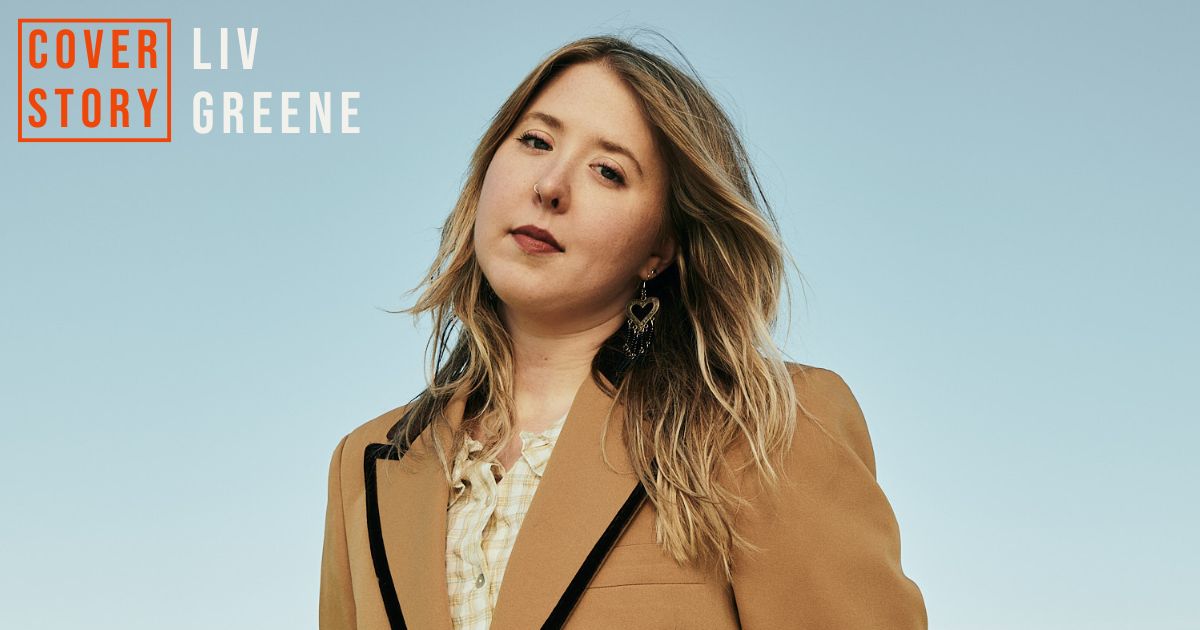
The Nashville-based singer-songwriter just released her sophomore record, Deep Feeler, in mid-October and she wrote and recorded the LP guided by a simple but powerful ethos: Show up for the craft of songwriting and it will show up for you, too. In Greene’s case, that looked like committing to a daily writing practice and finding external sources of accountability – like writers’ groups and online communities – as well as learning to work through days when access to her writerly brain felt blocked.
“A lot of the songs came out of just showing up for the practice, like, ‘Okay, what is there to play with today?’” she tells BGS, calling from her home in Nashville. “‘What’s coming out of my brain today?’”
Though some days only yielded frustration, Greene soon found herself with an album’s worth of material, the bulk of which draws heavily from a concurrent stretch of curiosity-fueled introspection, during which she considered her life as a queer person as well as the quirks and habits that make her who she is.
Greene recorded Deep Feeler at Nashville’s famed Woodland Studios, the East Nashville outpost that serves as home base for David Rawlings and Gillian Welch. She and GRAMMY Award-winning engineer Matt Andrews co-produced the LP, pulling together an ace band that includes acclaimed singer-songwriter and multi-instrumentalist Sarah Jarosz, whom Greene considers a musical hero. Highlights on the record include “Flowers,” a gentle and optimistic celebration of treating oneself with love and care, and “Wild Geese,” which draws inspiration from the late poet Mary Oliver.
Below, BGS catches up with Greene about her daily writing ritual, her experience producing Deep Feeler, and her decision to take a gamble on her artistic vision.
You just released a new record, Deep Feeler. What can you share about the project’s origins and how you conceived its initial vision?
Liv Greene: Most of the songs came out of a dedication to showing up for the craft, whether or not I had an idea when I sat down. I was almost forcing myself to write, but in a way that felt like cultivating a more consistent writing practice. Given that it was during the pandemic, it makes a lot of sense that many of these songs came out of that time. I had a few things to hold me accountable, too. There was a writers’ group I was part of, where I was writing a song a week for the first half of 2021, and a songwriting workshop where I wrote “Flowers.” I also led some workshops myself and participated in the exercises I’d give my students. After moving to Nashville, I wrote “Deep Feeler” and “Wild Geese,” and then the rest of the album took shape from there.
I love the idea of showing up for the craft. It’s not easy to sit down and write when you don’t have an idea at the ready. How did you begin those sessions? Do you have a ritual that helps you shift into that writer headspace?
When I’m in a writing season – which I’m always trying to get back to, though sometimes it’s just not the time, if I’m busier with other parts of my career – it’s usually marked by time with my instrument, just improvising. I’m most inspired by windows or outdoor spaces. Sitting on a porch or in my room looking out the window, just a lot of improvisation. That’s really the core of my songwriting: spending time seeing, maybe speaking in tongues, seeing what comes out in terms of gibberish, and then noticing what starts to stick. There’s something to that diligent practice of making things up consistently, even if you hate what you make up.
Tell me about choosing “Deep Feeler” as the title track. What does feeling deeply represent for you?
The album concept came out of a self-aware period of recognizing patterns in my life and seeing that I was the common denominator. I was in a lot of situationships. While the heart of this record is about the heartache and missteps of my early 20s, I hope it resonates with people beyond that scope. I’d come out, accepted myself, and allowed myself to feel desire and joy and all of these deep romantic feelings for the first time. This record is a lot of me sitting with myself and embracing the way I’m wired, trying to find a healthier self-awareness around it. I’m working on drawing boundaries with myself, but also being proud of my wiring and how it makes me a good storyteller and a good romantic.
As I was preparing to talk to you, I found a quote from you about making this record that really stuck with me. You said, “Now, rather than an escape from myself, songwriting is communion with myself.” Could you elaborate on that?
When I started writing songs in middle and high school, I was at an all-girls Catholic high school. I went to Catholic school most of my life. Being queer, I didn’t feel like I had much representation in my world, so I felt pretty lonely in high school. I didn’t have much of a musical community in D.C., where I grew up. Guitar was always my escape. I’d come home from school, play for hours, and write. As I got older, I had to form a bit more emotional intelligence and really sit with the person I wanted to be. I realized I couldn’t keep running away from parts of myself and that those parts were actually wonderful and something I should embrace. Songwriting became a different vessel for me to explore myself, rather than viewing it academically, as a hobby, or in a scholarly way.
You got to set up shop at Woodland Studios to record the album. Woodland is such a beloved part of Nashville’s music community, and it sounds like you had an excellent roster of musicians in the studio with you. What did being in that environment open up for you creatively?
The core of the record was made in one day in July at Woodland and it was just myself, bass, and drums – no headphones, live in two adjoining rooms, live onto tape. It was very high-pressure. We did six songs that day and just fired them off, trying to keep the authenticity of a live performance at the heart of the record. The studio days were some of the scariest of my professional life, but in a good way.
There were so many nights beforehand where I’d get the Sunday scaries and think, “Oh my God. Sarah Jarosz, who’s a hero of mine, is going to come to the studio tomorrow, and I’m producing. What if we don’t have time to do everything we need to?” It was an immense amount of pressure to be in the producer’s chair for my own project. But musicians put a lot of money into their records because it’s expensive to record. So I viewed the record as, like, “Okay, this is sort of like grad school.” Friends had asked me to produce their stuff before and I’d said no because I didn’t have the experience. Now, it’s baptism by fire, and I’m my own guinea pig.
You have some shows coming up, including a couple here in Nashville. Have you gotten to play much of this material live yet, or is that still to come?
Some of the core songs on the record have been in my set list for a while, at least around town; friends already know all the words to “Wild Geese” and some other “hits” from the record. But yeah, especially the B-side songs, a lot of those will be pretty new to my live show. I’m excited to hopefully do a lot more touring in the next year and see how the songs are landing out in the world. I haven’t really gotten to do that. My last record was a pandemic record and I never really toured it, so I’m really excited for the record to come out soon and then to get out there, meet people, and reconnect with those who resonate with it.
Are you still engaging in your daily writing practice? Do you have other new material on the horizon?
I’m hoping to go into the studio again soon to do a couple of songs. I’m just taking my time getting to know different producers around Nashville. I think this winter is going to be about doing one song here and one song there. I feel like I’m about halfway toward another record, so I’m getting excited to be in the studio again. It’s my favorite place to be.
Brat summer has come to bluegrass music – like seemingly every other corner of our culture. This viral social media sensation continues to mystify internet scrollers, news anchors, journalists, and analysts of certain generations, but the trend – based on the wildly popular hyperpop/dance album, brat, released by DJ and pop star Charli XCX in June – has found a sure footing in one perhaps unlikely corner of the music industry: bluegrass.
This fact was no more evident to the editorial staff at BGS than at our A Bluegrass Situation after show at Newport Folk Festival last month, where recent BGS Artist of the Month and banjo magnate Tony Trischka posed an earth-shattering question to the cavalcade of bluegrass and roots music stars waiting backstage: “Who here is brat?”
Reactions were mixed. Trischka and his cohort attempted to explain “brat” to the gathered artists and comedians; those with knowledge of the conversation hesitated to identify who among the star-studded lineup identified as “brat” to Trischka and who did not, out of respect for those present.
While our Newport Folk Festival lineup may have been an organic blend of brat and non-brat, elsewhere in the roots scene critically-acclaimed and award winning artists, pickers, and bands have gleefully brought brat to the forefront of a busy bluegrass festival and music camp season with many videos and posts celebrating brat summer. Impeccable instrumentalists, GRAMMY and IBMA Award nominees and winners, and industry leaders have all been seen making posts, referencing brat, and doing viral accompanying dance moves for XCX’s “Apple.” Meanwhile, new acoustic string band supergroup Hawktail have declared it’s a “Britt summer,” instead, celebrating their bandmate, fiddler Brittany Haas.
Do you or someone you know identify as brat? Are you, too, enjoying a bratgrass summer? You aren’t alone. These bluegrass artists and bands are certainly brat. And, with a few more weeks left before we usher in fall, there’s still plenty of time for bratgrass to continue to entrance and enlighten the bluegrass community.
Look, we already knew Sister Sadie are brat, because No Fear = brat. The transitive property applies. Brat brat brat. Whatever this legendary lineup tackles, from exciting covers to TikTok dance trends, we’re here for it. Bratgrass epitomized. No notes, very demure. Very cutesy.
Mandolinist, instructor, multi-instrumentalist, and coffee expert Maddie Witler was one of the very first bluegrass adopters of brat – some would argue, even well before the eponymous album. Witler has toured and performed with so many of bluegrass’s greats from all across the genre map, and now has crafted a vibrant online presence and business through TikTok, Patreon, and, of course, bringing the “Apple” dance and brat chartreuse to bluegrass.
Missy Raines is one of the winningest musicians in the history of the IBMA. Clearly, Raines is also brat. Here, she and members of her band, Allegheny (Ellie Hakanson and Tristan Scroggins), are joined by the Onlies (Sami Braman, Vivian Leva, Riley Calcagno, Leo Shannon) as well as several other instructors and musicians at Targhee Music Camp in Alta, Wyoming in the Grand Tetons. Sounds plenty brat to us!
In-demand guitarist and multi-instrumentalist Seth Taylor currently tours with Sarah Jarosz, bringing brat with them everywhere they go. Or, should we say, “brat paisley summer.” Which, naturally, we’ve gone ahead and agreed is 100% a thing. Taylor is a bluegrass shredder who’s performed and recorded with countless artists and bands in country, Americana, folk, and beyond. Plus, his tasty acoustic guitar cover of Sabrina Carpenter’s “Please Please Please” feels pretty brat to us, too.
While we wish we could report a Pickin’ on Brat album is currently in the works or that Charli XCX will launch surprise bluegrass remixes with a Sierra Ferrell feature verse coming soon, rest assured the BGS team will continue to monitor, address, and report on the very important issue of bratgrass to our audience and readers – brat or not.
As more and more TikTok trends and hits from the current pop and Top 40 charts filter into string band music – like Taylor Ashton or Sister Sadie covering Chappell Roan, Seth Taylor’s “Please Please Please” rendition, Molly Tuttle singing Beyoncé, and many more examples crossing our feeds daily – it’s clear this bratgrass summer is first and foremost for the demure and mindful rootsy girls, gays, theys, and every brat in between.
From my early days of being photo editor of my high school newspaper to my current tour hobby of photographing bizarre regional potato chip flavors in their native lands for @chipscapes, I have long held a fascination for photography. As life rushes by us at a mile a minute a camera has the ability to freeze the frame for a second, capture a moment in time, and provide photographic evidence that the moment actually existed. Though the waves may have crashed into your impossibly magnificent sand castle, you can keep it standing forever in a photo. And though time may have drowned out a love that once burned impossibly bright, a security camera may have accidentally captured the most blissful moments of that love and if you can track down the footage and find those moments, you could potentially kick back on the couch and watch those moments on infinite loop forever.
This is the premise of my song, “Security Camera,” from my new album Comeback Kid. Beyond that song, the subject of photos, memories, and trying to hold on to a moment for what it was, to love that moment forever in spite of its ephemeral nature, weaves its way through the album as a common thread. I put together a playlist of songs on the theme of cameras and memory and it turns out a lot of my favorite songwriters and biggest influences have also been fascinated by this subject. Recorded music is basically the audio version of a photo/video, so it makes sense. Hope you enjoy these songs as much as I do. – Bridget Kearney
“Kamera” – Wilco
Jeff Tweedy seems to be using the camera as a self-revealing truth teller in this song. He’s lost his grip on reality and only a camera can tell him “which lies that I been hiding.” I have loved Wilco for a long time and have a very specific visual memory of listening to them on headphones in college: I was on a semester abroad in Morocco and I was going for a run along the beach in Essaouira and came upon these big sand dunes. I spontaneously decided to run up to the top of the dunes and then bound down them into the water. This joyous discovery of dune jumping on a perfect sunny day will always be soundtracked to Wilco’s song “Theologians” in my mind.
“Kodachrome” – Paul Simon
Paul Simon was always playing around the house when I was growing up and this song has a particular significance to the origin story of my band, Lake Street Dive: We were on one of our first tours and we were driving my parent’s minivan around the Midwest. The only way to listen to music in the van was through the CD player. It was in the pre-streaming era where we all would have had a big library of digital music on our laptops (probably illegally downloaded from Napster or the like). So we decided to co-create a mystery mix CD by passing around someone’s laptop and letting each of us put in songs one-by-one, not telling each other what we’d put it in. Then we burned out the mystery mix CD and listened to it together.
As four students studying jazz at a conservatory we had mostly listened to Charles Mingus and The Bad Plus together thus far, but the mystery mix exposed all four of us pop music fiends. Song after song kept coming on and we’d go, “Oh my god, you like Lauryn Hill too?!” and “You also know every lyric to David Bowie’s ‘Life on Mars’?!” This culminated in the moment when the mystery mix played Paul Simon’s “Kodachrome” THREE TIMES IN A ROW! That was when we knew we should be a band forever. The groove on this song is also part of the inspiration for the song “If You’re Driving” from Comeback Kid.
“Hey Ya” – Outkast
Not actually a song about photos and you’re not actually supposed to shake Polaroid pictures, but Andre 3000 is one of the greatest musicians of our time and I’ve learned so much from him about music and language and spirit! Also this song is a total jam.
“Security Camera” – Bridget Kearney
I live in Brooklyn and there are security cameras everywhere here – at the bodegas, at the clubs, on the rooftops. Their purpose is to capture criminals in the act of committing a crime, but they are also capturing so many other things. Everyday things and extraordinary things. Moments of extreme beauty and moments of extreme pain. The idea behind this song is to track down security camera footage of the very best moments of your life so you can watch them on repeat.
“Pictures Of Me” – Elliott Smith
I went through a huge Elliott Smith phase in college and had an instrumental Elliott Smith cover band. His harmonies and melodies are so good that you don’t even need the lyrics, but adding them in, of course, makes it all the better. This one seems to say that pictures can lie to you, too.
“Picture In a Frame” – Tom Waits
This is one of those songs that seems like it has existed forever. “Ever since I put your picture in a frame” sounds to me like he is saying, “Ever since I decided to love you.”
“Body” – Julia Jacklin
My friend Michael Leviton (a great photographer and musician!) told me about this song and its passing but gutting reference to a photo. We were talking about how I had realized that a lot of my songs are about cameras and photography and how funny it is to look back at your own songs and see patterns and discover what you’ve been obsessed with the whole time. Michael said his thing is “curtains,” which appear over and over again in his songs.
“Bad Self Portraits” – Lake Street Dive
A song I wrote for Lake Street Dive years ago about what happens when the person you want to take a picture of steps out of the frame. What you’re left with and how to make the most of it.
“Videotape” – Radiohead
I always thought this song was about when you die and you are at the pearly gates of heaven, they are deciding whether you get in or not and watch back videotapes of your life to see if you were good or bad. I don’t know if that’s what Radiohead meant, but that’s my interpretation! The production is so cool, the way the drum loop is slightly off tempo and moves around the phrase slowly as it cycles around. Damn, Radiohead is so cool!!
There are a few songs on Comeback Kid that are directly Radiohead influenced. “Sleep In” is like Radiohead meets Ravel (or that’s what I was going for!) When I graduated from Iowa City West High School, I arranged a version of “Paranoid Android” that some friends and I played instrumentally at the graduation ceremony. In retrospect, that is a really weird song for us to have played at graduation! But I think it’s cool that they let us be brooding teenagers and go for it.
“When the Lights Go Out” – Sarah Jarosz
The song that gave Sarah’s brilliant new record its title, Polaroid Lovers. I feel so inspired by the music that my friends make, and Sarah’s songs from this album really knocked me off my feet when I heard the album and even more so when I heard them live!
“People Take Pictures of Each Other” – The Kinks
A festive little song about taking photos of things to prove that they existed.
“I Bet Ur” – Bridget Kearney
This is a song from the album I put out last year, Snakes of Paradise. The narrative is built around seeing a picture of something that you don’t want to see, letting your imagination fill in the details, and learning to accept it as truth.
“I Turn My Camera On” – Spoon
Groove goals. The camera here puts a bit of distance between you and the world.
“Photograph” – Ringo Starr
A song about photographs by my favorite Beatle? Yes, please!
“My Funny Valentine” – Chet Baker
I love Chet Baker’s singing, his pure, dry, affectless delivery, his deadpan panache. And I love the way this song manages to rhyme “laughable” and “un-photographable” and stick the landing.
“Camera Roll” – Kacey Musgraves
Photography has been around for a long time now but carrying thousands of photos of our lives organized in chronological order in our pockets at all times is relatively new. And both wonderful and terrible.
“Come Down” – Anderson .Paak
Just a passing reference to pictures in this song, but I had to get Anderson .Paak on the playlist because he’s the best!
“Obsessed” – Bridget Kearney
A song about falling quickly, unexpectedly, insanely in love with someone and trying to understand how it happened. You look back at the pictures as evidence trying to gather clues, see the train of events that led to this madness.
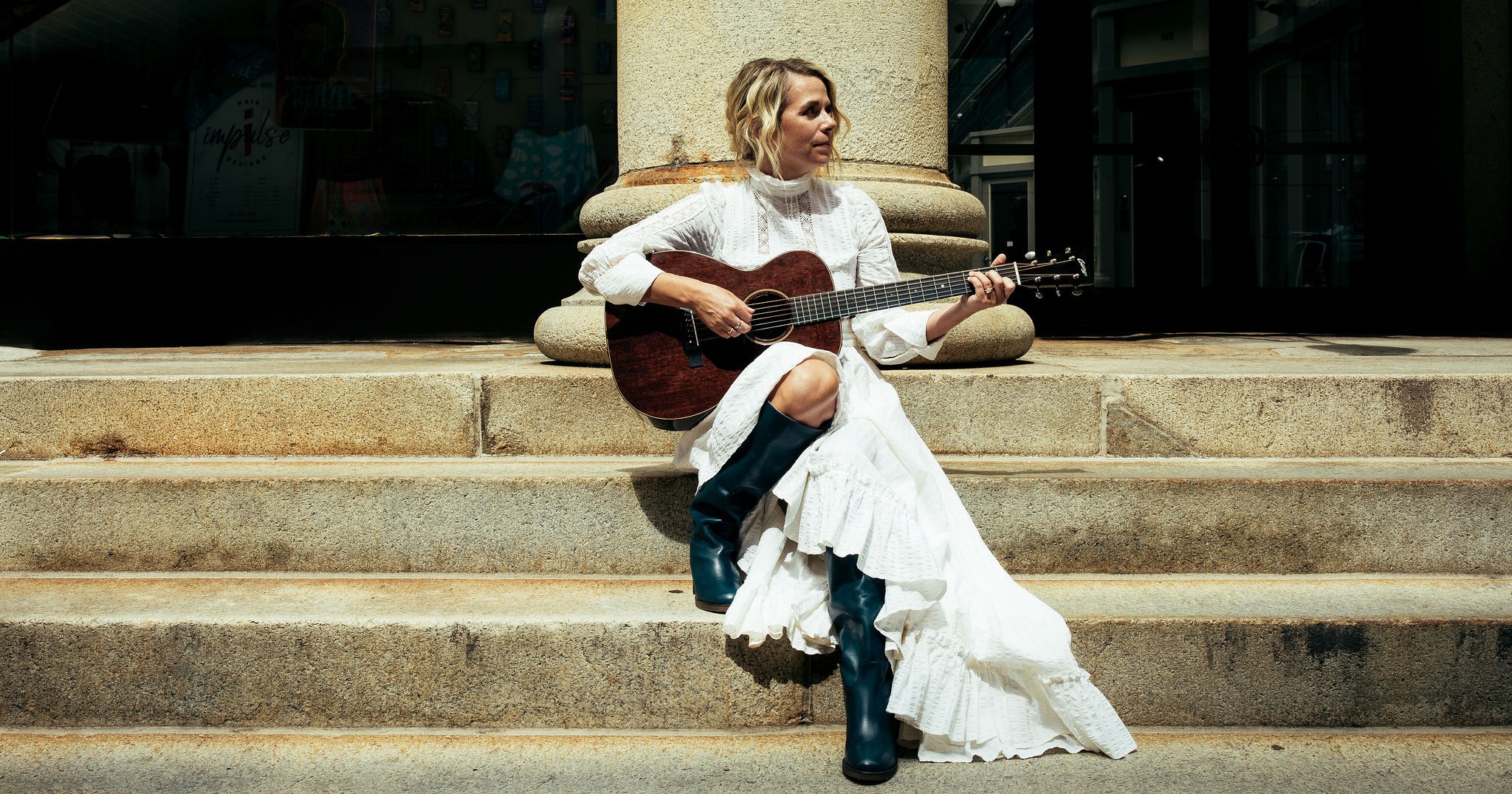
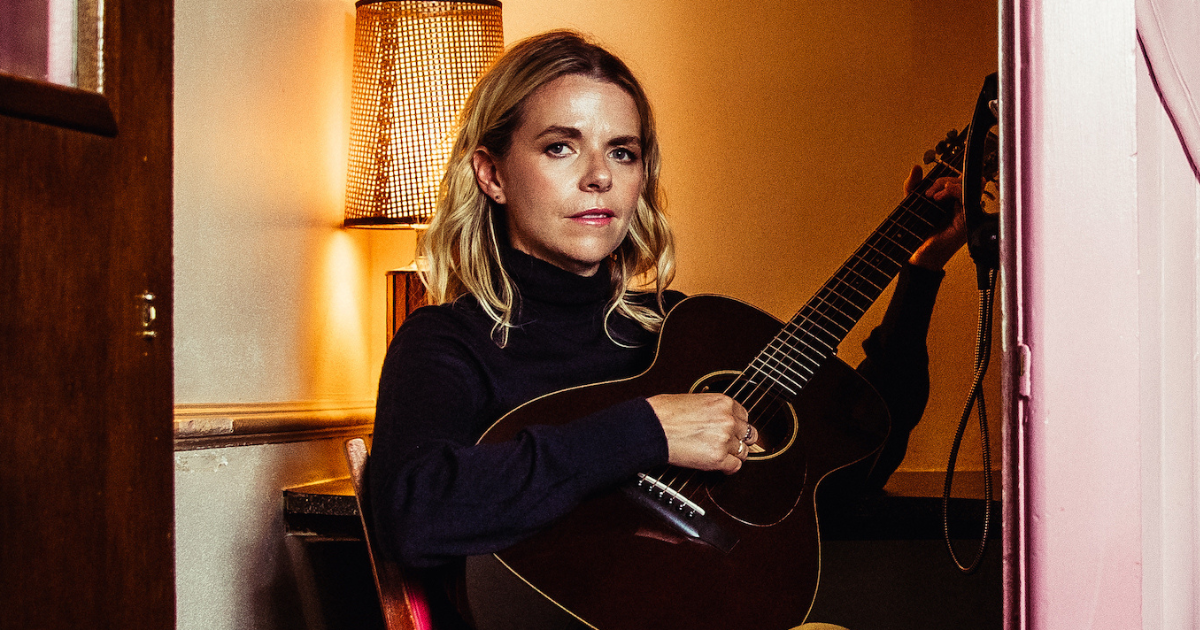
Bearing witness to friends and collaborators Aoife O’Donovan and Sara Watkins in conversation is reminiscent of listening to their frequent musical partnerships, like their trio I’m With Her (with Sarah Jarosz). In moments, they blend perfectly, finishing each other’s sentences. They dance around each other, giving space for thoughtful responses and further questions.
In an artful, deeply reverent, and candid conversation, they delved into the intricacies of creating O’Donovan’s new release, All My Friends. The project originated from a commission by the Orlando Philharmonic Orchestra in 2019 and blossomed into what O’Donovan refers to as a “song burst,” inspired by the life and work of American Suffragette, Carrie Chapman Catt, and the centennial of the 19th Amendment.
The project propelled O’Donovan into unfamiliar territory as a songwriter and what emerged is a beautiful elegy to the women of the past who fought for the right to vote. It’s an homage to women of today – and future generations.
BGS spoke via Zoom with Artist of the Month O’Donovan from her home in Orlando and with Watkins joining from her home in Los Angeles.
Aoife O’Donovan: Hey! How are you?
Sara Watkins: I’m good. How are you doing?
AO: I’m so good. I love that I’m having an official conversation with one of my best friends. It’s sort of weird.
SW: When they called me to ask if I would be interested in interviewing you, it was an hour after I had just sent you that raving text about how much I adore the album and the music. I’m so blown away by it.
AO: Oh, my gosh! You’re so sweet! I love you!
SW: I’m not sweet, and you know that.
AO: You are. You’re a nice person. You just sometimes don’t hug strangers. That’s like your only quirk.
SW: I’ve been listening to the record since you sent it to me. But this week, I’ve been getting to really dive in and have the fun of trying to get inside your head a little bit. From that opening line, from the opening gesture at the beginning of the album, it’s just this gorgeous way of encompassing the whole record so beautifully. But it’s also so open. It’s not a thesis statement, but it powerfully contains the whole album. And I just wonder, where did that particular thing come from? And when did you know that that was going to be the way to start?
AO: It’s funny, that opening phrase, just the idea of “All my friends, all my friends,” that idea came to me many years ago, like maybe in 2018. I just had the melody and the chords and I kind of sat with it. It never was anything except for that. When I started working on the idea of this record, when Orlando (Philharmonic Orchestra) asked me to write 5 songs to commemorate the centennial of the 19th Amendment, I didn’t even go back to that tiny phrase immediately. I started elsewhere.
I started to write this other music, and then I remember sitting at the piano, actually at Full Sail, in the studio that I worked at here and I remember those words, “All my friends,” that was all that it was. I started thinking about what that meant, as even just a very simple, very kind of trite, almost overused lyric. There are tons of songs called “All My Friends.” There are movies called All My Friends. There’s a book that I just read called All My Friends Are Going to Be Strangers. It’s not a very original 3-word statement. But there was something about those words together with those chords, that all of a sudden felt like they belonged in this project. This is about the women who were before and the women who are yet to be born. It felt like this big circle all of a sudden of humanity and womanhood.
SW: It’s powerful on its own and then also with the context of the movement. I don’t often think of movements like that with friends. We think about it for younger generations. Let’s change policies to help younger generations, or to help the American people, but to put the word “friends” on it just makes it so heartbreaking. I just get sisterhood through this whole record in the most powerful way.
In “Daughters,” I have these 2 different visions of what’s happening in that song. With the way the band and the orchestration wrap around your guitar playing – the band does such a great job. You’ve played with Griffin Goldsmith, and with Alan Hampton a ton. The trio entity is so complete and so complementary to the songs and then to add to it, the way that you have the orchestration coming into play and the choir in such supportive ways. I had two images. One was this vision of a battlefield. Like when we were in grade school, where we talked about Gettysburg, or these legendary Revolutionary War battle sites and you see that field where the people are, and then you see these flanks coming in from the sides. That’s how that song feels to me.
AO: That’s like exactly what I was imagining when I wrote it. I’m not joking; that exact image of just being on a battlefield. And then, like the other voices coming in, or like the other people coming in to sort of fill the ranks. That’s exactly what I was envisioning. That’s so funny.
SW: It’s incredible.
AO: I’m so glad that that came across.
SW: It does. And it’s a credit to the arrangement, where you have the choir come in and there’s this rumbling support, or this foundational support from the orchestration before. When that chorus comes in, it just feels like you’re surrounded by kinship or by the sisterhood of support. And then the next verse opens up, and you’re alone again, or like fairly alone and you have to carry this battle by yourself, for yourself. It’s an individual fight. But then, going back to that “all my friends” lyric, it just feels like all of those entities are your friends coming to support you in your time of need.
AO: Exactly. That’s it exactly it. I feel like for me, when I made this record, and even now getting ready to put it out, it’s so specific and it’s so deeply personal. And it’s so not a record of like, “Check out this jam!” It’s just not that kind of record at all. And it’s not meant to be. I’m so glad that you listened to it in this way. This is what my hope for this record is, that people will be able to have the time to sort of process what it is. And these images and that exact thing of going into a battlefield. But then, there are moments when everything is stripped back, and you are sort of alone. But you’re also singing for your friends and for your community and for your mothers and your grandmothers and their mothers and their grandmothers. But also for the daughters of the daughters of the daughters. It just feels like this circle keeps on going.
In that song, specifically having the girl’s chorus, and on the whole record it was such an important thing for me to have the voices of young women, and not necessarily harmony vocals by my peers. I just felt there was something about the innocence of this young voice. The experience of getting to do it live with the Brooklyn Youth Chorus, and in Massachusetts, and even getting to do it in Glasgow with the girls’ chorus, it’s really powerful. It’s hard not to cry, even as a performer. It’s something about seeing young girls up on a stage, ready to give something. It just feels deeply emotional.
SW: And they are giving to you and you are getting to experience that support literally. Being on stage can feel very alienating and very vulnerable. It is a little bit of a fight sometimes within yourself if nothing else.
I feel like this is just such a powerful statement: grappling with change and growth. And obviously, that’s something that needs to be continually grappled with. It’s not like, “Oh, the change happens, and now we’re done. Check it off the list.” It’s a continual engagement, and it’s hard.
With “America Come,” when you get to that point in the album, it feels like the industrial revolution to me.
AO: Yes. I love that.
SW: Especially because you’re singing the words, “manpower, womanpower.” I feel like the machine is running.
AO: Right. I feel like that song with the, “dun, dun, dun, dun, dun, dun,” it becomes very steady. It is like the machine is running. That’s one of the songs on the record that really is so much about Carrie Chapman Catt, the suffragist who I was inspired to write about and write from the perspective of. That song is really heavily lifted from an actual speech that she gave. Some of those phrases are verbatim from her speeches.
That idea of this question, “What is this democracy for which the world is battling?” I feel like that’s a question that we can still ask ourselves. What are we doing here? What does this mean? What is America? I feel like that’s just such a deep question, and to be asking that in 1919 or 1918, or whenever that speech was from, and then to still feel it in 2022 – when I was writing this, it felt so relevant I feel like it’s almost eerie. We can’t give up the fight. We can’t stop. You don’t just check something off the list. As you said, it just kind of keeps going.
SW: And in that way, the album encompasses all the humanity, the micro versions of this, where for instance, in the institution of marriage, or a long-term relationship, or friendships, family, or whatever, it is about checking in every so often: “Wait! Life is running away with us. What do we want? What do we want in choosing this city, this school, this town, this job, this house?”
And that happens on individual levels. Like in my own life, I think, “Have I gotten away from this thing that I cared about five years ago? Have I checked in about this?” I feel like with the content of this album, I found myself thinking about the country, and I found myself thinking about me. Especially, with the more introspective song “The Right Time.” That’s the one where she talks to herself a little bit?
AO: Yeah, exactly. She’s like, “Don’t give them anything to laugh about.”
SW: Like a pep talk.
AO: Yeah, exactly that. It is a pep talk. That’s kind of my idea, about what she or anybody in her position would be going through as a woman with so much to offer, such a big brain, and so much potential. But, what do you have to climb over when you’re living in a time where you’re not valued and the only jobs available are to be a teacher in a one-room school house, or to leave the town that you grew up in? And people are going to look at you. People are gonna make fun of you if you’re a smart woman. People still make fun of smart women. It’s so weird.
Sara, we’ve talked about this a lot, being women in music, about how I feel like I’ve been so lucky and so respected throughout my career as a musician. You know I’ve always felt very valued and have very rarely been made to feel “less than” due to my gender. I feel so lucky that I’ve been in a community of musicians who have really supported me. But I know that that’s not the case for many musicians, and across other fields it is absolutely not the case.
SW: Yeah. I feel I have had a similar experience with that support. I can only imagine that in that era, when community really was the people around you – not people somewhere on the internet, in a town across the country that you can kind of connect with. She could physically rally the people in her region by convincing newspapers to publish things.
AO: By like getting up on stage and giving speeches or by writing a letter to the President and getting responses. Obviously, she’s not the only one. There were many women who were powerful and were doing amazing things. They just had to try so much harder, and that is what’s interesting. I think having a daughter in this time of life, in the 2020s, you want to give them the tools to always feel that they have the confidence and awareness to think of themselves as equal and powerful.
SW: Tell me about the research you did for this. So, the idea was presented to you and commissioned by The Orlando Philharmonic. Is that right?
AO: By the Orlando Phil, yep! So the OPO asked me in 2019. They said, “It’s the centennial of the passage of the 19th Amendment.” A lot of orchestras in the U.S. were asking female composers to write music for concerts they were doing. They were trying to diversify their programming. And when OPO asked me to do a piece, I was sort of like, “Why me?” That’s something I’ve never done before, writing an orchestral piece to be performed as a commission. It just felt like, that’s not how I operate. You know what I mean, I’m a songwriter. But I said, “Yes, that would be a good challenge.”
I didn’t think about it for a while, and then COVID happened, and everything kind of got crazy. I was like, “I’m never gonna write another song again, maybe this is it, maybe I’m done making music.” And then when I got down here to Florida, I started to regain some sense of artistic confidence and inspiration. I started to write a little bit of Age of Apathy that fall and then started to work on this 20- to 25-minute piece of music. So I went into the studio and really started to write it. But without text. I didn’t really even know what the text was going to be about yet. I wrote all the music first, because I had to get it to the orchestrator, Tanner Porter, who orchestrated all the charts for me. That was gonna take a lot of time.
That was November and the concert was supposed to be in May. I needed to get her the music. So I was working, working, working, and didn’t have any text. I wrote all the vocal parts and all the music sketched out to what I wanted it to be. We talked a ton about, “Hey, I want this to open with brass, and I want strings to come in here, and I want this line to be played on cello, and these are the brass lines that I want.” I would make these demos where I would play all that stuff for her, and then she orchestrated it. She also put together all the interludes that sort of stitch the songs together, which are so cool.
It was really fun to have this blank slate without any lyric goal or hesitancy to hold me back. I had simultaneously been doing research, reading, and figuring out what I wanted it to be. “All My Friends” is really just an imagining of the moment when these movements met up in Tennessee to get these votes ratified. And they did march. And they did plead their case and were ultimately successful. But those images are from my own head, like a reimagining of vague historical events.
SW: Let me just jump in really fast just to say that I love how much space you gave for yourself in imagining that imagery. I feel like my own temptation would be to report and do the research and make it rhyme. I feel like you’re the perfect artist for this kind of commission, because of the way that your melodies can float above or without the constraints of rigid time that a lot of us songwriters are tempted to do. The way you carry a line – I don’t think you always realize how extraordinarily unique it is. I think that because of the way that you do music like that, it lends itself to an orchestral project where we’re not dealing with 8-bar phrases and the occasional extra 2 bars and things.
I feel like you are the perfect singer-songwriter to receive this kind of commission. I am so happy that you indulged in that vision of the world, of the people descending into Tennessee, and what the fog was like and what the air was like. Because that is what the feeling was like and that’s the story. It’s not just, “on this date this happened.” I’m glad that you put yourself in the story, because that gave so much room for the arc and the heart of the thing and makes me wanna listen. If I had done this, it would sound like an eighth-grade book report.
AO: No, come on, give yourself more credit, Sara! I don’t have any idea what Carrie Chapman Catt was like personally, because I didn’t know her, but I felt like I could give her dialogue. You can make her personality be whatever it is that you want her to be.
I just read this amazing book called Wolf Hall. I was so fascinated by how the writer, [Hilary Mantel], makes Thomas Cromwell, this character, from the 1500s, feel like this modern, empathetic, shrewd, conniving, and complicated character. That also could have felt like an eighth-grade book report about Thomas Cromwell, but the author injected life into him. That’s the cool thing when you are an artist and when you are a writer, that’s what we do for people who were real or people who we’re making up. You’re taking these embellishments, and you’re telling a story with them.
With the song “Crisis,” [Carrie Chapman Catt] gave a speech called “Crisis” in 1916, and I read that speech and thought, “Oh, my God! This!” Yes, she’s using archaic language, and nobody speaks like this, but how can I imagine her as almost like a bluegrass singer getting up there and saying, “Alright, gather around girls. I’m gonna tell you about what’s going on and what we’re gonna do about it.”
Once I realized I could make it my own because this is my piece, it sort of like set me free into this new creative territory.
SW: And the way that you’re talking about “Crisis,” just the word itself makes you think of ominous minor chords and tension. And with those beautiful horns and flutes, it is just this wonderful, hopeful dawn of a movement. The dawn of a new time is here while you’re singing about the crisis. I love the optimism that’s contained in that and how you acknowledge that everything is all together.
AO: Exactly. One of my favorite things about “Crisis” is I really wanted there to be mandolin on it. It just has that folky feel to it. I had connected with Sierra Hull, who obviously, I’ve known for years and years, but we hadn’t really played that much music together, and I remember being on Cayamo in 2022, and really jamming with her for the first time. And then, you know, fast forward to eight months later I was like, “Oh, I think Sierra would totally kill this song.” I love her playing on it. It just has the right amount of weight to it.
SW: On “War Measure,” I’ve never heard you sing like you do on that chorus. The way you pull down those notes!
AO: It’s hard. It’s actually really hard for me to sing like that. It hurts my voice. But that’s actually my favorite one to do live, because there’s something about singing those lines, “If they pass this amendment to our constitution, we are gonna be talking about revolution.” That’s funny, because I had written that song without the lyrics. And then when I put the lyrics in, I was like, “Oh, this is actually, really rad.” It made it fun.
SW: I bet that was really fun. It makes sense that you wrote the lyrics after a lot of the music, because you get so much in there. It feels like you have room to expand the lines in ways that you might not if you’re writing it down on paper, right? And you get to really chew on certain lines for longer. I feel like there are some lines that get the time that they want to have rather than the time that might have been allotted to them.
AO: Exactly. It was odd, but I’m really glad that it worked out like that.
SW: I love “Over the Finish Line.”
AO: With Anaïs [Mitchell], who is a genius.
SW: And such a wonderful voice to have on here, both in terms of tonality – because you sound amazing together – but also because her songwriting voice has been a voice of movement, a voice of awareness. I love that choice.
AO: The idea kind of came after the fact. I recorded the song and I wanted there to be another voice. I didn’t want it to be me singing harmony with myself. I wanted something starkly different, tonally, from my voice. I’ve known Anaïs for almost 20 years. We’ve been in this same scene and the same world, but we’ve never really done anything together. It worked out so well. I love what she did and how she moves around through the melody and the unison part at the end of the song. I felt connected to her.
SW: I love how it is not the kind of harmony part where you are trying to blend them together. It is very much two individuals choosing to sing together. There are places where your phrasing is different and you’re shortening different lines. It is a perfect example of what you have throughout this record with the children’s choir and the orchestration. To have this lovely duet moment is another version of the sisterhood of letting everyone be themselves rather than needing to have it all looking so pretty and clean and tidy. It is like, “We are existing together, and it’s a beautiful thing.”
There’s a confidence and ease to Aoife O’Donovan‘s music making, brought forward throughout her career by her languid, tender, and emotive voice. Just as striking and crystalline as it is cozy and comforting, her voice is a truly iconic instrument in Americana, bluegrass, and new acoustic music. Still, as she readies her new solo album, All My Friends (out March 22 on Yep Roc), it feels as though O’Donovan is decidedly stepping into a new era of confidence and self-assuredness, devoid of any sense of desperation or flightiness or unfettered ambitions. There’s a steady, intentional march to the blossoming of her catalog and her artistry and it’s on full display on All My Friends.
The album was conceived as a sort of tribute to or reckoning with the cross-generational struggle for women’s rights, highlighting the passage of the 19th Amendment over 100 years ago and picking up that timeless mantle of ever-striding towards justice. It’s a perfect project to highlight during Women’s History Month; the intellectual and political messages within it are softened – though never outright whitewashed, revised, or sanitized – by O’Donovan’s perspective as a mother of a young daughter. With All My Friends, she is continuing her journey with another timeless tradition in string band music: the role of mother-activist-songwriter-composer.
One of the record’s lead singles, “Daughters,” was heralded in a press releases as “a meditation on the eternal quest for women’s rights and equality.” Meditative qualities might be the most tangible and original through line of O’Donovan’s songwriting, song collection, composition, and her vocal affectations – from as far back as her days with Crooked Still, or evidenced by the songs she brought to her supergroup trio, I’m With Her, with Sara Watkins and Sarah Jarosz. As on “Daughters,” O’Donovan more often than not opts for quiet-and-impassioned, subdued-while-soaring vocals. She’ll wrap you in the gauze and glitter of her one of a kind voice and, in doing so, prepare you ever so gently and kindly to receive the messages in her lyrics – however demonstrative or abstract they may be.
O’Donovan’s latest era of confidence is also well marked by her vast and varied resume of musical collaborations. Besides Crooked Still and I’m With Her, she’s released music with Goat Rodeo (Stuart Duncan, Yo-Yo Ma, Edgar Meyer, Chris Thile), Noam Pikelny, the Milk Carton Kids, Taylor Ashton, Donovan Woods, and so many more. In more recent months and years, she’s featured Allison Russell on a track (on 2022’s Age of Apathy), collaborated with mind-boggling guitarist Yasmin Williams and step-dancer Nic Gareiss on a stunning number entitled “Dawning,” and even “came back” to straight ahead bluegrass with a recent single feature on a Becky Buller track, “Jubilee.”
Her output is ceaseless, her art is prolific, but here – as in the new album, and across her discography – the hallmark of O’Donovan’s work isn’t volume, but intention. This is not breakneck, music industry ladder climbing, this is an artist deliberately expanding the universe of her music bit by bit, voice by voice, collaboration by collaboration. It’s part of why she’s such an effective voice and influence in control rooms, too. (Though her production credits are relatively few, they are mighty.) And it’s part of why, as you scroll through our Essential Aoife O’Donovan playlist, you’ll find as many surprising and eyebrow-raising selections as you will her mighty, familiar modern classics.
All My Friends – with appearances by The Knights, The Westerlies, Anaïs Mitchell, Sierra Hull, Pikelny, and more – is yet another demonstration of O’Donovan’s community, her central role within it, and her confidence in inhabiting that role wholly and completely. This is meditation without stagnation, orchestration without machinations, softness and tenderness, but with a steel spine. These are challenges to the status quo while knowing real progress is made with one foot placed in front of the other – and with many other footsteps following her own.
Throughout the month of March, as we highlight Women’s History Month, we’ll be celebrating the new album, All My Friends, and Aoife O’Donovan as our Artist of the Month. Stay tuned for a special “In Conversation” Artist of the Month feature to come later in March featuring an amazing artist and collaborator of O’Donovan, and we’ll also be dipping back into the BGS archives to resurface so many amazing songs, videos, articles, and stories that highlight the incredible music of Aoife O’Donovan.
For nearly a quarter century, North Carolina-based Chatham County Line have pushed the boundaries of American roots music, but with their new album, Hiyo, they’ve finally knocked them down.
Released January 26, the album contains some of the band’s most far-flung soundscapes to date, as they introduce synths, drums, and other sonic elements to their repertoire for the first time ever. The resulting creations sound more like synth-grass than bluegrass, with everything from drum machines to stretched out harmonicas, harmoniums, and other oddities guiding the way. According to guitarist, vocalist, songwriter and founding member Dave Wilson, the drastic shift in direction stems in part from the departure of banjo player Chandler Holt, who stepped away from the band following 2020’s Strange Fascination to spend more time with family.
“We listen to all kinds of music so I wanted to make an album that reflected that,” Wilson tells BGS. “We knew when Chandler left that we didn’t want to just do the same thing we’d always done with a different person on banjo. That’s not how artists grow in the world. You instead look at something as a springboard for change, which is exactly what we did in moving toward a sound that more closely resembles the music we enjoy playing when nobody’s watching.”
The experimentation on Hiyo was further encouraged by its producer, Rachael Moore, who the band met during their time portraying George Jones’ backing band on the Showtime series, George & Tammy. Both the opportunity to be a part of that show — which manifested itself through a friend of a friend — and meeting Moore were complete happenstance, with the latter seeing the two parties build an instant rapport.
“Anybody that works in the studio with T. Bone Burnett that many times and has been a part of records like [Robert Plant & Alison Krauss’ Raise the Roof] is alright by me,” praises Wilson. “That’s the kind of music I listen to, so us making that connection to Rachael made us realize how hard a worker she is and how much she understood the sound we were going for. We knew then she was who we wanted to record our next album with.”
Speaking with BGS from his home near Raleigh, Wilson further touched on the band’s connection to George & Tammy, the similarities between the recording process and being on a film set, Phoebe Bridgers’ influence on one of Hiyo’s songs and more.
Who are some of the bands you’ve been listening to that helped inspire the sonic shift of Hiyo?
Dave Wilson: That last Sarah Jarosz record really blew me away. She’s just a phenom. There’s also two radio stations that I listened to religiously throughout the writing process for this album. Whenever I’m messing around with a guitar or building a tube amp in my basement I listen to the radio, and one of the stations I tune into is called “That Station” here in Raleigh. They play everything from us to Mipso – and a bunch of other local acts – in addition to bigger Americana artists making waves. That’s where I heard the Sarah Jarosz stuff.
Being tuned into what people are doing today is very important to me, because I’m a part of this too. If I’m asking people to listen to me instead of Led Zeppelin then I need to listen to Sarah Jarosz instead of Led Zeppelin, because she’s a living, breathing artist that deserves that respect. I take a lot of joy out of not only buying modern albums, but listening to radio that supports those artists as well.
On the flip side, I love WWOZ 90.7 FM in New Orleans. That’s on constantly and is full of crazy, disparate sounds, old songs, funny blues stuff and more. I never get bored of DJ Black Mold down there.
How did the rapport working with Rachael Moore on George & Tammy translate to the studio with these songs?
I’ve listened to a million records and I really wanted this one to sound like the ones in my head. In the studio we tracked three or four songs per day, then at night I’d lay in bed in disbelief at the way the music sounded better than I had ever imagined us doing. We demoed the songs, so we had an idea of what it was going to sound like, but with the additions of [Jamie Dick and John Mailander] there was a huge leap forward that outpaced my wildest imagination. I’m so glad we were able to capture that, and it wouldn’t have happened without Rachael’s knowledge and connections.
Did you notice any similarities between your experience recording this album and time on set for George & Tammy?
It was really about seeing how hard all these people work, plus the whole concept of down time vs. on time, where you have to deliver an emotional performance before sitting around for 20 minutes as the cameras get moved around before jumping right back into your role like you didn’t miss a beat. It shows you that that is the job. It’s more about sitting around mentally preparing yourself and managing your emotions between those two extremes.
That rubbed off, because in the studio it’s a lot like that, too. In most cases the songs are written long before you go to record them, so when the time comes to get in front of the microphone you’ve got to deliver it with an intensity like it’s still brand new. That’s how George Jones delivered a vocal. He left no doubt that he was the character in his songs, not just the person singing them. That’s the approach we’re trying to take so we can deliver the goods when it matters most.
One of my favorite songs on Hiyo is “Heaven,” which I understand is somewhat inspired by Phoebe Bridgers, of all people. How’d that come about?
I live about three hours from Charlotte, which is where I grew up. My father, who’s in his early 90s, started going through some Alzheimer’s stuff during COVID that had me driving back and forth often to take care of him with my mom. During those trips I got to listening to Phoebe Bridgers to the point I’d have one [album] on repeat each way of the drive. I really dig her style of writing and think some of that influence rubbed off when piecing together “Heaven.”
The song was actually more of a country shuffle in the beginning, so in the weeks prior going to the studio I got my drum machine out of the basement to make some demos for Jamie, so he’d have a template of it to reference. One day I decided to try the Fender VI on it, hit the drum machine, and got playing. Something about those sonic elements, how the words came out and the harmonica completely shifted my perspective of it.
That’s another way we approached this record when we added a drummer. We went back through our catalog and redid a bunch of old songs entirely different as if we were covering ourselves. So with this album, I approached it as if I were covering these songs and how we could change them up, because my favorite cover songs are completely different from the originals except for the story and melody.
You mentioned earlier the influence of New Orleans’ WWOZ on this record and I feel like no song better embodies that than “B S R.” Would you agree with that assessment?
It was a huge part of that song. I actually also play banjo on it in open G tuning. One day I also tuned my Stratocaster to it and began playing the opening riff, which isn’t necessarily what the song is built around, but did help it to pop when we first brought it to the studio. Since then, I began playing Stratocaster in open G with super heavy, flat line strings on it and it’s become one of our favorite songs to play.
I also have family in Mississippi and my mom’s from Alexandria, Louisiana, so I traveled there a lot as a kid and have a general knowledge of the area. To be honest, New Orleans is the coolest city in America. It’s the one that’s got soul. There’s other towns with soul, but none that can match New Orleans. There’s live music in literally 40 places every night!
I’m also fond of the change of pace provided by the instrumental “Under the Willow Tree.” How does your approach change when writing songs with lyrics vs. composing an instrumental piece like this one?
I think some songs just lend themselves to having a story told over them and some, instrumentally, can tell a story from their melody alone. When Chandler left the band it was a sign to me to up my game and dig in a little harder, because until then I’d deferred to banjo and mandolin for most of the solos and heavy lifting. I’m a huge fan of Leo Kottke and other guitar virtuosos, so “Under the Willow Tree” is my homage to players like him.
Despite not being an instrumental, another song that gives me the same feel of “Under the Willow Tree” is “Stone,” both for the wisdom it imparts and its ballad-like feel. What was the motivation behind it?
That is the one song that I wrote during the pandemic. It was informed by all of the protests that were going on and the idea that when it comes down to it, you have the ability to change not only yourself, but you can change those around you with whatever power you have at hand. That can come from a deep conversation and from exchange of ideas and respect for the other person’s opinion, but in this case it comes from our music.
Music has a way of bringing people together in a way that few other things can match — just ask Taylor Swift fans! At the end of the day, we’re all gonna be a piece of dirt that a tree grows out of, so just relax. “Stone” was born out of a simple riff and that idea questioning what is permanent in this world, because all want something positive to persevere when you’re done and your story is getting told.
One thing that I regret about the advent of recorded music is the families that used to sit around, everyone playing an instrument and singing. There’s a therapy in that that went long overlooked. It’s just really positive and healthy for everyone included to sing a bit and let the world go for a minute.
Photo Credit: York Wilson
This website uses cookies to improve your experience. We'll assume you're ok with this, but you can opt-out if you wish.AcceptRejectRead More
Privacy & Cookies Policy
Privacy Overview
This website uses cookies to improve your experience while you navigate through the website. Out of these, the cookies that are categorized as necessary are stored on your browser as they are essential for the working of basic functionalities of the website. We also use third-party cookies that help us analyze and understand how you use this website. These cookies will be stored in your browser only with your consent. You also have the option to opt-out of these cookies. But opting out of some of these cookies may affect your browsing experience.
Necessary cookies are absolutely essential for the website to function properly. This category only includes cookies that ensures basic functionalities and security features of the website. These cookies do not store any personal information.
Any cookies that may not be particularly necessary for the website to function and is used specifically to collect user personal data via analytics, ads, other embedded contents are termed as non-necessary cookies. It is mandatory to procure user consent prior to running these cookies on your website.