You Gotta Hear This: New Music From Laurie Lewis, Lonesome River Band, and More

This week, to mark New Music Friday, we have a bevy of brand new music videos from folks like bluegrass legend Laurie Lewis, bassist Nate Sabat, country outfit Jenny Don’t & The Spurs, and flatpicker Rebecca Frazier, who gathers an all star lineup for a new track set to a brand new video. The Reverend Shawn Amos also brings us a delightfully psychedelic visualization to pair with a modern blues and gospel inflected track, “It’s All Gonna Change (For The Better),” that highlights how life on this planet is a gift, not a given. (We couldn’t have said it better ourselves.)

Plus, you won’t want to miss a brand new heartbreakin’ track from first class bluegrassers, Lonesome River Band. And, if you missed our post featuring The Bygones earlier this week, you can check out the duo’s song, “If You Wanted To,” below as well.

It’s all right here on BGS and, to be quite honest, You Gotta Hear This!

Laurie Lewis, “Long Gone”

Artist: Laurie Lewis
Hometown: Berkeley, California
Song: “Long Gone”
Album: Trees
Release Date: March 29, 2024 (single); May 31, 2024 (album)
Label: Spruce and Maple Music

In Their Words: “I have loved ‘Long Gone’ since I first heard Bill Morrissey sing it a couple of decades ago. Recording it was a blast, and I think that as a ‘returning’ song, it is particularly resonant in these post-pandemic times. We’ve all be long gone, from each other and the world at large. Every time I hear Brandon Godman’s fiddle kick-off, I get excited all over again, to be returning from the virtual to the corporeal world.

“Making this video was about the most fun there is, driving an aging 5-speed stick shift truck up and down Sonoma County backroads in the late winter green of Northern California. I love my job!” – Laurie Lewis

Track Credits: Written by Bill Morrissey.

Laurie Lewis – Guitar and lead vocals
Brandon Godman – Fiddle
Patrick Sauber – Banjo
Hasee Ciaccio – String bass

Video Credit: Bria Light


Lonesome River Band, “Hang Around For The Heartbreak”

Artist: Lonesome River Band
Hometown: Floyd, Virginia
Song: “Hang Around For The Heartbreak”
Release Date: March 29, 2024
Label: Mountain Home Music Company

In Their Words: “This song was sent to us from my good friend, Barry Hutchens, who has been writing some material with his son, Will, and Jerry Salley. I call it a ‘Happy Heartbreak’ song as the chorus goes, “If we chase this feeling down whatever road it leads us/ We’ll never have regrets about a chance we didn’t take/ But if we’re just pretending this might be a happy ending someday/ I’ll still hang around for the heartbreak.” It’s a great perspective put together by Barry, Will, and Jerry and it feels like classic Lonesome River Band. We hope you enjoy it as much as we do!” – Sammy Shelor

Track Credits:

Adam Miller – Mandolin, lead vocal
Sammy Shelor – Banjo, vocal
Jesse Smathers – Acoustic, vocals
Mike Hartgrove – Fiddle
Kameron Keller – Upright bass


Nate Sabat, “Sometimes”

Artist: Nate Sabat
Hometown: New York, New York
Song: “Sometimes”
Album: Bass Fiddler
Release Date: March 27, 2024
Label: Adhyâropa Records

In Their Words: “Until last September, I was playing a completely different version of this song. Written by the great Abigail Washburn, my initial version was essentially a bass-and-voice rendition of the original. In a prep session with my producer Bruce Molsky, we both agreed that it just wasn’t landing. He pulled out a fretless banjo, and suggested I try leaning into a bluesy, modal sound instead. That idea lit a fire in me, and two hours later we had something completely new.” – Nate Sabat

Track Credits:

Nate Sabat – Bass, vocals
Recorded at Spillway Sound in West Hurley, New York.
Engineered and Mixed by Eli Crews.
Produced by Bruce Molsky.
Mastered by Dave Glasser at Airshow Mastering.


The Reverend Shawn Amos, “It’s All Gonna Change (For The Better)”

Artist: The Reverend Shawn Amos
Hometown: Dallas, Texas
Song: “It’s All Gonna Change (For The Better)”
Album: Soul Brother No. 1
Release Date: May 3, 2024
Label: Immediate Family

In Their Words: “There’s a famous comedy bit from George Carlin addressing humans’ disgraceful treatment of Earth. It ends with the punchline, ‘The planet is fine. The people are fucked.’ This song takes a page from Carlin’s book of dark humor. It’s a conversation amongst non-human life counting down the days until these dumbass humans are out of the way. It’s also a simple reminder to ‘WAKE UP!’ as Spike Lee would say. Life on this beautiful planet is a gift – not a given. You dig? Say it with me, ‘We got to all stand up, ain’t gonna take too long. Keep your mind strong.'” – The Reverend Shawn Amos

Video Credit: David Sheldrick


Jenny Don’t & The Spurs, “Pain In My Heart”

Artist: Jenny Don’t & The Spurs
Hometown: Portland, Oregon
Song: “Pain In My Heart”
Album: Broken Hearted Blue
Release Date: June 14, 2024
Label: Fluff & Gravy Records

In Their Words: “Inspired by the writing style of Johnny Paycheck and his classic delivery of telling a story while the band keeps it rollin’ on. I love how some of those old classic country singers charm their way through a song where even though they might be in the wrong you still want ’em to win in the end. ‘Yeah, I know, I’m a jerk – but I love ya. Come on, come back home…’ (Not me personally! But you get the idea…)

“While my usual inspiration when it comes to songwriting tends to lean towards the female icons of the genre, for this album, I veered towards more male influences such as Chris Isaac, Lee Hazelwood, Johnny Paycheck, Buddy Holly, John Fogerty, and Link Wray. These diverse songwriters contributed to the inspiration behind the album.

“I’d also like to emphasize that while I take the lead in songwriting, the songs wouldn’t have evolved into what they are without the invaluable input, musical direction, and insight from my bandmates, Kelly Halliburton, Christopher March, and Buddy Weeks. I’m truly grateful for their contributions and thrilled to have collaborated with them on this fun album.” – Jenny Don’t

Track Credits: Written by Jenny Don’t.

Jenny Don’t – Vocals, rhythm guitar
Kelly Halliburton – Bass guitar
Christopher March – Lead guitar
Buddy Weeks – Drums
Rusty Blake – Pedal steel guitar

Recorded at Revolver Studio in Portland Oregon by Collin Hegna, September 2023.


Rebecca Frazier, “Make Hay While the Moon Shines”

Artist: Rebecca Frazier
Hometown: Nashville, Tennessee (originally Richmond, Virginia)
Song: “Make Hay While the Moon Shines”
Release Date: March 25, 2024
Label: Compass Records

In Their Words:“Growing up in Virginia and spending much of my childhood by the Chesapeake Bay, I’ve always felt an ethereal connection to the moon. To me, it feels like there’s magic in the air when the moon is full. Getting together with Jon and Bob to write this song was a reflection of that excitement – we were all laughing and cutting loose as we came up with double entendres. We wanted to express that light-hearted, anticipatory feeling of a spirited full moon night – after all, the song is a twist on the phrase “make hay while the sun shines,” which means “get your work done.” What is the opposite of that?

“Bill Wolf produced the track with his innate talent for bringing out the best in musicians – he did such an intuitive job bringing musicians in the room who would create and build the climactic moments with their improvisation. I was floored by the performances of Béla, Stuart, Barry, Sam, and Josh. Christopher Gunn’s videography was beyond my imagination. He captured the imagery of a lighthearted, spirited mood while maintaining a dream-like quality, and I think it’s beautiful.” – Rebecca Frazier

Track Credits: Written by Rebecca Frazier, Jon Weisberger, and Bob Minner.

Produced by Bill Wolf.
Rebecca Frazier – Guitar
Béla Fleck – Banjo
Sam Bush – Mandolin
Stuart Duncan – Fiddle
Barry Bales – Bass
Shelby Means – Harmony vocal

Video Credit: Christopher Gunn Creative


The Bygones, “If You Wanted To”

Artist: The Bygones
Hometown: Brooklyn, New York & Nashville, Tennessee
Song: “If You Wanted To”
Album: The Bygones
Release Date: April 4, 2024
Label: Tonetree Music

In Their Words: “‘If You Wanted To’ encapsulates the feeling of longing for acceptance and approval from someone you love that has known you through many chapters of life. People change and grow over time, and one of the biggest pains is when the ones closest to you don’t grow with you or want to get to know the current person you are. Over time, I’ve realized that you can’t make someone see you and love you for the current walk of life you’re in and not for a previous version of yourself, they have to choose to get to know you. Sometimes the ones you love just want to hold on to the version of you they knew that is no longer here.” – Allison Young


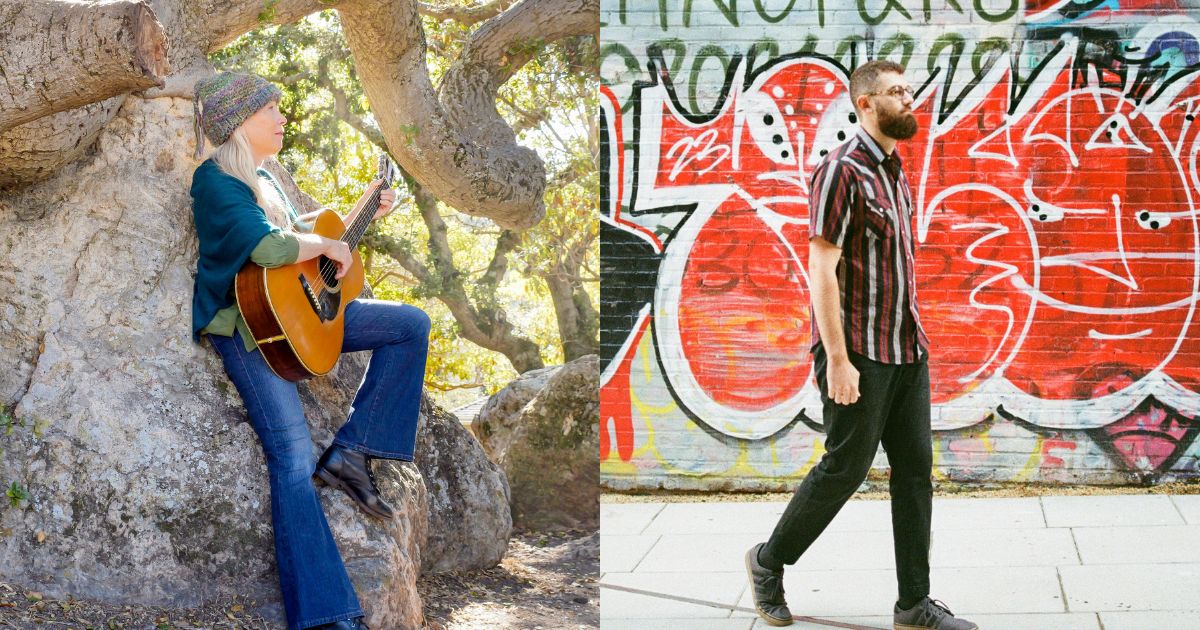
Photo Credit: Laurie Lewis by Irene Young; Nate Sabat by Jules Miranda.

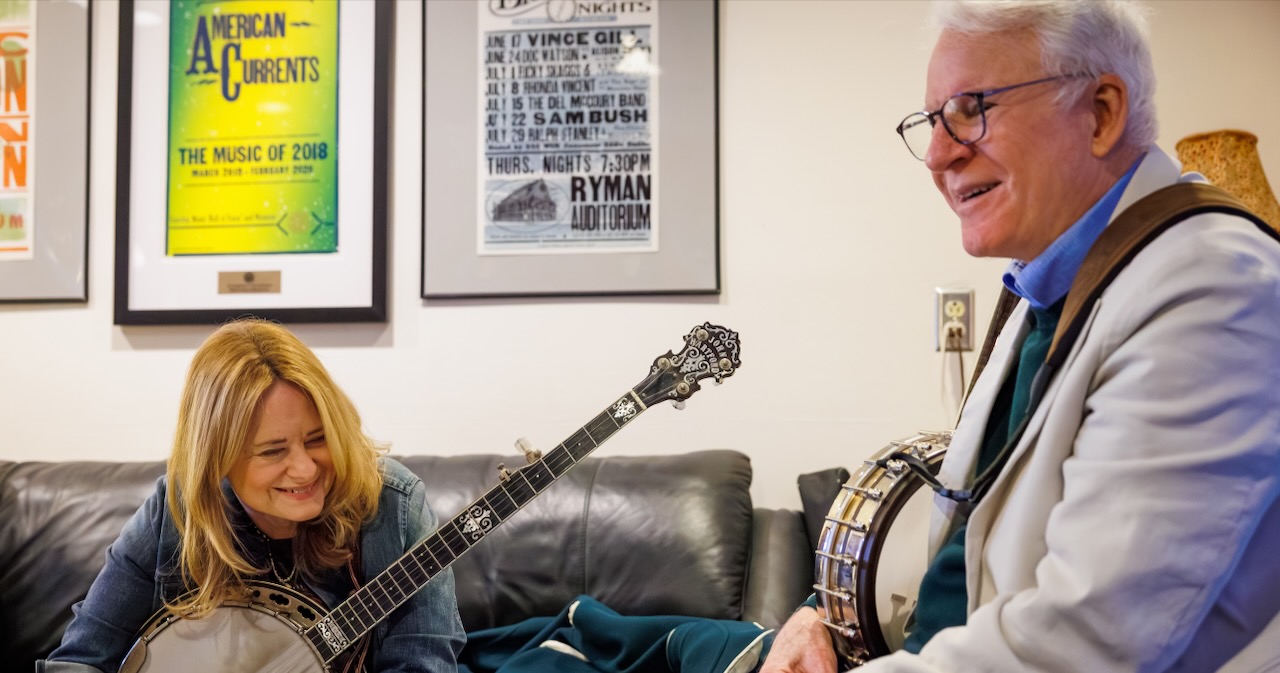
WATCH: Alison Brown & Steve Martin, “Bluegrass Radio”

Artist: Alison Brown & Steve Martin
Hometown: La Jolla, California (Alison); Waco, Texas (Steve)
Song: “Bluegrass Radio”
Release Date: March 15, 2024
Label: Compass Records

In Their Words: “This little tune brings a ton of joy to me. Alison’s playing is flawless, and my singing is flaw-full.” – Steve Martin

“I’m so grateful to all the DJs for playing ‘Foggy Morning Breaking’ and for inspiring Steve to write the lyrics to ‘Bluegrass Radio.’ Thanks to Sam, Stuart, Trey, and Todd for the great playing – and to Steve for the outstanding twin banjo picking.” – Alison Brown

Track Credits:

Steve Martin – vocals, banjo
Alison Brown – banjo
Sam Bush – mandolin, harmony vocals
Stuart Duncan – fiddle
Trey Hensley – guitar, harmony vocals
Todd Phillips – bass

Recorded and mixed by Matt Coles at Compass Sound Studio, Nashville, TN.
Additional recording by Matt Coles at Echo Mountain, Asheville, NC, assisted by Julian Dreyer.
Mastered by Randy LeRoy.
Produced by Alison Brown and Garry West.


Video Credit: Filmed at Compass Sound Studio by Joseph Spence
Additional footage shot by Josh Blake and Shane Peters at Echo Mountain
Edited by Joseph Spence
Photo Credit: Madison Thorn

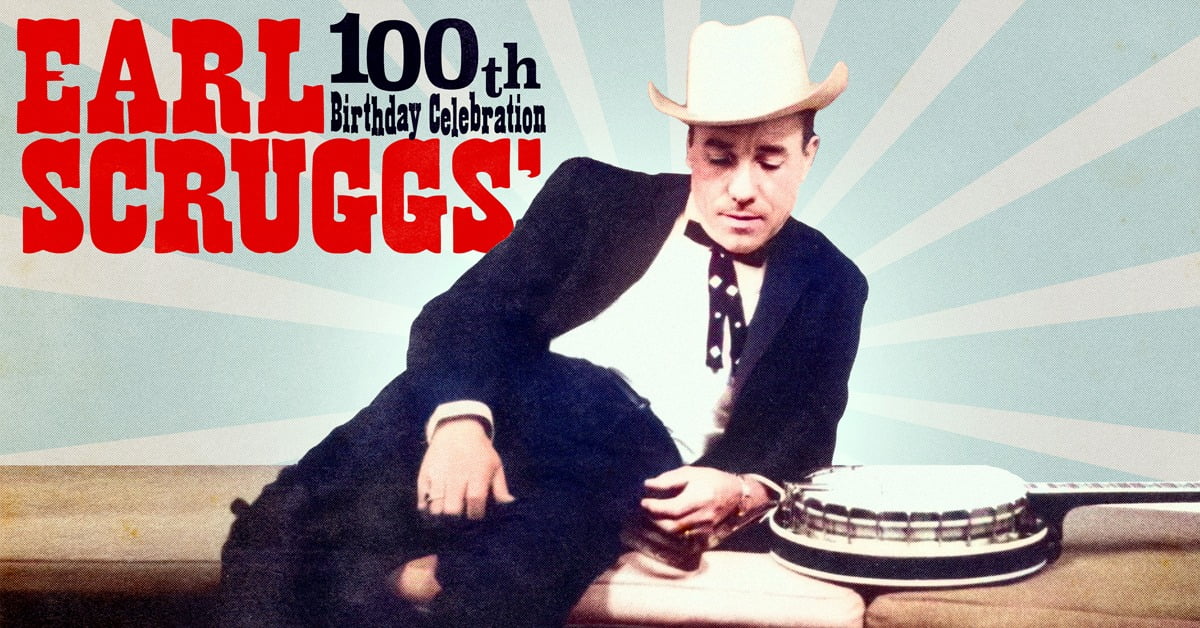
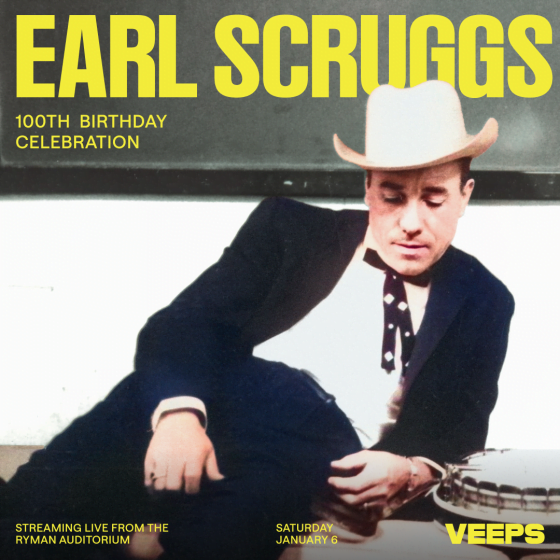
How to Watch Earl Scruggs’ 100th Birthday Celebration

January 6, 2024 would be the 100th birthday of Earl Scruggs, a musician and artist who helped create bluegrass music and who was and is perhaps the most prominent and well known banjo player to have ever lived. Scruggs passed away in 2012, but this posthumous celebration – to be held at Nashville’s Ryman Auditorium – speaks to his undying musical legacy. The performance will benefit the Earl Scruggs Center, a museum in Shelby, North Carolina that’s dedicated to Scruggs, the local community, and its residents, and inhabits the former courthouse just up the highway from unincorporated Flint Hill, where he was raised.

The show, with musical director Jerry Douglas, will feature performances by bluegrass and roots music luminaries such as The Earls of Leicester, The Del McCoury Band, Gena Britt, Alison Brown, Sam Bush, Michael Cleveland, Stuart Duncan, Jimmie Fadden, Béla Fleck, Jeff Hanna, Sierra Hull, Bronwyn Keith-Hynes, Jim Mill, Justin Moses, Jerry Pentecost, Todd Phillips, Harry Stinson, Bryan Sutton, Tony Trischka, Abigail Washburn, Pete Wernick, and more. Limited tickets are still available and, for those who may not be able to attend in person, the entire show will be livestreamed via Veeps.com for $14.99.

It promises to be a quintessential Nashville evening, a star-studded lineup with endless appearances, special guests, and with certainly plenty of heartfelt remembrances and tributes in store. Livestream viewers will get a rare chance to be invited “flys on the wall” for a magical and one-of-a-kind concert.

Earl Scruggs’ legacy will certainly live on – for another hundred years and, we hope, beyond. BGS and many other roots music and bluegrass communities and organizations will continue to celebrate Scruggs’ centenary throughout the year, so keep an eye out for upcoming content that celebrates Earl Scruggs and his three-finger style.


Lead image courtesy of the Ryman Auditorium; inset graphic courtesy of Veeps.

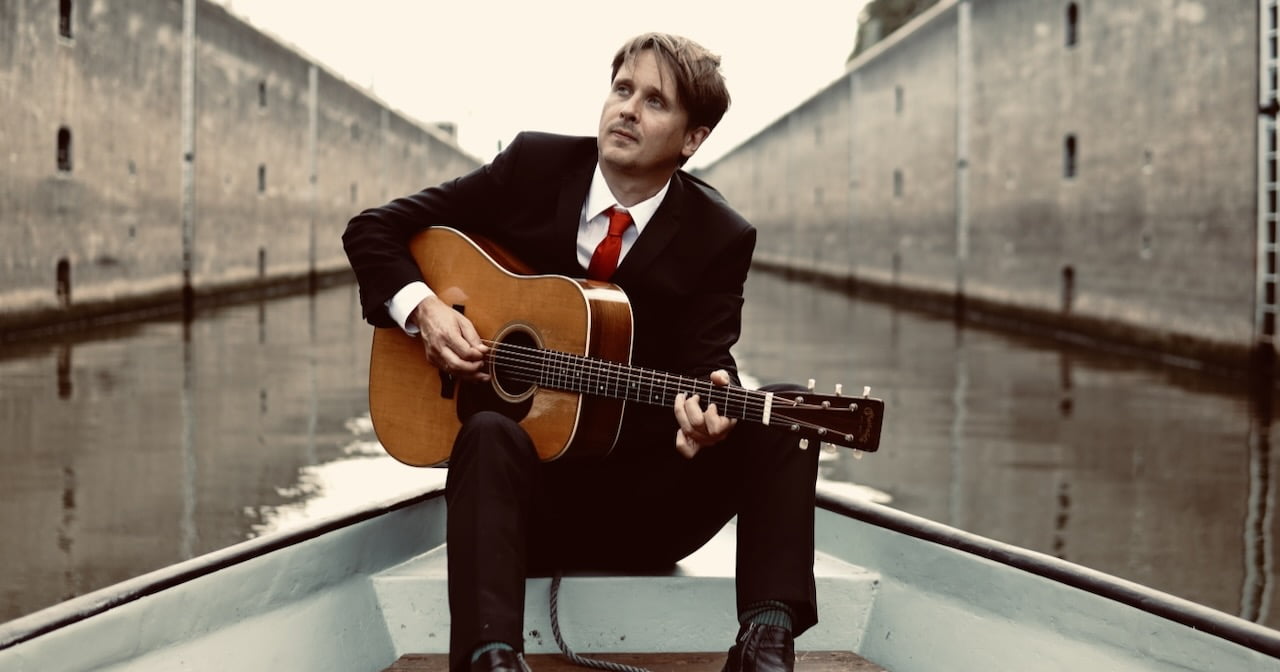
MIXTAPE: Bertolf’s Dutch Bluegrass & Newgrass

My name is Bertolf Lentink, I was born in 1980 and I’m from the Netherlands. I was spoon-fed bluegrass music by my father, who endlessly played his records by the likes of Doc Watson, Tony Rice, and Tim O’Brien in my parental home. At a young age, I learned to play both from and with him.

I have released six albums here in the Netherlands and they were more in the singer-songwriter/pop style. But for my seventh album, I decided to return to my roots and my first love: bluegrass. I had the chance to record an album of my own material with some of my favorite musicians of all time, such as Jerry Douglas, Stuart Duncan, and Mark Schatz – guys I’ve been listening to and admiring since I was like 6 years old. The band was completed by two fantastic instrumentalists of the younger generation: Wes Corbett and David Benedict. The album was recorded and mixed by David Sinko in the Sound Emporium Studio in Nashville. I really had the best week of my life recording it; it was everything I hoped for and more.

The album is called Bluefinger because residents of Zwolle, the city I live in, are called Bluefingers. But it’s also a reference to bluegrass and getting blue fingers from studying so hard on the guitar trying to be good enough to record with my heroes.

Bluegrass music has surely travelled all around the world. It even made its way to the Netherlands and continues to inspire young people here. This is a mixtape of the stuff that inspired me and that’s going on in the blue- and newgrass department here right now. Dutch Grass! – Bertolf

“Before The Storm” – Bertolf featuring Ilse DeLange 

It was quite a surreal experience to record with my heroes, but at the same time it felt really familiar when I heard those guys’ instruments coming through my headphones. Like I was coming home somewhere I’d never been before.

“Uncle Pen” – Bill Monroe

Bill Monroe learned to play from his Uncle Pen. Full name: Pendleton Vandiver. Uncle Pen’s great-great grandfather was Bill Vandiver, an immigrant from the Netherlands. Vandiver is actually derived from the Dutch Name “van de Veer.” So if Bill Monroe is the Father of Bluegrass and Uncle Pen is the uncle of bluegrass, then Bill van de Veer is the great-great uncle of bluegrass. So there’s the Dutch connection with bluegrass for ya! 

“Keep on Pushing” – Country Gazette

My love of bluegrass music is entirely my father’s fault. In 1972, when he was 16 years old, he heard a song on the radio: “Keep on Pushing,” by Country Gazette. That song was actually on the Dutch pop charts at that time! My father was completely blown away and it was the start of his love of this kind of music. And when I grew up, he played nothing else but bluegrass, so I couldn’t help but to fall in love with it, too. (The original ’70s recording of “Keep on Pushing” is not on Spotify, so here is the ’90s remake.)

“Amsterdam” – Douwe Bob

Douwe Bob is a famous artist here in the Netherlands. I wrote this song with him and we thought it was nice to try and write a bluegrass song not about the hills of Kentucky or something, or to once again pretend to be American, but to write a bluegrass song about the city we know, Amsterdam. 

“Crying Shame” – Blue Grass Boogiemen & Tim Knol

Blue Grass Boogiemen are a great high-energy bluegrass band from the Netherlands who have been on the scene for a long time now. Here’s a song from an album they made with the great singer-songwriter Tim Knol (who happens to sing a nice harmony vocal on my album Bluefinger as well)

“Fallin’” – Nathalíe

Here in the Netherlands, I’m playing live with a great band of musicians who also happen to have their own bluegrass bands. This song is from the band Nathalíe, that feature my band members Nathalie Schaap on vocals and double bass, Jos van Ringen on banjo, and Janos Koolen on mandolin. I really love what they’re doing.

“The Bipolar Bear” – The Charivari Trio with Janos Koolen

Janos Koolen is the mandolin player in my band. He’s a fantastic multi-instrumentalist and composer as well. Here’s his beautiful composition, “The Bipolar Bear,” with the Charivari Trio.

“Tapdancing on the Highwire” – Ilse DeLange

My career in music started by playing in Ilse DeLange’s band. She’s a big country/pop star here in the Netherlands, and she’s very fond of bluegrass music as well. Here’s one of her songs that I really love from a live album we did back in 2007. 

“One Tear” – 4 Wheel Drive

4 Wheel Drive is probably my favorite Dutch bluegrass band. The band also features Joost van Es on fiddle, who’s playing live with me right now. I went to see them live a lot as a kid, and I was always left really impressed and wanting to learn to play, too. I also need to mention the bands The Country Ramblers and Groundspeed, who were from the city of Kampen (which was jokingly called the “Nashville by the Ijssel”), but sadly their albums are not on Spotify. 

“Deeper Than the Holler” – G-runs ‘n Roses.

G-runs ‘n Roses is a band from the Czech Republic, with two Dutch guys playing in it: Ralph Schut on guitar, banjo, and vocals and his brother Christopher Schut on bass.

“Till I Found Someone” – The Bluebirds

The Bluebirds are a band that do great and heartfelt three-part harmony. Here’s a song that I wrote with them, with J.B Meijers on dobro.

“Team Hoover” – Bertolf

I’d like to end this mixtape with an instrumental that I’m really proud of, once again from my album, Bluefinger.

I hope you enjoy it and thanks for listening! Cheers from The Netherlands.


Photo Credit: Dirk Schreuders

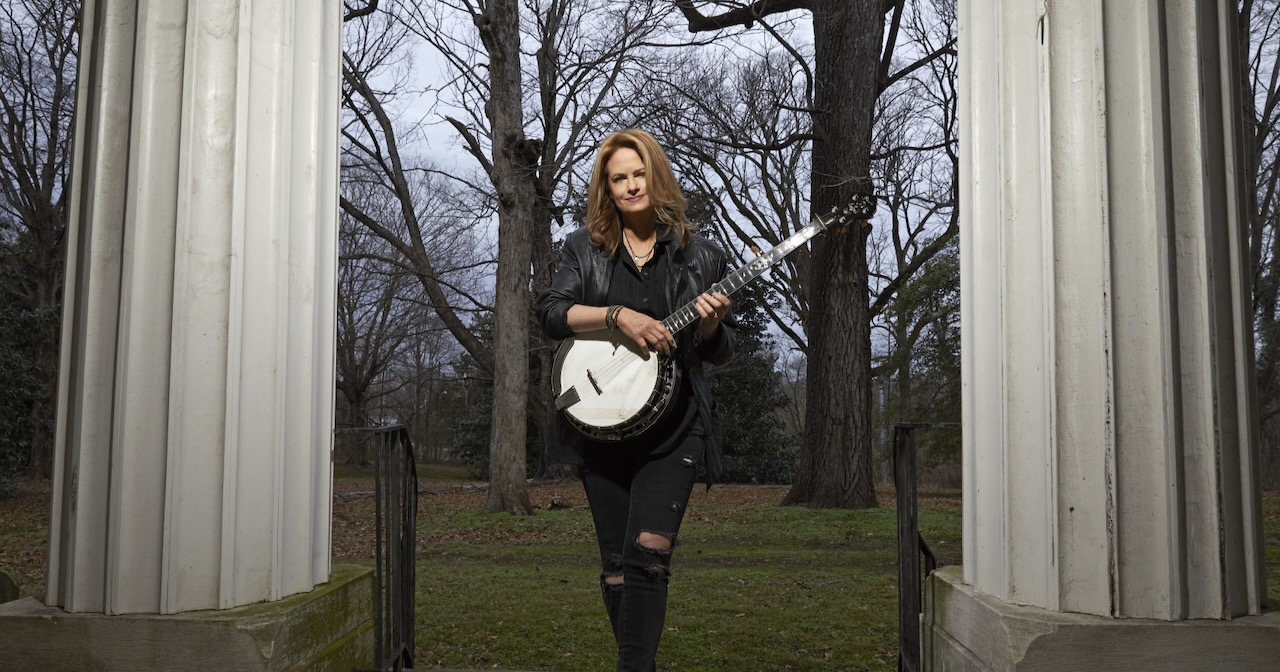
Alison Brown: Record Label Founder and Bluegrass “Lifer”

When a craftsman pauses to reflect, students of all skill levels benefit from the lesson. Alison Brown’s latest album, On Banjo, released May 5 on Compass Records and is a masterclass; it’s also a study on where the instrument has been and where it’s going.

Brown is a Compass co-founder and a GRAMMY Award-winning artist and producer. A self-described “lifer” in the bluegrass community and an IBMA “First Lady of Bluegrass,” she eagerly explores what the five-stringed instrument can do outside typical genre parameters. The new record is packed with star-studded duets with comedian Steve Martin, mandolin player and fellow First Lady of Bluegrass Sierra Hull, and fiddle legend Stuart Duncan.

The result is a varied, rich track list we couldn’t wait to ask Brown about.

BGS: Let’s walk through some of the tracks and collaborations on On Banjo. What kind of music inspired the duet with Anat Cohen?

AB: Anat Cohen is a clarinetist; she was born in Israel and lives in New York, but she’s well-known in jazz circles for Brazilian choro. I actually watched lots of videos of Anat on YouTube.

I reached out. I said “I know we don’t know each other, but would you consider doing this?”

What’s it like working with a famous comedian like Steve Martin in a musical context?

I’ve had the good fortune to go out and do some shows with him and Martin Short. There’s inevitably some time to jam in the dressing room, so it’s fun to play with Steve in that context, too.

Steve’s a great banjo player with a really beautiful touch and a delicate, sweet tone. He loves playing in double C tuning. Banjo players usually tune to a G, but you can drop the fourth string to a C and tune the second [string] up to a C. It’s an old tuning that clawhammer guys use a lot.

The way “Foggy Mountain Breaking,” came about is I wrote the A section. It was during the pandemic. I asked Steve, “Do you wanna write a B part?” He sent me a perfect B section 24 hours later. We figured out a bridge together. It’s named after a lyric in a John Hartford song and is obviously a riff on “Foggy Mountain Breakdown.”

How does it feel to work with younger bluegrass talents like Sierra Hull? Is it gratifying to have a feminine duo on that track?

I wrote that tune hoping Sierra would be up for learning and recording it with me. I’m a huge fan of her mandolin playing; she’s another one with such a delicate touch. Her fingers just really dance over the fingerboard.

It required her to play every fret on the first string of the mandolin and she did it flawlessly. She said she’d never had a chance to work on such complicated music with another woman. So it’s a really special thing. It’s always a delight to play with Sierra, but to do a duet with her was like chocolate and more chocolate.

How do you balance two strong, independent main instruments like banjo and fiddle together, such as with Stuart Duncan?

Banjo and fiddle are just so complementary. They say a banjo and fiddle make a band, and they do.

I’ve known Stuart since he was 11 and I was 12. We go way back. And on this tune I want to give a tip of the hat to Byron Berline and John Hickman. Growing up in Southern California when we did in the ’70s, those two were the guys that everybody worshiped at the feet of. I wanted to try and capture some of that spirit, and I wanted to do it with Stuart.

Who is this album for, and what do you hope listeners take away from it?

That’s the existential question of the banjo player. And it is a bit of a challenge when you take the five-string banjo and go somewhere else with it. Earl Scruggs perpetuated a style and brought it to the masses that was just so electric. Most people think that’s all the banjo does and they don’t worry about its history before that. There’s a lot of voices inside the instrument; the bluegrass one has become the loudest one most recently.

It’s so interesting because at the beginning of the 1800s the banjo was found on plantations. Then white people appropriated that music in minstrel shows, performing in blackface. It’s deep in terms of what it says about our history and America’s original sin.
It went from being a Black instrument to being a white lady’s instrument. The Black voice of the instrument and the female voice of the instrument were both disenfranchised. There are gorgeous old photos of women in the 1890s holding banjos, and there were female banjo orchestras. I’m excited to see that re-emerging.

You started Compass Records with Garry West almost three decades ago. What’s on the horizon, and what are your goals?

All the labels were run by business people, not musicians. We said, “Why can’t musicians run a label for other artists?”

The other part is really wanting to build a label that can have a cultural impact and Garry and I are both invested in roots music. I’ve been a member of the bluegrass community since about 10 years old. I’m a lifer. The whole economy of the record business has been turned upside down and stirred and shaken eight times. We want to make sure this music not only survives but thrives into the future.

You mentioned growing up in SoCal. How is bluegrass there different from Appalachia?

There would be Eagles’ songs in set lists. It was wide open. When I first came east with Stuart and his dad, we drove around and did the festivals in 1978 or so, but it was rooted in the first generation bands’ repertoire.

On that trip we entered a band contest in Oklahoma and we played something we learned from a Richard Green record. It was a funky fiddle thing in E. I remember somebody coming up afterwards and saying “We don’t appreciate you knocking the music.”

What did you learn while making On Banjo?

The deep dive to find new melodies, and that process of discovery of the instrument, is the process of self-discovery. You get to the end and it teaches you something new about yourself.


Photo Credit: Russ Harrington

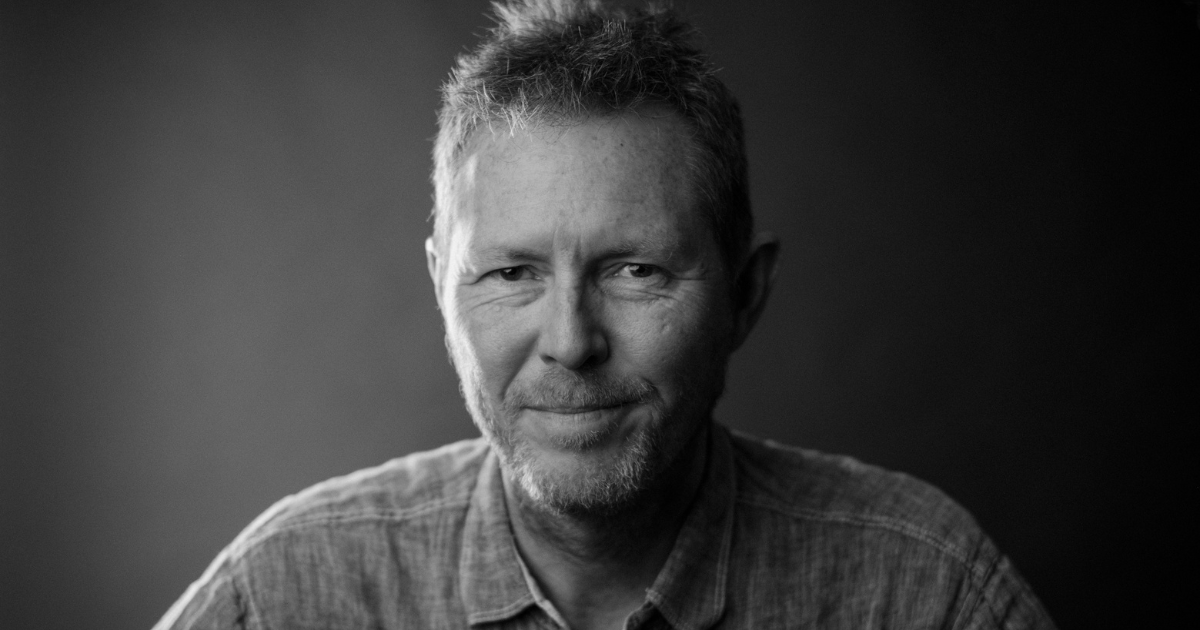
Robbie Fulks Reflects on a Funny, Smart and Heartfelt ‘Bluegrass Vacation’

In the liner notes to his new album Bluegrass Vacation, released at the beginning of April, Robbie Fulks talks about his formative experiences in the genre. He also mentions how, as a young musician in the early ’80s, he drifted away from it in search of the coolness of trendier sounds. “But what made me think there was anything cooler than bluegrass?” he asks, playfully reprimanding his younger self.

Bluegrass Vacation makes the case that there is indeed nothing hipper than some of the world’s most decorated musicians tearing into a tried-and-true format. And it doesn’t hurt when they do so in service of smart, funny, heartfelt material, which is what Fulks delivers here and is emblematic of his output for the past three decades. While he proves that he can write rollicking back-porch jams like “One Glass of Whiskey” and “Let the Old Dog In,” he also slows the tempo for tender acoustic beauties like “Molly and the Old Man” and “Momma’s Eyes.” And in the stunning “Angels Carry Me,” he pushes bluegrass boundaries with a multi-movement piece of fearless lyrical and musical complexity.

Considering it took 2 ½ years from first session to album release due to pandemic holdups, Fulks is thrilled to finally have Bluegrass Vacation out in the world. He talked to BGS about early influences, his impressive cohorts on the record, and whether he’d consider dipping back into the genre again.

BGS: What are your earliest memories of bluegrass and what drew you to it?

Robbie Fulks: Early memories are a reel-to-reel tape of Doc Watson’s first Vanguard record. There were a couple of other records on the tape as well, but Doc was the first thing up, “Nashville Blues” going to “Sitting on Top of the World,” that warm, beautiful, versatile sound. Doc did all these different things that kind of put him one foot in bluegrass and one foot out. That was probably the earliest thing that hooked me. And then after that it was like The Country Gentleman and Will The Circle Be Unbroken. A couple of other records that my folks had, and then the festivals.

What made you decide that now was the time to do an all-bluegrass record?

Generally, over the last 10 years, I’ve been making more inroads. My bluegrass hot-shot Rolodex has expanded to where it’s like, holy shit, I have Jerry Douglas’ email and can call Sam Bush (laughs). It just seemed like it had reached a tipping point the last couple of years where it was like I gotta do this. The older guys are going to be dead soon including myself, and that’s part of the reason (laughs). But I’ve been leaning that way more and more for the last five to 10 years.

Did your songwriting process change at all?

I varied my angles on the songwriting as I went along. On a couple of them, I had a genre thing in mind. Like “Lonely Ain’t Hardly Alive,” I was thinking about Jimmy Martin in the late ’50s and early ’60s and wrote to that. With “Angels Carry Me,” that came about because I had inked (mandolinist) Sierra (Hull) on a session. I started thinking about what kind of a groove I would like to hear her on and wrote from the groove forward thinking about the way she plays.

And did writing for bluegrass steer you in the direction of any particular subject matter?

I’ve noticed that I gravitate repeatedly toward four or five rough subjects over and over again. One of them is alcohol, and that shows up in a couple songs. One of them is memories of when I was a kid, and that shows up. Or music itself. When these subjects show up, I always think “Should I go ahead, or not go ahead?” Because it’s well-trodden ground for me. Like “Old Time Music Is Hear to Stay,” I thought “Well, I’m writing another song about music. I’ve done of lot of that. Should I go forward?” And as I went forward with the song, I just found that I really liked it and that compensated for any qualms about having done something similar before. I guess it’s a long-winded way of saying no, it really wasn’t any different. Just going into a room with an instrument and seeing what happened.

Considering the incredible instrumentalists on this record, did you give them a lot of direction? Or was it more like, “Here’s the song. Let it rip?”

Generally, I’ve noticed in the studio that the less I say, the better. Because it’s surprising how you can say four words that seem well-chosen and exactly what you want and then things go haywire because it’s overinterpreted or misinterpreted. My approach is that I definitely have things in mind and I chart and have rough end points in mind. But when you hear the first go at it, I go with the idea that that’s what it’s going to be, like 90 percent, and then I direct the other 10 percent of it as delicately as I can.

Tell me about recording “Angels Carry Me,” which is fearless with how it expands the notion of what a bluegrass song can be.

The people that were on the session, it skewed a little younger, because Sierra was there and (guitarist) Chris (Eldridge) was there. And (fiddler) Stuart (Duncan) is just kind of ageless and genre-less, just pure music. Todd (Phillips) is the same way on the bass. He’s a really wide-brained guy. I think if it had been different players, it might have been more of a challenge. But those players can go anywhere and just have adventurous spirits, as do I. It was never a question that it would be too weird for somebody to get their mind around.

That song also has one of my favorite lines I’ve heard in a long while: “And only a fool thinks he can leave just by driving away.”

That was a line that took me by surprise. I worked on the song for three or four weeks in an attitude of mystery and concern (laughs). Because I didn’t know where it was going or what I was doing. It was kind of amorphous. But the appearance of that line at the end, it seemed like, “Ah, that could have been in my sights the whole time and I just didn’t know it.” It appeared as a gift.

Did you have to embellish any of “Longhair Bluegrass,” which talks about you going to see a festival as a kid with your parents?

I think the only untrue part is that in the fourth verse, I put an example of somebody at the festival, an old-timer that was not into the younger generation and their attitude. And I put in Wilma Lee Cooper because I looked at a poster of that Culpepper festival. Her name fit and I thought the age bracket kind of fit. In the session, Sam Bush said, “No, she was real easy-going about it.” I said, “Who wasn’t?” And he said, “Probably Ralph Stanley.” So I put that in. That was a little untruth, because I didn’t see Wilma or Ralph at that festival looking around angry. And maybe my parents weren’t stoned out of their heads like I implied in the song (laughs).

You talk in “Old Time Music Is Here to Stay” about picking up the electric guitar and then losing interest in it as you returned to more traditional sounds. How accurate is that?

100 percent. I think it was just a natural thing for me to want to swim with the current when I was 17 years old. But even at the time, I think it was at the back of my mind that this music by, I don’t know, Aztec Camera and Big Country or U2, it was OK, but it just didn’t grab me in the way that I was grabbed by a Doc Watson record. It was a little bit more work coming to the popular music of the late ’70s, early ’80s. But what can you do? The stuff that gets in you when you’re five or ten years old, that’s the stuff that doesn’t go away.

Did you feel extra pressure on this record because you wanted to do the genre proud?

There was pressure there, but it was more from being in an isolation booth and looking out the glass door and seeing Sam Bush over there or Ronnie McCoury over there. No matter how welcoming these people are, it’s a mind fuck to pick up your instrument and be playing with them (laughs). It freaked me out a little bit.

I know you just finished this one, but is it possible you could return to the genre again somewhere down the road?

I’m starting to think about what to do next. I’m open-minded. If people like this enough, I loved doing it. I would do another one.


Photo Credit: Scott Simontacchi

LISTEN: Jack Schneider, “Farewell Carolina”

Artist: Jack Schneider
Hometown: New York City
Song: “Farewell Carolina”
Album: Best Be on My Way
Release Date: November 11, 2022

In Their Words: “Wes Langlois and I wrote ‘Farewell Carolina’ the week before the initial recording session. The melody came first, and the story formed around it. As we wrote, the figure of Carolina emerged: a symbol for the unstoppable motion of life, of inevitable new beginnings and difficult goodbyes. Vince [Gill] heard this song in its infancy and suggested a few revisions, and when we got to the studio, it was he that suggested the song be one to try putting to tape. He pulled out his guitar — a 1930 Martin OM45, no less — and laid out the foundation. By the end of the first take, it was clear that my role was to tell the story, not to perform it, so I set down my guitar. Between Vince, David Rawlings, Stuart Duncan, and Dennis Crouch, the image of Carolina — place, person, and memory — was brought to life.” — Jack Schneider


Photo Credit: Nathan Rocky

Backed by Acoustic All-Star Musicians, Lyle Lovett Returns With “12th of June”

Attention! New music from Lyle Lovett is on the way! After a long hiatus, the Grammy-winning singer-songwriter is back with a brand new album scheduled for a May 13 release. The singer has also announced an extensive tour for 2022, bringing along a full entourage to ensure no punches are pulled. Produced by Lovett and Chuck Ainlay, the new album will be released on Verve Records and will be titled 12th of June. The record will feature an eclectic palate of hand-selected songs that feature Lovett’s storytelling through the lenses of different musical styles, from Nat King Cole and Horace Silver to the more traditional country and folk stylings of Lovett’s own songs.

“My songs are rarely fiction,” Lovett says. “That’s how I approach my work. My songs are from my life. I am the character in these songs. I get to spend my life for the most part doing a job where I get to be myself.”

With the announcement of the record — his first all-new collection in 10 years — Lovett released the album’s title track with a music video that shows some behind the scenes of recording the project. An all-star band can be seen deep in the trenches of their work, bringing an already incredible song over the top with elegant lines, harmonies, and rhythmic support. Bryan Sutton, Paul Franklin, Sam Bush, and Stuart Duncan are just a few of the masters that are on this record, but the simple truth is that this song would jump out of the speakers if it were sung a capella by the writer alone. Check out Lyle Lovett’s “12th of June” below.


Photo Credit: Michael Wilson

BGS 5+5: Carley Arrowood

Artist: Carley Arrowood
Hometown: Newton, North Carolina
Latest Album: Goin’ Home Comin’ On
Personal nicknames: My really close friends call me “Carl,” mostly against my will. Also I did marry Mr. Daniel Thrailkill, and I did take his name! But it was his idea for me to keep Arrowood for my music stuff.

What artist has influenced you the most, and how?

Oh, gracious. There are literally SO many artists/fiddlers who have left an impact on me in some special way. I definitely have to say Alison Krauss for one. She effortlessly executes everything. Y’all already know. I’ve also really learned and have been trying to remember the past several years that not everything has to be super fancy, as long as it’s tasteful and intentional, so another fiddler I look up to is Stuart Duncan. Again, effortless, gorgeous playing, and the man knows where longer, breathier bows fit perfectly. I’m loving picking up on that. Jim VanCleve is another one. The first time I heard his playing as a teenager I thought, “How in the world is he making his fiddle sound like an electric guitar?!” And I learned that trick, too. The group Celtic Woman also had an enormous impact on me as a little girl, and because of their original fiddler Mairead Nesbitt, I have an extra love for the Celtic flair. I still can’t dance and play, though. I could keep going but I have four more questions to answer. Haha!

What’s your favorite memory from being onstage?

Again, too many to count, but one that has come back to mind a lot recently is when I was playing in my teen group Most Wanted Bluegrass. We were about to finish a set down in Walhalla, South Carolina, maybe had three songs left. My sister Autumn was taking a mandolin break so I was chopping behind her. Next thing I know, I hit my E string with the frog of my bow and I literally chopped it in half. It was SO funny! The sad part was, I’d just cleaned out my fiddle case and didn’t have an extra string, so I just stood up there and clapped along with the band. Good times!

What rituals do you have, either in the studio or before a show?

I wouldn’t call it a ‘ritual’, but I do try to remember to talk to the Lord and pray before (or during) anything like recording or performing onstage. Because a lot of times I get so caught up in the hype and the applause and good times, and even in getting it right, that I admit I forget where it all comes from in the first place. God gave the gift of music, so I ask Him to help me remember to glorify Him in everything I do. I’m just a sinful human, but He is so worthy of everything.

What has been the best advice you’ve received so far in your career so far?

Like I said earlier, I’ve tried to really hone in and know that not everything has to be flashy and fancy, especially since stepping into a solo career. Years ago when I was recording for Darin and Brooke Aldridge, Darin told me “less is more,” and that has stuck with me a lot, even as a fiddle teacher. Also here recently, I had the privilege of talking to Sierra Hull and she told me to just play “whatever I could, whenever I could, wherever I could,” and I just really loved that! If I’m going all in with this thing, I just gotta do it and not be afraid. I’m thankful for both of those phrases.

Which elements of nature do you spend the most time with and how do those impact your work?

Daniel and I love to hike and be in the mountains when we can. We love chasing waterfalls and sunsets and just seeing the vibrant colors of the last light of day. We also love spending time on our front porch in the warmer months, feeling the breeze and the sunshine on our faces. All of that just makes me feel really small, and magnifies the majesty of Jesus and His love toward us, so it’s just really refreshing and inspiring for new creativity. I personally love when springtime comes around and everything is made new again. It’s like new possibilities on the horizon!


Photo Credit: Laci Connell, High Lonesome Sound Photography

From Death Metal to a Fishing Boat, How Billy Strings Finds Renewal (Part 2 of 2)

Billy Strings has had his foot on the gas since he was a teenager, bringing his prolific picking to hundreds of shows around the country each year and winning over a throng of devoted fans in the process. His bluegrass bona fides may be obvious from the outset — he’s quick to cite such greats as Bill Monroe, Doc Watson, and the Stanley Brothers as some of his first musical influences, and no honest spectator could deny his talent on the guitar and mandolin — but astute listeners will also note elements of rock, jam bands, and even heavy metal in his performances, especially as Strings bounds around the stage.

The Nashville-based, Michigan-raised musician’s latest album, Renewal, comes on the heels of an exceptional year: His Rounder Records debut, Home, won the 2020 Grammy award for Best Bluegrass Album. And even as much of the music industry was grounded from touring, his innovative approach to livestreams and digital performances moved the Pollstar Awards to dub him the Breakthrough Artist of the Pandemic. But that breakthrough was more than a decade in the making, and the forces that shaped Strings as a prodigious young picker are still at work today, pushing him creatively in the studio and on stage as well as calming him at home between gigs. Here, in the second half of our BGS Artist of the Month interview, Strings tells us about his upbringing, his latest influences, and the way he unwinds between shows.

Editor’s Note: Read the first part of our interview with Billy Strings.

BGS: Tell me about where you grew up. How do you see its impact on your work today?

Billy Strings: I was born in Lansing, Michigan on October 3, which is my grandpa’s birthday. My mother, who lived in Kentucky at the time, had gone up to Lansing to visit her dad on his birthday, and that’s when I decided to show up. [Laughs] So that’s why I was named Billy as well, because that was my grandpa’s name — I was his little birthday gift.

We lived in Morehead, Kentucky, for a couple of years before coming back home to Michigan, where I really grew up. I grew up in a little town called Muir, population 600. My dad is an incredible guitar player, so he taught me how to play. He was always showing me music when I was a little kid: Doc Watson, Bill Monroe, Lester Flatt, Earl Scruggs, Jimmy Martin, Larry Sparks, and stuff like that — a lot of good bluegrass. We’d hang out at this little campground and play music next to the river by the fire. That was my childhood, man, just sitting there picking by the river.

It was real good until I got to be a teenager and started to turn sour. I had to run off and figure out a new life. I took what my dad taught me when I was a little kid, and all of a sudden I realized that bluegrass is actually pretty sweet and people love this shit — that maybe I could do something with this; that it’s not just something that I do with my dad that I should be halfway embarrassed about.

Who are the artists that you feel really inspired by right now? And are those different than the ones that you feel like you were listening to a lot when you were a kid?

For the most part, it’s still Doc Watson — he’s the main nerve — and Bill Monroe, and Lester Flatt and Earl Scruggs, Ralph Stanley and Carter Stanley, the Stanley Brothers. But I listen to a lot of different shit. I listen to death metal, and lately, I’ve been getting into this music from Mali that Béla Fleck was showing me — some really amazing stuff. And Memphis trap: I’ve been listening to Young Dolph a bunch. There’s just an energy to it. I grew up around crack houses. I’ve seen that shit that they’re rapping about. It just gets me hyped: He’s talking about coming out of nothing and becoming a self-made millionaire. I listen to it before the shows sometimes to get myself hyped up.

You played in rock bands in high school — groups with music that might not sound a lot like what you’re doing today. Is there any lesson or anything from that time that you feel like you still turn to or still apply to the music that you make?

Yeah, performing live. I never learned how to perform in a bluegrass band. I learned how to perform in a metal band. I learned music by playing bluegrass when I was a little kid, but by the time I was doing it on stage it was in a metal band — we were headbanging and running all over the place — and I still can’t help but get into the music like that. I can’t just stand there and play.

You have been in Nashville now for a little while. Has anything that has surprised you about it, good or bad?

I really love Nashville. A lot of your favorite musicians, that’s where they live. You’ll see your favorite singer in the grocery store. I get calls for sessions, and it’s from people who I grew up listening to and who I’ve idolized for my whole life. Like Béla Fleck’s record just came out, and I played a handful of songs on that. I was so honored to play with David Grisman, and Chris Thile, Sam Bush, Stuart Duncan, and Edgar Meyer — all these cats that are just… well, I don’t feel like I’m really in that league. It really was an honor. And there’ve been several things like that! I went from listening to these cats on a record to being on a first-name basis with them… texting and being friends. It’s a trip.

What’s one thing that’s brought you joy recently?

Fishing. I love bass fishing. I grew up doing that with my dad as well, but I didn’t do it for a long time because I was so busy. When the pandemic hit, I started fishing again. I go out there in rain or shine. I just like it for the solitude. Last night, I was in front of thousands of people, and to come home and go out on my boat and be alone in nature — to check out the blue herons and the fucking ospreys, eagles, fish, everything doing its thing — it’s brought me a lot of joy, brought me down to Earth. I put my boat in at 5 o’clock in the morning when the sun is just coming up. I like being out there alone at that time of day. It’s just good for my mind.

And yet it’s so clear from your performances that interacting with listeners gives you a certain joy, too. What are the forms of feedback that you value most from your audience when you’re playing live?

Sometimes when we finish a solo, everybody starts cheering real loud, the whole place gets real loud. That feels good. But sometimes I look out there and I look around and I see individual people and I literally play to them. Last night, we played in Montana and I was looking around and there was this one dude just standing there with his beer just completely still. I didn’t even know if he was enjoying it or not. So I just walked up to the front of the stage and stared directly at him and I just started playing right to him. [Laughs] So he started laughing, and then he took a drink of his beer and started bobbing his head a little bit. I think he just started getting into it by the end of the show.

I’ll look for things like that. The audience is really in control of how I’m feeling up there. Sometimes, when they’re just on fire, I can’t help but have a good time. They feed us the energy, and we give it back to them. It’s reciprocal.


Photo credit: Jesse Faatz