Bonny Light Horseman Turn to British Folk Songs for Supergroup Debut

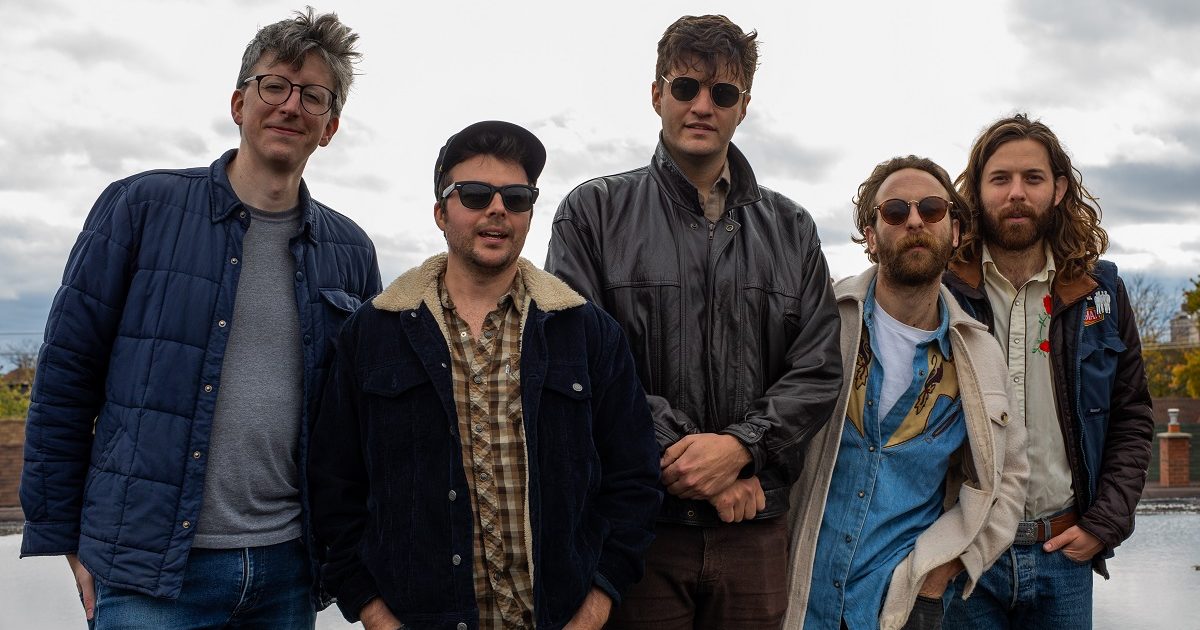
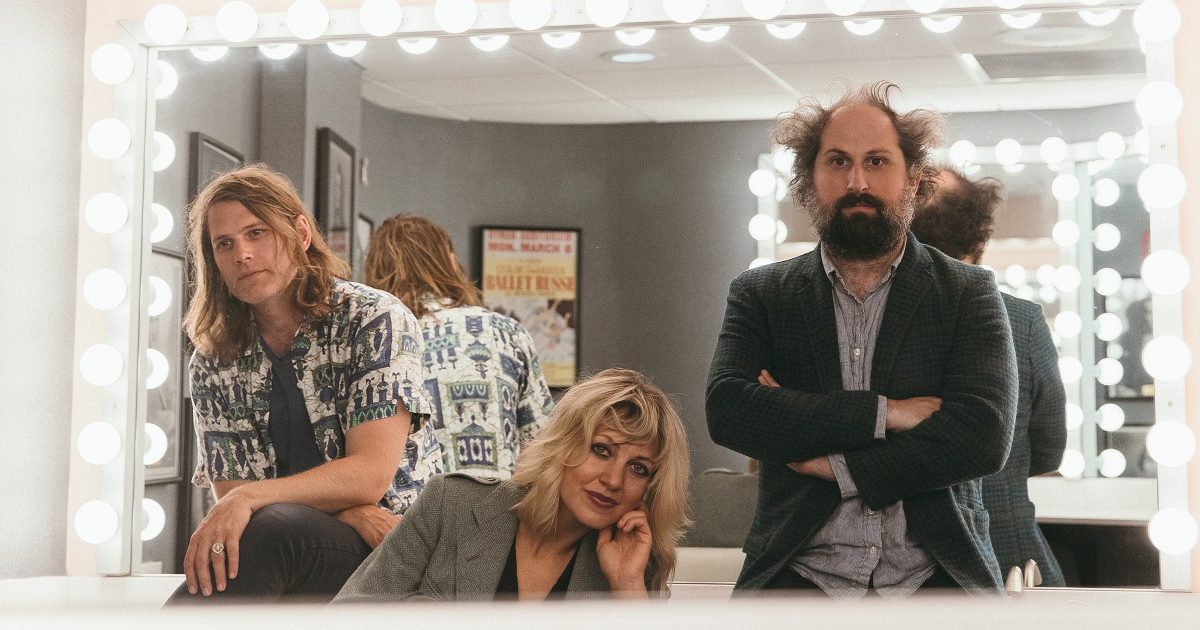
Bonny Light Horseman, a new American supergroup interpreting old British folk tunes, is one of the few good things to come from Twitter. After spending nearly fifteen years shepherding her ambitious musical Hadestown all the way to Broadway, Anaïs Mitchell was catching up on some of music she’d missed out on, and she took to the social media platform to shout out the Fruit Bats, the long-running indie-pop band led by Eric D. Johnson. It just so happened that he had recently discovered Mitchell’s music and was a new fan.

“It’s an embarrassing way to meet someone,” Johnson says, “but that’s how it happened. She tagged me and said she loved my band. There are so many bad vibes on [Twitter], but I do like the fact that you can write a very short fan letter and you know they’ll get it.”

Mitchell was already working with producer/multi-instrumentalist Josh Kaufman (Craig Finn, Josh Ritter) on a new project for the Eaux Claires Festival, and Johnson admits he steamrolled his way into the gig. At the 37d03d Festival in Berlin, the trio spent a few hours each day creating and recording new arrangements of old folk tunes like “Blackwaterside” and “Lowlands” with a small army of friends and collaborators joining in — including members of the National, Hiss Golden Messenger, the Staves, and Bon Iver. The result is a lush and lovely collection of songs that may be centuries old, but sound very much of their moment.

At least on paper it may seem like an unlikely folk alliance, considering Mitchell is the only artist among them popularly identified with that genre. Kaufman is more associated with artful indie rock, while Johnson is well known for crafting supremely catchy pop hooks.

“I have a fairly strong folk background,” says Johnson. “I used to teach banjo at the Old Town School of Folk Music in Chicago, but somewhere along the way I veered off on a poppier path. But Anaïs has a bona fide folk background beyond her career as a singer/songwriter. She knows all the old stuff and grew up with those records in her house. So she’s been a teacher to Josh and me in a lot of ways.”

This kind of collaboration fits with the 37d03d ethos. Founded by Bon Iver’s Justin Vernon and the National’s Aaron Dessner, the organization encourages and supports creative cooperation between artists in different genres and often on different continents. Already the duo have released an album together under the name Big Red Machine, and the recent posthumous Leonard Cohen album features 37d03d artists putting new music to his unrecorded lyrics. (It should be noted that the organization was originally known as PEOPLE, but changed its name to 37d03d in early 2019. It’s still pronounced PEOPLE, though. To see why, just turn your computer upside down.)

“They’re interested in artists expanding and exploring and collaborating,” says Mitchell. “After a while you get a kind of artistic identity, like a calcification of who you are as an artist and what you do. But there are people who are yearning to be free from the trappings of who people think they are. So PEOPLE offers an opportunity to be kind of childlike, to get back to that beginner’s mindset.”

For Mitchell it’s been a nice break, a way to settle gently back into her old life as a singer/songwriter after devoting so much time to Hadestown. Just before they embarked on a long tour supporting their debut, two-thirds of Bonny Light Horseman — Johnson and Mitchell — convened to talk about the durability of folk music, the joys of collaboration, and people who need 37d03d.

BGS: How did 37d03d inform this project?

Anaïs Mitchell: I feel like we were forged in the fires of PEOPLE. They’re interested in people expanding and exploring and collaborating and trying new things, so it was really perfect that we got to be a part of it before we really had any idea who we were or what we were doing.

Eric D. Johnson: I don’t know where this project would be without it. I don’t know if there’s anything modern that can be compared to it. I try to imagine how they pull it off from a financial or logistical standpoint, but they’re doing truly the Lord’s work, which is essentially creating a really easy platform for a bunch of people to get together and do something creative. I don’t know if it’s the most modern construct ever and they’re light years ahead of time, or if they’re completely out of their minds and operating on some sort of beatnik principle that’s completely untenable today. It’s probably both and/or neither. It’s an out-of-time thing in a very beautiful way.

AM: I’d been working with Josh on some of this material. I’ve been an admirer of his for a few years now — his playing and his producing on other people’s records. The thing was kind of a gleam in the eye, you know, when Justin [Vernon from Bon Iver] and Aaron [Dessner from the National] reached out to see if we wanted to do this project. Why don’t you play that at Eaux Claires festival? That was cool of them, because we didn’t even have a band name yet. We were just exploring. Just messing around.

EDJ: Then I steamrolled my way in, and it ended up becoming this band. That’s how it got started, and that parlayed its way into the big Berlin project, where they did this big, unique artist-in-residency festival type thing at the Funkhaus. It was like summer camp. That’s the only way to describe it.
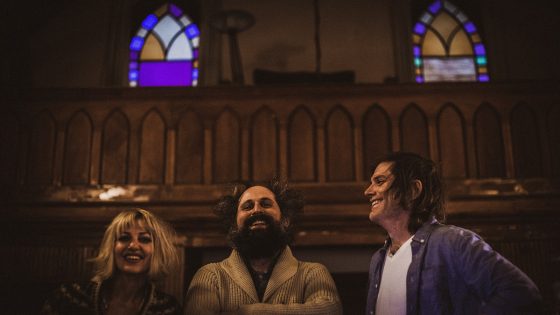
Photo credit: D. James Goodwin

I think of PEOPLE as promoting that kind of collaboration, where you can play on somebody’s record or in somebody’s band without having it be a major statement.

AM: Totally. There was a moment in the middle of the recording where Josh said, “Man, we could really use a drum on this track.” Out in the hall, we heard a cymbal fall to the floor and make a big crash. Josh opened the door and it was Andrew Barr from the Barr Brothers. He was on his way to another session, but he had three minutes so he came in played the one drum that we needed on that tracks. It’s stuff like that. Or there’s a song that has a couple of the Staves on it and Lisa Hannigan. They just happened to be free. There was a lot of serendipity with that stuff.

When we were in Berlin, we didn’t know that we were making a record or that any of that stuff was going to have any value to anyone else outside of us. But then we got back to the States and we listened back and we were like, Wow, this gig is really good! It felt like half of an album. So the question became, how can we finish it? How can we make the other half of the record feel like it’s of a piece with that stuff, even though the setting is going to be different? So we made the rest of the record at Woodstock at this beautiful studio called Dreamland, which is just a big, old, weird church.

EDJ: We recorded in Woodstock for two days. It was more of a traditional recording setup. I remember we did “The Roving” there and “Deep in Love,” which are two of the singles and I think two of the strongest tracks. We did them at 1 in the morning. They’re both completely eleventh-hour songs.

At what point did the idea to cover old folk songs come into play?

AM: Traditional folk music is kind of a passion of both of ours, especially like British Isles stuff. We started to mess around with some things, and the very first song that Josh and I ever worked on together was “Lowlands.” Which is interesting because I hadn’t heard any versions of that song. I guess I had maybe seen some texts, and I learned that there are two strains. One is this British Isles strain, and the other is from the American South. They’re basically ghost stories, in which a dead lover appears to a woman or in some versions a man. They’re also stevedore songs, songs about working up on the shore, loading crates onto ships.

So the song that we put together contains elements of both of those things as well as some stuff that we made up. It felt like a cool puzzle to put together. A lot of them I would say have had less research. We said very early on that we didn’t want it to feel like a research project. We really wanted to be more heart-led and wide open.

EDJ: I would say we were adamant that we didn’t want to do a research project. We just want to enjoy it. But it is incredible when you do a little research on these songs — and this is not news — you don’t have to be an advanced musicologist to know just how interwoven American music and the music of the British Isles are. That music came to western Appalachians and eventually gave us country music and rock ‘n’ roll.

The through lines are so short still. It’s really not that old. When it split off, our grandparents were alive. Those songs are so ancient and so thoroughly modern at the same time in the themes they’re singing about. If you listen to the lyrics of “The Roving,” which are hundreds of years old, it sounds like the plot to a teen summer movie from the ‘80s. It’s just people loving and longing and grieving and having sex and everything else we’ve been doing and singing about for as long as anything.

It doesn’t sound like an album concerned with preservation or historical accuracy. You’re taking a lot of liberties with them without trying to explicitly update them to our current moment.

AM: A lot of the songs have new music but the text is traditional to one degree or another. The text of “The Roving” is based on songs like “Courting Is a Pleasure” and “Handsome Molly,” but the music isn’t connected to any of those songs. But it still feels like a heartfelt way that the voice wants to sing. This is a total aside, but it’s just such a pleasure to sing with Eric. He’s so unfettered in his singing. It makes me want to sing that way, too. I had to sing my heart out in order to get on the same level as him.

EDJ: This is folk music. It doesn’t need to be finely hewn. It can just be a lump of clay that you emotionally hack at until you get something out of it. There might be some deep, deep purists who think we’re very impure in how we approach these songs. But these songs are meant to change over the years. They’re from the oral tradition, from pre-recorded times, so we don’t even know what the original version of “Deep in Love” sounds like. We just know what we came up with. That song was sort of a sketch that I had written for the last Fruit Bats album, but I couldn’t get anywhere with it. I had a melody written, just a do-do-do verse that I sang in the studio, and Josh opened up a book of traditional Welsh folk lyrics. He said, “Sing these lyrics over that melody.” They slotted perfectly, and that’s how you hear it.

Is this a one-off project, or do you think Bonny Light Horseman will continue?

EDJ: I think we’re gonna pick it up again, but we have no clue what we’re gonna do next. We could just be this band that keeps reinterpreting British folk music forever, but maybe not. Making this first one was very natural and easy in a lot of ways, and we’ve enjoyed playing shows together, but I don’t think the way forward has been pointed out to us just yet.


Photo credit: Nolan Knight
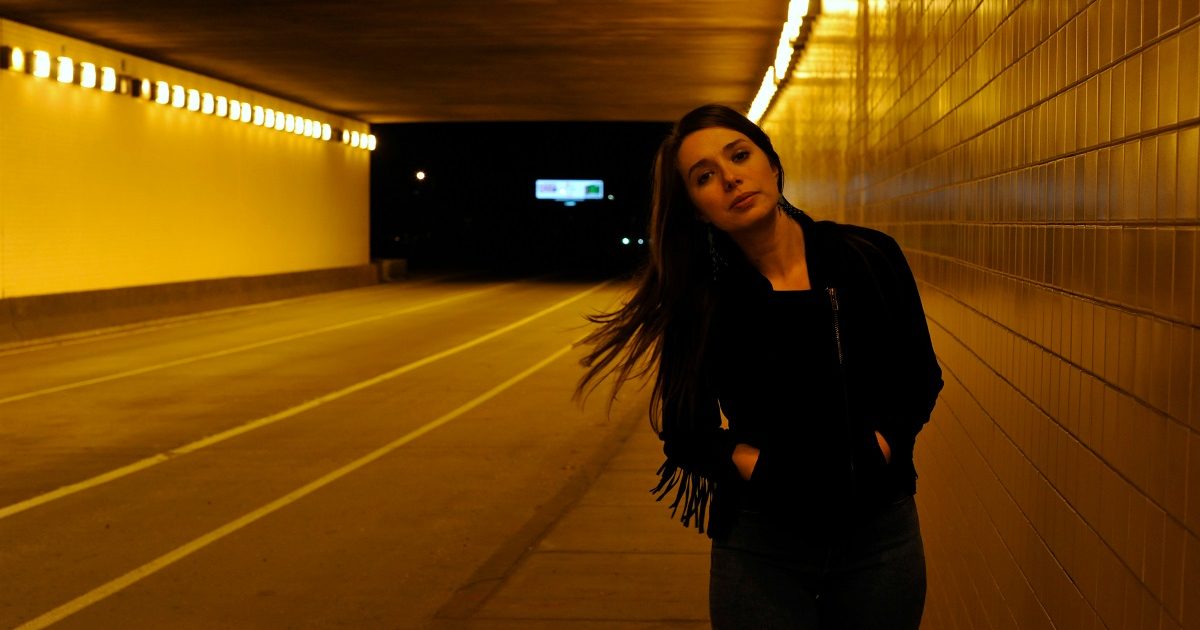
WATCH: Kristina Murray, “Tell Me”

Artist: Kristina Murray
Hometown: Nashville, Tennessee
Song: “Tell Me”
Album: Southern Ambrosia (2018)
Label: Loud Magnolia Records

In Their Words: “Soon after I moved to Nashville, I met musician and writer Logan Ledger and we became fast friends over of our love of traditional country music; soon we discovered that our voices complemented each other well, too, so we played out a bit as a duo and wrote a few songs together. One afternoon I said straight up, ‘I want to write a classic country duet.’ We then proceeded to get stoned and listen to hours of vinyl records by the Louvin Brothers, The Beach Boys, George Jones & Gene Pitney, and on and on… we almost didn’t even start writing! But Logan pulled out the melody and first line, and the rest of the verses spilled out from there.

“A month or so later, on a sunny May afternoon, I wrote the chorus. Frank Carter Rische’s vocal part next to mine on the recording is what really makes the song for me; he is so emotive and follows my voice effortlessly. Though the inspiration for the song came originally from a traditional era, I’m proud of the timeless and vibe-y feel of ‘Tell Me.’ Truly, the video is up for individual interpretation, but after I watched it a few times, I think it’s about a woman who initially feels defeated by an impending breakup but then turns it on its head, burns it down, and perhaps realizes she’s better off.” — Kristina Murray


Photo credit: James Paul Mitchell

LISTEN: Union Duke, “Left Behind”

Artist: Union Duke
Hometown: Toronto, Ontario, Canada
Song: “Left Behind”
Release Date: January 28, 2020

In Their Words: “‘Left Behind’ is exactly what you think it is: a song about leaving things behind. We were trying to capture the feeling of loneliness and isolation one can feel when they’re far from the one(s) they love — both lyrically and musically. It’s about the distance often forced between us and the longing to be together again.

“The last of our four newest songs produced by Jeff Hazin, ‘Left Behind’ is the only soft-ish song of the music we’ve released over the last year and once we got in the studio with it we had the opportunity to explore some really cool ideas that are pretty new for us. It was a lot of fun building this tune and taking it from mellow and simmering to a driving banjo-driven sing-along. Plus: lap steel! (Played by our guitarist Rob McLaren.)” — Matt Warry-Smith, Union Duke


Photo credit: Alex Nunes

WATCH: Grammy Nominee Tyler Childers on ‘Late Night with Seth Meyers’

After a whirlwind year in 2019, Tyler Childers’ star is burning bright as ever at the start of this new decade with a Grammy nomination for “All Your’n,” a single off of his third full-length album, Country Squire. Released in August of last year, Country Squire fulfilled the promises of his previous breakout record Purgatory.

Childers takes bold steps as a mature writer and a gifted vocalist; the project is shaped like a concept album in which each song flows one right into the next, connecting the music and painting the record with a consistent palette allowing the songs to feel like a complete collection. The Grammy nod for Best Country Solo Performance is testament enough to the marked vocal prowess of the redhead from Kentucky. 

Childers and his band, the Food Stamps, are preparing for a very busy touring schedule in 2020 with highlights that include four sold-out concerts at the Ryman in Nashville, joining country outlaw Sturgill Simpson for his A Good Look’n Tour, and shows all over Europe. Watch as he performs the title track from his latest record on Late Night with Seth Meyers.


Photo courtesy of the artist

LISTEN: The Ballroom Thieves, “Homme Run”

Artist: The Ballroom Thieves
Hometown: Boston, Massachusetts
Song: “Homme Run”
Album: Unlovely
Release Date: February 14, 2020 (album)
Label: Nettwerk

In Their Words: “How do you put words to how powerful women are? How do you hinder what they learn, if they read, who they can become, or what they do with the organs in their bodies? When a piece of the population’s voices are quieted there can be no conversation about how to guide society. As the avalanche of our man’s world finally finishes its incredibly destructive crumble downward, we can see that this issue is devastatingly simple. Any words used to govern a person must be said by a relatable ally, or the rules are empty and harmful.

“We can’t earn equality in this world for men, we have to make it ourselves. Women are the creators and sustainers of human life. We’ll use the power of our voices not to control others, but to liberate ourselves to create and sustain humankind more effectively. This is everybody’s world now.” — Calin Peters, The Ballroom Thieves


Photo credit: Anthony Mulcahy

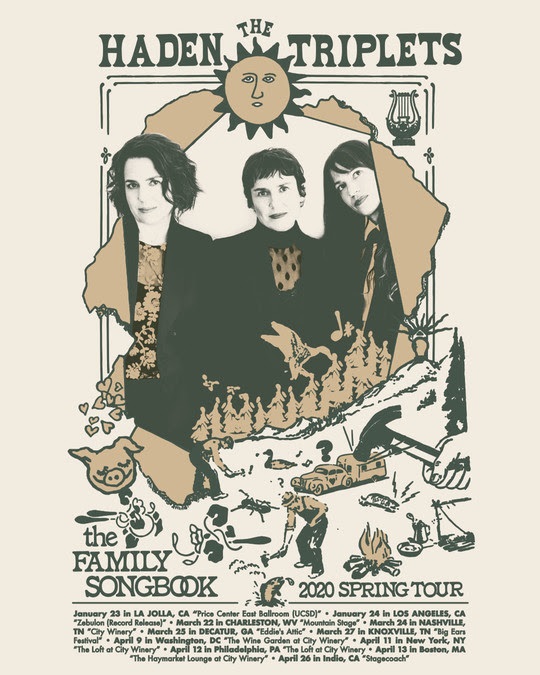
The Haden Triplets Share Their Musical Legacy in ‘The Family Songbook’

“No,” says Tanya Haden, to a question pertaining to the new album she and sisters Petra and Rachel have made. “We don’t yodel.”

She thinks about it a second, as her siblings, sitting to her left around a right-angle sectional in the living room of her Los Angeles home, watch her warily.

“We kind of pretend-yodel sometimes,” she says.

To prove her point, she lets out a half-hearted yodel-ay-eee, to mild laughter.

The subject came up because there are a few songs on the Haden Triplets’ new album, The Family Songbook, in which yodeling would not have been out of place. These songs — “Who Will You Love,” “Ozark Moon,” “Gray Mother Dreaming” and “Memories of Will Rogers” — were written in western style by their grandfather, Carl E. Haden, and were very likely sung by the family band he oversaw.

That included their dad, Charlie Haden, who went on to be one of the most respected and influential jazz double-bassists of the modern era, working with Ornette Coleman, Keith Jarrett and his own groundbreaking groups. But back then he was a very young (and yes, yodeling) tot billed as Little Cowboy Charlie, held up by his mom to the microphone of radio station KWTO, “Keep Watching The Ozarks,” in Springfield, Missouri.

Those songs form the heart of the album, through which the sisters evoke the spirit of that legacy, filling it out with an array of folk/gospel/country/old-timey tunes that were quite likely in the family group’s repertoire. This follow-up to the first album they did together, 2014’s The Haden Triplets, draws heavily on stories passed down of those radio days.

That comes through strongly in such chestnuts as “Wildwood Flower” (the signature song of Mother Maybelle Carter, who rocked young Charlie as a baby when the Carters and Hadens hung out together), “I’ll Fly Away,” “Flee as a Bird” and an incredibly moving version of the gospel challenge “What Will You Give,” all likely part of the old Haden Family repertoire. Connecting this to current times, there’s a beautiful version of “Every Time I Try” (written by the triplets’ older brother Josh, who leads the band Spain) and, more of a wild card, a gorgeous take on Kanye West’s “Say You Will.”

The idea was not to recreate the old days, but to interpret and pay homage. The result is a lovely set of songs full of atmosphere, with contributions from, among others, guitarists Bill Frisell, Greg Leisz, and Doyle Bramhall II, bassists David Piltch and Don Was (as well as Josh on “Every Time I Try”) and drummer Jay Bellerose, all under the watch of producer Woody Jackson.

Yodel or no, they give their grandpa’s songs a tremendously vibrant run, centering on the evanescent harmony blends that can only come from siblings (and, specifically in their case, triplets).

“Those were the most straightforward songs,” says Tanya, who notes that she tends to be the most talkative in the group interviews.

“That’s more like the hillbilly songs on the first record,” Petra adds.

Yes. But figuring out how to approach them was a bit tricky. For most of the songs on the album, there are recorded versions on which to model, some of them many versions. Not these four.

“They’d never been recorded,” Tanya notes. “So we’d never heard them. We only had the sheet music.”

They’d heard a couple of recordings by the Haden Family, though no transcriptions of the regular radio broadcasts seem to exist. After a lot of research hoping to come up with something they did find some KWTO pamphlets and flyers with photos of their ancestors. But little else.

So they made their best guesses as to how best to evoke the aura of those times, with their own sensibilities. The result on those four songs is a sort of cowgirl-harmony effect — you could almost picture the three of them in gingham and ranch hats, leaning against a split-rail fence as they sing.

They’re not sure how their father, who died in in 2014 just months after the triplets released their first album, would have assessed it, though.

“If our dad was around, he probably would have said, ‘Oh no, you don’t do it like that,’” Tanya says.

But they got a strong thumbs-up from their uncle, Carl Jr., who was also part of the family group.

“I sent Carl Jr. the CD and he said he loved it,” Petra says. “He said it brought him to tears.”

Tears also figured into the choice of Josh’s “Every Time I Try,” originally on the 1999 Spain album She Haunts My Dreams, and used by director Wim Wenders in the soundtrack of his movie, The End of Violence.

“[Josh is] such a good songwriter,” says Tanya.

Petra adds, “Our dad used to say all the time that Josh should be rich and famous through that.”

“When he wrote that song, I just related to it so well,” says Tanya. “It’s [about] a relationship that is push and pull. I just love that song. It’s so beautiful. I remember when we were listening to it for the first time. He was all excited, and our grandfather on our mom’s side was listening to it. And he just teared up. He was crying.”

“I hope we did it justice,” says Rachel.

“Because I feel like it’s got this quietness when Josh sings it,” says Tanya. “But it’s hard to get with the three of us.”

And that leads to a key question. Given their close tie to their family, given their family history and given that they’ve been singing together pretty much since the moment they left their mother’s womb: Why did it take them so long to make an album as the Haden Triplets — they were 42 at the time — and why is this only the second one?

The fact is, Petra, Rachel, and Tanya are very different people, with very different lives. Petra has in recent years been in demand as a singer and violinist with artists from Bill Frisell (a frequent collaborator and guest on the album) to the Decemberists, as well as her own covers projects in which she recreates elaborate arrangements of classic songs all with her own layered voice. Rachel, a bassist, has been in various bands, currently including the reunited L.A. indie band, that dog (which, in its original form also included Petra). Tanya, a cellist who has played regularly with Silversun Pickups and numerous other L.A. bands, is mostly active as a visual artist and the mom of two boys.

“It took us a while,” says Tanya. “Between the three of us, we’re so busy. And we’re not like, you know, take the reins and say, ‘Let’s do this.’”

She pauses for a second.

“We also tend to fight a lot.”

Petra and Rachel laugh knowing laughs.

“We all give each other wounds — flesh wounds,” Tanya explains. “It’s hard to work together and get along.”

This is, of course, no surprise to anyone with siblings. Or who is the parent of siblings. Or who knows anyone who has siblings. But those differences are key to making the harmonies on these songs that can only be made by siblings, and here could only be made by triplets. That’s the signature of this album as much as the last one. Pointedly, the album begins with a somberly atmospheric version of the American standard “Wayfaring Stranger,” sung not in harmony, but in unison, the three voices together as one.

That proved a bigger challenge than doing the complex harmonies.

“Yeah, it is really hard,” Petra says.

It happened not so much by design, Rachel starting working out a melody for herself to start.

“Then Petra automatically started singing it too,” Rachel says. “And then it was like, ‘Oh darn! It started!”

“It started to sound good!” Petra says. “It was like, ‘Wow, this sounds really pretty.’”

“And on it there are moments where we’re not singing it exactly on time, you know,” Tanya says. “But it just shows we’re human.”

“It always feels great to come home,” Petra says.

“Come home to the family,” Tanya adds. “There’s nothing like singing with your siblings. We’re all locked in and we sound great together. And I do a lot of singing with other people, but it’s with my sisters that is most special to me.”


Photo credit: Shervin Lainez

WATCH: Kirby Brown, “Justine”

Artist: Kirby Brown
Hometown: Nashville, TN (by way of New York City; Dallas; Sulphur Springs, Texas; Damascus, Arkansas)
Song: “Justine”
Album: Dream Songs EP
Release Date: July 2019
Label: Soundly Music

In Their Words: “As I have continuously sought to do with my writing, this song is an exploration of duality and juxtaposition. It’s about the courage to accept love as a gift, even against the backdrop of a dog-eat-dog barter culture. It imagines a world where the mighty Universe itself stoops to your level, cigarette in hand, to affirm who you are… to say, ‘Honey, you beat all I’ve ever seen.’ I wanted the video to visually represent a similar dichotomy, but I also wanted to give voice to someone else, to hear another story about what acceptance of self can look like — and to perhaps, with reverence and nuance, challenge us all to be more accepting of others. I threw the reins to Queen Robert and Gabriel, and I got out of the way.” — Kirby Brown, artist

“I was refreshed by the concept of God [as represented in Kirby’s lyrics] being visually represented by the duality of drag. Religious ideologies of God and wrath have historically oppressed queer people for centuries — I have felt that fear and oppression firsthand. Appearing in this video presented me with the opportunity to confront those fears while challenging a new audience with ideas about masculinity and femininity. I admire Kirby and Gabriel’s risk in taking an otherwise heterosexually-dominated music genre and infusing it with some queerness. Some people will love what we’ve done, but some won’t be ready for it. Those with open minds will make the connections within the dichotomy presented. Regardless, If God is THE almighty, then drag queens are a close second — just look at Dolly Parton!” — Queen Robert, actor

“Being asked to direct the video for Kirby’s song ‘Justine’ was a true gift, made even more special when Kirby told me his concept. He asked me, with genuine concern and empathy, if it felt appropriative to utilize this decidedly queer form of art as a cis straight man. I reminded him that, though I’m married to a woman, I am a queer person still. This was a generous opportunity for me to own my queer identity through his song and this video. The shoot itself was an embarrassment of riches. Kirby shared his song and in turn we were able to share ourselves.” — Gabriel Barreto, director


Photo credit: Jacqueline Justice

The Show On The Road – Jason Hawk Harris

This week on the show, Z. meets up with cerebral, Texas-born roots rocker Jason Hawk Harris, who has recently struck out on his own, poking one foot through the torn tinsel of a Houston honky tonk and another through a haunted, California Black Mirror episode set in a tilted sci-fi future.

LISTEN: APPLE PODCASTSMP3

While most songwriters hide behind walls and trapdoors of metaphor, Harris isn’t afraid to openly process his recent family traumas and loss on his stunning (and aptly titled) debut solo album, Love & The Dark, released by Bloodshot Records in 2019. Despite his youth, Harris has much to tell us and if this equally sensitive and swaggering sound is where the future of modern country music is headed, we’re in.

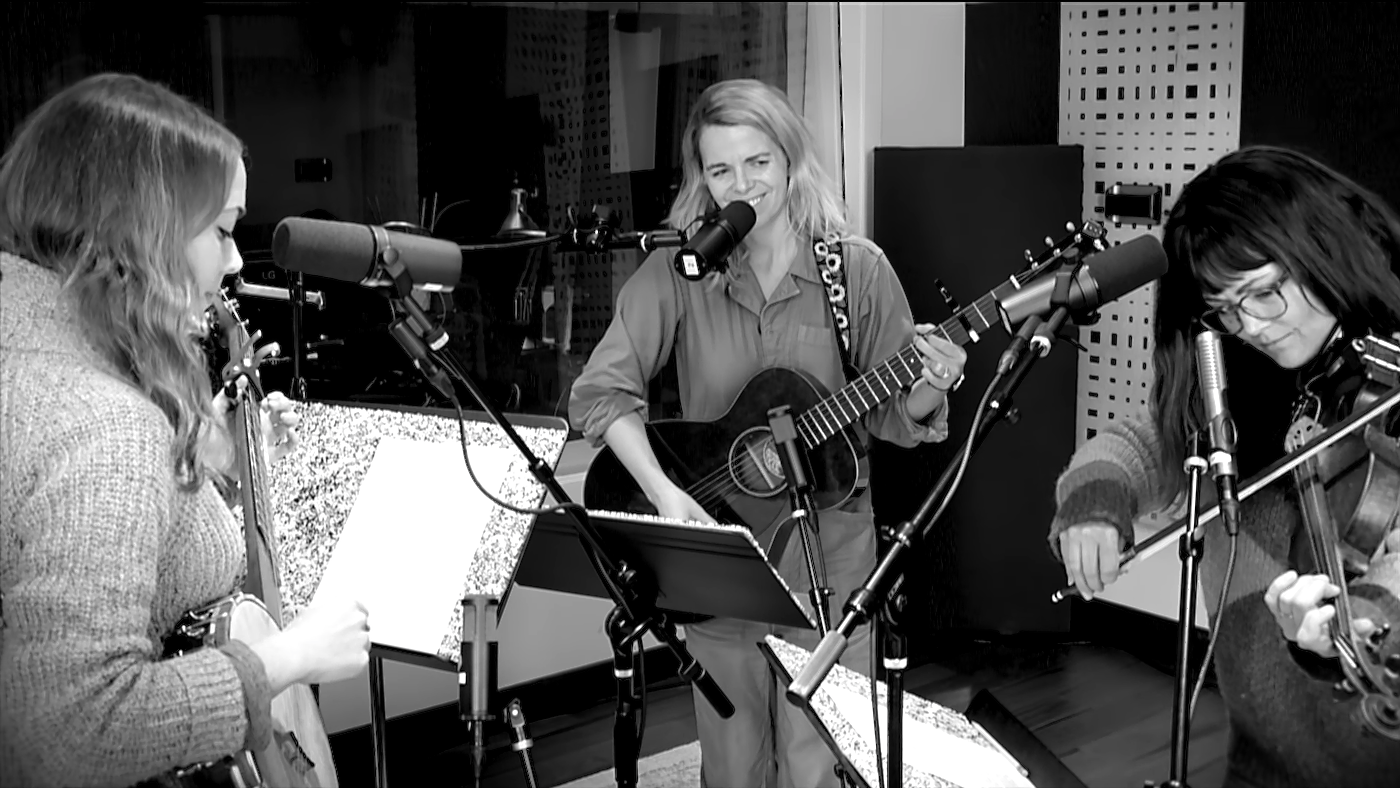
WATCH: I’m With Her Celebrate Dolly Parton, ‘Trio II’ with “Lover’s Return”

The beautiful voices of I’m With Her paid special tribute to the illustrious icon Dolly Parton in their latest visit to the studio for Live from Here. In an intimate performance, I’m With Her sing “Lover’s Return,” originally a Carter Family song, which Dolly, Emmylou Harris, and Linda Ronstadt revived only a few years before the turn of the century on Trio II. Now as a new decade is settling in, I’m With Her look back and remember, breathing new life into music that inspired so many — including Sarah Jarosz, Aoife O’Donovan, Sara Watkins, and of course, Dolly herself.

LISTEN: Watkins Family Hour, “Just Another Reason”

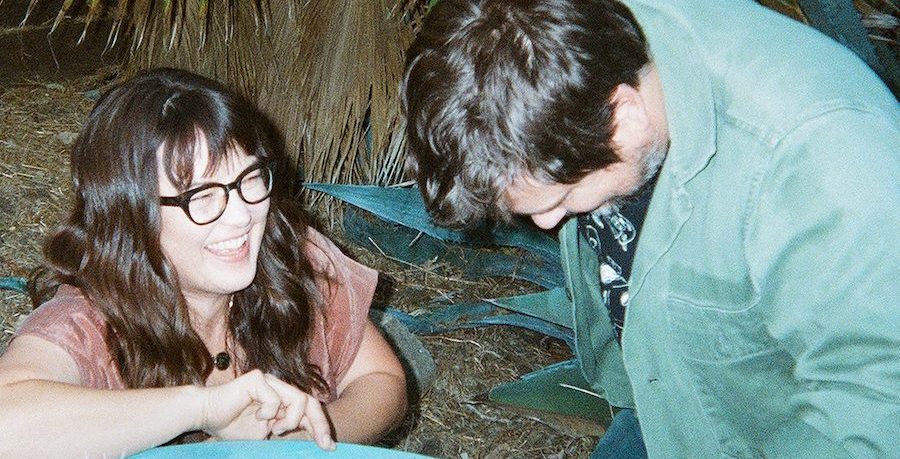
Artist: Watkins Family Hour (Sean Watkins and Sara Watkins)
Hometown: Los Angeles, CA
Song: “Just Another Reason”
Album: brother sister
Release Date: April 10, 2020
Label: Family Hour Records/Thirty Tigers

In Their Words: “It felt really good to dig into the potential of two people… the primary goal of this record became to see what we could do when it is just the two of us. The arrangements and the writing were all focused on that. Listening now, I’m really proud of what we did. These are songs that would not have come out of either one of us individually and it feels like a band sound, like this is what we do, the two of us.” — Sara Watkins