For ‘Dolly Parton’s America’ Host, It All Starts with “Muleskinner Blues”

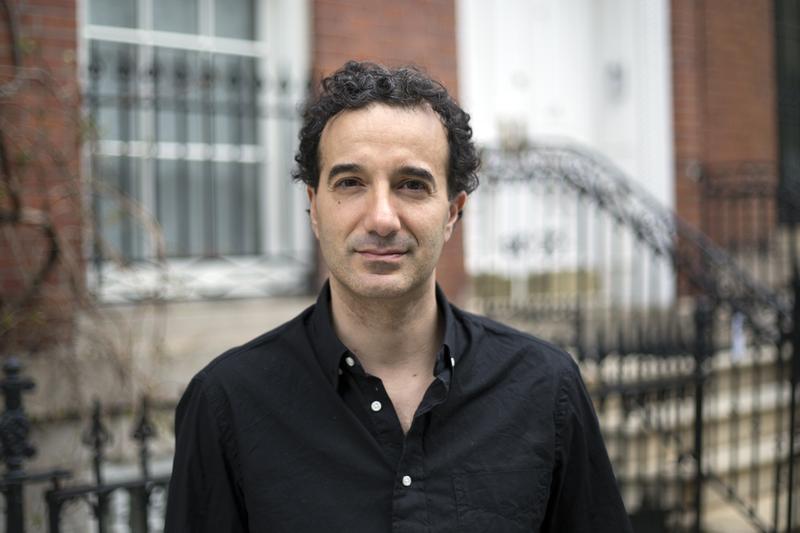
In public radio and podcast fandom Jad Abumrad’s voice is not only immediately recognizable, it’s iconic. As a host of WNYC’s hit show, Radiolab, Abumrad has explored myriad topics ranging from secret World War II missions to the social and cultural impacts of contagious diseases. He has a knack for storytelling, uncovering and contextualizing minute details that many other writers and journalists may have simply shrugged at or glossed over.

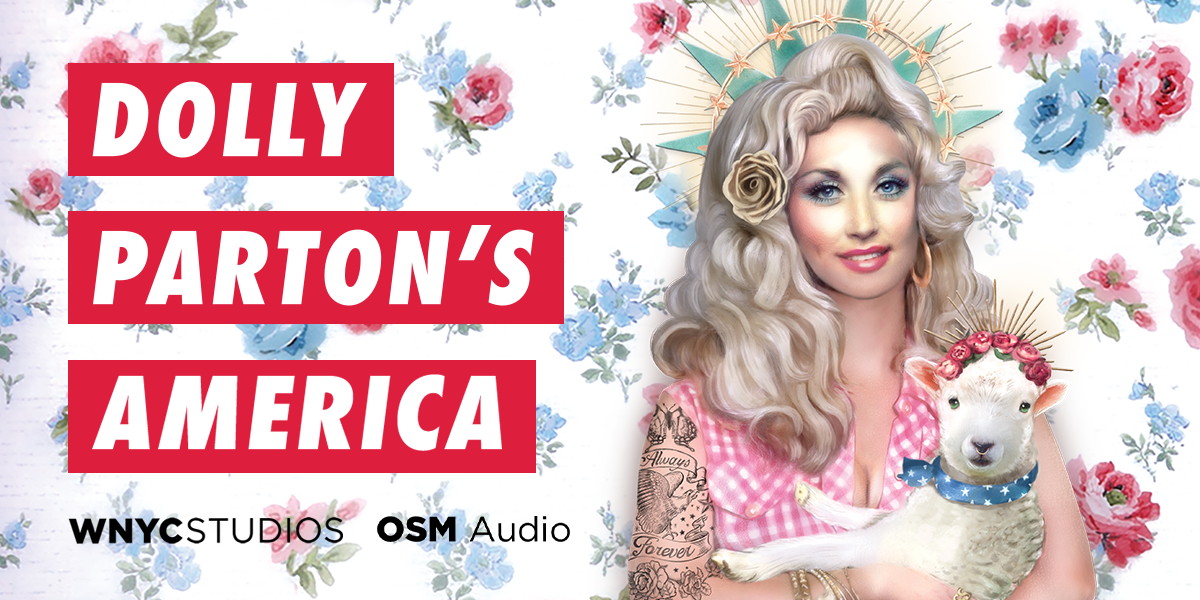
This instinct, a sixth sense that guides him to these subtle nuances that often rest undisturbed just below the surface or hide in plain sight, is focused on a new subject in his brand-new podcast (also produced and distributed by WNYC), Dolly Parton’s America. The nine-part series lives up to the oft-invoked, seldom accurate characterization of “a deep dive,” covering ground that even the most ardent Dolly experts and fans may have never trod.
A self-described “new initiate” of country music, Abumrad grew up in Nashville, but given Dolly’s standing as an almost omnipresent cultural touchstone he realized much later that during those Tennessee years he almost couldn’t see the Dolly Parton forest for the Dolly Parton trees. “I knew her music, in terms of the crossover stuff — ‘9 to 5’ and ‘Islands in the Stream,’” he admits. “But the first place I started was going back to ‘60s Dolly and ‘70s Dolly. That’s a very different Dolly.” 

Though what he found in those early decades of her career was often unexpected, it was never truly shocking or surprising, especially given the pop culture monolith that Parton has become since those years. A monolith that Abumrad describes as being able to bring people together across all manner of divides — something particularly remarkable in this current global moment. 

“You see these stories emerge of not only her changing over time, but what was happening around her in the south, in Appalachia, and in America,” he continues. “The early Dolly music and lyrics became almost like a portal that I could step through to talk about history, to talk about politics, to talk about culture, to talk about feminism. It’s all there in her music.”

And so, it’s all in the podcast. In the two already released episodes Abumrad et. al. cover topics as broad and varied as Dolly’s constantly being undervalued as a songwriter, her being “typecast” as a secondary character (a “dumb blonde”), her shift from the sad, forlorn songs of her early career to her jubilant, encouraging anthems later on, and even her own struggles with suicidal ideation.

With such an entity as Parton, a bystander might assume that any approach to unspooling the many tendrils of her vastly variable and dynamic career would be insufficient, myopic, and/or excruciatingly intimidating. Abumrad faces this daunting task with aplomb, acknowledging the many ways such a project can go awry, but not allowing that acknowledgment to dissuade him. Rather than shy away from storytelling that might open him and the podcast up to criticism about omissions or oversights or missteps, he leans into the humanity that allows for those scenarios. “This is a project where I was trying to see Dolly through other people’s eyes, so that I could understand them and understand their lives and their experiences… I wanted to understand Dolly not simply as a performer and an icon, but as somebody who’s created all this culture… Why do they love it? What do they see in it? What is it about it that calls them? I felt like that was a way to understand the country at this moment.”

BGS editor and contributor Justin Hiltner spoke to Abumrad on the phone about Dolly Parton’s America; the two took turns picking their favorite Dolly tracks, as if standing in front of a Dolly-only jukebox in a Dolly-themed dive bar. 

JH: If you and I were standing in front of a jukebox full of Dolly Parton songs what would be your “pick” if you were asked to play Dolly Parton for a room full of people? What would be the first song you would think of? 

JA: I think [with] any jukebox selection you have to disclaim: There’s no way to be comprehensive, so any selection you make is going to be one tiny sliver of a tremendous catalog of thousands and thousands of songs. 

But, I think the first one I’m going to have to pick is “Muleskinner Blues.” I think it was 1970? I think that’s right. 1970. I would play this one because that song is just… it is pure fire. The rhythm section is so badass and her on top of it, you just cannot — you have to move when you hear it. And I say this as somebody who didn’t grow up with this genre. I grew up in a house full of opera and bad hair metal. Country music was not my jam. But this is one of the first songs that when I heard it I was like, “Oh my god. This SONG.” 

The moment that she ad-libs, “I’m a lady muleskinner–” 

Oh my god, it’s so good. 

It’s so good! And I think about it all the time. When we talk about bluegrass, [people like to say,] “Oh, you know, we don’t have that many women forebears, we don’t have many [women] to point to.” I hear that [ad-lib] and I hear her telling the history of women in roots music and American music. “I’m a lady muleskinner” is like, “I’m not just singing this song that’s always been sung by men, this song is MINE now.” I love that. 

Let me follow that inspiration, because one of the things that I think about that song is where it falls in her history. She was on the Porter Wagoner show, right? She’s this crazy prolific songwriter, but she’s kind of under the thumb of this guy, who’s a legend and an amazing hitmaker in his own right, but he was kind of holding her back. At that point she’s starting to bristle. We talked to a bunch of people… I think of them as “Dolly-ologists,” these new academics who think about Dolly a lot, before this song it was a lot of sad songs, often sung from the perspectives of little girls, about something that had been done wrong to them. This is the first song that she grabs her power, in some way. 

When she holds that first note she holds it as long as she wants and the band has to follow her. So she’s like, “Y’all gonna follow me.” Then as soon as she lets go the band follows her. It’s literally her taking charge of the band. You feel that power, you feel that energy. It’s such a good song. I’ve been listening to it non-stop.

I think my first jukebox pick, what might be my favorite Dolly cut ever, is “Do I Ever Cross Your Mind” with Chet Atkins. Have you heard this? 

Yeah! 

It’s just two guitars, it’s just them. They’re kind of conversing while they play. There’s this subtle moment where Chet makes a joke like, “Why don’t you pick one, Dolly?” Then he continues to pick a solo and Dolly laughs like, “That’s not me, that’s not me!” But there’s this sort of respect in his voice, where he’s telling the listeners that she’s a picker. Like, “Don’t forget, don’t sleep on Dolly Parton. She can play guitar!” She’s the real deal. 

They mix up the words at one point, they aren’t singing the right harmonies together. Then at the end, they’re just laughing together, and Dolly sighs, “Oh, I love you Chet.” He’s like, “Oh, I love you Dolly.” I think it’s my all-time favorite Dolly Parton recording ever. And for a song that she’s re-recorded so many times, to hear it pared down like that — definitely my number one pick. 

Wow. That’s awesome. 

What’s another one for you? 

Let’s see, I’m really zoned in on ‘70s Dolly right now. I hope you don’t mind that most of my picks are going to be in that era.

Nothing wrong with that! 

I just love the moment that her songs go kinda funky and percussive. I’ve always been less of a lyric guy and more of a music/tambour kind of guy. I love from “Jolene” on when she starts adding different instrumentations to her songs. 

I have a couple of picks here… let’s go with “Joshua.” Again, it’s a song she did right after “Muleskinner” and I feel like that’s the moment when she truly becomes [a star] — if you want to look at her ascent to global superstardom, I think it begins in those few years and “Joshua” was her first number one. I just love the production of the song, I love how her voice was recorded, it’s a little bit distorted. I love how all the instruments are panned hard left or right. The rhythm guitar is over on the right and Dolly’s voice is on the left — or maybe it’s vice versa. I love the whole ‘70s production of it. 

It’s such a weird story! It’s [about] an orphan girl meeting a crazy old man living by himself in the woods and they fall in love. There’s something kind of offbeat and oddball, but also kind of poetic about it. When it modulates, it goes up a semitone, like somewhere in the middle. It’s just cookin’. I love it.

My next pick, and really this is hard, I would probably pick something off of The Grass is Blue. And I think that my favorite one is “Train, Train.” I mean, you can’t be upset at a bluegrass song about a train, for one, but also that album means so much to me. You have this woman who has conquered every genre, has hits on so many different charts, and for her to come back to bluegrass — and I always make sure to emphasize the “back” to bluegrass because she’s been based in this. Her music since day one has been bluegrass music, the mountain music, as she calls it. 

And the band on that record, the band that she toured with doing promo for that record, they were ridiculous! Chris Thile was in the band, if Chris Thile wasn’t, Sam Bush was. Jim Mills — it’s everybody. Jerry Douglas. This stacked roster of bluegrass pickers and then she takes that band to like, the CMA awards. To see bluegrass in primetime, in the mainstream like that always means so much to those of us who have always loved bluegrass first and foremost. I keep beating the drum of, “Induct Dolly Parton into the Bluegrass Hall of Fame! Induct Dolly Parton into the Bluegrass Hall of Fame!” I think it’s a no-brainer, and “Train, Train” is the perfect distillation of that for me. 

Totally! You know, it’s interesting, what I remember is being in the UK — we went to the UK to shadow her for the premiere of 9 to 5 the musical — and on the way to the show I had to be in the car [with her] posse from the Dollywood Foundation and the Imagination Library, like David Dotson and some of these folks. They all were echoing basically what you just said. That album, more than any other album of hers, is most meaningful to the people around her. I think a lot of people feel like you feel. I don’t want to say it was one of her less successful [records], but it didn’t have the crazy crossover [appeal.] That album meant a lot to a lot of people. 

Do you have another one? Maybe to close us out? One more for you, one more for me. 

Sure, let’s see. I’ll give you a choice and you can tell me which one will be more interesting. “Love is Like a Butterfly” or “He’s Alive.” 

Oh shoot, do both.

Okay, I’ll do both in one shot. So, “He’s Alive” is not the kind of song I’d ordinarily choose to put on, as a — I’ll be completely transparent — godless liberal. I come from a country that was torn apart by religion and my parents are scientists, so when we came from Lebanon my parents were like, “Don’t you damn set foot in a church!” [Laughs]

The first time I heard “He’s Alive” I got goosebumps. I hadn’t been that moved by a song in a long time. We were driving from Knoxville to Dollywood, actually, with one of Dolly’s biggest fans, and she put that song on for us. It was crazy, driving through the hills seeing signs like “Jesus saves you” and “Jesus loves you.” Then that song comes on and, as you know, the first few minutes are kind of a little bit overblown and orchestral and there’s this bombast going on, but when the chorus and the gospel chorus come in? Oh my god. That is more intense than any techno DJ drop. We were all just pinned to our seats for that. It feels like she’s alive, right? [Laughs] 

I played it for my wife and my family the other day and they were like, “You like this?” But when it gets to the chorus they were like, “Oh, I get it.” 

I’ll throw in “Love is Like a Butterfly” because when she had a string of number ones going from Dolly the “girl singer” to being Dolly the superstar, that was one [important song.] I don’t know, there’s something about her voice on that song. She’s describing this almost trance of love, she’s in love with someone and she’s weightless and entranced the way a butterfly is in the wind. The song isn’t as poetic as some of her others, but there’s something in the way she sings it that I just feel what she’s describing without even hearing the words. Something about her voice that is so… it literally flies. It’s like a butterfly. Her voice captures that. I’m so mystified by her voice on that recording. 

I think my last choice would be, “Why’d You Come in Here Lookin’ Like That,” not only because it’s just a really good jukebox song — it is a perfect rollicking country song for a night at the dive bar. But also I realized — I’m openly gay, I’m a career banjo player who happens to moonlight (during the day) as a music writer, and so I went through this whole dynamic [when I was younger] of discovering my sexuality after I had already been in this music for my whole life. I realized, “Oh wait, I don’t think I belong here. I don’t think this space is for me. I play banjo, I love bluegrass.”

Something that I really appreciate about Dolly, from long ago, before I even knew she was a queer icon — and rightly so! — I could project my queerness onto and into her art and see myself in it. There’s something about “Why’d You Come in Here Lookin’ Like That” that’s just like, “Why does this straight man have to come up in my business and remind me that he’s unavailable to me?” That’s what I hear listening to that song, and it’s funny that I could go down a list of like ten other Dolly songs that feel like that to me. That feel like the queer experience realized through Dolly’s lens. 

That’s really interesting… how so many of her songs create that space, so you can read it that way. I love that you have a list that goes beyond that. I might have to call you back and ask you to elaborate on that. [Laughs]

It was something that I really didn’t want to have this conversation happen without mentioning. I mean, even if you don’t count the rhinestones and the false nails and the big boobs, and everything. Boiled down to just nuts and bolts, and thinking of her as just a songwriter, she’s still allowing space for people to see their own experiences in her music. That’s not a very common thing in country. It is because heartbreak is all through country and everybody’s heart gets broken all the time, but other than that it really takes that sort of [approach] — well, what you’re talking about through this whole entire project. She touches on all of these issues that are sort of endemic to our culture, in a way that’s so organic that we ingest them almost without realizing it until now, in retrospect, I look back thinking, “Well of course she’s a queer icon, she’s creating space for us to relate to her music.” Even if it’s coming from such a specific place. 

She, as a songwriter like you say, has created that space. Even without having to look at the persona in any way. 

She still has not gotten her due as a songwriter, and it’s painful at times. To see that be such a big part of what you’re doing [is important.]

Yeah, I appreciate that, that’s where we start the series is taking her seriously as a songwriter, cause I agree. Robert Oermann said in one of our episodes that if she had been born two hundred years ago she’d be Mozart. (I think maybe he means more than two hundred.) Because she’s that touched by that creative spirit. That’s never been acknowledged. Bob Dylan gets it, Johnny Cash gets it, but she hasn’t. 


Photo of Jad Abumrad: Bo Jacober
Illustration: Christine de Carvalho
You Need to Listen to More Indigenous Artists

American roots music wouldn’t exist without Indigenous people. Full stop.

Just as Black voices and stories largely informed the creation of these genres of music — old-time, bluegrass, blues, Americana, folk, etc. — Indigenous voices and stories often informed those black creators as well as those of greater privilege and power. Erasure prevents many examples of these cross-pollinations and accurate attributions from being readily accessible today, but Indigenous people are still here. They continually carve out spaces for themselves in these circles and these communities that directly spawned from them, though they continue to exclude Natives today.

Even as conversations surrounding diversity, equity, and inclusion permeate the furthest reaches of roots music communities around the world, Indigenous identities and perspectives are still routinely left in the shadows.

We can do better.

Part of “doing better” is making a concerted effort, whenever we are able, to expand our perspectives to include as many Indigenous people and their vantage points as possible. So, let’s return to the idea that American roots music was created by Indigenous people. Such as it is, if one is a roots music fan, it’s quite easy to infuse one’s day-to-day with Indigenous folks, as evidenced by the following list of Indigenous artists, performers, instrumentalists, and musicians that you NEED to be listening to.

Cary Morin

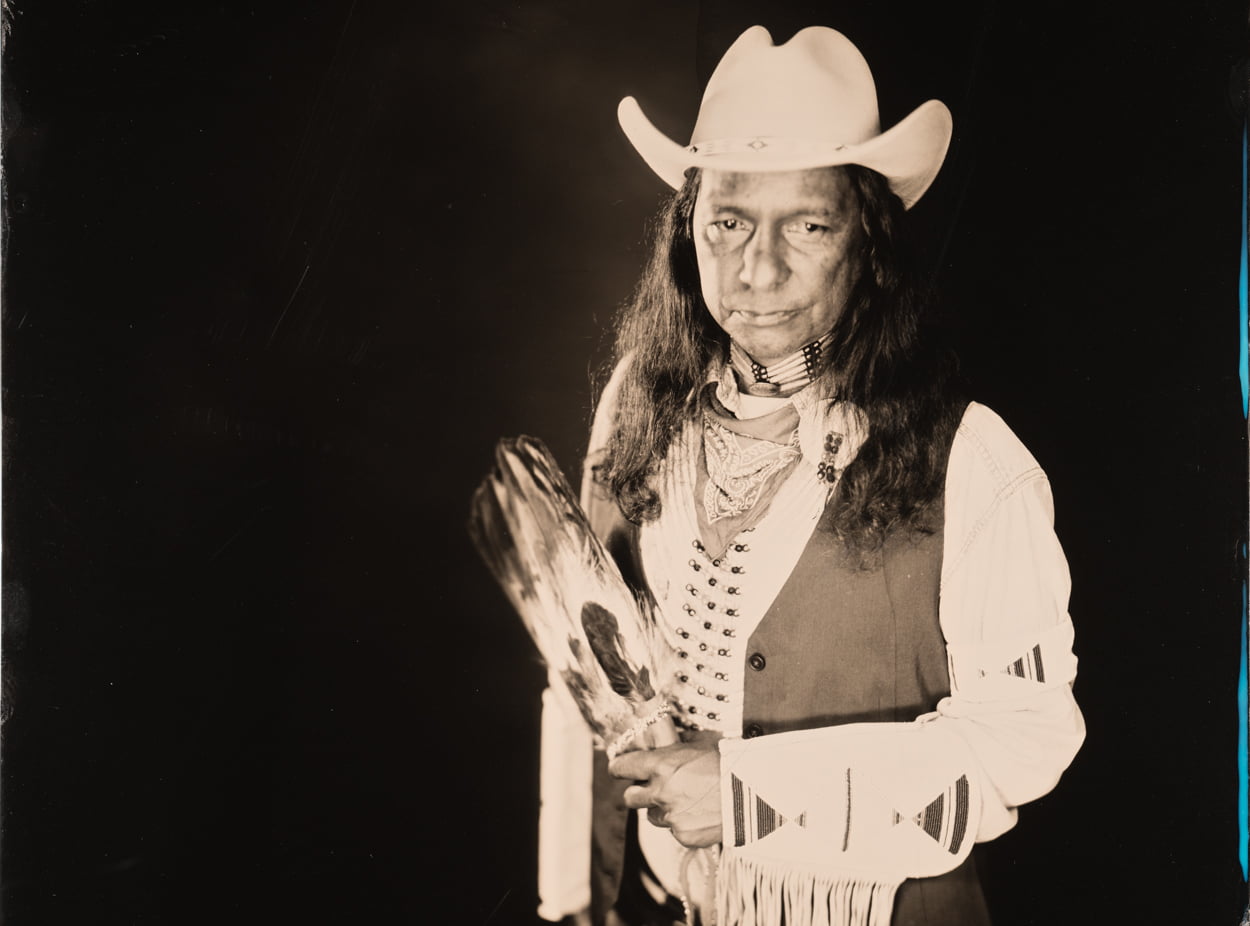
An award-winning, renowned blues guitarist Cary Morin is a Crow tribal member who has performed around the globe. “…I could say that I’m really the only finger-style Crow guy on the entire planet,” he told BGS in a 2017 interview. “That’s unique. But we all can say that, to some degree. We all have unique things that make us who we are…” He counts David Bromberg, Norman Blake, Tony Rice, and Trey Anastasio among his influences, but his sound is truly uniquely his.


Lakota John

Lakota John (Locklear) opened his set at our 2019 iteration of Shout & Shine at IBMA with a land acknowledgment and a captivating piece on Native American flute. His music nimbly toggles between old-time blues, modern acoustic blues, folk, down home country and more, while remaining firmly rooted in and informed by his Lumbee and Lakota heritage. We interviewed Lakota John just last month, in anticipation of Shout & Shine.


R. Carlos Nakai

Possibly the world’s foremost performer on Native American flute, R. Carlos Nakai began his career in music trained in classical trumpet. He’s received eleven Grammy nominations and his iconic album, Canyon Trilogy, went platinum, becoming the first album by a solo Native American flutist to ever do so.


Lula Wiles

Folk trio Lula Wiles cover a lot of the same ground as their millennial-aged string band and Americana counterparts, but with the grounding, legitimizing force of Indigenous perspective, brought to the group by bassist Mali Obomsawin, a member of the Abenaki Nation. Obomsawin and bandmates Isa Burke and Ellie Buckland spoke to BGS about Indigenous rights and the group’s approach to writing socially conscious material earlier this year.


Celeigh Cardinal 

Z. Lupetin, host of BGS podcast The Show On The Road, called Métis musician Celeigh Cardinal “the high priestess of Canadiana soul” in a February episode. Cardinal is also the first Indigenous radio personality on Alberta’s CKUA Radio Network. “The Devil is a Blue-Eyed Man” is the lead track off of her most recent album, Stories From a Downtown Apartment.


Jeremy Dutcher

A classically-trained, Canadian, Indigenous tenor, Jeremy Dutcher creates sweeping, cinematic art-folk with pop twinges, jazz undertones, and often lofty, operatic melodies. Perhaps the most striking aspect of Dutcher’s music, however, is his overt presentation of the fact that its intended audience is first and foremost his people, the Wolastoqiyik. His representations of queerness are firmly rooted in the traditions of his tribe and his language — he is one of only around 100 people who speak Wolastoq — which has no gendered pronouns.


Buffy Sainte-Marie

Academy Award-winning singer-songwriter Buffy Sainte-Marie has been touring and performing professionally since the early ’60s. Her accolades, awards, and accomplishments are vast and varied, touching almost every nook and cranny of this content in almost every medium — and as an activist, as well. In 2015 the Americana Music Association and the First Amendment Center awarded Sainte-Marie the Spirit of Americana Free Speech in Music Award.


Raye Zaragoza

Singer/songwriter Raye Zaragoza has a message to deliver through all of her music. “In the River” was written during the violence at the Standing Rock Sioux reservation protests over the Dakota Access Pipeline being constructed across Indigenous lands and sacred waters. Zaragoza explains in an interview with Billboard in 2018, “Being a young, brown girl who on one side of my family is immigrant (Mexican, Japanese, and Taiwanese), the other indigenous, I can help [but put] a voice and put words to the way so many people are feeling…”


Charly Lowry

In 2004 singer/songwriter Charly Lowry was a semi-finalist on American Idol, but over the past decade she rose to prominence with Dark Water Rising, a North Carolina-based, soulful blues band of Indigenous folks. Her solo music is entrancing and expansive, with an ethereal quality only matched by the conviction with which she sings. This performance of “Brownskin” is a perfect example.

Led Kaapana

Grammy nominee and Native Hawaiian Led Kaapana is one of the world’s foremost experts in slack key guitar, or Kī Hō’alu, for which a guitar’s strings are detuned (til “slack”) to an open chord. His playing reminds of Chet Atkins and Phil Keaggy and references blues, ragtime, and even bluegrass flatpicking at times, too — which makes sense considering he’s worked and collaborated with Chet Atkins himself, and folks like Dolly Parton, Jerry Douglas, and Alison Krauss, too.

To wrap up we should note, this is an infinitesimal, inherently myopic attempt at a cross-section of Indigenous artists in American roots music spaces. There are so so so so many more to discover. You should poke around the Native American Music Awards website for more ideas, and a historical/archival look, too.


Photo of Celeigh Cardinal: Megan Kemshead Photography

Steve Wariner’s Signature Hit? That’s Tricky

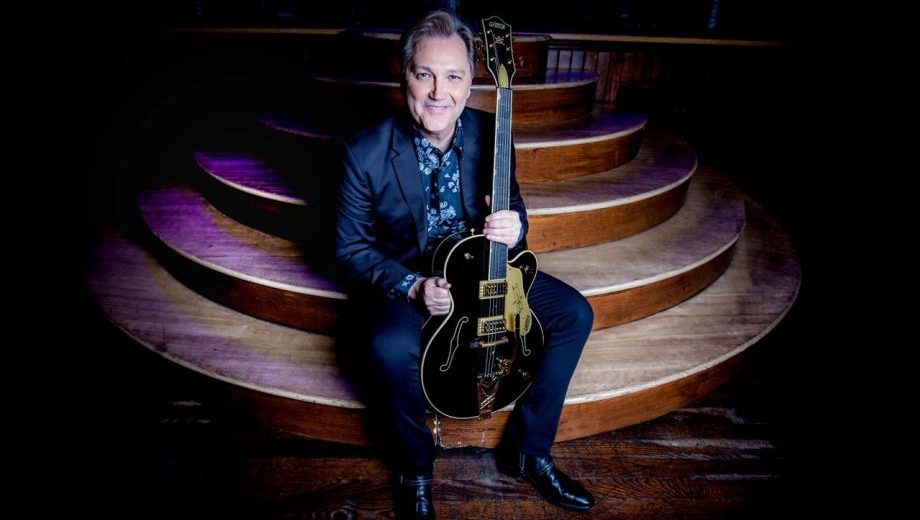
One of Nashville’s good guys, Steve Wariner will be inducted into the Musician’s Hall of Fame in Nashville this month, recognizing his versatility as a lead guitarist and as a hired hand for legends like Chet Atkins, Bob Luman, and Dottie West. He’s also been a Grand Ole Opry member since 1996, although the Indiana native’s been performing there long before receiving that honor, both as a solo artist and a sideman.

From drinking songs like “Longneck Bottle” (recorded by Garth Brooks) to weepers like “The Weekend,” Wariner’s chameleon-like ability certainly has something to do with his long career in country music. With four decades of charting singles starting in the 1970s, he has plenty of material to pull from on his Back on Life’s Highway Tour, which makes five stops in Texas within the next few weeks.

A gracious host whose collection of vintage guitars and studio gear is constantly growing, Wariner invited BGS to his home studio near Franklin, Tennessee, to reflect on a satisfying and eclectic career.

BGS: I was curious to ask you, do you think you have a signature hit?

SW: I would probably say “Holes in the Floor of Heaven,” if there was such a thing for me. I get asked about that one the most — probably that or “The Weekend.” I don’t know, I may not have a signature song, you know? A lot of artists do, they have that one. My problem is, I hopped around so much. I’d do something where somebody would cry, and then the next time I’m doing a guitar thing. Then I’d turn around and do a real country thing. And then I would do pop, like “I Got Dreams.” I never could settle on something. I always told people that would be a curse for me.

…Therefore, I don’t know if I do have a signature. With “Holes in the Floor of Heaven,” I’ve never had a song that had that impact for me, just immediately. I couldn’t even count how many letters and emails… if I could count how many times I’ve listened to people’s stories and their loss… and I don’t mind it. “The Weekend” is one that people ask about all the time, too. At shows, I cannot get away without doing “The Weekend” or “Some Fools Never Learn.”

Do you think there’s a common thread that runs through what you have recorded?

Probably not, other than I’ve tried to keep a real level of integrity, you know? I was taught early on to pick great songs if you can and try to let it always be about the song, always, and let the song always win. I was told once years ago, “Don’t cut a song unless you absolutely love it.” Because if you’re lucky enough that it could be a hit, you’ll be singing that thing the rest of your life.

This plays into the Musician’s Hall of Fame, and maybe my guitar might be the common thread. Because throughout it all, except the very early records, I didn’t play on some of those records on my own guitar. I would sit and watch other players play, and I’m thinking, “I want to be playing on my own record,” the solos anyway.

And I’ll give credit to my friend, [studio guitarist] Paul Yandell, who brought me to Chet. He went to [Wariner’s second producer] Tom Collins, and in his defense, Tom just knew me as a singer. And I wrote a little bit, too, but he didn’t know that I was a guitar player, too. Paul went to him and said, “You ought to get Steve to play on this solo.” And I think it was on “Kansas City Lights.” I always loved that about Paul, because that’s something that probably cost him a lot of work, by him saying that. Because all of a sudden I was playing on my own records from then on.

What do you remember about writing “Baby I’m Yours” with Guy Clark?

Guy Clark was amazing. I loved hanging with him. And I got to know him at that point, I got to know him really well, and then we hung out some. … We bonded and were very close after that. The main thing I remember about that day is, there was a restaurant down on Division and we went there and ate. I remember sitting there thinking, “Damn, I’m writing with Guy Clark, this is awesome.” I tried not to let him see that, but he was kind, and really open, very open.

I remember that song being more R&B, more funky, more Guy Clark. And then by the time it got to the studio… I don’t mean this in a negative way, but by the time I got with [producer Jimmy] Bowen, and all the other players in the studio, it turned into what the record is, which I’m not arguing – it’s a No. 1 record, or I think it was, or whatever it turned out to be. But it totally doesn’t sound like a Guy Clark record.

I mean if you heard the demo… which I don’t have a copy. Damn it, I wish I did. A lot of my songs I do have the work tape and it’s hilarious to go, “That’s that song? Wow.” “Longneck Bottle” is that way. If you heard my demo, you’d go, “This don’t even sound like it,” and that’s the way with “Baby I’m Yours.” The way we did it originally really sounds like a Texas thing, a Guy Clark kind of thing, and more of an R&B songwriter thing.

We talked about the span of your career, but when people look back on the ’80s and ’90s in country music, what do you hope that they remember about you, and the music that you made?

That’s a great question. I hear it a lot, “He’s a nice guy.” When I see Vince Gill, he would come up and go, “I’m the nicest guy.” And I’d go, “Dammit, no, I’m the nicest guy.” We’d get in a fistfight over it. But I don’t know, I’d like to be known as a … it makes me smile when people mention a triple threat – that I’m a guitar player, writer, and a singer. I think musicianship always means a lot for me, and I want to be taken seriously as a writer.

So I don’t know, probably those things. That stuff, I’m leaving it up to whatever somebody thinks, that’s up to them. But I guess you just want to be respected more than anything. … I always fall back to Chet. People probably get tired of hearing me talking about Chet Atkins, but he was such an important figure in my life and my career. But I watched him, and it was just his integrity. Everything he did was impeccable, and he had such great taste. And it was really respect.

The first time I recorded with him in Studio A, my first record — I love this — he had a suit and tie on, and it was like the old days: a black suit with a little white shirt and black tie. It was like going to the office, you know? When he walked into Studio A with charts in his hand, all the players got up from their posts and followed him like the pied piper over to the piano. And they all knelt down and got around him, and Chet stood in the middle. That’s not even thought of in a session these days. That’s not even close to that. I know times move on, but I’m so glad I was in the middle of that for a little bit anyway.

I guess where I was going was, I watched the way people revered Chet, and the way he was so respected. They hung on every word he was saying and his vision of, “Here’s what we’re going to do, we’re going to make this record,” and I love that. It was so good watching that. And I think respect is the main thing, just respect for what you do. Hopefully people would say that I made really good records, you know?


Photo provided by Adkins Publicity

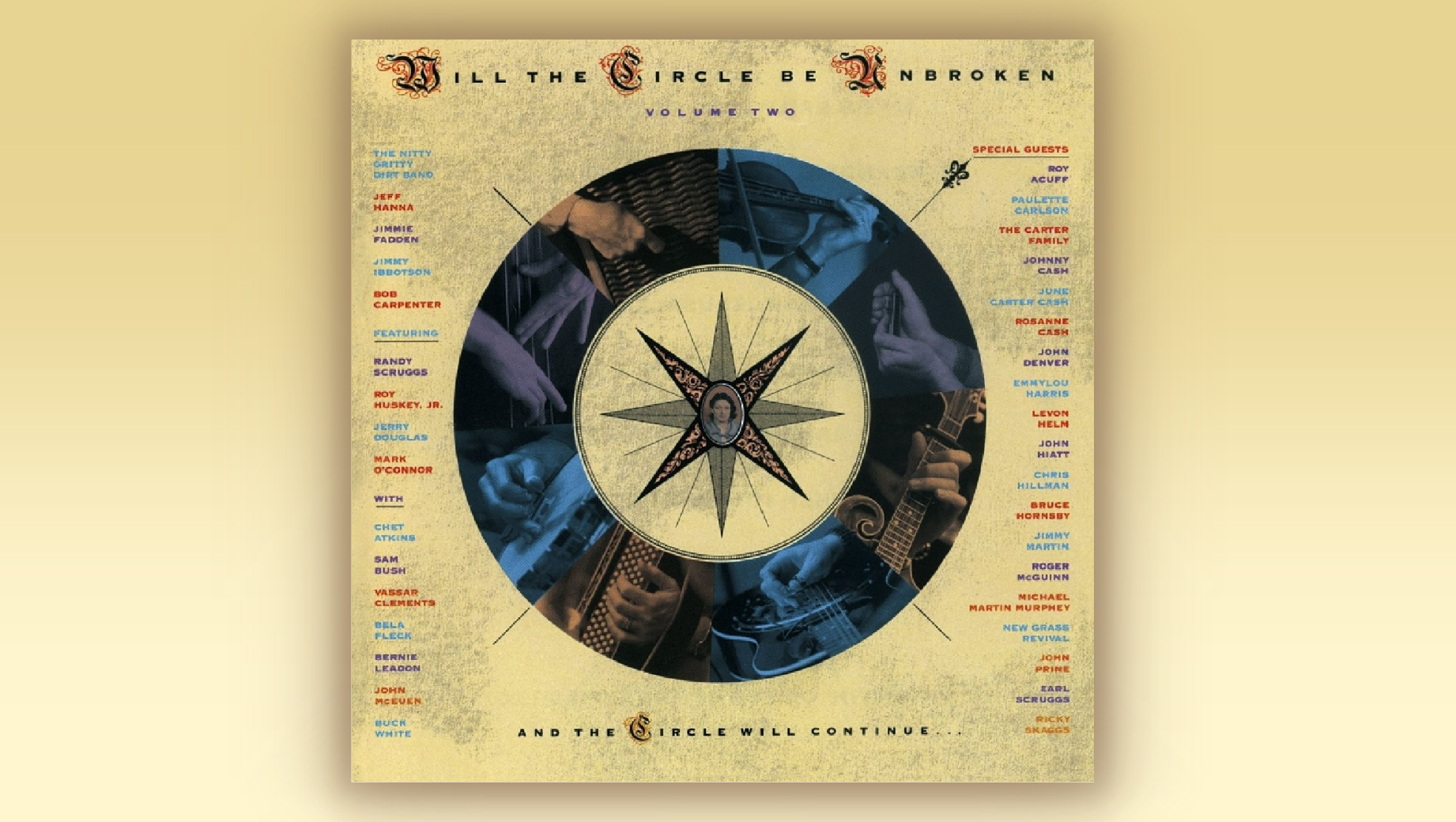
Nitty Gritty Dirt Band’s Jeff Hanna Reflects on ‘Will the Circle Be Unbroken, Volume Two’

Why mess with a classic? That was the original thought from a few members of Nitty Gritty Dirt Band when the idea was presented to record a sequel to their seminal 1972 album, Will the Circle Be Unbroken.

However, with encouragement from one of the group’s biggest fans, the legendary June Carter Cash, the recording sessions for Will the Circle Be Unbroken, Volume Two commenced in the winter of 1988, with a cast of accomplished musicians who are now considered cornerstones of Americana music.

Often referred to simply as Circle 2, the acclaimed project was released in 1989 and went on to win three Grammy Awards and a CMA Award for Album of the Year. To commemorate its 30th anniversary, Jeff Hanna shares its back story with the Bluegrass Situation.

Editor’s Note: Jeff Hanna and guest Sam Bush will participate in a screening of clips from a documentary film, The Making of Will the Circle Be Unbroken, Volume Two, at the Country Music Hall of Fame and Museum in Nashville on Wednesday, September 11 at 11 a.m., during AmericanaFest.

BGS: Can you explain why Circle 2 is such an important album for the band?

Hanna: It’s important in our history because at that point, we were no longer just the kids. We were all in our early 20s when we did the first Circle record, making music with those revered folks. And so we had a different point of view, somewhat. Here we were in the midst of our mainstream country career, and we still revered the first album.

The way we viewed Circle 1 was like something untouchable – just leave it. It is what it is. As time went on and as that project matured, it mattered a lot to a lot of people, including us. So we resisted the concept of doing another Circle record. Especially me, Jimmy Ibbotson, and Jimmie Fadden. Bob Carpenter was like, “I didn’t get to play on the first one! I wasn’t in the band! I want to do it!” He was pretty excited about the concept, and Chuck Morris, our manager at the time, brought it up a bunch. But we waited a while, and by the time it came out, it was 17 years between the releases.

When did you decide to move forward with it?

We were on tour with the Johnny Cash show, which included the Carter Family, and we were in Europe. I think it was in 1988 in Switzerland. June came into our dressing room — and she would visit us a lot. She was really sweet and she loved to talk about Mother Maybelle, and how much she loved us. She called us “them dirty boys.” I love that. And at the end of the conversation, she said, “You know, if you all ever thought about doing another Circle record, John and I would really love to take part in it.”

That was the tipping point. If you have that sort of endorsement from folks we idolized, and who were so important in the history of this music – and music in general — we thought, “Well, there you go.” That’s what we did. The winter of ’88, we started making calls.

How did you come up with the guest list, so to speak, for this one?

Our approach was to delve more into the next generation of folks, like New Grass Revival, and certainly a lot of our singer-songwriter buddies, like Bruce Hornsby, John Hiatt, Rosanne Cash, and John Prine. We had only recorded a little bit with Emmylou Harris and we really wanted to work with her. And we were really excited to do a record with Levon Helm. That was one of the highlights.

I think the collaborative spirit of this album really shines through when Bruce Hornsby is playing “Valley Road” with you guys.

I’d never met Bruce Hornsby but I was a huge fan of his music. I heard “Every Little Kiss” on the radio and it just blew me away. But then I’m reading an article in a magazine, and it was a “desert island disc” thing, talking about the records that you’ve gotta have, and he mentioned Will the Circle Be Unbroken. It was like, WOW! So I somehow got his phone number, I called him up — cold-called him — and he said, “Oh yeah, man, I love that record, I love you guys.” I said, “You’ve seen us play?” He said, “Yeah, my brother and I sneaked in.” We were playing a college show in his hometown, and those guys started carrying amps into the venue. We were unloading the truck and they started carrying gear in, and ended up sort of hiding behind the bleachers, and when the show started, came out and watched the show.

We hit it off right away, so there’s a direct line to Circle 1 right there. And when we were putting together our core band for the sessions, of course we included our buddy Randy Scruggs (who was on the first Circle album), Roy Huskey Jr. (whose dad Junior Huskey played on the first album), Jerry Douglas, Mark O’Connor… It was so much fun walking in and making music with those guys every day. Chet Atkins is on a track and played one of my guitars, which I liked. I know I’m never selling that guitar.

One of the coolest tracks on there is “You Ain’t Goin’ Nowhere.” How did that come about?

We brought in Roger McGuinn and Chris Hillman, because the Byrds and the Flying Burrito Brothers were so important to us. The Byrds had done Dylan’s “You Ain’t Goin’ Nowhere,” but they wouldn’t play it on country radio, so we cut a version of “You Ain’t Goin’ Nowhere” with Roger and Chris, and it became a Top 10 country single, which we thought was cool redemption. We were really excited about being on the track with them. We still play that tune now and again. That’s one of our favorites. We’re really happy to have a good excuse to play it, because for years we played it in sound checks anyway.

It’s been 30 years now, but what do you remember about how Circle 2 was received upon release?

Perhaps because we had the platform of being a hit country band right about then, the label promoted the heck out of the record when it initially came out. And it had hits on it, that’s the other thing. Circle 1 didn’t really have any radio impact, whereas Circle 2 had “You Ain’t Goin’ Nowhere,” and we had a song called “When It’s Gone” that was a Top 10 single.

It’s a significant record and it’s funny, having been there from the get-go with this band, and having that first Circle record so deeply ingrained in my DNA, I sometimes forget how important Circle 2 was to a lot of folks. I’ve had more than one songwriter and musician tell me, “That’s what got me into you guys.”


BGS Presents 30 Years of ‘Will the Circle Be Unbroken, Volume Two’ at Americanafest

What started as a music video concept for the Nitty Gritty Dirt Band evolved into a 1989 full-length film documenting the all-star recording sessions for Will the Circle Be Unbroken, Volume Two. Nitty Gritty Dirt Band co-founder Jeff Hanna will present a rare screening of clips from The Making of Will the Circle Be Unbroken, Volume Two at the Country Music Hall of Fame and Museum on September 11 at 11 a.m., during AmericanaFest.

Hanna will be joined by bluegrass virtuoso Sam Bush, who appears in the film and on the album with New Grass Revival. Craig Shelburne, managing editor of the Bluegrass Situation, will moderate.

Produced by Joanne Gardner Lowell and Rosanne Cash, the film captures the band in the studio recording their groundbreaking project. Select clips will show performances by Johnny and June Carter Cash; Jerry Douglas; Emmylou Harris; Bruce Hornsby; Jimmy Martin; New Grass Revival; John Prine; Earl Scruggs; Randy Scruggs; Ricky Skaggs; and others. Will the Circle be Unbroken, Volume Two won three Grammy Awards as well as the 1989 CMA award for the Album of the Year.

Three decades after its release, Joanne Gardner Lowell offered some keen perspective on the film through an email interview with the Bluegrass Situation.

BGS: What was it about the Nitty Gritty Dirt Band and this project that made it a compelling film subject for you?

JGL: ACME Pictures was contracted to make a video for the title track. This is pretty common. We signed the contract and when I asked what day during the multi-week schedule this song would be done, Jeff said, “All of them.” When I realized we would need to go to the studio every day for weeks to get this song, it seemed obvious we should shoot the whole experience — so we did.

How would you describe the mood, or the vibe, in the room during these sessions?

It was joyful in the studio. Each day the musicians came so ready to create and collaborate. We were honored to be in the room with it all. Being live made everyone really stay on top of their game. It felt like a family reunion on many days, and there was always a lot of humor and laughter. Our primary director, Bill Pope, captured so much of the mood with his amazing camera work.

It was also shot during the holiday season, so people were in a happy mood. Emmylou brought a handmade Christmas ornament you can see hanging in some of the shots. And my partner Rosanne Cash came into the studio with her newborn Carrie. I don’t think she was even two weeks old. Rose handed her to me and I held her tight while running sound for the track Rose and John Hiatt did together. Carrie never made a peep!

It was crucial to capture the acoustic nature of these sessions. What was your audio setup like?

I had a simple Nagra tape recorder just to have an edit track to work from and to record interviews. I had a single mic that I would place in the room to catch all the conversation, as some of that was obviously not recorded for the album and we wanted it for the film. Although, during our interview with Emmylou Harris, the band loved what she said so much that those comments ended up on the album.

Do you remember any particularly fun encounters with the legendary musicians in the film?

We caught some great moments and they’re in the film. The ending of a fast-paced “Valley Road” with Bruce Hornsby was a favorite. The band all stops for a second to look at each other — then they realize they got it and they all start shouting and cheering.

After Jimmy Martin’s session one day, he went out for some cocktails and came back into the studio while Ricky Skaggs was working. We captured Jimmy (feeling no pain and wearing a coonskin cap) as he and Ricky ripped into a spontaneous version of “The Old Crossroads.”

This film was Mr. Acuff’s last filmed appearance and that was special. I have to say — each time the song “Will the Circle Be Unbroken” was performed, it was magic. Every single time.

The Dirt Band did a masterful job of keeping things upbeat and fun for everyone. Every one of them was so engaged in each song — and brought individual songs or artists to the project. They were like marathon runners, giving their all each day and then coming back the next day to do it again.

What were some of the hurdles you faced in the film’s creation and release?

The very existence of this film was due to a California record company exec telling me that we would be in breach of contract if we didn’t deliver this video for the agreed-upon budget. When I explained this “song” was going to require us to shoot for several weeks, this delightful woman didn’t seem to care. I think it was meant to be — we HAD to make it work.

Bill couldn’t figure out how to light the dimly lit studio without a pile of light stands in every shot — and in everyone’s way. So, he created a giant light box and hung it from the ceiling. You don’t see a single light stand.

We didn’t have any money to sync up the video with electronic slates or fancy editing gear. I moved a cuts only 3/4″ video editing system into my office and had to sync the shots up by eye more than once… if we didn’t have an audio track running. Watching Mark O’Connor’s fingers or Earl Scruggs’ fingers to make sure you lock each note made for some very long nights. Those fingers were flying!

Rosanne and I sold 50 percent of the film rights to a company who released it on home video. Unbeknownst to us, the entire archive of that company was acquired by another company that isn’t interested in letting us buy the remaining rights, so we remain in limbo.

What do you hope a modern viewer will experience when watching these clips 30 years later?

This is a piece of living history. The first Circle album influenced every single musician I know. Watching the creation of the second — especially thirty years on — reminds you what kind of power music has.

It makes me sad to count off how many artists from this project are gone now: Johnny Cash, all of the Carter Sisters, Earl and Randy Scruggs, Vassar Clements, Chet Atkins, Levon Helm, John Denver, Roy Acuff, and dear Roy Huskey, Jr. In this world of instant technology, I think this 30-year-old film puts the viewer right into the studio for a front row seat at this amazing recording. I’m very proud of it.

LISTEN: Molly Parden & Hollow Hum, “Why Worry”

Artist: Molly Parden & Hollow Hum
Hometown: Nashville, Tennessee
Song: “Why Worry”
Album: Why Worry: A Collection of Covers
Release Date: June 28, 2019
Label: Independent / Distribution with Tone Tree Music.

In Their Words: “The essence of Mark Knopfler was introduced to me back in 2012 and I wish I could remember which of his songs I heard first. I had no knowledge of Dire Straits or their international stardom, absolutely none. Only this deep, gentle voice with a backing band that sounds like it has been there since the dawn of time, a sole guitar, smooth as butter with intermittent growly tone to let you know Mark wields power, but uses it ever so mercifully. His songs are hymns to me. ‘Sailing to Philadelphia,’ which is basically a musical history lesson featuring James Taylor, nearly brings me to tears. ‘Back to Tupelo’ and ‘Our Shangri-La’ are in the vault, the one that I send to space and then it comes back to my children 50 years later with 10 Things That Mommy Needs You To Have. But this song, ‘Why Worry,’ is a Dire Straits tune off of Brothers in Arms (1985) — I first heard it as a duet between Emmylou Harris and Mark — that has been covered by the Everly Brothers, Chet Atkins, and now I can proudly add my name to the list. Featured on this version is London’s resident guitar aficionado Matt Park. I discovered that he and I share a mutual admiration for The Knopf whilst we together were on tour with Sam Outlaw in the summer of 2018.” — Molly Parden

“This song was new to me, Molly played it for me once, and of course I wanted to cut it with her. It’s just one of those timeless songs that brings an immediate exhale and sense of comfort. The simple arrangement lets the vocal sit out front and really communicate the message of the song, which I love. Because it’s not such a well-known track, I hope some new ears discover this beautiful tune.” — Hollow Hum


Photo credit: Marcus Maddox

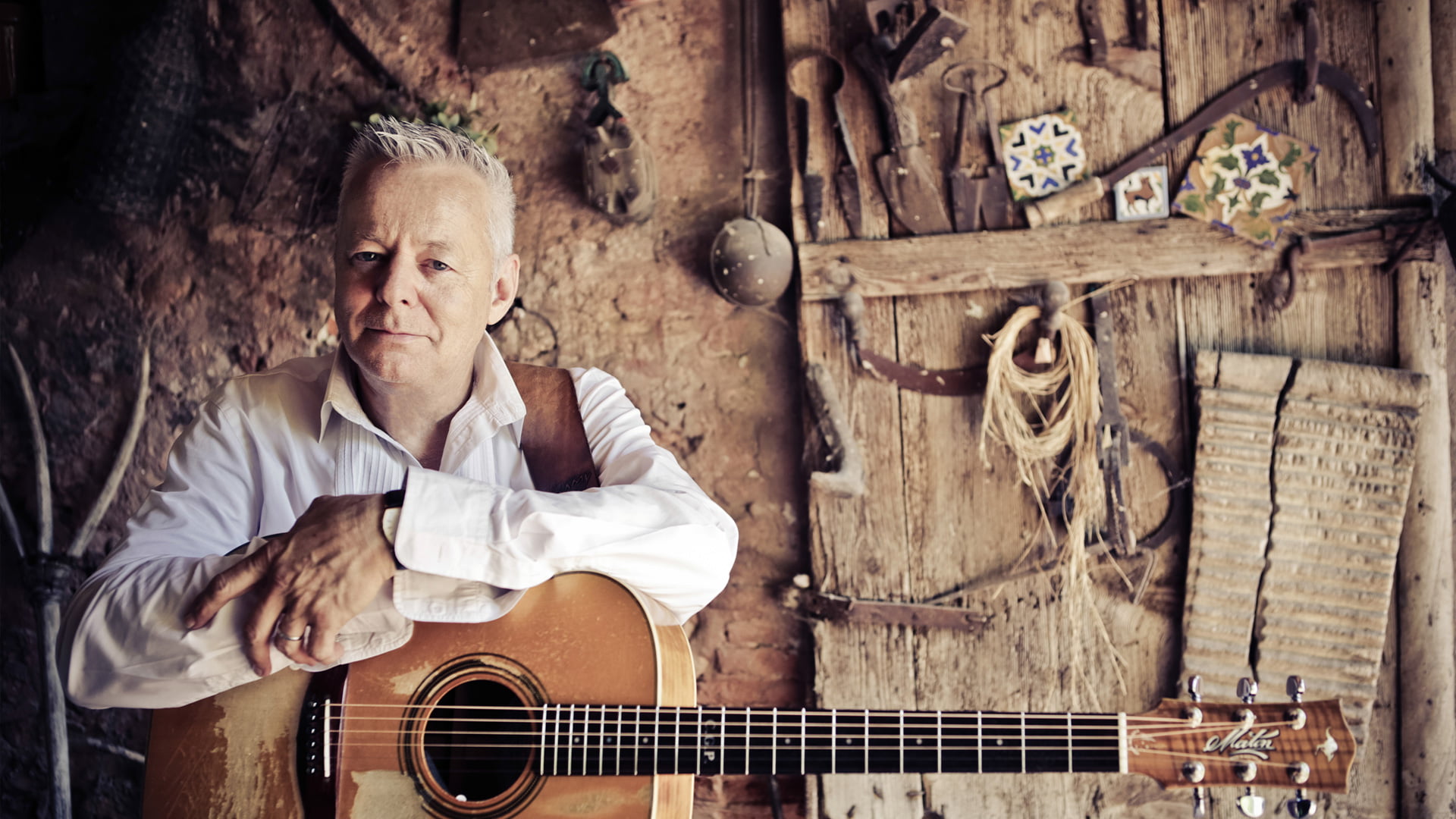
Tommy Emmanuel, ‘Windy and Warm’

Guitar players are a competitive lot. You may be imagining your local music store filled with the sound of budding guitarists trying to impress their friends — and you and everyone else — with their cover of [enter one iconic “Blackbird” or “Stairway to Heaven”-like tune here]. Or you may be remembering those workshops you’ve attended where an audience member asks a “question” that’s a pointed answer to another audience member’s previous question … after the instructors already gave their advice. Or perhaps you’re having a flashback to that time a picker approached you and asked what make and model of guitar you play, but in that special way that is already judging you for your gear choices before even hearing your answer.

Our Artist of the Month, Tommy Emmanuel, is truly a guitar player’s guitar player. His audiences include some of the most dedicated, diehard, fanatical fans of the instrument. But you’ll never find him falling into the my-horse-is-bigger-than-your-horse routine; he even gives away his trade “secrets” freely in lessons and at workshops and camps. On his latest album, Accomplice One, he shares the limelight with collaborators and living legends, giving equal footing to and creating a solid foundation for each. It’s refreshing to watch someone with an undeniable, world-class talent direct focus to those he admires, rather than himself.

In this video of “Windy and Warm,” he does just that, paying tribute to Chet Atkins, who has inspired and influenced his playing since the very beginning. You can hear the awe and appreciation in every note. And there isn’t a single competitive pick stroke.

Tommy Emmanuel: Swinging for the Fences

There’s a moment at the beginning of “Saturday Night Shuffle” — one of 16 duets from Tommy Emmanuel’s new album, Accomplice One — where the song’s guest, Jorma Kaukonen, turns to his host and says, “You’re a badass cat, man.”

It’s a nod of approval from one guitar great to another. Accomplice One is filled with those unplanned exchanges: a shout of encouragement here, a surprised laugh there. Raw and real-sounding, the album feels like a jam session between friends, mixing off-the-cuff solos and first-take performances with the virtuosity of an instrumentalist who’s been doing this for a long, long time.

Emmanuel began touring more than a half-century ago, hitting the Australian circuit as the youngest member of a family band. Now 62 years old, he still plays 300 shows a year. He doesn’t use a pick. He doesn’t use a regular amp. In a world whose most well-known guitarists — Eric Clapton, Jimmy Page, Chuck Berry, and the like — inevitably tend to be electric players, Emmanuel has remained true to the acoustic guitar. He’s the king of the unplugged.

With appearances from 20 guests, Accomplice One shows just how far the king’s empire extends. Americana poster boy Jason Isbell joins Emmanuel on the album’s opening track, a soulful reimagining of Doc Watson’s “Deep River Blues.” Bluegrass heavyweight Jerry Douglas stops by to swap solos on Jimi Hendrix’s “Purple Haze.” Mark Knopfler, Ricky Skaggs, and Rodney Crowell all make their own cameos, too. Recorded in studios across the world, these songs nod to the core ingredients of American roots music — Emmanuel’s bread and butter — without losing their global perspective.

“I grew up with music that came out of America more than the music that came out of Australia,” says Emmanuel, who was raised in New South Wales. “It was a combination of sounds that were coming out of Nashville, Detroit, Chicago, Kansas City, and New Orleans. I love all kinds of music, but that’s still the stuff that really touches my soul.”

Those childhood influences resurface on Accomplice One. “Saturday Night Shuffle” flips the Western twang of Merle Travis’s original on its head, sounding instead like the funky work of a New Orleans jazz band. Madonna’s dance-pop hit, “Borderline,” is turned into a lilting folksong with help from Amanda Shires. Emmanuel trades country licks with banjo phenom Charlie Cushman and blues-rock guitarist J.D. Simo on “Wheelin’ & Dealin’,” then bounces between Celtic shuffles and barn-burning bluegrass on his Clive Carroll collaboration, “Keepin’ It Real.”

It’s during “Djangology,” though, that the album truly goes international, with Emmanuel and his guests looking far beyond the Lower 48 for inspiration. A tribute to Django Reinhardt’s laid-back, jazzy phrasing, the song was recorded alongside Frank Vignola and Vinny Ranioloa in Cuba, during the middle of the country’s first-ever guitar camp.

“I was teaching 120 international students — everyone from 18 years to 80 years — for four days, and playing shows at night,” Emmanuel remembers. “One of the days, we went to the studio where they recorded Buena Vista Social Club. All the original microphones were there. We brought in some plastic chairs, and all the students sat in the main orchestral room. We had mics set up in front of us, and we worked out the arrangement in front of the kids. Then we recorded it twice and played it back, so they could hear it. The second take was the best, so that was the one we kept. It was very simple.”

Remember Santana’s Supernatural and its biggest hit, “Smooth,” which paired the guitar legend with Matchbox 20’s Rob Thomas? That song was inescapable for years, but it never truly sounded believable. Did anyone actually think Santana and Rob Thomas hung out together? Could anyone imagine them co-leading a guitar camp in Cuba?

That’s what makes Accomplice One so compelling: It’s believable. There’s fret noise on these tracks. There’s studio chatter between the musicians, all of whom are fans of one another. During the Cuban recording, you can hear someone tapping a foot on the studio floor, unable to resist keeping time with the music. The imperfections that would’ve been bulldozed by Supernatural‘s high-gloss production are, instead, put on a pedestal and celebrated by Emmanuel, whose album emphasizes feeling and intention over perfection.

That said, there’s a good bit of perfection here, as well. Emmanuel attributes his refined playing to a lifelong Chet Atkins obsession, which brought him face-to-face with — and eventually under the wing of — his idol during Atkins’ later years.

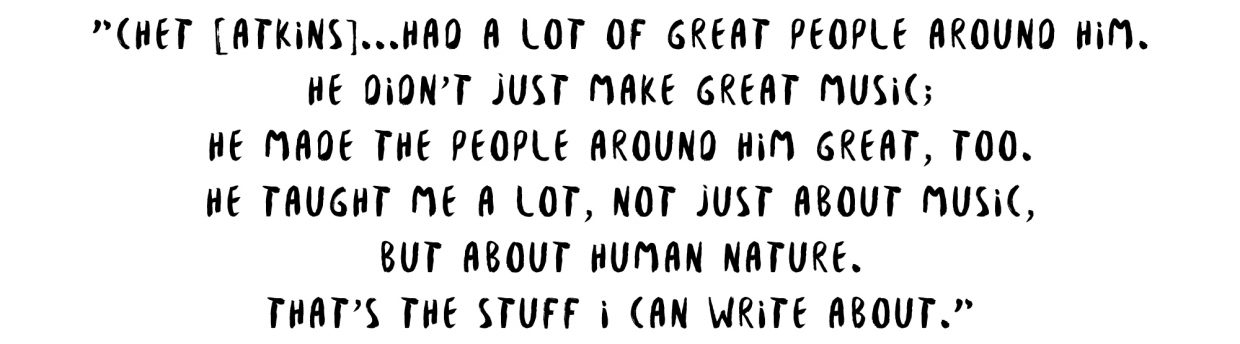
“Chet lived a life with a lot of great experience,” says Emmanuel, who became friends with the guitarist in 1980. “He had a lot of great people around him. He didn’t just make great music; he made the people around him great, too. He taught me a lot, not just about music, but about human nature. That’s the stuff I can write about.”

Nearly two decades before they met in Nashville, Emmanuel first head Atkins on the radio in 1963.

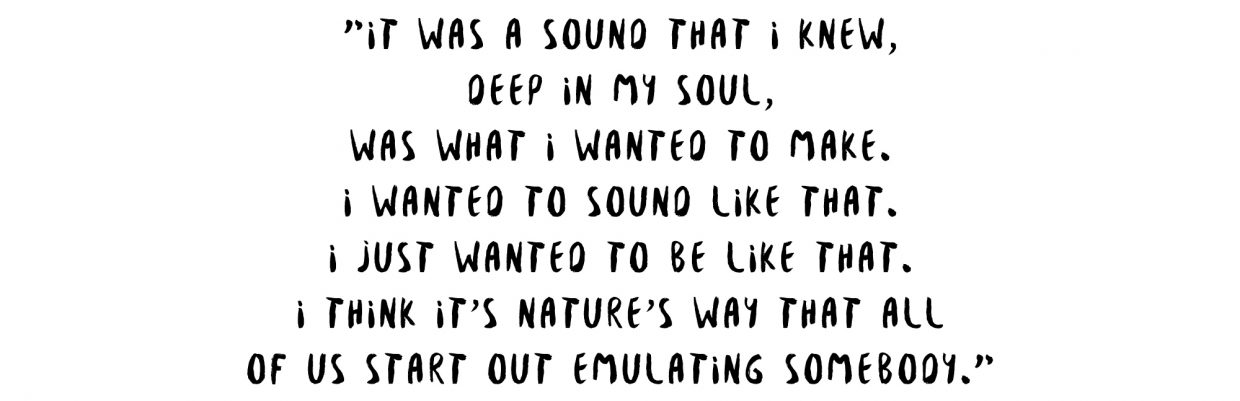
“It was a sound that I knew, deep in my soul, was what I wanted to make,” he remembers. “I wanted to sound like that. I just wanted to be like that. I think it’s nature’s way that all of us start out emulating somebody.”

If Emmanuel’s approach to the guitar began as emulation, it’s since grown into something signature. Like a one-man band, he’s learned to simultaneously pluck out a song’s melody, underscore it with a walking bass line and beef up the mix with accompanying chords. Listening to “Deep River Blues,” it’s easy to assume that Emmanuel and Isbell are tag-teaming the song’s guitar duties, filling its verses with blue notes and densely stacked chords. But that’s Emmanuel playing alone, with Isbell opting to leave his guitar in the case and, instead, channel his inner soul singer.

“When Jason started to sing that song, you’ve gotta imagine the chicken skin I got,” says Emmanuel, happy to refocus the spotlight on Isbell’s voice rather than his own playing. “I was doing the thumb-picking Doc Watson part and, when you add his voice to mix, it’s totally a soulful experience. It’s real, and that’s what I love about playing music.”

The feeling appears to be mutual. Accomplice One is filled with the sympathetic interplay of musicians who want to be there and that’s what elevates it above the usual catalog of guitar-heavy duets. Filled with covers, originals, (“Rachel’s Lullaby,” a Beatles-inspired song written for Emmanuel’s baby daughter, is one of his most compelling compositions in years.) and top-shelf playing, the album is for guitar nerds and casual Americana fans, alike. It’s the sound of a roots music lifer who, a half-century into the game, is still swinging for the fences.


Lede illustration by Cat Ferraz.

Cary Morin Picks His Piece

“Let there be no question of who’s wrong and who’s right. There should be no compromise. We all stand up and fight in the dawn’s early light,” Cary Morin sings on “Dawn’s Early Light,” written in support of the Standing Rock Sioux Tribe during last year’s protest of the Dakota Access Pipeline.

“A friend of mine was doing a show [at Standing Rock with the Indigo Girls] and she had asked me, just in passing, if I would write a song for the Standing Rock movement,” Morin explains. “I felt like there were a lot of people writing songs about that, at that time, and I wanted this one to be a little different and stand out a little bit, so it was really more concentrated on the activism, in general, and not so much Standing Rock, but just the whole idea of people coming together to promote clean water.”

“Dawn’s Early Light” is one of the poignant original songs featured on Morin’s latest album, Cradle to the Grave. In order to lend his perspective, Morin tapped into his experience growing up as a Crow tribal member near the Missouri River in Montana.

“When you think about roots music in America, it’s a culmination of so many things. It’s all the stuff blended together, much like the culture in this country is people from all over the world that end up here and create a unique situation,” Morin explains. “With my Native heritage, I could say that I’m really the only finger-style Crow guy on the entire planet. That’s unique. But we all can say that, to some degree. We all have unique things that make us who we are, and I’m really thankful to have grown up in the area that I did, surrounded by the people that I did.”

Morin came to the guitar by way of the piano, which he first began playing around the age of 10. When he picked up a guitar a couple years later, he was enamored. He played by ear, emulating the sounds he loved from his parents’ and brother’s record collection: Chet Atkins, James Taylor, Cat Stevens and Neil Young.

“I grew up in the ‘70s so, at that time, [there was] no Internet, there was very little TV, mostly radio. And the local music scene was really pretty folky and a lot of bluegrass, so I really grew up in the pursuit of flat-picking and [was influenced by] popular bluegrass bands at the time — David Bromberg, Norman Blake, Tony Rice,” says Morin. “I had really fantastic examples of what the music should be, but then I kind of mashed everything up into a combination of bluegrass and finger-style stuff, mostly from Leo Kottke, which turned into this thing that I do now.”

Morin moved to Colorado just out of high school and formed the Atoll, a world-beat band that he toured with for more than 20 years. “I played electric guitar [in the band], but I continued to mess around with the acoustic guitar,” he says. “Once I stopped doing [the band], my focus was really just acoustic guitar and a lot of practicing — just hours and hours of sitting around and playing. To this day, I try to play quite a lot. I’ve been introduced to open-D tuning by a friend of mine, and it took me about a year to get it going and figure out just the basics of it. But then, once I got it going, I just found it to be really fascinating, and I continue to learn new stuff all the time with that tuning. I just love the way it sounds. There’s a fullness and richness to it that I can’t seem to get out of standard tuning.”

Morin’s reconnection with the acoustic guitar led to the release of his most recent string of solo acoustic albums. Cradle to the Grave is the fourth in the series showcasing his adept fingerpicking style and warm, inviting vocals. An amalgamation of bluegrass, country, rock ’n’ roll, and blues, the album features eight original tunes and three cover songs: Willie Brown’s “Mississippi Blues” and, perhaps more surprisingly, Prince’s “Nothing Compares 2 U” and Phish’s “Back on the Train.”

“Phish is one of my favorite bands … I think that Trey’s playing has just really been inspiring and just the whole feel of the band and the approach they take. There’s so much freedom in what they do, and I used that as an example with my band, when I was rolling around playing clubs and festivals,” Morin explains. “A lot of times we’d play five songs without stopping. We’d just roll from tune to tune, and the whole point of that band was really dance music, just to provide an outlet for people to go out and have fun and dance.”

Morin uses the same ethos in his current performances touring behind his solo efforts.

“As a solo player, I can do whatever I want. I can play in whatever key. I can speed things up or slow it down, or just kind of make things up as I go along. And I really dig that freedom to just do whatever I want on stage,” he says. “Sometimes I’ll try stuff and sometimes it works, sometimes it doesn’t. But when it does, it’s a great feeling, and then it’s gone forever.”

While solo spontaneity on stage leads to such ephemeral moments, Morin has a solidified team off-stage that serves as his backbone — and they’re not going anywhere. From recording to promotion, it’s an organic, family affair.

“What I like about these four records [is that] the recordings are all done live in the studio with no headphones. I’ll sit and play these songs, and just play and play and play them, and a friend of mine has recorded all these albums,” Morin explains. “We’ve gotten together, I think, a pretty successful team with Maple Street Music and [my wife] promoting the live shows and the recordings, and Rich [Werdes] recording them, and we have the same person that’s been mastering and mixing the CDs, too. It’s just like the perfect combination of people and I like to think that I promote one guy, one guitar. People still are interested in such a thing … I just really enjoy being able to stand on stage by myself being able to do what I do.”


Photo credit: Timothy Duffy

Counsel of Elders: Jessi Colter on the Spiritual Journey

Jessi Colter’s musical legacy has long been a balancing act between “the outlaw” and “the lady,” but there’s another side — a third — that informed her identity in even greater measure than those two descriptors. The daughter of a Pentecostal minister mother — that’s right, mother — Colter (whose birth name is Mirriam Johnson) grew up in the church and held faith close to her heart. But as her musical ability crystallized and caught the attention of rock ‘n’ roll guitarist Duane Eddy, who would go on to become her first husband, and later Nashville musician and producer Chet Atkins, Colter found herself in a world that didn’t always make room for those beliefs. That became doubly so when she married singer Waylon Jennings and struggled with a love that was at turns exhilarating and at others tumultuous.

Colter has proved throughout her career that identity isn’t an either/or categorization. It’s a prism refracting various aspects of a person’s many parts depending on the light. She is all the things that helped her rise to fame in the country world — a member of the Outlaw movement (along with Jennings, Willie Nelson, and Tompall Glaser), a hit single writer for candid tunes like “I’m Not Lisa,” a gold record holder — and an equally devote Christian. The lesson was not about finding a world that made room her faith, but about making sure she created that space in herself. The rest would follow. And it did. She released the spiritual album Mirriam in 1977.

Colter returns this year with another spiritual album, The Psalms. Recorded with friend and collaborative partner Lenny Kaye, the project puts music to David’s Biblical words and follows her last studio album, 2006’s Out of the Ashes. She also used that creative momentum to pen a biography with David Ritz, appropriately titled An Outlaw and a Lady. In it, she chronicles her early days in the church, her wild romance with Jennings, and how music — through it all — pulled her disparate parts together. Songs, like the blessing of breath, connected it all to something greater.

In your biography, you return again and again to your mother and the spiritual foundation she laid in your life. What does that mean to you now, reflecting back?

I realize the importance of heritage; I am so appreciative and grateful for what I was raised in. I’ve come full circle, and I don’t know exactly what to say except the most important thing that I have in my life — with all the great experiences I’ve been given — is to keep my faith. I just feel like we’re eternal beings and what we do here is certainly part of our humanity, but our humanity will decrease and our spirit will increase, so people who don’t keep one foot in this world and one in the next are not playing with a full deck.

Speaking of heritage, your parents named you Mirriam after Moses and Aaron’s sister. Did you ever view the music you wrote as containing her prophetic quality?

No, I really didn’t. When I wrote Mirriam, it was because I was returning to my faith and it was very joyous and it was working in me. I expressed it in song. None of it has been pre-determined. The way The Psalms has come and the way this book has come, I have to believe is supernaturally designed. I really do think it has been guided by God. Who would think an album we started 10 years ago would come out right before Easter, and the book would come out at Passover? The High Holy Days! Who would’ve figured that out? I have no manager; I don’t have a booking agent. Lenny Kaye and I just collaborated and here it is.

In keeping with that sentiment, your book details how much more you received once you relinquished control and gave yourself over to a higher power. How do you let it all go? That’s so difficult when we, as humans, want to have control over something.

Oh, I know. Our self-will is our greatest enemy. This wasn’t deeply discussed in the book, but when I was about 28, I had ambition. I’d been driven and drawn to music, loved it. I’d written, continued to write. When I did “I’m Not Lisa,” I had two albums ahead. I was at this point where my ambition was really frustrating me, and I don’t know what clicked in my brain or my spirit to say, “You know what? I give it up. And if this something you want me to give up, I’ll give it up.” It hurt. I could feel it in my heart.

Right, for an ambitious person that would be painful.

Yeah, and it wasn’t six months that I had a gold record, and it was a large green light. God gives us desires to fulfill them, and I think all he wants us to do is to say, “I need you to help me on this, because I can’t do it.” It doesn’t make us less, it makes us more, because we get past ourselves to get what we truly need or want or what we’re destined for.

He made us. When the breath goes out of a human being … I saw it when I lost my dearest husband Waylon. When God’s breath went out of him, it wasn’t Waylon anymore, and where we get off that we’re in charge, I don’t even know. But it’s a problem. It’s going to be His way so you may as well line up, is my theory. But I had to learn it. It’s a lifetime project.

Part of that learning, for me, involves taking attention off yourself and focusing it on other people or issues, so it’s interesting that you open with Psalm 150, which you’ve stated holds significance for you for that very reason. How did you choose what to include and how to arrange it?

You know, we didn’t have any big design. There are some that I go back to more than others. Of course, the 23rd Psalm is possibly the greatest poem ever written.

Is that your favorite?

It’s inscribed in my home, and I walk by it at different times and I’ll see different things. “The Lord is my shepherd, I shall not want.” I’ve heard versions that replace it with, “The Lord is my shepherd, that’s all I want,” which is a very cool way to think. David was so universal; his perspective was so uplifting. Then I discovered in the Jerusalem museum — when Waylon took me to Israel — the most recently unearthed (what they believe to be) Psalm of David in the Dead Sea Scrolls. It’s David’s last Psalm and it’s a self-portrait of him. His brothers were tall and handsome, and yet the prophet came looking for him. What a story. He was a prophet, a warrior, they say a musician, a poet; he spoke priestly and he was a king. He’s very important to me because I love this man and I look forward to meeting him, but these Psalms are just magic because, if you get into them, they will read you. I’m stirred every day and I look to it for guidance. The spirit never dies — an eternal thing never dies. They’re very alive.

I think that’s language, too. That’s part of its power.

Yes, exactly.

But you’ve expressed how much writing means a great deal to you, so I found it curious that you would make an album using someone else’s words.

They will forever be David’s, but they’re in my heart, so I draw from them. It was challenging because, when I compose, I usually compose the lyrics and the words at the same time, and to have all that taken away and to try and figure … there’s no rhythm here, so it’s just free-flowing prose and very challenging for a musician, and challenging for those [musicians] Lenny added. We did it slowly. Sometimes it was two years before I’d get another song.

And it got stuck in every CD player I played! I thought, “What are these discs that Lenny was sending me?” I was forced to listen — most people don’t go around listening to themselves — and I found it would center me. I drive a lot, because I’m out from Phoenix, in horse ranch country. I thought, “You know, I’m going to try listening in different moods to see what it does,” and it does something! It will center you. It draws on your spirit and relieves your humanity. We’re a spirit man with a body and a soul, I believe. I love the way Dylan said it; he said, “Let’s strengthen the things that will remain.” The spiritual is the thing that will remain.

Moving back to some of your earlier recordings. You said “Don’t Let Him Go” represented a specific feeling for you at the time and wasn’t a feminist anthem. It does seem like women take on the work — as artists — of representing so much more than themselves. They become indicative of bigger causes. How have you tried to strike a balance between individuality and larger movements?

I’ve never thought about it. I go with the path I’m given. I’ll tell you the truth: I was born the daughter of a Pentecostal minister in a Mormon culture, and I think early on something caused my brain to understand — maybe I couldn’t interpret it with words — that I was not necessarily a part of the greater surrounding, beliefs, or whatever. All my friends were Mormon, my boyfriend was Mormon. They’re a wonderful culture to be raised in. It was a wonderfully innocent, sheltered life. It gave me more a sense of being a minority, but I never suffered from it. It only propelled me into what I was supposed to be. I don’t know how else to relate that.

You’re able to stand strong no matter the setting.

Right, but I never felt any kind of rebellion. Some of my friends were Apache Indians, most of them were Mormons, and there was never a breach between us. We didn’t go to church together, but that was about it.

So there was still a sense of community?

Right.

It feels like we’ve lost some part of that.

I know. All these differences … it’s almost like a spirit of division. Truly, if we experience each other and keep that open … I love learning about other cultures and being part of other cultures.

Right, but there are some who take that as a threat. By learning about something else or the existence of something else, it somehow waters down their own subjectivity.

I know.

We’ve seen this resurgence of independently honest female musicians in country, like Margo Price, Kacey Musgraves, Amanda Shires, and more. What do you think it is about the present moment that has lent itself to this wave?

I think things run their course and this “other thing” has run its course. It’s time for new flowers to bloom. The season is over, to me, of a lot of the mediocrity, of “Everybody can sing, and everybody can look good.” How boring does that get? It takes a freshness that I don’t know that you can keep doing the same thing with the same producers. We’re already seeing, as you say, coming over the horizon …

Yes, the candor that you’ve long expressed in your songs is front and center once again.

Well, thank you.