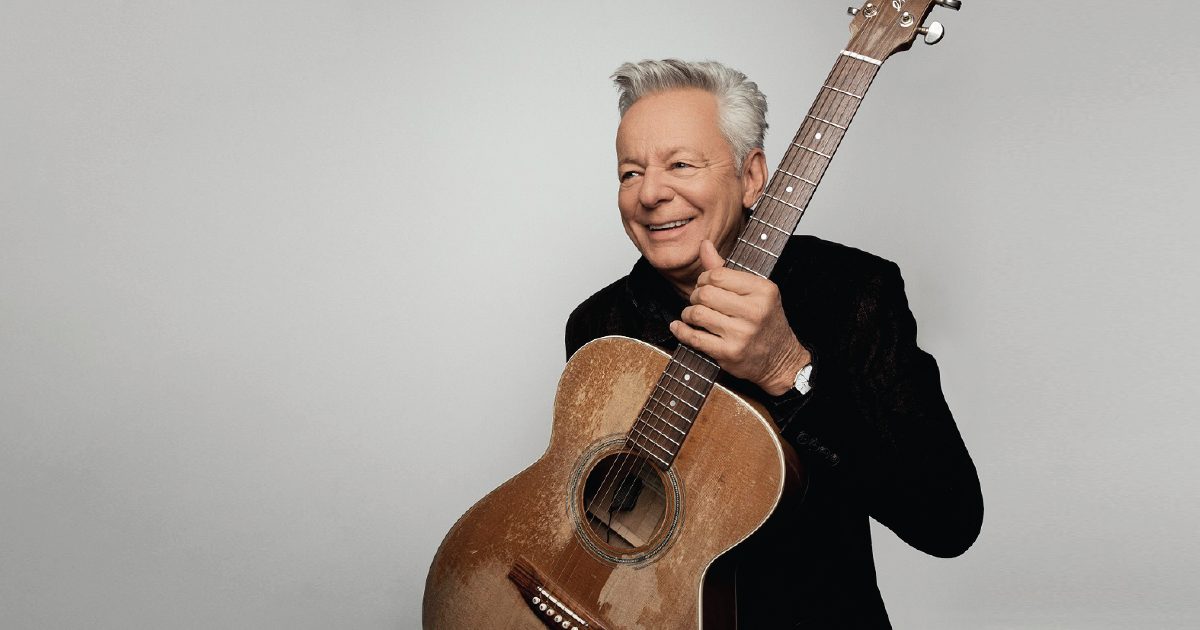
In Their Words: “The one and only Chet Atkins would be celebrating his 100th year if he were still here in body. We miss him. We love his playing, we remember all the great lessons and wisdom he handed out freely to us. We always use his example as the one written in stone. My fellow CGPs, John Knowles and Steve Wariner, have their own experiences and memories to share, and they have lived a different life to me. Yet, because of our love for Chet’s music, we are forever joined, like family.
“I’m looking forward to CAAS ’24 coming in July — an event that was started by people whose lives were forever changed by Chet’s music and his example as a person. He has inspired me since I was 7 years old and I truly miss talking with him. He’s a dad, a brother, a friend, and a teacher who will never be replaced in my life. Chet was funny, curious, energetic, and yet cool and relaxed. He taught me to never settle for mediocrity and to FIGHT it tooth and nail! Thanks for all you’ve done Chet!” – Tommy Emmanuel
Photo Credit: Simone Cecchetti Video Credit: Directed by Joshua Britt & Neilson Hubbard for Neighborhoods Apart.
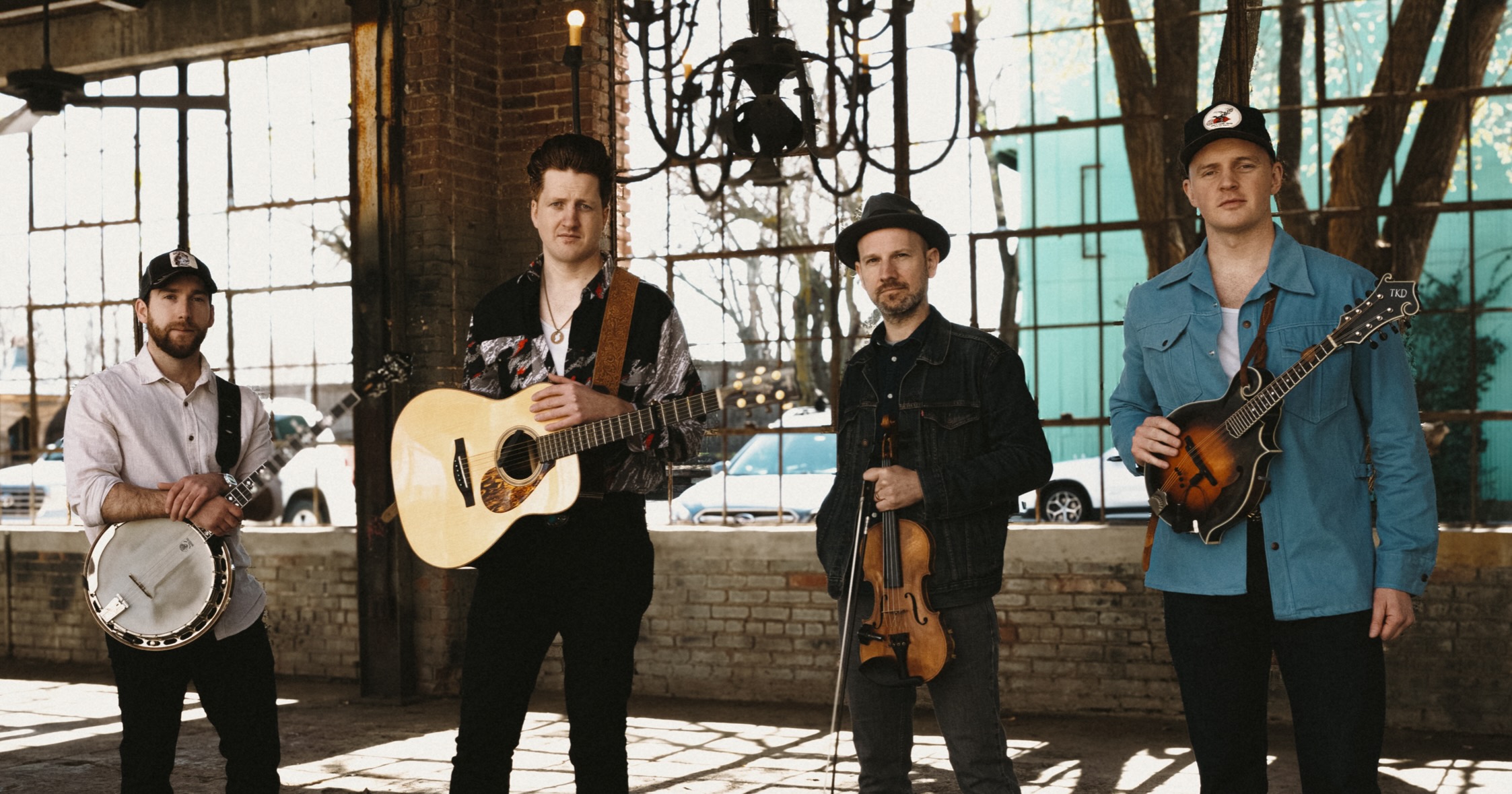
We all grew up in rural Ireland in small communities in the midlands around County Offaly and County Tipperary. From a young age we were brought up with traditional Irish music, learning the tunes and playing in local sessions. Bluegrass was never a part of our musical upbringing, however, little did we know how strong the relationship between Irish and bluegrass music is. Our band JigJam was formed in 2012 and over the years we developed a sound which captures the crossover between these musical genres.
The creation of bluegrass music and its development over the years is heavily influenced by Irish music. When the Irish people emigrated to North America years ago they brought their music and culture with them, which you can hear within bluegrass music from tunes, melodies, and songs.
We released our new album, Across The Pond, on March 1st of this year. The theme of Across the Pond is to creatively celebrate the deep connection between Ireland and North America through newly composed material that is a dynamic fusion of bluegrass, old-time, and Irish traditional music. By also including traditional tunes and songs which are popular amongst the people from both Irish and American traditions, we added their voice to this transatlantic conversation. This album has been inspired and composed on themes of immigration, nostalgia, cultural difference, and cultural amalgamation. It views the immigrant experience through the lens of pre-immigration, the journey of immigration itself, and their lives upon having settled in North America.
This is our Irish Bluegrass Mixtape, hope you all enjoy! – JigJam
“Good Ole Mountain Dew” – JigJam
Here’s our version of the bluegrass standard, “Mountain Dew,” that we put our own spin on. There’s a similar Irish song called, “The Rare Old Mountain Dew.” It’s about the same subject – “Good Old Mountain Dew” is obviously about moonshine. What we call the “mountain dew” at home is poitin, which is Irish moonshine.
We took some of the lyrics of that song and put it into our version and also wrote our own lyrics based on where we come from. We took the instrumental tune from “Rare Old Mountain Dew” and put it in “Good Old Mountain Dew” while also adding in a bit of Irish lilting. It’s a mashup of both cultures in one song!
“Classical Grass” – Gerry O’Connor
When I was young and first learning how to play the tenor banjo one of my musical heroes was Gerry O’Connor. I was always mesmerized by the speed and precision of his banjo playing. The first time I saw him in concert was at a banjo festival in Ireland called Johnny Keenan Banjo Festival. He was sharing the bill with Earl Scruggs and his band. As a 12-year-old Irish boy, I had no idea who Earl Scruggs was at the time. Little did I know the influence he (Earl Scruggs) would have on my music and JigJam’s music in years to come, when we discovered what bluegrass was and where it came from!! In this track from Gerry, he shows his bluegrass influence himself with pristine crosspicking along with his renowned clean triplets, which was always a favourite of mine growing up.
“Colleen Malone” – Hot Rize
“Colleen Malone” is one of our favorite songs that Hot Rize recorded. Here’s a great live version from their Hot Rize’s 40th Anniversary Bash album. A lovely song co-written by Leroy Drumm and Pete Goble about an Irish girl, Colleen Malone.
“Tennessee Stud” – The Chieftains
In many ways The Chieftains paved the way for Irish bands touring in America and that is something for which we’ll always be incredibly grateful. Their album, Down The Old Plank Road: The Nashville Sessions, paints a vivid picture of the crossover between between the Irish and American music traditions.
“B/C Set” – Beoga
Beoga are an Irish trad band who we all listened to as kids growing up. They were known for thinking outside the box and being ahead of their time as regards arrangements. The second tune in this set is “Daley’s Reel,” which I only realized in recent years when I heard some of the great bluegrass players like Bryan Sutton and Aubrey Haynie playing it. Beoga have a very unique version of “Daley’s Reel,” played on two button accordions and accompanied by piano, bodhrán, and even brass near the end of the track. Certainly a fun one to listen to!
“Streets of London” – Tony Rice
This is one of my favourite songs sung by Tony Rice. “The Streets of London” is a very popular song in Ireland and has been covered by many Irish artists. Written by English songwriter Ralph McTell, I learned this song from the playing of the great Liam Clancy of The Clancy Brothers, Irish powerhouses. I only heard Tony Rice’s version in recent years when I delved into bluegrass guitar playing and I loved it straight away. Tony Rice’s rendition is beautiful as he incorporates his flawless bluegrass crosspicking and signature approach to this classic.
“Water’s Hill” is a song off our new album, Across The Pond. The lyrics were written by Ken Molloy as he tells the story of a couple falling in love together and marrying on water’s hill, a mound near Tullamore in County Offaly. The music is by Jamie McKeogh and Daithi Melia along with an old traditional Irish reel that is incorporated into the middle of the song. “Water’s Hill” features a driving Scruggs-style 5-string banjo part along with a strong mandolin backbeat, fiddle counter melodies, and rhythmic acoustic guitar which creates the JigJam sound, capturing the crossover between Irish and bluegrass music.
“Forty Shades of Green” – Rosanne Cash and Paul Brady, Transatlantic Sessions
The Transatlantic Sessions is an amazing platform for the collaboration of Irish and bluegrass musicians. With the likes of Jerry Douglas, Aly Bain, Mike McGoldrick, and many more, this project has wonderfully captured Irish and bluegrass crossover for years. I could have chosen many songs from their repertoire, but I went with this one. It’s “Forty Shades of Green” from the legend that is Johnny Cash. Here, it’s being sung by his daughter Rosanne and Irish singer-songwriter Paul Brady, backed up by the Transatlantic band.
“Sally Goodin / The Blackberry Blossom” – Gerry O’Connor
Gerry O’Connor from Co. Tipperary is the reason I began to play the tenor banjo and he has always been a musical hero of mine – his music still inspires me to this day. This set showcases his skill set, pickin’ on these classic bluegrass fiddle tunes.
“Battersea Skillet Liquor” – Damian O’Kane, Ron Block
One of my favorite tracks off one of my favorite albums. I always loved the groove in this track and of course the playing from this star-studded crew of players always leaves me feeling inspired.
“Bouli Bouli” – JigJam
This set combines the traditional Irish jig, “The Miller of Glanmire,” with the bluegrass fiddle tune, “Big Mon.” It showcases the dynamic and genre fluid nature of JigJam through seamlessly traversing both traditions while highlighting each instrument’s capabilities. We’ve been having a lot of fun playing this one live!
“On Raglan Road” – Dervish & Vince Gill
I always enjoyed this song being performed by the great Luke Kelly from The Dubliners and recently came across this beautiful version of Patrick Kavanagh’s “On Raglan Road” by the legendary Dervish featuring the iconic vocals of Vince Gill.
“The Stride Set” – Solas
I love this set by Solas from their album, The Words That Remain. We are influenced by their creative way of arranging Irish tune sets. I love the addition of the 5-string banjo featured on this track.
“Did You Ever Go A-Courtin’, Uncle Joe” – The Chieftains
Here’s a mighty set from The Chieftains’ live album, Another Country. The crossover between Irish and American genres is great here with a medley of American songs and Irish tunes and also featuring a 5-string banjo. With a great lineup of The Chieftains with Chet Atkins, Emmylou Harris, Nitty Gritty Dirt Band and Ricky Skaggs.
“County Clare” – New Grass Revival
New Grass Revival are one of our biggest influences as a band. Béla Fleck is one of the reasons why I fell in love with the 5-string banjo and started to learn ‘Scruggs style’ while delving into the bluegrass world. Here’s his great instrumental “County Clare,” which Béla wrote inspired by his time spent in Ireland.
Double-, triple-, quadruple-threats are not uncommon in country music, not in the least. It’s a frequent occurrence, tripping over or into a country artist that’s a songwriter, vocalist, multi-instrumentalist, writer, thinker, and so much more. In fact, until more recent decades, wearing many hats was seen as a sort of prerequisite to making hillbilly music. After all, this is “just” country music, it’s got a wide and deep DIY tradition, and the folks who make it often have to also load in the gear, sell the merch, post on social media, and produce the albums, play the demos and scratch tracks, write the lyrics, and otherwise steer the creative ship.
Some of the most successful artists and most original voices in country music are perfect examples of how multifaceted skill sets translate directly to star power. You may not need to be a Telecaster shredder to make it onto the radio or you may not need to be able to pick like Mother Maybelle to make a living, but if you can back up your songs with mighty playing, it certainly translates with audiences.
From Chet Atkins, Dolly Parton, and Wanda Jackson to Charlie Daniels, Willie Nelson, and Bonnie Raitt, here are just a few legendary examples of hugely successful country artists who are or were excellent musicians and instrumentalists, too.
Chet Atkins
A record company executive, producer, and pioneer of the “Nashville Sound,” Chet Atkins was also a one-of-a-kind guitar picker, renowned across the globe for his unique style – which was inspired by Merle Travis. Atkins certainly made “Travis picking” his own, arguably eclipsing all of his predecessors and continuing to influence guitarists today. An inductee of the Country Music, Rock and Roll, and Musicians’ Halls of Fame, Atkins’ impact is hard to understate and his resume includes work with Dolly Parton, Elvis Presley, Hank Snow, Waylon Jennings, and countless others.
DeFord Bailey
One of the first superstars of the Grand Ole Opry, DeFord Bailey was a world-class harmonica player who was also the first Black performer on WSM’s fabled stage. Some sources also credit Bailey as being the first musician to record music in Nashville. However you approach his career and music, Bailey was a seismic presence in the earliest days of country. Born in 1899, Bailey faced constant racism, bigotry, and marginalization on the Opry, in Nashville, and as he traveled and performed. He passed away in 1982 and was posthumously inducted into the Country Music Hall of Fame in 2005.
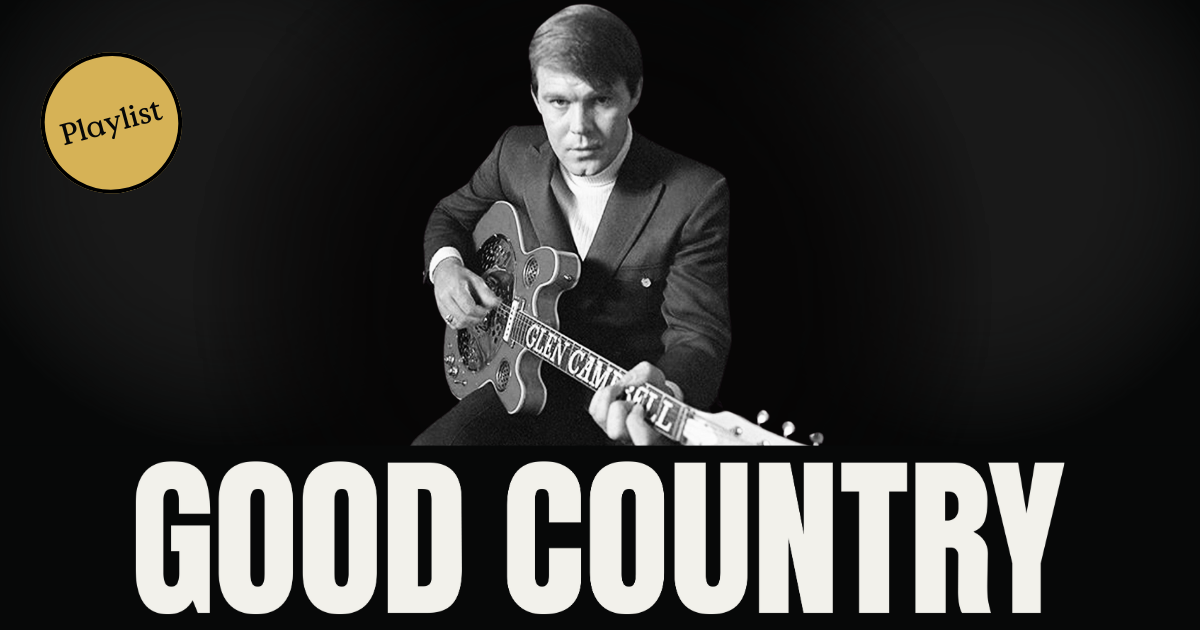
Glen Campbell
Even at the highest heights of Glen Campbell’s superstardom, he refused to let his superlative instrumental skill take a backseat to his roles as frontman, songwriter, Hollywood actor, TV star, and tabloid veteran. Campbell’s approach to country music as a true multi-hyphenate celebrity bridged generations, connecting the hardscrabble, DIY generations where multiple skills were necessary to make a living to the modern era, where he helped pave a way for famously multi-talented picker/singer/writers like Vince Gill and Brad Paisley to not be pigeonholed as one thing or the other.
Ray Charles
Any conversation around or collection of superlative country pickers and musicians would be glaringly incomplete without the inclusion of Ray Charles. His incursions and experimentations in country music are many and infamous. His 1962 album, Modern Sounds in Country and Western Music is routinely listed as one of the best country albums of all time. He’s worked with and performed with Willie Nelson, Merle Haggard, Ricky Skaggs, Travis Tritt, Johnny Cash, Glen Campbell, and many, many more. Plus, his country forays demonstrate a deep, holistic understanding of the genre. Charles is a quintessential country multi-hyphenate and country-soul in the modern era would feel especially lacking without his seminal contributions to that tradition.
Charlie Daniels
It’s hard not to wonder what young, hippie, “long-haired,” Vietnam War-opposing fiddler Charlie Daniels would have thought of his older self, and his more harebrained and often hateful beliefs later in life. But the controversial and outspoken musician, at all points of his career, was a picker’s picker. Over the course of his life he performed and recorded with Earl Scruggs, Bob Dylan, Leonard Cohen, and many more. But his chief contribution to American roots music may just be his fiery, unhinged fiddling on “The Devil Went Down to Georgia.” Just wander down Lower Broadway in Nashville on any given Saturday night to feel the impact of that particular show-stopper. In this clip, he chats and performs “Uncle Pen” with Scruggs and Del McCoury.
Vince Gill
That buttery voice, that stank-face inducing chicken pickin’, that high, lonesome sound – Vince Gill is all at once country and bluegrass, Nashville and Oklahoma, western swing and old-time fiddle. Whether with The Eagles, preeminent pedal steel guitarist Paul Franklin, the Time Jumpers, or so many other outfits, bands, and iterations, Gill is simply right at home. Because, at his core, he’s just a picker. He may play arenas, but he knows he belongs at 3rd & Lindsley or the Station Inn. Or Bluegrass Nights at the Ryman. A quintessential picker-singer-frontman, Gill continues to define the myriad ways country stars can maintain their selfhood and personality – instrumentally and otherwise – even in their wild successes.
Merle Haggard
Speaking of chicken pickin’, country’s most famous Okie was a shredder, too. A sad song, a glass of (misery and) gin, a Telecaster, and the Hag – that’s all we need, right there. Merle’s playing style, even at its most technical and impressive, was simple and down to earth. You could tell he cut his teeth playing bars, fairs, and honky tonks. You could almost hear him pulling himself up by his bootstraps as he played.
Wanda Jackson
The Queen of Rockabilly has been slaying rock and roll, hillbilly music, and the guitar for more than seventy years. In 2021 she released her final album, Encore, when she was 84 years old. It features her signature passion and fire – and performances by Elle King, Joan Jett, Angaleena Presley, and more. Jackson has been representing the vital contributions of women to rockabilly and rock and roll for her entire career, just as often commanding the stage with her growly, entrancing voice and her powerful right hand.
Willie Nelson
Who would Willie Nelson be without Trigger? Without a tasty, less-is-more, nylon-string guitar solo? For decades, Nashville, Music Row, and guitar players around the world have been emulating his particular sound as a guitarist – whether they know it or not. Sure, he’s a hit songwriter, a star and front-person, a collaborator of Snoop Dogg and Frank Sinatra, and a connoisseur of fine bud, but perhaps more than all of these accomplishments, Willie is an impeccable picker. He can hold his own with the best of the best, because he is the best of the best.
Brad Paisley
Brad Paisley’s fame crested at perhaps the perfect time for him in country music, combining a rip-roarin’ guitar playing style with a sound that was entirely trad while carrying touches of the bro country wave that was about to inundate the genre. As such, he was able to build a career on the diversity of his skill set, before Music Row and the power behind it began prioritizing music that didn’t need to be musical and voices that didn’t need to be singular. Luckily, Paisley is both those things and more, and despite the many eyebrow raising moments across his career, our faces more often show shock at his mind-bending skill as a guitarist than anything else.
Dolly Parton
How is it that Dolly Parton can play so many instruments so impeccably with those iconic acrylic nails!? Nowadays, you are just as likely to hear Dolly performing to a track – yes, she does lip sync and pantomime playing along with recordings – but don’t get it twisted, she absolutely can play a passel of instruments from her beloved “mountain music” traditions. She plays guitar, banjo, auto-harp, dulcimer, and has even been known to pick up a bedazzled saxophone from time to time – though we can’t guarantee she actually knows how to play that one, we’re still blown away.
And what about thatone viral video with Patti LaBellewhere they play their acrylics like washboards? Dolly can make music with just about any instrument.
Bonnie Raitt
How many people do you think enjoy Bonnie Raitt’s soulful blues and Southern rock sounds without knowing she’s also often the one playing the guitar solos and making that bottleneck slide weep? Raitt is a Grammy winning songwriter, a fantastic vocalist and song interpreter/collector, and – above all, in this writer’s opinion – a superb guitar picker, especially playing slide. She can hold her own with just about anyone, and she has. Her phrasing and use of melodic space demonstrates that she’s been honing her craft for her entire life. That taste can’t be taught, it has to be found. Boy, has she found it.
Marty Stuart
Marty Stuart’s long, fabulous, superlative career began with him filling the role of sideman for such luminaries as Lester Flatt, Johnny Cash, Vassar Clements, and Doc Watson. He plays guitar and mandolin, working up his chops as a youngster with pickers like Roland White as his mentors. When his solo career took off after his Columbia debut in the mid-eighties, his ear for fine picking remained present throughout his music – however far afield from those early bluegrass and country days he may have traveled, stylistically. Whether bringing in psychedelic surf sounds or Indigenous flavors of the American West, Stuart’s catalog of music centers virtuosity that’s never gratuitous. And his band, the Fabulous Superlatives, featuring crack guitarist Kenny Vaughan and multi-instrumentalist Chris Scruggs, represent a high level of picking prowess, too.
Tedeschi Trucks Band
By many measures, Derek Trucks is the world’s foremost living slide guitarist, but don’t overlook powerhouse vocalist and co-band leader, Susan Tedeschi in order to venerate Trucks! Both started playing as youngsters – Trucks when he was a kid and Tedeschi when she attended Berklee College of Music. These two are guitar and blues royalty, helming one of the most impactful modern blues and Southern rock orchestras on the planet. They’re consummate musicians, knowing just how to surround themselves by players who support and challenge, both. Even with their laundry list of personal accomplishments, together, Tedeschi & Trucks – who are also married – are so much greater than the sum of their parts.
Keith Urban
Keith Urban brings a scruffy, down to earth guitar playing style to his polished and glam mainstream country sound. Yes, even as far away as Australia, having instrumental chops means having country currency. When he moved to Nashville in the early ‘90s, with a few Australian radio hits and awards under his belt, he immediately found work as a side musician and co-writer in Music City. It wasn’t long until his star ascended stateside, too – and then, as quickly, around the world – bolstered by arena-ready guitar. Now readying his first album since 2020, Urban shows no signs of slowing down, with the music or the picking!
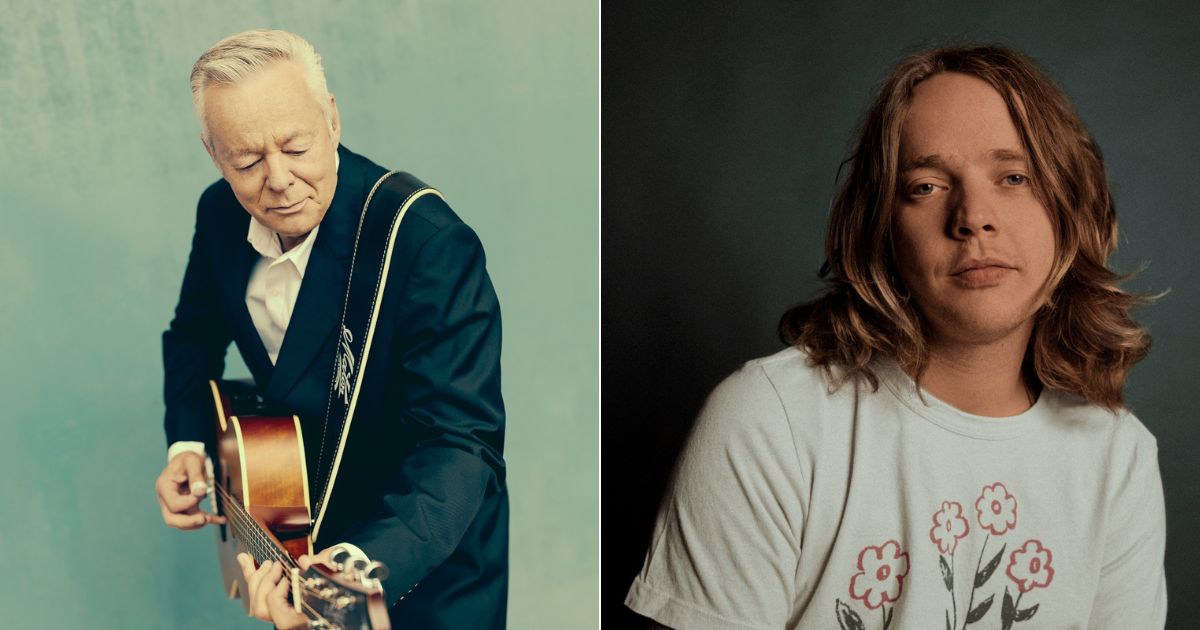
Artist: Tommy Emmanuel & Billy Strings Hometown: Nashville, Tennessee Song: “Doc’s Guitar/Black Mountain Rag” Album:Accomplice Two Release Date: April 28, 2023 Label: CGP Sounds
In Their Words: “I knew I wanted to have Billy Strings play with me on ‘Doc’s Guitar/Black Mountain Rag.’ The moment we played together the very first time at MerleFest (2016), I heard his beautiful phrasing and his Doc quotes that took me back to hearing Doc when I was a teenager. Billy has Doc in his DNA, so getting him to come and record these tunes was only a matter of finding a time to capture it in a studio. The actual recording was quick, and we only did a couple of takes and we were done.
“I had never heard Doc in Australia as I had spent most of my life in very rural areas where record stores were rare and music by Chet, Merle and Doc was impossible to find. It was an American tourist who saw me play at a show and came up to me afterwards and told me I sounded a bit like Doc Watson. I said, ‘Who is Doc Watson?’ He gave his tape out of his car stereo and I heard Doc for the first time. I think that was around 1973-4. I was smitten with his singing and his great playing, and I could hear the influences of Chet Atkins and Merle Travis all over his playing, but there was some Jimmie Rodgers, too. Then I found more recordings that led to some his fiddle tunes and blazing guitar works! My personal favorite recording by Doc is the album Reflections — a duets album with Chet Atkins. His legacy and body of work and influence are monumental and unequalled in my eyes. Thanks Doc for showing so many of us the way!” — Tommy Emmanuel
Artist:Early James Hometown: Birmingham, Alabama Latest Album:Strange Time to Be Alive Release Date: August 19, 2022 Label: Easy Eye Sound
How often do you hide behind a character in a song or use “you” when it’s actually “me”?
I’d say almost never. I have trouble writing about myself and not being honest. It’s gotta be known it’s me or else it isn’t therapeutic anymore.
Since food and music go so well together, what is your dream pairing of a meal and a musician?
Chet Atkins and chitlins.
Which artist has influenced you the most … and how?
I’d say Fiona Apple because her music is so honest and raw. I’ve always wanted to write melodies and lyrics like her.
What rituals do you have, either in the studio or before a show?
Before a show usually a couple beers or a shot of whiskey and a cigarette. In the studio coffee, cigarettes, and before a vocal take a shot of honey and hot sauce.
What other art forms — literature, film, dance, painting, etc. — inform your music?
Video games, honestly. There’s so much good music that I heard as a child before I ever had an understanding of genres or culture. Hearing it made it just a feeling. Now I can never go back to that because I know where the music comes from, but back then it was just magic.
Artist:Tommy Emmanuel with Rob Ickes & Trey Hensley Hometown: Nashville, Tennessee Song: “Flatt Did It” Album:Accomplice Series Volume 1 With Rob Ickes & Trey Hensley EP Release Date: May 7, 2021 Label: CGP Sounds
In Their Words: “My feelings about the sessions are they were very spontaneous, and in fact, I suggested ‘Flatt Did It’ and ‘Copper Kettle’ as pieces on the day we recorded them. That’s how it came about. It was very spontaneous. ‘Flatt Did It’ is a tribute to Lester Flatt and some of his classic kind of licks. We had the film crew in there for the day and they just rolled the cameras. We actually just played and ignored them almost.” — Tommy Emmanuel
“Well, it’s always great to work with Tommy. He’s such a great artist, and such a great person. There are always a lot of sparks flying when we play together, and all three of us are into lots of different musical genres, so that’s always fun to explore different musical territories when we get together. This song comes from an album that Chet Atkins did with Doc Watson. I love to hear Tommy and Trey play together. There’s a great respect between the two of them. They are both so brilliant. It’s great to hear them feeding off each other. And this song is just the perfect vehicle for a Dobro, so I’m enjoying the whole thing!” — Rob Ickes
“Yeah, this one was Tommy’s idea, and it’s a tune from the Doc Watson and Chet Atkins duo record. Rob and I both have a bluegrass background, and this song was written with the great bluegrass icon Lester Flatt in mind. (Hence the title.) It really was a natural fit and recording it with Tommy was so much fun! Getting to pick with Tommy and Rob any time is always a blast! Working in the studio with Tommy was so much fun, which I think is evident throughout this EP. The great vibe in the studio that day is prominent in the recordings. It was really just the three of us hanging out and playing tunes…what could be more fun?” — Trey Hensley
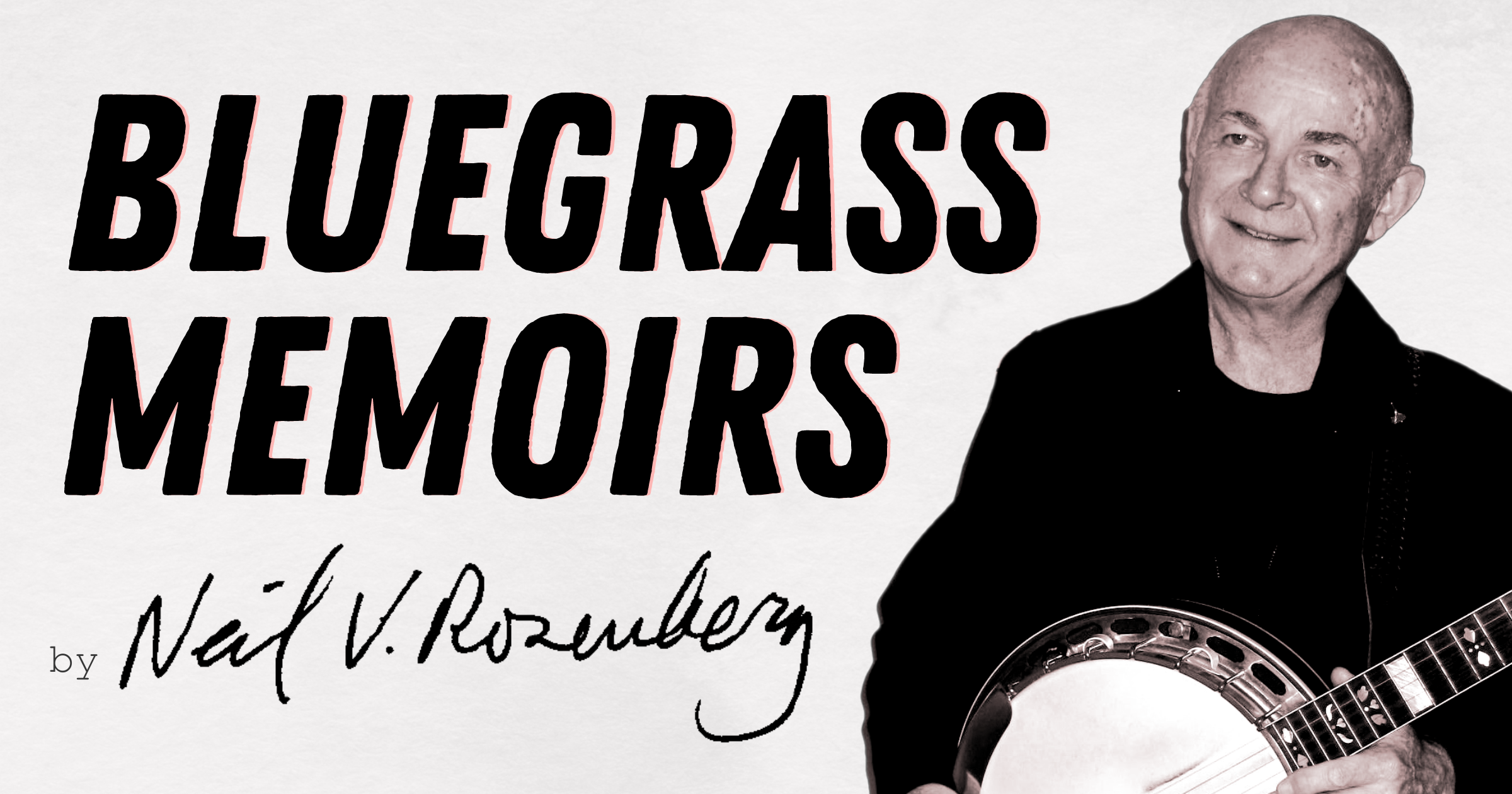
In December 1953, Decca released “Plunkin’ Rag” by the Shenandoah Valley Boys. It was the first recording by a banjoist other than Earl Scruggs to use Scruggs pegs: Hubert Davis.
Born in Shelby, North Carolina, in 1932, Davis grew up in a musical family. He was already playing the banjo when, at the age of ten, his older brother, fiddler Pee Wee, brought Earl Scruggs, a co-worker from Lilly Mills, into the family home for some music. Earl had just moved to town to work at the factory. He was boarding with another Lilly Mills employee, Grady Wilkie. In Earl Scruggs and Foggy Mountain Breakdown: The Making of an American Classic author Thomas Goldsmith tells how Earl’s mother prevailed on her friend Wilkie to help Earl get a job at the mill. Wilkie, a guitarist, and Earl stowed their instruments in the car when they drove to work. In a 1977 interview, Hubert Davis told Bruce Nemerov that Pee Wee, Grady, and Earl:
…worked on the second shift. They would catch up about supper time and they’d run out to the car and get their music out and run in to the packing house. They’d play for thirty minutes or an hour and go back to work. Swaller their food whole to get more time for pickin’. And I was there, son, at suppertime every evening. I was sitting there against the wall listenin’.
By the time Hubert was fourteen (1946), he was studying Earl’s playing with Monroe on the Opry. Occasionally Earl came home, visited the Davises, and gave Hubert a banjo tutorial: “he’d show me the parts I didn’t have right.”
At fifteen Hubert began playing professionally. By 1951 he was working for Virginian Jim Eanes. In 1948 Eanes had been an original member of Flatt & Scruggs’s Foggy Mountain Boys, but was quickly hired away by Monroe. Bluegrass historian Jack Tottle tells what happened after Eanes joined Bill at the Opry:
His full baritone-range voice turned out to be incompatible with Monroe’s mountain tenor for duet singing. To Jim’s frustration, no matter how high he sang, it was still too low for Monroe’s high vocal harmony.
Eanes subsequently developed a career as a mellow country singer with a bluegrass band, recording for a small North Carolina label, Blue Ridge. Soon after Hubert joined him Jim had a hit with “Missing in Action,” a Korean war-themed country song. Ernest Tubb’s major-label cover on Decca was also a hit, giving Jim an opportunity to sign with Decca.
Eanes began recording in Nashville in 1952 with producers Paul Cohen and Owen Bradley. In October 1953, after several country-sound sessions using studio musicians, Eanes returned to record with twomembers of his bluegrass band, the Shenandoah Valley Boys: Hubert Davis and Bobby Hicks.
They made two banjo instrumentals: “Ridin’ the Waves” and “Plunkin’ Rag.” These were issued on a 78, credited not to Eanes but simply to The Shenandoah Valley Boys. In “Plunkin’ Rag” Davis used both Scruggs pegs to create the melody. Chet Atkins, playing backup guitar, is heard playing responsorial licks to the melody in its peg sections, and Bobby Hicks — this was his first recording session — contributes fiddle breaks.
“Plunkin’ Rag” was released in December. By that time Davis had left Eanes, who then advertised over the air for a banjo player. A lanky teenager named Allen Shelton got the job. At the start, Eanes said, “he could only play one tune, but he would play all the time.” An enthusiastic learner, Shelton was a fan of Davis: “he was second to Scruggs as I ever heard it.”
When the time came for Eanes’ next Decca session in Nashville, on March 2, 1954, Davis had rejoined the band. At this point, probably in February, as Davis recalled, he and Shelton met. Both later spoke of sitting up all night in a hotel room working on “some licks Scruggs was playing.”
It’s certain that one of the two banjos in that hotel room had Scruggs pegs. Some of the licks they were working on must have involved the pegs, for Davis came to Eanes’ session with two instrumentals that used them: “Cotton Picker’s Stomp” and “There’s No Place Like Home.”
“There’s No Place Like Home” was the title Decca gave to Davis’s version of “Home Sweet Home.” As with “Plunkin’ Rag,” Davis used the pegs to play the melody. But this was not a new composition, but a very old song, dating back to 1823. The novelty here, its hook, was the idea of using Scruggs pegs to play a familiar melody.
A few months later another banjo picker made a recording using Scruggs pegs. Haskel McCormick was the 16-year-old banjo picker on “Banjo Twist” by the McCormick brothers of Westmoreland, Tennessee. The track was on their first single, released in August 1954 by Hickory Records, Roy Acuff’s new Nashville label. McCormick, who would go on fill in for the hospitalized Earl with Flatt and the Foggy Mountain Boys a few times in 1956, incorporated portions of the hooks from both of Scruggs’ hits, in this, the first of three pieces he recorded that used the pegs. Here’s a brief bio of McCormick by NCTV, which opens with “Banjo Twist:”
Columbia recognized the popularity of Scruggs’ instrumentals that fall by reissuing four of them, including all three Scruggs peg-hook tunes, in their “Hall of Fame” series. While young banjo pickers like McCormick were writing new tunes with his pegs, Earl now took another direction, using one of them in his breaks for Lester’s song, “Till the End of the World Rolls Around.” Columbia released it in December 1954.
By then Allen Shelton, now in the Raleigh-based band of Hack Johnson and his Tennesseans, had elaborated on the idea of playing “Home Sweet Home” with Scruggs pegs. Early in 1955 Shelton recorded a version of “Home Sweet Home” with Johnson that included a vocal trio on the chorus. Their Colonial single was a regional hit.
This prompted Reno & Smiley, who recorded for King (a widely distributed independent label) to make a cover. Reno, traveling through North Carolina, heard the Johnson single and called King owner Syd Nathan to tell him about it. Nathan ordered him to get their band into the studio right away and record it. He couldn’t get in touch with his band members…
…so I went to the studio in Charlotte and cut it by myself. I dubbed in three vocal parts and banjo, guitar, and bass. It took me most of the night and I don’t want to cut any more like that!
The recording was a bigger hit than Johnson’s, and helped Reno & Smiley, one of the most influential early bluegrass bands — but until that point solely a recording act — launch their touring career.
Although Hubert Davis was first to record “Home Sweet Home” (as “There’s No Place Like Home”) with the pegs, it and the other instrumental he recorded with Jim Eanes didn’t get released until June 1955, after the Reno & Smiley version. By then, Shelton and Johnson had released “Swanee River,” another old familiar song with the same juxtaposition of pegs and vocal trio. Another similar piece, “Old Kentucky Home,” appeared soon after under a new band name. Hack Johnson was gone; now, with the same sound on the same label, they were The Farmhands.
In the fall of 1955, Earl Scruggs recorded his fourth and last instrumental with a peg hook. In it he reset his peg for the second-string so that it moved up to C from B. His hook riff went through two chords instead of one. “Randy Lynn Rag,” celebrating the birth of his son, was released in February 1956.
By now the idea of using the pegs to play old familiar pieces had caught on. Early in 1956 Sonny Osborne recorded four tunes using the pegs for Gateway, the Cincinnati label he’d been with since 1952: “Hand Me Down My Walking Cane,” “Jesse James,” “Swanee River,” and “Auld Lang Syne.” Accompanying him in the studio were Red Allen, guitar; Bobby Osborne, mandolin and fiddle; Art Stamper, fiddle; and Les Bodine, bass. These were the last recordings made under Sonny’s name, done just a few months before the first MGM sessions by the Osborne Brothers and Red Allen.
In May Columbia released Flatt & Scruggs’ new gospel single. Earl used the pegs to play his part of the melody in the breaks to the quartet “Joy Bells.”
It was getting radio play that summer when a letter came to Mike Seeger from Moe Asch, owner of New York’s Folkways Records, asking him “to produce an LP of Scruggs-style banjo playing.” Seeger was certain his older half-brother, Folkways star and folk banjo guru Pete Seeger, “was the reason that Moe wrote me.”
Living in the Washington-Baltimore area, Mike Seeger had been taping bluegrass shows at local country music parks. “Most bluegrass players were establishing new songs and sounds and so didn’t record the old-time tunes that they played on shows,” he said. Seeger wanted to demonstrate “the connection of the new style to the older music” so he focused on the old-time repertoire for the album.
He started recording that fall of 1956, with the help of local bluegrass musician and collector Pete Kuykendall. They began after a Monroe show at New River Ranch in Rising Sun, Maryland, where Blue Grass Boy Joe Stuart lingered backstage to play his banjo setting of an old-time fiddle tune for Seeger’s portable tape recorder. Subsequently, eight other DC region banjoists, most of them young, were recorded. A trip south captured pioneers from western North Carolina, including Earl’s older brother Junie. Earl was not on the album. Finally, one picker from New York City’s Washington Square bluegrass scene was recorded.
Seeger’s friend Ralph Rinzler, living in New York at the time, wrote the album notes. Here for the first time the word “bluegrass” was used in print to describe and explain the music. American Banjo Three-Finger and Scruggs Style, the first bluegrass LP, had a total of 31 tracks by fifteen banjoists. Scruggs pegs are heard on two cuts.
On side B, band 3, Smiley Hobbs, a North Carolinian virtuoso living in northern Virginia, used the pegs to play the melody of the old folksong “Rosewood Casket” in a vocal-instrumental combination similar to Shelton’s.
The very last track on side B featured the Washington Square picker, seventeen-year-old New Yorker Eric Weissberg. Backed by Seeger on guitar and Rinzler on mandolin, he played a two-song medley, combining the tunes of the traditional ballad “Jesse James” and folk revival star Woody Guthrie’s popular composition “Hard Ain’t It Hard.” He used the pegs on the latter piece, which the Weavers, the most popular folk revival group at the time, had recently popularized. Weissberg’s mix of traditional and folk revival repertoire was a harbinger.
In the next Bluegrass Memoir, more on Eric Weissberg.
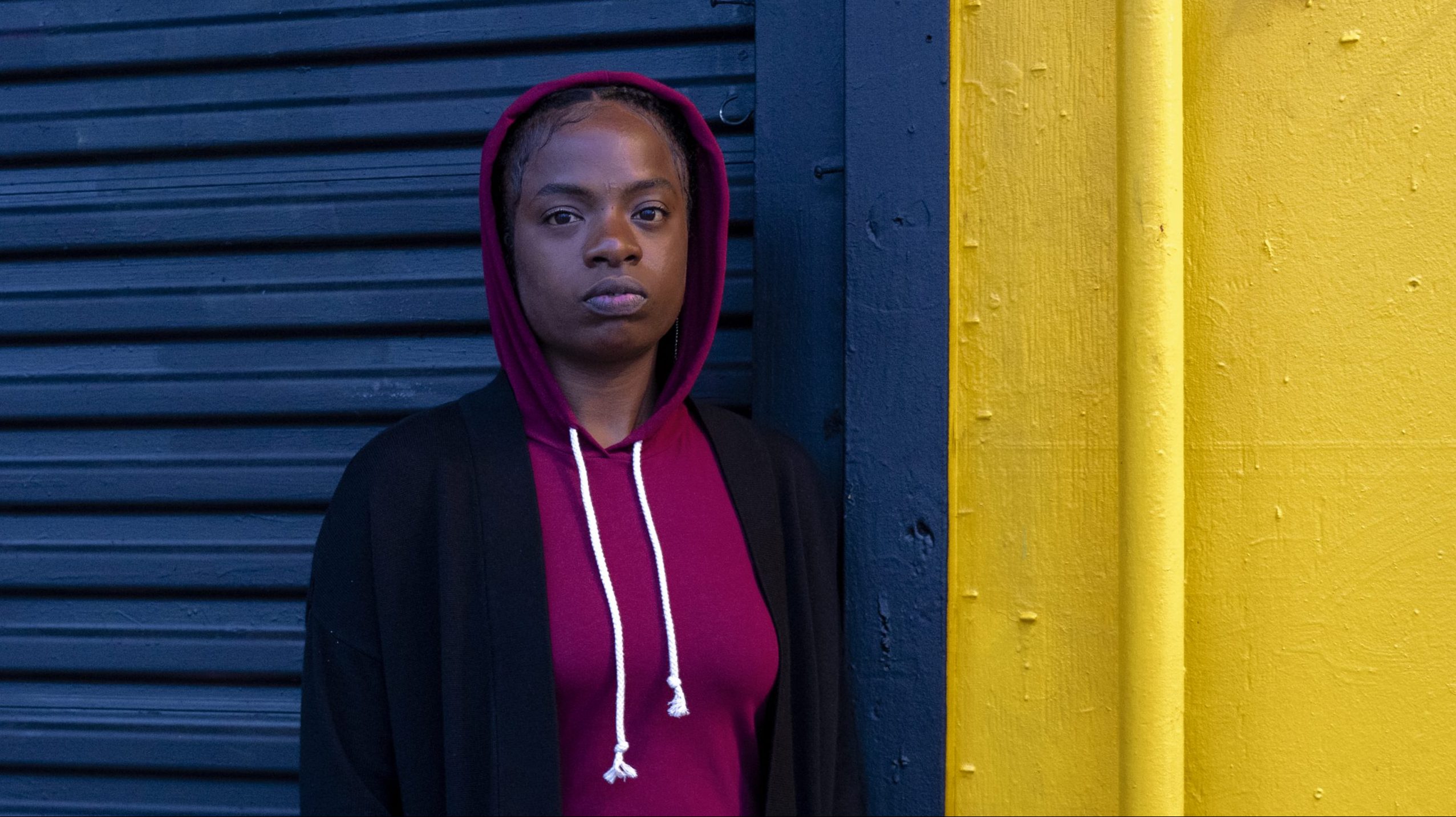
Guitarist and singer/songwriter Sunny War doesn’t necessarily miss performing live, in-person shows — she’s not even sure she ever really liked playing shows that much in the “before COVID-19” times at all. But, as she connects with BGS over the phone in preparation for another pandemic-tailored event, her Shout & Shine livestream show on Wednesday, September 16 (live on BGS, Facebook, and YouTube at 7pm ET / 4pm PT) her general feelings regarding the pandemic and its far-reaching impact on the music industry are very clear: It’s all just really weird.
She, like many creators in the March-and-April maelstrom that swallowed up any/all meaningful work for an interminable period of time, became depressed, distant, and took some time to work her way back into a creative mode that feels respondent to our harsh everyday without being bogged down in it. A punk-influenced and inflected lyricist, she’s once again turning to her songwriting pen as an outlet.
While her peers turn to that same outlet to process many of the myriad daily tragedies and injustices we’re all so attuned to in this global moment, War instead pauses. “I kinda don’t like protest songs from people who didn’t do it before,” she explains, calling to task the frantic and frenzied rush to pivot records, releases, and pressers into more “appropriate,” digestible bits for a newly awakened, activist reality — and consumer.
But War’s identity, her selfhood, as evidenced through every note of her idiosyncratically finger-plucked songs and through her carefully chosen words in her lyrical poetry and our conversation, calls upon her to challenge that propriety. “[Democracy] actually is working” she explains, noting hypocrisy and/or tone deafness in our roots music communities. “It’s working, it’s always been working. It just hasn’t ever been in our favor.”
BGS: I’m a banjo player, I came up through bluegrass, and there’s something about your right hand in your guitar playing that’s really entrancing and relatable to me. It conjures bluegrass and fingerstyle, but it is so unique to you, it’s idiosyncratic. Where did your style come from? What influenced your right hand technique, how did it develop?
SW: I think it came from mimicking banjo, actually. My stepdad’s friend played banjo, so I was around a banjo player sometimes growing up. The first fingerpicking thing I learned was “Blackbird” by the Beatles and that was the first time I thought I sounded kinda good. When I was a kid, I thought, “Wow! This [fingerpicking] sounds way better than just strumming a chord.” I never really learned a lot of chords, I still just play a lot of chords in first position. I was just playing C and G and D open and I thought, “Well now I sound like I’m really playing something.”
I didn’t listen to blues until I was in high school and then I was kind of imitating country, blues, and my stepdad’s friend on banjo. Later, I was trying to be like Mississippi John Hurt; and I kinda wanted to be like Chet Atkins. But I couldn’t ever figure that out.
I see plenty of folks in the scene who idolize Derek Trucks or Joe Bonamassa or even Molly Tuttle and Billy Strings who are coming up. There are these guitar fans that just idolize and adore them. Have you seen guitar fans trying to capture what you’re doing with your playing?
Not really? I don’t know. There are some people on Facebook and Instagram who message [me] and want to talk about my guitar style, but they’re usually just into old-timey blues stuff. Then we just talk about that. Sometimes they ask who I listen to. But I think [the implication is], “You’re really close to maybe being like this person I know of.”
I can think of a lot of shredders out there, but I do the same kind of riffs in every key that I play in. I feel like I can say I really do fingerpick well, but I know people that really do it and can play as well with their left hand as their right. I’m not quite there. [Laughs]
It’s hard to talk about music and performing right now without acknowledging the giant, COVID-19 elephant in the room. It’s interesting to me that this moment of pausing, of stopping everything, especially in the music industry, has given artists a chance to refocus or realign their priorities – have you been thinking about the future? Thinking about the present? How has the pandemic felt to you?
The first three months I was just depressed and drinking a lot and not doing anything. Then recently, I’ve been trying to write. I’ve been jamming with my friend Milo, who plays a lot of lead guitar on two of my albums, and we’re going to make some demos together. I’ve also been thinking about going to school, trying to get into some kind of two-year program. Since music might not [come back], there might not be live music for two more years. I’m thinking about getting a job. [Laughs]
It’s daunting to wake up every day like, “I’m going to keep doing this now, because I believe — I think — it’s going to happen in the future.” It’s a lot!
Yeah, it’s like, “Maybe music is just not essential…” You know? [Sad chuckle]
Then, with the whole Zoom thing and the livestream thing, I’m just not really into it. I’m not enjoying it at all, it feels weird. It’s just like, sitting in a room by yourself, trying to make a video, and then you think, “Should I look into the camera? Should there be talking in between?” You’re trying to imitate a set at a venue, but you’re just sitting by yourself. It just feels weird! I would rather just play by myself, without a camera.
I liked playing shows [before] kind of, but I almost didn’t even like that. At least it felt like there was a reason for doing it. I was talking to my mom and we both realized we used to watch concerts before, too. Just then it was an actual concert on film. Even that would be better! If there were somehow an audience in the livestream… I guess that can’t be, but it’s just awkward [without them.] Seeing a band play off of the energy of the room is more what it’s about.
Well, for your Shout & Shine livestream performance we’ll have to ask our audience to be “loud” in the comments! Use that clapping hands emoji! [Laughs] Who would you like to see as a guest on Shout & Shine? Whose music is inspiring you right now and getting you through the day-to-day?
Have you heard of Yes Ma’am? They’re from New Orleans – the singer sometimes plays solo, but also has a band. They used to busk on the street in New Orleans. It’s just really good, a great kinda folky string band.
I like the new Run The Jewels album. I listen to Elliott Smith still, and a lot of ‘90s music. I like Black Pumas a lot.
What would you like to see from the music community, as far as a response to this moment in our culture’s history — not only the racial injustice and righteous rebellions against police brutality, but also how divided and polarized our musical community is now. It’s like half people who want music to “remain apolitical” and half folks who are like, “Music has always been political, where the fuck have you been all along?” What do you see as the urgent need of our community to reconcile all of this? I know that’s a huge question.
I think it just needs to become about honesty again. That’s something I would like to see. I’m not really that into “Americana” music, but even so I feel like [Americana] musicians are going to be faced with not being able to let these issues go unaddressed anymore. I think that’s interesting. At this point, you can’t just put out your weird corny love song that’s not even about anything that happened in your life, but is actually just something that makes sense pop-wise and hit-wise. You should have to really be honest. People don’t necessarily have to be “political,” they can just write about all the emotions they’re going through. We’re all dealing with the pandemic and with Trump and with police brutality — it’s a lot. Even if people don’t want to write a song about why we should get rid of the police, they could at least write about how scared they are. I don’t know, there’s a different, new kind of folk that could happen about just being freaked out and unsure of your future. I love shit like that.
I kinda don’t like protest songs from people who didn’t do it before. It’s just not hitting right. I don’t want your protest music if you weren’t writing it before. Whatever issue is being highlighted, it’s always like, “Yeah, we’ve BEEN talking about that.” [Expectant pause] This has been the conversation. I’m into punk, I’ve always liked protest music. As far as folk, I do like its protest music, but I mostly like punk or really politically-charged hip-hop. It’s kind of annoying when say, a really poppy country person who’s never said anything about anything is writing a protest song. It’s just cashing in. It’s corny. It’s weird.
And another thing, a lot of people who are going out to these Black Lives Matter protests and stuff, I still don’t feel like they would treat me any differently than they normally would. I saw people posing and taking pictures. This is a weird thing to just be a trend.
Like Breonna Taylor now being a meme.
Yeah. It’s offensive, it’s too much.
And how many times they show those videos [of Black people being murdered by police]. There’s a lot of murder porn going around! People are saying one thing, but showing someone die every day. I was kind of like, “You know, I don’t think they would show a video of a white person being killed, over and over again.” A lot of things happening right now are really dehumanizing and I don’t think people can see it unless they really, really think about it. Or maybe put themselves in that position. It’s murder porn.
I know what happened. I don’t want to see this over and over again. I don’t need to physically see it to be angry about it. Think of all the bad this is doing to our psyches on top of everything else, seeing people murdered every day.
But, a lot of musicians are “activists” now, I guess. I just… don’t really know what that means. They were going to put out a song anyway. That’s what they do for a living. Obviously they can’t just put out the typical love song — that’s what people always write about, love. That would be “offensive.” Or, it wouldn’t be “appropriate.” So they all have to change and pretend to be “activists.” It’s just a reflection of what’s trending right now.
I just want to know: Are they actually going to change in a year? I’m curious to know how long the Black Lives Matter profile pictures are going to stay up.
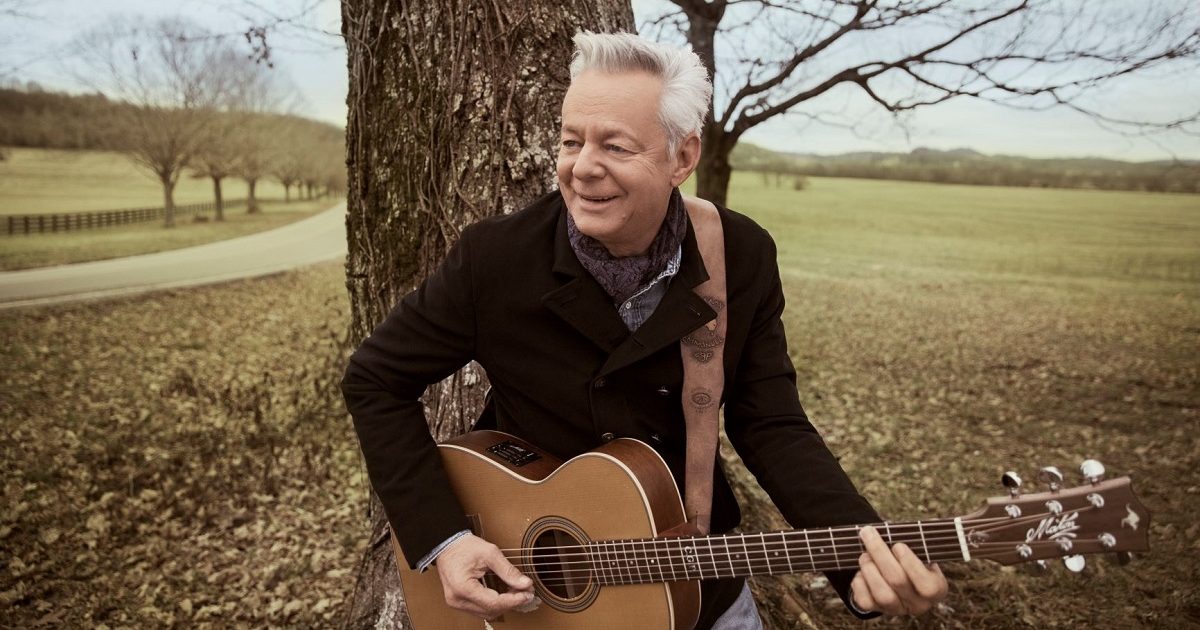
Artist:Tommy Emmanuel Hometown: Muswellbrook, New South Wales, Australia + currently resides in San Jose, California Song: “Luttrell” Album:The Best of Tommysongs Release Date: May 8, 2020 Label: CGP Sounds/Cruzen Street Records
In Their Words: “Luttrell is a town in East Tennessee where my childhood hero, Chet Atkins, was born and raised. I took a trip out there, and I stood at the very spot where his house used to be, and I wrote this song. All my life, his love and encouragement has meant so much to me. He was a true friend, a great man, and one of the most important pioneers in the history of guitar playing.” — Tommy Emmanuel
Artist:Mandy Barnett Hometown: Nashville, Tennessee Song: “The End of the World” Label: Melody Place Records
In Their Words: “We were already in the studio with an incredible 60-piece orchestra recording a torch songs album that will be released in 2020. After viewing Ken Burns’ Country Music documentary, we were inspired to add this beautiful song, which was originally produced by Chet Atkins for Skeeter Davis, to our recording schedule. Skeeter was always so kind to me and appreciated my being a new-generation torchbearer for classic country music. Fred Mollin did a stellar job producing it, and I’d like to extend a big ‘thank you’ to Ken Burns for giving this music a new platform!” — Mandy Barnett
Photo credit: Cyndi Hornsby
This website uses cookies to improve your experience. We'll assume you're ok with this, but you can opt-out if you wish.AcceptRejectRead More
Privacy & Cookies Policy
Privacy Overview
This website uses cookies to improve your experience while you navigate through the website. Out of these, the cookies that are categorized as necessary are stored on your browser as they are essential for the working of basic functionalities of the website. We also use third-party cookies that help us analyze and understand how you use this website. These cookies will be stored in your browser only with your consent. You also have the option to opt-out of these cookies. But opting out of some of these cookies may affect your browsing experience.
Necessary cookies are absolutely essential for the website to function properly. This category only includes cookies that ensures basic functionalities and security features of the website. These cookies do not store any personal information.
Any cookies that may not be particularly necessary for the website to function and is used specifically to collect user personal data via analytics, ads, other embedded contents are termed as non-necessary cookies. It is mandatory to procure user consent prior to running these cookies on your website.