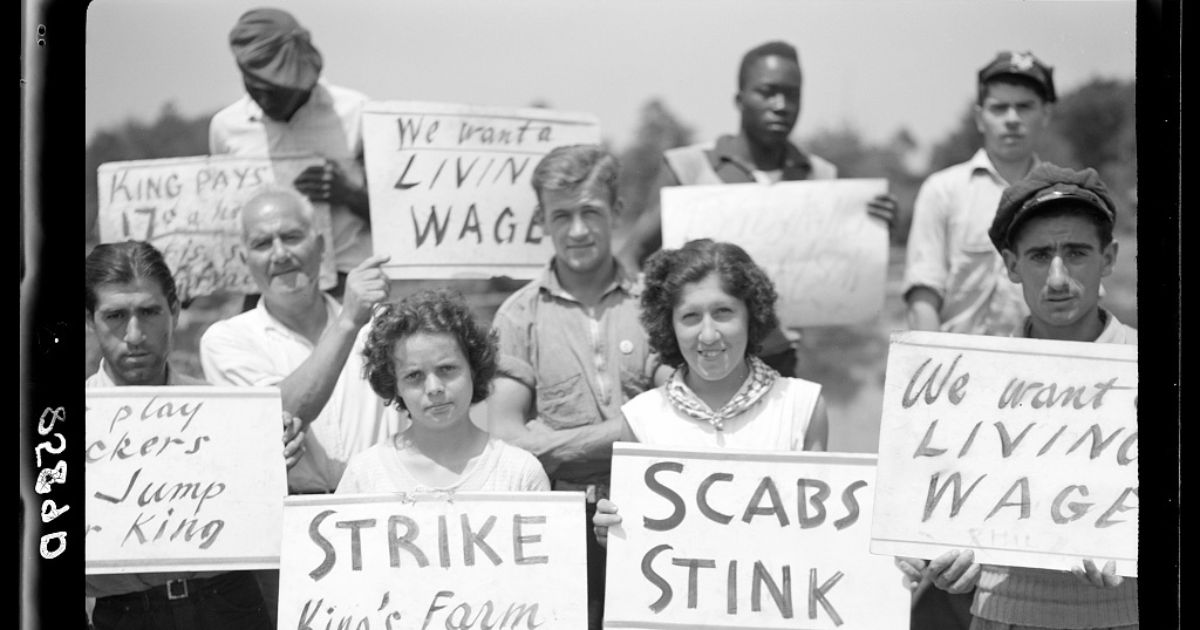
It was just announced that hundreds of thousands of Teamsters driving for shipping and logistics company UPS will avert a strike after their negotiations came through, but even so, dozens of strike authorization votes are happening all across the U.S. as workers the world over watch WGA and SAG-AFTRA strikes, Amazon and Starbucks unionization drives, and smaller pickets like that at dinner theater Medieval Times. Union membership and public opinions toward unions are at highs not seen since the ’60s, and millennial and Gen-Z workers are joining unions, striking, and picketing at astronomical rates.
It’s important to remember that, although bluegrass in its modern iteration can often feel staunchly conservative, militantly patriotic, and delusionally nostalgic for “old-fashioned values,” it’s a genre that was born from the creativity of working class and impoverished Southerners, Appalachians, and immigrants – and it has always had a pro-worker, leftward bent. Singers, pickers, songwriters, and performers like Hazel Dickens, Ola Belle Reed, the Country Gentlemen, the Johnson Mountain Boys, Mac Wiseman, Earl Scruggs, and so many more were ardent supporters of the working class and hostile towards corporations, mines, and management. There are truly countless, never ending pro-worker, pro-labor songs to choose from in the bluegrass, old-time, and roots-music canon.
Bluegrass and old-time music, though entangled in a dense constellation of roots music and occupying space adjacent to folk music and the folk revival, were anti-corporate greed since before they had names, before Pete Seeger, before the folk revival itself. That legacy is important to place at the very center of bluegrass, a genre of music that was born out of industrialization (see also: Industrial Strength Bluegrass) as mountain folk, Appalachians, and Southerners migrated out of their rural homeplaces to urban industrial centers. Bluegrass was born from radio stations, railroads, from company towns and workers’ barracks. Whether rubber or auto plants in Ohio and Michigan, factories in Chicago, cotton mills and tobacco warehouses in North Carolina, or anywhere else in the region, as poor folks bled out of their ancestral homes to find work and upward mobility, they brought their music and their community mindsets. As bell hooks puts it in Belonging: A Culture of Place, the mountains and rural spaces are where mutual aid and anarchy are concrete, everyday practices, not just philosophies or concepts.
With those people and their music came a penchant for workers’ and labor rights, suspicion of management and company stores and towns, and a vehement, righteous anger at the injustices suffered by working class Southerners no matter where they migrated. It’s easy to find pro-Union songs, songs in support of workers’ health and agency, lyrics that espouse conservation and environmentalism in old-time, bluegrass, and string-band traditions. So easy, in fact, we quickly amassed a 4+ hour playlist featuring some of our favorite songs (bluegrass and beyond) for marching the picket line, raising a fist, and redistributing the power – and wealth – back to the world’s 99%.
Scroll to find the full playlist of Bluegrass & Roots Songs to Strike To. Below, enjoy a few selections from the list.
“In Tall Buildings” – John Hartford
John Hartford describes the doldrums of daily work as almost no one else can. (John Prine gets close with, “How the hell can a person/ Go to work in the mornin’/ And come home in the evenin’/ And have nothing to say?”) At the end of our 30-some years working, what will we have to show for ourselves besides a suit, haircut, and no more life left to give to our “retirement?” Plus, as any career musician can tell you, planning a life around retirement isn’t exactly a good option to begin with.
“Ain’t Gonna Work Tomorrow” – Wilma Lee Cooper
Ain’t gonna work tomorrow, cause it’s STRIKING day! Wilma Lee Cooper will, at long last, join the Bluegrass Music Hall of Fame this September. A bluegrass forebear who saw broad commercial success before the genre had a name or an understood identity, she regularly landed tracks with decidedly bluegrass aesthetics on Billboard‘s early country charts.
“Lazy John” – Bruce Molsky
Under capitalism, laziness is a radical act! Be like Lazy John! If you’re working all week in the noon-day sun just for 16 cents, yes, it’s strike time.
“Cotton Mill Man” – Jim & Jesse
As we remember the life and legacy of Jesse McReynolds, who recently passed, it’s striking that although he and his brother Jim performed largely cover songs and tracks written by others, they were still able to express with great subtlety their own points of view through the material they chose. Like “Cotton Mill Man” and Prine’s “Paradise,” which was a hit for the duo, their catalog of recorded and performed material is dense with class awareness.
“Black Waters” – Jean Ritchie
A truly timeless classic that remains as relevant today as in the time of its writing, as clean water protections across the U.S. have been repeatedly gutted since 2016 – and before. Our country continues to show where its priorities are, beating down protests and demonstrations even as popular and supported as Standing Rock, in order to force us to acquiesce and give up protection of our waters. The lyrical hook is even more poignant to someone, like myself, living in Tennessee Valley Authority territory in the Tennessee River Valley – where coal ash and pollutants are still regularly dumped into our waterways. These tales, these experiences, are best told directly from their sources, as in Ritchie singing this song.
“Carpal Tunnel” – Tristan Scroggins
One can find many a recording of “Carpal Tunnel” from across the years, but mandolinist Tristan Scroggins, in his mid-twenties, pointedly places this track in the present, delivering the lament in stark a capella accompanied only by body percussion. He deftly ties the lyric to embodiment and agency and reminds all of us – especially in an age governed by devices causing carpal tunnel writ large – we’re all merely one injury away from bankruptcy. Musicians know this fear intimately, as many a livelihood has been threatened by tendonitis and carpal tunnel.
“Tear Down the Fences” – Ola Belle Reed
A perfect encapsulation of solidarity across our differences – differences constructed by the ruling class to keep us quibbling amongst ourselves while they amass their wealth. This sort of community awareness often feels like a pure byproduct of the internet’s version of globalization, but even a woman banjo player from a tiny town in rural Western North Carolina understood that “all we have is each other,” way back before the worldwide web. It feels obvious to state. It shouldn’t seem remarkable, except that we’ve accepted the narrative that such compassion and ideas couldn’t possibly be born from rural spaces or the South.
“Blue Collar Blues” – Joe Mullins & the Radio Ramblers
From the shop steward of Industrial Strength Bluegrass himself, Joe Mullins, a classic working-man-blues-style bluegrass number about that paycheck to paycheck life. An all-too-common reality for so many pickers! Though that might be more accurately described as blueGRASS collar blues.
“Dark as a Dungeon” – The Country Gentlemen
Bluegrass mining songs are just as iconic in the bluegrass songbook as train songs, cheatin’ songs, murder ballads, and singing about moonshine. This version of “Dark as a Dungeon” by the Country Gentlemen is one of the best examples of the form – many of which made it onto our full playlist.
There are so many more bluegrass, old-time, string band, folk, and Americana songs for striking. Check out our full playlist below and let us know: What is your favorite pro-worker roots song?
Playlist selections by Justin Hiltner, Shelby Williamson, Jon Weisberger, and Amy Reitnouer Jacobs.
Photo Credit: By John Vachon in 1938. “Untitled photo, possibly related to picket line at the King Farm strike. Near Morrisville, Pennsylvania.” Courtesy of the Library of Congress.
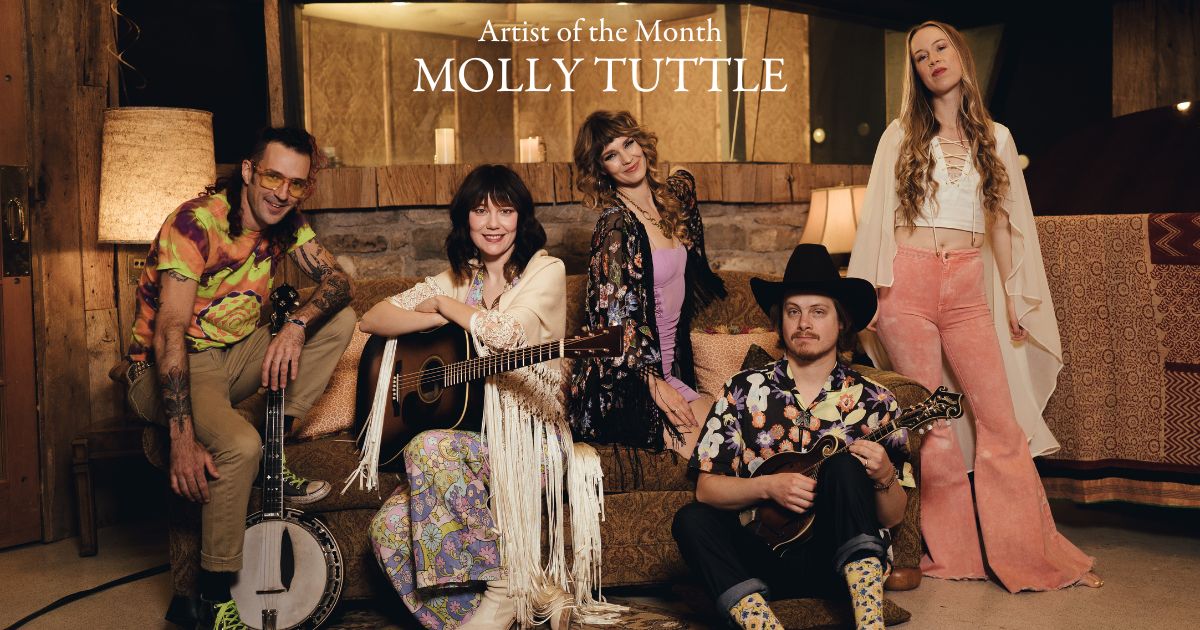
Over the course of her lifelong career in bluegrass, Americana and roots music, we’ve had the pleasure of interviewing and connecting with Grammy Award winner Molly Tuttle on quite a few occasions. When we selected Tuttle and her band, Golden Highway, as our Artist of the Month, we wanted to open a space to discuss her career and music in a fresh light – and we could think of no better context for such a conversation than Basic Folk.
We asked Basic Folk podcast hosts Cindy Howes and Lizzie No – who featured Tuttle on the show once prior, in 2022 – to sit back down with the International Folk Award and Americana Award winner to discuss her brand new album, City of Gold, and to dig deeper into the creative output of this buzzworthy guitar player, songwriter, and business woman.
Watch for the full podcast episode to drop later this month, but for now enjoy these excerpts from Cindy and Lizzie’s conversation with Molly Tuttle.
Cindy Howes: Molly Tuttle, welcome to Basic Folk again. It’s so great to have you back on the podcast.
Molly Tuttle: Thank you so much for having me back. It’s great to be here with you guys.
CH: Before we start our interview, I want to set the tone for our conversation. Molly Tuttle is being highlighted as Bluegrass Situations’ Artist of the Month, which is so awesome. The tone of our interview today is LYLAS. Do you know what LYLAS is?
Lizzie No:It’s spelled L-Y-L-A-S.
MT: LYLAS. Okay. I don’t know that.
LN: What it means is: “Love you like a sister.”
CH: Oh yeah. So we are total LYLAS. This is like a fun trip to the mall. This is like a really fun cruise around the harbor with your gal pals.
MT: Oh my gosh, that’s so fun. Well, it’s perfect because I’m actually in a hotel outside of Missoula. And there’s a strip mall nearby. So shopping has been on my mind today. Great.
CH: We’ll all get mani pedis together.
LN: Yes. French tip.
CH: So, when approaching the writing on City of Gold, you asked yourself, “How do I tell my story through bluegrass?” Which I can relate to, as somebody who’s sort of tried to distance themselves from folk music for a really long time. And now I am fully leaning into it. So, I take [it as] you asking that question of yourself, like “How can I fit my Molly Tuttle-ness into a world that can be rigid, patriarchal, and maybe different from what you stand for.” So how true is that? And how have these songs helped you take control of the bluegrass narrative and tradition?
MT: I think that’s something I’ve always kind of struggled with. I remember when I first started writing songs, I just thought, “I don’t know how to write a bluegrass song.” I can write a song, but they never ended up sounding like bluegrass to me and I just didn’t feel like my story fit into the bluegrass narrative of the songs that I grew up singing.
I always loved songwriters like Hazel Dickens, who wrote bluegrass songs from a woman’s perspective, wrote songs about the struggles that she had as a woman in the music industry and as a working woman, and songs about workers’ rights and things she believed in. I grew up with two really strong role models, Laurie Lewis and Kathy Kallick, out in the Bay Area. I remember early on I would go out to [Kathy Kallick’s] house and she would make me tea and listen to my songs. She always told me that when she was first getting started writing bluegrass songs, she kind of felt the same way as me. Like, maybe her story didn’t belong in the genre. But she met Bill Monroe, and he encouraged her, “Don’t try to write a song that sounds like a song I would have written, write a song from your own perspective.”
So she wrote a song called “Broken Tie” about her parents getting a divorce. She said every time she was at a festival with Bill Monroe, he specifically requested that song. That was an inspiring story to me. But when I started writing songs for Crooked Tree, it was suddenly like a floodgate opened. I think I just found my people to write with, found my groove, and ended up with a collection of songs that kind of told my story, [told] about things I believed in, and [told] my family history and personal experiences. And then other songs that were just, you know, from a woman’s perspective, or from a perspective that I resonate with.
For [City of Gold], it was fun to kind of continue that and also expand it to be songs that I felt like were inspired by my band members, or inspired by experiences we’d had on the road. This felt more like a collective vision in a way.
LN: Okay, let’s talk about Crooked Tree. The title track from your last record was partly inspired by your experience living with alopecia. You’ve said that as a kid you would wear hats and then wigs, and then you learned to talk about your wig. Eventually, you started to get more comfortable going without. Now that you’re touring with Golden Highway a ton, you sometimes take your wig off when you play that song, which is such a powerful moment of joy, courage, and vulnerability. As a performer, I can relate to those moments where you bring a little bit extra of yourself and you share a part of yourself that you might normally keep private. How do you get to that right mood? How do you gauge if the crowd is like the right crowd to share about your alopecia experience?
MT: It’s also based on how I’m feeling. I took off my wig a few times last year. But I didn’t do it as much as maybe I wanted to, or maybe I should have, just because I wasn’t always sure what to say. I’ve had so many experiences of trying to explain alopecia to people and they still think I’m sick or still feel bad for me. And it’s so hard sometimes to put it in words that aren’t going to bring the mood down at the show, you know, I want people to be having a good time. I want it to be this fun, inspiring moment, not a moment where people can go, “I feel so bad for you.”
Recently, I performed and told my whole story [for] a keynote speech at this alopecia conference out in Denver, Colorado. I think that was such an important step for me. Just getting to share my story and reflect on the pain of growing up having this really visible difference, but also like, the joy and why it’s so important to me to share that with others and share the message that it’s okay to be different. It’s okay to be a “Crooked Tree.” This last weekend, we played in Michigan, and I did take off my wig and I felt like I finally nailed what I said and the perfect mood. Everyone was cheering and it was just a moment of celebration. I think I’m gonna just continue doing that more and more, but I find that it’s so helpful for me to check in with the alopecia community and feel that support from other people who know exactly how I feel. That makes me feel confident to share my message with the world and maybe sometimes be like, “I don’t care how it’s received, maybe I’m not sure how it’s gonna be received, but I’m going to do it anyway.” That just comes with time. And I guess I’ve had to grow kind of a thick skin. It used to be a lot harder for me.
CH: The new album, City of Gold, the songs were mostly written by you and your partner Ketch Secor of Old Crow Medicine Show. What is the writing process like with you and Ketch? Like, how do you bring out the best in each other’s writing?
MT: We’re both quite different writers. He’s very fast paced. He throws out ideas and lines. [While I’ll] think it over. I’m kind of more internal. I think about the lines. We balance each other out in a way where I might think a lot about what exactly we are saying, and then he’s good. If I get stuck on something, [he can] kind of keep it moving. But our writing process is always different. It’s nice, because we’re together a lot. So we can write in a lot of different circumstances. Some of the songs we wrote in the car, like on a road trip, just throwing lines back and forth. Maybe he’d be driving, I’d be writing the lines on my phone. Maybe we’re talking about something at home or listening to music and sitting down with instruments, kind of more the conventional way of writing. I find it so hard to fit writing into my life, especially when I’m on tour and I’m on the go so much. [It’s so nice that] we got into a groove with it, where we were just doing it all the time, and it felt more naturally intertwined into my day-to-day life.
LN: The bluegrass community was a huge source of inspiration for you. Of this record, you said, “One of the things I love most about this music is how so much of the audience plays music as well.” And that you hope that people will sing along and maybe play those songs with their friends, almost like we’re all a part of one great big family. Now, how do you walk the line of making a sophisticated, bitchin’ bluegrass record, while keeping it simple enough for others who might not be musical geniuses to play along?
MT: The beauty of bluegrass music is that most of the songs have like three or four chords. You can play them really simple, you can just strum along and play as slow as you want. Beginner bluegrass musicians might go to a jam of people at the same level as them and play these songs in a lot simpler of a way. Then, as you get better and better you can play it faster, you can play more complicated solos, you can really play with the dynamics. There are infinite ways to make the songs more and more complex and sophisticated as you progress in your musical abilities.
On City of Gold, I did kind of stray away from that “three chords and the truth” format a little more than I did on my last record. It was fun, because we were working on these arrangements as a band, which was a lot different process than I’ve ever done before in the studio. I’ve always gone in with my songs and gathered musicians that I don’t normally play with on the road – studio musicians. I have a lot of my bluegrass heroes on the record, and you’re kind of learning the songs and playing them by a chart, but for this album, we really took the time to develop more complicated arrangements and add in new sections that stray away from the key. These songs are a little less accessible to the standard bluegrass jam. But I think there’s still a few that people could learn to play at any level.
• • •
CH: Okay, now we’re going to talk specifically about some of the songs on the new album, City of Gold, starting with the first song, “El Dorado.” Right now I am rewatching Deadwood, so I am super into this song. As a kid, you took a field trip to Coloma, the site of California’s first gold strike and it was the first time you heard about the legendary El Dorado, the City of Gold. In the song you sing, “El Dorado, city of gold, city of fools.” You said, “Just like gold fever, music has always captivated me.” So who are the characters in the song – like gold rush Kate from the Golden State – and how do you connect with these fools?
MT: I wrote the song with Ketch and I don’t know [exactly] how it came about… [But I told him,] when I was a kid, every school would send the kids off to gold country. You’d go to different places. The person who taught my class how to pan for gold, for some reason I have like a very vivid memory of him. He had this gold nugget on a chain around his neck and he showed us how to pan for gold. He was like, “You might find a flake of gold, but if you find an actual nugget of gold, we’re not gonna let you keep that, you have to give it back to us.” [Laughs] I remember being like, I really want to find like a nugget of gold and just squirrel it away and not tell this guy about it. So that kind of stuck with me.
CH: Literally every kid in your class thought that!
MT: Yeah! Like, we’re gonna strike it rich at this goldmine!
We were kind of doing some research on Coloma and found that it’s in El Dorado County. That seemed like a good place to start with a song just inspired by that character, but also thinking about all these characters who came together and we’re all trying to strike it rich. I feel like that is such a theme in our society. You know, we have these like little, mini gold rushes – everyone being like, “This is the next big thing. We’re all going to make so much money off of this.” But for me, I didn’t get into music thinking this is gonna make me rich, but it is something I’ve chased after for many years now.
CH: What do you think is the current gold rush? Is it dispensaries? Vape stores?
MT: The thing that just popped into my head, it’s a couple years old, maybe like a year past its prime, is crypto currency. I think I don’t know where that stands. But I think we’re a little bit past that.
• • •
LN: The second track on this album is “Where Did All the Wild Things Go?” Which is a song about gentrification’s corrosive effect on the character of once-vibrant neighborhoods nationwide – which I can very much relate to living in Brooklyn. I’d love to hear about your neighborhood where you live now. Is there a specific tradition or neighborhood institution or restaurant or store that is so special about your neighborhood? That you’re passionate about preserving? And how are you and your neighbors trying to keep your neighborhood weird and wild?
MT: Well, my neighborhood is East Nashville, and before I got there, it was totally different. It’s just in constant flux. It really changed so much when we had the tornado hit [in 2020] that took out tons of the local businesses that never returned. A lot of people moved out. The pandemic just kind of sped all of that up. Coming out of lockdown I was like, “Whoa, this is so different. Like, where do I even live anymore?”
I don’t really know how to answer how I’m trying to preserve it. I feel like I’m living in a different city every time I come back from tour, basically. Nashville’s always changing, just constantly growing, so many businesses are moving here. I do feel like there’s this constant sense of everyone missing the old Nashville. I don’t think that I was even around for the like “old Nashville” as many people who grew up in the city know it. So maybe I’m part of the problem in a way, really. I moved there just eight years ago…
• • •
CH: The next thing we want to talk about is “San Joaquin,” a new, old-style railroad song. There’s such a romance surrounding trains in song. You’ve always loved singing about trains. There is that long tradition of trains and folk songs. What do you think it is about trains that have captured artists’ hearts since they’ve been around?
MT: I think as artists, especially as musicians, we kind of have this roving spirit, where we want to see the world, we want to travel. I feel like a lot of musicians, myself included, we romanticize trains as this early way of getting across the country. And still, you’ll see musicians from time to time doing a train tour. Of course you have buskers who might hop on a train across the country and play all over the place. Now, I’ve never done that, but I think it’s just this thing that’s romanticized, especially by musicians. I’ve always loved singing [train songs]. There’s so many bluegrass train songs, but I didn’t know a specifically California bluegrass train song, so I felt like it was time to write one.
CH: What’s your favorite train song?
MT: That’s such a good question. The first one that popped into my head was Larry Sparks’ song, “I’d Like To Be A Train.” He doesn’t just want to ride a train. He wants to be a train.
• • •
CH: The song “Next Rodeo” you say, “…Reflects the miles I’ve put in with my band, Golden Highway, which has clocked in well over 100 shows.” That’s in the press release, so it’s probably 200+ shows at this point, and we’ll give a shout out to Bronwyn Keith-Hynes. Let me know if I’m mispronouncing anyone’s name–
MT: We have so many nicknames for Bronwyn in the band. We saw a YouTube comment on one of our videos where I introduce her and someone said, “What’s the fiddle player’s name? I couldn’t catch that.” Someone wrote “Ron Winky Pies.” We often call her Ron Winky Pies.
CH: Yes, that sounds right. Well, she is a hell of a fiddler. Also Dominick Leslie on the mandolin, Shelby Means on bass, and Kyle Tuttle, who is playing banjo. Can you talk about the ease and connection you feel with Golden Highway? What’s the feeling that you get when you’re on stage – and, when did it start gelling for everyone?
MT: After I made Crooked Tree, first I started thinking about who I wanted to take the songs on the road with. On the record I had the band name Golden Highway, but I didn’t actually have a band yet, so it’s kind of funny. I did it in reverse a little bit.
Dominick played on the whole record. I called him and I was like, “Hey, do you want to play with me next year?” And he said yes. So I had one band member. I was just trying to fill in the rest of the band thinking like, “Who’s gonna bring the most personality to this project? Who’s gonna bring a unique voice?” The whole record was all about being who you are, [about] individuality. I wanted to choose people who I felt like their personalities really shine through – and their music and their playing and their stage presence.
I got my dream band. We’ve all been friends in one way or another for like the past decade, so it was a cool experience. I’ve never had that before where I have this band in my head, I imagine the people playing together, and then it happens and it’s better than I could have imagined. It felt really cool. In the past I’ve had wonderful bandmates, but it’s never been this kind of brainchild where I’m trying to concoct my dream bluegrass band that will have this unique personality to it.
We all got together and everyone already knew each other and already played together in different configurations just through the bluegrass scene over the years. It all kind of started gelling really quickly. Our first couple shows we’re just kind of like, “Wow, this is something special!”
• • •
CH: We do want to ask a question about Jerry Douglas, who co-produced the record with you and is the master of the Dobro. How has your relationship with him as a producer shaped how you think about your own recordings?
MT: On this record, especially on “Stranger Things,” I just felt like I needed to hear him play on it. We had this funny thing we’d say in the studio, “Make us AKUS” – make us Alison Krauss and Union Station – cause they’re like our heroes. [Laughs]
When we got to that song we’re like, “We need that iconic Jerry Douglas dobro part.” It’s such a spooky song and he just knows how to accompany a song [like that] so well and that’s part of why I felt like he was the dream producer. He understands the musicianship side of things. He’s such a master of his instrument, but then he also has this deep connection to songs and vocalists and just knows exactly what to play behind the vocal.
That’s something I really kind of leaned on him for, just getting the best performance out of everyone, instrumentally. He has just the greatest ear. He hears a pitchy note here or like a wrong note there and really pushes everyone to do their best performance, but then he also has this side of him that’s extremely tasteful and he knows how to get behind a song and not overpower it.
LN: I want to talk about “Down Home Dispensary,” which is such a fun song. I’m fascinated by the way you’ve framed this issue, which is very hot in the news… legalizing marijuana. The way it’s framed in “Down Home Dispensary” is like a very fun political pitch about how Southern culture can evolve and is evolving. Why did you feel it was really important to frame this as a “Down Home Dispensary?” And do you notice an evolution in the way that Southerners and your audiences, more broadly, are relating to marijuana use?
MT: I think like the South is still the holdout. It’s not legal in most places in the South, but I feel like it’s become almost a bipartisan issue, where people are getting behind it. We play it and we’ve been playing it live and people are cheering no matter who they are. They’re like cheering for the “Down Home Dispensary,” because it’s this thing that’s become normalized in our society, but it still is technically not legal. That was one that Ketch and I originally wrote to be an Old Crow [Medicine Show] song and then they didn’t cut it. It’s so much fun!
CH: It’s sort of like a book end to “Big Backyard.” The world can be your down home dispensary, your backyard. You can make home and freedom anywhere.
MT: I thought it was like a funny angle to to go about it. You’re talking to a politician and just being like, you should really do this, because you’re gonna make a lot of money like this is in your best interest.
LN: How has living and working in Tennessee changed how you see your responsibilities as a feminist artist?
MT: I’m confronted with things in Tennessee that I never imagined would happen. Where I live, abortion is not legal in Tennessee at all, it was one of the first states to basically ban it for any reason.
That was really like a dark moment in our history as a country to just be going backwards completely. It’s something that I’ve feared since I was a teenage girl, like, what if this got taken away? And what if I couldn’t make decisions for my body? I can’t [access this healthcare] in the state where I live, I could maybe travel somewhere else if needed, but who knows if [someone else] could. They could make it more and more impossible to have access to this. It just breaks my heart for all the people who now don’t have that choice and don’t have the privilege of being able to go somewhere where they can get this health service.
[When writing “Goodbye Mary”] I was thinking about a story my mom told me growing up of my grandmother, whose name was Mary. She had a friend who was in an abusive relationship and she wanted to leave this relationship, but she ended up getting pregnant. So my grandmother and her friend, she would push her friend down the stairs, they would try anything to get rid of the baby. It’s a really, really dark story. But it’s somewhere that we’re going again, as a nation. When we were writing it, we were talking about my grandmother. That’s not something that happened to my grandmother personally, but it’s something that her generation had to deal with.
LN: I think it’s so important to link abortion access to women’s experiences of intimate partner violence. A lot of people who claim to be pro-life don’t want to admit that access to abortion is also access to freedom and the ability to leave an abusive situation. It’s just one more way of actually having freedom in your own body. That’s a really powerful story. It’s just so important, I think, for musicians to be talking about this issue, especially those of us that live in Nashville or are working in country and folk and bluegrass.
MT: It’s really scary to talk about, I was so scared to put that song on my record. Jerry was the one who was like, “We have to.” It was his favorite song. He was like, “If we’re gonna record one song, it needs to be this one.” And I was like, “I’m scared.”
This issue is one I care about so deeply. And it’s one of the most important social issues to me. But it’s also like, you get kind of the most backlash for it.
LN: Have you played this live yet?
MT: We haven’t, no. We’ve worked it up. And once the record is out, I think we will start playing it. But we haven’t tried it live yet.
LN: You got this.
MT: Yeah, totally. Thank you.
LN: Thank you. Thank you for this telling this story. I think that the bluegrass community needs to hear it and the world needs to hear it. I think it’s really important.
• • •
(Editor’s Note: This conversation has been abridged and lightly edited for flow and grammar. Cindy Howes’ and Lizzie No’s full Basic Folk conversation featuring Molly Tuttle will be available next week on BGS – or wherever you get podcasts.)
Artist:George Jackson Hometown: Nashville, Tennessee Song: “Alhaji” Album:George Jackson’s Local Trio Release Date: July 18, 2023 (video); August 18, 2023 (album) Label: Adhyâropa Records
In Their Words: “I feel a much stronger sense of identity with this record. In many ways, it’s still working with the concepts that I was getting at with Time and Place, trying to be a part of something with a long history while also trying to bring myself to the table as an outsider, but now there’s a lot more confidence in bringing together the different elements I’m interested in and continuing to form my voice with less fear of ‘doing it wrong.’
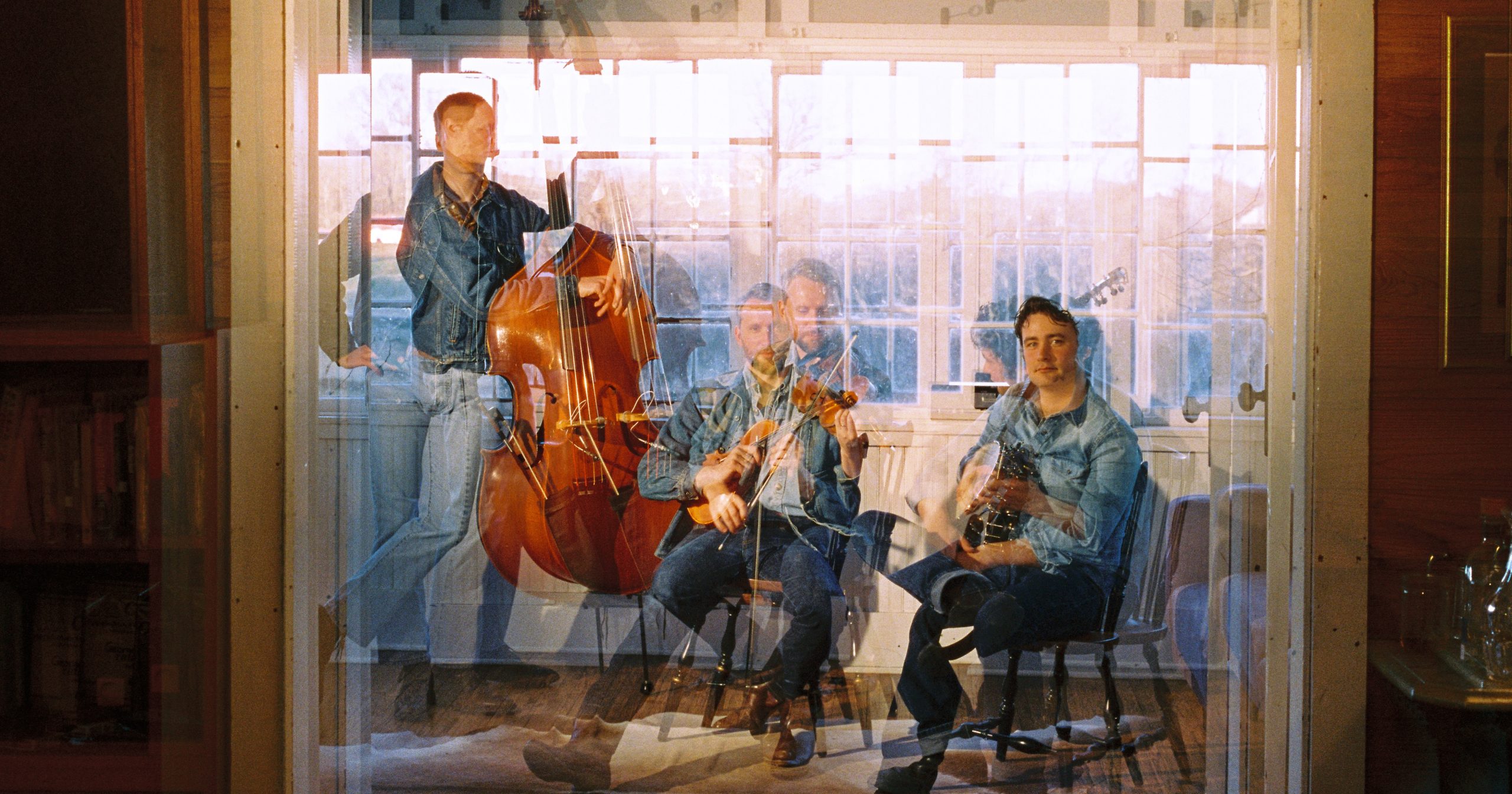
“(Banjoist Frank Evans) can go very deep in old-time as well as bluegrass music, and also has an interest and proficiency as an improviser and with jazz concepts. He just feels like such a natural fit for me musically. (Bassist Eli Broxham) has such a fearless spirit in the way that he approaches music.
“Fellow fiddle player John Mailander (Bruce Hornsby, Billy Strings) produced the record, collaborating closely with the trio to achieve this boundary-pushing vision. Something that I’m proud of with this record is that it doesn’t sound like music that has been made before — we were able to push old-time in genuinely new directions using arrangements, samples, and recording techniques.” – George Jackson
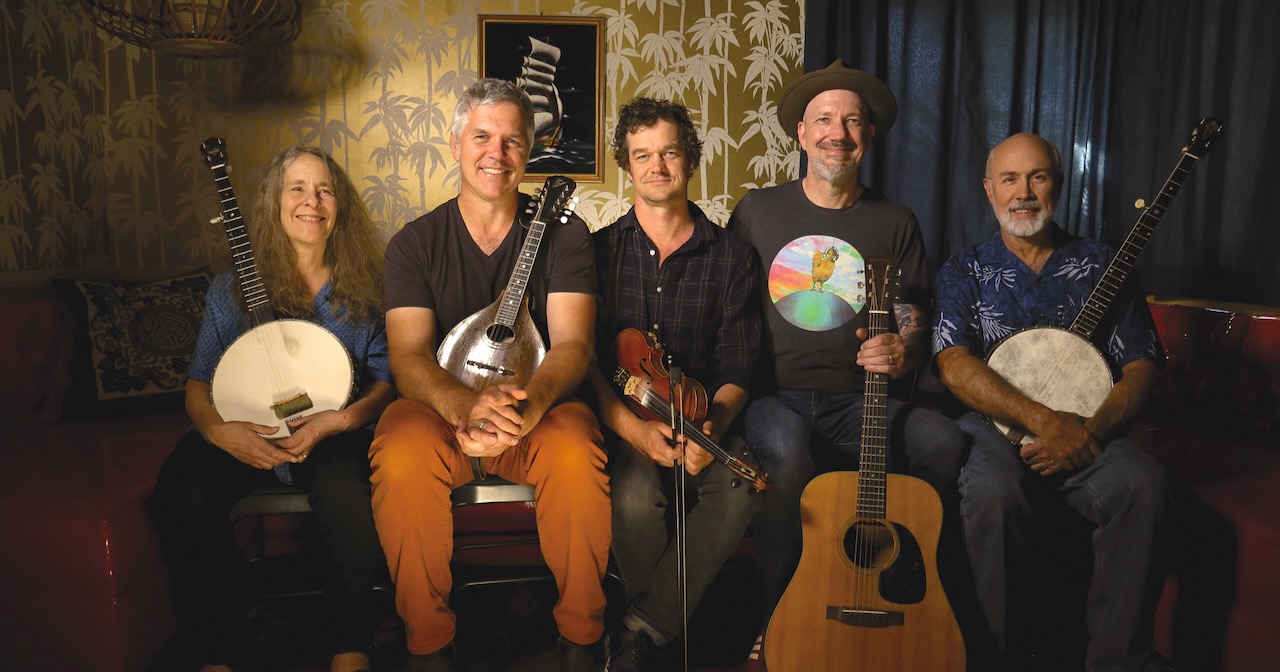
Artist:Hog-eyed Man Hometown: Currently based in Athens, Georgia Song: “Paddy on the Turnpike” Album:Kicked Up a Devil of a Row Release Date: July 14, 2023 Label: Tiki Parlour Recordings
In Their Words: “There are many great versions of ‘Paddy on the Turnpike,’ but this is the best one to blast with the car winows down when you’re sitting in bumper-to-bumper interstate traffic at 5:15 p.m. on a sweltering Friday. Jason got it from his Yancey County, North Carolina, neighbor Bruce Greene, who recorded it from Sammie Dyer of Macon County,Tennessee, in the early 1970s. Dyer was near 80 at the time and had a unique repertoire of regional tunes from the upper Cumberland Plateau. Reportedly, he lamented the commercialization of traditional music and loss of the old ways. This resonates with Howard Rains’ incredible cover art for our album, which depicts a rainbow dragon swarmed by modern aircraft.
“One of the joys of playing old-time music is forging and maintaining connections with the musicians and tunes of the past even as the contexts and communities around the music continue to evolve. We typically play as a duo or trio and rarely incorporate guitar, so it was fun to go for a slightly fuller string band sound on this one with Max on banjo and David joining on his 1959 Martin D-18.” – Hog-eyed Man
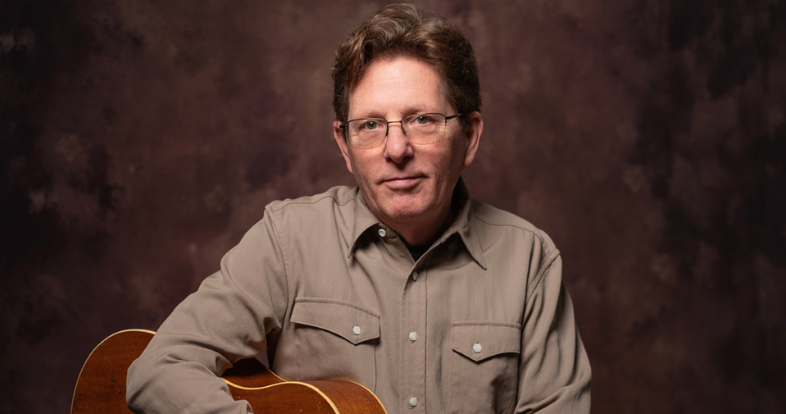
Over his celebrated career, which has now spanned nearly half a century, Tim O’Brien has gained notoriety as an instrumentalist and singer with the bluegrass band Hot Rize, and for his original songs, which have been recorded by Garth Brooks, The Chicks, Nickel Creek, and many more. In recent decades, the Grammy Award-winner has recorded as a solo artist and in collaboration with Darrell Scott, Dirk Powell, Sturgill Simpson, and most recently with his wife, Jan Fabricius.
We caught up with O’Brien on the heels of his annual trip to the Telluride Bluegrass Festival, where he is considered an institution, to discuss his new record Cup of Sugar, which sees him taking on the role of a societal elder. Throughout the collection of songs, O’Brien takes on the perspectives of several different animals as a way of learning from the natural world, as well as characters such as Walter Cronkite. In our conversation, O’Brien explores what it means to be comfortable with your role and direction as an artist, and clarifies his artistic goal – to continue being more and more himself.
BGS: You have a lot of animal references on this album, what do you think is bringing you to those themes right now?
Tim O’Brien: You know, it’s funny, I had actually written a song with Thomm Jutz called “Old Christmas Day” on January 6th. January 6th was Christmas in the Julien Calendar before they changed it to be more in line with the solar system. Anyway, the legend was that on Old Christmas Day, the animals all talk to each other. After writing that song I was actually thinking about trying to do a whole record of animal songs… but I went to a bunch of stuff I had already, so I decided to split it up. I think that’s what inspired the direction.
I love “Shout LuLu,” the song about the Tennessee border collie, who inherited the wealth of her owner Bill Dorris. Dorris was the subject of controversy because of the statue of Nathan Bedford Forrest, Confederate general and leader of the KKK, which was displayed prominently on his land facing the highway. How does the story of Lulu relate to the story of the KKK statue in your mind?
Well, a dog probably doesn’t see black or white, or understand discrimination. It’s just a dog, and maybe we all wish we could be that way… it’s hard to be innocent in this world, but a dog doesn’t care, and that’s what’s great about it.
The natural world can teach us a few lessons, that’s kind of like a running message through time. Human beings, since the first cave paintings, have commented on animals; they are interesting to us, and they represent different things. We study them and try to learn from them. I like what Lulu teaches us about the beliefs of her owner.
“Took Lulu to Hogan Road where Nathan Forrest’s statue stood/ She didn’t shout she didn’t beg, stood next to Forrest with lifted leg/ Statue covered with paintball pink, now it has a Lulu stink/ Don’t know from white supremacy, just knows a place she likes to pee/” – “Shout Lulu” excerpt
You talk in your record notes about having the perspective of an elder who has seen a lot of changes both in the world at large and in the music business, can you talk about this viewpoint and what you’re trying to say in these songs with regards to that specifically?
I’m closing in on 50 years doing this, I’m about to turn 70 this year, and so many things have changed. But the music still goes on, and people still make it for the same reasons; they want to express something, they want to tell a story, they want to connect with people… but the changes get harder and harder to adapt to as you get older.
Social media is so important now and it’s something I don’t really interact with at all. I’m lucky that Jan [Fabricius] does all of that, but it just doesn’t really occur to me. I probably won’t ever do it. These days you’re in charge of promoting your shows, because the clubs are kind of cutting corners, and they’re hurting financially, and that’s just the way it is. I’m just watching all of those changes and I’m kind of indifferent to them mostly. I try to keep my head down and just try to make my music.
Being an elder, well we lost two great mandolin elders this week, Bobby Osborne, and Jessie McReynolds. You just realize how much our music helps us define our lives.
Nancy Blake said once, “Ya know, people wonder why we sit around and practice our own material, but it’s kind of the way we define our lives.” I feel like that is true for me.
But you see these guys going, and it’s the last of the first and second generation going away… and you wonder who else is going away… I go watch Chris Thile and I say, “Take that baton and run with it, I’ll follow up on the rear!” I like to learn new things all the time, but mostly I’m trying to do the best I can in the direction I’ve already established and faithfully follow that.
I love the song “The Anchor,” which is told from the perspective of Walter Cronkite. What made you want to write about him? What does he represent for you?
Well, the way that the news is disseminated today is in a million ways. They shape it to a certain audience, and they shape the news to that, so you get a million different versions of the news. If you get happy with a certain outlet, maybe you don’t notice a lot of things going on… I think the same thing happened back when there were only three news outlet. But they weren’t selling it, they were propped up by other shows. They weren’t really competing for advertising dollars in the same way, mostly the networks realized they had to have a news thing. I was just thinking about that difference.
Cronkite was the trusted guy and when he made a telecast one night and said, “It looks to me like this Vietnam conflict, we can’t win it.” President Johnson said, “If I’ve lost Cronkite then I’ve lost the nation… I won’t run for president again.” Cronkite had a lot of power, but he was trying to remain neutral. It’s really hard, it’s hard to remain neutral about the news, and if there’s a truth in the news, it’s hard to reach it.
I’m addicted to the New York Times and I read it every day, so I’m just as much a part of this as anyone. I have my one outlet and I stick to it.
There are a lot of songs on this album told from a perspective that is not your own, was that intentional?
Actually, Danny Barnes brought it up to me, he said, “Do you ever write a song that’s not from your own perspective?” It was helpful to aim from that direction, but I think your own perspective kind of comes through regardless. It’s just the reverse of reading a novel and identifying with one of the characters, you kind of bring some of your own personality into it. Sometimes you have to trick yourself into writing songs, and I think trying for a perspective other than your own is one technique that helps.
How have you seen your songwriting or approach to songwriting change throughout your career?
When I first started writing, I was at sea about what to start writing about, and what’s good and what’s not good. Do you imitate others? Then you get some experience, and you get some good reactions, and you trust yourself more.
One thing that’s kind of more true for me now, in the last 10 years. I realize that in a certain way, I kind of write about the same things over and over, just different versions. Like, I’m always talking about, or trying to get people to see, the bigger picture and include everyone in my world. I used to worry that writing the same songs, [topically], was a problem, that I need to break it apart and start over… but then I realized that everyone I admire has their own thing that they do, and you just get better at it. Maybe you just continue to go deeper…
Thelonious Monk said that the genius is the one who is most like himself. That’s hard to find. I think maybe I found it and I don’t like it…
Just kidding.
Was there anything important about this record that was different from the way you’ve worked in the past?
Jan [Fabricius] and I have a cottage industry here, we have a cottage, and an industry. [Laughs] We’ve also been writing songs together. I think one of them is one of the better ones on this release, “She Can’t, He Won’t and They’ll Never.”
We also have a record label… and for the last record and this one, I’ve used artwork that I’ve drawn myself. I showed something I drew to [Danny] Barnes and he told me, “That’s so much better than anybody else could do it.” That kind of inspired me to do more of my own drawings. A lot of this is just continually becoming more and more comfortable with yourself.
Artist:Jeremy Garrett Hometown: Loveland, Colorado Song: “How Low” (featuring Bonnie Sims) Release Date: July 7, 2023 Label: Organic Records
In Their Words: “‘How Low’ is a cover of a solo artist named José Gonzalez. He describes the song as being about ‘mindless consumerism.’ I fell in love with the vibe this song encompasses and had a vision to see what it would be like to produce the song as a bluegrass-type ensemble piece. I brought in a couple of special guests for this one — Bonnie Sims of Taylor and Sims, Everybody Loves An Outlaw, and Big Richard is my singing partner (and she tears it up!) I also had Ryan Cavanaugh guest on banjo. I hope you dig it!” – Jeremy Garrett
Photo Credit: George Trent Grogan, Mountain Trout Photography
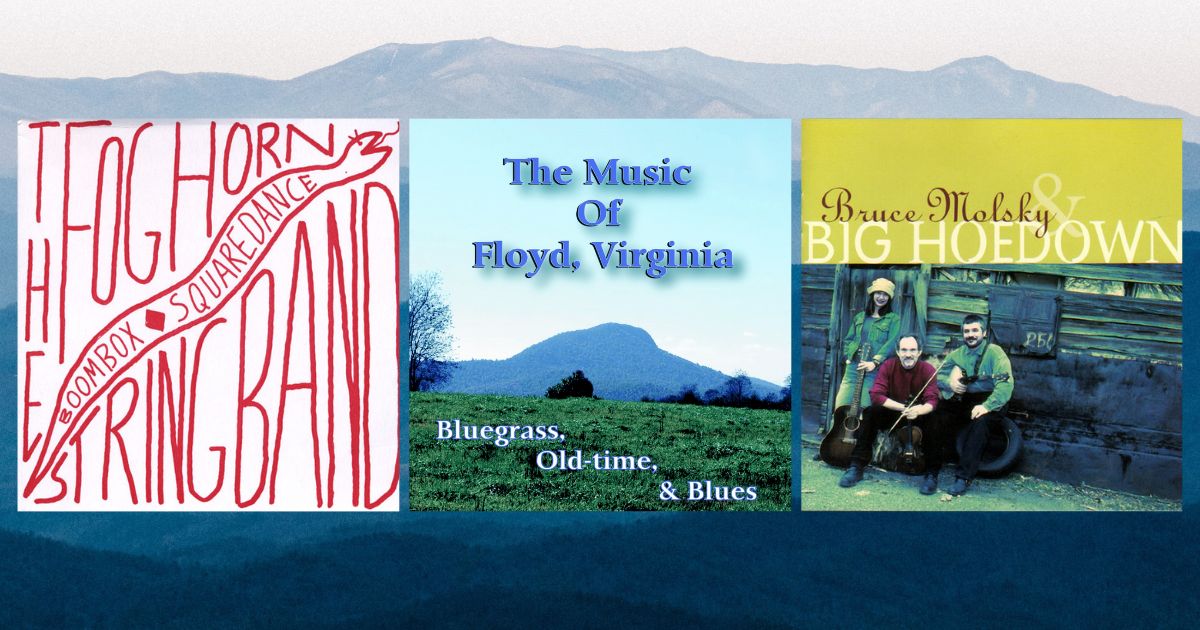
I love a great fiddle tune as much as the next person, but sometimes their names simply do too much. It’s not hard to imagine how these titles might have been changed and twisted over the years, in the game of telephone that inevitably exists in oral traditions. Some tunes, like “Shove That Pig’s Foot a Little Closer to the Fire,” have multiple rumored explanations for their names. Clawhammerbanjo.net discusses some of these possibilities in this lengthy explanation. We may never know for sure where these names come from, but here are 10 tunes that exhibit old-time at its most absurd:
“Jaybird Died of the Whooping Cough”
This may be a slightly traumatizing title for a post-pandemic society, but it’s still scientifically interesting. Can a jaybird, indeed, contract whooping cough? Here, the fabulous Foghorn Stringband research the situation.
“Dick’s Handspike”
What exactly was “Dick’s Handspike”? Do we even want to know? Hilary Burhans demonstrates, with a beautiful tune undeserving of such a blunt (or sharp?) name.
“Bullfrog on a Puncheon Floor”
Reportedly from the fiddling of Estill Bingham, Mark Gilston plays this lovely tune on mountain dulcimer. According to the University of South Carolina, a puncheon is an Appalachian term meaning “A split log or rough timber having one face smoothed by an adze, used for flooring, benching, siding of log buildings, etc.”
“Sal’s Got a Meat Skin”
In addition to meaning a literal meat skin, the term can also be used as an insult, according to Urban Dictionary. If you want to know more, you’ll have to Google it. Here, the Snake Hollow Stringband from old-time hot spot Floyd, Virginia, performs “Sal’s Got a Meat Skin.”
“Soapsuds Over the Fence”
Taking its place in a longstanding tradition of “naming the tune whatever is actively happening within eyesight at the time of writing” we have “Soapsuds Over the Fence.” Played in this video by the equally wonderfully-named renowned fiddler, Harry Bolick.
“I’m a Nice Old Man”
Nothing says “I’m not a nice old man” more than proclaiming, “I’m a nice old man.” This tune is credited to the playing of Melvin Wine. No shade on Melvin! He just played the tune, and allegedly was a nice old man. Here we have it reimagined on Leicestershire smallpipes by Moira Bracknall.
“Don’t Drink Nothin but Corn”
I feel that this tune’s title is missing its last word – “liquor” – but as a Midwesterner, I can’t put it past folks to drink straight corn. Nevertheless, this tune somehow made its way all the way to Sweden, here we have the Hot Corn Band performing it.
“Shove the Pig’s Foot a Little Closer to the Fire”
Perhaps the best-known of these outrageous tunes, “Shove the Pig’s Foot” has become a classic. Here is old-time royalty Bruce Molsky’s recording of the tune.
“Big Footed Man In the Sandy Lot”
This tune sounds like a clue in a murder mystery. Why exactly was that big-footed man in the sandy lot? Here’s a beautiful rendition from Lukas Pool.
“Hell and Scissors”
What is it about Hell and scissors, they just go together like bread and butter! Here we have The Moose Whisperers featuring BGS favorite Jake Blount playing a great version at Clifftop.
(Editor’s Note: Bluegrass Hall of Fame inductee and Grand Ole Opry member Jesse McReynolds passed away on June 23, 2023 at the age of 94. In his honor, we’re re-sharing this incredible first-person video from early 2020 that features McReynolds telling stories of his grandfather’s fiddle.)
A true legend as one half of iconic brother duo Jim & Jesse, 90-year-old musician Jesse McReynolds has inspired generations of pickers. But who influenced him? In this interview clip, the Grand Ole Opry star and Bluegrass Hall of Fame member reminisces about walking through the woods to visit his grandfather in Possum Holler, Virginia, near Coeburn. About a half a mile away, the sounds of his ancestor’s fiddle would greet him.
McReynolds further explains that his grandfather played on the Bristol Sessions, which ushered in artists such as the Carter Family and Jimmie Rodgers. Now, McReynolds has inherited that treasured fiddle, which can be heard on his latest Pinecastle Records album, The Bull Mountain Moonshiners’ Way. “I don’t know how long it’s been around, but it’s sounding better all the time, I think,” he says.
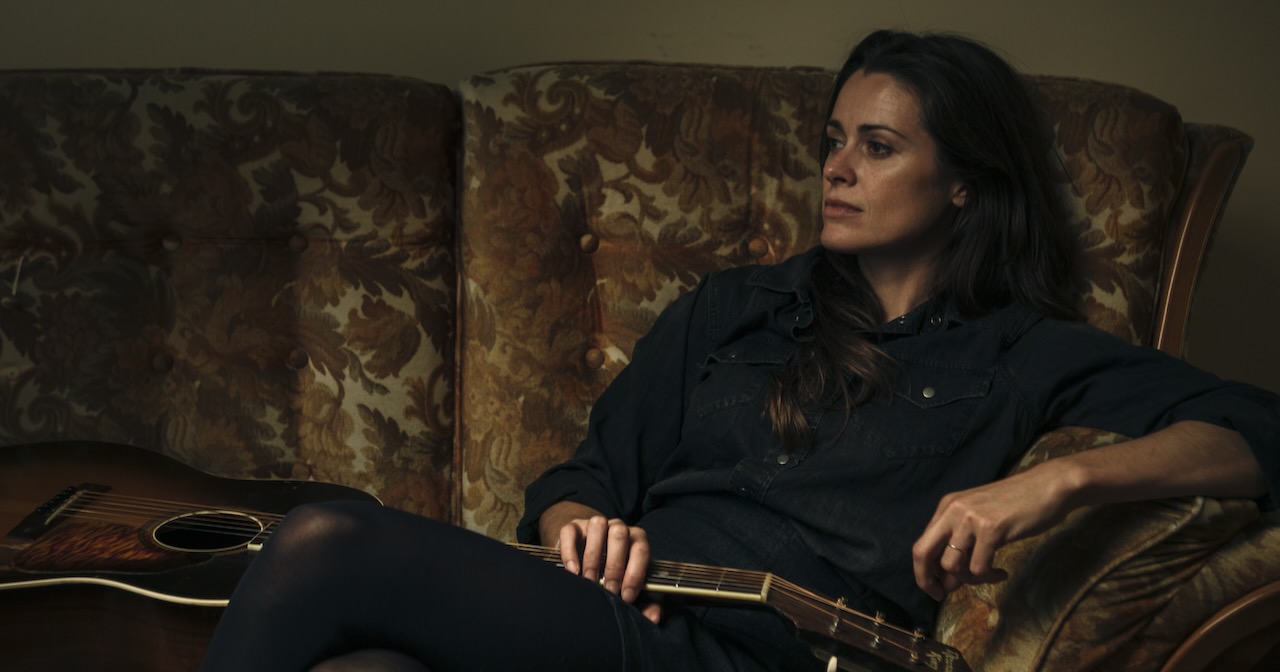
Caitlin Canty is in the middle — in the middle of moving houses (behind her when we connected on Zoom this spring is a Jenga tower of bankers boxes) and in the middle of prepping an album release, which we’re in the middle of talking about when she isn’t in the middle of pushing a pair of overeager dogs from her lap (“These dogs!”), all of which is taking place in the middle of her toddler’s nap.
The moving, the music, and the motherhood are taking place in the middle of her life (Canty turned forty-one in January) and the middle of her career: Quiet Flame, her latest record, is her fourth.
Oceans of ink have been spilled on beginnings and endings, on best new artists, and lifetime achievements. We rarely think about the middle, write about it, or sing about it. But Caitlin Canty does.
Quiet Flame is a dispatch from — and a celebration of — the middle; it is a testament to the in-between, to the precious spaces between day and night, birth and death, here and home. It is also a rallying cry, a call not to run from middle moments, but to revel in them. “Breakneck boy goes speeding by / In a hell-bent race to some finish line,” Canty sings on the album’s opening track, “Blue Sky Moon.” “I ain’t going with him… Gonna take my time in the middle of the road.”
This is a new message for Canty, one that asks the listener not to “get up before the road pulls you under,” as Canty sang on 2015’s Reckless Skyline, but to accept the road as it is, accept that it may pull us under, and enjoy the ride. “If the pandemic and [2020 Nashville] tornado taught me anything,” Canty says, “It’s all the things I thought I could control are out of my control. The natural world is beautiful. It’s also terrifying,” she exclaims with a half laugh, “it can just crush you in a second.” (That tornado missed her house by thirty feet.)
This new vision, however, hasn’t diminished Canty’s optimism. With a heightened sense of all that is lost and lose-able, Canty offers not less hope, but more. “Let it roll, let it ride / Let your sweet heart open wide,” she sings on “Pull the Moon.”
“I let go of a lot of things I thought were my fault, or my responsibility, things I thought I could do everything about, or take care of, or succeed at,” she explains. “And what I found was an ability to be happy in devastating moments in time. Even when it gets dark and troubled, to find a way not to ignore that — to address it — but to stay buoyant.”
It is this clear-sighted courage — what amounts to Canty’s profound musical and lyrical authenticity — that not only sets Canty apart, but draws so many of the acoustic world’s greatest artists into her corner. “Caitlin just has such a magnificent view of the world,” Grammy Award-winning guitarist and Quiet Flame producer Chris Eldridge says. “It’s so strong and true and clear and honest. You just believe it.”
Among those drawn to Canty’s vision — to her clarity, honesty, believability — are some of the greatest artists in contemporary music, making the Quiet Flame band a bona-fide acoustic supergroup: on banjo, mandolin, and harmony vocals you have singer-songwriter Sarah Jarosz (another Grammy winner); on bass, Paul Kowert of Punch Brothers and Hawktail (yet another Grammy winner); and on fiddle, Brittany Haas (also of Hawktail and the newest member of Punch Brothers), who is widely considered the greatest fiddler of her generation.
“Every artist has a vision,” Kowert says, “But I specifically would say I believe Caitlin. I believe her about what she’s seeing in the songs.”
“There’s such conviction,” Haas adds. “It’s so clearly from the heart.”
For Jarosz, Canty’s super-distinction is the totality of her authenticity and an unusual ability for Canty to “sound like herself” in every domain of her artistry. “Her ability to be herself within her songs has always been very obvious to me, before I even knew her,” Jarosz says. “My favorite singers sound like themselves when they’re talking — their singing voice is a genuine extension of them, their personality. Tim O’Brien has that, Gillian Welch has that, Caitlin has that. It’s almost like Caitlin’s voice is so true —it’s like it’s not an option for her to be anyone but herself. And the songs are also that way.”
The songs of Quiet Flame mark not only a musical achievement, but an achievement of spirit. “It takes a very self-assured, fully realized human being to be able to make a record that’s this exposed,” Jarosz continues. “The record takes its time. It takes a very mature musician — and person — to have the courage to let these songs unfold the way they do.”
It is no small feat that Canty manages to make this deliberately slow journey, this taking our time in the middle of the road, so arresting. Such is a testament, of course, to the music as music; to Canty’s voice (“Caitlin, in her way, is as good a singer as exists,” Eldridge says); to her effortless melodic sensibility; to what Haas calls the unusual “variety and diversity of what [her] songs are like, what they allow and make room for texturally.” It is also a testament to the production vision of Eldridge, who Canty calls the perfect “co-pilot,” and to his attention to the “big picture.”
Each member of Canty’s bandoffers a tour de force on their instruments. In Canty’s words, Kowert is a “Multi-instrumentalist on his instrument… essential, the strongest foundation… my favorite bass player I’ve ever played with”; Haas is a “Flamethrower! Her fiddle is an electric guitar! It’s grit and mournfulness — not sad, defiant; not sorrowful, defiant”; Jarosz is “Just insanely good — insanely good singer, insanely beautiful instrumentalist — the most solid partner; she held it down!”
In turn, the band is quick to praise the rare musical freedom Canty affords them. “She makes so much space for other musicians in her music,” Haas says. “She’s really good at being like, ‘I hired you to be you,’ instead of, ‘I want you to do this very specific thing that involves only playing these four notes.’”
The result? The band gets to see their true selves in the work — even their best selves. “‘Odds of Getting Even’ is one of my favorite performances I’ve ever played,” Kowert remarks. “My playing on that song is really exemplary of something that I am uniquely able to do, which is bowing the bass that way, driving the rhythm with the bow.” Multi-instrumentalist Noam Pikelny (still another Grammy winner), who is featured on “I Don’t Think of You,” says much the same: “[It’s] easily one of my favorite examples of my playing captured on record.”
Most of all, however, the success of Quiet Flame’s slow burn is owed to the trust Canty engenders in her audience. It is a trust natural to Canty, but made all the more affecting by her decision, for the first time in her career, to make an entirely acoustic record. “Intimacy is just kind of baked into the nature of acoustic music,” Eldridge explains. “You just intuitively understand that what you’re hearing is what can happen in somebody’s living room. So when you commit to doing a string band record, you’re committing to a certain kind of intimacy. It casts the artist, and the songs, in a different light—in a light that asks the listener to lean in a little bit more, asks the listener to be a part of a moment.”
It is with the listener leaning in close, grounded in the moment with Quiet Flame, that Canty offers a vision both audacious and convincing, that she shares the unmistakable and unshakeable sense that all will be well; that even in the face of so many black holes, we too will be okay; that we, like Canty, will arrive “by the highway home” – a lyric after Robert Frost.
“They all told me love could feel this way,” she sings. “I never thought I would see the day.”
It is the peculiar gift of Caitlin Canty that when she says love can feel “this way” – or even that “nothing’s gone, only changed” – one can’t help but think she’s right.
If you were to try to typify bluegrass as being about any one singular thing, that one thing might be family. Not just biological family, but musical family, chosen family, and the way the music survives generation to generation, passed down as a folkway and aural tradition. Often, though not always, this music is a family tradition, passed along family trees like an heirloom or like more typical family businesses.
John Cloyd Miller and Natalya Zoe Weinstein, bluegrass duo and band leaders of Zoe & Cloyd, have made a brand new album that, on the surface, might just seem like a standard bluegrass album paying homage to the folks who came before them, their forefathers. But Songs of Our Grandfathers is so much more complicated and nuanced, wrinkling a format that’s as old as these genres themselves: the tribute album.
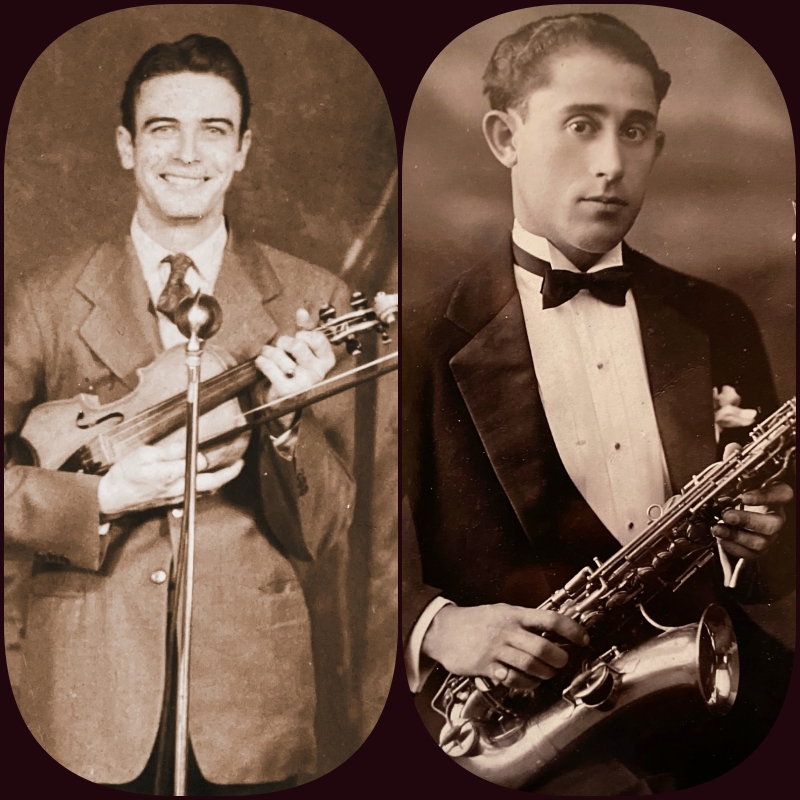
On the new record, released in May on Organic Records, John and Natalya pull songs from the catalogs of their musician grandfathers. Miller’s grandpa, Jim Shumate, was a renowned Western North Carolina fiddler who played a stint in Bill Monroe’s Blue Grass Boys and can be accurately credited with helping get Earl Scruggs the banjo gig that made him famous. Natalya’s grandfather, David Weinstein, was a working klezmer musician who fled unrest in Russia, moving to the U.S.
The artful way this pair of musicians and life partners combine the styles of their families, of their youths, and of their present lives together, as touring, professional musicians, feels expansive, rich, and bold, like newgrass that’s never been newgrassed before. But, there’s a timelessness here, a patina, that speaks to the greater tradition this record can lay claim to perpetuating. (Thank goodness.)
Songs of Our Grandfathers isn’t just nostalgia, heritage, lineage, legacy- and canon-building. It’s not just carrying on tradition for tradition’s sake. It’s effortlessly and wholly bluegrass because it innovates, it complicates, and it challenges its listeners to think outside of preconceived notions of what bluegrass, string band, and old-time music are. Because that’s exactly what bluegrass’s grandfathers, grandmothers, and grandparents were doing as they invented this music.
We began our phone chat about the new album discussing each of their grandparents and their musical idiosyncrasies.
Can we start by talking about Jim Shumate? His presence is throughout the record and he’s influenced you both, can you tell us a bit about him and his music making?
John Cloyd Miller: He was born in 1921 in Wilkes County, North Carolina, on a mountain called Chestnut Mountain. He started playing fiddle as a young boy, as a teenager. His older brother Mac, who was 10 years older – the same age as Bill Monroe – got him his first fiddle, which is a fiddle he kept his entire life and we actually have, now. It’s an old Sears & Roebuck Strad copy, but he played some tone into it! His Uncle Erby played fiddle so he heard him a lot growing up and then he got into Arthur Smith and all that kind of stuff. He moved to Hickory when he got older, when he was a young man, and was playing on the radio down there when Bill Monroe heard him and asked him to be in the Blue Grass Boys. That was the time that Stringbean was in the band and Sally Ann Forrester, too.
When Stringbean decided to leave the band and go off with Lew Childre, Bill needed a banjo player and it’s now a pretty well known story that Jim knew a banjo player – he knew Earl Scruggs – and really pushed, begged him really, to audition for Bill. Earl was pretty reluctant to do it, but he did, and the rest is history. Later on, when Flatt & Scruggs broke off [from the Blue Grass Boys], Jim was their first fiddler, as you know. He recorded on their Mercury sessions. But he didn’t like touring, he wasn’t a touring kinda guy at all. He had four kids at home – three at the time, when he was younger, and one later.
Natalya Zoe Weinstein: He liked Mama’s cookin’.
[both laugh]
Jim Shumate, L (John Cloyd Miller’s grandfather); David Weinstein, R (Natalya Zoe Weinstein’s grandfather)
JCM: He did! He liked his own bed and grandma’s cooking, for sure. He liked to go up on the mountain. He worked in the furniture industry pretty much his whole life, but he also had his hand in the music. He ran a place called “Cat Square,” kind of a small town sort of Hickory Opry, a music show. He was always playing. I have photos of him through the late ‘40s and through the ‘50s with all sorts of people, Don Reno – all those guys. He made records and he had his own band called Sons of the Carolinas, which had George Shuffler in it and some other guys. He was always playing. He played with Dwight Barker and the Melody Boys; he did some sides with Don Walker, who he played with before he met Bill Monroe. He was always making music.
After Flatt & Scruggs it was largely regionally, because he wasn’t out touring, but he said people would always come by. Any time guys like Lester and them were in town they would always drive the bus and park it right in the yard. He was always in the music, but his influence was not felt as widely later on, I think because he wasn’t out [touring]. He did come back to recording in the ‘90s and made five cassettes for Heritage Records and those got disseminated kind of regionally. Michael Cleveland cut one of the songs that was on one of those tapes a year or so ago. People know his music, but we enjoy getting his legacy out there a bit more. He’s got such a unique style and certainly was influential.
He was a great songwriter, too! He was my main musical influence. I heard him play a ton growing up. He was so bluesy and slidey, he was a real master of syncopation, which is something that got ingrained in me. People always forget about his songwriting, but the way I grew up, I always thought that being a musician meant that you sing stuff, you write songs. You pick, too, but you do all of it. It was just part of being musical and I think that came from him as well.
It makes me think of, well, I talk a lot about how the most “bluegrass” someone can be is being innovative and being themselves, whether that comes across as “traditional bluegrass,” genre-wise or not.
JCM: That’s really insightful and it’s so true, when you look at those early players – everybody always looks at the first generation and, that’s good, that can be very grounding, but those guys were all unique! They were all unique artists, they had their own styles – sure, they were listening to one another, but Lester Flatt doesn’t sound like Bill Monroe who doesn’t sound like Carter Stanley. They don’t sound like each other!
Natalya, I wanted to ask you about your grandfather, too. If you could tell us a bit about the musical influences that represent him on this record, as well.
NZW: He passed away when I was fairly young, my dad had me when he was fifty-one, so my grandfather was quite older than me – I think I was eleven when he passed away. [My father and he] had an interesting relationship; he wasn’t always a well-liked man. He escaped a lot of violence and poverty in Russia, so he wasn’t a very kind man and my dad didn’t have a very close relationship with him. I don’t have any audio recordings of his music, I have a couple of audio interviews that my dad and uncle did with him, but I don’t have any recordings of his music.
My dad was moving a few years back and found all these old music notebooks from my grandfather. He asked me, “Do you want these old, handwritten, junky notebooks?” And I was like, “Yes!! Please give those to me!” [Laughs] That was the source, for me, for my grandfather’s music. I didn’t have one-on-one experiences with him, I didn’t have recordings of him, so these notebooks are really the only link to his music that I have. We have about five or six notebooks that have songs in them – they’re pretty hard to decipher, they’re forty or fifty years old. They have all different kinds of material in them, from klezmer to mambos and tangos even to “Tennessee Waltz,” which shows up in one of them as a jazz standard. He also played some classical music, he didn’t do just one singular thing. Klezmer players were like the wedding band musician of their time, where they had to play a bunch of different styles based on who their audience was.
JCM: We definitely got a little bit of a sense of who he was from these audio interviews that her uncle and dad had made with him. We got to hear his voice, you know he didn’t speak English very well so it’s mostly in Russian and Yiddish. You get a sense of some of the stuff he saw, in these interviews. You can tell it hardened him.
NZW: He had a tough life for sure, he struggled a lot and music was really the only thing [he did]. He wasn’t really educated. He talked about how when he came here [to the U.S.] he tried to be a plumber and he tried to be an electrician, but he kept making mistakes. He said, “I couldn’t do anything except play music.” He felt almost like he was stuck with it. He loved it and he was passionate about it, but I got the sense that it was his only option.
There’s a similar energy from both grandfathers around being musicians, but not just in a traditional touring, “road dog,” sort of lifestyle.
NZW: You’re right, and they were both kind of skeptical of the past.
JCM: They both came from very humble beginnings. My grandfather didn’t have any education, either. Natalya’s grandfather, apparently, escaped the Bolshevik revolution on a hay wagon. He was a teenager and they were trying to conscript him into the army to fight – it’s crazy stuff!
Bluegrass is always considering lineage and tradition and how those things are passed along. One of the things that I think is really interesting about it is there aren’t a lot of marginalized identities represented in the historical record of bluegrass, but there are Jewish identities represented. There’s not a whole lot of representation as you go back through the years, but it’s there. How do you connect the music you’re making, that’s infused with Jewish influences and has that cultural identity, to past Jewish music makers in bluegrass and string bands? You’re clearly thinking about lineage and family with this record, and that’s so bluegrass, but through a different lens with your Jewish identity and the other cultural music styles on the album, too.
NZW: David Grisman was one of my biggest musical influences early on, he was a big bridge, for me, between my dad – who plays jazz – and the bluegrass connection as well as the Jewish connection. We talk about how this album was inspired by Songs of Our Fathers, the 1995 album by David Grisman and Andy Statman. Andy Statman, who played on the record, is another one – one of the first shows that John and I went to see when we met in Asheville in 2005 or 2006 was to see Andy Statman at the Black Mountain Center for the Arts, which is this tiny little listening room. It was an incredible show, I remember just being blown away. I remember thinking, “Wow! What a cool fusion.”
JCM: That was the first time we heard that fusion with klezmer music. He was also playing clarinet, he was playing mandolin. He is the bridge between these kinds of music. David doesn’t do as much klezmer, but those two guys together for sure.
NZW: John and I both came into bluegrass through the Grisman/Garcia connection then I kind of worked my way back from there. Someone gave me a burned CD of Bill Monroe and I was like, “Oh my God, what is this!?” [Laughs]
JCM: So many people have stories like that. That Old & In The Way album was such an influential record, it was like the number one selling bluegrass record for a long time.
NZW: Yeah, the way I got into bluegrass, I was out in Tacoma, Washington, for an anthropology conference in college and somebody at my hotel was like, “I’ve got an extra ticket for Wintergrass, which is happening right next door.” I said, “Okay, cool!” So we go and I saw Old & In The Gray there [Peter Rowan, Vassar Clements, Grisman], it was an incredible experience. I didn’t really know what I was seeing at the time, because I was so new to bluegrass, but that was my “Ah ha!” moment. Someone handed me a fiddle and I dunno, I played “Angeline the Baker” and that was it! [Laughs]
JCM: When I first heard Grisman play mandolin, his tone and everything, that was like sinking a hook into me. That’s why I even wanted to play mandolin. I wanted to work on getting tone like that! He was a huge influence on so many of us.
Going back home one time, when I had been living out West or whatever, I was listening to Old & In the Way or something and I asked, “Grandpa, do you know this stuff, like ‘Pig in a Pen,’ and all this?” And he was like, “Oh yeah! I know everything on this record!” And he would play them, and that was so cool to me. I hadn’t quite made the connection before. He asked me, “Who’s playing fiddle on that record?” And I said, “Vassar Clements!” He says, “Oh yeah, that’s a good friend of mine!” I was like, “WHAT!?”
[both laugh]
JCM: I was just this stupid, deadhead college kid – I mean, I’m still a deadhead – but it really clicked. This is a bridge between grandpa’s world, which had always seemed like something in the past, to my world as a young, coming-of-age musician, realizing, “Oh, it’s all the same stuff!”
To an uninitiated listener, they might hear your record and they might hear the influences that aren’t “traditional bluegrass” as modern cross-pollinations, as something that’s coming from you both and your generation and your own creativity. But, I really wanted to unpack the lineage of the music, because I can sense even in the playing on this album that colors “outside the lines,” it’s clearly part of this bigger tradition in bluegrass of being a bridge between these kinds of disparate parts. Even this “nontraditional” album you’ve made is based on so much tradition – familial tradition, cultural tradition, musical tradition.
NZW: I think we wanted to honor those traditions and where these songs came from, but we also wanted to put our own spin on it. We hope our grandfathers would have liked that!
JCM: [Jim Shumate] was very much a traditional musician, but he was always innovative at the same time. Some of the things he did in the ‘50s were very jazzy, with electric guitars playing with him. And he always loved Natalya’s playing. You know, Natalya came from a classical background and anytime she would play something classical for him–
NZW: Or a waltz.
JCM: He just loved to hear her play. They didn’t sound like each other, they had very different styles, but he was always very open and he loved everything.
NZW: I think he would like [the album]. John’s mom texted us yesterday as she was listening to it and said, “I think grandpa would’ve enjoyed that!” So hopefully our grandparents aren’t rolling over in their graves.
[Both laugh]
Photo Credit: Sarah Johnston
This website uses cookies to improve your experience. We'll assume you're ok with this, but you can opt-out if you wish.AcceptRejectRead More
Privacy & Cookies Policy
Privacy Overview
This website uses cookies to improve your experience while you navigate through the website. Out of these, the cookies that are categorized as necessary are stored on your browser as they are essential for the working of basic functionalities of the website. We also use third-party cookies that help us analyze and understand how you use this website. These cookies will be stored in your browser only with your consent. You also have the option to opt-out of these cookies. But opting out of some of these cookies may affect your browsing experience.
Necessary cookies are absolutely essential for the website to function properly. This category only includes cookies that ensures basic functionalities and security features of the website. These cookies do not store any personal information.
Any cookies that may not be particularly necessary for the website to function and is used specifically to collect user personal data via analytics, ads, other embedded contents are termed as non-necessary cookies. It is mandatory to procure user consent prior to running these cookies on your website.