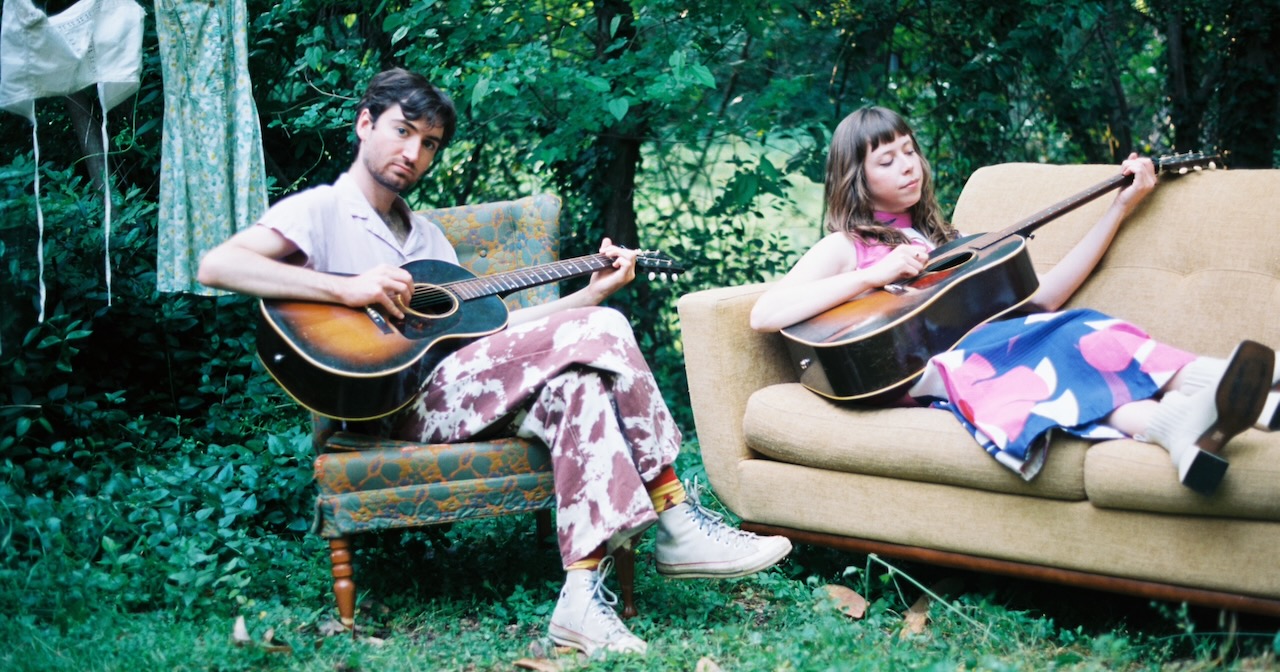
One to Watch: Viv & Riley Are Much More Than Just Old-Time or Americana

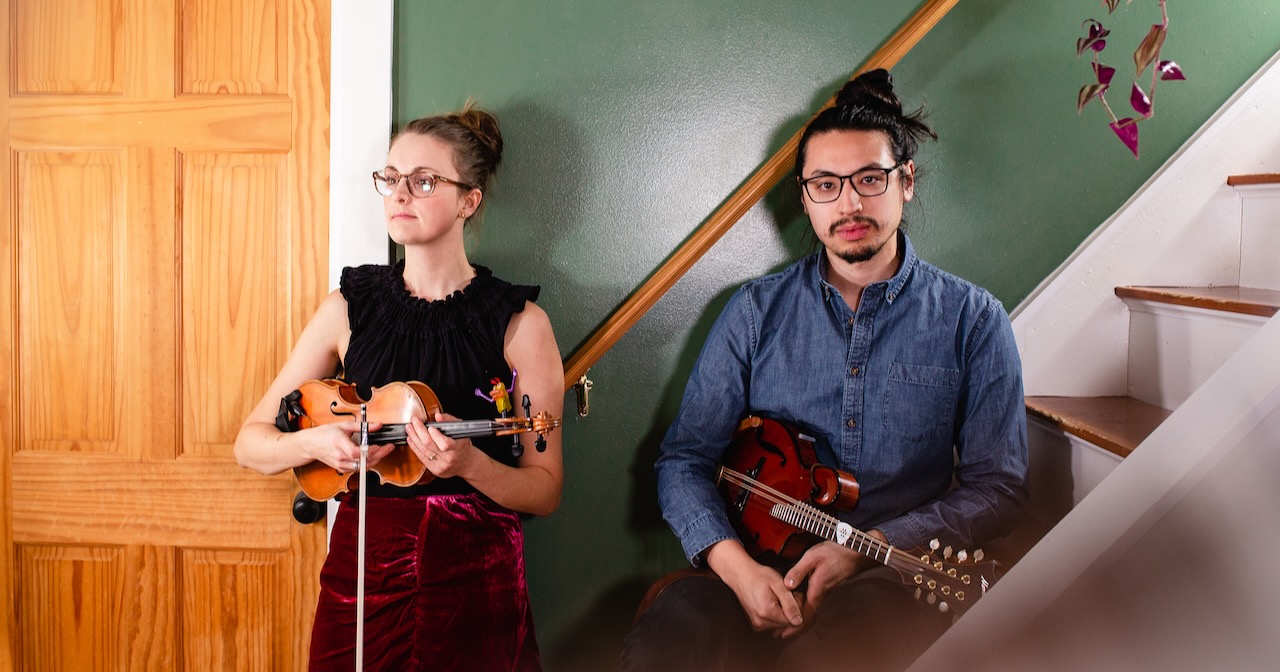
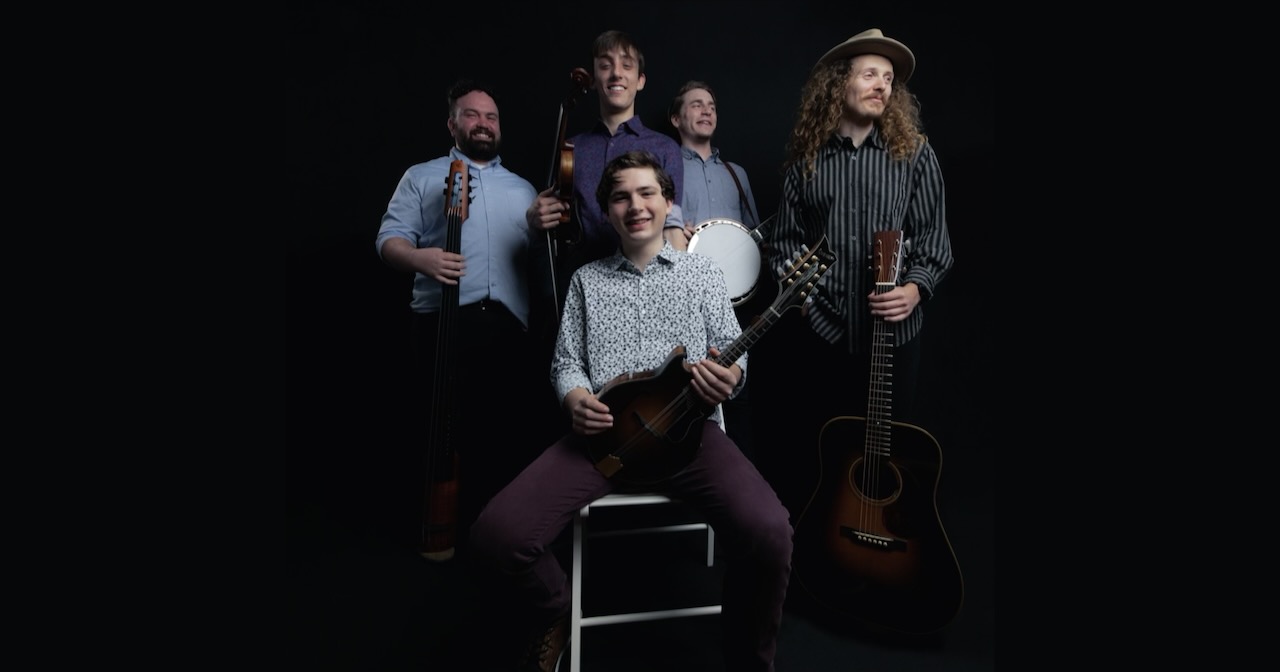
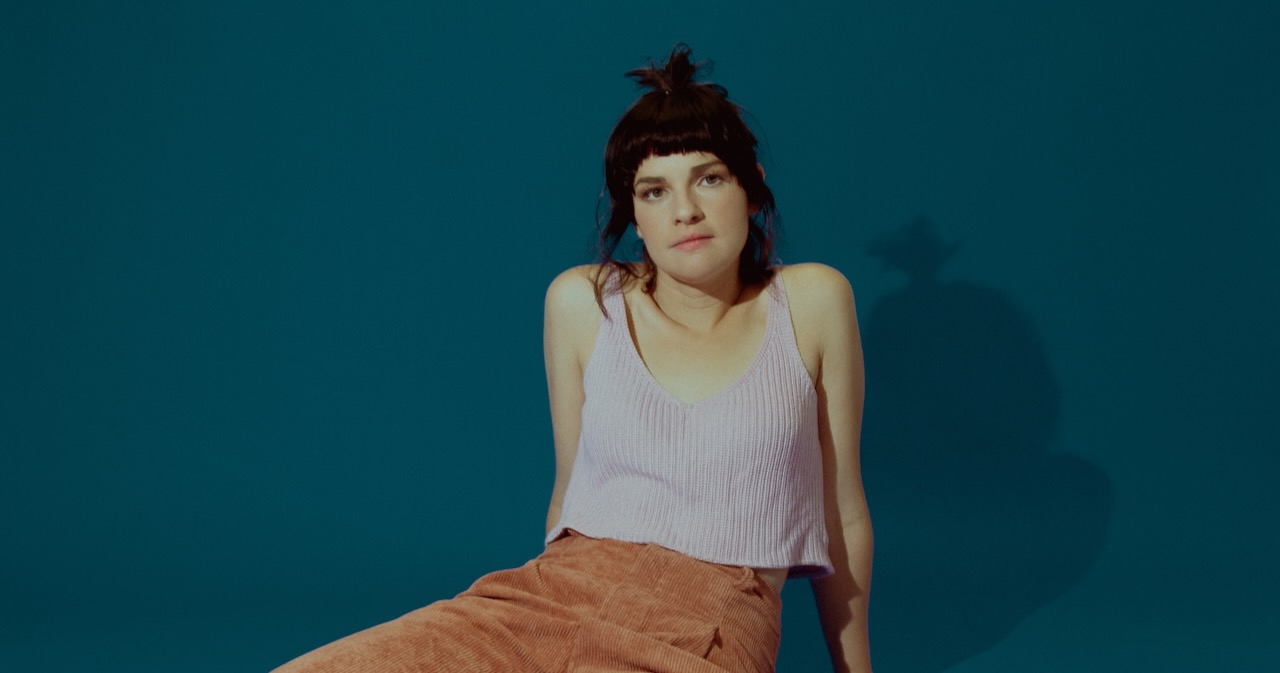
Comprised of singer-songwriters and instrumentalists Vivian Leva and Riley Calcagno, Viv & Riley are an up-and-coming musical duo that defy definition. Their new album, Imaginary People, is a masterful blend that weaves together their shared reverence for traditional Appalachian music alongside indie-folk, pop-leaning adornments. The result is an emotionally potent 10-track album that covers a vibrant range of personal and universal truths — from the bittersweet nostalgia of visiting a beloved childhood hideaway decades later, to the poignant curiosities that accompany reckoning with climate grief.

Based out of the dynamic music scene in Durham, North Carolina, this duo is currently on tour across North America. With their insightful explorations of the past and creative probings of the future, Viv & Riley uncover rich and complicated explorations of what it means to be alive in this precise moment.

So how did the two of you first start making music together?

Vivian Leva: Well, we first started making music together when we first met in 2016, the summer after we both graduated high school. I grew up in Lexington, Virginia, and Riley grew up in Seattle, Washington, and we just happened to meet at a camp in Port Townsend, Washington. It’s one of those camps that has weeks back to back — there was a vocal week that I was teaching with my mom, and then Riley came to teach fiddle the following week. We happened to overlap by a few days, and Riley was there with his band The Onlies. The first night we met, we played music together all night! After that, I joined the band, and we also started playing together as a duo and writing songs.

Riley Calcagno: The origin of our sort of band, our duo, came later that year, in the fall. We had been communicating and texting some music back and forth, and then Viv invited me down to Asheville to play a gig with her and her dad. I was a fan of her dad, James Leva, for his fiddle and singing, so we did that gig. But we thought it’d be also fun to try out some duo material while we were down in the same place, even though we had never played songs just the two of us. We emailed a venue in Asheville called Isis Music Hall, which was a prominent venue there at the time. Somehow they slotted us in, on a Wednesday night, into this big hall that they had — 200-person capacity, maybe bigger. We had never played music together going into that, but we put together some material and we enlisted some friends to play with us. It was a bold move! Talk about faking it until you make it. Only about 15 people came out to the show, and I’m sure it sounded terrible. But it was fun!

That sounds amazing. So how would you describe your musical chemistry? What is it like playing together?

VL: ​​Well, I think our initial musical chemistry initially came from our shared background in old time music and traditional music. That first night that we met, we played a lot of fiddle tunes, old music, and traditional songs. So it kind of began from a place of excitement about being exactly the same age, having never before met, and somehow both being raised around this same music that we have a shared respect and love for. So that was the initial spark of actually finding another young person who’s into the same niche genre and community. But since then it’s totally stretched into other realms. We are both so open to other kinds of music, and we have very similar tastes and aesthetics. It’s very easy to create music together because we come to it from a similar place.

RC: One of our dynamics in making music together has also been sharing our individual strengths with the other person. When we first started playing together, I couldn’t really sing harmony or find a harmony part. Vivian was very patient with me and helped me learn, and I still feel like I’m getting better all the time. That’s exciting!

VL: I just play guitar, and Riley plays every other instrument. He’s a great fiddler, guitar player, banjo player, mandolin player— instrumentally he brings so much to the table. And I feel I bring a lot of singing and songwriting-focused material to the table. We stretch each other, fill in the gaps for each other, and learn from each other.

What a beautiful thing! So what do you each feel like the biggest difference in your respective musicianships is?

RC: Viv is a very natural musician. She grew up traveling around with her parents as they toured, sitting in on harmonica at her dad’s gigs when she was only three or four. I also was born and raised around music, but it was a bit more formalized, whereas Viv’s music just comes very naturally and it’s not forced in any way. She does what she does super well and consistently and steadily, and I’m a bit more erratic. I take chances and get obsessed with things and take big leaps that sometimes fall flat. Every time she steps on stage, Viv can knock out a great performance, and I feel more streaky.

VL: But he tries lots of different things! And like he mentioned, Riley has a more formal background in music. He took lessons, he learned how to read music, he knows music theory, he did classical violin. So I think a big difference is that he technically knows what’s going on, whereas I don’t have the language or skills that he has. I’m definitely more intuition based than technically based.

You really balance each other out! So your new album, Imaginary People, just came out on September 15, and I’m wondering how your songwriting, as it appears on this album, has shifted since you first began as a duo.

RC: Well, in the past, before we started writing music for this record, we were living in different places so it was a lot of collaboration from afar. A lot of the songs on our last record came from texting voice memos back and forth. And you know, it’s not utterly different to work on them in person, but some of these new songs came out playing them together in the moment.

VL: Another big difference is Riley has started writing way more. So I think there’s more of an equal voicing on this record than in the past. There’s more of his perspective in it. And I think now that we’re living in the same place it’s also allowed us to write about a more diverse range of things. We’ve written a lot of intense emotional, romantic songs in the past, but in this recent past couple of years, we’re more interested in other things, like our shared experiences about other parts of life.

RC: And it’s also partly stylistic. Our last record was pretty much a country record. During that time, I was listening to a lot of classic country music, and this time we were listening to a wider range of things. Having a broader array of influences definitely helped us push the narrative forward.

What are you each proudest of on the album?

VL: I think what I am most proud of isn’t a specific track or anything — mostly it’s this feeling that I unlocked something. I think I let go of some fears in the process of making this record. I felt more free to just say yes to trying new things and became less concerned with things like what genre it was going to be considered, or if the people who liked our last record would like this record… and so on. I stopped worrying about categories like, “This doesn’t sound traditional enough,” or “This isn’t country enough,” or “That’s too rocker or indie.” Instead, I was able to adopt the mentality of “Hmm, that sounds interesting, let’s try and just do what feels fun!” I think I’m most proud that I was able to do that. It felt amazing to take things a little lighter and to roll with ideas that felt a little outside of the mold.

RC: When you start making music, being young musicians, you get immediately labeled. It’s not something that I think either of us necessarily anticipated, but when that first record got classified, people said it was Appalachian and classic country. And then the next one was classic country and Americana. Like “Hits-the-Spot Americana,” whatever that means. And I think there’s an urge for musicians, when you get labeled as something, to keep reproducing it. There’s this toothlessness to the modern Americana music label— it’s the creation of music that is literally meant to sound like other music under a category. I don’t have a problem with genre or specifications, I think it’s oftentimes useful, but it’s [useful] when you’re trying to reproduce sounds so that you can cater to an audience, it’s like you’re trying to sell something in a market that’s already been created. I think that can be the “dampification” of art. And while I think there’s been so many amazing things created within the Americana industry, I also think it often leads to less creativity and less interesting music.

Coming out of our last record, we had some buzz in the Americana world, and it would have been easy for us to make another “Hits-the-Spot Americana” record. But I don’t think that we did that, and I feel proud of that. Like Viv was saying, we didn’t just do what we were supposed to do. You know, there’s synthesizers, but there’s also a fiddle track, and personally, I think it all works together. So maybe if you’re an Americana devotee, you’re not going to love this album, but that’s okay with me. I think there’s a power in making an album that the machine doesn’t really know what to do with. The machine can make up albums and spit them out, but I feel proud that this one isn’t something that can just be spit out because of how we combine traditional and non-traditional music. For example, there were super organic moments where we all stood around one mic and sang together, coupled with other moments where we had things locked in, produced, and added synths because a particular song called for it. Making those two things coexist in the same ecosystem was definitely a challenge, but listening to the record, I think it all makes sense together.

It’s an album full of teeth! Now, before we wrap up, I have to ask: you’re our One to Watch, but who are you watching right now? Any creatives, musical artists, or otherwise that are inspiring you right now?

RC: One is our neighbor in Durham, North Carolina, Alice Gerrard. She’s almost 90, and she’s putting out a record on this indie label from the area called Sleepy Cat. She’s collaborating with a bunch of young people and their art for the record, like making these amazing videos. It’s a really cool thing! People around here are really conscious and thoughtful about aesthetics and sound and ethos. Everything is done with integrity, so it’s a cool scene around here in that way. Alice makes amazing music, I’m really excited for her upcoming record — I think we’ll all be glued to it once it comes out. Another one is our friend who we wrote two songs with on our previous record, “Love and Chains” and “Time Is Everything”— often people’s favorite songs of ours. I just had the honor of producing his upcoming record under his band’s name, Preacher & Daisy. I love the music, so I definitely want to give them a bump! The fun thing is that all this music is sourced locally from the Durham, North Carolina area, where we’re based.

VL: Some folks I’m enjoying listening to right now, not that they’re not already being watched, are: KC Jones, Canary Room, Dori Freeman, Alexa Rose.


Photo Credit: Libby Rodenbough
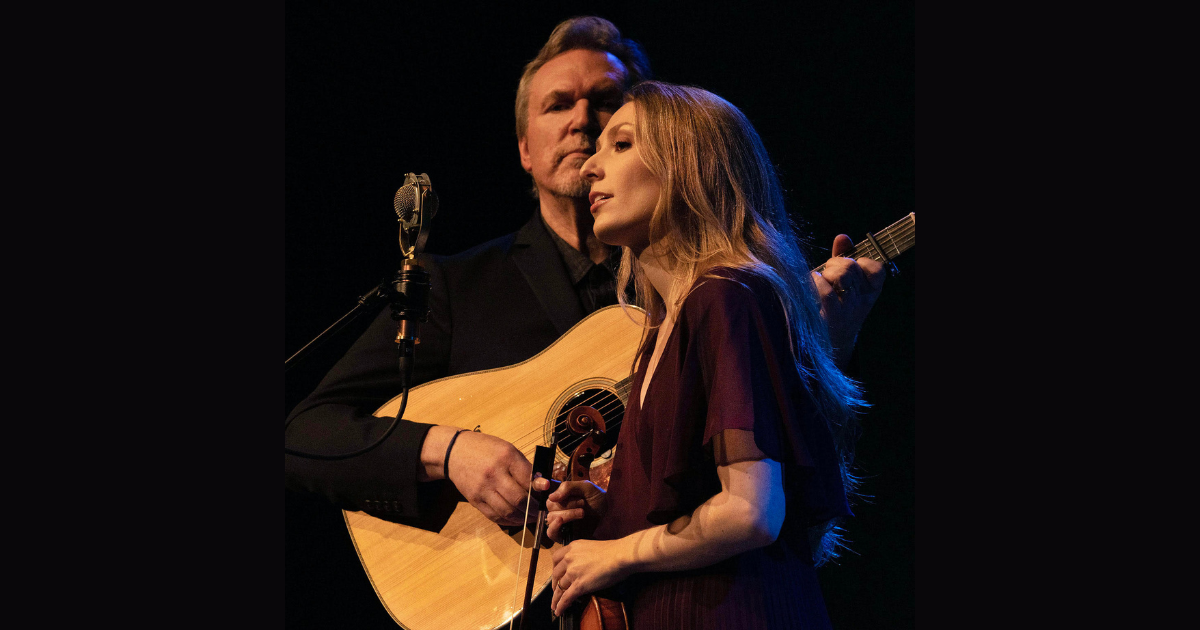
WATCH: Mark & Maggie O’Connor, “All We Will Be”

Artist: Mark & Maggie O’Connor
Hometown: Charlotte, North Carolina
Song: “All We Will Be”
Release Date: September 30, 2023
Label: ONErpm/OMAC Records

In Their Words: “‘All We Will Be’ is one of our new vocal songs where we reach for a more contemplative place in words and music. There is such mystery and intrigue with the lyrics, by my co-writer Joe Henry, and the story-telling vocal performance by Maggie, that it was interesting for me to create an expanded instrumental soundscape for it. The musical qualities move from plaintive Americana guitar strums to a jazz-rock acoustic fusion crescendo that showcases Maggie’s majestic violin solo. The powerful and intuitive bass and drums on this song – by Dennis Crouch and John Gardner – help to elevate this idea. Our journey here is about testing faith and rediscovering it through love and music.

“In scouting locations for the music video, it was Maggie that suggested the piece be filmed adjacent to the stillness and reflection of our North Carolina lake. On the day of filming, it poured down during the day leaving us a sense of renewal in the forest when things cleared off to do the shoot. The storm also left a painting in the sky — one of those colorful Southern sunsets over the water that had us dancing to the music for the video on the shoreline. I had my 1865 Martin out there on the edge of the swampy part of the lake conveying timelessness through the bending of the strings like ripples in the water. With inspiration from the lyric, ‘Back into trees, like all that we are,’ the low setting sun gave us the shadow effect essential to combine Maggie’s violin and my viola that accompanies her, returning us into the roots of trees on the forest floor. It was joyful to create this video with my wife Maggie, and even more so to have my son Forrest handling the great camera work and the directing of our music video.” – Mark O’Connor

Track Credits: Written by Joe Henry and Mark O’Connor

Maggie O’Connor – vocals, violin, cello
Mark O’Connor – vocals, guitar, mandolin, mandocello, violin, viola
Dennis Crouch – upright bass
John Gardner – drums
Tracking Engineer – Neal Cappellino
Overdubs and Mixing Engineer – Mark O’Connor
Mastering Engineer – Dave Harris at Studio B Mastering, Charlotte, NC
Recorded at Sound Emporium Studio A, Nashville, TN
Overdubs at Hometone Studio


Photo Credit: David Hume Kennerly
Video Credit: Filmed and directed by Forrest O’Connor

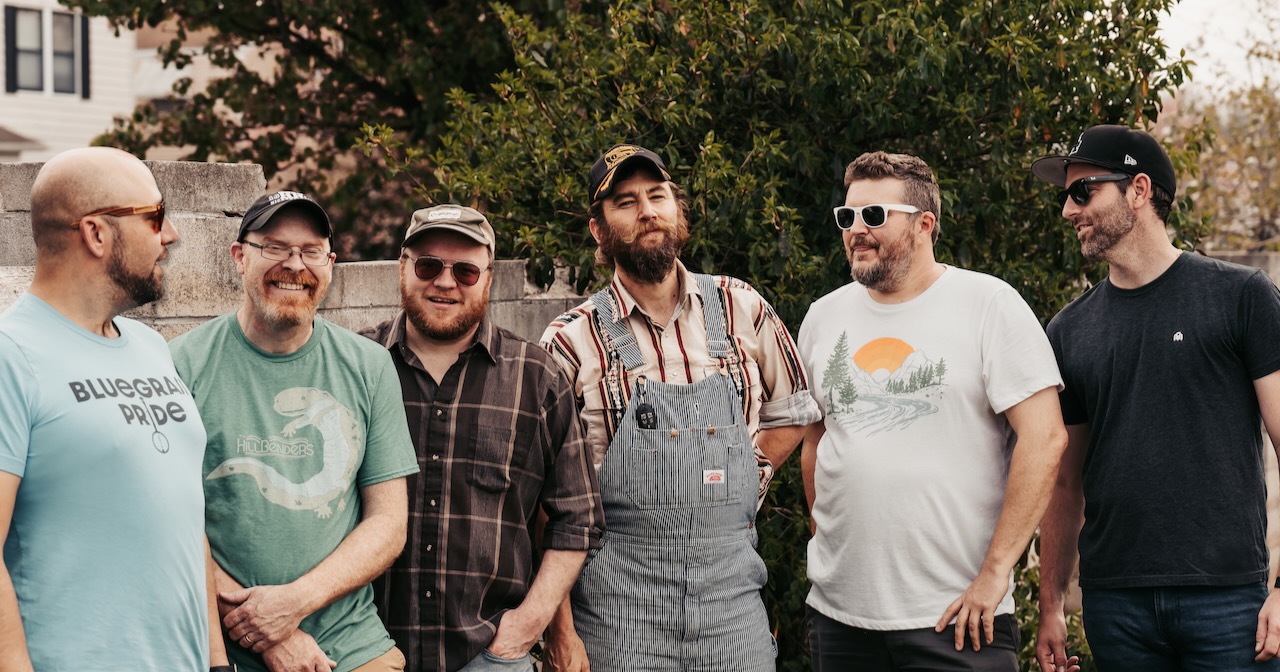
LISTEN: The HillBenders, “Take On The World (Give ‘Em Hell!)”

Artist: The HillBenders
Hometown: Springfield, Missouri
Song: “Take On The World (Give ‘Em Hell!)”
Release Date: September 29, 2023

In Their Words: “‘Take On The World (Give ‘Em Hell!)’ embodies the age-old tale of a directionless, troubled soul. We’ve all been there in one way or another. Maybe doing things you ought not be doing just for the excitement of doing it. But then comes along someone that shows you how much more there is to life. It’s almost like you’ve turned into a completely different person after falling in love with them. Like you’re under some sort of spell of theirs. And all of a sudden, all that trouble doesn’t seem as fun anymore. How long it lasts is maybe for another song.” – Mark Cassidy, banjo

“The tune was recorded at Red Rock Studios in Saylorsburg, Pennsylvania, while having a rare day off on tour. Primarily used to record jazz music, the studio had a beautifully organic design nestled in the quiet rural countryside. We asked Jeremey Garrett (of the Infamous Stringdusters) if he would lay some fiddle down on the song and he cut some buttery tracks at his studio, including a twin fiddle part that made the final mix. Jeremy is a great cat and his involvement really elevated the song as a whole. Since adding our new drummer, John Anderson, we have explored all sorts of new musical possibilities — but it was nice to return to our bluegrass roots on this number.” – Jim Rea, guitar


Photo Credit: Robert Crook

WATCH: Hildaland, “Trains/Fin’s”

Artist: Hildaland
Hometown: Portland, Maine
Song: “Trains/Fin’s”
Album: Sule Skerry
Release Date: September 26, 2023 (single); November 3, 2023 (album)
Label: Adhyâropa Records

In Their Words: “This set is comprised of ‘Trains’ by Ethan Setiawan and ‘Fin’s Foley’ by Louise Bichan. We decided these tunes would fit well together as they’re both in three parts, and both about movement. It was an honor to get the great Neil Pearlman on the track on keyboard as well. Ethan says of the first tune, ‘”Trains” was written during some discussion with the great harpist Maeve Gilchrist about hornpipes. I tried to integrate some of the stylistic ups and downs, using arpeggios to create a melody rather than something linear.’ And Louise wrote “Fin’s Foley” for her brother, after a wheel mishap. I had forgotten all about the unofficial title until I came across the original sheet music while rummaging through things at my folks’ house: Rover’s Revenge!'” – Hildaland


Photo Credit: Louise Bichan

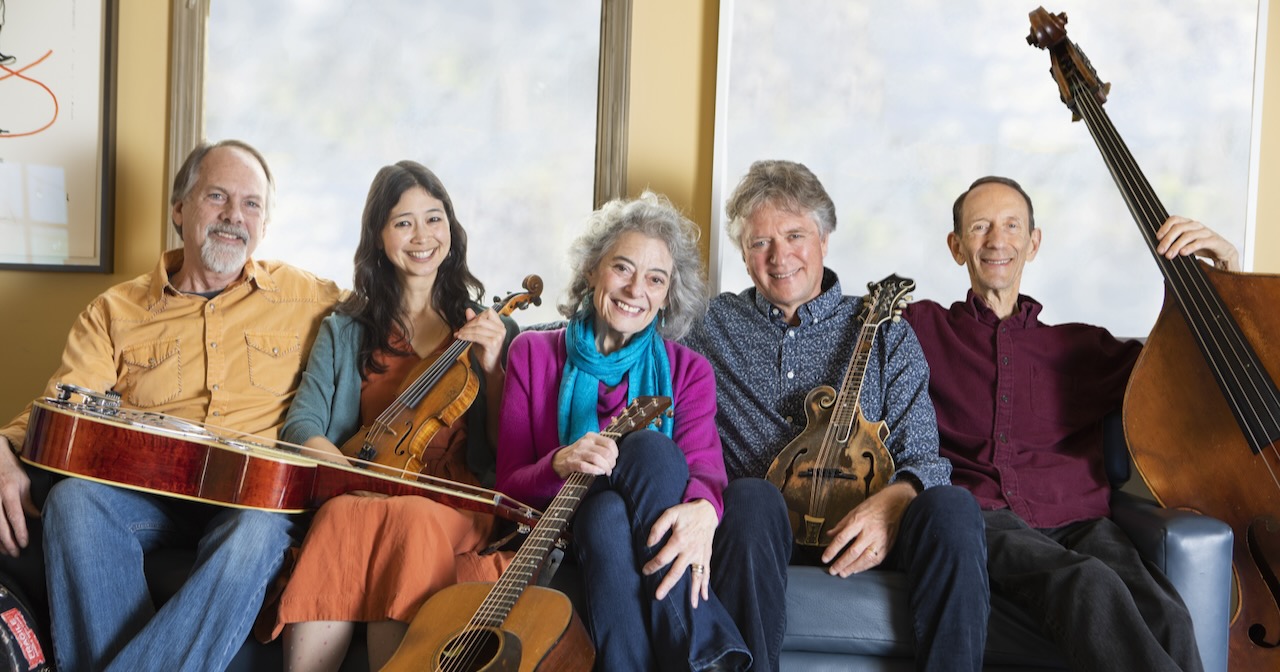
LISTEN: Kathy Kallick Band, “Just Lonesome Ol’ Me & the Radio”

Artist: Kathy Kallick Band
Hometown: San Francisco Bay Area, California
Song: “Just Lonesome Ol’ Me & the Radio”
Album: The Lonesome Chronicles
Release Date: September 19, 2023 (single); October 17, 2023 (album)
Label: Live Oak Records

In Their Words: “People of different ages will feel their engagement with radio in different ways. As part of a family gathered around the radio for a specific show, as a teenager listening to a transistor radio under their pillow, as a traveler on a long car trip with the radio tuned in to whatever signal it can find, or as a listener with that favorite show tuned in on a laptop from anywhere in the world, the radio means connection. In that bizarre time of lockdown, we all looked for ways to ‘be’ with other people, and a dear friend and I started having a listening date, tuning in to the same radio show from our separate places, and commenting to each other via email, text, or calling on the phone. It made us feel like we were having a little party!” – Kathy Kallick

Track Credits:
Kathy Kallick: composer, lead vocal, guitar
Annie Staninec: tenor vocal, fiddle
Greg Booth: baritone vocal, dobro
Tom Bekeny: mandolin
Cary Black: bass

Photo Credit: Anne Hamersky

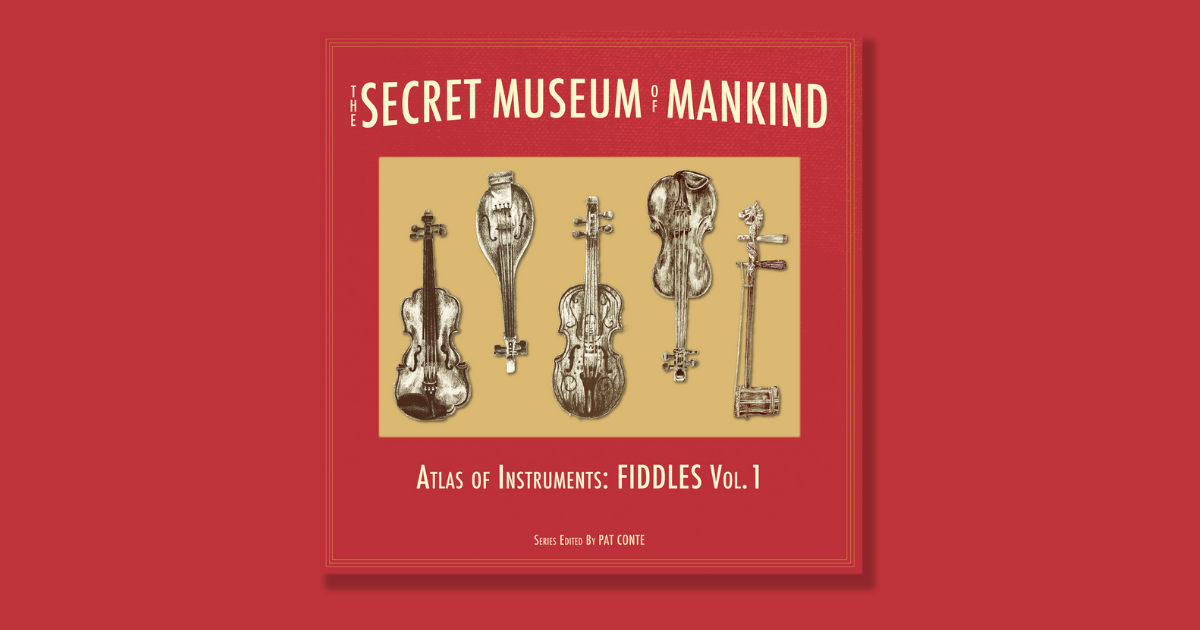
STREAM: Secret Museum of Mankind – Atlas of Instruments: Fiddles Vol. 1

Album: Secret Museum of Mankind – Atlas of Instruments: Fiddles Vol. 1
Release Date: September 15, 2023
Label: Jalopy Records

In Their Words: “The museum’s musical atlas of instruments continues with the opening of another wing, the first in a series on bowed instruments. To stretch boundaries over the earth and over time is to forsake them; whether it is a matter of Synchronizität or just the plain unconscious. In Western cultural history, the bowed instrument is a late installment, after centuries, of an almost primordial vibration that we imagine in sound; see in the old paintings; and yet can sample in the remnants of the ancient world captured on gramophone records.” – Pat Conte, curator

The Secret Museum series is legendary. It opened up new possibilities for me when I first heard it in the 1990s. The curator is Pat Conte, he did something remarkable, even more so because it was before the internet: Starting in the 1970s he began assembling the first and arguably greatest collection of world music recorded in the 78 rpm record era of the 1920s – 1950s, give or take. He did it by casing junk stores in Queens, New York, the most diverse place in the world, and by maintaining letter correspondence with collectors and dealers across the globe. That is the music you will find on the Secret Museum of Mankind albums.

“Conte programs the records by feel, not with a predefined structure. The records are not meant to be academic, they are meant to move the listener. The movement is emotional, using music that was recorded in different places and at different times. Each listener will experience the sequence in their own way, and each track is its own world.

The Secret Museum of Mankind: Atlas of Instruments – Fiddles, Vol. 1 continues the series and presents fiddle sounds developed and practiced across the globe. The compilation, drawn from Conte’s pioneering and remarkable personal collection of 78 rpm discs recorded in the 1920s – 1950s, offers fiddle music recorded across the world from Crete to Madagascar, Mexico, England, Sicily, Norway, India, the USA, Cape Verde, China and more.” – Eli Smith, producer


Image courtesy of Jalopy Records, Nick Loss-Eaton Media

LISTEN: Liam Purcell & Cane Mill Road, “Crooked As You Go”

Artist: Liam Purcell & Cane Mill Road
Hometown: Deep Gap, North Carolina
Song: “Crooked As You Go”
Album: Crooked As You Go
Release Date: September 1, 2023 (single)

In Their Words: “‘Crooked As You Go’ is a lively song with its musical roots in the fiddle tune tradition we grew up in. The lyrics outline a simple truth learned in early adulthood, that life is neither straightforward nor predictable. It’s not a journey in a straight line, rather a crooked path filled with twists and turns. As touring musicians, we can all relate to this through the eyes of the industry we operate in, but the implication rings true for many folks in many different situations. In the end, these unexpected adventures, trials, and sidetracks are often the most beautiful parts of the journey as one reflects on the path that led them to the present moment.” – Liam Purcell


Photo Credit: Craig Etchison

LISTEN: The Clements Brothers, “As the Crow Flies”

Artist: The Clements Brothers
Hometown: Gloucester, Massachusetts
Song: “As the Crow Flies”
Album: Dandelion Breeze
Release Date: August 25, 2023
Label: Plow Man Records

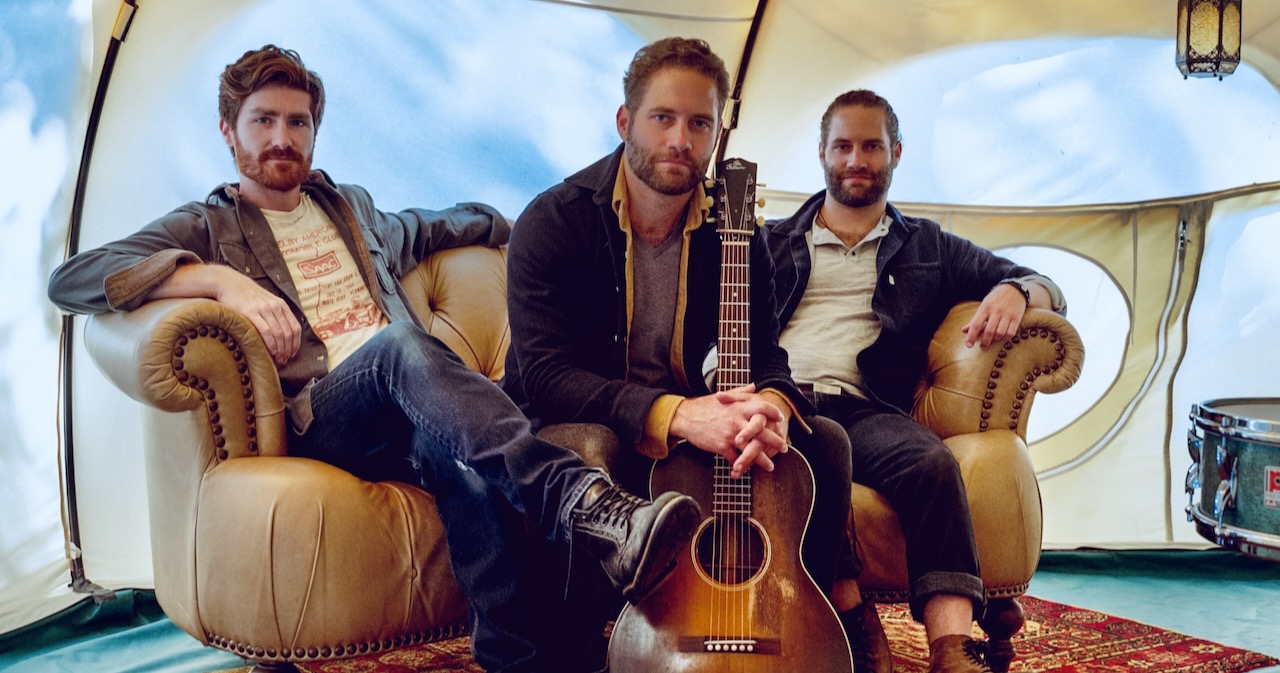
In Their Words: “’As the Crow Flies’ is a tune written by George and finished by Charles. George came up with the Celtic-inspired tune on the guitar and brought it to the band. Then we played and improvised around on it until we had something we thought was exciting and interesting. The metric modulation and build in the middle of the tune was something George had conceived-of from the initial demo, but it took some playing around and experimenting with until the current progression and bass solo with the fiddle weaving around it emerged. The great fiddler Jenna Moynihan lent her beautiful playing and creative energy to the fiddle part, which we think really tied the tune together in the end. In terms of the tune name, we thought the melody had a kind of soaring and darkly quirky quality to it, so the title “As the Crow Flies” seemed to fit the mood and spirit of the sonic journey. Our late father, who passed just before the album was coming into shape, always loved crows with their intelligent and family-oriented qualities, so it also serves as a little memory capsule to him.” – The Clements Brothers


Photo Credit: Toan Trinh

LISTEN: Philip Bowen, “Anymore”

Artist: Philip Bowen
Hometown: Montgomery, West Virginia
Song: “Anymore”
Album: Old Kanawha
Release Date: August 18, 2023

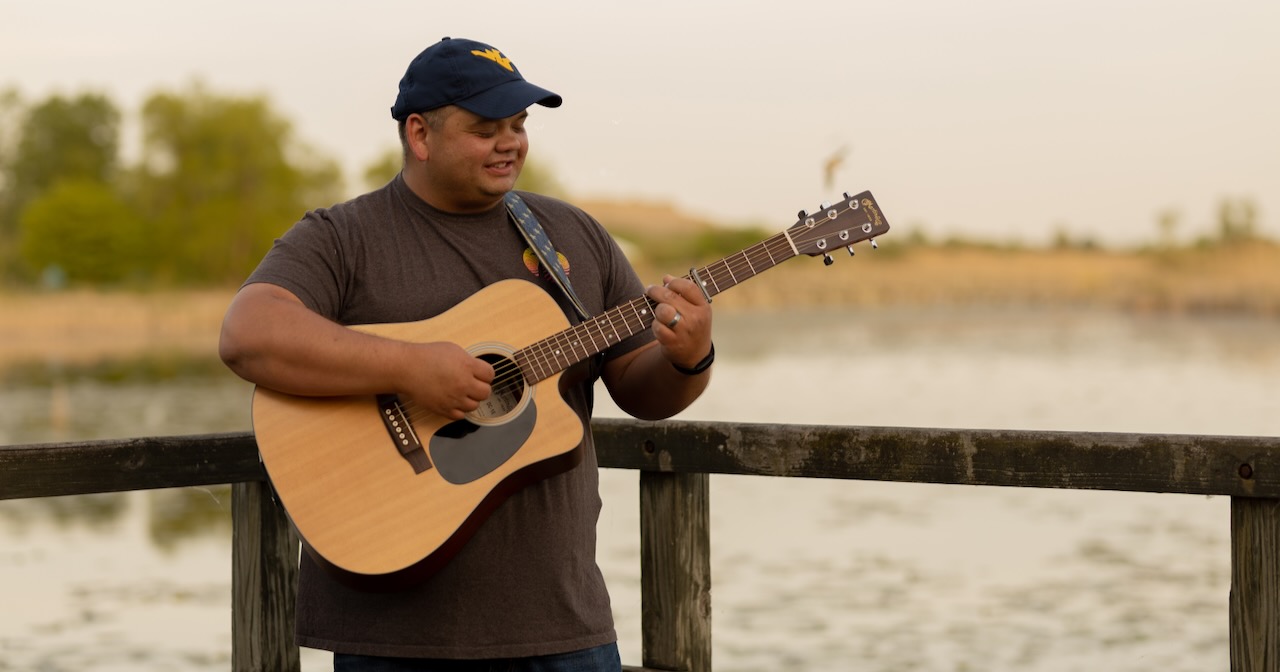
In Their Words: “We really wanted to do this song as an acoustic/bonus track on the record. I wrote it with the intention of it being more bare bones, and I love how it turned out. The acoustic guitar, fiddle, and piano are all that’s needed, and I think musically, it really hits differently when it’s scaled back like this.” – Philip Bowen


Photo Credit: Jordan Becker

Rachel Baiman On the Importance of Women in Studio Control Rooms

(Editor’s Note: BGS contributor, picker, and singer-songwriter Rachel Baiman brings us into the production process for her new album, Common Nation of Sorrow — her first recording on which she’s credited as sole producer — for this op-ed feature.)

Take a look at the credits for your favorite records by artists of any gender, and you may notice that there are very few women listed. Maybe there’s a female singer, photographer, or graphic designer – possibly a violinist in a string section, but it probably stops there.  

While great strides have been made in the last decade with more women on festival bills, in radio programming, and even as instrumentalists in live bands, when you look behind the scenes, you rarely see women involved in making records, unless they are the featured artist or part of the featured band. That’s because the studio is invisible to the audience. 

Societal pressure is driving folks to do better when they are working in public lineups, but in recording studios, there’s nobody watching, and no face on the sounds that come out of the box. The audience sees a diverse band playing a live show, yet none of those musicians are featured on the record.

For example, I was thrilled to see Sarah Jones absolutely slaying the drums for Harry Styles live, but when I looked at the record credits, they had a male drummer listed. Why? It’s as if the industry is saying “We love to have you on stage, but when it comes to the real work, let the men get down to business.”

To Harry’s credit, there are a couple of female instrumentalists (violin and keys, and a conga player) and assistant engineers (“Move that microphone for me please!”) featured on his albums (which is huge progress, believe it or not), but I would have loved to see Jones included as a true backbone of the sound, especially when she’s such a fundamental part of the live show, and clearly more than capable. That kind of record credit is a career maker – not that Jones needs it, she’s doing great anyway – but why couldn’t she have that?

I’ve had a dream for a few years now of being a producer. Over the last decade of working in the studio in various roles, I’ve fallen in love with the production process: Starting with the songs, honing and editing until you’re left with only the meat, selecting the perfect musical voices to bring the song to life, and working with amazing engineers to get the sonic pallet perfect. I can’t get enough of it, and I want to do more.

According to a 2018 study by the University of Southern California, and reported on by GRAMMY.com, only 2% of music producers and 3% of engineers/mixers in popular music are women. These are roles that require real trust, as they are roles of power. There’s no turning down, editing, tuning, or washing out a producer or lead engineer. The project is in their hands.

Typically, male artists (as opposed to engineers, another role that leads to producing jobs) are asked to be producers when other musicians like the records that they’ve made or been a part of. It’s a role of mentorship and guidance, as well as artistic influence.  I started to realize, though, that because I am a woman, nobody was going to naturally think of me for that role, even if they liked my music. People fit people into the molds that we’ve been shown, and people trust people who others trust. Everyone wants to make the right decisions, and it’s hard to be the first one to believe in somebody – I know this trap because I’m guilty of it myself! If I wanted to be thought of as a potential producer, I was going to have to build my own platform and show people that I could do it. 

When it came time to make Common Nation of Sorrow, I saw it as an opportunity to take a bet on myself. Although it’s terrifying to produce one’s own music (you have to be both the speaker and the listener at the same time), I knew that if I could produce something great under my own name, perhaps others would start to see me in that role outside of my own music. After all, if you can’t trust yourself with your own work, how can you ask others to trust you with theirs? 

With the support of my awesome label, Signature Sounds, I was able to record this project exactly the way I wanted to. I had a variety of musicians in mind for the rhythm section, both male and female. I hypothesized that when considering the sessions, I needed to make sure that there was a feeling of social balance in the room, for my own sake as well as for my fellow musicians’ sake. Something that was interesting to me about this theory is the stark difference between “including” women on a project because you feel that you should, and believing that empowering women and asking for their contributions will actually result in the best art.  

When I get called for sessions to play fiddle or banjo, I am usually the only woman in the room. I walk in feeling like I have to be better than good in order to counteract the assumption that I will be sub-par, that I don’t know what I’m doing, that I won’t know how to read a chart, that I can’t solo, that I won’t know anything about sound or gear. Working from a position of insecurity, or “trying to prove something,” is a terrible way to make music. I might overplay, or underplay, or try to play the way I think men want me to play, not in my own voice. I might be trying to tamp down rage at a comment that somebody has just made about their wife being retired from music because, “She’s a mom now.”  

Contrastingly, when you’re suddenly the producer, the only one you have to impress is yourself. Everyone in the room has been hired by you, and therefore, it’s in their best interest to support your vision. Nobody has incentive to diminish your work. Suddenly, I’m able to work from a place of confidence and artistic integrity. In a position of power, it’s not as likely that I’ll overplay, or change my sound based on others, or second guess my abilities. I’ve taken the bet, and now I have to come through for myself. That’s the difference between token inclusion and empowerment. You’re going to be able to hear it in the album made this way, too. 

Recently, I was asked by a male musician who I love and admire to produce his next record. It was completely unexpected, and it took a minute for me to realize that my bet on myself was actually paying off. I’m starting to believe now that this could be a real career path for me. I think most people want to believe in, and support each other, but we, as women, have to have the courage to take those first steps and put ourselves out there for consideration. From my standpoint, it can work. 

I’m thrilled to see so many incredible women working as producers and engineers these days in Nashville. Mary Bragg, Rachael Moore, Clare Reynolds, Shani Ghandi, and of course Alison Brown at Compass Records, who has been leading the charge for years. I look forward to one day having the opportunity to work in a studio environment inhabited by only women, completely by chance. The more we can show each other what’s possible, the more likely that will become. 

(Editor’s Note: Rachel Baiman’s latest album, Common Nation of Sorrow, is available now wherever you stream or purchase music.)


Photo Credit: Natia Cinco