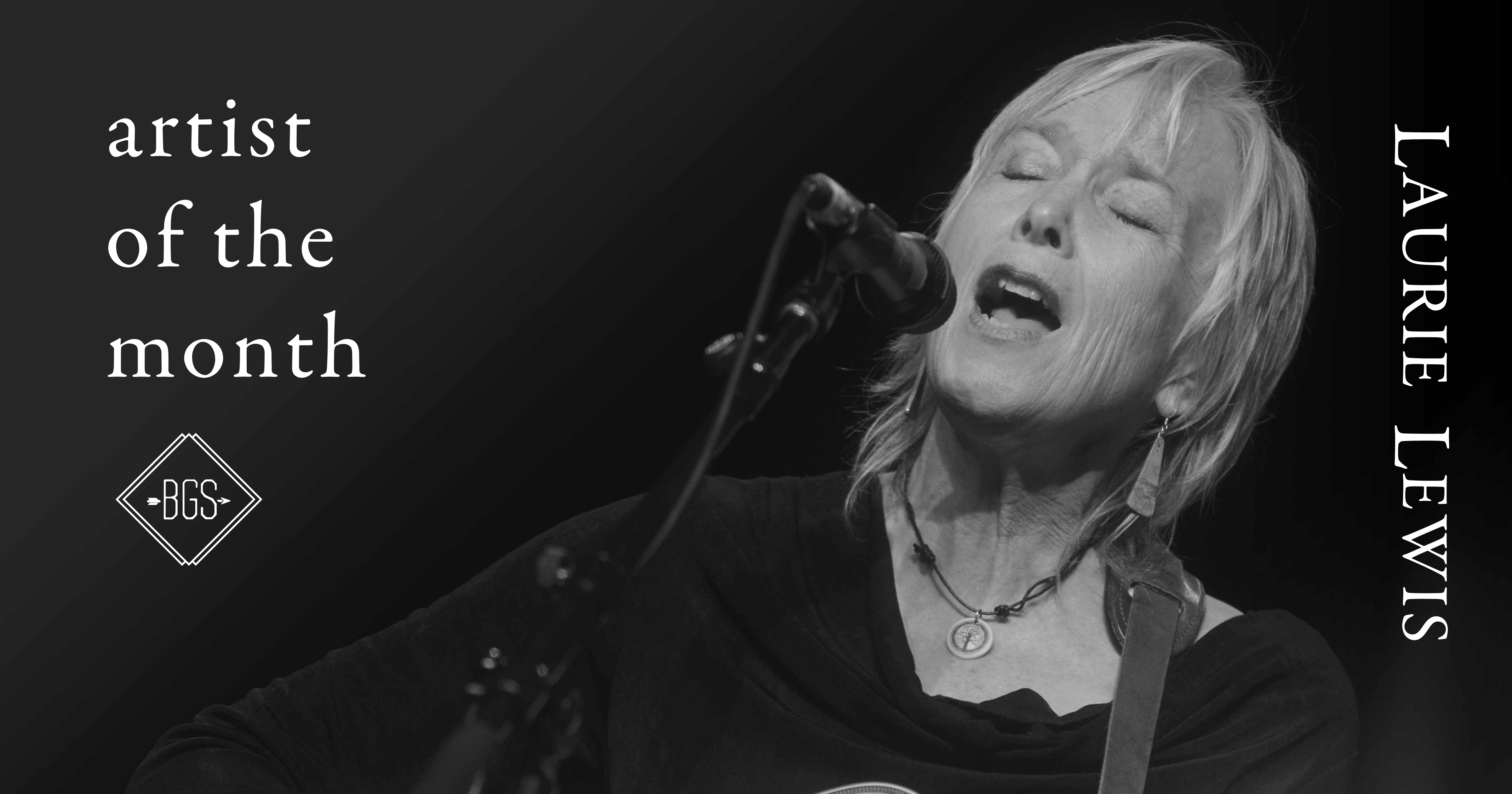
On New Duet Album, Laurie Lewis Gathers Old Friends and Close Companions (Part 1 of 2)

Laurie Lewis has lived most of her life in Berkeley, California, yet she’s primarily associated with music from Appalachia. A highly respected producer, she is admired equally for her singing, songwriting, fiddling and arranging, and her influences range from old-time and bluegrass to swing and jazz.

In 1986, Lewis released her first solo album, Restless Rambling Heart, which included seven original songs. Since then, she has recorded more than 20 albums with a variety of musical friends. She holds numerous honors from the International Bluegrass Music Association, as well as Grammy nominations for her own albums and collaborations.

Now nearly 35 years into her career, Lewis regularly pays tribute to female bluegrass pioneers, performs with and fosters a new generation of female musicians, and teaches at many of the nation’s most acclaimed music camps. BGS caught up with her by phone to discuss her new duet album, and Laurie Lewis, featuring old friends and new musical partners alike.

BGS: Why a duet album?

Lewis: It came about accidentally. I had an idea that I wanted to record a duet on (the Carter Family song) “You are My Flower.” Molly Tuttle and I got together to try it out and we had so much fun playing and singing that we went upstairs to my little studio. We turned on the microphones and just sang and played. It was so musically full, it didn’t need anything else. I thought, “Thank heavens, I have finally gotten around to singing this duet the way I’d wanted to for the last 20 or 30 years.” Then I got together with Tatiana Hargreaves. When we toured together, she and I worked up a tune I had written that she played on the fiddle, and I just loved that and I wanted to capture that. Then we got excited and did another song – and then I had three songs! I thought, “Maybe I’m making a duet album.”

Tom Rozum and I had worked out the Monroe Brothers’ version of “Will the Circle be Unbroken” for a Monroe tribute, and I just loved the way that sounded, and I thought we definitely should record that. It snowballed from there. I had lots of duet ideas where I thought a particular friend would be perfect on a particular song. So I went about collecting the versions of the songs. I recorded more things than are on the album. I have a few that are held back, just because I didn’t want it to be super-long and have people lose interest halfway through thinking they would never get to the end!

How did you decide to keep the instrumentation so spare – no more than two voices and two instruments?

After listening to what I recorded with Molly and Tati, I really liked what I heard. I fell in love with playing as a duet with Tom. We’re both essentially band musicians and used to having a whole band surrounding us, not just picking up the slack, but filling out the sound. When we started playing as a duo many years ago, it seemed really scary to both of us – and really empty. But we kept doing it, and I fell in love with the emptiness, that loose weave that you get with just two people and two instruments. And the way it becomes a conversation – my favorite way to have a conversation, just one on one.

How did you choose your partners and songs?

They’re all people who I have had long musical relationships or long friendships with. I’ve known Molly and Leah Wollenberg since they were babies. As the project went on, it felt as if these are some of my closest companions in life. These are the core people who have made a huge difference to my musical life in one way or the other

One of the last things I recorded for the album was “Old Friend” with Kathy Kallick. As the album started to take shape, I realized, “Oh my God, I have to have Kathy on here.” We have been singing partners and friends for more than 40 years. I just have to have her on here. But I couldn’t think of a song. The idea came to me as I was backpacking in the mountains: “‘Old Friend,’ of course!” It was recorded originally in 1989 and we’ve been friends much longer. It seemed like the perfect vehicle for us at this point.

Do you write specifically for an album, or do you just come up with songs, say, when you’re hiking, and then it shows up on an album?

Yes. I would say yes to both of those. For instance, I never expected “The Pika Song” [to end up] on the new album. I was just making up a little poem about pikas when I was hiking on the John Muir Trail. And then I was sitting around playing the banjo one day and I started singing it. When I mentioned it to Tatiana, she told me that some friend had just said that she thought the pika was [a perfect animal to match] Tati. She got really excited – she’d never seen one, but she got to hear all about them and play on the song and sing about them, so that was pretty fun.

Sometimes I will write things specifically for a group or for an album. I have lots of songs that I just don’t finish and sometimes the impetus of recording an album is what pushes me to commit to being done. So in that way I do write for albums. And sometimes just because the creative juices start flowing when you’re in a recording situation, a new song just comes along. And I’m grateful for that.

Did you choose songs that represented your own versatility?

Oh, no. I didn’t think about that. I really just thought about who was the right person to sing with on a particular song. Like the songs I did with Nina Gerber. There is nobody I would rather do certain songs with than Nina Gerber. “My Last Go Round” is a Rosalie Sorrels song. Nina worked closely with Rosalie and I got to play with her a few times. I recorded that song on a tribute album for Rosalie, and when we played the tribute concert, I played it for the first time with Nina. It felt so deep and healing. Music has a real way of being able to soothe and heal grief, and it really felt good to do it with her, and we’ve been doing it every time we play together since then. Nina’s electric guitar is the absolute perfect thing for “This is Our Home.” She fell right into it, just knew exactly what to play. She’s a mind reader.

Todd Phillips and I occasionally play “Baby, That Sure Would Go Good” in concert. We did it for years, but I never thought about recording it. When suddenly I was doing a duet album, I thought it would be perfect. And of course it was really fun. Todd’s bass playing is just out of this world. I mean that in every way you can think of. It’s crazy, but it’s great.

Tell us about “Troubled Times,” which is so appropriate right now. When you wrote it, were you thinking of something specific?

I wrote that about 20 years ago. I honestly cannot remember what inspired me to write it. It had some other verses, at least one other verse which I left out, because it wasn’t as good as the ones I used. I think it was politically motivated at the time, motivated to the outside world and my reaction to what was going on, but I can’t remember what specific event or events inspired it.

I had only performed with Leah Wollenberg once, at the Freight & Salvage, although I’ve known her all her life. One day I said to her, “Would you come over and sing one of my songs with me so I would have a recording of it”? I really didn’t know how it would go. So she came over and we recorded it. When I listened to it I said, “This is good! This is great!” So I asked her if she would be on the album. I think that I’ve just been sitting on that song waiting for the right combination of events, but also the right combination of voices to sing it with me.

Can you talk about the role of friendship in your music? You sustain such long-term friendships and musical partnerships. Is that unique to you?

I don’t think that’s unique to me. Musicians communicate very deeply through shared music. It’s impossible to play heartfelt music with other people without loving them, or at least learning to love them. And once you love somebody, you want to keep them in your life. So if there’s a problem, you work it out. You address it. You don’t let things go by and be on the surface. It’s what we do — we forge personal relationships that are strengthened through music, or are begun through music and continue past music.

Editor’s Note: Read part two of our Artist of the Month interview with Laurie Lewis.


Photo credit: Maria Camillo
LISTEN: Rod McCormack, “Fingerprints”

Artist: Rod McCormack
Hometown: Terrigal, NSW, Australia
Song: “Fingerprints”
Album: Fingerprints
Label: Sonic Timber Records

From the Artist: “‘Fingerprints’ was written for my beautiful wife Gina. As I flew over to the States to record this album, she reminded my that I hadn’t written a love song for her yet — and after 20-odd years I thought it was about time. I was so glad to work with John Scott Sherrill on this song idea, and then to have Gina sing on it with me was a real treat. I really wanted ‘Fingerprints’ to have an Appalachian feel to it, and hearing the fiddle and banjo weave around the acoustic guitar still takes me back to our early years together. Along with the current single, ‘Shimmers,’ ‘Fingerprints’ is probably the most requested song from the album.” — Rod McCormack


Photo credit: Steve Kearney

WATCH: Becky Buller, “The Barber’s Fiddle”

Artist: Becky Buller
Hometown: St. James, Minnesota; adopted hometown: Manchester, Tennessee
Song: “The Barber’s Fiddle”
Album: Distance and Time
Release Date: September 18, 2020
Label: Dark Shadow Recording

In Their Words: “This is a celebration of the fiddle and the glorious tradition of passing music down from one generation to the next. I co-wrote this with Lynda Dawson and it is inspired by three fiddling barbers, including Gene Boyd of the Star Barber Shop in Bristol, Virginia, and Bill Womack from Woodbury, Tennessee. The song features my fantastic band (the Becky Buller Band — myself, Nate Lee, Prof. Dan Boner, Ned Luberecki, and Daniel Hardin) along with these special guest singers and fiddlers: Jason Carter, Kati Penn, Sam Bush, Laurie Lewis, Shawn Camp, Laura Orshaw, Michael Cleveland, Jason Barie, Stuart Duncan, Johnny Warren (playing Paul Warren’s fiddle), Bronwyn Keith-Hynes, Deanie Richardson, Tyler Andal, Brian Christianson, and Fred Carpenter.” — Becky Buller


Photo credit: Stephen Mougin

WATCH: Midnight Skyracer, “Average Faces”

Artist: Midnight Skyracer
Hometown: Stroud, UK
Song: “Average Faces”
Album: Shadows on the Moon
Release Date: June 5, 2020
Label: Island Records

In Their Words: “I got the seed of inspiration for this song after overhearing a conversation outside a pub: a man’s futile attempts to chat up a woman starting with ‘I’m sure I know you from somewhere,’ with her response being ‘I don’t think so, I’ve just got one of those average faces.’ A couple of days later I wrote a rough outline of a chorus and a first verse and then roped in my twin sister (and guitarist in the band), Charlotte to help form it into a full song before sending it to the rest of the band.

“This one really came together in the studio when we added the drum track, the only part on the album not played by a band member. It was actually one of the very last things we did. We were in our final couple of hours at Real World Studios and had packed down all the mics and dividers we’d had set up for the week so that our brilliant engineer, Josh Clark, could get his drum kit set up. He was just about to go in for his first take when he smacked his head hard on one of the heavy counterweights used to balance the overhead mics. Josh may have been slightly concussed, but he nailed the part all the same!

“For the video for this song we had initially booked in to use quite a different venue, but having waited outside that one for an hour or so (eventually it turned out that the owner had had a family emergency and left their phone at home) Eleanor and Leanne started wandering about town asking in every pub, bar, and restaurant, if we could use their space to film a music video. The wonderful people at Cru Wines, Bradford on Avon, very kindly obliged and let us use their upstairs room for the day. We were all very good and held off drinking the delicious glasses of wine we used as props until we’d finished filming!” — Laura Carrivick (fiddle and dobro), Midnight Skyracer


Photo credit: Elly Lucas

Watkins Family Hour, “Bella and Ivan”

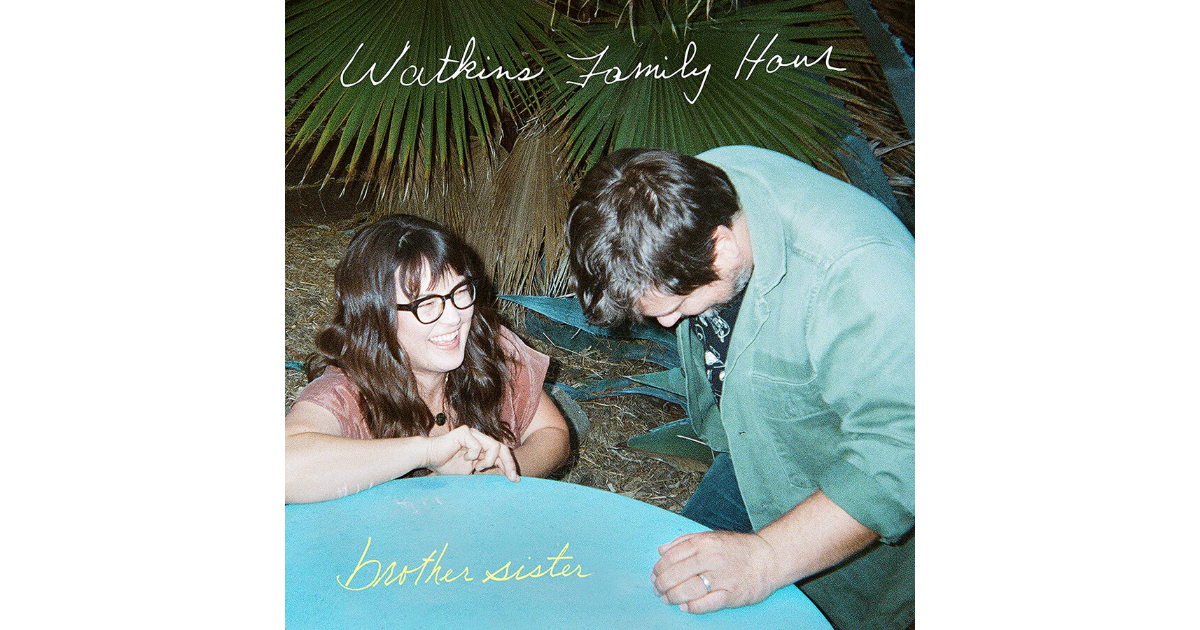
“Bella and Ivan,” one of two instrumentals on our Artist of the Month Watkins Family Hour’s brand new LP, brother sister, begins with a folky, whirring Vitamix of notes. It’s a frenzied melody, one that allows the siblings’ bluegrass virtuosity to glint like a bright reflection off a sly smile. Sean’s aggressive, Tony Rice attack and the slight Celtic bounce of Sara’s bow are demonstrating that they, too, can accomplish the unlikely complicated ease of the duo’s tight, familial harmonies.

And they do. Ever since the first notes of Nickel Creek’s “Ode to a Butterfly” transformed an entire generation of listeners into bluegrass fans, Sean and Sara Watkins have been giving us these effortless-while-acrobatic instrumentals. Each one reminds us in its own way that no matter how far afield the pair may travel from their genre of origin, they carry it with them still — and can execute any of its aesthetics with immediacy and delightful, mocking aplomb. 

Named for a friend’s two dogs who love to wrestle, “Bella and Ivan” isn’t so much rough housing as it is a scripted, choreographed, pro fight. Their interplay is just as exciting to those of us who suspend disbelief as it is to those who don’t; the musical dialogue precariously and joyfully unfolds in a way that refuses to either feel rehearsed or totally off-the-cuff. 

In whatever iteration one encounters the music of Sean, Sara, and/or Watkins Family Hour, they’re giving listeners every last ounce of that ethereal “something” that sparked our love for them in the first place. While they constantly reinvent themselves and explore new sonic territories, somehow that “something” remains indelible. It’s just Sean and Sara Watkins.

Sara Watkins Wants Us to Ride Along on Watkins Family Hour’s ‘brother sister’

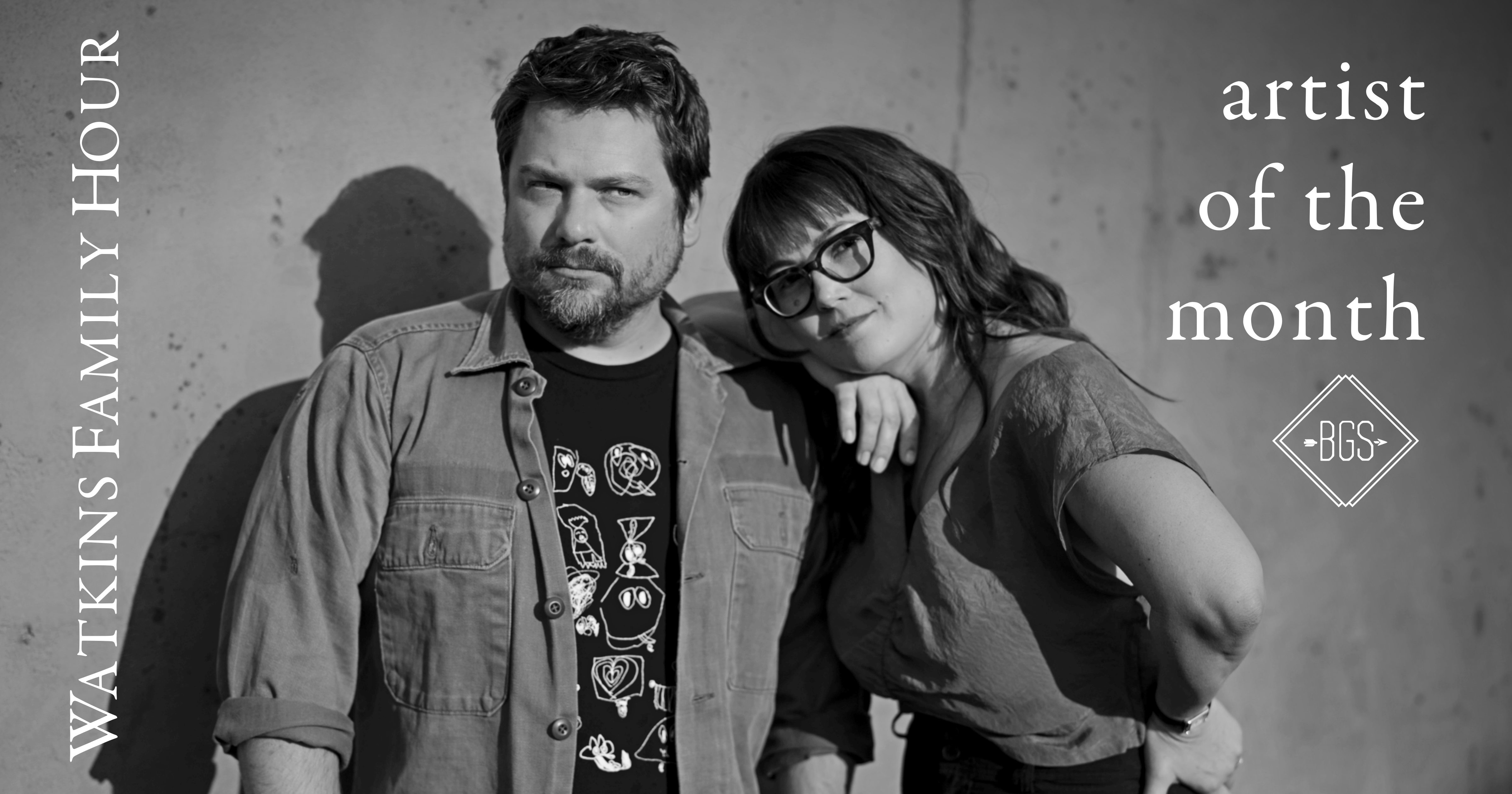
Sara Watkins is up to something — or at least, there’s a pretty good chance she’s up to something. The singer/songwriter and fiddler first found international recognition with Nickel Creek, but these days she stays busy with a rotating lineup of other creative outlets, from her solo work (three albums and counting) to her harmony-singing supergroup, I’m With Her. Oh, and then there’s the raucous Watkins Family Hour, an act with her brother, Sean, that holds regular residencies at LA’s Largo with a delightfully irregular cast of collaborators liable to join them.

This time, though, they wanted to focus on the core of the group. Their new album, brother sister, marks the first time that the siblings have sat down to write together. “We were both in a place where we wanted to focus on the potential of the Family Hour in a different way, a totally new approach than what we’d done before,” says Sara. “Apart from a few shows every year, we had never really focused on just us — particularly in writing.”

BGS caught up with Sean and Sara individually to hear more about how brother sister came together. Read the interview with Sara below, and take a look at Sean’s interview from earlier this week.

BGS: This is your first album as Watkins Family Hour in five years. What made you decide to prioritize this particular project again?

Sara Watkins: The first record that we did was sort of an accident. We made it when our friend offered us some free studio time, just to document what we’d been doing for a while. That record was very natural arrangements to songs that we’d been playing for a long time, cover songs. It was about a year and a half ago when we started talking about doing this record. We were catching up on what we’d each been up to, and as we were talking — I don’t remember who suggested it first — it became clear that we were both really interested in digging into the potential of the Family Hour, but focusing on the core element that’s always been there, which is my brother and me. This record is the first example of our collaboration as co-writers outside of a band format. Maybe as a reaction to the first Family Hour album, but also as a reaction to being in the projects that we’ve been a part of, we wanted to really focus on the potential of this combination.

Is there something specific about writing with a sibling that is either a positive that can’t be replicated, or an obstacle you don’t face with other people?

I think that any time you can be completely honest or you communicate well, it plays to your advantage. I don’t know if it’s sibling-related. For the first twenty-seven years of my life, which was the first twenty years of my musical existence, we shared our musical experience pretty closely. Sean and I have the advantage of a shared foundation — a shared musical foundation, a shared personal foundation — but I think at this point in our lives, what made writing together intriguing is actually how much time we’ve spent apart.

Instrumental tracks are rarely the ones held up as singles or played on the radio, but they’re a huge part of the bluegrass tradition — and something you and Sean do really well. In the writing and recording process, where do you begin in expressing a feeling without lyrics?

Playing instrumentals scratches a specific itch for me. It’s less guaranteed [with an instrumental song] that someone’s gonna get the gist of what you’re saying, but I don’t know that that matters. Even with lyrics, Sean and I have found that we get different things out of the same song — more cynical for him and more optimistic for me, or vice versa. People might hear a lyric completely differently, and that doesn’t make it a failure of expression. Maybe that’s a success.

When I listen to instrumentals, I really enjoy things that I can grab hold of. I enjoy a melody or a hook that comes back around. And I enjoy feeling like I’m along for the ride as a listener: that the person who’s playing is taking me with them. Sometimes you can sense, when someone’s soloing, that they’re also along for the ride — that maybe they don’t know where it’s going. I think a lot of us get that from like a Dave Rawlings solo. That’s really exciting.

So I think that’s the goal, for me: to take the listener, give them enough to hold onto, and invite them along for the ride. When we’re writing an instrumental, we want to try and take somebody’s hand and bring them with us. Otherwise, they’re just listening to a flurry of notes.

The melody and cadence on “Fake Badge, Real Gun” could be just as at home in a pop song. What were you going for when you sat down to record?

Sean has a real knack for melodies that have a pop sensibility. He has a really great way of blending and marrying that with the foundation and the scope of his bluegrass background. I think he’s uniquely good at that. This song is really hard to sing. [Laughs] It’s probably the most challenging song that I sing. Because of where the melody goes in my register, I’m always just singing it with my fingers crossed.

We were consciously trying to satisfy what the song wanted, which was percussion and some low end, but we wanted to give that to the song in a way that didn’t make it feel detached from the record. We kept the drums tight and to one side, and gave it bass that wasn’t too percussive. Then, when we recorded some of the other songs on the record that are much quieter — like the Warren Zevon song, “Accidentally Like a Martyr” — we recorded to tape, and Clay [Blair], who was our mix engineer, hit the take really hard. That means there’s some distortion on the tape, but it gives it a presence that I think matches the intensity of the songs that have a bigger instrumentation.

“Neighborhood Name,” a song about gentrification by Courtney Hartman and Taylor Ashton, is a newer number that you decided to cover on this album. What drew you to it?

It speaks to what a lot of people are aware of and sensitive to right now, as the world is changing and neighborhoods are changing. Some of us don’t know what our place is in that and others are being pretty directly affected. It’s also something that has happened for generations. This song doesn’t put an ethical stamp on it, to my ear, as much as it just speaks to the relatability of the sadness of being displaced. In addition to that, it speaks to the question of wondering if anybody’s gonna remember you — if you made a mark at all. And that’s something that’s always relatable, to everyone.

The song I’ve listened to the most is “The Cure.” What does that song mean to you, specifically the phrase “I avoided the cure, but it found me anyway”? Does it have any special meaning?

Life has a way of being persistent in the lessons that you need to learn. We might procrastinate on things that we know are going to be valuable for us or to start things that might be beneficial. Life pokes and prods in a way that often will bring you to those places, whether you like it or not. It’s a funny thing that a lot of us are so reluctant to do the thing that we know is going to bring us the outcome we’re looking for. It’s a strange but calming phenomenon that I think a lot of us can relate to.

Absolutely. It’s kind of a hopeful message. What’s one thing that has made you feel hopeful recently?

That’s a hard question, not because I’m devoid of hope, but because you could be so pessimistic in so many ways: The resilience of nature gives me hope, but we’re also being so mean to nature, and maybe it’s not going to be resilient forever. One thing that I have been enjoying is a lot of family time lately. I think digging into relationships and feeling the invaluable place that relationships should have in our lives, remembering that, feeling attached to that in a new way has made me hopeful. I feel that there are a lot of people realizing that again, and I think that’s really good for the world.

(Read our interview with Sean Watkins here.)


Photo credit: Jacob Boll

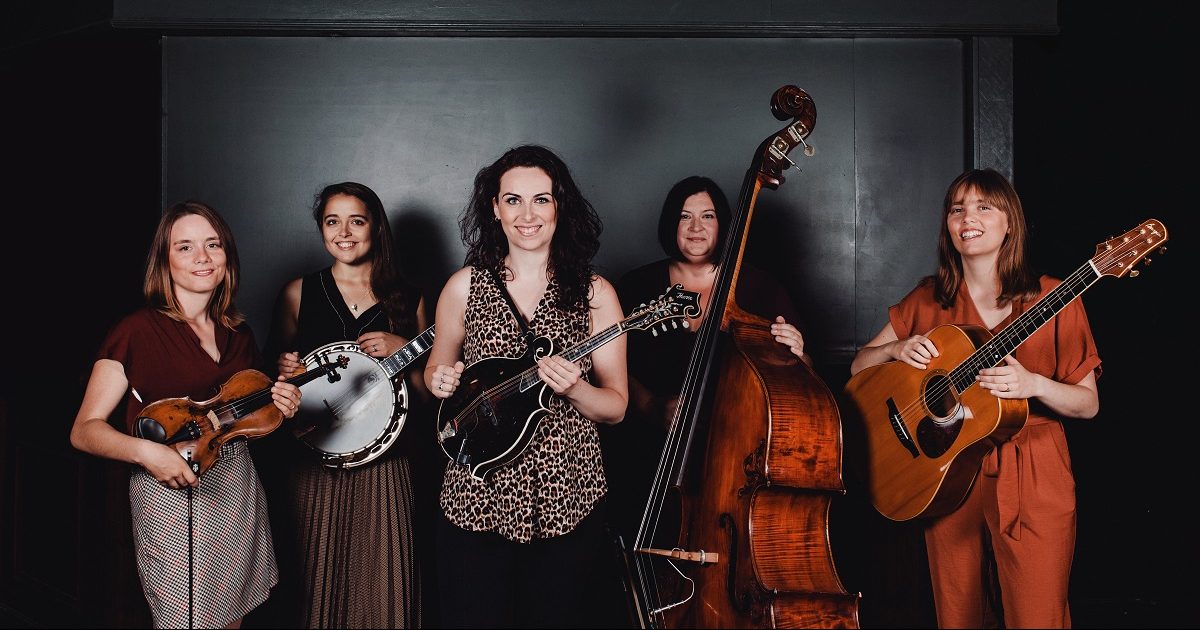
WATCH: Mile Twelve, “Long Done Gone”

Artist: Mile Twelve
Hometown: Boston, Masschusetts
Song: “Long Done Gone”

In Their Words: “Back in February we had a few days off the road and decided to spend one of them in Brooklyn, New York, playing music and making videos with some friends. We called up Michael Daves, Jacob Jolliff, and Tony Trischka and ended up having this epic afternoon of arranging a few bluegrass standards for eight people to jam on. Things got pretty wacky, including this video, which is a mashup of the bluegrass song ‘Long Gone’ and the fiddle tune ‘Done Gone.’ We decided to try this medley at first because we thought it would be funny but it turned out they’re both in the key of Bb and it ended up working great. Hope you enjoy!” — Bronwyn Keith-Hynes, Mile Twelve


Photo credit: Kaitlyn Raitz

WATCH: The Slocan Ramblers, “New Morning”

Artist: The Slocan Ramblers
Hometown: Toronto, Ontario, Canada
Song: “New Morning”
Album: Queen City Jubilee
Label: SloMusic

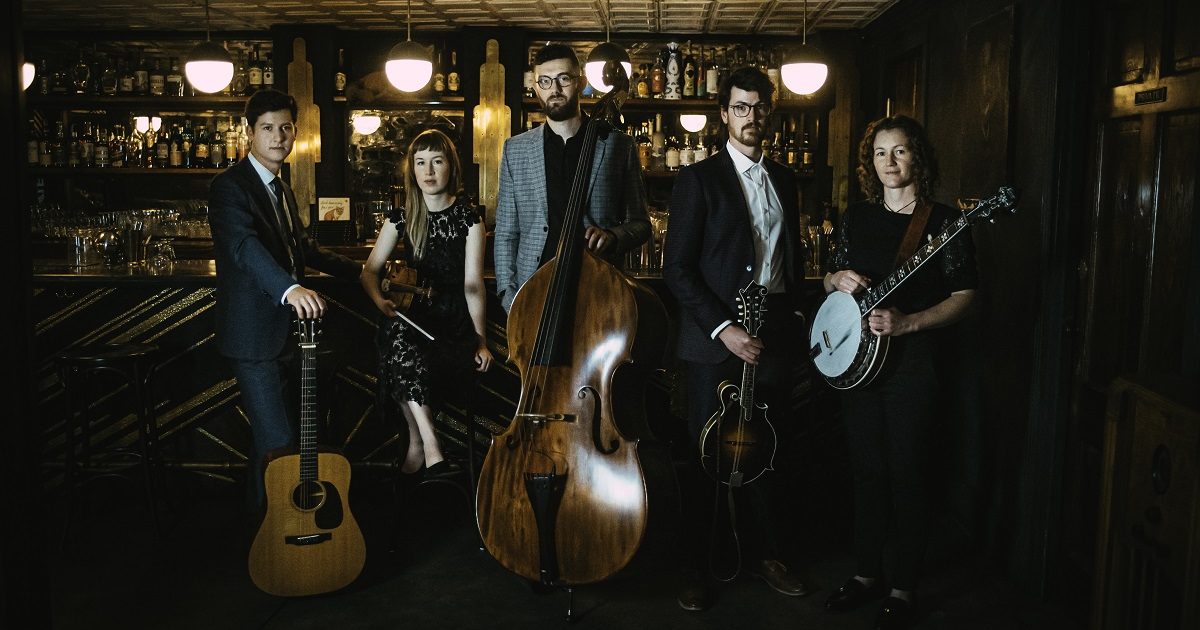
In Their Words: “I wrote ‘New Morning’ right after our second album Coffee Creek came out, and it came to me pretty quick. There’s this funny period after you put out an album — a moment of calm and then the crashing realization that it’s on to the next one. It’s that push to get back to work that got me writing again, and this song came out first. I was listening to Béla Fleck’s Tales from the Acoustic Planet, Vol. 2 endlessly around that time, so maybe you can find some bits of inspiration in there. Big thanks to Trent Freeman (check out his awesome band The Fretless) for the videography.” — Adrian Gross, The Slocan Ramblers


Photo credit: Jen Squires

MIXTAPE: Anthony da Costa’s Quarantine Chill Out Roots-Grass Mix-Up

I know what you’re thinking, Anthony da Costa doesn’t really bluegrass…but hey, I live in Nashville and I have friends and I even say “y’all” now. And there’s something about roots music that cuts to the core of everything and deeply influences what I do…even if it doesn’t always sound like it. Here are some tracks to not go outside to! — Anthony da Costa

David Francey – “Border Line”

David Francey is one of my favorites ever and nothing will change that. I lucked out by sharing a stage with him at the Tønder Festival many years ago. He blew me away with his simple approach, golden voice, and powerful storylines. He stood there like a bard and held our hearts in his hand. After our show, I asked his guitarist which album I should start with and he emphatically stated Torn Screen Door. “Border Line” is track one from David’s debut album, which he made when he was 45 years old. Let’s take a journey with him, since we can’t really go anywhere else.

Jordan Tice – “Chicken Dog”

This playlist has a lot of mood, interspersed with that spontaneous dance party that we could all use right now. You don’t even have to put on real clothes, just dance. Jordan Tice is one of my best friends and also happens to be my one of my favorite acoustic guitar players on planet Earth. He has a fabulous new album that will be coming out soon… but until then, let’s jump to this scorcher of a bizarre bluegrass song called “Chicken Dog.” I still don’t know what it’s about, but also, like, who cares?

Molly Tuttle – “When You’re Ready”

This playlist wouldn’t really be complete without something from Molly Tuttle. I had the pleasure of touring with Molly for her album release in 2019. When the bluegrass kids all told me that Molly had made a “pop” album, my first thought was “ALRIGHT. Calm down, kids. What, are there drums or something? Are you scared?” But the young “queen” of the bluegrass world and honestly craziest picker out there made one of the best albums of last year: pop in the ’90s Aimee Mann singer-songwriter kinda sense. Molly knows how to write a poignant, catchy chorus — and then somehow squeezes in some pretty insane bluegrass runs –in the SAME SONG. Are you ready?

Bill Frisell – “I’m So Lonesome, I Could Cry”

Because, you know, quarantine sucks, right? And I live alone. And it HAS gotten lonesome at times… so lonesome that I could pull up this great compilation entitled The Best of Bill Frisell, Vol. 1: The Folk Songs and just mellowly and totally NOT CRY to myself. ♥

Sam Amidon – “Blue Mountains”

Speaking of Bill Frisell, he features on this pretty mesmerizing track from Sam Amidon. This record made me a believer. I don’t know that anyone else can do what Sam does with folk music. I don’t even know what this music is. It’s Sam Amidon music.

John Mailander – “Forecast”

John Mailander is one of the nicest people in the world, but PLEASE don’t tell him that I said that… it might go to his incredibly large and insufferable ego. All kidding aside, John released his debut solo album (as far as I’m aware) last year. It’s called Forecast and this is the title track… and it’s one of those “get up off your couch and dance” songs I was talking about before. John is as versed in Phish as he is the oldest of old-time fiddle and bluegrass. He is very dear to me and his music endlessly inspires me to push things further.

Rachel Baiman – “Something to Lose”

I met Rachel Baiman within the context of her duo with Christian Sedelmeyer, 10 String Symphony (check them out, they’re out of this world). I’m so glad that Rachel has been doing a lot of her own music these days in addition. This record, produced by Andrew Marlin from Mandolin Orange, has a warm, “right there in the room” kinda feel to it. This song makes me cry. There, I said it. Love is fine, OK? Will I ever see anyone again!?

Aoife O’Donovan – “Pearls – Live”

I recently revisited this live album I got to make with the inimitable Aoife O’Donovan. Lots of people know Aoife from her work with Crooked Still, as well as her more recent recordings and travel as part of I’m With Her. I toured with Aoife as her guitarist and harmony singer from 2016 into 2017. We toured her album In the Magic Hour, which was produced by Tucker Martine and features gorgeous arrangements of strings, horns, fuzzed out guitars, drums, voices… We had to recreate Aoife’s music live with three people and no bassist… which means we made it our own. This particular song is a favorite deep cut of mine.

Paper Wings – “As I Walk Down”

I’ve been saying to anyone who will listen, and I will say it to you now: Paper Wings is currently my favorite band. This is as rootsy as I get and I’m quite alright with it. Wilhelmina Frankzerda and I met when we were touring in Joy Williams’ Front Porch band. One night in Houston, Wilhelmina gave me a pair of headphones and showed me some mixes from what became Paper Wings’ Clementine album. It’s my favorite album of 2019. They’re clearly drawing from a very deep well of tradition but with new, crooked and inventive melodies…plus, they’re writing SONGS! New songs. Great, great songs.

Mipso – “Coming Down the Mountain”

Because we’re all going to come out of this eventually, right? Here’s a song to take off your mask to. See you all on the other side. ♥


Photo credit: Jacqueline Justice

Aaron Jonah Lewis, “A Banjo Frolic”

Ask ten banjo players this question: “Who is the Mozart of the banjo?”

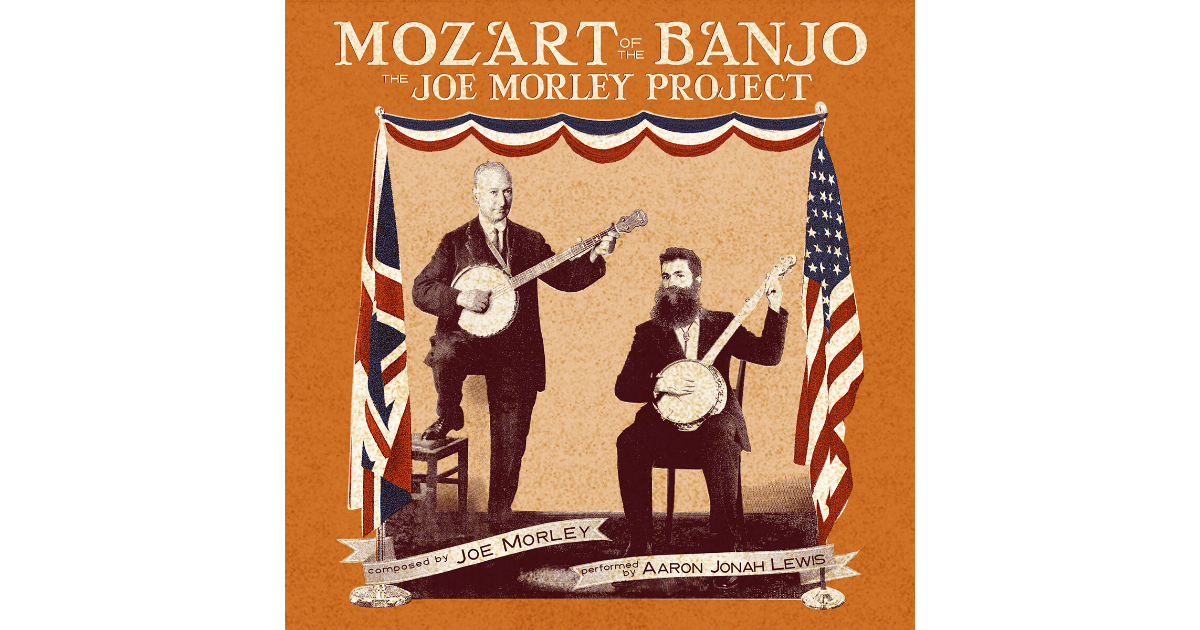
You’ll probably get ten different answers. If any were to double up, perhaps one would be Béla Fleck (a banjo player more than most will remember has conquered many a classical composition on the instrument) and perhaps another would be Earl Scruggs (given that “Mozart of” could easily morph into “a style-originator of” to others.) Fiddle champion and banjo virtuoso Aaron Jonah Lewis posits a much more pragmatic — and almost actually analogous — candidate on his new album, Mozart of the Banjo, tributing a banjo player a step closer to Mozart in more than a few ways, but chiefly in that he did not perform bluegrass.

Joe Morley was a “classic fingerstyle” banjo player, composer, performer, and instruction book author who lived and made music at the turn of the 19th to 20th centuries, at which time banjos were central to popular music in Britain and the United States. “A Banjo Frolic,” one of twelve Morley pieces performed by Lewis on the album, demonstrates this “golden age” sound, oozing ragtime and musical theatre and Vaudeville and minstrelsy. While Morley’s compositions weren’t technically “classical” music, Lewis explains in the project’s in-depth liner notes, “…[It] did occupy an interesting space in that it appealed to royalty, the upper and middle classes and the lower classes of society as well.” A truly banjo notion. Morley also paralleled Mozart in that they were both child prodigies, both left enormous bodies of work, and both died poor and were buried in unmarked graves.

We may be enjoying a current renaissance of the banjo, where more and more players, fans, and even casual passers-by of the instrument understand its important role in American history and its folkways and art forms. Still, it’s fascinating that so many forgotten or overlooked facets of the instrument’s past and its legacy remain excluded from that greater, better-understood narrative. Mozart of the Banjo: The Joe Morley Project and Aaron Jonah Lewis are attempting to tell more of the banjo’s full history, and purposefully connect it to its Black and African inputs, as well as its extant forms in the U.S. and around the world, reminding all of us banjo fans — and at such an apropos time, as well — that none of our favorite forms of music, banjo-y or otherwise, exist in a vacuum.