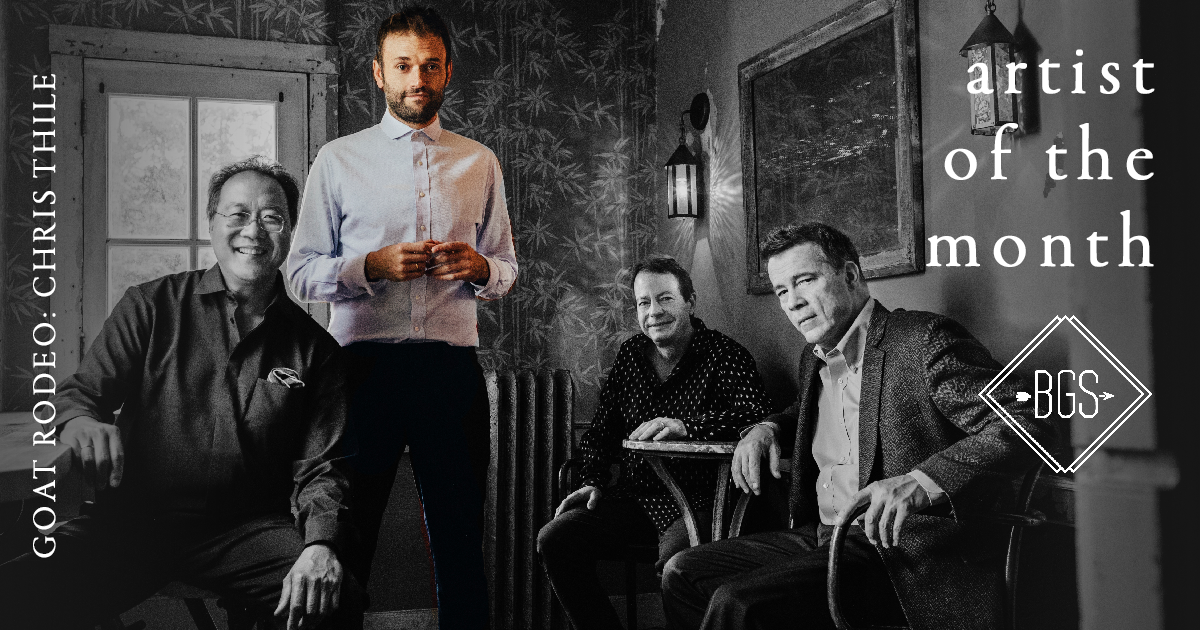
Chris Thile Keeps His Goat Rodeo Bandmates From Falling Out of Trees

For more than a quarter of a century, Chris Thile has been constant force in the American music scene — and he’s still shy of 40. The musical polymath always seems to have some project going on: whether as a duo (pairing most prominently with both Michael Daves and Edgar Meyer), a trio (Nickel Creek), quartet (Goat Rodeo), and quintet (Punch Brothers). And he has won Grammys in all of those groupings.

Last summer, Thile rendezvoused with his Goat Rodeo brethren — fiddler Stuart Duncan, cellist Yo-Yo Ma, and bassist (and fellow MacArthur “Genius Grant” honoree) Edgar Meyer — to record their long-anticipated sophomore effort, Not Our First Goat Rodeo, which came out in June. What Thile finds is so special about this collaboration is that it features musicians who are, he says, “excited by, and invigorated by, discomfort. Like a good stretch. I think this project is defined by the willingness of its participants to stretch outside of their perceived comfort zones.”

This Artist of the Month interview is the third of four installments as BGS salutes the incredible and iconic musicians of Not Our First Goat Rodeo.

In a BGS interview a couple years back, you said, “I think any album worth listening to is a concept record.” Was there a concept or an overarching theme behind the new album?

Thile: I don’t know if I would, at this point in my life, back myself up on that no worthwhile album has been made without a concept. If indeed I said that I would walk that back just a touch. But the vast majority of records that have made a serious impact on me have had some sort of perceptible topics of conversations, governing principles, or thematic glue. With instrumental records, the themes start to become the play of contrasts and similarities between the individual participants, and the characteristics they assume in concert with one another.

The two actual lyrical vocal songs [on Not Our First Goat Rodeo] — there’s one other vocal song that has no lyrics — are both meditations on work/life balance. They both zoom the lenses in on the less-written-about parts of the relationships. We tend to write songs about the beginnings and ends of relationships, but we don’t necessarily write songs about the middle. Because the beginnings and ends can be so explosive. Hopefully, if your relationship is successful, your relationship will be in the middle until one of you dies.

Certainly the five of us together often talk about work/life balance. How our families are. How we are doing in context of our families, and how our families are doing in the context of our various endeavors. Lyrically that was something that Aoife and I talked about writing in the midst of those kinds of discussions and thoughts. Instrumentally, the themes are more abstract, but no less present. This project has a built-in [structure] of Stuart, Yo-Yo, Edgar, and me bouncing off of each other. Like, what’s it going to sound like when you smear those four people together? And when you get Aoife into the mix, it becomes a whole other thing.

Is writing lyrical songs for Goat Rodeo different compositionally than in other songwriting situations?

It is different. Since the project is so instrumentally focused, it’s ultimately an instrumental project that happens to have a couple of vocal moments in there. We came up with the music together, then Aoife [O’Donovan] and I went off, having discussed the various things we wanted to write about. But when we are writing that music, it is still kind of like instrumental music that happens to have some vocals on it. “The Trappings” being slightly more like you might expect a vocal song to be. “We Were Animals” came right in sort of the middle.

“Every Note a Pearl” was very much an instrumental, then we wanted some more instruments that could slide around. Also, we wanted some more stuff [happening] while Edgar was pizzicato and Stuart playing tenor banjo and me on the mandolin. We wanted Yo-Yo to have some friends in Sustaining Instrument-land. So, we felt, “OK, Aoife and I can help with that.” But we were never tempted to add words to that one. Because the project is driven by instrumentalizing, the vocals are more balanced in terms of where the interest is coming from. Often, if there are vocals in a piece of music, we are focusing on the vocals, and in this music we are not necessarily playing to those expectations.

The voices then are like fellow instruments?

Yes, absolutely. And they’re not given a place of greater prominence than any one instrumentalist is.

Can you talk about Aoife’s unique contributions to Goat Rodeo projects?

When we first did the project, it was an all-instrumental project. And then, I think it was Yo-Yo’s idea. During our practice, he said, “Chris, you sing. Why don’t you sing a little bit?” And I said, “OK.” It was pretty organic. It was like, “Wouldn’t it be lovely to have another singer on these ‘singing songs’?” Aoife and I had never done anything officially together. It had always been at music festivals. Late-night jam sessions. Those type of things. I think both of us had so much fun singing together that I instantly thought of Aoife and I sent everybody recordings of her. Everyone was into it and off we went. It was still with the full knowing that it was an instrumental record.

That fits in with the group’s general philosophy of not conforming to any genre or expectations — to include anything into the music that makes it work.

That’s absolutely right. Nothing’s off limits. If one of us is interested in something, then it’s like, “Hell yeah!” I love that this record can go from something like “Every Note a Pearl” to “Not for Lack of Trying,” and the idea we’re going to be playing around with sliding slowly from one diatonic chord that is well within diatonic harmony to another — but we’re going to pass through all the points along the way, just very slowly. As if the music is melting/spontaneously generating.

And that’s a thing we’re going to pursue — we’re going to see what happens when we chase a thought. More so [on this album] than the first one, actually. This time through the composition process, more was on the table. We had already pursued our first instincts. It was time to really open up to what the possibilities were — having a foundation to begin with in the form of the first record.

Goat Rodeo features four exceptional musicians and it feels like you all try to bring out more in each other.

I love the ways in which it challenges me. I think it challenges each one of us. Maybe the defining characteristic of this ensemble is that what might stretch one of its members might be the absolute comfort zone of another. What might stretch Stuart as far as he’s ever been in one direction is a walk in the park for Yo-Yo. And vice versa. What might be absolutely stretching Yo-Yo to the point the farthest reaches of his exploration is like falling off a log for Stuart.

I love that aspect of this project. Something that’s super easy for me would be hard for Edgar. And something that’s super easy for Edgar would be hard for me. It runs through the whole ensemble like that. So you always have a guide. One of us can always teach the rest of the class about stretching ourselves as musicians.

Even within a piece.

Oh absolutely. Who’s the master of a given concept can switch throughout the course of a piece. And the learner can instantly become the master. And the master can become the learner, with the idea that we all get better at it as we go along. I love hearing the sound of when one of us is out on the limb right now but one of us totally has it. Don’t worry, that person is going to make sure you don’t fall out of the tree. Because you know that they will return the favor.

What is one recording that ranks as a G.O.A.T. (greatest of all time) for you?

My world was totally blown open by Kendrick Lamar by How to Pimp a Butterfly. I think that is an extraordinary work. Talk about an album hanging together structurally. I think that is just a master class in developing one theme. I still have so much to learn from that record. That’s on the list. That’s definitely up there with the greatest records ever. It’s still opening my ears. The way I understood it when I first heard it is completely different from how I understand it now. One of the big differences is that I understand how little I understand about it. I think the best records do that. They open up your worldview — not just your musical view.

(Editor’s note: Read the remaining installments of our Artist of the Month interview series here.)


Photo credit: Josh Goleman
The Show On The Road – Rising Appalachia

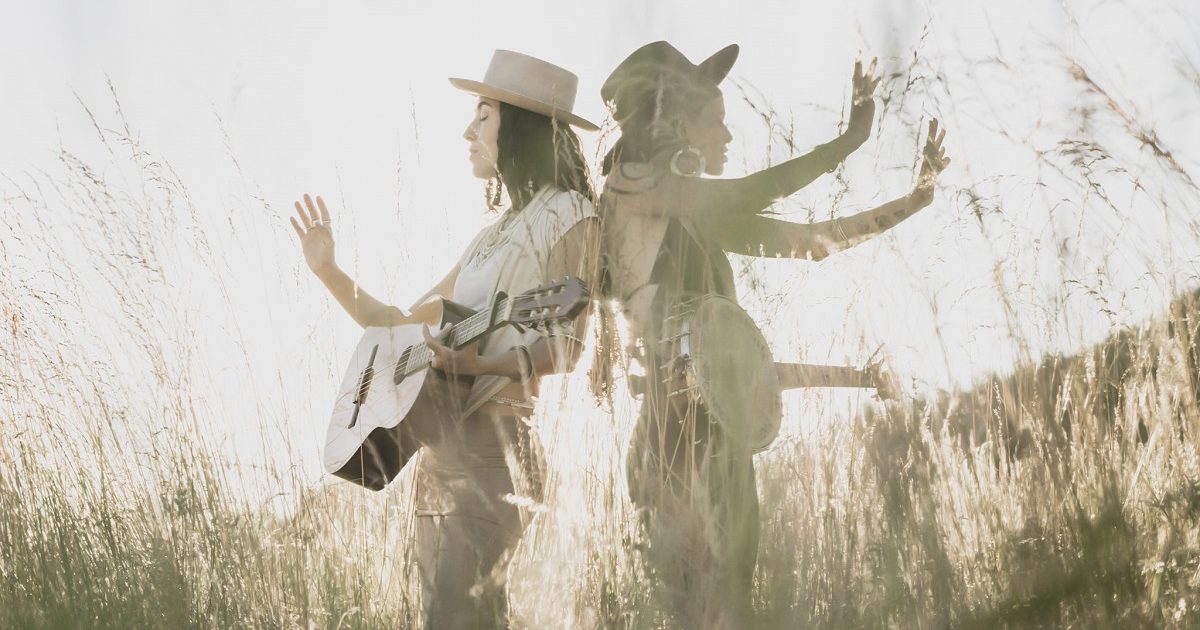
This week on the Show On The Road, a conversation with Chloe Smith of Rising Appalachia. In 2005 she founded this unique partnership with her sister Leah after their relentless world travels finally intersected in southern Mexico, where Leah had started mastering the banjo.

LISTEN: APPLE PODCASTS • MP3

Growing up in a musical family of traditional string-band players and contra-dance leaders near Atlanta, Rising Appalachia’s latest release, Leylines, mixes the rustic front porch sound of their childhood family jam sessions with a neon-tinted modern backbeat of dancehall electronics and mystical protest. That could have felt incongruous, but somehow these influences mix beautifully with their ethereal, intertwined vocals and darting fiddle-and-banjo runs.

While our host, Z. Lupetin, was able to catch up with Chloe for this cross-country conversation, Leah has been marooned in Costa Rica since the world shut down in March and continues to work from there. The sisters and their talented six-piece band have become a beloved fixture at music festivals throughout the United States, but have also played stages in Colombia, Costa Rica, India, Italy, Hungary, Bulgaria, The Czech Republic, Ireland, Scotland, and more. 

Always looking to challenge the traditional carbon-hungry touring routine, Leah dubbed their group as part of a growing “slow music movement”, and in this episode, Z. talks with Chloe about the time they toured remote Canadian farming islands via sailboat. It’s that kind of intimate and innovative traveling that Chloe would like to return to whenever the COVID-19 shutdown lifts in the coming years.

Stick around to the end of the episode for an acoustic version of “Harmonize” from Leylines, and check out Rising Appalachia’s newest single “Pulse,” featuring Dirtwire.

LISTEN: Ben Harper & Rhiannon Giddens, “Black Eyed Dog”

Artists: Ben Harper and Rhiannon Giddens
Single: “Black Eyed Dog” (by Nick Drake)
Release Date: July 21, 2020
Record Label: ANTI-

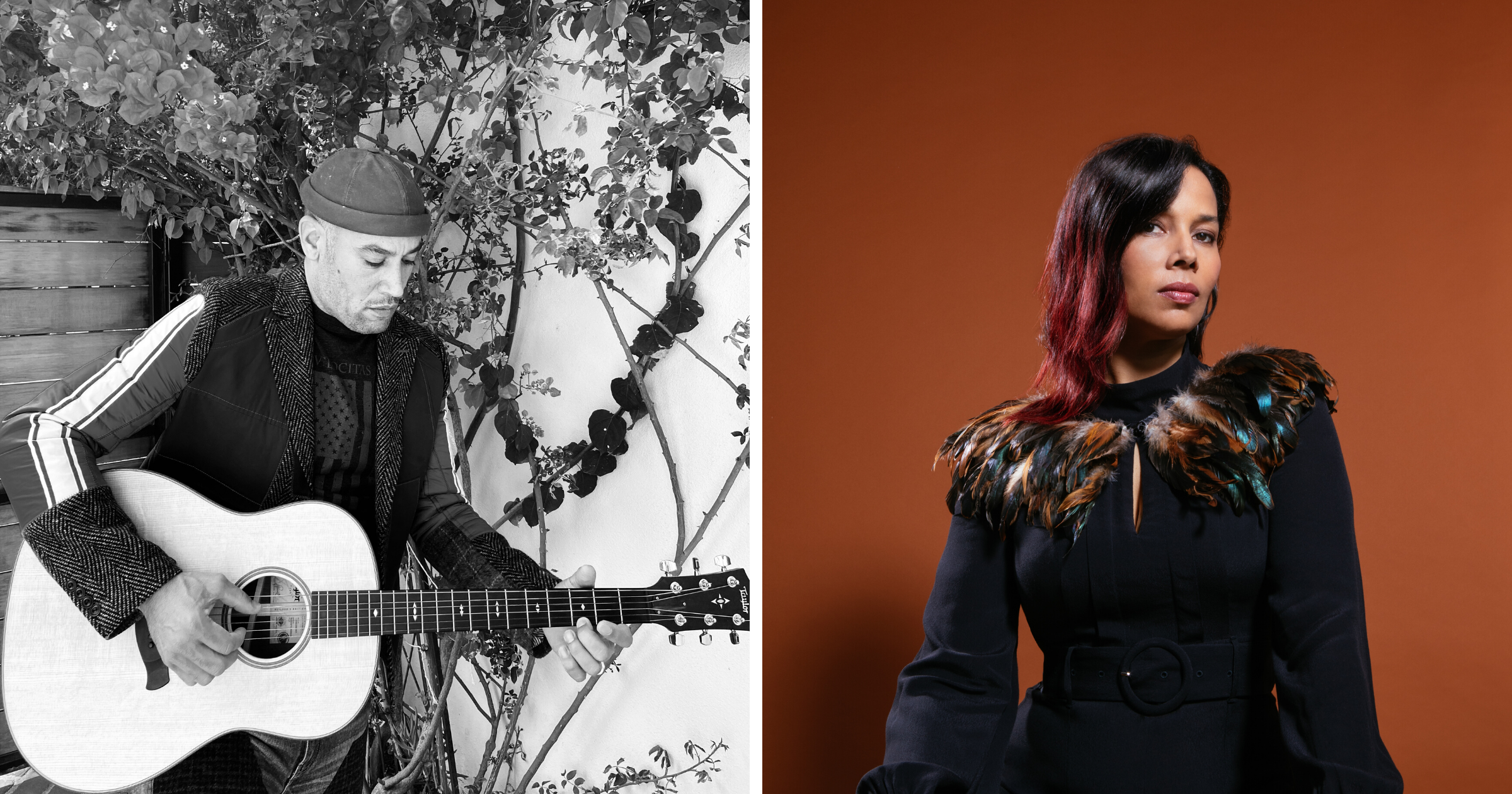
In Their Words: “Rhiannon and I are both black purveyors of American roots music, and while this is not an anomaly, it is an exception within a subculture. We have unquestionably tapped into the same creative well of influence, carrying on the tradition through our own individual instincts and perspectives. … I’ve always wanted to cover ‘Black Eyed Dog,’ but the song was intimidating in its haunted perfection. Only through collaborating with Rhiannon would I have ever attempted it. When I step back from it, this collaboration should’ve happened long ago, but I’m thrilled that it’s finally here.” — Ben Harper

“I’ve been hearing and hearing about Ben Harper for a long time, but had never gotten to meet him until recently at an event in LA and I was immediately struck by a kindred spirit. Didn’t have as much to do with the kind of music we play, although we share many, many commonalities as black folk playing roots music, but more to do with the spirit that we access when we play it. I felt that spirit in him right off and knew if we ever got the chance, we could make something beautiful together.” — Rhiannon Giddens


Photo of Ben Harper: courtesy of the artist.
Photo of Rhiannon Giddens: Ebru Yildiz

LISTEN: Ciera Julia, “Even So”

Artist: Ciera Julia
Hometown: Avalon, New Jersey
Song: “Even So”
Album: Who We Are
Release Date: July 24, 2020
Label: Lazare Music Inc.

In Their Words: “‘Even So’ holds a special place in my heart. I co-wrote this song with my good friend, Sheila Solomon, during a time of massive change in my life. I had just moved to Nashville, gotten out of a long-term relationship, and there were a lot of things I was missing. I will always love Boston, but when I graduated college it was time to close that chapter and move onto the next. They say, ‘If you love something, let it go,’ and it’s probably one of the hardest things I’ve ever done. This song reflects my acceptance and the path to healing. Sometimes things just don’t go as planned, but I like to think it’s for a reason; in this case it was. Nashville has given me so much and I have my past to thank for leading me here.” — Ciera Julia


Photo courtesy of the artist

LISTEN: The Two Tracks, “All Women Are Healers”

Artist: The Two Tracks
Hometown: Sheridan, Wyoming
Song: “All Women Are Healers”
Album: Cheers to Solitude
Release Date: August 14, 2020

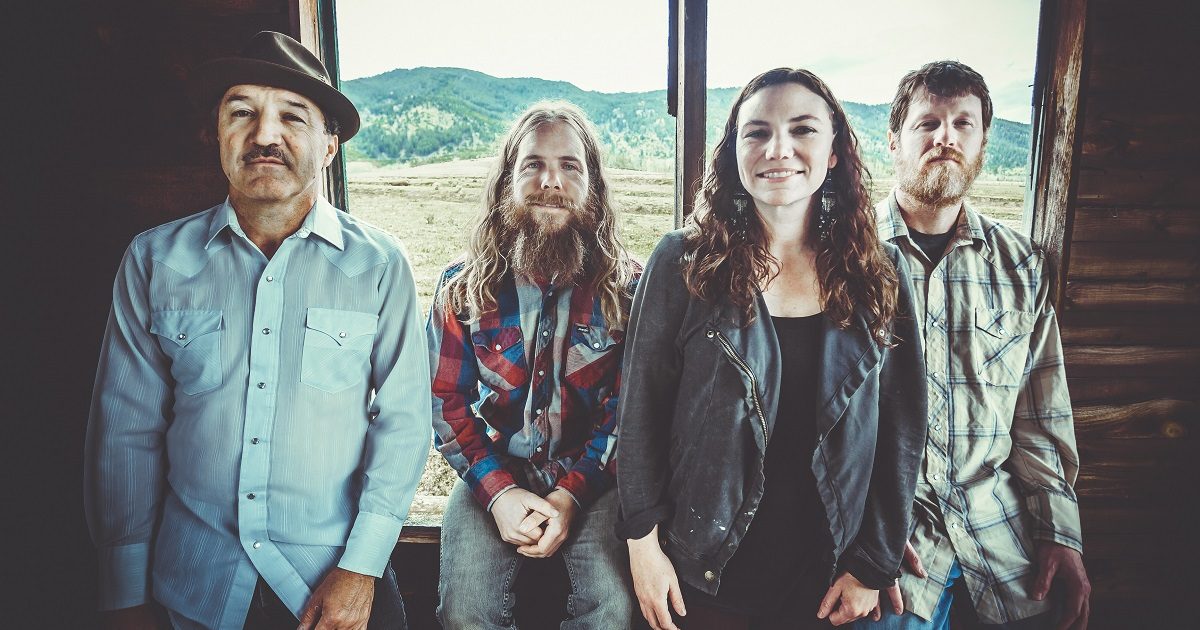
In Their Words: “‘All Women Are Healers’ was inspired by the title of a natural healing book that has been in my collection for years. The song speaks as a supportive women’s anthem highlighting the importance of women in the world. I feel incredibly lucky to have had the chance to work with Will Kimbrough producing this record and Sean Sullivan engineering at The Butcher Shoppe in Nashville, just months before the studio was forced to close their doors because the property is being redeveloped. The history in that room was thick. We recorded our past two albums there and would have recorded every future one in that studio — it was such a low-key comfortable atmosphere to create in. I also appreciate Will for connecting us with an incredible woman for the mixing phase of the album, Trina Shoemaker. She is one of the best in the Americana industry right now and it is refreshing to see women in these often male-dominated roles. It’s good to see the current progressive shifts in awareness of the social standards and prejudices women still deal with across the world.” — Julie Szewc, The Two Tracks


Photo credit: Dean Owens

MIXTAPE: Ocie Elliott’s Favourite Folk Through the Ages

Folk music, especially acoustic ballad folk, country folk, and early blues, has always held a special place in my heart and soul. From a young age, my dad would pull out his acoustic guitar when we’d go camping and around the campfire he would sing the family a folk song or two, mostly acoustic versions of Johnny Horton’s “The Battle of New Orleans” and “Sink the Bismarck.” The sound of the acoustic guitar and voice and their telling of a tale touched something deep inside me and my love for folk music was begun. Here are some of my (and our) favourite songs in this genre through the ages. — Jon Middleton, Ocie Elliott

The Carter Family – “Chewing Gum”

While not necessarily my favourite song by the Carter Family, there is something unique and uplifting about this one. I’ve always thought that Kurt Cobain would have loved it.

Lead Belly – “The Grey Goose”

Lead Belly is definitely one of the best ever, such an incredible songwriter. To me his power lies in the uniqueness of his sound; no one wrote songs like him either. The first time I heard this it filled me with so much joy: I could hear it being performed with a big group of people all singing the “lord, lord, lord” part. I’ve also always imagined Toots and the Maytals covering this song.

Blind Willie Johnson – “Trouble Will Soon Be Over”

My favourite blues artist of all time, Blind Willie Johnson’s voice and slide-guitar playing are otherworldly. This tune has such a beautiful melody and feel, it also displays the softer side of his voice and the female accompaniment adds a lovely depth to it all.

Mississippi John Hurt – “Spike Driver Blues”

The first time I heard his 1928 recordings my mind was blown. He has had the biggest influence on my fingerpicking without a doubt. The melody he picks in this song is just so beautifully circular, bouncy and perfect.

Doc Watson and Clarence Ashley – “Old Ruben”

I love the recordings these two did together — there is something very vibrant, authentic and alive in them. I think this song is my favourite of all of them, although “The Coo-Coo Bird” is a close second.

Johnny Cash – “Dark as a Dungeon” (Live at Folsom State Prison)

This whole album is amazing, but this song has always stood out, partly because it sounds like something to be sung around a campfire, but also because his voice is so rich and deep — it’s the perfect voice for this song.

Bob Dylan – “I Threw it All Away”

It’s impossible to pick a favourite from someone who has written more classics than most songwriter’s output in total. But I choose this one because oddly enough, this album (Nashville Skyline) was what led me into Dylan’s universe (I purchased it because it had Johnny Cash singing with Dylan on one song). Needless to say, I fell in deep.

John Prine – “Mexican Home”

We cover a number of John Prine’s songs, including “In Spite of Ourselves” and “Long Monday,” but one of our favourites that we don’t cover is “Mexican Home.” Both recorded versions are great in their own way, but the studio version feels truer to the content.

Guy Clark – “Anyhow, I Love You”

One of our favourite duets. A friend of ours showed us this song a few years back and we immediately started to learn it and sing it. It’s a very special and unique tune, especially in the lyrical phrasing.

The Country Gentlemen – “Fox on the Run” (Live)

I love that this was first recorded as a rock ‘n’ roll song by Manfred Mann. The Country Gentlemen’s version and harmonies literally sound like the lyrics, especially the line: “Her hair shone like gold in the hot morning sun.”

Loudon Wainwright III – “The Swimming Song”

We were also introduced to this by a friend and ever since then we’ve been in love with it. It’s uplifting, but also has this tinge of melancholy to it.

Mason Jennings – “Crown”

A favourite songwriter of ours, I’ve been in love with his music ever since I bought one of his albums on a whim in L.A. and drove with it the whole way back up the coast to San Francisco. Once there, I immediately pulled into Amoeba Records and purchased another.

Gillian Welch – “Winter’s Come and Gone”

Gillian Welch and David Rawlings are one of our biggest influences as a group. When Sierra and I first met, our first connection was made over a mutual love for Gillian Welch, and the first song we ever played together was “Look at Miss Ohio.” Something about this song though, the whole album really.

Gregory Alan Isakov – “Amsterdam”

This song has a rich, wonderful vibe to it — the recording quality, the playing, the mixing and of course, the tune itself. It feels like a warm blanket on a rainy day.


Photo credit: Dustin Rabin

LISTEN: Andrea von Kampen, “Hard Times Come Again No More”

Artist: Andrea von Kampen
Hometown: Lincoln, Nebraska
Song: “Hard Times Come Again No More”
Album: From the original motion picture Molto Bella
Release Date: July 17, 2020 (Single)

In Their Words: “‘Hard Times Come Again No More’ is an American parlor song written by Stephen Foster that dates back to 1854. I had never heard of this song when I was asked to write the soundtrack for the film, Molto Bella. I knew that I wanted the soundtrack to be a combination of original songs and old folk tunes and when I came across the lyrics of this song, I knew they would fit well with what the characters in the film were going through. Little did I know that the lyrics would also be quite meaningful in the time we are currently living in. Much has changed since we shot this film in Italy and yet, the song is almost more meaningful now. The lyrics look forward to a time when hard times will end and the song also speaks to the hope while we go through hard times, we are in this together.” — Andrea von Kampen


Photo credit: Letura Idigima

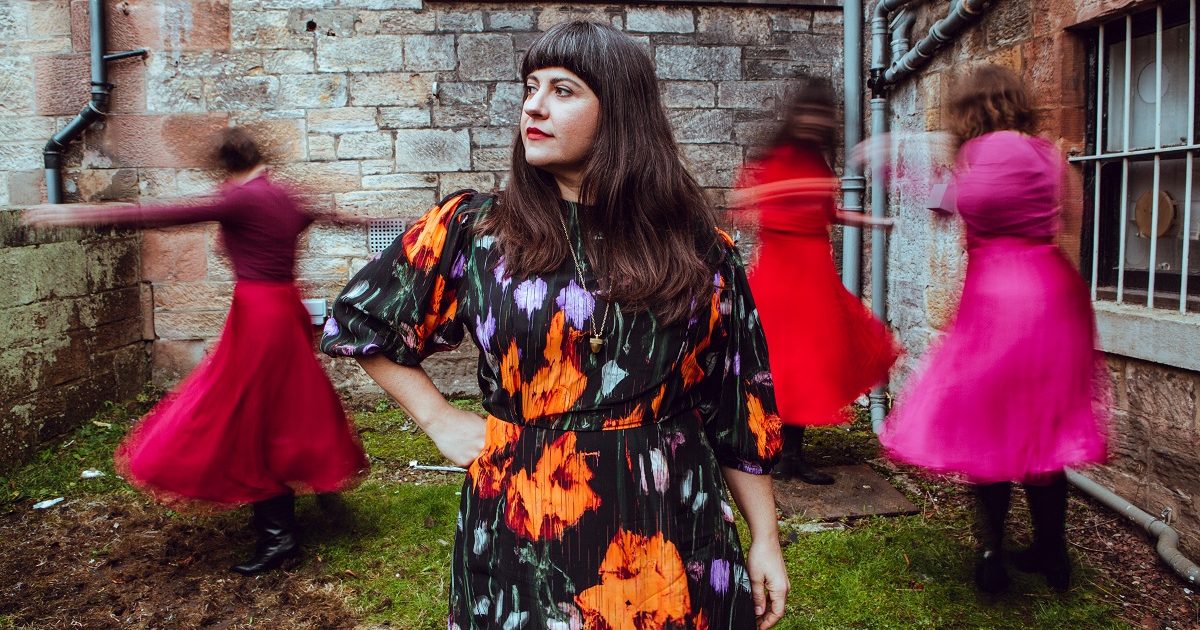
BGS 5+5: Laura Cortese & The Dance Cards

Artist: Laura Cortese & The Dance Cards
Hometown: Ghent, Belgium, by way of Boston and San Francisco
Latest album: BITTER BETTER
Personal nicknames (or rejected band names): Taysee, Cortez, Laur, Cortese

Which artist has influenced you the most … and how?

It’s such a hard question! But I’m going to say Leslie Feist. I still remember driving on Memorial Drive in Boston and hearing “Mushaboom” on The River 92.9 for the first time and thinking that pop music was about to become a lot more interesting than it had been in the previous 10 years. To me, her songs always seem to be about her own artistic endeavor, as opposed to what she thinks people will like. I find it inspiring and invigorating to try to be more committed to communicating your unique ideas and becoming more yourself, without being too concerned about what genre you’re fitting into.

What other art forms — literature, film, dance, painting, etc — inform your music?

For this album, in particular, I have no specific links to other art forms, but I find that if I don’t live a balanced life — reading books and articles that inspire me, going to modern art museums, watching intriguing films, reading poetry — I begin to feel less inspired and have no well to tap into to write. So I can’t point to a specific poem or piece of art that I experienced in the last three years that led to a song, but I try to engage with other art forms regularly to stay inspired.

What’s the toughest time you ever had writing a song?

I wouldn’t use the word “tough”, because it was enjoyable, but “Treat You Better” took a lot of work to get it right. I had the first verse and felt like it was an idea about the struggle that goes into a longterm relationship, but also had an infectious rhythm and symmetry to the words that were used, and it was a challenge to keep that symmetry in the words and also tell the emotional story that I wanted to tell. In the end, there are a lot of co-writers and there was a lot of discussion and a lot of drafts to come to what is “Treat You Better.” The final words were decided at the moment I was singing them in the studio.

What rituals do you have, either in the studio or before a show?

In the studio, one of our rituals is having really good meal times, and making sure the moments of rest are extremely enjoyable. I do occasionally do push-ups before a show because I find that when you walk onto a cold stage, it takes a minute to shake out the cobwebs, get rid of the nerves, and start to really transmit energy. But if you’ve done pushups ahead of time, you’ve already begun that energetic flow before you walk onstage.

Since food and music go so well together, what is your dream pairing of a meal and a musician?

Maybe I’ve just had enough of quarantine and wish I could travel, but Marina Satti is a Greek-Sudanese singer I’ve learned about recently. The video for her song “Kούπες” is particularly engaging. I want to hang with her in Greece and eat at her favorite restaurant, she can order.


Photo credit: Beth Chalmers

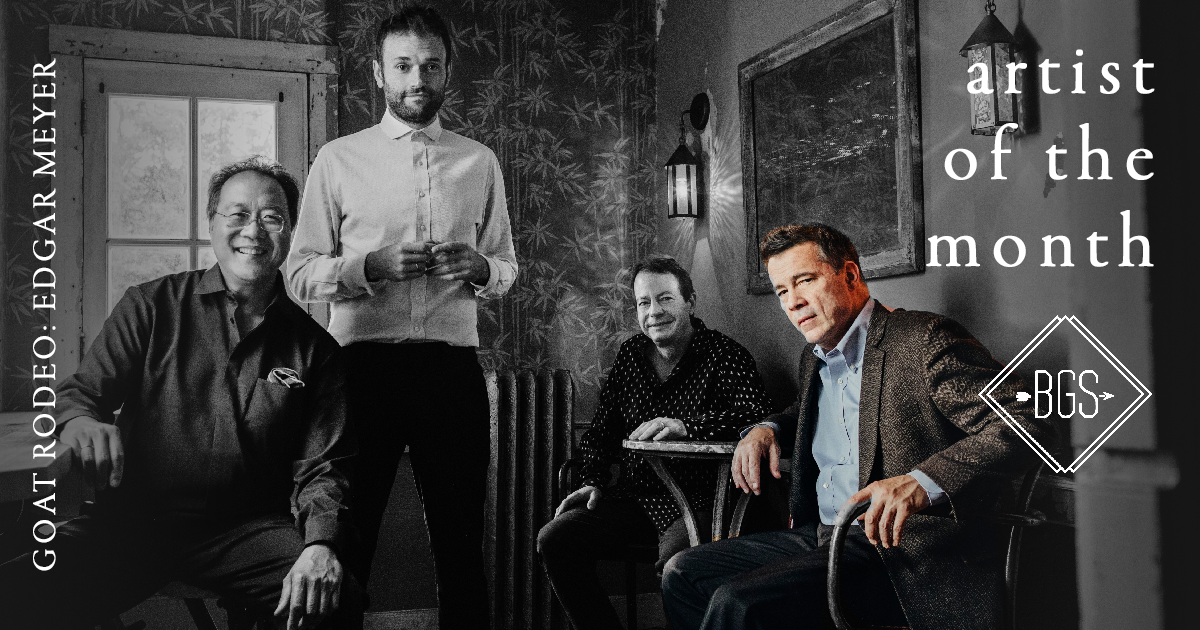
As ‘Goat Rodeo’ Returns, Edgar Meyer Makes Every Three-Note Chord Count

Lucky is how Edgar Meyer says he feels that he and his Goat Rodeo collaborators — Yo-Yo Ma, Chris Thile, and Stuart Duncan — were able to get together for the ensemble’s second album, Not Our First Goat Rodeo. They weren’t so lucky, however, when it came to their tour, which was supposed to start in August. “That’s not going to happen right now,” he tells BGS, adding, “We were looking forward to cherry-pick from both records.”

Along with their 2011 debut, which won two Grammy Awards, the Goat Rodeo albums represent two of the many high points in Meyers’ illustrious career. Renowned for his artistry on the double bass as well as for his compositional skills, the award-winning musician has been honored with a MacArthur Fellowship and the Avery Fisher Prize — the only bassist to have won either. Meyer also might be the man most responsible for Goat Rodeo’s existence. Having collaborated with both Ma and Thile, he introduced them to each other; later he and Thile recommended Duncan to Ma as the one to round out their quartet.

This Artist of the Month interview is the second of four installments as BGS salutes the incredible and iconic musicians of Not Our First Goat Rodeo.

BGS: Was there less preparation time for Not Our First Goat Rodeo than for the first album?

Meyer: I’d say in terms of learning how to play the parts, yes. But Stuart, Chris, and I spent 20 days together writing and that’s very similar to the first one. That’s probably more important than learning how to play it. We were not particularly well rehearsed or knew the music when we [all] got together, but the important part — which is the writing — had about the same amount of effort.

How was it building these pieces together?

It’s a joy. It is a unique endeavor and we were able to go somewhere we probably wouldn’t go with another set of people.

And did songs evolve a lot once you all got into the studio?

Not much in terms of the actual notes. Maybe the feeling of it — that would evolve some. Occasionally, there might be a kind of loosely mandolin/bass improvised area that became more consistent in what it is. But there’s not a lot of that. Actually [the] music did not change immensely while recording, except in terms of it gelling. And in terms of people really understanding everyone else’s and their own roles, and making it into a whole.

All four of you had more familiarity playing with each other this time. Did that make it easier for everyone to gel?

Overall, yes. It’s tricky in that we attempted to try to find things that were wholly different from the first one. I wouldn’t say that we entirely succeeded in that, but I don’t think we were disappointed either. We just felt obligated to try and find brand new places to go. At the end of the day, it still sounds exactly like that same set of people — and I don’t think we were able to deeply change it. I think it is nine years later and I think we are all a little bit different. It is a different record, but very recognizable from the first one.

Were there musical territories that you all were specifically interested for this album?

For each piece we do, there’s always something that we are trying to explore that is new in some way for one or all of us — that’s almost a baseline. An esoteric example would be… I relate to harmony most centrally as a three-voice thing. For me if there’s more than three voices usually, no matter what the type of counterpoint is, most of these things are not going to track all four at the same time. But it is possible with good three-part writing to have the listener track all three voices almost all the time. That’s just what I find. Obviously somebody with enough skills will try to turn that on its head.

Depending on which way you count, there are either 19 possible three-note chords or there are 12. The modern music guys like to say 12, but their way of counting says that the major chord is the same thing as a minor chord. So, I prefer to count 19 and make those redundancies separate chords.

So, for “Not for Lack of Trying,” we experimented; there’s a chorale that it’s kind of built around — a three-part chorale. It has a repeated phrase. I think we tried to get one of each kind of chord. And maybe it’s a 24-note chorale [because] the last five chords are the ones that were used in the beginning. But there’s at least one of each of the 19 kinds of three-note chords in that chorale. That’s not something we did on the first record.

But there’s always some kind of something that somebody or all of us are trying to explore. And it’s not going to usually be something like, “Oh, we wanted to see if we could mix some bluegrass with some Caribbean music.” It’s going to be much more melodies, rhythms, harmonies — very specific musical questions.

What was your reaction listening to how Not Our First Goat Rodeo came together as a completed album?

I think mainly good… it’s a little more even than the first one. Maybe it doesn’t have some of the crazy highs, but it is a little more consistent. It’s more like somebody’s doing it for the second time.

This time everyone was a little more consistent with what instruments they played. Was that a conscious choice?

It’s just how it went down. The truth is on that count we were trying to emulate the first record. I probably like the variety of the first one slightly more. What we knew before we started the project was that an instrumentation of mandolin, violin, cello, and bass is not a very good instrumentation, and we knew the three of us would have to switch instruments in order to make the textures really work. Then when we are all on our main instruments, you can hear the comfort. You can hear all of us doing what we do best, but if you had to listen to those four instruments for a whole recording it wouldn’t work as well.

Song titles on both Goat Rodeo albums are very fun, like “Waltz Whitman.” Does one person tend to come up with the titles or are they batted around and one title rises to the top?

Chris and I had a session on the phone for about a half an hour the day before we turned in the album. “Waltz Whitman” was Chris’s, and he didn’t like it when he said it. I liked it a lot and made him stay with it. And, of course, he likes it now.

A lot of projects that Chris and I’ve done, and that I have done in general probably, have a lot of titles with useless meanings that the listener will never know about. Because we don’t put a lot of stock in titles. And so we could slap almost anything on there. This one actually didn’t have anything that we wouldn’t be afraid to have on the front page of the paper. There’s no hidden stories behind these titles. That’s unusual. Maybe it’s a new trend for me.

What is one recording that ranks as a G.O.A.T. (greatest of all time) for you?

It’s a tough one because I will start by rejecting the question. What has had bigger impressions on me are particular pieces of music, and not particular recordings of them. The set of my favorite Beethoven, Bach, and Mozart pieces have had a bigger influence on me than single recordings have. My primary method of browsing in my formative years was less recordings than sitting at the piano and going through those composers’ scores. Although my list of influences is broad, at the top of it is Beethoven, Bach, and Mozart, and my primary way of knowing them is not through recordings.

So it’s their compositions overall?

Yes, that is exactly right. And the scores themselves. Because that is what we have from them. Whereas with Stevie Wonder, the way I know him is through a recording; so that’s how I’m influenced by him. But with these classical composers, it is not through the recordings. Like I’ve said that’s the most important. It probably depends primarily on the vintage. It’s a tough one, because some people who lived during the times of recordings are not well-documented. Anyway, that’s a true answer though. That’s how it works for me. The essence of what moves me is the writing.

(Editor’s note: Read the remaining installments of our Artist of the Month interview series here.)


Photo credit: Josh Goleman
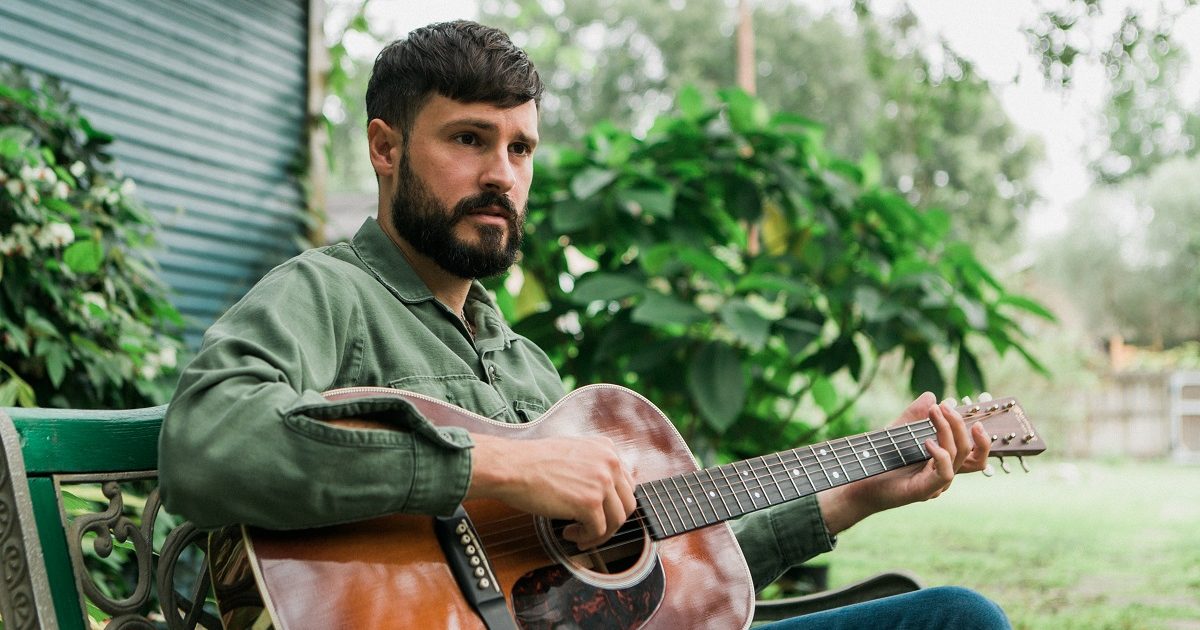
LISTEN: Michael McArthur, “Warmer Months” (Take 3, Acoustic)

Artist: Michael McArthur
Hometown: Lakeland, Florida
Song: “Warmer Months” (Take 3, Acoustic)
Album: How to Fall In Love EP
Release Date: August 14, 2020
Label: Dark River Records

In Their Words: “I started almost every show last year with this song for two reasons: One, it’s great for warming up the voice and hands. Often, I didn’t have the chance to do so before walking out to center stage. And two, people have always responded so well to it. It has that ‘draw you close’ quality, like a good hug.” — Michael McArthur


Photo credit: Michael Flores