Letting Go of Time: My Soundtrack for a Year with Cancer

Many of the facets of the music industry are the way they are simply because they are the way they are, but there is one pillar of melodic and lyrical art-making that remains extraordinarily arbitrary.

Time.

Records are released on Fridays now. Except when they aren’t. Some release days are packed with albums and others are desolate. Festival season coincides with the weather-outside-is-bearable season — except when it doesn’t. Holiday records are recorded in the summer. Lead time is inflexible, though ever-changing. Deadlines are always drop-dead… until they aren’t.

Time has gone from being regarded as something that inevitably passes to being framed as a commodity that can be “spent.” Time is money, especially in this gig economy era and in creative spaces where sentiments like “If you love what you do, you don’t work a day in your life!” rapidly devolve into a workaholic culture. We’ve seen the dissolution of boundaries between professional and personal lives, and made constant comparisons to those we perceive as more productive and ambitious.

My relationship with time — from each basic, incessant twitch of the clock’s second hand to my holistic understanding of existential time — changed fundamentally and cataclysmically in August 2018 when I was diagnosed with rectal cancer. In the earliest days my doctors told me that I would “lose a year of my life” fighting the disease. Being naive, new to the realms of life-threatening illness and the omnipresent physical, mental, and spiritual alterations of such diagnoses, I believed them.
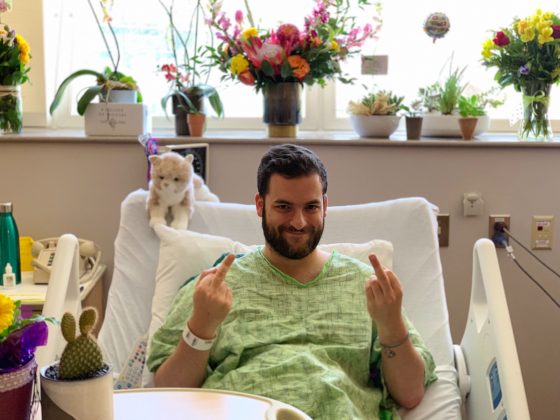
Over the months that followed, time passed not linearly, but as if it were a roller coaster operating in many more than just three dimensions, with twists, turns, and corkscrews I never considered possible. The associated cognitive impairments of cancer — from chemotherapy, an inordinate amount of prescription drugs, and the related traumas of fighting the disease — exacerbated my willy-nilly tumble through the twelve months that landed me here, writing this. Now, just over a year post-diagnosis and almost four months in remission, I am free of cancer (though not technically “cancer-free”).

Cancer is an arbitrary demon in and of itself, and as such, it’s very good at reminding: If something need not be arbitrary, perhaps it ought not to be. A rectal cancer diagnosis in an otherwise healthy 26-year-old is a perfect example. Humans cannot help trying to force such a thing to make sense, to have a direct cause and effect, but in this case and in many, many others it doesn’t. And it never will.

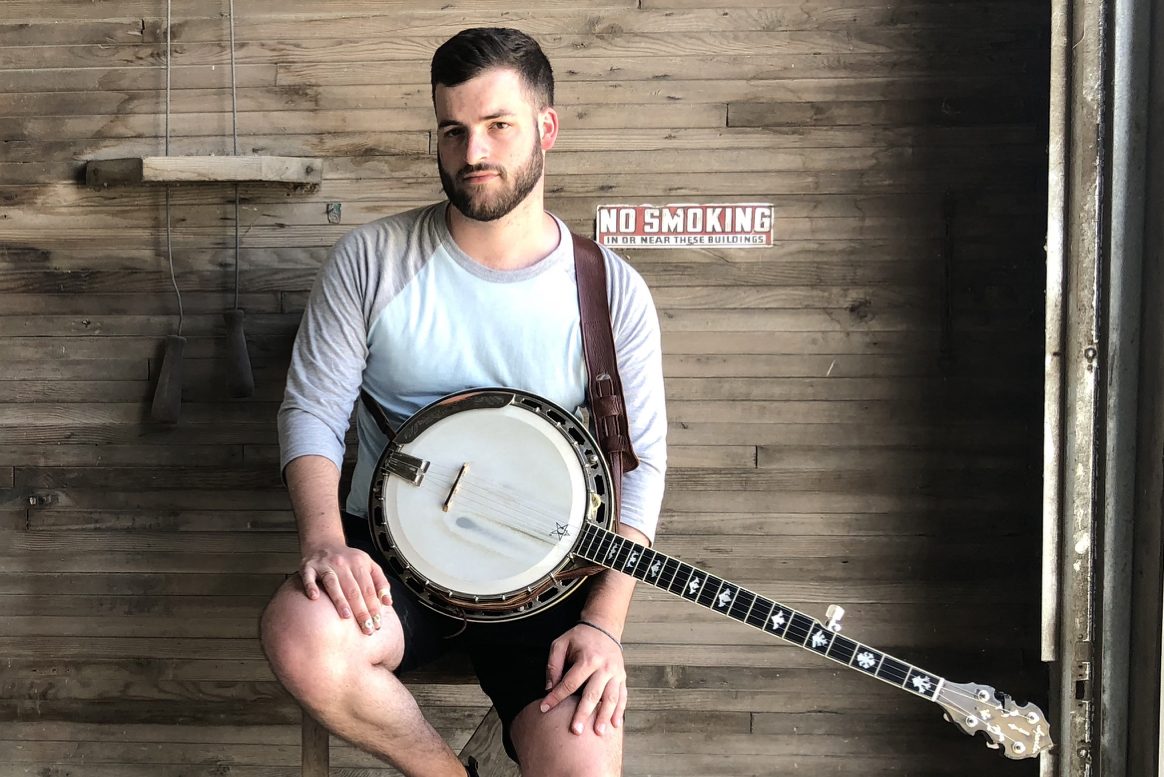
Before the final months of the 2010s elapse and we find ourselves reliving the year — and the decade — in music; while I find myself emerging from the fog of a year of pain, loss, and grief, a year fighting for my life and coming out ahead, I offer you this year-end wrap up. Not of 2019, but of a year fighting cancer. This is a soundtrack. For a few more than 365 days (and many more to come) of a queer banjo player, songwriter, and music writer holding onto life and letting go of time.

“Soon You’ll Get Better” — Taylor Swift feat. Dixie Chicks (2019)

In my eyes, the single most resonant line of any song released in the past year must be, “You’ll get better soon, ‘cause you have to.”

There’s this general, almost universal understanding of cancer, from a societal standpoint, that often does more harm than good. Almost everyone has a simplistic, rudimentary handle on what cancer is, what it means, and how to operate in relation to it. We’ve been fed countless narratives on the subject in the media, in fiction, non-fiction, through science, by the Hallmark Channel — you name it. One of the most frustrating outgrowths of this well-intentioned, though often tactless and somewhat misinformed understanding is that fighting cancer is noble. That it’s a holy war, a righteous baring of the teeth in the face of mortality and abject suffering and the quickened unraveling of existence.

But that is not how it feels. At least not to this survivor. Fighting cancer isn’t honorable. It’s necessary.

There is no choice.

It is exist or cease to exist. Because we romanticize storylines, dynamics in which “pulling the plug” seems like an actual option; because of faith systems that predicate moral truth on the existence of an afterlife; because we have heartbreaking, gut-wrenching tales of friends and family who opted for less pain, without treatment, than more time in misery with it; because there are all too many folks who shine, choosing joy against the odds, facing terminal diagnoses with bravery and aplomb, we think that the battle is wholesome, good, and virtuous.

I can tell you it is not. We get better because we have to. Sadly, there are too many who don’t. Because they can’t. Not because they are any less “noble” than those of us who “win” the fight. Not because they made a choice to give up the fight.

Choosing between being and ceasing to be is not a choice.

“The Capitalist Blues” — Leyla McCalla (2019)

Besides pain, discomfort, fear, and grief, the most present phenomenon to accompany cancer is bills. Piles and piles and piles of window envelopes. Emails. Push notifications chiming, “YOU HAVE A NEW STATEMENT.”

Each time my health insurance denied a claim on the grounds of some aspect of my care not being “medically necessary” — is the contrast used in my CT scans truly not necessary? — each time a prescription fell outside of coverage, often to the tune of hundreds and hundreds of dollars, my body and visage would grimace as if twisted from the pain of a 5cm mass in my colon.

To know, to see in plain daylight, that other human beings are getting rich off of my fight for life, causes such visceral anger and, in the wake of that anger, something that can only be described as the capitalist blues. Leyla McCalla’s wonky, off-kilter, Big Easy sound herein is a perfect wry smile in the face of a daunting, insurmountable task such as holding capitalism accountable. We’re all swimming with sharks and it’s a cold, cold world — even at the doctor’s.

“Anyone at All” — Maya de Vitry (2019)

As if to mock me, the electric guitar joins the band with a tick-tocking hook. Maya de Vitry’s narrator (however autobiographical) hasn’t been seeing anyone at all, hasn’t been drinking much at all, hasn’t been crying in the mornings, and she’s tired of hearing folks tell her it’s going to get harder.

Believe her. (Believe me.) It’s always been hard.

I spent the majority of a year at home, in my apartment, in bed, alone. Which is not to say I haven’t been supported throughout this journey by my friends, family, peers, colleagues, et cetera. It’s just that cancer is isolating in many, many more ways than one, and each of those sly, constituent methods of enforcing solitude conspire together to relegate us to these lonely spaces. Hearing de Vitry rejoice in them, embracing them, laughing in the face of what others, outsiders, might perceive as weakness and wallowing is not only redemptive, it’s liberating. I’ll see your “Have you been seeing anybody?” and raise you an “It’s been a couple of days since I’ve seen anyone at all!”

“Fixed” — Mary Bragg (2018)

The world teaches us how to regard ourselves, our bodies, our minds, our personhoods. We often don’t even realize this dictation is happening, but it is. Let me tell you, cancer brings out the worst in these tendencies, these trained reflexes. While Bragg’s message seems geared toward a childlike listener faced with society’s beauty standards, with dynamics of insiders and outsiders, cool and uncool, conformist and eccentric, I found myself returning to that refrain, “You don’t have to be fixed” over and over.

While my body image issues and low self-esteem run amok, fed on a glut of internalized ableism and materialism and superficiality and shame, the reminder in those lyrics that there is no one right way to be human, to be embodied, to be hurt or to be healed, was simply uncanny. Packaged with Bragg’s pristine, orchestrated arrangement and her powerfully tender voice, it’s a mantra in a song that we could all add to our quiver of weapons with which we face the world.

“Bad Mind” — Erin Rae (2018)

This song sounds like Ativan feels. Glossy and ethereal. The panned, double-tracked vocals, just distant enough in the mix, giving the impression that her voice is nearby, but out of reach. I was prescribed Ativan after being hospitalized due to complications from my first round of chemotherapy, namely that my nausea medications didn’t seem to be effective — until we brought Ativan on board.

That’s right, Ativan is prescribed for nausea. It’s also an effective anxiety medication, a strong benzodiazepine that’s often taken recreationally, but it’s a depressant. A strong, unyielding, psychoactive drug that guarantees dependency as a result of regular use. For months I was on an astronomical dose, without knowing it was considered high, to curb my incessant nausea.

I took two “cancer break” vacations during treatment. During the first, a country music cruise in the Caribbean, I cried myself to sleep every night. On the first night of the second trip, a solo getaway to the Bahamas, I wrote in my journal, through tears, “Perhaps I’m too depressed to enjoy an island paradise?”

As the lyrics in verse two reference indirectly, growing up gay in a conservative — and in my case, evangelical — family teaches you quite rapidly that your mind is bad. Very bad. Which, in quite a predictable turn, caused an anxiety disorder and clinical depression that I’ve been battling for more than a decade now. At times I was convinced that the problem of my erratic and burdensome mental health was simply due to my bad mind.

Ativan sank me to depths beyond those that I thought were possible. At its worst, beneath every word I spoke, beneath every layer of my thoughts, there was a constant suicidal hum. My prior struggles with suicidal ideation couldn’t even prepare me for the surprise of realizing, in some deep, hidden catacomb of my psyche, that I was fantasizing about taking my own life.

After chemo and radiation, when my nausea began to subside, I made getting off of Ativan my number one goal. I didn’t want to have a bad mind anymore. After seven months of three pills a day and after weeks of titrating, lowering my dose bit by bit to wean my dependent body and brain off of the potent, depressing, stomach-settling drug, I took my last Ativan in the hospital, after surgery to remove the mass.

It’s worth mentioning, for my sake and others’, there is no such thing as a bad mind.

“Sleepwalking” — Molly Tuttle (2019)

This year truly felt like sleepwalking. Through a world that disappeared.

In the Bahamas, after a month of daily radiation sessions and a mere handful of weeks before my operation, I walked straight into the Atlantic until the cold, steel blue water covered my head. I pleaded, I begged the sea to carry me away. To be allowed to float away with my fears. I cried into the saltwater.

Each time, as I listen to Tuttle’s voice — not angelic, no, but cosmic — grasping for the highest altitudes of her breathy vibrato, I hear my own personal flailing. My desperation to find an anchor, to not be woken up, to be left fantasizing about drifting away on the waves and the sounds of a voice that is that anchor, that is the one thing coming in clear through the static.

Another lesson learned from cancer: sometimes, you have to be your own anchor.

“Sit Here and Love Me” — Caroline Spence (2019)

My own helplessness over the last year was somewhat expected, but I was surprised that it wasn’t simply typified by the inability to help myself. There’s a deep, despairing helplessness found when you wish you could help others help you. To alleviate their helplessness. And I couldn’t. So often all I could do to help others help me was to ask them, with all of the kindness and compassion I could muster, to just sit here and love me.

I did not anticipate the hot, searing pain of telling my mother — a kind, generous, selfless woman who would admit time and time again, “If I could take your place, I would in a heartbeat” — telling her not merely once, but time and again, “This isn’t a problem you can solve. I just need you to hear me and love me.”

I know you hate to see me cry… and to hurt, and to fade into the nothingness of a round of chemotherapy, and to face doctors telling me my life and my body will be forever changed, and to know that there’s nothing you can do to step in, to interrupt the deluge pouring over me.

… But I just need you to sit here and love me.

“Keep Me Here” — Yola (2019)

Going through cancer when you’re single is difficult and complicated, but especially so as a young, gay man experiencing colorectal cancer. In the darkest moments, in the loneliest hours, when I craved physical affection, a hand to hold, a big spoon to lull me to sleep, a shoulder in which I could hide my eyes from the world — and with them, all of my worries and cares — I had nowhere to turn. Hook-up culture and the apps that have come along and monopolized queer entry to romantic and sexual relationships aren’t built for finding a security blanket for a battle with a lethal illness.

And so, in those moments, I turned to my ex. The reasons for our relationship ending notwithstanding, I think we’d both readily volunteer that we don’t think we’re a match. At least, not with a capital M. We live in that strange, queer space of happily being more familiar than platonic friends in that precipitous, somewhat intangible realm of deep connection — predicated on almost three years together — and unspoken boundaries.

He’s an entertainer, traveling the globe for work, ducking back into my life between contracts, each time leaving me with an ex-shaped chasm in my heart. My visceral yearning for closeness, for affection physical and emotional and spiritual, is a cacophony in my head each time, defiant against being denied these needs after having them finally fulfilled. Even if by someone who was not mine, nor could be, nor really should be.

Every time he left, I would love him a little more. It’s a strange thing to give love to someone so dear without being in love with them. So, I cried along with Yola, led by her expressive, assertive, grief-stricken vocals. I shouted along with Vince’s harmony in my car, trying to drown out the maximum volume. I waited a long time, for the right time to tell my ex how much I needed him, how much I wish I didn’t have to need him, I wish cancer didn’t require me to, but it did. I’m not sure the right time has happened yet, but I’ve tried — and I’m still holdin’ on.

“You’re Not Alone” — Our Native Daughters (2019)

Context matters. Circumstances matter. Privilege matters. It’s nearly impossible to listen to the stunningly timeless music of Our Native Daughters without considering these things. Songs mined from the experiences of women of color, of enslaved peoples, of folks categorically and systematically oppressed might seem like the last place a cisgender, white man like myself could seek comfort, but the salve here is twofold. First, to see and be seen. “None of us is here for long / but you’re not alone.”

Second, even in the extreme misfortune and despondency I’ve faced through my journey back to health, I ought to be reminded — I want to be reminded — of my privilege. Of how fortunate I am. Of the ample opportunities and advantages afforded to me by my race, my income level, my geography, my access to world-class medical care, my ability to work and continue working through my diagnosis and treatment, my support system, and on and on.

Yes, we all face our own trials, our own sorrows, and they are no less valid or troublesome because someone else in the world may have had it much, much worse. But the reminder is helpful, it’s cathartic, it’s therapeutic. And, while these injustices continue, while thousands and thousands of others are left in the shadows, we mustn’t take our privilege for granted.

Our Native Daughters use their platform to remind us of this, and no set of circumstances — no, not even cancer — is such that any one of us ought not hear that message. In the process, we might just uncover something limitlessly resonant that we didn’t expect to find.

“Everything’s Fine” — Jamie Drake (2018)

Maybe tomorrow we’ll find / everything’s fine.

Maybe tomorrow…

Maybe tomorrow…

Maybe tomorrow…

For 365 days. And more. Longer. And longer. And looooooonger. But you know what, the cinematic feel of this exquisite, arty folk-pop isn’t coincidental. It’s a deliberate tease. It’s dangling the carrot, leading you toward the conclusion that this is just part of the story. There is a tomorrow. You can hear the future in the sigh of the background vocals, in the whimsical harps, and it sounds good. It sounds like we might just find that everything is fine. And if we don’t (we won’t. At least not always), that’s fine too.

I hope in that future I’m able to option the rights to this story of mine and make a movie, if not for the sake of monetizing the misery I’ve endured, at least so that we can include this stunner on the literal soundtrack. Because that’s where it belongs.

Roll credits.


Photo courtesy of the author
WATCH: Molly Tuttle Plays Clawhammer Guitar on ‘CBS This Morning’

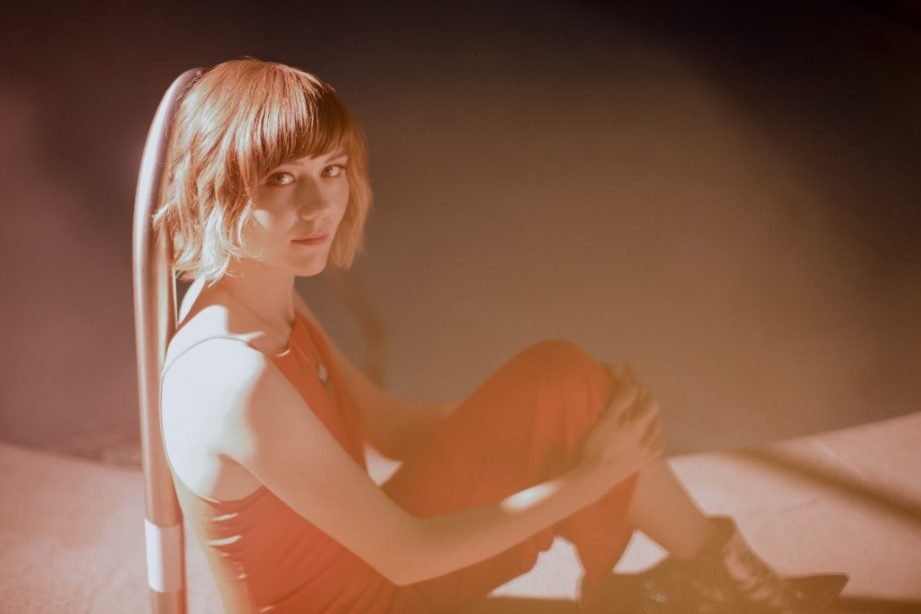
From Newport Folk Festival to network TV, it’s been a huge summer for Molly Tuttle. She’s blazed a trail through modern bluegrass, become one of the most prominent pickers around, and now she’s taking on roots music realms further and further from the string band territory in which she grew up. Feel the rhythm and energy in Tuttle’s national television debut performance  of “Take the Journey,” which showcases her unique frailing, “clawhammer guitar” technique, live from CBS This Morning‘s Saturday Sessions.
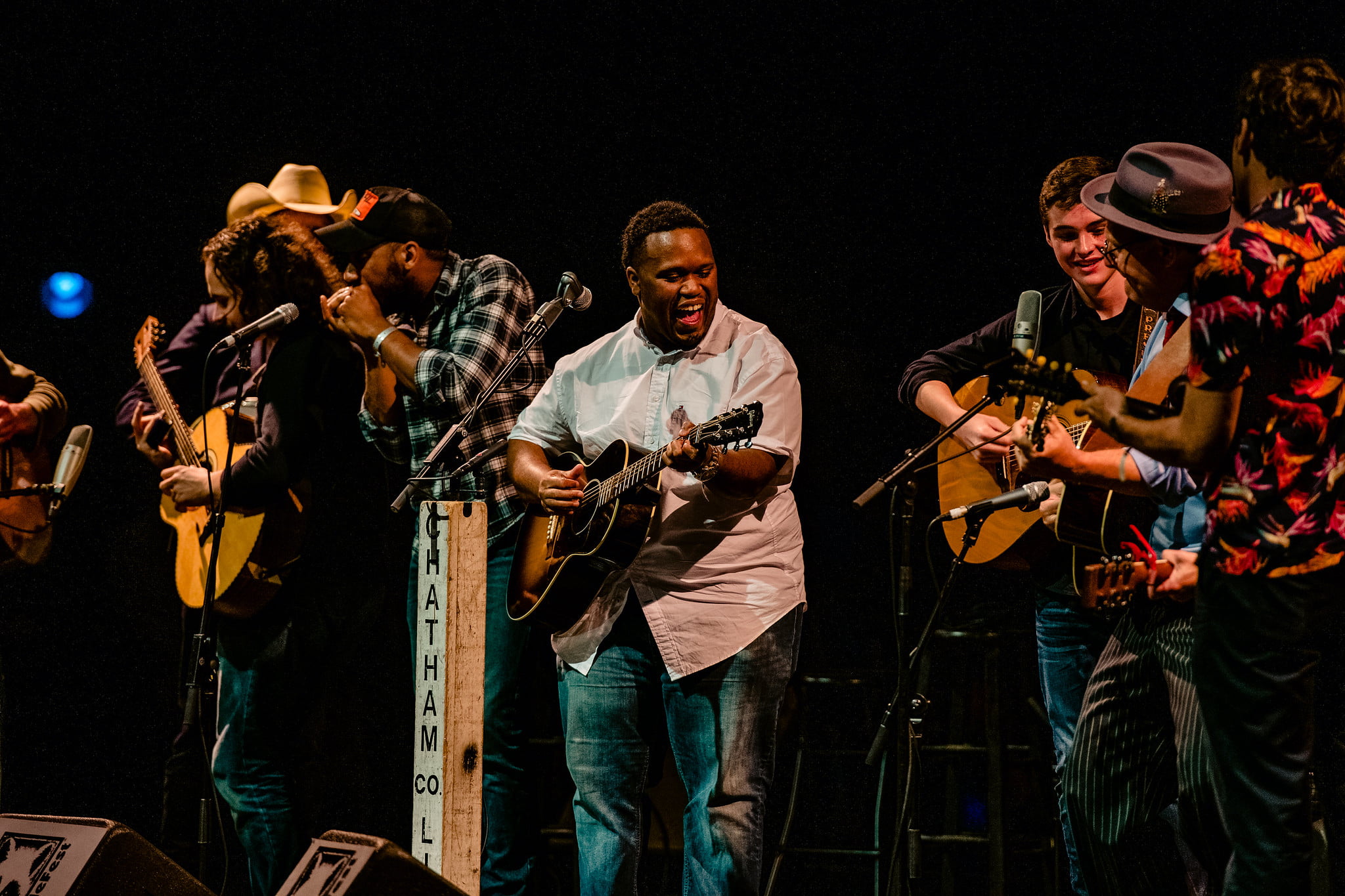
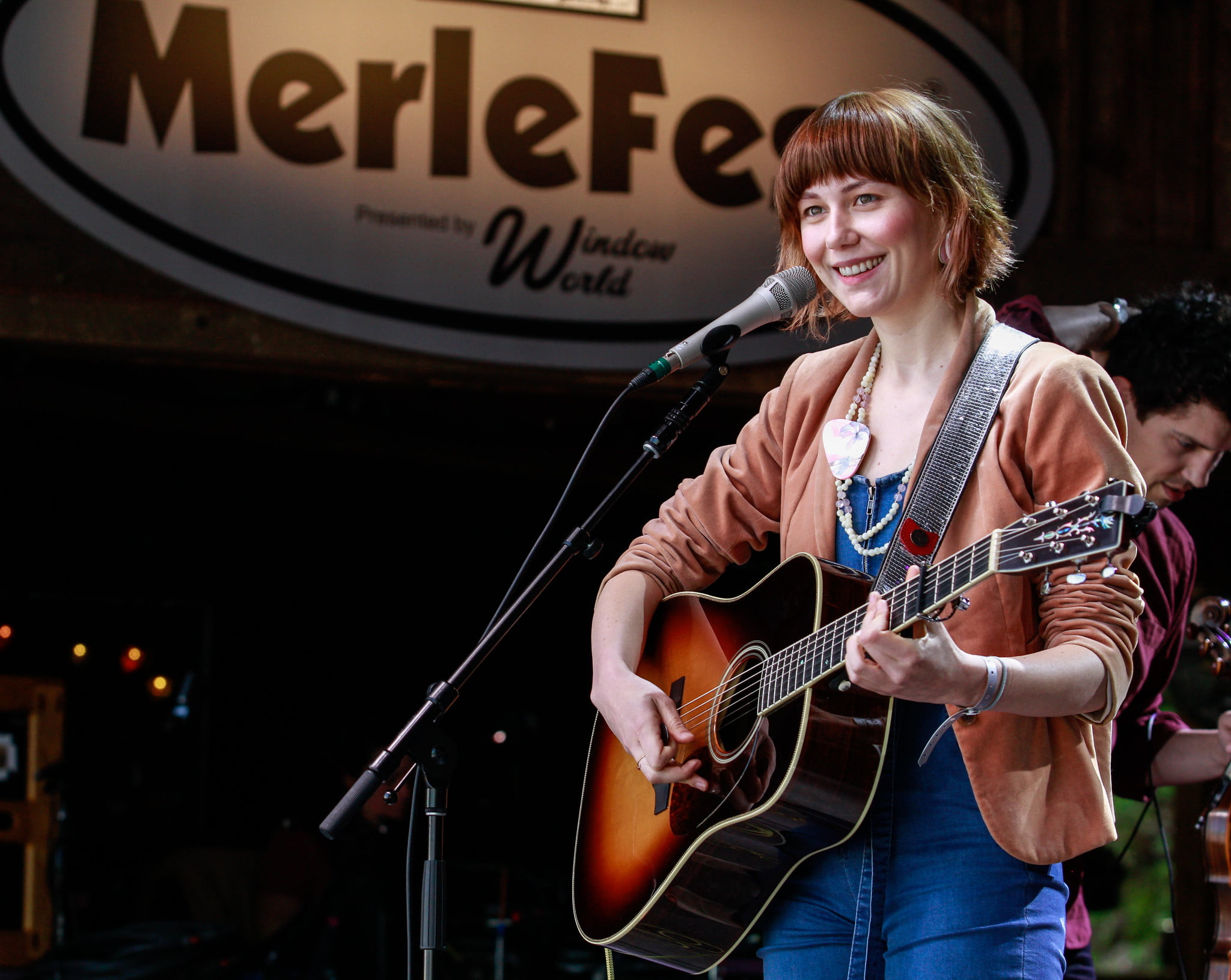

Photo credit: Courtesy of CBS

The String – Molly Tuttle and Episode 100 Highlights

The String turns 100 Episodes old with a focus on Molly Tuttle, one of the most celebrated and dynamic young artists in Americana music, a singer/songwriter who has negotiated the bridge from bluegrass to mainstream popular music with amazing grace.


LISTEN: APPLE PODCASTS

Molly Tuttle is a two-time IBMA Guitar Player of the Year as well as a winner of prizes at Folk Alliance and Americana. But more significantly, her debut album When You’re Ready has launched her to appearances at the Grand Ole Opry, Telluride Bluegrass Festival and many other marquee stages. Also in the hour, we listen back to a few highlight moments from three years of The String, including Bela Fleck and Abigail Washburn, Bobby Rush, Gretchen Peters and The Secret Sisters.

The Ringers, Created by Jerry Douglas, Will Play IBMA Wide Open Bluegrass Festival

IBMA World of Bluegrass announced its Main Stage schedule, as well as three special performances, for the Wide Open Bluegrass Festival next month in Raleigh, North Carolina.

Sam Bush will make a guest appearance with Del McCoury Band, while and a new band created by Jerry Douglas called the Ringers will perform for the first time ever. Douglas formed the group with Ronnie McCoury, Todd Phillips, Christian Sedelmyer, and Dan Tyminski.

In addition, a special performance titled “You Gave Me a Song”: Celebrating the Music of Hazel Dickens & Alice Gerrard will feature Alice Gerrard, Laurie Lewis, Allison de Groot & Tatiana Hargreaves, Cathy Fink & Marcy Marxer, Justin Hiltner, Jon Weisberger, and Eliza Meyer.

Wide Open Bluegrass is the free weekend festival that takes place at Raleigh’s Red Hat Amphitheater and on seven additional stages in downtown Raleigh on September 27-28.

These artists join previously announced talent such as I’m With Her (Sara Watkins, Sarah Jarosz, & Aoife O’Donovan), Doyle Lawson & Quicksilver, Balsam Range, Sister Sadie, Frank Solivan & Dirty Kitchen, and Molly Tuttle for Main Stage performances at Red Hat Amphitheater for this year’s festival. Performances at Red Hat Amphitheater will begin at 5 pm and will feature premier bluegrass acts for six hours.

The performances at Raleigh’s Red Hat Amphitheater will be open to the public for free, subject to venue capacity. A limited number of reserved seats in prime sections of the venue are available for purchase to ensure admittance for every performance.

Here is the schedule for the Main Stage performances at Red Hat Amphitheater for the 2019 Wide Open Bluegrass festival:

Friday, September 27
5:00 – Sister Sadie
6:05 – Balsam Range
7:15 – Molly Tuttle
8:25 – I’m With Her (Sara Watkins, Sarah Jarosz, Aoife O’Donovan)
9:45 – The Ringers featuring Jerry Douglas, Ronnie McCoury, Todd Phillips, Christian Sedelmyer, and Dan Tyminski

Saturday, September 28
5:00 – “You Gave Me a Song”: Celebrating the Music of Hazel Dickens & Alice Gerrard
6:10 – Frank Solivan & Dirty Kitchen
7:15 – Doyle Lawson & Quicksilver
8:30 – Del McCoury Band, with Sam Bush, and Special Guests (more to be announced)

IBMA Reveals Award Nominees, Hall of Fame Inductees, Distinguished Achievement Winners

Five of the top bands in bluegrass earned IBMA Entertainer of the Year nominations from the International Bluegrass Music Association. The ballot was revealed on Wednesday morning in Nashville.

The Entertainer of the Year nominees are Balsam Range, Sam Bush Band, The Earls of Leicester, Del McCoury Band, and Joe Mullins & the Radio Ramblers.

Due to a tie, seven titles will compete for the Song of the Year category. The IBMA Awards will take place Thursday, September 26, at the Duke Energy Performing Arts Center in Raleigh, North Carolina, with hosts Jim Lauderdale and Del McCoury.

Mike Auldridge, Bill Emerson, and the Kentucky Colonels have also been named as inductees into the Bluegrass Hall of Fame.

Distinguished Achievement Award recipients include radio personality Katy Daley, Mountain Home label founder Mickey Gamble, former IBMA executive director Dan Hays, The Lost and Found founder Allen Mills, and Japanese language magazine Moonshiner, now in its 37th year covering bluegrass and acoustic music.

The full ballot is below.

ENTERTAINER OF THE YEAR

Balsam Range
Sam Bush Band
The Earls of Leicester
Del McCoury Band
Joe Mullins & the Radio Ramblers

VOCAL GROUP OF THE YEAR

Balsam Range
I’m With Her
Doyle Lawson & Quicksilver
Russell Moore & IIIrd Tyme Out
Sister Sadie

INSTRUMENTAL GROUP OF THE YEAR

Sam Bush Band
Michael Cleveland & Flamekeeper
The Earls of Leicester
Ricky Skaggs & Kentucky Thunder
The Travelin’ McCourys

NEW ARTIST OF THE YEAR

Appalachian Road Show
Carolina Blue
High Fidelity
Mile Twelve
Billy Strings

SONG OF THE YEAR (7 nominees, due to a tie)

“Dance, Dance, Dance”
Artist: Appalachian Road Show
Writers: Brenda Cooper/Joseph Cooper/Steve Miller
Producers: Barry Abernathy, Darrell Webb, Ben Isaacs
Executive Producer: Dottie Leonard Miller
Label: Billy Blue Records

“The Girl Who Invented the Wheel”
Artist: Balsam Range
Writers: Adam Wright/Shannon Wright
Producer: Balsam Range
Executive Producer: Mickey Gamble
Label: Mountain Home Music Company

“The Guitar Song”
Artist: Joe Mullins & the Radio Ramblers with Del McCoury
Writers: Bill Anderson/Jamey Johnson/Vicky McGehee
Producer: Joe Mullins
Associate Producer: Jerry Salley
Label: Billy Blue Records

“The Light in Carter Stanley’s Eyes”
Artist: Peter Rowan
Writer: Peter Rowan
Producer: Peter Rowan
Associate Producer: Tim O’Brien
Label: Rebel Records

“Next Train South”
Artist: The Po’ Ramblin’ Boys
Writer: Mac Patterson
Producers: The Po’ Ramblin’ Boys, Dave Maggard, Ken Irwin
Label: Rounder Records

“Take the Journey”
Artist: Molly Tuttle
Writers: Molly Tuttle/Sarah Siskind
Producer: Ryan Hewitt
Label: Compass Records

“Thunder Dan”
Artist: Sideline
Writer: Josh Manning
Producer: Tim Surrett
Label: Mountain Home Music Company

ALBUM OF THE YEAR

City on a Hill
Artist: Mile Twelve
Producer: Bryan Sutton
Label: Independent

Del McCoury Still Sings Bluegrass
Artist: Del McCoury Band
Producers: Del and Ronnie McCoury
Label: McCoury Music

For the Record
Artist: Joe Mullins & the Radio Ramblers
Producer: Joe Mullins
Associate Producer: Jerry Salley
Label: Billy Blue Records

I Hear Bluegrass Calling Me
Artist: Carolina Blue
Producers: Bobby Powell, Tim and Lakin Jones
Executive Producers: Lonnie Lassiter and Ethan Burkhardt
Label: Pinecastle Records

Sister Sadie II
Artist: Sister Sadie
Producer: Sister Sadie
Label: Pinecastle Records

GOSPEL RECORDING OF THE YEAR

“Acres of Diamonds”
Artist: Joe Mullins & the Radio Ramblers
Producer: Joe Mullins
Associate Producer: Jerry Salley
Label: Billy Blue Records

“Gonna Sing, Gonna Shout”
Artist: Claire Lynch
Producer: Jerry Salley
Label: Billy Blue Records

“I Am a Pilgrim”
Artist: Roland White and Friends
Producers: Ty Gilpin, Jon Weisberger
Label: Mountain Home Music Company

“I See God”
Artist: Marty Raybon
Producer: Jerry Salley
Label: Billy Blue Records

“Let My Life Be a Light”
Artist: Balsam Range
Producer: Balsam Range
Executive Producer: Mickey Gamble
Label: Mountain Home Music Company

INSTRUMENTAL RECORDING OF THE YEAR

“Cotton Eyed Joe”
Artist: Sideline
Producer: Tim Surrett
Label: Mountain Home Music Company

“Darlin’ Pal(s) of Mine”
Artist: Missy Raines with Alison Brown, Mike Bub, and Todd Phillips
Producer: Alison Brown
Label: Compass Records

“Earl’s Breakdown”
Artist: The Earls of Leicester
Producer: Jerry Douglas
Label: Rounder Records

“Fried Taters and Onions”
Artist: Carolina Blue
Producers: Bobby Powell, Tim and Lakin Jones
Executive Producers: Lonnie Lassiter and Ethan Burkhardt
Label: Pinecastle Records

“Sunrise”
Artist: Sam Bush & Bela Fleck
Producers: Akira Otsuka, Ronnie Freeland
Label: Smithsonian Folkways Records

COLLABORATIVE RECORDING OF THE YEAR

“Burning Georgia Down”
Artist: Balsam Range with Atlanta Pops Orchestra Ensemble
Producer: Balsam Range
Label: Mountain Home Music Company

“Darlin’ Pal(s) of Mine”
Artist: Missy Raines with Alison Brown, Mike Bub, and Todd Phillips
Producer: Alison Brown
Label: Compass Records

“The Guitar Song”
Artist: Joe Mullins & the Radio Ramblers with Del McCoury
Producer: Joe Mullins
Associate Producer: Jerry Salley
Label: Billy Blue Records

“Please”
Artist: Rhonda Vincent and Dolly Parton
Producers: Dave Cobb, John Leventhal, Frank Liddell
Label: MCA Nashville

“Soldier’s Joy/Ragtime Annie”
Artist: Roland White with Justin Hiltner, Jon Weisberger, Patrick McAvinue, and Molly Tuttle
Producers: Ty Gilpin, Jon Weisberger
Label: Mountain Home Music Company

MALE VOCALIST OF THE YEAR

Shawn Camp
Del McCoury
Russell Moore
Tim O’Brien
Danny Paisley

FEMALE VOCALIST

Brooke Aldridge
Dale Ann Bradley
Sierra Hull
Molly Tuttle
Rhonda Vincent

BANJO PLAYER OF THE YEAR

Gina Furtado
Mike Munford
Noam Pikelny
Kristin Scott Benson
Scott Vestal

BASS PLAYER OF THE YEAR

Barry Bales
Mike Bub
Beth Lawrence
Missy Raines
Mark Schatz

FIDDLE PLAYER OF THE YEAR

Hunter Berry
Becky Buller
Jason Carter
Michael Cleveland
Stuart Duncan

RESOPHONIC GUITAR PLAYER OF THE YEAR

Jerry Douglas
Andy Hall
Rob Ickes
Phil Leadbetter
Justin Moses

GUITAR PLAYER OF THE YEAR

Kenny Smith
Billy Strings
Bryan Sutton
Molly Tuttle
Josh Williams

MANDOLIN PLAYER OF THE YEAR

Alan Bibey
Sam Bush
Sierra Hull
Ronnie McCoury
Frank Solivan

LISTEN: Louisa Branscomb’s “Gonna Love Anyway”

Featured Songwriter: Louisa Branscomb
Hometown: Cartersville, Georgia
Song: “Gonna Love Anyway” (written by Louisa Branscomb and Jennifer Strickland, performed by Sierra Hull, Jim Hurst, Bryan McDowell, Missy Raines, & Molly Tuttle)
Album: Gonna Love Anyway
Release Date: July 26, 2019
Label: Compass Records

In Their Words: “Being a songwriter keeps you honest if you let it. When I began this project, I’d been through a time of loss and change, including a tornado that took out my farm, losing both parents, and a little heartbreak thrown in to sweeten the mix. So I was looking for images of hope and resilience. Those images became the theme, and then the songs became the album. The song I worked the project around is ‘Gonna Love Anyway,’ with images of fragility and survival at the same time: a flower blooming in December, a cloud letting go of rain, and finally the guitar you pick up on a gamble that there’s one more song. I was so honored that Molly Tuttle agreed to do this one; she herself has such artistic power and grace at the same time, so it’s a perfect match. That is true of Sierra Hull, Jim Hurst, Bryan McDowell, and Missy Raines as artists as well, and that’s why I think this collaboration is so stunning and magical.” — Louisa Branscomb


Photo credit: Vicki Burton

WATCH: Molly Tuttle, “Light Came In (Power Went Out)”

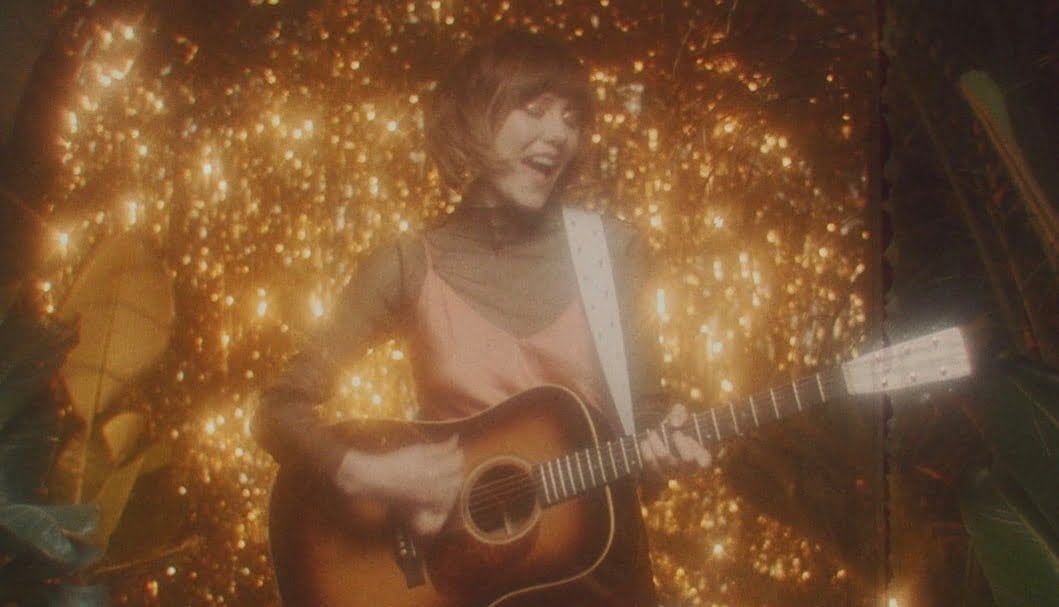
Can you feel it now…? Flatpicking phenomenon and Americana-by-way-of-bluegrass singer/songwriter Molly Tuttle has released her second music video from her debut full-length album When You’re Ready. “Light Came In (Power Went Out)” was co-written with her longtime friend and collaborator Maya de Vitry, as well as When You’re Ready producer Ryan Hewitt and award-winning songwriter Stephony Smith.

The video, directed by Jason Lee Denton, was shot in a plant shop and greenhouse in Nashville, carrying forward the verdant, tropical theme of the record’s cover art with added pops of light and electricity. “I thought that it would be nice to have the visuals almost be an extension of my album artwork, which also had foliage in the background and kind of a golden glow to it,” Tuttle explains. “That gave the video team the idea to look for a plant store or greenhouse that we could shoot in. Mackenzie [Moore] (art direction) and Aliegh [Shields] (producer) thought of crafting a glitter backdrop, and everyone just kind of worked together to make all the rest fall into place.”

After having spent the majority of her life as a performer, Tuttle finds it particularly gratifying to see her musical visions come to life on screen. “I am a very visual person so seeing how the glow of the lights and the lush backdrops add depth to the song is super rewarding. Getting to create in this way is why I love what I do – it was just a very fun evening spent filming in a cute plant store…”

And if you wondered – yes, Tuttle is a fan of the current houseplant craze that has struck many a millennial home and Instagram account. “I love having plants in my house so much!!!” She admits, “It lifts my mood to have greenery around. I just can’t keep any of them alive because I’m constantly away on tour… This video is what I wished the inside of my house looked like, basically, but in reality I just have a few unhappy succulents.”

Watch “Power Came In (Light Went Out)” right here, on BGS.


Photo courtesy Compass Records

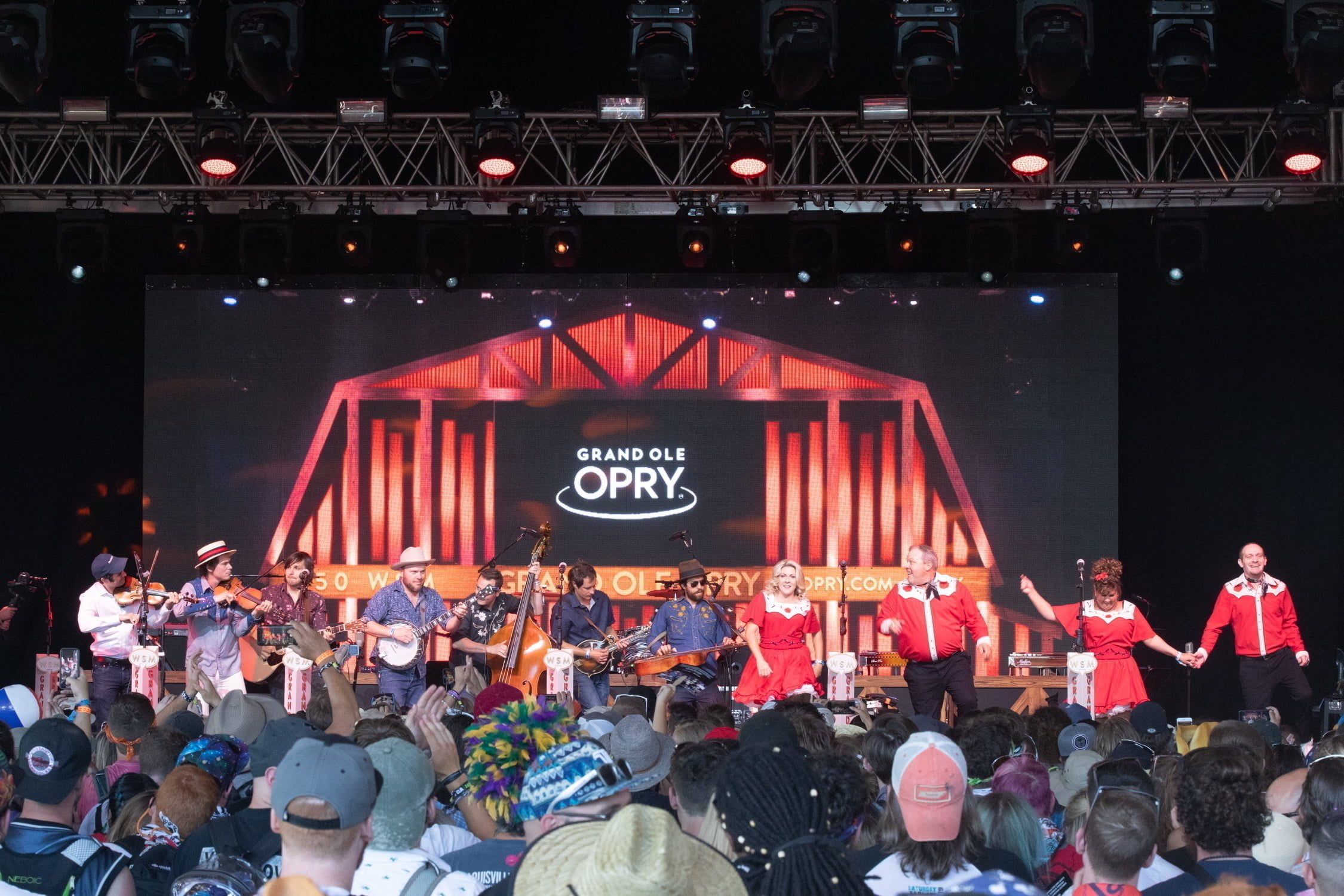
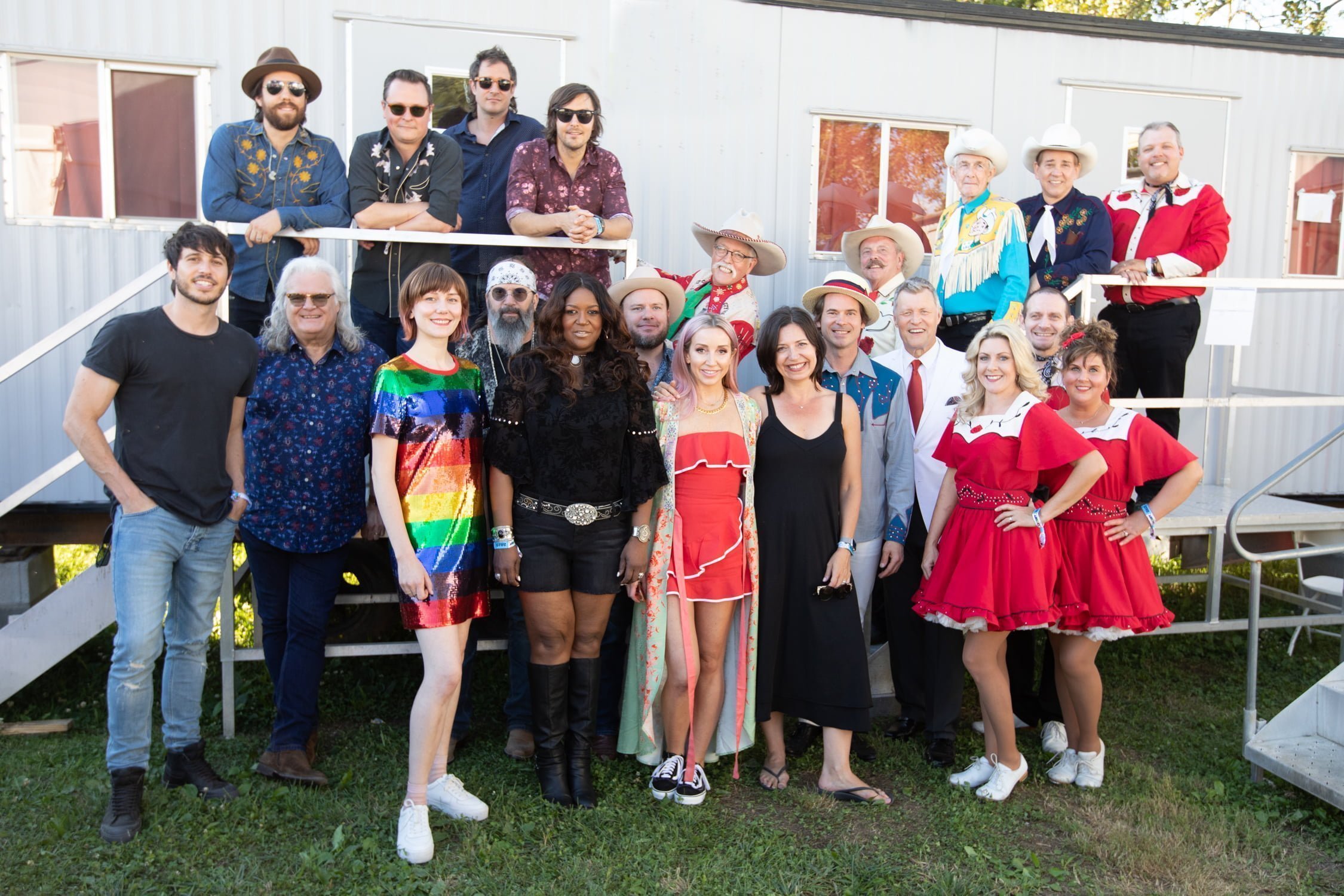
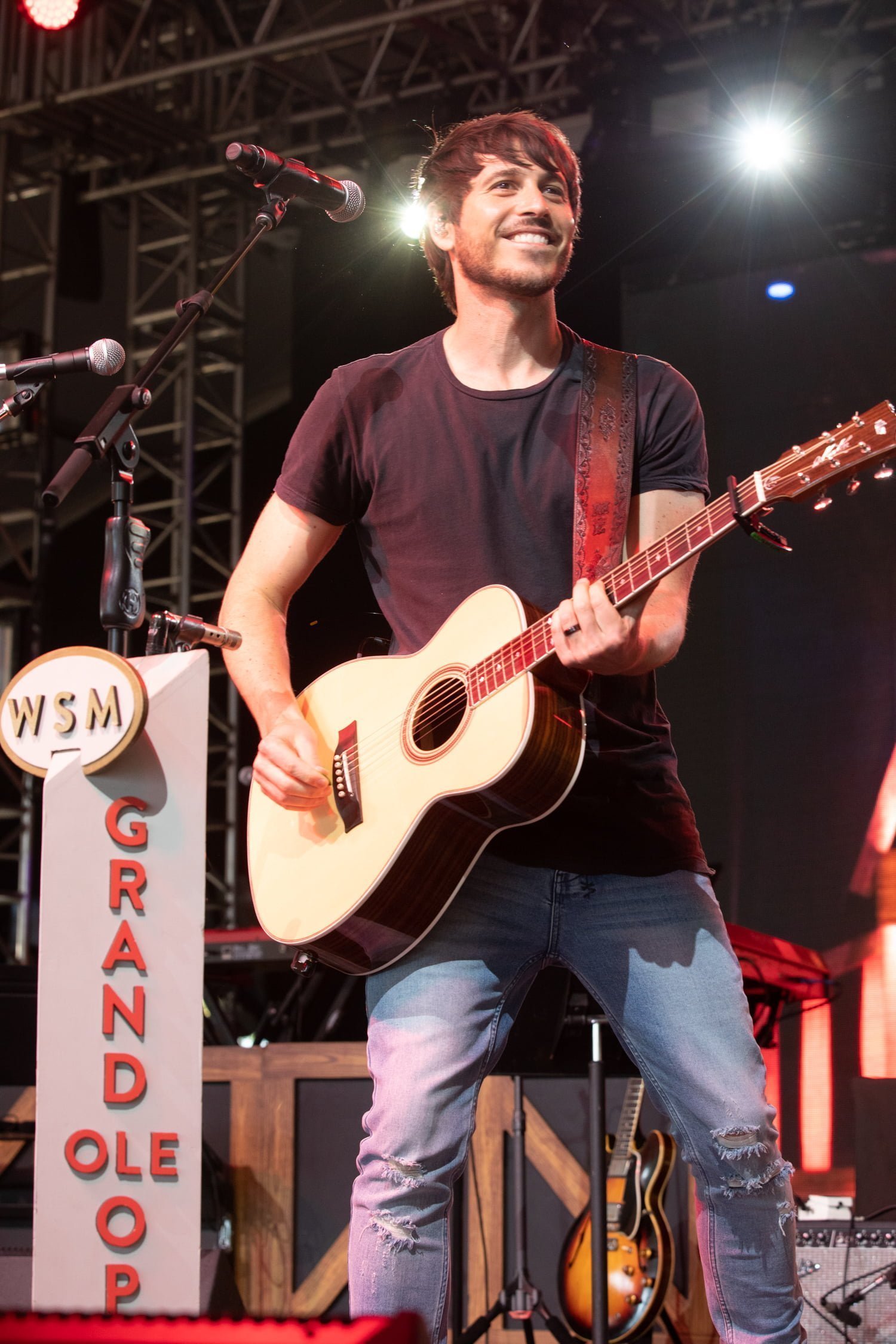
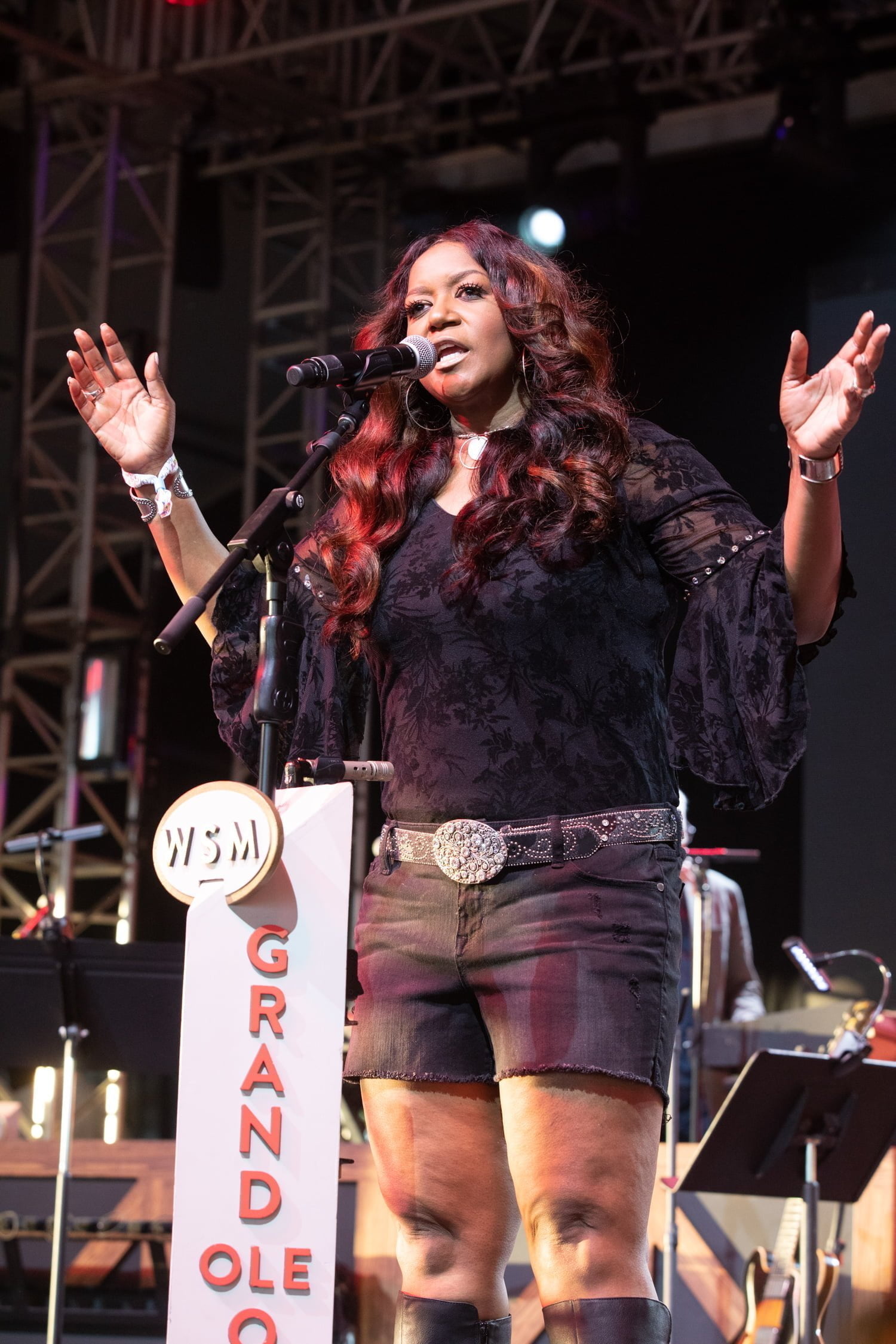
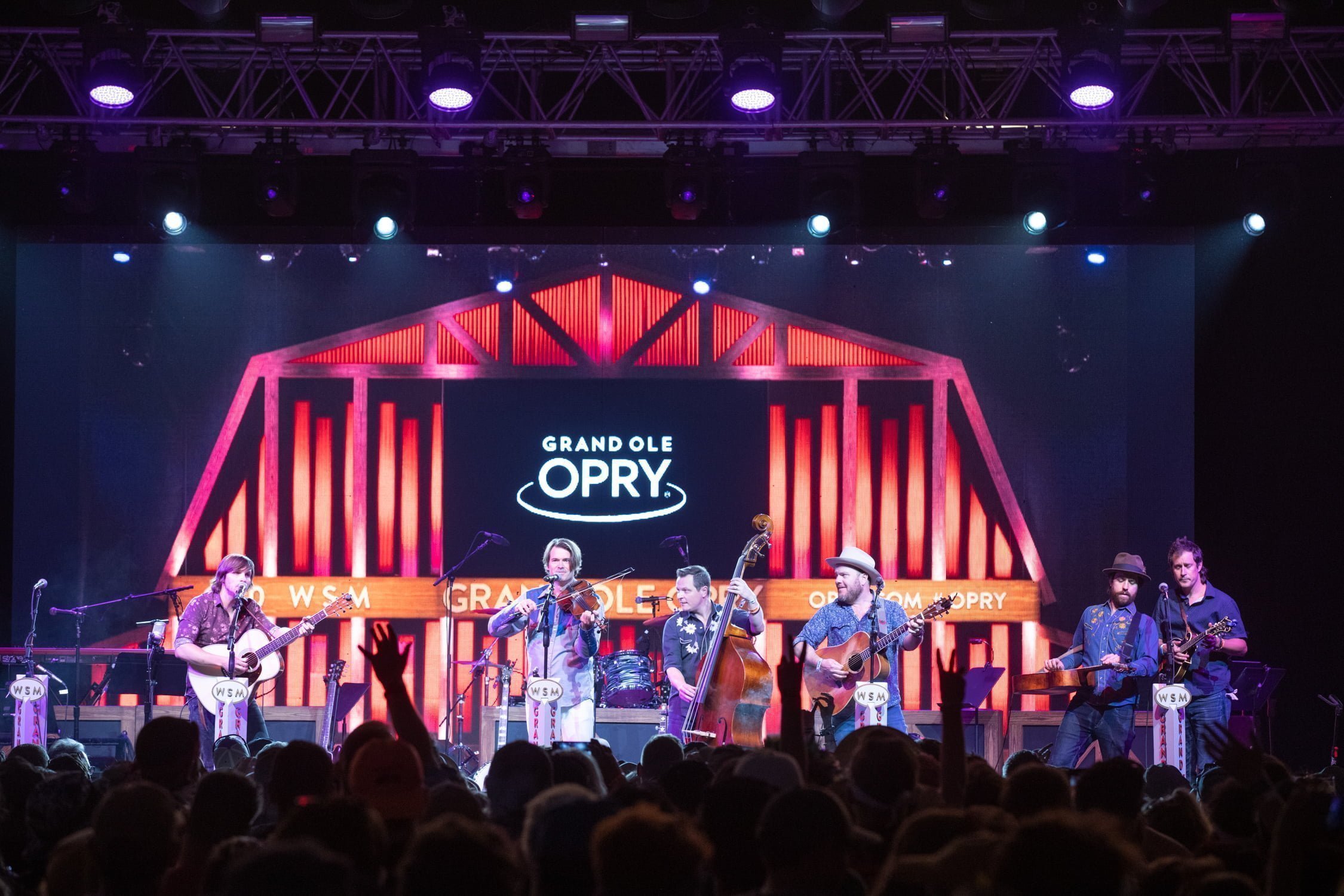
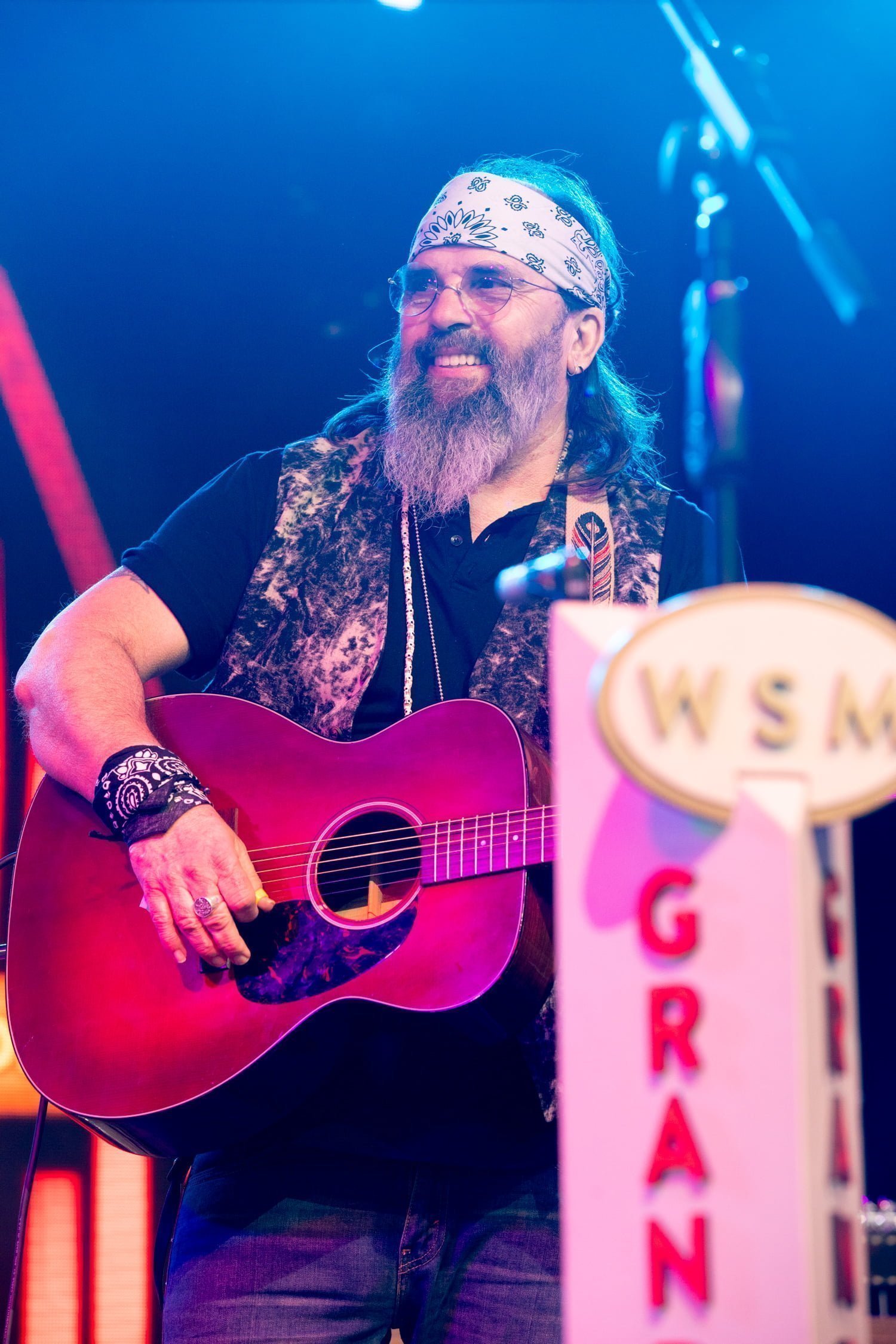
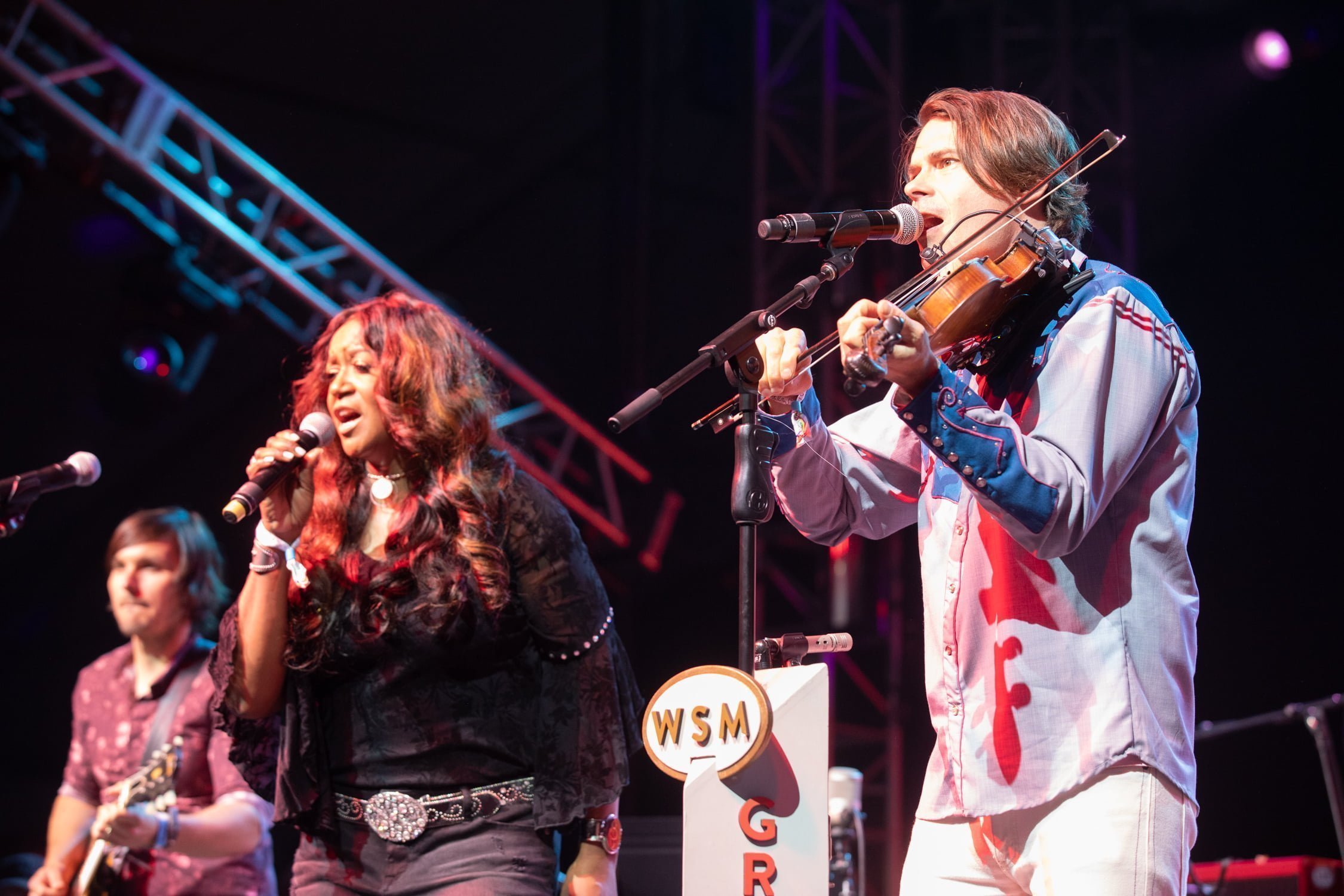
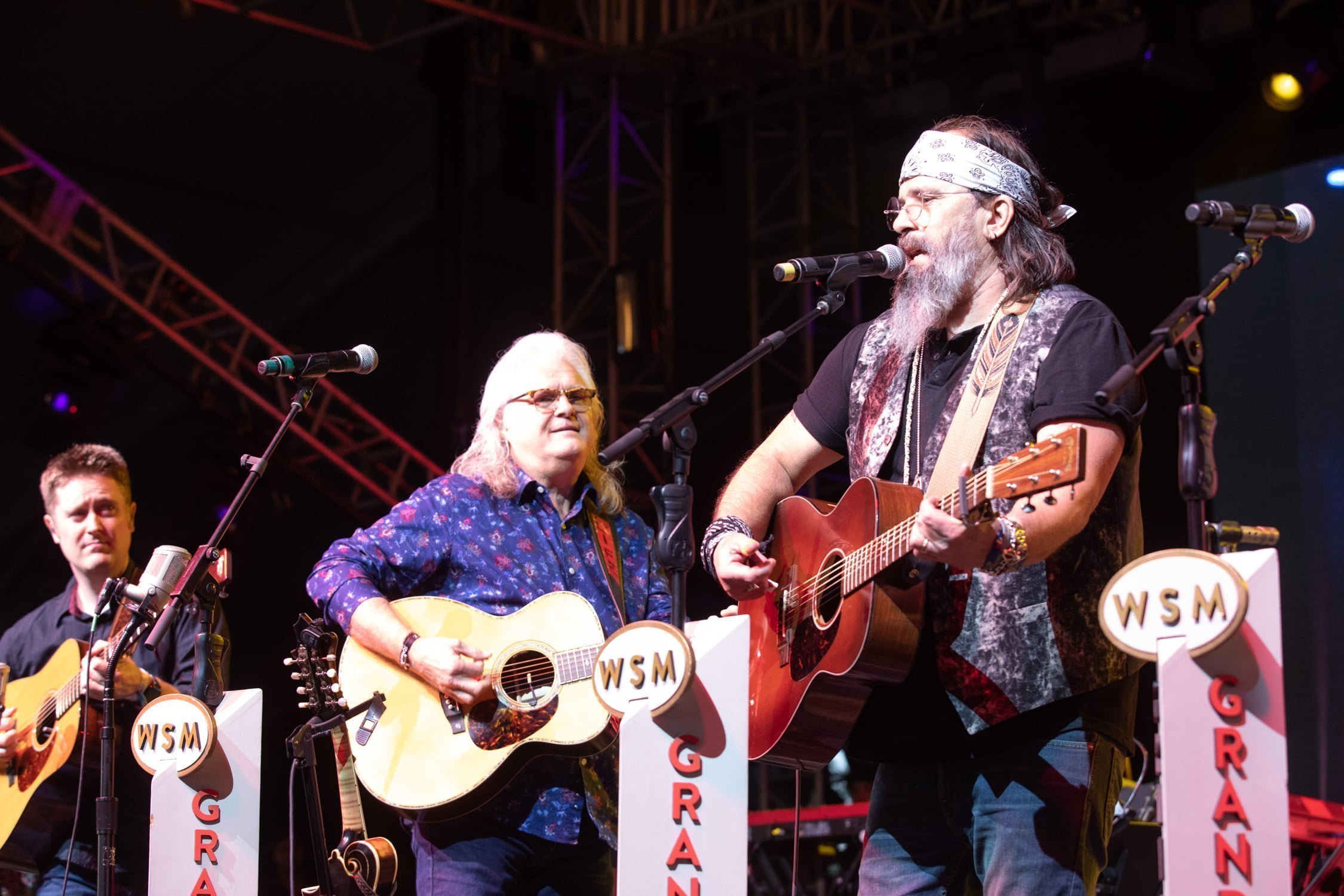
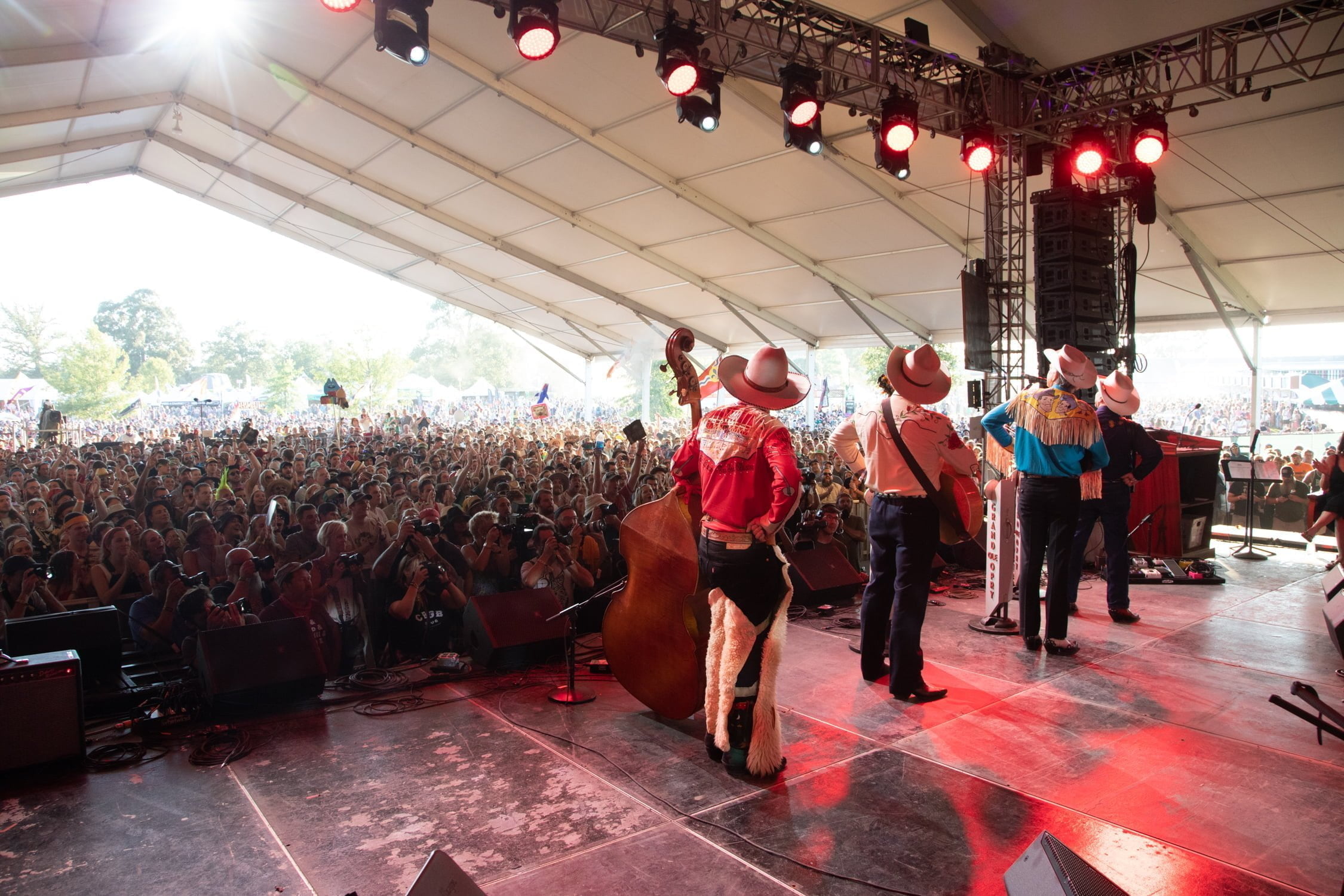
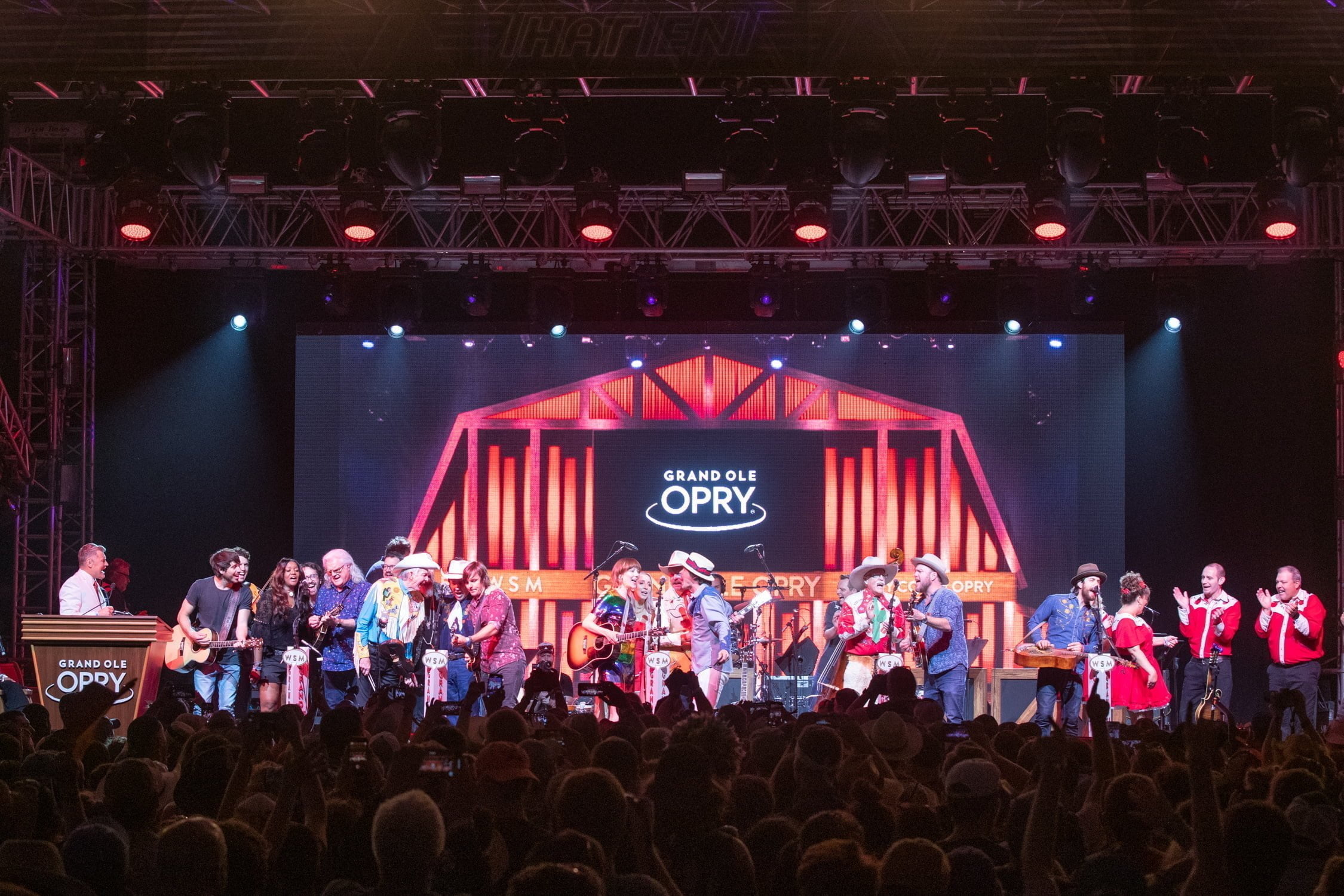
Grand Ole Opry at Bonnaroo 2019 in Photographs

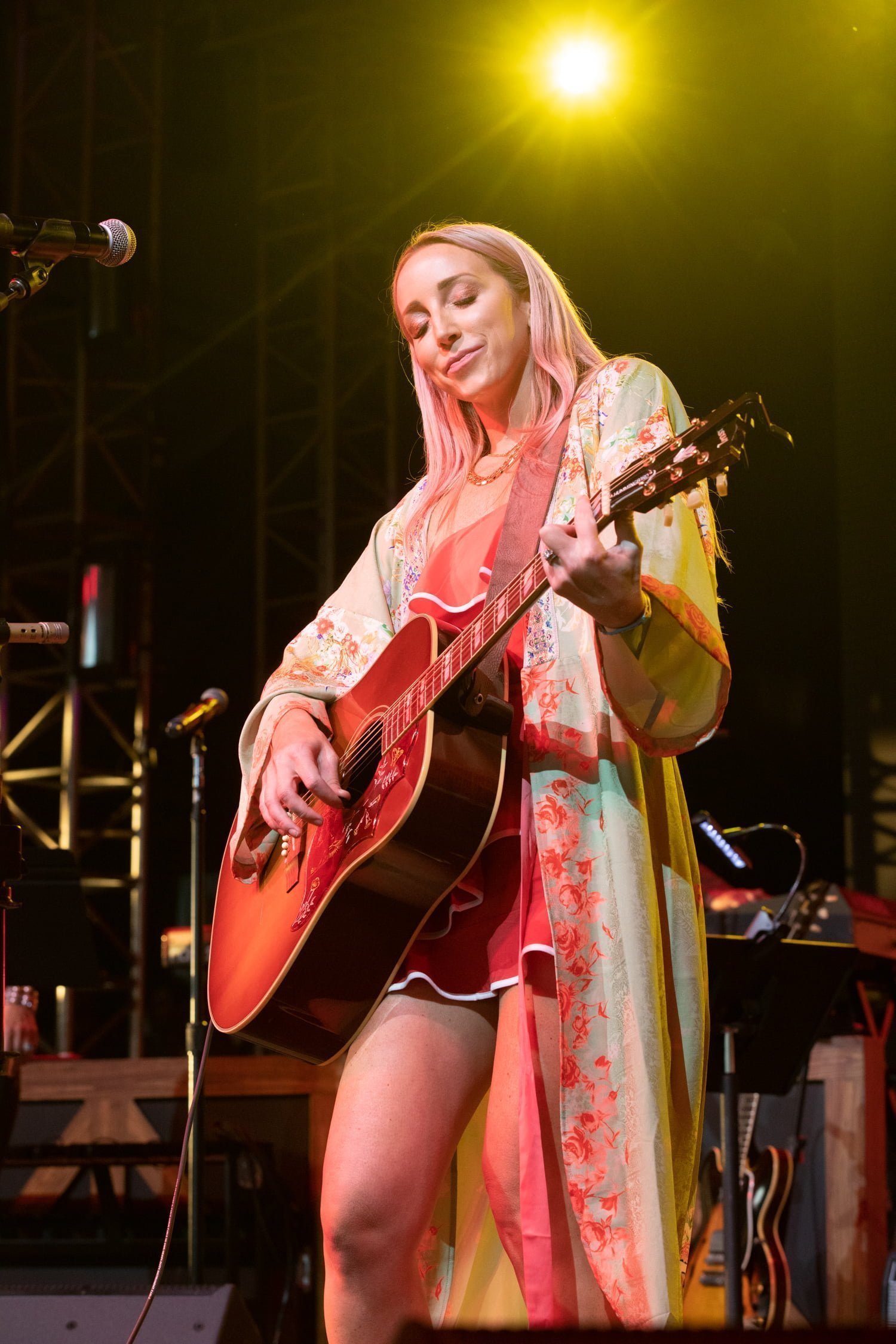
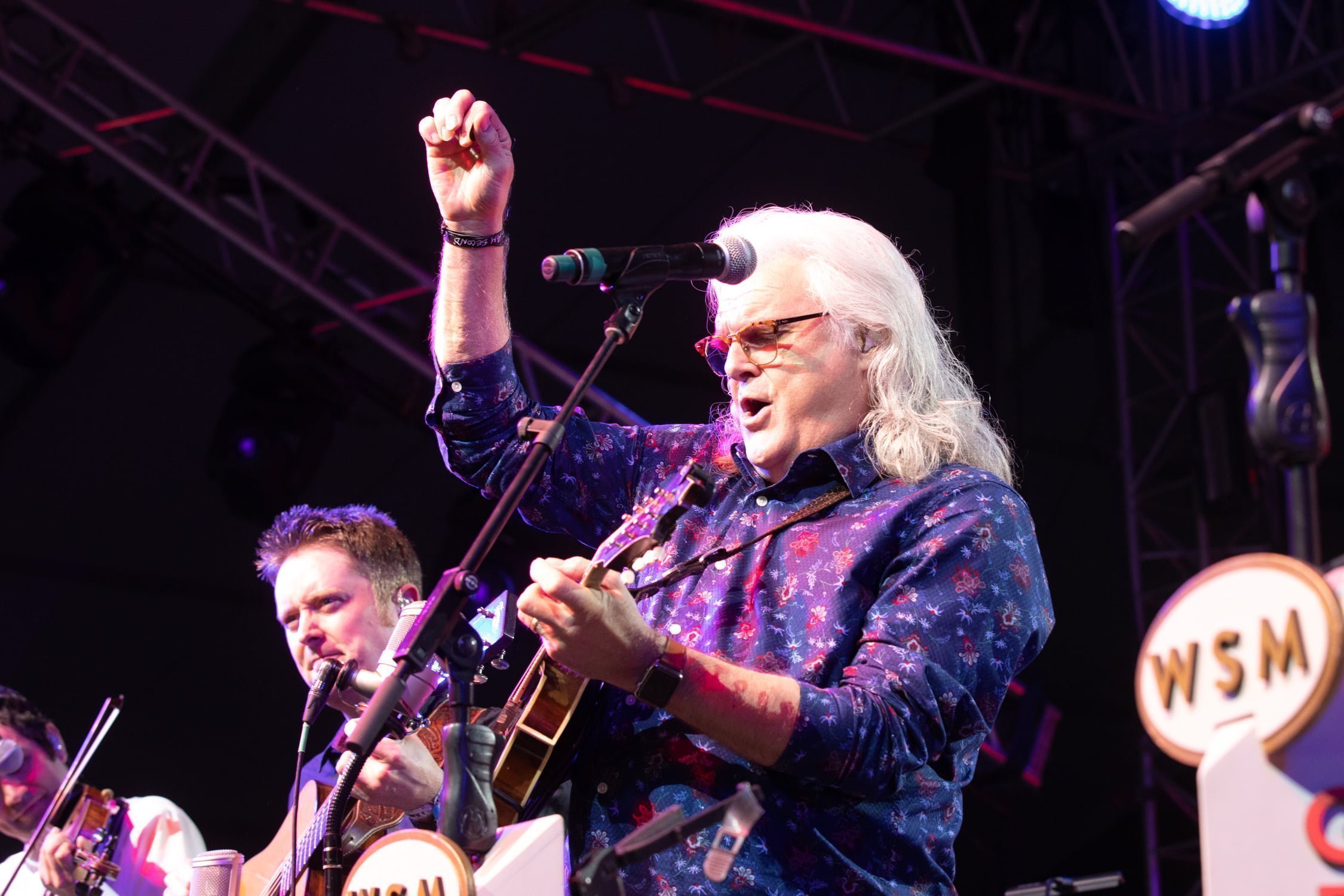
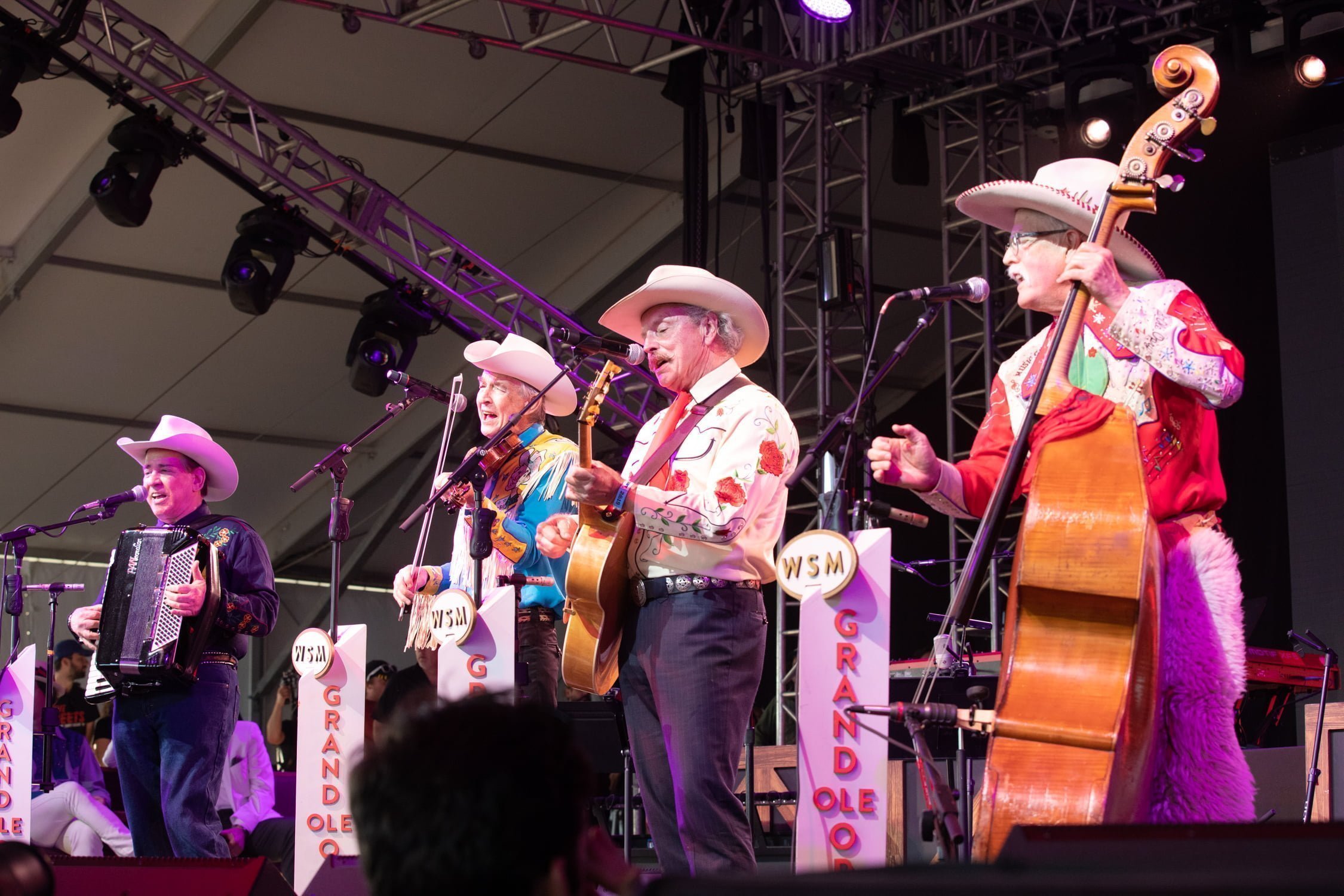
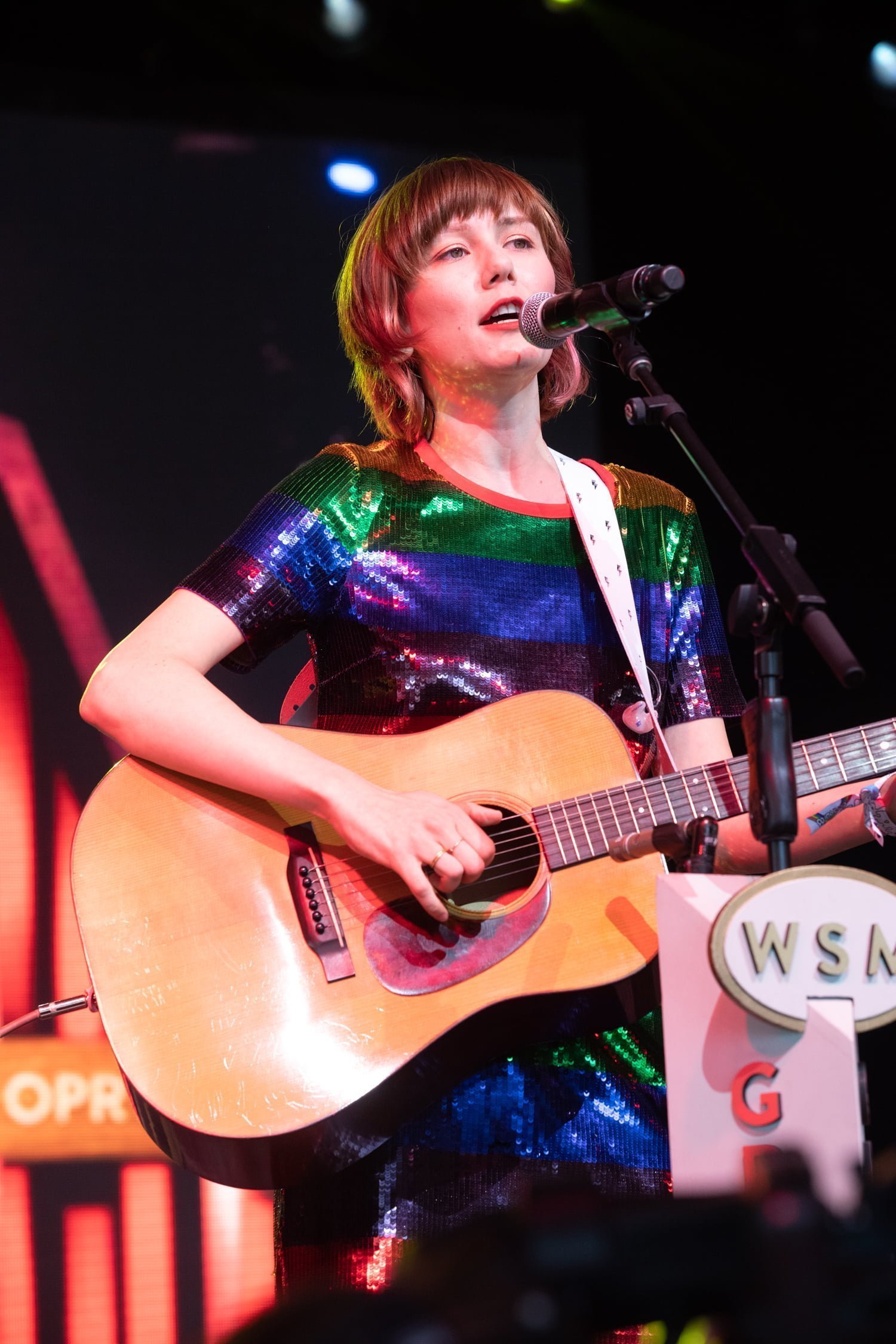
The Grand Ole Opry returned to Bonnaroo Music and Arts Festival this year to headline the festival’s opening night. The Opry carried on the festival’s long-standing tradition of representing country, bluegrass, and roots music with performances by Old Crow Medicine Show and fellow Opry members Ricky Skaggs and Riders In The Sky, plus special guests Steve Earle and the Dukes, Morgan Evans, Ashley Monroe, Wendy Moten, Molly Tuttle, and even the Opry Square Dancers and Opry announcer Bill Cody came along for the ride.

BGS handed off the That Tent torch to the Opry in 2018, after five years of the BGS SuperJam. You can revisit our years of BGS x Bonnaroo goodness here: 2017; 2016; 2014.


All photos: Chris Hollo

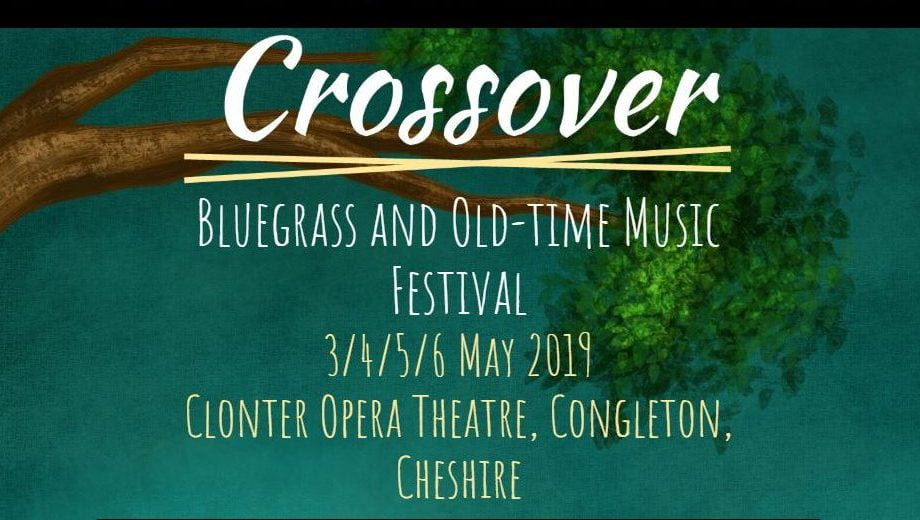
Crossover Festival Brings Bluegrass, Old-Time Music to Cheshire

Leading up to the Crossover Festival, a group of three formidable women in northwest England are hanging homemade bunting in trees, dangling fairy lights, ribbons and twizzlers in branches. They’re preening and prettifiying Clonter Farm for its weekend destiny, temporarily the bluegrass capital of the UK.

The Crossover festival is now in its third year, as 21 acts gather this bank holiday weekend for a celebration of everything bluegrass and old-time, with a sprinkling of rockabilly for good measure.

Julie Cross, a former primary teacher, set up the festival in 2017 with her daughters Eleanor and Emily, after the closure of a couple of long-running bluegrass festivals that she’d attended for years. A longtime fan, she thought it was time to pick up the mantle – but where? “Then we found Clonter and there was no excuse anymore!” she says.

Clonter is a quirky gem in the lush Cheshire countryside. It started life as a venue in 1974 when Jeffery and Anita Lockett decided to host an “Operatic Picnic” for charity in the barn on their land. The event was a huge success, was repeated, and in time the owners even bought the entire interior of a theatre — from seats to kitchen — and installed it inside the barn. Over the years, the odd room has been built on the side in a suitably organic way, and the result is a perfect festival venue, with a main stage that will seat 400 and other spaces to jam and sing and teach and craft.

The whole is important to Cross, as the festival is as much about free-form playing, open mic sessions and musicians coming together as it is about the main acts. Arts funding has meant that they can bring big-name musicians in to run tuition sessions for every instrument. Want to improve your banjo playing? You’ll be able to get some tips from none other than Ron Block. Alison Krauss & Union Station’s Grammy-award winning banjo player is headlining the festival along with slide guitarist Tony Furtado, who will also be offering a masterclass.

The Crosses are a musical lot themselves. Eleanor is the bassist for Midnight Skyracer, the first British band to be nominated for an IBMA Momentum award last year. They’ll be performing this weekend — as will Eleanor’s daughter 6-year-old daughter Freya, who you can expect to spot carrying her quarter-sized banjo round the site.

Speaking as she dodges the boxes of equipment piling up inside her house, Cross says bluegrass is slowly changing. “It’s not all traditional old men with beards playing the banjo. There’s contemporary stuff too. There are lots of very, very, talented younger musicians coming through in the UK, making a name for themselves internationally,” she observes.

A lot of those younger musicians will have perfected their trade at the Sore Fingers Summer School, now in its 24th year, which brings together musicians from all over Europe to learn and jam together. It’s an exciting time for bluegrass music in the UK – and the Crossover festival is doing its bit to increase female representation. While Eleanor and Midnight Skyracer are breaking ground with their all-female band, solicitor Emily draws up all the contracts with the acts.

“People keep saying to us, ‘Go girls!’ says Cross. “Last year, we had 50 percent female representation at the festival in all its forms, which was half deliberate and half accidental. It’s always been a male-dominated genre but things are happening for women. Molly Tuttle came to Crossover last year. And Tabitha Agnew [Midnight Skyracer’s banjo player] has also been nominated for one of IBMA’s instrumental awards.”

It all seems a long way from the Cross kitchen table three years ago when the mother-and-daughters team were planning the first festival. They had no budget and asked musicians if they would be prepared to come on the off-chance. They were overwhelmed by the support. “We said to them if we can’t pay you we won’t do it again – and then some funding came through on the first day of the festival. We pay our artists the fair rate and that’s something that arts funding allows us, plus getting quality American artists to come over. We’re very frugal!”

But how did they all get into bluegrass? Cross laughs. “We were travelling to Wales and I saw a sign saying ‘Bluegrass’ and went and had a look. But I got into it properly when I saw some local Appalachian dancers, joined a troupe and danced with them for years.”

She adds, “We’re such a big musical community. I don’t know my neighbours very well but in the bluegrass community a lot of us have grown up together and our children have grown up together and formed bands together. It’s wonderful.” And while the UK bluegrass scene is still small, it’s good at spotting and promoting talent. One of this year’s highlights is Breaking Grass, a group over from the States for their first visit to the UK. Cross heard them a couple of times on the Jason Titley radio show. “We search with our ears as well as our eyes,” she says.

This year’s festival will fundraise for Cystic Fibrosis. It’s a condition Freya has, and the Crosses know what a difference research has made to lives like hers. “She’s fine,” says Cross, “because the treatment’s working really well.”

In 2018 Cross got three hours sleep a night during the festival, mostly because of trying not to miss too much. “I like to see it all, I like to be omnipresent. People share videos and then I see them and say, ‘I didn’t see that!’”

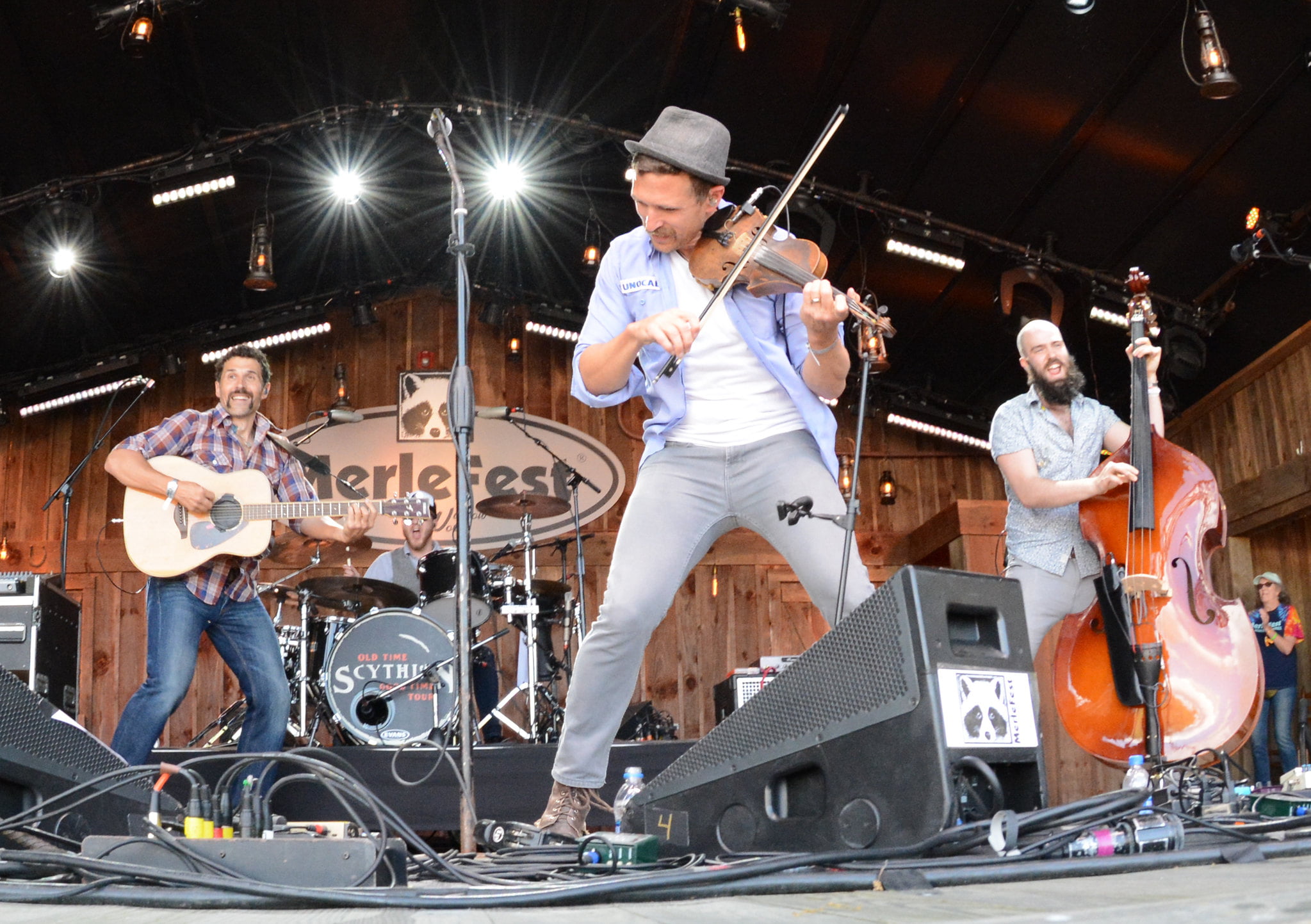
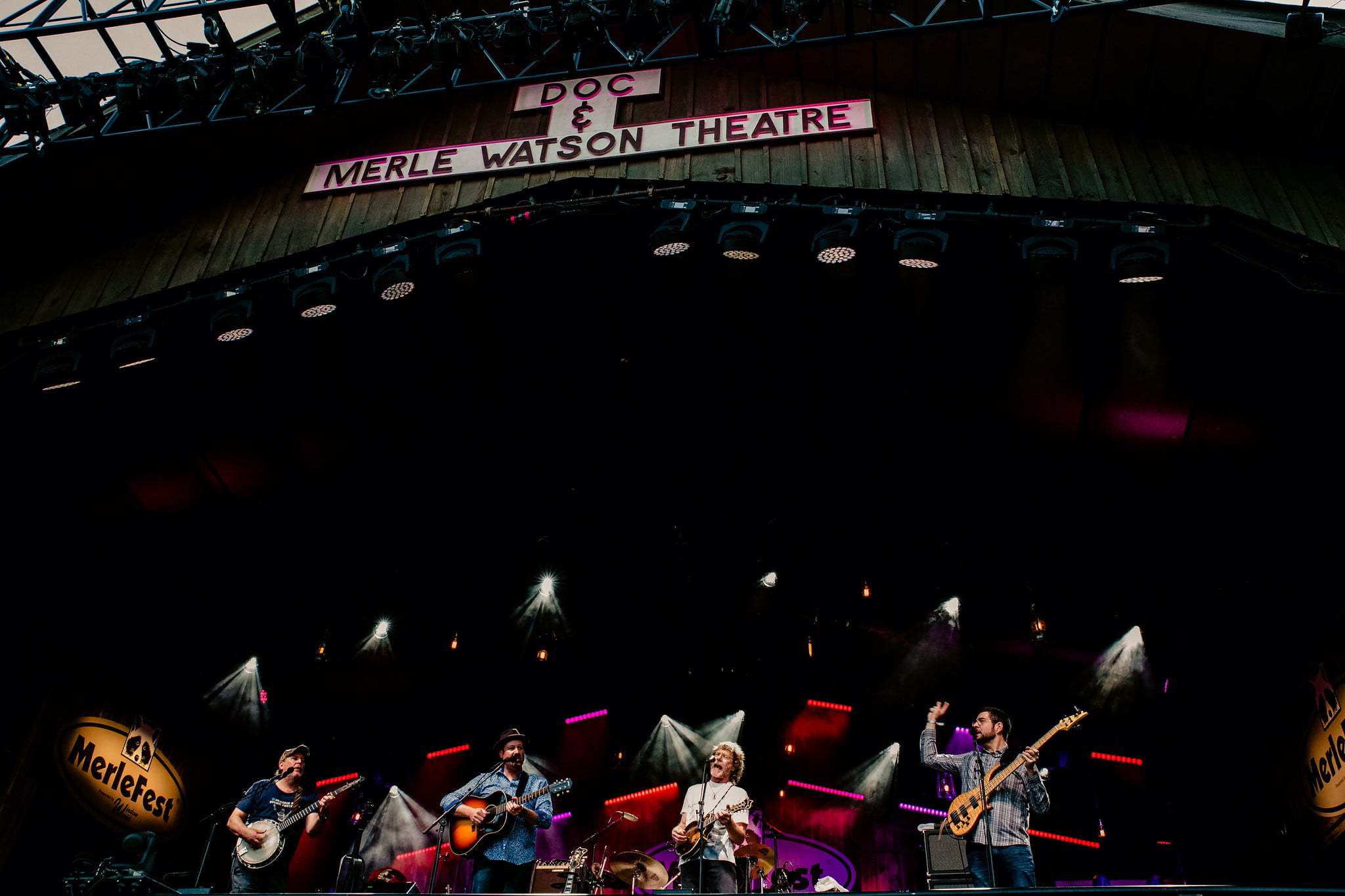
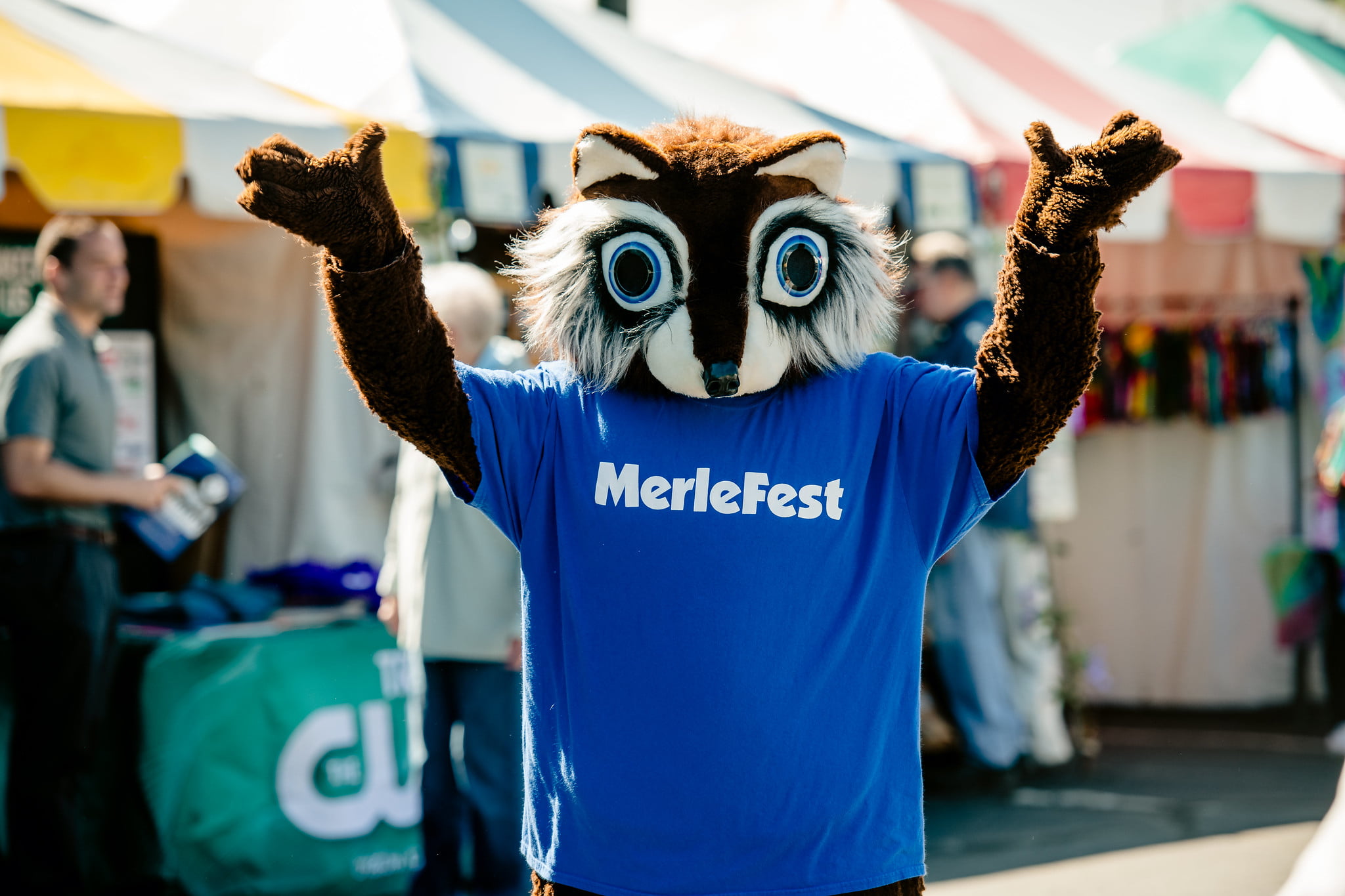
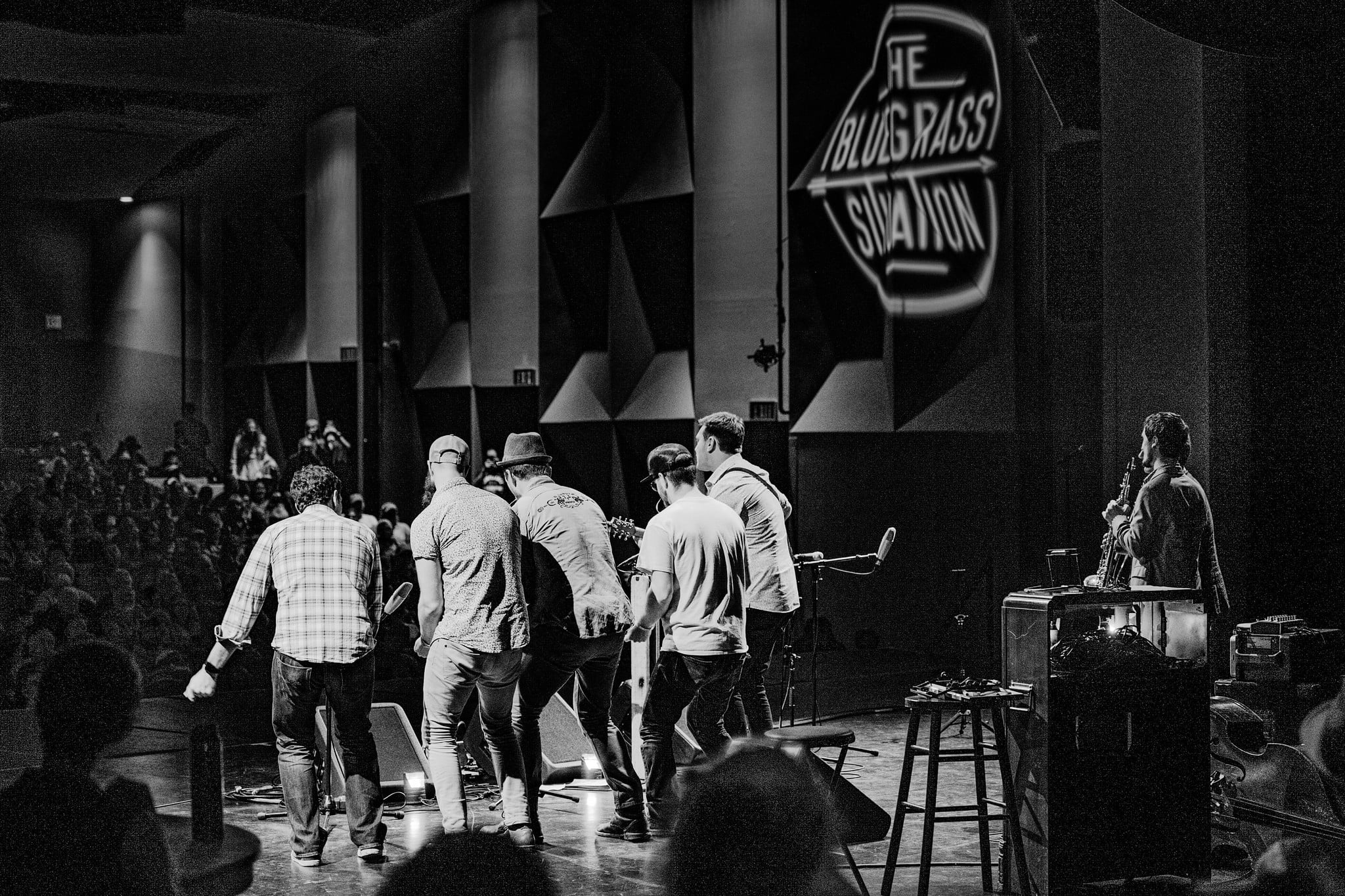
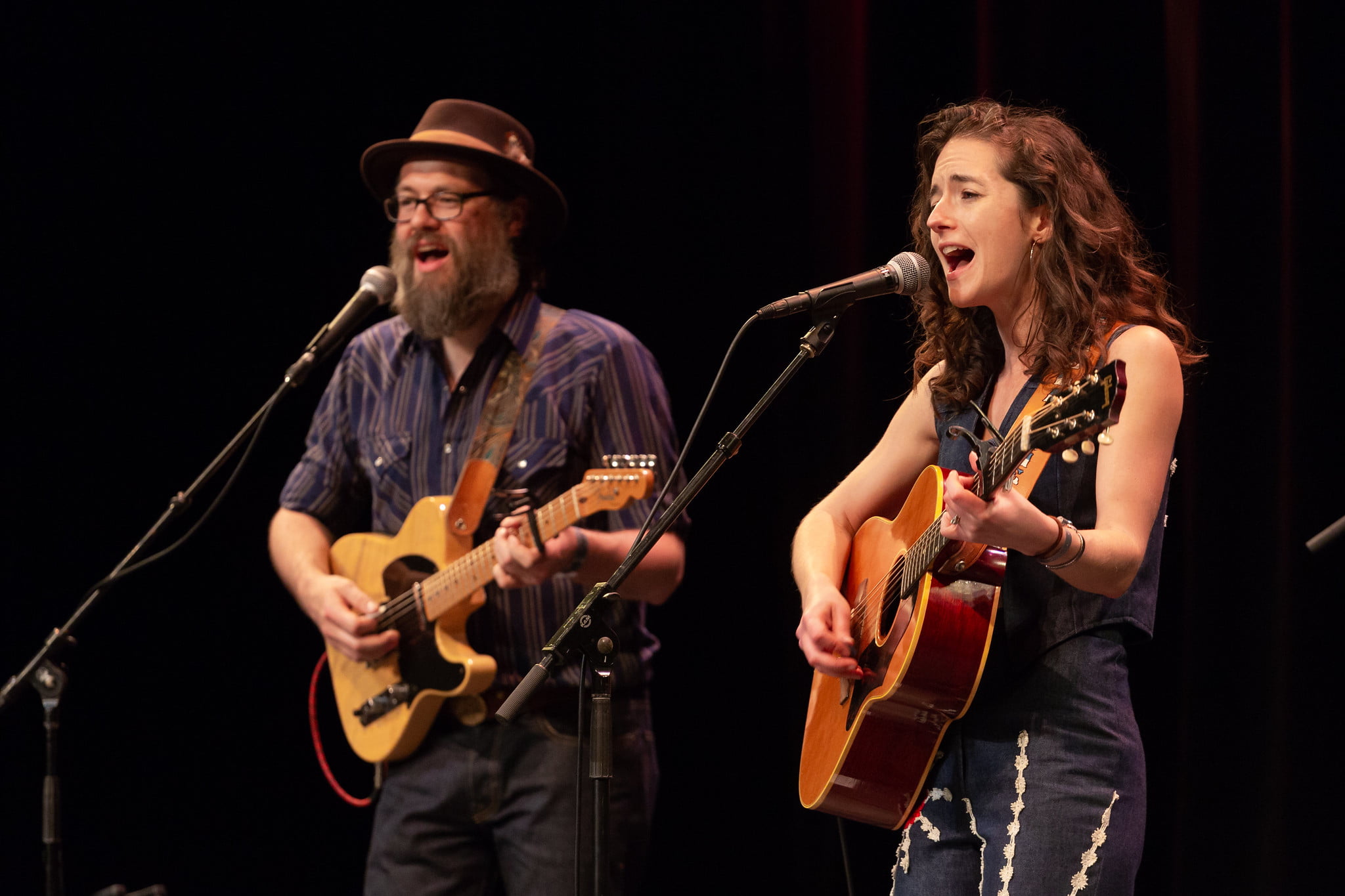
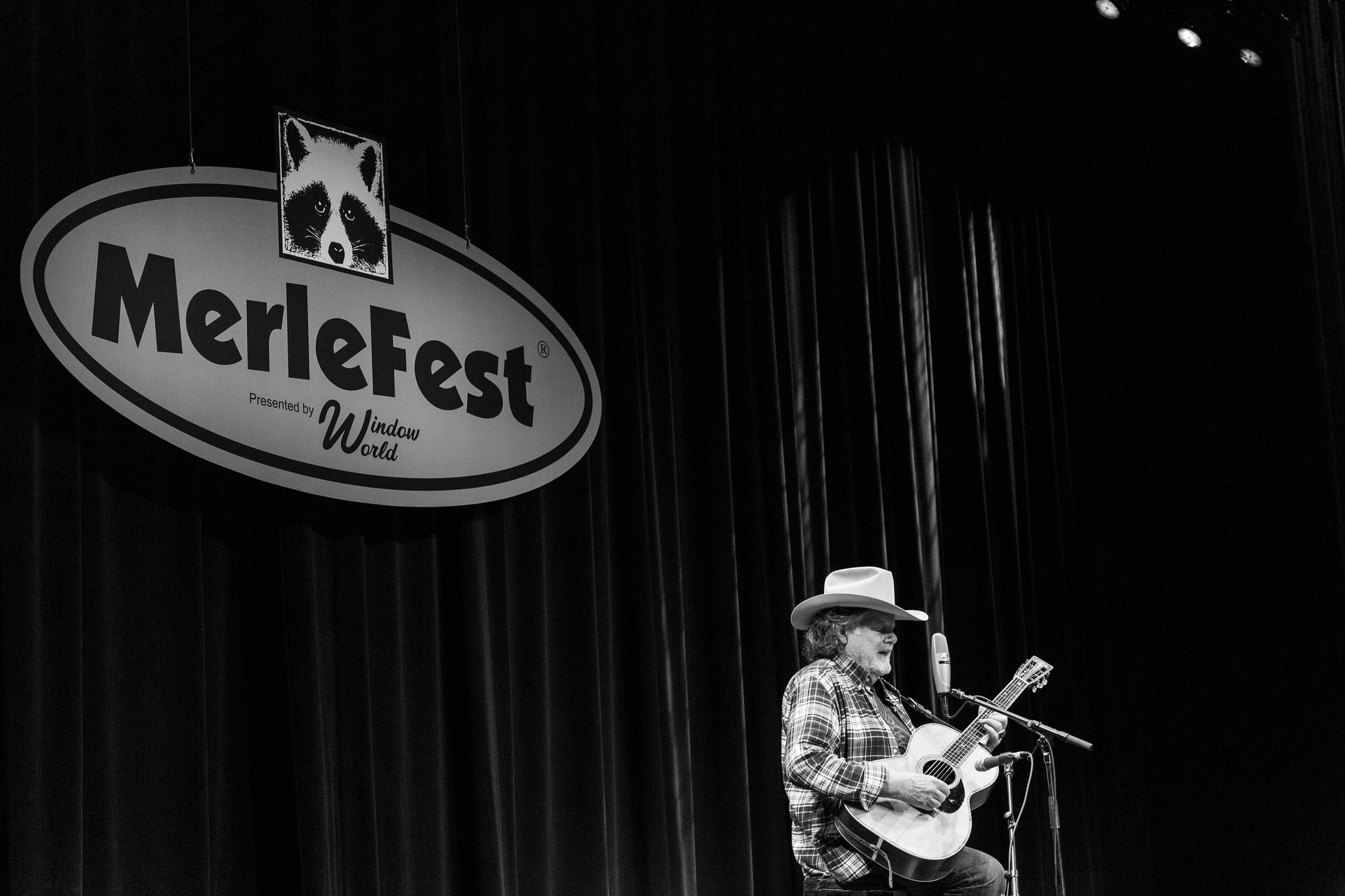
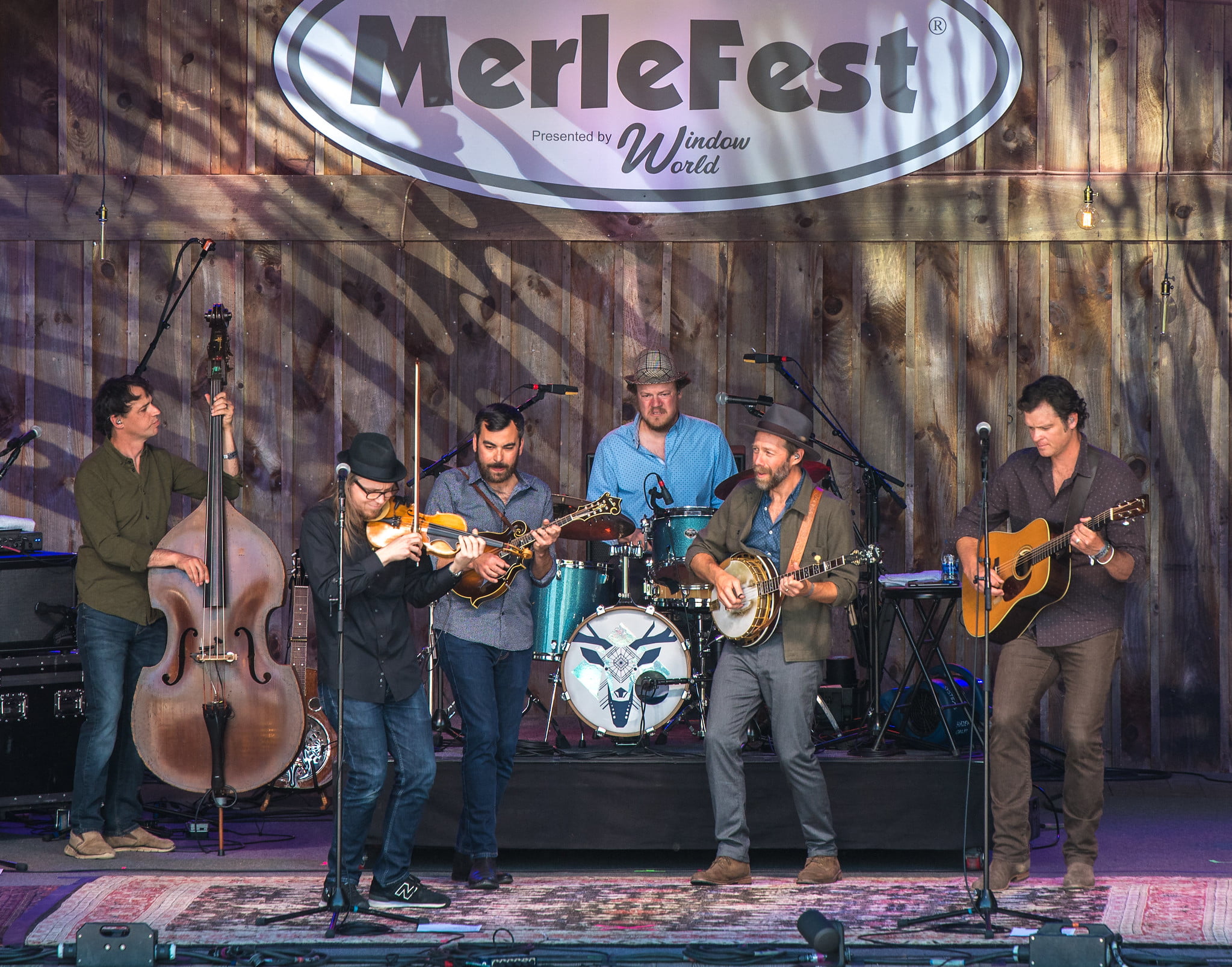
MerleFest 2019 in Photographs

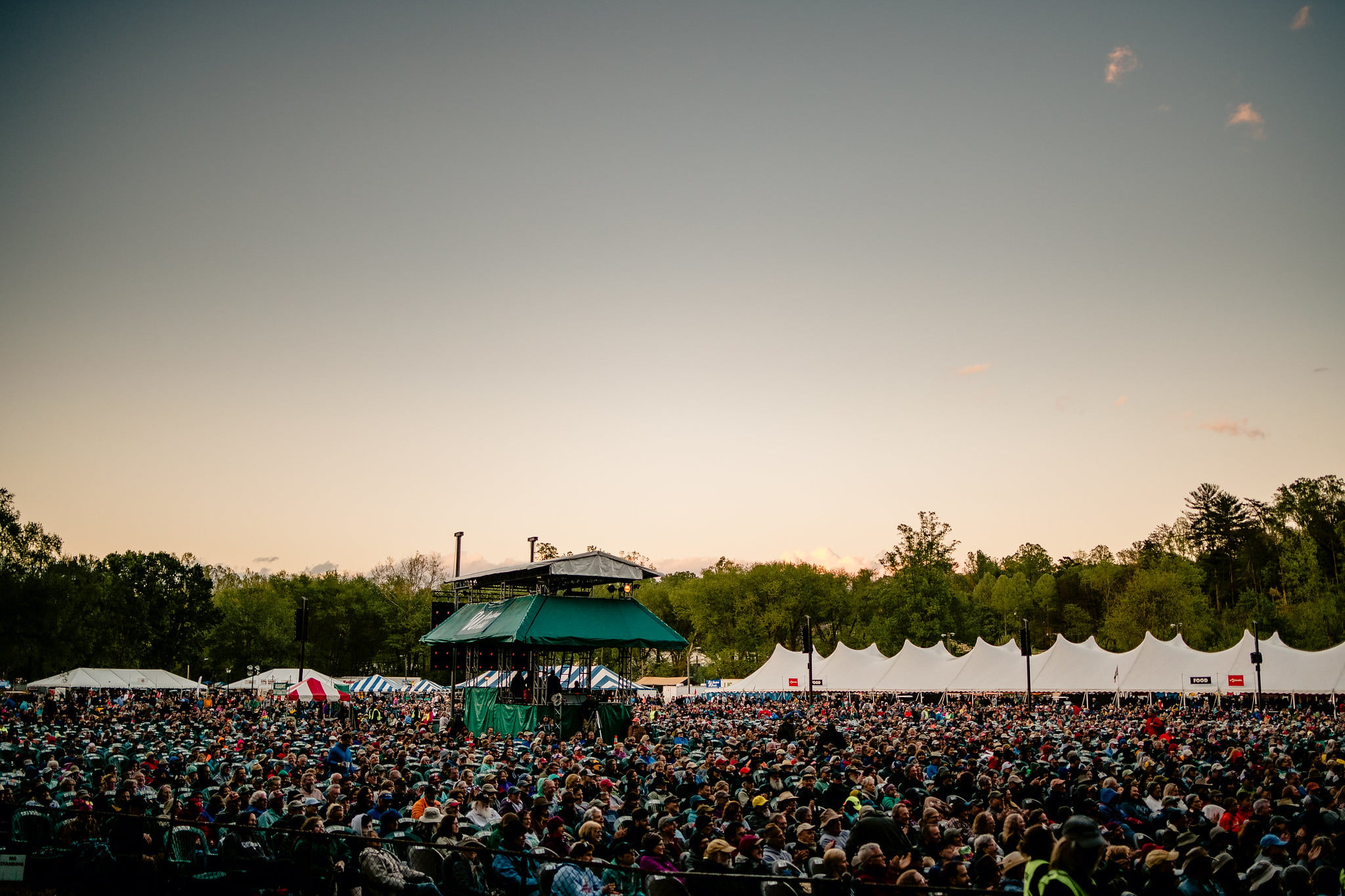
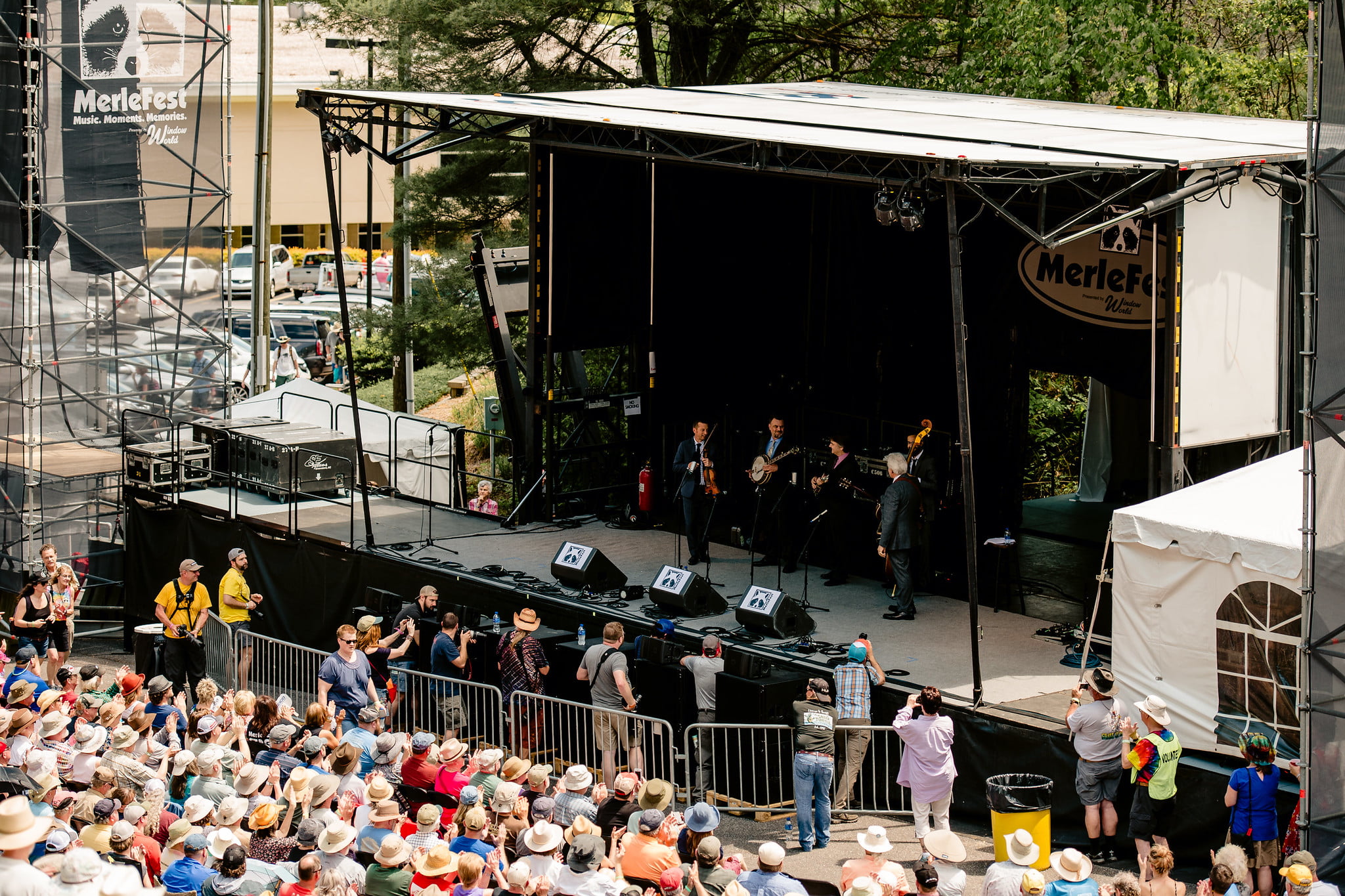
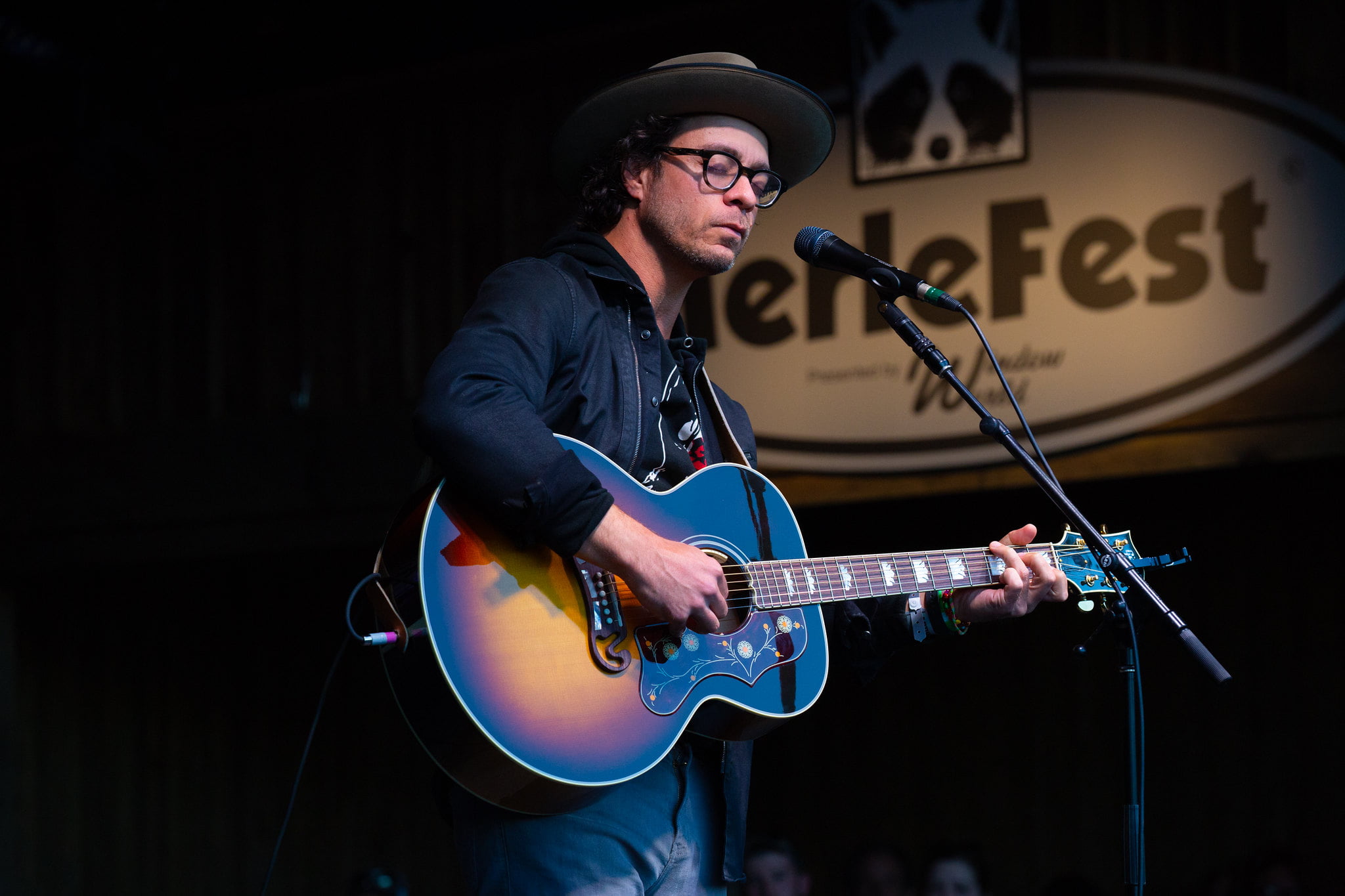
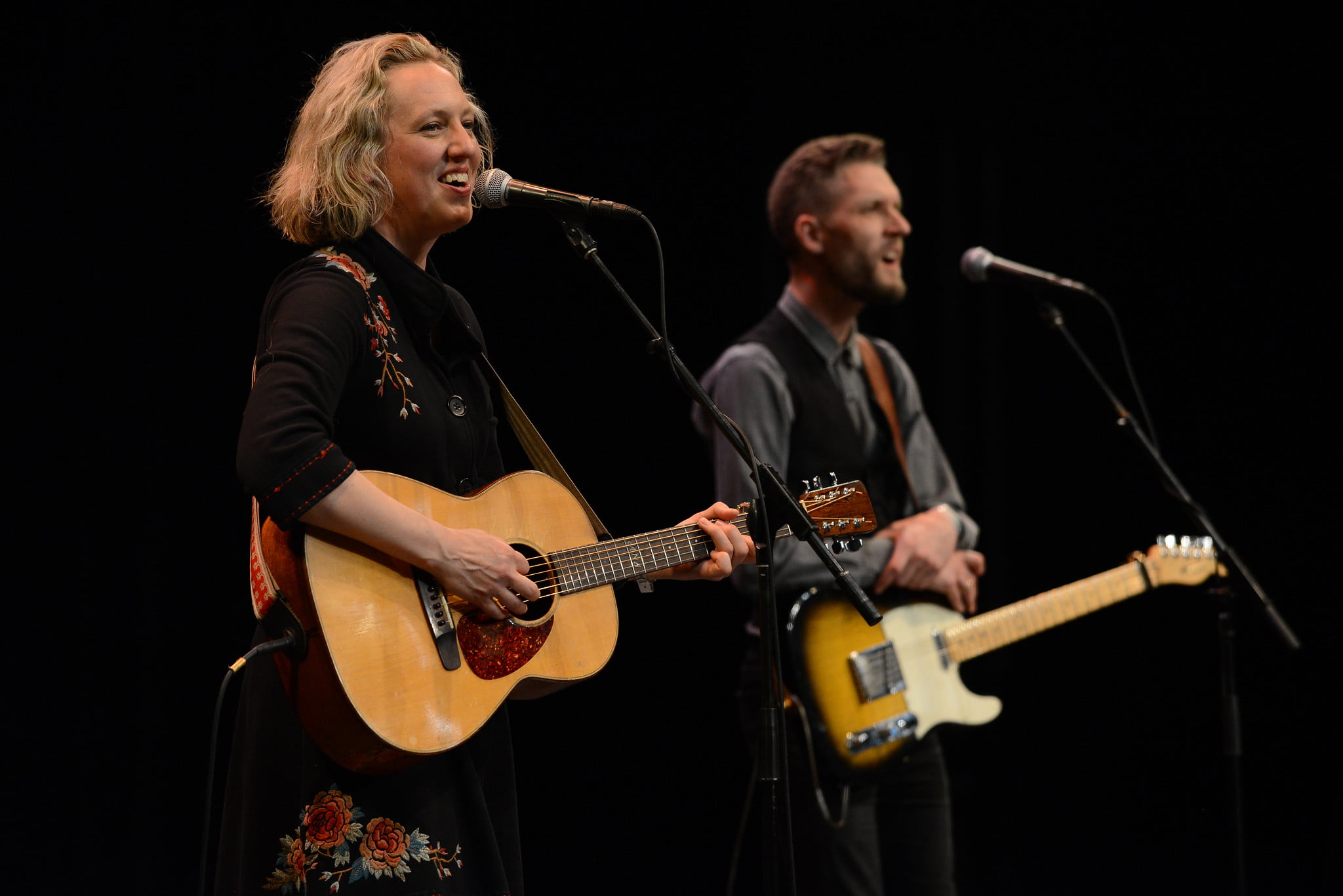
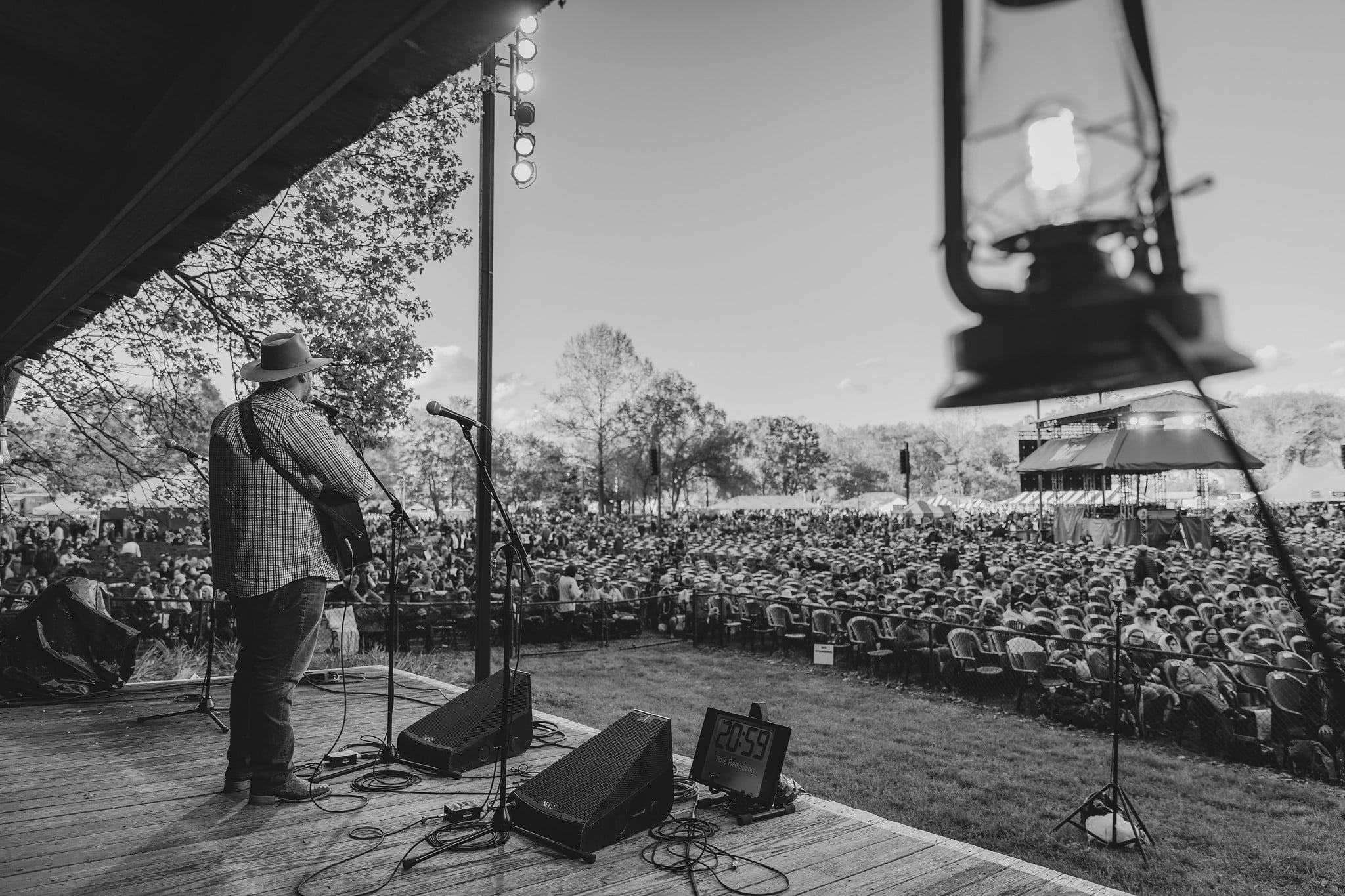
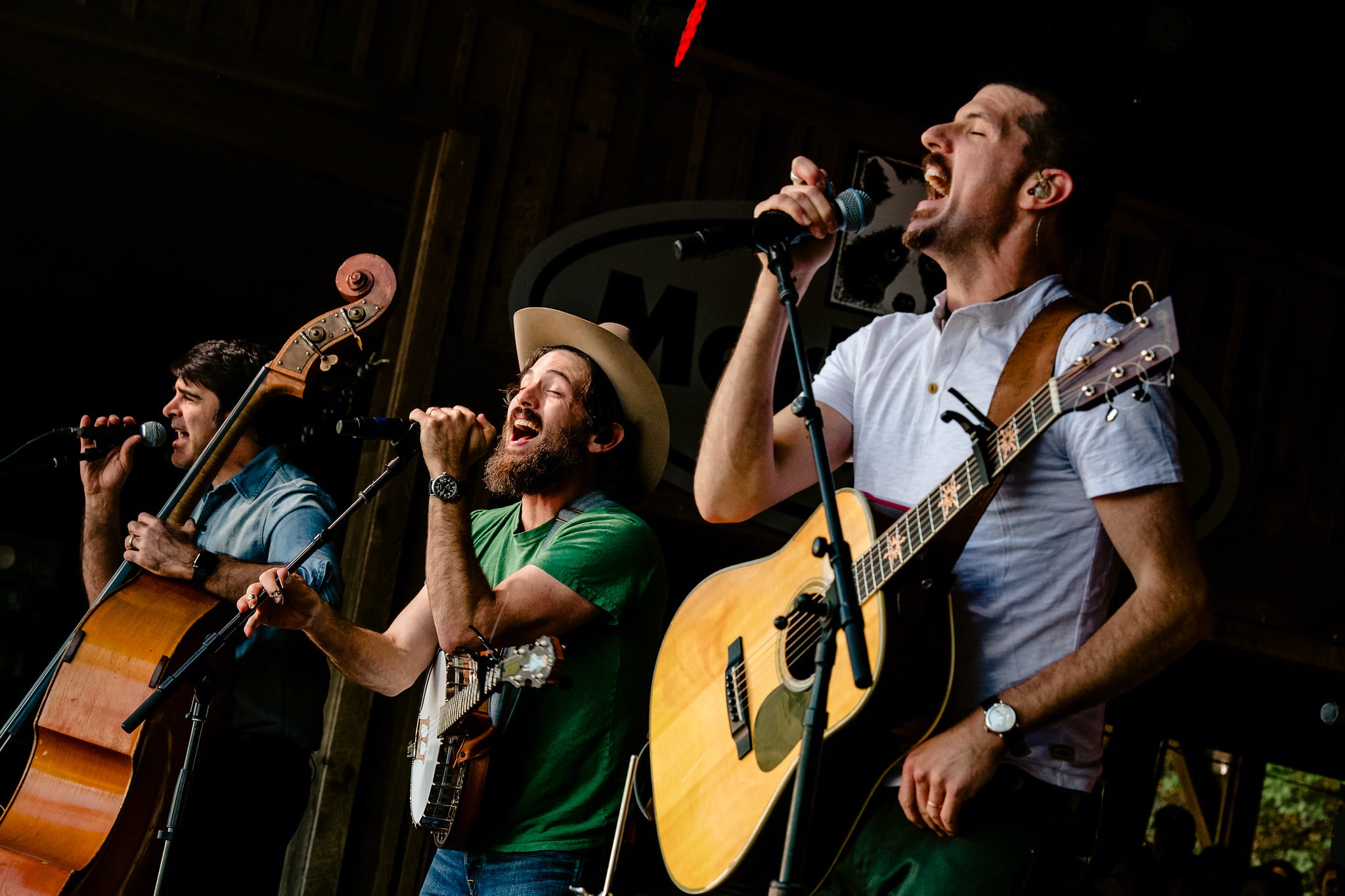
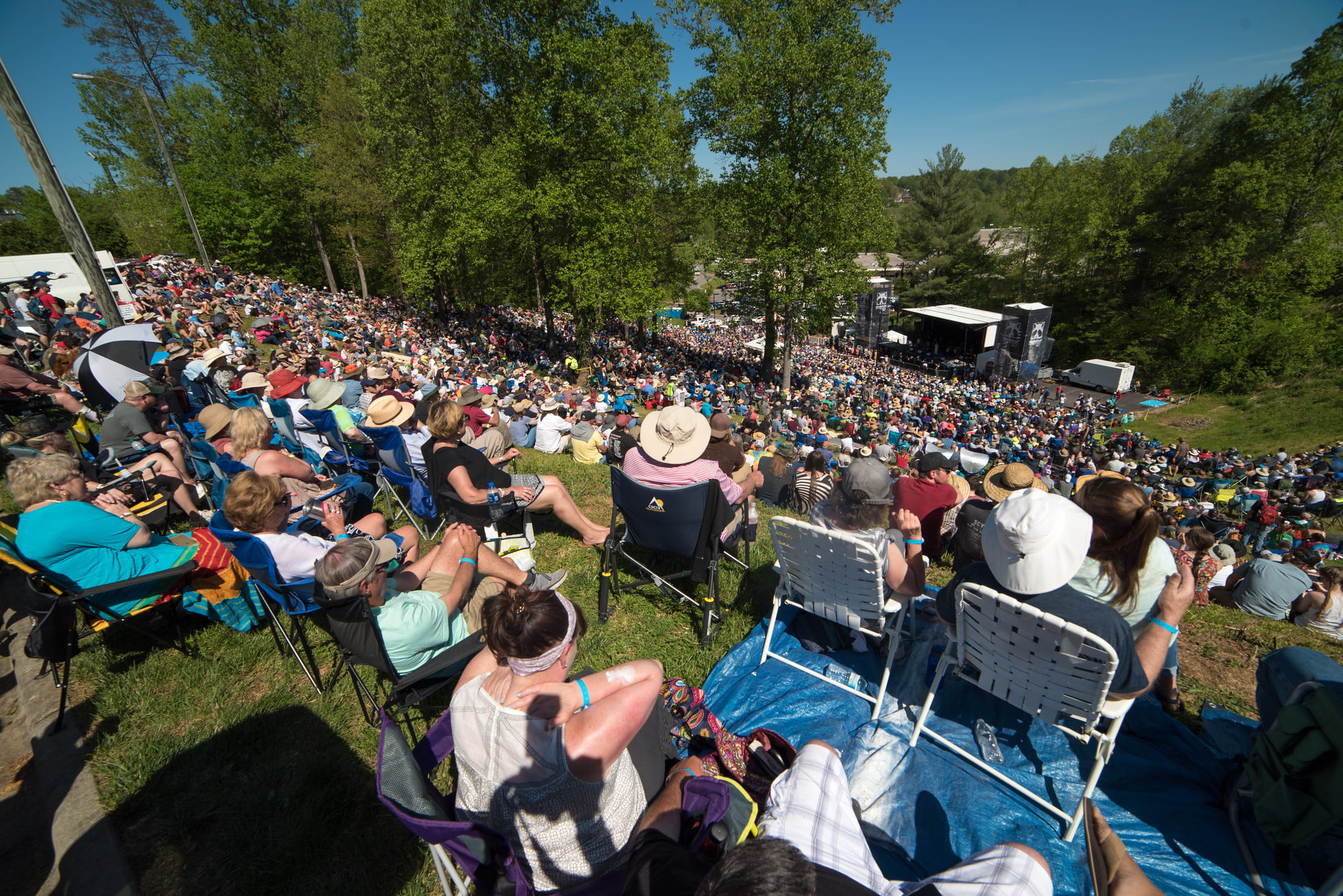
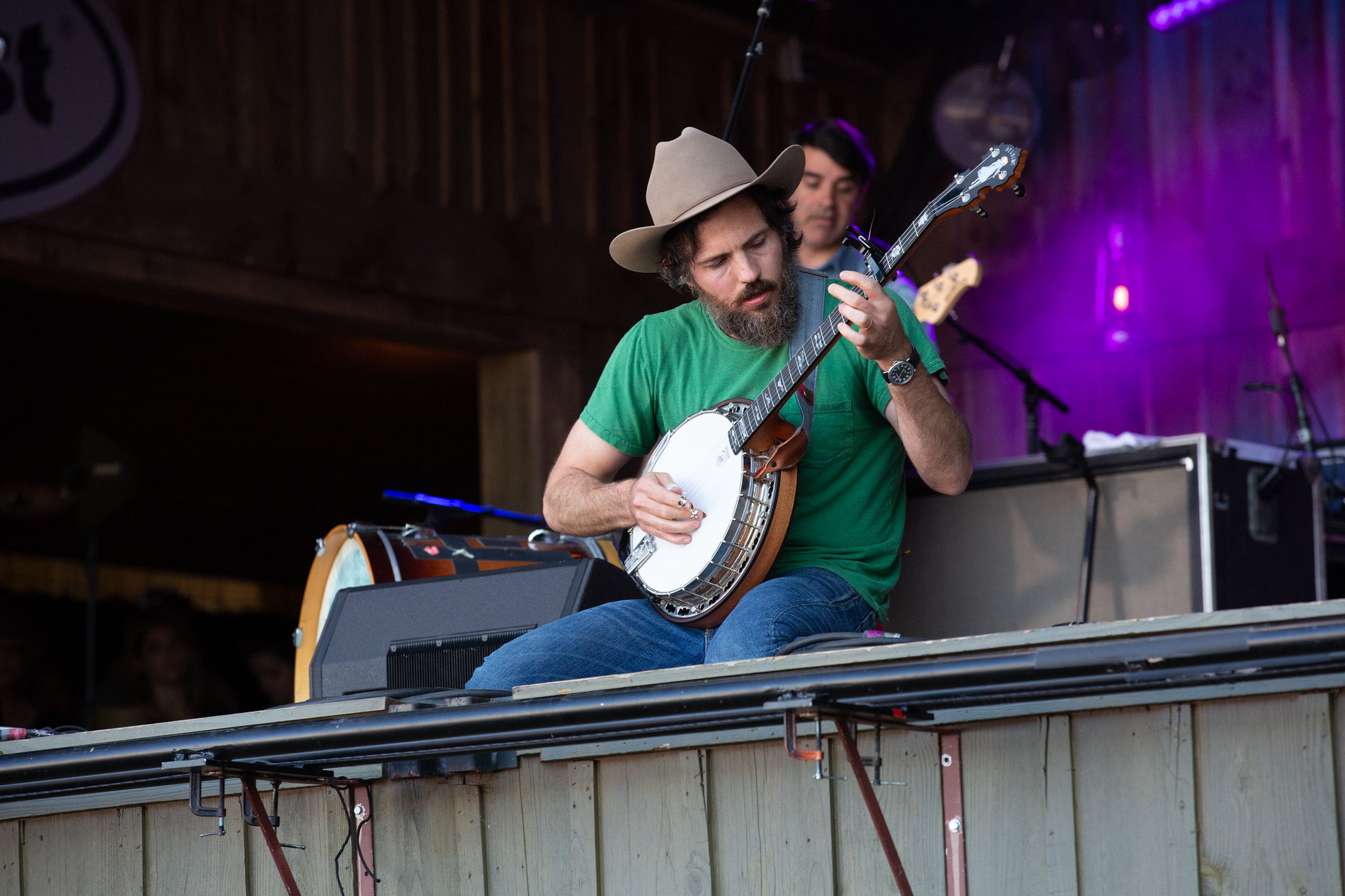
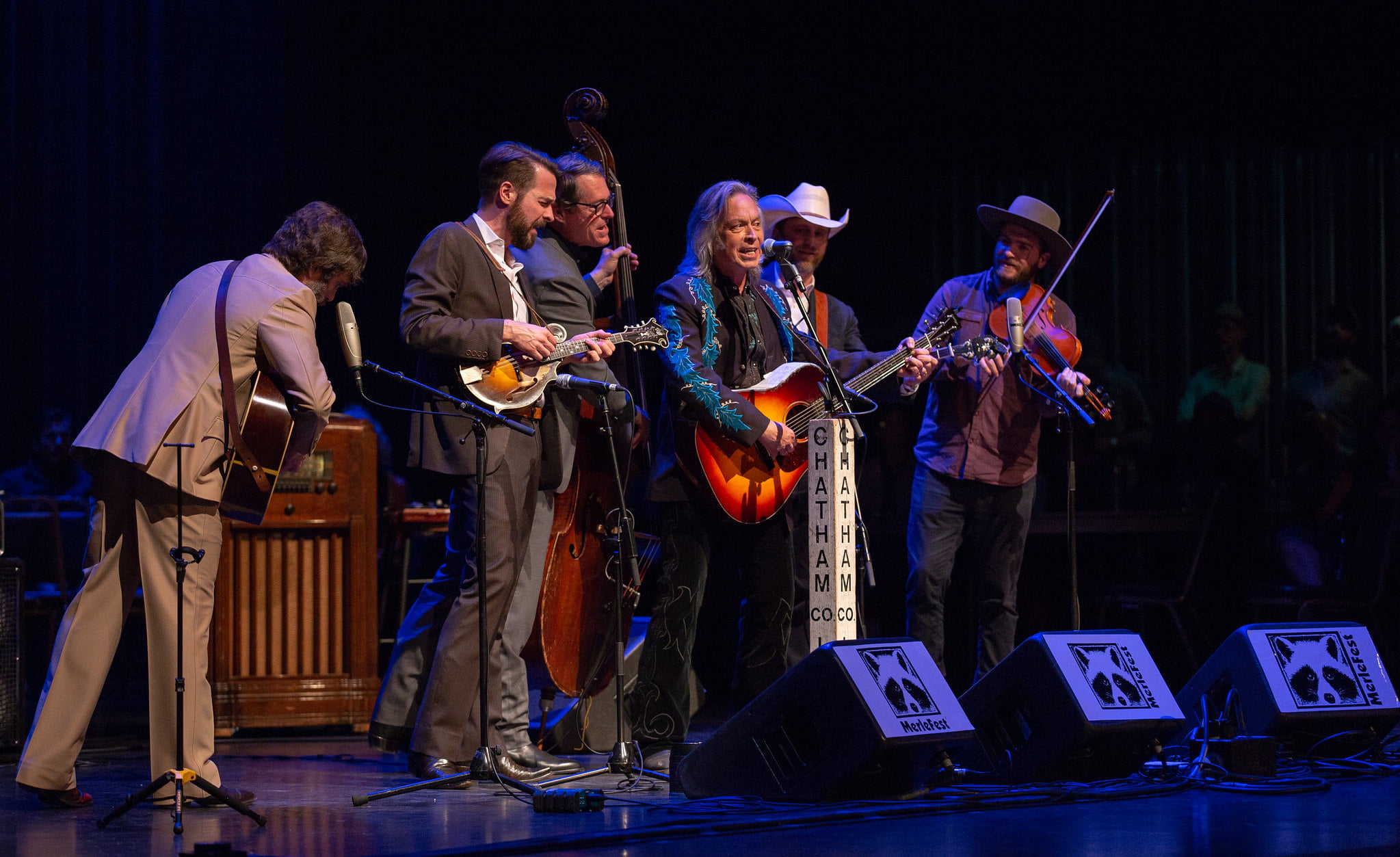
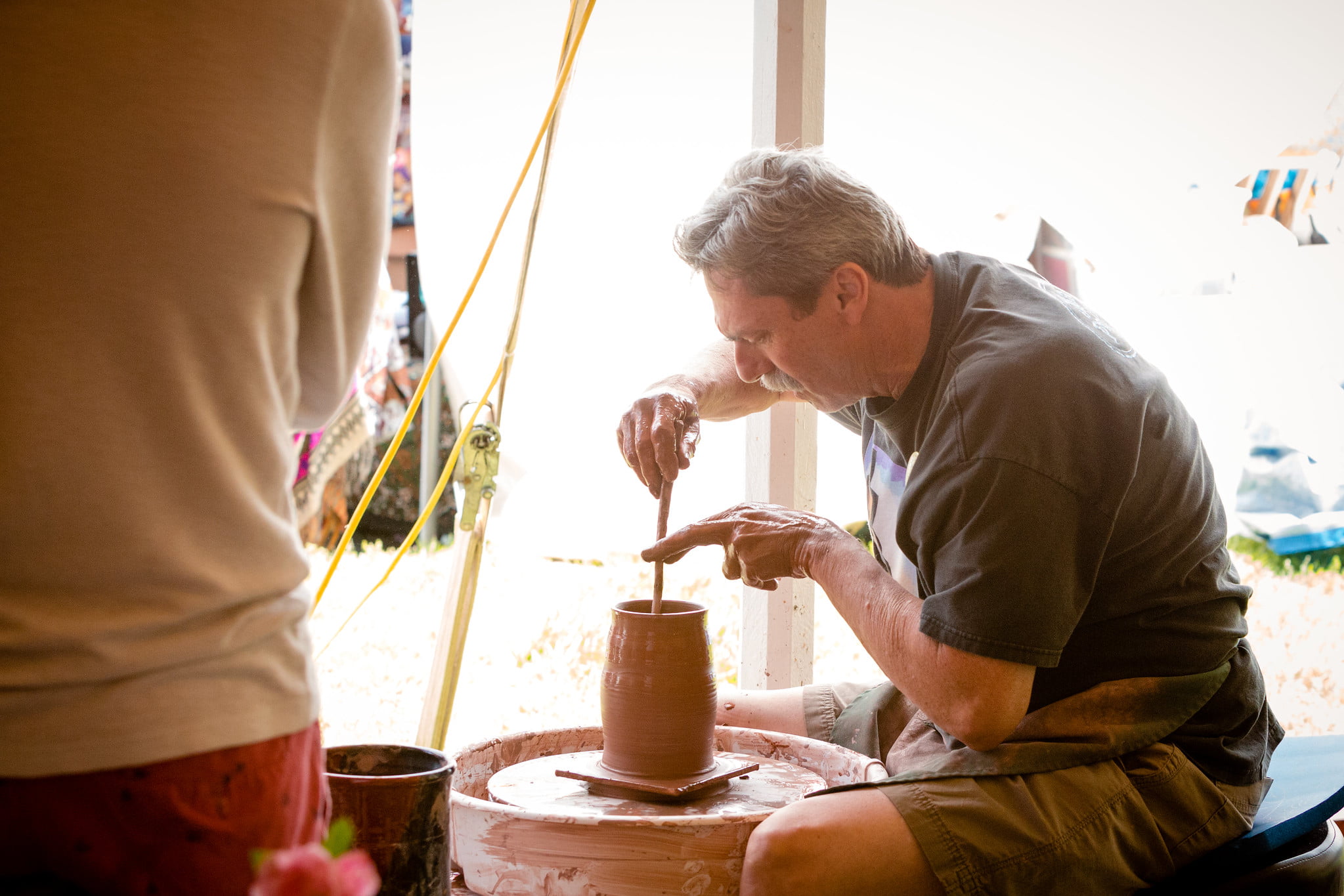
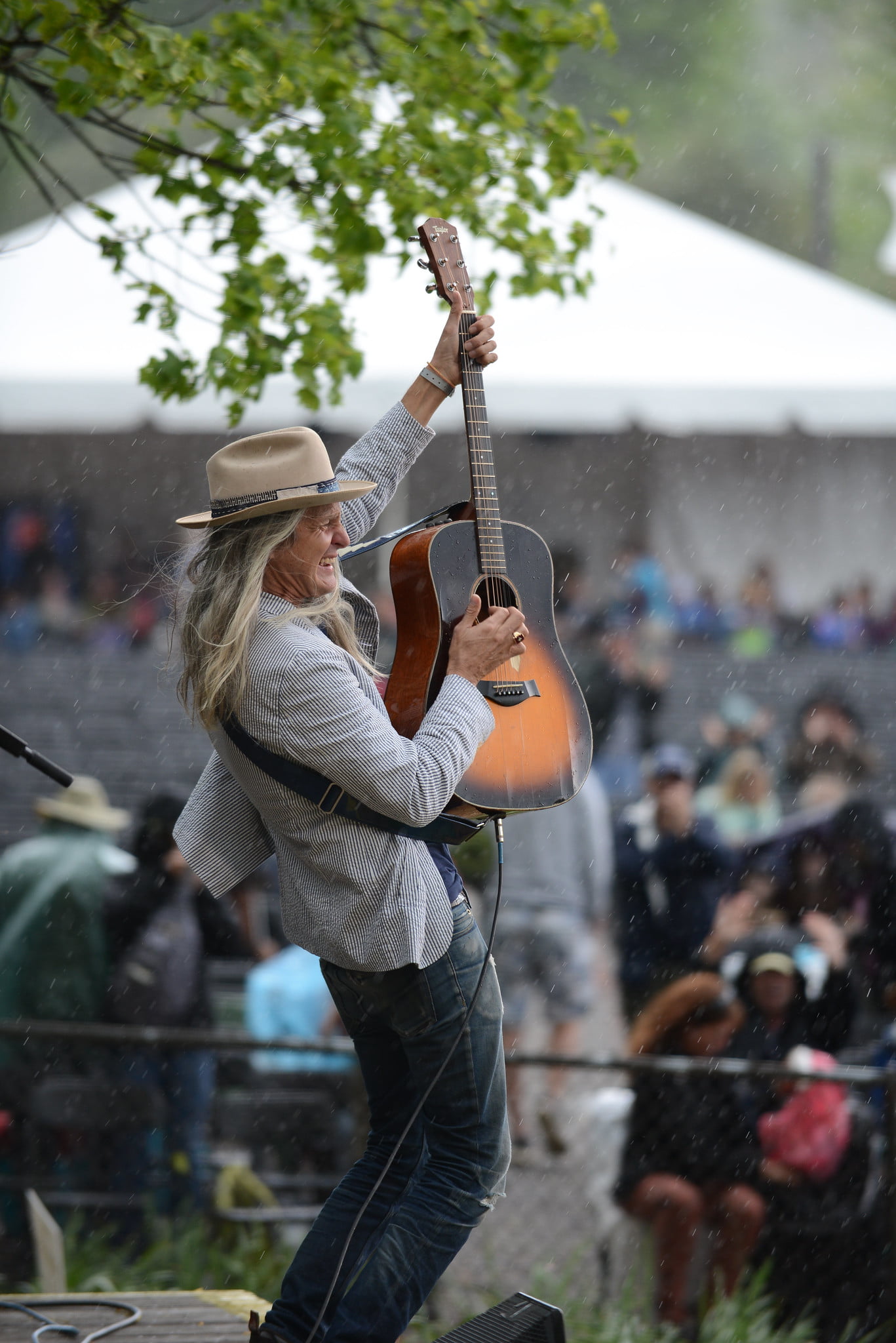
MerleFest 2019 is officially in the books. The quintessential bluegrass, roots, and Americana festival — named for Doc Watson’s son, Merle — drew more than 75,000 attendees from around the world to the grounds of Wilkes Community College in Wilkesboro, North Carolina. The four-day event celebrated NC’s “Year of Music” with over 100 bands from all across the state, the country, and the world.

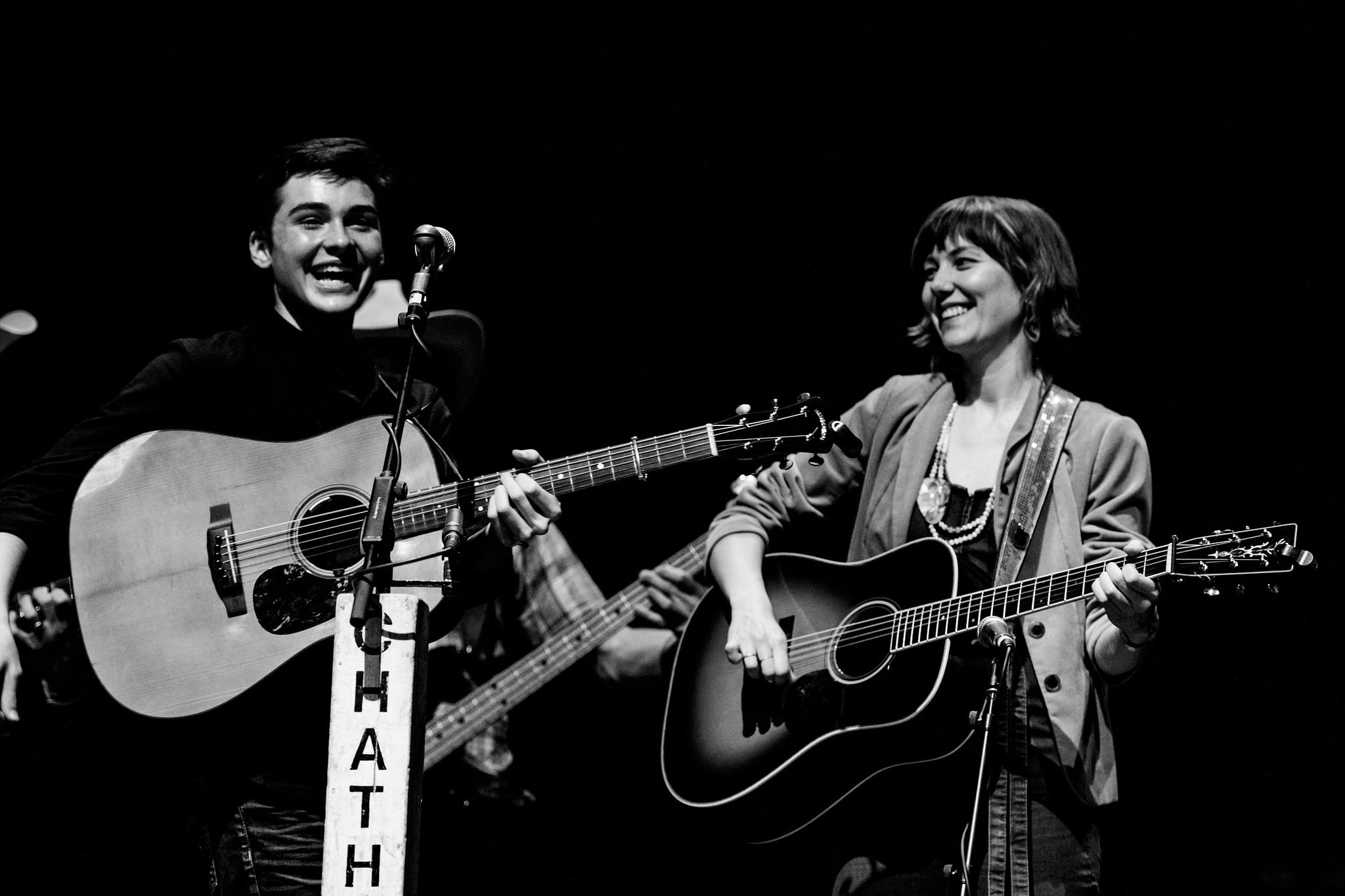
On Saturday night, BGS once again presented the ever-popular Late Night Jam, hosted by Chatham County Line, which featured performances from many of MerleFest’s stellar acts including Ellis Dyson, Jim Avett, Scythian, Molly Tuttle, Shane Hennessy, Donna the Buffalo, Jontavious Willis, Jim Lauderdale, Catfish Keith, Presley Barker, Ana Egge, the Brother Brothers, Steve Poltz, and many more friends and special guests.

Check out MerleFest 2019 in photographs and make plans to join us next year!


Lede photo: Michael Freas