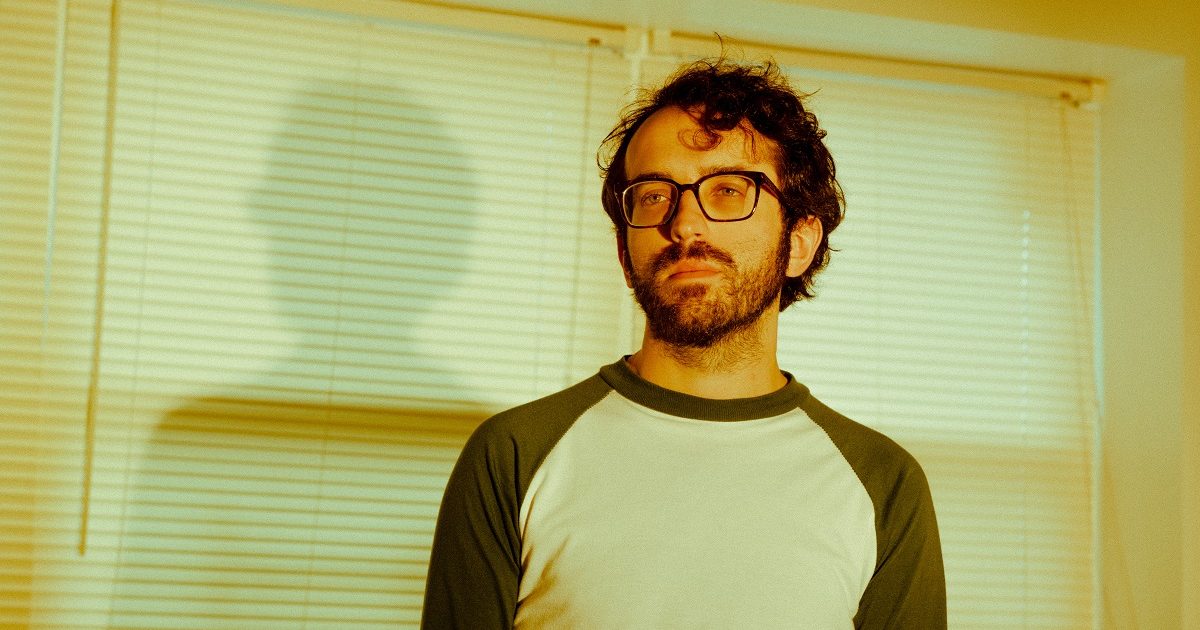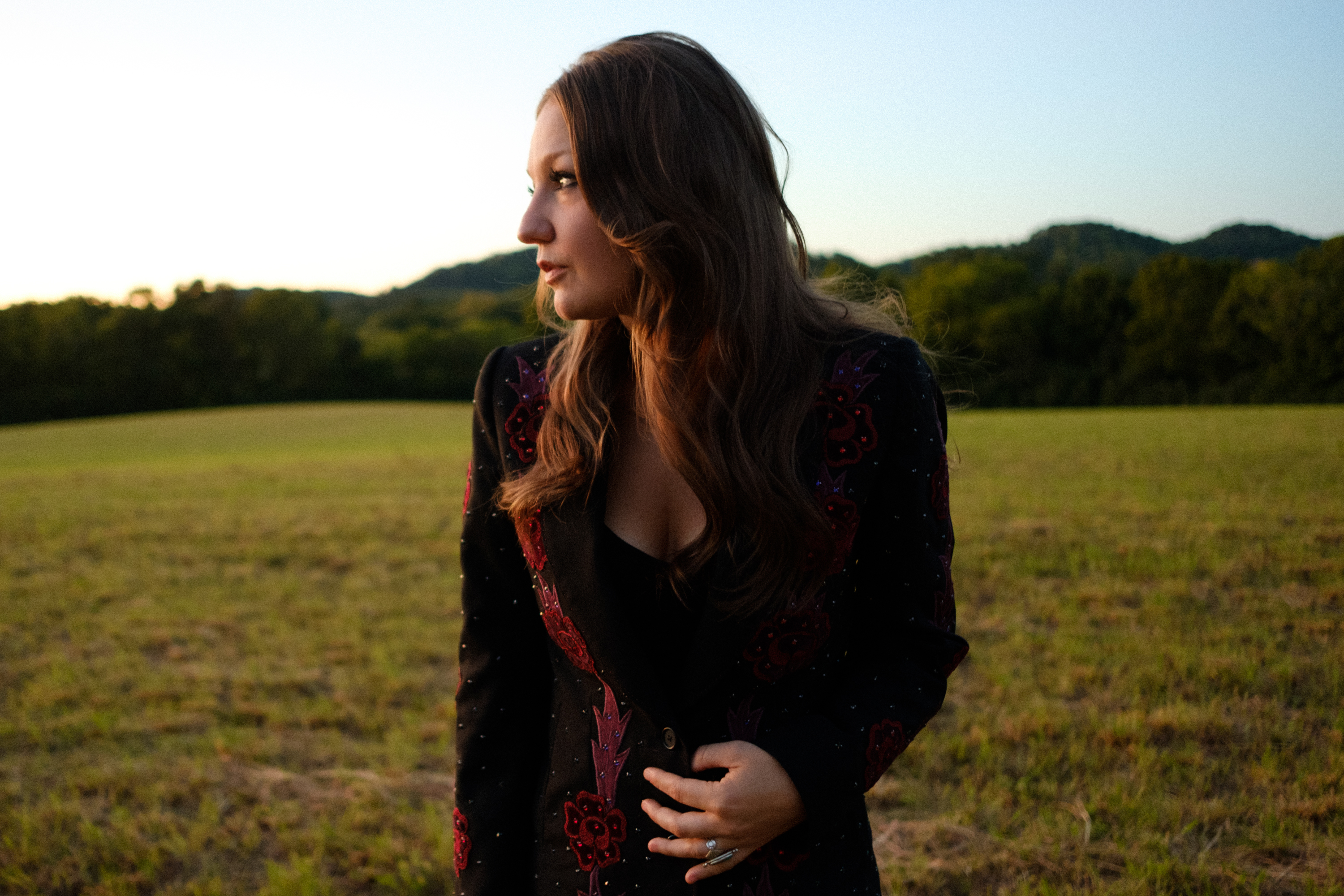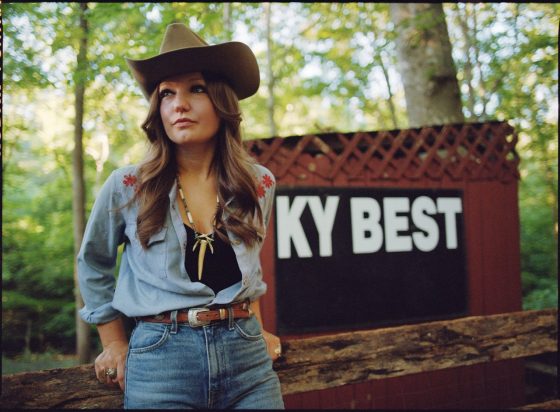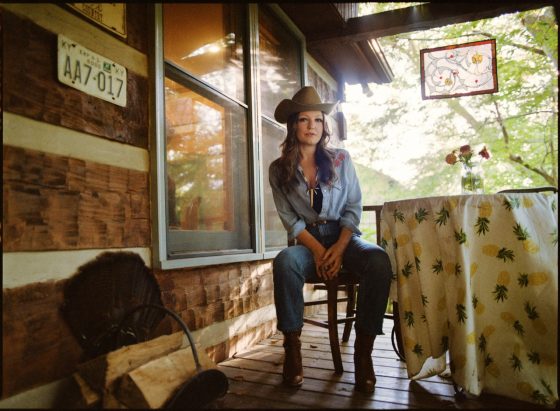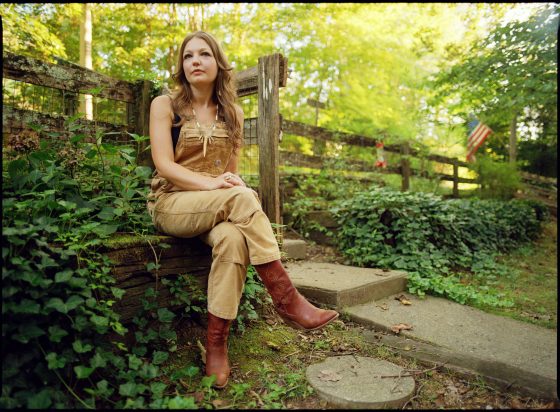
MIXTAPE: Anthony da Costa’s Quarantine Chill Out Roots-Grass Mix-Up

I know what you’re thinking, Anthony da Costa doesn’t really bluegrass…but hey, I live in Nashville and I have friends and I even say “y’all” now. And there’s something about roots music that cuts to the core of everything and deeply influences what I do…even if it doesn’t always sound like it. Here are some tracks to not go outside to! — Anthony da Costa

David Francey – “Border Line”

David Francey is one of my favorites ever and nothing will change that. I lucked out by sharing a stage with him at the Tønder Festival many years ago. He blew me away with his simple approach, golden voice, and powerful storylines. He stood there like a bard and held our hearts in his hand. After our show, I asked his guitarist which album I should start with and he emphatically stated Torn Screen Door. “Border Line” is track one from David’s debut album, which he made when he was 45 years old. Let’s take a journey with him, since we can’t really go anywhere else.

Jordan Tice – “Chicken Dog”

This playlist has a lot of mood, interspersed with that spontaneous dance party that we could all use right now. You don’t even have to put on real clothes, just dance. Jordan Tice is one of my best friends and also happens to be my one of my favorite acoustic guitar players on planet Earth. He has a fabulous new album that will be coming out soon… but until then, let’s jump to this scorcher of a bizarre bluegrass song called “Chicken Dog.” I still don’t know what it’s about, but also, like, who cares?

Molly Tuttle – “When You’re Ready”

This playlist wouldn’t really be complete without something from Molly Tuttle. I had the pleasure of touring with Molly for her album release in 2019. When the bluegrass kids all told me that Molly had made a “pop” album, my first thought was “ALRIGHT. Calm down, kids. What, are there drums or something? Are you scared?” But the young “queen” of the bluegrass world and honestly craziest picker out there made one of the best albums of last year: pop in the ’90s Aimee Mann singer-songwriter kinda sense. Molly knows how to write a poignant, catchy chorus — and then somehow squeezes in some pretty insane bluegrass runs –in the SAME SONG. Are you ready?

Bill Frisell – “I’m So Lonesome, I Could Cry”

Because, you know, quarantine sucks, right? And I live alone. And it HAS gotten lonesome at times… so lonesome that I could pull up this great compilation entitled The Best of Bill Frisell, Vol. 1: The Folk Songs and just mellowly and totally NOT CRY to myself. ♥

Sam Amidon – “Blue Mountains”

Speaking of Bill Frisell, he features on this pretty mesmerizing track from Sam Amidon. This record made me a believer. I don’t know that anyone else can do what Sam does with folk music. I don’t even know what this music is. It’s Sam Amidon music.

John Mailander – “Forecast”

John Mailander is one of the nicest people in the world, but PLEASE don’t tell him that I said that… it might go to his incredibly large and insufferable ego. All kidding aside, John released his debut solo album (as far as I’m aware) last year. It’s called Forecast and this is the title track… and it’s one of those “get up off your couch and dance” songs I was talking about before. John is as versed in Phish as he is the oldest of old-time fiddle and bluegrass. He is very dear to me and his music endlessly inspires me to push things further.

Rachel Baiman – “Something to Lose”

I met Rachel Baiman within the context of her duo with Christian Sedelmeyer, 10 String Symphony (check them out, they’re out of this world). I’m so glad that Rachel has been doing a lot of her own music these days in addition. This record, produced by Andrew Marlin from Mandolin Orange, has a warm, “right there in the room” kinda feel to it. This song makes me cry. There, I said it. Love is fine, OK? Will I ever see anyone again!?

Aoife O’Donovan – “Pearls – Live”

I recently revisited this live album I got to make with the inimitable Aoife O’Donovan. Lots of people know Aoife from her work with Crooked Still, as well as her more recent recordings and travel as part of I’m With Her. I toured with Aoife as her guitarist and harmony singer from 2016 into 2017. We toured her album In the Magic Hour, which was produced by Tucker Martine and features gorgeous arrangements of strings, horns, fuzzed out guitars, drums, voices… We had to recreate Aoife’s music live with three people and no bassist… which means we made it our own. This particular song is a favorite deep cut of mine.

Paper Wings – “As I Walk Down”

I’ve been saying to anyone who will listen, and I will say it to you now: Paper Wings is currently my favorite band. This is as rootsy as I get and I’m quite alright with it. Wilhelmina Frankzerda and I met when we were touring in Joy Williams’ Front Porch band. One night in Houston, Wilhelmina gave me a pair of headphones and showed me some mixes from what became Paper Wings’ Clementine album. It’s my favorite album of 2019. They’re clearly drawing from a very deep well of tradition but with new, crooked and inventive melodies…plus, they’re writing SONGS! New songs. Great, great songs.

Mipso – “Coming Down the Mountain”

Because we’re all going to come out of this eventually, right? Here’s a song to take off your mask to. See you all on the other side. ♥


Photo credit: Jacqueline Justice

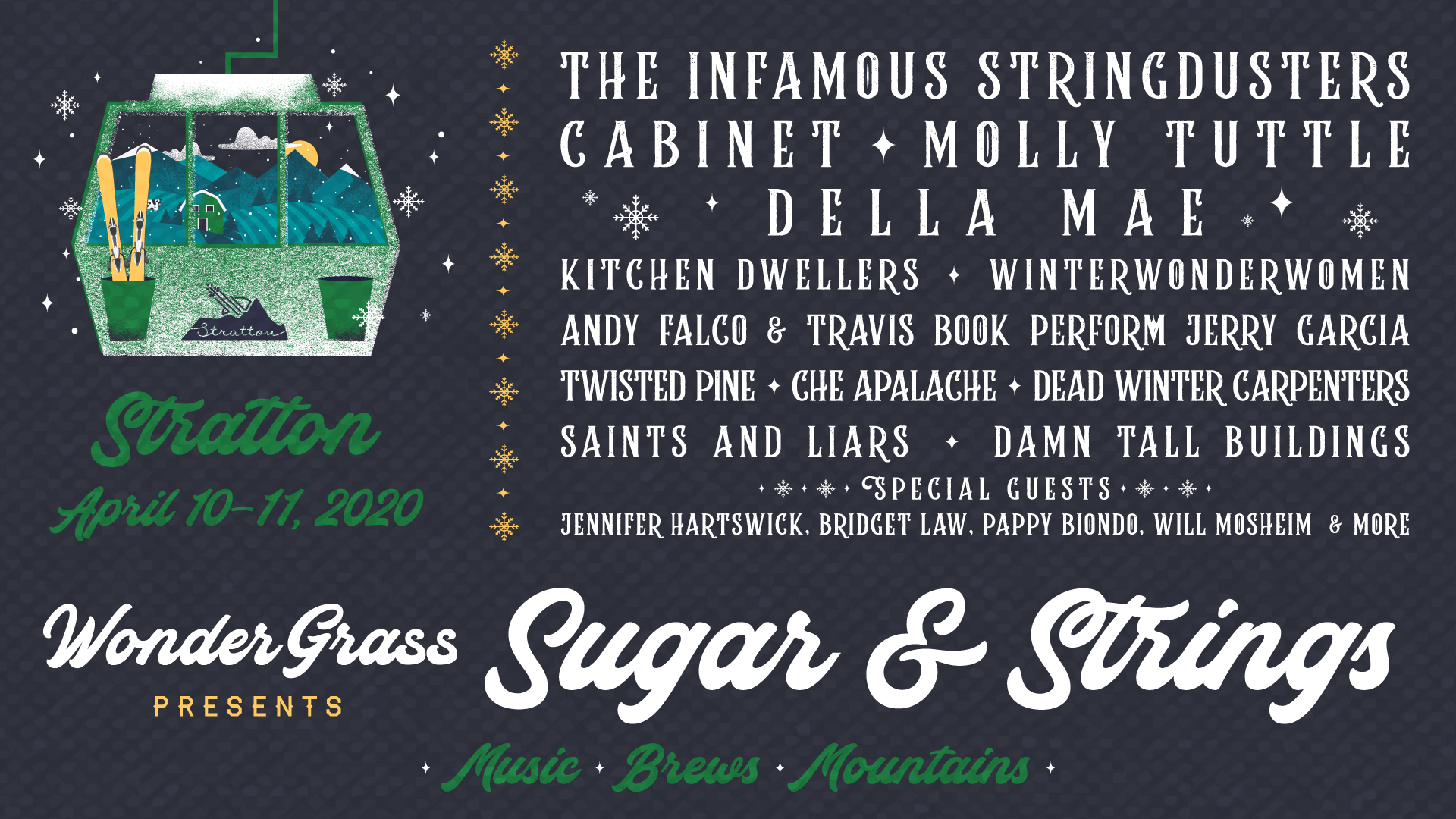
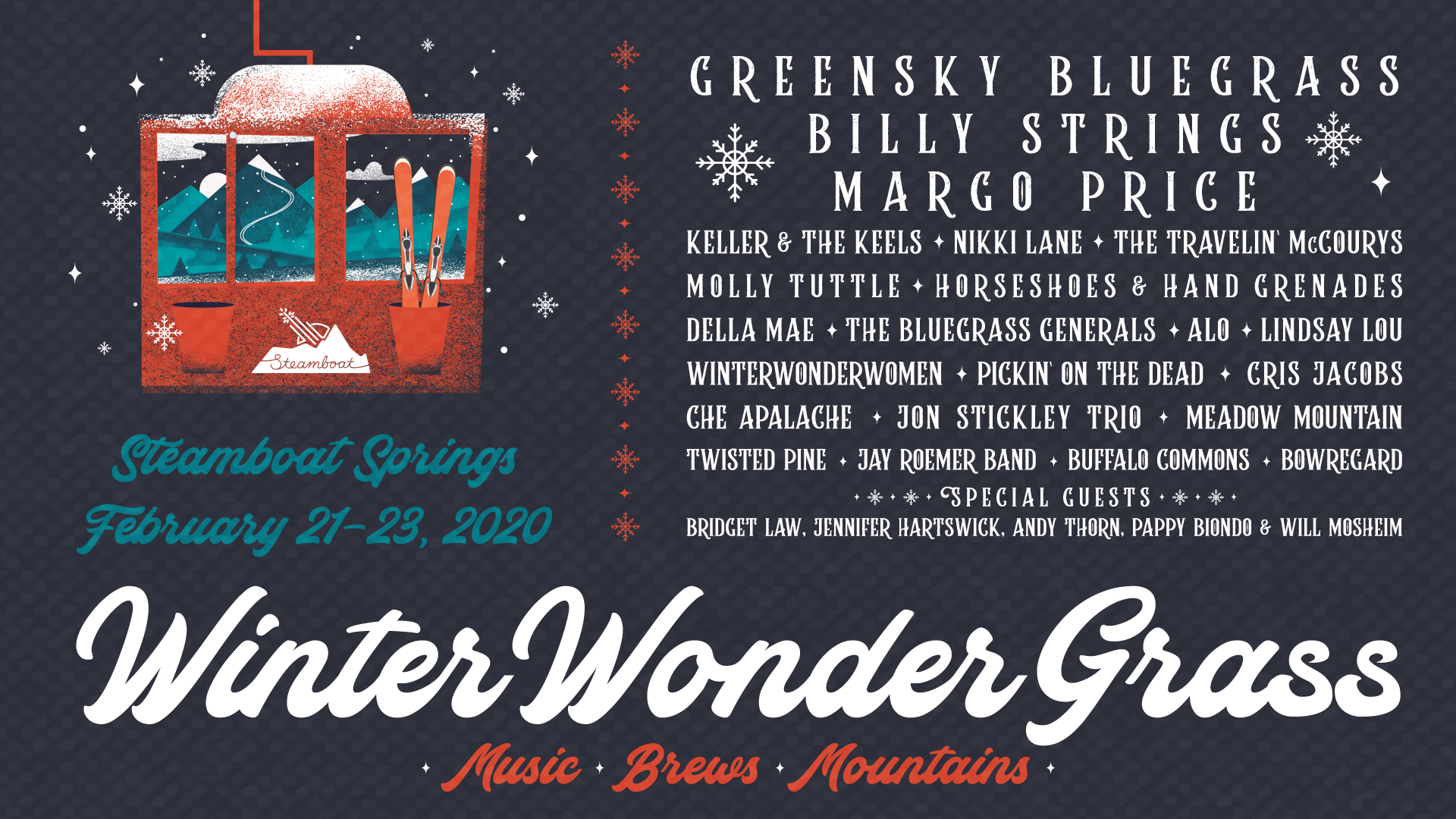
GIVEAWAY: Win Tickets to WinterWonderGrass (Steamboat Springs, CO) Feb 21-23

Best of: Friends & Neighbors 2019

At BGS HQ one of our favorite, most-used phrases is “the BGS family.” Roots music is all about community, the people who coalesce around these genres and the spaces they inhabit being just as integral as the actual music-making itself. We always enjoy turning the spotlight on these communities, and one of the ways we do this best is by celebrating and lifting up the folks who’ve always been part of our BGS family, while constantly being on the prowl for new faces and stories to bring into the fold.

This year one of the most tangible representations of our BGS family through our content and coverage was our Friends & Neighbors column, simple features of must-see videos by artists, songwriters, and musicians we consider family (and friends and neighbors!) Y’all were on board. So many of our F&N posts were our most-popular, most-engaged with, and most-enjoyed music of the year! Thank you for being another essential part of our BGS family and for seeing what we’re trying to accomplish here and making that happen. Enjoy our best of Friends & Neighbors from 2019.

Boyz II Men and Steep Canyon Rangers, “Be Still Moses”

Boyz to bluegrass?! You read that right. R&B legends and vocal virtuosos Boyz II Men collaborated with North Carolina’s Steep Canyon Rangers for this stunning reproduction of the bluegrass group’s 2007 song,“Be Still Moses.” During a Boyz II Men performance at Nashville’s Schermerhorn Symphony Center, twelve members of the Asheville Symphony joined the Rangers for this video, capturing what may very well be a once-in-a-lifetime performance of the song.


Rhiannon Giddens, Tiny Desk Concert

Former Carolina Chocolate Drops leader and old-time music maven Rhiannon Giddens has the uncanny ability to sing through an audience. In May, she released her third full-length, studio album, there is no Other, with Nonesuch Records. In this new chapter, Giddens collaborated with Italian multi-instrumentalist Francesco Turrisi, who is known for his virtuosity on percussion and jazz piano. Giddens, Turrisi, and bassist Jason Sypher stopped by NPR to perform some music from the latest record; watch as they stun the audience huddled around the Tiny Desk.


The Highwomen, “Redesigning Women”

Four world-class artists, one incredible supergroup — what’s not to love? The Highwomen have been taking the world by storm as they bring together some of country and Americana’s finest singers and songwriters. It’s no wonder their album has made many a year-end “best of” list — including our Top Moments of 2019.


Tanya Tucker, Brandi Carlile, and Tenille Townes, “Delta Dawn”

Three generations of country music come together in one performance: Tenille Townes, a newbie on the country block; Brandi Carlile, a soon-to-be modern legend at the peak of her career; and Tanya Tucker, a legendary performer whose album, While I’m Livin’, was one of our favorites of the year. Together, the trio performs “Delta Dawn,” one of Tucker’s signature songs.


Molly Tuttle, “Take the Journey”

It’s been a huge year for Molly Tuttle. She’s blazed a trail through modern bluegrass, become one of the most prominent pickers around, and now she’s taking on roots music realms further and further from the string band territory in which she grew up. Feel the rhythm and energy in Tuttle’s national television debut performance  of “Take the Journey,” our most popular Friends & Neighbors post of the year!


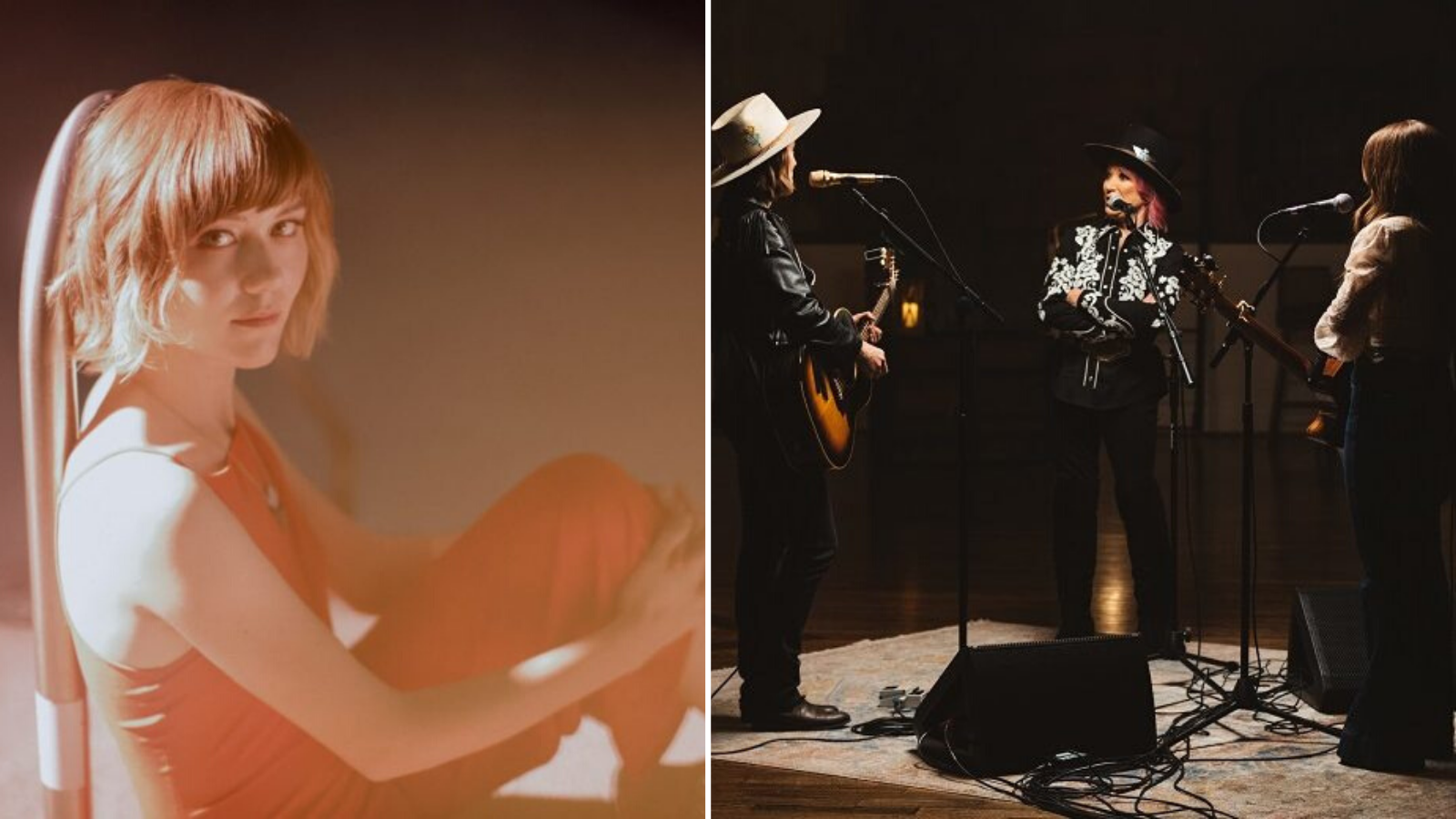
Photo of Molly Tuttle courtesy of Compass Records
Photo of Tanya Tucker, Brandi Carlile, and Tenille Townes courtesy of Cracker Barrel

BGS Top Moments of 2019

If music happened in 2019, but wasn’t a “song” or an “album,” does it make a sound– er… does it warrant real estate in any of the many year-end pieces, wrap-ups, and lists hitting the internet on a daily (sometimes hourly) basis? Why, of course it does! Each year BGS notes Top Moments of roots music — whatever form they may take — as a way of reminding ourselves that the art we each consume, especially of the musical variety, is often at its best when it eschews the formats and media we expect and/or most closely associate with it. What changes about the way we view a year in music when we alter the context as such? First and foremost, we change just that — our viewpoint. Turns out that makes a world of difference.

Speaking of top moments, one of the best for the BGS team took place just last week, as we premiered a brand new look with an updated homepage and logo. A lighter color palate, clean modern lines, and updated fonts usher in a new era for the site, and hopefully a positive reading experience for you, our beloved fans and readers. Not unlike the state of roots music itself, our new look is constantly evolving, but what’s at the heart of it remains timeless. Now, read about more moments that turned our heads and caught our ears over the course of the past 12 months.

Chris Stapleton Creates LEGO Alter Ego

When Chris Stapleton’s music video for “Second One to Know” hit YouTube, I found myself musing, “What are the benchmarks we use to determine someone’s level of notoriety? What are their claims to fame? Owning a tour bus? Having your first number one hit? Being the musical guest on SNL? Having a highway named after you? Or perhaps a proclamation from your local public figures designating a [Named After You] Day?” Seriously, can you imagine getting to a point in your country pickin’ / singin’ / songwritin’ career where your Game of Thrones cameo falls into the background of your music video star LEGO-self?

I would be remiss if in this blurb I did not mention another real-ass country singer/songwriter/rabble-rouser who dabbled in alternative visual media this year, too — that would be Sturgill Simpson’s “Sing Along.” More of this oddball, non sequitur energy in country in 2020, please. – Justin Hiltner


Dolly Parton’s America Podcast Finds Common Ground

Epiphanies in the podcast series Dolly Parton’s America are too many to count, as host Jad Abumrad and his team explore the notion that the Tennessee songbird is a rare unifying force in the fractured socio-cultural universe — everyone loves Dolly! But the fourth episode, titled “Neon Moss,” finding the common ground of Dolly’s Tennessee mountain home and the Lebanon mountain home in which Abumrad’s dad (a doctor who became friends with Parton after treating her in Nashville) grew up is gripping on a cultural and emotional level. Bonus: BGS’ own Justin Hiltner and his banjo pop up as a key part of a later episode. – Steve Hochman


Duos, Duos, and More Duos

Were you seeing double this summer? Mandolin Orange, Tedeschi Trucks Band, and Shovels & Rope offered exceptional albums and sold tons of tickets. From the sweeping San Isabel from Jamestown Revival to the intimacy of Buddy & Julie Miller’s Breakdown on 20th Avenue South, roots duos were having their moment. Personal favorites included The Small Glories and Bruce Robison & Kelly Willis, but the true discovery for me was Dravus House, a Seattle duo who delivered an understated and beautiful album that blends Elena Loper’s vocal with Cooper Stouli’s soft touch on guitar to stunning effect. – Craig Shelburne


Del McCoury Turns 80

At 80 years old, Del McCoury has witnessed the rise of bluegrass while still being actively involved in it. (In fact, he’s got a gig this weekend in New York with David Grisman, Jerry Douglas, Drew Emmitt, Andy Falco, and Vince Herman.) An all-star tribute at the Grand Ole Opry provided perhaps the most musically satisfying night of music this year for me, mostly because The Del McCoury Band has still got it (and they make it look like so much fun). Check out their 2019 performance on Live From Here With Chris Thile. – Craig Shelburne


Hadestown Wins Big on Broadway

In an era when Broadway has seemingly been taken over by jukebox musicals that rehash the catalogs of legacy artists, watching Anaïs Mitchell pick up eight Tony Awards for Hadestown was a surreal triumph. For those of us who have followed Mitchell’s career over the past couple of decades, it was truly remarkable to see a grassroots musical that she first staged in 2006 reach the heights of Broadway, earning her a win for Best Musical and Best Original Score. “Wait for Me,” indeed. – Chris Jacobs


Ken Burns Digs Deep into the Roots of Country Music

Ken Burns has a long history of digging into America’s deepest roots, through documentaries like The Civil War, Jazz, Baseball, and The National Parks. In 2019 he took those roots in a more on-the-nose direction, exploring the long and varied history of American Roots Music through his PBS documentary series Country Music, which premiered in September. As the filmmaker himself said in a recent interview, “Country Music is about two four-letter words: love and loss.” Thanks to Burns, who looks unflinchingly at all of the different stories that have shaped this music, we get to see the love, the loss, and everything in between. – Amy Reitnouer Jacobs


MerleFest and IBMA, Rediscovered

After a long break, I made an effort to reconnect with two of the preeminent roots music festivals  in 2019 – MerleFest and IBMA’s World of Bluegrass. With other obligations in Nashville, it had been five or six years since I’d attended either, and both surprised me for different reasons. At MerleFest, I was struck by the caliber and diversity of artists, in particular for landing a headlining set by Brandi Carlile in her breakout year. Five months later, I returned to North Carolina to see IBMA in action, amazed by the way that the city of Raleigh has embraced the musical experience, from the Bluegrass Ramble to the StreetFest with plenty of outdoor stages. North Carolina, I’ve got you in my 2020 vision. #ComeHearNC – Craig Shelburne


“Old Town Road” Can Lead Anywhere

Is “Old Town Road” country? Like millions, maybe even billions of fans, I’m inclined to answer that question with an emphatic “Of course it is!” But I’m also inclined to ask: What else is this song? Is it roots music? Is it folk? Blues? Yes, yes, and yes. That chorus is powerful in its simplicity, and it’s not hard to imagine Doc Watson singing those lines or Geechie Wiley intoning that sentiment mysteriously from some lost B-side, accompanied by a century of acetate scratches and surface noise. Almost accidentally existential, the chorus speaks to an unnamed American melancholy, and it can mean anything you want it to mean and be anything you want it to be. – Stephen Deusner


Roots Music Don’t Need No Man

No, like literally. After 2019 we can definitively say that roots music as a whole does not need any men. From the first albums of the year (say, Maya de Vitry’s Adaptations or Mary Bragg’s Violets as Camouflage), followed by two indomitable women of the Grammys (Kacey Musgraves and Brandi Carlile), then two universally regarded supergroups (Our Native Daughters, the Highwomen), the resurgence of true legends (like Reba McEntire’s Stronger Than the Truth and Tanya Tucker’s While I’m Livin’), to a Newport Folk Fest collaboration that combined nearly all of our favorites, this year in Americana, bluegrass, old-time, and folk has been defined by women. There were pickers (Molly Tuttle, Nora Brown, Gina Furtado), there were scholars (Allison de Groot & Tatiana Hargreaves, Our Native Daughters), there were poets (Caroline Spence, Jamie Drake) — repeatedly this year I found myself in musical spaces that, if all of the men were subtracted, I would still want for nothing. #GiveWomenAmericana – Justin Hiltner


Yola’s Meteoric Rise

Co-write sessions and frontwoman-for-hire gigs aptly prepared Yola for the non-stop successes she’s had in 2019, from sharing stages with childhood heroes Mavis Staples and Dolly Parton to nabbing a whopping four Grammy nominations, including a coveted Best New Artist nod. Kicking off the whirlwind year was her Dan Auerbach-produced debut solo album, Walk Through Fire, a beginning-to-end stunner and a sure sign that Yola’s star power will only continue to rise. The ample steel guitar on “Rock Me Gently,” the countrypolitan charm of “Ride Out in the Country,” and the buoyant old-school soul of a new bonus track “I Don’t Wanna Lie” show off an eclectic roster of influences and a striking vocal range. But the album standout might be its only number written solely by Yola, “It Ain’t Easier,” a slow-burner with a hell of a bridge that pays tribute to the hard work behind even the greatest of loves. On the stage, in the studio, and in everything she does, Yola is putting in the work — and we can’t wait to see what 2020 holds. – Dacey Orr

An Incomparable Album, ‘White Noise/White Lines’ Is the Kelsey Waldon Experience

I’ve had the good fortune of knowing Kentuckian country queen-in-waiting Kelsey Waldon for almost the entire time I’ve lived in Nashville — more than eight years at the time of this writing. I’ve stood over her unfathomably enormous cast iron skillet, filled to the brim with bubbling, sizzling battered fish. I’ve sung harmony on one too many choruses of “Smoky Mountain Memories” after perhaps one too many slugs of Kentucky straight bourbon whiskey with her, too. 

And yet, in listening to her brand new album, White Noise/White Lines, I still found myself picking up fresh tidbits of her extraordinary yet downright ordinary approach to musicmaking, songwriting, self-expression, and artistic exploration. Waldon, despite limitless comparisons to almost every female country forebear to ever growl through a lyric, remains a paragon unto herself, a true singularity in realms of American roots music. 

White Noise/White Lines cements the fact (which has always been plain as day to those who dug deep enough) that Waldon will refuse tidy, one-for-one comparisons to any/all other country stars and writers who have come before her or who count themselves among her contemporaries. Except perhaps two: Loretta Lynn — whose “Coal Miner’s Daughter” inspired Waldon’s own “Kentucky, 1988” — and John Prine. The latter is fitting, in so many ways, now that Waldon makes her label home with Oh Boy Records, label of the denizen of Kentucky songs, meat and threes, and plain spoken oracle-like wisdom through lyrics. 

A brief album by many measures, White Noise/White Lines captures technicolor moments of Waldon’s life, her joys, her musings, and her homeplace, encouraging listeners to lean into the record’s brevity and engage wholly with each constituent moment therein. Because truth needs no more than a moment.

For BGS I made the trek out to Waldon’s cabin outside of Nashville and after a quick stroll around the vegetable gardens and a tour of the many Kentucky-themed decor items imported from one state north, we settled in the kitchen, sipping water out of mason jars, to talk.

People routinely refer to you as being similar to Loretta, similar to Tammy Wynette, Kitty Wells, Patsy Cline. People are constantly making these comparisons to these kind of foremothers of country and I wonder how that makes you feel, to be a bookend against someone like Loretta or Tammy Wynette?

Kelsey Waldon: Honestly, I think that’s an incredible compliment. Those are all, you know, my sisters that have gone before me, women that I’ve looked up to quite a bit. Especially in the country music realm. However, I also kind of feel like, especially with this new record, I think it’s apparent that hopefully I’m also finding quite a bit of my own thing. 

Sometimes when people say things like that to me it’s like, well maybe their scope of country music isn’t that wide. When someone would be like, “You sound like Patsy Cline!” I’d be like, “Uh, no I don’t.” [Laughs] I mean, I love Patsy Cline and I hold her up as something sacred, I wouldn’t ever even sing Patsy just because nothing touches that. 

I think it can kind of be, dare I say, a lazy comparison to just kind of name [some popular woman country star.] It’s definitely there. Even sonically, I was so inspired by them. Especially Loretta, absolutely.

I hope the new record showcases that with the years we’ve spent on the road — just using even my own touring band. It starts at country with me, I can’t just flip off a light switch and say, “Oh, it’s not country!” I guess some people can do that, but I don’t see it that way. Country is just so much embedded in me. No matter what form my artistic expression comes out, that’s still gonna be there. It just may not be cookie cutter, it may not be formulated. It may not even sound exactly like that. One thing that I think the growth of this record shows, hopefully, is that these are my songs, I’m not a throwback artist. I’m not a retro artist. I am an artist making music in 2019.

I did want to talk about your band, I think it’s remarkable. It’s getting more and more rare that folks tour with the folks who played on the record, because — and it’s not the fault of anybody — they’re trying to make money on the road. So if they stack their record, of course they aren’t bringing those people on tour. Why is it a priority for you to have the same band?

There are obviously all of these amazing musicians out there who are session musicians and a lot of people I’ve been fortunate enough to play with myself. I’ve learned a lot from [them]. This time around, this was always a goal of mine, to have a record that had a band I wanted on it. I worked really hard to find the band to really fit those pieces together. It took me a while…  just trying to figure out really what I wanted. My last record, I’ve Got A Way, caused the right people to gravitate towards my music. I mean, I eventually found the band that I have now because they heard those earlier records and they were like, “I would love to be a part of this.”

The band I have now, which is Mike Khalil, Nate Felty, and Alec Newnam — and Brett Resnick played on the record, but he doesn’t get to play with us a lot anymore, he plays with Kacey Musgraves, which is wonderful. But with the band I have now I just knew it. I was like, “I think this is it.” We all knew it. Even Brett. People were like, “We think this is the right combination.”

In that way, too, there’s nothing wrong at all with using session players, I just think, honestly — and I might be a little biased — my band is just as good as any. I think they could, and they will be one day, they will be those session players. They care so much about their craft and they work hard. I’m very lucky. 

One of the things that excites me most about this record is that I’ve always heard the bluegrass influences in your music, but they’re really forward in this record. Especially in your rhythm playing, in your rhetorical style in your writing, in your vocal phrasing, even in the arrangements with the twin fiddles and there are a couple of “fast waltzes” on the record. I love that “Lived and Let Go” really could be played on bluegrass radio. 

I think that is such a huge compliment, thank you.

It’s bluegrass! I wanted to ask, and not just because we’re The Bluegrass Situation, but in general, because this is a huge part of the canon of music you reference and that you listen to. Who in the bluegrass sphere influences you now and who has in the past — and I’m gathering Ola Belle Reed is at least one of them. 

I love Ola Belle, obviously, we did an Ola Belle song on the record. Well, I love that you can pick that out. To me, I feel like it’s plain as day that there’s a bluegrass influence all over it. To some people it’s not as apparent, I guess. I’ve had some people just be like, “What is this thing that you’re doing?” It’s because they don’t listen to bluegrass. I’m like, “I STOLE that!” [Laughs]

I guess I understand now why they don’t put those two together, if you’re talking about mainstream country, because that’s clearly not. But to me, I’m always like, “Of course bluegrass is country.” It’s also bluegrass, but it’s also country.  It’s like the OG country music. 

I would say one of my favorite influences, one of my favorite singers ever, is Dale Ann Bradley. She’s up there for me. I really think Dale Ann should be a legend, honestly. And Ralph Stanley, and obviously I love Bill [Monroe], and Jim & Jesse, and all those groups. And early Keith Whitley, I’ve been obsessed with that for a long time. 

I think it’s interesting that you mention both Ralph and Keith back to back like that, because you can hear elements of both of their vocal phrasing and vocal techniques, in what you do singing-wise. 

The same thing with Dale Ann. They have such unique registers of their voices and it’s something that I really relate to. Sometimes I didn’t really know what it was that I was doing. I could kind of hear my own voice in [their vocals]. If that makes sense? I could really relate to that. It’s so soulful. 

I feel like Keith could sing on anything. [Laughs] He sounded exactly like Keith. That’s the beautiful thing about a country singer to me, he could sing on an R&B track and it would be sexy as hell. It’s like George Jones — and Dolly can sing on anything, as far as I’m concerned. That’s a great singer, to me. Ralph, I’ve always said that he is like the Pop Staples of mountain music. It’s like he doesn’t even have to be loud, but he is so loud. He’s barely singing. He’s just projecting. I love Flatt & Scruggs as well. 

New artists… Molly Tuttle, I love what she’s doing. That new record. She’s really taking a genre and making it her own. Something that’s not worn out or tired. Doing something fresh. She has accomplished making this new for people. In my own way, I hope to do that as well. 

I don’t guess there’s anybody else completely new, besides like Sister Sadie, and Dale Ann! [Laughs] They are some BAD girls!! Dale Ann, man. The mark of a true artist is that she can sing all of the covers she does. Like I said, I think Dale Ann should be a legend. 

Words are clearly your priority in your songwriting. You’re prioritizing what you’re meaning to say first and foremost, then making the melody and music and everything work around what you’re trying to say. It sounds effortless when you listen to it, but I wonder what kind of intention goes into that?

Songwriting is kind of interesting to me in that way. I’ve actually heard a couple people be like, “It sounds effortless.” Sometimes, it is effortless and you’re just like, “Wow that kind of poured out of me. I didn’t realize it was in there but it poured out of me in like five to ten minutes.” With this record, though, there were definitely a couple of things I had to go back to. I had the meat and taters, but there were a couple of things I rewrote and made sure made exactly the sense I wanted them to make. There’s a balance there, too. You don’t want to kind of go too far, over-analyzing the whole thing.

With “Kentucky, 1988,” I think your songwriting up to this point has felt so personal, and so tightly intertwined with who you are, that I almost didn’t realize that you hadn’t written this exact kind of song, yet. What brought you to the point of wanting to be that direct with telling your origin story? Was it more intuitive or more purposeful?

That was definitely purposeful. That is awesome that you’ve observed that, because I’ve felt the exact same way. I was writing new songs and I felt like, “You know, I haven’t written my ‘Coal Miner’s Daughter.’” I don’t really have something that is kind of like this definitive origin story. I just set out to write it. The title was actually kind of inspired by someone I forgot to mention, Larry Sparks — one of my favorite singers. 

Oh my gosh!! “Tennessee, 1949!!” 

Yeah! Yeah, it was inspired by that. That and a Tom T. Hall song that has Kentucky and a year in the title, with the comma and everything. In my head all of that sounded so cool. Everything about it, the rhythmic feel, it all rolled right off my tongue great. I just had to write it. People always [say], “That’s very vulnerable and transparent.” Well yeah, isn’t that what we’re supposed to do? [Laughs]

I know a lot of artists say this, but I definitely think this is the most personal thing I’ve done so far. I think all of it has been very transparent, in a way. I want to completely embrace that. I want to be as much of a freak as I want to be. It’s not like I was afraid to before, I just don’t think that I was ready. My mom always said I was a late bloomer, but she said, “When you bloom, baby, you’ll bloom!”  

I did want to ask you about the significance of the Chickasaw Nation members singing on the record. We hear them at the end of “White Noise, White Lines.” What’s the personal significance of that for you? And are you a tribal member? Is anybody in your family a tribal member? 

No. All of the Rollins side of my family, which is my granny’s side, they were all of French and Native American descent, but I never claimed anything like that. I just think it’s been something that’s been such a part of where I grew up, culturally. Even just hunting for points [arrowheads] and having such a respect for that way of life and culture. 

It’s always really hard to keep this story short, when people ask me about the song, because I wrote it right after this amazing experience I had back home in Monkey’s Eyebrow, Kentucky, my hometown. When I went back to watch a ceremonial dance that the Chickasaw from Ada, Oklahoma [performed]. They came to re-bless the Wickliffe Mounds. They ended up lodging at my Dad’s that night, for free, [he was] cooking the food, doing the catering and stuff. I ended up staying down there and visiting.

We just became friends with the members of the tribe. We had so much fun. They’ve kept in touch… My dad took them arrowhead hunting for the first time, and they were doing ceremonial dances out on my dad’s land as well. I think he really really was appreciative of that. We were kind of the only people who ever lived down there in those river bottoms, maybe besides [the Chickasaw]. I mean, it’s the river bottoms. That’s why we find all these artifacts. No one has been down there except us. 

I just remember thinking about how awesome the weekend had been and the radio had been on white noise for literally fifteen minutes and I had no idea. I was just in this tranquil moment. The song is just a detail of all these things. The solar eclipse had also blown my mind that weekend. Just realizing how small we actually are, compared to what is even going on in this universe. 

Naturally, I included the details. “Chickasaw man got a buffalo skin drum,” because Ace — Ace Greenwood and Jesse Lindsey, that’s who’s on the song — actually did have a buffalo skin drum. It was pretty badass. My dad asked them to sing some songs on the porch. I love Ace’s voice, it reminds me of Ralph Stanley. It’s a voice that just feels like it’s been there for a long time. It’s so pure. I just loved it, I was really touched.

He sang a song that had been in his family for generations. The message of the song was basically, “Though I’m far away I’m still near you. No matter where I am. We are together.” In that moment that really was something I needed to hear. I put that [on the record] not only because I thought it was beautiful, and I wanted people to experience what I felt, but I also wanted the record to feel like an experience. 

Ace told me one time when we were down there that the media likes to tell his people who they are and that’s not who they are. I think in a way, perhaps it’s also why I thought it would be really beautiful to have that at the end as well. I hope it doesn’t seem like it was for my own reasons, I guess. I was just writing about that weekend and I felt like it was so beautiful to me I wanted it to be documented. 

I think it makes a lot of sense. And I’m not saying it’s not a complicated thing to talk about, or that it doesn’t trip into some territory that we as settlers will never fully understand, but I do think that it follows perfectly with you bringing your whole entire self to your music. So much of what you do is tied to place and is tied to coming from Kentucky. 

That was another part of it, showcasing where I’m from. And the cultural background of it. 

And not just the colonial background of where you’re from? 

No. I mean absolutely not. To me, that’s exactly how I saw it. Nail on the head. It might cause a little bit of question, but I think that’s good. ‘Cause then I’ll get asked about it. And then I’ll tell ‘em. [Laughs] 


Photos by Laura Partain for BGS. See the entire photo story.

Shaun Richardson & Seth Taylor, “Chisholm”

An expansive generation of simply ludicrous flatpickers has rendered bluegrass, old-time, Americana, and folk replete with acoustic guitar virtuosos. Pickers like Jake Stargel, Molly Tuttle, Presley Barker, and Billy Strings each have in common commanding right hands and withering technique. Others, like Jake Workman, Trey Hensley, and Chris Luquette play at incomprehensible, blistering speeds with pristine precision that defies explanation — down to the most infinitesimal note durations. We can clearly see the shredtastic legacies of Clarence White, Tony Rice, Dan Tyminski, and others living on, even if chiefly through their more mathematical, aggressive, and adventurous methods and tones. 

That adventurous aggression might just be why “Chisholm,” a new tune composed by guitarists Shaun Richardson and Seth Taylor, feels like such a calming breath of fresh air. It’s a welcome counterpoint and complement to the repeated face-peeling-off that we all enjoy in this current golden age of flatpicking guitar. Richardson and Taylor are both veterans of Dailey & Vincent’s bluegrass-based rootsy stage show, giving them ample experience in musical code-switching, from fiddle tunes and swinging numbers to country ballads and passionate gospel. Richardson has performed with Michael Martin Murphey as well, and Taylor is a member of the long-running, heady, Americana-tinged bluegrass group Mountain Heart. 

The versatility lent by these diverse experiences gives “Chisholm” a well-traveled, though relaxed, voluminous vibe. The melodies are resonant and tactile, conjuring six-string players and composers such as John Carlini and Beppe Gambetta — with just a dash of Tommy Emmanuel. Jazz complexities are utilized here not in a gratuitous way, but rather anchored in expressiveness and musical dialogue. Richardson and Taylor’s expertise is very clearly centered not on simply displaying prowess, but in musicality. In this calmer, more subdued setting, that dynamic is especially refreshing and subtly striking.


Photo and video shot by James Shipman

Exclusive: Bluegrass Underground Reveals Season X Lineup

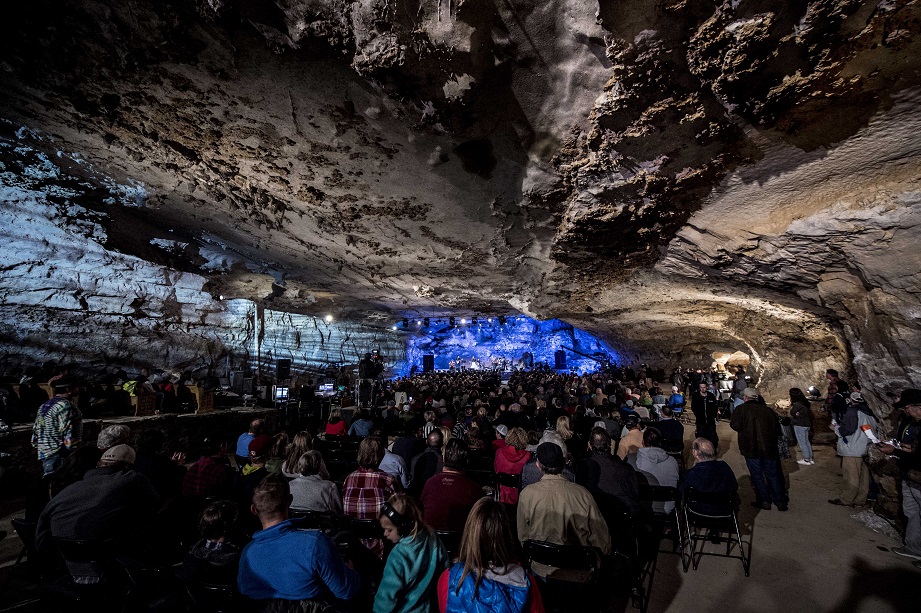
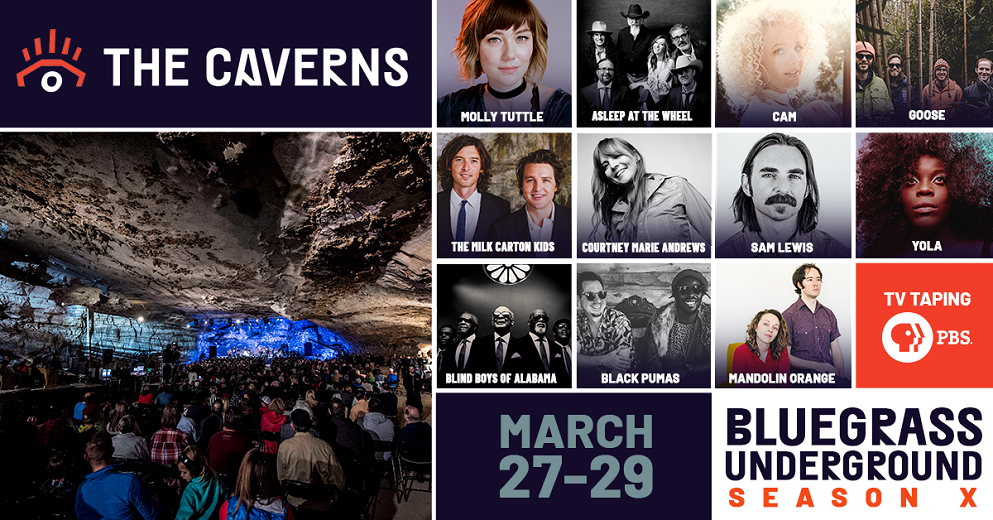
The Bluegrass Situation is pleased to announce the artists for Bluegrass Underground’s milestone Season X on PBS. From March 27 through March 29, the Bluegrass Underground TV taping from The Caverns in Pelham, Tennessee will treat music fans to performances by the finest in roots music and Americana.

This special 10th anniversary taping features cutting-edge singer-songwriters Cam, Yola, Courtney Marie Andrews, and Sam Lewis, and harmonious duos Mandolin Orange and three-time Grammy-nominated Milk Carton Kids, as well as legends like Asleep at the Wheel and Blind Boys of Alabama, and rising stars like bluegrass phenom Molly Tuttle, groove-driven jam band Goose, and psychedelic soul group Black Pumas, plus a surprise act to be announced in the coming weeks.

Jam-packed into one epic weekend of underground concerts, the performances will be captured for the 10th anniversary of the multiple Emmy Award-winning Bluegrass Underground series on PBS. To be in attendance at the 3-day live taping event is a music lover’s ultimate experience. The milestone Season X will premiere in the fall of 2020 on PBS stations nationwide.

“It’s amazing that Bluegrass Underground is the second-longest music series on American Public Television,” says Todd Mayo, Bluegrass Underground creator and co-producer. “And we look forward to the next 10 years of partnering with PBS in presenting the quality and diversity of roots music from one of the most iconic music destinations in the world, The Caverns in Grundy County, Tennessee.”

Three-Day & Single-Day Tickets go on sale on Friday, November 22 at 11 am CT at TheCaverns.com

Here’s the lineup for Bluegrass Underground Season X PBS TV Taping in The Caverns:

March 27:

Molly Tuttle: An artist on the leading edge of bluegrass music, steeped in tradition while driving the genre forward in today’s musical landscape.

Goose: This New England band’s mix of rock, funk, tropical grooves and extended jams will turn The Caverns into a subterranean dance party.

Cam: From a GRAMMY nomination to headlining the Ryman Auditorium, this multi-platinum country singer-songwriter is a force to be reckoned with.

Asleep at the Wheel: Ray Benson has now been leading a Western Swing band longer than Bob Wills, and he brings his iconic group to The Caverns for their 50th Anniversary Tour. Historic.

March 28:

Sam Lewis: Best-known for touring and collaborating with Chris Stapleton (who helped inaugurate Bluegrass Underground in 2008), this singer-songwriter is one of the defining talents of modern Americana.

Courtney Marie Andrews: Powerful vocals, passionate songs from one of today’s finest singer-songwriters.

The Milk Carton Kids: One of Americana’s best live acts, the duo of singer/guitarists Kenneth Pattengale and Joey Ryan combine close harmonies, wonderful original songs and humor.

TBA: Bluegrass Underground will be announcing the day’s fourth artist in coming weeks. Who doesn’t love a surprise?

March 29:

● Blind Boys of Alabama: A rousing Sunday in The Caverns with the five-time GRAMMY Award-winning gospel group that helped create the genre.

● Black Pumas: Austin, Texas is known for its dynamic live music scene. Black Pumas are the city’s leading soul/funk band. Enough said.

● Yola: Demolishing genre with her evocative voice and debut record Walk Through Fire, Yola establishes herself as the Queen of Country Soul from the very first note.

● Mandolin Orange: Intimate and emotional, the music of multi-instrumental duo Emily Frantz and songwriter Andrew Marlin draws you into their world with a sound that floats like a butterfly, but speaks to the heart.


While the national festival season remains in hibernation, Bluegrass Underground and The Caverns will welcome spring to the rolling hills of Tennessee with its unique, world-renowned combination of top artists, award-winning sound and lighting production, and breathtaking natural beauty, creating an underground festival experience like none other. Bluegrass Underground events feature a clean and comfortable, fan-friendly environment, complete with high-quality concessions and beverage offerings, including craft beers.

Tickets & travel packages and Stay-and-Cave hotel packages make for a perfect and easy getaway weekend. Packages include the best seats to all tapings, lodging accommodations for two, transportation to and from the venue, food, and commemorative merchandise. There is no better way to experience the Bluegrass Underground tapings than a Stay-and-Cave package. Packages and tickets will go on sale on Friday, November 22nd at 11am central at TheCaverns.com

Bluegrass Underground is underwritten on PBS by Tennessee Tourism and by Grundy County, Tennessee. The 12-episode series is presented to PBS nationally in partnership with WCTE in Cookeville, Tennessee, which serves the Upper Cumberland and Middle Tennessee.

Letting Go of Time: My Soundtrack for a Year with Cancer

Many of the facets of the music industry are the way they are simply because they are the way they are, but there is one pillar of melodic and lyrical art-making that remains extraordinarily arbitrary.

Time.

Records are released on Fridays now. Except when they aren’t. Some release days are packed with albums and others are desolate. Festival season coincides with the weather-outside-is-bearable season — except when it doesn’t. Holiday records are recorded in the summer. Lead time is inflexible, though ever-changing. Deadlines are always drop-dead… until they aren’t.

Time has gone from being regarded as something that inevitably passes to being framed as a commodity that can be “spent.” Time is money, especially in this gig economy era and in creative spaces where sentiments like “If you love what you do, you don’t work a day in your life!” rapidly devolve into a workaholic culture. We’ve seen the dissolution of boundaries between professional and personal lives, and made constant comparisons to those we perceive as more productive and ambitious.

My relationship with time — from each basic, incessant twitch of the clock’s second hand to my holistic understanding of existential time — changed fundamentally and cataclysmically in August 2018 when I was diagnosed with rectal cancer. In the earliest days my doctors told me that I would “lose a year of my life” fighting the disease. Being naive, new to the realms of life-threatening illness and the omnipresent physical, mental, and spiritual alterations of such diagnoses, I believed them.

Over the months that followed, time passed not linearly, but as if it were a roller coaster operating in many more than just three dimensions, with twists, turns, and corkscrews I never considered possible. The associated cognitive impairments of cancer — from chemotherapy, an inordinate amount of prescription drugs, and the related traumas of fighting the disease — exacerbated my willy-nilly tumble through the twelve months that landed me here, writing this. Now, just over a year post-diagnosis and almost four months in remission, I am free of cancer (though not technically “cancer-free”).

Cancer is an arbitrary demon in and of itself, and as such, it’s very good at reminding: If something need not be arbitrary, perhaps it ought not to be. A rectal cancer diagnosis in an otherwise healthy 26-year-old is a perfect example. Humans cannot help trying to force such a thing to make sense, to have a direct cause and effect, but in this case and in many, many others it doesn’t. And it never will.

Before the final months of the 2010s elapse and we find ourselves reliving the year — and the decade — in music; while I find myself emerging from the fog of a year of pain, loss, and grief, a year fighting for my life and coming out ahead, I offer you this year-end wrap up. Not of 2019, but of a year fighting cancer. This is a soundtrack. For a few more than 365 days (and many more to come) of a queer banjo player, songwriter, and music writer holding onto life and letting go of time.

“Soon You’ll Get Better” — Taylor Swift feat. Dixie Chicks (2019)

In my eyes, the single most resonant line of any song released in the past year must be, “You’ll get better soon, ‘cause you have to.”

There’s this general, almost universal understanding of cancer, from a societal standpoint, that often does more harm than good. Almost everyone has a simplistic, rudimentary handle on what cancer is, what it means, and how to operate in relation to it. We’ve been fed countless narratives on the subject in the media, in fiction, non-fiction, through science, by the Hallmark Channel — you name it. One of the most frustrating outgrowths of this well-intentioned, though often tactless and somewhat misinformed understanding is that fighting cancer is noble. That it’s a holy war, a righteous baring of the teeth in the face of mortality and abject suffering and the quickened unraveling of existence.

But that is not how it feels. At least not to this survivor. Fighting cancer isn’t honorable. It’s necessary.

There is no choice.

It is exist or cease to exist. Because we romanticize storylines, dynamics in which “pulling the plug” seems like an actual option; because of faith systems that predicate moral truth on the existence of an afterlife; because we have heartbreaking, gut-wrenching tales of friends and family who opted for less pain, without treatment, than more time in misery with it; because there are all too many folks who shine, choosing joy against the odds, facing terminal diagnoses with bravery and aplomb, we think that the battle is wholesome, good, and virtuous.

I can tell you it is not. We get better because we have to. Sadly, there are too many who don’t. Because they can’t. Not because they are any less “noble” than those of us who “win” the fight. Not because they made a choice to give up the fight.

Choosing between being and ceasing to be is not a choice.

“The Capitalist Blues” — Leyla McCalla (2019)

Besides pain, discomfort, fear, and grief, the most present phenomenon to accompany cancer is bills. Piles and piles and piles of window envelopes. Emails. Push notifications chiming, “YOU HAVE A NEW STATEMENT.”

Each time my health insurance denied a claim on the grounds of some aspect of my care not being “medically necessary” — is the contrast used in my CT scans truly not necessary? — each time a prescription fell outside of coverage, often to the tune of hundreds and hundreds of dollars, my body and visage would grimace as if twisted from the pain of a 5cm mass in my colon.

To know, to see in plain daylight, that other human beings are getting rich off of my fight for life, causes such visceral anger and, in the wake of that anger, something that can only be described as the capitalist blues. Leyla McCalla’s wonky, off-kilter, Big Easy sound herein is a perfect wry smile in the face of a daunting, insurmountable task such as holding capitalism accountable. We’re all swimming with sharks and it’s a cold, cold world — even at the doctor’s.

“Anyone at All” — Maya de Vitry (2019)

As if to mock me, the electric guitar joins the band with a tick-tocking hook. Maya de Vitry’s narrator (however autobiographical) hasn’t been seeing anyone at all, hasn’t been drinking much at all, hasn’t been crying in the mornings, and she’s tired of hearing folks tell her it’s going to get harder.

Believe her. (Believe me.) It’s always been hard.

I spent the majority of a year at home, in my apartment, in bed, alone. Which is not to say I haven’t been supported throughout this journey by my friends, family, peers, colleagues, et cetera. It’s just that cancer is isolating in many, many more ways than one, and each of those sly, constituent methods of enforcing solitude conspire together to relegate us to these lonely spaces. Hearing de Vitry rejoice in them, embracing them, laughing in the face of what others, outsiders, might perceive as weakness and wallowing is not only redemptive, it’s liberating. I’ll see your “Have you been seeing anybody?” and raise you an “It’s been a couple of days since I’ve seen anyone at all!”

“Fixed” — Mary Bragg (2018)

The world teaches us how to regard ourselves, our bodies, our minds, our personhoods. We often don’t even realize this dictation is happening, but it is. Let me tell you, cancer brings out the worst in these tendencies, these trained reflexes. While Bragg’s message seems geared toward a childlike listener faced with society’s beauty standards, with dynamics of insiders and outsiders, cool and uncool, conformist and eccentric, I found myself returning to that refrain, “You don’t have to be fixed” over and over.

While my body image issues and low self-esteem run amok, fed on a glut of internalized ableism and materialism and superficiality and shame, the reminder in those lyrics that there is no one right way to be human, to be embodied, to be hurt or to be healed, was simply uncanny. Packaged with Bragg’s pristine, orchestrated arrangement and her powerfully tender voice, it’s a mantra in a song that we could all add to our quiver of weapons with which we face the world.

“Bad Mind” — Erin Rae (2018)

This song sounds like Ativan feels. Glossy and ethereal. The panned, double-tracked vocals, just distant enough in the mix, giving the impression that her voice is nearby, but out of reach. I was prescribed Ativan after being hospitalized due to complications from my first round of chemotherapy, namely that my nausea medications didn’t seem to be effective — until we brought Ativan on board.

That’s right, Ativan is prescribed for nausea. It’s also an effective anxiety medication, a strong benzodiazepine that’s often taken recreationally, but it’s a depressant. A strong, unyielding, psychoactive drug that guarantees dependency as a result of regular use. For months I was on an astronomical dose, without knowing it was considered high, to curb my incessant nausea.

I took two “cancer break” vacations during treatment. During the first, a country music cruise in the Caribbean, I cried myself to sleep every night. On the first night of the second trip, a solo getaway to the Bahamas, I wrote in my journal, through tears, “Perhaps I’m too depressed to enjoy an island paradise?”

As the lyrics in verse two reference indirectly, growing up gay in a conservative — and in my case, evangelical — family teaches you quite rapidly that your mind is bad. Very bad. Which, in quite a predictable turn, caused an anxiety disorder and clinical depression that I’ve been battling for more than a decade now. At times I was convinced that the problem of my erratic and burdensome mental health was simply due to my bad mind.

Ativan sank me to depths beyond those that I thought were possible. At its worst, beneath every word I spoke, beneath every layer of my thoughts, there was a constant suicidal hum. My prior struggles with suicidal ideation couldn’t even prepare me for the surprise of realizing, in some deep, hidden catacomb of my psyche, that I was fantasizing about taking my own life.

After chemo and radiation, when my nausea began to subside, I made getting off of Ativan my number one goal. I didn’t want to have a bad mind anymore. After seven months of three pills a day and after weeks of titrating, lowering my dose bit by bit to wean my dependent body and brain off of the potent, depressing, stomach-settling drug, I took my last Ativan in the hospital, after surgery to remove the mass.

It’s worth mentioning, for my sake and others’, there is no such thing as a bad mind.

“Sleepwalking” — Molly Tuttle (2019)

This year truly felt like sleepwalking. Through a world that disappeared.

In the Bahamas, after a month of daily radiation sessions and a mere handful of weeks before my operation, I walked straight into the Atlantic until the cold, steel blue water covered my head. I pleaded, I begged the sea to carry me away. To be allowed to float away with my fears. I cried into the saltwater.

Each time, as I listen to Tuttle’s voice — not angelic, no, but cosmic — grasping for the highest altitudes of her breathy vibrato, I hear my own personal flailing. My desperation to find an anchor, to not be woken up, to be left fantasizing about drifting away on the waves and the sounds of a voice that is that anchor, that is the one thing coming in clear through the static.

Another lesson learned from cancer: sometimes, you have to be your own anchor.

“Sit Here and Love Me” — Caroline Spence (2019)

My own helplessness over the last year was somewhat expected, but I was surprised that it wasn’t simply typified by the inability to help myself. There’s a deep, despairing helplessness found when you wish you could help others help you. To alleviate their helplessness. And I couldn’t. So often all I could do to help others help me was to ask them, with all of the kindness and compassion I could muster, to just sit here and love me.

I did not anticipate the hot, searing pain of telling my mother — a kind, generous, selfless woman who would admit time and time again, “If I could take your place, I would in a heartbeat” — telling her not merely once, but time and again, “This isn’t a problem you can solve. I just need you to hear me and love me.”

I know you hate to see me cry… and to hurt, and to fade into the nothingness of a round of chemotherapy, and to face doctors telling me my life and my body will be forever changed, and to know that there’s nothing you can do to step in, to interrupt the deluge pouring over me.

… But I just need you to sit here and love me.

“Keep Me Here” — Yola (2019)

Going through cancer when you’re single is difficult and complicated, but especially so as a young, gay man experiencing colorectal cancer. In the darkest moments, in the loneliest hours, when I craved physical affection, a hand to hold, a big spoon to lull me to sleep, a shoulder in which I could hide my eyes from the world — and with them, all of my worries and cares — I had nowhere to turn. Hook-up culture and the apps that have come along and monopolized queer entry to romantic and sexual relationships aren’t built for finding a security blanket for a battle with a lethal illness.

And so, in those moments, I turned to my ex. The reasons for our relationship ending notwithstanding, I think we’d both readily volunteer that we don’t think we’re a match. At least, not with a capital M. We live in that strange, queer space of happily being more familiar than platonic friends in that precipitous, somewhat intangible realm of deep connection — predicated on almost three years together — and unspoken boundaries.

He’s an entertainer, traveling the globe for work, ducking back into my life between contracts, each time leaving me with an ex-shaped chasm in my heart. My visceral yearning for closeness, for affection physical and emotional and spiritual, is a cacophony in my head each time, defiant against being denied these needs after having them finally fulfilled. Even if by someone who was not mine, nor could be, nor really should be.

Every time he left, I would love him a little more. It’s a strange thing to give love to someone so dear without being in love with them. So, I cried along with Yola, led by her expressive, assertive, grief-stricken vocals. I shouted along with Vince’s harmony in my car, trying to drown out the maximum volume. I waited a long time, for the right time to tell my ex how much I needed him, how much I wish I didn’t have to need him, I wish cancer didn’t require me to, but it did. I’m not sure the right time has happened yet, but I’ve tried — and I’m still holdin’ on.

“You’re Not Alone” — Our Native Daughters (2019)

Context matters. Circumstances matter. Privilege matters. It’s nearly impossible to listen to the stunningly timeless music of Our Native Daughters without considering these things. Songs mined from the experiences of women of color, of enslaved peoples, of folks categorically and systematically oppressed might seem like the last place a cisgender, white man like myself could seek comfort, but the salve here is twofold. First, to see and be seen. “None of us is here for long / but you’re not alone.”

Second, even in the extreme misfortune and despondency I’ve faced through my journey back to health, I ought to be reminded — I want to be reminded — of my privilege. Of how fortunate I am. Of the ample opportunities and advantages afforded to me by my race, my income level, my geography, my access to world-class medical care, my ability to work and continue working through my diagnosis and treatment, my support system, and on and on.

Yes, we all face our own trials, our own sorrows, and they are no less valid or troublesome because someone else in the world may have had it much, much worse. But the reminder is helpful, it’s cathartic, it’s therapeutic. And, while these injustices continue, while thousands and thousands of others are left in the shadows, we mustn’t take our privilege for granted.

Our Native Daughters use their platform to remind us of this, and no set of circumstances — no, not even cancer — is such that any one of us ought not hear that message. In the process, we might just uncover something limitlessly resonant that we didn’t expect to find.

“Everything’s Fine” — Jamie Drake (2018)

Maybe tomorrow we’ll find / everything’s fine.

Maybe tomorrow…

Maybe tomorrow…

Maybe tomorrow…

For 365 days. And more. Longer. And longer. And looooooonger. But you know what, the cinematic feel of this exquisite, arty folk-pop isn’t coincidental. It’s a deliberate tease. It’s dangling the carrot, leading you toward the conclusion that this is just part of the story. There is a tomorrow. You can hear the future in the sigh of the background vocals, in the whimsical harps, and it sounds good. It sounds like we might just find that everything is fine. And if we don’t (we won’t. At least not always), that’s fine too.

I hope in that future I’m able to option the rights to this story of mine and make a movie, if not for the sake of monetizing the misery I’ve endured, at least so that we can include this stunner on the literal soundtrack. Because that’s where it belongs.

Roll credits.


Photo courtesy of the author