On the national music scene, North Carolina sets itself apart by blending the heritage of traditional roots music with the innovation of modern indie and Americana sounds. The bluegrass canon of North Carolina encompasses pioneers like Charlie Poole and Earl Scruggs, as well as groundbreaking musicians like Elizabeth Cotten, Alice Gerrard, and Doc Watson. Today’s spectrum of talent spans from modern favorites such as Darin & Brooke Aldridge, Balsam Range, and Steep Canyon Rangers, and the progressive perspective of the Avett Brothers, Rhiannon Giddens, Mandolin Orange, Hiss Golden Messenger, Mipso, and many more.
One example of how the state is merging past with present is the recent opening of North Carolina’s only vinyl pressing plant — Citizen Vinyl in Asheville.
According to press materials, the building’s third floor played host to Asheville’s historic WWNC (“Wonderful Western North Carolina”) which was once considered the most popular radio station in the United States. In 1927, the station hosted live performances by Jimmie Rodgers and made his first recordings shortly before he went to Bristol, Tennessee. In 1939, the station featured the first ever live performance by Bill Monroe and the Bluegrass Boys during its Mountain Music Time segment. Citizen Vinyl expects to keep the live music tradition alive in this former newspaper building, too.
Here at BGS, we’ve been committed to North Carolina music from our launch, notably with our Merlefest Late Night Jams, which are always worth staying up for. And how much do we love the IBMA World of Bluegrass week in Raleigh? Looking back on our archive, we gathered these songs from the artists we’ve covered over the years — and looking ahead, you’ll see all-new interviews with the Avett Brothers and Mipso, examine the classic country stars with roots in North Carolina, and spotlight some rising talent with video performances at the state’s most scenic destinations.
In the meantime, you can discover more about the North Carolina music scene through their website and on Instagram at @comehearnc
Editor’s note: This content brought to you in part by our partners at Crossroads Label Group.
“There’s no place like home,” says David Harrington, co-founder and leader of the venerable Kronos Quartet, with a little chuckle.
It’s not just because of the smoke from California fires or the pandemic lockdown at his San Francisco home. With the new album Long Time Passing — Kronos Quartet and Friends Celebrate Pete Seeger, Kronos, after more than 47 years of redefining the very nature of a string quartet through explorations of music traditions and contemporary composers from around the world and, to many ears, exotic, is having something of an Oz moment.
Seeger, of course, was one of the key figures of American folk music, from the early 1950s until his death in 2014 at age 94. The album includes interpretations and adaptations of some of the most beloved songs of the folk canon, among them “Where Have All the Flowers Gone” (which gave the album its title), “Turn, Turn, Turn,” “Kisses Sweeter Than Wine,” “If I Had a Hammer,” and “We Shall Overcome,” which Seeger helped bring to national prominence during the Civil Rights movement of the 1960s. All are transformed through the Kronos prism, which has made magic with everything from Thelonious Monk tunes to Bollywood soundtrack songs to young Iranian and Afghani composers and, spanning decades, an ongoing relationship with American avant-garde composer Terry Riley.
Among the friends on board are young American folk singers Aoife O’Donovan, Brian Carpenter, Lee Knight and Sam Amidon, Spain’s Maria Arnal and Ethiopian-born Meklit. Amidon is making a repeat appearance, having been one of four singers along with Rhiannon Giddens, Natalie Merchant and Olivia Chaney, who joined Kronos for 2017’s Folk Songs album. That collection of American and English-rooted songs is something of a precursor to this new one.
Harrington resists the notion that this is somehow a break from what Kronos has done in the past. “I think all of our work is related,” he says. “For me, Pete Seeger’s work is an extension or a variation of [composer George Crumb’s] ‘Black Angels’” — a keystone in the Kronos repertoire and the work that inspired the group’s formation in the first place — “and Bartók and Beethoven and all kinds of music.”
Making that point emphatically is the piece that is arguably the core of the album: “Storyteller,” a 16-minute sonic collage combining Kronos’ playing with audio of Seeger from interviews and on-stage talk throughout the years, all composed and assembled inventively by Jacob Garchik, a regular Kronos collaborator. The ambitious work made its concert debut last year at Kronos’ San Francisco festival.
“He has been part of our work for probably 15 years,” Harrington says. “It’s so wonderful to see him flower as a musician. Jacob and I have had innumerable conversations about all aspects of music from traditional cantorial music to pygmy songs. It seemed really natural that Jacob would be part of Long Time Passing and that he would make a piece that would bring Seeger to life.”
As well, there is no lack of global cultural reach here. There are songs in Spanish, German, and a South African dialect, plus the instrumental “Raghupati Raghav Raja Ram,” associated with Mahatma Gandhi’s 1930 Salt March protest, which Seeger learned on the instrument bhajan on a trip to India and made a regular feature of his concerts. In one “Storyteller” passage, Seeger himself is heard singing “Where Have All the Flowers Gone?” in German. Arnal sings two songs, recorded in Barcelona last year, one being the Spanish Civil War ballad “Jarama Valley,” a bloody tale of fighting the fascists, written to the tune we know as “Red River Valley.”
And then there is “Mbube,” the South African tune that transformed into the international staple, “Wimoweh/The Lion Sleeps Tonight.” This serves as tribute to Seeger’s lifelong dedication to finding and sharing songs from other cultures, following in the footsteps of his father Charles, a musicologist, folklorist, and composer.
“Alan Lomax [the famed folk archivist and producer] gave him a pile of LPs that they were going to throw out at the Library of Congress,” Harrington said. “Lomax said, ‘I’ve got these LPs from Africa. Would you like to listen to them?’ Seeger comes over and in the middle of the pile somewhere is that song. I mean, what a story! The Weavers [the ‘50s group Seeger was in that launched the folk boom] started singing it. Then the Tokens had the big hit. And then Disney picked it up for The Lion King. I mean, that’s culture. That’s the way it works. But what an ear Seeger had!”
Meklit’s performance is not in Ethiopian. Rather, the Bay Area-based artist was asked to do the elegiac “The President Sang Amazing Grace,” a relatively new song by songwriter Zoe Mulford, inspired by President Barack Obama singing the hymn at the pulpit of the Mother Emanuel American Methodist Episcopal Church in Charleston, South Carolina, shortly after the 2015 mass shooting there.
“I have always been a fan of Pete Seeger and his empathetic yet passionate advocacy for the people,” says Meklit. “This is a song about how music carries us when the limits of language can’t meet our deepest grief, anger, and heartbreak. It’s about a President who understood that and offered us empathy made of melody. It’s about how the violence of racism and white supremacy continue tear at us and cost people their lives. Ultimately I hope the song provides the smallest bit of catharsis in our ongoing season of reckoning with America’s ghosts.”
Having an East African-born singer do this song honoring Obama, with his Kenyan ancestry, brings a lot together, and while it’s the only song on the album that was not part of the Seeger canon, coming after he died, it fits perfectly in his sensibilities.
“There are all sorts of connections,” Harrington says. “They just happen. It’s part of the texture of our society.”
The real magic of the album is finding the new, the current, in the old material, of bringing into vivid life Seeger as an artist, an organizer, an explorer. It’s there from the opening song, “Which Side Are You On?” a question that as much in Kronos’ hands, with Knight almost channeling Seeger, demands a definitive answer. And it’s there in “Garbage,” again with Knight and a child’s chorus, linking today’s concerns with climate change to the environmental concerns Seeger championed through his life, from well before it was a “movement.”
“In terms of the moment in which we live now, obviously Pete’s music and his sensibilities and his spirit came from troubled times,” he says. “He grew up privileged and he knew it. And he paid it back. He was able to adapt throughout his life and address the struggles and issues that were coming in. He saw a real continuity of it. Now we’re talking about civil rights. Not we’re talking about the environment. Now we’re talking about racial divisiveness. It felt like it was all one thread, the same thing. You can see [today’s issues] through that lens, and you can see it through the continuity of what Pete was through his life and what he experienced.”
Harrington stresses that while the album itself seems like something different for Kronos, he can connect it to the very first work written specifically for the quartet back in 1973, “Traveling Music” by composer Ken Benshoof which quoted “Kisses Sweeter Than Wine.” And that is by no means the only thing on this album with which Kronos has history. He notes that his kids and more recently his grandkids have been raised on Seeger recordings, and that a few years ago the group played “We Shall Overcome” for a third-grade class taught by his daughter. But the song has been in their world for much longer than that.
“The idea of doing ‘We Shall Overcome’ is something that we tried out in New York in the early 1980s,” he says. “At that point we did not have the right arranger. I didn’t know how to do it. We tried it, but it didn’t work. But the flame was always there.”
They finally had success with it a few years ago, in a concert that included a piece featuring tapes the voices of gospel great Mahalia Jackson and Chicago writer, labor activist and radio host Studs Terkel, on whose show Kronos had played a few times. Also in that concert was a piece incorporating recordings of Clarence Jones, Martin Luther King Jr.’s lawyer, telling the story of the “I Have a Dream” speech.
“The only thing we could imagine doing as an encore was ‘We Shall Overcome,’” Harrington says.
So yes, Long Time Passing is, for the Kronos Quartet, an act of coming home.
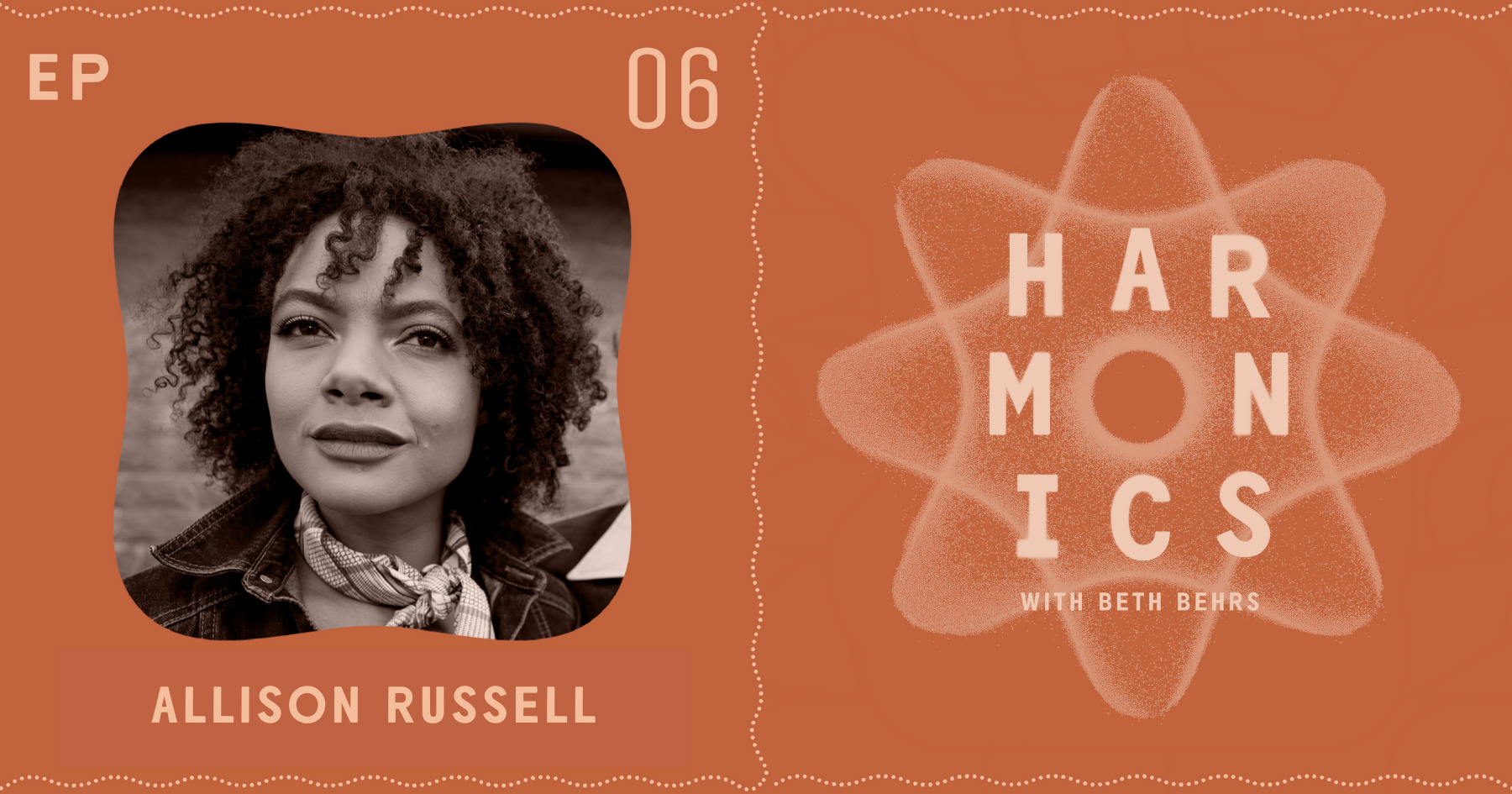
Allison Russell is one half of acclaimed roots music duo Birds of Chicago, with her husband JT Nero, and a member of Americana supergroup Our Native Daughters.
Editor’s Note: This episode contains intense and honest descriptions of trauma that may be triggering to some listeners. While there is nothing directly explicit in the content, listener discretion is advised.
Born and raised in Quebec, Allison Russell survived a traumatic childhood, teaching herself various instruments as a way to cope before eventually finding her voice within the Vancouver music scene. On this episode of Harmonics, Russell talks with host Beth Behrs about those traumas, the healing power of music and artistic community, the history of the banjo, the intersectionality of the honest conversations currently being had in our culture, and much, much more.
In addition to her career with Birds of Chicago, Russell is one quarter of Americana supergroup, the Grammy-nominated Our Native Daughters, with Rhiannon Giddens, Amythyst Kiah, and Leyla McCalla, and is preparing to release her first solo album. She and JT Nero live in Nashville with their daughter.
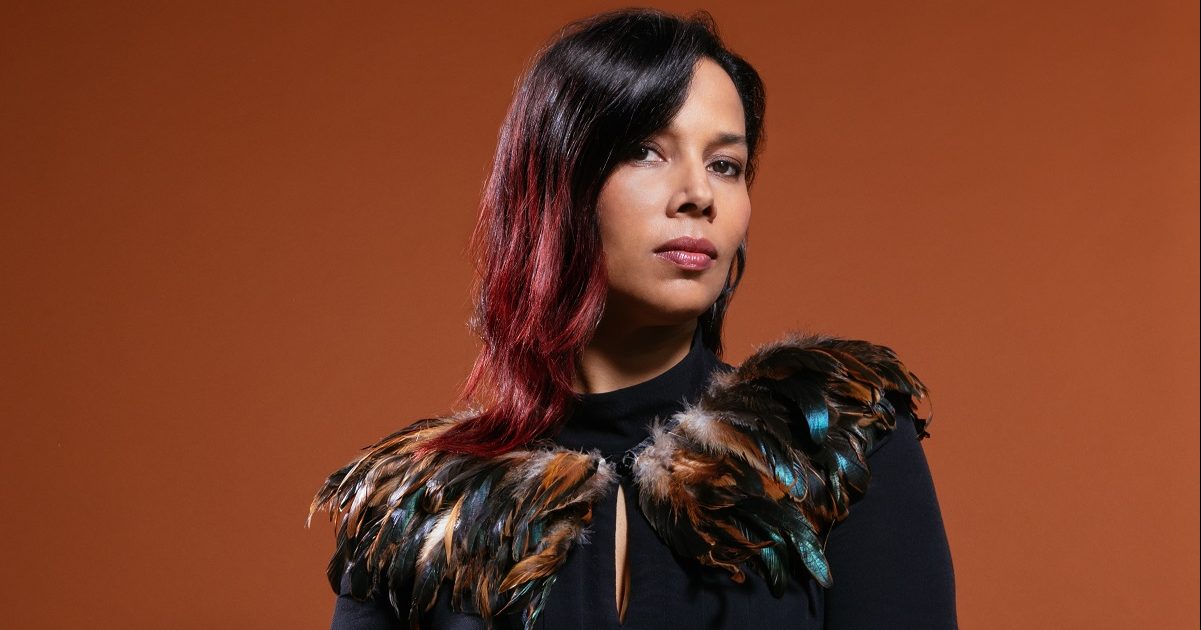
Artist:Rhiannon Giddens Hometown: Greensboro, North Carolina Song: “Don’t Call Me Names” Release Date: August 23, 2020 Label: Nonesuch
In Their Words: “The framework in the song is a love affair, but it can happen in any kind of connection. The real story was accepting my inner strength and refusing to continue being gaslit and held back; and refusing to keep sacrificing my mental health for the sake of anything or anyone.
“I don’t often write personal songs but this one has stayed with me — it poured out then and has just sat there waiting for the right time. I got a chance to do it with some incredible musicians and a fabulous producer and I’m thrilled it’s going to be out in the world; when I listen to it, the anger that I felt then is the anger I feel [now] at my entire country being gaslit, held back, and sacrificed. We have to keep saying NO to toxic behavior, no matter how small or large the stage, and keep saying it nice and loud.” — Rhiannon Giddens
Artist:Dirk Powell Hometown: Lafayette, Louisiana Song: “I Ain’t Playing Pretty Polly” (with Rhiannon Giddens) Album:When I Wait for You Release Date: September 4, 2020 Label: Compass Records
In Their Words: “I grew up playing and singing ‘Pretty Polly.’ I was really proud to have learned a unique version of it in the ‘overhand’ banjo style from my grandfather in Kentucky. One evening I was singing it during a soundcheck and heard the words ‘he stabbed her through the heart and her heart’s blood did flow’ coming out of my mouth… and I just stopped cold in the middle of the verse. I thought about my grandmother, my mother, my daughters. I thought about pervasive violence against women and the way men are given the bulk of the story in songs like these, and often some kind of twisted romantic glory or sympathy, and I said to myself, ‘I’m never singing this song again.’ I will not give any more energy to the stories of men who hurt, abuse, and kill women. Period.
“For some people, there are complexities — some say the songs are a needed warning to young people, or just dramatic tales, or that tradition trumps looking at them this way. But, for me… I’m just never singing them again. I’m done. I’ve seen the looks of hurt and confusion on my daughters’ faces when violent words like these are accepted or brushed aside. And I’ve seen fear in my grandmother’s eyes as she gave warnings to my sisters about men. Instead, I choose to sing, as I do here, about women like my Aunt Myrtle and men like my Uncle Clyde, who were together from the 1930s to the 2000s. Their relationship was full of love and sweetness and gratitude and respect. Those are the stories I actually know, from my own life, and those are the stories I’m going to tell.” — Dirk Powell
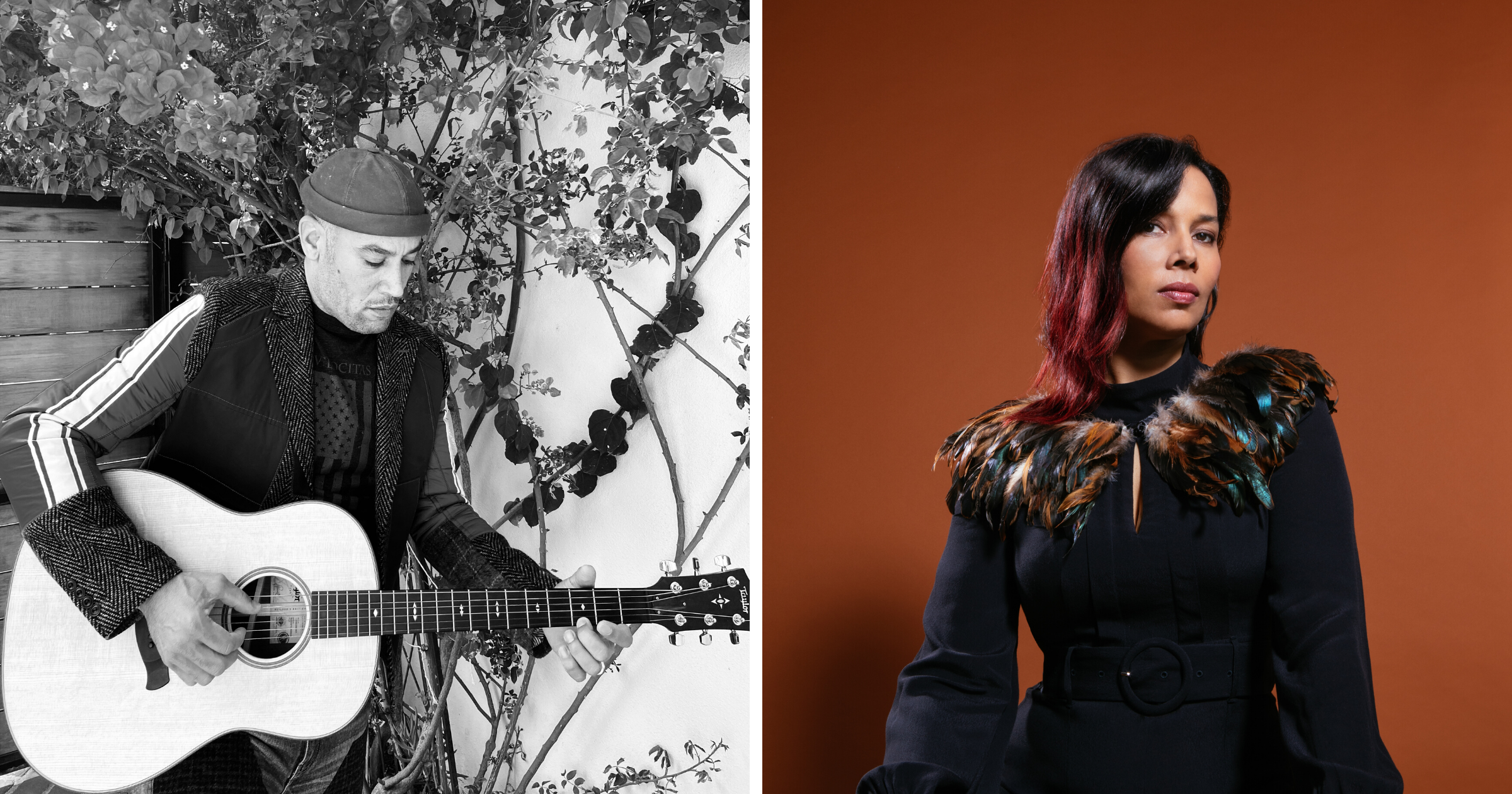
Artists:Ben Harper and Rhiannon Giddens Single: “Black Eyed Dog” (by Nick Drake) Release Date: July 21, 2020 Record Label: ANTI-
In Their Words: “Rhiannon and I are both black purveyors of American roots music, and while this is not an anomaly, it is an exception within a subculture. We have unquestionably tapped into the same creative well of influence, carrying on the tradition through our own individual instincts and perspectives. … I’ve always wanted to cover ‘Black Eyed Dog,’ but the song was intimidating in its haunted perfection. Only through collaborating with Rhiannon would I have ever attempted it. When I step back from it, this collaboration should’ve happened long ago, but I’m thrilled that it’s finally here.” — Ben Harper
“I’ve been hearing and hearing about Ben Harper for a long time, but had never gotten to meet him until recently at an event in LA and I was immediately struck by a kindred spirit. Didn’t have as much to do with the kind of music we play, although we share many, many commonalities as black folk playing roots music, but more to do with the spirit that we access when we play it. I felt that spirit in him right off and knew if we ever got the chance, we could make something beautiful together.” — Rhiannon Giddens
Photo of Ben Harper: courtesy of the artist. Photo of Rhiannon Giddens: Ebru Yildiz
In the past, supporting musicians, writers, and creators meant going out to shows, buying drinks at venues, volunteering at festivals, and so much more. But music fans and supporters around the globe are finding new ways to show up for the folks who supply the soundtracks to our lives.
States and local jurisdictions may be loosening coronavirus lockdown restrictions, but the numbers are still very clear. Memorial Day or not, the healthy, safe choice is to just stay distanced, stay apart, and stay on your ass! We’ll continue to bring you a few of our favorite events, livestreams, and COVID-19 coping resources that we’ve scrolled by on our feeds or found in our inboxes each week until that reality changes.
Did we miss something? (We probably did.) Let us know in the comments or on social media!
Rhiannon Giddens Honors Bill Withers, Aids COVID-19 Relief Efforts
In early May, Rhiannon Giddens released a gem from her vault of B-sides and outtakes. Recorded in what she refers to as a “very un-socially distanced time,” Giddens and co. perform a lively tribute to an icon of American music. The release of this cover and music video celebrate the life and music of Bill Withers, while also portraying life in quarantine and raising funds for Global Giving’s Coronavirus Relief Fund.
Like many of his other hits, Withers’ “Just the Two of Us” has an infectious cheerfulness that, especially when juxtaposed with images of quarantine and sheltering in place, can brighten any day. Giddens explains, “When Bill Withers passed, we suddenly remembered we had made this beautiful [cover]…So whether it’s just the two of us, or just a few of us; whether the lockdown has been for months or it’s about to be lifted; COVID-19 is here for the foreseeable future, and the more we can be alone together now, the better the future will be.”
Whiskey Sour Happy Hour Concludes
Our month-long online variety show came to a close last night with a surprise bonus episode featuring performances from past WSHH performers like Billy Strings, Valerie June, Rodney Crowell, and more. Last week, for the superjam of our final “official” episode, our cast of pickers pulled off this incredible cover of “The Weight,” a perfect finale for the series.
It’s been an incredible journey building and sharing these shows with all of you over the past few weeks, but the fun isn’t quite over yet. We’ve left all episodes of Whiskey Sour Happy Hour online so we can continue raising money for MusiCares and Direct Relief, two organizations leading the charge with critical support for musicians and front line responders facing this crisis.
Over your Memorial Day weekend, why not binge the whole show, enjoy world-class songs and comedy, and if you can, give a little to support the cause, too? Watch all episodes and donate here.Our friends at Direct Relief have been working ceaselessly since the advent of this pandemic to supply personal protective equipment to front line responders. Watch this brief video that captures the importance and the magnitude of the work they’re accomplishing.
California Bluegrass Association Says to “Turn Your Radio OnLINE”
Founded in 1974, the California Bluegrass Association is one of the oldest and largest bluegrass associations in the world, with over 2,700 members. They produce events throughout the year, including the jewel in their bluegrassy crown, Father’s Day Bluegrass Festival, held every Father’s Day weekend in Grass Valley, CA since just a year after the organization’s inception.
This year, the festival has canceled all in-person programming, asking bluegrass fans in California and around the world to turn their radios “OnLine” to take part in music performances, live interviews, online interaction, and so much more, featuring artists such as Tim O’Brien, Laurie Lewis, Molly Tuttle, Lonesome River Band, Special Consensus, Joe Newberry & April Verch, and others.
The webcasts will be accompanied by an online auction to raise funds for the CBA’s newly announced COVID Artist Relief Fund. Items being auctioned include fine acoustic instruments, books, music lessons, historic bluegrass memorabilia, and items of interest from popular musicians.
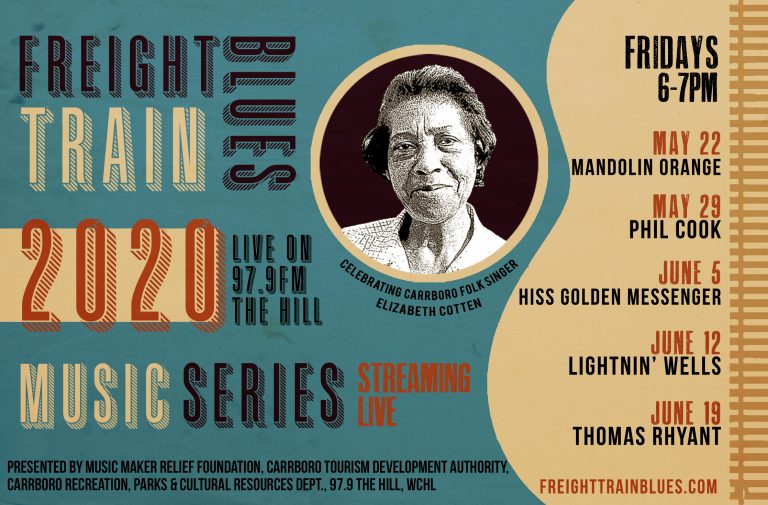
Music Maker Relief Foundation’s Freight Train Blues 2020
Our friends at the Music Maker Relief Foundation, the Hillsborough, N.C. based nonprofit whose mission is to promote and preserve American musical traditions by partnering directly with elderly musicians, have announced their 2020 music series, Freight Train Blues. The event, which ordinarly takes place at Carrboro Town Commons in Carrboro, NC, will now be broadcasted on Facebook, YouTube, and by WCHL 97.9FM out of Chapel Hill.
Featuring performances from Phil Cook, Mandolin Orange, Thomas Rhyant, and more, Freight Train Blues celebrates the life and legacy of Piedmont blues legend Elizabeth “Libba” Cotten, a pioneer in bluegrass, old-time, and blues and whose songs have left an indelible mark on all of American roots music.
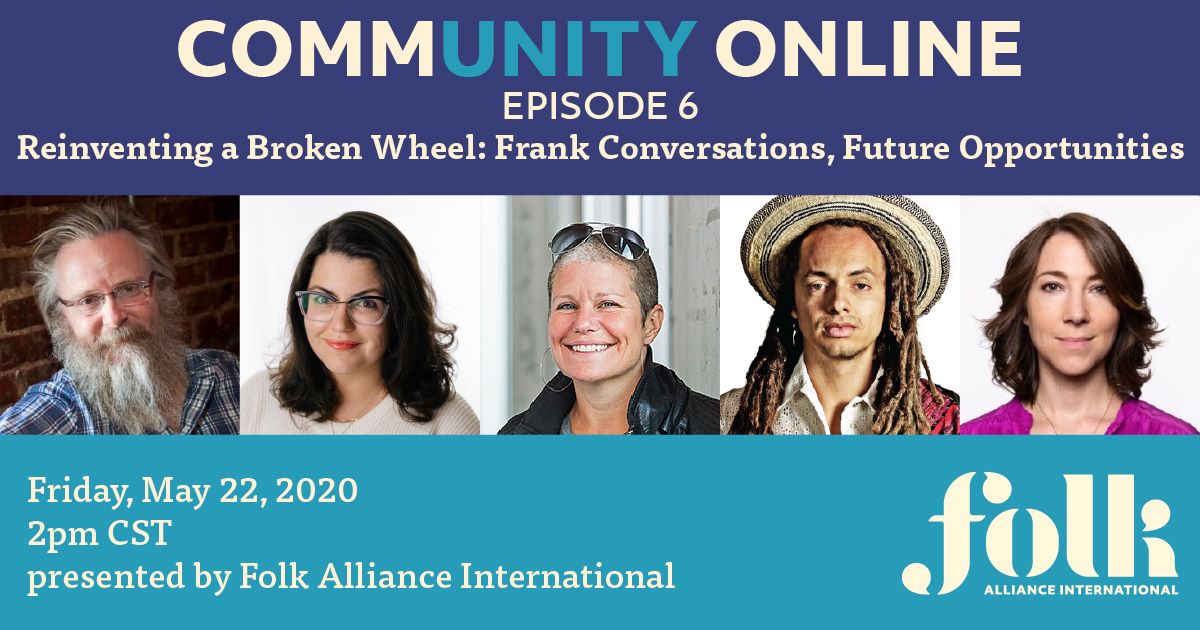
Reinventing a Broken Wheel – Frank Conversations, Future Opportunities
BGS co-founder and executive director Amy Reitnouer Jacobs will moderate the sixth session in Folk Alliance International’s “CommUNITY Online” series of sessions and panels on Friday, May 22 at 2pm CDT / 12pm PDT. Joined by David Macias (Thirty Tigers), Erin Benjamin (President/CEO Canadian Live Music Association), Enrique Chi (artist/activist), and Megan West (Facebook/Instagram) this group of industry experts will discuss, identify, and explore opportunities to innovate, pivot, and move the industry along in new directions. We each have a role to play in constructing our “new normal” — from immediate action to big picture initiatives, this conversation promises to be inspiring, provocative, and realistic.
As the enormous, ever-turning wheels of the music industry ground to a halt and the coronavirus crisis first came to a head, BGS co-founders Amy Reitnouer and Ed Helms were already brainstorming what would become the Whiskey Sour Happy Hour.
“MusiCares felt like a really natural fit,” Helms told the Recording Academy in a recent interview. “I hosted their gala a couple of years ago. I’m a big fan of that organization. And then more directly on the medical front, Direct Relief was also just a no-brainer because they’re doing incredible work [to make] sure frontline workers are properly protected and supplied.”
The mission was pretty simple: Support the music industry and our BGS family, while also bolstering first line responders doing the difficult, vital work of fighting this virus in hospitals and clinics across the country and around the world.
Here’s the great thing — although the show concluded on May 13 with a no-holds-barred, star-studded finale show, each episode is still available for viewing right here on BGS (as well as on our YouTube channel). Why? Because we’re still raising money! At this point, our generous fans, listeners, and supporters, have given more than $54,000, so we’re keeping Whiskey Sour Happy Hour online until May 25 to give you the chance to not only rewatch and experience these wonderful shows, but also to give you the chance to contribute, if you can. Your gift will be split half and half between MusiCares’ COVID-19 Relief Fund and Direct Relief.
DONATE HERE! And as you do, you can also check out each of the four prior episodes of Whiskey Sour Happy Hour below! No donation is too small in making a difference, any amount helps:
Our inaugural episode got off to a bit of a rocky start when our entire website CRASHED because you turned out in such huge numbers. An excellent problem to have. We’re all in this socially distant boat together, aren’t we?
So, we weathered the technical difficulties, exercised patience, and landed with a gorgeous, heartfelt, and tender first episode — complete with a surprise appearance by comedian and actor Jenny Slate (who has been visiting a pet cemetery a lot during her confinement) and a mother/daughter duet of “Keep On the Sunny Side” by modern country queen Lee Ann Womack and her Americana rocker daughter, Aubrie Sellers. Fresh off the release of Fiona Apple’s critically acclaimed pandemic-perfect album, Fetch the Bolt Cutters, producer Davíd Garza played us a little number, too.
Between Watkins Family Hour dueting through a window (rockin’ the at least six-feet-apart rule!), cartoonist Matt Diffee’s dry, dry goods, Yola’s undeniable effervescent power, and our ringmaster Ed Helms choreographing the entire thing, Episode 1 was the perfect first effort for WSHH.
Episode 2:
April 29 brought a much less dramatic downbeat, as Episode 2 kicked off just as planned — and with a cameo from a very stern, nocturnal friend. Who we miss very dearly, already.
Ed may have seemed a little enamored with Texan piano man Robert Ellis’ robe, but we all were so who can blame him? Julian Lage and Margaret Glaspy massaged every last strand of tension from our weary bodies and ears with two simple, resplendent duets together, a rare treat that may not have happened if it weren’t for good ol’ shelter-in-place. Raw, virtuosic, genius musical talent was on display by mandolinist Sierra Hull, Americana godfather Rodney Crowell, and Ed’s buddy Ben Harper — who may have elicited a few tears with a John Prine tribute we all needed badly at that point.
The comedy was not in short supply either on week two, viewers found themselves temptingly influenced by Nick Kroll and given a literally unbelievable bicycle tour by Rob Huebel.
Episode 3:
It felt like we really hit our stride on episode 3, packing in so many incredible performances there simply wasn’t a single frame to trim. With that being the case, right off the bat the show went zero to sixty with Avi Kaplan’s booming, resonant baritone melting all of us. Aoife O’Donovan called upon her husband, cellist Eric Jacobsen, and their housemate, Eric’s brother Colin Jacobsen, to form an impromptu trio of guitar, cello, and violin. It was the perfect make-do, isolation arrangement for “Red and White and Blue and Gold.”
Now, if you hadn’t tuned in specifically to catch the cameo of Jerry Douglas’ three matching katanas, you may have tuned in for one of the most prolific and well-loved comedians of the past decade or so, Jim Gaffigan. Ed and Jim spend some time catching up, talking about life in the time of COVID-19, and sharing laughs, too.
The evening was capped off by Rhiannon Giddens and Francesco Turrisi doing what they do best, reminding us that the world is much smaller and we are all much more connected than we’re often led to believe. Who else besides Rhiannon would you want to hear cover Bessie Jones’ rendition of “O Death” right now? Exactly. No one.
Episode 4:
We truly did not intend to “save the best for last,” because this is a how-could-you-ever-pick-a-favorite-child situation, here. Somehow, though, we landed in week four with an absolutely stacked, jaw-dropping lineup. Stephen Colbert stopped by — on his BIRTHDAY of all days — to visit with Ed. Yes, Broccoli Rob and the ‘Nard Dog are on speaking terms. But that wasn’t the only way The Office permeated episode four,as the Indigo Girls also shared a song with the Whiskey Sour Happy Hour audience. It may not have included Jim Halpert and Andy Bernard tipsily singing along with “Closer To Fine,” but it was just as good, watch for yourself to confirm.
This music was filled with sexual energy, it could replace the generic Viagra or any other medicine.
The Banjo House Lockdown crew of Béla Fleck and Abigail Washburn made an appearance, Molly Tuttle once again wrestled a six-string into submission with her otherworldly clawhammer technique, Rosanne Cash covered Bob Dylan, Chris Thile brought in Bach, Buffy Sainte-Marie sang to us from the jungle of Hawaii — need we go on!?
Yes, actually, we do. Because as Bryan Sutton, Gabe Witcher, and Ed jammed a bit on the bluegrass tune, “Billy in the Lowground,” who should show up but… KENNY G!
That’s right, the king of sexy sax blazed through a solo on “Billy in the Lowground” and proceeded to trade bars with Bryan, Gabe, and Ed before sitting down for a chat. That wouldn’t have been satisfactory in and of itself, though, so Kenny played us an original before bidding adieu as well. Please have your lighters ready for waving at that selection, entitled, “Loving You.”
To cap off an already inconceivably perfect series, Ed, Gabe Witcher, and a host of our WSHH friends wrangled us a superjam. Admit it, you knew we would! Where the BGS team gathers, there a superjam will also be. Chris Eldridge, Madison Cunningham, Robert Ellis, Sierra Hull, Noam Pikelny, and so many others joined in on “The Weight.” There may have been a tear or two among viewers when the women of I’m With Her came on screen together in their matching yellow jumpsuits, but how could we ever confirm that?
Bonus Episode:
We just had to give y’all a bonus episode!
Our back-by-popular-demand show featured extra performances and footage from artists who had already graced the Whiskey Sour Happy Hour lineup including: Watkins Family Hour, Madison Cunningham, Buffy Sainte-Marie, Davíd Garza, Matt the Electrician, Valerie June, Ben Harper, Billy Strings, and Rodney Crowell.
Billy Strings played us a bluegrass gospel classic via one of his (and our) heroes, Doc Watson. Ben Harper treated all of us to a heartstrings-tugging rendition of an original, “Never Needed Anyone,” which was recorded by Mavis Staples on her most recent album, We Get By. And Rodney Crowell closed out the show with a dramatic solo performance of “Highway 17.” An extra week of music, an extra week of generosity, and an extra week of sharing WSHH with all of you!
Whiskey Sour Happy Hour has been a resounding success thanks to all of the artists, musicians, and creators involved, thanks to our generous supporters, thanks to the hardworking team who built it, but especially thanks to you for tuning in and for giving. (Which you can still do, by the way. Right here.)
While we as an industry face the most uncertain times to befall our community in our lifetimes, it’s comforting to have gathered with all of you for the past four weeks to enjoy this show, while taking direct action to lift up those around us and those fighting COVID-19 every day. Thank you for being a part of Whiskey Sour Happy Hour!
Special thanks to our sponsors: the Americana Music Association, TX Whiskey, and Allbirds.
Read the April 15 announcement:
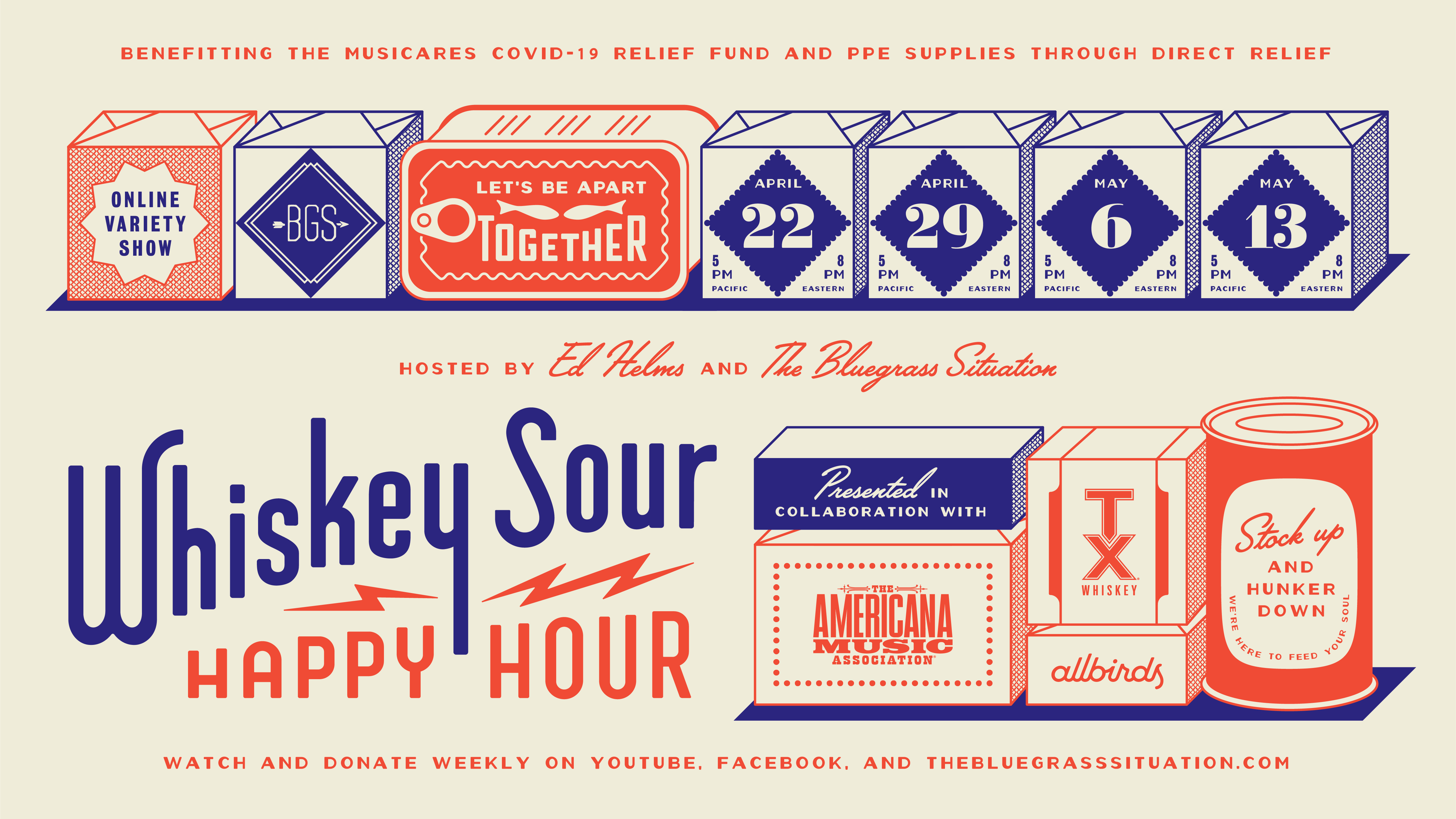
The BGS team and our co-founder Ed Helms are excited to announce Whiskey Sour Happy Hour, a 21st-century online variety show to benefit MusiCares’ COVID-19 Relief Fund and Direct Relief. Debuting on April 22 and presented in partnership with the Americana Music Association, TX Whiskey, and Allbirds, new editions of the event will be broadcast each Wednesday for the following three weeks — April 29, May 6, and May 13. The shows begin at 5 pm PT/8pm ET.
With Helms serving as host of the series, Whiskey Sour Happy Hour will draw on his long-running Whiskey Sour Radio Hour shows at LA’s Largo to bring world-class music, comedy, and interviews directly into homes across the country and world.
The premiere edition of Whiskey Sour Happy Hour on April 22 will feature music from Lee Ann Womack, Aubrie Sellers, Billy Strings, Davíd Garza, Yola, Watkins Family Hour, and Madison Cunningham — plus an appearance by cartoonist and humorist Matt Diffee.
Whiskey Sour Happy Hour can be streamed right here on The Bluegrass Situation, as well as on our YouTube channel. Other confirmed guests for the series include Chris Thile, Yola, Billy Strings, Sarah Jarosz, Rhiannon Giddens & Francesco Turrisi, Rodney Crowell, Aoife O’Donovan, Robert Ellis, and our current Artist of the Month, Watkins Family Hour. Additional artists will be announced in the coming weeks.
“As soon as we realized the severity of the current crisis, Ed and I both knew we had to do something to support both our musical and medical community—and not just a one-time thing, but something that could promote more sustained giving through multiple shows,” says BGS co-founder Amy Reitnouer Jacobs. “In a short amount of time, our BGS family of artists has come together in such a big way to make this happen. It makes us feel like even though we’re all separated right now, we’re closer than ever before.” Fans will be able to donate to MusiCares and Direct Relief here, as well as via links provided wherever viewers watch the show.
In addition to supporting Whiskey Sour Happy Hour, TX Whiskey has already stepped up their efforts to combat the COVID-19 pandemic, shifting 100% of their production to making hand sanitizer. As of March 31, the TX team has produced 800 gallons of hand sanitizer for government agencies. With more raw materials inbound, TX Whiskey is currently positioned to make and bottle 5000 more gallons of sanitizer. On top of that, TX Whiskey continues to support local musicians by giving them an online stage and revenue generator through their Straight From the Couch Sessions— streaming every Friday night in April on IGTV.
Also a presenting sponsor for Whiskey Sour Happy Hour, Allbirds have been working hard to lift up the healthcare community responding to COVID-19, having already donated $500,000 dollars worth of shoes to healthcare workers nationwide. While supplies last, customers are able to bundle any shoe purchase with a donation to immediately supply a pair of Wool Runners to a healthcare professional who’s already reached out to Allbirds for support. Don’t need a new pair yourself, but still want to help? That’s an option, too.
Special thanks to the Americana Music Association for their partnership and support.
In the past, we’ve been pretty much adamant in our command to GET. OFF. YOUR. ASS. Supporting musicians, writers, and creators means going out to shows, buying drinks at venues, volunteering at festivals, and so much more — except… not right now.
So here’s what you can do to help the music business — and all of your favorite hard-working, paycheck-to-paycheck artists. Just stay on your ass! Each week, we’ll round up a few of our favorite events, livestreams, and COVID-19 coping resources that we’ve scrolled by on our feeds or found in our inboxes.
Did we miss something? (We probably did.) Let us know in the comments or on social media!
Julian Lage and Margaret Glaspy Live From Home
Julian Lage and Margaret Glaspy grace the camera in this very special performance for the updated and socially distant “Live From Home,” Live From Here with Chris Thile’s response to the COVID-19 crisis.
The sincerity and sweetness of the performance jumps through the screen as the two gifted artists shine together, singing an original song called “Katonah.” A song for the times, it’s sung from the point of view of a person who is fixed at home in deep thought, wondering about another — who is by no means bound to the narrator. Just as the lyrics lead the listener to wonder, Lage echoes with melodies that are equally comforting and ponderous.
Perhaps a highlight in the video comes when the two are finished performing; listening as the final notes ring, they look to one another and share a satisfied, slightly surprised smile. It’s moments like these that can surpass the space between camera and screen and connect music to audiences anywhere.
Pitchfork walks musicians and music industry folks through one of several economic relief packages and the specific ways by which it attempts to aid freelancers and those in the gig economy — but record stores, labels, venues, and other types of businesses in these spaces as well. Read more here.
On Monday, April 6, the Recording Academy will host a webinar that will provide facts and resources for those navigating this relief package — the CARES Act — as well.
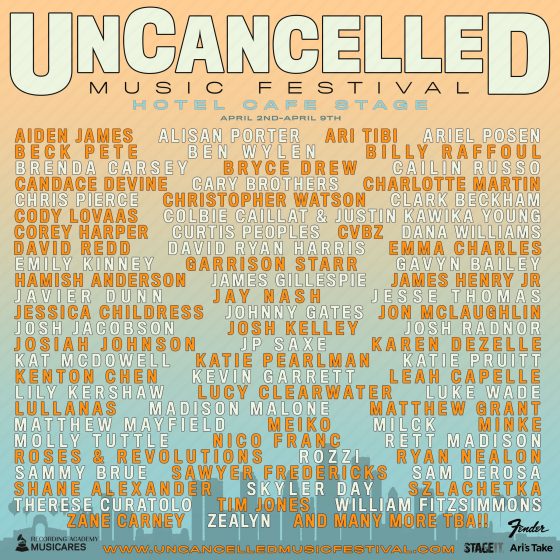
Our friends at storied Los Angeles roots music venue the Hotel Cafe will have a dedicated stage as part of the UnCancelled Music Festival through April 9. Hosted on StageIt, the event will bolster Hotel Cafe as they support their staff, their community of artists, and the music community at large through gifts to MusiCares’ COVID-19 relief fund.
Another excellent collection of resources, the Artist Rights Alliance is an artist-run non-profit advocating for musicians, performers, and songwriters in the digital landscape. Arts and music-based organizations are especially important in this time, as they often have a more holistic understanding of the particular needs of these communities; on their list you can find resources for addiction recovery and care, tips for keeping busy, a guide for ethical gig cancellations, and so much more.
After more than 46 years, the plucky, resolute bluegrass venue that refused to fall to development, condominium complexes, and boutique hotels has “turned the lock” because of the novel coronavirus. After a couple of weeks of ongoing broadcasts on their new Station Inn TV platform, with the proceeds going toward the working musicians on each show, the team at the little stone building in Nashville’s Gulch neighborhood has decided to shut it down. Good news, though! Given their backlog of Station Inn TV content, they will continue rebroadcasting past shows online — on their website and Facebook page. In a time when we need bluegrass more than ever, we hope you’ll tune in and support this iconic home for bluegrass and the bands who make it.
We returned to the archives of our podcast, The Shift List, for a conversation with Chef Edward Lee, who is now leading the charge across the country to support our food service and hospitality workers — who have been disproportionately impacted by COVID-19 restrictions and closures. Listen to the episode and find out more about how to help here.
Created by artist Rhiannon Giddens, and in collaboration with Amanda Palmer and Neil Gaiman, Art is Alive connects fans to artists in a stay-at-home climate. Described on their website, “Art is Alive is a solidarity effort aimed at providing resources, spreading awareness, and building connectedness within the artistic and creative freelance communities impacted by the 2020 COVID-19 pandemic.”
We’ve all seen, in just a few short weeks, how frenetic, disorganized, and piecemeal the response has been to this crisis and its ripple effects, especially in the music industry. Art is Alive attempts to put as much of these puzzle pieces together in one place, a sort of leave-a-penny, take-a-penny hub for those interested in navigating all of this uncertainty together. Find resources, find artists, and find music streaming right here.
Justin Hiltner and Jonny Therrien contributed to this article.
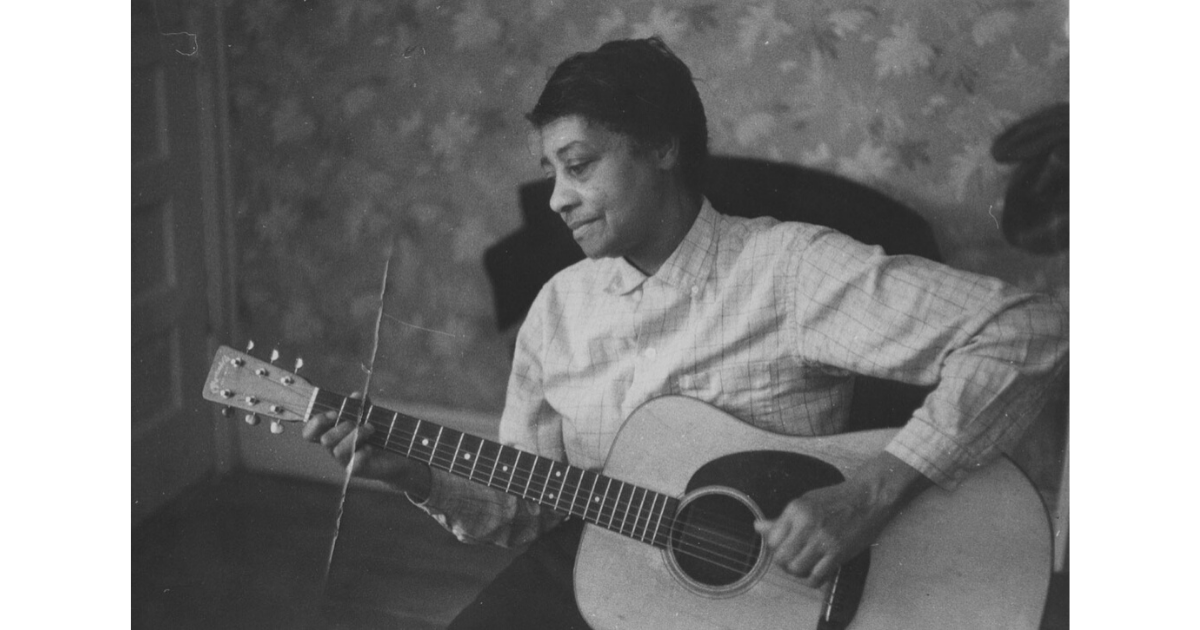
At age 9, in 1904, she quit school to work as a maid. A song she wrote at 11 became a folk classic. She married at 15. She made her first recording at age 62. And she won her Grammy at age 90.
Even the best novelist would be hard-pressed to create a more remarkable heroine than Elizabeth “Libba” Cotten. From the time she sneaked into her older brother’s room and flipped his banjo over so she could play left-handed, Elizabeth broke rules and boundaries.
Her legacy song, “Freight Train,” written at age 11, is among the most loved in folk music. Her left-handed, finger-picking guitar style — an alternating bass with her index finger and melody played with her thumb — is much emulated. She was immensely talented, creative, and wicked funny. For a great example of her humor, listen to Cathy Fink and Marcy Marxer talk about a chance encounter at the Toronto Folk Festival.
While Elizabeth was raising her daughter, she rarely played outside her home — and only at church. But a chance meeting much later in life led her to become one of the most revered names of the folk revival. While working at a department store, she befriended a frightened little girl who had become separated from her mother. The little girl was Peggy Seeger. Peggy’s mom, Ruth Crawford Seeger, almost immediately invited Elizabeth to work for the family as a domestic.
Ruth was a composer and teacher, her husband Charles created the field of ethnomusicology, but it was Peggy who first heard Elizabeth playing one of the family’s guitars. As a family that studied and documented traditional music, they were delighted to hear the music Elizabeth carried from her North Carolina home. Their son, Mike Seeger, a folklorist and musician, began recording her singing and playing. They released her first album in 1958, when she was 62.
Elizabeth became a vitally important figure in the folk revival, performing at the most acclaimed festivals in North America. Her songs and style frequently were covered by others. Artists in the Skiffle movement recorded and claimed credit for “Freight Train,” a big hit in Great Britain (the Quarrymen, John Lennon’s early band, used to perform it). With the Seeger family’s help, Elizabeth got the copyright in her name.
Her songs have been central to bringing rural southern music to commercial audiences, paving the way for bluegrass as well. Performers as varied as the Grateful Dead and Rhiannon Giddens have recorded her songs, and “Freight Train” is in the repertoire of almost every folk, bluegrass, and rock band on this continent.
It is virtually impossible to summarize Libba Cotten as a person, a musician, or an influence on American music. Her honors are countless. As examples, in 1984, the National Endowment for the Arts declared her a National Heritage Fellow. The Smithsonian Institute declared her a “living treasure.”
Elizabeth performed right up to her death at 94 in 1987. And musicians around the world pay tribute to her daily when they sing “Freight Train.”
This website uses cookies to improve your experience. We'll assume you're ok with this, but you can opt-out if you wish.AcceptRejectRead More
Privacy & Cookies Policy
Privacy Overview
This website uses cookies to improve your experience while you navigate through the website. Out of these, the cookies that are categorized as necessary are stored on your browser as they are essential for the working of basic functionalities of the website. We also use third-party cookies that help us analyze and understand how you use this website. These cookies will be stored in your browser only with your consent. You also have the option to opt-out of these cookies. But opting out of some of these cookies may affect your browsing experience.
Necessary cookies are absolutely essential for the website to function properly. This category only includes cookies that ensures basic functionalities and security features of the website. These cookies do not store any personal information.
Any cookies that may not be particularly necessary for the website to function and is used specifically to collect user personal data via analytics, ads, other embedded contents are termed as non-necessary cookies. It is mandatory to procure user consent prior to running these cookies on your website.


 Founded in 1974,