With Her Banjo and Best Friends, Allison Russell Delivers ‘Outside Child’ (Part 2 of 2)

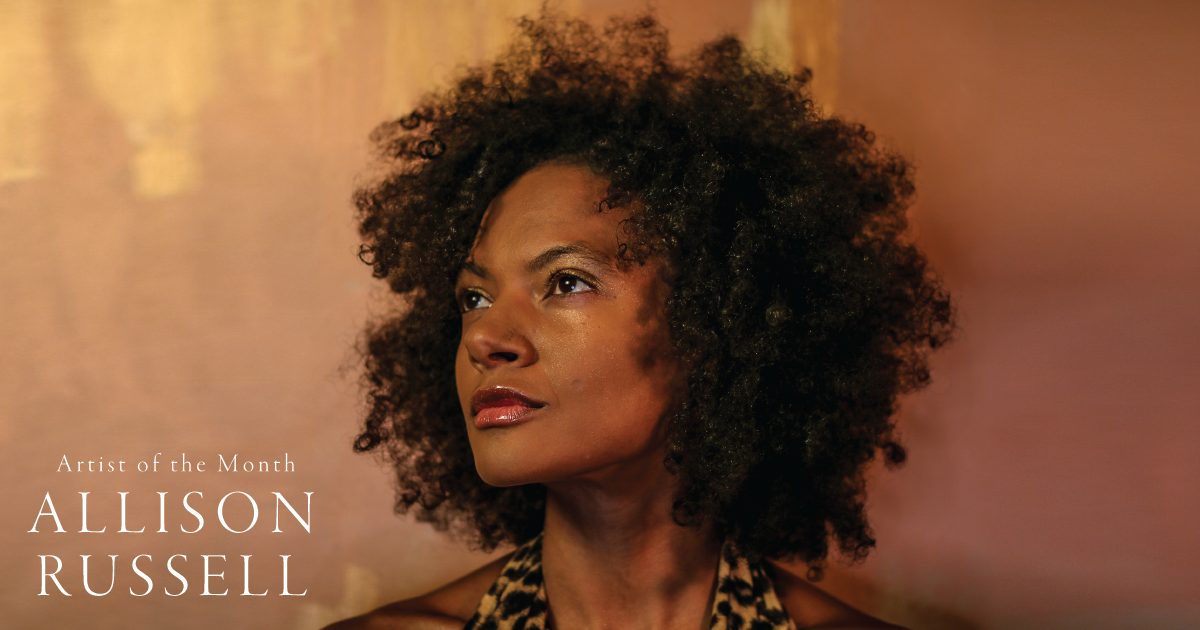
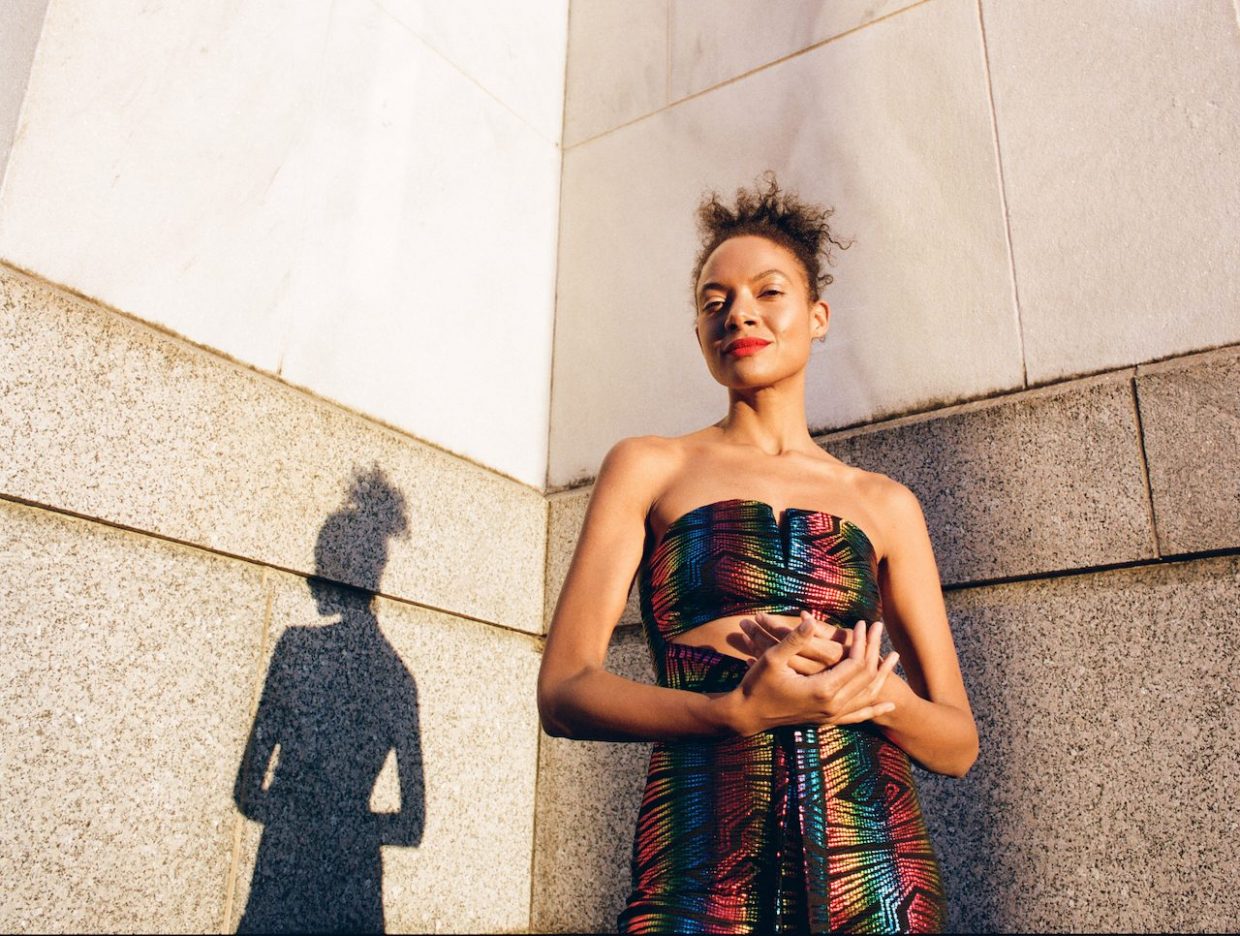
Allison Russell’s first solo album offers an intimate look into her life, yet it’s far more than just her musical vision that elevates Outside Child to one of the year’s most eloquent albums. Working with Dan Knobler in Nashville, she populated the studio with musicians like Joe Pisapia, Jason Burger, Chris Merrill, Jamie Dick, and Drew Lindsay, as well as exceptional guests such as Yola, Ruth Moody, Erin Rae, and the McCrary Sisters. She describes them as her “chosen family,” accompanying her as she shares stories about other families in her life.

Enjoy the second half of our BGS Artist of the Month interview with Allison Russell. (Editor’s note: Read the first half of our AOTM feature here.)

BGS: You can feel that sense of community between the musicians on this record. Can you talk a little bit about what it felt like while you were tracking?

Allison Russell: These songs were recorded in four days. Everything that you are hearing, I sang live with the band. We did it at Sound Emporium Studio A. There’s a lovely, big room with glass doors that you can open up. Everyone was in a semi-circle. It was a magical experience. We would gather in the center of the room and work out an arrangement together and then we would record the song. Most of what you are hearing is the second take. That was sort of when it magically coalesced, when everyone was communing and free flowing.

Dan [Knobler] shares my deep conviction that it is not about perfection. It is about capturing the communication in as honest and as true of a way as you can. That has been my approach ever since working with Joe Henry four or five years ago on a record called Real Midnight. So what you are hearing is a community choosing to come together to uplift these songs. I will be grateful for that for the rest of my life, even if no one ever heard the record. That experience of getting to record that way with chosen family. I can’t imagine a more healing, supportive environment than I experienced.

This is your first solo record and though you’ve made many records with groups, I’m wondering if the feeling of picking the songs and the sounds was different for you as a solo artist?

I don’t know that I really picked them. I think that the songs just poured out. So much of the sound is my community of artists. I would never dream of telling any of those artists what to play. I trust their ears and I trusted Dan Knobler’s ears, who produced the record. And I trusted my own ears too, of course, but really what we did was cast the room with people who we love and trust. What was different is that I’d never worked with Dan before and I trusted him bringing in two of his brothers, Joe Pisapia and Jason Burger to join the family of musical kindred that I’ve been part of. A lot of the artists who played on the record were artists that I’d met over my many years and different projects. …

And then since I moved to Nashville in 2017, I’ve been going to hear the McCrary Sisters and loving them. I really got to know them through Yola, because they formed a friendship at a festival in Scotland and I got to know them through her. I’m a huge admirer of them and their work and their harmonies. I reached out to them thinking I wouldn’t be able to afford them and they were so generous. They came and sang for way less than they are worth and worked within my budget. I was honored that they came. So it was really a matter of casting the room and then letting people shine the way they do.
I read your speech from the [2020] Women’s March [in Nashville]. It is really gorgeous, thought- and emotion-provoking. In it you mention that you are the hero of your own story which is wildly inspiring and important for us all to remember – that there are some things we can save ourselves from. Can you talk a bit about ways in which you save yourself?

I feel like connection with a loving community is what saves me every day. Art and music save me every day. I’ve been a book worm my entire life and I can’t emphasize enough, I don’t think I would have survived my childhood if I hadn’t had the escape of literature. Being able to go into other worlds and other imaginings and literally inside of someone else’s mind and take refuge and find inspiration and comfort and strength. Disappearing into books was the first kind of way that I learned how to try to be brave. It was reading about brave protagonists and people in situations worse than I could imagine. I got very obsessed in my tweens with reading first person accounts of survival of the Holocaust. It put into context what was happening to me, that if people could survive that, then I could survive what I was experiencing.

Being in a community with people that uplift you and see you and value you and you do the same for them, that is life-changing. I have that with my partner J.T. I have that with my sisters in Our Native Daughters. We wrote a whole record together, uplifting each other and bringing forward the perspective of Black women within the diaspora and within the historical record. Our particular demographic is so often left out of any kind of historical record in any kind of first-person way, with agency and lived experience. That has been a source of great strength and resilience.

And then to connect with my ancestors. To delve into all of the history. With all of the intergenerational trauma and abuse, there is also incredible intergenerational strength and resilience and transcendence. The ability to overcome circumstances I cannot even dream of. My many-times-great-great-grandmother Quasheba survived being enslaved. She survived being ripped away from everything she knew, her family and language and home. She survived the horrible Middle Passage. She survived multiple plantations and having her children taken. If she can survive all that, I can get through this.

Do you remember what prompted you to pick up a banjo for the first time?

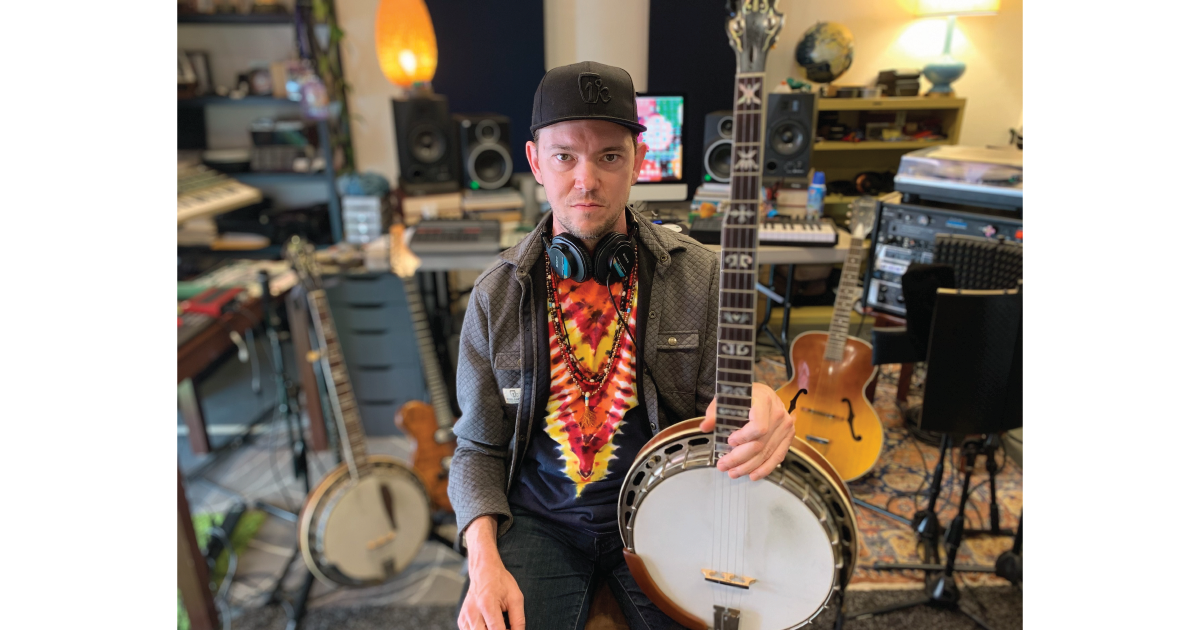
I was in a band called Po Girl, that was my first baby band and the woman I started the band with, Trish Klein, played the banjo. She taught me my first few chords and I just kept playing from there. I met Rhiannon Giddens in 2006 at the Vancouver Folk Music Festival and I was so excited to meet another Black woman that played banjo, because I was the only one that I knew. She told me about the Black Banjo Gathering, which I never got to attend. I’ve met so many dear friends who were a part of that, like Valerie June. All of us in Our Native Daughters play banjo and that has been a deep communion for us.

I think Rhiannon’s minstrel banjo is one of the most beautiful sounds I’ve ever heard. I’ve adapted my little Americana Goodtime banjo to sound as much like that as I can by adding gut strings and a fiber skin head. I’ve modified the bridge a bit to give it that deeper resonance. For me the banjo has allowed me to access my songwriting in a different way. I’ve noticed this over time as I’ve picked up more instruments. Different songs come through on different instruments and now for me, the banjo has become my primary songwriting instrument.

This album is coming out hopefully at the tail end of the pandemic so I’m guessing some of the songs have not been performed in front of an audience yet. Are there songs you are particularly excited about presenting on stage and on the flip side are there songs you are nervous or trepidatious about presenting to an audience?

Basically none of them. Of course I’ve done some virtual performances here and there of a couple of them. But they have not been played live. I am always nervous about everything. I’m just a very anxious person most of the time. But where that stops, usually, is on stage, when I get to be in communion with my fellow artists and with the people who have come to listen. That is very much a two-way exchange. The answer is, I’ll be nervous about all of it right up until the moment we are playing and then I will be in the happiest place I know.

(Editor’s note: Read part one of our Artist of the Month interview with Allison Russell here.)


Photo credit: Marc Baptiste (top); Laura E. Partain (in story)
The BGS Radio Hour – Episode 202

Welcome to the BGS Radio Hour! Since 2017, the Radio Hour has been our weekly recap of all the great music, new and old, featured on the pages of BGS. This week we’ve got music by Charley Crockett, Danny Barnes, Rhiannon Giddens, and more! Remember to check back every week for a new episode of the BGS Radio Hour.

APPLE PODCASTS, SPOTIFY

Charley Crockett – “Lesson in Depression”
After Charley Crockett’s 2020 release, Welcome to Hard Times, we didn’t expect another great record so soon – but here we are! Crockett’s latest, Lil’ G.L. Presents: 10 For Slim Charley Crockett Sings James Hand, is a tribute to his hero, Texas’ James “Slim” Hand, who passed away in 2020.

Reid Jenkins – “Strange Lover”

New York City’s Reid Jenkins brings us a new single from his upcoming project, A Beautiful Start, due in April on Nettwerk. “Strange Lover” explores the tension between avoiding the unknown and being drawn in by the thrill of beauty and discovery.

The Golden Roses – “When I’m Gone”

John Mutchler of the Golden Roses wrote this song after visiting his grandfather’s neglected grave – but it’s more like the song was sent to him. “When I’m Gone” asks the question (while we’re still alive) of whether or not anyone will come and visit us when we’re gone.

Valerie June – “Fallin'”

This west-Tennessee born and Brooklyn-based artist is our March Artist of the Month here at BGS!

Israel Nash – “Canyonheart”

From Dripping Springs, Texas, Israel Nash joins us on a 5+5 this week – that is 5 questions, 5 songs. We talked with “Izz” about everything from nature to songwriting to the larger purpose of his career: to be inspired, create, and inspire others to create.

Andy Leftwich – “Through the East Gate”

The bluegrass world hasn’t heard much from Andy Leftwich since he left Ricky Skaggs & Kentucky Thunder several years back. The fiddler (and overall multi-instrumentalist) just signed a deal with Mountain Home Music Company, and this first single is an excellent sign of what’s still to come from Leftwich!

Danny Barnes – “Awful Strange”

It’s been just over a week since the Grammy Awards, where so many deserving roots artists (and friends of BGS) were recognized for their work with multiple nominations. One who sticks out is Danny Barnes, formerly of the Bad Livers, whose 2020 album Man on Fire garnered a nomination for Best Bluegrass Album. BGS caught up with Barnes from his Northwestern home to talk about the record, his creative methods, and how he’s remained busy during the pandemic.

Drew Holcomb and the Neighbors – “I Need to Go Somewhere”

Drew Holcomb shares a sentiment that is familiar to us all – we need to go somewhere, just anywhere. As the world’s cabin fever continues to grow, the promises of warmer weather, vaccines, and brighter days are ahead. Continue to stay safe, until we can all join Holcomb on that journey.

Greg Loiacono and Jamie Drake – “Bound to Fall”

From Southern California, Loiacono and Drake bring us a song in the spirit of the old heartbreak numbers by artists like Patti Page and the Everly Brothers. Their first duet, “San Felipe,” provided a platform for the writing and recording of “Bound to Fall.” It definitely seems they’re natural collaborators, here’s hoping they keep at it!

Jackson Scribner – “County Rd 497”

Jackson Scribner wrote this song in the front of his grandparents’ house that sits on County Rd 497. It’s about the things we have in our young life that feel like they’ll never go away – but as we get older, life changes, people and places come and go, and there’s never certainty of what comes next.

Williamson Branch – “Which Train”

From their new album Heritage & Hope, family band Williamson Branch brings us a video this week for “Which Train,” a haunting tune about eternal decisions. The all-female harmonies drive that train feel, just like the lonesome whistle.

Rhiannon Giddens and Francisco Turrisi – “Waterbound”

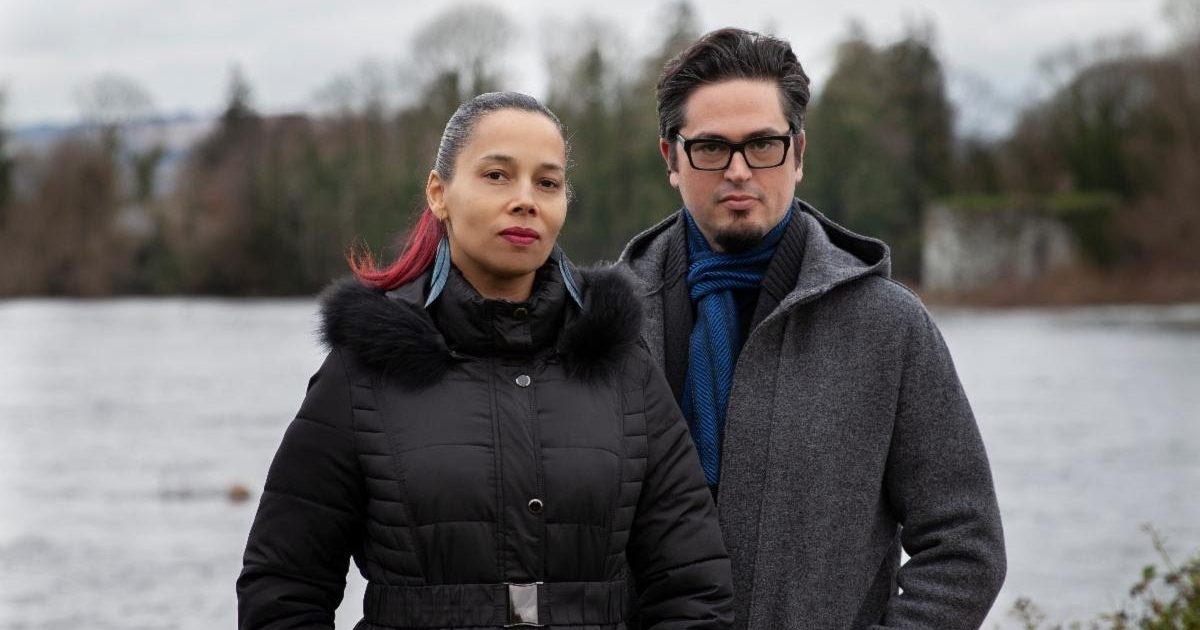
This spring brings about a second collaborative record from Rhiannon Giddens and Francisco Turrisi! The second single, “Waterbound,” is originally from the 1920s, but its lyrics are especially true for Giddens in this day and age, who has spent the pandemic in Ireland, looking across the Atlantic toward her North Carolina home.

Samantha Crain – “Bloomsday”

An Indigenous singer-songwriter from Shawnee, OK, Samantha Crain brings us a song of her upcoming I Guess I Live Here Now EP. “That old traditional gospel song ‘This Little Light of Mine,’ it feels so childlike and so ancient and wise at the same time and it has such a calming effect on me,” Crain told BGS. “I wanted to incorporate that feeling of hope and lightness in with my lyrical explorations of mindfulness and fortitude in my own life.”

Abigail Dowd – “Beautiful Day”

To end this week’s BGS Radio Hour, Abigail Dowd brings us a new single, written while living at various friends’ homes after a flood, while waiting on the city to buy and demolish her own home. Though those days sound bleak, in Dowd’s memory they are gifts of time, as she gives us a reminder to enjoy the moment, and have faith that a brighter day is always coming. There’s a mantra for your Tuesday!


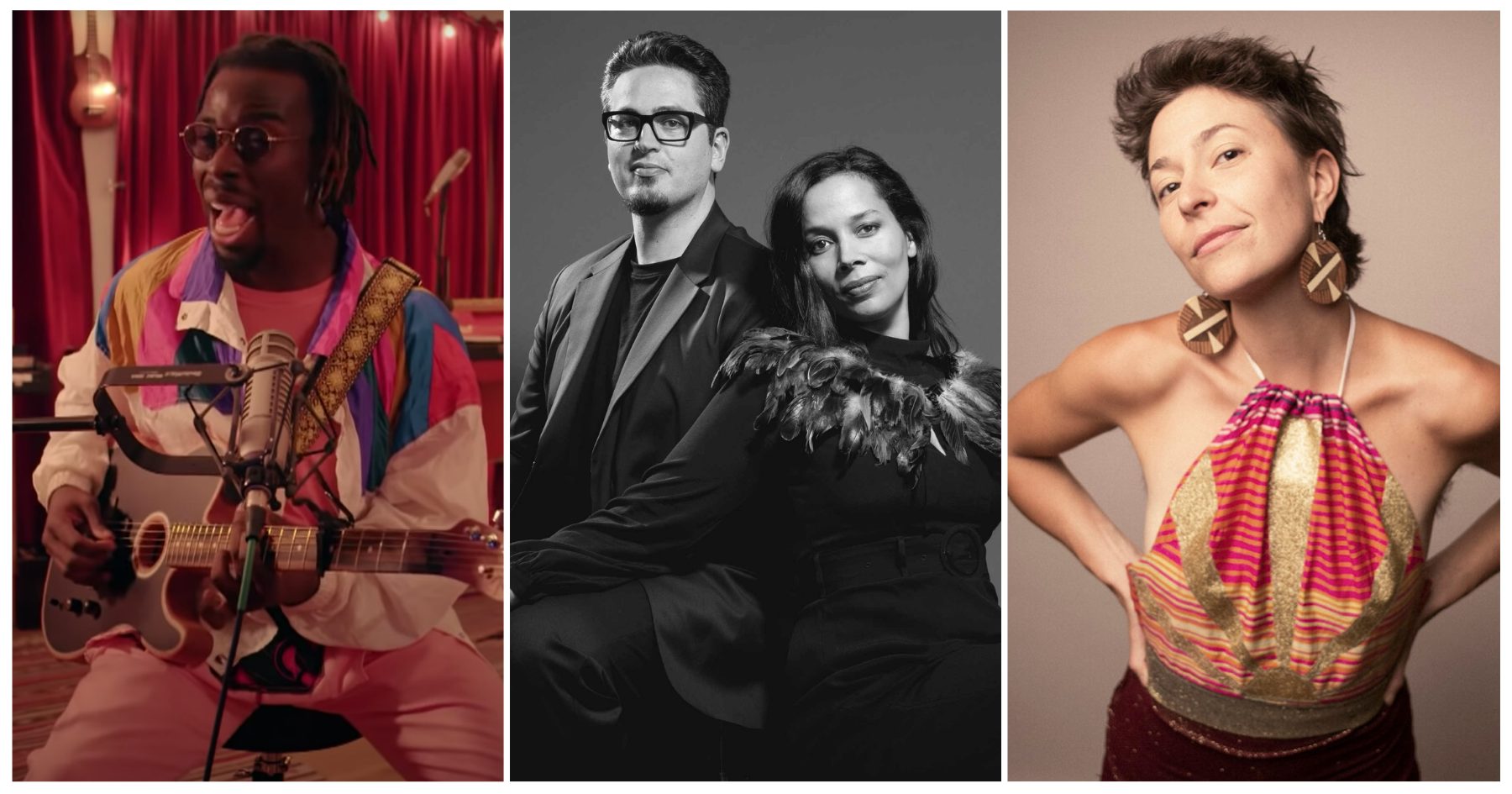
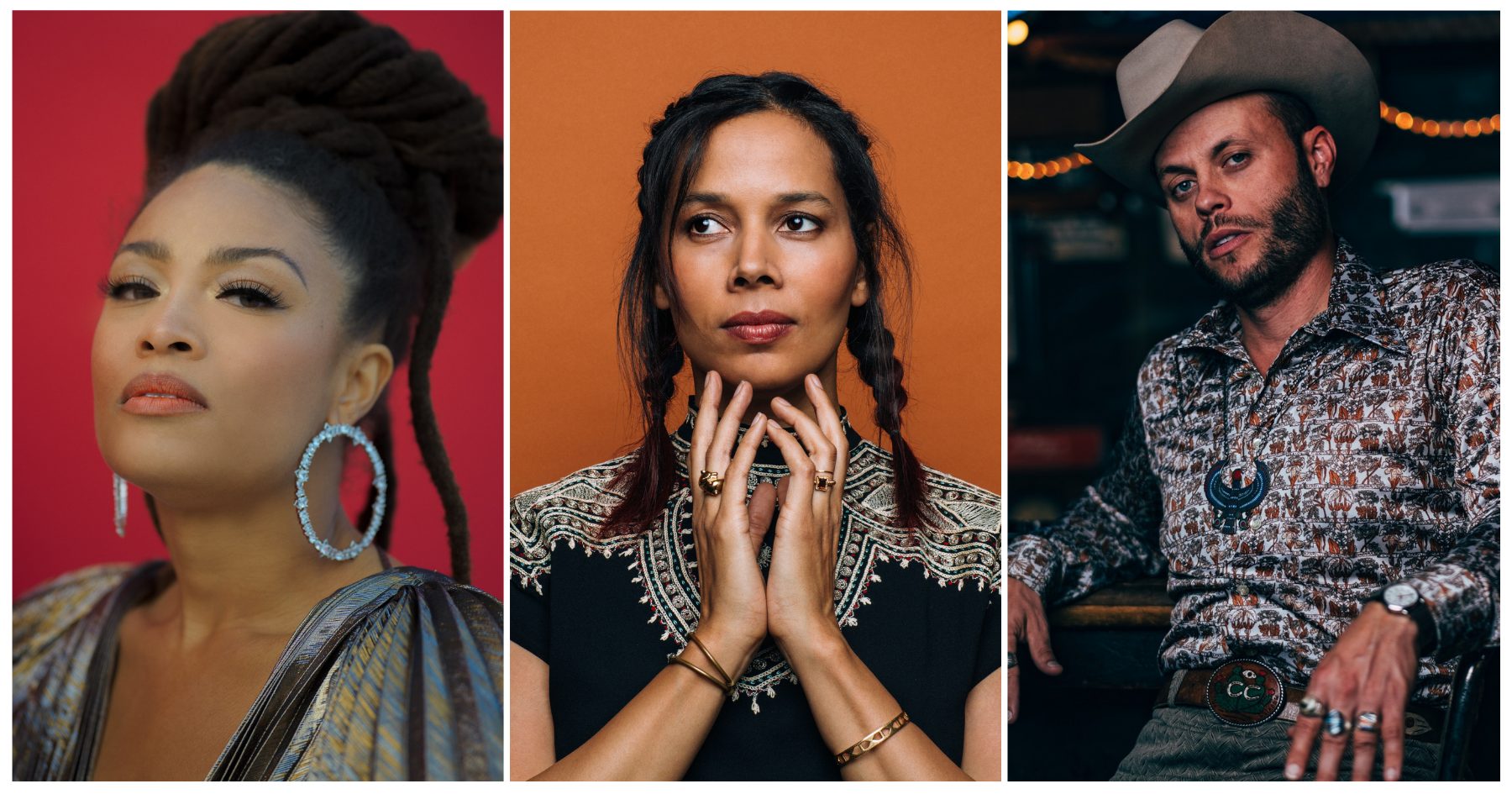
Photos: (L to R) Valerie June by Renata Raksha; Rhiannon Giddens by Ebru Yildiz; Charley Crockett by Ryan Vestil

Rhiannon Giddens Finds a Piece of Home in a Fiddle Tune with Francesco Turrisi

Helping to usher in spring and with it many new beginnings is another album from folk music master Rhiannon Giddens. The second project to come from her magical collaborations with Italian multi-instrumentalist Francesco Turrisi, They’re Calling Me Home is due to be released April 9 on Nonesuch Records. Following the debut of its title track in March, a second single titled “Waterbound” was released, accompanied by a music video, forecasting what is to come from the musical partnership. The song itself is a traditional fiddle tune first recorded in the 1920s that has been a part of Giddens’ repertoire for some time, but its meaning is surprisingly representative of life in lockdown.

About including it on the new release, Giddens said, “‘Waterbound’ is a song I learned a long time ago and it brings me forcefully home to North Carolina when I sing it, and considering that I am, indeed Waterbound, and have been for a long time, it’s a rare moment when a folk song represents exactly my situation in time.” Giddens and Turrisi, who have been living and recording in Ireland during the pandemic, have a direct line to whatever it is about folk and old-time music that makes it so endearing, timeless, and universal. Watch “Waterbound” below:


Photo credit: Karen Cox

Bluegrass is Trance (And Old-Time, Too)

Bluegrass is trance. Old-time, too. 

With a slightly more zoomed out perspective, this fact comes into focus pretty quickly. American roots music and its precursors, especially their string band forms, have been interwoven with dance for eons. Before the advent of recorded music, when the popular musics of the day could often only be consumed by upper classes, dancing and other social group activities were the center places music inhabited. Before radio shaved popular music down into bite-sized, three-minute chunks, the tunes would last as long as necessary to provide a backdrop for a reel, a hornpipe, or a square dance, extending fiddle tunes into ten- to twenty-minute, cyclical, musical meditations. “Turkey in the Straw” as mantra, “Chicken Reel” as a slightly wonky, onomatopoeic sound bed.

Detached from dance, it’s easy to forget that string band music has been designed with trance embedded within its structures. Chris Pandolfi is a banjo player who’s explored quite a bit in trance and trance-adjacent music with the Infamous Stringdusters, a seminal jamgrass band with a level of bluegrass’s technical virtuosity that’s unmatched in all but a select few ensembles in a similar vein. Pandolfi’s new record, Trance Banjo, which was released under his solo stage name, Trad Plus, moves further and further beyond American roots aesthetics, cementing the banjo and its musical vernacular within trance – the electronica variety as well as the age-old, human kind.

Trance Banjo, and tracks such as “Wallfacer” — whose trippy visualizer music video almost cements this article’s central argument — recalls albums by Scott Vestal, or live shows by post-metal shredders like Billy Strings, or experimental, avant garde compositions by cattywompus flattop mashers like Stash Wyslouch. It’s not just a simple coincidence that so many players from bluegrass and old-time backgrounds find themselves dabbling with trance.

John Mailander, a fiddler who’s toured with Molly Tuttle and Bruce Hornsby and has been hired as a side-musician with many a jamgrass-leaning band, is comfortably uncomfortable in a very similar musical realm as Trance Banjo. On an EP of sketches and improvisations released last summer (from the same sessions and experimentations that became his upcoming album, Forecast) Mailander and his bluegrass-veteran backing band play with trance centered on sparseness, vacancy, and negative space in a way that’s engaging and baffling, both. Mailander’s rubric of vulnerable, emotive, and transparent expression as a foundation for improv is key here.

That personal touch, the personality endemic in these trance experimentations, is certainly what makes them most compelling and it must be, at least in part, what ties these songs to the centuries-old tradition of music as meditation. Rhiannon Giddens and Francesco Turrisi make more than just a musical brand of showcasing their personalities and identities in the music they create, it’s more like a mission statement. Giddens has an incredible aptitude for writing and composing music based on empathy and human connection and Turrisi holds expansive knowledge of world folk music and percussion.

Their compositions and collaborations illustrate that, when we connect our music to dance, percussion, and trance, we’re connecting it to thousands and thousands of years of history — of humans of all ethnicities, cultures, backgrounds, and identities, gathering, connecting, sharing, and loving through music, dance, and trance. On stage, Turrisi and Giddens deliberately connect these dots as well, utilizing stage banter to educate their audiences about these exact connections.

While old-time has held onto its penchant for movement and choreography through the generations, bluegrass continues to grow distant from this and many of the other cultural phenomena that gave rise to it. Trance Banjo, and projects like it, while they seem to gleefully run away from what we perceive as “traditional” aspects of these genres, are in many ways guiding us right back to the very folkways that birthed them. 


Photo credit: Chris Pandolfi by Chris Pandolfi

WATCH: Rhiannon Giddens with Francesco Turrisi, “Calling Me Home”

Artists: Rhiannon Giddens with Francesco Turrisi
Single: “Calling Me Home” (written by Alice Gerrard)
Album: They’re Calling Me Home
Release Date: April 9, 2021
Label: Nonesuch Records

In Their Words: “Some people just know how to tap into a tradition and an emotion so deep that it sounds like a song that has always been around — Alice Gerrard is one of those rarities; ‘Calling Me Home’ struck me forcefully and deeply the first time I heard it, and every time since. This song just wanted to be sung and so I listened.” — Rhiannon Giddens


Photo credit: Karen Cox

The BGS Radio Hour – Episode 198

Welcome to the BGS Radio Hour! Since 2017, the show has been a weekly recap of all the great music, new and old, featured on BGS. This week, we’ve got new releases from Lindsay Lou and Blue Water Highway while we continue to celebrate our artist of the month – Black Pumas! Remember to check back every Monday for a new episode of the BGS Radio Hour.

APPLE PODCASTS, SPOTIFY

Blue Water Highway – “Grateful”

This quartet – who come from a working class, small town Texas background – bring us a mixtape, featuring their big inspirations, from Bruce Springsteen to Phoebe Bridgers. Blue Water Highway graces our show this week with this tongue-in-cheek take on thankfulness from their upcoming album Paper Airplanes.

David Huckfelt – “Hidden Made Known”

Iowa-based singer and songwriter David Huckfelt brings a single to the show this week, from his soon to be released Room Enough, Time Enough. “‘Hidden Made Known’ is about having faith in the basic intelligence of the universe, and what to do next when you lose it,” Huckfelt tells BGS. “From Wounded Knee to Sault Ste. Marie, tenderness is on the run.”

Black Pumas – “Fast Car”

Our current Artist of the Month, Black Pumas, recently caught up with BGS to talk about their biggest influences, from a gospel music upbringing to original MTV. Black Pumas (Deluxe Edition) is up for Album of the Year at the GRAMMYs!

Miko Marks – “Hard Times”

Miko Marks is reclaiming the music that Stephen Foster appropriated his way to success with. In anticipation of her upcoming album Our Country, what better place to start than this famous song?

Sway Wild – “Edge of My Seat” (with Anna Tivel)

Sway Wild brings us this appropriately titled anxiety-inspired song from their upcoming self-titled album. Based in the San Juan Islands of the Pacific Northwest, the group is not alone in needing to share their mental struggles as we journey through 2021.

Anya Hinkle feat. Graham Sharp – “What’s It Gonna Take?”

From the mountains of Western North Carolina, Anya Hinkle and Graham Sharp (Steep Canyon Rangers) bring us this new single, written on May 26, 2020 – the first day without George Floyd. “Only by listening to Black voices are we going to know what it is gonna take,” Hinkle told BGS. “We are still so divided and will remain ignorant until we can absorb what it’s like to be Black in America.”

Lindsay Lou – “Alright Sweet”

No stranger to BGS and the roots scene, Lindsay Lou offers The Suite Sweets, four songs combined into two for an A and B-side single. Inspired by Immersion Composition Society (ISC) writing lodges, writing for hours as uninhibitedly as possible, the Nashville-based artist combined these song segments into something that was greater than just the sum of their parts.

Chris DuPont – “Sandpaper Hymn”

Chris DuPont brings us a song from Floodplains, out now via Sharehouse Audio. Writing during a time of loss, DuPont recognized an opportunity to grow, for the great “sanding” of loss to smooth out the rough edges, and to not let bitterness overshadow the narrative.

Sideline – “Just a Guy in a Bar”

IBMA award winning band Sideline tells this story through both song and visual representation. The video tells the story of the song in perfect synchronicity, pulling the viewer even deeper into the story.

Rhiannon Giddens & Francesco Turrisi – “Last Night I Dreamed of Loving You”

From our 2020 Whiskey Sour Happy Hour segment, we’re bringing back this haunting performance from roots artist Rhiannon Giddens accompanied by Francesco Turrisi. Giddens, who has been outspoken throughout her career about the African-American origins of country music, is another featured artist in our Black Voices segment, uplifting the disenfranchised voices in roots music that helped create the genre.

Beth Lee – “Birthday Song”

Texas-based Beth Lee wrote this song before her birthday, and sent it to Vicente Rodriguez for his birthday (who would go on to be her producer for the record). Recorded by Lee, Rodriguez, and James Deprato – who coincidentally had a birthday during the week of recording – this song was the first sign to Lee that her Waiting On You Tonight was going to be a good record.

Mark Erelli feat. Maya de Vitry – “Handmade”

Though not originally written as a duet, nothing suited Erelli’s song better than vocal accompaniment from Maya de Vitry. Without holding anything back, they emphasize the song’s message – that we all have the opportunity to make something new.


Photos: (L to R) Black Pumas from the Late Show with Stephen Colbert; Rhiannon Giddens & Francesco Turrisi by Ebru Yildiz; Lindsay Lou by Scott Simontacchi

‘O Brother, Where Art Thou?’ Created an Instant Audience for Old-Time Music

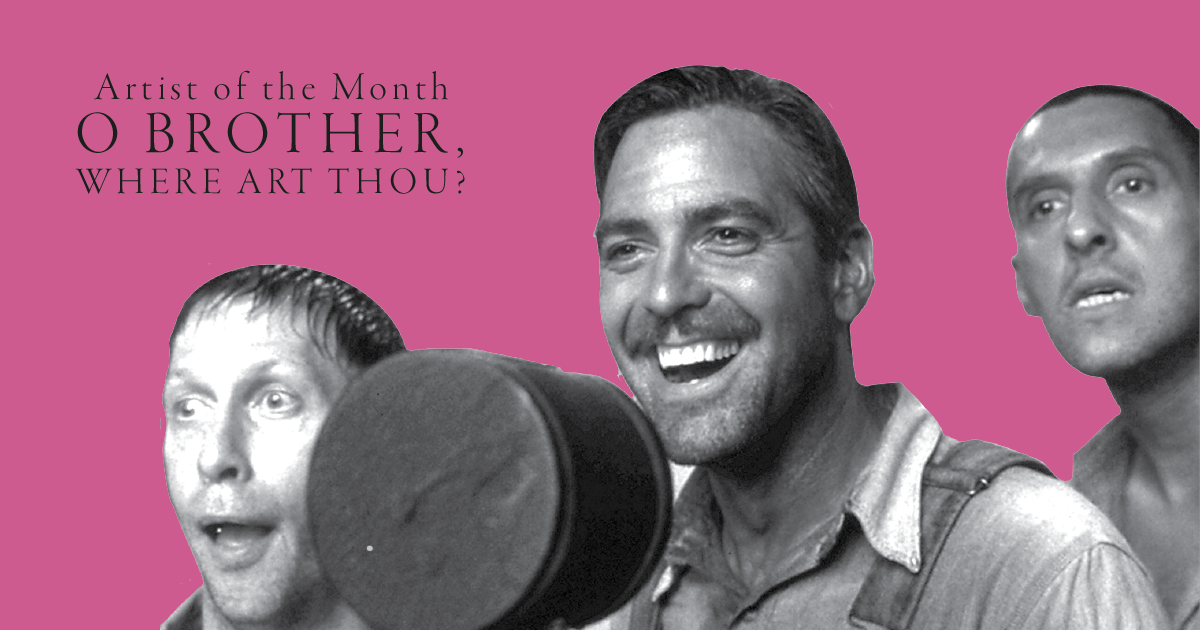
The O Brother, Where Art Thou? soundtrack, which was just starting to pick up momentum twenty years ago this winter, was both a forethought and an afterthought. The Coen Brothers had an idea for a film and even a title borrowed from Preston Sturges’ 1940 comedy, Sullivan’s Travels, but no screenplay. They commissioned T Bone Burnett to assemble a sprawling playlist of old-time music for them to use as writing prompts — original recordings from the first half of the twentieth century as well as new recordings of old songs. He gathered some of the finest vocalists and players, including Emmylou Harris, Gillian Welch, Alison Krauss, and members of Union Station, as well as Norman Blake, Sam Bush, and John Hartford. In various combinations they produced around sixty tracks covering hillbilly plaints, gospel numbers, Protestant hymns, children’s songs, labor songs, even prison songs.

From that pool the Coens selected a handful of tracks that served as the skeleton for their screenplay, which became a Deep South retelling of The Odyssey. As three yokel chain-gang fugitives wander the backwoods and cotton fields and gravel roads of Depression-era Mississippi, they inadvertently become country stars thanks to a hasty version of “Man of Constant Sorrow,” originally recorded in 1917 by Dick Burnett and re-recorded for the film by Dan Tyminski. Along the way they encounter a parade of white-clad Christians singing “Down to the River to Pray,” a blues singer who regales them with a campfire rendition of Skip James’ “Hard Time Killing Floor,” and a KKK klavern performing a Busby Berkley routine in white sheets and hoods.

Whittled down to eighteen tracks, the soundtrack hit stores just a few weeks before the film, and it seemed designed to stand alone as an upscale release. As Luke Lewis, formerly chairman/CEO of Universal Nashville, told Billboard in 2015: “When we were putting it together, a bunch of us said, ‘This is probably going to be a coffee table kind of a CD, where people will leave it around and be proud to have it.’ That turned out to be pretty much true… A lot of people that don’t buy records at all, or buy one a year, bought that record.”

Still, no one figured it would sell any more copies than your typical soundtrack, and certainly no one predicted it would so completely eclipse the film. Its success has been astounding: It has sold nearly 9 million copies, hung around the upper reaches of the Billboard Top 200 for several years, won the Grammy for Album of the Year (beating out Bob Dylan and Outkast, among others), spun off a sequel, inspired a series of tours and live albums, and redefined a massive market for traditional music in America.

Twenty years later, the gulf separating film and soundtrack remains remarkably wide. The former is glib to the point of nihilism, as though every line of dialogue and every camera angle is surrounded by quote marks. The soundtrack, by contrast, is sincere to the point of evangelism, as though these old songs were pieces of secular scripture. The music plays everything straight, while the film can’t keep a straight face. The soundtrack became a phenomenon, while the film sits in the lower tiers of its auteurs’ sprawling catalog.

Both are products of a very particular time: They were released during that short window between two defining events — the hand-wringing spectacle of Y2K and the horrific televised tragedy of 9/11. With the benefit of twenty years’ hindsight, they represent a pop-cultural pivot from the irony that defined the 1990s and much of the Coens’ output to the “New Sincerity” that defined the 2000s.

Why did this niche soundtrack become such a massive hit? Some have credited the popularity of O Brother to fin de siècle jitters and a desire to return to a rosier, more comfortable American past (never mind that the past, especially the 1930s, was never rosy or comfortable). Others have chalked it up to a rejection of the late ’90s pop music excess embodied by Britney Spears and the Backstreet Boys.

Perhaps the best reason for its success is also the most obvious: This is a good album, and an accessible one. It’s a well-curated tour through old-time music, a sampler of rural American traditions that serves as a primer on the subject without sounding like a textbook. All of these different styles are presented with an eloquence that is homespun yet modern: a balance that highlights rather than dampens their charms.

Burnett puts such an emphasis on the human voice that even the instrumental tracks sound a cappella. He wants you to hear the exquisite grain in the voices of Emmylou Harris, Gillian Welch, and Alison Krauss on “Didn’t Leave Nobody But the Baby” as well as the weight pressing on Chris Thomas King as he moans through “Hard Time Killing Floor.” Curiously, Dr. Ralph Stanley had to convince the producer to let him sing “Oh Death” without banjo, which was absolutely the right call. His voice is high and keening, a serious a death, shaken by the very subject he’s singing about.

If there’s a breakout song on O Brother — something resembling a hit — it was this very intense performance, which remains one of the finest renditions of this very odd and oft-covered song. Stanley was 73 years old when the album was released, had been playing since 1946, and was already celebrated as one of the fathers of bluegrass, but O Brother gave his career a considerable boost, introducing him to a significantly wider audience. (That said, it always struck me as deeply disrespectful that the Coens have a Klansman lip-synching Stanley’s performance in the film, as though they feared the words might actually mean something.)

Stanley performed the song a cappella at the 2002 Grammys — imagine anything a cappella at such a glitz-bound ceremony — not long before the soundtrack won Album of the Year. It might have been the climax of the soundtrack’s shelf life, but it kept selling and kept selling. It created an instant audience for old-time music, and upstart string-bands found themselves with readymade audiences, many of them shouting “Man of Constant Sorrow” the way they once might have yelled “Free Bird!” Every artist on the album got a boost, especially Alison Krauss & Union Station, who crossed over from bluegrass to pop and launched a series of hit records with the aptly titled New Favorite in August 2001. Similarly, Welch, Harris, and even Stanley enjoyed boosts in album and ticket sales in the wake of O Brother.

As with any sweeping change, there are new opportunities as well as new losses. The alt-country acts of the 1990s had already lost much of their luster, but roots suddenly had no room for punk anymore. Gone were the dark, twangy experiments like Daniel Lanois’s Americana trilogy — Harris’ Wrecking Ball in 1996, followed by Bob Dylan’s Time Out of Mind the next year and Willie Nelson’s Teatro the year after that. All three proved that roots music could accommodate new sounds, that it could look to the future without completely letting go of the past, and all three stand among the best entries in their artists’ remarkable catalogs.

But O Brother seemed to wipe most of those new avenues away, turning roots music into something largely acoustic, uniform, polite, conservative — beholden to the past and largely dismissive of the present. Watching certain acts riding that wave was like watching Civil War reenactors march on a makeshift battlefield, and ten years later groups like Mumford & Sons and the Lumineers were using roots music to sell arena-size sentiments.

Another aspect of old-time lost in the O Brother wave: politics. Previous folk revivals had a populist bent, extolling the music as the sound of the people and as an expression of a specifically American community. Woody Guthrie and Pete Seeger were branded subversives and communists, while Dylan and his early ‘60s cohort found radical possibilities in Harry Smith’s legendary Anthology of American Folk Music. But no one on O Brother is in any danger of being branded a pinko. The film itself nods to issues of race and class, but without really commenting on them in any serious or specific way. The soundtrack, by contrast, foregrounds songs about yearning, about breaking free of turmoil and hardship to find peace and contentment. Often that can be humorous, as on Harry McClintock’s fantastical “Big Rock Candy Mountain,” but more often it’s poignant, as on Krauss and Welch’s “I’ll Fly Away.” It’s a collection more concerned with needs of the spirit than of the flesh, so any earthly implications are largely ignored.

The roots market that sprang up in the soundtrack’s wake was consequently blanched of anything resembling social commentary, despite there being so much to comment on. That wave of bands might have provided a counterpart to the entrenched political conservatism that defined mainstream country music of the early 2000s, but instead it offered merely escapism.

A few artists did manage to question this rosy thinking about the past, in particular the Carolina Chocolate Drops. They traced strains of Black influence, craft, and contribution to old-time music, which is generally considered to be white, and therefore expanded its historical scope and current impact. As players, however, they injected their songs with no small amount of joy, as though taking great delight in what these old forms allowed them to express. The group’s three primary players — Dom Flemons, Rhiannon Giddens, and Justin Robinson — have carried that particular balance into their solo careers.

Any of the soundtrack’s shortcomings weren’t the fault of the musicians, who play and sing these songs much more beautifully and sympathetically than the film ever demanded. Nor is it the fault of the songs themselves, which obviously spoke to people as clearly in 2001 as they did in 1937. And it continues to speak loudly in 2021: The coffee table product wasn’t designed to bear the burden of the market it created, but the songs still inspire subsequent generations well into a new century, with its own tribulations and hardships.


5 Uncommon Trad Instruments Played Like You’ve Never Heard

We’re all familiar with the standard bluegrass five-piece band (also a common lineup in old-time or string band music), but there are quite a few second- and third-string instruments — no pun intended — that are rarely invited to join ensembles of guitar, fiddle, upright bass, mandolin, and banjo. Dobro is perhaps first on this short list, but accordion, dulcimer (hammered and mountain), autoharp, washboard, harmonica and dozens of other music and noisemakers could be encountered alongside these acoustic staples.

The five musicians below are awe-inspiringly adept at their instruments, each considered more like afterthoughts or casual embellishments in American roots music, rarely considered centerpieces themselves. But no matter how uncommon they may be at your local jam circle, or around the fire at the campsite, after you’ve been introduced to each of the following, you’ll be craving more unexpected and uncommon sounds in your bluegrass lineups.

From bones to nyckelharpa to Irish harp, here are five uncommon traditional instruments played like you’ve never heard them before:

Simon Chrisman – Hammered Dulcimer

A familiar, towering figure in the West Coast old-time, folk, and DIY roots music scenes, Simon Chrisman is criminally underappreciated on a national or international level. He most recently released a duo album with acclaimed banjoist Wes Corbett, he has been touring and collaborating with the Jeremy Kittel Band, and he’s performed and recorded with the Bee Eaters, Bruce Molsky, Laurie Lewis, and many others. His hammered dulcimer chops exist on a plane above and beyond even the most accomplished players on the trapezoidal instrument, throwing in pop and bebop-inspired runs, reaching down to bend strings by hand to achieve particular semi-tones, bouncing along at a rate only matched by a three-finger banjo player’s rapid-fire sixteenth notes. It’s jaw-dropping, even in Chrisman’s most simple, tender melodies and compositions. This rollicking number, named for Corbett’s beloved cat, is neither simple nor overtly tender, but your jaw will find the floor nonetheless.


Rowan Corbett – Bones

Rowan Corbett is a singer-songwriter, multi-instrumentalist, and percussionist best known for his time with seminal modern Black string band, the Carolina Chocolate Drops. Also a longtime member of Baltimore-based acoustic-grunge/world-folk group ilyAIMY and a veteran of Celtic outfit Tinsmith, Corbett is something of a musical chameleon, though it never feels as if he’s just putting on genre costumes to match whatever melodic motif suits the moment. Instead he inhabits each one authentically and wholly. ilyAIMY, for being billed as a folk band, are captivating, passionate, and energetic, perhaps most of all while Corbett fronts the group. But all of his musical moxie across all of his instruments pales when he pulls out the bones — traditional, handheld percussion instruments similar to their more mainstream (if not more vilified) counterpart, the spoons.

It’s no wonder a bio for Corbett begins, “What are those and how does he do that?” Corbett’s percussion skills are precise and technical, laser-like accuracy meshed with generation-blurring soul. During a guest appearance with Rhiannon Giddens at the North Carolina Museum of Art in Raleigh, North Carolina, in September 2019, Corbett brought thousands of listeners gathered on the hillside by the amphitheatre to their feet with his bones and just a couple of bars. This improv/battle video with Greg Adams displays just a taste of Corbett’s prowess on the ancient instrument.


Amy Hakanson – Nyckelharpa

Pandemic aside, if you’ve jammed with an old-time fiddler in the past two years you’ve probably fumbled (if you’re like this writer) or charmingly tripped your way through a Swedish fiddle tune or two. Musicians like Brittany Haas and Molly Tuttle have brought Swedish tunes into their repertoires, birthing dozens of new acolytes of the crooked, wonky, joyful tunes. Many an American fan of Swedish folk traditions were introduced to them by Väsen, a genre-blending, nearly 30-year-old Swedish folk band adored by multiple generations of American musicians, thanks to their status as a favorite band of everyone’s favorite pickers. (Väsen counts Chris Thile, Mike Marshall, Darol Anger, and others among their most vocal proponents and collaborators.)

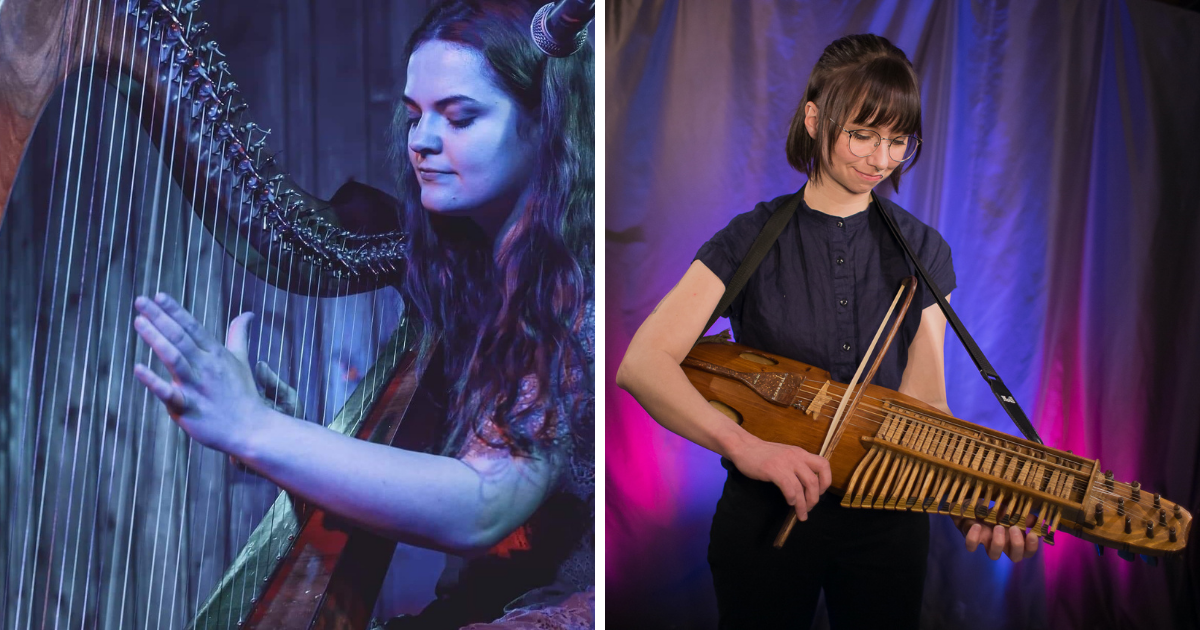
Nyckelharpa player and scholar Amy Hakanson was first introduced to the instrument by Väsen as well and in 2014 she took her fascination with the heady, engaging music to the source, to study nyckelharpa with Väsen’s Olov Johansson himself at the Eric Sahlström Institute in Tobo, Sweden. Her approach to the instrument — a traditional Swedish, bowed fiddle-like apparatus played with keys — has a storied, timeless air, even as she carefully places the nyckelharpa in modern contexts. This original, “Spiralpolska,” for instance, utilizes a loop machine, ancient droning and modern droning combined.


Sarah Kate Morgan – Mountain Dulcimer

The mountain dulcimer is simple and beautiful in its most common use, a gentle, pedalling rhythm section for languid, introspective folk tunes. Counterintuitively much more common in the hallways and hotel rooms of Folk Alliance International’s conference than IBMA’s or SPGBMA’s gatherings, this writer first encountered Kentuckian Sarah Kate Morgan and her melodic-style dulcimer among the many booths of IBMA’s World of Bluegrass exhibit hall. She was holding her own in an impromptu fiddle jam with mandolins, fiddles, banjos — all instruments much more familiar with picking intricate, free flowing hornpipes and hoedowns. But Morgan doesn’t just strum the dulcimer, capitalizing on its resonant sustain and open tuning, she shreds it. Playing a finely-tuned, impeccably intonated instrument with a radiused fretboard, she courageously and daringly dialogues with whomever accompanies her down every bluegrass and old-time rabbit hole she meets. It’s incredible to watch, not only with the understanding that most mountain dulcimers are treated as an aesthetic afterthought, but also knowing that Morgan’s prowess outpaces just about anybody on any instrument. A truly transcendent musician.


Alannah Thornburgh – Harp

Harp keeps coming up lately! And for good reason. No matter the genre label applied, harp is having a moment. We’ve kept up with Alannah Thornburgh for a few years, featuring her work with Alfi as well as across-the-pond collaborations like this one, with mandolinist (and BGS contributor) Tristan Scroggins. Living in Dublin, Thornburgh plays in the Irish harp tradition, but has toured and traveled extensively in the United States, giving her style a distinctly old-time and fiddle-tune-influenced approach. She takes on the complicated, contextual vocabularies of American old-time music with ease, almost leading listeners to believe that emulating the banjo or mandolin or executing new acoustic compositions or modern reharmonizations of old-time classics is what the harp was designed to do.

An Instagram video of Thornburgh displays a mischievous, winking arrangement of Béla Fleck’s “The over Grown Waltz,” from one of his masterworks, The Bluegrass Sessions: Tales from the Acoustic Planet, Vol. 2. An earworm of a tune well-worn and familiar to any acoustic music fan Generation X and younger, it’s not uncommonly called at some jams, but its hummable melody is secretly, deceptively, subversively complicated. Once again, Thornburgh simply smiles and pushes onward, as if reaching and pulling these intricate licks and banjo phrases seemingly out of thin air on a harp were as everyday an activity as brushing one’s teeth — or a wedding performance of Pachelbel’s Canon in D.


View this post on Instagram


A post shared by Alannah (@alannahthornburgh) on


Photo credit: Alannah Thornburgh (left) by Tara McAuley; Amy Hakanson by Amy Hakanson.

From Banjo to the Blues, This North Carolina Writer Tells One Big Story

I came to North Carolina three decades ago, as music critic for the Raleigh News & Observer, knowing very little about the state’s music. Yes, I was plugged into the college-radio end of the spectrum, from Let’s Active to The Connells, and I’d at least heard of Doc and Earl (Watson and Scruggs, respectively). But there was a lot more to it, obviously, and the joy of my career was figuring out that North Carolina’s many disparate strains — old-time and bluegrass, blues and country, rock and pop, soul and r&b, jazz and hip-hop, and of course beach music — were all part of one big story.

I tried to tell that story in Step It Up and Go: The Story of North Carolina Popular Music, from Blind Boy Fuller and Doc Watson to Nina Simone and Superchunk, based on many years of reporting, researching, and listening. It’s a story that covers a lot of ground from the mountains to the coast in The Old North State and beyond, with the likes of James Brown, Bill Monroe, and R.E.M. showing up in key cameo roles at various points.

As we’ve tried to convey with the book’s subtitle, it involves a wide range of music, from the roots music of bluegrass forefather Charlie Poole and bluegrass-banjo inventor Earl Scruggs to Ben Folds Five’s “punk rock for sissies,” super-producer/deejay 9th Wonder’s hip-hop to the Avett Brothers’ post-punk folk-rock. And what ties all of it together? Glad you asked! The narrative thread running through Step It Up and Go is working-class populism, a deeply rooted North Carolina tradition that runs into the present day. The simple detail of how to earn a living is a pretty prominent feature of each chapter, starting with the four acts in the subtitle.

Fuller (whose 1940 Piedmont blues classic provides my book’s title) and Watson were both blind men who turned to music as a way to provide for their families when few other avenues were available. Eunice Waymon’s plans to be a classical pianist were derailed and she had to start singing pop songs in nightclubs for a living, taking the name Nina Simone because she knew her Methodist preacher mother would not approve. And Superchunk is a punk band known for the 1989 wage-slave anthem “Slack Motherfucker” — and also for running Merge Records, one of the most improbably successful record companies of modern times.

Across genres, the state’s musicians have a proud, idealistic pragmatism that manifests as a certain mindset in which North Carolina is “The Dayjob State.” It’s an outlook that a lot of our state’s greatest artists retain even after music stops being a hobby and they go pro. Two of the state’s best-known Piedmont blues players, Elizabeth “Libba” Cotten (of “Freight Train” fame) and master guitarist Etta Baker, had amazing careers as musicians even though they didn’t seriously pursue it until they were both in their 60s. Pastor Shirley Caesar was even older, pushing 80, when she had a viral hit with her old chestnut “Hold My Mule.”

In the modern era, Carolina Chocolate Drops alumnus Rhiannon Giddens has run her career as a lifelong learning experience, involving academic research as well as performing, bringing long-forgotten or even unknown history and ancestors to light in the 21st century. With her creative work spanning from Our Native Daughters to an original opera score, Giddens honors her musical roots while retaining a spirit of collaboration, as many North Carolina musicians have done before her.

Or consider the aforementioned Doc Watson, who died in 2012 as one of the 20th century’s greatest musicians. A flatpicking legend who played guitar better than almost anyone else ever had, he nevertheless carried himself with a self-deprecating nonchalance; he just never seemed as impressed with himself as the rest of the world was. Barry Poss, whose Durham-based bluegrass label Sugar Hill Records released 13 of Watson’s albums over the years, used to express his frustration over Watson’s retiring nature and habit of deferring to other players even though there was never a time when he wasn’t the best musician in the room.

But that didn’t hurt Watson’s legacy in the slightest, and maybe it was just his way of dealing with the world. Jack Lawrence, one of Watson’s longtime accompanists, once told me that if he had been sighted, Watson probably would have been a carpenter or mechanic while picking for fun on weekends. Turns out that Doc was a homebody who would rather have spent more time at home in Deep Gap.

“Ask Doc how he wants to be remembered, and guitar-playing really doesn’t enter into it,” Lawrence said. “He’d rather be remembered just as the good ol’ boy down the road.”

Like the rest of North Carolina’s cast of musical characters, he’s remembered for that and a whole lot more.


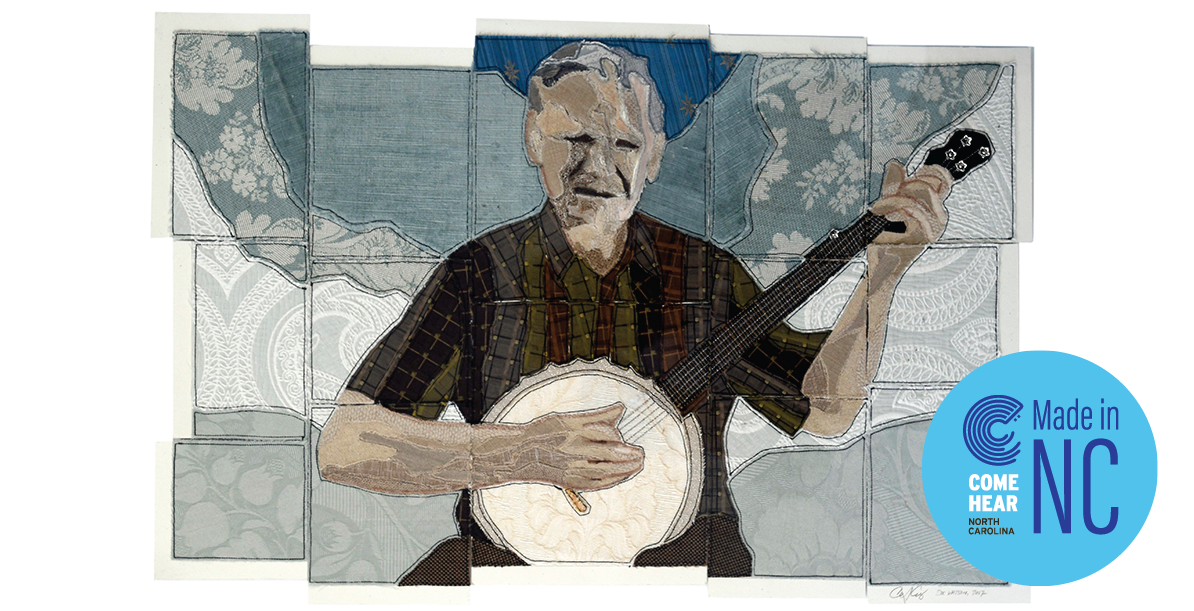
Doc Watson needleprint, fashioned out of upholstery fabric samples by artist/musician Caitlin Cary in 2017. (Photo by Scott Sharpe.)

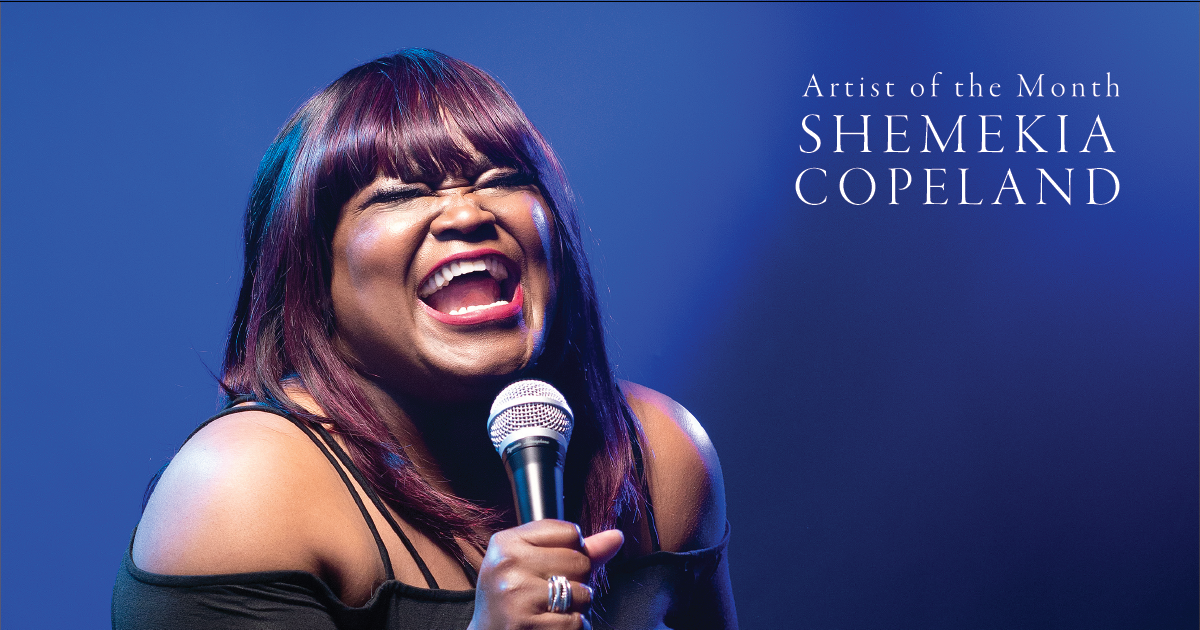
How Shemekia Copeland Found Fans Beyond the Blues (Part 2 of 2)

Over the last 10 years, in a series of albums recorded with producers Oliver Wood and Will Kimbrough, Shemekia Copeland has progressed from a first-class blues belter into a wider-ranging, more nuanced artist whose music touches on Americana, rock, and country — and she’s still a first-class blues belter.

In addition to working with Kimbrough on her new album Uncivil War and 2018’s America’s Child, Copeland has recorded with artists like John Prine, Emmylou Harris, and ZZ Top’s Billy Gibbons. In part two of our interview with Copeland, whose father is the late Texas blues great, Johnny Clyde Copeland, we discuss her musical development and the lessons she learned while teaming with these and other unlikely collaborators.

Editor’s Note: Read the first part of our two-part interview with Shemekia Copeland.

BGS: Over your last four albums, you’ve worked with producers Oliver Wood and Will Kimbrough, mostly in Nashville, and really started to open up the instrumentation and type of songs you’ve recorded. So I have a chicken and the egg question: did you start working differently because you wanted to change, or did you change because you worked with different people in different places?

SC: It happened organically. The first record with Oliver was in Atlanta and then he moved to Nashville, because everybody moves to Nashville, because that’s where musicians and studios are, and it’s inexpensive to work there. Oliver had Will Kimbrough come in and play and I was a big fan of his. When he played on my record, it was love at first note, because he’s just a musical genius.

We did our last record America’s Child with him and he just knows everyone. Nashville is such a small town in that way. All the musicians know, respect, and love each other. Will would say, “So-and-so would sound good on this. Let’s call him,” and within a day they’d have these guys in the studio that you couldn’t imagine working with as a blues artist, because you don’t know them. The gates of Heaven opened up being in Nashville because that’s where everybody is.

How about Oliver Wood?

I love him. He’s a very talented player and writer, and the best thing about him was that he really encouraged me to think about how I sing. I came from the blues shouter way of singing, and from him I learned that you don’t have to do that to move people. That was huge for me, to learn that you can capture people with subtlety just as much as you can capture them with the hugeness of your voice. We had that conversation and I took that away from working with him and have carried it on.

“Uncivil War” is a perfect example. I did not want to sing that song. I thought it was is a pretty song for somebody with a pretty voice to sing. I wanted the world to hear it and figured they would not if it was coming from me, because I don’t have a pretty voice. That’s when they all yelled at me and said I was being completely ridiculous and to just sing the damn song. But I still struggle with thinking that the subtleties of my voice work. I was just using the power of my voice more like a Koko Taylor, or Etta James.

Let’s talk about some of these people you’ve worked with. You did a duet with John Prine on his lesser-known blues song “Great Rain.” Tell me about that.

That happened completely organically, but here in Chicago, though he lived in Nashville. He’s originally from Illinois and we were both on a concert called Voices of Chicago. I was there to represent blues and John was there to represent the fact that he’s just frickin’ amazing. We were backstage and I’m standing there looking at John Prine thinking, “Oh my God, I’m standing here looking at John Prine.” And he looked down at my feet and said, “I love your shoes!” We started talking and I fell in love with his wife, Fiona. Amazing people. We got to talkin’, started working on projects together, and the rest is history. People like him know how to break the ice with people when they’re nervous around them.

How about Emmylou Harris?

That was just a Will Kimbrough connection. I met her a couple times, like in passing at festivals, but her being on “America’s Child” was Will. He plays with her. She heard the song, loved it, and wanted to sing on it, which was beautiful.

Steve Cropper, who produced The Soul Truth (2005), also plays on the new one.

Who doesn’t love Steve Cropper? He wrote all the hit songs that you can think of. I love working with him, loved his energy. We wanted to do something different after the Dr. John record [2002’s Talking to Strangers], so we thought, why not try to get a soulful record? And who better to make a soulful record than Steve Cropper? He also played on all the songs and Steve Cropper plays like Steve Cropper. He has a sound all his own. You know when you’re listening to him.

What about Billy Gibbons?

Billy was a big fan of Johnny Copeland; he went and saw my dad perform all the time when he was a kid. I was hanging out with him in India [at the 2017 Mahindra Blues Festival in Mumbai] and we were talking about all that. I wanted to do “Jesus Just Left Chicago” and John [Hahn, Copeland’s manager] had the bright idea to ask him. I never would have been ballsy enough to do that. Thank God for managers and producers.

I love Rhiannon Giddens on “Smoked Ham and Peaches.”

Yeah, and she sounded amazing on it. Oh, my gosh. I was a big fan of her and Dom Flemons and the Carolina Chocolate Drops! Just a group of interesting, amazing, talented people. But then I saw her perform as a headliner of the Chicago Blues Festival and she was just incredible. I really wanted to work on it and was so happy when she said she was aware of me, and would love to do it.

It’s probably the most acoustic, downhome song you’ve done and a good example of why some people started talking about you and Americana and not just blues.

I’ve always listened to country and bluegrass, even if I didn’t know who I was listening to. I just liked the instrumentation of it and the singers and lyrics. Americana was not on my radar, but I grew up listening to country music because my dad grew up in Texas and loved it. I’d walk around the house singing Patsy Cline and Hank Williams songs that my dad loved, but I hadn’t really even heard anything about the blend of country and roots music until a few years ago, so I think it’s kind of hilarious that people are saying I’m crossing over to Americana. But I welcome all listeners!

Has your audience changed over the course of these last few albums?

Yes, especially since America’s Child, but even going back to [2009’s] Never Going Back, I started getting people at my shows saying stuff like, “You know, I’m not really into blues, but I love what you do.” And I’m like, “Well, if you’re listening to me, then you could probably say you’re into blues. I think you’re more into the blues than you think you are!” I always hoped that I was getting fans that weren’t just blues fans, and I think the audience is growing a little bit for me — at least I hope so!

(Editor’s Note: Read the first part of our two-part interview with Shemekia Copeland.)


Photo credit: Mike White