BGS Celebrates Black History Month (Part 1 of 2)

At BGS, we firmly believe that Black history is American roots music history. Full stop.

Last year, following the extrajudicial murder of George Floyd and the civil unrest, protests, and rebellions against racial injustice and systemic inequality in this country, we realized that that belief wasn’t present enough in our daily content and editorial. We knew that it needed to be overt, expressed within every aspect of what we do.

Which is why this month, we’ve invited you to celebrate Black History Month as we always do, by denoting that celebrating Black contributions in bluegrass, country, and old-time — and roots music as a whole — requires centering Black creators, artists, musicians, and perspectives in our community daily, not just in February. (Though, for the entire month we’ve been sharing music, stories, and songs featuring Black artists every day, too!)

In the past year we’ve recommitted ourselves to fully incorporating Black Voices into everything we do and we hope that our readers and listeners, our followers and fans, and our family of artists constantly celebrate, acknowledge, and pay credit to Blackness and Black folks, who we have to thank for everything we love about American roots music. To bid adieu to Black History Month 2021, we’re spotlighting Black artists who have graced our pages in the last year in a two-part roundup.

Editor’s note: Read part two of our Black History Month celebration here.

Artists of the Month

Fresh off of an appearance at President Biden’s inauguration, Grammy nominees Black Pumas are our current Artist of the Month honorees, but they aren’t the only ones to hold down our most prestigious monthly series and editorial spotlight. Drawing on folk songwriting as much as soul groove, both men agree that the term “American Roots” fits their sound well. The Americana Music Association seconds that notion, as the duo picked up that organization’s Emerging Act of the Year award in late 2020.

Modern blues legend Shemekia Copeland was our Artist of the Month in November, when we celebrated her latest release, Uncivil War from Alligator Records. The song sequence offers quite a few topical numbers ranging from gun rights (“Apple Pie and a .45”) to LGBT affirmation (“She Don’t Wear Pink”). But a standout is certainly the title track, Copeland’s most bluegrassy foray yet, which features Sam Bush and Jerry Douglas

Song-interpreter extraordinaire Bettye LaVette held down the AOTM post in August, reminding us of the value of persistence, perseverance, and perspective – especially by Black women. Her interpretation of the ubiquitous “Blackbird” recalls the fact that Paul McCartney wrote the song about a Black woman (as British slang refers to a girl as a “bird”). In LaVette’s rendition, though, she is the one who’s been waiting… and waiting… and waiting for this moment to arrive. And, in a specific allusion to this moment in history, to be free.


On the Cover

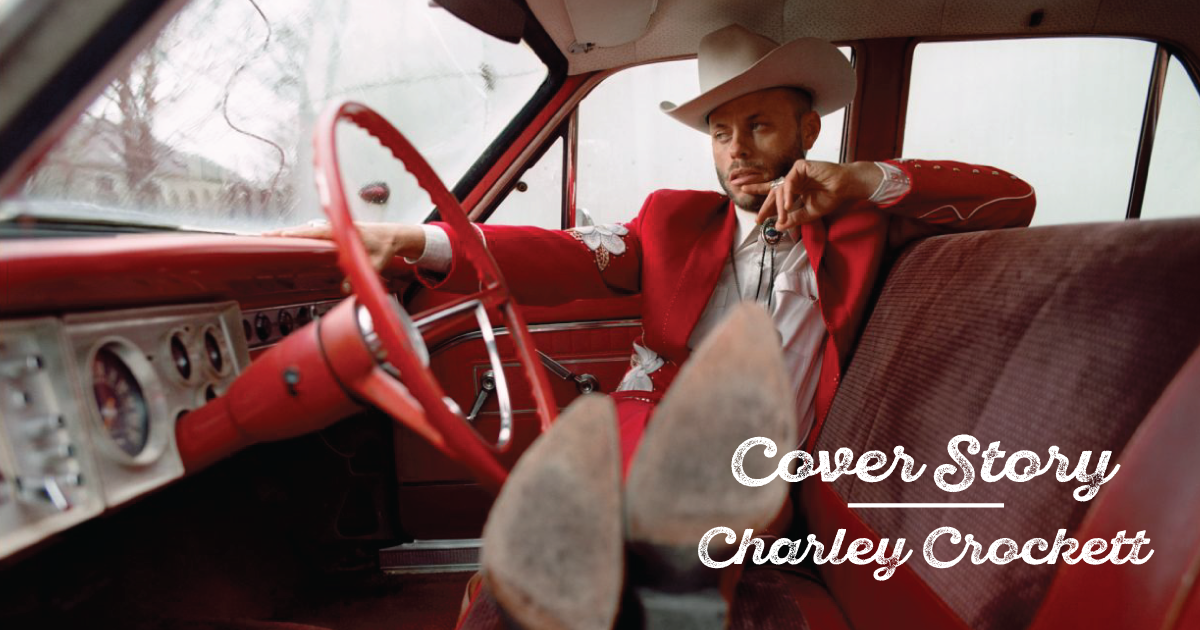
Both country & western crooner Charley Crockett and old-time banjoist, fiddler, and ethnomusicologist Jake Blount graced our digital covers in the past year, demonstrating the width, depth, and breadth of Black contributions to American roots music across the country and drawing from various regions and traditions.

In our interview and on his most recent release, Crockett doesn’t just reckon with the current historical moment. With Welcome to Hard Times, which is comprised of 13 tracks of searing anguish set to slick, ’60s-style, country-western production, he’s also examining his own place in this moment, and how his music has a different impact with different audiences. Even as he — a man living somewhere between Black and white, privileged and not — feels that his message is obvious.
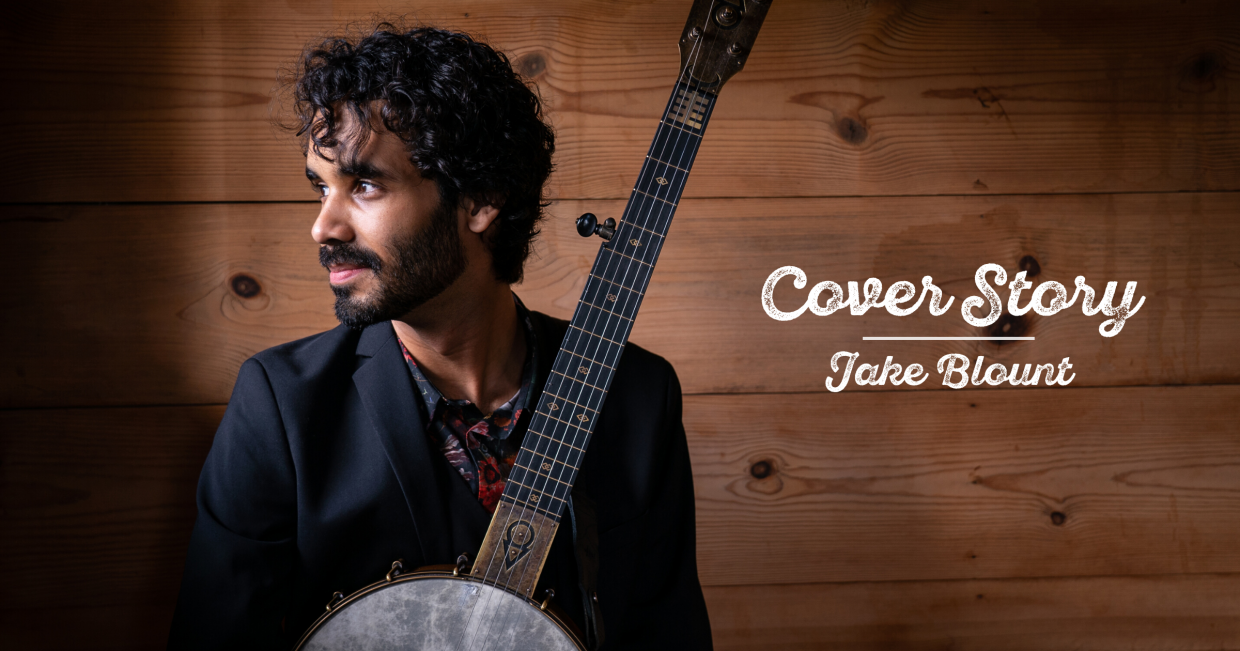
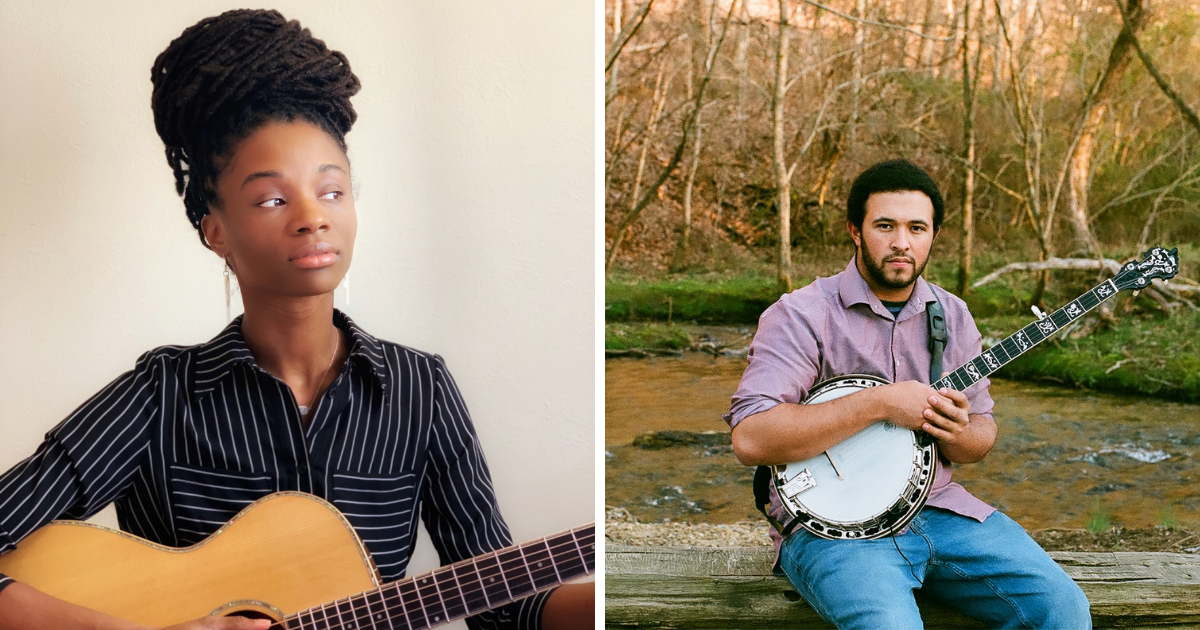
Queer old-time musician and scholar Jake Blount is intimately familiar with the history of Black artists in the twentieth century who spoke out against white supremacy and often paid for it with their lives. He sees his music — and his most recent album, Spider Tales — within that subversive, radical lineage, and rightly so. A critically acclaimed project that landed on seemingly dozens of year-end lists in 2020, Blount’s carefully curated tunes convey that racial inequality in this country is a long, self-feeding cycle and this current iteration of the civil rights movement was neither surprising nor unpredictable. In a year defined by music created in response to current events or simply passively shaped by them, Blount’s Spider Tales stands out, an example of action rather than reaction.
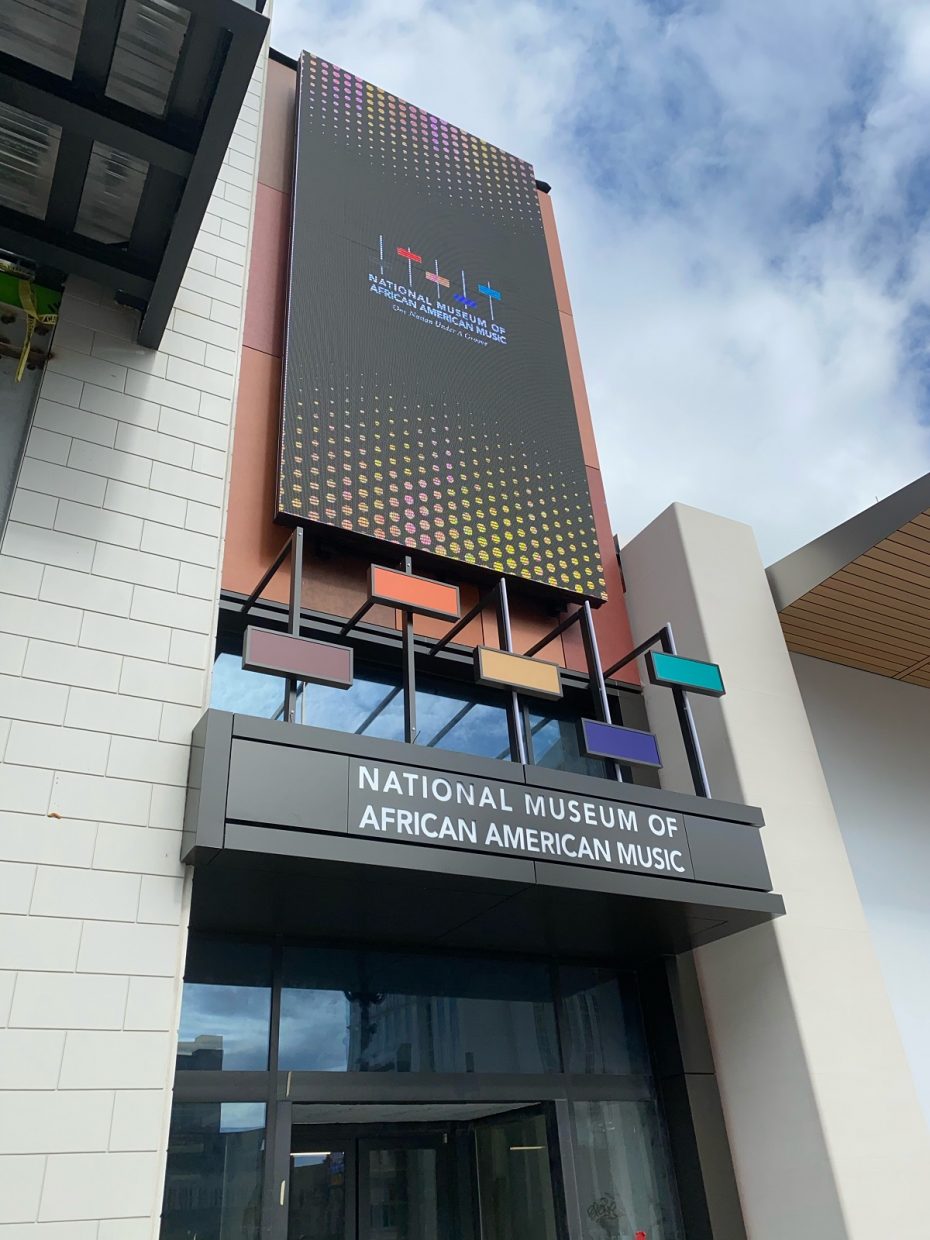
Last week, we celebrated the grand opening of the National Museum of African American Music in Nashville with a feature that explores the ways Music City has always been a major player in the African American music world — from the days of the Fisk Jubilee Singers to radio station WLAC breaking R&B, soul, and blues hits, and the Jefferson Street nightclub scene providing both valuable training for emerging artists and a vital showcase for established ones. The 56,000-square-foot museum, something of a musical equivalent to the the National Museum of African American History and Culture in Washington D.C. (definitely with the same level of visual splendor and attractiveness) is a testament to the Black, African American, and Afro contributions that have touched, impacted, and influenced every sphere of American pop culture and art.

The striking marquee of the National Museum of African American Music in Nashville, TN

The BGS Podcast Network

Over the course of the past year, the BGS Podcast Network has been proud to feature many Black artists over our shows about bluegrass, Americana, touring, wellness, and of course, music. On Harmonics season one, three Black women joined host Beth Behrs to talk about living through so much stress and tumult and how self-care, wellness, and music are all woven so tightly together.

Country singer and 2020 breakout star Mickey Guyton (who, for the record, has been a recording artist for more than a decade despite her recent meteoric rise) appeared on Episode 3, talking about writing “Black Like Me” — a song about her pain and struggles growing up as a Black woman in America — amidst the protests against police brutality across the nation. They also discuss country artists speaking out against racism and injustice, the power and importance of “three chords and the truth” in the midst of Music Row fluff, lifting other women up as a form of therapy, and, of course, Dolly Parton.

Two of Behrs’ closest friends, sisters Tichina & Zenay Arnold also appeared on the show. Tichina, Behr’s co-star on CBS’s The Neighborhood, and her sister are something like spiritual coaches for Beth. The three discuss the spirituality of music and the musicality of comedy, the timeliness of The Neighborhood as well as the pure spirit on the set, the absolutely necessity of open conversation in active anti-racism, balancing professional and familial relationships, and much more.

Finally, Birds of Chicago frontwoman and multi-instrumentalist Allison Russell decided to dig deep into her childhood traumas, the healing power of music and artistic community, the history of the banjo, and the intersectionality of the honest conversations in our culture on her episode of Harmonics. In addition to her career with Birds of Chicago, Russell is one quarter of the supergroup Our Native Daughters, with Rhiannon Giddens, Amythyst Kiah, and Leyla McCalla, and is preparing to release her first solo album.

On The Show On The Road, host Z. Lupetin curated a special episode last summer featuring clips and snippets from past editions of the show featuring Sunny War, Bobby Rush, Dom Flemons, and more. As he put it, “I’ve been lucky to talk with truly amazing Black artists, songwriters, and performers in the two years I’ve been creating The Show on the Road. I ask you to go back into our archives and listen to these voices.”

Later in the season, SOTR episodes featured Leyla McCalla — a talented, multilingual cellist, banjoist, and singer-songwriter and member of Our Native Daughters — and a special podcast swap with Under The Radar featuring truly fantastic Oakland-based artist, Fantastic Negrito. And just a couple of weeks ago, the show dropped an episode honoring Black History Month, featuring an interview with Jimmy Carter and Ricky McKinnie of the legendary Blind Boys of Alabama.

Plus, on the String, Craig Havighurst interviewed new lead singer for the Time Jumpers, Wendy Moten, and southern Gothic poet, songwriter, and Americana-blues wizard Adia Victoria.

And, not to be left out,  the BGS Radio Hour always includes music, premieres, and features of Black artists every week, as we round-up the best stories from our pages to include on the airwaves. Like this week, Allison Russell’s Sade cover and Valerie June’s cosmic new single, “Call Me a Fool” — which features Stax soul legend Carla Thomas — both appear on the show. And, on Episode 194, Chris Pierce, our Whiskey Sour Happy Hour friend Ben Harper, and Charley Crockett all make the playlist as well.


Shout & Shine

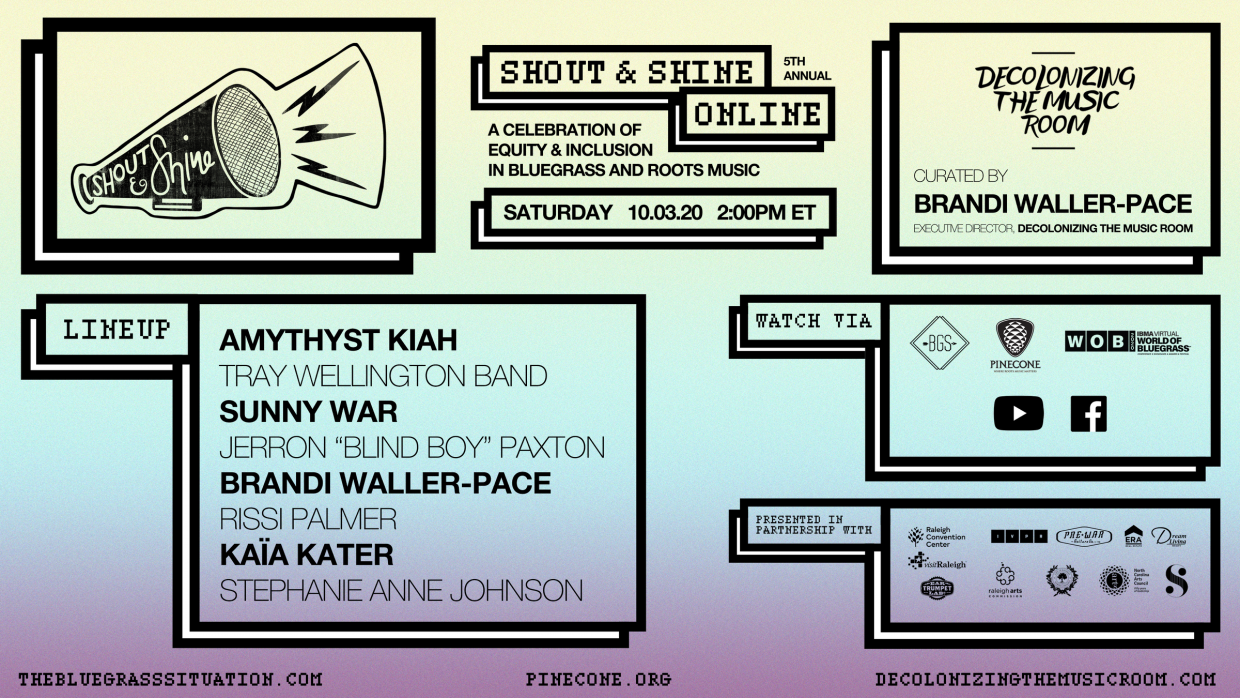
Our annual IBMA showcase celebrating representation and diversity in 2020 focused entirely on Black performers, building upon our collaboration with PineCone, who co-presents the event each year. Brandi Pace of Decolonizing the Music Room curated the lineup, showing our audience how seamlessly our missions intersect and build off of each other. The showcase lineup included Rissi Palmer, Tray Wellington, Stephanie Anne Johnson, Jerron “Blind Boy” Paxton, and more, drawing a direct line between Black musicians and bluegrass while highlighting the important role Black folks played in the genre’s creation as well as influencing all of its contemporary forms.

To build on this intention, we retooled our monthly column version of Shout & Shine as well, turning the interview series into a regular livestream event. Sponsored by Preston Thompson Guitars, each episode includes thirty-plus minutes of exclusive performances by Lizzie No, Sunny War, Julian Taylor, and Jackie Venson with more to come. Each set of music — and each interview as well — reinforces just how vibrant and varied roots music created by Black musicians and songwriters can be and just how valuable the perspectives and lived experiences of all kinds of people are to our communities.

Editor’s note: Read part two of our Black History Month celebration here.


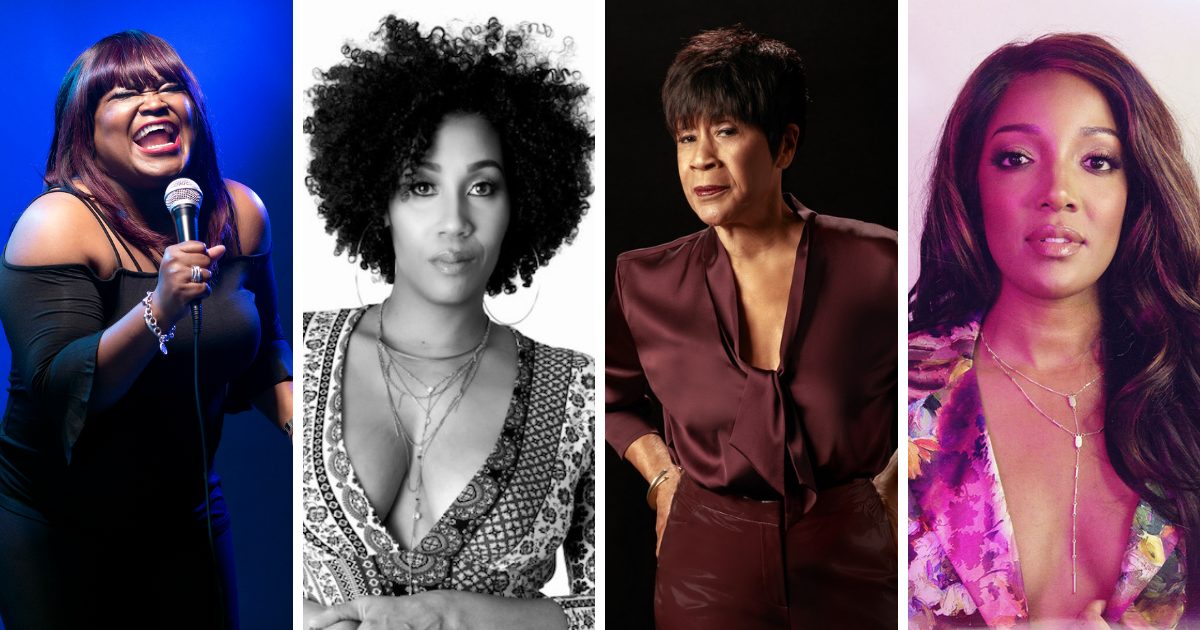
Photo credit (L to R): Shemekia Copeland by Mike White; Rissi Palmer courtesy of the artist; Bettye LaVette by Joseph A. Rosen; and Mickey Guyton by Chelsea Thompson.
BGS & #ComeHearNC Celebrate the Cultural Legacy of North Carolina during #NCMusicMonth

On the national music scene, North Carolina sets itself apart by blending the heritage of traditional roots music with the innovation of modern indie and Americana sounds. The bluegrass canon of North Carolina encompasses pioneers like Charlie Poole and Earl Scruggs, as well as groundbreaking musicians like Elizabeth Cotten, Alice Gerrard, and Doc Watson. Today’s spectrum of talent spans from modern favorites such as Darin & Brooke Aldridge, Balsam Range, and Steep Canyon Rangers, and the progressive perspective of the Avett Brothers, Rhiannon Giddens, Mandolin Orange, Hiss Golden Messenger, Mipso, and many more.

One example of how the state is merging past with present is the recent opening of North Carolina’s only vinyl pressing plant — Citizen Vinyl in Asheville.


View this post on Instagram


Built over 15 months in 1938-1939, The Asheville Citizen Times Building (@citizentimes) was designed by architect Anthony Lord as the grand center for the city’s two newspapers and radio station WWNC. Located at 14 O’Henry Avenue, the massive three-story building of reinforced concrete, granite and limestone, utilizing 20,000 glass bricks, is considered Asheville’s finest example of Art Moderne design. In 2019, Citizen Vinyl claimed the first floor & mezzanine of this iconic landmark as the future home of a vinyl record pressing plant, as well as a café, bar and record store – and is reviving the historic third floor radio station as a modern recording and post-production facility.

A post shared by Citizen Vinyl (@citizenvinyl) on

According to press materials, the building’s third floor played host to Asheville’s historic WWNC (“Wonderful Western North Carolina”) which was once considered the most popular radio station in the United States. In 1927, the station hosted live performances by Jimmie Rodgers and made his first recordings shortly before he went to Bristol, Tennessee.  In 1939, the station featured  the first ever live performance by Bill Monroe and the Bluegrass Boys during its Mountain Music Time segment.  Citizen Vinyl expects to keep the live music tradition alive in this former newspaper building, too.

Here at BGS, we’ve been committed to North Carolina music from our launch, notably with our Merlefest Late Night Jams, which are always worth staying up for. And how much do we love the IBMA World of Bluegrass week in Raleigh? Looking back on our archive, we gathered these songs from the artists we’ve covered over the years — and looking ahead, you’ll see all-new interviews with the Avett Brothers and Mipso, examine the classic country stars with roots in North Carolina, and spotlight some rising talent with video performances at the state’s most scenic destinations.

In the meantime, you can discover more about the North Carolina music scene through their website and on Instagram at @comehearnc


Editor’s note: This content brought to you in part by our partners at Crossroads Label Group.

‘Color Me Country’ Host Rissi Palmer Finds a Musical Home in North Carolina

Between caring for her two kids and hosting her brand new show, Color Me Country, on Apple Music Country, singer/songwriter and creator Rissi Palmer has had plenty to keep her busy since the touring industry shut down due to coronavirus. 

This week, Palmer will take part in our fifth annual Shout & Shine Online as part of IBMA’s World of Bluegrass conference and festival, performing a song from her most recent album, Revival. BGS jumped on the phone with Palmer to talk about the showcase, the musical heritage of North Carolina (her home for the past ten years), her musical community, Color Me Country, and more. 

(Editor’s note: Watch Shout & Shine Online here on October 3 at 2pm ET)

BGS: The production end of things has felt really different this year, putting Shout & Shine Online together virtually rather than in-person, like the last four years. But I bet being a performer feels pretty different to you in a pandemic right now as well? 

Rissi Palmer: The performance part of it is extremely strange. I’ll be perfectly honest, I don’t like doing livestreams. [Laughs] I do them, because that’s what we have to do, but yeah. Not a big fan. 

As far as the other [aspects], though, I have to say the time at home has been good for getting projects done. I’ll be honest with you, Color Me Country, I had been thinking about doing it for at least a year, but I didn’t have time, ’cause I was out on the road and doing all this stuff. Once we got to be home, once quarantine was happening, I had a little time — not a lot, because I have two children — to start working on it and actually sitting down and focusing. At the same time, with everything that’s going on I found it really hard to write. I’m flooded with a lot of different emotions right now, so I want to be creative, but the easiest thing for me has been channeling a lot of my feelings and frustrations into my show, not so much the music. I hate it, but I’m not being as musically creative as I’d like to be. It’s hard, I’m having a hard time. 

I did want to talk about Color Me Country, because Shout & Shine was created to literally provide a space for othered folks, marginalized folks, to exist within these genre formats and communities that have — whether stereotypically or traditionally or both — been white spaces for so long, and straight spaces for so long, and male spaces for so long. Shout & Shine is a space that’s not owned by any of the above, where we can celebrate the marginalized and underrepresented folks who have always been in these musics. I see you doing the same thing with Color Me Country. 

That’s exactly what Color Me Country is. That’s what I wanted to do. I feel like so many times, as an artist of color in a genre that is predominately white, you’re mostly talking to white journalists. You’re mostly talking to white outlets. A lot of times you are othered. I don’t think people do it to be mean, I don’t think it’s done in malice or anything like that. It just ends up being one of the more interesting parts of the interview, it’s more interesting to ask an interviewee [about identity or race]. For me, in my experience — and I can’t speak for everybody else — I spent most of my interviews when my album first came out in 2007 talking about being Black, not really talking about my art. That starts to wear on you after a while! 

When you’re in a situation where you know that you’re a part of “the system” and you don’t necessarily want to bite the hand that feeds you, you can’t be as honest as you want to be. You don’t want people to be immediately turned off. That’s how I felt as a new artist in a lot of ways. Now that I’m on my own and I’m older, I feel differently about the world and I have lots of opinions. [Laughs] I recognize the power in my platform that I didn’t recognize thirteen years ago. [With Color Me Country] I was just like, there has to be somewhere people can just talk. And not just talk about race, but about music and being a musician. A space free from worrying about alienating anybody or offending anyone. It’s just being honest.

Outside of the fact that I’m Black, outside of the fact that I’m a woman, I’m also a musician. I’ve been in a lot of the same rooms that these other artists have been in. I’ve had a lot of the experiences that they’ve had. So [on the show] we’re speaking to each other as peers. It’s an easier situation, I find. I end up getting stories or confessions or thoughts that people wouldn’t normally share. I think that’s good! I sometimes end up revealing things about myself in these conversations, because we’re being honest with each other. That’s what I wanted, because I didn’t feel like I had an outlet like that. Not that people weren’t kind to me or any of that, I just never felt that safe. 

The local connection of Shout & Shine has been a really important part of our mission, in years where we’ve held the showcase during IBMA’s conference in Raleigh in-person, connecting the show to the legacy of North Carolina’s roots music has been a part every year. The stories of bluegrass and country are tied so tightly to North Carolina, so I wanted to ask you about your connection to the state and what about its musical history and community that resonates with you?

First of all, I have been a North Carolinian for ten years now. I absolutely love it here. I live in Durham and specifically in our community — and I’ve lived in Los Angeles, I’ve lived in Nashville, I’ve lived in New York and Atlanta — I have to say this particular music community is my favorite. I say that because there are so many types of music here! There are so many really ridiculously talented people. I think that has something to do with the fact there are so many colleges here — or there’s something in the water! Really, nationally important music is being made here. Everyone is so open and so giving. It’s one of the few music communities that actually feels like a community. I know for me, being here has made me a better artist.

Being in Nashville, being in New York and being a part of the rat race, you tend to think in terms of commerciality and sales and that sort of thing, monetizing your creativity. Whereas here, mind you we want to make money, I’m always looking for ways to make money, but here it’s more like, “How can you use your art to help your community? How can you use your art to collaborate with these people for this cause?” Everywhere I turn there’s a way to use my platform, my voice, my art to elevate something. That’s really awesome and for me, that’s made my art more global. 

Just look at the art that comes out of here! Everything is extremely conscious, it’s thoughtful; I think that whatever is happening with the artists here, it resonates. Showing people what’s going on here and exposing it [to the world] is really important, because there’s so much good stuff here. 

Speaking of collaborations, your Shout & Shine Online performance includes Omar Ruiz-Lopez on a song you wrote called “You Were Here.” The performance is excellent and exquisite and we won’t give it away entirely, but tell us a bit about working with Omar and the song? 

First of all, I’m super excited to be a part of it! I was so excited when I got the email. Omar and Lizzy [Ross] of Violet Bell are two of my favorite people in the world. I think the world of them. They’re so ridiculously stupid talented. It’s not even funny. 

In 2018 I was a part of an artist in residency for like a week and we were all put in a house, the Oyster House, out on the coast. It was myself, Violet Bell, XOXOK — Keenan Jenkins, he’s local he’s amazing as well. We were there with a couple of playwrights, some artists, and we were in this house for a week. We got along really well, we’d jam at night, that sort of a thing. We all formed such tight relationships between us musicians, so any time we can perform together we try to make it happen. Omar actually played on the record of the song I did for the performance and so when I got the email and knew I was going to do this I knew I had to call Omar. Not only that, I was just chomping at the bit to have another musician in the shot with me!! I’m so sick of playing things by myself! [Laughs] I wanted to make it big and beautiful.

Another thing I just thought of while we’re talking, the song I’m doing is called “You Were Here.” It’s from my new album, Revival, and it’s about a miscarriage that I had in 2018. I had just met Lizzy and Omar and had just found out I was pregnant when we did the residency. The day that everything started happening I was actually in the studio with them — I didn’t even think about that, I was recording on their record. There was no one else I could do this with. 

Omar plays emotionally and that’s what this song needed. I remember when I called him to track on it, he did it in about two takes. We were sitting in the studio just bawling while we were recording it. He did an excellent job. I couldn’t imagine sharing this moment with anybody else. 


Photo courtesy of the artist.

Meet the Full Lineup of Shout & Shine Online

The entire BGS team is pretty stoked for our fifth year of Shout & Shine performances! In 2016 we partnered with PineCone Piedmont Council of Traditional Music in Raleigh, NC to showcase diversity in bluegrass and roots music at IBMA’s World of Bluegrass business conference and festival. In doing so, a wonderful platform has been provided to artists so often overlooked, as well as those just starting their journeys in the music industry.

Things are a bit different this go ‘round, and we’ll be celebrating equity and inclusion in a more pandemic-suited way this year with Shout & Shine Online! The showcase will take place Saturday, October 3rd at 2pm ET — viewers can tune in right here on BGS, or on our Facebook page or YouTube channel, as well as via PineCone’s channels, and IBMA’s conference platform, Swapcard (free music pass registration available here).


In celebration, we’ve put together a preview of what you can look forward to during Shout & Shine Online.

Brandi Waller-Pace

BGS joined hands with Decolonizing the Music Room’s founder Brandi Waller-Pace to curate 2020’s lineup. “The mission of Decolonizing the Music Room is to center Black, Brown, Indigenous, and Asian voices, knowledge, and experiences within the field of music education,” says Waller-Pace. “In addition to that, it is part of DTMR’s core values that we are an openly LGBTQ+ affirming non-profit organization. I am honored to have served as curator for this year’s Shout & Shine and to have had this opportunity to partner with BGS and PineCone on work that highlights a convergence of our values.”

Here you can see Waller-Pace along with Caitlin Hearn playing an old-time standard, “Five Miles From Town.” Waller-Pace’s music is dripping with that sweet, old-timey-ness.


Rissi Palmer

The IBMA isn’t the only thing we love in Raleigh — there’s also Rissi Palmer. In 2007 she released “Country Girl,” making her the first African American woman on the country charts in over 20 years. She’s been releasing consistently powerful music since, leading all the way up to her most recent album, Revival. On top of all of this, Palmer hosts the new Apple Music Country radio show, Color Me Countrya conversation between herself and various Black and Brown women in country/Americana/roots music. We can’t wait to have her right here on BGS!


Sunny War

You may have already seen our friend Sunny War’s episode 2 of our monthly Shout & Shine series. In our interview that came out earlier this month, War speaks about her current outlook on the music scene and how it feels to be surrounded by new “activist” musicians who weren’t doing it before, as well as her incredibly unique guitar style.


Kaïa Kater

Kaïa Kater is no stranger at BGS. She has been featuring in a Cover Story, she’s written an op-ed, and she’s had some important conversations with other musicians. Needless to stay, we’re ecstatic to have this Afro-Caribbean-Canadian songwriter and Appalachian musician back for Shout & Shine Online!


Stephanie Anne Johnson

While Stephanie Anne Johnson’s music is often rooted in America’s painful past, it’s always got down home roots. Maybe that’s why they’ve got the “American Blues.” A veteran of NBC’s The Voice, Johnson is the leader of Tacoma-based band The Hidogs, whose most recent album is entitled Take This Love.


Jerron “Blind Boy” Paxton

Blind Boy Paxton’s music is something of a journey back in time. But his songs and stories aren’t from dusty old books or archives — they are the soundtrack of his growing up in south-central Los Angeles, among the largest Creole and Cajun population outside of Louisiana. Our friend Paxton has been featured in our Shout & Shine column before, but Shout & Shine Online is his appearance on the showcase. We couldn’t be more excited!


Tray Wellington Band

North Carolina’s Tray Wellington is an acclaimed progressive banjo player — and he’s only 21. From his 2019 IBMA awards — one for Momentum Instrumentalist of the Year and another for Momentum Band of the Year with his former group Cane Mill Road — it’s easy to tell what a bright future he’s got in the world of bluegrass and beyond. He’ll be joining us with his whole band!


Amythyst Kiah

You may know her from Our Native Daughters, or our BGS Class of 2019  — either way, Amythyst Kiah is one of the most powerful, raw, and soulful singers and songwriters the roots music scene has today. We’re beyond thrilled that she’ll be joining us to anchor the Shout & Shine Online lineup!


Photos courtesy of the artists
Poster design by Grant Prettyman, Belhum

Shout & Shine Online Highlighting Black Roots Artists Set for Oct. 3

For five years now BGS and our partners at PineCone Piedmont Council of Traditional Music have used our voices, resources, and positivity to lift up and celebrate diversity in bluegrass and roots music through the Shout & Shine showcase. These live performances have given a platform to those artists who have been overlooked, while illuminating the paths of those starting out on uphill journeys in our music community. This year, the event’s 5th annual iteration will follow a format more suitable for a worldwide pandemic — with an all-online showcase as part of IBMA’s Virtual World of Bluegrass.

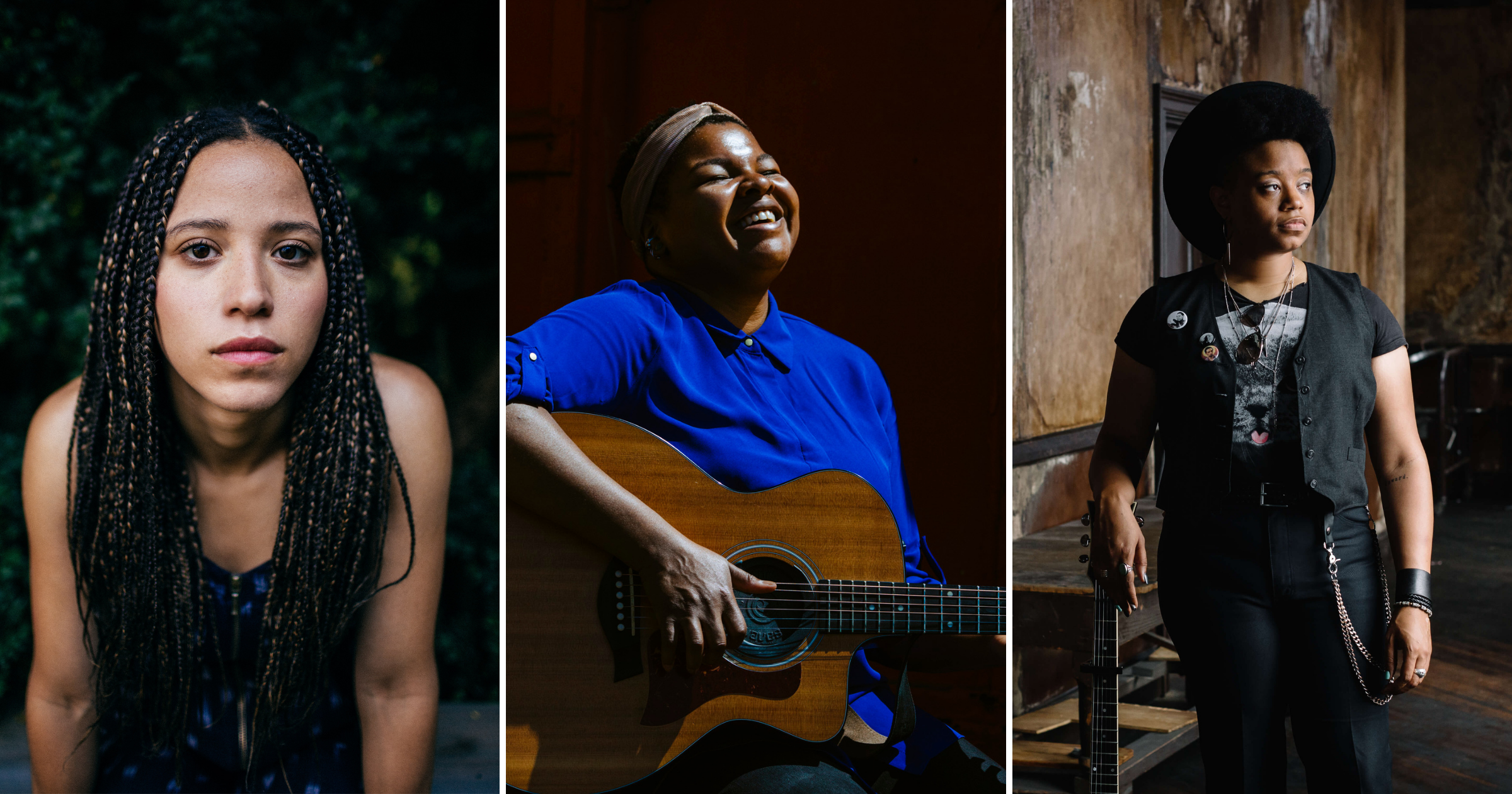
Shout & Shine Online will feature these artists from across the genre map of roots music: Rissi Palmer, host of Apple Music Country’s brand new radio show, ‘Color Me Country‘; IBMA Momentum Award winning banjoist Tray Wellington; punk-influenced fingerstyle guitarist and songwriter Sunny War; down-home blues and old-time musician Jerron “Blind Boy” Paxton; The Voice alumnus and guitar picker Stephanie Anne Johnson; and returning favorites Kaia Kater and Amythyst Kiah, who make their first appearance at Shout & Shine since playing on its debut lineup in 2016.

Shout & Shine Online’s roster is curated by performing musician and Decolonizing the Music Room founder and Executive Director, Brandi Waller-Pace. Shout & Shine Online will take place at 2 pm ET Saturday, October 3. Viewers will be able to tune in right here on BGS, or on our Facebook page or YouTube channel, via PineCone’s channels, and via IBMA’s conference platform, Swapcard (registration available here).

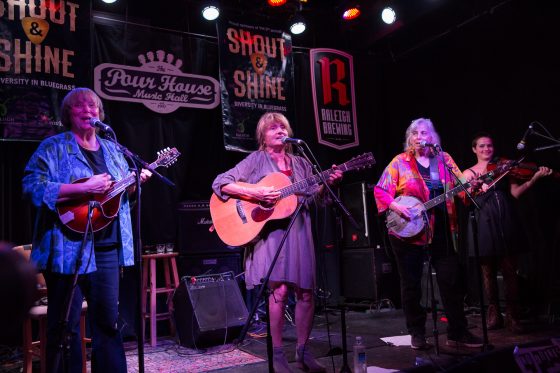
(L to R) Marcy Marxer, Alice Gerrard, Cathy Fink, and Tatiana Hargreaves perform at 2017 Shout & Shine showcase.

While Shout & Shine has continually championed underrepresented and marginalized folks in roots music, this year’s event comes at a time of reckoning in this country’s ongoing battle against institutionalized racism. “This year, Shout & Shine’s mission is as clear and galvanized as ever,” says BGS editor and Shout & Shine producer, Justin Hiltner. “Our lineup is a direct response to this current iteration of the Black Lives Matter movement and the righteous rebellion against police brutality and systemic racial injustice in this country. The greater bluegrass community needs to be having these conversations and needs to be centering the voices and perspectives of Black folks — especially Black queer folks. We saw that as our role this year.” 

BGS joined hands with Decolonizing the Music Room’s founder Brandi Waller-Pace to curate 2020’s lineup. The mission of Decolonizing the Music Room is to center Black, Brown, Indigenous, and Asian voices, knowledge, and experiences within the field of music education,” says Waller-Pace. “In addition to that, it is part of DTMR’s core values that we are an openly LGBTQ+ affirming non-profit organization. I am honored to have served as curator for this year’s Shout & Shine and to have had this opportunity to partner with BGS and PineCone on work that highlights a convergence of our values.”

“In addition to Shout & Shine’s continued work centering the music and stories of underrepresented artists in the bluegrass community, we also continue to work toward making these programs as accessible and inclusive as possible. We’re providing American Sign Language interpretation for the entire Shout & Shine program, modeling what can be done and what we continue to work toward in making accessibility central to our work,” said Jamie Katz Court, Communications & Programs Manager for PineCone, the Raleigh-based roots music organization that has partnered with us on Shout & Shine since 2017. PineCone also produces the festival, IBMA Bluegrass Live! powered by PNC.

The showcase was first conceived in 2016 to celebrate diversity and inclusion at the International Bluegrass Music Association’s business conference and festival in Raleigh, North Carolina. Originally organized in response to the North Carolina General Assembly’s homophobic bathroom bill, HB2, the scope of the event immediately widened to include and celebrate not only the LGBTQ+ community, but any and all marginalized folks in roots music. Shout & Shine stages have included the most exciting emerging talent alongside bluegrass legends and stalwarts, with lineups that have boasted the Ebony Hillbillies, Alice Gerrard, Cathy Fink & Marcy Marxer, Laurie Lewis & the Right Hands, Missy Raines, Amythyst Kiah, Kaia Kater, Che Apalache, and many, many more.

Shout & Shine is also a monthly editorial feature, which debuted with world-renowned drag queen Trixie Mattel’s first-ever interview by a roots music publication. In 2020 the column grew into a monthly livestream series that has already featured harpist and songwriter Lizzie No and fingerstyle guitarist Sunny War, part of a six-month series focused on Black artists and creators in roots music. The next episode will follow Shout & Shine Online in November. Whether on stage, in print, or online, Shout & Shine’s mission has always been celebrating the marginalized and underrepresented folks of all identities, backgrounds, faith traditions, and abilities who make and love bluegrass music.

Tune in Saturday, October 3 at 2pm ET for Shout & Shine Online!


Lede photo (L to R): Kaia Kater (by Todd Cooper); Stephanie Anne Johnson (courtesy of the artist); Amythyst Kiah (Anna Hedges).
Poster art by Grant Prettyman, Belhum