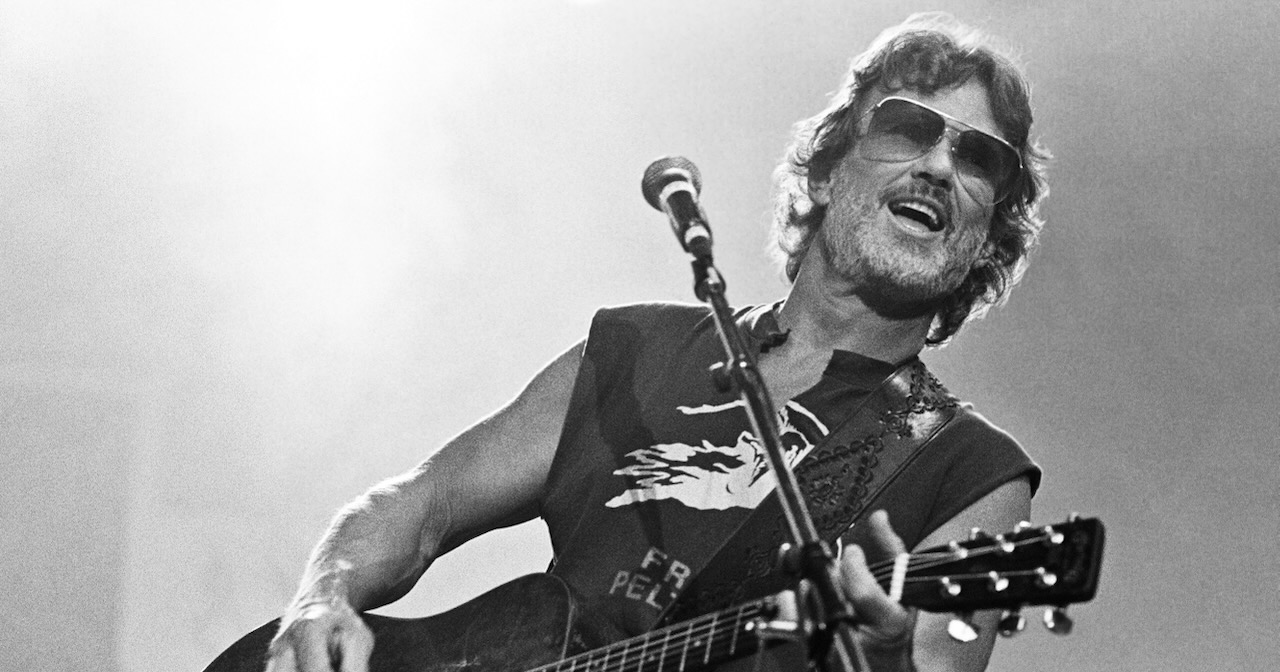
Kris Kristofferson’s Most Human Moments

After passing away on September 28 at the age of 88, Kris Kristofferson has rightly been eulogized as a renaissance man without compare. It makes sense, since the colorful character’s legendary resume includes time as a Rhodes scholar, Golden Gloves boxer, U.S. Army Ranger, Golden Globe-winning actor, janitor at Columbia Studios, and helicopter pilot who once brought Johnny Cash a demo by landing on the superstar’s front lawn.

In fact, it was only after all of these accomplishments that Kristofferson became the icon we remember – a songwriter’s songwriter, and one of the most authentic and impactful artists to hit country and roots music since its development. Yet his longest-lasting gift to all of us may prove to be his humanity.

Emerging onto an American landscape just beginning to feel the pangs of decay – the “Sunday Morning Coming Down” of its post-war glory – Kristofferson’s work found beauty in even the ugliest moments life had to offer. He broke every mold of what a country star “should” be, choosing substance over style, embracing the unwanted, and cutting a trail for generations of artists to follow. Stunning empathy seemed to be his primary tool and as a man of many lives, he was well suited to put himself in the shoes of whatever characters he conjured up.

That deep well of human empathy might be the source of his gravity on camera and on stage. Maybe that’s why his songs came alive for the 450 other artists who covered them. But whatever it was, Kris Kristofferson accessed emotion and compassion without pretension. His humanity will live on now like a beacon, guiding others away from the shallow posturing of country songcraft and toward the authentic depths of the art.

In honor of his life, legacy, and impact, here are eight moments where Kris Kristofferson’s humanity shined bright.

“Help Me Make It Through the Night” on The Old Grey Whistle

After his debut album in 1970, Kristofferson made frequent TV appearances with duet partner and soon-to-be-wife Rita Coolidge – with one capturing his tender side especially well. Singing “Help Me Make It Through the Night” on the UK variety show The Old Grey Whistle in ‘72, Kristofferson and Coolidge were just a few months away from their marriage and seem enchanted with each other. Sharing a microphone and never more than a few inches apart, you can almost feel the sensual spark.

“Help Me Make It Through the Night” on The Muppet Show

Same song, different duet partner – and a totally different view of Kristofferson as an artist. Fast forwarding to 1978 and Season 3 of The Muppet Show, the respected singer-songwriter showed he was good sport by doing “Help Me Make It Through the Night” with none other than Miss Piggy. Clean shaven and re-creating the close proximity of the first clip, Kristofferson could barely hold back the laughs as he serenaded a swooning swine – then lost it completely as Miss Piggy broke into the chorus. Hopefully he and Kermit patched things up later.

“Sunday Morning Coming Down” on The Johnny Cash Christmas Special

Later in 1978, Kristofferson had the chance to perform alongside an idol and show his respect for the artist who had done more to popularize his work than any other. Joining Johnny Cash for the Man in Black’s yearly Christmas special, Kristofferson was left almost speechless as Cash introduced the vivid “Sunday Morning Coming Down,” which they then took turns singing. After Cash noted he’d been making the song his own for years, Kristofferson responds, “Up until now that was the proudest moment of my life. Now this may be the proudest.”

“Me and Bobby McGee” on Austin City Limits

Kristofferson appeared on Austin City Limits a few times, but in 1981 he had a hot band behind him and that led to a rollicking delivery of his biggest rock hit, “Me and Bobby McGee.” Made famous by the late Janis Joplin 10 years before, the freewheeling anthem put Kristofferson’s range – and a sense nostalgic joy – front and center. Although, there’s still a tinge of sadness embedded in the tone. From our perspective now, the iconic line “Freedom’s just another word for nothing left to lose,” is matched only by “I’d trade all my tomorrows for one single yesterday.”

“For the Good Times” with Tanya Tucker

Kristofferson always looked more comfortable in a flannel shirt than a black tie, but in the long run, that only made him more endearing. Joined by Tanya Tucker on a 1982 awards show, Kristofferson climbed into a tux and delivered the one-last-time anthem “For the Good Times” in classic pop style. Backed by an orchestral score and with Tucker taking the lead, it was a rare ballroom-country presentation of a song also recorded by Ray Price, Al Green, and more, which proved the Hollywood heartthrob would truly rather be hanging out with friends at the local dive.

“The Hot Dog Tree” with Pee Wee Herman

By 1988 Kristofferson had built up decades of acclaim as an actor, artist, songwriter – and as an international sex symbol. But he was never too big to have fun. Playing opposite Pee Wee Herman in the kid’s comedy Big Top Pee Wee, Kristofferson slipped into silliness with an easy charm. The iconic scene sees Pee Wee unveiling his top-secret Hot Dog Tree to Kristofferson, and the star’s initial skepticism – and then child-like awe – will brighten any day. Despite being held up as a talent of rare caliber, he never took himself too seriously.

Encouraging Sinéad O’Connor at Madison Square Garden

If you want to know about Kris Kristofferson’s character, look no further than what he did for Sinéad O’Connor at New York’s Madison Square Garden in October 1992. A few nights earlier, O’Connor had shocked the nation by protesting the Catholic Church’s still-under-wraps sex abuse scandal on Saturday Night Live, ripping up a photo of Pope John Paul II as cameras rolled.

When she then took the stage for Bob Dylan’s 30th anniversary concert, the crowd erupted in boos. As O’Connor stood there, unable to begin her performance through the rain of jeers, Kristofferson stepped beside her and spoke the famous words of encouragement, “Don’t let the bastards get you down.” He didn’t try to save her or get her off stage, or diminish her in any way – he just let her know she wasn’t alone. For her part, O’Connor went on to scream sing an a-capella rendition of “War” over the crowd, before staring them down as she left the stage. She said the moment created a lifelong appreciation for Kristofferson.

“Loving Her Was Easier (Than Anything I’ll Ever Do Again)” with Rosanne Cash at Willie Nelson’s 90th Birthday

Kris Kristofferson made his final public performance in 2023, appearing at the Hollywood Bowl in honor of his longtime friend Willie Nelson’s 90th birthday. The moment was filmed for a special airing on CBS and gave us one last moment with an icon.

After a shaky walk to the microphone, Kristofferson joined Rosanne Cash for an arm-in-arm rendition of “Loving Her Was Easier (Than Anything I’ll Ever Do Again),” a devastating ballad first released at the start of his career. Following Cash’s lead with a wide smile and a twinkle in his eye – one armed raised in triumph – Kristofferson soaked up the moment, while the rapt attention of the audience evolved into a thunderous applause. As Cash adapted the song’s hook to address Kristofferson himself, the whole world seemed to send him out on a high note:

Loving you was easier than anything I’ll ever do again


Photo Credit: Scott Newton, courtesy of New West Records.
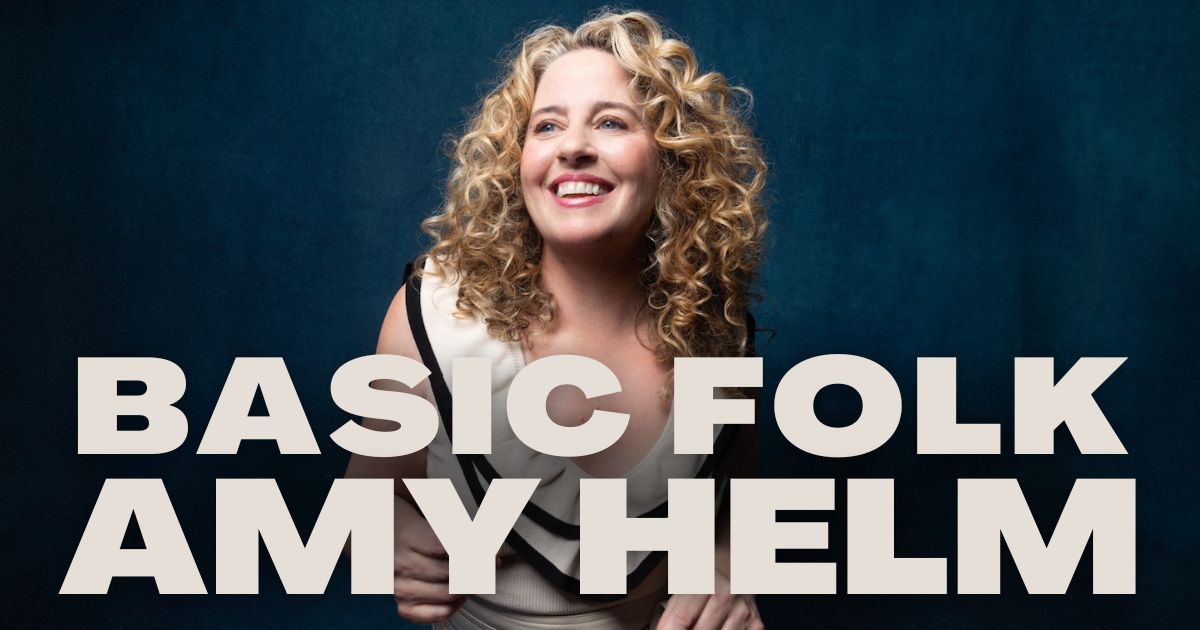
Amy Helm: Letters to Women and the Legacy of The Barn

Amy Helm has had one of the most fascinating lives that any person can have. As you might have guessed from her famous last name, she comes from roots music royalty. Amy is the daughter of Levon Helm, the beloved late drummer for the incredible groundbreaking Canadian-American group The Band. She also continues to run The Barn, a music venue and recording studio built by her dad and Garth Hudson, which served as Levon Helm Studios.

LISTEN: APPLE • SPOTIFY • AMAZON • MP3

In her own career, she has created a new lineage of musical tradition, family, great songwriting, poetry, and a feminine power that emanates off of her. We’re talking about her new album, Silver City, but we’re also talking about songwriting. We’re talking about grief. We’re talking about single parenthood. We’re talking about family. We’re talking about being on the road. We’re talking about how our bodies change over time and how that changes us as a vocalist and as an artist.


Photo Credit: Ebru Yildiz

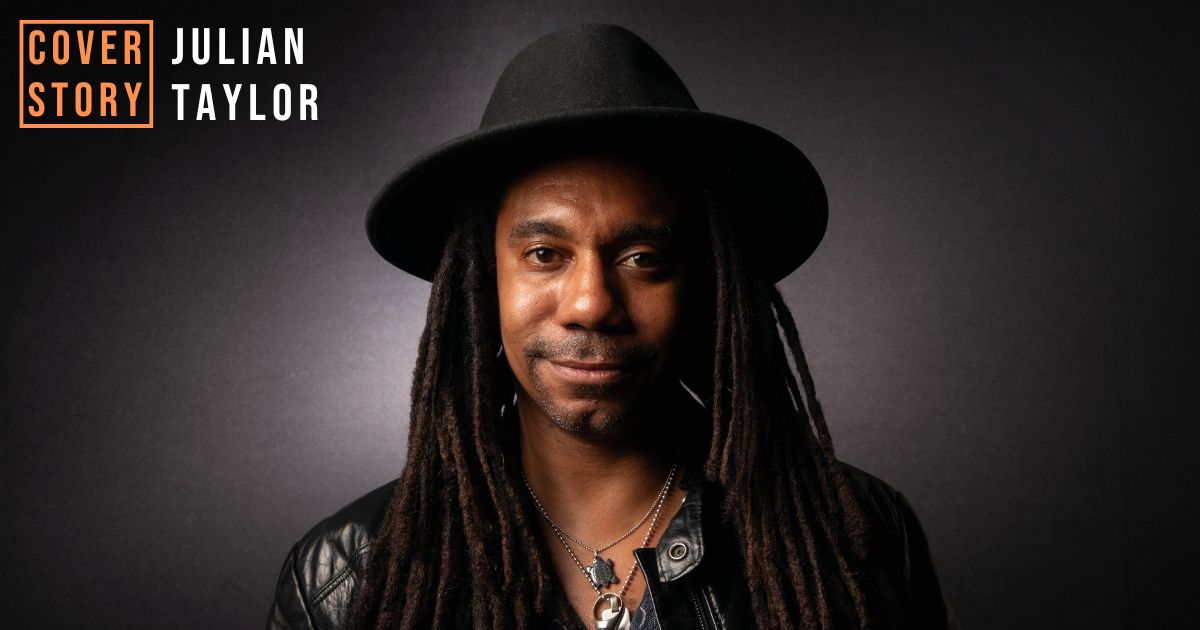
On ‘Pathways,’ Julian Taylor Looks Inward Rather Than Outward

Much like the songs on his latest album Pathways, the sounds swirling around Canadian singer-songwriter Julian Taylor on our recent phone call for BGS were also filled with curiosity, emotion, and the subtle, intrinsic tones of a modern world unfolding.

Walking the streets of his native Toronto, the introspective depths of Taylor’s voice and pure sentiments radiated in conversation were only complemented by the organized chaos of an international city in motion. Honking of taxi cabs at clustered intersections; the thrust of train cars on the underground subway; other conversations of varying degrees of volume in passing. And Taylor himself.

“Don’t the grass look greener on the other side/ but be careful of what you wish for could get left behind,” Taylor weaves through “Ain’t Life Strange.” “I see where I went wrong and all I could have done. There’s a fine line between a broken and beautiful mind.”

Those lyrics in particular speak to the long, arduous, yet bountiful road for Taylor. At 46, he’s spent his entire adult life in pursuit of creative fulfillment and stability in an often haphazard industry. In his tenure, Taylor’s seen the high-water mark and complete collapse of the music business – and then some.

Co-founder of 1990s Canadian alt-rock act Staggered Crossing, Taylor found himself in big meetings with even bigger record label executives. The band was signed by Warner Music Canada and earned some limited success before being dropped by the label not long after their debut album hit the streets.

From there, it became a DIY ethos at the heart of Staggered Crossing. But, after a handful of albums and plateauing popularity, the group split in 2007, ultimately leaving Taylor out on his own. But, he trudged ahead, even if he was unsure of his next move, whether personally or professionally.

Frustrated and burned out by the music industry, Taylor circled back to a beloved bar of his, the Dora Keogh Irish Pub in the Danforth neighborhood of Toronto. There he summoned the courage and energy to start an open mic night. With a stripped-down set of simply Taylor and his guitar, he quickly found this new path of intent and purpose for the music within him.

From there, it’s been this ongoing journey of self and of song for Julian Taylor. What has resulted is this soothing voice of determination and compassion pushing steadfast into this latest chapter of his sound and scope.

I was recently in Toronto for the first time and it felt like one of the most culturally and sonically diverse cities I’ve ever come across.

Julian Taylor: Yeah, definitely. It’s been that way ever since I was a kid. It was a real small town when I was born, but it’s just grown exponentially. The music thing has been extremely positive. People really do support each other and everything. Like, it doesn’t really matter where you’re coming from.

What does it mean to be a songwriter from Ontario and greater Canada? I mean, you have some of the best of the best. Gordon Lightfoot, Gord Downie, Neil Young, Joni Mitchell, Leonard Cohen. The list goes on.

It’s an honor. I’m happy to be from here. You have the rich heritage that I have and the rich musical landscape that we grew up with. A lot of people don’t really know that so many of these artists, like the people that you’ve mentioned, are Canadian. We’ve had such an incredible influence on the world. I think a lot of that has to do with the cultural mosaic and landscape we live in. I mean, it is not easy to tour this country. And we sort of grind our teeth here a lot of the time. So, when you do that, it makes you a little bit more appreciative of any sort of accolades or any sort of impact that you may have on the world.

When I was reading your backstory, you must have been a teenager when you started Staggered Crossing.

Yeah, I was pretty young. When we first got signed, it was at the tail end of, I guess, what you would want to call the high-water mark. We didn’t get to really experience that. We experienced the very last little bit of it. And then the entire industry changed. I’ve seen it change so many times in my career. And I started when I was 16.

What was it that kept you going after Staggered Crossing broke up? Was it just this idea that, “Hell or high water, this is what I’m going to, no matter what”?

Part of that was it. The other part of it was encouragement. The fact that any of my songs resonated with anybody really was the main point. You’re like, “I’m going to do this no matter what, because this is my calling and this is my passion, this is my purpose.” But, when you have those things validated by other people? That’s just a huge gift. The fact that people would continue to book me and play my stuff on the radio or people would come to shows and tell me that my music meant something to them. With that kind of encouragement, it’s really hard to stop going.

With Staggered Crossing being signed and going through the motions of very large corporations, what were some of the things you took away from that experience you applied to your solo career?

I think it all happened afterwards, really. Not during that period of time, because afterwards we had to fend for ourselves. But, it was the first time that the do-it-yourself mentality was put into place. We didn’t even know what DIY was. I just ended up doing it because I wanted to get my music out there. I wanted to keep touring, to continue to create records. So, I did anything and everything I could to keep that happening. I learned a lot about the business, about promotions, marketing, and distribution. Basically, everything a label would do for an artist, I learned how to do it alongside my friends and we kept on pushing ahead. It was hard and also easy at the same time, because it was something I wanted to do. It certainly tired me out at one point in time. I was so disenchanted with music that I stopped and then I came back with a brand-new sort of outlook on it.

What does it mean to be at this juncture of your career and still be just as curious, and always mining for the next song, as ever?

That’s a good question, man. It’s really about the job and the task at hand. And the job is to document the human condition through my experiences. World domination is still on the back burner. [Laughs] As an artist, it’s about putting in the work and that work is really hard to do. It’s emotionally exhausting. It’s physically exhausting. But, at the end of the day, when you look at yourself in the mirror and think about it, “I’ve written these beautiful songs and they’ve brought beauty to people’s lives.” And these performances have brought beauty to both of our lives – not just theirs, but to mine. It’s a two-way street.

Where does that work ethic come from within you?

Maybe it’s the Jamaican side of me. [Laughs] It’s definitely a family thing. My family on both sides have worked so hard. My mom’s side of the family has sacrificed and worked so hard. And my dad’s side, who migrated [to Canada]. On my mom’s side, we were here to begin with. And my dad’s side, they came here with not a lot to go on, and discrimination and things like that. They worked their asses off and always told me I would have to work 150 percent harder than anybody else because of my background.

And have you?

From a very young age.

Do you find they were correct with that assessment?

Yeah, they’re still correct about that. And, I don’t really know how and when that’s going to change. There are more opportunities reported to people now that are minorities, but the reality of having to work that much harder is still a truism. That’s unfortunate. But, you know what? I dare to ask anybody from the minority to say that something hasn’t benefited them from that work ethic.

As you were trying to move forward after Staggered Crossing, you started this open mic at a bar in Danforth. Were you kind of circling back to where it all began and recalibrating things?

Yeah. I used to work at that same Irish pub in the Danforth. I was a bus boy and also a server. One day, some old guy came in and he was just so rude to me, so racist. And I thought to myself, “What am I doing? I’ve got to do something about this.” That was the catalyst that got me back into performing music. The proprietors of that establishment offered the open stage to me on that Monday to help me get going again. They’re some of the greatest friends I’ve got in this world. And it was funny because, after Staggered Crossing, I just couldn’t go on. I had tried so hard to “make it” and it was such an uphill battle. Pushing a boulder up a hill. I gave up and needed some time. And then when the open stage came back, it was a community thing. I rallied around people and they rallied around me. And it’s still a musical community out here in the city. It all comes down to community.

Why did you title the album Pathways?

Pathways felt like a journey. It’s been so long getting here, you know? I’ve got 12 studio records in my name and a couple of live records. I’ve toured extensively for the last 20 years. And this felt like a record that I needed to go inward, rather than outward. Some of my records are very contemplative of the outside world. And this one, I was contemplating my inside world – what was in my head, my heart and soul. Trying to battle through some of the things that go on in everyday life decisions and choices I’ve made. The pressure of the last two records and creating a new record was on me. I was feeling that and decided Pathways was a really good metaphor for where I was headed, where I’ve gone, where I’ve been. I’m not sure where it’s going to take me next, but it just felt like a nice walk in a cool breeze.

Since the 2020 shutdown, there’s been, thankfully, a lot more conversation in the music industry about mental health and physical wellness. Does that play into where you’re at right now?

It does, yeah. I think about it every day. It’s really hard to make it as a musician. And it’s really hard to be a human in this world. I’ll be the first to admit that I go through a lot of stuff in my head. I’ve never been diagnosed with a mental illness, but I wouldn’t be surprised if I have something. I feel it a lot, the pressure to keep making a living, so that I can keep a roof over my head and my family fed. I could walk away from music if I had to, but I don’t want to. I don’t know if that would make me happy or not.

But, when it comes to fiscal responsibility, that’s a lot of stress. And then, there’s the stress social media puts on us, where you get attacked for no reason by people who don’t even know you. Sure, there’s a lot of praise going on, but there’s a lot of the other stuff, too. And now everything’s sort of been put into the musician’s hands. It’s a bit of a mental dilemma. I’ve lost a lot of people this year and that was part of that as well. You know, it’s life. People think people in the public eye or musicians putting themselves out there have rhino skin and they’re superhuman — but we’re not.


Photo Credit: Robert Georgeff

You Gotta Hear This: New Music From Darin & Brooke Aldridge, Adam Chaffins, and more

We’re excited to kick off October with a mighty New Music Friday and our first edition of You Gotta Hear This for the month.

You’ve simply gotta check out new music videos from folks like Darin & Brooke Aldridge (who pay tribute to Byron Berline with a track featuring Vince Gill), Buffalo Wabs & the Price Hill Hustle (who’ve brought us a charming animated music video), Claire Hawkins (who wrote her selection, “Oh Daisy,” while living in France), and Rachel McIntyre Smith teams up with Janelle Arthur to premiere her Honeysuckle Friend Sessions with a live cover of “Strawberry Wine.”

Plus, Darren Nicholson premieres his bluegrass track, “Windows Have Pains,” and singer-songwriter, vocalist, and bassist Adam Chaffins feels capable of anything on “Little Bit At A Time.” Our longtime friends Jamie Drake and Justin Wade Tam have teamed up on a brand new single as well, entitled “Free.”

To wrap up, don’t miss our final Yamaha Session in our latest series with the brand. It features Jack Schneider performing his original song, “Don’t Look Down.”

It’s all right here on BGS and You’ve Gotta Hear This!

Darin & Brooke Aldridge, “A Million Memories (A Song For Byron)”

Artist: Darin & Brooke Aldridge
Hometown: Cherryville, North Carolina
Song: “A Million Memories (A Song For Byron)”
Album: Talk of The Town
Release Date: October 4, 2024 (video)
Label: Billy Blue Records

In Their Words: “We’ve all had people in our lives who have believed in us, loved us, taught us, and guided us, hoping that we could see in ourselves what they have always seen. It isn’t just about teaching and shaping someone, it’s about helping them discover what they can do from within themselves. For us, it is one of our greatest joys to invest time and encouragement to those who come behind us. It is one way to pay forward the gifts given to us from our own heroes and mentors, to help bring out the best in younger people in the same ways someone did for us.

“We were reminded of these truths the first time we heard ‘A Million Memories (A Song for Byron).’ It was written by our friend Vince Gill in honor of fiddler extraordinaire Byron Berline, who was one of Vince’s closest mentors and dearest friends. Byron invited a young Vince to play banjo and guitar in his band, Byron Berline and Sundance, in the late ’70s, and took the clearly talented Gill under his wing. They remained close until Byron’s death in 2021.

“We’re incredibly honored to share the music video for ‘A Million Memories (A Song for Byron).’ As the song is extra special to us, for the meaning behind it and having the chance to sing it with a special mentor and friend. We will always treasure this opportunity to make ‘A Million Memories.’ We hope the video brings back cherished memories to those that watch the video and hear this incredible song.” – Darin & Brooke Aldridge

Track Credits:
Darin Aldridge – Vocal, mandolin, guitar
Vince Gill – Vocal
Brooke Aldridge – Vocal
Mark Fain – Acoustic Bass
Stuart Duncan – Fiddle
Brent Rader – Percussion, piano

Video Credit: Produced and directed by Jenny Gill.


Buffalo Wabs & the Price Hill Hustle, “Vagabond’s Lament”

Artist: Buffalo Wabs & The Price Hill Hustle
Hometown: Cincinnati, Ohio
Song: “Vagabond’s Lament”
Album: Buffalo Wabs & The Price Hill Hustle
Release Date: October 24, 2024

In Their Words: “‘Vagabond’s Lament’ is an homage to so many places we know so well. The personification of each location lets the song read as a lost-love song in a way, which is a fun take on the visuals the tune lays out for the audience. It’s also a fun one to play; upbeat rhythm and driving solos get the crowds moving.

“One thing this ‘Vagabond’s’ showcases for the group is our affinity for harmony. It’s a real throwback to the sounds I personally grew up with – rich, churchy voices, the breathy ritardando at the end of the tune followed by a four-part harmonic crescendo into the final phrase, and that driving stomp of a beat. This tune really wraps up so much of what we do into three and a half minutes.

“The song fits perfectly with the overall mood and atmosphere of the album; old-time influence with modern flair. It’s a toe-tapping number that could be a hundred years old if you heard it on AM radio, which fits our style nicely. It’s something that will appeal to folkies and bluegrassers alike.” – Casey Campbell, drummer, vocalist

Track Credits:
Produced and engineered by Alex Lusht at Mind Ignition Studios in Cincinnati, Ohio.
Mixed and mastered by Alex Lusht.
Bill Baldock – Bass, guitar, vocals, banjo
Scott Risner – Mandolin, vocals, banjo
Matt Wabnitz – Guitar, vocals
Casey Campbell – Drums, vocals

Video Credits: Animation by Evan Hand; Fiddle and final image by Alex Hand.


Adam Chaffins, “Little Bit At A Time”

Artist: Adam Chaffins
Hometown: Nashville, Tennessee via Louisa, Kentucky
Song: “Little Bit At A Time”
Release Date: October 4, 2024

In Their Words: “I started writing ‘Little Bit at A Time’ with Adam Wright in the fall of 2020, socially distanced on my front porch on a chilly, rain-drizzled day. The song was pretty much finished, but we both felt it was missing some more truth. The next summer, I went on a trip to the Colorado Rockies with some new friends, and, on a whim, we decided to hike a 14,000-foot mountain before the sun came up. I still remember the surreal feeling of standing on that peak after scrambling over boulders and hiking for hours to get to the top. The air was so thin above the treeline and the surroundings felt otherworldly. It was one of the most emotionally jarring events of my life. On the steep hike back down, I felt as if I were leaving a trail of lies behind me with each step. I had just totally surpassed any physical feat I ever thought I was ever capable of, making a monumental truth out of a lifetime of lies I had told myself. I felt capable of anything. In the fall of 2021, I got married and found the truth in love. I now have some new perspectives in life and, perhaps, the missing pieces to that song about delayed gratification.” – Adam Chaffins


Jamie Drake & Justin Wade Tam, “Free”

Artist: Jamie Drake & Justin Wade Tam
Hometown: Los Angeles, California (Jamie Drake); Nashville, Tennessee (Justin Wade Tam)
Song: “Free”
Album: So Many Melodies
Release Date: October 4, 2024
Label: Soundly Music

In Their Words: “‘Free’ was written over a Zoom session in 2021 as pandemic restrictions were beginning to lift. We talked about how this historical time had affected us — how the idea of ‘connection’ had taken on a whole new meaning and how we as humans had become more disconnected from ourselves and from nature in the process. For most, the need to stay connected to technology had become imperative as well as required; a reality that continues today. Maintaining a healthy relationship with our screens is an extremely difficult balancing act. ‘Free’ is a bit of a wake up call to remind us to take a break when we feel the call, to get back into nature and live in a more balanced way, connected to each other in the present moment instead of the narrative on our screen.” – Jamie Drake & Justin Wade Tam

Track Credits:
Written by Jamie Drake and Justin Wade Tam.
Justin Wade Tam – Vocal, acoustic guitar
Jamie Drake – Vocals, acoustic guitar
Juan Solorzano – Electric guitars
Ross McReynolds – Drums
Alec Newnam – Bass
Produced, engineered, and mixed by Jordan Lehning.
Mastered by Casey Wood.
Additional engineering by Reid Sorel.


Claire Hawkins, “Oh Daisy”

Artist: Claire Hawkins
Hometown: New York City, New York
Song: “Oh Daisy”
Release Date: October 4, 2024 (video)

In Their Words: “‘Oh Daisy’ was one of the first songs I wrote during my time as an artist-in-residence in France. That time abroad really inspired me to think about my own hometown and what it means to identify as a New Yorker. In writing ‘Oh Daisy,’ I thought back to my earliest memories of wanderlust as a child growing up in New York City. Children see the world through such a different lens and it was interesting to explore how much my worldview has evolved, thanks to the time I’ve gotten to spend with different cultures around the world. When it came time to shoot the music video, I really wanted to capture a certain light-hearted free-spiritedness, but balance it with a feeling of internal conflict. Working with Meg, I think we were able to reflect the challenge of the comforts of home fighting against the curiosity that pulls us away from what we know.” – Claire Hawkins

Track Credits:
Written and performed by Claire Hawkins.
Produced by Hana Elion.

Video Credit: Directed and edited by Meg Mann.


Rachel McIntyre Smith & Janelle Arthur, “Strawberry Wine” (Honeysuckle Friend Sessions)

Artist: Rachel McIntyre Smith & Janelle Arthur
Hometown: Oliver Springs, Tennessee (both Rachel and Janelle)
Song: “Strawberry Wine” (Deana Carter cover)
Release Date: October 5, 2024

In Their Words: “The Honeysuckle Friend Sessions are a companion video series to go along with my latest EP, Honeysuckle Friend. In this series, I invite my friends who are talented musicians to cover a song with me. I was over the moon when Janelle Arthur said that she would join me for this series! Having the opportunity to sing with Janelle was such a cool experience because we are both from the same hometown (Oliver Springs, TN) and I have admired her and her artistry since I was really young. I grew up watching her perform, voting for her on American Idol, and listening to all her music. Her voice is incredible, and so is she. I love ‘Strawberry Wine’ by Deana Carter, so I was very happy when Janelle suggested it. I especially love the incredible riff that Janelle so effortlessly sings at the end of the song!Rachel McIntyre Smith

Rachel is so talented and dedicated to her craft. I was excited to collaborate and finally get to sing with my hometown girl! Strawberry Wine is such a classic and just felt like the right song to sing for this series.Janelle Arthur

(Editor’s Note: Follow the Honeysuckle Friend Sessions series on Rachel McIntyre Smith’s YouTube Channel.)

Track Credits:
Written by Matraca Berg and Gary Harrison.

Video Credit: Filmed and edited by Rachel McIntyre Smith.


Darren Nicholson, “Windows Have Pains”

Artist: Darren Nicholson
Hometown: Haywood County, North Carolina
Song: “Windows Have Pains”
Release Date: October 4, 2024
Label: Mountain Home Music Company

In Their Words: “What can I say? I love sad songs. I have since I was a small child. In an odd way, sad songs bring me comfort and happiness. I’m drawn to things that evoke emotion. When I first heard these words as a kid, I loved them. I never forgot how the hook and spirit of the song impacted me as a listener. The song was originally written by Wes Buchanan and all these years later, Mark Bumgarner and myself got down and dirty and wrote an additional verse to complete the song for us. I love this one. If you like ole timey music and enjoy your hurtin’ – this one’s for you.” – Darren Nicholson

Track Credits:
Darren Nicholson – Mandolin, octave mandolin, lead vocal, harmony vocal
Tony Creasman – Drums
Kristin Scott Benson – Banjo
Zach Smith – Upright Bass
Deanie Richardson – Fiddle
David Johnson – Acoustic guitar, Dobro
Jennifer Nicholson – Harmony vocal


Yamaha Sessions: Jack Schneider, “Don’t Look Down”

Our latest series of Yamaha Sessions concludes with a final performance from guitarist, songwriter, and producer Jack Schneider. (Watch the full series of videos, which include performances by Trey Hensley as well, here.)

For his second Yamaha Session, Schneider picks up his Yamaha FS9 R acoustic guitar to perform “Don’t Look Down,” an original song from his 2022 album, Best Be On My Way. While the studio version features Schneider’s longtime friend, Liv Greene, the track certainly shines solo in this context, as well.

Gentle fingerstyle picking gives way to tender vocals, text painting a long-suffering image with an ultimately hopeful tinge. It’s a song about keeping your chin up, literally and figuratively. Written during the turmoil of the pandemic, the message in the lyrics is certainly not one of toxic positivity, making the moral within them even more resonant. It’s easy to tell Schneider is not just speaking to his listeners, but also to himself.

More here.


Photo Credit: Darin & Brooke Aldridge by Kim Brantley; Adam Chaffins by Natia Cinco.

MIXTAPE: Theo Kandel’s Dinner Party Playlist

Welcome to my dinner party. It’s a potluck, of course, and because I can’t cook so well, I picked up a few cases of Miller High Life. Maybe a couple bottles of chilled red: delicious! Someone cooked an orzo salad, someone else made Ina Garten’s Engagement Chicken, maybe some tomato/mozz/basil type of dish – I don’t know. That’s up to you!

All my friends are here; some people even flew in from out of town. It’s the kind of night that you don’t want to make a big deal out of, but somehow someone’s crying happy tears over dessert and saying, “I can’t believe it’s been so long, why don’t we do this more often?” It’s the nights you took for granted in those early years after college, the ones that seemed to come together so easily, like a puzzle for children where all the pieces fit in such an obvious way. We fall into friendships; the hard part is keeping those friendships strong as we get older and move to different cities.

That tension exists at the heart of Eating & Drinking & Being in Love, my debut album that came out on September 20. It’s the tension of life, man! And that’s what makes it so beautiful. I hope you enjoy my Dinner Party Playlist – I’ve organized it into courses of a meal, highlighted as such for your digestion. – Theo Kandel

Appetizers:

“Sky Blue Sky” – Wilco

This is the easiest song of all time – you can listen to it when you’re sad, happy, angry, whatever. Breezy drums, melancholic lyrics. Welcome in!

“Honeydew Moon” – Theo Kandel

The first song on the album (not counting the intro), “Honeydew Moon” is for sunset cocktails, tasteful hors d’oeuvres, and saying, “How the hell are ya?” to friends you haven’t seen in a while.

“Fool” – Adrianne Lenker

Man, I love Adrianne Lenker. She is making beautiful music with thoughtful lyricism and melodies that float, but somehow still dig deep to scratch whatever itch you’ve got.

“Me and Julio Down by the Schoolyard” – Paul Simon

Okay, things are ramping up here. People are getting loose – people are drinking – people are starting to think to themselves, “Jeez, I hope we get to eat the real food soon.”

Entrees:

“Magnet” – NRBQ

Uh oh! We’ve sat down at the table and this funky ass jam pops on. People are cheersing, laughing, digging in.

“Tall Boy” – Abby Webster

Country alert! We’re cracking fresh beers, and they’re ice cold, baby.

“The Dress” – Dijon

Somehow, this wistful song still bangs hard at a dinner party. Dijon makes you think about your past, but also the awesome night you’re about to have.

“One More Night (With My Friends in the City)” – Theo Kandel

This song is really my ode to this kind of dinner party. Who brought the pizza? Who brought the beer? In this crazy universe, we all did.

“All Right” – Christopher Cross

Did you know that Billie Eilish was the first person to sweep the “Big Four” categories at the GRAMMYs since Christopher Cross in 1981? Of course, his best song (in my opinion), “All Right,” was not on Sailing, but still. This guy rips.

“Rosanna” – Toto

I put on “Rosanna” at every party I’m at. It’s a song that requires no introduction – quite literally, the drum intro speaks for itself.

“Dancing Queen” – ABBA

Okay now! Someone put ABBA on the speakers and people are getting out of their seats to dance. Everyone has finished eating, and it took only that iconic piano sweep to get everyone up and at ’em.

Desserts:

“April Come She Will” – Simon & Garfunkel

Everyone’s sitting on the patio/balcony/fire escape, sipping on the rest of the red wine and smoking cigarettes. It’s winding down, but not in a sad way, just in the way that a beautiful night with friends does.

“Perdido de Amor [Lost in Love]” – Luis Bonfá

I wish I knew any Portuguese, but luckily you don’t need to know any to understand this song. It’s so viscerally romantic, with Bonfá’s gorgeous guitar playing supporting his voice. Yes.

“I Must Be in a Good Place Now – Live at Spacebomb Studios” – Fruit Bats, Vetiver

This live cover of Bobby Charles’ original song makes me feel like I could cry tears of joy every time I hear it (secret: I have). Everyone is sitting comfortably at the end of the night, just happy to be here. Hope you enjoyed the party.


Photo Credit: Kate Stephenson

You Gotta Hear This: New Music From Nefesh Mountain, Juliet Lloyd, and More

Quality over quantity is sometimes what it’s all about. This week’s edition of our premiere round-up is small but mighty, with brand new tracks and videos from a stellar collection of roots musicians.

To kick us off, singer-songwriter Juliet Lloyd brings us a properly spooky video for her track, “Call Your Wife,” which was filmed at an abandoned amusement park in West Virginia. The song is about anger and shame, growth and change, running away and getting caught back up in it again, too. It’s an excellent lead in to spooky and scary season, that’s for sure.

Next, our friends Nefesh Mountain have a gorgeous new fall-tinged video for an original song, “Regrets In The Rearview,” that features an all-star lineup of bluegrass legends. It’s a paean to gratitude, to living life for the moment, and celebrates finding peace – and a home – in movement and change. We think it’s the perfect song to put on for your drive to the pumpkin patch or apple orchard.

To wrap us up, California roots duo Two Runner – made up of Paige Anderson and Emilie Rose – perform “Late Dinner” live from a cozy front porch. They combine old-time, bluegrass, Americana, folk, and more into their own exemplary sound, which highlights the slightly melancholy story just perfectly.

It’s an apropos musical triptych for fall, for golden hour, for sipping some hot cider or cozying up beneath a blanket as the autumn rain falls outside. And, you know what we think… You Gotta Hear This!


Juliet Lloyd, “Call Your Wife”

Artist: Juliet Lloyd
Hometown: Washington, D.C.
Song: “Call Your Wife”
Album: Carnival
Release Date: October 25, 2024

In Their Words: “It’s funny to me that the most carnival-sounding song on the entire album is not the title track – it’s this one. ‘Call Your Wife’ was inspired by an anonymous text message that I got in the middle of the night. I had released another single from the album, ‘Pretty,’ a few weeks before, and it was a really personal song that parsed through my complicated feelings about an old relationship that I’ve mostly run from in the 20 years since. The text message said I wasn’t being fair to the guy in the song– and all of a sudden I was 18 again, feeling afraid and ashamed. And then I got angry.

“Todd Wright (who co-wrote and produced) and I managed to channel those feelings into a track that goes to a really unexpected place. It starts sweetly threatening and builds to a really satisfying, vengeful final chorus. I love the unhinged banjo and bass lines that kick in in the second verse. After we finished the track, I knew I wanted a video to match the vibe. The song and video for me are really about using art to process, to heal, and to connect with anyone else who has ever felt like they couldn’t speak up and confront their gaslighters and abusers.” – Juliet Lloyd

Track Credits:
Written by Juliet Lloyd & Todd Wright.

Video Credits: Produced by Mind in Motion.
Directed by Joshua Land and Victor Fink.
Featuring Todd Wright and Steve Quintilian.
Colleen Laffey, Zachary Buckley, Abigail Sussman – Production assistants
Shot at Lake Shawnee Abandoned Amusement Park in Rock, West Virginia.


Nefesh Mountain, “Regrets In The Rearview”

Artist: Nefesh Mountain
Hometown: New York, New York
Song: “Regrets In The Rearview”
Album: Beacons
Release Date: September 25, 2024 (single); January 2025 (album)
Label: Eden Sky Records

In Their Words: “We’ve spent the last number of years on the road, getting the band out there as much as possible, all with our now 3-year-old daughter, Willow! Needless to say, it can be hard to balance touring with writing sometimes, but when we finally sat down in early 2024 to write new material, dozens of songs just poured out of us. We spent those early months feverishly creating, composing, and refining our vision and voice for this next iteration of the band. The result of this musical alchemy is Beacons; our new double LP containing eight Americana songs with our electric band on disc one, and 10 more on the bluegrass-oriented disc two.

“We feel eternally grateful and beyond lucky to have become close with our heroes over the years and while our own band makes up much of the two discs, we also called on our friends Sam Bush, Jerry Douglas, Stuart Duncan, Rob McCoury and Mark Schatz to bring this song to life! This particular song also marks an incredibly special first for us – our older daughter Millie is on it, beautifully singing the third part in the chorus and duetting with mom on verse four.” – Eric Lindberg

“‘Regrets In The Rearview’ kicks off the bluegrass half of Beacons and is a tune all about gratitude and living in the moment. It’s our own personal reminder to stay present and keep moving forward instead of dwelling too much on the past. It’s about finding some peace with the struggles we have, and we wanted to channel the blissful freedom we feel when we’re out there hitting the road.” – Doni Zasloff

Track Credits:
Written by Eric Lindberg and Doni Zasloff.
Doni Zasloff – Vocals
Eric Lindberg – Vocals, guitar
Stuart Duncan – Fiddle
Jerry Douglas – Dobro
Sam Bush – Mandolin
Rob McCoury – Banjo
Mark Schatz – Bass

Video Credits:
Shot in and around the communities surrounding Woodstock, New York.
Directed and conceptualized by Lindberg and Zasloff along with Rafael Roy & Kelin Verrette with All Solid Things.


Two Runner, “Late Dinner”

Artist: Two Runner
Hometown: Nevada City, California
Song: “Late Dinner”
Album: Late Dinner
Release Date: September 13, 2024
Label: Gar Hole Records

In Their Words: “‘Late Dinner’ is a song for all the people who have been ghosted and let down. That feeling of yearning for the perfect relationship dinner where everything feels glowy-warm amongst the candle light. I was cheated on/ghosted in a somewhat new relationship and cooked dinner that night yearning for the person to be there and wishing things were different. This song is a reminiscence about that time and hopefully relates to those who have made the ‘late dinner’ without the person ever showing up.” – Two Runner, Paige Anderson and Emilie Rose

Track Credits: Written by Paige Anderson.
Performed by Paige Anderson and Emilie Rose.
Video Credits: Filmed, recorded, mixed, and edited by Nick Futch.


Photo Credit: Nefesh Mountain by Rafael Roy & Kelin Verrette; Juliet Lloyd by Anna Haas.

Basic Folk: Lisa Loeb

Looking back at her wildly successful and always adventurous career up to this point, it feels inevitable that Lisa Loeb was always going to be a songwriter. But young Lisa probably could have done any creative job well. She grew up surrounded by music, yes, but she also had a passion for theater and got her degree in comparative literature. It was her theater and film side hustles that led Lisa to her first big break. Lisa’s friend Ethan Hawke shared her song “Stay” with Ben Stiller, who included the song in the soundtrack for the film Reality Bites. “Stay” was a massive hit and Lisa was the first-ever artist to have a Number 1 hit on the Billboard charts without a recording contract.

LISTEN: APPLE • SPOTIFY • AMAZON • MP3

The second act of Loeb’s career is the main focus of our Basic Folk conversation. This chapter in the book of Lisa Loeb is all about… children’s music! As her latest album, That’s What It’s All About, demonstrates, Loeb has managed to keep playfulness and curiosity at the center of her life well into adulthood. She has figured out the delicate balance of making music for kids that adults can relate to as well. Happy memories of music from her own childhood, as well as nods to her elders, make this new record a sonic storybook that listeners of all ages will enjoy.


Photo Credit: Juan Patino

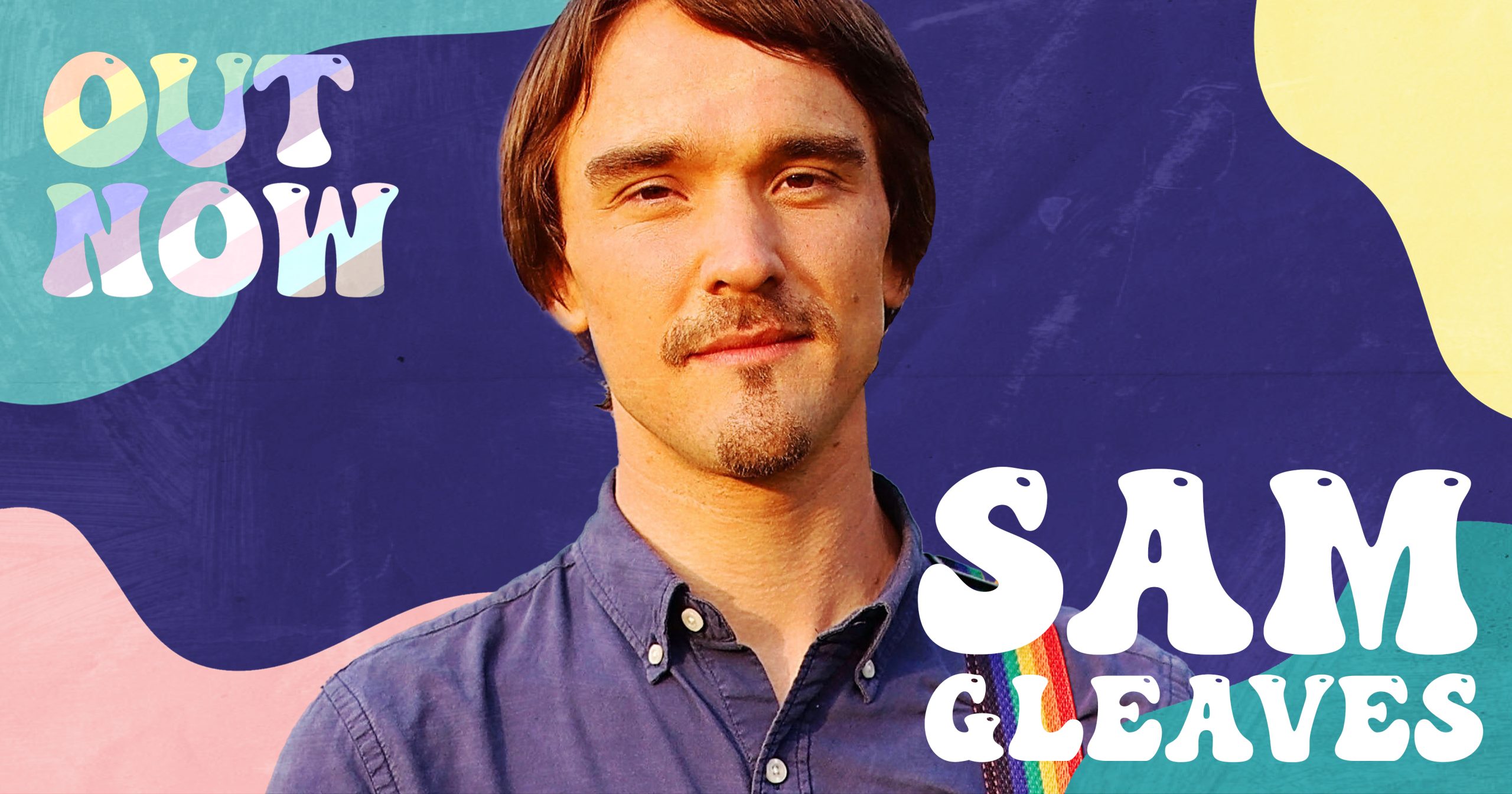
Out Now: Sam Gleaves

Last month, Sam Gleaves released his latest album, Honest, with the intention of sharing his truth. Sam was born and raised in southwest Virginia.

Songs from the project, like “Queer Cowboy” and “Fear,” were written for his partner and detail queer experiences. Lyrics like “Love is stronger than fear” point toward the challenges of being part of the LGBTQ+ community and the need for authentic love. Other songs address his parents, like “Walnut Tree,” written for his father, and “Beautiful” for his mother. Both songs feel nostalgic and share the value of simple things like gratitude and a day outside, under the trees.

In our Out Now interview, Sam shares his current state of mind, his favorite LGBTQ+ artists, the best advice he’s ever received, and more.

What is your current state of mind?

I feel grateful. After years of work, the new record Honest is out in the world! I am fortunate to have worked with a bunch of my dear friends in the creative process. They are all world-class musicians and singers. Hasee Ciaccio and Josh Goforth were the core team in the studio. We arranged the songs together and recorded most of them as a trio. Josh Goforth is a genius producer and his vision really made the songs shine. A number of my favorite musicians and singers guested on various tracks, like Carla Gover, Linda Jean Stokley, Jared Tyler, Jeff Taylor, and Chris Rosser. I’m proud of every second of music we created together.

Why do you create music? What’s more satisfying to you, the process or the outcome?

What a great question! I create music because I need it. I love storytelling. I walk through memories in my writing process. In the songs I selected for my new record, I wanted to honor the people who have shaped my journey: family, musical collaborators, and lovers. All of those people are tied to places etched onto my heart, especially southwest Virginia and central Kentucky. I process grief through my songwriting, because there is great injustice in our world and that affects the people and places that I love. Most of all, songwriting is restorative and the songs become a mode of connection.

What’s the best advice you’ve ever gotten?

To try to laugh or smile when I make a mistake. I feel that applies in my musical life and the rest of my life!

Who are your favorite LGBTQ+ artists and bands?

I have too many favorite LGBTQ+ artists and bands to name! I am grateful for friendships with my mentors, who are also pioneers, like Cathy Fink & Marcy Marxer, Peggy Seeger, and the members of Kentucky’s own Reel World String Band.

Over the past decade or so, it has been a great joy to see the many roots musicians that are celebrating their identities, folks like Justin Hiltner, Jake Blount, Jared Tyler, Tyler Hughes, Amythyst Kiah, Pierceton Hobbs, Larah Helayne, and many others. The list goes on and on!

For anyone reading this who might not be out of the closet, were there any specific people, musicians, or resources that helped you find yourself as a queer individual?

When I was in my early twenties, I met Cathy Fink & Marcy Marxer. Cathy and Marcy have been the two most generous, supportive, and loving mentors in my musical life. Cathy produced my first record, Ain’t We Brothers, and Cathy and Marcy both played on it. Their mentoring helped me to learn to believe in my art and pour myself into it. By being life partners and musical partners in the traditional music world, Cathy and Marcy created space for musicians like me to be part of the community. They are committed to celebrating diversity and advocating for social justice through their music. I think that all young LGBTQ+ people should hear Cathy and Marcy’s recordings, especially Cathy’s song “Names” and Fred Small’s song “Everything Possible.” I am one of many folks who have benefited from Cathy and Marcy’s wisdom and friendship.

Around the same time that I met Cathy and Marcy, I heard Gaye Adegbalola perform. Gaye’s music, her luminous personality, and her openness about her identities made a great impact on me. I was deeply moved to witness an artist so firmly rooted in blues traditions telling her story as a queer Black woman. At that time, Gaye had recently recorded an album called Gaye Without Shame, one of my absolute favorite records. I didn’t realize how much shame I held around my queerness until I heard Gaye sing her brilliant songs with such confidence and verve. From the moment we met, Gaye encouraged me and poured out love. As she says herself, Gaye has a whole lot of mojo to give!


Photo Credit: Erica Chambers

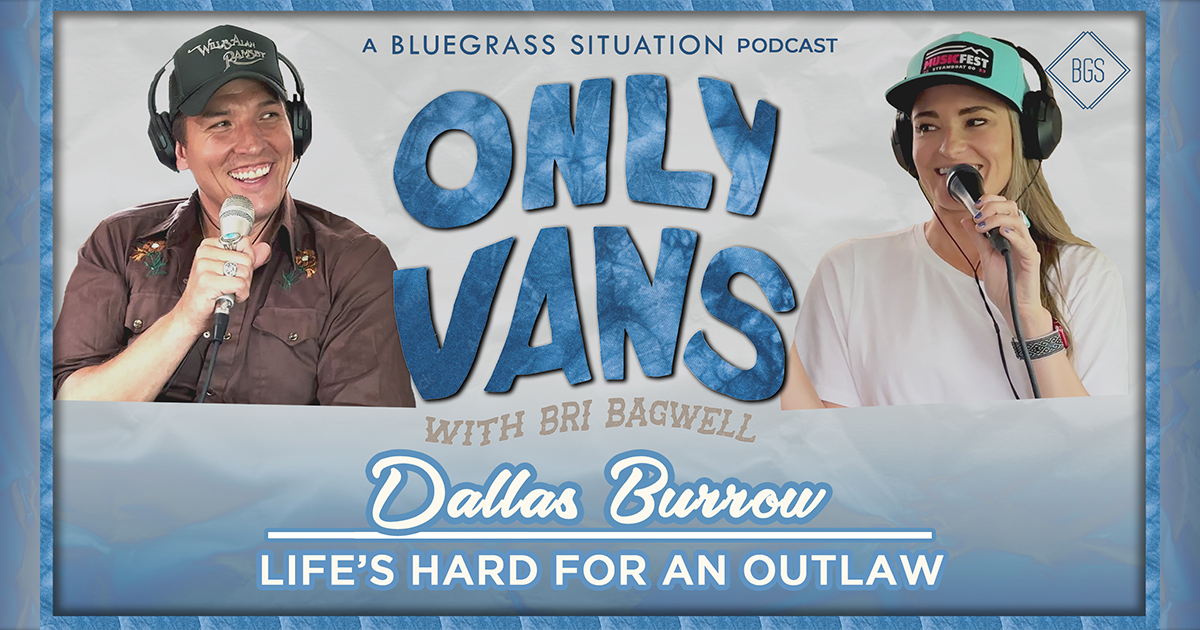
Dallas Burrow on Only Vans with Bri Bagwell

One of my favorite people on earth, Dallas Burrow, stopped by for this new episode of Only Vans to talk about owning a music venue, shamans, Charley Crockett, having a complicated past, and all the good vibes!

LISTEN: APPLE • SPOTIFYAMAZON • MP3

Find Dallas’s music, podcast, tour dates and merchandise here.

Thanks to our sponsors for this episode, The MusicFest at Steamboat, Lakeside Tax & CH Lonestar Promo!


Editor’s Note: Only Vans with Bri Bagwell is the latest addition to the BGS Podcast Network! Read more about the podcast coming on board here. Find our episode archive here.

Open Mic: Charlie Peacock Pushes Through Chronic Pain on ‘EVERY KIND OF UH-OH’

With a 40+ year career spanning virtually every aspect of the music business – from performing and songwriting to production, development and even education – Charlie Peacock has battled myriad creative challenges. A standout in the Contemporary Christian format who was also deeply involved in the Americana folk boom of the 2010s (he was even the driving force behind The Civil Wars’ mainstream emergence), no problem seemed too big to handle. But for his new album EVERY KIND OF UH-OH, Peacock had to overcome an obstacle unlike the rest: a rare, debilitating health condition.

Diagnosed with Dysautonomia and Central Sensitization, Peacock has essentially been experiencing a never-ending headache since 2017 – seven grueling years and counting. Needless to say, it has upended the GRAMMY winner’s life, and while some days are better than others, the chronic pain prevented him from music making all together– until a flash of writing in 2023, that is.

Featuring 10 all-new songs penned in a two-week flurry, EVERY KIND OF UH-OH finds Peacock getting back to work, but with fresh appreciation for life’s messy beauty. Co-produced with his son Sam Ashworth, a peaceful mix of dream-folk and gospel match a tender, feathery tenor, as Peacock explores against-the-odds optimism with spirituality, purpose, and humor. In the end, it feels like a veteran songsmith’s statement of revelation; and a set of life lessons delivered with knowledge, not judgement.

Still fighting symptoms on the morning after a party celebrating the album’s arrival, Peacock spoke with BGS about how his life transformed and how it forever changed the way he makes music. Peacock also plans to release his memoir, Roots & Rhythm: A Life in Music in February.

We’re really interested in the way things like creativity and mindfulness and health intersect, so I’m fascinated by your story. Can you just tell me how you’re feeling today – both in a micro sense and in terms of the bigger picture with everything you’ve been through?

Charlie Peacock: Well, just for the background, I have a neurological disorder called Central Sensitization, which is a pain management disorder between the brain and the central nervous system about how pain is managed. So, my brain got tricked into thinking I am in trouble, and it’s sending me pain signals. Basically in the same way that if I scratched my arm on something, that scratch pain is there to tell me, “Hey, there’s something wrong with your arm. You might want to take a look at it.” Well, the brain functions in that way for all our pain management throughout our entire body.

So mine, this disorder that I have is that everyday for almost eight years, I’ve had an intractable headache. I’ve had an eight-year headache basically, and it goes up and down in terms of intensity. Sometimes it’s “You’ve got to go to the hospital” intensity. And most of the time it’s just sort of like a three or a four [on a scale of one to 10]. And I’ve learned to function through various methodologies and mindfulness and various kinds of treatments that I’ve done.

I imagine on top of the physical side of things, it has impacted your creativity. How did this change the way you look at making music?

Well, it got me back in some ways. It got me out of the music business and back into music making.

Really? How so?

At the point when I got sick, I was just turning 60 years old. So I was a 60-year-old man who’d been in the music business for 42 years, who was in writing rooms with 20-somethings. And even though part of my whole thing as a songwriter and a producer is that I’ve stayed relatively current, you’re still a person of your time and your generation. It’s like, could I make a trap song? Absolutely. But will I make one that is convincing to people who listen to trap? Maybe not. …

I was functioning more as the older, experienced sage that comes in and cleans up people’s songs. And so what the illness did was it put me back in that more childlike place of working on my own music and experiencing just the joy of creating, rather than coming in as the expert who’s going to be the song doctor or the producer who’s going to give that artist that extra 23% that makes them commercially viable or something like that. So that has been a real joy. And then of course, as I’ve said many times, it’s like you take care of the music and it takes care of you. That’s been the case just in terms of imagination and creativity during this illness, where it’s been a part of my medicine for sure.

Here we are eight years after the illness started and you’ve got a new record. What changed to bring this music out?

Well, [before] this illness period I had gone to Lipscomb University and created their commercial music program, and then became the head of the School of Music for a year. And it was during that time that I got sick. I was already kind of moving out of the producer-for-hire model and kind of had this education piece that was on my bucket list. So I had gone and done that and then I was just here working, making a lot of music, doing a lot of writing, working on a family, a screenplay for a family story from the 1800s, just doing a bunch of different creative things. …

[After the illness], I just had a willingness to say, “If my music career is over at this point, then I will have been really grateful.” And this memoir is kind the period on the end of the sentence. Then all of a sudden it was like I woke up one morning like “Is that an idea for a song?” It was brewing. So I started working on it and then a few more. And then I asked my son, “Hey, you want to help me finish this song?” I go out to his house and we hang and work on this song. We’re both super excited about it. And then he finally, after hearing more of the music, he was like, “Dad, you got to promise me you’ll take this seriously. Don’t just tell everybody, ‘Hey, I have a new record out on Friday and buy a couple ads on Facebook and call it a day.’ I think you need to actually do an old school release and get a distributor and have them set the record up.”

I said, “I don’t know if I have the energy for that.” But [Sam] said, “Well, I’ll help you.” And so he did help me. Really, the whole family has been a huge help. Sam came alongside me and he co-produced the record and we co-wrote three songs on it. And literally, it’s a 10-song album. Within 14 days. I had all 10 songs written. And it was just one of those times where it was just time to do that. I didn’t know it was, but it was.

Fortunately, I also had some pretty good windows of health that I could [record]. I had some days when I tried to sing where it’s just like, “Man, it’s just not happening.” But I’d wait a few days and get rested up again and go up to the studio and sing, and it would still be there. I was actually surprised myself, some of the range that I was able to sing at still.

Have the songs taken on a new shape for you or a new dimension, topic-wise and thematically?

Well, my great-grandfather was a fiddler in Louisiana and my grandfather from Oklahoma loved to sing all the Okie songs of the era. And I thought, let me just lean into that a little bit. So I would say this record is a little taste of that, especially the instrumentation is pretty much still the same in terms of rootsy guitars and just simple drums and bass and fiddle and pedal steel. And the only difference between this record is I really leaned into the gospel vocal sound. A lot of my friends that have been dominant in Black gospel music. And so that’s a difference. Narrative-wise, I was really trying to do this kind of literary thing that was a mix of plain-speak American roots, with these literary elements, and then also take a spiritual element, but not make it religious, and try to create a narrative that was uniquely American. I think in its influence, it’s almost like reading some of the classic American novelists.

There’s a wonderful mix of storytelling and deeper spirituality, for sure. Thank you, Charlie. I’ll just leave you with the big picture. What do you hope people take away from this record?

I think for me, even listening to the songs and seeing the reaction from folks, what they said afterwards is, “This is a world that I want to enter into. There’s something about what you’re creating on this record, this musical world, and this invitation to come on in that feels really safe and that I will belong here and I’ll be well loved, cared for, not judged – allowed to just be myself.”

And I think that’s what we want. I mean, I think that’s what makes our heart beat, is that we just want to be known totally. We want to be known like the intricacies of our personalities. We don’t want to be known superficially. And I hope there’s something about this music that sends that signal that, yeah, I do too. Come on in and listen and see if you find some of that here.


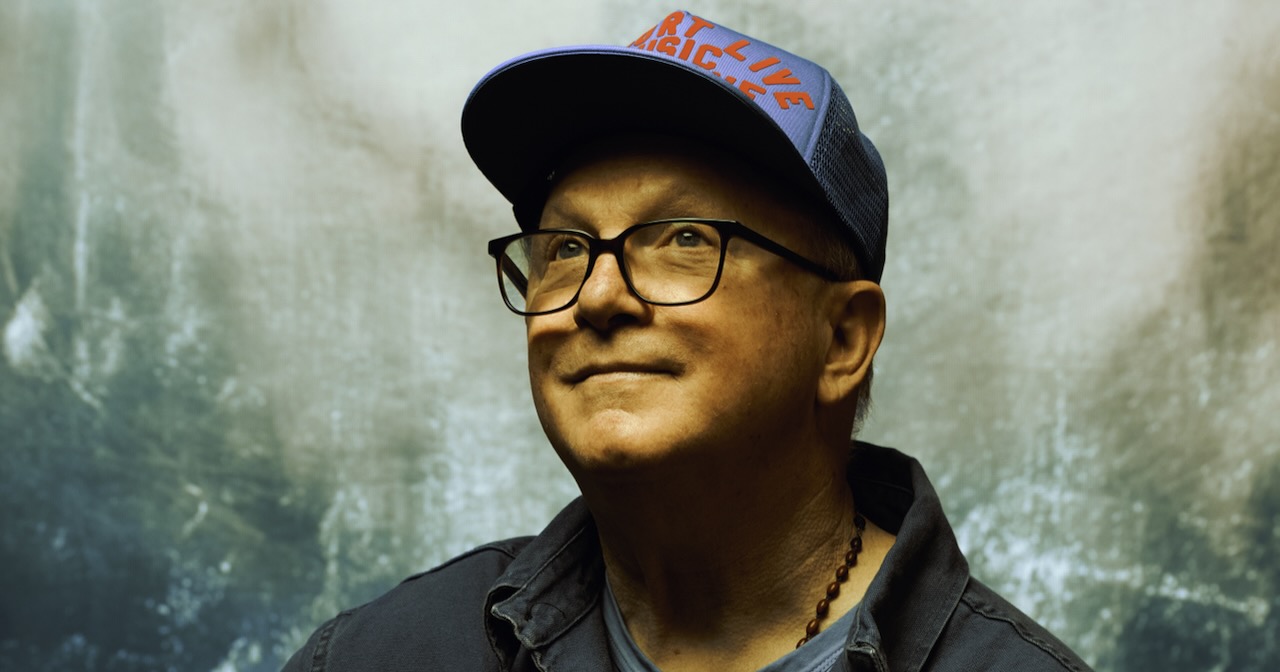
Photo Credit: Jeremy Cowart