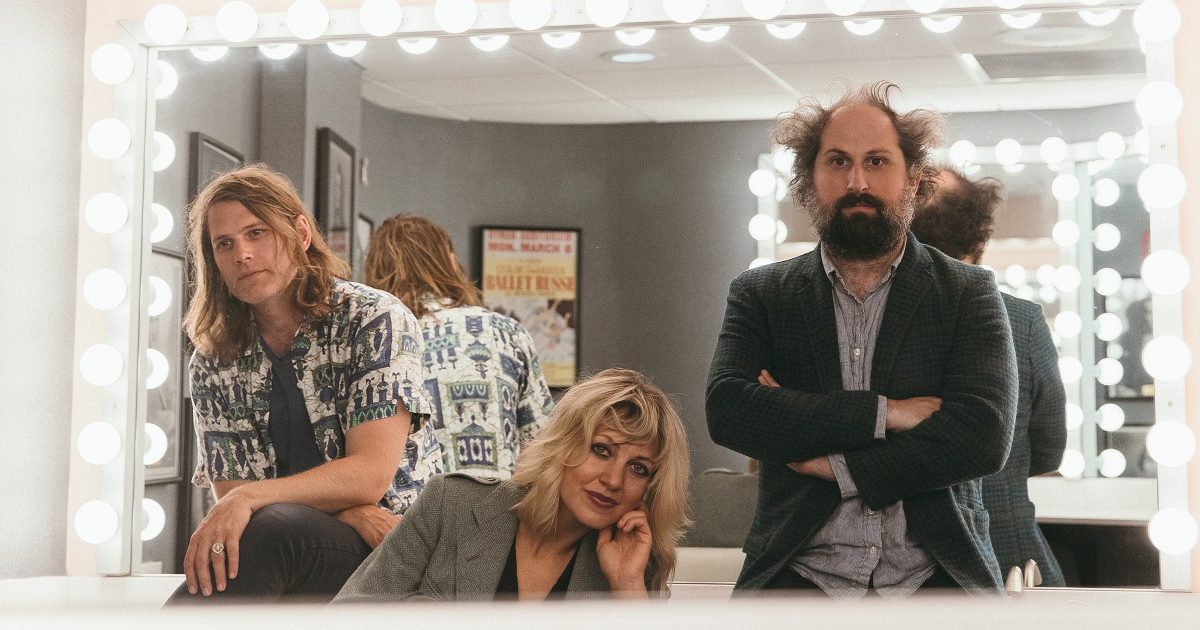
Bonny Light Horseman Turn to British Folk Songs for Supergroup Debut

Bonny Light Horseman, a new American supergroup interpreting old British folk tunes, is one of the few good things to come from Twitter. After spending nearly fifteen years shepherding her ambitious musical Hadestown all the way to Broadway, Anaïs Mitchell was catching up on some of music she’d missed out on, and she took to the social media platform to shout out the Fruit Bats, the long-running indie-pop band led by Eric D. Johnson. It just so happened that he had recently discovered Mitchell’s music and was a new fan.

“It’s an embarrassing way to meet someone,” Johnson says, “but that’s how it happened. She tagged me and said she loved my band. There are so many bad vibes on [Twitter], but I do like the fact that you can write a very short fan letter and you know they’ll get it.”

Mitchell was already working with producer/multi-instrumentalist Josh Kaufman (Craig Finn, Josh Ritter) on a new project for the Eaux Claires Festival, and Johnson admits he steamrolled his way into the gig. At the 37d03d Festival in Berlin, the trio spent a few hours each day creating and recording new arrangements of old folk tunes like “Blackwaterside” and “Lowlands” with a small army of friends and collaborators joining in — including members of the National, Hiss Golden Messenger, the Staves, and Bon Iver. The result is a lush and lovely collection of songs that may be centuries old, but sound very much of their moment.

At least on paper it may seem like an unlikely folk alliance, considering Mitchell is the only artist among them popularly identified with that genre. Kaufman is more associated with artful indie rock, while Johnson is well known for crafting supremely catchy pop hooks.

“I have a fairly strong folk background,” says Johnson. “I used to teach banjo at the Old Town School of Folk Music in Chicago, but somewhere along the way I veered off on a poppier path. But Anaïs has a bona fide folk background beyond her career as a singer/songwriter. She knows all the old stuff and grew up with those records in her house. So she’s been a teacher to Josh and me in a lot of ways.”

This kind of collaboration fits with the 37d03d ethos. Founded by Bon Iver’s Justin Vernon and the National’s Aaron Dessner, the organization encourages and supports creative cooperation between artists in different genres and often on different continents. Already the duo have released an album together under the name Big Red Machine, and the recent posthumous Leonard Cohen album features 37d03d artists putting new music to his unrecorded lyrics. (It should be noted that the organization was originally known as PEOPLE, but changed its name to 37d03d in early 2019. It’s still pronounced PEOPLE, though. To see why, just turn your computer upside down.)

“They’re interested in artists expanding and exploring and collaborating,” says Mitchell. “After a while you get a kind of artistic identity, like a calcification of who you are as an artist and what you do. But there are people who are yearning to be free from the trappings of who people think they are. So PEOPLE offers an opportunity to be kind of childlike, to get back to that beginner’s mindset.”

For Mitchell it’s been a nice break, a way to settle gently back into her old life as a singer/songwriter after devoting so much time to Hadestown. Just before they embarked on a long tour supporting their debut, two-thirds of Bonny Light Horseman — Johnson and Mitchell — convened to talk about the durability of folk music, the joys of collaboration, and people who need 37d03d.

BGS: How did 37d03d inform this project?

Anaïs Mitchell: I feel like we were forged in the fires of PEOPLE. They’re interested in people expanding and exploring and collaborating and trying new things, so it was really perfect that we got to be a part of it before we really had any idea who we were or what we were doing.

Eric D. Johnson: I don’t know where this project would be without it. I don’t know if there’s anything modern that can be compared to it. I try to imagine how they pull it off from a financial or logistical standpoint, but they’re doing truly the Lord’s work, which is essentially creating a really easy platform for a bunch of people to get together and do something creative. I don’t know if it’s the most modern construct ever and they’re light years ahead of time, or if they’re completely out of their minds and operating on some sort of beatnik principle that’s completely untenable today. It’s probably both and/or neither. It’s an out-of-time thing in a very beautiful way.

AM: I’d been working with Josh on some of this material. I’ve been an admirer of his for a few years now — his playing and his producing on other people’s records. The thing was kind of a gleam in the eye, you know, when Justin [Vernon from Bon Iver] and Aaron [Dessner from the National] reached out to see if we wanted to do this project. Why don’t you play that at Eaux Claires festival? That was cool of them, because we didn’t even have a band name yet. We were just exploring. Just messing around.

EDJ: Then I steamrolled my way in, and it ended up becoming this band. That’s how it got started, and that parlayed its way into the big Berlin project, where they did this big, unique artist-in-residency festival type thing at the Funkhaus. It was like summer camp. That’s the only way to describe it.
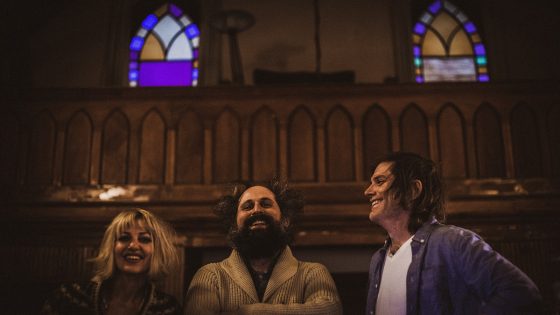
Photo credit: D. James Goodwin

I think of PEOPLE as promoting that kind of collaboration, where you can play on somebody’s record or in somebody’s band without having it be a major statement.

AM: Totally. There was a moment in the middle of the recording where Josh said, “Man, we could really use a drum on this track.” Out in the hall, we heard a cymbal fall to the floor and make a big crash. Josh opened the door and it was Andrew Barr from the Barr Brothers. He was on his way to another session, but he had three minutes so he came in played the one drum that we needed on that tracks. It’s stuff like that. Or there’s a song that has a couple of the Staves on it and Lisa Hannigan. They just happened to be free. There was a lot of serendipity with that stuff.

When we were in Berlin, we didn’t know that we were making a record or that any of that stuff was going to have any value to anyone else outside of us. But then we got back to the States and we listened back and we were like, Wow, this gig is really good! It felt like half of an album. So the question became, how can we finish it? How can we make the other half of the record feel like it’s of a piece with that stuff, even though the setting is going to be different? So we made the rest of the record at Woodstock at this beautiful studio called Dreamland, which is just a big, old, weird church.

EDJ: We recorded in Woodstock for two days. It was more of a traditional recording setup. I remember we did “The Roving” there and “Deep in Love,” which are two of the singles and I think two of the strongest tracks. We did them at 1 in the morning. They’re both completely eleventh-hour songs.

At what point did the idea to cover old folk songs come into play?

AM: Traditional folk music is kind of a passion of both of ours, especially like British Isles stuff. We started to mess around with some things, and the very first song that Josh and I ever worked on together was “Lowlands.” Which is interesting because I hadn’t heard any versions of that song. I guess I had maybe seen some texts, and I learned that there are two strains. One is this British Isles strain, and the other is from the American South. They’re basically ghost stories, in which a dead lover appears to a woman or in some versions a man. They’re also stevedore songs, songs about working up on the shore, loading crates onto ships.

So the song that we put together contains elements of both of those things as well as some stuff that we made up. It felt like a cool puzzle to put together. A lot of them I would say have had less research. We said very early on that we didn’t want it to feel like a research project. We really wanted to be more heart-led and wide open.

EDJ: I would say we were adamant that we didn’t want to do a research project. We just want to enjoy it. But it is incredible when you do a little research on these songs — and this is not news — you don’t have to be an advanced musicologist to know just how interwoven American music and the music of the British Isles are. That music came to western Appalachians and eventually gave us country music and rock ‘n’ roll.

The through lines are so short still. It’s really not that old. When it split off, our grandparents were alive. Those songs are so ancient and so thoroughly modern at the same time in the themes they’re singing about. If you listen to the lyrics of “The Roving,” which are hundreds of years old, it sounds like the plot to a teen summer movie from the ‘80s. It’s just people loving and longing and grieving and having sex and everything else we’ve been doing and singing about for as long as anything.

It doesn’t sound like an album concerned with preservation or historical accuracy. You’re taking a lot of liberties with them without trying to explicitly update them to our current moment.

AM: A lot of the songs have new music but the text is traditional to one degree or another. The text of “The Roving” is based on songs like “Courting Is a Pleasure” and “Handsome Molly,” but the music isn’t connected to any of those songs. But it still feels like a heartfelt way that the voice wants to sing. This is a total aside, but it’s just such a pleasure to sing with Eric. He’s so unfettered in his singing. It makes me want to sing that way, too. I had to sing my heart out in order to get on the same level as him.

EDJ: This is folk music. It doesn’t need to be finely hewn. It can just be a lump of clay that you emotionally hack at until you get something out of it. There might be some deep, deep purists who think we’re very impure in how we approach these songs. But these songs are meant to change over the years. They’re from the oral tradition, from pre-recorded times, so we don’t even know what the original version of “Deep in Love” sounds like. We just know what we came up with. That song was sort of a sketch that I had written for the last Fruit Bats album, but I couldn’t get anywhere with it. I had a melody written, just a do-do-do verse that I sang in the studio, and Josh opened up a book of traditional Welsh folk lyrics. He said, “Sing these lyrics over that melody.” They slotted perfectly, and that’s how you hear it.

Is this a one-off project, or do you think Bonny Light Horseman will continue?

EDJ: I think we’re gonna pick it up again, but we have no clue what we’re gonna do next. We could just be this band that keeps reinterpreting British folk music forever, but maybe not. Making this first one was very natural and easy in a lot of ways, and we’ve enjoyed playing shows together, but I don’t think the way forward has been pointed out to us just yet.


Photo credit: Nolan Knight
Anaïs Mitchell Follows Broadway’s ‘Hadestown’ with Bonny Light Horseman

In June 2019, Anaïs Mitchell picked up her first Tony Award when Hadestown beat out bigger productions like Beetlejuice and Tootsie to snag Best Musical. It was an unlikely win for the eccentric and ambitious production — and the culmination of fifteen years of hard work bringing it to Broadway.

“I had no idea how long I was going to work on it,” she tells BGS. “I really didn’t. I just knew what the next step always was and just kept taking them.”

A folk musician born in Vermont and based in Brooklyn, Mitchell first staged Hadestown as a regional production around New England, and it resembled something like a traveling medicine show, as she and her friends toured it the way they might tour an album. In 2010, she released it as something like an Americana concept album, casting colleagues and collaborators in key roles: Bon Iver’s Justin Vernon plays the role of Orpheus, while Ani DiFranco is Persephone.

The story is old, even if the production is new. Mitchell borrowed characters from Greek mythology, combining the stories of Orpheus rescuing Eurydice from the underworld and Persephone warring with Hades. But she filtered them through John Steinbeck and Upton Sinclair, imagining the underworld as an industrial hellscape, like a sooty factory or a mine, with Hades abusing both the natural world and his workers.

In 2015, she began working with a stage director named Rachel Chavkin, who brought the award-winning Natasha, Pierre, and the Great Comet of 1812 to Broadway. Together with a team of producers, musicians, actors, set designers, choreographers, and many others, they began to rework Hadestown for a bigger stage, streamlining the story and rearranging the music for maximum impact. In some cases they rewrote entire characters or scratched entire songs, searching for the best possible way to tell this complicated story.

When it debuted at the Walter Kerr Theater in March 2019, Hadestown barely resembled the production Mitchell staged around Vermont. It was bigger, flashier, more accessible, but also truer to the big ideas that inspired her in the first place. At its heart is an America defined by conflicts between industry and environmental conservation, between commerce and art, between various forms of love and labor. Yet, in its most innovative stroke, the production retained its roots in folk music and its populist ideas. The original cast recording just earned a Grammy for Best Musical Theater Album.

“It’s a little crazy to be on the other side of it,” Mitchell says. “I’m still trying to bend my head around what that means. Like, what kind of songs do I write now?” For the moment she’s focusing on her new band, Bonny Light Horsemen, which is something like a supergroup trio with Fruit Bats mastermind Eric D. Johnson and multi-instrumentalist/producer Joseph Kaufman. Featuring members of Bon Iver, the National, and Hiss Golden Messenger, their self-titled debut album resituates centuries-old folk songs in new settings. “Bonny Light Horsemen has been this really assuring kind of space to be creative in and make music and not feel like it’s my new statement,” she says. “Because it’s not.”

As she was packing to launch a lengthy tour with Johnson and Kaufman, Mitchell spoke with BGS about Greek and American mythologies, creative uncertainties, and songs that straddle the line between personal and universal.

BGS: You lived with Hadestown for more than a decade, during which time it morphed into a brand-new creature. What kept it compelling for you?

Mitchell: I would say that like the simplest answer to that question is that it never felt done. The studio record that we made in 2010 felt done for a studio record. It felt like a complete statement. But the show began as a stage performance piece and I always wanted to see it that way again. As soon as I started the next phase of development with Rachel Chavkin it was one chapter after another: We’re going for off-Broadway. Then we’re going for regional. Then we’re going for Broadway. And it always was like, “It can be better, it can be better…”

And the people kept the wind in the sails of the project. At a certain point it became so much bigger than me. Maybe it always was bigger, because there’s the orchestrators and the singers and all the people in the different cities. It became something like a whole community of people just chipping away at the same piece of stone. It was very exciting to be in the room with those actors and with Rachel and seeing the choreography and the sets coming into focus. It was like a hive. I couldn’t have turned my back on it.

Do you feel differently now that it’s up and running in its current form?

Now that it’s up and running, I don’t even go. It’s happening every night and I get a little report by email here in Brooklyn. It really has a life of its own. It’s become its own animal. And I think I did max out what I could give it in that period. So it feels great to just be making folk music with Bonny Light Horseman right now. It definitely feels like the right place to be.

Why did you want to pursue this story as a stage production? What made it something different than an album or even a book?

From the earliest moment of starting to work on the piece, I was excited by the idea of telling a dramatic, long-form story with larger-than-life characters. I love songs so much, but I remember noticing that even at my favorite concerts by my favorite songwriters I would start to get bored with all these tiny climaxes in the songs. There was a disconnect from one song to the next.

I will watch a terrible movie all the way to the end because there’s that question: How is this going to end? What’s going to happen next? That is so powerful and it will carry you through. I wanted that for this piece. I wanted all the songs to lean on each other, so that you had to watch the whole thing and get through to the end.

That took you well outside what most folk musicians and singer/songwriters are doing. What did you learn during that process?

There was so much learning in terms of writing a song that felt like it was structurally perfect for the album, like “Wedding Song.” It’s just three verses and a little interlude. I would play that at my songwriter shows and think, yeah, it’s so tight. But it fell flat as a dramatic scene. I had to find a way to explode the form without breaking what works about it.

I also learned about putting space into a song. You might put space into a song so that a musician can improvise or express themselves. The same is true for drama: There was to be space for the actor to create the character. As a write, I tend to want to fill that space with words. I think both of these mediums are really similar in the sense that you’re building something for someone else to inhabit. You’re building a house that someone else can live in.

If you can write a song that’s good enough that other people are going to sing it and cover it and let it live in the world, you’re creating something that is similar to a play, which can be revived just by other people’s involvement in it. It’s bigger than you. And hopefully it’ll outlive you.

That’s interesting, because right now it seems like most people prize the singer/songwriter model, where the song is heard as an extension of the person and means less when it’s covered by someone else. The idea of somebody telling their truth seems to have more validity right now than a song that can change and accommodate new interpretations and maybe means something different when different people sing it.

I think we’re approaching an idea that feels really important to me. I haven’t talked about it enough to have language about it, but I do think things need to be true emotionally for the person who’s writing them. I would say all of the songs in Hadestown came from a place of personal truth even though they maybe took on the clothing of the character or the needs of the scenario. There has to be some emotional truth. That’s a sacred thing. But there’s something intersecting that idea. What is universally true or part of some collective unconscious stuff can be exciting.

You could go about trying to write something like a hit or a standard as a kind of exercise, and it might not feel true to you. To be honest, I think a lot of Nashville co-writing scenarios end up this way, where you get something that feels structurally tight but is missing some kernel of personal truth. But you can go too far in the other direction where it’s like the person is totally self-expressing. How does that mean anything to me or to someone else?

It’s that middle ground you’re looking for, where you can sing from your own heart and experience, but you’re also singing from the heart of the world, from the world’s experience. Folk music is really interesting for that, right? Because it’s like water from a deep well. Those songs tap into a universal experience, and those archetypes and images are going to live forever. So if I can find a way to write that taps into that but also feels true to me, then that’s the zone I want to live in.

Do you feel like you reached that with this iteration of Hadestown? Is this the final form it will take, or will you keep developing the story?

There was a moment when I thought I was going to revise it for the tour that we’re doing in the fall. But we just put out this cast recording, which is beautiful and has all the material in it. I think people might want to go to the regional version and be able to experience the show that they’ve listened to on that recording. I do fantasize about a film version, but that’s maybe years down the line. For the time being I think it’s best for me to take a step away, but I could see getting really excited to roll up my sleeves again for what would essentially be another phase.

I’ve actually been working on a book, which has been very therapeutic. It’s coming out sometime this year and it’s basically the history of the project, the evolution of the lyrics. It’s called Working on a Song. I was able to go back and look at a lot of these songs and see where they came from and how they evolved. I often would say I felt like I was banging my head against the wall: The idea was wrong, the thing was wrong. It’s wrong, it’s wrong, and then suddenly it’s right. At the time it didn’t feel like those wrong choices I had made meant anything. But when I look back on the process, I can see more clearly the way certain lines came up or certain songs or ideas came about. They didn’t come up quite right, so they went back into the soil. They nourished the ground that then the right thing could grow out of.

So much of the time you feel like everything is futile. Like, I can’t believe I just sat here for however many hours and made only one rhyme that might not even be good. That happens to me all the time. So the metaphor that I came up with has to do with gardening. You have to rake around, and the raking is sort of aerating the soil. You’re preparing the ground for the right thing to come up. And when they do come up, they’re beautiful, like flowers. And then they go back into the soil and eventually nourish the next thing.

That definitely seems to fit with the story Hadestown is telling, about an artist who literally goes into the soil to rescue his beloved and finish this unfinished song. From a creative perspective, how much did you identify with or relate to the character of Orpheus?

Totally. It’s interesting that that character took so long to come into focus. Ever since our off-Broadway version of the show, Orpheus confused a lot of audiences. People weren’t falling in love with him. They found him and Eurydice to be less fully drawn and therefore less compelling than the older couple Hades and Persephone. I always thought of Orpheus as this really crazy optimist. He’s got this faith in the world and in his own music, but then he ends up besieged by doubt at the end, which is supposed to be crushing. But he has a lot of lines that if they were delivered wrong — even just by a tiny fraction of a percentage wrong — they felt swagger-y and cocky, which is not what I intended for him.

I always thought of him as this sensitive soul, and that kind of machismo was not in keeping with that idea. His first line was, “Come home with me.” And people were like, who is this guy? Why’s he trying to pick up this chick? Why should we love him? People weren’t identifying with him, and they didn’t care if he won or lost. Obviously, if you don’t love him and want him to succeed, then the story falls flat. You’ve got to love Orpheus.

After we debuted in London, there was a crisis moment when we had this awful nagging feeling that something was not quite in focus. People don’t love this hero. It came up in a lot of reviews. So we went into triage mode, me and the director and the producers. How can we fix this? So we decided that for Broadway, we would really lean into his naiveté. He’s a boy who’s lost in his own world. He undeniably has a gift to give the world but he’s not very good at living in the world the way it is. He’s socially inept. He doesn’t know what he’s doing.

Suddenly that made him appear much younger and much more innocent. It’s not like he’s so brave to stand up to Hades. It’s more that he just doesn’t know any better. He’s an innocent who finds himself in the belly of the beast, and he doesn’t know any better than to call out what he sees as true. What we fall in love with is his purity of heart. That’s what comes through in his singing. That was a really fascinating journey with that character for me. That song that Orpheus could never finish was also the song that I felt I could never finish.

(Read our second installment of our Artist of the Month coverage on Anaïs Mitchell tomorrow.)


Photo credit: Shervin Lainez

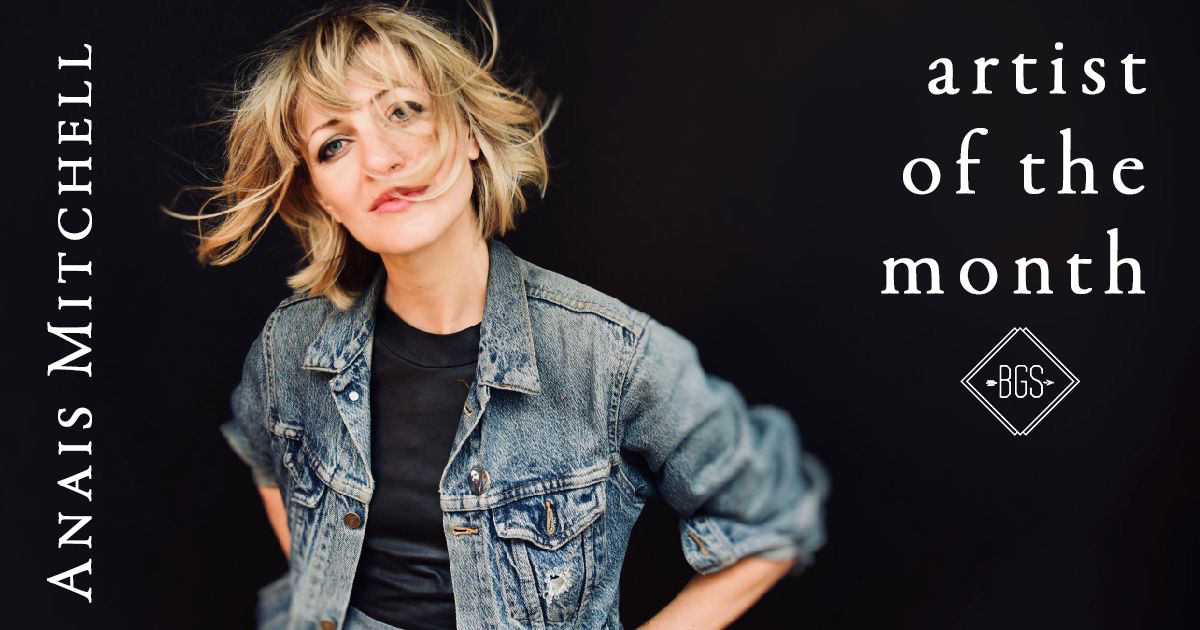
Artist of the Month: Anaïs Mitchell

The world has finally caught up with Anaïs Mitchell. With sold-out runs in London and New York, near-constant critical acclaim, and a sweep of eight Tony Awards, the Vermont native was quite literally center stage last summer accepting the award for Best Original Musical for her creation Hadestown.

But Anaïs Mitchell has been center stage for a very long time — it’s the size and location of the venue and audience that has changed. With five solo records under her belt, a growing collection of collaborative projects ranging from a record of obscure English ballads (Child Ballads with Jefferson Hamer) to a new supergroup Bonny Light Horseman (with Eric D Johnson of Fruit Bats and guitarist Josh Kaufman), and the decade-long evolution of her now-famous folk opera Hadestown, Mitchell is profound not only in her turnout, but in the indisputable quality and beauty of everything she touches.

That’s why we’re excited to present her as BGS‘ first Artist of the Month for 2020. Throughout the month, we’ll be digging deeper into her career with an exclusive interview feature by Stephen Deusner. After all she’s accomplished in the last decade alone, we can’t wait to see what’s next for her in the one to come. For now, enjoy our Essentials playlist and prepare yourself for the Month of Anaïs Mitchell.


Photo credit: Shervin Lainez

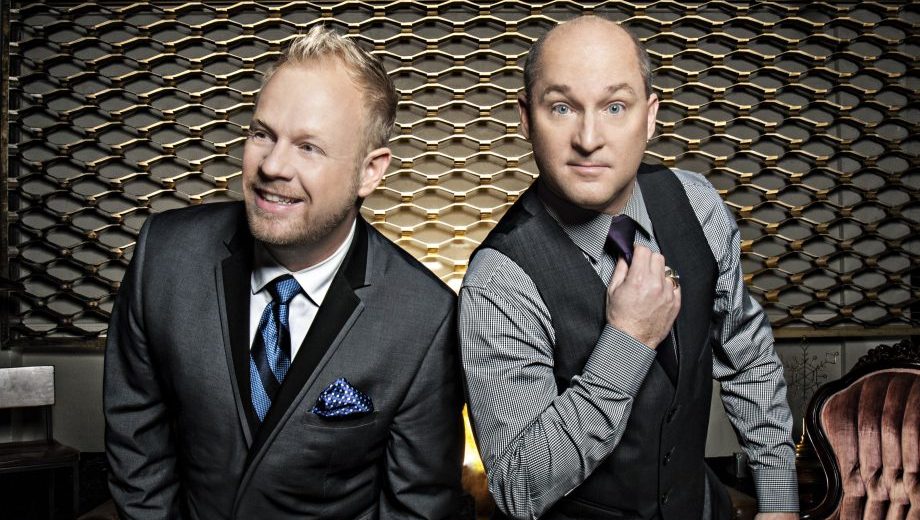
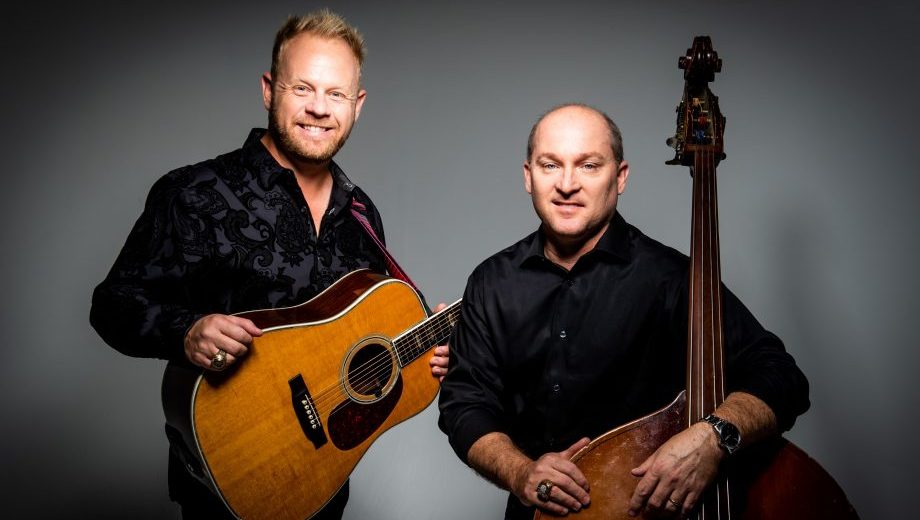
Dailey & Vincent’s Darrin Vincent Finds Satisfaction by Playing Every Day

After a dozen years of success, Dailey & Vincent are currently in a period of transition. Building on the popularity of The Dailey & Vincent TV Show on RFD-TV, their next album will be the first straight-up country record they’ve ever done – following up last year’s holiday album, The Sounds of Christmas, which provides the playlist for The Joys of Christmas Tour happening now through December 15.

In the second portion of our interview with BGS Artist of the Month, Dailey & Vincent, we catch up with Darrin Vincent.

(Editor’s Note: Read our BGS interview with Jamie Dailey.)

BGS: How does the musical division of labor work with you two?

Vincent: We collaborate together on pretty much everything, looking for songs and arranging and producing. But this country album, I don’t think we’ll do that the same because we’ll have an outside producer [Kyle Lehning] for the first time. It will be different to be just artists this time, throwing ideas over to him. It’s exciting and also scary to let go of complete control, and it will be interesting to see how this goes, to let someone else drive the bus.

We prayed on it, that we’d be led to the right person who has the same vision, and it seems like he does. You have to have faith and move on it. If it does not do well, OK, we’ll go back to what we did before. For now, it’s kind of fun to not have quite so much to deal with because we’ve got plenty on our plate with the TV show.

How close are you and Jamie offstage?

We live too far apart to really hang out, but I love him like a brother. Yes, we’re business partners, but if either of us is hurt or needs prayer, we’re there. Both of us know that if either of us needs anything, night or day, just call. We’re very close, but we also have to have space away from each other just like any other family. He’s a good man and I love what he stands for, even if we don’t see eye-to-eye 100 percent of the time.

Before Dailey & Vincent, you played in Ricky Skaggs’ band. What did you learn from him about running your own band?

Quite a lot about what to do, and also what not to do. But a lot more about good things to do, like rehearse in a nice facility, go first class, don’t cut corners. It drove home the importance of creating records that will last. When you’re recording, do it right the first time and not because you want to be friendly with someone or promised something to this or that person.

We’ve all been there before, cutting corners because you don’t have the money or getting some friend to play on something even though they might not be as good as Stuart Duncan and you don’t want to hurt anybody’s feelings. But you have to do what you feel the song needs and don’t back off, whatever other people think. Keep the integrity of music to the highest possible standard because once you put it on a CD, it’s forever and never goes away. Get whoever best fits the song.

Do you ever miss just being a hired hand?

Oh yeah. I’d show up, do my part and go home. Today, we’ve got 20-some people who rely on everything we do. It’s as simple as eating healthy, because these people all rely on our incomes to pay the bills, their mortgages, support their families. It’s a lot of responsibility and it takes a toll.

Whenever we have to fire a musician or a bus driver, it really bothers me. I’m emotional anyway, but I’ll cry about it when it happens, worry about people. It crushes my soul and we both take it to heart. Being an owner, there’s always a family tree behind it all where a ton of people are relying on your health and business to make sure we’ve all got jobs. There’s so much to it. Playing onstage is the fun part.

What do you think of the state of bluegrass nowadays?

It seems that bands like the Infamous Stringdusters and Old Crow Medicine Show are more popular and lucrative than the genre and structure of the basic bluegrass festival. A lot of the older folks are dying off, unfortunately, along with the festivals with the camping and the jamming and all the things that go with it.

I think the five-piece bluegrass band will survive, but the bluegrass scene seems to be getting smaller and smaller. As a promoter of our festivals and cruises, I see acts with very high standards that do a great job performing bluegrass. I also see acts with bigger egos than they need to have, which is just bad, gives a black eye to the whole bluegrass scene. I’m just talking for me, what I see.

Is it hard to find time to practice, play and write music?

Unfortunately the business side keeps me really busy. But at home, I do have the guitar out all the time. It’s by the bed and I take it into the mobile office where I do business stuff. I have to play every day just to keep the motor skills going. I love to hear different things out of the guitar. I get depressed, get happy, and music soothes my soul. So does prayer, of course. I enjoy playing. Not just trying to get better for the show but it’s something that satisfies me and what I need that time of my day.

What are some artists you like that might surprise people?

I love Michael Bublé, Harry Connick, Chicago. I think Metallica is amazing. Now I’ve never heard them sing a gospel song and they’ll have some things to deal with at the end times of their lives. But they’ve got great harmonies, triple guitars and the musicianship is incredible. Iron Maiden is another, even though they have “666” painted on their 747 and I don’t like their lyrics. But they’re very talented people.

There’s even this group from Russia that’s as devil-worshiping as you can get, but they have a unique sound. I can’t even say their name, but the art value and production of their show is amazing. I’m not trying to give the devil any credit, but I like lots of music for the art value.

It’s a common bond through musicians, taking the stage and communicating with people. I love to watch different artists no matter the genre, how they’re communicating whether they’re kids or older. Mike Snider has just incredible communication with the audience. I sit and cry watching him, it’s so funny, but so simple. The knack and ability to do that is amazing and not everybody can. Jamie’s great at it, too. A lot of bands have no charisma whatsoever. They play great and sing OK, but there’s no charisma for the audience and it just dies. There’s an art to that.

Which of your many awards are you most proud of?

By far, becoming a member of the Grand Ole Opry. I’ve been blessed to win five Grammys, which were enormous milestones in my life. They were the biggest thing I’d done, until the Opry. It’s very nice out at Opryland, which is cool with a lot of history. But the ultimate is going back to the Ryman and memories of Ernest Tubb, Patsy Cline, Hank Williams, standing in the same place Elvis Presley stood. Just the history of all the people who walked through there and paved the road to where country is today, that’s overwhelming and humbling.


Illustration: Zachary Johnson
Photo: Josh Daubin

Jamie Dailey’s Vision for Dailey & Vincent is Bigger Than Bluegrass

Dailey & Vincent, the Nashville-based band led by Jamie Dailey and Darrin Vincent, is among the most honored acts in all of bluegrass. They’ve won multiple IBMA and SPBGMA Awards, had all nine of their records crack Top 10 on Billboard‘s bluegrass albums chart and, since 2016, they’ve been full-fledged members of the Grand Ole Opry.

Their newest release is 2018’s The Sounds of Christmas, which they’ll be supporting on tour this month. As our December Artist of the Month, BGS caught up with each frontman separately before they hit the road, starting with Jamie Dailey.

(Editor’s Note: Read our interview with Darrin Vincent.)

BGS: Where do you think The Sounds of Christmas ranks in your catalog?

Dailey: Well, it was something seeing it between Michael Bublé and Pentatonix in the Top 10 of the holiday chart, and it stayed up there for several weeks. It really is just about my favorite of all the records we’ve ever done – just the quality of the vocals. It’s bragging, I guess, but it’s the best-sounding vocals we’ve ever recorded, for sure.

I am of course a lover of Christmas music, and also Christmas. I grew up in a very modest family that couldn’t afford a lot, but we always put up a tree and had Christmas lights all over the property. Mom still cooks a big traditional American family Christmas meal. You’d think my mom would be used to it by now, but I like to sneak into her kitchen, highjack her laptop and put something crazy on Facebook. That’s always fun. One time a couple of Christmases ago, her preacher was calling within 10 minutes to ask if she was OK. I could hear her: “WHAT?! Jamie, I am gonna KILL you!”

It’s time for another record, what’s the story on the next one?

We just signed our first country music deal, with BMG, to do a country album. We’ve never done one so we’re very excited about that. We’ve said from day one that we never wanted to be boxed in and we wanted to write and play and sing and record whatever we wanted. We’re working with Keith Stegall, who has produced Zac Brown, Alan Jackson, and a whole bunch of others. We just signed a new TV deal, too, to do a more mainstream TV show than what’s been on RFD all these years.

Out of all the awards you’ve won, which one means the most to you?

Hands down for both of us, joining the first family of country music in the Grand Ole Opry. It’s only 200-some members and 84 of us still living, so it’s very special to be part of that family. We work the Opry six to nine times a month between tour dates, which makes us busy, but we’re happy to be there. It’s always a joy. Hard to explain the feeling you get when you’re there.

Before Dailey & Vincent, you spent almost a decade in Doyle Lawson’s band. What’s the most valuable thing you learned from him?

How to be a constant road professional, and how to be more consistent onstage and not just listen to yourself, but to your fellow bandmates to make up a well-oiled unit. He’s a good man. The lessons were priceless. And if you’ve ever led a group, you also learn things you don’t want to do. As leaders, we all run across those times when you’re trying something that doesn’t work.

You did the IBMA keynote speech last year, on “Branding Bluegrass.” What do you think that is?

We live in the most interdependent age in history. Everyone has the ability to reach more people than ever before. We all have to figure out ways to become more involved. I’d tell young musicians to stay absolutely focused and follow your heart. Record labels and managers are right about a lot, but not always about everything. So don’t allow yourself to be led down a road you don’t want to be on. Be persistent and aware, and learn as much as you can to stay up with what’s going on.

The Dailey & Vincent brand is bigger than just bluegrass, which we make no bones about. We’re gospel and country as well as bluegrass, and we’re happy to do all of that. You can tell from the TV show and the Opry, we’ve tried to diversify our craft to get into buildings we would and could not have before. We’ve been blessed to perform at Carnegie Hall three years in a row, which would not have happened if we were doing only bluegrass.

What do you tell people who want to go into the music business?

The business is changing constantly, so you have to stay on top of that. Living in this interdependent world, it’s like there are a lot more nets than walls and you can reach a lot more people. We’re artists, so let’s make music, let those who like it find it and cater to them.

Some years ago, a lot of bluegrass festivals were kind of stagnating without a lot of growth. So we decided to pull back and go into more venues on our own to draw our own crowds and grow that way rather than getting beat over the head for not fitting some narrow mold. We did not want to be in that box, so that’s some of the changes we’ve made the last eight years — out of 12 going on 13. That’s what we’ve done and why we’ve done it, and it’s had tremendous impact on our career and vision.

Who among your peers do you admire and enjoy?

I love Keith Urban, what a good guy and a great musician and singer. Very creative. I love Norah Jones and Adele, too. The music I listen to ranges all over. Sinatra and Tony Bennett, too. I love orchestras and symphonies, and go to [the symphony] in Nashville when I can, and it’s what I listen to when I’m reading. I love going back to Guns N’ Roses and Journey as well as Conway Twitty. It’s a broad list.

You participated in some diplomatic missions to Germany and Switzerland a bit more than a decade ago. How did that happen?

It was terrifying in some aspects, but I learned a lot from my dear friend now passed, U.S. Ambassador Faith Ryan Whittlesey. We met at Yeehaw Junction, a bluegrass festival in Florida, when her daughter took her. I was with Doyle at that time, 23 or 24 years old, and I’d been praying for the Lord to use me to help my country because I regretted not joining the military.

So we do this show and her daughter came up afterward to say she wanted to meet me. Sure. “Hi, Jamie, I’m former Ambassador to Switzerland, on the U.N. Security Council.” My eyes are getting bigger and bigger. “I need you to travel with me to do some diplomatic work. Use your country bumpkin charm, sing a song here and there, and engage with foreign and business leaders.” I almost passed out.

But she called the following Monday morning and I started flying to D.C. and New York every few months to learn table etiquette, receiving-line protocol and things like that. She was stern and very, very formal. But after she saw how stupid I can act, I got to know her enough to break into her humorous side. I started traveling with her to Switzerland and Germany to participate in some things, which was a wonderful experience I’ll cherish the rest of my life.

Do you have any interest in going into politics someday yourself?

At one time, maybe so. But the more I see of what goes on, especially these days, not so much. I believe I can be more effective where I am in my career than in political office, where you have to deal with incoming fire and problems that weigh you down and keep you from doing things. But I can move in and help without having to worry about the politics and trash that goes on now.

I’ve been asked, but no. Maybe later in life, if a president I can believe in strongly wins and I get involved, maybe I’d consider being Ambassador to another country for a few years. But who knows. There’s a lot to it, and a lot can happen. I may end up dying from too much chocolate.


Illustration: Zachary Johnson
Photo: Erick Anderson

Artist of the Month: Dailey & Vincent

Dailey & Vincent have ventured well beyond bluegrass by paying respect to musical tradition, singing like siblings (although they aren’t), and delivering their signature goofy one-liners. Year in and year out, they bring an entertainment value to their show, whether it’s on a tour of performing arts centers, starring in their RFD-TV series, or appearing at the Grand Ole Opry.

Although Jamie Dailey and Darrin Vincent came from highly regarded bands before forming their duo, they are now certainly trailblazers in their own right. For example, Dailey delivered an insightful IBMA keynote address in 2018 about branding bluegrass. And they have shown the ropes to a decade’s worth of rising talent.

Coming up later in the week, BGS will post exclusive, one-on-one interviews with both Jamie Dailey and Darrin Vincent, shining a year-end spotlight on their remarkable career. In the meantime, please enjoy our brand new BGS Essentials playlist.


Illustration: Zachary Johnson

Brittany Howard Shapes ‘Jaime’ as a Solo Artist, Songwriter, and Producer

Hardly escapable with a presence everywhere from car commercials to the drugstore checkout line, Brittany Howard’s deeply expressive voice permeates our culture. It is a storytelling voice, capable of inimitable gymnastics and invoking multiple emotions simultaneously. Howard’s first solo project, Jaime, shines a floodlight on the fact that she’s the woman responsible for the vision and the creation of this carefully crafted universe.

Named for her late sister, Jaime speaks to Howard’s own family experiences growing up in Alabama and addresses the cultural imprints of the region’s complexity, rife with some of the deepest pockmarks in human history. The album doesn’t so much feel like she’s grappling with that past. More so, it is a comprehension of the impact that it has all had on her own life, like a summit’s view of a past on which she’s built a mountain of a career.

Howard has won four Grammy Awards as a founding member of Alabama Shakes. In January, she’ll compete for two more with “History Repeats,” her latest single from Jaime. Howard spoke to BGS by phone from San Francisco.

BGS: Not only did you write a very personal narrative on this record, but you also controlled it through the production. Were there differences with the recording process from other projects that you’ve done?

BH: I wouldn’t say it is that different from the Shakes just because usually when I was making the music I would just use my laptop to orchestrate everything. Then I’d show the guys and say, “Ok I’ve got this idea. What do y’all like about it? What don’t y’all like about it?” It was the same process except at the end of it, I just didn’t ask anybody what they thought about it.

Was there a difference in the anticipation of the release of this project because of that?

You know, I was really excited to put it out into the world because it was my baby. I didn’t really know what anyone was gonna think. And I honestly didn’t care or pay much mind to it. I was just happy to do something on my own and have that to show for it. It’s just one of those things.

How did the band come together for this? Did you know when you were writing these songs that you wanted some jazz players as collaborators?

I just wanted to play with people I looked up to and had a lot of respect for. Everybody I’m playing with right now, it is just people I’ve always wanted to play with. Nate Smith is my favorite drummer. He’s been my favorite drummer for several years so I reached out to him and asked if he’d play with me. With Robert (Glasper) it was the same thing. It was a level of respect for how they played and why they play and that’s why I got them on the project.

What was the recording process like? Was it experimental or did you have it mapped out?

It was pretty well mapped out. I use Logic to compose a lot of my songs so I just showed up with that. We used a lot of the guitar parts I had pre-recorded and put some new drums on it. Nate came in with drums and Robert came in with keys. It was mostly stuff I had already put down.

What guitars did you play on this record? Similar to what you’ve played in the past?

I just used this old Japanese Teisco guitar that I found at the pawnshop. It looked cool, felt cool. I just stuck to that.

It is widely known that there are astoundingly few female producers. What do you think the biggest barriers are to women in this field in 2019, and did you experience those barriers yourself?

I think probably the biggest barrier is not seeing enough female producers. We know of the most famous female producers. We know of Bjork and we know of Missy Elliot but there are so many other producers out there like Georgia Ann Muldrow that create beautiful music for all of these, especially, R&B artists that we look up to like Erykah Badu. You know there’s always somebody behind the “somebody.”

I think this is the hugest issue. We don’t know about them because they aren’t the ones going up and accepting Best Engineered Album. That’s part of it. And then giving props whenever you can to people like that, because this is our platform, doing interviews like this, to speak the word about people we look up to and are also inspired by. I love being a producer of my own work because when I was growing up I didn’t see enough of it. Still to this day, when I run into female producers and female engineers, I’m just like, “Wow, wow, wow!”

Would you ever produce other acts?

Maybe when I’m older. Right now I don’t really know how to do that. But I never say never.

What do you think it is about that Muscle Shoals, Alabama, area that yields so many artists?

Hmmm. You know, I don’t know. It’s got a colorful history and maybe because it is next to the water. I don’t know.

I’ve asked my dad that question about Mississippi and he says it is because they had so much spare time.

That could literally be it in the south. You finish work and what else you got to do? I think your dad’s got a good point. That’s why I got into music in the first place because I was bored.

Is that how you learned to play guitar?

Yep. I’ve been making up songs since I was itty bitty. Like 5 years old. I first got hold of an instrument when I was 11. I just stayed in my room and learned how to play it. And then when I got bored of that instrument, I’d pick up another instrument and learn how to play that. It was fun. Instant gratification.

Did you start on guitar?

No, drums were my first instrument and then bass guitar. And then keys and then I picked up guitar.

Were your parents supportive of that?

Yeah, they were pretty supportive. They are really supportive now. I think back then they were just like, “Man, what is she doing?” My rehearsal room was right next to my dad’s bedroom. I’d be playing the same thing over and over again for hours. He wouldn’t complain until like 11 p.m. and then he’d be like, “All right, that’s enough. You gotta cut the amps off.” I definitely don’t think they expected all this.

Who were some of your heroes when you were 11 and just starting to play?

When I first started playing, I liked that popular stuff, like anything and everything. I think one of my greatest inspirations was Chuck Berry. He was such a cool guitar player the way he played. And I really liked Bonn Scott from AC/DC. I thought he was a really good frontman, really entertaining and had really good energy. I liked anything I could get a hold of when I was 11. I’d play anything really. I even tried to play metal. Couldn’t do it but I tried. I was just so curious.

When you go from writing back then — when you were a child or when you were still an anonymous citizen — to writing now for an audience that you know is there, does it change the way that you approach writing?

Whenever I start getting bugged out, I just change what I’m doing. Once I think too much about what I’m going to make, that’s when I gotta get out of that headspace. I think the best thing to do is change instead of thinking about, “What am I gonna write about today?” Or “how do I write a song about this?” The best thing for me, in my opinion, is don’t try too hard. Just show up.

Did you approach the process of writing this record differently than you have in the past?

No. Here’s the thing. When you first start a record, well for me anyway…Boys and Girls [Alabama Shakes’ 2012 debut album] was different because we had all the time in the world to make the first record, like they say. But then the second record I was panicked because I was like, “Oh shoot. What if this is a fluke and I can’t do it no more.” There is always this panic.

So then with this record, I was panicking, because I was like, “What am I gonna write about? What’s it gonna sound like?” But I was less worried because I had been there before. So I would just say, I just sat down and quit thinking so much, and then that begat this record.

What would you as a young child growing up in Alabama think of this record?

Oh man, I would have loved it. I would have thought it was so dope when I was younger. But then I’m pretty biased, you know. I would have loved hearing something like that and knowing that a woman made all of it. Just like when I heard those Missy Elliott records and she made all those beats. It was like her child. Timbaland would leave the studio and she would finish the song. Knowing she did all that. Also Bjork. I think it would have been so cool to know.

Do you feel a sense of responsibility with that at all, like you need to be out there talking about that for the next generation?

I think it only helps everybody to talk about it. Like, “Hey, I made this and if you are a young woman that wants to make music how she hears it, don’t let nobody tell you different.” Everybody can have ideas but when it comes to creativity, it’s subjective. It is like everything else, it’s just about how you feel and how you wanna move people. I would say, no searching for perfection. Just search for the best way to talk about your experience and what makes you unique and your individual self. I think that the more you talk about that, the more interested in the music they will be.


Photo credit: Danny Clinch
Illustration: Zachary Johnson

WATCH: Brittany Howard’s Big Sound at NPR’s Tiny Desk

Alabama Shakes alumnus and Bluegrass Situation Artist of the Month, Brittany Howard has maintained a steady course through her journey in blues and roots music. Driven by a resilient spirit and equipped with a stout voice, Howard has seen her fair share of peaks and valleys. From tragically losing a sister to cancer to breakout success and Grammy nods with Alabama Shakes, Howard has faced more in her 31 years than most of us will see in our whole lives.

After playing founding roles in two other rock bands (Bermuda Triangle and Thunderbitch), she decided it was time to take a step forward and release an album as a solo artist. The debut record was a tribute to Howard’s sister and was also named after her; Jaime was released this past September.

Howard’s addendum to the record offers some insight to the music: “Every song, I confront something within me or beyond me. Things that are hard or impossible to change, words and music to describe what I’m not good at conveying to those I love, or a name that hurts to be said: Jaime.” Brimming with emotion and truth, Jamie is available now, as are tickets to her  tour. Watch her Tiny Desk concert here, on BGS.


Photo credit: Danny Clinch

Artist of the Month: Brittany Howard

Brittany Howard embarked on a road trip to recalibrate after stepping away from Alabama Shakes, the Grammy award-winning band known for anthems like “Hold On.” Those relentless highway miles gave her time to rest before roaring back with Jaime, one of the year’s most compelling new albums — and her first as a solo artist.

The acclaimed project is named for Howard’s late sister, who died as a teenager from a rare cancer, but these songs are all about Brittany Howard, and namely her experiences with racism, sexuality, religion, and other touchy topics that are rarely addressed by artists at the peak of their mainstream popularity.

Not to say it’s all heavy — for example, the breathtaking “Stay High” may be the album’s sweetest moment. The production, which is also credited to Howard, is especially remarkable, as Jaime feels like a unified statement, even as the inspirations run the musical gamut. And of course her electric guitar prowess is ceaselessly stunning.

In her first tour dates behind the record, the Alabama native skipped the Shakes catalog in favor of material on Jaime, along with tracks from her other bands. But for our BGS Essentials, we put ’em all in there. Enjoy this hand-picked playlist from our BGS Artist of the Month, Brittany Howard.


Illustration: Zachary Johnson

Old Crow Medicine Show’s Ketch Secor Learned This From ‘Country Music’ (Part 2 of 2)

In Ken Burns’ documentary opus Country Music, a weaving path from the hollers of Appalachia to Garth Brooks’ theatrical stadium concerts was laid out for all to see. But mapping that trail has always been a complicated, cumbersome task.

The sheer number of influences at play required 16 hours of footage for Burns to tell the story – and lots of help from the artists themselves. One of those artists was Old Crow Medicine Show’s Ketch Secor, who gladly jumped in to tackle the unwieldy narrative of his favorite subject.

Secor had a two important roles to play in the series. Most obviously, he related a lifetime’s study of country’s earliest touchstones and how they combined into something uniquely American. But the outspoken frontman was also tapped in the beginning of Burns’ process as a behind-the-scenes consultant, helping guide the project’s tone and ultimately delivering one of its final and most powerful lines.

“It’s almost like [country music] needs to be exhumed, and new life breathed into it,” Secor proclaimed. “The part that is the songs of the people, the hopes and aspirations of the people — the pain and suffering of the people — that needs to remain embedded in country music. If it isn’t there, I’m out.”

Backstage at the Grand Ole Opry House on the night the series premiered, Secor explained what the project meant to a history buff like himself, and how Burns unwittingly played a role in Old Crow’s founding.

BGS: Old Crow Medicine Show’s music has always shined a light on the past. What made you interested in that to begin with?

Secor: I was always interested in history, and I really attribute that to Ken Burns – I saw The Civil War when I was 11 years old. I lived in the Shenandoah Valley, and I wondered why the kids went to Robert E. Lee High School and why we played Stonewall Jackson, why the name of the shopping mall and the subdivision and the motel was what it was — it was all the war. It was everywhere, and we took some field trips but I didn’t really understand it. I could feel this echo, though. Seeing that movie on PBS really helped me to take this tour of my own backyard and see how history was alive. I credit that to him.

Knowing how deeply you care about country music’s history, what did you think when you found out Burns was going to present it?

I thought immediately, “Thank God. Finally somebody is going to tell our story and get it right.” I don’t trust any of these people to our story [gestures to photos Opry stars dotting the dressing room walls] because they’re all right in the middle of it. Everyone here has a very, very different story, and everybody has “The True Story” — but only their truth. Country music is richer than any one truth, so it takes an outsider’s perspective because of Nashville’s tendency toward this clan-ishness, the good ol’ boys network and these sorts of forces.

I mean, we’re the genre that has told its own history ever since it started. The radio charts today are full of songs about the good old days — and they’re talking about the ‘90s. That’s the good old days now. But it doesn’t matter, whatever the good old days were, the ethos here is that times ain’t like they used to be, they used to be better. That’s what they’ve been selling from the start, but they can’t tell our history without making it a commodity. So it takes this outsider, and you can’t ask for a better outsider than America’s most beloved documentarian, because he was the outsider who told us how jazz was born and flourished, how baseball was created, the Roosevelts, the National Parks, the Brooklyn Bridge. Country music is just as important as all that.

What did they actually ask of you?

I talked about slavery and the plantation system, the penal system — because incarceration was a great cultural conversationalist. It kept people locked up in isolation, which is one of the keys to making country music so rich. How long did the Scotch-Irish people live in Appalachia before being disturbed? Well, the great disturbance comes in Bristol in 1927. The record companies came in and said “Whaddya got?” And what they had was so specific to one region that it might sound different one holler over.

Then I talked about the Opry, and then I tried to talk about more New Age-y hip-fangled things, but they didn’t use any of that [laughs]. The other way I’ve been involved is by being an advisor to the film, so I read all the early scripts for the past eight years. But it was great, they just asked me, “How would you tell the story? Where was the birth? Who was important to mention?”

This has been in the works for eight years?

Yeah, he conducted like 140 interviews, and of that maybe 50 or 60 of his interviewees have died. See, the other thing about Ken is he knows when it’s time to tell a story, and by doing the story when he did, he was able to get Little Jimmy Dickens, Merle Haggard, numerous artists who wouldn’t be here — George Jones is in this film.

Did you get surprised by anything?

Oh yeah, a trove of knowledge is in this documentary, I learned a ton. And lots of things made me cry. What I learned primarily was a real self-reflective thought of, “Oh my God, this is my life.” I think almost all of these folks on the wall are in the movie, and when they watch they’ll be crying, too, because they’ll see themselves in the Bristol Sessions. They’ll see themselves at the earliest days of the Grand Ole Opry, they’ll compare themselves to the Outlaw movement and the traditional movement of the ‘80s, the development of the star system, and contextualize their own career.

You talked about isolation. We’re in this weird moment where country is more popular than ever, but rural life is changing fast. It’s easy to connect with people all over the world. How does the film address that?

One of the things that’s great about the film is that it stops around 1996, because Ken Burns isn’t a journalist, he’s a documentarian. He’s not making a movie about today, and here’s why: Historians say you’ve gotta have a generation pass before you can tell what happened. I just think it’s gonna go a lot deeper than anybody could say right now.

Like if you told the story of why Randy Travis mattered in 1986, it would be a lot different. And also the forces that are at play in country music, they need time to gestate for us to understand what they’re saying. Who’s gonna last? Who are we going to be talking about in 25 years? Blanco Brown? Chris Stapleton? Who’s gonna have their picture on this wall in 25 years? I don’t know.

Editor’s Note: Read Part 1 of our interview with Old Crow Medicine Show’s Ketch Secor.


Photo credit: Crackerfarm