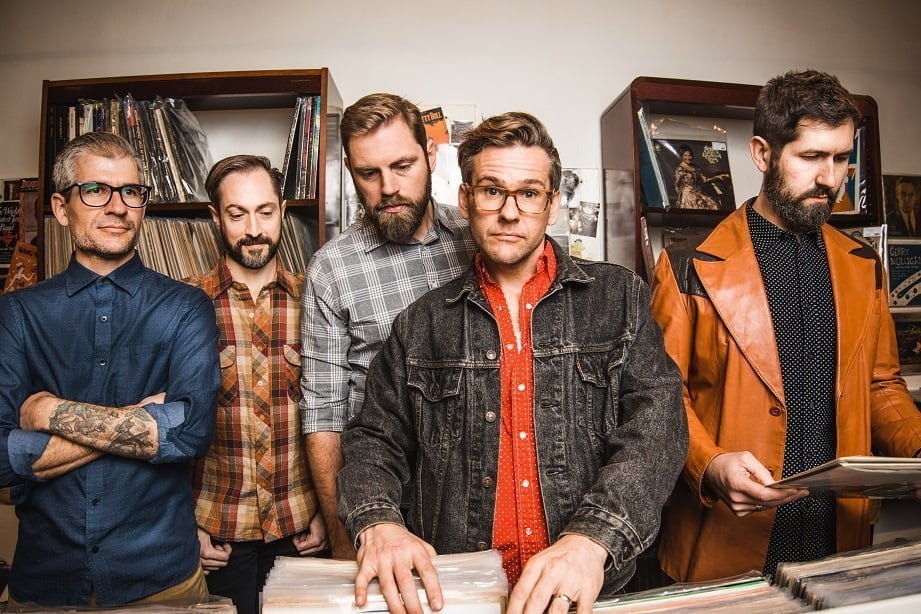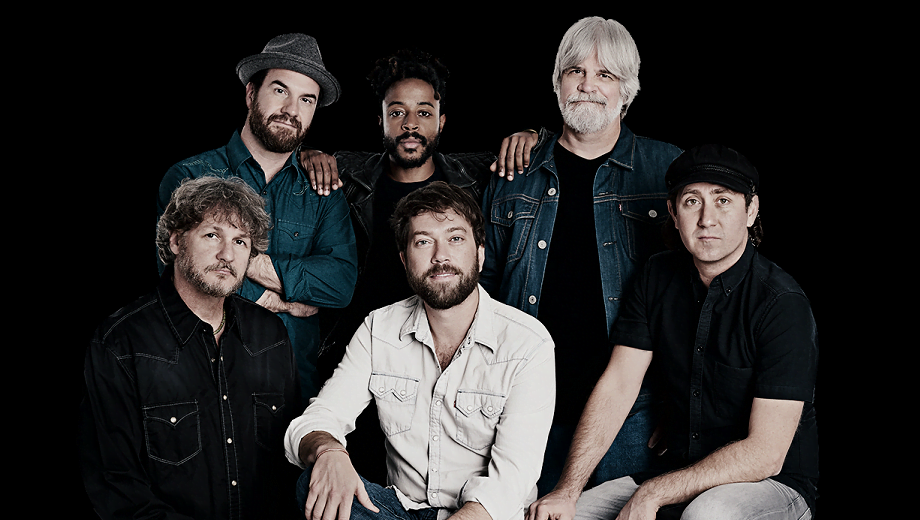
Three Decades In, Leftover Salmon Let out a ‘Festival!’ Yell

Three decades ago at the Telluride Bluegrass Festival, two bands of oddballs who couldn’t get invited to play the main stage said “screw it,” and teamed up for a bar gig back in town… And the rest, as they say, is history.

That slapped-together combo took the name Leftover Salmon. They’ve since gone on to influence an entire generation of bluegrass-based music. Most fans are familiar with the broad strokes of their tale — the renegade musical brotherhood of Vince Herman and Drew Emmitt, the band’s bluegrass/rock fusion and resulting evolution into the prototypical jamgrass group, and the spirit of good times, good friends, and good tunes which still permeates the scene they helped create. But few have heard the entire story until now.

In Leftover Salmon: Thirty Years of Festival!, author Tim Newby dives deep into hazy memories and unforgettable highlights, tracing the twisted path that led the band to its current, esteemed place in roots music lore. Across 13 chapters and more than 300 pages Newby coaxes the story from the band’s revolving lineup — deftly treading the line between historian and hardcore fan — and in the end much is revealed of the band’s high-minded beginnings and unshakable ethos, as well as the struggles they’ve seen along the way. And it’s all done with a wild “Festival!” yell running between the lines.

To be sure, the Leftover Salmon story is not over yet. The band continues to traverse the country on tour – recently swinging through Nashville’s Ryman Auditorium and thrilling a hometown crowd at Denver’s Red Rocks Amphitheatre shortly after — and they plan on returning to the studio this fall to record “three or four tunes” for release “over the interwebs.” But in the meantime, Herman shared some laughs with The Bluegrass Situation about the process of looking back, what the book means to the band, and why none of this would have happened if not for the Iran-Contra scandal.

BGS: Were you surprised Tim wanted to do this book?

Herman: Absolutely. It’s a massive endeavor and he put like three years into it. That alone is an amazing honor — no matter how it came out. [Laughs] But no, we were definitely surprised and delighted that he wanted to do it.

Was there any hesitation in laying everything out there?

Not on my part. We were pretty psyched about all the fun we’ve been able to have over the years, and to have somebody locate it within the larger picture of the music community, it just felt like an honor. Sure, we had some rowdy times and wild things have happened, and it might sound a little more like a rock ‘n’ roll band in the book than a bluegrass band, but I hope it throws some light on how deeply we respect the bluegrass tradition, where that all sprang out of and how we are trying to integrate that along with a more inclusive rock ‘n’ roll vision. I think the book addresses pretty well how we tried to walk that tightrope.

Tim told me you let him root around in your lives for weeks at a time. He said he was at your house digging through old file cabinets and everything. What was that like from your perspective?

Well, it was comforting because I’ve moved around a whole lot over the years and I’ve been toting that stuff with me for a long time. [Laughs] There was finally some validation of “All right, maybe it was a good idea to keep this stuff.”

Did he dig up anything you had forgotten about, or give some insight on how the others viewed things that happened?

One of the things he dug up that I hadn’t looked at in years and years were [late, founding banjo player] Mark Vann’s calendars. He was sort of like our manager early on, and it was cool because they had notes on them about booking gigs and what we got paid, some expenses and all that. Man, we played a lot of years for $500 a night! [Laughs]

One thing I learned was that the Iran-Contra scandal helped create the band, and this was not a connection I would have made on my own. Can you explain?

[Laughs] Well, there are two ways it affected me. When I moved to Boulder, [Colorado] from Morgantown, [West Virginia] in 1985, I was just gonna be here for a couple of months and then go be a witness for peace on the border of Nicaragua, so that part of the Iran-Contra scandal was definitely on my mind when I moved here.

But a few years later when I started a band called The Salmon Heads, we had played our first gig on the hill at Taylor’s in Boulder, and we had an accordion and washboard instead of drums. We played our first set and the bar manager said, “You guys don’t have to do your second set. We’re gonna call it, you don’t play college music.” But we said “Fuck that shit” and continued to play, and it was fun.

That night after the show, someone threw a brick through the window of the club in a random act — and it was not related to us in any way shape or form — but the next morning everyone on the hill was wondering what happened to Taylor’s last night. So we seized that opportunity and made some posters for a house party we were playing, and they said, “Come see what the Aya-Taylor had determined was not college music!” At the time the Ayatollah was in all the papers, so we created the Aya-Taylor, and that party was raging that night. It’s the intersection of history and music.

It’s not all funny stories, as the book goes into some of the more difficult decisions you’ve had to make and plenty of hard times. Were there any tender spots where it still hurt to think about?

Oh yeah, definitely. Especially around Mark Vann [who died from cancer in 2002] and rebuilding and trying to keep going. We finally decided to call it quits for a while and didn’t really expect to come back, and that was an intense time. We were driven to the point where we just weren’t having fun hanging out together anymore, and it was tough because we never really took the time out to grieve Mark, I think. We had to push on because that’s how we all made our living — it’s always been a blue collar band working paycheck to paycheck. That was really difficult and eventually the spiritual price of it was just too much.

The book also traces the evolution of Colorado’s music scene, which you guys were sort of inadvertently at the epicenter of.

Yeah, when we got to town there wasn’t a bluegrass scene. I rolled into a Left Hand String Band show when I drove here from West Virginia and that connection was made immediately. But bluegrass was kept in its corner and the big thing in town was blues and electric stuff. We just felt like we were this musical niche that was best used for Grange Halls and old-timey dances, and to see it move out of Grange Halls and into concert halls over time was definitely a satisfying experience for us, and something I think we might have had a little to do with.

But it’s certainly not like we started anything new, and I’ve always been the guy who says we were really just walking in the footsteps of New Grass Revival and the Nitty Gritty Dirt Band. People like to say, “This started here” and “That started there,” but it’s always a continuation of some tradition with a new twist, perhaps.

After looking back on these 30 years, do you feel like the band has changed – musically or as friends? Or is it still the same spirit as when you began?

I just had a friend from Japan who was my college roommate in 1982 come visit, and I hadn’t seen him all those years. He came and we went to our show at Red Rocks, and then a friend of mine gave him a ride to the airport. On the way my friend asked my old roommate, “So how’s Vince seem to be doing all these years later?” And he answered, “Vince is still in college!” So I guess we won!

Maybe that’s part of why this thing has worked for so long.

We get to have these joyous jobs where we meet new friends and constantly reconnect with old ones, and play a lot of festivals, which is when humans are at their finest form, I think. And through all this stuff, we’ve been able to build this life that’s pretty dang pleasurable. Not that it’s easy on relationships or anything, but our day-to-day living is pretty dang pleasant.


Photo credit: Bob Carmichael
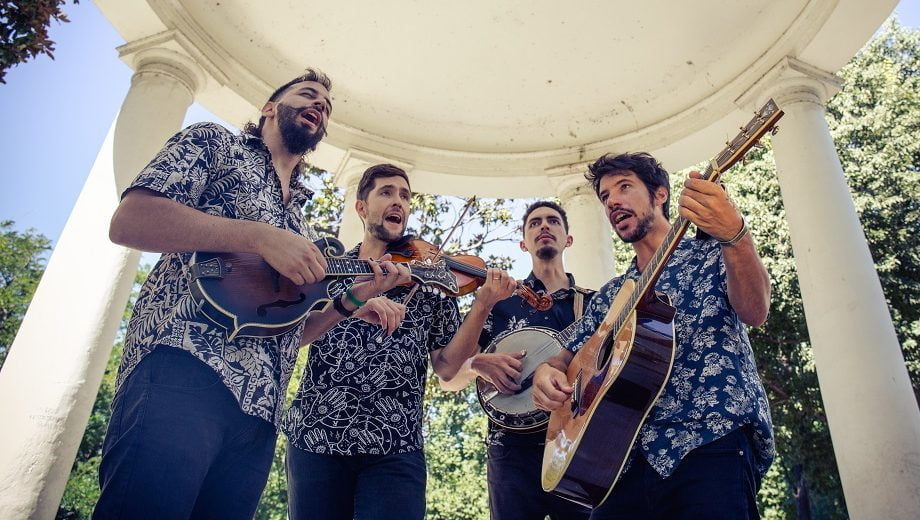
LISTEN: Che Apalache, “Rearrange My Heart”

Artist: Che Apalache
Hometown: Buenos Aires, Argentina
Song: “Rearrange My Heart”
Album: Rearrange My Heart
Release Date: August 9, 2019
Label: Free Dirt Records

In Their Words: “The first part of this song is the result of attending a Moravian church as a child and singing Bach chorales. Just fiddle and voices is a cool concept, reminds me of the organ. I wrote the second part at a late-night party in Buenos Aires, singing as I banged on a doumbek. Turns out it is in 9/8. This song has a ton of influences: Rajasthani folk, British Isles ballad singing, bluegrass, pop. It’s the kind of mystical world music I feel directly results from a deep respect for all folk music traditions while using one as your guiding light, in our case bluegrass.” — Joe Troop, Che Apalache


Photo credit: Mauro Milanich and Andrés Corbo

The Show On The Road – The Slocan Ramblers

This week, Z. speaks with The Slocan Ramblers. This fearless, fleet-fingered string band is adventurously advancing the high lonesome sound of bluegrass to great acclaim, and not from the states where it’s known best, but in a lakeside folk hotbed that has become a cosmopolitan music mecca of Canada — Toronto.

LISTEN: APPLE PODCASTS • MP3

Their newest string odyssey, Queen City Jubilee — featuring a lovable zombie on its painted cover — was recently nominated for a Juno Award for traditional roots album. Make sure you stick around to hear the band doing a musical experiment where Z. asks them to each musically respond to a slightly offensive Cards Against Humanity prompt.

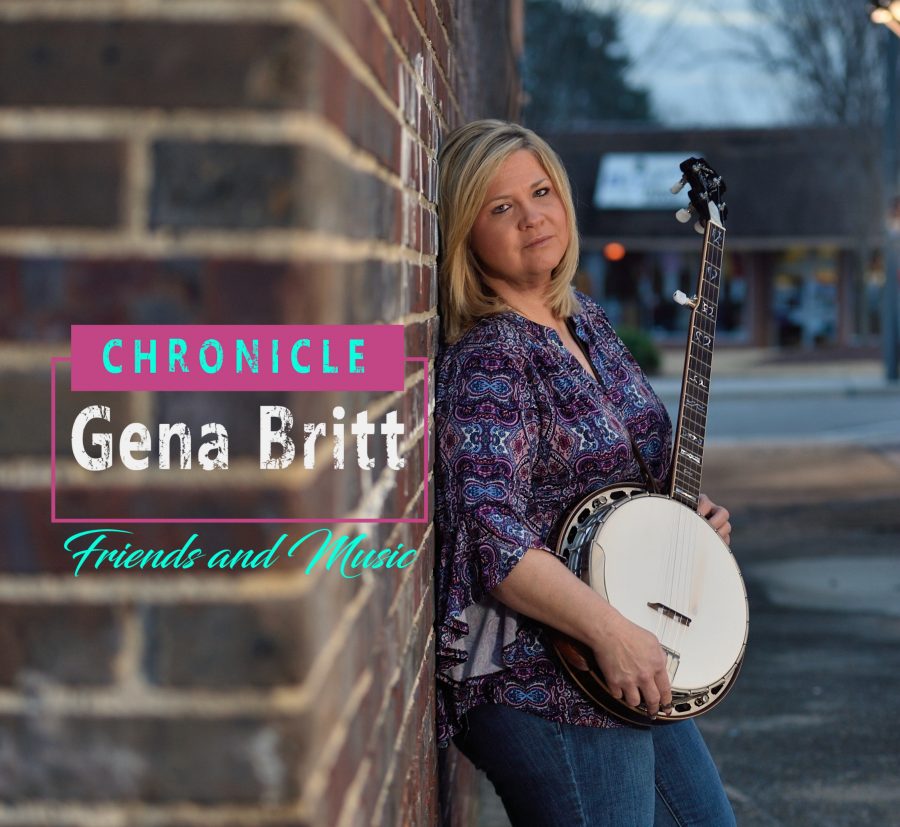
Gena Britt, “Big Country”

Given her expansive resume and deep list of awards nominations and accolades, you might expect banjoist and singer Gena Britt’s personality to be a bit more bold and brash. On stage next to her longtime friends in the Grammy Award-nominated outfit Sister Sadie she ranks as one of the quieter members — which is not so much a reflection of shyness as it is a testament to the entertaining gregariousness of her bandmates. That is, until Britt bears down on the five string and commences the peeling-off-of-faces. She has a patently unyielding right hand on the banjo, matched perfectly by the percussive, explosive, innovative fingerings of her left. Her personality comes through without apology and without giving her audience so much as a second to catch their breath, which of course must be continually (and understandably) knocked out of them by her picking.

Though she does step up to the mic with Sister Sadie to sing with some regularity — in fact, she was nominated for SPGBMA’s Female Vocalist of the Year Award in the early 2000s — she makes her pristine vocals the unabashed centerpiece of her brand new solo project, Chronicle. One of the album’s only two instrumentals is the rip-roaring traditional number, “Big Country” — this track definitely supplies bang for your tune buck. Immediately, listeners are reminded of that punchy right hand. Britt utilizes split seconds of space expertly, emphasizing downbeats and coordinated accents with her backing band without devolving into any of the overbearing tropes of “mash.”

Each of the track’s masterful musicians — Jason Barie (fiddle), Dustin Benson (guitar), Darren Nicholson (mandolin), Josh Matheny (Dobro), and Zak McLamb (bass) — take turns showing off their prowess, but not without …what do you call it? Taste! This is a tune that is not shy or mild — because neither is Britt, when you actually take a minute to look and listen.

LISTEN: Lisa Bastoni, “Walk a Little Closer” (Feat. Lula Wiles)

Artist: Lisa Bastoni
Hometown: Boston, Massachusetts
Song: “Walk a Little Closer” (featuring Lula Wiles)
Album: How We Want to Live
Release Date: September 20, 2019

In Their Words: “One day a couple of winters ago, Sean Staples (How We Want to Live‘s producer) and I were writing at my kitchen table and he said, ‘Well, maybe they don’t all have to be devastating.’ Which I thought was an excellent point. We wrote this in 45 minutes, based on a Lynda Barry-inspired writing exercise around the word ‘adore.’ It was refreshing to write something so lighthearted, just a simple bluegrass song that tells the story of a first date. The first time I played it out was at a little bar in Cambridge, with Isa Burke on fiddle and harmony. That was the seed of the new album — to record locally, with some of my favorite musicians and people. I’m so happy to have Isa, as well as Eleanor Buckland and Mali Obomsawin (aka Lula Wiles) playing on this track!
— Lisa Bastoni


Photo credit: Love and Perry Photography and Film

LISTEN: ClayBank, “Dreamer”

Artist: ClayBank
Hometown: Claybank, North Carolina, and Southern Virginia
Song: “Dreamer”
Album: Road Signs and Highways
Release Date: July 26, 2019
Label: Mountain Fever Records

In Their Words: “Jamie Harper and I heard ‘Dreamer’ a long time ago by a great band in our region. Sometime after, I texted Shannon Slaughter, who’s a great songwriter, about songs and ‘Dreamer’ was in the batch he sent me. I hadn’t thought about it much until we were looking for material for this new album, but when I shared it with the band, all the guys loved it and thought it fit the style we’re going for. We all love the positive message. In bluegrass there’s a lot of killing and prison themed songs — and we love playing them — but it’s really cool to have a song with a positive message every now and then. I hope everyone enjoys it.” — Jason Davis, Banjo, ClayBank


Photo credit: Kady D Photography

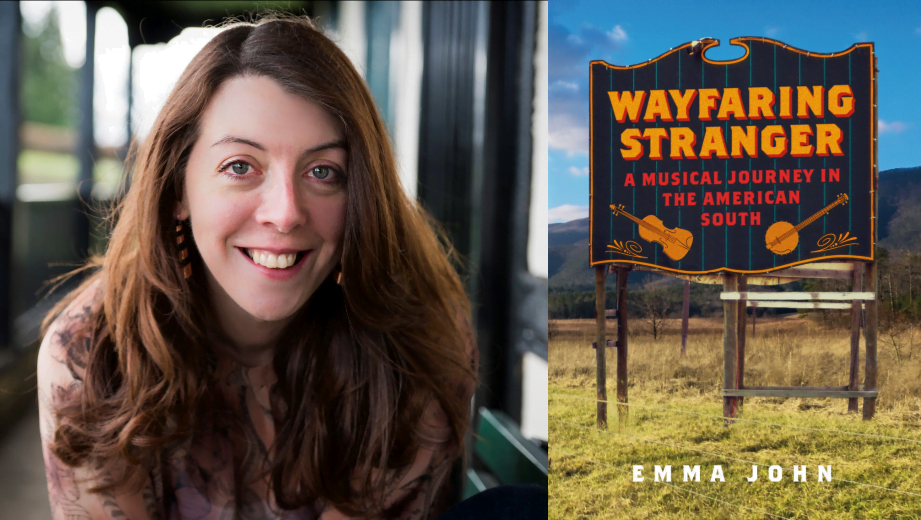
‘Wayfaring Stranger’ Shows London Author’s Journey to Bluegrass

Award-winning author and journalist Emma John has intensely pursued many passions through her gift of writing. Her first book, Following On: A Memoir of Teenage Obsession and Terrible Cricket, was named the 2017 Wisden Book of the Year, and her newly published title, Wayfaring Stranger: A Musical Journey in the American South, tells a story of self-discovery in the Londoner’s trip to the hills of North Carolina.

An email discussion with John (who also regularly contributes to BGS) uncovered a number of universal truths about the wide-reaching allure in the people, stories, and culture of bluegrass.

BGS: Describe the overall experience of writing this book. Were there any particularly surprising or challenging points in the experience?

EJ: There were two very distinct parts to the process. First came the trip itself, which was supposed to take six months, but got extended far longer because I was enjoying myself so much. That was the fun part, and the real reason for writing the book in the first place. What was really hard was heading back home to the UK, sitting in a tiny little study, in the middle of winter, when there are only about 6 hours of daylight, and trying to recreate all my memories without feeling really miserable that I wasn’t still in the mountains! I found a solution: I went back.

Early in the book you describe bluegrass music as “the sound of the past, being enjoyed with all the verve and vivacity of the present.” What is it that seems to make bluegrass so timeless?

I think it’s the fact that it’s always been pretty true to itself. You don’t play bluegrass to be modern, you don’t play bluegrass – Lord knows – to make money or get famous. The only people who play bluegrass are the people who really love it and can’t help themselves. I think that has given it a truly unbroken thread over the past 80 years. Plus, acoustic instruments are never going to age as badly as electropop synth music or the keytar.

It sounds like your trip to North Carolina turned your life upside down in the best possible way. How much did the sheer unfamiliarity of everything play a role in your self-discovery?

It really hit me for six, as we say over here in Britain (that’s a cricket metaphor). The fact that from my very first day in North Carolina I stumbled into – and was immediately embraced by – a world of rural pickers meant that I had to start from scratch. On every score: the music, yes, but also the food (an endless quest to source a vegetable that wasn’t cooked in sugar), the culture (lunch before noon?! what is that?), manners (if I even said ‘damn’ I got funny looks), and accents (I struggled to make myself understood because of my incredibly clipped vowels, and I often had to smile and nod when Southern folk spoke to me because I had no idea what they were saying.)

In a way it was incredibly liberating. Yes, I was an alien, but I was also someone about whom no one had any preconceptions, really. In fact everyone seemed to believe the best of me at first sight! And so I shrugged off my more cynical side, and began to enjoy and try to live up to their confidence in me. I also found the openness and generosity of American society a lot more suited to my own natural character than my own country. I’ve always been gregarious and felt that at home in London where people are quite reserved I can be “a bit much.” In the South I found myself being the best version of me I could be!

As your friend Fred is describing the many achievements of Earl Scruggs, you write, “Fred said all this with a personal pride, as if Earl’s success reflected well on everyone, including himself.” What makes bluegrass so personal to those who follow the genre, and why do people take so much pride in being a part of this music?

Again, I think this is because the music is so niche, so people feel very protective of it. If you pour yourself into something that not a lot of other people appreciate or even notice, you feel incredibly attached to it and sometimes even defensive of it. The pride can come from family connection and ancestry — ‘My great granddaddy played on this fiddle!” — or from that strong sense of geography – “This is the music of our mountains!” – but it can also, I think, just come from ‘getting’ it. Bluegrass is a language that not everyone speaks.

In describing the atmosphere of Pete Wernick’s bluegrass camp you wrote, “When people weren’t playing their favourite songs, they were talking about them.” How much do the non-musical aspects of bluegrass such as the stories and characters play a part in the culture of the genre?

Very much. In fact it always amazed me at how no one got tired of hearing the same stories do the rounds a million times in picking circles! Remember that one about Bill Monroe and the bagels? One of his bandmates brings him a bagel and he eats it and says, “This donut tastes kinda strange.” I mean, we’ve all heard that, right? At least a dozen times. But the sharing of those stories – that everyone already knows! – is part of the ritual. It’s part of the homage you pay to the music. You don’t stop someone mid-flow and say, “Yeah yeah, I know how this one ends.” You listen to someone tell you about how Carter Stanley drank himself to death, or Stringbean was murdered, or Earl and Lester fell out. It’s a grand narrative that we all belong to.

Have you returned to playing classical violin since discovering bluegrass music? If so, has learning bluegrass fiddle changed the way you think about or play classical music?

I have not. The only time I play classical violin is if I want to show off in front of a bluegrasser, and then I’ll peddle out the first few bars of “Eine Kleine Nachtmusik” or “Czardas” just to prove I know where fifth position is. But bluegrass fiddle has changed the way I think about all music. I just didn’t LISTEN to it before, or at least I listened in a very superficial way. I listened to the notes, but never the feel. I listened for familiarity, not for emotion. I consumed music so that it could fulfil a purpose, but I didn’t appreciate the utter genius of the people who were making it.

One of the interesting things about this book is that it can be enjoyed by someone who’s never heard of bluegrass equally as much as it can be enjoyed by a bluegrass veteran. What can a novice learn from your story? What can a veteran of the genre learn?

Well hopefully the novice will be interested by the very American story of this music’s history — its 19th century distillation in the Appalachian mountains, its crystallisation in the post-depression Southern diaspora, its rebirth in the hippie and folk movements of the 1960s. But one thing I really wanted people who are new to bluegrass to take from the book is the realisation that it’s a truly unique meeting place. That this kind of music can be and very much is a place where people with very different political outlooks, backgrounds, and experiences do sit alongside each other and put aside what divides them. It’s a music that demands your wholehearted commitment to the moment of playing, and in that moment, everything else gets stripped away, and you can have a pure human connection. And surely that’s what the world needs right now.

Have you discovered more bluegrass music in Europe since becoming interested in the genre? Have you found that other “bluegrassers” in Europe share a similar introduction to the music as yours?

I have! I think meeting the Kruger Brothers in Wilkesboro, North Carolina, was a big turning point for me, because the realisation that these two Swiss siblings had been channeling Doc Watson for years, and come up with their own adaptation of bluegrass, was really the first time I’d understood that it was OK to have your own relationship and tradition with this music. I always had this sense that bluegrass was someone else’s music, and something that as a non-American I would only ever be “playing” at, and never have a true part in. Now I realise that music is just music and I shouldn’t get hung up on that!


Photos courtesy of Orion Books

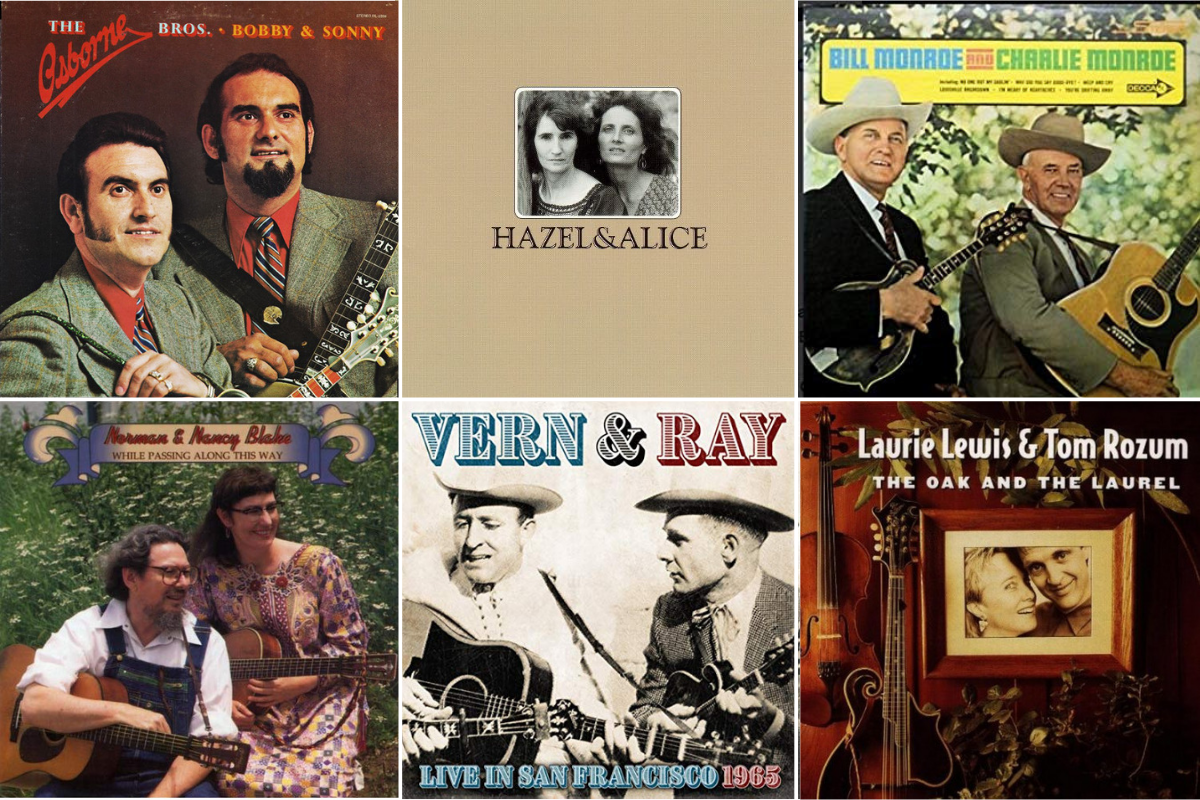
22 Top Bluegrass Duos

Everyone knows that in the early days of bluegrass, before that term was even coined, all you needed to make a “band” was two people and two instruments. Fiddle and banjo? Sure. But in those days, they’d take whatever they could get. Duos are still a strong presence in the music today, in brother/sibling duos, spouse-led bands, and legendary collaborations.

Check out these twenty-two bluegrass pairings — and their accoutrement — on BGS:

Bill & Charlie Monroe

Before Bill Monroe, the Father of Bluegrass, made his indelible mark on the genre (quite literally giving it its name), he was already a popular performer with his brothers Charlie and Birch. Birch left The Monroe Brothers in the mid-1930s, and Charlie and Bill went on to enjoy success on the road, in the studio, and on the radio — until rising tensions and a fateful fight in 1938 caused them to split ways. But, without that fight, we may not have “bluegrass” at all.

Flatt & Scruggs

December 1945. The Ryman Auditorium. Nashville, Tennessee. Bill Monroe and his Blue Grass Boys stepped on stage for the Grand Ole Opry with Lester Flatt and Earl Scruggs among their ranks for the very first time and bluegrass as we know it today was born. Flatt & Scruggs left Monroe in 1948 to join forces and went on to become one of the few ubiquitous, household names of bluegrass.

Hazel Dickens & Alice Gerrard

Undeniably trailblazers, Hazel Dickens & Alice Gerrard are widely regarded as the first women in bluegrass to capture the “high lonesome” sound popularized by Monroe, the Stanley Brothers, and others. They toured across the U.S., often supporting causes that benefited forgotten, downtrodden people from all backgrounds and walks of life. They were inducted into the Bluegrass Music Hall of Fame in 2017.

The Stanley Brothers

Natives of the music-rich southwest corner of Virginia, Carter and Ralph Stanley were prolific recording artists and touring musicians in bluegrass’s first generation. Countless songs written and/or popularized by the Stanley Brothers and their backing band, the Clinch Mountain Boys, are staples of the genre today. Carter passed in 1966 and Ralph continued until his death in 2016 with the Clinch Mountain Boys — who still tour today with Ralph’s son, Ralph II.

Don Reno & Red Smiley

Unsung trailblazers of the first generation of bluegrass pickers, Reno & Smiley were tireless innovators with a jovial, sometimes silly flair to their songs and instrumental prowess. Their duets are simply some of the best in all of bluegrass. The duo performed together off and on from the early 1950s to the 1970s — but both passed away much too young, Smiley in 1972 at the age of 46 and Reno in 1984 at the age of 58. Reno’s frenetic, electric and pedal steel guitar-infused licks remain unmatched in banjo picking today.

Jim & Jesse McReynolds

With matching suits and impeccable pompadours brothers Jim and Jesse McReynolds often brought rockabilly, rock ‘n’ roll, mainstream country and pop sensibilities to their take on sibling harmonies and bluegrass brother duos. Jesse’s crosspicking on the mandolin was — and continues to be — absolutely astonishing. Jim passed in 2002, Jesse continues to perform on the Grand Ole Opry to this day. At the time of this writing, he is ninety years old.

Laurie Lewis & Tom Rozum

Laurie Lewis often takes top billing — as leader of the Right Hands and before that, the Bluegrass Pals, and others — but since 1986 her musical partner Tom Rozum has almost constantly been at her side on the mandolin and harmonies. Their duo recording, The Oak and the Laurel, was nominated for a Grammy in 1995. Here is the album’s title track:

Bill Monroe & Doc Watson

What is there to say? Two of the folks who paved the way for this genre, laying a foundation so strong and far-reaching that we still can’t fully comprehend its impact. Bill and Doc collaborated on more than one occasion and we, as fans and disciples, are lucky that so many of these moments are captured in recordings and videos.

Del McCoury & David “Dawg” Grisman

At face value, an unlikely combo, but their friendship goes back to the early 1960s and their musical endeavors together began soon after. As Del slowly but surely became a bastion for traditional bluegrass aesthetics applied broadly, Dawg embraced jammy, jazzy, new acoustic sounds that sometimes only register as bluegrass-adjacent because they come from the mandolin. Opposite sides of the same coin, their duet makes total sense while at the same time challenging everything we think we know about the music. In this clip, Dawg sings tenor to Del — not many would be brave enough to try!

Ricky Skaggs & Keith Whitley

They got their start together in the Clinch Mountain Boys with Ralph Stanley, making some of the best recordings in the history of the band’s many iterations. Before they both struck out on wildly successful, mainstream careers they recorded a seminal duo album together, Second Generation. It remains one of the most important albums in the bluegrass canon — especially as far as duos/duets go.

Norman & Nancy Blake

Norman is well known for his flatpicking prowess, which has graced recordings by John Hartford, Bob Dylan, the Nitty Gritty Dirt Band, and so many others. He and his wife, Nancy, were married in 1975 after having begun their musical forays together a year or so earlier. Nancy’s command of many instruments — cello, mandolin, and fiddle among them — balances neatly with Norman’s jaw-dropping, singular style on the flattop. Their inseparable harmonies and timeless repertoire are merely icing on the cake.

Jimmy Martin & Ralph Stanley

How their first album together, First Time Together (cough), is not more well-known is truly impossible to understand. The King of Bluegrass and the Man of Constant Sorrow twining their extraordinary voices must have been ordained by a higher power. It’s a good thing they answered the call. Be careful, Jimmy’s percussive G-runs feel like a slap in the face — in the best way.

Darrell Scott & Tim O’Brien

Their live albums together and their co-written masterpieces belong in every museum and shrine to roots music around the world. Both of these triple threat (Quadruple? Quintuple? When do we stop counting?) musicians are rampantly successful in their own right, but together they are simply transcendent. Their cut of “Brother Wind” deserves a listen right this instant and “House of Gold” gives you the harmony acrobatics gut punch you need every time. It was nearly impossible to choose just one, but here’s a hit that was recorded once by a little group called the Dixie Chicks.

Ricky Skaggs & Tony Rice

Again, words fail. Skaggs & Rice is a desert island record. Each and every time these two have graced a recording or a stage together, magic has been made, from their days with J.D. Crowe & the New South and on. We only wish that they could have done more together.

Vern & Ray

Vern Williams and Ray Park were California’s original bluegrass sons. Though they were both born and raised in Arkansas, they relocated to Stockton, California, as adults. They’re often credited with “introducing” bluegrass music to the West Coast. They disbanded in 1974 (both passed in the early 2000s), but their influence is palpable to this day, even if they’re sorely unheard of east of the Mississippi. This deserves correction! Immediately!

Eddie & Martha Adcock

Eddie is a pioneering banjo player who’s a veteran of both Bill Monroe’s Blue Grass Boys and The Country Gentlemen, two decidedly legendary and influential acts. His style is somewhat wacky, certainly singular, but effortlessly bluegrass and traditional as well. He married Martha in the late 1970s and the pair have toured prolifically as a duo. In 2008, Eddie underwent brain surgery to correct debilitating hand tremors. He was kept awake, playing the banjo during the procedure — and there is jaw-dropping film of this online!

Dailey & Vincent

When Dailey & Vincent burst onto the scene in the mid-aughts after both having notable careers as sidemen, the bluegrass community rejoiced at the reemergence of a wavering art form within the genre — traditional duo singing. However, Jamie and Darrin, whether they knew it at the time or not, had their sights set much higher. Now more of a full-blown stage show than a bluegrass band, their recordings and concerts are a high-energy, charismatic, and downright entertaining mix of classic country, Southern gospel, quartet singing, and yes, bluegrass.

Kenny & Amanda Smith

Husband and wife Kenny and Amanda first recorded together in 2001, going on to win IBMA’s Emerging Artist of the Year award two years later. They’ve now cut eight albums together, all clean, clear, crisp modern bluegrass that centers on Amanda’s impossibly bright vocals, which maintain a personal, country hue alongside Kenny’s fantastic flatpicking. SON!

Tom T. & Dixie Hall

Two of the most recent inductees into the Bluegrass Music Hall of Fame, Tom T. and Dixie Hall wrote hundreds and hundreds of songs cut by country, bluegrass, and Americana artists alike. Tom T.’s reputation and chart-topping originals tend to eclipse Dixie, but he is unyielding in his efforts to point that same spotlight at his beloved wife instead, who passed away in 2015. Though she never performed — definitely not to the extent that Tom T. did — the marks she left on bluegrass, country, and her partnership with her husband are indelible. This number was co-written by the pair:

The Louvin Brothers

Recipients of IBMA’s Distinguished Achievement Award in 1992, the Louvin Brothers are another example of early bluegrassers who enjoyed the amorphous, primordial days of the genre before it became more and more sequestered from mainstream country and country radio. Their duets are iconic, with counter-intuitive contours and lines that bands and singers still have difficulty replicating to this day. Their most famous contribution to the American music zeitgeist, though, might not be their music, but the spectacular cover art for their 1959 album, Satan Is Real. If you haven’t seen it, Google it right now.

Delia Bell & Bill Grant

Natives of Texas and Oklahoma, respectively, Delia Bell and Bill Grant met through Bell’s husband, Bobby, in the late 1950s. Between their band, the Kiamichi Mountain Boys, and their duo project they recorded more than a dozen albums together through the 1980s. Famously, Emmylou Harris became a fan when she heard their cut of “Roses in the Snow,” which Harris went on to record on her eponymous bluegrass record. Bell died in 2018.

The Osborne Brothers

Though they popularized a style of three-part harmony that had never been heard before — the infamous “high lead” harmony stack — their band, no matter who it may have included over the years, was undeniably helmed and anchored by Bobby and Sonny. (Which does explain the name.) You may remember “Rocky Top” and “Ruby” first and foremost in their discography, but the hits they’ve contributed to the bluegrass songbook are innumerable. Here’s one such classic.

LISTEN: Louisa Branscomb’s “Gonna Love Anyway”

Featured Songwriter: Louisa Branscomb
Hometown: Cartersville, Georgia
Song: “Gonna Love Anyway” (written by Louisa Branscomb and Jennifer Strickland, performed by Sierra Hull, Jim Hurst, Bryan McDowell, Missy Raines, & Molly Tuttle)
Album: Gonna Love Anyway
Release Date: July 26, 2019
Label: Compass Records

In Their Words: “Being a songwriter keeps you honest if you let it. When I began this project, I’d been through a time of loss and change, including a tornado that took out my farm, losing both parents, and a little heartbreak thrown in to sweeten the mix. So I was looking for images of hope and resilience. Those images became the theme, and then the songs became the album. The song I worked the project around is ‘Gonna Love Anyway,’ with images of fragility and survival at the same time: a flower blooming in December, a cloud letting go of rain, and finally the guitar you pick up on a gamble that there’s one more song. I was so honored that Molly Tuttle agreed to do this one; she herself has such artistic power and grace at the same time, so it’s a perfect match. That is true of Sierra Hull, Jim Hurst, Bryan McDowell, and Missy Raines as artists as well, and that’s why I think this collaboration is so stunning and magical.” — Louisa Branscomb


Photo credit: Vicki Burton

MIXTAPE: The Steel Wheels’ Music for Your Community Gathering

Building community is part of what music, and all good art, does. It brings us together. Music is a common rhythm, a poetic notion, an underlying common language for us all. A good mixtape grabs hold of that commonality and builds on it, with a few surprises along the way. As a band, The Steel Wheels curate a music festival each year, and a mixtape, or playlist, is kind of the digital version of that venture. So, let’s stop talking about it, and start building community with a PERFECT mix. – Trent Wagler, The Steel Wheels

Fruit Bats* – “Humbug Mountain Song”

Let’s start with a groove anyone can get behind. It’s accessible for the pop music lovers who wandered into this gathering — they didn’t know they liked the banjo at all until the second half of this intro kicks in. But now they’re engaged. And why can’t the piano, banjo, and drums live together in harmony? Stop closing your mind.

Kristin Andreassen* – “Get Together”

A good mixtape needs to establish that everyone is included. Loading things up with all your favorite new and rare songs isn’t always inviting. A cover song is common language at the very best. A little freshening up of a classic song will get us all swaying together in time. And what better theme than coming together? Now we’ve got everyone in the room in tune and we can introduce more variance in the mix.

The Wood Brothers* – “Sing About It”

The foundation of community is the strength we have together. Nothing better exemplifies this than the tight grooves and sweet harmonies of the Wood Brothers. And their message here is spot on. No matter where we are in our journey of pain, loss, trouble, or fear, singing a song just might help it pass.

Kaia Kater* – “New Colossus”

Now that we’re all in this, let’s tie the knots tighter. This song is like a sweet honey that helps stick us tightly. The way the melody veers and twists through literary verses encourages your conversations to dig a little deeper.

Jerry Garcia & David Grisman – “Russian Lullaby”

I think it’s more than nostalgia that brings me back to these late Garcia recordings, when he teamed up with longtime friend and musical pioneer David Grisman. The loose nature of these recordings makes you want to sit crisscross applesauce and share most embarrassing moments with a new acquaintance. If the ice wasn’t broken earlier, Jerry will rockabye you, baby. Collaborations are community building at their core.

River Whyless* – “All of My Friends”

Now that we’re all floating together in a musical high, don’t pull away. Leave the phones in your pocket. Let’s be here together fully. River Whyless is a band that simultaneously indicts and playfully dances with the information-overwhelmed age we live in.

Cedric Burnside* – “Hard To Stay Cool”

What is more true blue than these dyed in the wool Burnside family blues. Cedric Burnside’s whole album is full of these tasty grooves. It’s not hard for him to stay cool.

Tim O’Brien* & Darrell Scott – “With a Memory Like Mine”

Here’s another one of my favorite collaborations. The album Real Time by Tim and Darrell has had such a musical impact on me. To hear two great songwriters, who sing and play any instrument they pick up with such mastery, is humbling and inspiring.

Bahamas – “No Wrong”

I’m obsessed with Bahamas’ music right now. The guitar, the groove, and the vocals. The presence of this recording is also so immediate and direct. When you’re among your people, it feels like you can do no wrong.

The Steel Wheels* – “Road Never Ends”

I couldn’t help but include one from our new record. The love and joy of the road is bittersweet. This song puts words to the difficulties of transience while acknowledging the beauty of the strange kind of mobile community it creates.

Ana Egge – “Rock Me (Divine Mother)”

There are few songwriters who tap into deep spiritual depths without cliché like Ana Egge. She’s a treasure. And this song has slayed me every single time I’ve ever heard it.

Tinariwen – “Imidiwan Win Sahara” (feat. Tunde Adebimpe)

All music conjures up a sense of place. Tinariwen was introduced to me by our drummer, Kevin Garcia, and I’ve regularly wanted to go to where their sound takes me. As a songwriter and specifically a lyricist, it’s helpful to reset your listening ear and turn off the language centers of your brain by listening to music with lyrical content in a language you do not speak.

Dr. Dog – “Listening In”

A good mixtape has some curveballs. Dr. Dog has been a sonic companion for me since I first saw them live 10 years ago at Bristol Rhythm and Roots. The lyrical tapestry is so full and always connects through some kind of thought-lightning striking through your brain. I love the line, “I can hear the fear in me…talking.”

David Wax Museum – “Time Will Not Track Us Down”

We’re getting towards the end of our little mixtape. Like the Sunday afternoon lazy picnic, we are starting to wind it all down. David Wax is known for his high energy original Latin-inspired masterpieces, but this simple paired down guitar/vocal really calms my spirit and prepares us to part.

Robert Ellis & Courtney Hartman* – “Up On The Hill Where They Do The Boogie”

One more cover song for good measure. Let’s celebrate the most wacky and wonderful souls among us, and let’s boogie like John Hartford.

Josh Ritter – “Homecoming”

Remember that curating music for your gathering is a privilege. You are setting the sonic table for everyone in your presence. It’s also a responsibility. Everyone wants to feel at home at the end of the day. Everyone wants be at their best and be reminded that they are capable of their best. Music replenishes the various ways daily life drags us down. A mixtape is a good refuge and stand-in for when music festival season is slow.


Photo credit: Josh Saul

*2019 Red Wing performers. Red Wing Roots Music Festival takes place in Mt. Solon, Virginia, on July 12-14, and is hosted by The Steel Wheels