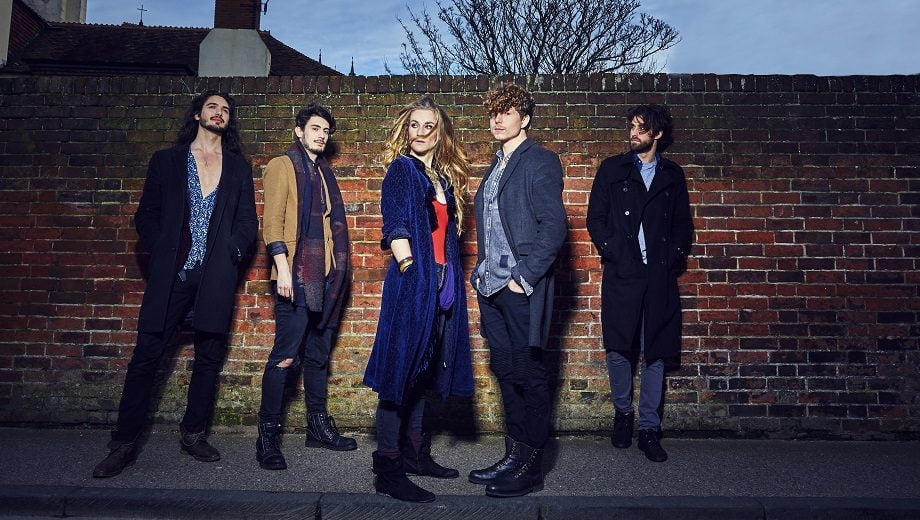
Baylen’s Brit Pick: CoCo and the Butterfields

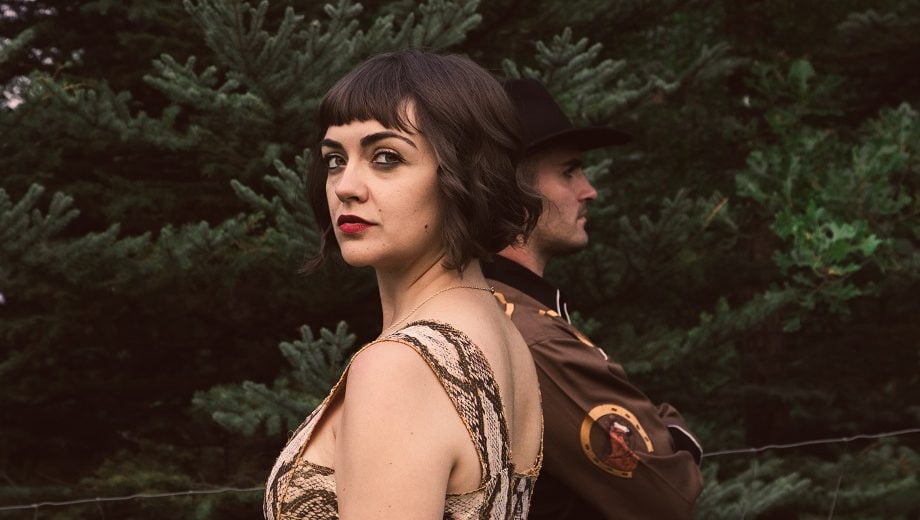
Artist: CoCo and the Butterfields
Hometown: Canterbury, England
Latest Album: Monsters Unplugged

Editor’s Note: Look for CoCo and the Butterfields and BGS – UK at AmericanaFest UK, held Jan. 29-31 in London. 

Sounds Like: Bellowhead, Seth Lakeman, Florence and the Machine with added indie pop

Why You Should Listen: CoCo and the Butterfields are just joyful and January should be joyful. Ok, I know we are all trying to stick with our “new year new you” goals. New fitness regimes, meditation apps, veganuary, dry January, etc., but come on, surely we can all get on board with more joy!? Great, we are agreed! First thing to do then is listen to this rowdy good time group of multi-instrumentalists who combine folk, bluegrass, hip hop, indie pop, Celtic, and country. Hell, there’s even some beatboxing thrown in for good measure. I said they are rowdy and they can be, in the best possible way, but they also do soft and sad, again in the best possible way.

I first met the band when they rolled up for a session on my radio show in a multi-colored minivan they had painted themselves. They all piled out looking like a touring version of Hair, the musical, and I knew they were my kind of people. Incidentally they do all have amazing hair, but that’s beside the point. The main thing for us to note is their music is wholly and completely original, it’s a sound only they could make and I’m so glad they do. A true ensemble band, sharing vocals and switching instruments at will. They are crowd pleasers and joy makers. I’ve seen them in a packed out basement club and in an expansive field in the middle of the country and they are at home in both.

I think the reason they aren’t bigger in a “mainstream” type of way, is because they are so undefinable. A great thing in my book. So, let’s all treat ourselves, close that fitness app, and open up the playlist below and let’s start the year in the way we mean to continue, with more joyful music and fantastic hair.


As a radio and TV host, Baylen Leonard has presented country and Americana shows, specials, and commentary for BBC Radio 2, Chris Country Radio, BBC Radio London, BBC Radio 2 Country, BBC Radio 4, BBC Scotland, Monocle 24, and British Airways, as well as promoting artists through his work with the Americana Music Association UK, the Nashville Meets London Festival, and the Long Road (the UK’s newest outdoor country, Americana, and roots festival). Follow him on Twitter: @HeyBaylen

Photo Credit: Nicky Johnstone

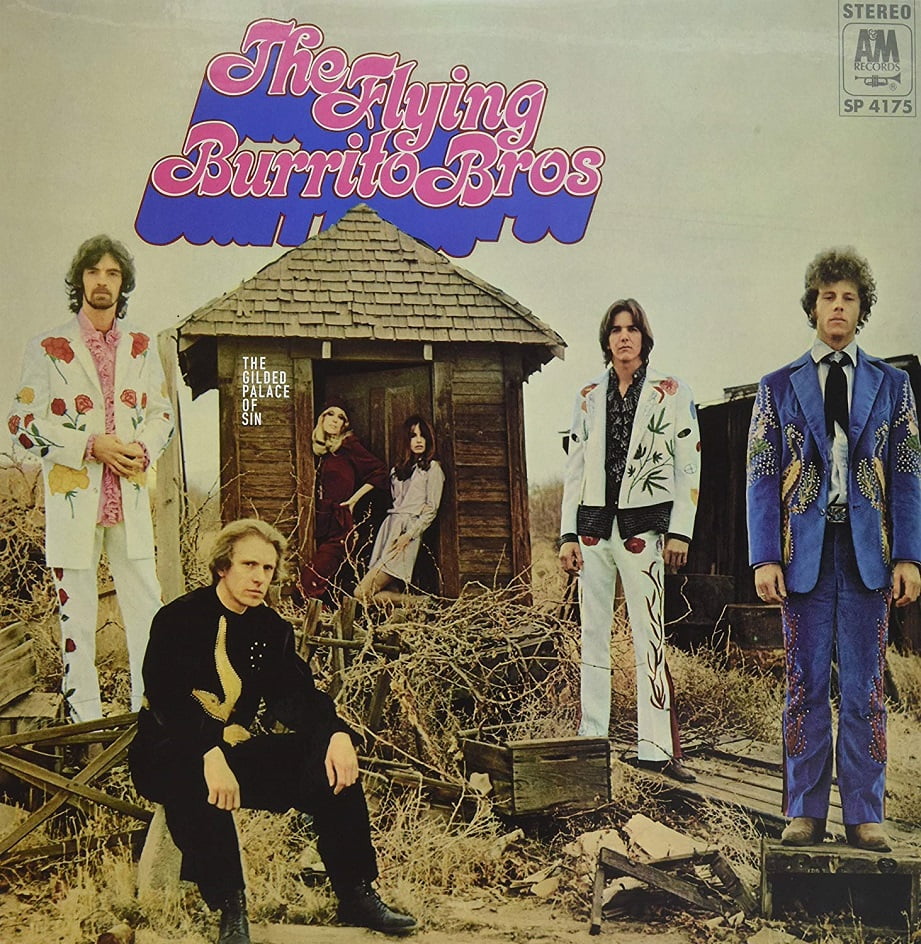
Canon Fodder: The Flying Burrito Brothers, ‘The Gilded Palace of Sin’

A spry country tune driven by Chris Hillman’s hyperactive mandolin and Sneaky Pete Kleinow’s spacy guitar solo, the Flying Burrito Brothers’ “My Uncle” is not a song about family. The uncle they’re harmonizing about is Uncle Sam, who in the late 1960s wanted members of the band to kill others and possibly be killed in Vietnam. Gram Parsons had already secured a somewhat dubious 4-F deferment, making him ineligible for military services for health reasons, but the Army continued its pursuit. “So I’m heading for the nearest foreign border,” Parsons sings, resigning himself to the ignoble fate of a draft dodger.

In the late 1960s, rock and roll was rife with anti-war songs. Some were angry, like Creedence Clearwater Revival’s “Fortunate Son.” Others were riddled with mortal dread, like “Feel Like I’m Fixin’ to Die Rag” by Country Joe & the Fish. But few sounded anything like “My Uncle,” an album cut from The Gilded Palace of Sin. For one thing, as the Flying Burrito Brothers ponder what they owe their country, they sound more melancholy than outraged, as though they’re singing a breakup song with America.

For another thing, they dressed their anti-war sentiments up in the threads of country music, which was already viewed as both musically and politically conservative: a counter to the counterculture, representing the moral/silent majority that finally put Nixon in the White House in 1968. “Okie From Muskogee” was the defining country hit of the era, a song that tsk-tsks the hippies, roustabouts, and even the conscientious objectors burning their draft cards. Merle Haggard may have written it to gently puncture the sanctimonies of an older generation, but listeners heard no irony or distance in lyrics about wearing boots instead of sandals and respecting the college dean.

Given the canonization of Parsons over the last few decades, as well as the gradual breakdown of genres and styles over time, it’s easy to forget just how contrarian it would have been for a West Coast rock band to embrace country and bluegrass. The Flying Burrito Brothers had risen from the ashes of the Byrds, a group which earlier in the decade had included Gram Parsons for just one album, Sweetheart of the Rodeo. A relative flop upon release, it nevertheless invented country rock with a set of twangy originals and covers of songs by Cindy Walker, Haggard, and the Louvin Brothers. Aside from Dylan, who was covered by everybody in the late 60s, these weren’t especially hip influences at the time.

Draft dodging may have been anathema to country music, but “My Uncle” is at its heart about more than just protest. “A sad old soldier once told me a story about a battlefield that he was on,” Parsons and Hillman harmonize. “He said a man should never fight for glory, he must know what is right and what is wrong.” The Flying Burrito Brothers plumb that stark moral divide on “My Uncle” and every other song on their debut, parsing temptation from salvation, wickedness from righteousness, and painting a picture of an America where you might easily confuse one for the other. Country music becomes the ideal vehicle to explore ideas about violence, consumerism, free love, and more broadly, the notion of sin.

The idea of sin illuminates every song on The Gilded Palace of Sin. The rollicking “Christine’s Theme” opens the album with a woman bearing false witness: “She’s a devil in disguise, she’s telling dirty lies.” “Juanita” imagines an angel rescuing the band from booze and pills. “Hot Burrito #2” invokes Jesus Christ by name — not cussin’ but praying. “Do Right Woman,” a Dan Penn/Chips Moman number popularized by Aretha Franklin, is transformed from a lover’s plea into a preacher’s wagging finger. “Dark End of the Street,” by the same Memphis songwriting duo, is about coveting your neighbor’s wife: “It’s a sin and we know that we’re wrong.” When the Flying Brothers get to the bridge, “They’re gonna find us,” they might as well be talking about angels and demons.

“Sin City,” the album’s centerpiece, is the band’s version of Jonathan Edwards’ “Sinners in the Hands of an Angry God,” which mixes Biblical imagery with twangy country harmonies to create a startlingly dire depiction of Los Angeles as both Sodom and Gomorrah. It’s a place where avarice rules all, leaving even the determined and upright struggling for footing. “That ol’ earthquake’s gonna leave me in the poorhouse,” the Brothers sing, echoing Edwards’ assertion that all humans as sinners are “exposed to sudden unexpected destruction.” Wealth won’t buy redemption or avert damnation: “On the thirty-first floor, that gold-plated door won’t keep out the Lord’s burning rain.” (That’s likely a sly reference to Larry Spector, the Byrds’ former manager, who lived on the thirty-first floor of a luxury LA high-rise).

Jesus shows up for a verse of “Sin City,” and he may or may not reappear in the close “Hippie Boy,” a spoken-word homily in the style of Hank Williams’ moralizing alter ego Luke the Drifter. Hillman tells the story of a boy caught up in the violence between the right and the left. In his 33 1/3 book on Gilded Palace of Sin, Bob Proehl suggests the band might have been inspired by the riots at the Democratic National Convention the year before. “The so-called riots in Chicago were actually more of a police action,” he writes, “a beatdown instigated by the gestapo tactics of Mayor Daley’s police force right in front of the delegates’ hotels.” Even before the song concludes with a rousing chorus of the old hymn “Peace in the Valley,” the song is a damning attack on anyone who would employ violence in the name of morality.

While they are using country music to interrogate the genre’s own high moral standards, the Flying Burrito Brothers don’t come across as scolds. Instead, they’re doing something more ambitious yet far more personal: They’re trying to find their own way in this sinful America, trying to find the moral high ground in shifting sands. On “My Uncle” they sing about dodging the draft with guilt and sadness, but they understand it is a moral predicament. “Heading for the nearest foreign border” is preferable to enlisting and killing. That makes The Gilded Palace of Sin unsettlingly prophetic fifty years after its release, maybe even inspiring in its spirit of dissent and moral defiance.

None of the Brothers would ever sound quite so political or quite so driven by moral inquisition on subsequent albums. Their follow-up, 1970’s Burrito Deluxe, sounds good but has little of the brimstone determination of their debut. Parsons left the group shortly after its release, and his pair of solo albums drive the roads of a murky, mythological America.

However, less than a year after the release of The Gilded Palace of Sin, the Brothers witnessed Biblical calamity firsthand when they played the Altamont Free Concert. Billed as a West Coast alternative to Woodstock, it included San Francisco bands Santana and the Jefferson Airplane, with the Rolling Stones headlining. The crowd of 300,000 was already agitated when the Brothers played their early set, and by the time the Stones took the stage, they were volatile, and hostile. During a performance of “Under My Thumb,” one of the Hell’s Angels working security stabbed and killed a black man named Meredith Hunter, stopping the show and casting a pallor over the event, if not the entire decade. It was intended as a show of countercultural unity, but it must have seemed like God smiting the hippie generation: the end of the 6os in great and gory conflagration.

LISTEN: Lindi Ortega, “Liberty” (from ‘Liberty: Piano Songbook’)

Artist: Lindi Ortega
Hometown: Toronto, Ontario
Song: “Liberty”
Album: Liberty: Piano Songbook
Release Date: January 25, 2019
Label: Shadowbox Music

In Their Words: “What I love about the Piano Songbook version of ‘Liberty’ is how it still has this vintage vibe to it. I immediately picture this tune being played on an old Western saloon piano. I think the sense of triumph is still captured in the chorus but new elements reveal themselves in the melody, and in the bridge of the song that allows it to take a new shape. It’s been extremely interesting for me to get a real sense of the melodies without vocals. Piano has always been an instrument I truly respect and love the sound of; to be honest, I don’t think a full instrumental would work properly with any single instrument other than piano. Piano has body, richness and fullness all on its own. ‘Liberty’ was one of the more produced songs on the original record, and for it to still carry itself with piano is really cool.” — Lindi Ortega


Photo credit: Kate Nutt

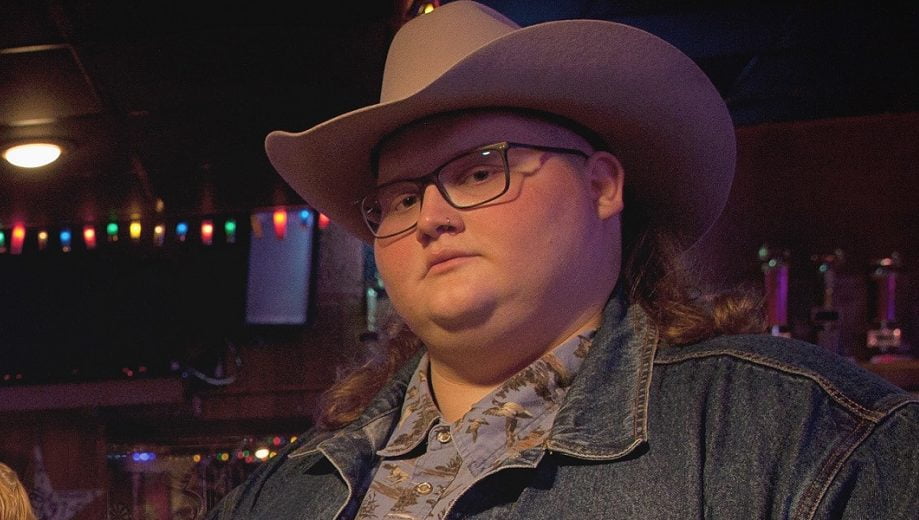
LISTEN: Joshua Ray Walker, “Burn It”

Artist: Joshua Ray Walker
Hometown: Dallas, Texas
Song: “Burn It”
Album: Wish You Were Here
Release Date: January 25, 2019
Label: State Fair Records

In Their Words: “Listeners probably won’t notice right away, because of the quick tempo and boisterous production, but ‘Burn It’ is the most autobiographical song on the record that paints me in an unflattering light. It’s about losing control, being overwhelmed with emotion in a way that only results in self-destruction, self-defamation, and self-medication. A song with this sort of emotion couldn’t be a lamentation or sound melancholic; it needed to be angry.” — Joshua Ray Walker


Photo credit: Josh David Jordan

STREAM: Neyla Pekarek, ‘Rattlesnake’

Artist: Neyla Pekarek
Hometown: Denver, Colorado
Album: Rattlesnake
Release Date: January 18, 2019
Label: S-Curve Records/BMG

In Their Words: “The idea of writing Rattlesnake honestly began as a joke. I didn’t know if I was capable of writing songs that anyone else wanted to hear. But in writing an album inspired by Rattlesnake Kate (a 1920s Colorado trailblazer who became notorious for a death-defying encounter with a rattlesnake migration, where, in order to protect her 3-year-old son, she proceeded to bludgeon 140 snakes), a woman who lived her life on her own terms, and with little care for other people’s opinions of her, I found strength and courage to stop joking (at least, in terms of writing an album), and wrote a record for myself with songs that were weird and vulnerable and funny to me. Writing an album about someone else’s life was a really liberating because I could write through this mask, taking the parts of Kate’s life that were significant and inspiring to me, and write about my own baggage through those events.

“I made the stubborn decision that I only wanted one person to produce this record, and that was one of my musical heroes, Matt Ward (M. Ward, She & Him). Keeping my fingers crossed that a few poorly recorded demos from my living room would be enough to convince him to produce my record, I was able to make this album sound exactly the way I envisioned it. I feel very lucky to have had the validating experience of working with Matt, as well as our audio engineer Adam Selzer, and am so grateful for all of their contributions on making this record with me.” — Neyla Pekarek


Photo credit: Liza Nelson

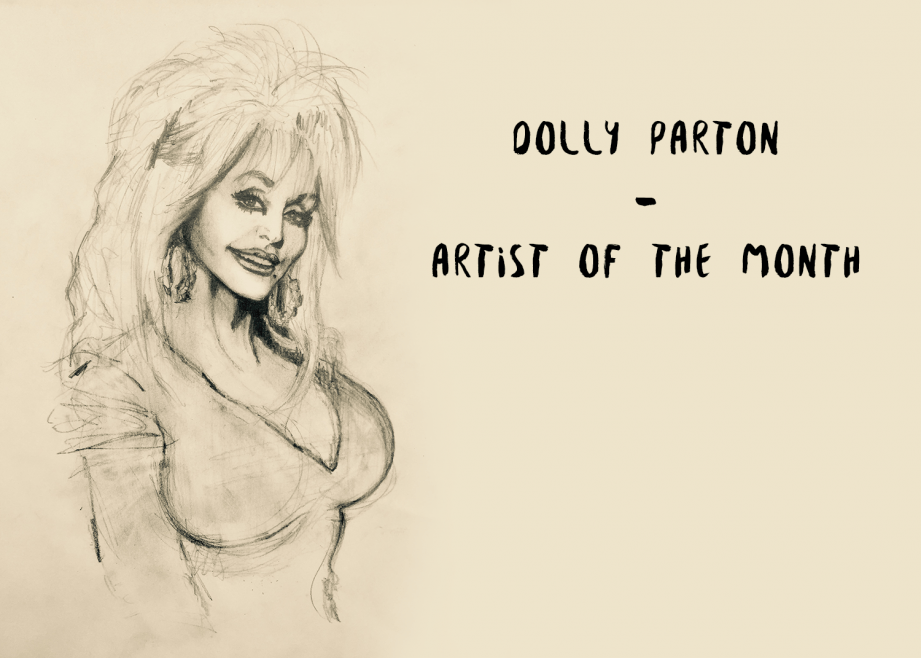
Dolly Parton Proudly Shows Her Bluegrass Influences

[Editor’s Note: On Tuesday, August 25, 2026, the Parton family, represented by Dolly Parton’s nephew and head of security, Bryan Seaver, posted a video to social media announcing the passing of Dolly Rebecca Parton at the age of 80.

We are at a loss for words as we bid farewell to our beloved Dolly. For now, we would like to simply take a moment to remember her life and career with this essay from our archive about Dolly’s influence in bluegrass music. Like the rest of the world, we will always love Dolly.]

No genre of American music has been untouched by the influence of Dolly Parton and bluegrass is surely no different. Given Dolly’s homegrown, East Tennessee roots and her pickin’ chops on many of bluegrass’s signature instruments, her connection to the genre perhaps runs deeper than any other style she’s accomplished — besides good ol’ classic country, of course.

In April 2020, Dolly announced six albums – including Little Sparrow, one of her bluegrass forays – from her back catalog would be made available on digital streaming services for the first time. In an episode of 2019’s Peabody-Award winning podcast, Dolly Parton’s America, a portion featuring the London debut of Parton’s 9 to 5 musical details that many of Parton’s inner team regard her 1999 release, The Grass Is Blue, as one of her best – critically and otherwise. We even featured The Grass Is Blue in an episode of The Breakdown. Trio and Trio II, Heartsongs, and even the genre-mashing White Limozeen all contain heavily bluegrass and string-band inflected songs – the influence of her home turf and its musical accompaniment are evident throughout her artistic output.

Live and from the studio, through cover songs, collaborations, and in casual jam circles, Dolly and her songs have fully infiltrated bluegrass. It’s no surprise she speaks of it often, simply referring to the music as she did in her youth (and all throughout her career): as “Mountain music.” To celebrate Dolly in December, here are a few of our favorite Dolly/bluegrass cross-pollination moments:

“Sleep With One Eye Open” — Dolly Parton

Her 1999 all-bluegrass album, The Grass Is Blue, was named one of our 50 Most Greatest Bluegrass Albums Made by Women — and for excellent reason. It may very well be the one of the best bluegrass recordings born in the past few decades (check out that roster of pickers!!) and it brought bluegrass to Dolly’s greater audience — Norah Jones went on to cover the title track. Dolly even made an appearance at the International Bluegrass Music Association’s award show in 2000, as the project won Album of the Year. Dolly’s bluegrass skills are no better displayed than on this perfectly-executed cover of an all-time bluegrass classic.


“I Feel the Blues Movin’ In” — Trio

Both Trio albums (Dolly Parton, Emmylou Harris, and Linda Ronstadt) could arguably be categorized as bluegrass, but Trio II ticked quite a few more of traditional bluegrass’s boxes, especially with this cover of a Del McCoury original. To this day he’ll announce the song on stage as being the best, “Because Dolly Parton sang it!”


“Heartbreaker’s Alibi” — Rhonda Vincent & Dolly Parton

Dolly and the Queen of Bluegrass collaborate on this 2006 release from Vincent’s All American Bluegrass Girl. Vincent and Dolly have gone on to work together on a handful of other projects, as well. Something about that bluegrass vocal blend… Mmmm.


“Jolene” — Alison Krauss with Suzanne Cox and Cheryl White

And of course, covers of Dolly’s countless songs have filtered into the bluegrass songbook across the years. Alison Krauss leads an all-star band on this cover of perhaps Dolly’s most iconic song, “Jolene,” for the 2006 Kennedy Center Honors show.


“Islands in the Stream” — Love Canon with Lauren Balthrop

And it’s not just Dolly’s more country and bluegrass adjacent songs that have found themselves homes in bluegrass set lists and cover projects. Charlottesville, Virginia-based, bluegrass-meets-the-80s band Love Canon covered the iconic Dolly and Kenny duet “Islands in the Stream” for a BGS Sitch Session.


“Muleskinner” — Bill Monroe and Dolly Parton

They both had hit versions of this song, after all. Though this writer might be partial to the version that gleefully shouts, “I’m a lady muleskinner!” It’s badass no matter how you cut it, really. The Big Mon and Dolly, doing it right. And there’s something just so beautiful about Dolly Parton cueing the Kenny Baker into his solo.


“Little Sparrow” — Dolly Parton

2001’s follow up to The Grass is Blue, Little Sparrow continued Dolly’s bluegrass explorations, but with folk and transatlantic sounds joining the mix.


“Viva Las Vegas” — The Grascals with Dolly Parton

The Grascals take the CMA Fan Fest stage in Las Vegas with Dolly Parton singing an absolute classic with a good ol’ dose of bluegrass fire.


“Banks of the Ohio” — Dolly Parton

Not all of Dolly’s bluegrass forays have been… well, bluegrass. Here, she adds her theatrical, dramatic touches with a fresh-written preamble to the classic lyrics of “Banks of the Ohio.” Her soft spoken-word, the sumptuous strings, and a soaring, Dolly-vocal-run-filled arrangement give this staple a special hue that’s 100% herself.


“Why’d You Come in Here Lookin’ Like That” — Della Mae

Della Mae has plenty of experience covering Dolly, even once being the house band for a Dolly Parton tribute show in the UK. Once again, they’re pulling a cover that comes from outside Dolly’s bluegrass-y songs, and it’s fantastic.


“Just a Few Old Memories” — Dolly Parton

A legendary combination. Dolly Parton sings Hazel Dickens. What more would we ever need?

Well… Hazel’s in the Bluegrass Hall of Fame. Maybe it’s time Dolly ought to be inducted, too. After all, you just took a split second scroll over her major influence on bluegrass and vice versa — and her bluegrass outreach, as well. The case is made for itself. Dolly for the Bluegrass Hall of Fame!


Dolly Parton Carries Childhood Memories Throughout Her Career

Back through the years, I go wandering once again
Back to the seasons of my youth…

So begins “Coat of Many Colors,” which Dolly Parton frequently cites as the favorite song she’s written. That 1971 country classic is just one example of Parton’s ability to view the world through a child’s eye, whether she’s writing about her own life, placing a fictional young character in dramatic circumstances, or simply making a connection to a new generation of kids.

The newest example of this gift is Dumplin’ – a Netflix film where an overweight teenager finds solace in Dolly’s music. Leading up to the movie’s release, Parton released a duet version of “Here I Am” with Sia – an ironic choice, as the pop star is famous for singing with her back to the audience. But that anthem of self-declaration sets the tone for the Dumplin’ soundtrack, underscoring one of the reasons that a teenage girl would love Parton’s music in the first place. The heartfelt film is based on a young adult novel by Julie Murphy.

Seeing an early cut of Dumplin’ inspired Parton to write “Girl in the Movies,” a thoughtful song that finds her identifying with that very character — the “girl in the movies.” Parton told NPR that she wrote it for every little boy and girl. The song carries a strong message, she says: “Don’t just live in a fantasy of watching someone else live their lives. You star in your own role. You be the star of your own life.”

Parton has embodied that perspective for 60 years. In fact, 2019 is the 60th anniversary of the first time she released a song she wrote – in this case, “Puppy Love,” composed with her uncle Bill Owens. Parton was 11 years old when she wrote it, 12 when she recorded it, and 13 when it was released as a single on the tiny Goldband Records. She sang locally around Knoxville, Tennessee, and moved to Nashville on the day after she graduated from high school in 1964. Two years later and still chasing her dreams, she married Carl Dean, a lasting union that nonetheless yielded no children of their own.

Yet time and time again she incorporated a child into the storyline of her music. For example, in “Mommie, Ain’t That Daddy,” Parton sings from the perspective of a woman whose kids happen to see their father begging for money. In “Jeannie’s Afraid of the Dark,” Parton describes Jeannie as a child who feared burial; her duet partner Porter Wagoner then reveals that Jeannie dies. “Malena” is another doomed child who dies on the night of her birthday, finally receiving the set of wings she’d asked for.

By 1970, Parton had carved out a solo career in addition to her role on Porter Wagoner’s TV show. Her first No. 1 hit, “Joshua,” tells the story of an orphaned girl who hears about a mysterious man living a good ways down the railroad track. Curious, she seeks him out – and then promptly moves in with him. (“Why, you’re just what I’ve been lookin’ for!” she exclaims.) The poetic “Coat of Many Colors” arrived a year later, serving as a morality tale that still resonates decades later.

Parton employed that same autobiographical approach for “In the Good Old Days (When Times Were Bad),” a gem from My Tennessee Mountain Home. Reflecting on her childhood years, she sings, “No amount of money could buy from me the memories I have of them / No amount of money could pay me to go back and live through it again.” (Merle Haggard identified with the lyrics so much that he recorded a version, too.) Another of the compositions on that album is simply titled “I Remember” and finds her blissfully recalling those seasons of her youth. Of course, as she matured, so did her songwriting, most notably on poignant compositions like “I Will Always Love You,” “Light of a Clear Blue Morning,” and of course, “Jolene.”

Still, if you dig into her albums from this era, you’ll find songs like “Me and Little Andy,” about a poor girl and her dog who wind up on Dolly’s doorstep. She agrees to let them spend the night; by morning, the girl and the dog are both dead. Another one, “Mammie,” is about a midwife who raises a child after the mother dies at birth and then teaches the child to sing and play guitar — but Mammie herself doesn’t live to the end of song. “Silver Sandals” recounts the story of a disabled young girl who couldn’t walk; when she inevitably dies, Dolly and Porter imagine her happily walking up the golden stairs of Heaven.

On a brighter note, Dolly reminisces about a banjo picker she knew as a kid named “Applejack.” Almost like a precursor to Dumplin’, Parton composed “Shattered Image” about sitting on a bridge as a girl and throwing rocks into her reflection in the water. She compares the experience to the way people were shattering her public image as an adult. A 1979 album cut, “Nickels and Dimes,” is a co-write with her brother Floyd Parton, who died in December. While writing it, Dolly thought about how she’d open up her guitar case in downtown Knoxville as a young girl and busk in order to get enough quarters to buy hamburgers. By the time the song ends, she’s a star, but here’s how it begins:

“I used to stand on the corner and sing as a child
And I’d play my guitar and sing as the people went by
The sidewalks were crowded but I’d just sing louder ‘cause I didn’t mind
Spending my time, spinning my rhymes, and singing for nickels and dimes.”

Even beyond her musical output, Parton has kept a strong bond between herself and a younger generation. In 1986, she invested in a theme park in East Tennessee and rebranded it as Dollywood – a gift that keeps on giving, with new attractions added nearly every year. And it’s not all roller coasters. Parton’s mother sewed a replica of the fabled coat of many colors to display in the museum dedicated to Dolly’s life and career.

Nearly a decade later, Parton instituted the Imagination Library, where pre-school children receive a monthly book at no charge. To these lucky kids, Parton is known as “The Book Lady.” Meanwhile, “Coat of Many Colors” has been successfully transformed into a children’s book and an award-winning TV movie, in addition to being recorded by the likes of Eva Cassidy, Emmylou Harris, Joey & Rory, and Alison Krauss & Shania Twain.

When Parton was 70 years old, she secured a No. 1 country album with 2016’s Pure & Simple. One of the most charming songs on it is titled “I’m Sixteen,” where she sings, “It goes to show you’re never old / Unless you choose to be / And I will be sixteen forever / Just as long as you love me.” A year later she released her first-ever children’s album, I Believe in You.

As 2019 begins, Parton is in the spotlight again. On January 6, “Girl in the Movies” will compete for a Golden Globe award in the category of  Best Original Song in a Motion Picture. A month later, she will be recognized as the MusiCares Person of the Year at an all-star concert event, just a day before the Grammy awards. Along with celebrating her magnificent musical achievements, the presentation also acknowledges the fact that the Imagination Library has given out 100 million books since its inception. Parton is the first member of the Nashville music community to be honored at the annual MusiCares gala.

Way down in the fall, Parton will return to the Grand Ole Opry, celebrating the 50th anniversary of her induction in October. But her history to the Opry stretches about a decade before that. When she was 13, Parton and her uncle Bill Owens had lingered outside the Ryman to meet Johnny Cash. When he emerged, a starstruck Parton begged Cash to let her sing on stage – but it would take a while for this dream to be realized. In time, Opry star Jimmy C. Newman gave up his slot for her, although Cash handled the introduction that night. According to Parton’s autobiography, Cash told the audience, “We’ve got a little girl from up here in East Tennessee. Her daddy’s listening to the radio at home, and she’s gonna be in real trouble if she doesn’t sing tonight, so let’s bring her out here!”

Parton wrote about this career milestone in her book: “I know I had never heard a crowd cheer and shout and clap that way. And they were doing it all for me. I got three encores. This time I was prepared for an encore, but not three, not at the Grand Ole Opry. Someone told me later, ‘You looked like you were out there saying, “Here I am, this is me.”’ I was. Not just to that audience but to the whole world.”


Illustration: Zachary Johnson

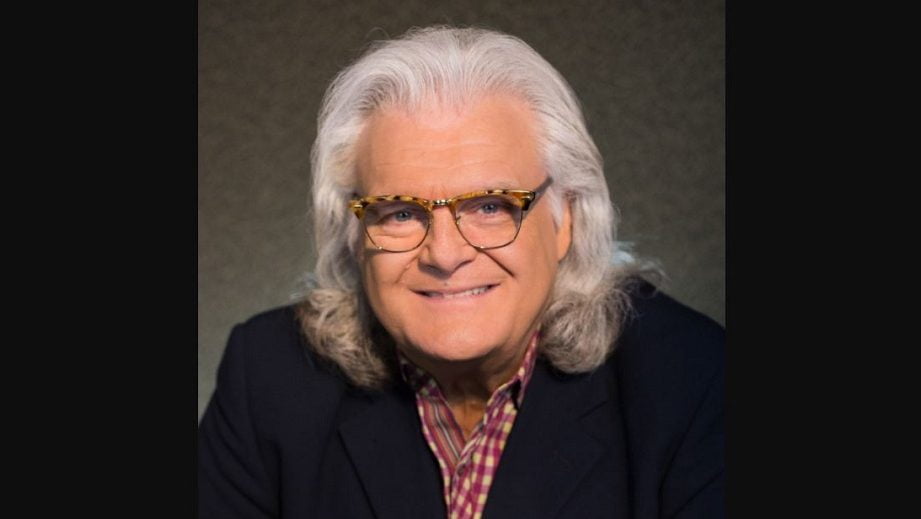
2018: The Year of Ricky Skaggs

Though he’s just now hitting nominal retirement age, Ricky Skaggs has been a virtuosic presence in the worlds of bluegrass, country, and Americana music for close to 50 years. With his childhood friend, Keith Whitley, he began touring and recording with Ralph Stanley while still in high school; by the time he turned 21, he had done a stint with the Country Gentlemen and become a member of the J. D. Crowe & The New South lineup whose eponymous 1975 album was (and is!) so influential that it’s been known for more than 40 years simply by its catalog number, Rounder 0044.

From there he moved on to intensive studio work; partnering with Jerry Douglas in Boone Creek; a stretch with Emmylou Harris’s Hot Band; and then, in 1981, launching a country career so meteoric that he earned, within four years of his debut recording, the Country Music Association’s top Entertainer of the Year award. Fifteen years later, he returned to bluegrass in spectacular fashion with the album Bluegrass Rules!

It’s no wonder, then, that he’s a newly minted member of the Country Music Hall of Fame and the Bluegrass Music Hall of Fame, though it’s a nifty kind of surprise that he was inducted into both this year — and, while it’s less widely known, he hit the trifecta when he was inducted into the Fiddlers Hall of Fame, too. In short, if you were to call 2018 the Year of Ricky Skaggs, it would be hard to mount a real counter-argument.

A conversation with Skaggs is always a journey through a myriad of subjects, and this one was no exception; we touched on many topics, from his nearly complete recovery from shoulder troubles to his recollection of a conversation with Art Satherly, the legendary producer who worked with Bob Wills, Bill Monroe, and many others. Still, a couple of themes emerged, and it’s fitting that one began with an examination of his under-appreciated role as a fiddle player.

It occurred to me that there are fiddle players in the Bluegrass Hall of Fame already—Chubby Wise, Paul Warren, Kenny Baker, Benny Martin, Bobby Hicks—but there are some other members, like John Hartford, who folks might not think of first as a fiddler but who were players, and that led me to you. I think there’s a whole generation of fans and musicians who might not realize how much you’ve done on the fiddle. Is that something you still do from time to time?

When we went out on the Cooder-White-Skaggs tour, I played quite a bit of fiddle, because we were doing so many country things, like Hank Snow’s “Now And Then (There’s A Fool Such As I),” that Chubby Wise played on, and Ry wanted that fiddle. Sharon did songs that I’d play on, and I played swing fiddle on “Sweet Temptation.” So I played quite a bit on that tour. But I haven’t taken it as seriously as I should have, especially in the last 20 years; I just haven’t kept up on it. And you know, when you do pick one up and it sounds like a cat killing, you start thinking, maybe my days are over on this.

But I’ll tell you, when I was just a kid, and I decided I wanted to play another instrument besides the mandolin, my dad got a guy named Santford Kelly to come over to our house, and he recorded him playing—because especially when it came to playing fiddle, he wanted me to sit at the feet of some old cats that he knew. And now, I’ll play something by Santford Kelly for Andy [Leftwich], or now for Mike [Barnett], and their eyes are as big as silver dollars, and they say, “Oh, my god, will you please teach me how to play that? That doesn’t need to die with you—that sound and that bowing style, and that stuff from the mountains of Appalachia, that’s got to live on.”

When that happened a couple of times, I started really seeing how important it was. I’m always thinking maybe too much about perfection, and I’ve gotta tell you, when I heard Santford Kelly—he was 84 or 85 at the time, and he was scratchy. But it didn’t bother me that he was a little flat and sharp here and there, and a little scratchy on the bow. It was what was coming out of him that went into my heart, that moved me deeply. I thought, this is like Elijah coming off the mountain. This man is carrying something.

So I’ve kind of been saying, well, I’m not really up on it, but I need to shut that crap up. I just do need to play more of that.

You’ve entered three halls of fame this year, so maybe this is a good time to look back. One of the things I’d like to get your impression on is the idea that tradition is not a style, but a way of learning. And you did that, learning directly from older guys like Santford Kelly and Ralph Stanley, but it seems like there’s less of that these days. From the beginning of your return to bluegrass, you’ve made having young people in your band a priority. When you talk about Mike or [banjo player] Russ [Carson] hearing these things, is that something you feel is important — to mentor young musicians, be an active transmitter?

It absolutely is. To me, it’s vital — it’s necessary for the journey, it truly is. It’s manna, it’s food. In the tabernacle of David, where there were four thousand musicians and two thousand singers, you didn’t just fall off a turnip truck and then decide, hey, I’m going to be a musician. No! King David said, “My fingers are trained for battle.” To me, there is training that goes into perfection, goes into your craft. There is something that is really spiritual about this; it’s part of our spirit, it’s part of our nature to be trained.

And that’s truly part of what makes my heart beat, is to train up and to pour into young musicians — and not just men. Like Sarah Jarosz told me one time, “Thank you for letting me get up on stage and play with you when I was 12 years old in Austin.” Or Sierra Hull, or how my music affected Alison [Krauss] in her teenaged years — listening to J. D. [Crowe]’s records, and Boone Creek, and my early country stuff, the harmony singing and just the musicianship, how that encouraged her. I was talking to Becky Buller at the IBMA Red Hat [Amphitheatre], and she talked about how influential the music has been, too.

One of the things that I learned from Ralph was to play it like it was recorded. I remember one time, I’d been listening to Jimmy Gaudreau and some of the other mandolin players of that time a little bit, and one night I played a solo that was a little bit out of the ballpark for the Stanley sound. And I caught Ralph’s face move just slightly over toward me. He didn’t eyeball me, he just kind of turned to the right and listened to me. And when we got off he said, “Rick, you know what I do, when I take breaks, I play it just like I sing it. I want them people to know that when I played that break, they didn’t have to hear me sing, they knowed what that song was. That’s the way I do it.” He didn’t say, the way you did it was not cool, or out of bounds. He did not teach that way; it was so soft, and so nurturing.

And now, I’m always showing Mike stuff — even from the first time I met him, when he auditioned. We sat down and I played him the Stanley Brothers’ Starday recording of “Little Maggie”— one lick, one phrase, after [fiddler] Ralph Mayo’s first solo. Ralph kicks it off, sings one verse, and then Ralph Mayo takes a solo. Well, it’s that next verse, on the line “pretty women are made for lovin’,” on the word “lovin,” Mayo plays this counter-note that’s not even in B, where Ralph’s at. That thing came out of him, and that one note just spoke so loudly right there for me. When I really heard that, I thought “What did he just play!?” and it just lifted my heart to such a place. It was something. And I played it for Mike, and he said “play it again,” and I thought, all right, he’s going to get this job, I know. He’s hearing what I heard, so I knew he was the right one for the job. He heard what Mayo was playing, and he heard my passion for it. And those are the kind of things I want to teach.

Looking at your career, the frequency of your record releases seems to have slowed down. And it seems to me that the recorded end of the business is almost going back to the 50s. Are you just too busy to get into the studio, or is it a lower priority because the business is heading away from that?

Well, as a record company owner, it’s become a financial issue. Having a studio of my own, you’d think that I could do records so much cheaper, but it’s just a fact that the numbers just don’t work when I look at putting $30,00 or $40,000 into a CD and the chances of getting it back in the next three or four years. And I’ve got a big name! I don’t know how, well I guess I do know how, a lot of these record companies do them for $10,000. I would feel really bad about having to do a Kickstarter for Ricky Skaggs. But there’s so much music in my heart that I really want to go in the studio and make, and make it with this incredible band.

But here’s what we’re thinking: I guess I’ve probably got nearly every show that I’ve done in the last four or five years—and recorded on separate tracks, where they could be remixed. So I’ve got a ton of stuff. We’ve got Cooder-White-Skaggs, we’ve got Skaggs and Hornsby stuff, we’ve got Ricky Skaggs with Cody Kilby, Bryan Sutton, all kinds of guests that we’ve had. We’ve got all that recorded. So I really do believe there’s ways of doing it, and I don’t have to own everything; I could just have part ownership.

And I just want to get the music out. I want the world to be able to hear Mike Barnett and Jake Workman, Jeff Picker and Russ Carson. And of course Andy, or hearing Jake playing mandolin or banjo. We’ve got all that stuff, and maybe perfection doesn’t matter so much. I can get stuck in thinking about what used to happen in my life, and what used to be—and here again, I’m figuring out it doesn’t have to be that way. There’s a feel thing that we can miss by having endless tracks on ProTools, endless chances to go back and get another take; usually the first thought that comes into your mind on almost anything is the right one. It’s our stinking thinking that gets involved, and we get to overanalyzing stuff when the spirit is saying, “This is the right way, this is what I put in your mind at that time.” Sometimes you’re better off to just go with that.
BGS WRAPS: Rodney Crowell, “Christmas for the Blues”

Artist: Rodney Crowell
Song: “Christmas for the Blues”
Album: Christmas Everywhere

In Their Words: “‘Christmas for the Blues’ is an idea I carried around in my notebook for years. Once I got serious about writing an entire album of original Christmas songs, this one came fast. I was looking for the tone and arranging style that I associate with record production in late ‘50s Nashville. It is a straightforward performance with Opry-style backing vocals. No muss, no fuss.” — Rodney Crowell

Enjoy more BGS Wraps music.

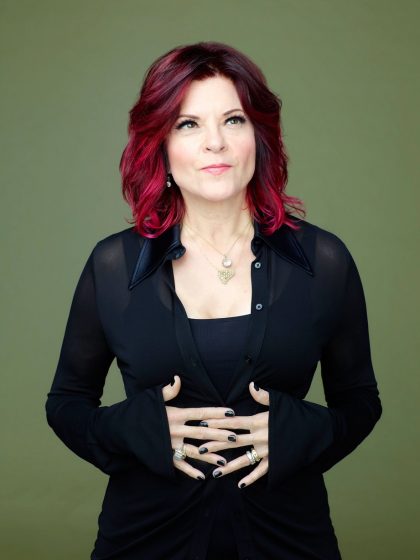
Rosanne Cash Reveals Herself on ‘She Remembers Everything’ (Part 1 of 2)

“This is an album for adults,” Rosanne Cash says of She Remembers Everything. “It’s not a kids’ record.”

The word kid of course is a subjective term. “I don’t think it would mean anything for someone who is 25,” she says. Maybe or maybe not, but by “adult” Cash is referring to the album’s perspective: the set of eyes through which she sees the world and writes her songs. It is the perspective of a woman in her early ’60s, with forty years in the music industry, as well an enviable catalog of critically acclaimed albums and mainstream country hits.

When she started writing and recording in the late 1970s, she was unmistakably recognized as the daughter of one of the most popular country artists in history, but what she inherited from him, aside from that iconic surname, is an appreciation for the well-crafted and sturdy pop song, for the wisdom such a thing might convey. During the 1980s she thrived in an industry that made room for left-of-center artists like Lyle Lovett and k.d. lang. Her 1981 smash “Seven Year Ache” remains a classic-country radio staple even today, and King’s Record Shop from 1987 is not only one of the finest country albums of that decade but a pivotal release that sent Cash hurtling into a second career in what we now call the Americana market.

Rather than try to maintain her mainstream success, Cash foregrounded her literary ambitions in the 1990s and in the mid-2000s launched a series of albums that addressed her origins — her career, her family, her South. Black Cadillac, from 2006, blazed rocky trails out of the grief of losing her mother (Vivian Liberto Cash Distin), her father (Johnny Cash), and her stepmother (June Carter Cash) — all too much tragedy to bear in such a short period of time. She put some of those lessons into play on 2009’s The List, featuring her own unique readings of songs made famous by her father. And 2014’s The River & the Thread, one of the best works of her career, is a travelogue through the South and into her own past.

She Remembers Everything sounds like a culmination of those dark, deeply personal ruminations. The songs are full of strong language, poetic and direct, but nothing that would demand a parental advisory sticker. There are intimations of sexual desire both fulfilled and unfulfilled, but nothing that would incur an R rating. There is no violence, but with a specificity that becomes harrowing, she depicts the horrific aftermath of violence, in particular a fatal shooting in “8 Gods of Harlem.” The story behind that long-dormant song begins the first of our two-part interview with Rosanne Cash.

I wanted to start by asking about “8 Gods of Harlem,” which seems like an outlier on the album. Not only does it feature Elvis Costello and Kris Kristofferson, but it’s also written explicitly from someone else’s point of view.

I wrote that with Kris and Elvis in 2008. It’s the oldest song on the record. I just had this idea to write a song with them, so I asked if they would be interested. And they both said yes. We’ve been friends for decades, and we figured out the only day we would all be in New York together was in April, so I wanted to get a lot done before they got here. I remember I had been going into the subway, and this Hispanic woman was coming out, and she seemed really distracted and sad. She was talking to herself, and I thought I heard her say “ocho dios.” She was coming off a train from Harlem, and I couldn’t stop thinking about it. Why did she say that? Did she say that? I don’t really think so, but the phrase stuck with me.

I’ve worked in the anti-gun-violence movement for twenty years, and I just started writing that verse, about a child who was the victim of a shooting and how it shattered a lot more than just his life and his family, how it rippled out into the community. I sent that to Elvis and Kris, and when we got to the studio, I said, What if I was the mother? What if Kris was the father and Elvis was the brother? They finished writing their verses in the studio and we recorded it that day.

How did it end up on your album instead of one of theirs?

It was in the vaults, and periodically we would touch base. How are we going to get this song out into the world? Is it on your record this time? It didn’t fit on The River and the Thread. When I was working on this record, I asked them if they minded me including it, and they were both happy to have that happen. And it’s still relevant. It’s sadly a familiar scene. I was a bit worried that it would stick out from the other songs. It’s very different, this trio song. The subject matter on the other songs is really deeply personal, and this is the only one that is playing in character about a subject outside myself. But I think it works.

“She Remembers Everything” seems to be about trauma and its aftermath as well, albeit in a very different vein.

I wrote it with Sam Phillips. I sent her the lyrics, and she sent back this amazing melody. I wanted to write about how early trauma affects us, how some people spend the rest of our lives trying to repair it or ignore it or just squeeze your eyes shut against it. Who would you be if it hadn’t happened? How much more would your spirit have expanded out into the world if it hadn’t been truncated by this blow? That’s what that first line is about: “Who knows who she used to be before it all went dark.” You have to find things you can steal from the world, but in a good way: bouts of joy, moments of peace, a good relationship.

But I also feel like a lot of the time you’re getting the third degree from the world. This song comes out right after the Kavanaugh hearings, when a woman’s memory is questioned and discarded. Watching those hearings was very painful to me and to a lot of women I know. It was crushing, in fact. And I started thinking more about “She Remembers Everything.” A memory is like a library, and you can pull things off the shelf. Those memories are safe there, but they can cause a lot of turbulence. But women’s memories aren’t trusted. They never have been. You’re made to feel like you can’t be trusted with yourself, to make decisions about your body or your life or your memory. It just infuriates me.

That shows up again in “The Undiscovered Country,” when I say she went down for me. She knew she would be scorned and mocked, but she took that risk. So many women take that risk—the women in the #MeToo movement, the journalists who keep writing even though they’re threatened on a daily basis. All of these women go down for all of us, so the next generation doesn’t have to live with it.

I want to be hopeful, but there’s thirty years between Anita Hill and Christine Blasey Ford.

Me too. I thought progress went in one direction. Turns out it doesn’t.

How old are some of the other songs on the album?

“Particle and Wave” is several years old. But those are the only two that really go back further than the last two or three years of writing. I wrote “She Remembers Everything” with Sam Phillips leading up to this record. “Not Many Miles to Go” I wrote shortly before I started recording. “Crossing to Jerusalem” John and I wrote while we were recording. So the songs cover a little bit of a time span, but I’d say most of them are immediate.

This album title, She Remembers Everything, seems to tie everything together. Even those older songs, it’s all remembered.

Absolutely. I think I’ve been working up to these songs. They were the next logical step. They were what was behind the wall up till now.

How do you mean?

I don’t think I could have accessed these songs before now. I couldn’t have gone as deeply into the subject matter. It’s not a record a kid could have written. I couldn’t have written it ten years ago. The songs are all very autobiographical, and I’m not afraid to say that at this point. When I was younger, I would hedge my bets on that: Well, they’re universal. Whatever. No. This is all me.

(Editor’s Note: Read the she second part of Rosanne Cash’s interview.)


Illustration: Zachary Johnson
Photo of Rosanne Cash: Michael Lavine