PHOTOS: The 5th Annual Baltimore Old Time Music Festival

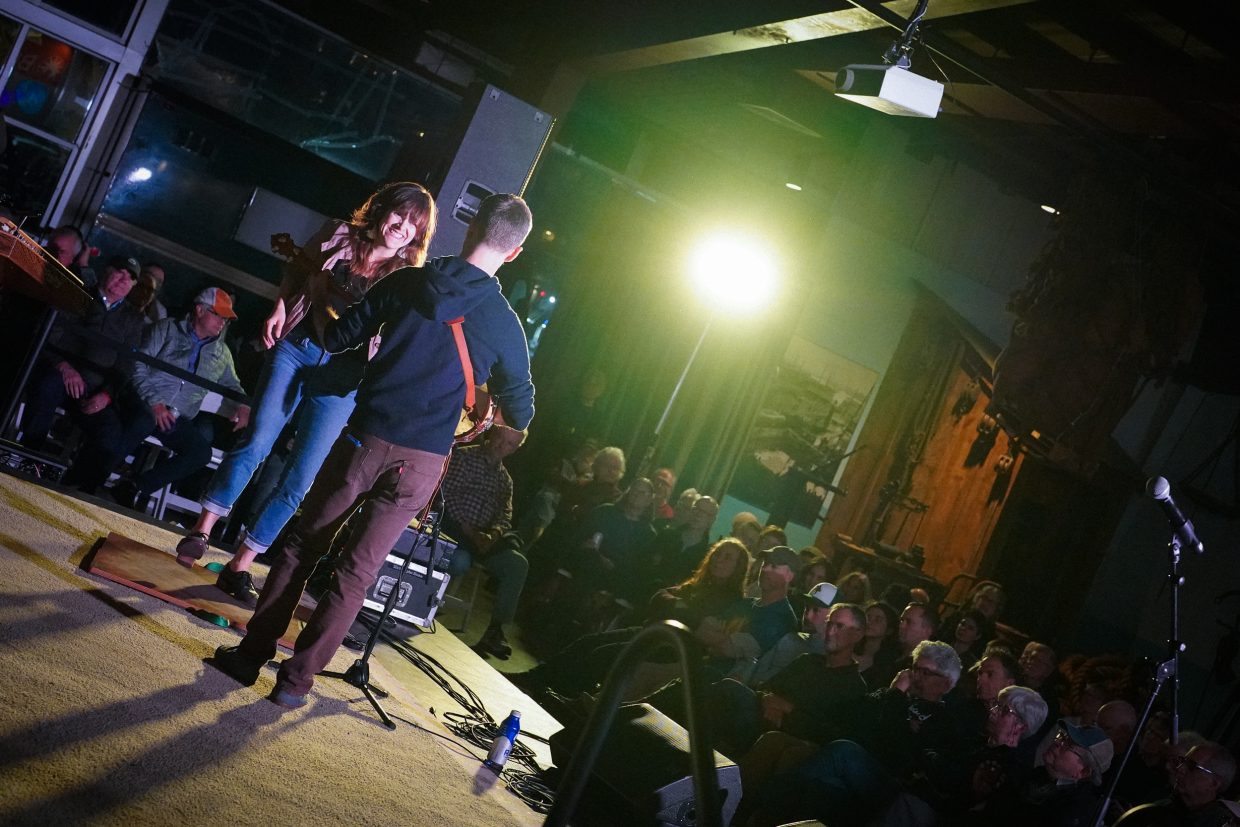
More than 1,500 people from 26 different states made their way to the fifth annual Baltimore Old Time Music Festival, bringing pickers, fiddlers, and players of all stringed instruments to rejoice along the waters of the Charm City’s Inner Harbor last month, on April 19 and 20.

A convincing demonstration of the city’s thriving old-time and roots music scene, the Old Time Festival saw attendance more than triple from 2023 as it packed the Baltimore Museum of Industry (BMI) in the first year at its new location after four memorable years at Creative Alliance.

Presented by the Center for Cultural Vibrancy and hosted by father-son duo Ken & Brad Kolodner, this year’s event boasted a lineup of high-profile artists and groups both honoring the traditions of old time, and seeking to broaden them.

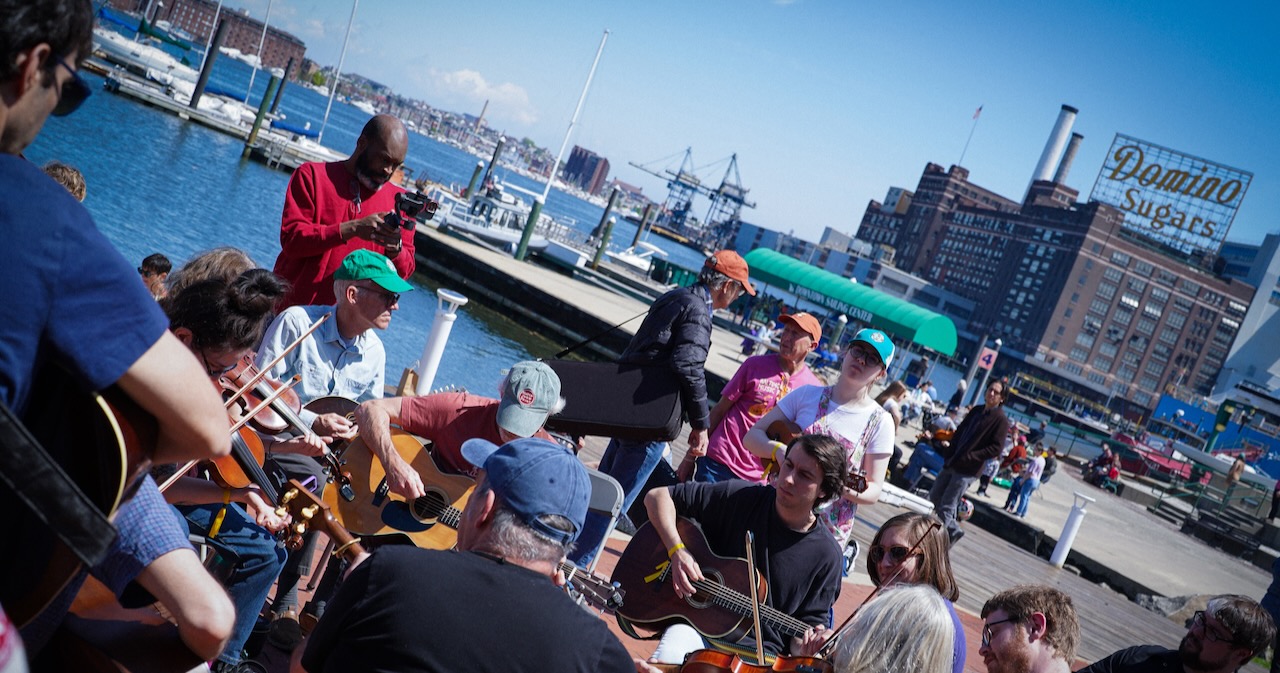
BMI and its astonishing collection of artifacts set a remarkable scene that grew to life with performances early Friday evening on the Harborview and Pavilion stages, each presenting splendid views of the Inner Harbor and famous landmarks, like the Domino Sugar sign glowing just to the southeast.

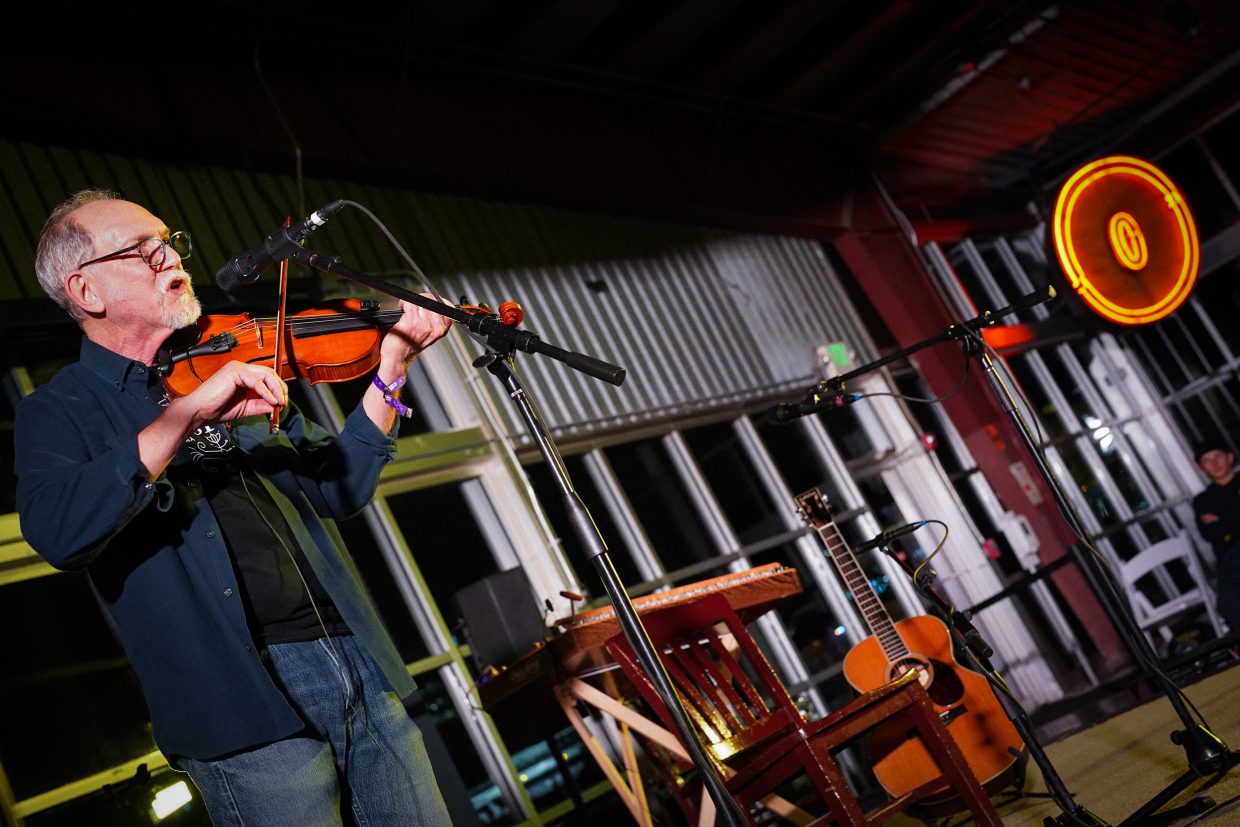
Old Time legend Bruce Molsky at the festival Kickoff Concert.

Saturday afternoon brought a loaded schedule of not only live music, but workshops, presentations, and open jam sessions in every nook and corner of the fascinating museum – and outside on its docks, too, where old pals reconnected and total strangers became friends as they played underneath the warm sun all day long.

“We’re clearly witnessing a huge period of growth for our old time community,” said Brad Kolodner, who’s a member of numerous Baltimore-based string bands and, as he does each spring, performed alongside his dad at this year’s festival.

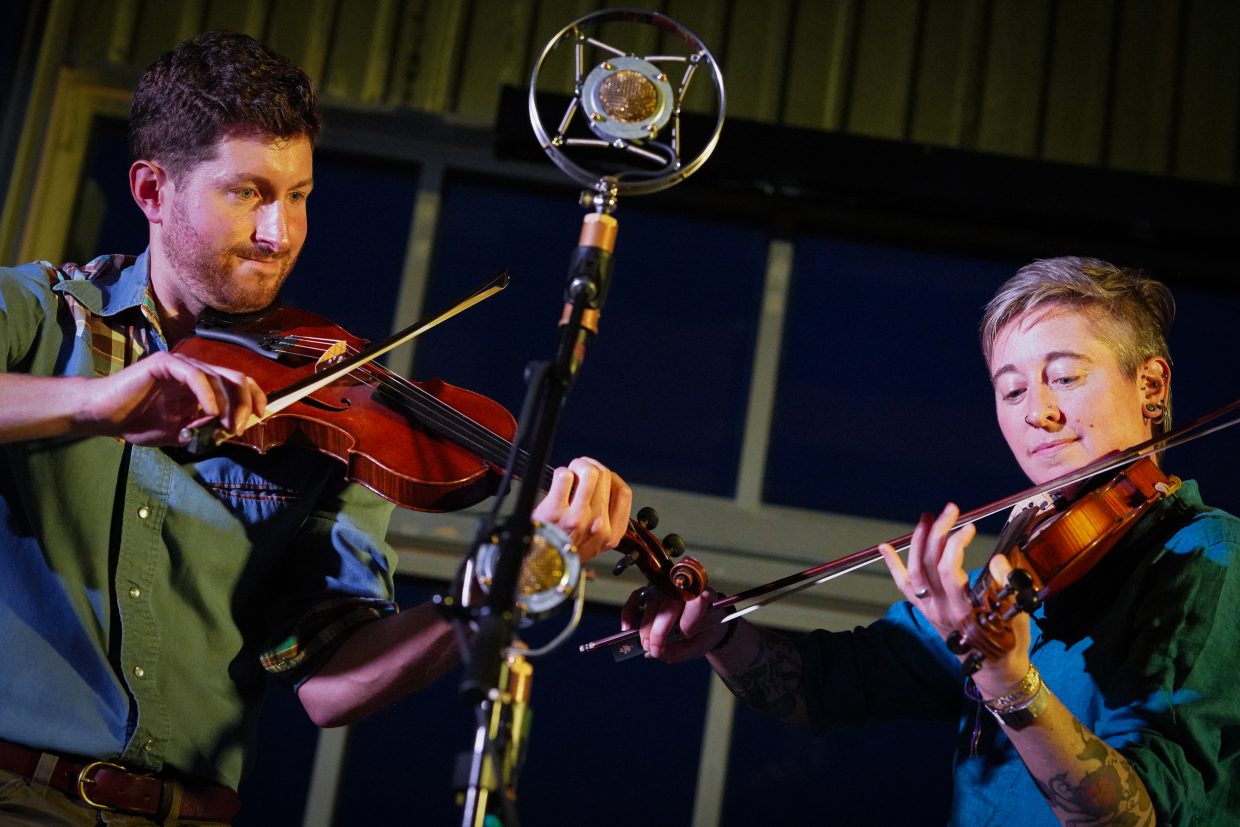
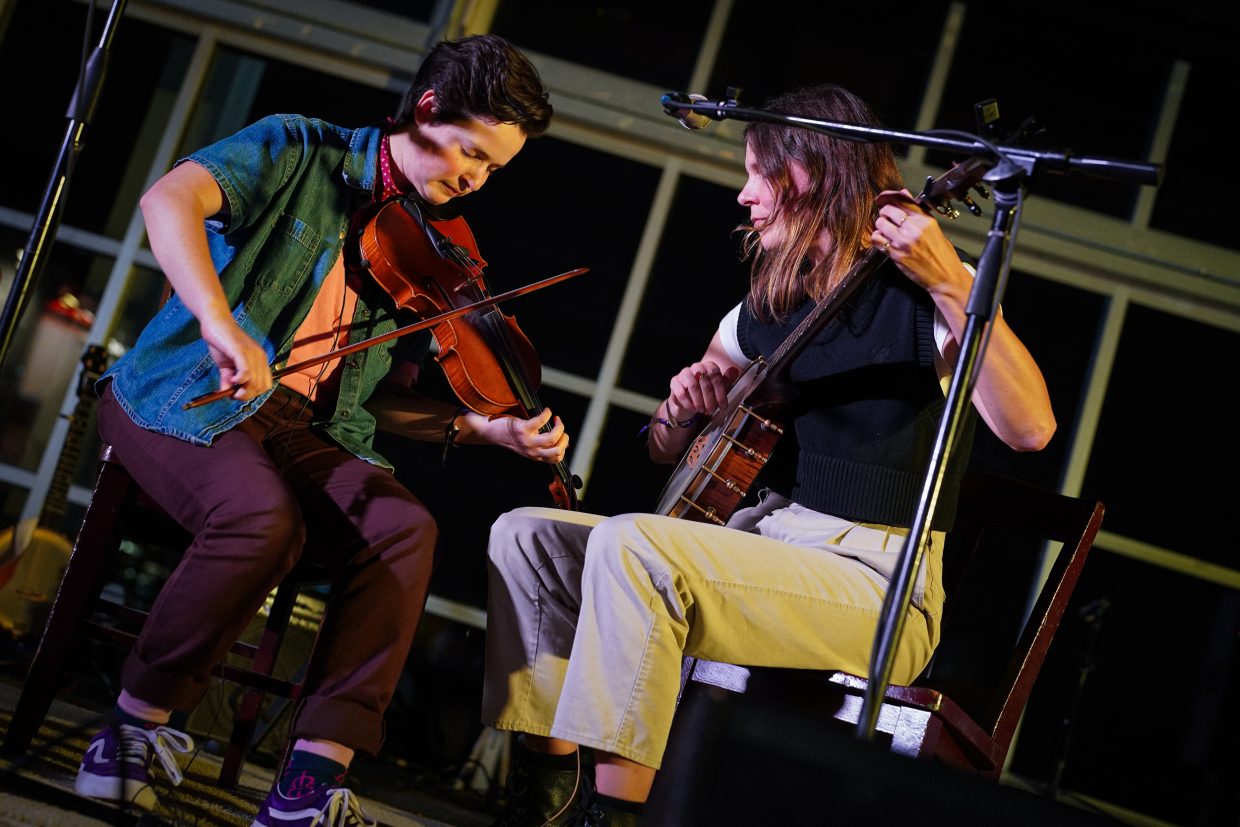
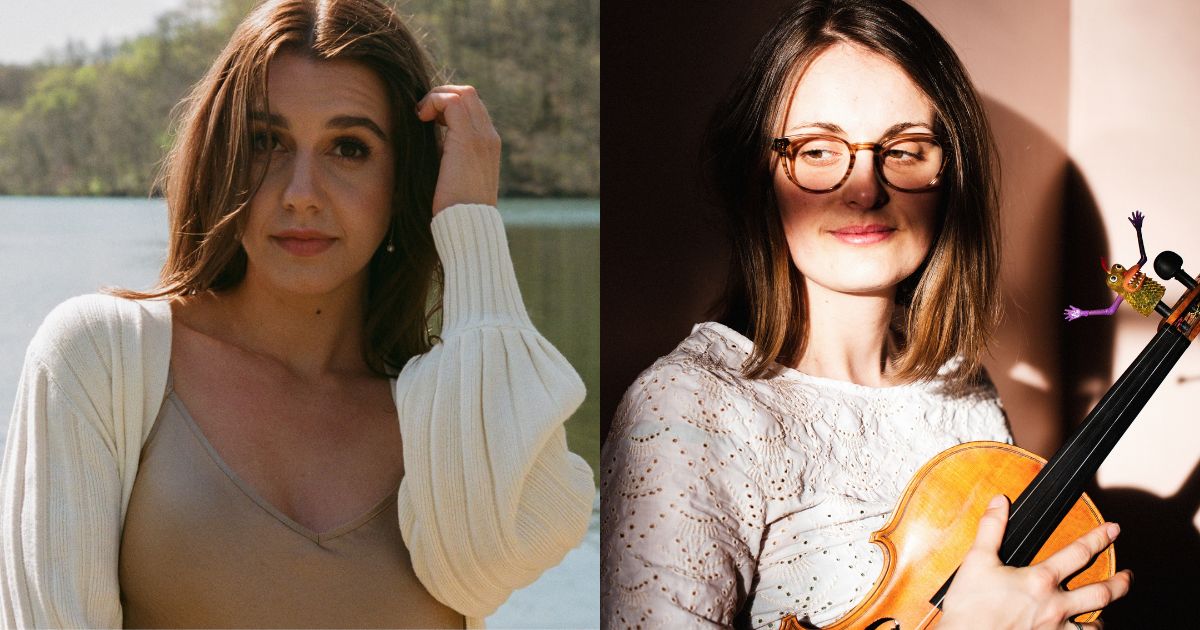
Twin fiddling from festival co-founder Brad Kolodner and Rachel Eddy.

“This marks 10 years that my father and I have been organizing events, square dances, jams and concerts, and this is the culmination of those efforts and work done behind the scene as well. We know that this is already a landmark event for Baltimore, but we took it to another level this year thanks to so much support, the amazing venue and of course the artists, who were incredible.”

Ascending Seattle-based string band The Onlies headlined both nights and served up numerous delightful sets across Friday and Saturday, as did Allison de Groot & Tatiana Hargreaves, the Horsenecks, and Bruce Molsky, a widely respected fiddler, banjoist, guitarist, vocalist and educator.

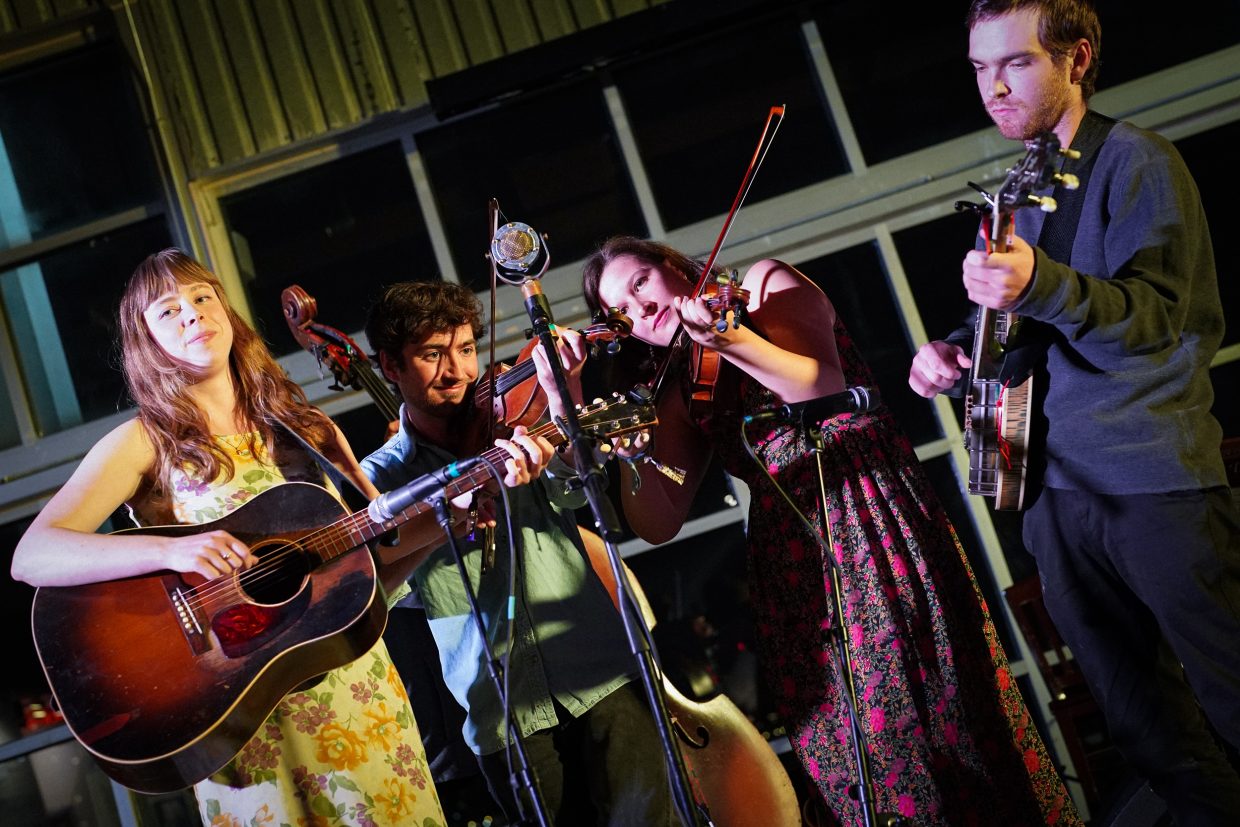
The Onlies dazzling at the Kickoff Concert.

“This festival brought together all the most positive and wonderful aspects of roots and old-time music,” said Molsky, who has recorded and performed with a long list of legendary musicians.

“It really represented all the things I love about this music, including the community,” he continued. “The cross-section of music and kinds of musicians that Brad and Ken programmed was kind of perfect.”

From Africa to Appalachia (one of the weekend’s most anticipated acts) is the fascinating project featuring Grammy-nominated master Malian griot Cheick Hamala Diabate, old-time banjo player Riley Baugus and multi-instrumentalist Danny Knicely.

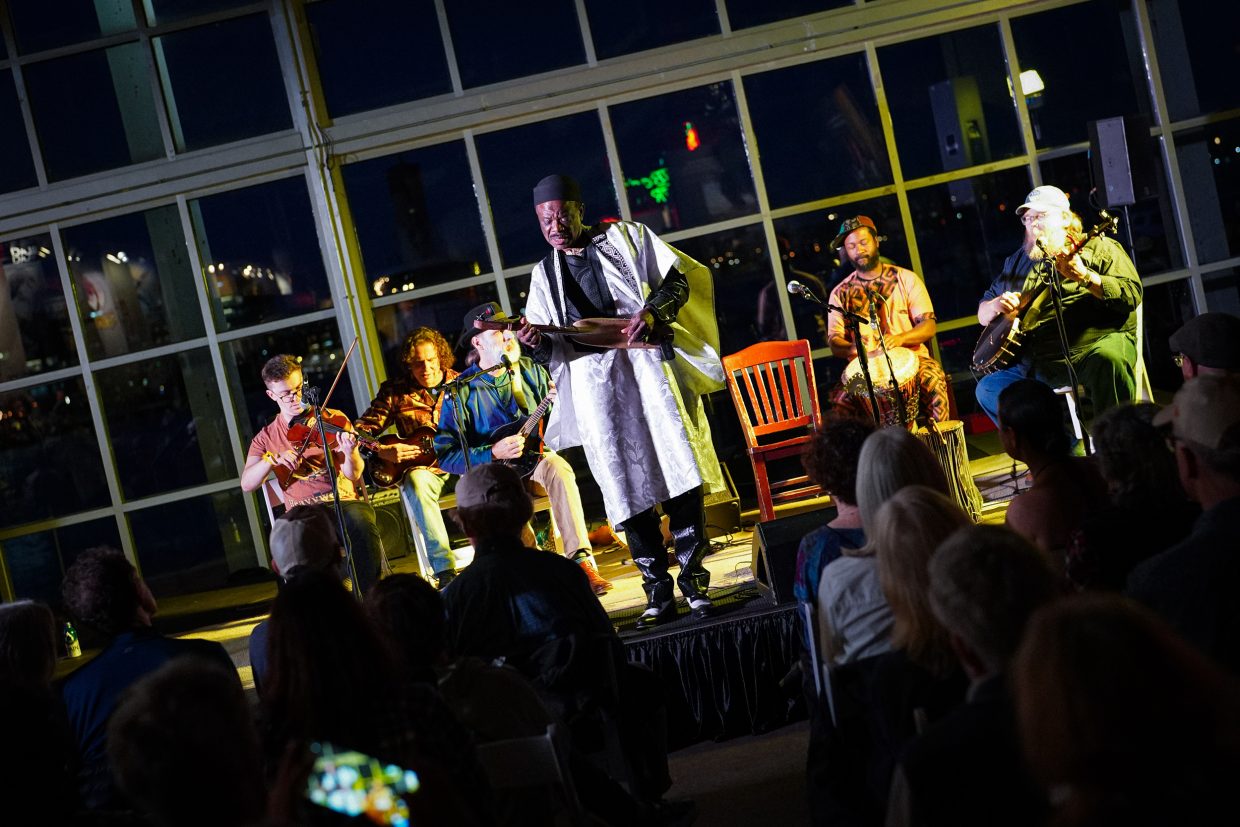
From Africa to Appalachia featuring Cheick Hamala Diabate, Riley Baugus and Danny Knicely.

Through its uncommon blend of sound and perspective, the dynamic group illustrates and educates on the historical connection between West African and Appalachian music, a theme crucial to the Baltimore Old Time Music Festival.

“This band — these people — is my heart,” said the spirited Diabate as he detailed his adventures in America, where he’s worked with star musicians and been cast in major motion pictures.

Diabate mesmerized with blazingly fast fingers on the ngoni and played his custom gourd banjo that was handcrafted by Baltimore’s own Pete Ross.

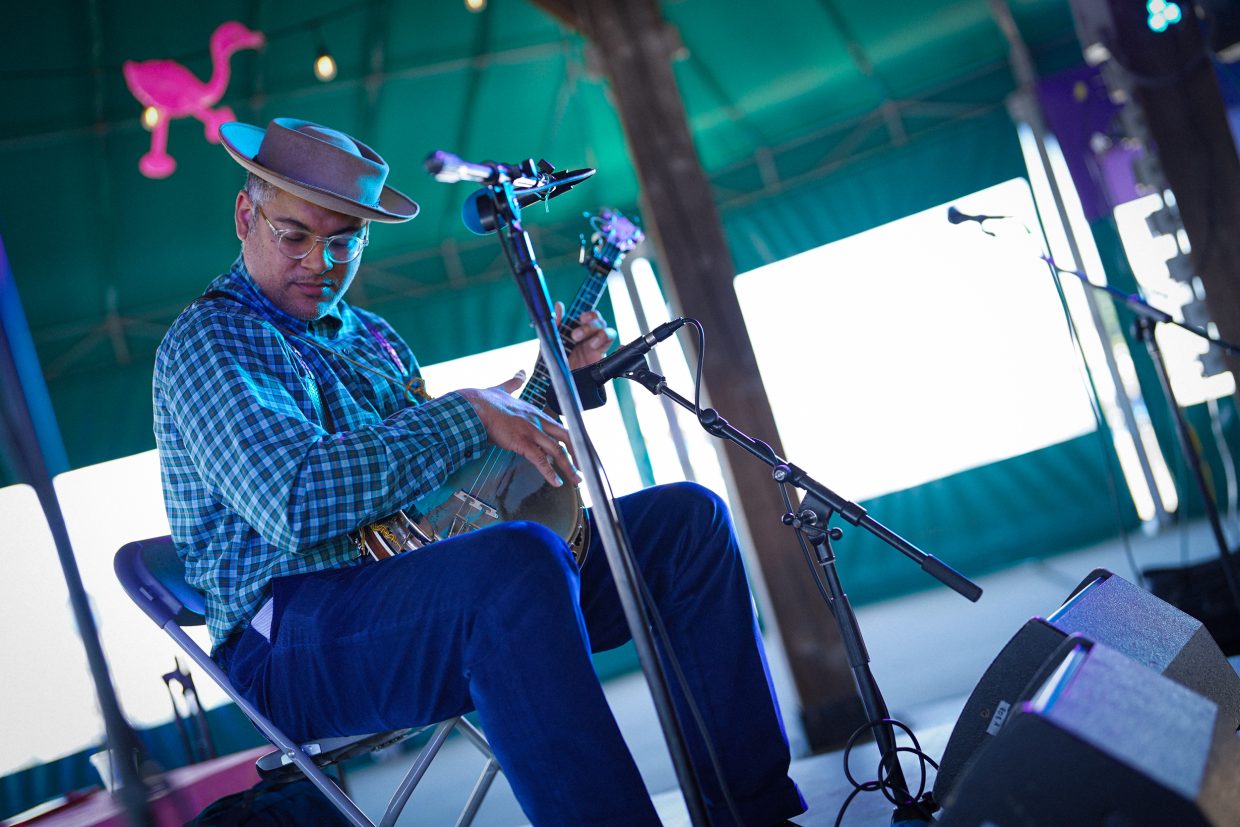
Dom Flemons, the American Songster, performs on the Pavilion Stage.

In each of his unforgettable appearances, Diabate riveted with stories and offered advice to concert goers. Presenting a session on Old Time Roots, he spoke alongside modern day old-time pioneer Dom Flemons — a co-founder of the award-winning Carolina Chocolate Drops and himself a Grammy nominee, who delivered two unforgettable performances on Saturday.

Another spectacular presence at the event, Becky Hill is a percussive dancer, choreographer, square-dance caller and educator who has focused her research on Appalachian percussive dance, flat footing and clogging. She considers the old-time space one where dancers are an equal part of the conversation with instrumentalists.

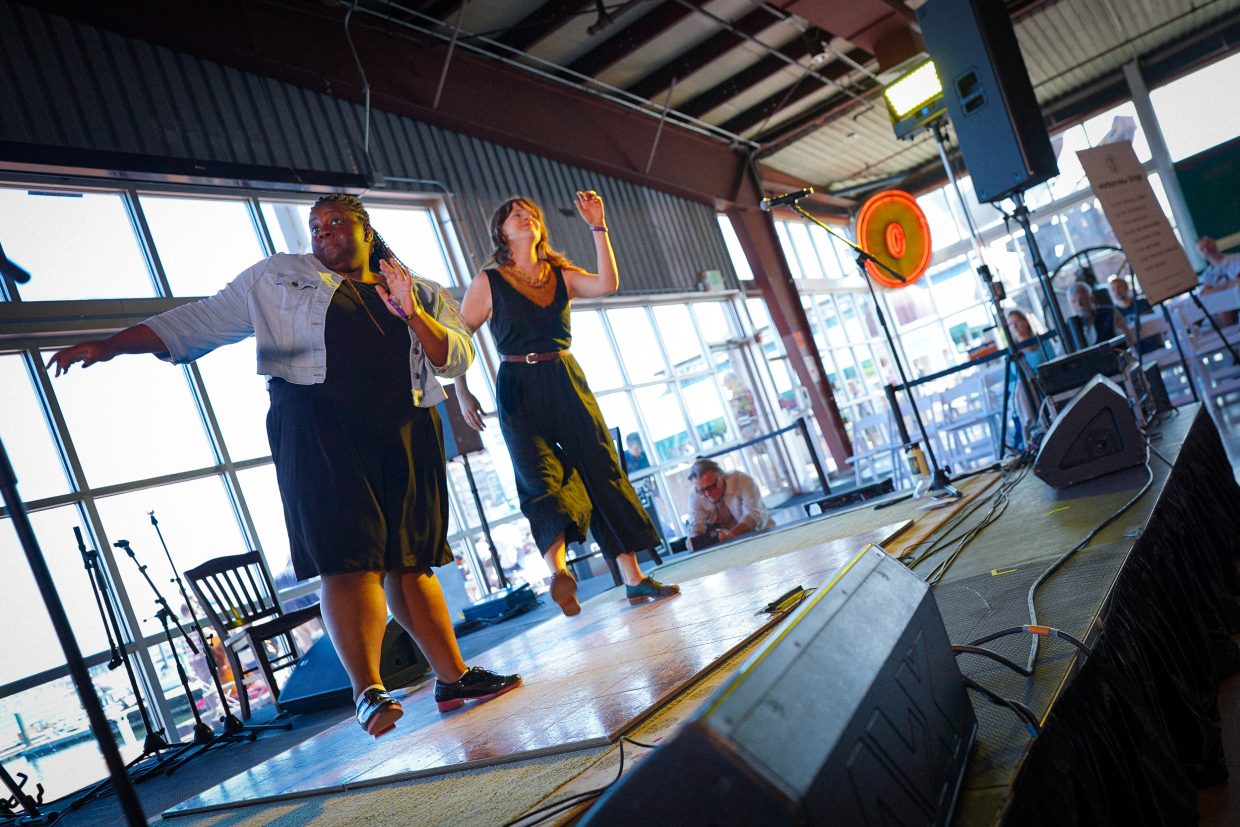
As a performer on both Friday and Saturday at the festival, Hill displayed her interest in the intersections of clogging, flatfooting and tap dance. To do so, she invited tap dancer Roxy Hill to join her at BMI, where they used old-time sounds to examine the relationship between the different dance styles.

Tap dancing and flatfooting with Roxy King and Becky Hill.

“They’re all American roots percussive dance forms. Both tap and flatfooting originated here and are unique to this complicated melting pot of the U.S. … To have the space to present our dance dialogue on stage feels really significant,” Hill said.

“It opens up new audiences for both tap dancing and flatfooting and it shows that there’s connective tissue across music and dance genres in the U.S. … In particular, what the festival is doing with the Center for Cultural Vibrancy is to expose that connection between all different aspects of old-time music.”

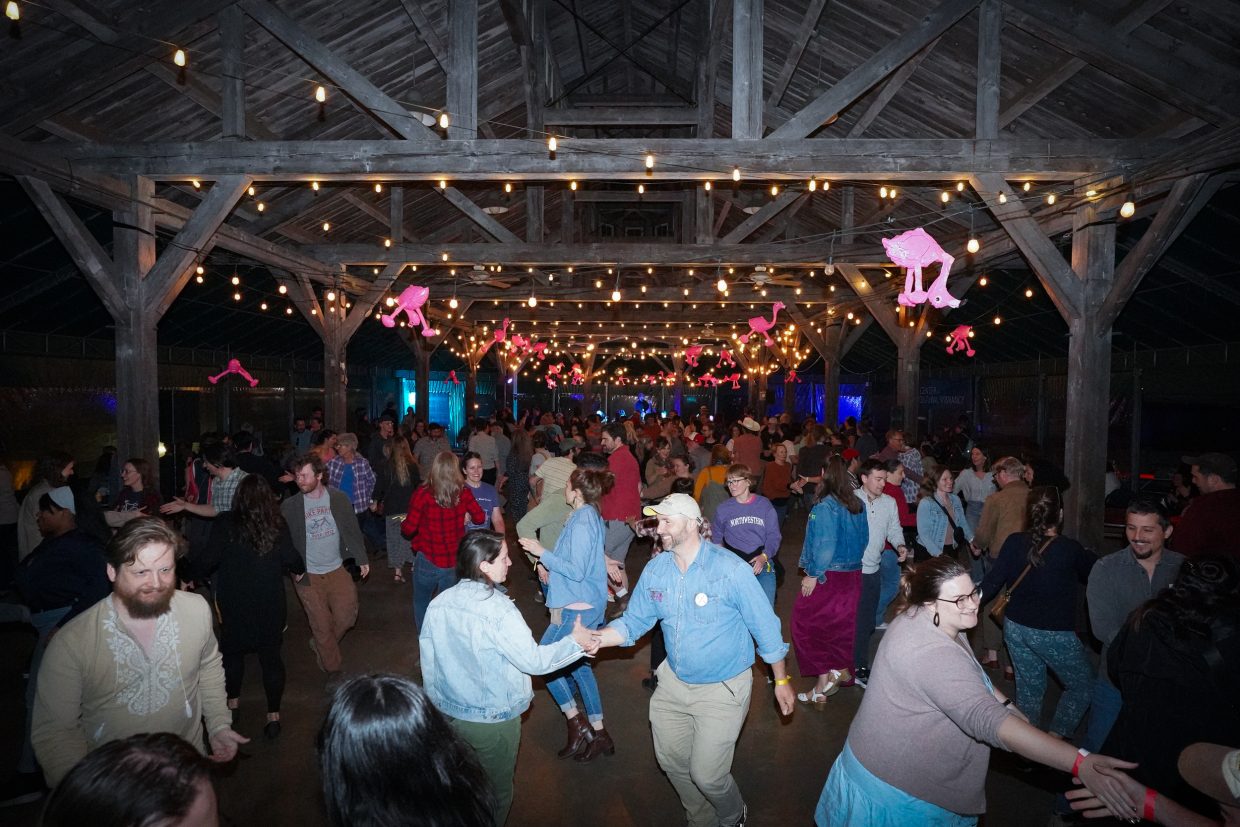
Dance, as it is each year, was a primary feature of the latest Old Time Music Festival, and the two days were capped with a jubilant old fashioned Baltimore square dance that twirled and howled into the late hours on Saturday night.

Square dancing in the pavilion with over 300 participants.

The lively affair took over the pavilion as hundreds of attendees let loose with friends and family. Veteran caller Janine Smith, who’s stoked many Charm City celebrations, led the way with the help of the Horsenecks and other performers from the lineup before all the artists on site joined together to close out the special occasion.

For Molsky and others deep into their careers, the festival provided a refreshing post-pandemic chance to catch up with longtime friends forged on the old time touring circuit, but also to interact with festival goers themselves.

“This kind of music isn’t the thing where a big star is sequestered until they walk out on stage,” he said. “Part of it is walking out there and remembering people’s names and getting to know them. I don’t consider that to be work. I love that.”

Molsky lived in the D.C. area for years and spent time in Baltimore, but he was impressed by what he sees as an undeniable “vibrancy” in the Charm City’s music landscape and its people.

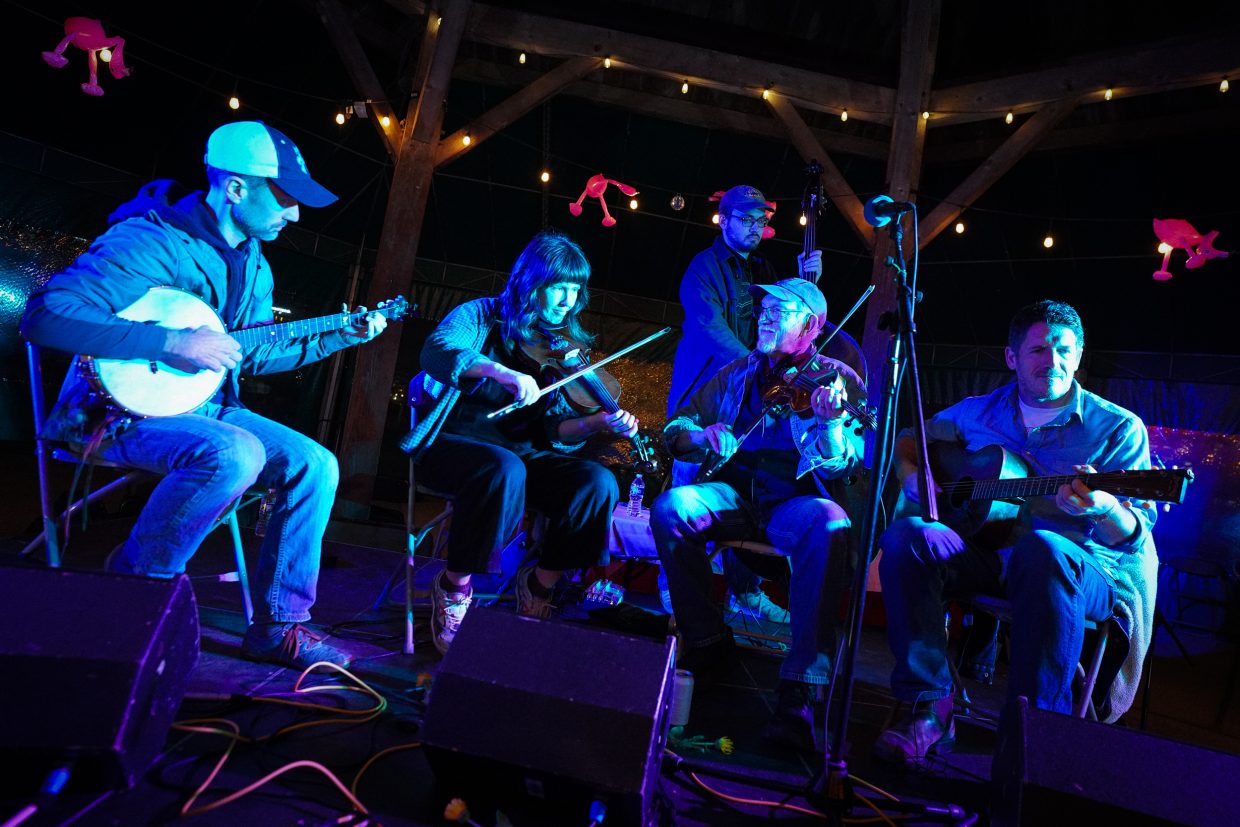
The all star square dance band featuring Bruce Molsky and the Horsenecks.

“I think Brad has a lot to do with that,” Molsky said. “When somebody walks up to me and says, ‘Hey man, I’ve been listening to your music for 20 years, it’s so nice to meet you in person,’ I’m moved by that. This festival was just a great festival for meeting people.”

Beyond introducing artists to listeners, the Kolodners intentionally designed the event to help cutting-edge musicians show what they’re doing to expand the traditional confines of the old-time genre.

“It’s going to grow into something beautiful and it already is,” Hill observed.

“It’s unique because it highlights all the different ways that this tradition is evolving by not only celebrating its roots but by having new conversations within it, too, like what Tatiana and Allison are doing or like Roxy and myself,” she continues. “We’re pushing the boundaries and we’re experimenting within the structures that old-time music provides. And I think that is part of how vernacular music traditions keep evolving.”

Allison de Groot and Tatiana Hargreaves perform at the Kickoff Concert.

With its 2024 version in the books, the Baltimore Old Time Music Festival has firmly established itself as one of the fastest growing and most influential gatherings of its kind anywhere in the country. Eyeing sustainable growth and a balance of honoring and augmenting old-time customs, the Kolodners are optimistic for what the future holds.

“We’re pleased to make so much progress, to create an enriching experience for everyone involved and we’re thrilled to be at BMI for years to come,” said Brad Kolodner.

“We’re proud of the intergenerational aspects we’ve built into it. We offer children’s programming and make it free for families, all with the hope that we can keep driving interest and participation in old time moving forward. Above all, we aim to celebrate diversity and the true roots of this music through the performers we invite to be here with us.”

Be sure to save the date for next year’s Baltimore Old Time Music Festival, which will return to BMI on April 18 and 19, 2025. More information here.

Becky Hill and Ben Nelson, in conversation with feet and banjo.

Photo Credit: All photos by Casey Vock and courtesy of the Baltimore Old Time Music Festival.

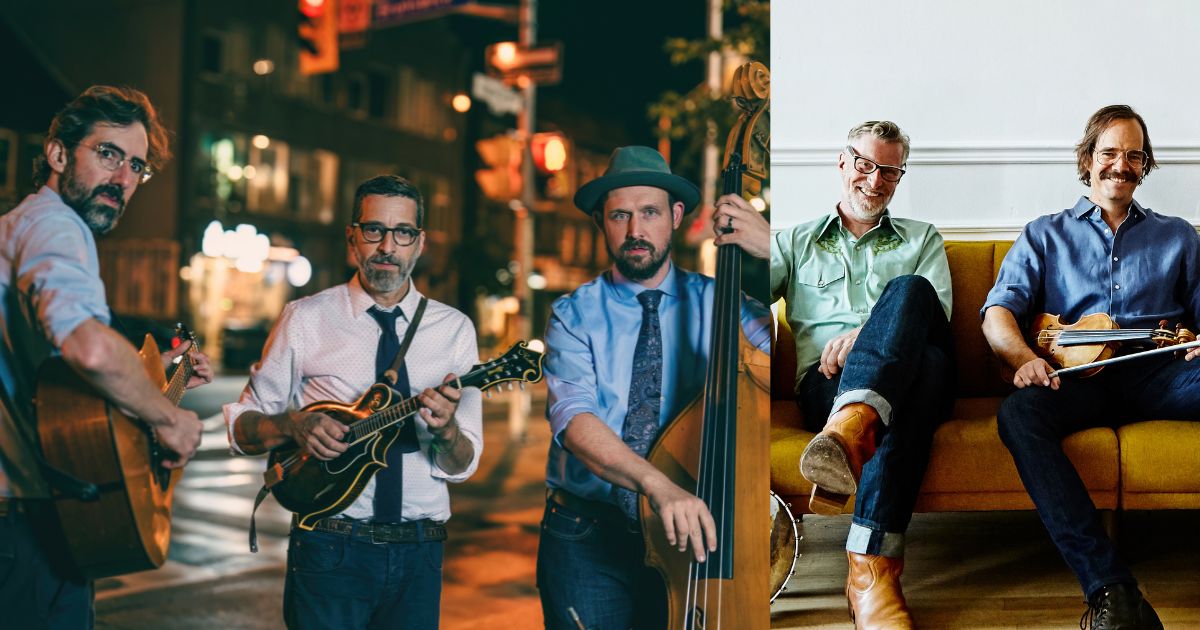
LISTEN: The Lonesome Ace Stringband, “May Day” (with The Andrew Collins Trio)

Artist: The Lonesome Ace Stringband with The Andrew Collins Trio
Hometown: Toronto, Ontario, Canada
Song: “May Day”
Release Date: May 1, 2024

In Their Words: “Andrew and I wrote this tune together about 20 years ago. It was the first of May and we spent it in the sun, picking fiddle tunes, looking at flowers, and getting in the groove with the mycorrhizal network. This melody revealed itself to us in the early afternoon, setting the vibe for the rest of the day. I’ve always found this tune beguiling. It’s hard to put your finger on its mood; to me, it’s ultimately hopeful, but it has to go through a lot before it gets there! I’ve recorded ‘May Day’ three times now; each version is very different. I can’t seem to keep away from this tune! It was so wonderful for John and me to have the chance to collaborate with Andrew, Adam, and James on this release!” – Chris Coole, the Lonesome Ace Stringband

Track Credits:

Andrew Collins – Mandolin
Chris Coole – Banjo
James McEleney – Bass
Adam Shier – Guitar
John Showman – Fiddle


Video Credits: Edited by Chris Coole. P.D. archival footage filmed by Arthur Edward Pillsbur from the Prelinger Collection.
Photo Credit: Andrew Collins Trio by Andrew Collins; the Lonesome Ace Stringband by Jen Squires.

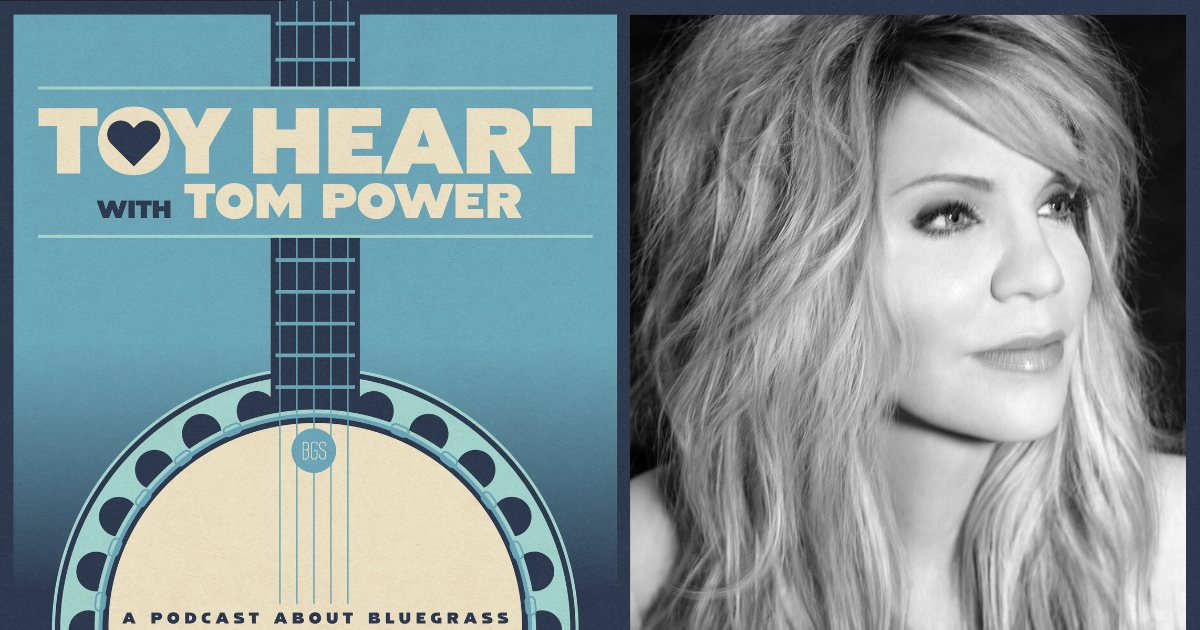
Alison Krauss – Toy Heart: A Podcast About Bluegrass

We could hardly think of a better guest with whom we’d conclude our second season of Toy Heart than 27-time Grammy Award winner, Alison Krauss. Arguably the most prominent bluegrass musician in the genre’s nearly one hundred year history – certainly the most well-known in her own generation – host Tom Power’s laughter-filled conversation with Krauss weaves through her childhood and upbringing, from her grandparents immigrating to Chicago (then her parents to Champaign, Illinois) and Alison’s first fiddle contests all the way to her first Grammy win as a young adult.

LISTEN: APPLE PODCASTSSPOTIFYMP3

In a rare podcast interview, Krauss is funny, charming, and open, her candor painting a picture of the bluegrass community’s lifelong support and the winding journey that has brought her to the present, as one of the most recognizable voices and musicians in American roots music. From her earliest hits like “Steel Rails” and “Every Time You Say Goodbye” to collaborating with Robert Plant, James Taylor, the Cox Family, and more, to her Buddy Cannon-produced 2017 album, Windy City, Power and Krauss talk about song selection, her early days touring and road-dogging with Union Station, and how it felt when her musical career really began to take off.

But these stories aren’t just about awards and accolades. They chat about many moments, the big and small, that define Krauss, the festivals that became like homes, and the bonds that music forged with her band, Union Station, and her many collaborators. They explore how Krauss creates on the boundaries of many roots genres – plus what she views as bluegrass and what’s not bluegrass – the authenticity that she’s tried to capture throughout her career, and the cultural waves made by projects like O Brother, Where Art Thou? and the Down From the Mountain tour.

From personal anecdotes about Ralph Stanley and Larry Sparks to her feelings about Billy Strings’ massive success to a jaw-dropping and exciting revelation that she and Union Station are working on a new bluegrass album, our season finale with Alison Krauss is truly one of our best Toy Heart episodes to date.


Photo Credit: Randee St Nicholas

You Gotta Hear This: New Music From John McEuen, Tom Paxton, and More

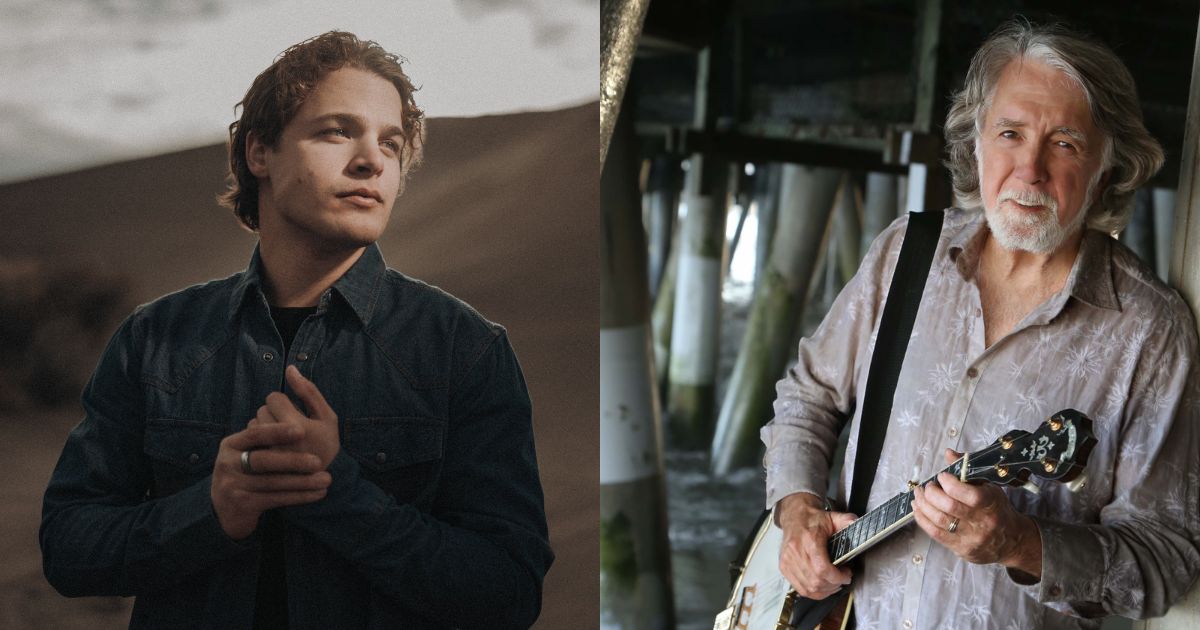
This week, banjoist and Nitty Gritty Dirt Band founding member John McEuen kicks off our You Gotta Hear This round up with a track from his brand new album, The Newsman: A Man of Record. Check out his adaptation of a Robert Service poem, “The Cremation of Sam McGee” below.

Plus, we’ve got track premieres from gritty country outfit Tylor & the Train Robbers, from Claire Lynch singing Tom Paxton for an upcoming album, Bluegrass Sings Paxton, from the Stetson Family contemplating mortality, and from the Onlies a rendering of a classic old-time ballad.

Don’t miss our video premiere from Max McNown, too, which posted to BGS just yesterday. It’s all right here and, if we do say so ourselves, You Gotta Hear This!

John McEuen, “The Cremation of Sam McGee”

Artist: John McEuen
Hometown: Oakland, California
Song: “The Cremation of Sam McGee”
Album: The Newsman: A Man of Record
Release Date: April 12, 2024
Label: Compass Records

In Their Words: “Using sound effects, music I composed, and some ‘recording tricks’ with instruments, I concocted the back up for one of my favorite poems, ‘The Cremation of Sam McGee.’ My (late) older sister would sometimes tell her 8-10 year old brother, me, this favorite Robert Service poem from 1906, captivating me with the story of a place unknown. I later found it in my high school English book and fell in love with it again. It takes me away to that strange time in these miners’ lives, and while starting kind of morose, manages (in my opinion, anyway) to reach a ‘happy ending’ with Sam finally getting warm! Trying to make the ‘definitive’ version of this classic was a challenge. It is one of my best ‘works.’ I am hoping each time a listeners hears it they will hear something different show up in the mix, as I planned it to be ‘with surprises’ like that.” – John McEuen


Claire Lynch, “I Give You The Morning” (by Tom Paxton)

Artist: Claire Lynch from Bluegrass Sings Paxton
Hometown: Toronto, Ontario, Canada
Song: “I Give You The Morning”
Album: Bluegrass Sings Paxton
Release Date: April 12, 2024 (Single)
Label: Mountain Home Music Company

In Their Words: “Claire Lynch has one of the most recognizable and expressive voices in bluegrass. We knew we wanted to have that voice on the album and her choice of ‘I Give You The Morning’ was a great call — it’s got an old-fashioned ballad construction, a deliciously unusual yet natural rhythm to the first lines in each verse, a captivating melodic rise in the refrain, and an evocative lyric. And, the band has just the right balance of strength and delicacy to complement those same qualities in her approach. It’s a performance that brings out so many aspects of what makes Tom Paxton’s songs so memorable, and I can’t think of a better way to introduce this project to listeners!” – Jon Weisberger, co-producer

“Since the early 1960s, when bluegrass and the emergent folk revival first crossed paths, arguably no songwriter from the latter world has seen more of their songs adopted by the former than Grammy Lifetime Achievement Award recipient Tom Paxton. From early covers of his epochal ‘The Last Thing On My Mind’ by Bluegrass Hall of Famers, The Dillards and the Kentucky Colonels, to regular performances of ‘Leaving London’ by IBMA Entertainer of the Year Billy Strings, to Ashby Frank’s version of ‘Can’t Help But Wonder Where I’m Bound,’ which landed a place among the 30 most-played tracks on bluegrass radio in 2023, Paxton’s creative visions have echoed in bluegrass studios, on bluegrass stages and in bluegrass jam sessions for generations.

“Now a broad-ranging group of artists in and around bluegrass are paying explicit tribute to this vital legacy in a new Mountain Home Music Company collection — Bluegrass Sings Paxton — that places these classic songs alongside less familiar, but no less finely crafted material from the Tom Paxton songbook, including new songs written especially for the project.” – Mountain Home Music Company

Track Credits:
Claire Lynch – Lead vocal
Darren Nicholson – Mandolin, octave mandolin
Deanie Richardson – Fiddle
Chris Jones – Acoustic guitar
Kristin Scott Benson – Banjo
Nelson Williams – Upright bass


Tylor & the Train Robbers, “Workin Hands”

Artist: Tylor & the Train Robbers
Hometown: Boise, Idaho
Song: “Workin Hands”
Album: Hum of the Road
Release Date: April 12, 2024 (single); May 3, 2024 (album)

In Their Words: “I wrote this one around a guitar riff I had been playing with for a while. The riff is busy, but something about it stuck in my head and I decided to write a song to match it. I wanted to keep the intensity of that guitar part and extend to every instrument in the band, pushing us all musically. Everyone in the band worked to find the right parts that brought it all together. The vibe is inspired by bands like Barefoot Jerry and the Amazing Rhythm Aces, it’s unpredictable and keeps you on your toes. It’s definitely not a song I would ask someone to sit in with us on unless they came prepared, but it’s become a favorite for us to play live. I think it really showcases the musicianship of everyone in the band.” — Tylor Ketchum

Track Credits:

Tylor Ketchum – Lead Vocals and Rhythm Guitar
Jason Bushman – Bass Guitar and Harmony Vocals
Tommy Bushman – Drums and Harmony Vocals
Rider Soran – Lap Steal Guitar
Johnny Pisano – Electric Guitar
Cody Braun – Hand Claps and percussion
Katy Braun – Hand Claps
Jonathan Tyler – Hand Claps and percussion

Recorded at Yellow Dog Studios in Wimberley, Texas.
Producer – Cody Braun
Engineer – Adam Odor
Mixed by Jonathan Tyler.
Mastered by Adam Odor.


The Stetson Family, “Make Me Ashes”

Artist: The Stetson Family
Hometown: Melbourne, Australia
Song: “Make Me Ashes”
Album: The Stars, If You Look Closely
Release Date: April 19, 2024

In Their Words: “‘When it’s time to meet my maker, come the fire or the hole…’ – the words ‘fire or the hole’ come from a conversation I had with a woman who was the owner of a Vietnamese restaurant in Melbourne where my family and I went every Wednesday night for many years. When my mum passed away, Lisa, the lovely Vietnamese owner, asked me in broken English, ‘Does your mum have the fire or the hole?’ Meaning, ‘Will she be cremated or buried?’ I loved her humble way of asking, it was so heartfelt. It got me thinking about when it’s my time, will I have the fire or the hole? This song lets people know I’ve chosen the fire.” – Nadine Budge

Track Credits:
Nadine Budge – Writer, lead vocal, rhythm guitar, resonator guitar
John Bartholomeusz – guitar, harmonies
Colin Swan – banjo, harmonies
Greg Field – fiddle, mandolin, harmonies
Luke Richardson – double bass, harmonies


The Onlies, “Matty Groves”

Artist: The Onlies
Hometown: Nashville, Tennessee; Durham, North Carolina; Whitesburg, Kentucky
Song: “Matty Groves”
Release Date: April 12, 2024

In Their Words: “A couple years ago, our friend Sonya Badigian sent a recording of Doc Watson playing this song and recommended we learn it as a band. Before going into the studio, Leo spent many weeks singing the long, epic poem which tells the story of Matty Groves stealing Lord Daniel’s wife and the dramatic duel that later ensues. This story dates back to 17th century Northern England, closely related to Child ballad #81, ‘Little Musgrave and Lady Barnard.’ When we got together to work up an arrangement, a driving fiddle melody emerged to accompany the lyrics. We recorded it late at night in a small studio in Eunice, Louisiana, with the help of incredible engineer Joel Savoy and the unmistakable bass groove of Nokosee Fields.” – Sami Braman

Track Credits:
Leo Shannon – lead vocal and guitar
Vivian Leva – harmony vocal and guitar
Sami Braman – fiddle
Riley Calcagno – banjo
Nokosee Fields – bass


Max McNown, “Worry ‘Bout My Wandering”

Artist: Max McNown
Hometown: Bend, Oregon
Song: “Worry ‘Bout My Wandering”
Album: Wandering
Release Date: April 12, 2024
Label: Fugitive Recordings x The Orchard

In Their Words: “‘Worry ‘Bout My Wandering’ was probably the most difficult song for me to write as it’s so personal. It came from being far away from my family and thinking about my mom and wondering how she feels about my life and the direction it’s taken. Shooting the video in my beautiful home state of Oregon was very important to me… I just always want to make my family and hometown proud.” – Max McNown

More here.


Photo Credit: John McEuen by Henry Diltz; Max McNown by Benjamin Edwards.

You Gotta Hear This: New Music From Laurie Lewis, Lonesome River Band, and More

This week, to mark New Music Friday, we have a bevy of brand new music videos from folks like bluegrass legend Laurie Lewis, bassist Nate Sabat, country outfit Jenny Don’t & The Spurs, and flatpicker Rebecca Frazier, who gathers an all star lineup for a new track set to a brand new video. The Reverend Shawn Amos also brings us a delightfully psychedelic visualization to pair with a modern blues and gospel inflected track, “It’s All Gonna Change (For The Better),” that highlights how life on this planet is a gift, not a given. (We couldn’t have said it better ourselves.)

Plus, you won’t want to miss a brand new heartbreakin’ track from first class bluegrassers, Lonesome River Band. And, if you missed our post featuring The Bygones earlier this week, you can check out the duo’s song, “If You Wanted To,” below as well.

It’s all right here on BGS and, to be quite honest, You Gotta Hear This!

Laurie Lewis, “Long Gone”

Artist: Laurie Lewis
Hometown: Berkeley, California
Song: “Long Gone”
Album: Trees
Release Date: March 29, 2024 (single); May 31, 2024 (album)
Label: Spruce and Maple Music

In Their Words: “I have loved ‘Long Gone’ since I first heard Bill Morrissey sing it a couple of decades ago. Recording it was a blast, and I think that as a ‘returning’ song, it is particularly resonant in these post-pandemic times. We’ve all be long gone, from each other and the world at large. Every time I hear Brandon Godman’s fiddle kick-off, I get excited all over again, to be returning from the virtual to the corporeal world.

“Making this video was about the most fun there is, driving an aging 5-speed stick shift truck up and down Sonoma County backroads in the late winter green of Northern California. I love my job!” – Laurie Lewis

Track Credits: Written by Bill Morrissey.

Laurie Lewis – Guitar and lead vocals
Brandon Godman – Fiddle
Patrick Sauber – Banjo
Hasee Ciaccio – String bass

Video Credit: Bria Light


Lonesome River Band, “Hang Around For The Heartbreak”

Artist: Lonesome River Band
Hometown: Floyd, Virginia
Song: “Hang Around For The Heartbreak”
Release Date: March 29, 2024
Label: Mountain Home Music Company

In Their Words: “This song was sent to us from my good friend, Barry Hutchens, who has been writing some material with his son, Will, and Jerry Salley. I call it a ‘Happy Heartbreak’ song as the chorus goes, “If we chase this feeling down whatever road it leads us/ We’ll never have regrets about a chance we didn’t take/ But if we’re just pretending this might be a happy ending someday/ I’ll still hang around for the heartbreak.” It’s a great perspective put together by Barry, Will, and Jerry and it feels like classic Lonesome River Band. We hope you enjoy it as much as we do!” – Sammy Shelor

Track Credits:

Adam Miller – Mandolin, lead vocal
Sammy Shelor – Banjo, vocal
Jesse Smathers – Acoustic, vocals
Mike Hartgrove – Fiddle
Kameron Keller – Upright bass


Nate Sabat, “Sometimes”

Artist: Nate Sabat
Hometown: New York, New York
Song: “Sometimes”
Album: Bass Fiddler
Release Date: March 27, 2024
Label: Adhyâropa Records

In Their Words: “Until last September, I was playing a completely different version of this song. Written by the great Abigail Washburn, my initial version was essentially a bass-and-voice rendition of the original. In a prep session with my producer Bruce Molsky, we both agreed that it just wasn’t landing. He pulled out a fretless banjo, and suggested I try leaning into a bluesy, modal sound instead. That idea lit a fire in me, and two hours later we had something completely new.” – Nate Sabat

Track Credits:

Nate Sabat – Bass, vocals
Recorded at Spillway Sound in West Hurley, New York.
Engineered and Mixed by Eli Crews.
Produced by Bruce Molsky.
Mastered by Dave Glasser at Airshow Mastering.


The Reverend Shawn Amos, “It’s All Gonna Change (For The Better)”

Artist: The Reverend Shawn Amos
Hometown: Dallas, Texas
Song: “It’s All Gonna Change (For The Better)”
Album: Soul Brother No. 1
Release Date: May 3, 2024
Label: Immediate Family

In Their Words: “There’s a famous comedy bit from George Carlin addressing humans’ disgraceful treatment of Earth. It ends with the punchline, ‘The planet is fine. The people are fucked.’ This song takes a page from Carlin’s book of dark humor. It’s a conversation amongst non-human life counting down the days until these dumbass humans are out of the way. It’s also a simple reminder to ‘WAKE UP!’ as Spike Lee would say. Life on this beautiful planet is a gift – not a given. You dig? Say it with me, ‘We got to all stand up, ain’t gonna take too long. Keep your mind strong.'” – The Reverend Shawn Amos

Video Credit: David Sheldrick


Jenny Don’t & The Spurs, “Pain In My Heart”

Artist: Jenny Don’t & The Spurs
Hometown: Portland, Oregon
Song: “Pain In My Heart”
Album: Broken Hearted Blue
Release Date: June 14, 2024
Label: Fluff & Gravy Records

In Their Words: “Inspired by the writing style of Johnny Paycheck and his classic delivery of telling a story while the band keeps it rollin’ on. I love how some of those old classic country singers charm their way through a song where even though they might be in the wrong you still want ’em to win in the end. ‘Yeah, I know, I’m a jerk – but I love ya. Come on, come back home…’ (Not me personally! But you get the idea…)

“While my usual inspiration when it comes to songwriting tends to lean towards the female icons of the genre, for this album, I veered towards more male influences such as Chris Isaac, Lee Hazelwood, Johnny Paycheck, Buddy Holly, John Fogerty, and Link Wray. These diverse songwriters contributed to the inspiration behind the album.

“I’d also like to emphasize that while I take the lead in songwriting, the songs wouldn’t have evolved into what they are without the invaluable input, musical direction, and insight from my bandmates, Kelly Halliburton, Christopher March, and Buddy Weeks. I’m truly grateful for their contributions and thrilled to have collaborated with them on this fun album.” – Jenny Don’t

Track Credits: Written by Jenny Don’t.

Jenny Don’t – Vocals, rhythm guitar
Kelly Halliburton – Bass guitar
Christopher March – Lead guitar
Buddy Weeks – Drums
Rusty Blake – Pedal steel guitar

Recorded at Revolver Studio in Portland Oregon by Collin Hegna, September 2023.


Rebecca Frazier, “Make Hay While the Moon Shines”

Artist: Rebecca Frazier
Hometown: Nashville, Tennessee (originally Richmond, Virginia)
Song: “Make Hay While the Moon Shines”
Release Date: March 25, 2024
Label: Compass Records

In Their Words:“Growing up in Virginia and spending much of my childhood by the Chesapeake Bay, I’ve always felt an ethereal connection to the moon. To me, it feels like there’s magic in the air when the moon is full. Getting together with Jon and Bob to write this song was a reflection of that excitement – we were all laughing and cutting loose as we came up with double entendres. We wanted to express that light-hearted, anticipatory feeling of a spirited full moon night – after all, the song is a twist on the phrase “make hay while the sun shines,” which means “get your work done.” What is the opposite of that?

“Bill Wolf produced the track with his innate talent for bringing out the best in musicians – he did such an intuitive job bringing musicians in the room who would create and build the climactic moments with their improvisation. I was floored by the performances of Béla, Stuart, Barry, Sam, and Josh. Christopher Gunn’s videography was beyond my imagination. He captured the imagery of a lighthearted, spirited mood while maintaining a dream-like quality, and I think it’s beautiful.” – Rebecca Frazier

Track Credits: Written by Rebecca Frazier, Jon Weisberger, and Bob Minner.

Produced by Bill Wolf.
Rebecca Frazier – Guitar
Béla Fleck – Banjo
Sam Bush – Mandolin
Stuart Duncan – Fiddle
Barry Bales – Bass
Shelby Means – Harmony vocal

Video Credit: Christopher Gunn Creative


The Bygones, “If You Wanted To”

Artist: The Bygones
Hometown: Brooklyn, New York & Nashville, Tennessee
Song: “If You Wanted To”
Album: The Bygones
Release Date: April 4, 2024
Label: Tonetree Music

In Their Words: “‘If You Wanted To’ encapsulates the feeling of longing for acceptance and approval from someone you love that has known you through many chapters of life. People change and grow over time, and one of the biggest pains is when the ones closest to you don’t grow with you or want to get to know the current person you are. Over time, I’ve realized that you can’t make someone see you and love you for the current walk of life you’re in and not for a previous version of yourself, they have to choose to get to know you. Sometimes the ones you love just want to hold on to the version of you they knew that is no longer here.” – Allison Young


Photo Credit: Laurie Lewis by Irene Young; Nate Sabat by Jules Miranda.

With a New Album, ‘No Fear,’ Sister Sadie Once Again Go “All In”

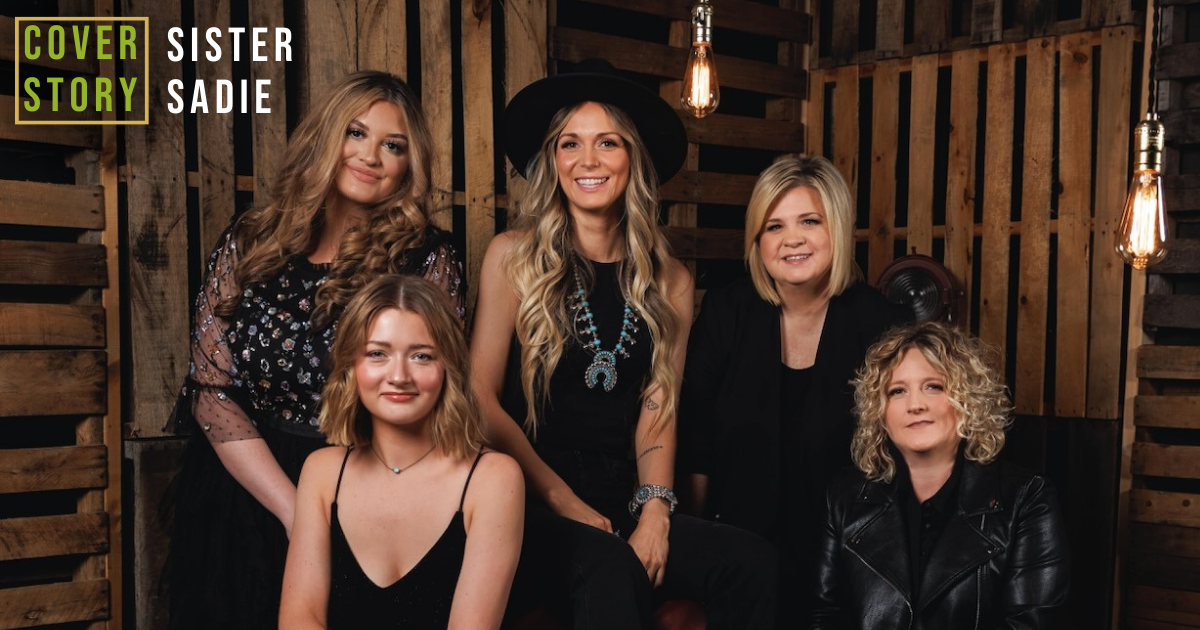
Last month, Sister Sadie took the stage at Nashville’s Station Inn to showcase and celebrate their latest album, No Fear. And although the title itself could be an ode to the group’s unrelenting urge to hop genre fences – from bluegrass to country to pop and back again – it’s also a nod to the resiliency of the band itself.

With No Fear, Sister Sadie showcase three-part, songbird harmonies backed by a keen musical aptitude that’s equally distributed throughout the quintet. The 13-song LP combines the “high, lonesome sound” of bluegrass with a blend of country and pop sensibilities a la The Chicks, Little Big Town, or Pistol Annies.

“There’s a space for bluegrass meets Americana meets country meets pop — that’s what I’m manifesting,” says fiddler and de facto band leader, Deanie Richardson.

To note, the Station Inn appearance was a full-circle sort of thing for the ensemble. First coming together at the storied venue by pure happenstance in December 2012, Richardson, banjoist Gena Britt, and former members guitarist Dale Ann Bradley, bassist Beth Lawrence, and mandolinist Tina Adair were simply a collection of pickers and singers from different circles in Music City.

That initial gig went extremely well, so much so that more shows were booked and things started to unfold into a full-fledged band – albeit one where the members still held day jobs and were raising families. But, the music felt right and so did the performances, so why not tempt fate and see where this ride may go?

Well, what a ride it has been thus far. Appearances on the Grand Ole Opry. Three IBMA awards for Vocal Group of the Year (2019, 2020, 2021) and one for Entertainer of the Year (2020), with Richardson taking home Fiddle Player of the Year in 2020. And a Grammy nomination for Best Bluegrass Album for the 2018 release, Sister Sadie II.

But, in recent years, three of those founding members — Bradley, Lawrence, and Adair — left to pursue other projects, which, in turn, posed one lingering question to Richardson and Britt — where to from here?

“When we started 12 years ago, when we hit that first note at the Station Inn, we felt this magical chemistry in the band,” Richardson says. “Somehow, every time we reinvent this [band], I still feel that magical chemistry when we play music.”

Instead of throwing in the towel and saying it was good while it lasted, Richardson and Britt forged ahead, come hell or high water. They regrouped and reemerged into this next, unknown chapter. Soon, Jaelee Roberts and Dani Flowers came into the fold, both bringing songwriting prowess as well as providing guitar and vocal harmonies to ideally complement Britt. Then, in 2023, bassist Maddie Dalton hopped onboard.

“It’s an eclectic group of ladies and of musical tastes,” Richardson says. “Our home, our hearts and our souls are in bluegrass music. That’s what we love, that’s our passion, but there’s a lot of room for growth there.”

The new album, it’s not bluegrass. It’s not country. It’s just good music. In my opinion, it would be a shame to pigeonhole your music.

Deanie Richardson: Well, that would be our dream, Garret, for someone to not try to put some sort of label or pigeonhole it into somewhere. But, unfortunately, it happens. We went in there with great tunes and just let them arrange themselves, let them work themselves out in the studio. And this is what we got. So, I didn’t go in with bluegrass in mind. I didn’t go in with country in mind. I just went in with all my pals, people I love — great players and great songs.

Is that more by design or just how things have evolved?

DR: I think that’s how it’s evolved. That was not the original [Sister] Sadie. That’s this combination of girls right here. When you have personnel changes like we’ve have along the way, the energy changes — everything shifts.

Gena Britt: You have to reinvent yourself.

DR: You’ve got to figure out where you land when Jaelee Roberts comes in and changes everything. And then you’ve got to figure out where you land when Dani Flowers comes in. And Maddie Dalton. We’ve had three new members. That changes the energy. It changes the vibe. It changes the feel. It changes the vocals. It changes everything. This whole band has grown organically over the last 12 years. This is just where it is right now. We’re about to go in and record a new one and, shoot, it may sound like ZZ Top. I don’t know — you never know.

And I have a lot of solidarity with that, the attitude of just go in and see what happens, see what sticks and see what works.

Dani Flowers: Every single person in this band is a big fan of good writing and good songs. Just trying to serve the song and make sure it had what it needed rather than trying to put any one certain song in a box that it might not fit in.

How does that play into personal goals with the band’s expectations? There’s a lot of a crossover factor in the music. I hear just as much country as I do bluegrass in there.

GB: We’re just going for what we feel. We want to be excited about the song as we want everybody that’s listening to be excited. When we’re in the studio, these songs were brought to life in such a great way.

With the new members, what was kind of the intent coming into the group?

Jaelee Roberts: When I was asked to audition, I was kind of flabbergasted, because I looked up to Sister Sadie. These are all my heroes playing together in a band. And I had grown up around them. It was such a surreal feeling to get to audition. I get to not only learn more from them than I was already learning from them, but I get to part of that and grow with them, bring my spin on stuff.

DF: It was definitely a no-brainer for me when it came to joining the band. I’ve known Deanie since I was 16 or 17, Gena since I was 19 or 20. I’ve always admired them both. They’re incredible at what they do. It was really great for me. I was in the music industry for a while. I had a record deal. I wrote for a publishing company. And then, I had a kid and kind of stopped doing it all for a while. So, to join a band full of women that I already love was a great way to get back into playing music.

And with founding members of a band leaving, there’s this creative vacuum that can occur, where maybe there are more opportunities for other people to step up.

DR: Oh, that’s so great, because it’s true. With the personnel changes we’ve had, there’s been more opportunities for different styles, different vocalists, different everything. It’s crazy how that energy shift just redirects everything. You find a new tunnel or rabbit hole to go down or a new vision. It’s super fun to hear those potential songs and figure out whose voice is going to work. If you listen to a song, it actually tells you where it wants to go.

GB: This band is kind of a melting pot. We all bring such different things to the band. And then, when you put it all together and mix it all together, it’s this great recipe for things that are magical. It’s just heartwarming, too. We actually hangout together when we’re not playing on the road — not a lot of bands do that.

With the band shakeup and everything that’s happened to Sister Sadie in recent years — winning the IBMA for Entertainer of the Year, switching record labels to Mountain Home — what made you decide to keep it going? Was there a moment of maybe shutting it down and doing something else?

DR: One hundred percent. You’re on it. With the last personnel change, Gena and I were on the phone like, “We’re 10 years into this thing. Is it time to call it? Maybe it’s just time.” This band happened by just a group of friends getting together and playing the Station Inn. Then, “Hey, that went really well. Let’s playing the Station Inn again.” Then, Gena starts getting calls from promoters. Do a few shows. Then, Pinecastle says, “Hey, let’s do a record.” We do a record. We do another record. We get nominated for a Grammy.

But, we’ve never really gone in 100 percent. It’s just been organic. I’ve got a ton of things going on. I’ve got a seven-year-old. Gena’s got a job and two kids. It’s never like, “Let’s form a band and let’s go do this.” It was always sort of The Seldom Scene thing — we’ll play when it makes sense. And then, I was like, “What if we give this thing everything we’ve got? What if we put in one 110 percent? What if we got a team? What if we got a manager? What if we got a new record label? What if we got a booking agent? Let’s devote one year to this 110 percent and see what happens” — that’s where we are.

I’m 52 years old. I’ve been doing this and on the road since I was 15. This is the best record we’ve ever done. Going all in was the best choice that we could’ve made.


Photo Credit: Eric Ahlgrim

Meet the Lineup of This Year’s Edition of Fort Worth’s FWAAMFest

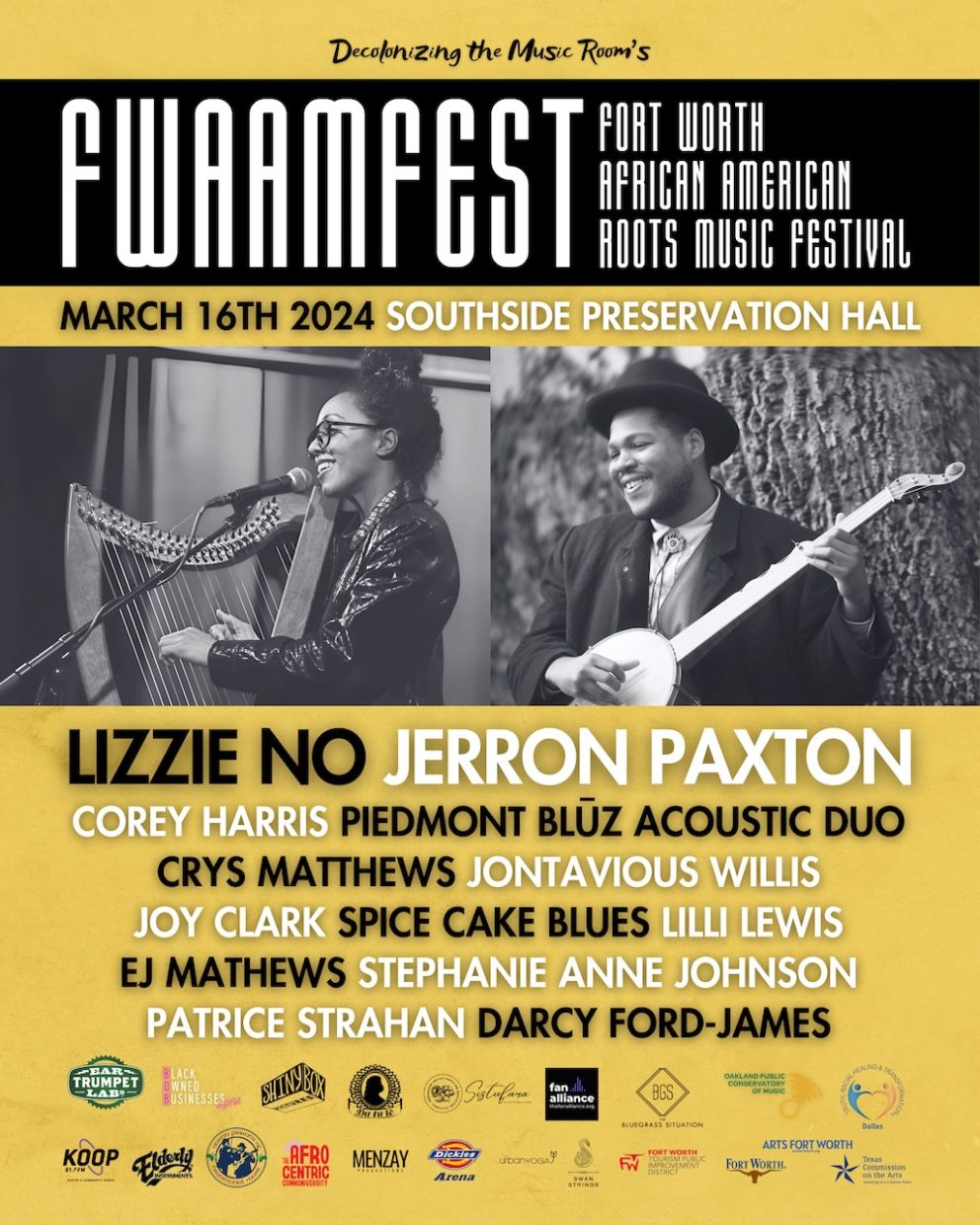
The fourth annual edition of the Fort Worth African American Roots Music Festival (AKA FWAAMFest) will take place this weekend, on Saturday, March 16, at Southside Preservation Hall in Fort Worth, Texas. BGS has been proud to support and sponsor this quickly up-and-coming event over the past few years and 2024’s edition of the all-day festival will be the biggest FWAAMFest yet.

The festival has a mission of centering the vital and transformative contributions of Black and African-American folks to American roots music. Though their purview at first glance may seem “niche,” this is a concept that is as broad and expansive as it is pointed and specific. Festival organizer, Decolonizing the Music Room founding director Brandi Waller-Pace – a regular contributor to and collaborator of BGS – goes out of her way each year to demonstrate Black music, Black artists, and Black stories are not monoliths. Each year’s lineup is carefully curated to show FWAAMFest audience members the depth and breadth of Black musical traditions, not only in Fort Worth but around the country.

Tickets for the event are competitively priced ($50 general admission, $30 for students, with discounts for educators and children) and are truly an excellent value. Where else under one roof can you enjoy workshops, partake in Oakland Public Conservatory of Music’s Black Banjo & Fiddle Fellowship, dine on excellent barbeque and soul food, and hear sets from Jerron Paxton, Lizzie No, Crys Matthews, Joy Clark, Jontavious Willis, Corey Harris, Piedmont Bluz Acoustic Duo, Spice Cake Blues, Lilli Lewis, EJ Mathews, Stephanie Anne Johnson, Patrice Strahan, and Darcy Ford-James?

Below, take some time to familiarize yourself with this year’s FWAAMFest lineup while you make your plans to join Fort Worth at Southside Preservation hall this Saturday for an incomparable day filled with music, history, fellowship, and community building.

Jerron Paxton

Well known to BGS, Jerron Paxton – who you may know as “Blind Boy” Paxton – is a blues, old-time, and ragtime musician adept on many instruments, from piano to banjo to harmonica and beyond. Paxton was on BGS’s Shout & Shine Online lineup in 2020, a virtual showcase also curated by Brandi Waller-Pace. We’ve spoken to Paxton a few times about his incredible, timeless sound – and how he doesn’t view his music as coming from the past, but being rooted in the present. With his material and storytelling, he demonstrates how all of these American roots genres are so closely intertwined.

Lizzie No

Lizzie No’s new album, Halfsies, is certainly one of the best releases of the year. An Americana and country singer-songwriter and multi-instrumentalist, No has a perspective that’s effortlessly modern while steeped in country traditions of the ’80s, ’90s, and 2000s. There’s introspective indie touches, pop infusions, and an end result that’s truly singular. Her music has plenty to sink your teeth into, and we go back to it time and time again.

Check out a recent GOOD COUNTRY feature about feminine country that highlights No and Halfsies and take some time to discover why our co-founder, Ed Helms, highly recommends her music via Ed’s Picks. Oh, and did we mention No co-hosts a BGS podcast, Basic Folk, too? An entire multi-hyphenate, right here!

Corey Harris

Corey Harris is a blues musician who has busked the streets of New Orleans, lived in Cameroon and West Africa, collaborated with Taj Mahal, and garnered millions of streams. His is an old-fashioned sound, but without essentialism or facing backwards. The lead single and title track from his upcoming album, Chicken Man, is out now – watch for the full record later this month. Based in Charlottesville, Virginia, don’t miss your opportunity to see this world-traveling blues picker and singer in Fort Worth.

Piedmont Bluz Acoustic Duo

Valerie and Benedict Turner are Piedmont Bluz Acoustic Duo, inductees of the New York Blues Hall of Fame. They’re committed to bringing “awareness to these unique aspects of African-American culture,” especially Piedmont style fingerpicking, washboard, and what they (rightly) call “country blues.” They’ve traveled all around the world playing Piedmont blues and they’re especially adept at preserving songs and sounds from artists like Mississippi John Hurt, Etta Baker, and Libba Cotten while showing how important their music is in modern contexts – in the present moment.

Crys Matthews

Singer-songwriter-picker Crys Matthews is another FWAAMFest 2024 artist that’s a well known name to BGS readers. An activist in songwriter form, Matthews writes pointed, sharp, and compassionate protest music that’s never saccharine or blinders-on, a rare feat in folk music. She also has a guitar playing style all her own – playing left handed, with the guitar upside down, she also reminds of musicians like Elizabeth Cotten. But still, what listeners take away from her joyful and encouraging sets, filled to bursting with solidarity, is an understanding that what Matthews does with her music is an art form all her own. Check out a BGS fan favorite from 2023, Matthews’ collaboration with Heather Mae and Melody Walker on a rousing community-minded number, “Room.”

Jontavious Willis

Grammy nominee Jontavious Willis was born and raised in rural Georgia and his childhood was filled with gospel music and connections to deep cultural traditions. As a teenager, he discovered Muddy Waters and the blues; it wasn’t long ’til he was sharing stages with Taj Mahal, Keb’ Mo’, and so many of his heroes and forebears. (Mahal called him “Wonderboy,” a certainly fitting and worthy title!) Willis makes music with a huge scope and limitless lifespan, but in that same DIY, hard-scrabble, down to earth way so highly valued in the blues. In 2018, he won the Blues Foundation’s International Blues Challenge Award for Best Self-Produced CD, and his 2019 follow up, Spectacular Class, garnered his Grammy nomination and millions of streams on digital platforms.

Joy Clark

Guitarist Joy Clark is rapidly on the rise – and deservedly so! She tours and performs with the Black Opry Revue, with Allison Russell’s Rainbow Coalition, and as an incredibly accomplished solo picker-singer-songwriter. Just last month, she wowed the Folk Alliance International audience at the International Folk Music Awards with her tribute to Tracy Chapman, showing the intuitive and intentional connections between Clark and queer, Black guitarists, musicians, and songwriters who came before her. The most remarkable thing about Clark’s music, though, is not that it reminds of other musicians and artists – even when it does. Instead, it’s impossible to deny that Clark has a voice on the guitar that is all her own and she’s on a steady march to bring that voice to the world. Thank goodness!

Spice Cake Blues

FWAAMFest has it all, from internationally known artists to insider favorites to gem-like discoveries, like duo Spice Cake Blues. A new introduction to BGS and our readers, Spice Cake features Miles Spicer and Jael Patterson and they are based out of Maryland. Spicer is a co-founder of the Archie Edwards Blues Heritage Foundation and an accomplished Piedmont (and multi-style) guitar picker. Jael, who also goes by Yaya, is a powerful and soulful singer. Spicer also performs with Jackie Merritt and Resa Gibbs in the M.S.G. Acoustic Blues Trio. (M.S.G. = Merritt, Spicer, Gibbs.)

Lilli Lewis

You may know her as “Folk Rock Diva,” Lilli Lewis is a powerhouse vocalist, pianist, songwriter, former record label runner, and forever community builder. Her shows are entrancing, like a combination of Wednesday-night church and a New Orleans Saturday night. Lewis is prolific and critically-acclaimed, and something of a genre and context shapeshifter, unifying the many sounds and styles she inhabits with her heartfelt stories and encouraging words of insight. Her latest album, All is Forgiven, was released in December 2023. Don’t miss her cover of Radiohead’s “Creep,” though, too – there’s a reason it’s so often requested at her concerts!

EJ Mathews

EJ Mathews was born and raised in Atlanta… Texas. A small town near the Arkansas border, Mathews grew up listening to the music of his grandpa – an even mix of country and blues. As such, his sound infuses as much modern blues as country, southern rock, and gospel, with infinite feel and groove. His 2020 single, “Smokin’ & Drankin'” shows so many of the styles he effortlessly combines. Now living in Dallas, Mathews will make the relatively short hike over to Fort Worth for FWAAMFest to bring his unique, melting-pot sound to Southside Preservation Hall.

Stephanie Anne Johnson

Stephanie Anne Johnson is a singer-songwriter and radio host based in the Pacific Northwest. Born and raised in Tacoma, they were already becoming a common sight in folk and Americana circles when they seemingly burst onto the national scene appearing on season five of NBC’s The Voice. Johnson is another FWAAMFest artist who was featured on the Shout & Shine Online lineup in 2020 curated by Waller-Pace. Criminally underrated in national folk, Americana, and indie circles, Johnson creates powerful music that brings love, mental health, togetherness, and redemption all under a compassionate lens – and with a remarkably grounded sensibility. Whether solo or with their band, the HiDogs, Stephanie Anne Johnson is an entrancing musician and songwriter. Don’t miss their 2023 album, Jewels.

You can see all these artists and so much more this weekend at FWAAMFest in Fort Worth! Get your tickets now.


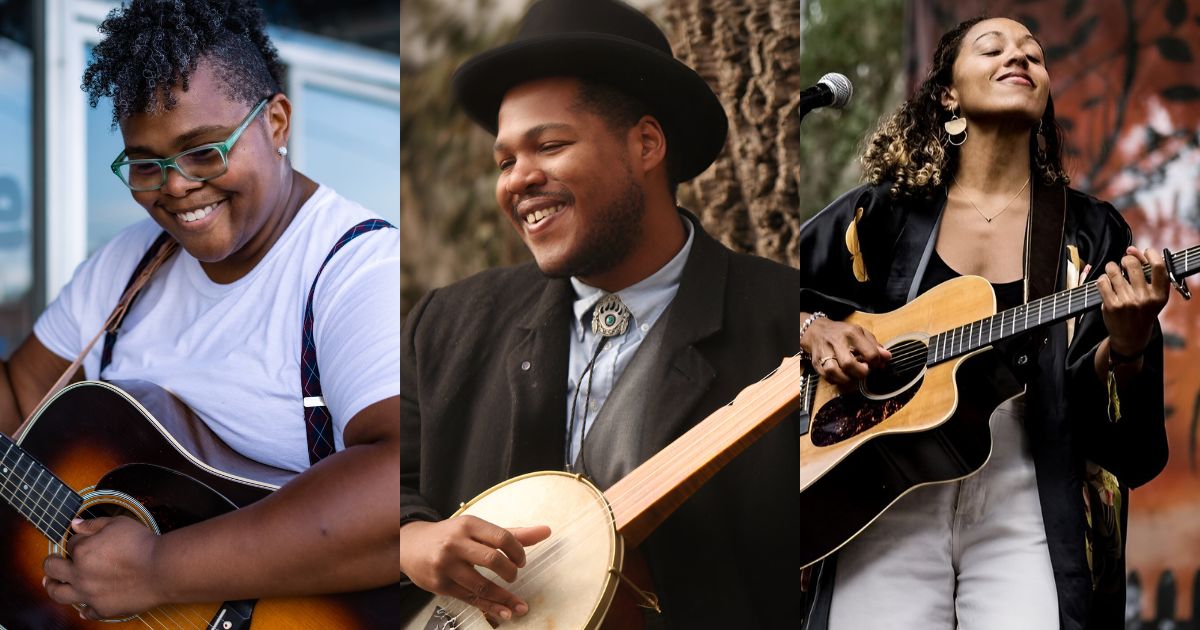
Photos courtesy of FWAAMFest. L to R: Crys Matthews; Jerron Paxton; Lizzie No. 

You Gotta Hear This: New Music from Louise Bichan, Alaina Stacey, and More

This week, BGS readers enjoyed two brand new, exclusive sessions – one from our friends at Yamaha Guitars featuring JigJam guitarist Jamie McKeogh and the other featuring songwriter/filmmaker Scott Ballew, direct from last summer’s Rootsy Summer Fest in Falkenberg, Sweden.

But that’s not all, we also have a handful of excellent track premieres from songwriters and musicians like Louise Bichan, Alaina Stacey, and Lily Kershaw. It’s all right here on BGS and, honestly, You Gotta Hear This:


Louise Bichan, “Coldstream”

Artist: Louise Bichan
Hometown: Orkney, Scotland will always be home, but for now it’s Cornish, Maine
Song: “Coldstream”
Album: The Lost Summer
Release Date: March 4, 2024 (single); April 5, 2024 (album)
Label: Adhyâropa Records

In Their Words: “I wrote ‘Coldstream’ for my aunt and uncle and all of my cousins in Aberdeenshire, in the northeast of Scotland. Uncle Syd grew up playing the fiddle, but it was never cool at the time – he hid the fact that he did! Nowadays, he writes songs and plays a lot of tenor guitar, among other things, and it’s always a joy to visit Aberdeenshire and play a few tunes with him.” – Louise Bichan

Track Credits:
Louise Bichan – fiddle
Ethan Setiawan – mandolin
Brendan Hearn – cello
Conor Hearn – guitar
Produced, engineered, and mixed by Ethan Setiawan.
Mastered by Peter Atkinson.


Alaina Stacey, “I Would”

Artist: Alaina Stacey
Hometown: Chicago, Illinois
Song: “I Would”
Album: DAY (EP)
Release Date: May 3, 2024

In Their Words: “This is the first song I wrote with my now bandmate and writing partner, Sam Gyllenhaal. First co-writes are sort of like first dates: You go in with hope & expectations and sometimes you find true love, and sometimes it crashes and burns and becomes a great story to tell later. Luckily, I found true songwriter love with Sam. I was trying to create new starts and say yes to new things, so I went into our first write and opened my heart to the possibility of a new beginning. Sam met me there 100%. I think it came out in this song – the desire to make a fresh start, to have a do-over, and to be the best version of yourself that you can be. Of course, you can’t go back in time. With every epiphany comes the mistake that gave it to you in the first place.” – Alaina Stacey

Track Credits:
Written by Alaina Stacey & Sam Gyllenhaal.
Alaina Stacey – Vocals, background vocals
Josh Hunt – Drums & percussion
Todd Lombardo – Acoustic guitar, high strung guitar
Matt Pierson – Bass
Dustin Ransom – Keys, background vocals
Evan Redwine – Electric guitar, programming, engineer, mixing, producer

Video Credits:
Tiffany Roberts – Female lead
Caleb Shore – Male lead
Directed, Produced, Edited and Colored by Rob Bondurant.


Lily Kershaw, “Americandream”

Artist: Lily Kershaw
Hometown: Los Angeles, California
Song: “Americandream”
Label: Nettwerk Music Group

In Their Words:“As I started to resurface from years of prolonged depression in my 20s, a friend one day was telling me about her American dreams. When she asked me what mine were, I told her I didn’t have any. She couldn’t believe that I didn’t have dreams of things I wanted to do in my life. I mean, I loved writing music and sharing it with people, but after battling with depression for so long, there was no place I wanted to go or thing I wanted to do. I had sort of given up. I wrote this song after having this conversation with her that very night. I was in the midst of recording my upcoming album, so I brought it in the next day to the studio finished, and it fit the album perfectly. I love the optimism at the end. I was really singing that to myself… the idea that it’s not too late, and I can still have dreams and live them.” – Lily Kershaw


Yamaha Sessions: Jamie McKeogh

It was early fall when we met with JigJam guitarist Jamie McKeogh just outside of Nashville, Tennessee to capture this brand new, exclusive Yamaha Session.

For his first selection, McKeogh picked up his gorgeous custom Yamaha acoustic guitar and performed “Streets of London,” a song written by Ralph McTell and popularized in bluegrass circles by Tony Rice. McKeogh laughs as he plays through a handful of takes of the tune, trying to remember the order of the verses and hoping he’ll do Rice and McTell justice with his slightly Celtic-infused rendition. His voice is warm and cozy, accompanied by free and tender transatlantic flatpicking that references Rice as often as it explores brand new sonic territories. “Streets of London” shines with McKeogh’s – and JigJam’s – classic treatment, processing American roots music through a Celtic and Irish bluegrass lens.

Read more and watch the entire Yamaha Session here.


Rootsy Summer Sessions: Scott Ballew

Last summer in Falkenberg, Sweden, videographers from I Know We Should shot a series of gorgeous sessions during Rootsy Summer Fest ’23, peeling off from the festival with artists from the lineup to capture intimate recordings of fleeting live performances. For the latest in our Rootsy Summer Sessions series, singer-songwriter and filmmaker Scott Ballew performed two songs on the banks of the Ätran overlooking the historic Tullbron bridge and fly fishermen stalking their quarry in the fast flowing water.

“Alright, I’ll try a river song…” Ballew says, introducing an original with a perfect subject for the setting. The selection is “Tent Song” from his 2021 critically-acclaimed debut album, Talking to Mountains. He continues with “Blue Eyes,” from 2022’s follow up to Talking to Mountains, entitled Leisure Rodeo.

Read more and watch the entire Rootsy Summer Session here.


Photo Credit: Louise Bichan by Louise Bichan; Alaina Stacey by Tanner Grandstaff.

When You Listen the Land Speaks

(Editor’s Note: Sign up here to receive Good Country issues when they launch, direct to your email inbox via Substack.)

An often nameless, faceless character present in all country music is land. In a genre commonly referred to as country & western, land is a constant presence, whether foreground or background, evoked or painted, longed-for or spurned. Another nameless, faceless character that comes hand-in-hand with country and its relationship to land is colonialism – white supremacy, genocide, and imperialism advanced by music that claims to simply center nostalgia, rurality, and an “old fashioned” way of doing things.

This kind of revisionist history in country music – a sanitization of this nation’s past and present, in order to fit into widespread myths, around which this genre and our national identity is built – is no less pernicious simply because it is common and pervasive. It’s important to not only acknowledge country’s relationship with land, but to also attempt to deconstruct the ways that these roots genres perpetuate colonialist ideals and norms.

Can Good Country exist if it must deny the history of the land it professes to love? Can Good Country exist if it must deny that there would be no “country & western” without Indigenous people? These are questions that we feel are essential to ask, right out of the gate, even if their answers are not so simple. Good Country hopes to be a place that can represent all kinds of country music, but it cannot do that if we accept, uninterrogated and unexamined, that country’s relationship to the land must be good, moral, wholesome, and just.

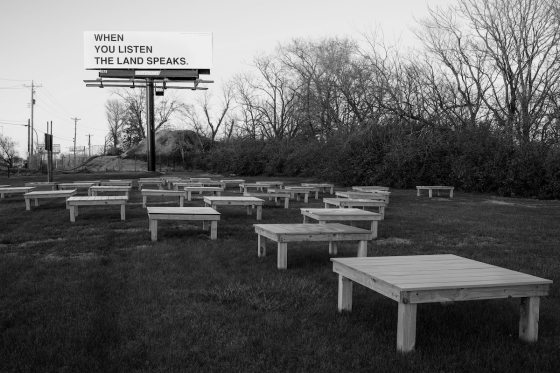
At the heart of the second edition of Counterpublic – an artistic activation described on its website as “a civic exhibition that weaves contemporary art into the life of St. Louis for three months every three years…” – just south of downtown and the towering Gateway Arch, sits Sugarloaf Mound. From April to July 2023, Counterpublic included twenty-five public art installations at a variety of locations, including Sugarloaf Mound, a sacred site for the Osage People and the last intact mound in the city. In earlier eras, the area was home to many thousands of Indigenous people – and the largest city in what would become the United States, Cahokia.

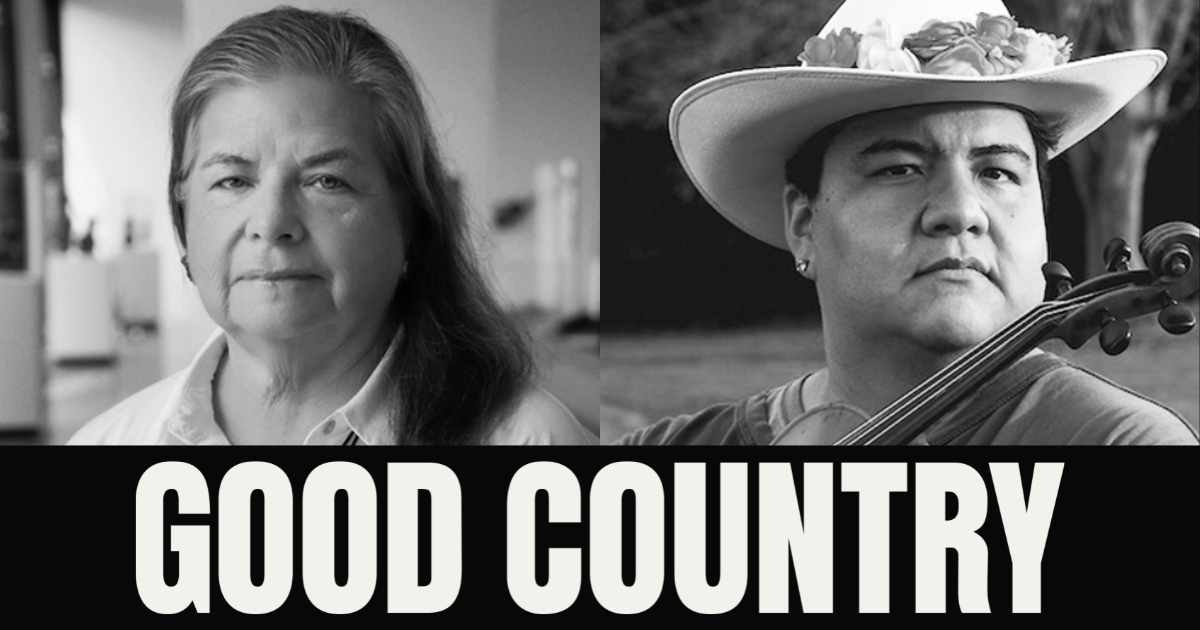
Adjacent to Sugarloaf Mound was the first Counterpublic installation and site, a collaborative piece that wove together sculpture, land, and music by mother-and-son artistic duo, Anita and Nokosee Fields. Anita Fields (Osage/Muscogee) is a fine artist who works in many media, but especially clay and textiles. Nokosee Fields (Osage/Cherokee/Muscogee) is a critically-acclaimed and in-demand old-time fiddler, equally at home in country and Americana as in old-time and string band traditions, and with a great deal of expertise on Indigenous fiddlers and Indigenous fiddling.

Their piece, WayBack, which was curated by Risa Puleo, is synopsized as such:

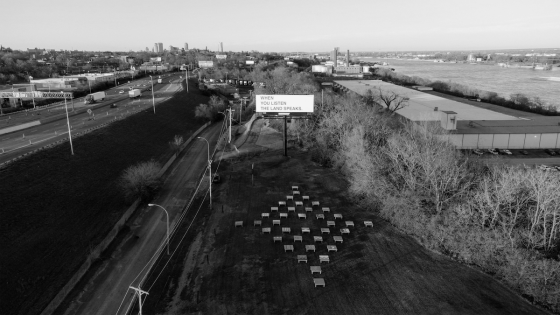
“Created in collaboration with her son Nokosee Fields (Osage/Cherokee/Muscogee), Anita Fields’s (Osage/Muscogee) WayBack invites visitors to gather in physical relation to each other, to Sugarloaf Mound, and to Osage ancestors, history, and legacy. When the Osage Nation purchased part of Sugarloaf Mound in 2007, the sacred site was reabsorbed into the Nation through the auspices of property, extending Osage territory from the site of their displacement in Oklahoma back to their ancestral homeland. Atop this site, forty platforms are installed, modeled after those found at Osage events in Oklahoma. Each platform is embellished with ribbons that reference Osage cosmologies of balance between sky, water, and earth. Nokosee Fields’s composition for wind instruments invites further consideration of the earth from which the mound was constructed, the sky that unfolds above the platforms, the sound of the Mississippi River on the banks below the quarry and the wind that flows through the surrounding trees that transform first into breath. After the exhibition, the platforms will travel from St. Louis to Tulsa where they will be distributed to Osage community members completing the link between the current home of the Osage Nation and its ancestral homelands.”

“Middle Waters,” the labyrinthine composition by Nokosee that acted as soundtrack for the installation, its platforms, and the adjacent mound (listen via the Counterpublic site here), perfectly illustrates how adept country music – and its textures, styles, and traditions – can be at capturing the ineffable, spiritual qualities of land and our relationships with it. Fiddle, field recordings, wind instruments, voices, and more intermingle in a piece that feels as organic and grounded as Anita’s sculptures.

Now, after the installation’s closing, each of the forty platforms constructed by Anita and displayed at the Counterpublic site will be moved to what’s now called Oklahoma, to be distributed to members of the Osage community and to have a continued life, further illustrating how art, music, and land gain all of their meaning from the communities that interact with and rely on them.

On the occasion of Good Country’s inaugural issue, we spoke to Anita & Nokosee Fields about WayBack, “Middle Waters,” the Counterpublic exhibition, and how humans, land, music, and art intersect and combine.

Could you just take me into the inspiration and the conception of WayBack and how you started working together and collaborating on the piece, not only with each other, but also with the land and with the site? Um, maybe Anita, do you want to start?

Anita Fields: Sure. Over two years ago now I was contacted by Risa Puelo, who was one of the curators chosen for the Counterpublic triennial in St. Louis. [Risa] asked if I would like to join and explained their purpose, what they were doing, and what their groundwork was for the triennial. She said, “I know your whole family are artists, so if you would like to invite somebody from your family to participate with you, that would be absolutely fine.”

But let’s begin with what their goal was, and that was to talk about the difficult histories of a place. St. Louis is certainly one of those. The reason that I was asked to join was that, for the Osage People, St. Louis, Missouri – and even further than that – is our ancestral homeland. It’s a large area, including St. Louis, Missouri, Arkansas, and even further than that in the beginning, migration from almost the East Coast to the Ohio Valley, to where our written and documented history begins in Missouri. So that was our homeland and there are documented villages there, still, and lots of history there, because after Lewis and Clark’s expedition we held the trade there. After Lewis and Clark, we started interacting real heavily and marrying with the French, partially because the French were trying to hold onto political power through the fur trade.

That is our history there [in St. Louis]. And then of course came displacement. A series of treaties started moving us out of that area, ‘til we came into Kansas. We had a reservation there and then we sold that reservation and with that money we bought what is our reservation today from the Cherokee Nation in Oklahoma. That’s it in a nutshell, and of course it’s way more complicated than that.

Nokosee and I don’t live in close proximity to one another, so I was like, “Oh my gosh, is this going to be able to work over the phone and Zoom? That’s going to be kind of difficult!” Then an opportunity arrived for me to go to Bogliasco, Italy for a month-long residency. I asked if I could bring a collaborator, and that’s where we landed for a month – on the Mediterranean, in this beautiful, beautiful, beautiful place, on the coast of Italy, not very far from Genoa. We schemed and dreamed and planned. And it was very difficult trying to arrive at a place where we were both happy.

Nokosee, I wonder how, as a songwriter and composer, you began approaching this? How did you take your musical vision and dovetail it with the physical vision, with the sculpture, and with the place? What was the process like as you sat down in Italy to start creating together?

Nokosee Fields: When we were both in Italy, I had a little field recording kit that I had been using. I would just roam around the grounds recording things. There’s the ocean right there, there are all these really intense waves happening, a lot of sounds to be had. There was also a poet, Robin Robertson, who was a fellow there at the foundation and I asked if he wanted to do any collaborating, because we had a lot of time there – it was a testament to the importance of having space and time to have creative thoughts. Which, I feel it’s really rare. For a lot of artists, you have to hustle a lot. We were there for one month, I was getting very regular sleep, I was eating three nourishing meals a day, and getting some exercise. And again, it’s also in this beautiful location, and we were surrounded by really smart artists. It was just a very stimulating, nourishing, and calm environment. I was able to actually have some visions and clarity. And I was able to indulge a lot of things – where, you know, most of the time I’m just barely piecing things together to make money or to pay rent.

It began with [Robertson] reciting a poem, then I started layering him reciting this poem with the waves and different sounds from around the grounds, manipulating them. I like the idea of using really intricate, small, detailed, fine sounds – using a really sensitive mic – and then turning that into something else. Or, pitching it, layering it on top of people’s voices or singing, or maybe something a little more recognizable.

For me, the space and time to have all of that creative flow happening – it took what felt like a month of just space to finally get somewhere with something. It was eye opening, a testament to needing space and time, because we kinda flip-flopped back and forth on what we were gonna do. I wouldn’t say we were struggling, it was just that we were in this new place and jet lagged. Our project was not hands-on, because it was just all conceptual, so it was a little difficult to land on something.

I do want to talk about the site, because – obviously I’ve only seen the photos – there’s an interesting juxtaposition of this kind of dreamlike soundscape for the piece with “Middle Waters” and then the site itself feeling somewhat shoehorned into modernity. You have the river there you have the highway here and of course there’s a billboard incorporated into the piece, as well. Anita, can you talk about how you wanted to play around with that juxtaposition with this sacred site that now is somewhat entrapped by modernity and by settler culture?

AF: There’s always a backstory surrounding my work, and how I came to be. I was born on the reservation and spent a lot of time with my grandmother, who was full blood, and I’ve chosen to be very close to my culture, even as an adult. As much as I could, I did what my grandmother did for me for my children, to make sure they have a place there, [in my culture]. In my own work, as I became older and older, I would be inspired by things that come from our worldview, which is a very complex worldview, but it’s very beautiful.

We still have those values. As a modern person, those values are still in place – you know, where I’m from. You can witness them in how we interact with one another, a lot of times. I think that is a very beautiful thing to know that what my ancestors left for us you can still recognize. A lot of my work surrounds that kind of thought, that there is another way of looking at the world that is not just a tunnel vision of, “We’re all like this and we’re going to go to the mall forever.”

And that’s our worldview; it’s way deeper than that. Through art, that’s a beautiful place to be able to tap into those kinds of thoughts and values. So I wanted, because that is our original homeland and that is such an important site, I wanted to be able to bring in this sense that we’re reclaiming that space again, marking it as ours, and [saying] this is who we are. I want people to know this is who we are.

Those wooden platforms are actually found throughout [our culture]. I’ll describe it to you this way, because this is the way I write about it: They have been around for a very long time. My earliest memories of them are when I was a young person, a young girl going around with my grandmother, and I would see them outside of large Osage homes or outside of our dances.
At camps, people have family camps, and these platforms would be there and you’d see older people putting their blanket down and sitting on it and then maybe somebody giving them a glass of lemonade or a Coke. And then they’d light up a cigarette and they’d be just visiting and laughing away with a relative or a friend.

And it always looked very calming and peaceful to me. Those are the kind of memories too that I often tap into. But it’s also much deeper than that. What I was seeing there was, yes peaceful and calming, that was happening, but I was also witnessing survivors who had gone through a lot just for us to be able to be here. There are always these links.

What better place to be able to bring those [platforms], because that is the place that we had to survive from, to move from St. Louis. I’m always interested in giving people a glimpse into who we are. It’s not my job to talk about ceremony or rituals or any of that kind of thing. But I want people, again, with that thought in mind, I want people to know who we are and that there’s a different way of looking at the world and it comes from very complex, intelligent thinking and is based on observing nature and the cosmos. These values and these systems are still here for us today.

With the platforms, we started by going to Google Maps, downloading maps and images, and the site was kind of big, so it wasn’t working with one platform. And we just kept going, “Guys, that platform is gonna drown in that big space!” It’s beautiful to be able to work with a great curator because between our conversations with all of us we decided, if the money can be found, maybe we can have more – it began there. That is how those arrived and then we topped them with designs that are familiar to us as Osage People. We painted those on there, designs that are used in our ribbon work clothing – which comes directly out of our interaction with the French, when we started trading for ribbons and needles and threads and thimbles and that kind of thing. This kind of interaction with the French and our time there totally changed our culture forever.

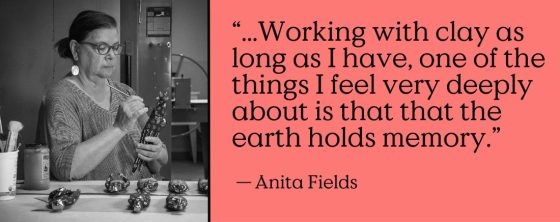
…You know, with working with clay as long as I have, one of the things I feel very deeply about is that the earth holds memory. That has been revealed to me, just because of how clay is made over time. I’m certain it holds the memories of who was there, wherever in the world.

I mean, in Italy, a couple of times when we would travel to these places and then we would read about the history, I felt that there, too. No matter where you’re at there are always the similarities to what has happened in history – “the conqueror” and “the conquered” – these stories are all threaded together and similar. I couldn’t see WayBack without sound in any way, shape, or form. It just wouldn’t have the punch that I was looking for.

I did want to ask, where are we at in the lifespan of the piece? I know that the plan is to distribute the platforms to Osage community members back around Tulsa. I just wonder where you’re at in that process?

AF: Yes, it was temporary and as soon as Counterpublic closed, I think it was within two weeks, they were picked up and shipped back to Tulsa to the [Tulsa Arts] Fellowship. The Fellowship is storing them for me. Then I got a call from the First Americans Museum in Oklahoma City, which is I think in its second year. They have a beautiful courtyard plaza and they have built a mound-like area where you can witness the solstices. The curator was at the Counterpublic closing and she said, “I want to bring these to First Americans Museum, what’s the plan for these as soon as this is over?” Well they took half of them and then half of them stayed here, displayed at a place called Guthrie Green in Tulsa for about a week. Yesterday, the ones from First Americans Art Museum were delivered to the Osage Nation. I want to distribute them to the Osage community. In my mind I’m like, “What am I going to do with 40 platforms when they return? What’s going to happen with these and who owns them?” And actually that was [curator Risa Puleo’s] suggestion: Is there any way these could be returned to the Osage community?

People are excited about it, those that know about it. Not a whole lot of people know. I’m trying to keep it [quiet] ‘til I get it all figured out, but they’re excited about it. I’m excited about it, too, because that is another way to make art accessible. To bring it back to where you come from. Because those folks are totally my inspiration, and I say this at every turn, whenever I have the opportunity. You’re my inspiration. Your grandmother, my grandmother, every interaction I’ve seen throughout my life. This is my inspiration.

Nokosee, I wonder, do you see a similar way of bringing “Middle Waters” to the people? Do you see a lifespan for that piece beyond this installation? Or do you think it’s a moment in time and it’s onto the next work?

NF: Yeah, I think it’s just a moment in time. I might edit it, but I’m pretty pleased with it. If anything, it’s more of a reason to want to do more sound installations, sound art kind of things. I’ve been wanting to transition to that kind of work. As much as I’ve enjoyed touring – and I’ll probably do it for as long as I can – I find it to be pretty taxing. It’s tons of fun, but I think I need something that’s a little more cerebral, a little more isolated, a little more supported, and also a place for my voice and creativity. I feel like I’m kind of waking up from an obsession where I just got into traditional American music, traditional fiddle. Now that I’m steeped in that world and I feel like I’m really a part of it, I also feel like there’s a lot of it I just don’t really care for.

This sounds really uppity, but making traditional fiddle music feels kind of separate from [country], it’s just melody. I like the foundational aspects of music and the research and tone, things like that. And I like it because it’s not really tied to lyrics, it’s not putting on a type of personality, like lyrical content [does].

That, to me, is often just perpetuating settler mythology about old-time music. There are a lot of things that could be said about old-time music that are also problematic. Instrumental music is where I really jive and get into stuff, but I’ve also had to constantly interface and participate in lots of country music or lyrical music that has content that, to me, just feels like propaganda with really rudimentary, basic understandings of the land.

It feels like a type of erasure. It’s just kind of designed that way – maybe not maliciously – but it’s just so deeply woven into how things work in this country. …I find a lot of country music today, a lot of the younger, popular stuff, it feels like it’s about convincing white people that they’re white or something. There’s this pseudo-woke take on country music, which I think is fine, it’s just not radical enough for me or something. It’s like it’s just enough for people to kind of maybe get their outlaw fix.

It still doesn’t work for me and I still find it very rudimentary and actually not very confrontational or very deep, as far as what’s actually going on in the world or on this continent.


Sign up here to receive Good Country issues when they launch, direct to your email inbox via Substack.

Lead Image: Anita & Nokosee Fields via Counterpublic.
Image of Anita Fields: Courtesy of the Artist.

Headline text from Anna Tsouhlarakis, “The Native Guide Project: STL.” Billboard and digital signage. Curator: New Red Order. Counterpublic 2023, Sugarloaf Mound Site.
You Gotta Hear This: New Music from Caleb Caudle, Zoe Boekbinder, and More

This week, BGS readers enjoyed two brand new, original sessions – one from Jesper Lindell at Rootsy Summer Fest ’23 and the other featuring bluegrass singer-songwriter Theo MacMillan for our latest Yamaha Session.

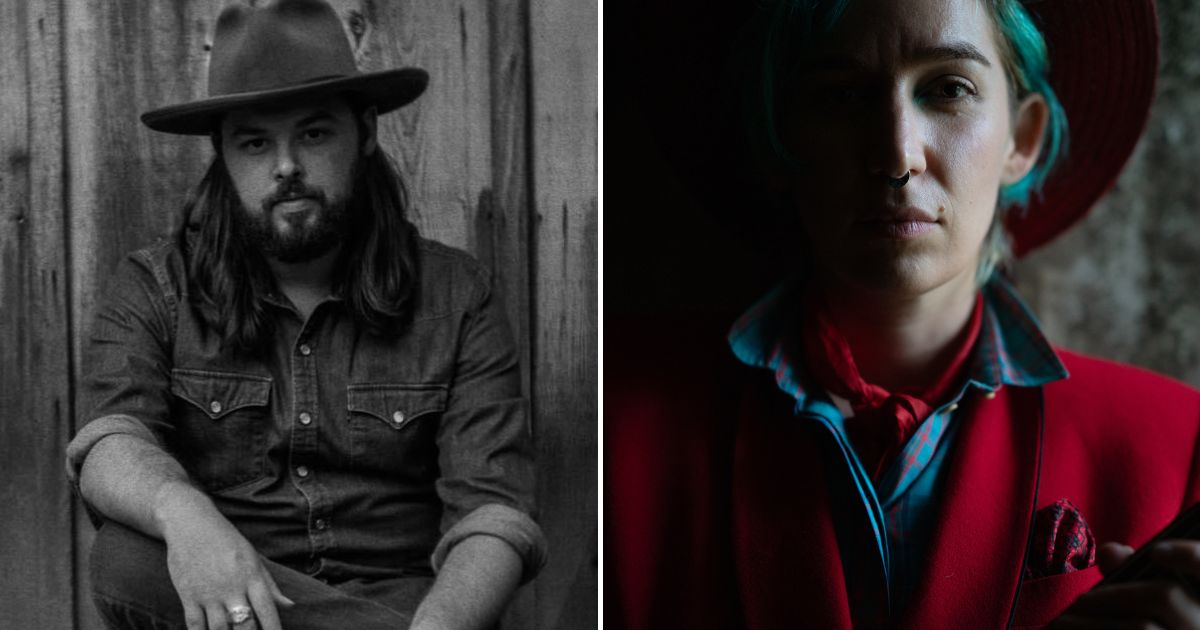
Now, to wrap up the week, we’re celebrating new releases from a host of roots musicians like Caleb Caudle, Zoe Boekbinder, Eddie Sanders, Denmark-based string band Twang, and fiddler Andy Leftwich.

Of all the new music released this week, you gotta hear this!

Caleb Caudle, “Monte Carlo”

Artist: Caleb Caudle
Hometown: Germanton, North Carolina
Song: “Monte Carlo”
Album: Live From Cash Cabin
Release Date: January 31, 2024 (single); February 29, 2024 (EP)

In Their Words: “We recorded these songs live at Cash Cabin in the spring of 2022 and had such a great time. It was one of my last memories of playing music with my friend, Alex McKinney, who recently passed away after a battle with cancer. His untimely death hit me like a ton of bricks and I wanted to release this now to showcase what an amazing musician he was. I’m so thankful for these recordings that keep his spirit alive.” – Caleb Caudle

Video Credit: Joseph Cash


Zoe Boekbinder, “Hold My Hand”

Artist: Zoe Boekbinder
Hometown: New Orleans, Louisiana
Song: “Hold My Hand”
Album: Wildflower
Release Date: February 2, 2024 (single); April 26, 2024 (album)
Label: Are and Be Recordings

In Their Words: “‘Hold My Hand’ was written on a farm of rescue horses in the mountains in northern Spain. I was there doing a music residency in the summer of 2017. Myself and another songwriter, Dustin Hamman, co-wrote a collection of songs and recorded them all in one week. We also each wrote one song independent of each other. ‘Hold My Hand’ was mine. We slept in the attic of the horse barn, directly above the horse stalls. One of the horses had digestive issues that caused it to fart very loudly and constantly. It was an interesting soundtrack for sleeping. Somehow in that silliness, I wrote this very painful song about my confused heart.” – Zoe Boekbinder


Twang, “Crowdpleaser”

Artist: Twang
Hometown: Copenhagen, Denmark
Song: “Crowdpleaser”
Release Date: February 2, 2024

In Their Words: “The song talks about a musician’s encounter with the audience and the fear that things could go terribly wrong. Despite this fear, the message is to be honest and give everything you have, in order to receive the same honesty and love in return. The chorus goes: ‘Love is honesty, honesty, respect / What you give is what you get.'” – Twang

Video Credit: Hidayet C


Eddie Sanders, “Chasing That Midnight Moon”

Artist: Eddie Sanders
Hometown: McAlester, Oklahoma
Song: “Chasing That Midnight Moon”
Album: Born to Fly
Label: True Lonesome Records

In Their Words: “I really love this new single, ‘Chasing That Midnight Moon,’ a song I co-wrote with my producer and good friend, Glen Duncan. Glen, along with an all-star cast of pickers, found a dynamic studio groove on this one right away. Then, when the great John Cowan added his signature harmony, it immediately became one of my favorites on the forthcoming album and locked it in as the debut single. I can’t wait for everyone to check it out on the new True Lonesome Records label!” – Eddie Sanders

“What a pleasure and pleasant surprise to get to participate on Eddie’s ‘Chasing That Midnight Moon.’ Eddie possesses one of the finest voices and songwriting gifts in contemporary bluegrass music.” – John Cowan


Andy Leftwich, “Behind the 8 Ball”

Artist: Andy Leftwich
Hometown: Carthage, Tennessee
Song: “Behind the 8 Ball”
Release Date: February 2, 2024
Label: Mountain Home Music Company

In Their Words: “The idea of this song was to have an upbeat ‘barn burner’ that could lend itself to some really creative soloing, and I feel like we captured that here. I have to give the credit of the title to my wife, Rachel, who heard me mention this phrase while in the studio recording it. We were moving along, but not at the pace I was hoping, so we were behind on time. At the end of the day, she mentioned naming this song, ‘Behind the 8 Ball.’ I thought it was perfect! It certainly has that anxious spirit we all have from time to time when we get in tough spots, but it’s a fun tune that has great energy and a different sound than you normally hear in bluegrass ‘barn burner’ instrumentals.” – Andy Leftwich


Jesper Lindell, “It Ain’t Easy”

Last summer, on the banks of the Ätran beside Tryckhallen – Rootsy Summer & Winter Fests’ home venue – in Falkenberg, Sweden, Jesper Lindell offered two songs in simple, stripped down, acoustic performances for his Rootsy Summer Session. On a balcony overlooking the rushing water and festival stage, he sings “It Ain’t Easy,” a song of long-suffering and devotion from his 2023 EP, Windows Vol. 1.

Read more and watch the full session here.


Theo MacMillan, “The One That’s Broken”

For our second original session this week, Theo MacMillan (of Theo & Brenna) and his band performed for an exclusive Yamaha Session at Solar Cabin last fall. MacMillan, who brought along Jed Clark (bass), Harry Clark (mandolin), and Cory Walker (banjo), pulled his Yamaha acoustic guitar out of the case and performed two original numbers. The first, “The One That’s Broken,” leans forward at a breakneck pace, channeling the frustration of a messy relationship’s end with cattywampus stops artfully executed by the band, tight and together.

Watch more here.


Photo Credit: Caleb Caudle by Joseph Cash; Zoe Boekbinder by Justin Nunnink.