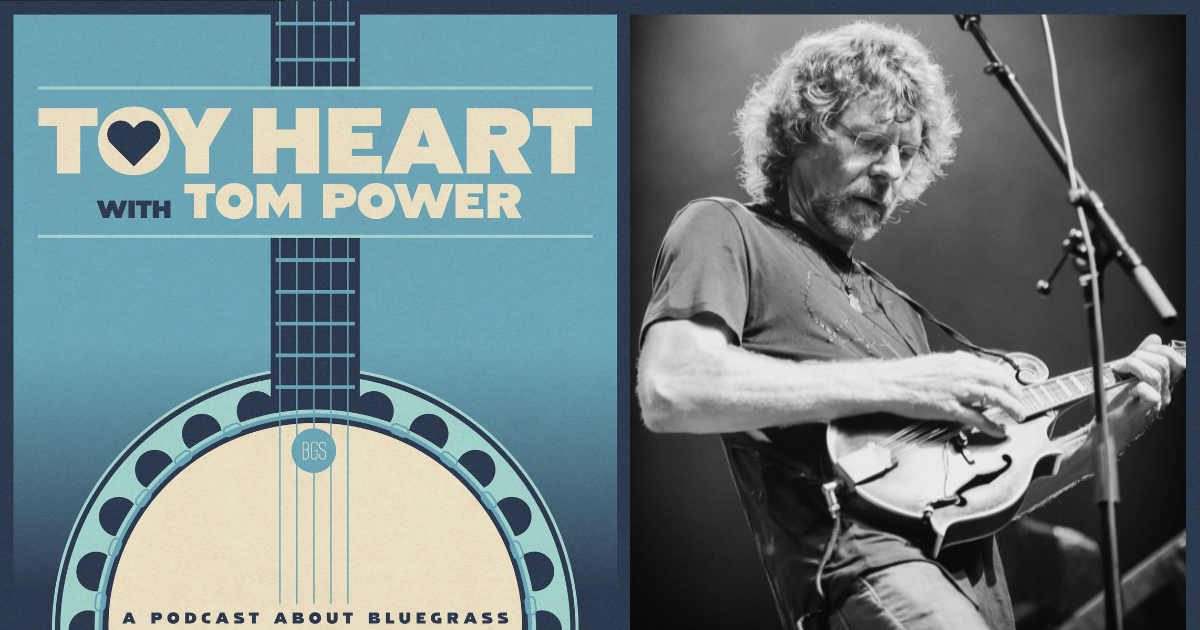
Newgrass luminary Sam Bush joins host Tom Power for the highly anticipated debut episode of Toy Heart Season 2. Bush – the celebrated mandolinist, Bluegrass Hall of Famer, and co-founder of New Grass Revival and the Telluride House Band – opens up about his illustrious career, from his early days of fiddle contests in Weiser, Idaho, to the pivotal moments learning at the feet of influential figures like Bill Monroe. Bush’s narrative weaves a rich tapestry of bluegrass history.
Season 2’s first episode features stories of Sam’s many genre-breaking collaborations, including playing with the Dillards and New Grass Revival plus his time at Capitol Records. He waxes poetic about the magic of jam sessions and improvisation, and the profound influence of artists like Byron Berline. From the roots of “Callin’ Baton Rouge” to the impact of the Vietnam era, Bush’s journey is a testament to the ever-evolving nature of bluegrass.
Every January and February contain the same complicated emotional cocktail – a hangover from the holidays, a buzz of hope for the future, grief for the year gone by, relief to have moved on, joy in the lack of plans, and perhaps even dread for any winter still to come. Whichever way you slice it, it is a time of mixed emotions, usually of the slightly melancholy variety, but not wholly sad. I call this the “happy-sads.” This gentle gloom has always been beautiful to me in art, music, TV, film, etc. – and especially in an old-time tune!
Old-time music covers a vast range. There are tunes for every occasion and feeling – and the bittersweet is abundant. It’s also possible to get something different from a tune, depending on when and how you come across it. The tunes I find myself most drawn to this time of year are those that lope along, tinged equally with a sweet sadness and hope. Here are six old-time recordings that won’t cure your January/February “happy-sads” but rather, indulge them.
“Lost Indian,” Tricia Spencer & Howard Rains
Based in Lawrence, Kansas, Tricia Spencer and Howard Rains have deep musical roots in Kansas and Texas, respectively. With two wailing fiddles right up top, this is the perfect recording to start off this list. When the band kicks in you want to dance, but also cry?
“Backstep Indi,” Pharis & Jason Romero
A fretless gourd banjo is a sure-fire way to indulge all of your complicated winter feels. Pharis & Jason Romero are no strangers to the cold and gray up in their Canadian home. A modern old-time tune, “Backstep-Indi” winds in and out and back again making it the perfect recording for a reflective chilly day.
“Fire on the Mountain,” Matt Brown
Matt Brown’s recording of “Fire on the Mountain,” a tune from Kentucky fiddler Isham Monday, never fails to inspire peace, personally. It’s just ultimately serene and mournful like a proper January morning (or afternoon or evening). The G cross tuning, fingerstyle banjo, the simple delivery are all just right.
“Railroad Bill,” Etta Baker
The way Etta Baker’s fingerstyle guitar just chugs right along with a slow, but definite evolution during “Railroad Bill” has a familiarity and comfort to it. Her sound is still, steady, and warm, and that minor six chord really hits on a glum winter day.
“Weevils in the Grits,” Sami Braman
Sami Braman’s original tune, “Weevils in the Grits,” marches right along with Brittany Haas guest fiddling alongside her and her band. Open tunings on a fiddle can lean in the more “raging” direction or the drones that they create can open up the sound to something ethereal and archaic. Sometimes you get a combination of both, like we have here! BGS premiered “Weevils in the Grits” last year, too.
“Laughing Boy,” Earl White Stringband
There are several tunes off of the Earl White Stringband album that could have ended up on this list, notably the old-time jam hit “Chips and Sauce,” but this particular one stuck because of that fleeting moment where the melody winks at the minor chord while the band plays the major four and your heart explodes.
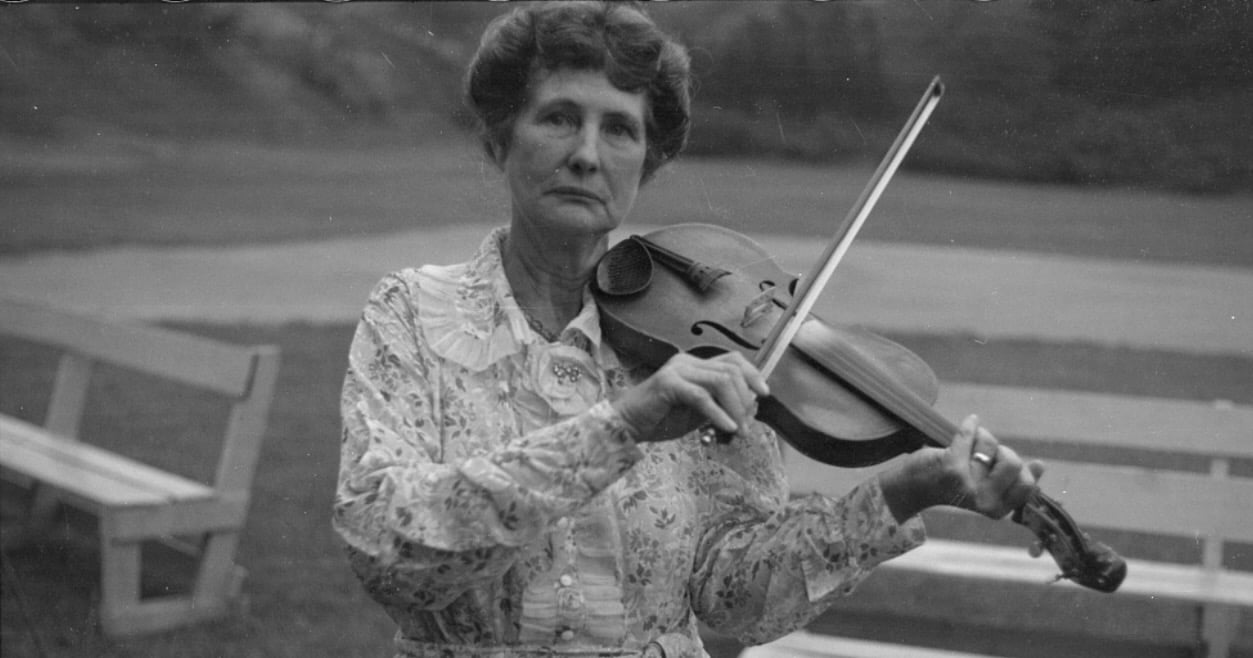
Photo Credit: United States Resettlement Administration, Ben Shahn, photographer. (1937) Aunt Samantha Baumgarner i.e. Bumgarner. United States, Asheville, North Carolina. Photograph retrieved from the Library of Congress.
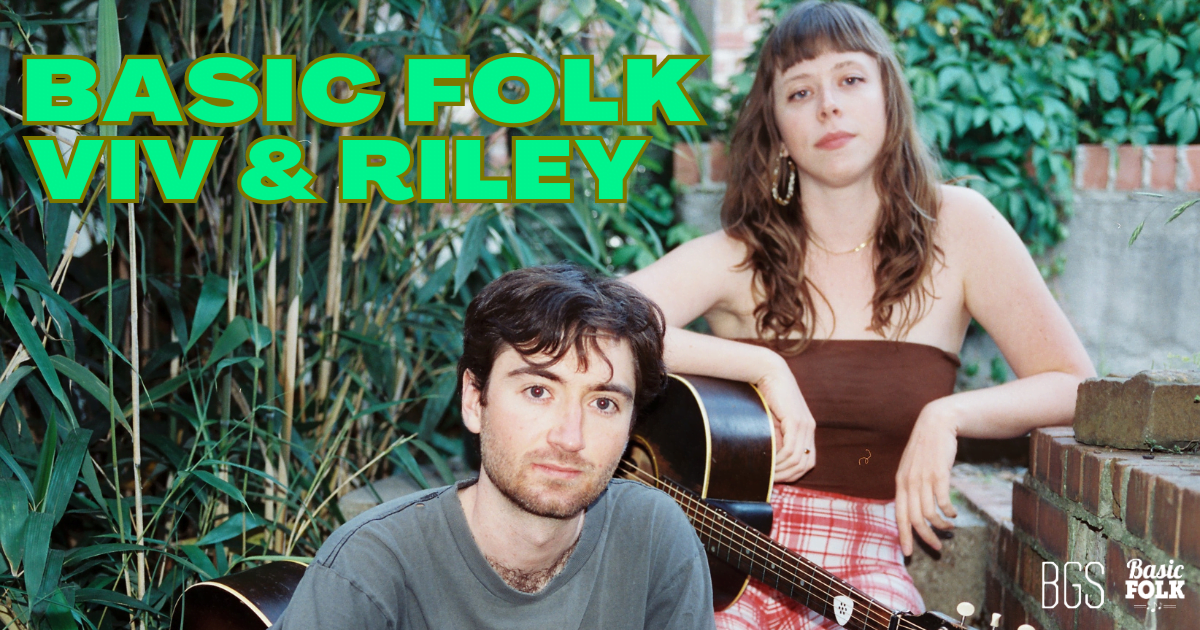
Vivian Leva and Riley Calcagno, known as Viv & Riley, dive deep into the nuances of old-time music, their folk influences, and the process behind their album, Imaginary People. The duo, who met at a music camp in Port Townsend, Washington, trace their roots from Riley’s disciplined musical practice to Viv’s intuitive approach. The two found inspiration from growing up in the Seattle area listening to KEXP to living in Portland, Oregon, to their current home in Durham, North Carolina. Drawing on their experiences at fiddlers conventions and music camps, Viv & Riley reflect on the transformative power of collaboration and the vibrant community that has shaped their unique sound in their duo as well as their other band, The Onlies.
As they share insights into their songwriting process, the episode unravels the intricate layers of Imaginary People, delving into the harmonious blend of indie roots and experimental production that defines their latest release. With a nod to their eclectic influences, including the supportive atmosphere of Durham, North Carolina, the duo discusses the evolution of their sound under the guidance of producer Alex Bingham from Hiss Golden Messenger, who produced their latest album.
I first encountered Brittany Haas when I was 14 years old, attending the Mark O’Connor Fiddle Camp outside of Nashville. Brittany was only a few years older than me, but she was miles ahead of me musically and professionally, already gigging with some of the best traditional musicians around. I bought a copy of her self-titled CD and learned every single track on it. When I would meet other fiddle players my age, we would often bond over this recording and its shared influence on our playing.
Haas went on to join Boston-based band Crooked Still, one of the most influential string bands of the last 20 years. In the small community of acoustic music makers and lovers, Crooked Still was the kind of iconic band – much like Nickel Creek and Punch Brothers – that created a hundred baby bands in its wake, each inspired by the reinvention of traditional song in modern and exciting ways. There was even a period of time when seemingly all of the young women involved in the folk and bluegrass scene (myself included) began dressing like Haas, wearing messy buns in their hair and colorful leggings under short boho dresses.
Following her time with Crooked Still, Haas went on to play with Gillian Welch and Dave Rawlings, in the house band on Live From Here, and with her own genre-bending quartet, Hawktail – among many other projects. Unlike other powerhouse women instrumentalists like Missy Raines, Molly Tuttle, and Sierra Hull, who have carved out career paths by leading their own bands, Haas has stayed largely under the radar to the wider public, working primarily as a collaborator or band member.
As my own musical interests have grown and changed, I have found myself feeling guilty at times for not putting my focus on being an improvisational instrumentalist, fearing that I’m taking a too traditionally female path as a songwriter, and reenforcing gender expectations. But as Brittany has kicked through ceiling after ceiling as an instrumentalist, I’ve thought “Hey, it’s OK, Brittany is so good that nobody will ever doubt that a woman can do it!” For years, Haas has been a pinnacle, an example for the rest of us female instrumentalists. So, you can imagine the thrill that I felt when it was announced that Haas would be the newest member of Punch Brothers, a band that is representative of the highest caliber instrumental prowess in today’s acoustic music scene.
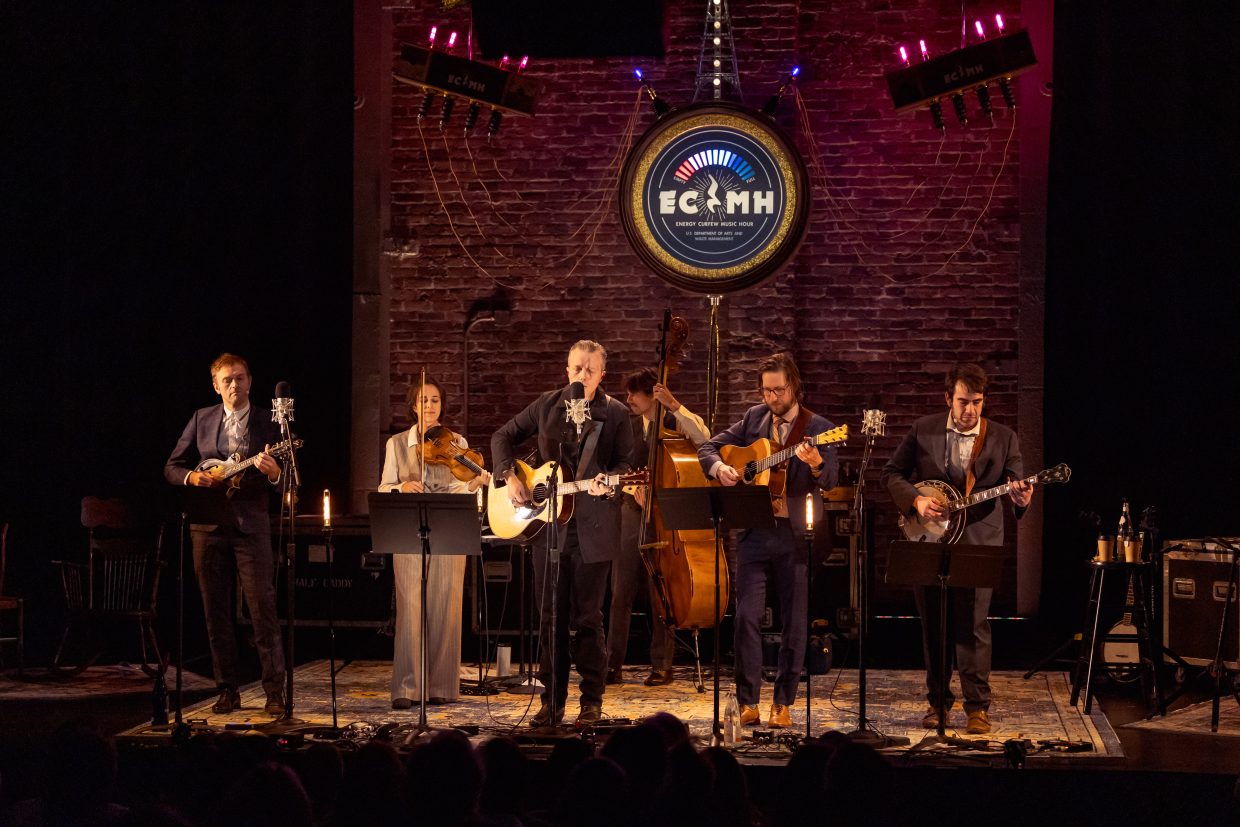
Haas’ first gigs with the band have been as part of The Energy Curfew Music Hour, a live radio-style show created by Claire Coffee and Chris Thile in collaboration with Audible. The show features Punch Brothers along with special guests like Jason Isbell, Gaby Moreno, and Sylvan Esso among others.
BGS had the opportunity to ask Brittany Haas a few questions about her career and her hopes for joining the band in the lead up to a handful of Energy Curfew Music Hour shows in New York City this month at Minetta Lane Theater.
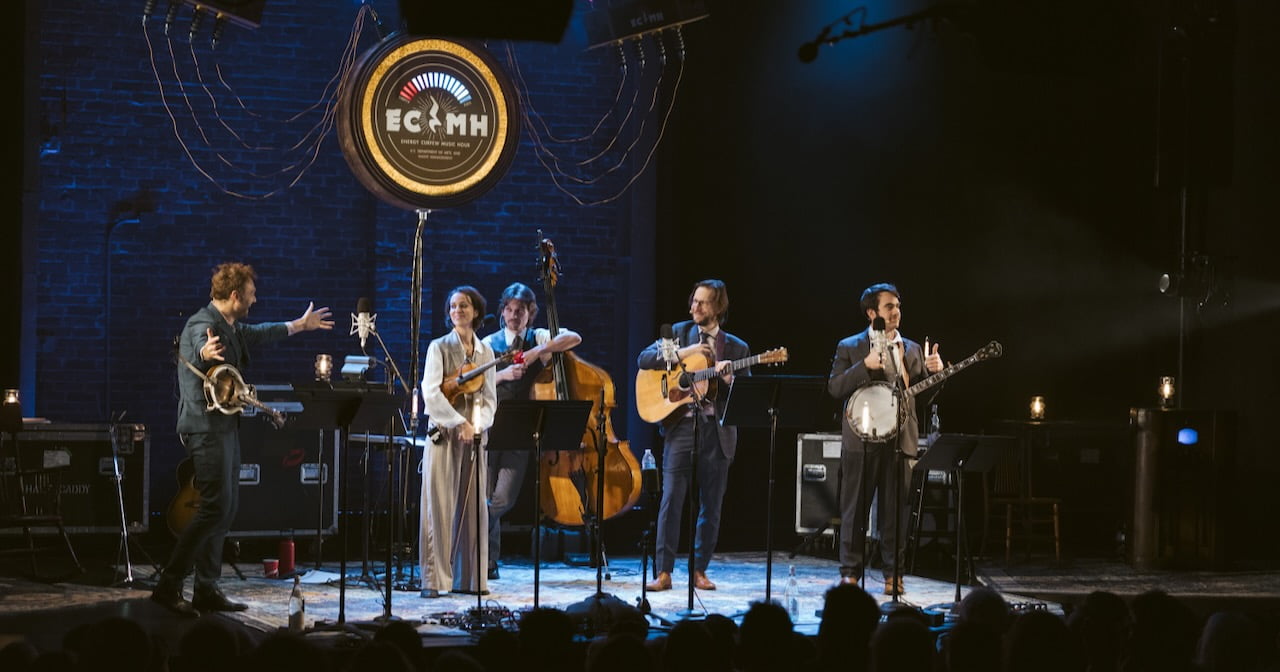
Chris Thile & Punch Brothers perform at Energy Curfew Music Hour with Jason Isbell in December. Photo by Rebecca J Michelson.
You’ve had a lot of experience working with various members of Punch Brothers in different bands and formats over the years, what about the particular aesthetic and ambition of Punch Brothers made you want to accept the gig?
I’ve been a fan of the band for a long time – I guess as long as they’ve been a band. So the idea of joining was very exciting. I think any fan would tell you that there’s something about the band – the expansive nature of their approach to writing and arranging music – that is really unique. They’re making music that doesn’t sound like anything else. Getting to jump into something that’s been evolving and expanding into and beyond itself for so long is really cool. And as an instrumentalist in this “new acoustic” musical universe, it’s basically a dream gig, joining four incredibly talented and smart people and making music through which I know I will grow as an artist.
You’re known as a fiddle player that’s rooted in old-time traditions, but also improvisationally virtuosic. Do you feel like your background in old-time will bring a different flavor to the band moving forward?
Old-time is a genre in which I feel a lot of joy and comfort, so it’s always nice when that can be utilized in service of a tune or a song. Lately, in playing with my sister and with Hawktail, I also feel that my voice is strongly Celtic and Scandinavian – basically a combination of the genres I grew up around at fiddle camp and got obsessed with. I think that stuff will come out naturally no matter what new music we’re creating and perhaps some of the music will be written in that direction.
When stepping into a role that has been created and maintained by one specific fiddle player for so many years (Gabe Witcher), how much freedom do you have to remake the parts for the older material in your own voice?
I think this is true in many areas of life– the more deeply you know something, the more you can put yourself into it. Once you know intimately how it goes, you can be freer and more artful and playful with it while staying true to its nature. So that’ll be a journey for me with the back catalog material. Also, sometimes the parts he played were just the best thing that could happen in that musical moment. Some of the parts are more written than textural/improvised, so in those cases I will need to stay true to what he played. And I love his playing! Playing like Gabe is fun for me, because it stretches me in a different way than I normally go.
What made you want to wear a suit for this gig?
I’d never worn a suit before joining the band, so I saw it as an opportunity to try that. I always thought that the women I saw wearing pantsuits looked awesome. Plus it’s great having so many pockets for mic and in-ear packs. The other part of my thought process was, this is a band and I want to integrate into it, so it makes sense to wear the uniform. No one said I had to wear a suit. I’m sure it would be cool with everyone if one of them wanted to start wearing dresses, so it’d be cool for me to do that too, and maybe I will at some point.
You’ve made incredible records in a lot of different fiddle genres at this point, is there any uncharted territory that you hope to explore in the future?
The depths of my own mind! I’m partially kidding; I do want to write more music. But there is always uncharted territory! Darol Anger is an inspiration in this – he never stops practicing and devising new ideas for getting around the fiddle. I hope to keep learning tunes from different musical traditions. Lately I’ve enjoyed learning conjunto music and I’d like to spend more time with Eastern European folk music, getting comfortable in different time signatures, etc.
What is a record that has been inspiring you lately?
James Taylor’s album Hourglass from 1997. We learned a few of those songs to play with him on the show and I fell in love with them. Also Alasdair Fraser’s album Dawn Dance, which I returned to recently after first being obsessed with it about 25 years ago. It is still as lovely as I remembered.
What is your process for preparing to play with so many different guest artists on the show – how do you approach constructing fiddle parts?
Mostly listening. Generally, when we get together with the guest artists that’s when most of the decision making about parts happens. So my job is just to show up being familiar with the music. Sometimes there are more specific string-oriented parts to play.
You’ve been a part of the Live From Here house band in the past, how does the vision and format for the Energy Curfew shows differ from that show?
The format feels similar, although there is more of an air of collaboration, because there is a bit more time for creation and also the same core band for every show. And, the premise of the show centers on the idea of it being purely acoustic music, so that’s mostly what it is with some inventive ways around that rule when needed.
Photos courtesy of Audible. Lead image by Avery Brunkus; inset image by Rebecca J Michelson.
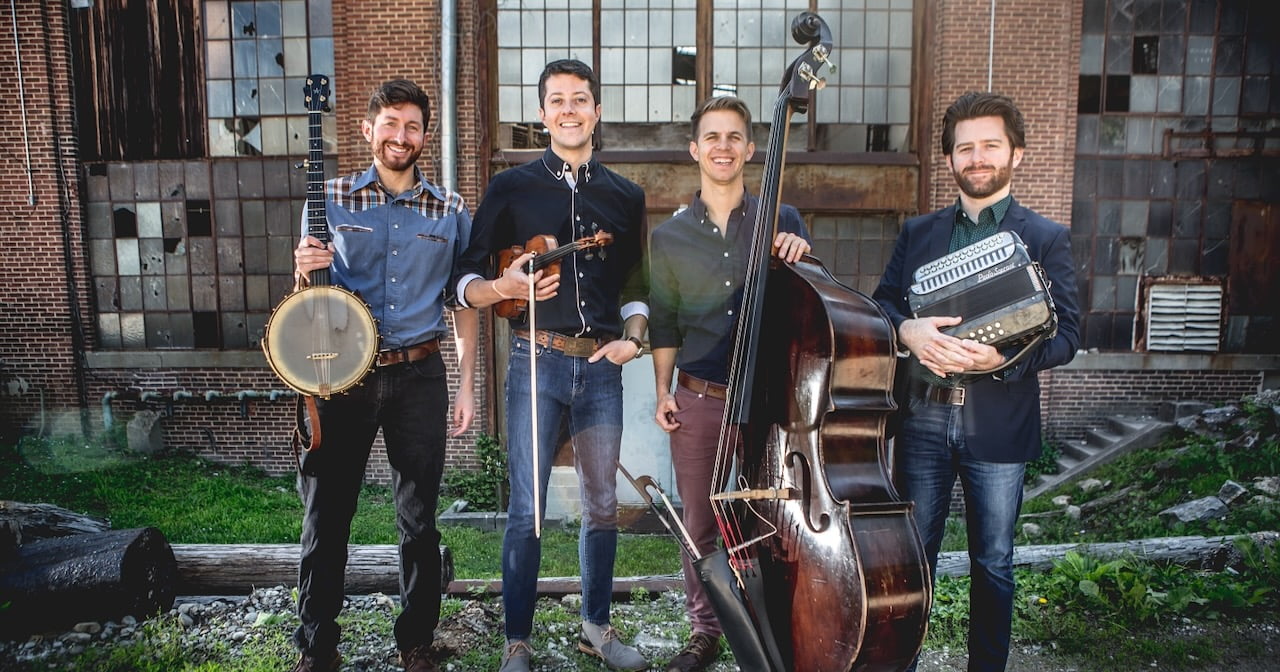
Artist:Charm City Junction Hometown: Baltimore, Maryland Song: “Roll On John” Album:Salt Box Release Date: January 10, 2024 (single); February 2, 2024 (album) Label: Fenchurch Music
In Their Words:“I first heard ‘Roll On John’ on an old Mike Seeger recording called Southern Banjo Sounds. His rendition is haunting yet enchanting, like a lot of old-time music. One of the most rewarding parts of playing in Charm City Junction is how each band member brings their own unique approach to roots music. When we first started playing together nearly 10 years ago, we essentially said, ‘Heck with the genre boundaries! Let’s play music we enjoy playing and see where it goes.’ It’s not quite old-time, it’s not quite bluegrass, it’s not quite Irish music. In a sense, it’s all of those, but none of those. We like it that way.
“Fun fact, this performance was captured live in a restored grist mill barn in Baltimore County, just a few miles from where our fiddler, Patrick McAvinue, grew up.” – Brad Kolodner, banjo
Track Credits:
Alex Lacquement – bass, vocals Brad Kolodner – banjo, lead vocals Sean McComiskey – button accordion Patrick McAvinue – fiddle, vocals
Photo Credit: Jordan August Video Credit: Directed by Rick Barnwell, RFBV Films
Happy Holidays from the entire team at BGS! The holiday weekend fast approaches and while we’re taking time away from our screens and inboxes this season, we hope you are, too. We’ll be back with more roots music content next week, but for now enjoy our final BGS Wraps before Christmas.
Wherever you travel and whatever your plans are as you wrap up 2023 and look ahead to 2024, we’re so grateful that you’re part of the BGS family.
Ellen Angelico AKA “Uncle Ellen,” Christmas at the Firehouse
Ellen Angelico is an in-demand side musician and session player in Nashville, touring, recording, and performing with artists like Cam, Amythyst Kiah, Adeem the Artist, Allison Russell, and many more. Christmas at the Firehouse is a fun and light holiday EP full of classic tunes and even a number for the Scandinavian winter holiday, St. Lucia’s Day. It’s a perfect addition to BGS Wraps!
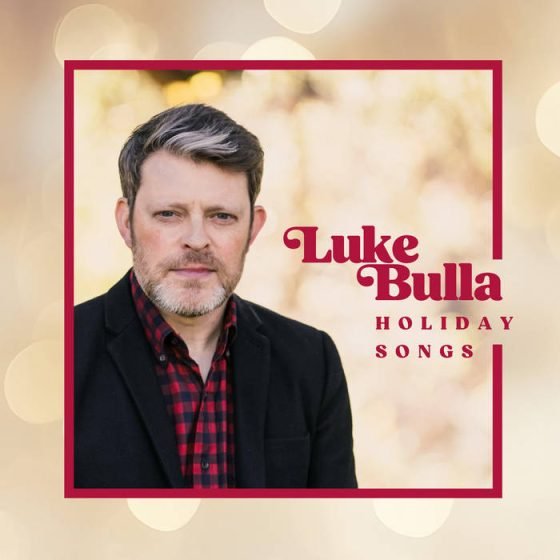
Luke Bulla, Holiday Songs
Only available via Bandcamp, fiddler and singer-songwriter Luke Bulla’s seasonal album, Holiday Songs, showcases the particular intersections of Bulla’s musical career and artistry – Texas and Nashville, bluegrass and country, contest fiddling’s polish and old-time fiddling’s grit. “Christmas for Cowboys” is delightfully country & western and his version of “Auld Lang Syne” has us looking ahead to the new year already.
Celeigh Cardinal, “Party of One”
“New Year’s never comes/ When you’re nothing more than a party of one/…”
One of Celeigh Cardinal’s most experimental and far-reaching releases, this vibey and lush alt-pop track celebrates and bemoans solitude at the holiday season, especially the transition from the old year to the new. Add this one to your NYE playlist for sure.
Erin Enderlin, “A Horse Named Christmas”
Horse Girl Christmas is an aesthetic we could certainly get behind! Country singer-songwriter Erin Enderlin is joined by Kimberly Kelly on “A Horse Named Christmas,” a rare instance of a waning country and roots music tradition – the horse song. Co-written by Enderlin and Kelly, the track is a love song meets story song about a wayward, down-trodden horse showing up at the back gate in December.
Sarah King, “The Longest Night”
The light is coming back! If you’ve been counting down the days to solstice’s long, dark night and the eventual return of the sun, you’re not alone. On Sarah King’s soulful new track, “The Longest Night,” hope shines through a sense of weary perseverance. It’s an excellent song to score your solstice.
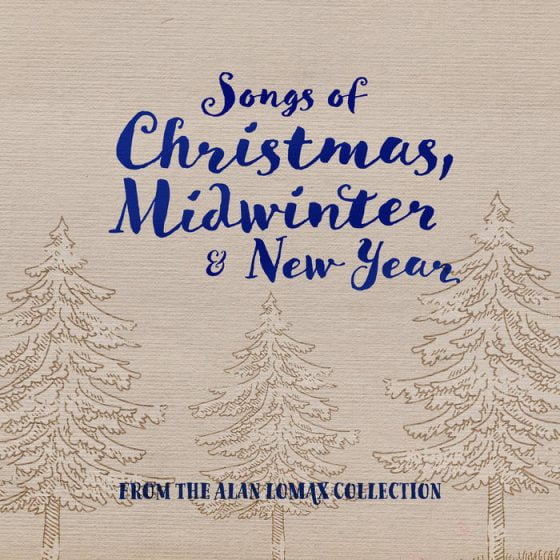
Alan Lomax Collection, Songs of Christmas, Midwinter & New Year
Another Bandcamp exclusive, the Alan Lomax Collection released a new compilation earlier this month called Songs of Christmas, Midwinter & New Year. The album features tracks recorded by Lomax in the ‘50s and ‘60s and highlights folk traditions from all around the world, from Italy to Trinidad, Harlem to Nevis.
J. Morrow, Lauren Morrow, “Strange Christmas”
An alt-rock, Americana number that celebrates – and decries – a strange, strange Christmas. We all know the sort of holiday, where the best strategy is to just get through it. Maybe your tree is a little wonky, your loved ones are far away, and you’re feeling more like Scrooge than Tiny Tim. It’s okay to have a “Strange Christmas.”
Mason Ramsey, “Run Run Rudolph”
We are proud and unapologetic Mason Ramsey fans over here and not just for his Wal-Mart yodeling. Who else agrees!? A fun and raucous holiday track from Ramsey adds a bit of chicken pickin’ to the forward leaning, Chuck Berry-inspired sound.
Scythian, Christmas Out at Sea
If you’re one of the folks for whom 2020’s sea shanty craze never ended, Scythian have released a holiday album just for you! Christmas Out at Sea is a maritime holiday delight by the premier dance and late night band of the roots music festival scene. Of course the collection kicks off with “I Saw Three Ships.”
Serabee, “Bayou Christmas”
Maybe your Christmas tree is a cypress or a live oak? Maybe you’re spending the holiday on stilts or boiling seafood or slow simmering gumbo? However swampy your season, Serabee’s “Bayou Christmas” will get you in the mood.
Jordyn Shellhart, Cross-Legged By the Fireplace
Jordyn Shellhart made our BGS Class of 2023 Good Country year-end round-up and the country artist – with a solidly mainstream sound – put out a cozy and delightful holiday EP this year, as well. She covers Joni Mitchell’s “River” and another more recent holiday song, “You Make It Feel Like Christmas.” On the latter, the EP’s standout track, she’s joined by Austin Snell for a tender duet. The project culminates with an original, “Coming To Town,” that will have you curling up by the fireplace, too.
Hunter Stone, “Ugly Sweater Party”
As you don your hideous-yet-beautiful holiday sweaters this season, Hunter Stone has the soundtrack for you! Although, a bit of critical feedback Hunter, we don’t think your pictured sweater is nearly ugly enough for the album art. This is a toe-tapping song that will have you grinning above your turtleneck. Lose that button on your slacks!
Our Classic Holiday Album Recommendation of the Week: Vince Guaraldi Trio, A Charlie Brown Christmas
BGS Wraps would have been an absolutely phony endeavor if it didn’t end up including Vince Guaraldi Trio’s A Charlie Brown Christmas as a Classic Holiday Album Recommendation. This record can do it all, from the fanciest of dinner parties to the most casual and unhinged dance pajama parties with the siblings and cousins. It’s a heavy dose of nostalgia and an unimpeachable collection of music, too.
Happy Holidays from all of us at BGS! We’ll have a New Year’s themed BGS Wraps for you next week, ‘til then – peace, love, and joy from us to you.
(Editor’s Note: Musician, forager, and ‘Can I Eat This?‘ host Sean Rowe recently chatted with singer-songwriter and instrumentalist Hannah Read for BGS about her new instrumental fiddle album, The Fungi Sessions, which was inspired by her mycologist father, who passed away in 2020. Their conversation has been lightly edited for flow and clarity.)
Sean Rowe: This is really cool for me, because obviously BGS had secret reasons for pairing us together and I think they made a good choice. I feel like we have some interesting things in common…
Let’s start with your origin. You were born in Scotland, correct? Whereabouts?
Hannah Read: Yep. I was born in Edinburgh. It’s a gorgeous city. I mean, it really is. I was born in Edinburgh, grew up there, and then I also lived on the Isle of Eigg, which is a wee island off the west coast of Scotland. When we lived there – I lived there with my mom and my sister – there were 60 people living on the island. Now it’s up to 120. It’s this incredible, incredible island, and that’s where I really got into music. We lived there full time when I was seven in a little house completely off the grid with no running water or electricity. Music just became my thing at that point.
That was kind of my Edinburgh – Edinburgh to Eigg and back. We were back and forth a lot until I was 18.
SR: I definitely want to talk about this new album, but before we get into that, can you tell me a little bit about the music you grew up with and also how it changed or evolved when you moved to the States?
HR: I grew up playing trad music. I’m heavily immersed in that scene. As I’m sure you’re well aware, the Scottish trad scene is thriving and has been thriving forever – at least in my lifetime. I was very involved in that. I was also very involved in the Scottish jazz scene. That was a big part of my upbringing.
My mum played music growing up. She played cello and we were around a lot of music. My dad was not a musician, but he listened. His record collection was absolutely bonkers and he had hitchhiked across America three or four times in the late ‘60s, early ‘70s, and was super into all the folk revival stuff. I was hearing a lot of that growing up, a lot of California folk stuff. It’s funny that I’m living here now, but a big part of my upbringing was listening to a lot of that stuff, alongside going and seeing any acts that were coming over from America, doing the circuit over there. [At] about 15 or 16 years old, I got super into jazz singing. And actually, I went to Paris and studied jazz vocals for a year when I was 18. I did like a one-year diploma there. Then I went over to Berklee College of Music, because my underlying thing, even when I was doing that, was that fiddle music was my true calling.
SR: And why the fiddle? What does it do for you?
Hannah Read: Oh, the fiddle. When I play the fiddle – I was actually playing yesterday and I had put it into a different tuning, it’s like F B, F B, this tuning that I’d just heard about a couple of nights ago. It doesn’t always do this, but the way it just kind of evokes so much, it’s such a deep resonance in my body, basically. I think I felt that my whole life when I’ve been playing the fiddle, being able to play with people, the community. The fiddle has opened up so many doors for me, it’s just become my whole community.
A couple of weeks ago, I was in Louisiana at Blackpot Festival. There’s this fiddle player called Rosie Newton who lives up in Ithaca and she was down there. She’s a great Cajun and old-time player and we hadn’t actually played tunes before, but we sat down and kind of like locked our knees [together] and played tunes. The way she plays, I was so interested to actually sit with her and play music. As you know, when you are playing just locked [in], there’s nothing in my mind as magical as when a fiddle on fiddle groove together.
SR: Aside from music, I’m also a forager. I have been for many years. I know that your father was a mycologist, how did you get into that world? What are some of your early memories around it? Your dad, I assume maybe he took you out on field trips, showing you things. Tell me about it.
HR: We were around it from when I was born, and I’ve been thinking about it a lot recently, obviously. You know, things from the salt shaker and pepper shaker in our house [were decorated] with little mushrooms. There was mushroomy stuff all over the walls – not in like a, “Bleh, we’re surrounded by mushrooms!” way, it was subtle, but it was very much there.
Dad had a lab at Edinburgh University. So when we would spend our weekends going to dad’s house, we would spend our weekends running around the labs at Edinburgh University. [I remember] the distinct smell of being in the biology lab at the university and checking out the new microscopes.
SR: Did you think it was weird? Compared to what your friends were doing or was it strange to you?
HR: My dad was so passionate, he was contagious. I think his passion for mycology, mushrooms, and his work has been a massive influence on me and my work and the passion that I have towards music and what I do. I mean, it’s an obsession, he was obsessed. Completely obsessed. And I am pretty obsessed with what I do, as well.
I remember going down to Newcastle, dad had some colleagues down there, friends down there, that we would go on forages in the woods with. He would also come over to Eigg and we would go out and look at mushrooms. We were always going off and getting chanterelles and puffballs. It was just what we did. He was always pointing them out. However, I think because it was Dad’s thing, and it was [always] around us, I never took the time to go, “Hmm, I’m going to learn more about this myself,” because I was surrounded by it. When people would talk about being into foraging or mushrooms suddenly I’m like, “Oh yeah, me too!” But, until dad passed away – three and a half years ago, at the beginning of the pandemic – and suddenly mushrooms. It almost felt like dad died and suddenly all this whole world opened up for me, because everybody was stuck at home and able to delve into these curiosities like fungi and being out in nature more, it became this thing. I was like, “Oh, this actually is my thing.”
But I don’t know that much about it. That was a funny bit. You know, the Fantastic Fungi film coming out and all of the buzz around that, and I actually did not realize until the last couple of months that my dad was friends with all of these people and I had met them all. I had met Paul Stamets. Dad was the president of the Royal Mycological Society – also the British Mycological Society. He was president, so he actually organized the 2010 world meeting which happened in Edinburgh at Usher Hall. All of these people came and I met them all then.
I played at the opening and closing event and I was around all of these people, but I never put two and two together until a couple of years ago when these films were coming out and there was all the buzz and until the album was about to come out. I had one of Dad’s colleagues say, “I’ll send the album to Paul Stamets and Merlin Sheldrake” – and all these other people.
So, over this time it had crossed my mind, “I’d like to learn more about this stuff.” I didn’t have the knowledge and I can’t quite talk about mushrooms – because there’s so many people that know way more than me, I feel underqualified – but anytime it came up and someone was like, “I do a lot of foraging,” and I’d [respond], “Oh, you do? I don’t, but I did.”
In the spring, the day after the anniversary of my dad passing, I was contacted by a mycologist at Edinburgh University called Dr. Edward Wallace. The topic of the email just said “Fungi music?” I was like, “What?” It just said, “I would love to commission you to write an album of fungi-inspired music. What do you think?”
Right away I was like, “Yes, this sounds amazing.” Turns out he’s about my age, he is also a fiddle player, and had been to see me play and I’d announced, “I’m playing a tune called ‘Waltz to a Fun Guy,’ which was this tune I wrote for my dad” – which was just a simple little waltz that was on my old-time record.
[Wallace] heard that and he thought, “I would love to hear more of this stuff with more of a focus.” That’s really where it came from. There was a grant from, the Welcome Trust, which is a trust in London, and they funded a full album. They gave me the opportunity to do whatever I wanted. It’s been a really, really interesting process. It came out of nowhere and it actually came at a perfect time… I gave myself a week in May to write the whole thing, because I felt that it was really important for this album to feel organic and feel really grounded and capture a moment in time.
SR: Putting limitations on yourself can sometimes really boost creativity – and art itself, I think, by the limitations. I think that has a lot to do with the kind of thought that’s involved, the analytical side of things can wreak havoc when overdone. When I record, I will record in completely new environments with all new people that I haven’t met before. Could be a total disaster, but it’s the act of creating these limitations that I think make for a kind of danger, it’s a kind of unknown territory. But that can also open things up in a way. It also makes me think of foraging.
This is kind of funny, but I have this kind of superstition where I always joke to myself that if I prepare too much to go out foraging, I’m not going to find what I’m looking for. It’s those moments when I’m really not even looking for that thing, or I’m open to whatever happens, that I find something good – and then I might not even have anywhere to put the stuff to take it back home. There’s a sort of magic in that. The limitations, that’s a really interesting idea all around I think.
HR: I totally agree with that.
SR: When you were approached with this idea for this album, did you immediately think, “Oh yeah, instrumental”? Or did you have to work this out in your brain, whether or not you were going to write songs or do it instrumental?
HR: Great question. My initial reaction was [all over the place]. I just had so many ideas, off the bat. I remember calling my sister after getting that email being like, “I can do this– Oh, could be a children’s album–, Oh, it could be this– Oh, it should be accessible for this…” But it came together slowly more and more. I got a bit more anxious about it and I was like, “Actually, Let’s keep it simple.” Nobody’s asked me for anything. I can do whatever I want here. Nobody is asking me for songs. Nobody is asking me for tunes. Then I was like, “I don’t actually know enough to write songs that will feel authentic.” It feels almost icky to me, writing about something that’s a very precious thing that I actually don’t have the knowledge to back up.
So I thought, keep it simple. I’m going to write, I’m going to just capture each tune. I want to capture a feel of some sort of different species. I actually reached out to one of my dad’s colleagues, Pat Hickey, who he used to work with at Edinburgh. He’s a scientist still based in Edinburgh, but not at the university. He and my dad used to make all these beautiful videos of mycelium growing, time lapse videos of them growing under these incredible microscopes. I asked him if he could send me a bunch of stuff and I just started watching those and seeing what came up.
If it was going to be lyrics and if stuff was going to naturally come that way, great! But it wasn’t. It was just instrumentals. I thought, “Great. This is going to be an instrumental record.” Volume 2 might have lyrics, but it also might not. I might collaborate with a poet, somebody who does have more knowledge on this stuff.
I think it would have been a very interesting, different thing if I had gone down the lyric route – and that door is not closed. I’m super keen to, I think that would involve collaboration. I would love to work with someone who does actually know a lot about it.
SR: Before we go through a few of the tracks, the first thing I’m very curious to know is about the interludes, because the little bit I read about them was that they include dirt and bark decomposing. How were those sounds acquired? It’s very cool.
Hannah Read: My friend, Charlie Van Kirk, lives up in Round Pond, Maine. He and I have been collaborating for years, but I really wanted the album to have something else – rather than just instruments. I wanted the listener to be taken on a journey.
I feel like there’s millions of fiddle tune records out there, but I’m glad that you went for a walk and listened to it. For me, [the goal was] having tracks and links that pull you down to the underworld or the undergrowth, where your imagination can go wherever it wants to go. Like the sounds of leaves. I gave Charlie full creative control with this. He’s a percussionist as well. I just wanted him to just go for it and see where it took him and just break up the album [with] little breathers. I really trust him as a collaborator and his musical instincts. The next album, I think might have significantly more of those sounds, I think they’re a crucial part of the album.
SR: If it were a film, they would be like a sort of filter on a film. A certain color that sort of wraps all of the songs together.
Let’s go through the tracks. When “Silverphae” comes on I get this ominous sense from it, but not a sinister kind of ominous. It’s more like a mysterious kind of feeling, but also inviting, like there’s something to see here. “Panellus Dancer” is the next track, that’s the one that’s in waltz [time], so there’s obviously a connection with dance. Are you referring to the glowing mushroom in this?
HR: There’s this book, which was my dad’s, but there’s a whole section on bioluminescent mushrooms and there are videos that go with it. I’m actually going to share some of the videos online soon. They’re so beautiful, you’ll love them. They’re just amazing.
SR: Totally get that. It kind of reminds me of jellyfish actually, in a way – the grace of it all. And that was another feeling I got from it, there’s a mischievous that came up for me, a playfulness to it, and also joy. I love that one.
I thought “Stinkhorn” was funny, because I do have an experience with that mushroom and I think for most people, the smell comes to mind. But it’s such a celebratory song, I thought it was funny because what immediately came to my mind was kids smelling the stinkhorn and running to go get their friends. You know how kids do that? They love to have each other smell something that smells horrible. That was the image I was picturing, but why so happy about stinkhorn? Tell me about it.
HR: “Stinkhorn” is a bit of a curve ball in the record, because I know what a stinkhorn looks like. I know that they can be slightly repulsive. I just find them funny. They’re funny things. And I also just think the name “Stinkhorn” is a great old-time [tune] name. I was watching stinkhorn mycelium and it’s so beautiful, it’s absolutely stunning. These videos, it’s absolutely beautiful, it’s kind of the opposite of what the stinkhorn physical model looks like.
SR: I felt like it had to be some kind of comedy in there – and it is funny too. It makes me think of the phallic nature of a lot of mushrooms. It’s almost like nature is joking around, like it ran out of ideas to you know to for a unique design. So it’s like I’ll just use this. I got a kick out of that one.
The next song is definitely a departure from the last one, but I was curious about the title, “Celia.” Is that someone’s name or is that related to mushrooms somehow?
HR: That was related to mycelium!
SR: I wasn’t even paying attention to the title of the album when I was listening to it, but I wrote down a couple of things and one of them was “interconnectedness.” Also the mechanistic imagery of nature. In other words, these sort of woven tapestries – mycelium is like exactly what I’m describing here.
I remember I had a psilocybin experience a while back – I know a lot of people share this kind of thing too – where you’re seeing a lot of connectedness in things, like gears in nature. That’s what was going on in my head during “Celia.” So well done.
The next one, “Valley Fever,” from this I got a deep sense of solitude, almost like trying to shut out the noise of life and look closer. Which, is very much a common theme that comes over me in nature, but I felt like this one was powerful. It was like drawing me into a quiet that the other songs hadn’t necessarily done as much.
HR: That is very interesting. This one was written to create a lone feeling. It feels very Western. I was drawing from a few images that I’d been given that were quite orange and they felt like the desert. I was rolling with that. I was writing it [imagining] Utah, and a horse, like just a lone cowboy riding on a horse.
But the more I got into it, the more I was struggling with the name. Struggling, because that [western place] was where I’d been taken with it. I was like, “How does this link in? Is this random?” And then Edward [Wallace] was like, “There is a fungus that is only found in the desert, and it’s called Valley Fever.”
SR: That’s so cool.
HR: I feel like it does have a very lonely feeling and it feels sparse. And it feels sparse in the way we did it just fiddle and guitar and upright bass.
SR: I love that. This next song, “Nick’s,” is my favorite. I’m assuming that’s your father’s name? Nick? To me, this is the most melancholy song on the record. For me, melancholy is a different kind emotion than depression or sadness. It’s not those things. There’s a kind of sadness in it, but it’s almost like an acceptance at the same time. There’s a real beauty in that collective feeling, those things that work together to create that feeling of melancholy. It has a transient quality to it, too. It’s almost like a storm that comes in and is only there for a moment and then blows out, you know?
HR: God, well you nailed it on the head! That’s the one that I wrote the last day in the studio. I listened to everything else that we had done and I was like, “We’re missing this.” We need– I need this feeling. And that was the feeling. A feeling of a cathartic piece at the end of the album.
Because, it is a tribute for me. I wouldn’t have just made a mushroom-related album. I wouldn’t have come up with that if it hadn’t been for my dad. It wouldn’t be interesting. Why should I do that?
I didn’t know the rest of the order of the album at this point, but I knew I wanted to end the album with “Nick’s” and leave the listener with that [melancholy, cathartic] feeling. Because I feel like there’s also a hopefulness in that last track. It’s a very fragile piece for me.
The album came out 20th of October and on the 19th, the day before it released, I played the album at a launch show in Edinburgh. Played the whole thing top-to-bottom with the banjo player, Michael Starkey, who’s on the record, and Patrick Hickey, who I was talking about before, did a video for every track.
By the time it got to that last piece, it was so emotional. That piece is incredibly emotional to play, but it feels so important at that point, at the end of the whole suite. I was shocked and actually overwhelmed and very surprised to feel that way in the live performance. Suddenly, the emotions, I was trying to keep it together, but that’s what music is. That’s why I do this.
I’m really happy to hear that you enjoyed it, that’s a very special tune for me.
SR: I can imagine. I’m sure your father would be really proud of that – and of the whole record, but especially that one. Such a beautiful melody and you really captured the feeling.
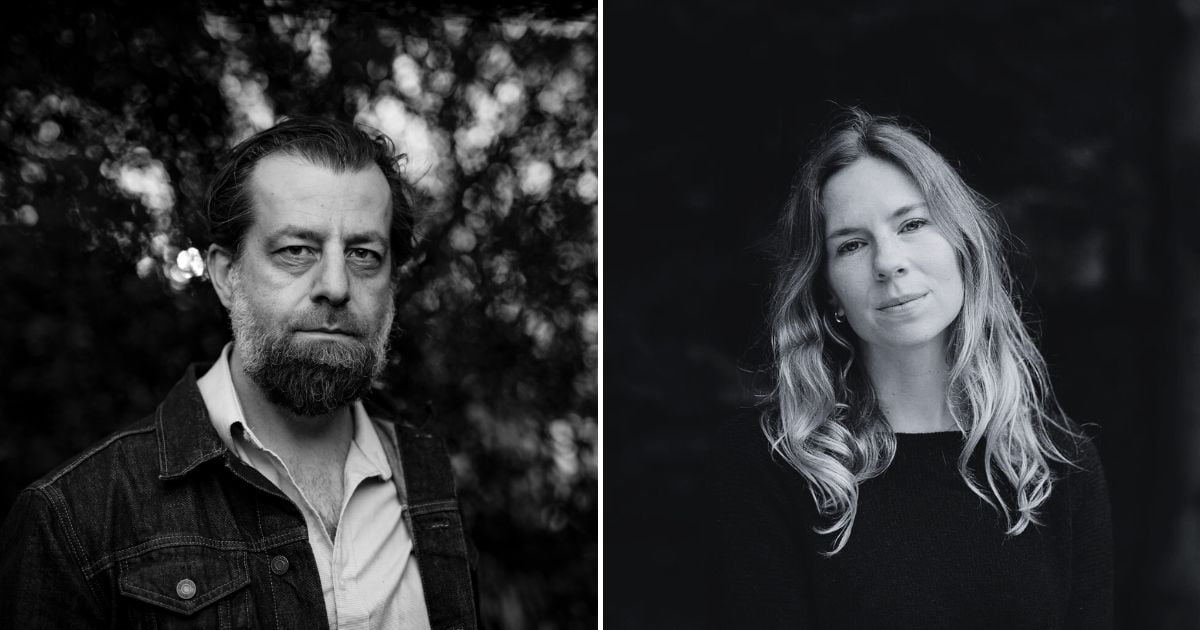
Photo Credit: Sean Rowe by Joe Navas; Hannah Read by Samuel James Taylor.
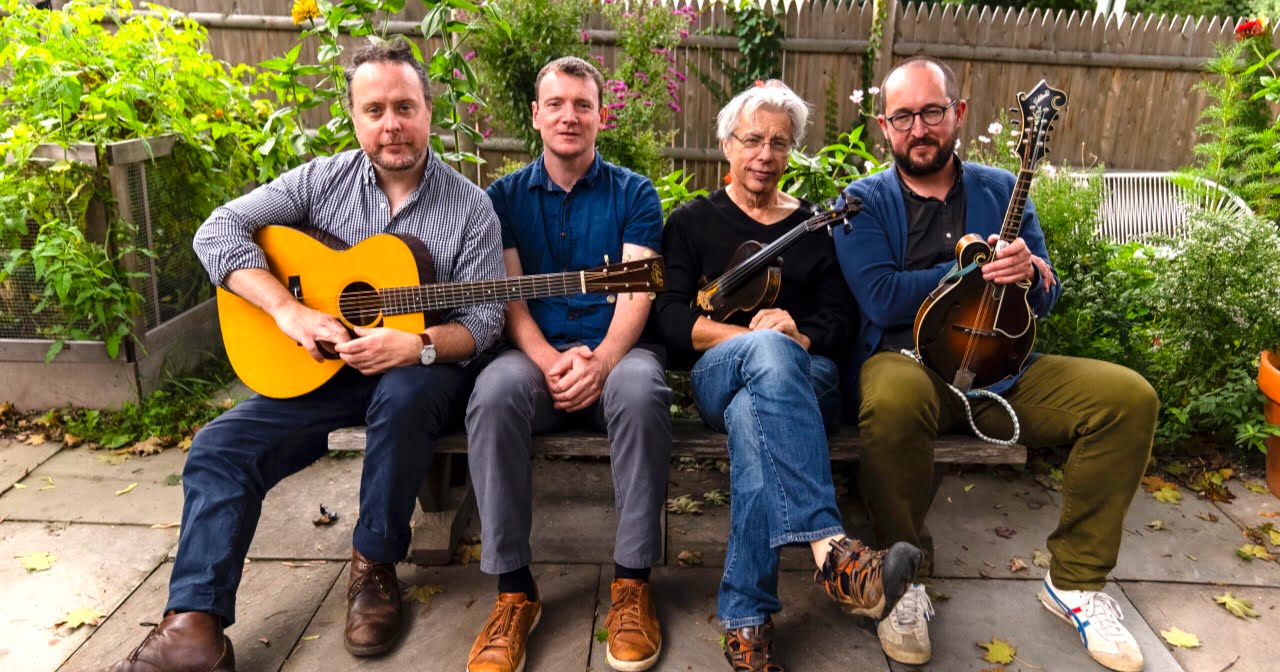
Artist:Mr Sun Hometown: Portland, Maine / Nashville, Tennessee / Brooklyn, New York Song: “Shovasky’s Transmogrifatron” (Ballet Snow Scene) Album:Mr Sun Plays Duke Ellington’s Nutcracker Suite Release Date: December 1, 2023 Label: Adhyâropa Records
In Their Words: “Everybody’s familiar with the Nutcracker Suite, but there’s this really beautiful recording of Duke Ellington and Billy Strayhorn’s arrangement of it – it was a really joyful, playful reimagining of this classic piece… It was an easy idea to propose, not fully appreciating the amount of time it would take to do it. Luckily, everyone in the band brings a tremendous skill set to the project.” – Joe K. Walsh, mandolin
“They basically said, ‘We’re gonna take this essential seed of an idea, but we’re gonna play it like us.’ And we’re doing the same thing – we’re playing it like Mr Sun, without doing anything too verbatim. It’s all about being ourselves. That’s the impression you get from Ellington, and that’s a thing we very much are: Ourselves.” – Grant Gordy, guitar
“It sounds simple, ‘Let’s just play this big band arrangement with four stringed instruments.’ In practice it’s been a little more complicated!” – Aidan O’Donnell, bass
“Duke Ellington of course was volcanically creative. He was one of the most creative musicians ever. He was beyond category. Melody, harmony, and rhythm – if you can put those things together in a way that reaches people, it’s gonna be successful in a way that means something.” – Darol Anger, fiddle
(Editor’s Note: Singer-songwriter and multi-instrumentalist Rachel Baiman is also a BGS contributor. View her author archive here.)
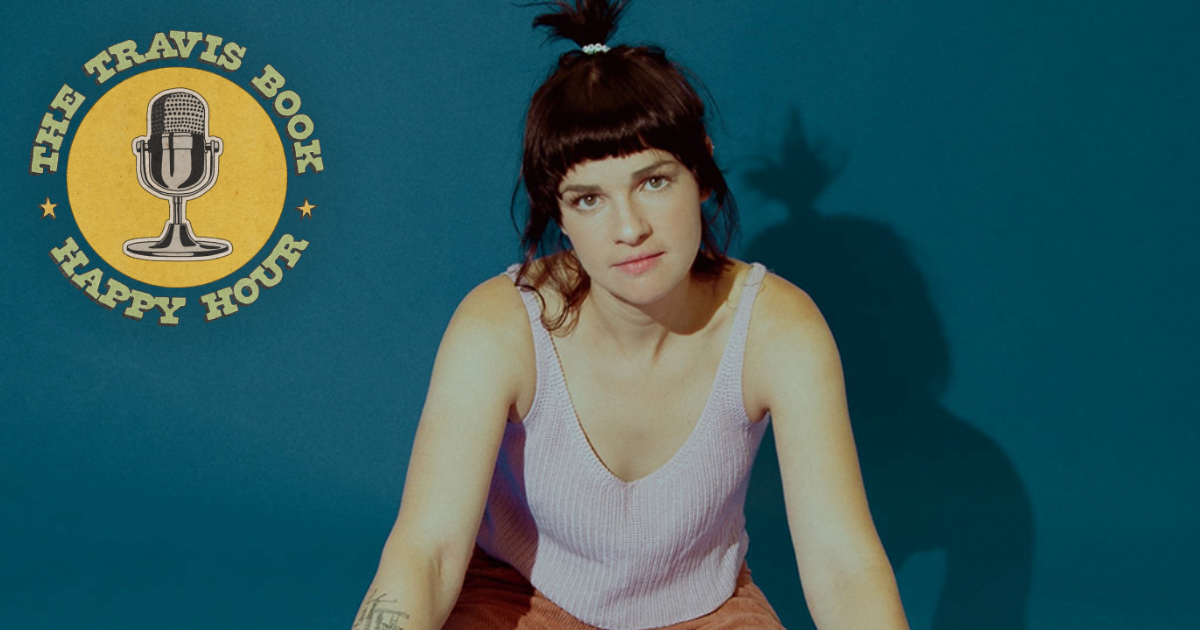
Rachel Baiman’s indie-folk and Americana vibe – rooted in Chicago and rich with fiddle tunes – unfolds as she shares her transition to singer-songwriter. Influences ranging from Courtney Barnett to John Hartford and other roots music make their way into her live performances. Rachel is part of a generational scene in Nashville that I’ve been watching with awe for the last five to 10 years. A unique voice, multi-talented and articulate, she’s not afraid to sing and speak what’s on her mind. She writes semi-regularly for BGS, shining some light into the darker corners of the music industry, addressing inequality, and challenging all of us – creators and fans – to do better, dig deeper, and expect more. In this episode we discussed everything from climate change concerns to hopes for a more equitable future. We had a great time on the happy hour and I’m sure you’ll dig it.
This episode was recorded live at 185 King St. in Brevard, North Carolina, on August 8, 2023. Huge thanks to Rachel Baiman and Riley Calcagno.
Timestamps:
0:06 – Soundbyte 0:57 – Introduction 2:09 – Bill K. introduction 2:57 – Travis introduction 3:33 – On “Bad Debt” 4:52 – “Bad Debt” 9:52 – “Shame” 12:35 – On Mullets 14:24 – “She Don’t Know What to Sing About Anymore” 18:18 – “When You Bloom (Colorado)” 22:25 – “Won’t You Come and Sing for Me” 26:10 – Interview 43:45 – “Twin Fiddles” 47:30 – “Bitter” 51:15 – “In Tall Buildings” 54:53 – Outro
Editor’s note: The Travis Book Happy Hour is hosted by Travis Book of the GRAMMY Award-winning band, The Infamous Stringdusters. The show’s focus is musical collaboration and conversation around matters of being. The podcast is the best of the interview and music from the live show recorded in Asheville and Brevard, North Carolina.
The Travis Book Happy Hour Podcast is brought to you by Thompson Guitars and is presented by Americana Vibes and The Bluegrass Situation as part of the BGS Podcast Network. You can find the Travis Book Happy Hour on Instagram and Facebook and online at thetravisbookhappyhour.com.
Personal nicknames (or rejected band names): A Justification for Playing the Banjo
Which artists have influenced you the most?
Our greatest source of fiddle tunes would be the American fiddler Rayna Gellert. We fell in love with her groovy playing and her taste in source material. Many of the tunes we play are from her record, Ways of the World, including the title track which we also recorded for our debut album, New Valley.
Sam Amidon is another source of inspiration. His exploration and retelling of the traditional material with a quite minimalist style of arranging is something that guides parts of our process and something we strive to achieve ourselves.
Anna & Elizabeth would be our go-to when it comes to vocals. What they do is just absolutely astounding and continues to give the shivers to this day, even after hearing their music many times over.
Lastly we have many inspirations from the Nordic, especially from the Swedish trad scene. The duo Hazelius/Hedin and the band Bäsk are both big inspirations. Just like us, they both play traditional fiddle/dance tunes in a modern style and arrange old songs and ballads with a lot of after thought.
If you had to write a mission statement for your career, what would it be?
Musically, the three of us all come from the Nordic folk scene and the modern style of playing and arranging traditional Swedish dance tunes. When the band was formed we made a conscious choice that instead of fondly playing old-time music as historically or culturally accurate, we’d rather discover it and express ourselves in the way that we felt most natural. The result of that process became our own unique style of playing the old Appalachian fiddle tunes and songs. With interest and respect for the individual instrumental traditions, we arrange our music in a similar way that we would with the Swedish polskas or schottises. We call this style “Nordic Old Time” and we see it as our mission to explore this concept, and with it we can spread the traditional North American music to our peers and colleagues in the Nordic folk scene.
What has been the best advice you’ve received in your career so far?
Lukas, our banjo player, once met with the great Swedish folk musician Ale Möller, one of the founders of the Swedish world music scene. His advice to young musicians was to choose between being a specialist or a generalist. Either you can fit in any band or project or you establish your speciality so that when someone wants that, you’re the only one to ask. This spurred Lukas to both get more into the old time tradition that is otherwise a bit unknown in the Swedish folk scene, and to learn all stringed instruments there are. With all that being said, which path do you think he chose?
What’s your favorite memory from being on stage?
In April this year we performed at a small festival called Växjö Country Roots Festival. It’s a one day festival where six different bands that play American folk and roots music are doing one concert each during the evening. The event was sold out and there was a nice energy in the room. The performance went well and the audience seemed to like our way of interpreting the old time style, but the best thing about the festival was that it was a great way of gathering a lot of musicians doing bluegrass/Cajun/old-time/Americana music in Sweden.
It was really nice seeing the other concerts, but also jamming backstage, talking to other people doing a Nordic version of American folk music, and realizing how different it can sound. The arrangers did a great job with finding bands doing quite different sounds and even if it was a long night, the audience had a high energy the whole evening and it all ended with the musicians having a long jam session at the hotel until late night.
What rituals do you have, either in the studio or before a show?
As a band, the only ritual we have so far is to warm up our voices together. We’re including more and more songs in our repertoire, and to be able to push our voices on stage it’s important for us to do some warming up and check-ins with our intonation. Apart from that we all have some individual things we like to do before going up on stage.
If Adam has the time he likes to massage his feet. He picked that up from one of his teachers at a camp some years ago. According to this teacher, if you’re comfortable and grounded with your feet, you will be comfortable and grounded on stage.
Michael likes to take some time backstage to do some breathwork and settle his mind. If it’s possible, he also likes to take the time to get familiar with the room/venue from the perspective of the stage before the show, to be more comfortable and prepared for what to expect with that specific stage.
We’ve also learned from experience that Lukas needs to eat something before a show.
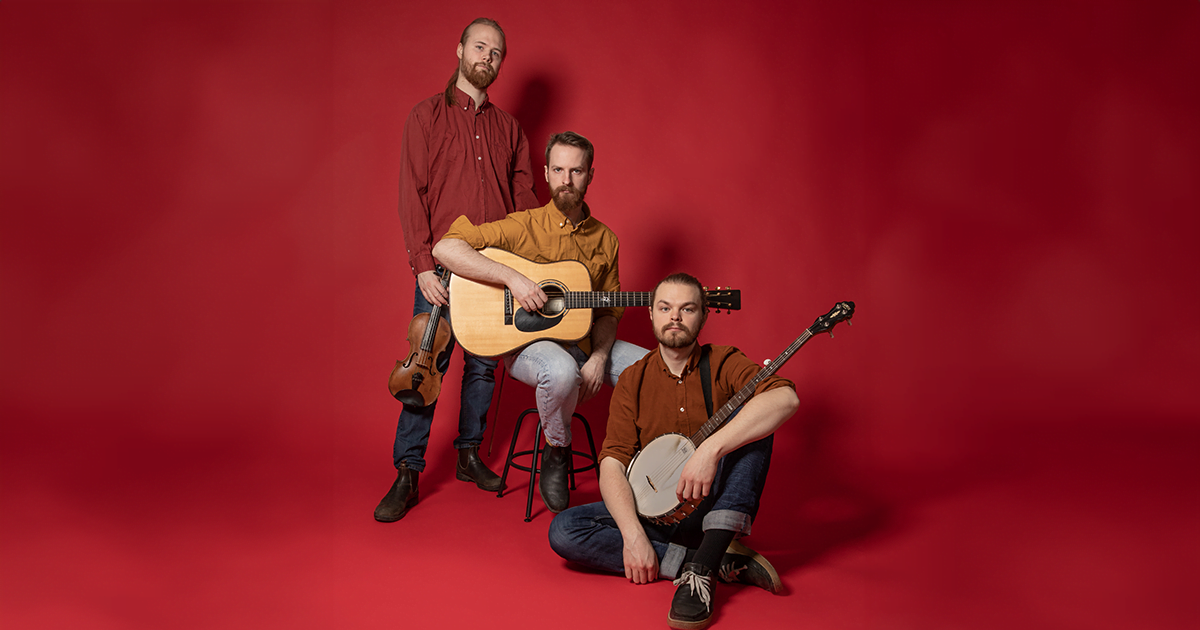
Photo Credit: Aija Svensson
This website uses cookies to improve your experience. We'll assume you're ok with this, but you can opt-out if you wish.AcceptRejectRead More
Privacy & Cookies Policy
Privacy Overview
This website uses cookies to improve your experience while you navigate through the website. Out of these, the cookies that are categorized as necessary are stored on your browser as they are essential for the working of basic functionalities of the website. We also use third-party cookies that help us analyze and understand how you use this website. These cookies will be stored in your browser only with your consent. You also have the option to opt-out of these cookies. But opting out of some of these cookies may affect your browsing experience.
Necessary cookies are absolutely essential for the website to function properly. This category only includes cookies that ensures basic functionalities and security features of the website. These cookies do not store any personal information.
Any cookies that may not be particularly necessary for the website to function and is used specifically to collect user personal data via analytics, ads, other embedded contents are termed as non-necessary cookies. It is mandatory to procure user consent prior to running these cookies on your website.