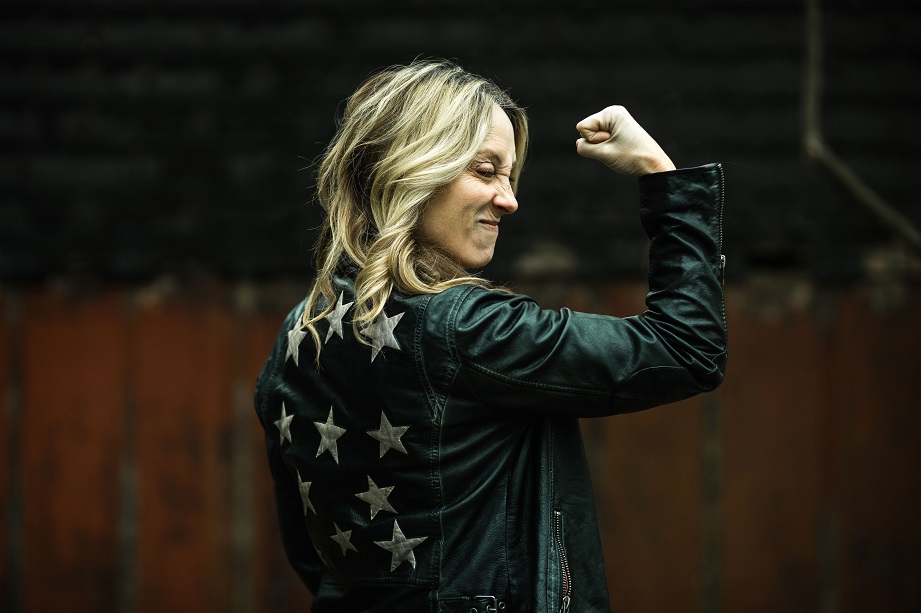
BGS 5+5: Amy Speace

Artist: Amy Speace
Hometown: originally from Baltimore, Maryland. Currently lives in Nashville, Tennessee.
Latest album: Me and the Ghost of Charlemagne

What was the first moment that you knew you wanted to be a musician?

I remember from way back, because I started playing piano at age 3 (or so the story goes) and started formal lessons at 5, that I could disappear into my own world at the piano, inside the sound. I didn’t understand it but inside music was always this safe space for me.

So it’s hard to pinpoint when I wanted “to be” a musician because my earliest memories are that I was a musician. I just understood music from the start. Not that I didn’t have to work and practice, but it just made sense to me. So I’d chase that feeling back to being too short for my feet to hit the pedals practicing scales on my grandmother’s black upright piano.

What other art forms — literature, film, dance, painting, etc — inform your music?

Definitely all forms of storytelling. I didn’t write a song until I was about 28 but all through my childhood, I wrote poetry and stories and plays. I drew and painted. I read everything I could get my hands on. In college, I was a dual major in English and Theater and got obsessed with Shakespeare, Performance Art and Avant Garde Theater and Improv Comedy.

Then I went to NYC after college to study classical acting at The National Shakespeare Conservatory for two years and for the first time in my life started going to art museums and got lost in the big physical paintings of Pollock and Rothko. I lived in the Lower East Side and in Greenwich Village and really really loved living in that kind of Bohemia in my 20s.

I worked three jobs, one of which was as Lainie Kazan’s assistant on Broadway and in her cabaret shows, where I got the chance to meet so many legends of the theater. I hung out with dancers and clowns and actors and musicians and poets and we were all broke and idealistic and scrappy and I went to every show, every concert, every happening I could talk my way into.

I mean, there’s not really an art form out there that hasn’t moved me to tears and to want to create something of my own in response, from seeing Sondheim on Broadway to a poetry slam in the Lower East Side to my friend dancing burlesque. It all kind of informs whatever soup is all up there in my head, processing the pictures and the emotions and the memories. But when it gets down to pen on paper and crafting a song, I think that’s when film is really my guide: I think like a director/screenwriter/playwright. What’s the entry point in the story? What do you see out there? What’s the landscape like.

What’s the toughest time you ever had writing a song?

Easy. That will be the next one I write after I finish this one I’m working on. Because it’s always like starting over at the beginning and I go through all the fears that I’ll never write another good song again and I’ll just sink into the ocean of bad cliches and stolen melodies.

What’s your favorite memory from being on stage?

Probably the earliest, honestly. I was in 8th grade, Curtin Middle School in Williamsport, Pennsylvania. I was a very awkward, permed hair, 14-year-old. Bookworm, nerd, and not really that cool. I had joined chorus for the first time (I didn’t think I was a good singer) because my best friend Laura was a good singer and convinced me to join.

The end of the year the choir did a musical theater revue. I was kind of a class ham, very theatrical, did all the accents, and the choir director gave me a solo doing “Adelaide’s Lament” from Guys and Dolls because I could fake a good thick Bronx accent. I will honestly never forget how I felt when I stepped out onstage and the lights were on me and I disappeared into this character. It felt like the crowd roared and I got a standing ovation and the next day was like a freaking Christmas parade…

I went from being the new kid at school to everyone looking at me as if for the first time. The choir director took me aside and really encouraged me to study voice. She said, “I hear something in there…I think that you have a gift.” And literally, from that moment on, I knew I wanted to be onstage singing. I literally felt like I’d found myself that night.

I’ve had incredible stage moments, like being onstage at Town Hall in NYC opening for Nanci Griffith to a sold-out crowd — and you could hear a pin drop. To playing Gruene Hall with Guy Clark a few years before he died. To the first festival stage I was on at Glastonbury a few years back. Even to some incredible house concerts and small clubs. But that first time, it’s still so present to me, that I think that’s my favorite memory because it was when I first felt that I knew something true about myself.

How often do you hide behind a character in a song or use “you” when it’s actually “me”

Fascinating question. I don’t hide. I bring me into all the he’s and she’s and they’s and you’s in my song. If I don’t understand the characters’ passion, their desire, I can’t write it. So there’s got to be some autobiography in there, even if it’s masked by someone else’s story, even if it just creeps through two words in a bridge.

If I only wrote about my life and what was going on with me, literally, well, I’d have a short catalogue of songs because my life isn’t that interesting to sustain a career of writing about it. I don’t have time to hike the Himalayas or to be the captain of a ship. I’ve got a 16-month-old and an album coming out and I’ve got to get posters out and keep up with FaceTwittInstaHell. I’m tired. All the time.

Plus I have songs that need to get out and I have literally only the 30 minutes when my son may be napping to get a chorus idea down. So I have to find stories in newspapers or thieve parts of conversations I overhear or steal what you say that rhymes that you don’t even hear the rhyme. I’m always listening for ‘language of lyric’ to show up in my life and then, if I’m lucky and I can catch it, I keep it in a notebook for those naptime writing sessions.

So I may not let on that the “you” is actually “me” but it’s always a little bit of me.


Photo credit: Neilson Hubbard
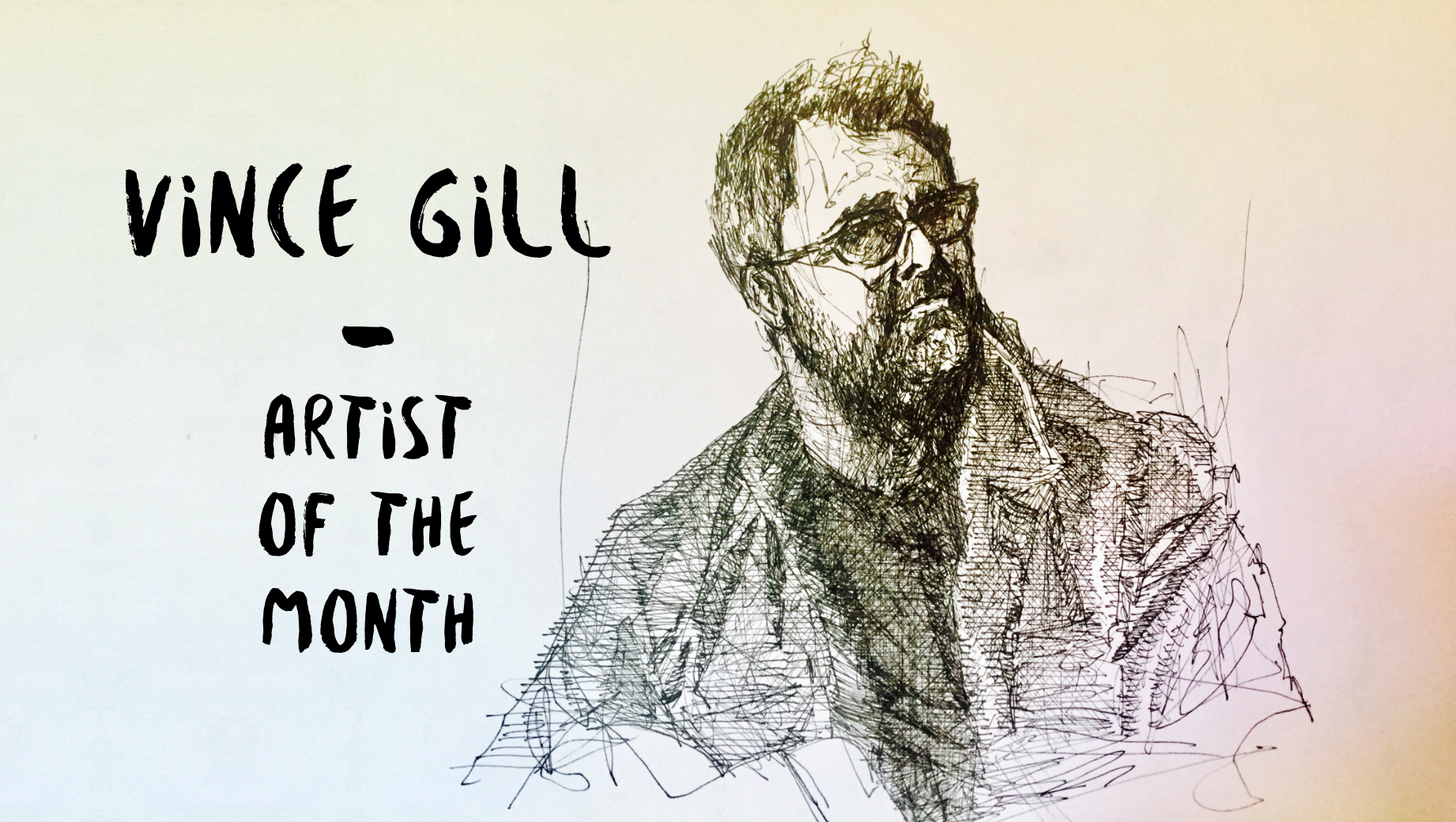
Vince Gill Lets New Songs Stand Out on ‘Okie’ (Part 1 of 2)

Regarded as one of the good guys in country music, Vince Gill has hosted countless Grand Ole Opry segments and awards shows, and he’s just as welcoming off stage, too. He generously invited the Bluegrass Situation to his Nashville home for a visit about his new album, Okie, as well as his roots in bluegrass music.

In the first part of our Artist of the Month interview, the Country Music Hall of Fame member pulls back the curtain on some of the key tracks on Okie, and explains how artists like Guy Clark, Amy Grant, and Willie Nelson influenced the album.

BGS: I’ve heard you describe this as a songwriter record, but you’ve written a lot of your hits. What do you mean when you describe this as a songwriter record?

VG: Well, I don’t think the intention of any of these songs is thinking they’ll be hits. I think that in the way of production and the instrumentation, the intent is really to never get in the way of the song. I don’t play any electric guitar on this record. I only played one or two solos on the entire record.

The rest of it is just kind of moody, ethereal, all of us playing together, and nobody stepping out so much in a big way of, “Now it’s your break, it’s time for you to play the big ripping solo.” There’s one instance of that. I think the point of it was, hopefully, that nothing ever got in the way of the song.

And there’s not big choruses with lots of harmonies. I liked Red Headed Stranger by Willie Nelson, and how sparse it was and simple. That’s what I wanted, something with a lot of space.

Did you know that going into it or did that reveal itself?

Yeah, that was the intent. I had this collection of songs. I said this would make a pretty neat, demure kind of record of not trying too hard, I guess. I mean, not singing hard and a lot of licks. Once again, there’s only one song on this record where I really cut loose and sang, and that was “When My Amy Prays.” The rest of it is just telling the story.

I even did a recitation on “Nothing Like a Guy Clark Song,” which scared the crap out of me. I don’t like the sound of my speaking voice very much. I like my singing voice just fine. But I’d only done one other kind of recitation recording in my life and that was tribute to Guy with his song, “The Randall Knife.” It always sounded bizarre to me to hear myself just talking, talking blues kinda stuff.

How did you choose the guitar for that song? Do you have a certain guitar you use?

Yeah, I think I used my guitar or Sparky’s — a friend of mine, Harry Sparks. He’s got a great old 1942 D-45. He lets me keep it here and play it a lot. It’s a long history of a story of our friendship. It’s probably the holy grail of all acoustic guitars and there’s only a few of them made and they sell for many, many, many dollars. And he had it.

I was living in Kentucky at the same time, when I was 18, and we were big buddies. Couple of years later I moved out to California and he called me up when I got out there and said, “Hey, I got to sell my D-45. I’m in trouble.” I bought it from him and told him I’d keep it for him. If he ever wanted it back, I’d sell it back to him for what I paid for it. At the time he finally called, it was worth about 10 times what I paid for it. And I said, “Yeah, I’ll sell it back to you for what I said I would.”

It’s a great story to remind yourself of how important friendship is, and your word. A few years ago we were doing a record here at my house and he brought his D-45 and we played it on a bunch in the record. He was leaving, and he had the case, and he looked at me and just handed to me. He said, “Here. You need to keep this for a while.” So it’s been a neat piece of the puzzle of our friendship.

It sounds beautiful. too, on top of that.

Amazing. It’s one of the best-sounding guitars I’ve ever heard in my life.

You write about race relations on this record a couple of times, particularly on “The Price of Regret.” I was curious if something specific inspired you to explore that topic.

It starts out as basically owning up to, we all have to have some regrets in life, and what they are can be any number of things. But what I’ve always been surprised by is how our eyes fail us. Sometimes when we see something and we look at it, we judge it. It’s the first thing we do is prejudge. Whether someone’s heavy, whether someone’s slovenly-looking, or poor or rich or white or black, and we just have this thing come to us to tell us what we think it is.

If we would honestly receive someone, not seeing them, I think you’d be much more honest in acceptance of one another. That’s what it says in that song: “You’re black and I’m white. We’re blinded by sight. Close your eyes and tell me the color of my skin.” And you couldn’t. Which would be a good thing for us.

At your Ryman show, you spoke about watching the Ken Burns documentary about country music, and you mentioned the fact that AP Carter’s sidekick was a black man, and Hank Williams learned to play guitar from a black man.

Yeah, and DeFord Bailey was one of the first great stars of the Opry and Jimmie Rodgers learned all those songs from black fieldworkers. It goes on and on and it never stops. Ray Charles taught us how much soul our music had. Charley Pride showed you how country somebody could be that was African American. It was powerful to see that we never bought into any of that mess, to some degree. And it is a mess. It’s embarrassing how we’ve handled all that.

The song I keep coming back to on here is “What Choice Will You Make.” I feel like I’m the best friend in the car, hearing that conversation. That first line puts you in the song right away, or at least it did for me.

My favorite part of that song is that it’s a song without judgment, and it happens every day. Young kids wind up, somebody gets pregnant and, “Hey, I’m 16. Look, I wasn’t prepared for this.” And all it says is, “What choice will you make? Whose heart will you break?” It doesn’t say what you should or shouldn’t do. To me, that’s a kinder way to go about tackling the subject of this matter.

The woman I wrote it with, Leslie Satcher, we’ve got a long history of writing really neat songs together. She’s tremendously talented. It was important to me that it not get to that place where we were saying what should or shouldn’t happen. That’s nobody’s place. It’s sort of like “Ode to Billie Joe.” You don’t really know what happens. It starts in that moment of sitting on the edge of town with such a worried mind, and it ends with still sitting there on the edge of town, not sure what to do.

On this record, I hear references to Amy [his wife, Amy Grant] a couple of times, on “Honest Man” and “When My Amy Prays,” of course.  What’s that experience like, playing her a song you’ve written about her?

It’s a running gag. You know you live in Nashville when you write your girl a love song and she tells you the third verse could use a little work. [Laughs] It’s really great to have a friend that does tell you what’s right and what’s not and what’s good and what isn’t. It’s easy to be inspired by her because she’s so gracious with people. She’s the most welcoming person I’ve ever seen in my whole life. Hands down. Nobody I ever seen better at that than her.

And non-judgment. No harsh words about anybody and it’s just beautiful in the way she receives. It’s kind of easy to write songs about her. If they’re songs that are faith-based, everybody assumes that I’m as a big of a church guy as she is. And the truth is, I wasn’t that much of a church kid. So I have to go to her every now and then and say, “Is this kind of close to what happens?” [Laughs] She’ll say, “You’re right on track. You’re OK.”

Read the second half of our Artist of the Month interview with Vince Gill.


Illustration: Zachary Johnson

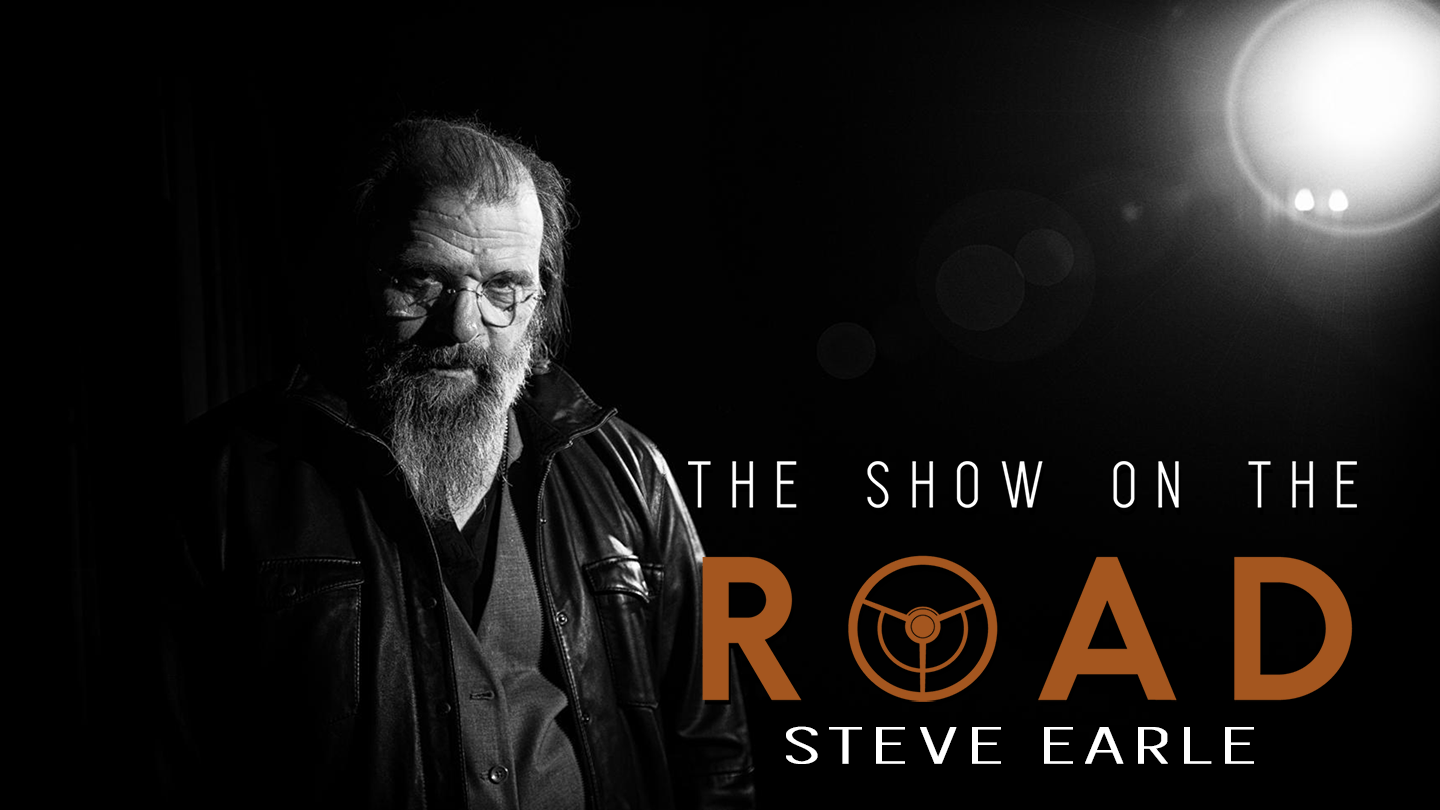
The Show On The Road – Steve Earle

This week, Z. speaks with Steve Earle. The three-time Grammy Award-winning roots ‘n’ roll poet and revered performer has been releasing fearless, roguish records for nearly four decades, accidentally becoming one of the founding fathers of the thriving Americana movement along the way.

LISTEN: APPLE PODCASTS • MP3


Growing up a baseball-crazy son of an air traffic controller in San Antonio, Steve Earle has never quite checked any cliché box or stayed in any lane on the way to his almost mainstream success.

Host Z. Lupetin caught up with Steve on his tour bus before hitting the stage at ROMP Fest in Kentucky this past June. Steve has been on the road in support of his recent release, GUY — a tribute to one of his songwriting colleagues and heroes, the late Guy Clark, out now on New West Records.

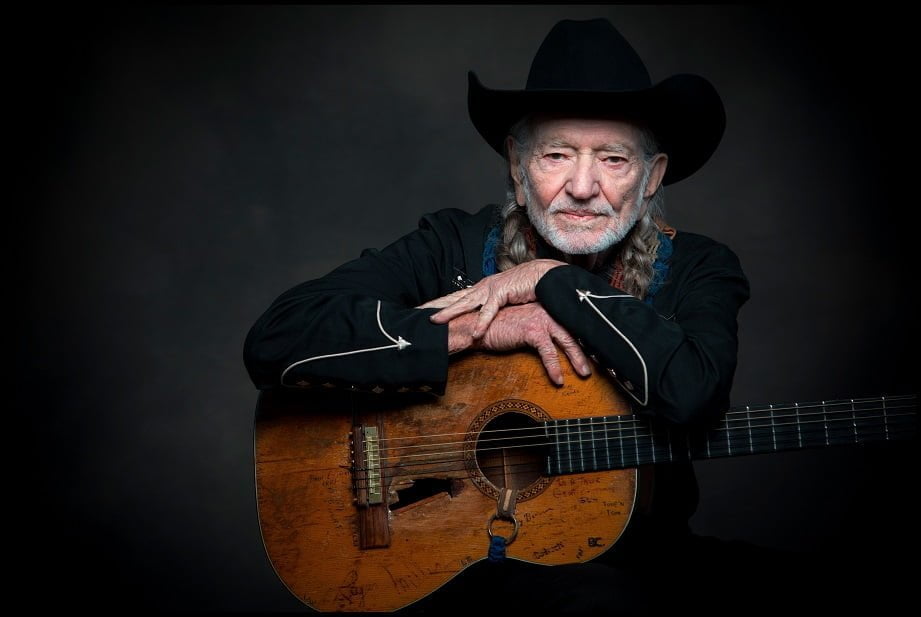
LISTEN: Willie Nelson, “My Favorite Picture of You”

As one of country music’s greatest interpreters, Willie Nelson has put his indelible stamp on Guy Clark’s late-career masterpiece, “My Favorite Picture of You.” It is a stunning centerpiece of Nelson’s latest project, Ride Me Back Home.

“What I remember most about recording the song was the reverence and respect with which all the musicians showed the lyrics and melody as we were recording it,” says producer Buddy Cannon. “I chose to present this song to Willie because, from the moment Guy Clark sang it for me at his home one morning a few years ago, I have not been able to get the song and the photograph the song was written about out of my head. As Guy was getting ready to sing the song for me he reached behind him and took the photograph of his wife off the wall and told me the story of where the song came from. The song is timeless, just like Willie Nelson is timeless. A perfect marriage of singer and song.”

In the exclusive video below, Nelson shares his own thoughts on Guy Clark and “My Favorite Picture of You.”


Photo credit: Pamela Springsteen
Video courtesy of Sony Music Entertainment

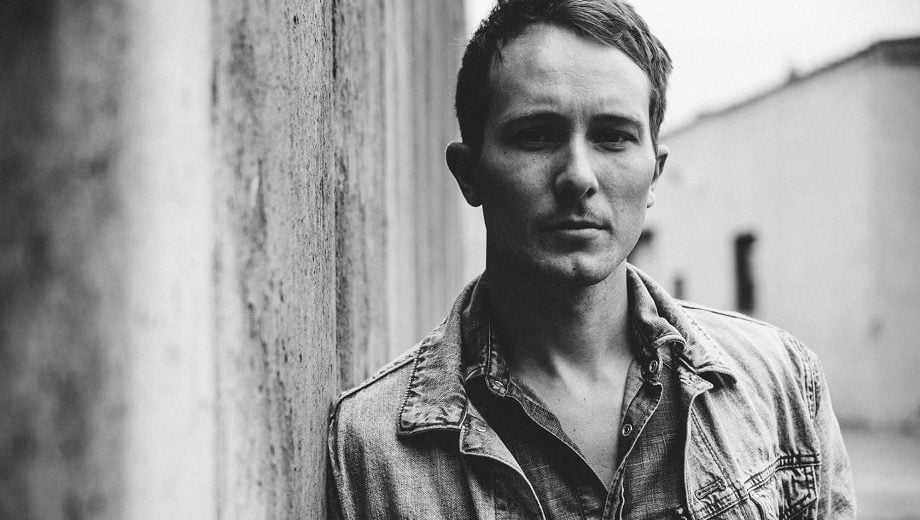
BGS 5+5: Taylor Alexander

Artist: Taylor Alexander
Album: Good Old Fashioned Pain
Hometown: Nashville, Tennessee

Which artist has influenced you the most … and how?

This may be a little left field, but when I discovered Chris Carrabba’s music with Dashboard Confessional as an early teen it totally changed the way I looked at music. It hadn’t occurred to me up to that point what one guy and a guitar could do. It blew my mind to see a guy with an acoustic guitar impact people so greatly with his lyrics like that. His music led me directly to the greats like Bob Dylan, Guy Clark, and Townes Van Zandt, so his influence can’t be denied.

What other art forms — literature, film, dance, painting, etc — inform your music?

Reading has always informed my writing. I don’t necessarily write a song based on a book or a character that I’m reading at the time, but I often find that just the act of reading gets my writing muscles warmed up and ready to work.

Martial arts has “art” right there in the name, so I would be remiss not to mention the impact Brazilian Jiu Jitsu has had on my writing and my life. Jiu Jitsu requires a similar intentional, focused effort that writing does, and forces you to learn patience and perseverance to push through when you feel like you can’t. I try to apply that same grit to my writing practice, forcing myself to push through a block and keep working on a song until I think it’s done, and not settling for less.

What was the first moment that you knew you wanted to be a musician?

When I was in 2nd grade I performed a really simple guitar arrangement of “Ode To Joy” for a school talent show. I was really nervous because I’d never played in front of people before, but I’ll never forget how invigorated I felt after walking off stage. I definitely caught the bug at that moment.

Since food and music go so well together, what is your dream pairing of a meal and a musician?

Guy Clark had the best references to food in his songs, from “Homegrown Tomatoes” to “Texas Cookin’,” so I immediately think of him. Some authentic Texas BBQ, a couple cold beers and Guy Clark playing would be about as good as it gets.

How often do you hide behind a character in a song or use “you” when it’s actually “me”?

I realized recently that I do this quite a bit. I’ve been joking on stage about how this album is really just me talking to myself for over half an hour, and I’m not sure that I realized that while writing the songs. I don’t really write about fictional characters — when it comes down to it, I write songs to speak to myself as much as I write to speak to an audience.


Photo credit: Joshua Black Wilkins

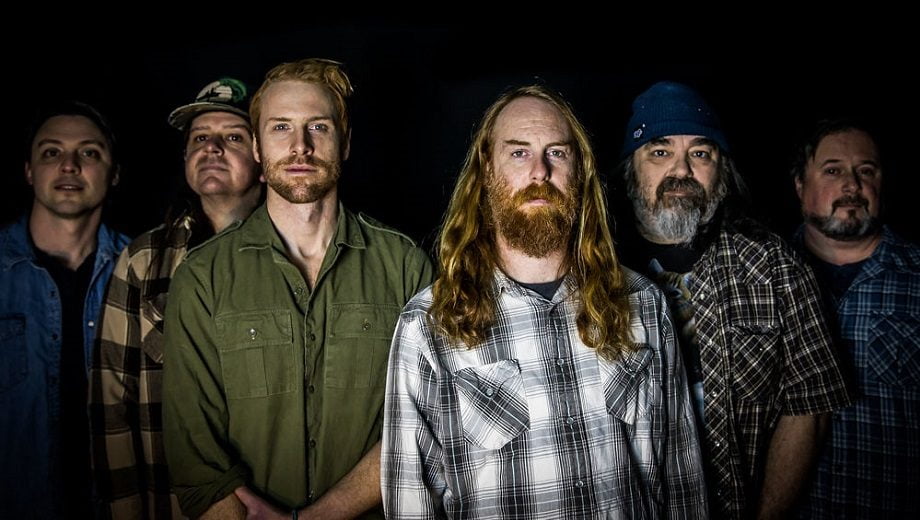
MIXTAPE: The Mallett Brothers Band’s Favorite Artists Live

We have just released Live In Portland, Maine and thought it would be fun to put a playlist together of some live recordings of our favorite artists. Live is where it’s at! — Andrew Martelle of The Mallett Brothers Band

JJ Cale – “River Boat Song”

JJ Cale is a favorite late-night cruising soundtrack for TMBB. If we have a late-night drive to the next gig, there’s a fairly good chance JJ Cale’s cool laid back vibe is carrying us down the road.

Jerry Jeff Walker – “Takin’ It As It Comes”

This really should be the anthem of all traveling musicians. On the road whether we’re playing the Continental Club in Austin, Texas, or Brooklyn Bowl in Brooklyn, New York, or Revolution Hall in Troy, New York, we’re all just takin’ it as it comes!

Todd Snider – “Play a Train Song”

Who doesn’t like a good ole train song! Todd Snider is certainly one of the best, his ability to tell a story through his songs is second to none. And, if you haven’t seen him live, you’re really missing out…

Jason Isbell – “Cover Me Up”

Jason Isbell is one of those artists that can cut to your soul. This recording is from the Ryman last year. Whether his time with the Drive-By Truckers or his solo stuff, he can sure write one hell of a song and put on the live show to back it up.

David Mallett – “Hard Light”

Will and Luke’s father David Mallett is one of the greatest songwriters of the last fifty years. This recording is from a live record he did years and years ago. Do yourselves a favor and dig in and see how it’s done!

Bruce Springsteen – “Born in the USA”

This recording is from Springsteen on Broadway. He’s the boss. This rules. There isn’t much more to say.

Dierks Bentley and The Travelin’ McCourys – “From the Bottle to the Bottom”

Dierks and the TMs playing one of Kris Kristofferson’s classic songs. The state of modern country music has been shaped by artists like Dierks Bentley being willing to go back to his roots and put out music that is not only mainstream country but also traditional bluegrass. And the Travelin’ McCourys are just a force, whether it’s playing gigs with their father Del or playing sets of Grateful Dead music.

The War On Drugs – “Holding On”

The War On Drugs gets plenty of airplay in the van and has helped us crisscross the country getting from gig to gig. Their sound is so unique and has a way of drawing you in to that emotional place they so often go.

Waylon Jennings – “I’m a Ramblin’ Man”

Waylon was one of the true original outlaws. He did it his way. He paved the way for so many great artists across the country to break from tradition.

Old & In The Way – “Panama Red”

Our fiddle player wouldn’t be playing fiddle if it wasn’t for this recording. Vassar Clements has a way of bridging traditional and non-traditional fiddling. Mixed with Jerry Garcia’s banjo playing and the powers of David Grisman and Peter Rowan, if this record can’t get you hooked on bluegrass than we’re not sure what can!

Guy Clark – “Stuff That Works”

Guy Clark is on of our favorite songwriting troubadours. He’s another one that gets a lot of airtime in the van. Dig in to his catalog. You’ll be a better person because of it.

Drive-By Truckers – “18 Wheels Of Love”

These guys are a constant point of inspiration for the band. They do it their way, which is usually folk with a healthy dose of rock ‘n’ roll. This is something TMBB certainly prescribes to. DBT doesn’t necessarily fit a mold, but hot damn if it doesn’t grab you by the heart with a shot of whiskey and some loud electric guitars.


Photo credit: Ray Macgregor Photography

Six of the Best: Songs About Gunslingers

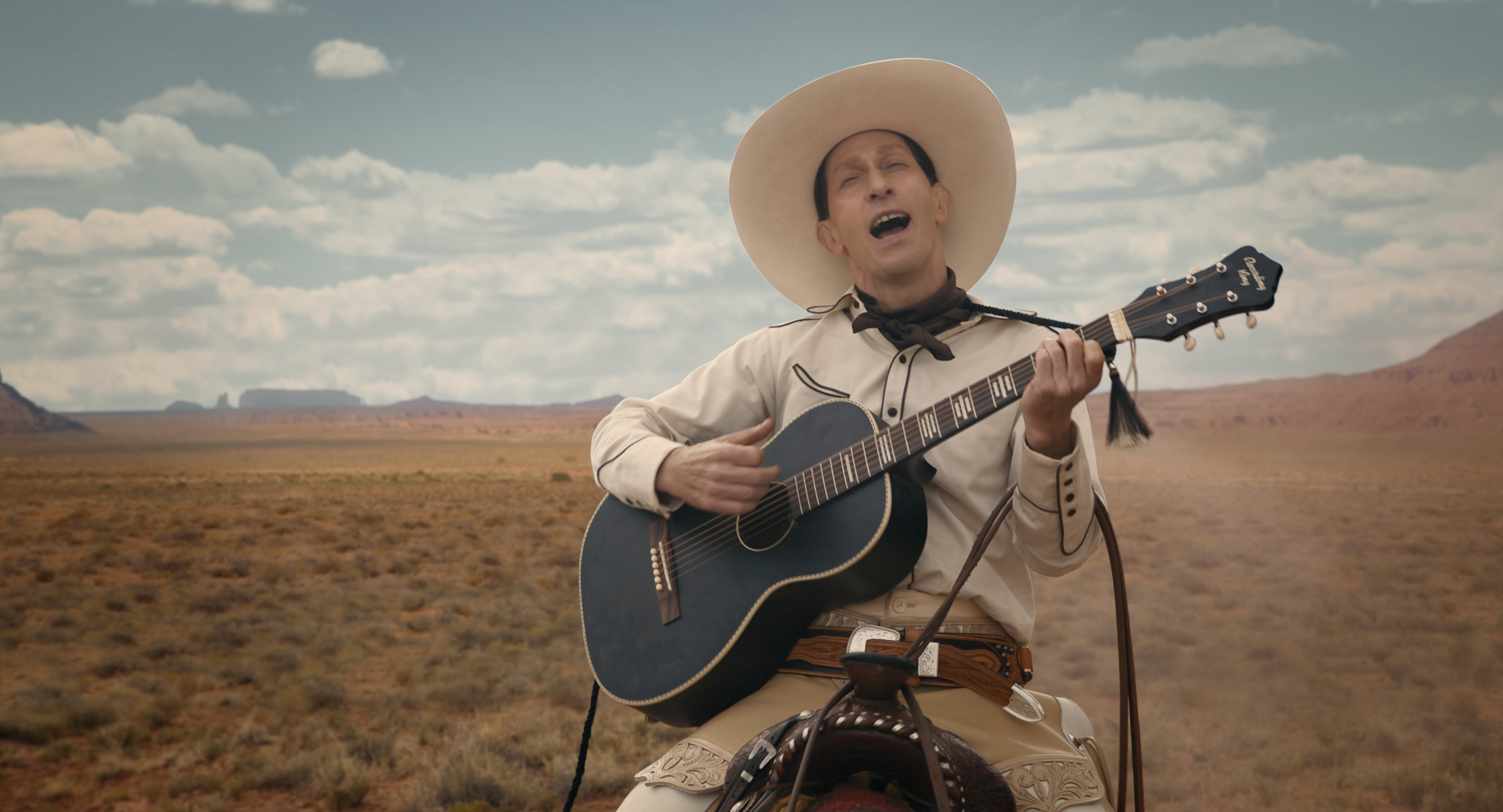
Like movies? Like yodeling? Wow, is this a big week for you. And, as it happens, for Gillian Welch and Dave Rawlings, who will be mixing it with Lady Gaga and Mary Poppins on the Oscars red carpet on Monday as Best Song nominees. If you haven’t yet seen The Ballad of Buster Scruggs, the Coen Brothers’ latest movie, then believe us that it’s worth the Netflix subscription, if only for the sight of Tim Blake Nelson singing “yippie-kay-yey” while floating through the sky with a celestial harp. Maybe it’s the fact that we’ve been bingeing on the Sergio Leone/Clint Eastwood Man with No Name trilogy this week (God bless you, Ennio Morricone), but it’s about time for a list of great songs about gunslingers. (Please note: we don’t think that shooting people is cool, or a viable alternative to an impartial judiciary.)

“Big Iron” – Marty Robbins

Robbins’s iconic 1959 album, Gunfighter Ballads and Trail Songs, is packed with sharpshooters and outlaws – from Billy the Kid, to Utah Carol, to the nameless man about to be hanged for killing Flo and her beau. Sure, it’s most famous for Robbins’s biggest hit (and Grammy winner) “El Paso.” But if you’re looking for the classic quick-draw at high-noon (or in this case, twenty past eleven), you won’t find better than the opening track, “Big Iron.” Written by Robbins himself, it’s a classic tale of good vs evil as a handsome stranger (and Arizona ranger) rides into town to bring down murderous outlaw Texas Red. If those backing harmonies – especially the incredible bass drop – don’t give you goosebumps, check your pulse. You may be technically dead.

“Gunslinger’s Glory” – The Dead South

If there’s one thing Canada’s premier punkgrassers love to write, it’s songs about Westerns. Maybe it’s because lead singer Nate Hilts’s uncle, back home in Saskatchewan, was (as he puts it) “a big ol’ cowboy”. Either way, their albums are littered with shootouts and bodies, and their high-energy, high-drama approach to performance lends itself well to the subject. This is one of their best, tackling the age-old problem of being a famed gunfighter: that everyone else wants to bring you down. Tell us about it, punks.

“The Last Gunfighter Ballad” – Guy Clark

Johnny Cash’s version – the titular track from his 1977 album – is better known than Guy Clark’s original, recorded a year earlier. But Cash’s spoken-word rendition, given with his trademark rhythmic trot, isn’t perhaps as melodious, or as affecting, as Clark’s. A simple guitar line underlies the story of an old man drinking at a bar, recalling his former life of shoot-outs in dusty streets and “the smell of the black powder smoke”, and the twist in the final chorus is a reminder that modern living isn’t without its own dangers. That’s Waylon Jennings on the harmonies in the chorus, by the way.

“When A Cowboy Trades His Spurs For Wings” – Gillian Welch and David Rawlings

Probably the best thing about the Coen Brothers’ portmanteau of short stories from the Wild West is its opening, with Tim Blake Nelson clip clopping into frame on his white horse, strumming a black guitar and singing Marty Robbins’s “Cool Water.” The second best comes seven minutes later, when Willie Watson shows up as his nemesis. The duet that Welch and Rawlings penned for the pair may be a parody of a cowboy song, but the music’s so en pointe and beautifully sung that the humour takes second place to the artistry. Also, Welch and Rawlings invented a new word – “bindling” – for the song, which has got to be worth the Oscar nom.

“Gunslinging Rambler” – Gangstagrass

There’s a fair amount of reference to guns and violence in the songs of the world’s first (and only) hip-hop bluegrass fusion band. Despite the title, and the assertion of the protagonist that “you gonna wind up another notch on my gun belt”, you realise as the lyrics progress that this one’s not actually about a gunfight, but its modern-day equivalent, the rap battle. R-SON recorded this track for their 2012 album, Rappalachia, and it contains arguably the most devastating lines on the album. “I’m not killing these guys, please let me explain/But when I’m done, there’ll be very little left of their brains.”

“Two Gunslingers” – Tom Petty and the Heartbreakers

What’s the best kind of story about gun violence? One where everyone agrees to give it up. Released in 1991 on Into The Great Wide Open, it’s a glorious moment of self-revelation that subverts both the genre and our expectations. As one of the gunslingers so eloquently puts it: what are we fighting for?


Photo courtesy of Netflix

MIXTAPE: Brent Cobb’s Songs from the Road

Brent Cobb may have the coolest summer job ever – opening shows across the U.S. for Chris Stapleton and Marty Stuart. During some downtime in Oregon, the Georgia native gave the Bluegrass Situation the lowdown on 11 of his favorite songs.

“Lord, I Hope This Day Is Good” – Don Williams

I woke up today singing Don Williams’ “Lord I Hope This Day is Good.” Because it just felt that way, you know? It’s just a beautiful day, I kind of want to smell the smell of hickory smoke rollin’ around in the wind. That’s also what Don Williams makes me think of, you know? We got a little somethin’ on the smoker and a little Don Williams playin’ – it’s hard to beat that.

“New South” – Hank Williams Jr.

That kind of leads into the next one, it’s sort of the same path, but Hank Jr., “New South.” It’s on his album, The New South, his first record after he fell off the mountain. Waylon Jennings, Toy Caldwell, and Marshall Tucker — they helped him produce that record. The whole album is so good, you want to sit around a campfire sound, you know? That particular song, “New South,” it also makes me want to put something on the smoker on a beautiful sunny day, pick a guitar, and maybe throw some horseshoes.

“I Wonder Do You Think of Me” – Keith Whitley

After that, I got Keith Whitley, “I Wonder Do You Think of Me.” The other night, I was sittin’ up, a lot of times when I’m on the road it’s the only time that I have to go back to my regularly scheduled writing process program. My daughter’s not out here so I don’t have to wake up at 6 o’clock every morning like I do when I’m home, so a lot of times I’ll sit up and play music and I sat up the other night till about three in the morning listening to songs. This particular one – I had forgotten about this song, I rediscovered it and listened to it about 25 times in a row the other night. It’s just so damn well-written and the chords in that song are amazing. It seems like such a simple country song, but I can’t play it. I try to pick it out.

“Leaving Trunk” – Taj Mahal

Something we listen to every night before we go on stage is Taj Mahal, “Leaving Trunk.” It’s just got that dirty south, down south, funky, country feel that I love. You can tell that the Allman Brothers were borrowing a lot from Taj. And well obviously “Statesboro Blues,” that song particularly, it’s just got that … I don’t know, it feels funky. It also would be great on a day like today, just kind of walkin’ around and have that song playin’ in your mind and be-bopping to your own beat.

“Coming Home” – Delaney & Bonnie

That makes me start thinking of other songs you could listen to, to get in the zone. So I got Delaney & Bonnie’s “Coming Home.” That’s another one we listen to before we play. I know you probably know who that is, but for those who don’t, they would have Clapton and George Harrison and folks play on their records. They influenced a lot of their peers of that time, and Dave [Cobb, Brent’s cousin] actually turned me on to that track. I’d never heard it before. Yeah, just kind of that funky country, man, gets ya goin’.

“Ohoopee River Bottomland” – Larry Jon Wilson

Which leads us into Larry Jon Wilson. Larry Jon Wilson was from Swainsboro, Georgia. He did a couple of records in the ‘70s that were super funky country. “Ohoopee River Bottomland” is the song I’m thinkin’ of. It’s also just that pre-show jam, you know? It kind of gets you down the road a little bit, and the way Larry – especially that song – would use Southern-isms or just rural-isms. He’d talk about, “this low rent land has turned to sand and I’ve done stood ’bout all I can I’m leaving…I’m leaving,” and “I got a wore-out mule and a no ‘count tractor quit now…and this is it now.” I just love the way he talks. You really capture his South Georgia background, but then he’s able to put it to some funky music.

“Play Something We Know” – Adam Hood

Alright so after Delaney and Bonnie and Larry Jon Wilson, that made me think of my buddy Adam Hood, because those are two songs that a lot of people may not know. It made me think of my friend Adam, I do a lot of writing with him. We wrote a lot of songs with this newest album of mine. He has a song called “Play Something We Know.” It’s all about hearing “play something we can sing to and play us something we know.” It’s about that guy or girl in the bar that’s slightly belligerent at your show, and they’re like “play me some ‘Brown Eyed Girl.’” You should check it out, it’s hilarious. Adam is just a great all-around artist.

“Forever Lasts Forever” – Nikki Lane

After thinking of Adam, it made me think of some other peers that I’m into, that I love, that have been good to me. Nikki Lane took us out at the top of last year and I think, in my humble opinion, she’s about the most authentic of our time. She has a song called “Forever Lasts Forever.” If you haven’t heard it, you should really check it out. It’s inspiring to listen to anything she writes, but that song is so wonderfully written. Just a wonderful breakup song, you know? Everybody loves a good breakup song.

“Hole in the Sky” – The Steel Woods

That brought me also to some other peers and also pre-show jams. The Steel Woods did a cover of Sabbath’s “Hole in the Sky.” I don’t know if you’re familiar with them, but son of a gun… It’ll get ya goin’, man. Their whole record is great. They’re recording a new record right now. That “Hole in the Sky” song, I remember the first time I heard it, I had no idea it was an old Sabbath song. It blew my hair back, it’s incredible.

“Anyhow, I Love You” – Guy Clark

Now this is gonna take us to after-show jams….the slow jams. Made me think of Guy Clark, “Anyhow, I Love You.” Man, talk about a damn well-written song. It took me a long time to get into Guy, not because I wasn’t into him…it’s just some things you gotta live enough to really appreciate it. That was one of those songs, man, “Anyhow, I Love You.” I could listen to that one, same as “I Wonder Do You Think of Me,” over and over and over and over again.

“Open the Door” – Otis Redding

That made me think of Georgia because Guy Clark is so good at writing about Texas. It made me think of an old Georgia artist, Otis Redding. Everybody knows him. “Open the Door” by Otis Redding feels like church. It’s like being back at Antioch Baptist Church when the preacher’s talkin’ to you and then he lays it on you.


Photo credit: Don Van Cleave

Capturing the Outlaws: Country Music Hall of Fame Salutes the 1970s

Waylon Jennings and Willie Nelson are familiar to every country fan – and more than a few would consider them the original Outlaws. In a brand new exhibit, Outlaws & Armadillos: Country’s Roaring ’70s, the Country Music Hall of Fame and Museum in Nashville strives to explain how that name stuck. More importantly, it traces the connection between Nashville and Austin to show how these cities shaped country music in the 1970s, considered one of the genre’s most incredible periods of creativity and individuality.

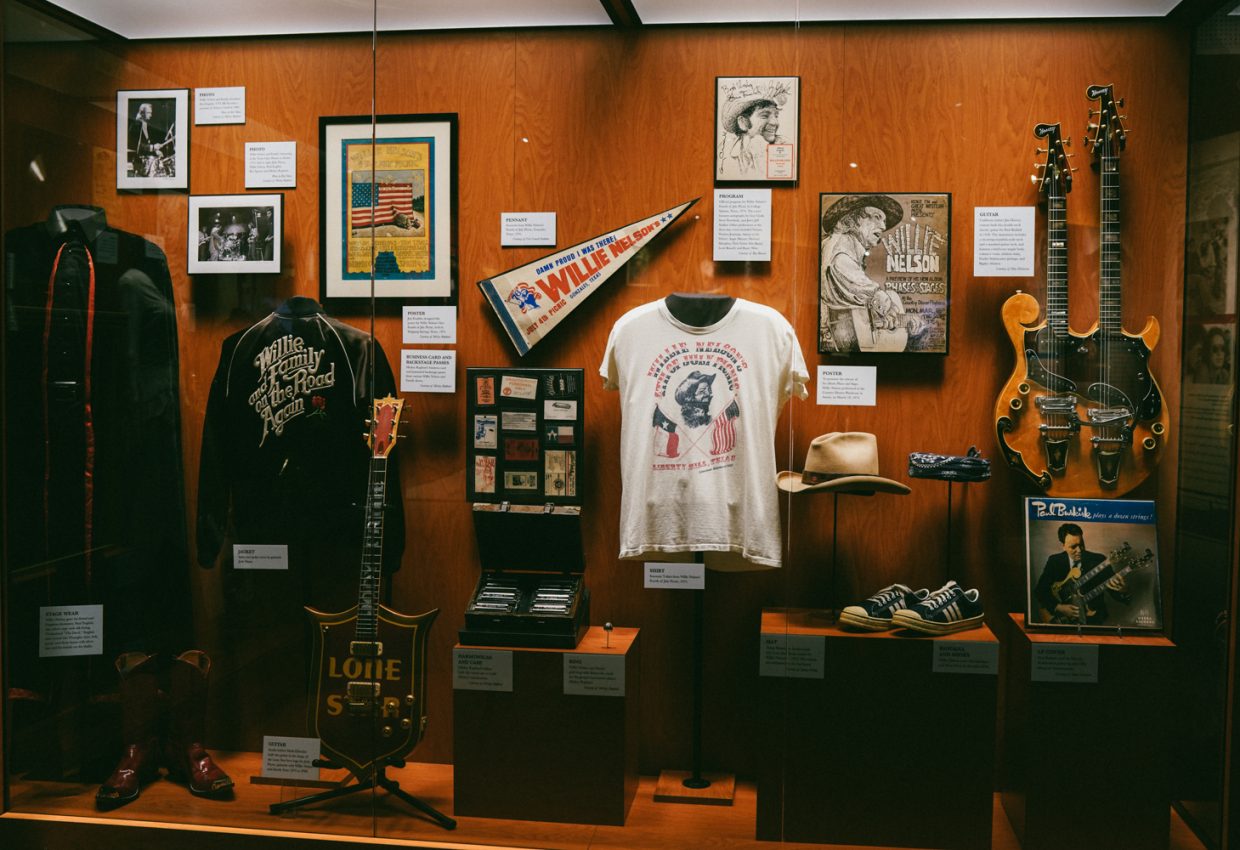
The emergence of Willie Nelson as an iconic Texas musician is central to the exhibit. His blue sneakers and other parts of his casual wardrobe are emblematic of how he stood apart from country entertainers in that era.

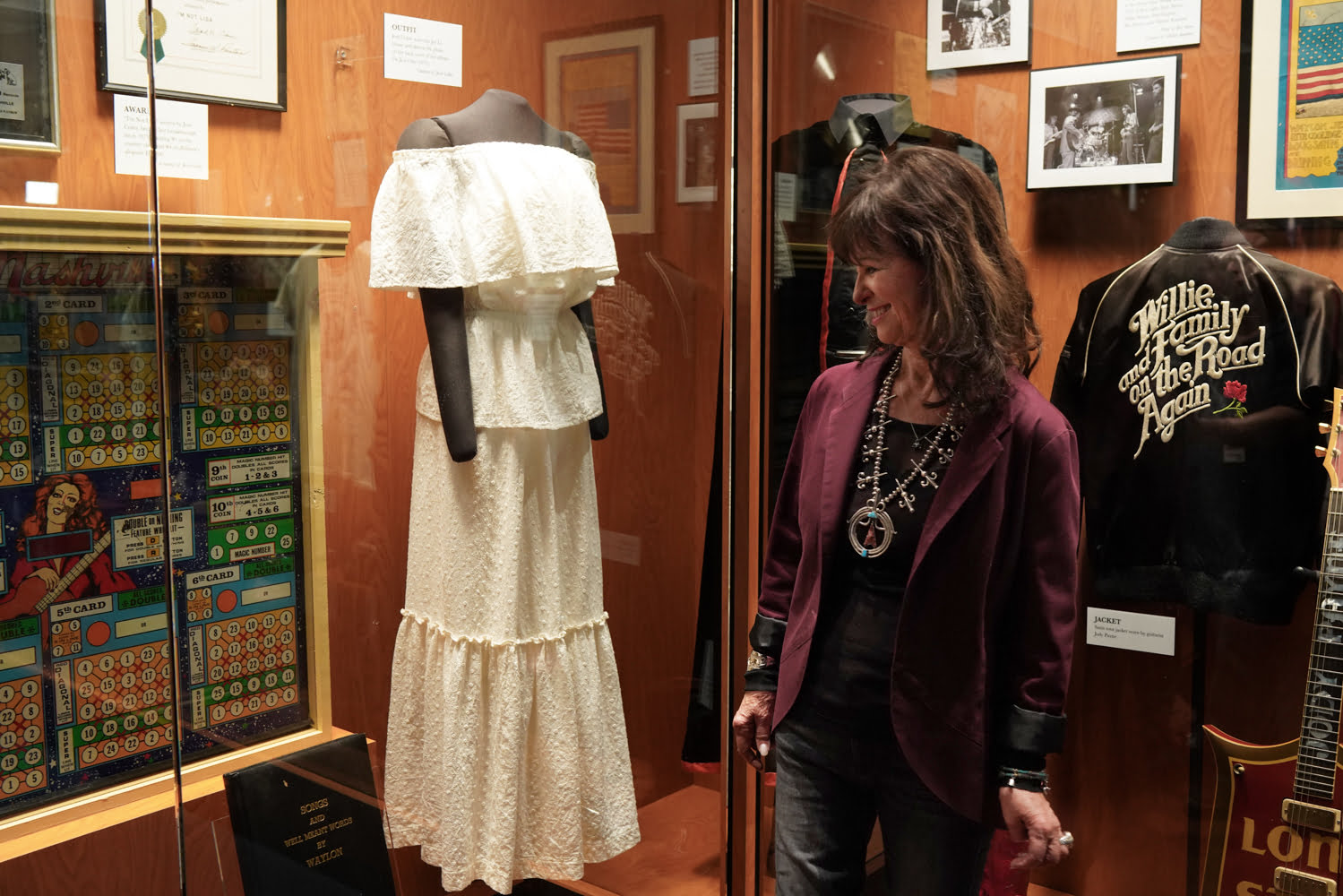
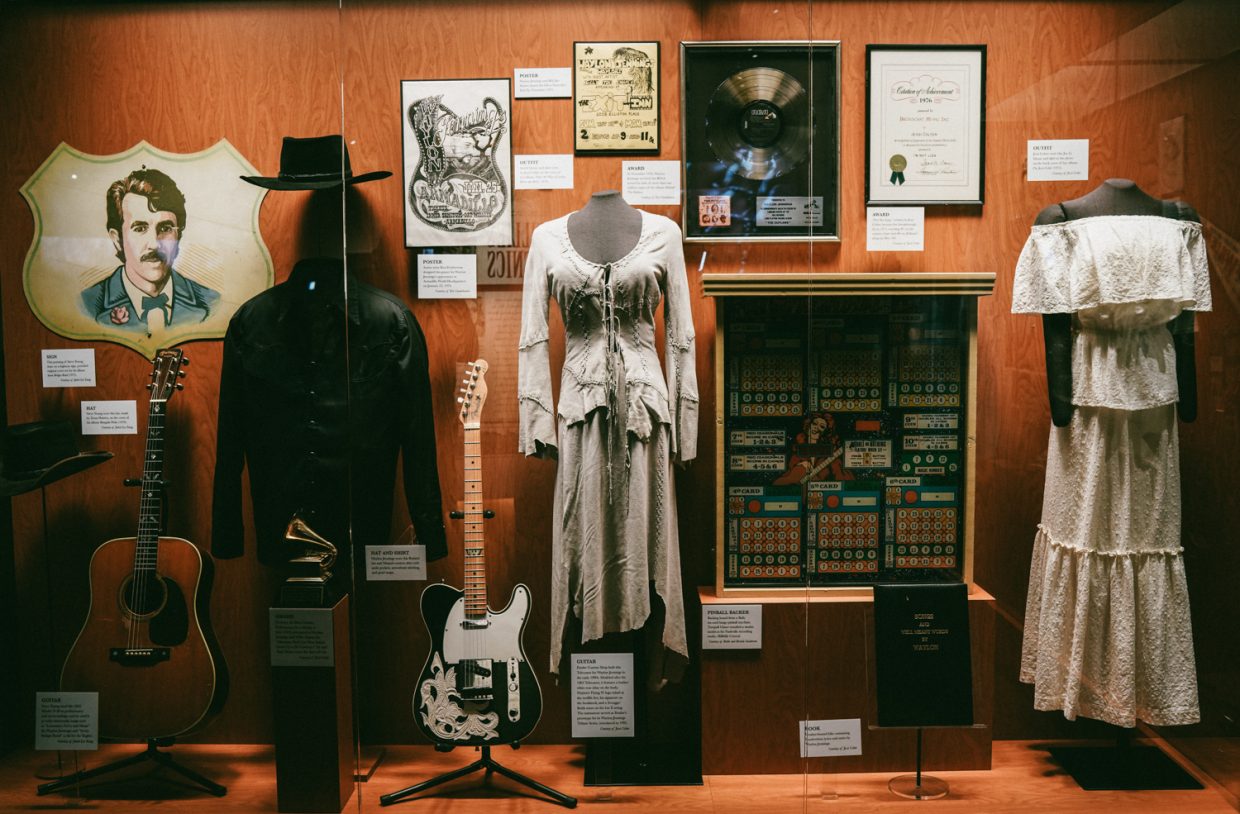
Waylon Jennings and his wife, Jessi Colter (shown above), appeared on the first-ever platinum country album, Wanted! The Outlaws (1976). Guitars, a Grammy Award, and posters from Jennings’ performances in Nashville and Austin are on display.

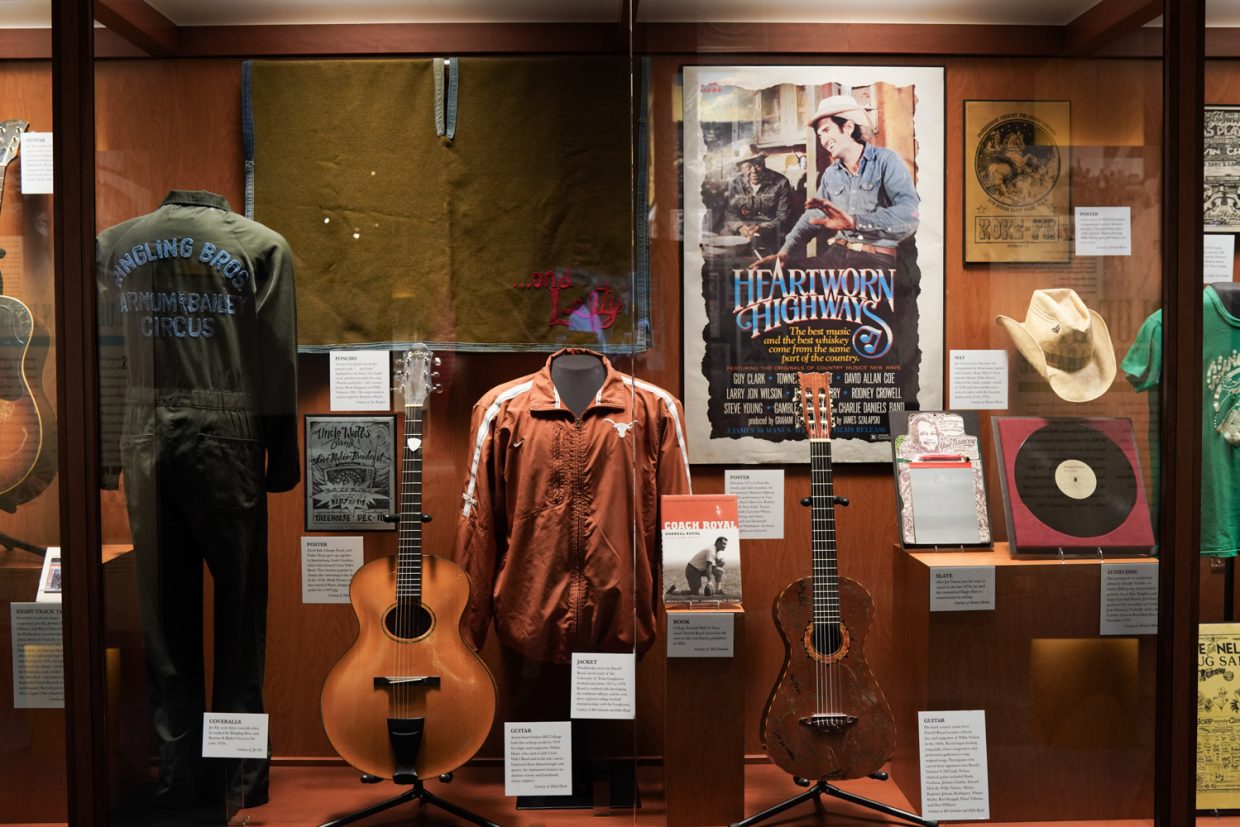
A poster of the film Heartworn Highways is displayed next to a poncho embroidered with “… and Lefty,” which belonged to Townes Van Zandt. Items from Guy Clark, coach Darrell Royal, Alvin Crow, and Uncle Walt’s Band are also featured.

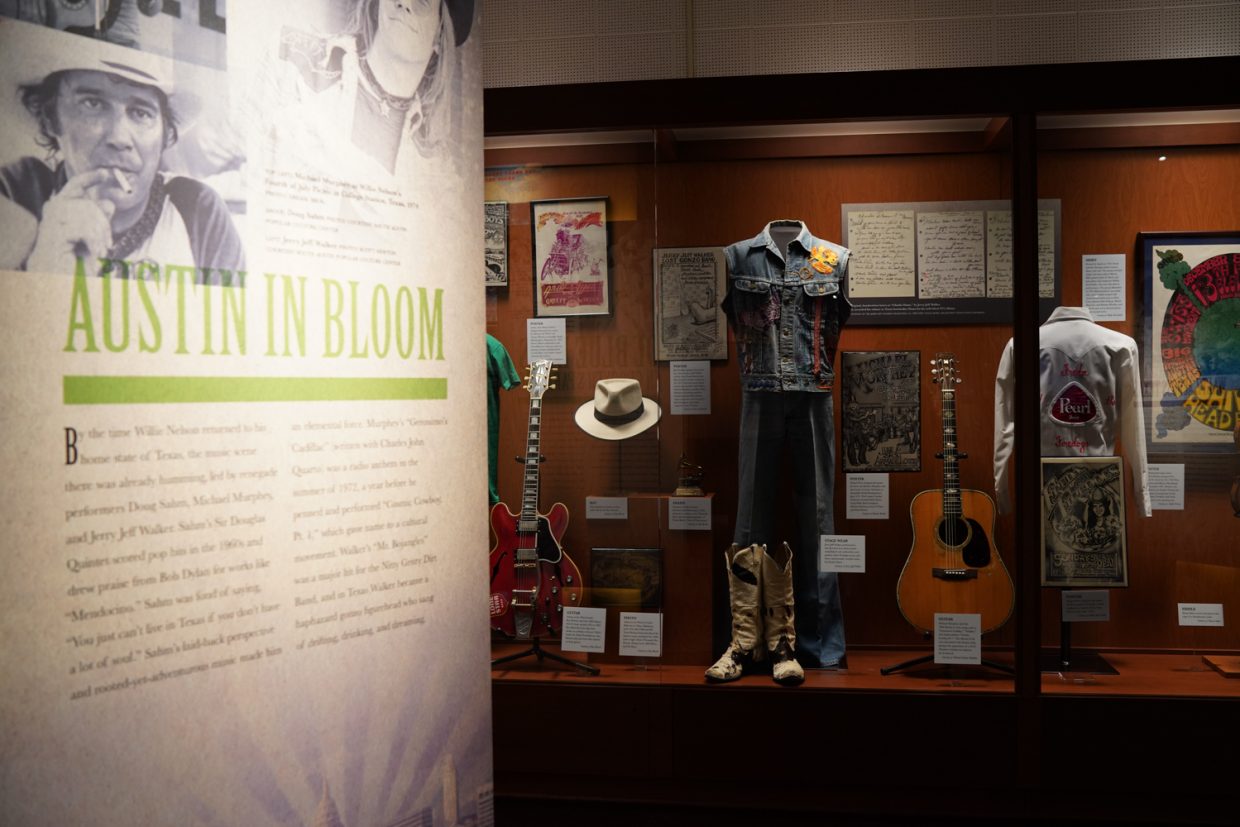
The comprehensive exhibit explains the contributions of Jerry Jeff Walker, Asleep at the Wheel, Michael Murphey, Doug Sahm and Freda & the Firedogs, through rarely-seen memorabilia provided by the artists.

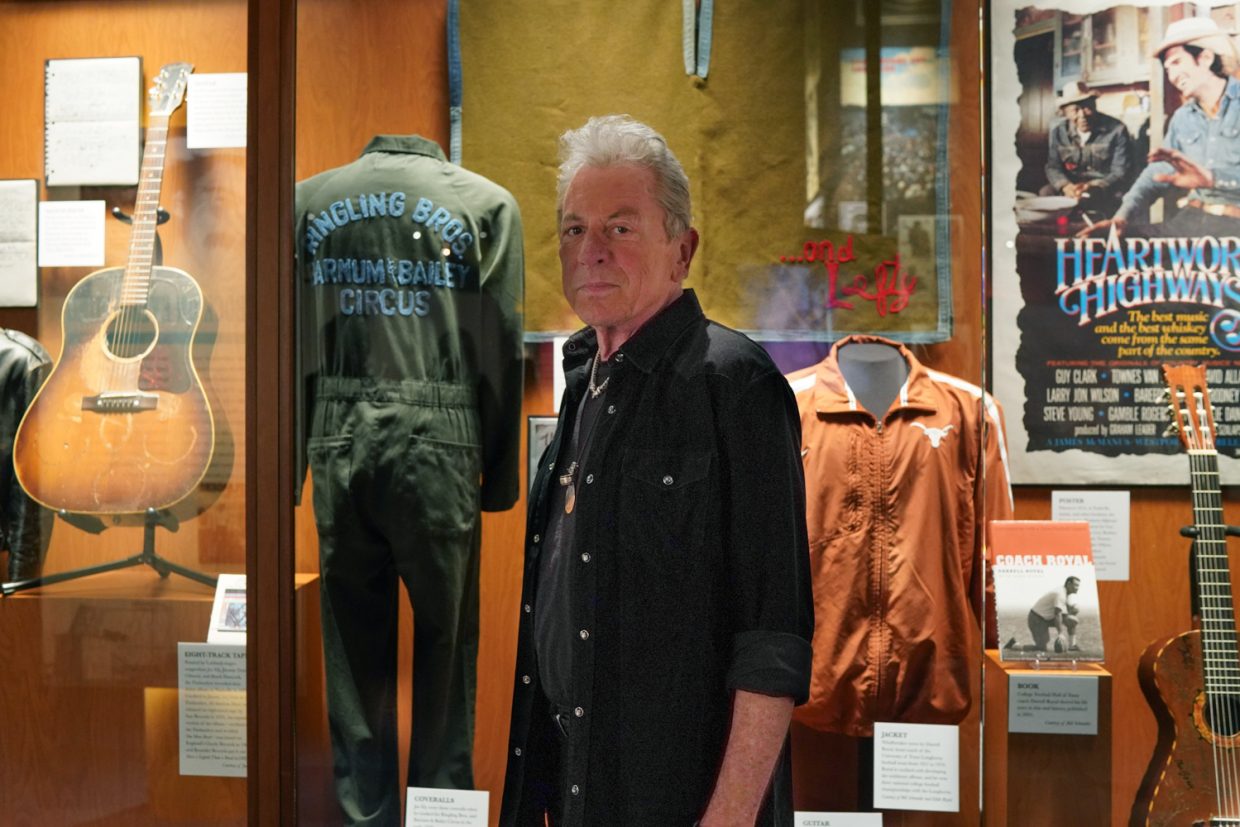
Joe Ely poses next to the uniform he wore while working for the circus. Ely became a force in Texas music as a member of The Flatlanders and through a number of acclaimed solo projects. He also performed on opening night.

Texas natives Tanya Tucker and Billy Joe Shaver catch up at the opening night party. Jennings’ 1973 album, Honky Tonk Heroes, is composed almost entirely of Shaver’s songs. Tucker broke through in 1972 with “Delta Dawn.”


Text by Craig Shelburne

MIXTAPE: Eric Corne’s California Country

California country has deep roots and an enduring influence. It’s given us the Bakersfield Sound, country-rock, cosmic country, cow punk, and much more. I love the more raw/less polished sound and how its artists tend to chart their own course. Nashville was a company town; California was where the mavericks went. I have a strong personal connection to California country, stemming from my work as Dusty Wakeman’s engineer at Mad Dog Studios in Los Angeles. Dusty played bass with Buck Owens, engineered Dwight Yoakam’s seminal albums, and co-produced Lucinda Williams’ first two albums. There’s still a strong core of musicians in L.A. with roots stretching back to these earlier generations, and it’s a thrill and an honor to be writing and producing records with such soulful and beautiful people, many of whom populate the selections below. — Eric Corne

Buck Owens — “Streets of Bakersfield”

Buck Owens is, of course, a pillar of California country and a pioneer of the Bakersfield Sound. An iconic harmony guitar riff provides the instrumental theme, with gorgeous vocal harmonies and pedal steel lifting the choruses. This song really encapsulates what California country represents to me — the desire to be oneself.

Merle Haggard — “Working Man”

This is one of my favorite Merle songs. It’s got a great groove and terrific guitar playing with lyrics that clearly represent the blue-collar ethic he embodied.

Lucinda Williams — “Sweet Ole World”

Lucinda really helped broaden the boundaries of country just by doing her own thing. This song has an angelic vocal melody with beautiful harmony and precise responses from the guitar. Immaculately recorded and co-produced by my mentor Dusty Wakeman.

Dwight Yoakam — “It Only Hurts When I Cry”

Dwight and Pete Anderson were real students of classic country music, especially the Bakersfield Sound, and they were at the center of the cow punk movement, along with X, Lone Justice, and others. This is a great song with witty lyrics, perfect production, and top-notch performances.

Jean Shepard — “If Teardrops Were Silver”

Raised in Bakersfield, Jean Shepard was a pioneer for female country singers and one of its first great stars, following on the heels of Kitty Wells’ breakthrough. She had a really pure voice with a lovely vibrato and a great ability to interpret a song.

Bob Wills — “Bubbles in My Beer”

It could be argued that Bob Wills is the godfather of the Bakersfield Sound. He played there regularly and had a strong influence on both Buck and Merle … something I can really hear in this song.

Sam Morrow — “Skinny Elvis” (Featuring Jaime Wyatt)

I’m really proud to work with these two brilliant, young, California country artists who are getting well-deserved national attention. I wrote this one for Sam’s album, Concrete and Mud. It’s a little reminiscent of the Gram/Emmylou song “Ooh, Las Vegas,” so I thought it’d make a great duet with Jaime. I recruited legendary Gram Parsons/Byrds pedal steel player Jay Dee Maness to play on it, which was quite a thrill, as you can imagine.

Guy Clark — “L.A. Freeway”

Guy Clark wasn’t in L.A. for long, and this song is about leaving, but it’s a beautiful farewell song. The song makes reference to another beloved and iconic figure of California country — “Skinny” Dennis Sanchez who played bass with Clark, and ran in circles with the likes of Townes Van Zandt, Rodney Crowell, and Steve Earle. There’s also a thriving honkytonk in Brooklyn named after him. It’s an incredible performance, very dynamic, with a sympathetic arrangement including Wurlitzer piano, weepy fiddle, moaning harmonica, and gorgeous chorus harmonies.

Jade Jackson — “Motorcycle”

Here’s another great, young country singer coming out of Cali right now. I love this lyric and vocal performance — intimate with a dark, rebellious under current.

Linda Ronstadt — “Silver Threads and Golden Needles”

Her early career country records are really underrated. This is a killer country-rock version of a Dick Reynolds/Jack Rhodes classic song with strong ties to the Flying Burrito Brothers. I think Ronstadt is also important to include here, due to her work with Neil Young, the Eagles, Jackson Browne, and others in the L.A. country scene of the late ’60s and early ’70s.

The Byrds — “Hickory Wind”

No playlist of California country would be complete without a song from the Byrds’ seminal country album Sweetheart of the Rodeo. My first gig in Los Angeles was assisting Dusty Wakeman on the mixes for the Gram Parsons tribute concert at which Keith Richards did a beautiful heartfelt version of this song by his old pal, Gram.

Sam Outlaw — “Jesus Take the Wheel (And Drive Me to a Bar)”

An instant classic by one of the brightest stars of the current generation of California country singers with outstanding production by Ry Cooder and Bo Koster of My Morning Jacket on keys, who also guests on my new record.

The Flying Burrito Brothers — “Hot Burrito #1”

Even though Gram Parsons and Chris Hillman’s importance is already represented here via the Byrds, I wanted to include this achingly beautiful Burrito song, partly because of Gram’s incredible vocal and melody, and partly due to Bernie Leadon and the link he represented as a member of both the Burritos and the Eagles, the latter heavily influenced by the former.

Gene Autry — “Mexicali Rose”

Gene Autry’s singing cowboy films were instrumental in bringing country music to a national audience in the 1940s. I was very fortunate to record Glen Campbell on his version of “Mexicali Rose,” but thought I’d include Autry’s version here.

Crosby, Stills, Nash, & Young — “Helpless”

I think the Laurel Canyon music scene played an important role in California country and Neil Young, in particular — first with Buffalo Springfield, with songs like “Learning to Fly” and “I Am a Child,” and later with his Nashville-recorded classic, Harvest. “Helpless” to me represents the seeds of Harvest.

Eagles — “Tequila Sunrise”

Not much needs to be said about the first two Eagles’ albums and their role in the popularity of country-rock. Not to include them would seem an oversight. This also represents the beginning of the fruitful Glenn Frey/Don Henley songwriting partnership.