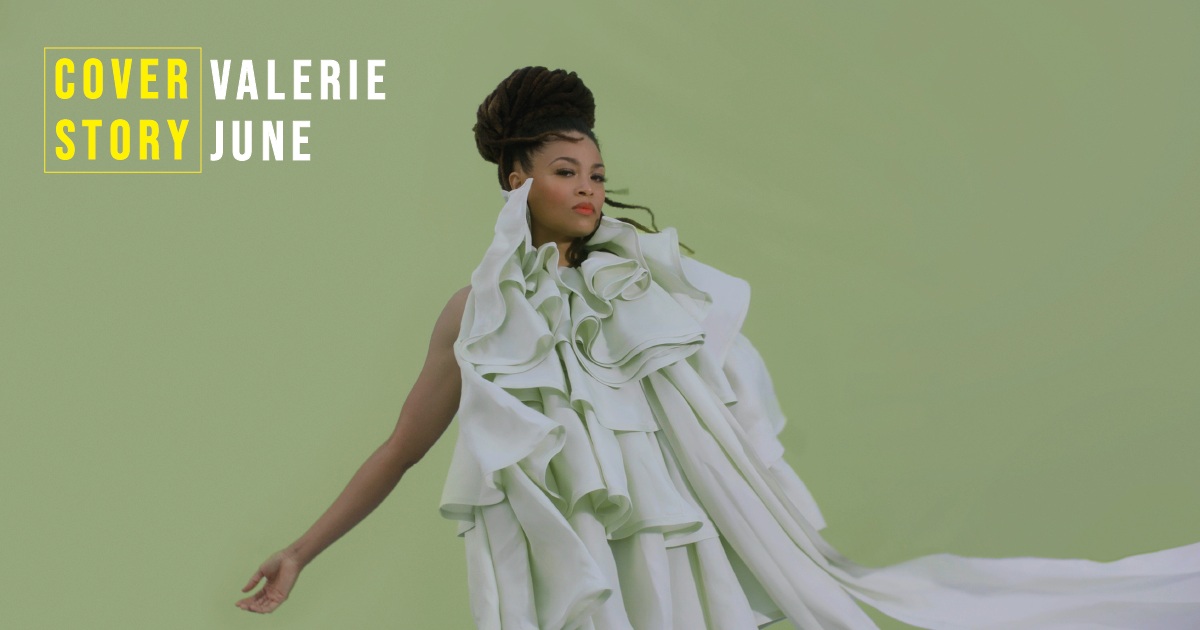
Some Stardust Realm: A Q&A with Grammy Nominee Valerie June

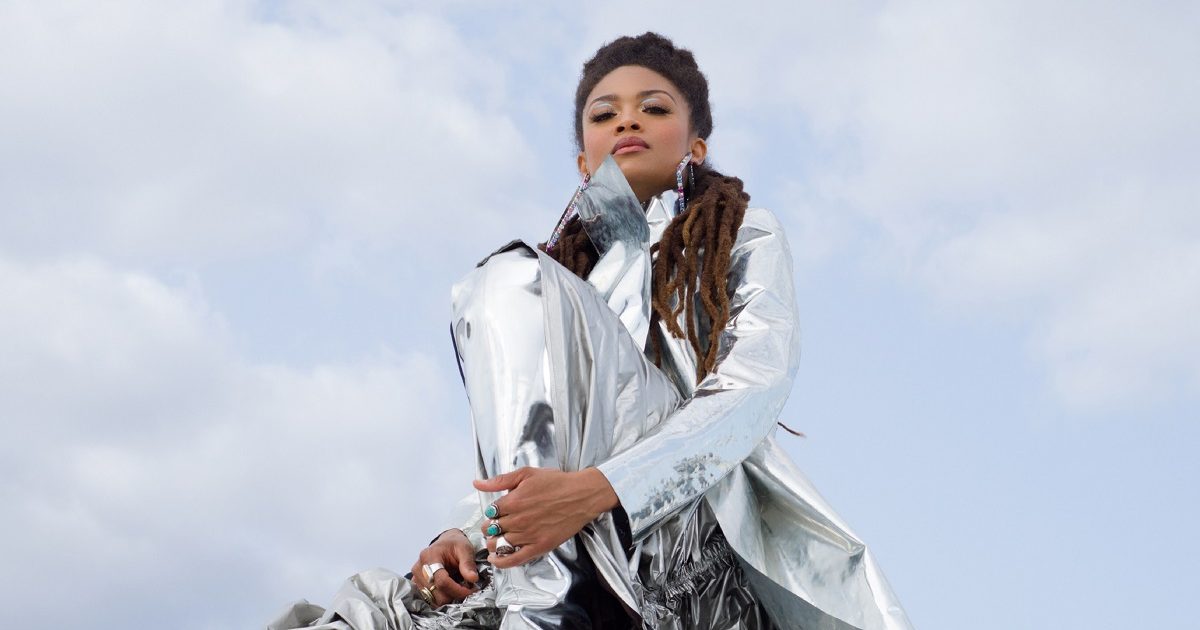
Valerie June is in New York today, which means she’s not in Tennessee. When she’s not on the road, the singer-songwriter splits her time between the Big Apple and Humboldt, a small town of 8,500 souls nestled in the northwest corner of the Volunteer State. Known for its annual Strawberry Festival, it’s equidistant from the country music capital of Nashville and her beloved Memphis, but more crucially, her family lives there. “My mom is there, my whole family, and I still have my little room with all my stuff, a closet with all my old outfits and instruments.”

Humboldt is an oasis, where she can escape the city and see something besides concrete and skyscrapers—a place that feels like home. “Tennessee has that very specific personality to it, and sometimes I just don’t want to leave. And I still get down to Memphis or over to Nashville. Nashville is such a booming city, but Memphis is still a little sleepy. That can be great, but it can be bad because you just get so comfortable. There’s really not much push to go and do and explore more than just enjoying life.”

Big or small, famous or not, urban or rural, all of these places inform the music Valerie June makes, especially her most recent album, 2021’s breezily philosophical, buoyantly bluesy, unabashedly optimistic The Moon and Stars: Prescriptions for Dreamers. Those prescriptions, as she calls that round of songs, blend cosmic country with earthy R&B and churchly gospel into a sound that is familiar yet idiosyncratic, as though no one but Valerie June could have written, arranged, or sung these songs. She even brings in two of her Memphis heroes—soul-folk-in-action icon Mavis Staples and Carla Thomas, best known for a string of Stax hits (including “B-A-B-Y”) and for holding her own against Otis Redding.

As she explains, these songs may be grounded in place, but they’re all about dreaming yourself elsewhere—about dreaming as the foundation for a social movement. That idea took on new poignancy during the pandemic, when society seemed to be fraying at the edges, but it turned The Moon and Stars into Valerie June’s breakout album, landing on numerous year-end lists and earning her numerous Americana Music Award nominations as well as a Grammy nomination (her first) for the Best American Roots Song.

For its one-year anniversary, Valerie June added more prescriptions to The Moon and Stars, including new acoustic tracks and covers of songs by Nick Drake (“Pink Moon”), Stephen Foster (“Beautiful Dreamer”), and John Lennon (“Imagine”). In her small studio in her New York apartment, Valerie June sat down, guitar in hand, to speak with The Bluegrass Situation about visiting her different homes, singing with her heroes, and dreaming up a new movement.

BGS: There’s a distinct Memphis flair to this album, especially with the great Carla Thomas on there.

Yes! And Mr. Lester Snell did the string arrangements on this record. He’s an older gentleman who worked with Al Green and Isaac Hayes, Keith Richards, Margo Price, all kinds of people. Yesterday I had this little moment… A lot of times I can be down on myself. Man, I really went wrong there! I’ll just count up my failures. But yesterday I had a day where I was counting my blessings. Oh my god, Carla Thomas is on a record with me! That’s a victory. I’ll take it.

Did the pandemic make her or Mavis hard to get on the record?

I’d already captured “Call Me a Fool” with Carla, and Mavis said she wanted to do the song “Why the Bright Stars Glow.” We were gonna be in the studio together and everything, but when the pandemic hit that March, the world just stopped and she couldn’t do anything. I was even sculpting these ideas—like, could we send some studio engineers over to her house? Get everybody tested and just put the microphone through the mail slot? But it didn’t work, and we had to put the record out without her. But my manager said it was an extra long album cycle due to the pandemic and would I like to do something with some more songs? So, we were able to finally get Mavis. She’s a real saint. Saint Mavis.

Do you remember the first time you heard Mavis or the first time you heard Carla?

Mavis was part of the family growing up. She was like Cousin Mavis. My father would take us on family road trips, and the Staple Singers were always one of the first CDs that he played. And we would all sing along. There were five kids in our family, and everybody had their part.

And I knew Carla’s songs, but I didn’t know they were from her until I moved to Memphis and started studying Memphis music. You can’t live in Memphis without studying Memphis music. It’s everywhere. One year she played the Cooper-Young Festival, this small neighborhood event in Memphis, so I went down and saw her perform. She didn’t perform very much, but she was a star! She was just such a powerhouse, a joyful spirit like Mavis. Maybe that’s what happens when you get to record for Stax!

Can you tell me about the two titles for the album? When it was released last year, I wondered if the whole dream concept was rooted in that pandemic experience.

It was. And the reason why I added The Moon and Stars is similar. I wrote down the moon because the moon was with us every time Jack and I went into the studio. We didn’t plan it that way, but it was the week of a full moon. So, every night we’d enter the studio under a full moon. I wrote down Moon as a title, but I felt like there should be something more. Our last day in the studio, I walked out and there were three shooting stars crossing the sky. Okay, The Moon and Stars! But I still felt like there should be something more.

When the pandemic hit, I thought, our hearts are breaking. They’re breaking for so many reasons—racism, sex discrimination, age discrimination, so many issues. I saw the visions of people like Dr. King and people who’ve been pushing for change—even Mavis and Carla, two people who’ve seen all of these hard times. Carla has seen so much happen in that awesome city of Memphis. She’s seen it change and flip. I was listening to stuff like “A Change Is Gonna Come” and “Respect” and all of these movement songs. All of a sudden this clarity came over me. We can dream and hope for the future, and maybe we just need a prescription. We need a movement.

How do you mean?

There’s a lot of movements happening right now, but if I were to start a movement, what would I want it to be? I want it to be very loving and very hopeful and very positive. I want it to embrace all of humanity and sculpt a more harmonious and beautiful planet. Every movement needs songs. It needs its own “Change Is Gonna Come.” It needs something that will give you hope to open up your wishful mind and use your imagination. That’s what these songs are. They’re very ethereal. They put you in mind of some fantasy, some stardust realm where we look up at the stars and feel enamored. All of this is possible, but we’re drawing from the same cycles of trauma and oppression. It was all some deep thoughts.

So much has happened in the year since the album was released. Has your relationship to the songs changed during that time? Have they revealed new meanings or new implications?

They have changed. I put out the original version with arrangements that I created with Mr. Lester and Jack Splash, and now I’m releasing the new version with some acoustic songs, which have more fiddle and banjo. It was a musical chain, and I love it so much because it shows how songs can live in different realms. I love the beauty and evolution of a song. That’s what I’ve been experiencing with this record, because of the long album cycle. And when we do go on tour, that’ll be another evolution as we go from produced record to stripped-down acoustic versions to the live sound. They’re gonna keep growing and changing.

I like that about covers, too. I’m a songwriter, but I didn’t learn how to play technically. I just play to my own voice when I cover something. I can’t really do it like the original artist did it because I don’t know how to do that. You know, we lost Nick Drake a long time ago, but “Pink Moon” still lives with every person who sings it. It takes on a new character. So, the songs outlive the singer. It can go further and further and further.

The three cover songs on the new version seem to extend that dream theme. Was that planned?

When I was choosing the covers, I wanted songs that either worked with the theme of moon and stars or the theme of dreaming. It had to have “moon” or “dream” in the title. That’s how I chose “Beautiful Dreamer” and “Pink Moon.” And “Imagine” is one of those songs that sums up the record in a lot of ways. John Lennon had this dream for humanity.

And you also did “Summer’s End” on the recent John Prine tribute, Broken Hearts & Dirty Windows Vol. 2. How did that come about?

His label and his team, they know how much I love John. I love his music, and I got to tour with him and sing with him onstage. It was such a high point in my life. And they sent me a letter asking if I wanted to cover that song. And while I was singing it, I started wondering if the reason they asked me to do that song was because it goes [sings] “The moon and stars hang out in bars, just talking, and I still love that picture of us walking.” I was like, What? It was so perfect. I absolutely adore that song and sing it quite a lot on the road.

I wanted to ask about the Grammy nomination. Well, I don’t really have a question, just a congratulations.

Thank you. And thank you on behalf of Carla, too, because it’s huge for both of us. We were nominated for Song of the Year at the Americana Music Awards, and she came up from Memphis to sing with me at the Ryman that night. And she received the Lifetime Achievement Award for Inspiration. Is she not an inspiration to everybody! She was interviewed for the Memphis paper and she said the only thing she wanted was to be nominated for a Grammy. And now look at her!

That must feel good, to take somebody who is a hero and introduce her to a new generation of fans.

It’s true! Sometimes I wonder why we didn’t get her an achievement award sooner. Why does that happen with our elders? They’ve contributed so much and made it so we can be here. That’s what happened with John Prine toward the end of his life, and all the awards and appreciation meant so much to him. I think we need to thank people like John and Carla and Mavis for what they’ve given us. I was grateful for the Americanas and the Grammys for honoring and appreciating this beautiful star, this Queen of Memphis Soul.


Photo Credit: Renata Raksha
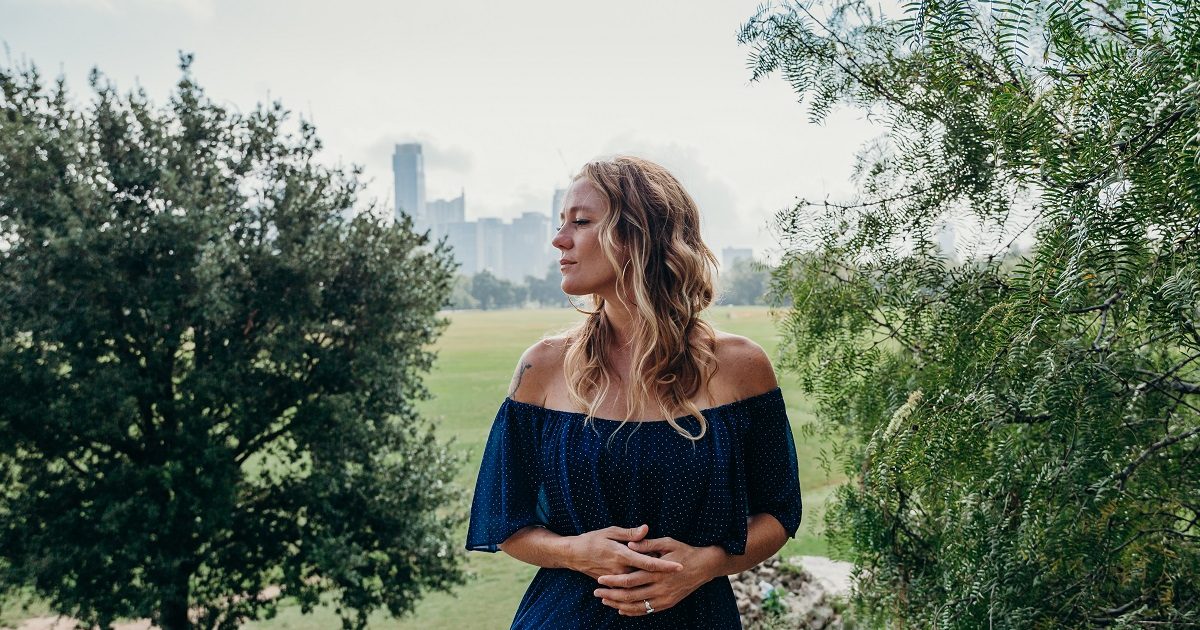
BGS 5+5: Kelley Mickwee

Artist: Kelley Mickwee
Hometown: Austin, Texas, by way of Memphis, Tennessee

Which elements of nature do you spend the most time with and how do those impact your work?

All of the elements. Mother Nature, the universe and the natural world are my religion and informs my spirituality, so I’d say nature inspires everything I do. As far as on the daily, I have to do something outside at some point no matter what the weather or where I am or how busy I get. It could be anything, from digging and planting in the garden, pruning, cutting the grass, and watering the plants to taking long hikes with my dog, Moe. If I am in town, you can usually find me at one of our off-leash dog hiking trails with Moe. It’s very centering and really impacts my mental health and general well being. Especially when the sun is shining. And THAT, in turn, gives me the inspiration, energy and right mindset to sit down with a pen or with my guitar to work on a song. Or do anything, really.

How often do you hide behind a character in a song or use “you” when it’s actually “me”?

Not enough. Ha! I learned pretty early on as a songwriter that for me to write the best lines I can, I have to just speak from experience from the first person and be as open and honest as I can or am comfortable. I definitely have many “character” songs about other people or from their stories, especially songs that are co-writes, because then you are sharing a narrative with another writer so who knows how many people/experiences are wrapped up in that one song? But, in general, I tend to write from a first-person experience or relationship. Especially if it’s a song I write alone or start on my own before sharing with a co-writer.

What other art forms — literature, film, dance, painting, etc. — inform your music?

I think as songwriters, we are constantly getting input from all kinds of sources and storing it away for when we sit down to write a song. This could be anything from a conversation we had, or another song we heard on the radio, or a movie we just watched. I have written several songs from quick lines I wrote down while watching a film or a documentary. And I am always searching for inspiration and guidance from poetry, especially lately. I took an online poetry course in 2020 and it really gave me some new tools to use when writing lyrics.

Since food and music go so well together, what is your dream pairing of a meal and a musician?

This one was easy! A locally sourced vegan meal in London with Paul McCartney. I am actually a pescatarian who doesn’t eat or drink dairy, so not technically a vegan. But…when in London with Paul McCartney!

What’s the toughest time you ever had writing a song?

Every time! It is not easy for me to complete a song. Very very rarely do they just roll off the end of my pen, or float down from the sky, just waiting to be written down. I have many songwriter friends who have story after story of songs just spilling out of them and it makes me envious of that feeling. I do have one maybe two that came out, say, in a day. But even those were painful and agonizing at times. Like finishing a thesis that’s due the next day. Gosh! That sounds awful. I just mean, I want every line to count and be the best line it can be and as honest and original as possible. I think that’s where the good stuff lives. And so, if it takes me a bit longer to get there, so be it. Because the end result, a song I am proud of and can’t wait to sing, is SO sweet and rewarding, in all of the ways.


Photo credit: Taylor Prinsen

Guided by Acoustic Demos, Paul Thorn’s New Album Finds Magic in Memphis

For years, you could always count on a Paul Thorn record for songs about insatiable lust and desire. That’s still true on his newest release, It’s Never Too Late to Call, although that carnal urgency has been overtaken by… yes, actual love. The long-awaited album isn’t exactly sentimental, as “What I Could Do” details the ways his life would be more productive without still being in love with somebody. There’s also “Goodbye Is the Last Word,” an aching slow song that basically offers advice on how to leave a relationship that’s turned toxic. Even the duet with his wife, Heather, is titled “Breaking Up for Good Again.”

Still, on the boisterous “Here We Go,” he sings, “I feel good about what the future holds.” As he should.

“I like to think I’ve just matured a little bit,” Thorn tells BGS. “I’m 57 years old and the way I looked at things 10 years ago ain’t the way I look at them now. If you’re still the same person you were 10 years ago, you wasted 10 years.”

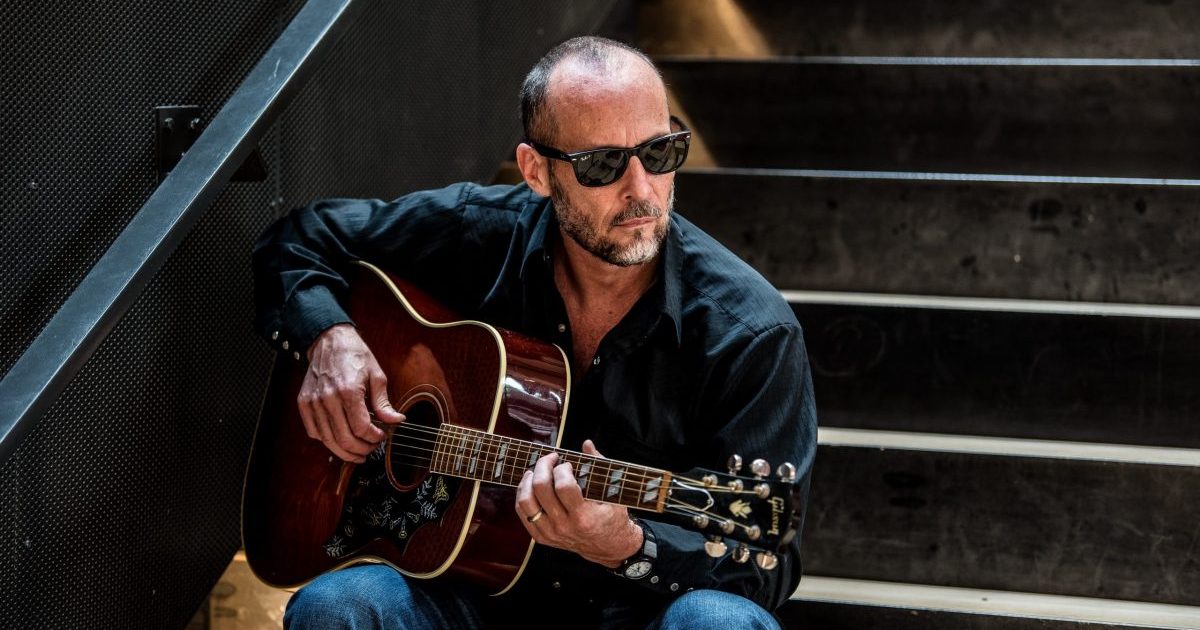
On It’s Never Too Late to Call, there’s not a minute wasted. Thorn can still crank up that R&B groove that’s made him a must-see artist for decades. Meanwhile, “Sapphire Dream” – a duet with his daughter Kitty Jones — stands among his most evocative performances on any of his records. Here, the Mississippi musician tells BGS about how the acoustic guitar shaped these sessions, the bluegrass bands he admires, and what “Sapalo” really means.

BGS: Why was it appealing for you to make this album in Memphis?

Thorn: Sam Phillips Recording Studio in Memphis has a lot of vintage equipment and recording technology that kinda doesn’t exist anymore. The way that Elvis Presley’s records sounded, and the way that Johnny Cash’s records sounded, and many other great artists sounded — in addition to their talent, it was the way they were recorded and the sound that they caught from that studio.

And it’s not Sun Studios. Let me clarify that – Sam Phillips didn’t own Sun. He rented it, but then when he got successful he built another studio two blocks down called Sam Phillips Recording Studio. That’s the studio I’m talking about. A lot of magic was created in there for a lot of reasons. It’s an hour from where I live, so why not?

Did you have an idea of how you wanted this record to sound before you went in?

I really did, yeah. The producer of this record is Matt Ross-Spang. He’s a Grammy Award winner. He’s very good. I was sending him iPhone demos of me just singing with my acoustic guitar on all these songs. We both decided, after talking a few times, that this record should be built around those acoustic demos. I play rhythm guitar on every song, which is something that I used to not do. I used to not play on my records at all. I would just sing it once with my acoustic guitar and the band would play it.

Although that sounds good and it has its place, I think what we captured on this record more defines what I actually sound like and what I do best. It’s a lot more stripped down and it’s not like a jammy record. There are very few solos on any instrument. This record is all about showcasing the songs. I haven’t put a record out of original material in six years and there are a lot of reasons for that, some good, some bad. But I feel like over those years, these songs that I did get are my best work ever. I really feel that way.

Are there any acoustic guitarists that you really look up to?

I know two people who, in my opinion, are the greatest acoustic guitar players. One is Mac McAnally and the other one is Tommy Emmanuel. They’re not only great guitar players but I’m friends with both of them and I know them personally. They’re the monsters! And I mean that as a compliment. I’m not really a great guitar player but I do a thing that’s unique to me. Tommy and Mac, they can sit down and play with anybody. I can play good with myself but I don’t know how to follow other people. These guys are on another planet, as far as guitar players.

Are you a bluegrass listener?

I grew up around two types of music as a child. My dad was a preacher so I grew up around black gospel music and white bluegrass gospel music. You know, there’s a group named Balsam Range who recorded a song I wrote called “Angel Too Soon.” They had a No. 1 on the bluegrass charts and it stayed there a long time. I’m clearly not a bluegrass artist, but I have had songs covered by a top bluegrass artist. So, I have that in me. And when it’s done right, I love it Another group that I’m a big fan of — and in my opinion they do it as good as anybody — is The Isaacs. They do bluegrass gospel and when I watch them, I’m looking at excellence.

On this record, you start out with a couple of mellow songs but then you hit that R&B groove on “Sapalo.” So, I have to ask, what does that title mean?

I was watching a video on YouTube of James Brown, and before I clicked on it, the description said “James Brown High on PCP.” The premise of the video is that he’d just gotten out of jail and he was being interviewed by a very straight-laced lady, a local news anchor. It was clear from the get-go that he was high on drugs while he was doing the interview. She said, “Mr. Brown, how are things now that you’re out of jail?” She said, “How do you feel now?” And he goes, “I feel good! I look good! I smell good! It’s all good! I make love good!” He was saying all this off-the-wall stuff. Then she said, “What are your upcoming plans?” And he said, “Well, I’m going to Brazil. I’m going to São Paulo!” He said, “We’re going to JAM!”

So I was just writing down all of this stuff he was saying, and the song wound up being a song about redemption. At least in that moment, he was claiming that he had put his life back together, which he was lying to himself because he was on TV high on PCP. But I tried to spin it as everyone needs a shot at redemption. It’s about being optimistic with whatever time you’ve got left.

Listening to “You Mess Around & Get a Buzz,” I caught that Clarksdale reference right off. I know that being from Mississippi is a big part of your story, and I’m curious if you ever feel like you’re an ambassador for the state.

Well, I would only say this because you brought it up but I guess I am in some way. When I use the word “ambassador,” to me that means somebody who goes abroad and tells other people about how good it is where he lives. So, in that way I guess I am. I was very flattered a few years ago when the state of Mississippi invited me down to the capitol and they declared March 27 as Paul Thorn Day. So, I got a day! You know, most times you gotta die before you get a day.

You’ve got the same hometown as Elvis. I’m wondering, if you could have pitched him any of the songs you’ve written, which one would you pick?

That’s a hard question, man. I tell you, I wrote a song called “That’s Life.” All the words in that song were words my mother has said throughout my life. I’ve played it a lot and people like the song. If I could get one song recorded by Elvis, it would probably be “That’s Life.”

Your fans often become characters in your songs, too. It happens on this album on “Sapalo” and “Holy Hottie Toddy.” You’ve cultivated one of the most loyal fan bases that I’ve seen. What are some of the things you’ve done right, to keep people invested in you and your career?

That’s a hard question but if I had to answer, I think to get down to the brass nuts of it, they know I love them. You can say that, but a lot of artists will do their show and they walk off the stage and they’re ready to get to the hotel room. I understand that. I feel that way sometimes myself, but at every show – prior to the pandemic – on the last song I always go out into the crowd. And while I’m singing I’m hugging people and shaking people’s hands. And when that’s done I go out in the front and sign CDs and take pictures. I’ll stand there until the last one’s gone.

I don’t do it as a career strategy. I do it because those people got off work, got a babysitter, took a shower, bought a ticket, and they’re going to spend their whole evening with me. And my job is to give them my whole evening. That’s what I try to do. I think that’s why they stay with me, and I think that’s why they’re loyal. They’re loyal to me because I’m loyal to them.


Photo credit: Steve Roberts

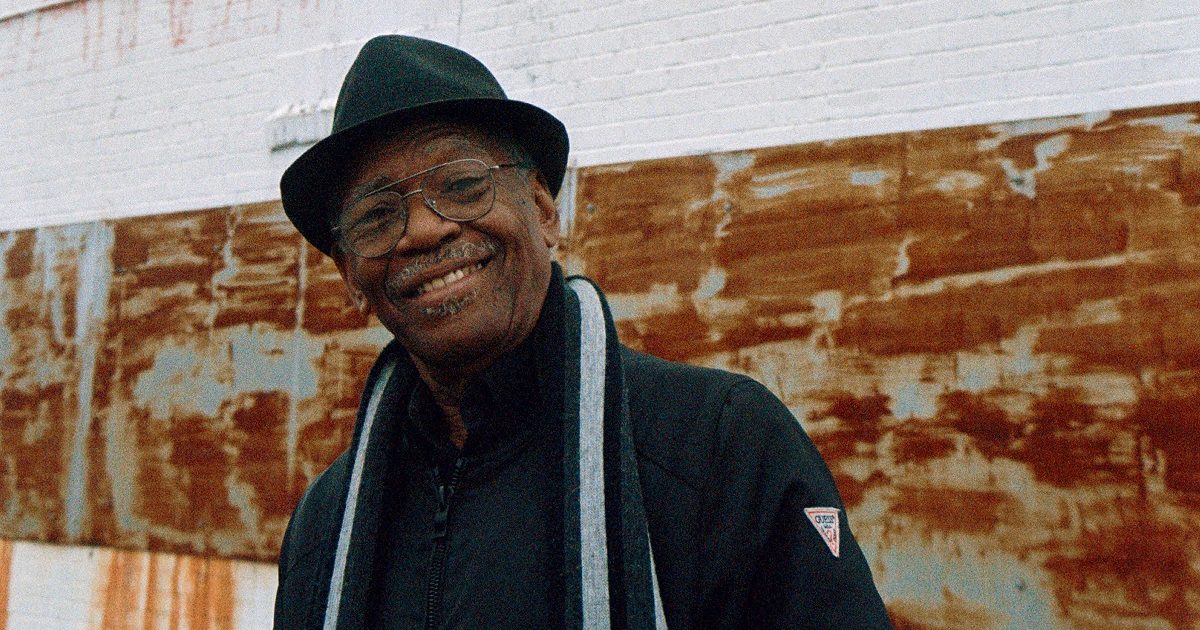
WATCH: Elder Jack Ward, “The Way Is Already Made”

Artist: Elder Jack Ward
Hometown: Itta Bena, Mississippi, and Memphis, Tennessee
Song: “The Way Is Already Made”
Album: Already Made
Release Date: August 20, 2021
Label: Bible & Tire Recording Co.

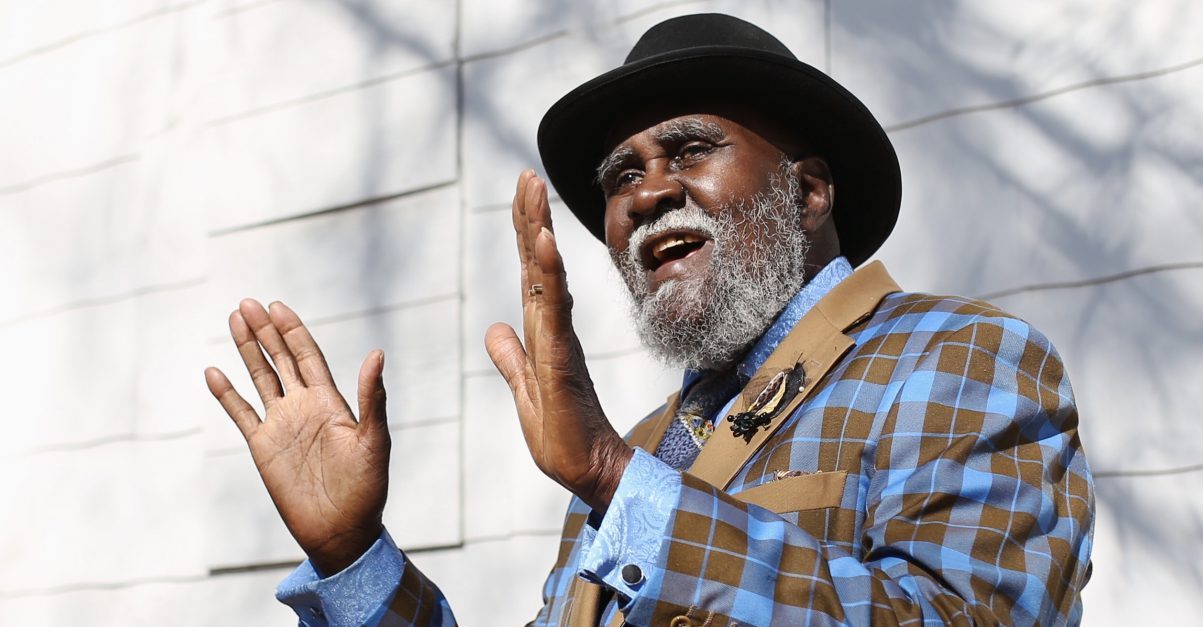
In Their Words: “I can just about sing anything anyone else sings. I never bragged on myself, but this was a gift from God and the Bible says, ‘A gift comes without repentance.’ In other words, you don’t have to be a Christian to be able to sing. If you’ve got that God-given gift you can do it — your choice if you want to sing rock ‘n’ roll, blues, gospel — but I choose the right side.” — Elder Jack Ward


Photo credit: Matt White

LISTEN: Graber Gryass, “Your Body’s Border”

Artist: Graber Gryass
Hometown: Memphis, Tennessee
Song: “Your Body’s Border”
Album: Spaceman’s Wonderbox
Release Date: May 21, 2021
Label: Outer Orbits

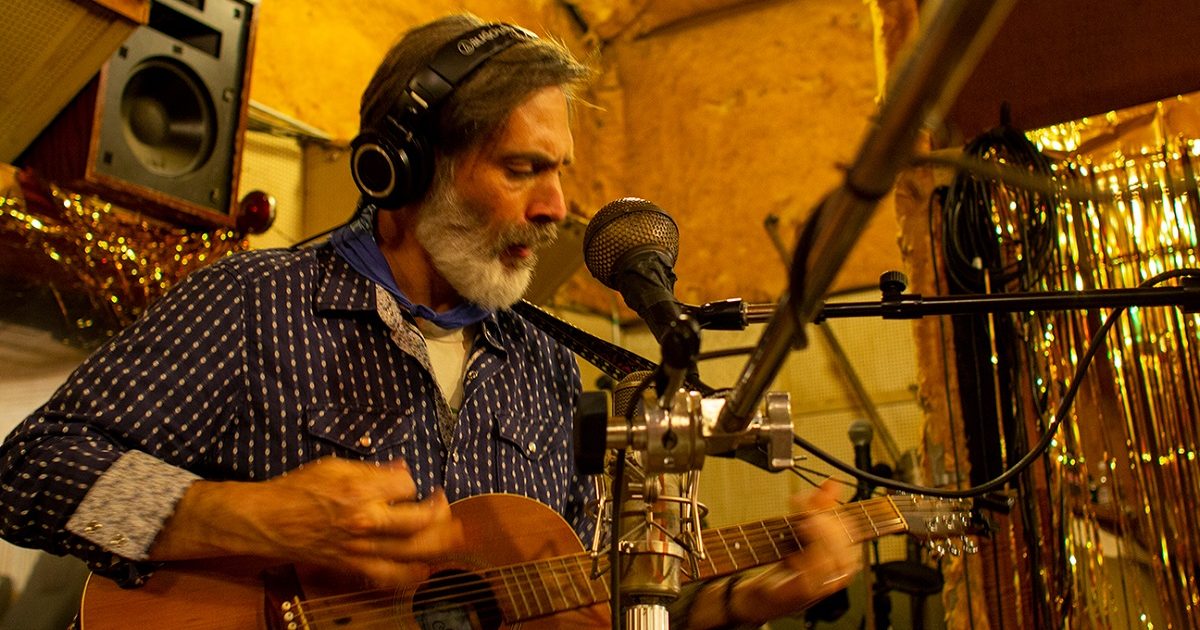
In Their Words: “‘Your Body’s Border’ is a meditation on boundaries in song. From the pensive bouzouki that opens the tune to the first couplet, ‘you’re as old as the crow, fresh as an embryo,’ one can tell this song isn’t supposed to make linear sense and acts more like poetry than storytelling. The voyage is one of discovery — and the discovery is about the joys of being in love, working through stereotypes and clichés (‘if you get sweet and sour with me’), the lengths we go to find love, the transitory nature of national identity, and the repurposing of influence (notice the John Donne homage, ‘my love, my new found land’). Fiddle, banjo, mandolin, two guitars, bouzouki, and upright all play it cool, rather than hot as expected, letting the song take center stage.” — Graber Gryass


Photo credit: Eric Brice Swartz

WATCH: Elizabeth King, “Living in the Last Days”

Artist: Elizabeth King
Hometown: Memphis, Tennessee
Song: “Living in the Last Days”
Album: Living in the Last Days
Release Date: April 2, 2021
Label: Bible & Tire Recording Co.

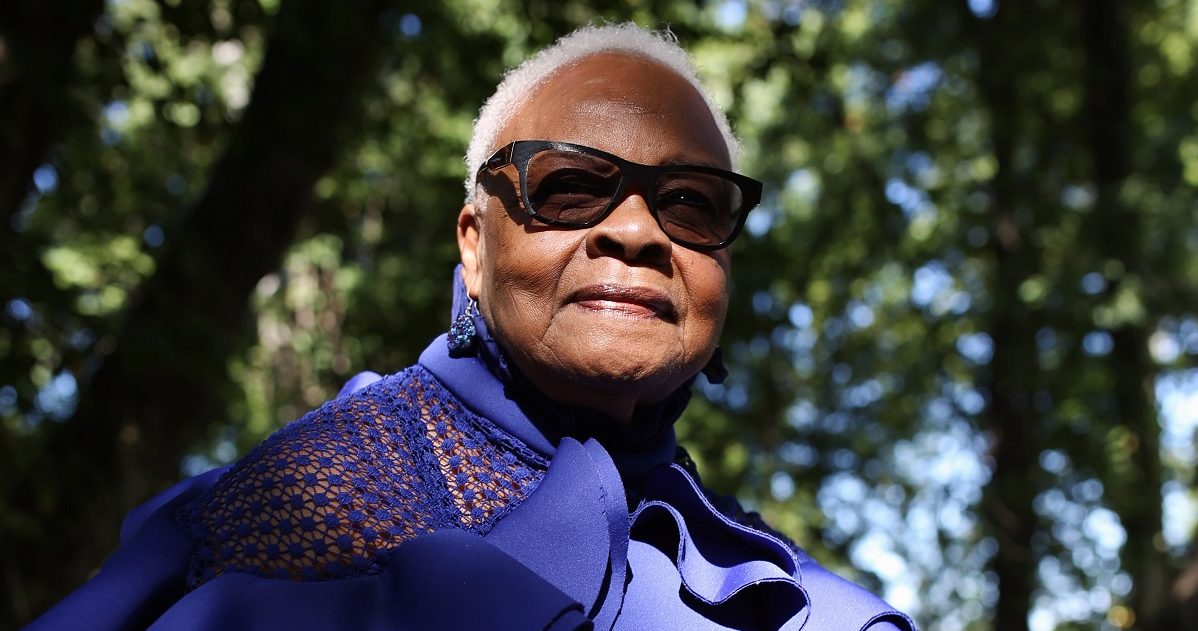
In Their Words: “There’s so much going on now that you wake up in the morning time and all you hear is something going wrong, you know. It’s affecting your children. People know they wrong but they think it’s right. How is it that a mother can hit a child in the streets and don’t even stop to think. It set my mind back, like in the Bible days, like when the lady went to sleep and killed her child and stole the other lady’s baby. It just let you know that time is getting shorter and shorter every day. If you notice the weather, it look like even the storms are mad. There’s just so many of them. There used to be a storm every now and then. Now, just look like it’s in a hurry to get it over with. I know I’m living in my last days. God already gave me my promise. Every day with him, it just gets sweeter.” — Elizabeth King


Photo courtesy of Nick Loss Eaton Media

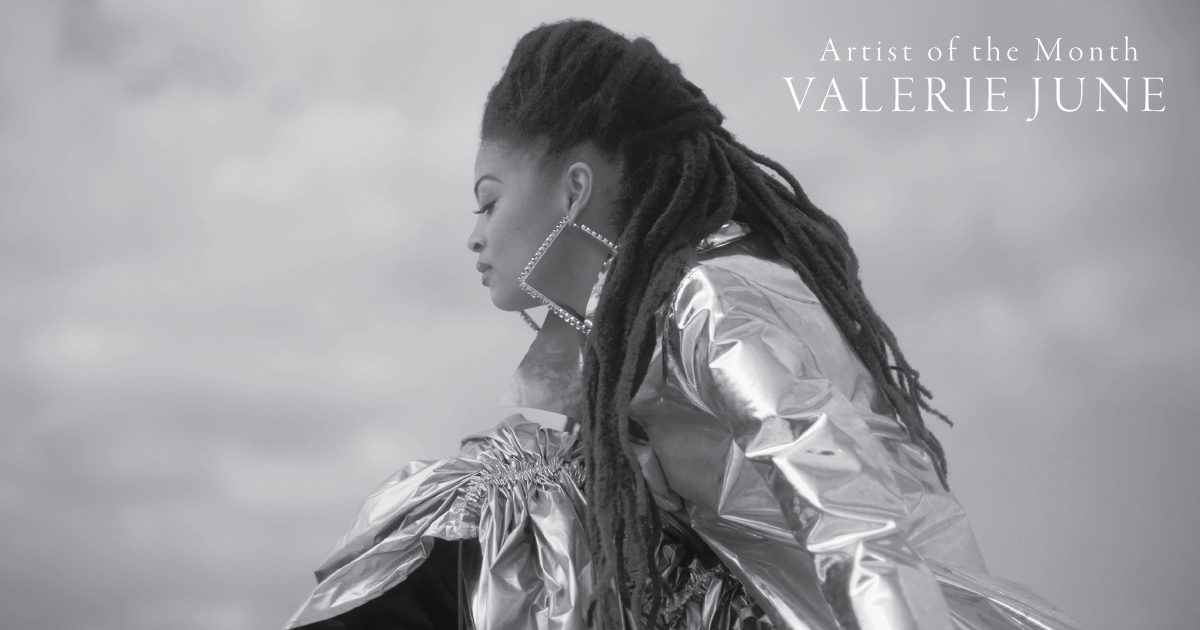
Artist of the Month: Valerie June

Valerie June is broadening her horizons with The Moon and Stars: Prescriptions For Dreamers, a new album arriving this month on Fantasy Records. Upon revealing the project, she stated, “For this album I wanted to see how we could bring some modern elements into that band-in-the-room approach I’ve taken with my records in the past.”

To achieve that concept, she worked with producer Jack Splash, who incorporated a spectrum of sonic textures into her familiar folk approach. They recorded in Los Angeles and Miami without losing sight of her West Tennessee roots. Indeed, Stax Records legend Carla Thomas makes a guest appearance on one of the album’s early singles, “Call Me a Fool.”

According to June, who’s now based in Brooklyn, The Moon and Stars: Prescriptions for Dreamers marks a moment of clarity: “With this record, it finally became clear why I have this dream of making music. It’s not for earthly reasons of wanting to be awarded or to win anybody’s love — it’s because dreaming keeps me inquisitive and keeps me on that path of learning what I have to share with the world. When we allow ourselves to dream like we did when we were kids, it ignites the light that we all have within us and helps us to have a sort of magic about the way we live.”

In the weeks ahead, we’ll have an exclusive interview with this remarkable singer-songwriter, who is also our BGS Artist of the Month for March. Until then, we’re prescribing this BGS Essentials playlist of Valerie June’s music just for you.


Photo credit: Renata Raksha

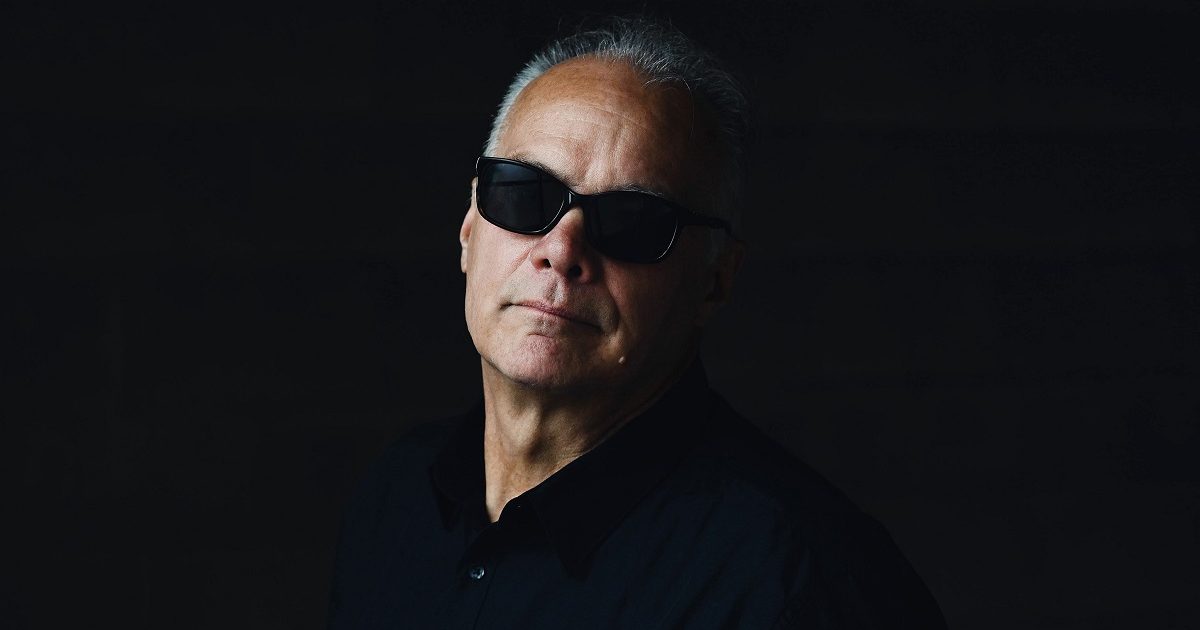
BGS 5+5: Curtis Salgado

Artist: Curtis Salgado
Hometown: Portland, Oregon
Newest Album: Damage Control

What’s your favorite memory from being on stage?

In 2009 I was to perform two songs for the Blues Music Awards in Memphis, Tennessee. You’re only allowed 10 minute and the schedule is tight. After we finished our songs the MC, Bill Wax, ran up and said “Curtis, B.B. King wants to sit in with you. You’ve got to do something NOW!!” So I turned around and counted off a B.B. King shuffle. Next thing I know B.B.’s valet brings a chair AND B.B. KING comes up sits in the chair. He grabs the microphone and says, “I’m not playing until he gets a chair,” and he pointed to me. So his valet brings me a chair. I sit in it and I started singing a B.B. King song. B.B. smiled and started playing the guitar. Am I dreaming? I’m singing and B.B.’s playing guitar behind me. The crowd went nuts. I don’t think I felt my feet touch the ground for a week afterwards.

If you had to write a mission statement for your career, what would it be?

#1: To witness performances by the best musicians in the world.

#2: To share my own music to as many people as I can.

#3: To pay my bills stress-free and to see as much of the world before I die.

What was the first moment that you knew you wanted to be a musician?

This is easy. A true story: In kindergarten my teacher pinned a note to my shirt. She said, “Give this to your mother and don’t lose it.” When I got home my mother saw the note took it off me and read it. She said, “It says here that Mrs. McGilvery says you have a nice voice, and they want you to sing two songs, ‘Jesus Loves Me Yes I Know’ and ‘I’ve Been Working on the Railroad.’” My mother was a good piano player, and we went right to work learning the songs.

When it came time to play, it was in a church auditorium and the auditorium was full of people — parents and relatives of the kids who went to this particular kindergarten. Another little boy and I were supposed to sing these two songs together. But he saw that audience and he just completely froze up. But I dived right into the song and every now and then I would elbow him in the side to encourage him to join me. He never did. He just stood there, stunned. The audience thought this was adorable and I sang those songs loud and clear. The applause and cheers from the audience was deafening. From then on, I was hooked. Nuff said.

What’s the toughest time you ever had writing a song?

I’ve been working on a new song for a while. I started it a couple years ago. I am attempting to write a Bolero — a Spanish Latin slow ballad. I have finished the music and I think It’s gorgeous. It could stand on its own without the lyrics I’ve never written a song like this before. But the lyrics are the toughest. It has to hold up to what the music is telling you…so wish me luck.

Since food and music go so well together, what is your dream pairing of a meal and a musician?

Clifton Chenier with a pot of gumbo, andouille, and shrimp. (Please and thank you.)


Photo credit: Jessica Keaveny

Whether Your Dream Is Big or Small, Valerie June Dedicates This Song to You

Valerie June blends her roots writing and singing styles with a markedly modern production quality in her new single, “Call Me a Fool,” giving the music a fresh yet familiar feeling. The upcoming album, titled The Moon and Stars: Prescriptions for Dreamers, was produced by June and Jack Splash, whose resume includes powerhouse names like Kendrick Lamar, Alicia Keys, and John Legend.

“With this record, it finally became clear why I have this dream of making music,” says June, who was raised in Tennessee and now lives in Brooklyn. “It’s not for earthly reasons of wanting to be awarded or to win anybody’s love — it’s because dreaming keeps me inquisitive and keeps me on that path of learning what I have to share with the world. When we allow ourselves to dream like we did when we were kids, it ignites the light that we all have within us and helps us to have a sort of magic about the way we live.”

Embracing an experimental approach, Valerie June and Jack Splash recorded the project at Los Angeles and Miami studios. She notes, “For this album I wanted to see how we could bring some modern elements into that band-in-the-room approach I’ve taken with my records in the past.” To compound that marriage between old school and new, “Call Me a Fool” features none other than the Queen of Memphis Soul, Stax legend Carla Thomas. Crisp yet warm, sleek yet comfortable, Valerie June’s new music is everything we’ve been waiting for and then some. The Moon and Stars: Prescriptions for Dreamers will be available on March 12 on Fantasy Records.

Upon releasing the video, she wrote on Instagram, “Have you ever been a fool for a dream? It might have been a little dream like a kiss from a lover or a big one like the dream of peace that Dr. King, John Lennon, and so many others have had for humanity. No matter how big or how small your dream may be, keep believing, and let the world call you a fool!”


Photo credit: Renata Raksha

LISTEN: Don Bryant, “99 Pounds”

Artist: Don Bryant
Hometown: Memphis, Tennessee
Song: “99 Pounds”
Album: You Make Me Feel
Release Date: June 19, 2020
Label: Fat Possum Records

Editor’s Note: This is the first time Don Bryant has recorded “99 Pounds,” the 1972 hit he wrote for Ann Peebles. They have been married since 1974 and still reside in Memphis. They also co-wrote (with Bernard “Bernie” Miller) her signature song, “I Can’t Stand the Rain.” Peebles retired from performing in 2012.

In Their Words: “This new version is a tribute to Ann, for accepting the song when I wrote it for her. I fell in love with Ann when she first came in to Hi [Records]. But there was so much going on with her — recording, travel, so many around her — it wasn’t my time. And I wasn’t in no hurry — I knew I wasn’t going nowhere! We got to know each other better and better and it opened up. It was a long, drawn-out situation, but for me it was love at first sight.” — Don Bryant


Photo courtesy of Fat Possum Records