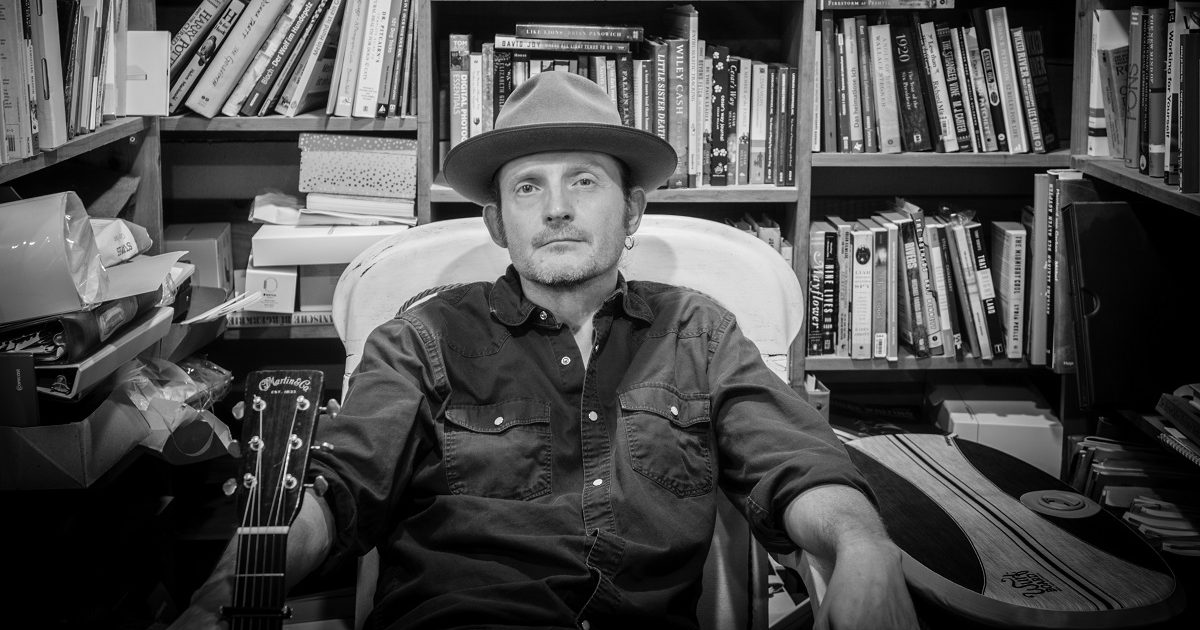
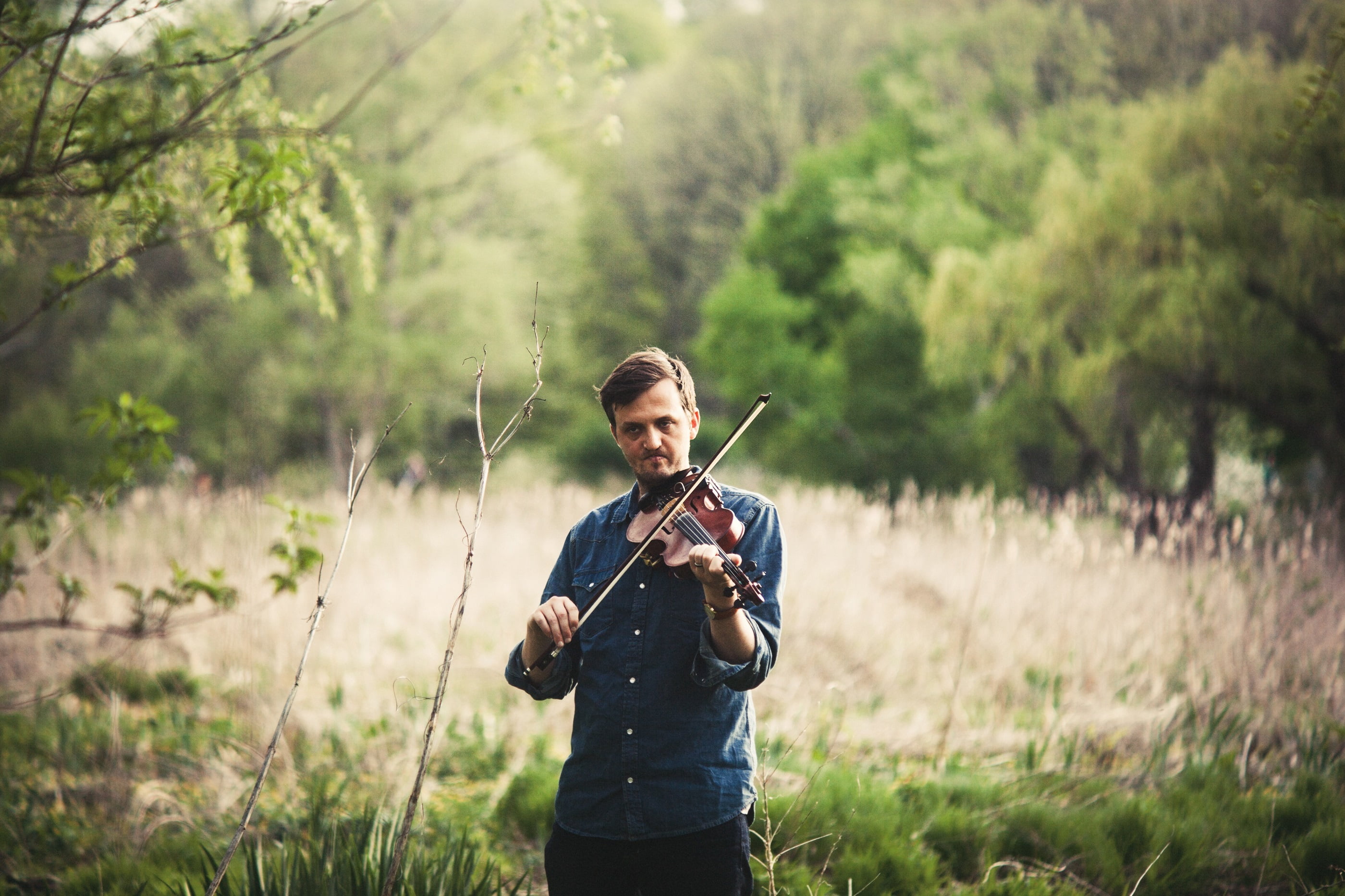
Artist:Thomm Jutz Hometown: born in Neusatz/Germany, living in Nashville, TN Latest album:To Live in Two Worlds Vol.2 Personal nicknames: TJ
Which artist has influenced you the most … and how?
At this point in my life, I’d have to say that Norman Blake has influenced me the most. Not just as an instrumentalist, but also as a songwriter. When he started writing original material in the early ’70s he came out of the shoot with a distinctive songwriter’s voice. Unlike Kristofferson, Hartford, and Dylan, all of whom he had worked with, Blake’s focus was not on his inner world but on the old rural America that he’d grown up in. He applied his huge knowledge of railroad history to his writing. His songs were based on local characters that he’d grown up with or places that were meaningful to him. I like to write about historic events or characters from the past and I owe the inspiration for that to a large part to the great Norman Blake.
What other art forms — literature, film, dance, painting, etc — inform your music?
Literature has a great influence on my music. I read all the time. I try to keep something historical, a story and something philosophical or inspirational going at all times. The more I read, the more I write. Sometimes images from books come to me after years and I start writing about them. I also love to read cookbooks. In recent years I’ve really been into the novels of North Carolina writers Ron Rash and John Ehle.
What was the first moment that you knew you wanted to be a musician?
When I was eleven years old I saw Bobby Bare on TV. He hit me square between the eyes with his singing, the way he held the guitar and his cooler than cool attitude. My soul connected with the archetype of the wandering minstrel at that moment and has not let me go since. I never felt like I wanted to do anything but a musician and songwriter. I got to work with Bare a couple of times. He was every bit as great as I wanted him to be.
What’s the toughest time you ever had writing a song?
I can’t say that I struggle too much with songwriting. I believe that if you have a good idea and put in the time and co-write with the right people, your craft should make it possible for you to at the very least come up with something decent every time. One song idea that I had and didn’t know how to approach for over a year was for a song called “Help Me to Hold On” that I co-wrote with Milan Miller and that was recorded by Balsam Range. Every morning when I walked with my dog that idea was in my head, but I couldn’t some up with an angle to approach it. I still remember where I was out here by Percy Priest Lake when all the pieces came together. We wrote it the following Saturday and it didn’t take more than an hour to get it done.
Since food and music go so well together, what is your dream pairing of a meal and a musician?
I listen to a whole lot of Norman Blake’s music when I’m cooking dinner with my wife every night. Another really good pairing is when my friend and fellow songwriter Jefferson Ross comes to visit from Atlanta. We stand around the kitchen or the grill with a beer, cook together and talk about books, music and vintage guitars.
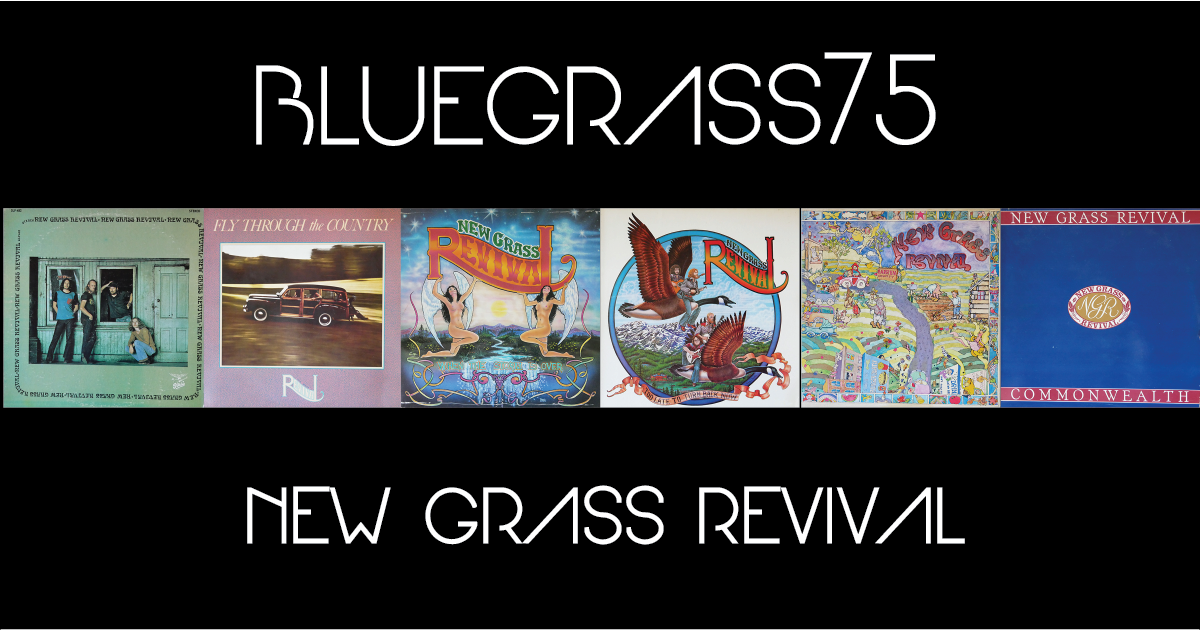
One of the most celebrated and innovative bands of the 1980s, New Grass Revival will be inducted into the Bluegrass Music Hall of Fame during the IBMA Bluegrass Music Awards on October 1. As part of our coverage of the 75th anniversary of bluegrass music, BGS caught up with founding member Sam Bush and vocalist/bass player John Cowan to talk about the early years in this first of two stories exploring their remarkable discography. Read part two of the story here, featuring insight from Béla Fleck and Pat Flynn, as well as Bush and Cowan.
The four founding members of New Grass Revival are Curtis Burch on guitar and Dobro, Courtney Johnson on banjo, Ebo Walker on bass, and Sam Bush on mandolin. They had all played together in the five-piece band, Bluegrass Alliance.
Sam Bush: We wanted to fire our [Bluegrass Alliance] fiddle player Lonnie Peerce, and when we told him this he said, “You can’t fire me, I own the name of the band.” So we said, “Let us put it this way: we quit.” We were already influenced by the Country Gentlemen and the Osborne Brothers and Jim & Jesse and the Greenbriar Boys and a really great record by the Charles River Valley Boys called Beatle Country. That’s one of the reasons we called ourselves New Grass Revival — we were trying to point out that we were reviving a new bluegrass that had already been invented by those people. We were only hoping to further the progressiveness we already dug.
Bush had been friends with Courtney since he was a teenager, when the banjo player was lead singer in a band playing Stanley Brothers tunes.
SB: We had no particular plan to play differently but our very first practice I remember Ebo hitting a bass lick in D minor that we later discovered he got from Dolly Parton’s “Jolene.” We played licks back and forth over it and all of a sudden Courtney went into the melody of “Lonesome Fiddle Blues” by Vassar Clements. That’s how we came to work up “Lonesome Fiddle Blues” for our first album. It was like a band epiphany, that we could improvise over a riff the way rock ‘n’ roll bands did. We were just playing it the way we felt it.
Courtney and Curtis were steeped in traditional bluegrass, but Bush was a musical sponge, soaking up everything from Homer and Jethro to Jefferson Airplane to the Rolling Stones to French jazz violinist Jean-Luc Ponty. The band’s first, self-titled album, from 1972, included covers of Leon Russell’s “Prince of Peace” and Jerry Lee Lewis’s “Great Balls of Fire.“
SB: This is the days before cars had cassette players, so Ebo had a tiny cassette player we took with us on the road, and we’d made a tape we could listen to. One side was John Hartford’s Aereo-Plain. And on the other side we had Leon Russell and the Shelter People. Without John Hartford there would be no newgrass. Growing up close to Nashville, I would watch him on local TV, and one night he did a bluegrass version of “Great Balls of Fire” on the Glen Campbell show, and I recorded it from the TV — that was the one we learned. Courtney even played his chromatic run the same way John did it.
While making their first album Bush encountered the man who would be his songwriting partner, Steve Brines.
SB: We lost our Louisville club gig when we ended Bluegrass Alliance, so in order to make a living that first winter in ’70-’71 I ended up playing electric bass with a folk group called the Cumberlands: Harold Thom and his wife Betty, and a banjo player called Jim Smoak. Jim had co-written a couple of songs with this poet-lyricist over in Lexington called Steve Brines and we played one on that early album — “Cold Sailor.” After I made his acquaintance Steve and I started trying to write together. Steve lived up in Lexington and I lived down in Barren County, and he’d send me five to ten sets of lyrics in the mail and I’d make up music, put it on a cassette and send them back. Our rule was I wouldn’t change one word, if he didn’t change one note.
It was a productive partnership – Bush and Brines wrote half the songs on their second album, Fly Through the Country. By then, Walker had left the band and they had gained a new player: John Cowan.
John Cowan: I joined in 1974. I did not grow up in bluegrass. I was a rock ‘n’ roll kid playing in local garage bands. But I had an awareness of New Grass Revival because I lived in Louisville, which was their home, and the woman who became my wife once dragged me to go see them. I didn’t want to go, but I was blown away. Six months later I got a phone call from Sam living down in Western Kentucky with Courtney and Curtis and he said he got my number from this guy, and would I be willing to come down and audition for us?
SB: He was a city guy, and when he pulled up and saw us, it was like “Oh my god what have I got myself into?”
JC: Courtney and Curtis were truly unique individuals. They were from South Georgia, super country dudes, born and raised playing bluegrass. I was wild-eyed and “What is all this stuff?” To their credit they welcomed me with open arms.
SB: We played some tunes together and asked him to join the band and he said, “I sing too — do you mind if I sing a song?” And in the tradition of Barney Fife I puffed up my chest and said, “Well, I’m the lead singer but yeah, go ahead.” And he sang “Some Old Day” in the same key as John Duffey did it in, only with this powerful voice and this beautiful vibrato. At the end of it I said, “John, I used to be the lead singer, now you are.”
JC: The day they hired me we rehearsed with the drummer. The next morning I got up and he was gone! I was like, “Where did Michael go?” Courtney said, “Oh hell, we fired him. We don’t need him with you!” I felt kind of bad about it, he was a really nice guy.
Soon the band’s rock ‘n’ roll influences were coming to the fore.
JC: They were already experimenting with jamming on traditional instruments over songs and it was right up my alley, because I was also a big prog rock fan. I was obsessed with Yes. On the title track of Fly Through the Country, Sam played this little thing that looked like a can of Spam — it was a resophonic mandolin, he played slide on it. When Béla joined, he said the big joke was that you could listen to the first part of the song, go out for lunch, come back, and you’d still be playing it.
SB: People would call us “The Grateful Dead of Bluegrass” because of our long tunes and our experimentation. We had to put it in our contract that we wouldn’t be billed like that, because then we had Deadheads coming expecting us to play their songs, and we didn’t do any.
JC: Our touchstone was the Allman Brothers. Their live album At Fillmore East came out three years before and we both knew it by heart; to this day I could sing every note and every solo. So that was a crucial record for our band. Sam exposed me to Jack Casady’s [of Jefferson Airplane] bass playing. When I joined the band I was 21, and Courtney was already 38, I was so out of my element. I’d only ever played with guitars and keyboards and drums, and I was smart enough to at least say, “I don’t know what I’m doing, you guys have to help me.” They’d give me a joint and say, “Go listen to this stuff — here’s John Hartford, here’s Norman Blake, here’s the Dillards….” It was so foreign and beautiful to me.
SB: One of the first songs John taught us was “These Days.” He sang like Gregg Allman when he first arrived, and his voice and vocal style changed to fit into what he had joined.
JC: I would imitate him [Gregg Allman], Lowell George, Stevie Wonder. But when I got in that band, now what do I do? I was smart enough to realize it wasn’t going to work for me to try and sing like Ricky Skaggs or Bill Monroe, that’s not in me. But Sam was very encouraging to me and the more I sang the more I developed my own voice.
SB: Garth [Fundis, the band’s producer] had introduced me to a piano player, Chuck Cochran, and Chuck played electric piano with us on “These Days” at the end of the Fly Through the Country. It was the last song we recorded, and we went, “Huh… We can make this fusion of more instruments into our sound.”
Their next album, When The Storm Is Over, went further, incorporating more of Cochran’s keyboards, as well as drums and percussion.
SB: We wanted to augment our sound and appeal to a wider audience, and Chuck and Garth introduced us to the great drummer Kenny Malone. He played on our next three records and I started producing the records myself. Stephen and I continued to write. The subject matter of our songs was totally different than bluegrass-style songs. I’ve always just said newgrass music is contemporary music played on bluegrass instruments.
JC: Sam’s going to solo for eight minutes, then he’s going to toss it to Courtney, then Curtis, and I’m the guy who’s in charge of keeping the train on the tracks and keeping the coal in the engine. That was my job and I loved it. To this day, when you’re playing that kind of music and all the players are in sync spiritually and musically and emotionally there’s nothing like it. To me that’s what punk music is: just this tremendous energy of people.
In 1977 their first live album, Too Late to Turn Back Now, was recorded at the Telluride Bluegrass Festival.
JC: It was such a fruitful time for music and we were in the middle of it. Jackson Browne, Miles Davis, the Mahavishnu Orchestra, John Coltrane, Little Feat…. Those people were our models, we listened and listened and it came out in our music. At Telluride we took this Willis Alan Ramsey track off this one solo album he made, the song “Watermelon Man,” and to me that was us doing Little Feat. That’s “Dixie Chicken.” That’s “Fat Man in the Bathtub.” There was a lot of Little Feat groove in what we were doing.
SB: We were trippier on stage than on most of our records, but you can hear it on that live record. Our association with Leon Russell — we’d opened for him in 1973 — had opened the doors. I don’t know that we were psychedelic exactly, but I was trying a phase shifter on my fiddle, like Jean-Luc Ponty, and Curtis would play lap steel with distortion.
JC: We had all grown together. Sam and I were fixated with Delaney & Bonnie at the time. We played “Lonesome and a Long Way from Home,” which Delaney co-wrote with Leon Russell, and we were so obsessed with them vocally that we talked about this: “I’m going to do Bonnie, you’re going to be Delaney.”
The band’s popularity was growing and they were finding their audience, thanks to the support of fellow musicians like the Dillards and Nitty Gritty Dirt Band. In 1979, Leon Russell had dropped in on the band’s soundcheck when they played at the Apollo Delman Theatre in his hometown of Tulsa, Oklahoma. The band released the album Barren County that same year.
SB: Leon saw our name on the marquee and hadn’t seen us for years so he stopped by. We went back to his house that night, we jammed all night, and then we went and recorded with him in Nashville and in Hollywood where his studio was. It was really cool. We were teaching Leon bluegrass songs.
The result was the album Rhythm and Bluegrass, Vol 4, which Russell recorded in 1980 under his country alter ego, Hank Wilson. However, the project stayed unreleased until 2001.
SB: We were always most proud of that record. I co-produced it, I just didn’t know that’s what you called it. Leon had a bluegrass songbook and he’d say, “What do you think, should we do this one?” And I’d say, “Nah, let’s try this one.” So that’s how we started as his backup band. For two years! John and I had so much fun singing harmony with him. I love singing baritone, and vocally we were glued to him. And the way John and I did call-and-response in our singing was very influenced by the way Leon and Mary [his wife] did it on their records.
A live album, recorded in 1981, captures the spirit of their collaboration with Leon Russell.
SB: There were shows where you’d see him bounce up and down on his piano stool and that’s when we knew we were going to go into this Pentecostal church service with him, and the songs would just keep speeding up and speeding up and the audience was getting more and more excited. It was amazing, the rock ‘n’ roll hysteria. We learned a lot about show business from him.
Russell played keyboards on Commonwealth, which was Johnson and Burch’s last album with the band.
SB: Listening to the solo that I played on “Deeper and Deeper” [on Commonwealth], having not heard it for years, that one I managed to go to place I hadn’t planned on. Of course you have a game plan and an outline of what you want to achieve with a solo, but that solo was one of the happiest surprises.
Do you remember the soundtrack to your earliest childhood memories? Do you remember the songs that wafted from the car radio to the backseat as you rode along the highway, en route to a family reunion or summer vacation? My earliest memories of seemingly interminable, minivan-filled-to-bursting road trips are often scored by solo acoustic guitar. My older brother, a fingerstyle enthusiast and acolyte, had an equally interminable collection of Phil Keaggy albums. At one point, I could tell you the exact title of the tune that was my favorite to fall asleep to on the road — though by now I’ve long forgotten which one.
Guitarist and Nashville transplant Jordan Tice counts many a virtuosic, acoustic guitar aesthetician (cutaway or not) among his influences, from Norman Blake to Mississippi John Hurt — two pickers Tice references as direct inspirators of his upcoming solo album, Motivational Speakeasy. The record was written pre-pandemic and, despite its “stripped down” nature, feels impetuous, mischievous, and adventure-ready, even in a song as languid and buttery as “Stratford Waltz.” Named for Stratford Avenue in Nashville’s Inglewood neighborhood, the tune immediately recalled to mind the family road trips of my childhood, my brother’s CD carrying case, and my sleepy head bonking against the back window in our circa 2004 Chevrolet Astro Van.
The intimate setting of the album — it’s just Tice and his “beloved and well-worn Collings guitar,” as a press release puts it — and the subtly lush reverb magnify the gentle, magnetic momentum of “Stratford Waltz.” With that motion and the sly adventuresome spirit we know from Tice’s writing, both lyrical and instrumental, it’s no wonder a mind might leap immediately to the open road, with hundreds of miles ahead. And personally, it’s certainly fitting because, nowadays, when I turn off the highway and head south on Gallatin Pike in Nashville towards my current home, my most direct route is down — did you guess it? — Stratford Avenue
In Their Words: “This one fits in a genre I like to call Cowboy Existentialism. You’ve got imagery like buffalo, coyotes, hobos, and trains. The cheerful mood of the song belies themes of economic inequality, and the burden of worldly possessions, summed up in lines like ‘it’s mighty hard to catch your meal when you ain’t had enough to eat.’ The melodies and cadences of this song are derived, intentionally or not, from old American fiddle tunes like ‘Roll Boys Roll’ and ‘Booth Shot Lincoln.’
“I originally wrote it with clawhammer banjo as the accompaniment, but I had really been searching for a song to do with two guitars as a faster breakdown to showcase the style of flatpicking I love to do. We’re really emulating the two-guitar style of Norman and Nancy Blake here. They have always been a major influence on us. Norman is one of my favorite guitar players, along with Doc Watson and Michael Daves. I’m not a big fan of the more modern bluegrass guitar players; I gravitate toward those whose playing is more rooted in the old-time square dance fiddle style — very rhythmic, very driving, a little dirty.
“Playing a ’33 Gibson L-00 helps me get the sound I want too. Nothing like the growl a well-loved Gibson has to it. This guitar also fits my body better. I’m not a large person, and although I love dreadnaughts, a 00 body size is way more comfortable for me.” — Mark Kilianski, Golden Shoals
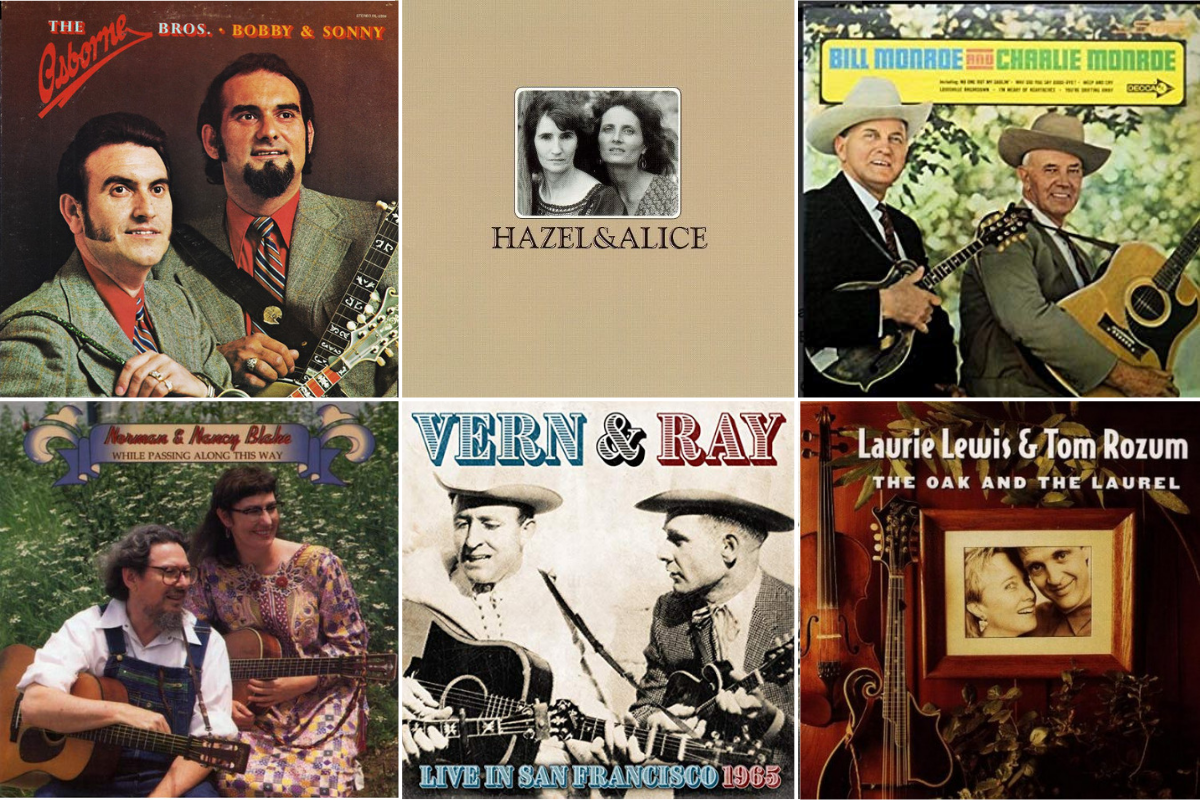
Everyone knows that in the early days of bluegrass, before that term was even coined, all you needed to make a “band” was two people and two instruments. Fiddle and banjo? Sure. But in those days, they’d take whatever they could get. Duos are still a strong presence in the music today, in brother/sibling duos, spouse-led bands, and legendary collaborations.
Check out these twenty-two bluegrass pairings — and their accoutrement — on BGS:
Bill & Charlie Monroe
Before Bill Monroe, the Father of Bluegrass, made his indelible mark on the genre (quite literally giving it its name), he was already a popular performer with his brothers Charlie and Birch. Birch left The Monroe Brothers in the mid-1930s, and Charlie and Bill went on to enjoy success on the road, in the studio, and on the radio — until rising tensions and a fateful fight in 1938 caused them to split ways. But, without that fight, we may not have “bluegrass” at all.
Flatt & Scruggs
December 1945. The Ryman Auditorium. Nashville, Tennessee. Bill Monroe and his Blue Grass Boys stepped on stage for the Grand Ole Opry with Lester Flatt and Earl Scruggs among their ranks for the very first time and bluegrass as we know it today was born. Flatt & Scruggs left Monroe in 1948 to join forces and went on to become one of the few ubiquitous, household names of bluegrass.
Hazel Dickens & Alice Gerrard
Undeniably trailblazers, Hazel Dickens & Alice Gerrard are widely regarded as the first women in bluegrass to capture the “high lonesome” sound popularized by Monroe, the Stanley Brothers, and others. They toured across the U.S., often supporting causes that benefited forgotten, downtrodden people from all backgrounds and walks of life. They were inducted into the Bluegrass Music Hall of Fame in 2017.
The Stanley Brothers
Natives of the music-rich southwest corner of Virginia, Carter and Ralph Stanley were prolific recording artists and touring musicians in bluegrass’s first generation. Countless songs written and/or popularized by the Stanley Brothers and their backing band, the Clinch Mountain Boys, are staples of the genre today. Carter passed in 1966 and Ralph continued until his death in 2016 with the Clinch Mountain Boys — who still tour today with Ralph’s son, Ralph II.
Don Reno & Red Smiley
Unsung trailblazers of the first generation of bluegrass pickers, Reno & Smiley were tireless innovators with a jovial, sometimes silly flair to their songs and instrumental prowess. Their duets are simply some of the best in all of bluegrass. The duo performed together off and on from the early 1950s to the 1970s — but both passed away much too young, Smiley in 1972 at the age of 46 and Reno in 1984 at the age of 58. Reno’s frenetic, electric and pedal steel guitar-infused licks remain unmatched in banjo picking today.
Jim & Jesse McReynolds
With matching suits and impeccable pompadours brothers Jim and Jesse McReynolds often brought rockabilly, rock ‘n’ roll, mainstream country and pop sensibilities to their take on sibling harmonies and bluegrass brother duos. Jesse’s crosspicking on the mandolin was — and continues to be — absolutely astonishing. Jim passed in 2002, Jesse continues to perform on the Grand Ole Opry to this day. At the time of this writing, he is ninety years old.
Laurie Lewis & Tom Rozum
Laurie Lewis often takes top billing — as leader of the Right Hands and before that, the Bluegrass Pals, and others — but since 1986 her musical partner Tom Rozum has almost constantly been at her side on the mandolin and harmonies. Their duo recording, The Oak and the Laurel, was nominated for a Grammy in 1995. Here is the album’s title track:
Bill Monroe & Doc Watson
What is there to say? Two of the folks who paved the way for this genre, laying a foundation so strong and far-reaching that we still can’t fully comprehend its impact. Bill and Doc collaborated on more than one occasion and we, as fans and disciples, are lucky that so many of these moments are captured in recordings and videos.
Del McCoury & David “Dawg” Grisman
At face value, an unlikely combo, but their friendship goes back to the early 1960s and their musical endeavors together began soon after. As Del slowly but surely became a bastion for traditional bluegrass aesthetics applied broadly, Dawg embraced jammy, jazzy, new acoustic sounds that sometimes only register as bluegrass-adjacent because they come from the mandolin. Opposite sides of the same coin, their duet makes total sense while at the same time challenging everything we think we know about the music. In this clip, Dawg sings tenor to Del — not many would be brave enough to try!
Ricky Skaggs & Keith Whitley
They got their start together in the Clinch Mountain Boys with Ralph Stanley, making some of the best recordings in the history of the band’s many iterations. Before they both struck out on wildly successful, mainstream careers they recorded a seminal duo album together, Second Generation. It remains one of the most important albums in the bluegrass canon — especially as far as duos/duets go.
Norman & Nancy Blake
Norman is well known for his flatpicking prowess, which has graced recordings by John Hartford, Bob Dylan, the Nitty Gritty Dirt Band, and so many others. He and his wife, Nancy, were married in 1975 after having begun their musical forays together a year or so earlier. Nancy’s command of many instruments — cello, mandolin, and fiddle among them — balances neatly with Norman’s jaw-dropping, singular style on the flattop. Their inseparable harmonies and timeless repertoire are merely icing on the cake.
Jimmy Martin & Ralph Stanley
How their first album together, First Time Together (cough), is not more well-known is truly impossible to understand. The King of Bluegrass and the Man of Constant Sorrow twining their extraordinary voices must have been ordained by a higher power. It’s a good thing they answered the call. Be careful, Jimmy’s percussive G-runs feel like a slap in the face — in the best way.
Darrell Scott & Tim O’Brien
Their live albums together and their co-written masterpieces belong in every museum and shrine to roots music around the world. Both of these triple threat (Quadruple? Quintuple? When do we stop counting?) musicians are rampantly successful in their own right, but together they are simply transcendent. Their cut of “Brother Wind” deserves a listen right this instant and “House of Gold” gives you the harmony acrobatics gut punch you need every time. It was nearly impossible to choose just one, but here’s a hit that was recorded once by a little group called the Dixie Chicks.
Ricky Skaggs & Tony Rice
Again, words fail. Skaggs & Rice is a desert island record. Each and every time these two have graced a recording or a stage together, magic has been made, from their days with J.D. Crowe & the New South and on. We only wish that they could have done more together.
Vern & Ray
Vern Williams and Ray Park were California’s original bluegrass sons. Though they were both born and raised in Arkansas, they relocated to Stockton, California, as adults. They’re often credited with “introducing” bluegrass music to the West Coast. They disbanded in 1974 (both passed in the early 2000s), but their influence is palpable to this day, even if they’re sorely unheard of east of the Mississippi. This deserves correction! Immediately!
Eddie & Martha Adcock
Eddie is a pioneering banjo player who’s a veteran of both Bill Monroe’s Blue Grass Boys and The Country Gentlemen, two decidedly legendary and influential acts. His style is somewhat wacky, certainly singular, but effortlessly bluegrass and traditional as well. He married Martha in the late 1970s and the pair have toured prolifically as a duo. In 2008, Eddie underwent brain surgery to correct debilitating hand tremors. He was kept awake, playing the banjo during the procedure — and there is jaw-dropping film of this online!
Dailey & Vincent
When Dailey & Vincent burst onto the scene in the mid-aughts after both having notable careers as sidemen, the bluegrass community rejoiced at the reemergence of a wavering art form within the genre — traditional duo singing. However, Jamie and Darrin, whether they knew it at the time or not, had their sights set much higher. Now more of a full-blown stage show than a bluegrass band, their recordings and concerts are a high-energy, charismatic, and downright entertaining mix of classic country, Southern gospel, quartet singing, and yes, bluegrass.
Kenny & Amanda Smith
Husband and wife Kenny and Amanda first recorded together in 2001, going on to win IBMA’s Emerging Artist of the Year award two years later. They’ve now cut eight albums together, all clean, clear, crisp modern bluegrass that centers on Amanda’s impossibly bright vocals, which maintain a personal, country hue alongside Kenny’s fantastic flatpicking. SON!
Tom T. & Dixie Hall
Two of the most recent inductees into the Bluegrass Music Hall of Fame, Tom T. and Dixie Hall wrote hundreds and hundreds of songs cut by country, bluegrass, and Americana artists alike. Tom T.’s reputation and chart-topping originals tend to eclipse Dixie, but he is unyielding in his efforts to point that same spotlight at his beloved wife instead, who passed away in 2015. Though she never performed — definitely not to the extent that Tom T. did — the marks she left on bluegrass, country, and her partnership with her husband are indelible. This number was co-written by the pair:
The Louvin Brothers
Recipients of IBMA’s Distinguished Achievement Award in 1992, the Louvin Brothers are another example of early bluegrassers who enjoyed the amorphous, primordial days of the genre before it became more and more sequestered from mainstream country and country radio. Their duets are iconic, with counter-intuitive contours and lines that bands and singers still have difficulty replicating to this day. Their most famous contribution to the American music zeitgeist, though, might not be their music, but the spectacular cover art for their 1959 album, Satan Is Real. If you haven’t seen it, Google it right now.
Delia Bell & Bill Grant
Natives of Texas and Oklahoma, respectively, Delia Bell and Bill Grant met through Bell’s husband, Bobby, in the late 1950s. Between their band, the Kiamichi Mountain Boys, and their duo project they recorded more than a dozen albums together through the 1980s. Famously, Emmylou Harris became a fan when she heard their cut of “Roses in the Snow,” which Harris went on to record on her eponymous bluegrass record. Bell died in 2018.
The Osborne Brothers
Though they popularized a style of three-part harmony that had never been heard before — the infamous “high lead” harmony stack — their band, no matter who it may have included over the years, was undeniably helmed and anchored by Bobby and Sonny. (Which does explain the name.) You may remember “Rocky Top” and “Ruby” first and foremost in their discography, but the hits they’ve contributed to the bluegrass songbook are innumerable. Here’s one such classic.
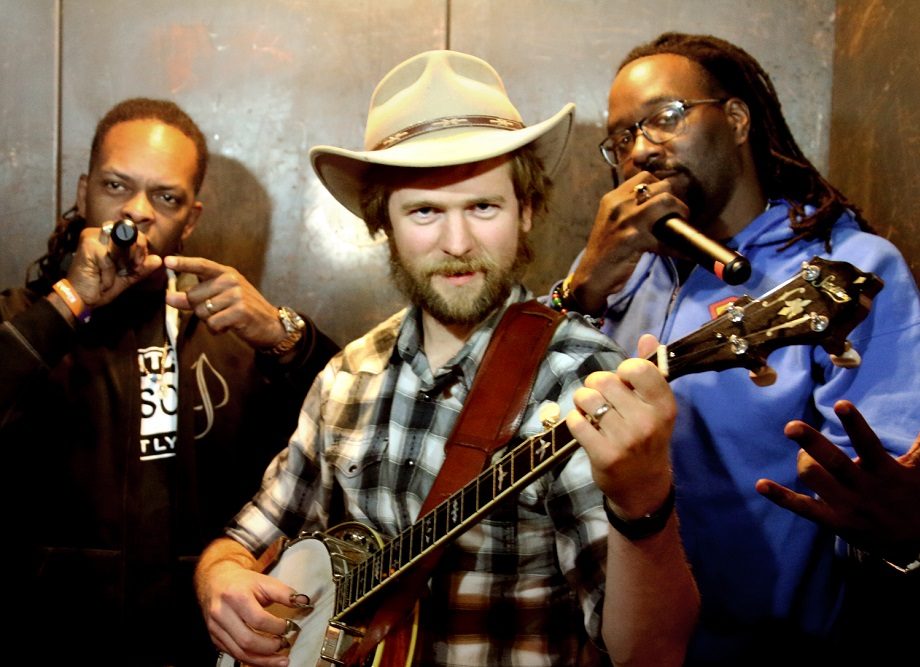
As purveyors of genre crossing, we like to recognize standouts within a genre that innovated simply by epitomizing a sound with particular skill: tracks that demonstrated what virtuosity could do within a genre, that pushed the genre to new heights (or at least new places) for us, tracks that maybe we used to judge what came afterward. We could list a lot of classics, but this list is really about the tracks that were the standard setters for each of us personally, making a mark in how we thought about a genre or sound. For our Mixtape, we selected a few songs and described the impact the tracks made. — Gangstagrass
Flatt & Scruggs – “Foggy Mountain Special”
Earl’s fast, regular picking in songs like “Foggy Mountain Breakdown” made his three-finger rolls, like the Foggy Mountain roll, iconic. But this heavily-swung tune, while not a slow song by any standard, really explores the bluesy side of bluegrass banjo. The syncopated banjo kick, with the band entering on the second beat, throws off the listener’s perception of time. The main lick itself deserves to be as iconic as any fast-flowing Scruggs roll. And that solo! From the single-string bends to that chromatic octave line, Earl knows to keep playing it just a little bit longer. You couldn’t go back and redo any part of this any better, not in a hundred years. They nailed it.
Norman Blake and Tony Rice – “Little Beggarman/Gilderoy”
Tony Rice sounds his best on duo albums, whether it’s with country superstar Ricky Skaggs on a journey to reconnect with his bluegrass roots, or songster Norman Blake, whose clear-as-a-stream picking and earnest vocals are augmented by Tony’s unparalleled rhythm work and rich baritone. On this instrumental track, guitar and mandolin trade breaks and, unusually, trade tunes. Because they’re both in A, with similar chords and melodies, you almost don’t notice the transition, except that the tune Blake plays on mandolin is minor, while Tony’s guitar tune is major. It’s a beautiful, subtle effect that showcases both artists and enhances the sound of each instrument.
The Steeldrivers – “Ghosts of Mississippi”
Before Chris Stapleton was Chris Stapleton, he was in a band called the Steeldrivers. The mainstream music audience has rightly picked up on his powerful vocals and formidable songwriting, but arguably his best work has been with this band that gave him a perfect setting. From the smoldering growl of the banjo to the searing whine of the fiddle, the sound has not been surpassed by either Stapleton’s pop work or by any other bluesy bluegrass band. This track in particular sets the bar, serving up equal parts groove, emotion, and one hell of a catchy melody.
Béla Fleck and the Flecktones – “Hole in the Wall”
The Flecktones represent Béla’s furthest ventures outside traditional bluegrass, and this late track on their second album, Flight of the Cosmic Hippo, is a representative example of their early sound. Of note, Howard Levy’s keys get more room than on most other tracks which tended to feature more of his admittedly superlative harmonica work. Near the end, there’s enough sonic buildup to justify a fantastic extended banjo solo with fluidly shifting time signatures and tonalities. Banjo players who have tried to emulate this piece will have noticed that, like many Béla tunes, it centers around a particular lick, in a particular nonstandard key, played in open G tuning. But as with magic, sometimes understanding the trick doesn’t make it any less exciting to see it performed right in front of you. — Gangstagrass
Pharoahe Monch feat. Black Thought – “Rapid Eye Movement”
Every now and then there’s a collaboration that you just know is going to be dope just by the parties involved. “That’s what I figured when I saw these two MCs on a track from Pharoahe Monch’s 2014 album P.T.S.D. I wasn’t prepared for HOW DOPE, however,” says R-SON. Pharoahe Monch drops bars about being in a relationship with his ammunition and then filing for divorce and releasing his “ex-calibers.” Not to be outdone, Black Thought starts his verse with the last two lines of Pharoahe’s and goes on to “send shots to ancient Greece to pop Socrates.” Black Thought’s line “the ex-slave sado-masochist/who gave massa my ass to kiss” is, as R-SON puts it, “just another example of Black Thought’s conscious swagger that laces every verse that he blesses a track with.”
Black Star – “Thieves in the Night”
Mos Def and Talib Kweli came together on the Black Star album and created gems but this was the standard for R-SON. Their distinct flows built two very different parts — Kweli’s recounting what his man Louis said and thought and how those thoughts affected Kweli. Mos Def’s verse, on the other hand, had a breakdown of the hook where he responded to the things said in it. The song ends with one of the great lines in the genre’s history: “I give a damn if any fan recall my legacy, I’m tryina live life in the sight of God’s memory.” R-SON notes that “in my younger days the song brought tears to my eyes and I’m happy to say that it still does.”
Mos Def – “Mathematics”
We cannot think of another time when someone counting from 1 to 10 (Dolio the Sleuth on “Ain’t No Stopping” aside) has had more meaning. Mos raps, “5 dimensions, 6 senses, 7 firmaments of heaven and hell, 8 million stories to tell, 9 planets keep orbit around the probable 10th, the universe expands length….” He continues his “…numbers game, but shit don’t add up somehow,” speaking of the number of bars he has to do what he does, and the minimal amount of money he gets from it all. “6 million ways to die for the 7 deadly thrills / 8-year-olds getting found with 9 mils / it’s 10 p.m., where your seed, he’s on the hill/….pumping crills to keep they bellies filled.” His word (and number) play is immaculate.
UGK – “Int’l Players Anthem (I Choose You)”
A seminal “posse cut” that unites two legendary duos of Southern hip-hop, UGK and Outkast, exhibiting four distinct flows and approaches to the subject of being a “player.” Each emcee delivers a memorable verse complete with the stunning street poetry they’re known for, with cadences that ride the beat (or the lack of beat, in the case of Andre 3000’s intro verse) that samples heavily from Willie Hutch’s “I Choose You” from the soundtrack of 1970s Blaxploitation flick, The Mack.
Ralph Stanley and the Clinch Mountain Boys – “Nobody’s Love Is Like Mine”
Rench was listening to 1970s-era Clinch Mountain Boys when he started putting Gangstagrass together as a sound. There’s been a good deal of attention to the Stanley Brothers, but the sound was developed and refined to a new level with the addition of Ricky Skaggs and Keith Whitley. The vocal harmonies are tight and the full string section is on point in a way that epitomizes the best of classic bluegrass sound.
Stuff Smith – “Serenade for a Wealthy Widow”
Stuff Smith is one of the few truly iconic jazz fiddlers. His style is on Charlie Parker’s level. “In an alternate reality, where we weren’t so hung up on jazz’s horn players, I feel Stuff would have been one of the fathers of bebop,” says Brian. Stuff’s style pulls from such a diverse array of influences, from Stéphane Grappelli to the Western swing fiddlers like Bob Wills. The gruffness of his tone and clarity of his lines point to the meld between the character of string band/blues fiddlers players before him like Clifford Hayes and Robert Roberson, and the progressive harmonies that took over jazz after bebop. Stuff is the perfect example of harmonic personality over the harmonic intellectualism that followed. “This track is one of the more off-beat compositions that I love to surprise folks with,” Brian adds.
Slam Stewart – “Oh Me, Oh My, Oh Gosh”
“I feel much the same way about Slam as I feel of Stuff; his musical voice is synergistic of the eras before and after him,” Brian says. The way he rides the rhythm comes from an era of bassists mimicking the sound of tubas in marching bands, indicative of players like Bill Johnson, Wellman Braud, and Pops Foster. His style foreshadows others like Jimmy Blanton, Oscar Pettiford, and Ray Brown with their strong solo personalities. This tune is a favorite; it’s a slick lyric and showcases what Slam can do on all fronts.
Outkast – “Rosa Parks”
This one came out of left field in 1998 — when Southern rap was growing into national attention — and planted a flag with the trademark quirkiness of Outkast style, including a harmonica breakdown in the middle of the song. Their fast-flow style is undeniable and surgical here, while their unabashed Southern drawls in this radio hit opened the floodgates for Southern hip-hop to start dominating the charts.
Wilson Pickett – “Hey Jude”
This has a lot to do with the way the Swampers in Muscle Shoals epitomized the soul sound of the ‘60s in the best way, but this track in particular pushed boundaries by including what would later become familiar Southern rock sounds, courtesy of a young Duane Allman. Of course, the wicked Mr. Pickett kills it with a prime example of soul vocals just owning the track.
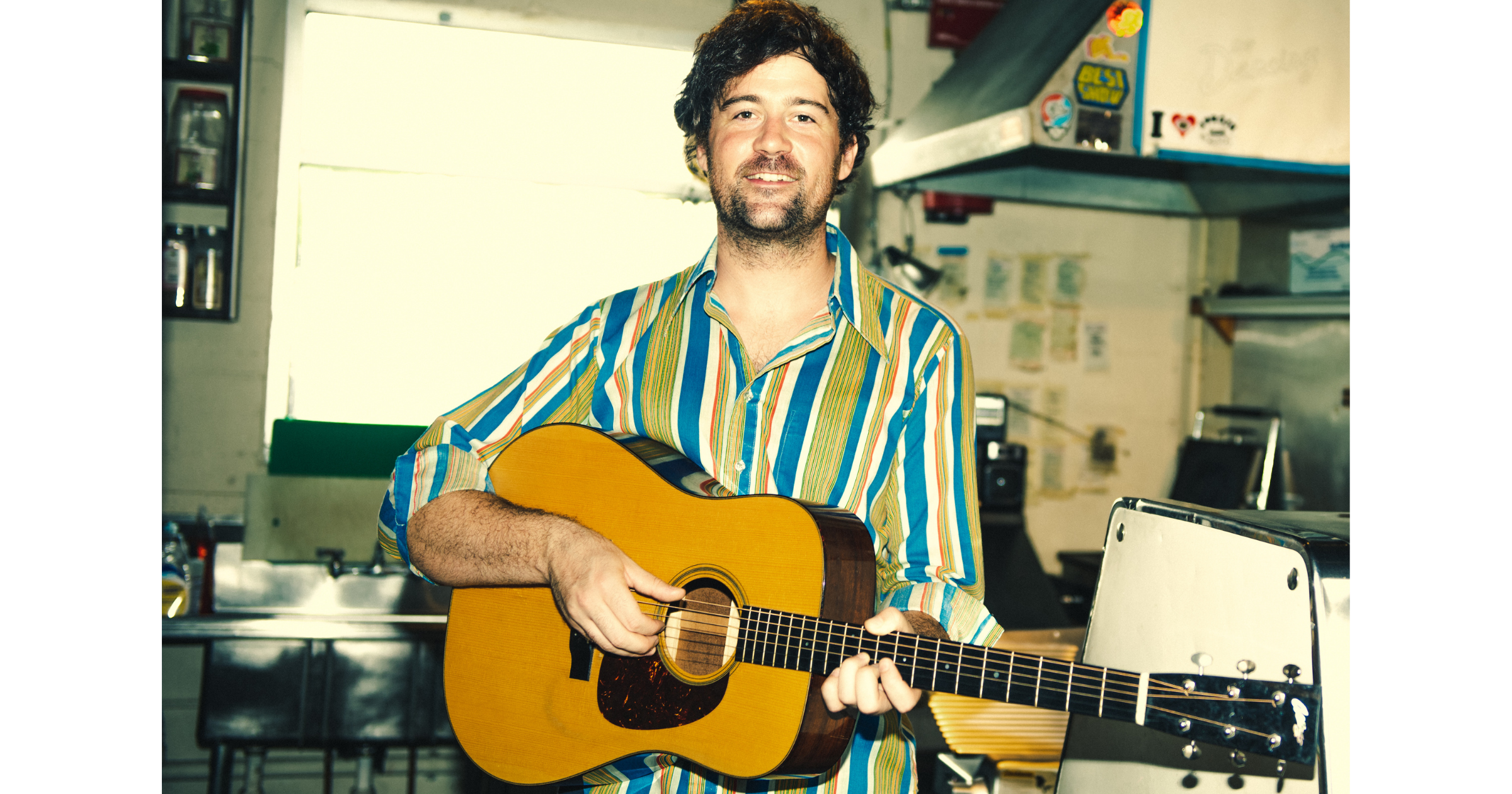
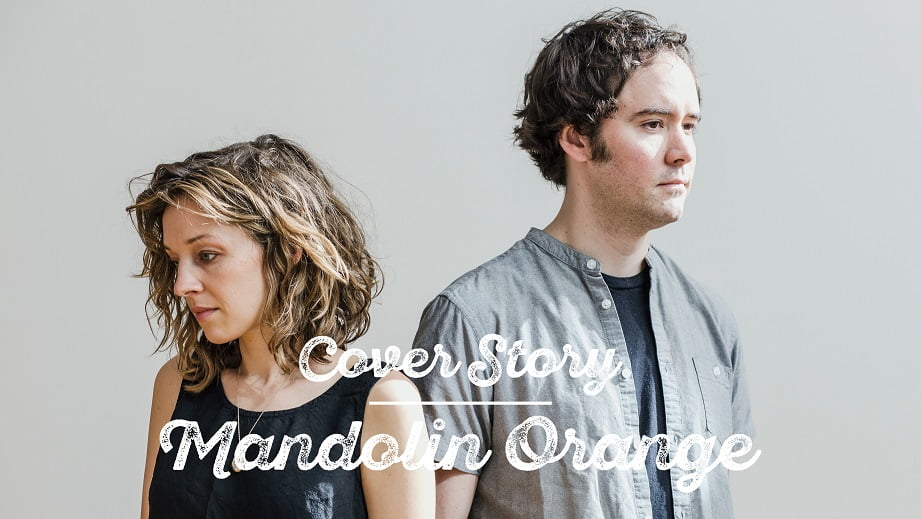
Because they have developed a fan base that stretches across genres and generations, it isn’t so easy to, ahem, segment Mandolin Orange into one specific category. But throughout a decade of performing together, bluegrass has been a major part of the music created by the duo’s Andrew Marlin and Emily Frantz. In the second part of our BGS cover story, they discuss their biggest bluegrass influences.
Editor’s Note: Read Part One of the BGS Cover Story with Mandolin Orange.
BGS: There’s a real country feel on “Lonely All the Time.” Are you classic country fans?
Andrew: Yeah. It’s not something I dig into, and really break apart, like I do with old-time and bluegrass music, but I think Emily and I both grew up listening to classic country. My dad is a country music fan, and that was a song that inadvertently got written from his perspective, living alone these days. I wanted to do a classic country duet sound for that, and Emily had the idea to do harmony all the way through it, like a George Jones and Melba Montgomery tune.
Emily: I think our road to classic country has been more roundabout. We listen to a lot of bluegrass, and when you listen to a lot of the older country, it’s a lot more acoustic and smaller-sounding, sonically. A lot of it is not very different than standard bluegrass tunes. It feels like that’s a natural path for us to go down with this band.
Andrew: Yeah. I like Hank Williams and early Johnny Cash, where it’s just a small ensemble playing the music.
Who are some of the bluegrass musicians you return to, just for enjoyment?
Emily: Andrew spends a ton of time listening to Bill Monroe, from a place of really digging into mandolin, and I guess for enjoyment too. But for listening pleasure, I would say a lot of the brother duets – the Stanley Brothers, the Louvin Brothers…
Andrew: Yeah, the Stanley Brothers for the songs, too. They were lonely, man. They were lonely dudes! I think the Stanley Brothers had a natural, bluesy feel, and their songs were so heavy and beautiful. Definitely, for songwriting, the Stanley Brothers would be a big influences, especially on our tune, “Suspended in Heaven,” on the new record. But also the Sam Bush and Tony Rice era. I listen to a lot of Sam Bush and Tony Rice, and just keep getting farther and farther into the Sam Bush catalog. I love his energy and what he brings to whatever ensemble he’s playing. It’s cool that he has a documentary out about him now. He’s getting the respect that he is due.
You may never emerge if you dive too deeply in Sam’s catalog. That stuff is so great, and sounds so good at festivals. He’s like the king of festivals.
Yeah, I think that’s because he’s able to maintain what he wants to do musically, but he’s still energetically appealing to mass audiences. That’s a hard to thing to do at a festival and I feel like he does it well.
That festival crowd can be tough. How many festivals have you all played over the last 10 years?
Andrew: We’ve played a bunch of ‘em. And playing quiet music. That can be an intimidating thing sometimes.
How did you overcome that?
Andrew: We shut our eyes and just hope they don’t mind hearing some quiet music. (laughs)
Emily: I think it was actually realizing that there is a place for that at festivals, even though it doesn’t seem like it. We’d get on stage and feel outgunned at the outset, but the more that we talked to people and realized that they appreciated having that in their festival experience, to offset all the crazy jamming going on. Everybody needs to balance out a bit. Once we realized that, we were able to own it a little more and recognize that that could be our role.
Andrew: It’s more like the hangover weed crowd than the late night drunk crowd, I would say.
I want to go back to “Suspended in Heaven.” It does have that Stanley Brothers sound, but it also has that church music sound, in a way. Are you influenced by music of the church?
Emily: Probably more in that we listen to and enjoy the old gospel tunes that are part of the bluegrass repertoire. We both grew up with church music but it wasn’t necessarily this kind of church music.
Andrew: My mom’s mom was the piano player for the church I went to, growing up, and then my mom took over her responsibilities, then my sister took over for a little while. So it’s like three generations of piano players at this church in Afton (North Carolina) that we went to, growing up. I was around a lot of old hymns and old gospel music, and you can’t really separate my mom from gospel music. I think in wanting to pay homage to her, and to her life, it made sense to write a standard old gospel tune. I guess the lyrics are not traditionally leaning but the sound definitely is.
Tell me how you became interested in bluegrass music.
Emily: For me, it was in the very beginning when I was taking Suzuki violin lessons as a kid. Our teachers didn’t give lessons in the summer but they did fiddle camps. I always played by ear but that was my first experience of being encouraged to learn to play by ear and not being forced to read sheet music. So I learned “Old Joe Clark” and “Bile ‘Em Cabbages Down” – all the first fiddle tunes you learn. And gradually I phased completely out of doing anything classical.
I was able to take more fiddle lessons and play in a local bluegrass band around the time I started high school. And learned a ton from the guys I was playing with, about how to sing tenor and what role the fiddle is supposed to play. It’s cool that traditional bluegrass has pretty hard-and-fast rules about what the given instruments are supposed to do, and I’m really glad that I learned that. We don’t play that way ourselves, on our own tunes necessarily, but it’s really fun to jump in and make a bluegrass song sound just like bluegrass-–if you know the rules.
Andrew, how about you?
Andrew: I’d only just started getting into bluegrass when Emily and I met each other, actually. I grew up with country and switched to rock ‘n’ roll, and then from there I fell into a metal zone. I was in a metal duo, actually, before I moved to Chapel Hill. I don’t think there are any recordings of that out there – hopefully not. I credit the Skaggs & Rice record a lot as being that switch for me that flipped me to bluegrass. When I heard that, I was like, ‘Who is this guitar player?” And the way they are singing together, it’s really quality. Especially Ricky Skaggs’ mandolin playing on that record.
So from there, I found out about Norman Blake and David Grisman and John Hartford and of course Sam Bush. I just fell in love with it, and especially the mandolin. So I think when Emily and I first met, I’d only been playing the mandolin for a year or so.
Emily: Andrew didn’t know very many bluegrass tunes. I was more of the source, at that point.
Andrew: She was showing me a bunch of fiddle tunes to learn on the mandolin, which really helped me figure the instrument out. I’m still figuring it out. So I’d say meeting Emily was a big part of my schooling in bluegrass, in a lot of ways.
After ten years of knowing each other, do you have a good intuition about what the other person is thinking?
Emily: I would say yeah, especially musically. I think all those years, too, of playing just the two of us, it becomes like a second language, and you don’t even necessarily realize it’s happening.
Was there a time when you did realize it was happening? Where you thought, “Wow, this is actually pretty good.”
Andrew: It depends on what we thought the other one was saying. (both laugh)
Emily: I remember reading an interview with Gillian Welch a long time ago, when she was talking about playing with a duo, about how it’s so much harder than playing with a full band, but also how it’s so much easier. And a lot of the things that she said about it made me realize how we were communicating, in a way that I didn’t necessarily realize before.
Andrew: I definitely love the spontaneity of playing in a duo, playing with just one other person. It’s really hard to make that split-second decision to vamp on a chord if you forget a lyric, or to extend a solo section, when there are four other people on stage with you. But when it’s just the two of us, we can kind of look at each other and give an eyebrow raise, and it’s like, “Oh yeah, I forgot the lyrics, so….”
Emily: It’s not even visual sometimes, but if somebody misses something, you automatically compensate for it in some way, and it’s not even conscious. I guess that’s probably possible in larger ensembles but it probably takes ten times as long to get there.
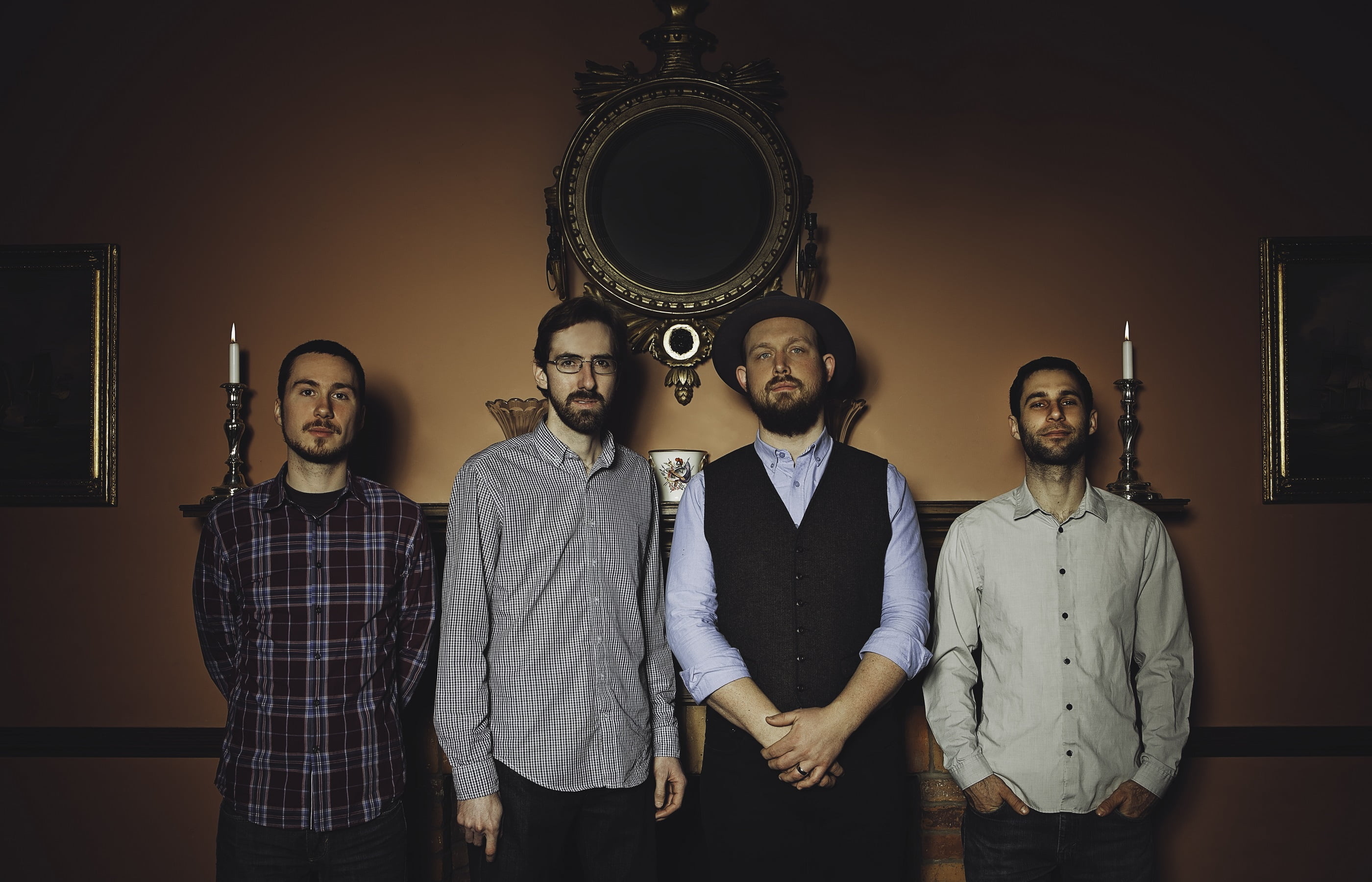
Artist:The Unseen Strangers Hometown: Toronto, Ontario Song: “Church Street Blues”
In Their Words: “We are massive Norman Blake fans in the Unseen Strangers and are always working up different songs of his. I started listening to this one when I first got into bluegrass guitar and digging into the music of Tony Rice, so there’s quite a bit of his version in there. ‘Church Street Blues’ is certainly a flatpicking classic and we are excited to share our arrangement with this video. It was recorded live in the Back 40 forest at the Tottenham Bluegrass Festival in Ontario. When we can’t agree on what song to play next we always just play this one.” — Adam Shier
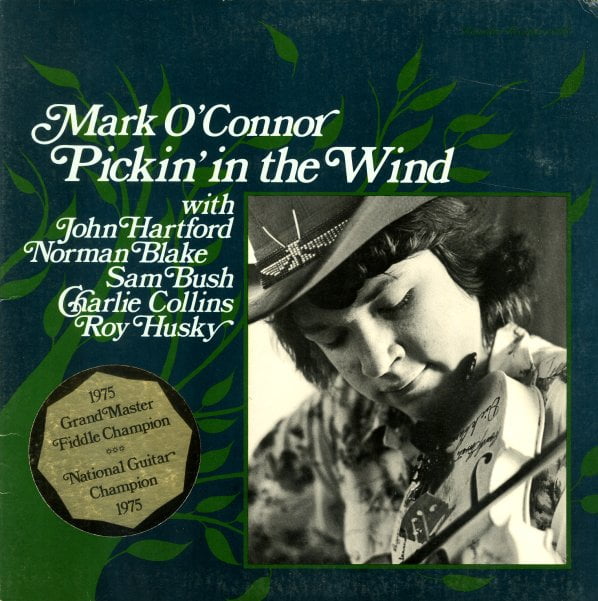
Mark O’Connor comes about as close to being a household name as any musician in bluegrass (and its adjacent genres). Because bluegrass is predicated upon instrumental skill, the origin point of O’Connor’s recognition will always be his virtuosity, his musical expertise, and his command of his instrument. He’s a true master of bluegrass fiddle and contest fiddle forms, he’s a trailblazer in fiddle-flavored classical compositions of all manners and sorts, his musical code-switching extends to jazz, gypsy jazz, and swing, and he is pervasive on recordings and sessions from his years spent in Nashville. He even has his own violin and fiddle curriculum, The O’Connor Method, which pedagogically capitalizes on and celebrates American music, rather than Western European music, as usual.
Yet, no matter the level to which he transcends any/all musical barriers or the ubiquity of his name and brand, many folks don’t know he’s a maddeningly adept guitar player as well. In his youth, as he racked up wins at fiddle contests far and wide, he was also taking home flatpicking trophies with the same bravado. On his iconic 1976 album, Pickin’ In The Wind, the title track and the first tune on the record opts not to showcase his signature fiddling, but rather his guitar picking — backed up by a band that is no less than jaw-dropping: John Hartford on banjo, Sam Bush on mandolin, Norman Blake on dobro, Roy Huskey Jr. on bass, and Charlie Collins on the rhythm guitar. The tune listens down as straight-ahead bluegrass, but with a chord progression and arrangement that never strays into the simplistic, thanks in part to O’Connor’s compositional taste and the supreme talent of his fellow musicians. It’s an O’Connor staple that doesn’t require a single bowstroke.
So, in celebration of O’Connor’s birthday (August 5), it seems appropriate that we shine a light on the guitar stylings and the unbelievable ensemble of “Pickin’ In The Wind.”
The songs and artists on this playlist evoke a sense of hard-fought, hard-won, deep and rich joy. It is not a simple, one-dimensional joy. It has the sound of being churned about, tried and tested again. And now, just maybe, the joy being properly vetted, can be enjoyed. I look up to these artists, as they convey a message of calm and confident optimism.
We are all faced with the dualities of a temporal world…birth and death, gain and loss, pleasure and pain.
These songs speak to the strength of the human spirit amidst that world, and give me courage to carry on regardless of what’s happening, good or bad. They also provide a glimpse at an eternal reality of peace and balance (that has nothing to do with time, space or duality) that is hard to see or believe in when I am churning in the opposites…fear of loss, a craving for more and more solidity, and the dread that I will never have or be enough.
We need artists for this very reason; to go beyond our normal, conditioned ways of thinking about life, and to give us a new perspective with which to test our old and sometimes outdated paradigms.
My area of expertise is bluegrass and old-time fiddle. Though I am not a vocalist or pop artist, I gain inspiration from all styles. The feeling and sound of the above mentioned “hard-won joy” is what transcends specific genres for me. A goal of mine is to take this base emotional element, and with it, transfuse my fiddle playing and songwriting.
My hope is that you can find some joy and something to relate to in these songs as I did. Thank you for listening.
Photo Credit Louise Bichan
This website uses cookies to improve your experience. We'll assume you're ok with this, but you can opt-out if you wish.AcceptRejectRead More
Privacy & Cookies Policy
Privacy Overview
This website uses cookies to improve your experience while you navigate through the website. Out of these, the cookies that are categorized as necessary are stored on your browser as they are essential for the working of basic functionalities of the website. We also use third-party cookies that help us analyze and understand how you use this website. These cookies will be stored in your browser only with your consent. You also have the option to opt-out of these cookies. But opting out of some of these cookies may affect your browsing experience.
Necessary cookies are absolutely essential for the website to function properly. This category only includes cookies that ensures basic functionalities and security features of the website. These cookies do not store any personal information.
Any cookies that may not be particularly necessary for the website to function and is used specifically to collect user personal data via analytics, ads, other embedded contents are termed as non-necessary cookies. It is mandatory to procure user consent prior to running these cookies on your website.