Robbie Fulks Reflects on a Funny, Smart and Heartfelt ‘Bluegrass Vacation’

In the liner notes to his new album Bluegrass Vacation, released at the beginning of April, Robbie Fulks talks about his formative experiences in the genre. He also mentions how, as a young musician in the early ’80s, he drifted away from it in search of the coolness of trendier sounds. “But what made me think there was anything cooler than bluegrass?” he asks, playfully reprimanding his younger self.

Bluegrass Vacation makes the case that there is indeed nothing hipper than some of the world’s most decorated musicians tearing into a tried-and-true format. And it doesn’t hurt when they do so in service of smart, funny, heartfelt material, which is what Fulks delivers here and is emblematic of his output for the past three decades. While he proves that he can write rollicking back-porch jams like “One Glass of Whiskey” and “Let the Old Dog In,” he also slows the tempo for tender acoustic beauties like “Molly and the Old Man” and “Momma’s Eyes.” And in the stunning “Angels Carry Me,” he pushes bluegrass boundaries with a multi-movement piece of fearless lyrical and musical complexity.

Considering it took 2 ½ years from first session to album release due to pandemic holdups, Fulks is thrilled to finally have Bluegrass Vacation out in the world. He talked to BGS about early influences, his impressive cohorts on the record, and whether he’d consider dipping back into the genre again.

BGS: What are your earliest memories of bluegrass and what drew you to it?

Robbie Fulks: Early memories are a reel-to-reel tape of Doc Watson’s first Vanguard record. There were a couple of other records on the tape as well, but Doc was the first thing up, “Nashville Blues” going to “Sitting on Top of the World,” that warm, beautiful, versatile sound. Doc did all these different things that kind of put him one foot in bluegrass and one foot out. That was probably the earliest thing that hooked me. And then after that it was like The Country Gentleman and Will The Circle Be Unbroken. A couple of other records that my folks had, and then the festivals.

What made you decide that now was the time to do an all-bluegrass record?

Generally, over the last 10 years, I’ve been making more inroads. My bluegrass hot-shot Rolodex has expanded to where it’s like, holy shit, I have Jerry Douglas’ email and can call Sam Bush (laughs). It just seemed like it had reached a tipping point the last couple of years where it was like I gotta do this. The older guys are going to be dead soon including myself, and that’s part of the reason (laughs). But I’ve been leaning that way more and more for the last five to 10 years.

Did your songwriting process change at all?

I varied my angles on the songwriting as I went along. On a couple of them, I had a genre thing in mind. Like “Lonely Ain’t Hardly Alive,” I was thinking about Jimmy Martin in the late ’50s and early ’60s and wrote to that. With “Angels Carry Me,” that came about because I had inked (mandolinist) Sierra (Hull) on a session. I started thinking about what kind of a groove I would like to hear her on and wrote from the groove forward thinking about the way she plays.

And did writing for bluegrass steer you in the direction of any particular subject matter?

I’ve noticed that I gravitate repeatedly toward four or five rough subjects over and over again. One of them is alcohol, and that shows up in a couple songs. One of them is memories of when I was a kid, and that shows up. Or music itself. When these subjects show up, I always think “Should I go ahead, or not go ahead?” Because it’s well-trodden ground for me. Like “Old Time Music Is Hear to Stay,” I thought “Well, I’m writing another song about music. I’ve done of lot of that. Should I go forward?” And as I went forward with the song, I just found that I really liked it and that compensated for any qualms about having done something similar before. I guess it’s a long-winded way of saying no, it really wasn’t any different. Just going into a room with an instrument and seeing what happened.

Considering the incredible instrumentalists on this record, did you give them a lot of direction? Or was it more like, “Here’s the song. Let it rip?”

Generally, I’ve noticed in the studio that the less I say, the better. Because it’s surprising how you can say four words that seem well-chosen and exactly what you want and then things go haywire because it’s overinterpreted or misinterpreted. My approach is that I definitely have things in mind and I chart and have rough end points in mind. But when you hear the first go at it, I go with the idea that that’s what it’s going to be, like 90 percent, and then I direct the other 10 percent of it as delicately as I can.

Tell me about recording “Angels Carry Me,” which is fearless with how it expands the notion of what a bluegrass song can be.

The people that were on the session, it skewed a little younger, because Sierra was there and (guitarist) Chris (Eldridge) was there. And (fiddler) Stuart (Duncan) is just kind of ageless and genre-less, just pure music. Todd (Phillips) is the same way on the bass. He’s a really wide-brained guy. I think if it had been different players, it might have been more of a challenge. But those players can go anywhere and just have adventurous spirits, as do I. It was never a question that it would be too weird for somebody to get their mind around.

That song also has one of my favorite lines I’ve heard in a long while: “And only a fool thinks he can leave just by driving away.”

That was a line that took me by surprise. I worked on the song for three or four weeks in an attitude of mystery and concern (laughs). Because I didn’t know where it was going or what I was doing. It was kind of amorphous. But the appearance of that line at the end, it seemed like, “Ah, that could have been in my sights the whole time and I just didn’t know it.” It appeared as a gift.

Did you have to embellish any of “Longhair Bluegrass,” which talks about you going to see a festival as a kid with your parents?

I think the only untrue part is that in the fourth verse, I put an example of somebody at the festival, an old-timer that was not into the younger generation and their attitude. And I put in Wilma Lee Cooper because I looked at a poster of that Culpepper festival. Her name fit and I thought the age bracket kind of fit. In the session, Sam Bush said, “No, she was real easy-going about it.” I said, “Who wasn’t?” And he said, “Probably Ralph Stanley.” So I put that in. That was a little untruth, because I didn’t see Wilma or Ralph at that festival looking around angry. And maybe my parents weren’t stoned out of their heads like I implied in the song (laughs).

You talk in “Old Time Music Is Here to Stay” about picking up the electric guitar and then losing interest in it as you returned to more traditional sounds. How accurate is that?

100 percent. I think it was just a natural thing for me to want to swim with the current when I was 17 years old. But even at the time, I think it was at the back of my mind that this music by, I don’t know, Aztec Camera and Big Country or U2, it was OK, but it just didn’t grab me in the way that I was grabbed by a Doc Watson record. It was a little bit more work coming to the popular music of the late ’70s, early ’80s. But what can you do? The stuff that gets in you when you’re five or ten years old, that’s the stuff that doesn’t go away.

Did you feel extra pressure on this record because you wanted to do the genre proud?

There was pressure there, but it was more from being in an isolation booth and looking out the glass door and seeing Sam Bush over there or Ronnie McCoury over there. No matter how welcoming these people are, it’s a mind fuck to pick up your instrument and be playing with them (laughs). It freaked me out a little bit.

I know you just finished this one, but is it possible you could return to the genre again somewhere down the road?

I’m starting to think about what to do next. I’m open-minded. If people like this enough, I loved doing it. I would do another one.


Photo Credit: Scott Simontacchi
On ‘Lovin’ Of The Game’ Michael Cleveland Brings His Bluegrass Community to the World

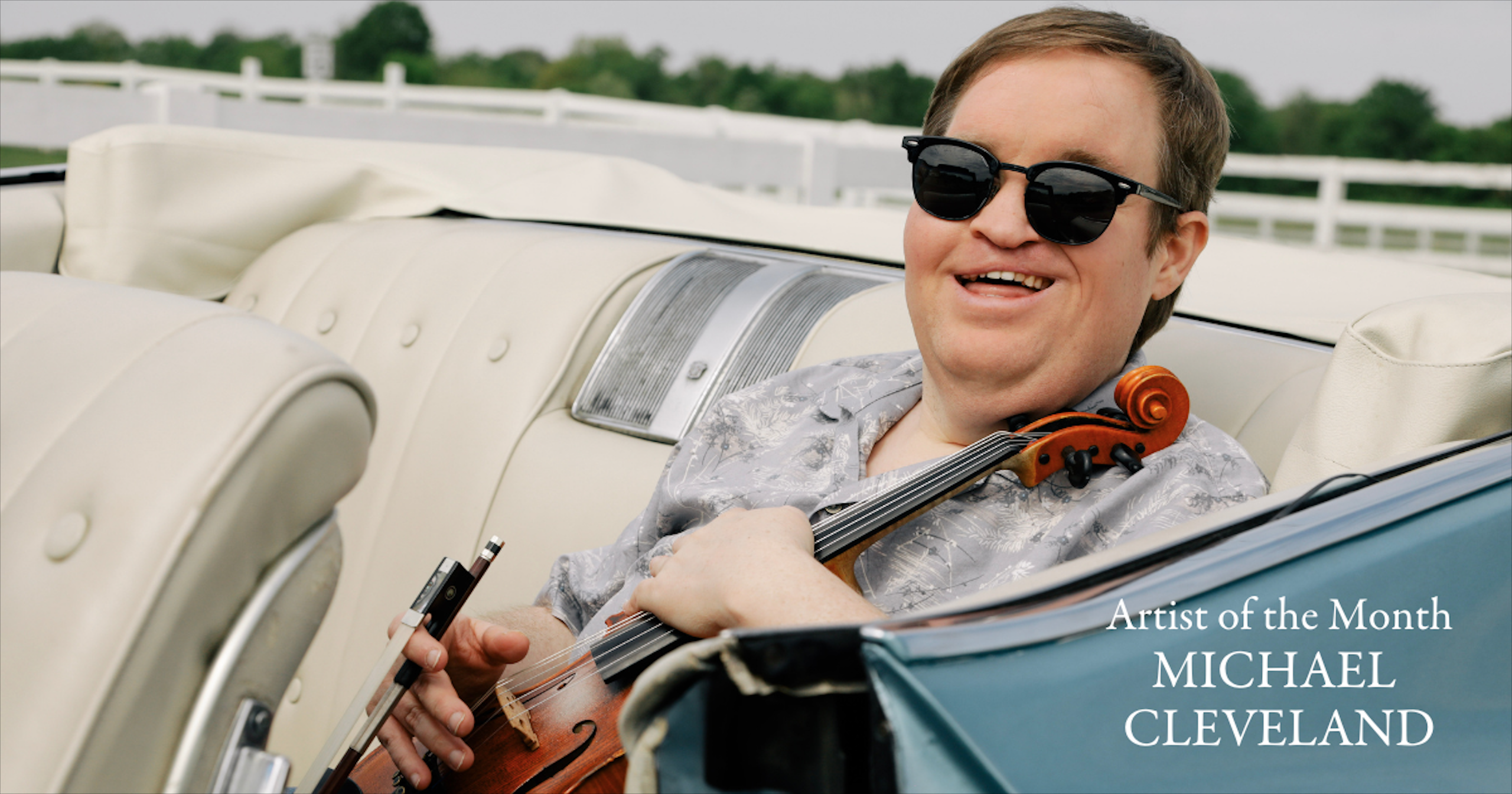
The entire world is learning what the bluegrass community has always known: Michael Cleveland is a once-in-a-lifetime talent. Cleveland has long enjoyed critical acclaim inside the bluegrass circles he grew up in – he is a 10-time winner of the IBMA Fiddle Player of the Year Award – but, given this genre’s inward-facing bent, his fiery, impassioned playing has most often reached listeners and fans who are already diehard acolytes. 

Now, with his sixth studio release, Lovin’ Of The Game, Cleveland’s star is objectively rising. Recent collaborations with stratospherically famous pickers like Béla Fleck and Billy Strings – both of whom appear on the new project – along with several jaw-dropping viral videos have demonstrated to the world beyond bluegrass conferences and festivals that Cleveland is worth paying attention to. 

And it’s all thanks to his truly unique voice on his instrument. The American public, and roots music fans across the globe, understand rip-roaring fiddle just as well as they relate to a speedy banjo breakdown or a screaming, arena rock guitar solo. With every note Cleveland pulls from his fiddle, there’s a grit, an ease, endless emotion, and a winking sparkle that all at once conjure the aggression of Charlie Daniels and the tenderness of “Ashokan Farewell.” It’s infinitely appealing, even to uninitiated fans, and it’s a delectable gateway drug, a window into a vibrant instrumental tradition that most folks only interact with casually. With Cleveland’s playing, every listener is given permission to love the most elemental parts of bluegrass, old-time, and country music – and to feel like it’s something they discovered for themselves. 

They are certainly discovering it. Six albums down and Cleveland is continuing to put one foot in front of the other, with constant innovation and enthusiasm, and a long view that envisions endless opportunities for new albums, new collaborations, and new music to be made. All the while, he’s bringing hundreds and thousands of new fans into these rootsy genres. Michael Cleveland shows all of us how much joy – and fire – can be found in the Lovin’ Of The Game

This is your sixth studio release – it’s not a “sophomore album” or a third or fourth record, even – you’ve got quite a lot of miles under your feet at this point and have made quite a few albums. What’s your perspective at this point, looking back and looking ahead? 

MC: What I wanted to show with this album and with [the last album,] Tall Fiddler, is that I still love and will always play traditional bluegrass, but I can and like to do a lot more than that. I wanted to definitely show that on this record, because a couple of people that I talked to recently – Béla Fleck being one of them, I heard Béla say in an interview, “I wasn’t really sure if Michael would want to play with me.” And I thought, “Who wouldn’t want to play with Béla Fleck!?” It’s kind of a no-brainer! I get what he’s saying, though, in the sense that a lot of people are comfortable in what they do, they’re happy doing that, and they might not want to stray too far from that. That’s not necessarily the case with me. I wanted to have some different stuff on this record, a lot of traditional bluegrass, but some things that push the envelope a little bit and let people know that I do like to do more than just straight-ahead bluegrass.

As far as straight-ahead bluegrass albums, to be quite honest with you, the albums that I did early on – like Flamekeeper and Let ‘Er Go, Boys! – as far as straight-ahead bluegrass goes, those would be my favorite albums. Not because of anything that I did on those albums, but because of the band. The bands on those albums and the groove that they play is like no other. Audie Blaylock, Jesse Brock, Jason Moore, who we recently lost last year, Tom Adams, Charlie Cushman, and people like that – I dunno if there’s a way to top those albums. We could do different material, but the groove and the feel that those guys played is like no other. So, the thing is to do something that’s a little different from that.

I view your fiddling as so innovative and cutting edge; when we hear you play, we’re hearing your musical thoughts just pouring out on your instrument. You can be couched so firmly in “tradition” and still be innovative, but then on the outside looking in, when a listener isn’t necessarily a diehard bluegrass fan, your playing can feel just traditional. Now that you’re getting well-deserved notoriety not just in bluegrass, but further afield too, how does it feel to try to show people your musical perspective when traditional bluegrass means different things to different people? 

You know, that’s my favorite audience, and I think a favorite audience of my band, to play to. We like to play bluegrass festivals and we always hope to play bluegrass festivals, but man, I like to play bluegrass for people that have never heard it before. Any time I’ve ever done that it’s been well received. If it’s put in the right situation, like seeing what Billy Strings is doing now. He’s playing traditional bluegrass and thousands and thousands of people are hearing that that have never heard it before or would have never paid attention to bluegrass. 

We did a couple of shows with the Louisville Orchestra here. We’re talking the Kentucky Center for the Arts’ Whitney Hall. I think it held like, 2,400 people. And it was a full house! Some of them probably knew what bluegrass was, some of them were there to see us, but I would guess that a far larger number of people were there and probably didn’t know what bluegrass was or what to expect. It went like gangbusters! [Laughs] It really did. Any time I’ve been in a situation like that where bluegrass is presented to an audience that isn’t familiar with it, it’s great. That’s what I like to do more than anything these days. 

It’s hard to look at it objectively, given that it’s me, but it gives me hope that there’s a future for bluegrass. And that it’s not just the stereotype that people think of – that it’s Deliverance. I think mainly, it’s encouraging to see new people getting into it, whether it’s me or Billy Strings or anybody else. I think that’s a good thing. 

Bluegrass is so much about community, it feels like a family. Your albums are so collaborative, whether they’re centered on your band Flamekeeper or not. I sense your community represented so strongly on this record, you’re working with Jeff White producing again, you’ve got old and new friends on the record. But I also wanted to give you a chance to talk about Bill Wolf and Eddie Wells, friends of yours in music who recently passed on and you dedicated the album to.

For records like this, it’s so fun for me to not only get to collaborate with people that I’ve worked with in recent years, but to find the right song that would suit these situations. It’s one thing to have Billy Strings or somebody come in and sing something, and they could sing anything and it would be good, but to find a song that they can actually own and it sounds like something they do, that’s a little harder. My producer, Jeff White, he’s a huge help in picking songs. I have to say this time, we had a lot of good songs to choose from. 

The community thing– number one, I like to get my favorite players, people that I really enjoy playing with whether they’re a “name” or not. My buddy Cody Looper, he played on “Five Points.” I love playing with Cody. He played in my band for about a year or so and he has a job where all of a sudden he wasn’t able to get time off so he had to leave the band. We all hated it, and we still keep in touch and get together to play every once in a while. Anytime I can have him on something I like to do that, because he’s just so fun to play with. Like Lloyd Douglas on Fiddler’s Dream, he played banjo on that album. Lloyd is another one of those guys that maybe not a lot of people are aware of, but he’s just as good as a lot of the people out here killing it.

It’s about who will fit the song. That’s very important to me. It’s got to fit, whoever you get on it has gotta be somebody who can contribute to the song – not just a name. 

And you mentioned Bill Wolf and Eddie Wells, they’re two guys who I’ve probably known since I was really little. Oddly enough, I didn’t really get to know them until I was older. Then Bill, I think, retired from Ford around ‘96 or ‘97 when I had my local band and we started playing together. Those two guys, when I wasn’t on the road, through high school and even up until a couple of years ago, if I was hanging out and jamming at a festival or doing some local gig or having a jam at the house, those two guys would be there. I learned more about music, dynamics as a band, how to play together as a band, and singing trios from those two – Bill Wolf and Eddie Wells and my other friend Cecil Jackson, those three guys singing together was the best. They’d sing Country Gentlemen stuff like no other. I learned a lot and played a lot of music over the years with those two guys and they passed away really not too far apart from each other. I miss them a lot and I wanted to do this album in memory of them and as a way to say thanks for all I learned being around them and all the good times we had together. 

One song that really jumped out at me on the record is a special version of “Temperance Reel,” which I’ve heard Luke Bulla perform over the years. I love how Luke and Tim O’Brien’s voices are blending together on the track – I love how stripped down it is. Can you talk about recording that one? 

I had heard Luke Bulla sing that song a few years ago, I think it was in 2017. Jeff White and Laura White were married and Jeff asked me to be the best man at his wedding. I went down there for that and they had a rehearsal and the night of the rehearsal it was also Ronnie McCoury’s birthday, so there was a big picking party over at this house. Everybody was there. Just about everybody you can think of in Nashville who played bluegrass was there. Luke sang this song and I remember hearing it and really liking it. While working on the album, Jeff was doing a bunch of dates with Lyle Lovett and Luke was in the band. Jeff mentioned that Luke was singing “Temperance Reel” and I happened to ask, “Has he ever recorded that?” Jeff said yes, but he hadn’t released it or something like that. I knew it would sound good with three fiddles and it was my idea to keep it to just the fiddles, we just had to see if we could make it sound full enough to work. 

There’s something about Luke and Tim’s voices, they’re so reedy that they really sound like they’re blending with the fiddles and the bowing. 

It’s wild! I couldn’t be happier with how it turned out. I love not only Tim’s singing, but the part that he plays, the third part on the fiddle. It’s got this Celtic thing to it, too, that really added a lot to the whole track. 

What’s next? What are you excited for? I know you’re deep in the throes of releasing this album, and you’re gaining so much momentum and getting great national press …

Man, I don’t know what’s going to come of this but we’ve never had so much go on at the time of an album release. [Laughs] I’m thrilled about what’s happening so far. It’s already so much more than we would have dreamed of. It will be cool to see what happens. 

I do a lot of session work here at the house, people hire me to work on tracks and I’ve got a studio at home, so I record pretty much every day that I’m home. And the band has a pretty busy summer lined up and I’ve got some more dates with Béla Fleck and My Bluegrass Heart coming. Lots of stuff going on! And I’m working on some new projects that hopefully we’ll be able to tell you about pretty soon. 


Photo credit: Amy Richmond

What Del McCoury and Ronnie McCoury Took From Monroe, Flux, and the Dawg

Del McCoury is a legend many times over. A snapshot from any period of his life would be enough to earn him a place in the history books. From his time playing with Bill Monroe in the early ‘60s to fronting his own band with his sons Rob and Ronnie McCoury, Del’s career is a triumph. The Del McCoury Band is the most-awarded band in IBMA history, and Del has been honored with a Grammy Award, induction into the Bluegrass Hall of Fame, and a lifetime achievement award from the National Endowment for the Arts.

Since moving to Nashville in the early ’90s, The Del McCoury Band has recorded more albums than they can remember. (Literally. I asked them and they couldn’t remember. It approaches near two dozen.) Their latest album, Almost Proud, furthers their musical legacy. In a visit with The Bluegrass Situation, Del McCoury and Ronnie McCoury talk about recording it during the pandemic, digging through a big box of submissions for material, and learning a trick from Jerry Douglas that they still use to this day.

BGS: Del, you’ve fronted a band for many decades and this version with your sons has been around since the ’90s. How has the process of picking the material and arranging it changed over that course of time?

Del: Well, I’ll tell you, we used to do a lot of prep before we went in the studio, years ago when it was just me and the band. But now the boys have their own band and they’re a lot busier now. For the last several records, I just kind of picked the material and I’ll try to find the right key and tempo and all those things. And we won’t even have a rehearsal or anything until we get in the studio. We just mainly do all of the hard work in the studio after we’re in there.

I’ve always been in awe of how this band not only picks great material but also plays it in a way that makes it unique and often an instant bluegrass classic, no matter the original genre. What goes into how you pick material?

Ronnie: I still don’t know what Dad’s going to like. I found “1952 Vincent Black Lightning” through a guy named Dick Bowden. He gave me a tape of it after the band had played a show. It was just Richard Thompson playing solo guitar on a radio show. Dick said he thought it’d be a good song to cover and as soon as I heard it and the fingerstyle guitar I thought, “Wow, this could be good.” Well, I took it to Dad, and he passed on it for the record we were making. But then the next record, he pulled it out and said, “You know, I’ve been listening and I think that would make a pretty good song.” So, like I said, I don’t know what’s going to hit him and when it will.

But with my dad, it doesn’t matter what he plays or sings. Number one, it’s going to have strong guitar rhythm. Number two, it’s going to be his voice. Through the years, I figured he can sing about anything. For example, when he played with the Preservation Hall Jazz Band, everybody was like, “I wonder how this is going to work.” Well, he just opens his mouth and does what he does, and it is what it is, and it’s great! People will pigeonhole others for their style of singing. My dad’s got a high lonesome sound, but it always seems to work.

My dad taught us how to have that feel and the elements of first generation bluegrass. The drive, how to play fast and when you need to, how not to overplay, and how to back up behind a singer, things like that. People don’t always have a teacher that really knows that stuff, so it sometimes doesn’t come easily or at all. We were just lucky to have this guy who was so well-rounded. A great guitar player but a banjo player first and such a good singer. He can sing any part, and he loves to sing bass, too.

Those elements are all very present in this band for sure. The fiddle is a very lyrical instrument to begin with but I’ve always particularly considered Ronnie’s mandolin playing and Rob’s banjo playing to be a really interesting combination of melodic/lyrical and still very traditional sounding.

Del: Yeah, I know what you mean. They don’t strictly depend on melodic notes to do something, but they make their style work around the melody that they’re trying to play. They do that. They try to keep it fairly simple.

It’s very masterful, the subtlety of all of it. I imagine you had a hand in guiding them when they were younger.

Del: I tell you, I never even thought about my sons playing music. I don’t know why I didn’t, but I just didn’t. Maybe it’s because when I was learning to play, I had a lot of cousins. They’d hear me and they’d want to learn to play, and I’d show them something. And then, of course, next week they’d be into baseball or something else. They forgot about music that quick. And I guess I thought they might also lose interest in this music. But they never did. Rob started playing banjo when he’s about 9. Of course, I started playing guitar when I was 9, too. My older brother taught me the chords. But I was not really all that interested in playing until I heard Earl Scruggs. I was about 11 then. And that really switched something up in my brain.

But my boys, they were always around music. Ronnie played violin in school when he was really young, but he also was in Little League and he was their star pitcher. And you know what happened? His violin teacher told me, “He’s really doing good on this.” And I said, “Really?” She said, “Yeah, he learned so fast.” Well, it comes to where there is going to be a recital in school at the same time there’s going to be a big Little League baseball game. And he was supposed to be in both of them. He chose the baseball game. And, oh, his teacher called! She was so disheartened because he was one of her finest students. But he kind of forgot about music just for a little while.

And I took him with me to New York City. I was playing a show and Bill Monroe was one of the acts there. It was during Ronnie’s school vacation between Christmas and New Year’s so I brought him with me. Bill took an interest in Ronnie. He put his hat on him and he put his mandolin in his lap and he said, “Now you play me something on this mandolin.” I didn’t think nothing about it at the time. But when we got back home, Ronnie asked if he could have this old mandolin I carried around on the bus. And once Ronnie got that mandolin, he never laid it down.

Well, now those guys, when they did start learning to play on their own, I could hear them in my spare time—I was pretty busy in those days. And I hear them playing and I could tell they were missing a note here and there and I’d just tell them where to find it and then let them go on their own. I just didn’t bother them much. Boy, they learned fast.

That’s great. I think all of that is a big part of the sound but there’s something about the arrangements that has always made you all stand out, I think.

Ronnie: As far as arranging things, when we got to Nashville and did that first record, Jerry Douglas produced it and one of the first things that we did still sticks with me. I wound up singing “A Deeper Shade of Blue.” Flux is the one that gave us the beginning and end of it, this lick. And I was like, “Oh, wow, we can put a lick on tunes.” I was just so straight-ahead that I had never even thought to do that. I credit Flux with opening my ears to that because he’s so musical.

That is interesting because that kind of thing is usually associated with pop-adjacent music. Your music is so traditional but having those hooks does make the songs stick in your mind.

Ronnie: It probably also comes from listening to all kinds of music. I’m a product of the ‘80s. When I was in school I was hearing all of the rock and newer stuff that was being played on the radio. I never gravitated to it as much as I probably did to Southern rock. We loved the twin guitars of the Allman Brothers. What’s interesting is that those guys were listening to this stuff. Dickey Betts was a bluegrass fan and I remember he and Vassar had a duet thing. They used to play together in Florida.

That makes sense. There’s a full-circle element there as well. The Allman Brothers are sort of the prototypical jam band and now you guys are playing shows with Greensky, The String Cheese Incident, Railroad Earth, etc.

Ronnie: You’re right about that. Part of the reason we got into that world we’re in is that there’s already a Del McCoury Band, and we wanted to do something different, but we couldn’t call it the “Del-less McCoury Band.” So we had to do something that was different sounding. When I grew up I had no idea that mandolin players were doing anything but what Bill Monroe did. I was around 15 years old when the Dawg came out with that first record, the David Grisman Quintet album with Tony Rice on it.

The arrangements and playing on there were really influential and all that stuff squeaks into your music. You’re a product of what you hear, I guess. Those guys changed so much. There’s the guys that don’t get credit on the banjo like Bobby Thompson and then the next guy was Bill Keith. From Bill Keith comes [Tony] Trischka and Béla [Fleck], and it just moves on. But the Dawg, man, he was kind of the first one to take the Monroe and Wakefield stuff and stir it up like that. I’m a big proponent for him to be in the Hall of Fame.

The ensemble abilities of this group are some of the best in the business. Having so much family in the band lends itself to that, but Jason Carter and now Alan Bartram have been in the band so long I imagine that you all can anticipate what each other will do next.

Del: That’s true. It makes it easier, because I think we all kind of think alike and are satisfied in what we’re doing. And I’ll tell you something, I think it helps keep them interested. Like on live shows, we never have a set list, and they never know what’s coming next. When we get on stage, we just go up there and do a few tunes. I like to introduce each member of the band. I’ll let them tune or choose a song to sing after I get the four of them introduced. Then a lot of times we just start doing requests from the audience, and all through the set, we’ll try to work in things that we just recorded or had released, whatever. But for the most part, we’re doing requests from the audience. They know that when they go up on stage, they don’t know what’s happening next, and I don’t either, but that’s kind of the fun of it.

You are a link to those older traditions, and those were a lot more about performing than making records and stuff. It seems to me that performing and being an entertainer is what’s important to you.

Del: You know, I think it probably is because that’s what you do most. You’re never in a studio that long but before the pandemic we’d be out every week doing a show. I like talking to the audience. I think they entertain me more than I entertain them. For example, I ask them questions, like, “What would you like to hear next?” And what entertains me is they’ll request a song, but they get one word wrong or two in the title of the song.

For instance, we get a lot of requests for “1952 Vincent Black Lightning,” and what people have problems with is the year. So, I say back to them, “Well, I don’t know that song.” And then it gets real quiet and they’ll think, “Well, I know he knows that song because he’s got it on a record.” I let them wonder for a little bit before I’ll say, “Well, now, look, I know a song entitled ‘1952 Vincent Black Lightning,’” and then they’re relieved and I’ll play it for them. But just little things like that. They’re so funny. People are funny if you listen to them. They will entertain you.

You guys have put out so many records. Is there anything that makes this one stand out or feel special to you?

Ronnie: Well, probably the fact that during a pandemic, my dad worked and he sat down and listened to like 150 songs or something. He didn’t just rest on his laurels. We got him a tape recorder, a nicer one, that he could record his ideas on because he felt more comfortable working with a tape machine.

Del: All through the years, people have sent or given me songs while we were on the road. A lot of the time, I just throw them in a box and say, “Well, when I get time, I’ll listen to them, see what they are.” So, when this pandemic hit that spring, I thought, “Wow, I’ll get all those things out and listen to them.” And then I picked out certain songs and I started to work on them.

Ronnie: During this time, we’re wearing masks and sitting outside doing our radio show six feet apart and not going in the house. Everybody’s worried about my parents so we were careful. But he worked on this stuff and he wrote some songs. So, what’s special to me are just good memories, really. Just being able to be in a studio with Dad in the middle of a pandemic and getting it done and not having so much wasted time. … The hardest thing through the pandemic for me to see, besides the tragedies where people lost their lives to this stuff, was seeing my dad in his golden years, not being able to do what he wanted to do, which is to travel and play for the people. He knocks us all out with how he can play and sing at this age.

Yeah, it’s pretty amazing.

Ronnie: He knocks me out. I can’t get over it. Like I said, it was amazing to be able to go in and do this record through all this and that his health is still with him. So I’m just proud of that. “Almost Proud,” you could say, ha ha.

“Almost Proud,” there you go.


Photo Credit: Daniel Jackson

Carolina Calling, Asheville: A Retreat for the Creative Spirit

LISTEN: APPLE • SPOTIFY • STITCHERAMAZON • YOUTUBEMP3


Asheville, North Carolina’s history as a music center goes back to the 1920s and string-band troubadours like Lesley Riddle and Bascom Lamar Lunsford, and country-music pioneer Jimmie Rodgers. But there’s always been a lot more to this town than acoustic music and scenic mountain views. From the experimental Black Mountain College that drew a range of minds as diverse as German artist Josef Albers, composer John Cage, and Albert Einstein, Asheville was also the spiritual home for electronic-music pioneer Bob Moog, who invented the Moog synthesizer first popularized by experimental bands like Kraftwerk to giant disco hits like Donna Summer’s “I Feel Love.”

It’s also a town where busking culture ensures that music flows from every street corner, and it’s the adopted hometown of many modern musicians in a multitude of genres, including Pokey LaFarge, who spent his early career busking in Asheville, and Moses Sumney, a musician who’s sonic palette is so broad, it’s all but unclassifiable.

In this premiere episode of Carolina Calling, we wonder and explore what elements of this place of creative retreat have drawn individualist artists for over a century? Perhaps it’s the fact that whatever your style, Asheville is a place that allows creativity to grow and thrive.

Subscribe to Carolina Calling on any and all podcast platforms to follow along as we journey across the Old North State, visiting towns like Shelby, Greensboro, Durham, Wilmington, and more.


Music featured in this episode:

Bascom Lamar Lunsford – “Dry Bones”

Jimmie Rodgers – “My Carolina Sunshine Girl”

Kraftwerk – “Autobahn”

Donna Summer – “I Feel Love”

Pokey LaFarge – “End Of My Rope”

Moses Sumney – “Virile”

Andrew Marlin – “Erie Fiddler (Carolina Calling Theme)”

Moses Sumney – “Me In 20 Years”

Steep Canyon Rangers – “Honey on My Tongue”

Béla Bartók – “Romanian Folk Dances”

New Order – “Blue Monday”

Quindar – “Twin-Pole Sunshade for Rusty Schweickart”

Pokey LaFarge – “Fine To Me”

Bobby Hicks Feat. Del McCoury – “We’re Steppin’ Out”

Squirrel Nut Zippers – “Put A Lid On It”

Jimmie Rodgers – “Daddy and Home”

Lesley Riddle – “John Henry”

Steep Canyon Rangers – “Graveyard Fields”


BGS is proud to produce Carolina Calling in partnership with Come Hear NC, a campaign from the North Carolina Department of Natural & Cultural Resources designed to celebrate North Carolinians’ contribution to the canon of American music.

During Lockdown, Del McCoury Finally Got Around to “Running Wild”

Del McCoury has every right a person can have to slow down, take it easy, and bask in his own accomplishments. But, instead of taking some well-earned time off, the iconic bluegrasser engaged his inner music fan, keeping his ears open to new songs, albums, and artists. During the lockdowns and periods of isolation in 2020, while performing was off the table, Del McCoury found joy in going through dusty boxes of demos, listening to new music, and hearing new stories. From his childlike curiosity, he pulled together a collection of songs for an upcoming album titled Almost Proud.

With a working-man’s mentality and an evident penchant for learning, McCoury made an album that perfectly embodies his attitudes toward music. “I’m as excited about listening to new music today as the day I started — finding a new tune or a story that tickles me,” he says. “This album is the best of what I heard while the world was on pause.”

To announce the album, McCoury (a reigning IBMA Male Vocalist of the Year) released “Running Wild,” a song that he started 15 years ago but only took the time to finish in lockdown after his son, Ronnie McCoury, played him a portion of a long-lost demo. It’s a classic cheating song, the likes of which are littered throughout the songbook of classic bluegrass tunes. Although there’s some time until the album will be released in full on February 18, keep a look out for more tour dates from the Del McCoury Band, because there never was an 82-year-old that worked harder in bluegrass. As he notes, “If I’m not interested, how can I expect the audience to be?”


Photo Credit: Jim McGuire

LISTEN: Leftover Salmon, “Boogie Grass Band”

Artist: Leftover Salmon
Hometown: Boulder, Colorado
Song: “Boogie Grass Band”
Album: Brand New Good Old Days
Release Date: May 7, 2021
Label: Compass Records

In Their Words: “This old Conway Twitty song was recommended for the band by our friend Ronnie McCoury years ago. It speaks to where we sit on the musical spectrum. We love country, bluegrass and rock music and like to do them all at the same time! This song acknowledges that while taking it taking it in a uniquely Salmon direction.” — Vince Herman, Leftover Salmon


Photo credit: John-Ryan Lockman

MIXTAPE: Music to Drive Your Kids Around (Without Driving Yourself Crazy)

Among the many writer’s hats I wear is one of children’s music reviewer. When my daughter was in grade school, it was fun playing various kids CDs for her. She’s in college now, so those days are gone. I did keep her in mind, however, when putting together this playlist, thinking about songs that she would tolerate listening to now.

A lot of people associate children’s music merely with those simple, preschool music-time tunes about numbers, letters, and other lessons for toddlers. And there certainly a lot of those songs. But, as in any genre, there is a lot of interesting children’s music being made too.

This mixtape is a “mix” in a several ways. It mixes together songs by “adult” musicians who have ventured nicely into the family music world as well as children’s musicians with what some might call “crossover potential.” There are originals and covers. Fast songs and slow ones. And hopefully it’s a mix that Bluegrass Situation families can enjoy on an hour-long drive, whether it’s a fast drive or a slow one.

To create some parameters, I chose recordings released since 2000, only recordings made for children, and, yes, only recordings found on Spotify (I couldn’t find Jessie Baylin’s Strawberry Wind or I Love: Tom T. Hall’s Songs of Fox Hollow or else they might have been represented here). Also, I also stayed away from songs that seem to appear on every fourth children’s album (sorry, “Rainbow Connection”). — Michael Berick

The Okee Dokee Brothers – “Hope Machine”

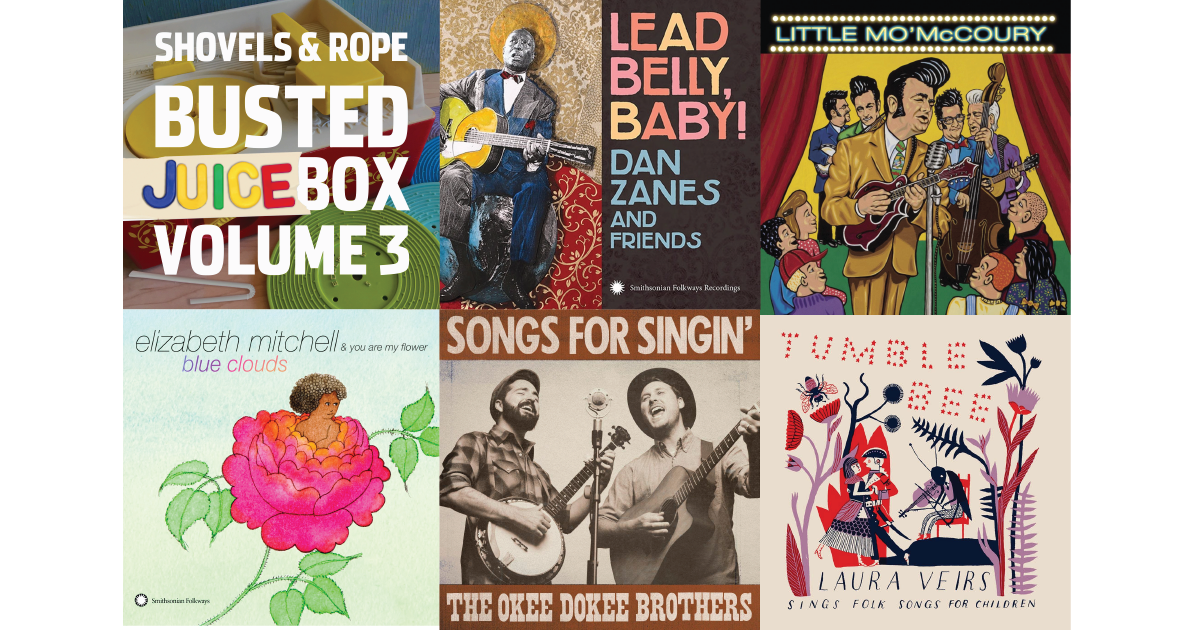
These “brothers,” Joe Mailander and Justin Lansing, have put out a handful of excellent, old-school, folk-inspired albums that mix originals with traditional tunes. You can hear the Woody Guthrie influence in this cheery, gently philosophical original from their 2020 album, Songs for Singing. Here, as in all their music, there’s a wonderful, easy-going approach that doesn’t dumb down to kids.

Elizabeth Mitchell – “Blue Sky (Little Martha Intro)”

This Elizabeth Mitchell isn’t the actress from Lost, but the singer/guitarist from ’80s indie rockers Ida. Over the past 20 years, she has also made many terrific children’s albums, mainly for Smithsonian Folkways. Featuring nifty guitar playing from her husband and longtime collaborator Daniel Littlefield, Mitchell’s acoustic cover of this Allman Brothers classic hails from her Blue Clouds album, where she also reconceives Bowie, Hendrix, and Van Morrison songs.

Randy Kaplan – “In a Timeout Now”

On his album Mr. Diddie Wah Diddie, Randy Kaplan has great fun taking “poetic license” with old blues tunes and, in this case, the Jimmie Rodgers hit “In the Jailhouse Now.” Kids will love the comical lyrics and parents will appreciate Kaplan’s inventive, child-friendly renovations on roots music nuggets.

Laura Veirs – “Soldier’s Joy”

I read somewhere that “Soldier’s Joy” is one of the most played fiddle tunes of all time — and that it was a slang term for morphine during the Civil War. Veirs, who hails from the Northwest indie rock scene, keeps her version on the toe-tapping PG side. This duet with The Decemberists’ Colin Meloy comes from her highly recommendable, and only, children’s album, Tumble Bee.

Wee Hairy Beasties – “Animal Crackers”

This kooky side project by alt-country all-stars features Jon Langford (Waco Brothers/The Mekons), Sally Timms (The Mekons), Kelly Hogan, and Devil in the Woodpile. Pun lovers of all ages will revel in the wild wordplay running through the title track to this decidedly goofy 2006 album.

Little Mo’ McCoury – “The Fox”

Little Mo’ McCoury arguably stands as the most authentic bluegrass album for children, at least in the 21st century. Ronnie McCoury leads his family band through a set of old-timey tunes plus “You’ve Got A Friend” and “Man Gave Name to All the Animals.” While there are some overly familiar choices (“This Old Man,” “I’ve Been Working on the Railroad), “The Fox” provides a frisky workout of this bluegrass standard.

Meat Purveyors – “The Crawdad Song”

“The Crawdad Song,” along with “Froggie Went A-Courting/King Kong Kitchie Kitchie Ki-Me-O” must rank as the traditional tunes most frequently recorded for children. I included “Crawdad” here because it is the one ingrained more in my brain. And I picked this version because of the Meat Purveyors’ speedy bluegrass-y rendition. You’ll find it on Bloodshot Records’ irreverent kids’ compilation, The Bottle Let Me Down (although parents might want to listen to it before sharing with their little ones).

Red Yarn – “Rabbit in a Log”

Red Yarn (the nom de plume for Oregon-based musician Andy Furgeson) makes rootsy music that appeals to all ages. He frequently travels an early rock and roll route but he follows a more acoustic road on this hopped-up banjo-powered take of the old folk tune that appears on his Born in the Deep Woods album.

Johnette Downing – “J’ai Vu Le Loup, Le Renard Et La Belette”

Louisiana music is a popular Americana style in children’s music, probably because it so easily gets kids dancing. On her album Swamp Rock, the New Orleans musician Johnette Downing does a marvelous job presenting, and explaining, a variety of Louisiana-bred music and culture. This bilingual animal tale (“I Saw the Wolf, the Fox and the Weasel”) showcases two Cajun greats: fiddler Joel Savoy and accordionist Roddie Romero.

Kare Strong & Josh Goforth – “To The Country We Will Go”

Slowing down the tempo a bit, “To the Country We Will Go” offers a leisurely family trip. This song, as with most Kare Strong’s music, contains elements of English folk ballads. Providing the banjo, fiddle and other musical accompaniment is Josh Goforth, a bluegrass vet who has played with David Holt, Appalachian Trail, and Carolina Road.

Francis England – “Blue Canoe”

Sticking in the traveling mode, “Blue Canoe” is a charming little outing from Francis England, who makes consistently excellent music for families. This tune appears on her debut, Fascinating Creatures, an album where I would recommend “Charlie Parker” and “The Books I Like to Read” too.

Dan Zanes featuring Valerie June – “Take This Hammer”

While Zanes is right at the top of the best-known kids musicians today, I couldn’t resist including something by him. He has a whole bunch of fine tunes to choose from and I wound up landing on this one, which he sings with Valerie June, from his 2017 tribute album, Lead Belly, Baby!

Sarah Lee Guthrie – “Go Waggaloo”

I couldn’t exclude the name “Guthrie” from this mixtape. For this title track to her family music album, Sarah Lee (Woody’s granddaughter and Arlo’s daughter) wrote a song using unpublished lyrics her grandfather had written. Starting off like a silly sing along, the tune quickly goes deeper becoming a somewhat autobiographical look at Woody’s life.

Josh Lovelace with Spirit Family Reunion – “Going to Knoxville”

Lovelace took a break from his day job as keyboardist in rock band Needtobreathe to make a kids album. A standout track on Young Folks, “Going to Knoxville” is joy-filled, driving-in-a-car love song, with Spirit Family Reunion’s Nick Panken and Maggie Carson contributing some singing and banjo playing.

Beth Nielsen Chapman with Kid Pan Alley – “Little Drop of Water”

Kid Pan Alley, a Virginia-based nonprofit, sends songwriters into schools to collaborate with students. Chapman wrote this song with a third-grade class. Besides its strong message about water conservation, it’s pretty darn catchy too. My family still remembers it over a dozen years after the disc was last in our car’s CD player.

Justin Roberts – “Rolling Down the Hill”

One of the most skillful songwriters in the children’s music scene, Roberts usually operates in the pop/rock field, so this is a rare tune of his with a fiddle. Roberts injects just enough details into this playful ditty to make it resonate with both parents and kids — without slowing down the momentum.

Shovels & Rope with The Secret Sisters – “Mother Earth Father Time”

The just-released third volume in Shovels & Rope’s Busted Jukebox series is a set of family-oriented covers entitled Busted Juicebox. The husband-wife duo Michael Trent and Cary Ann Hearst partnered with The Secret Sisters for a sweetly sung rendition of this tune from the 1973 animated film version of Charlotte’s Web.

Sarah Sample and Edie Carey – “If I Needed You”

These two singer-songwriters teamed up back in 2014 to make ‘Til the Morning, a lullaby album that shouldn’t just be restricted to nap time. This Townes Van Zandt gem was a particularly inspired choice and their tender interpretation is quite moving.

Alastair Moock with Aoife O’Donovan – “Home When I Hold You”

Moock is a Massachusetts singer-songwriter whose family albums often tackle themes like inclusivity or social action. This track comes from Singing Our Way Through, an inspiring, powerful work he made for families dealing with pediatric cancer. His duet with Aoife O’Donovan conveys a simple yet poignant message of love from parents to a child.

Sara Watkins – “Pure Imagination”

Watkins’ first family album, Under the Pepper Tree, arrives on March 26, and its first single offers an appetizing hint of what’s to come. Watkins’ heavenly, soaring vocals highlight her gorgeous rendering of this Charlie and the Chocolate Factory tune. And celebrating the magic of creativity and the freedom of possibilities seems like a sweet note to leave families with.


Twenty Years After ‘O Brother,’ John Hartford Gets Grammy Attention Again

Some years after the late great John Hartford passed on, his daughter Katie Harford Hogue wound up with his archival material in her basement in Nashville. It was a huge collection, a lifetime’s worth of recordings, books, instruments, notes, stage outfits and all the rest. So she dutifully began wading through everything to sort, organize and catalog it all. And she would come across notebooks with numbers on the cover, which she set aside – 68 of them all together.

“It can be a pretty heavy task to go through someone else’s things like that,” Hogue says now. “And I was not sure what they were at first. But we were able to piece together the puzzle and figure out what these were: They had been his creative journals.”

Representing decades’ worth of raw material, the journals contained nuggets straight out of Hartford’s musical mind. There were some transcriptions of old tunes by other artists, but the vast majority of it represented original music composed by Hartford himself, amounting to several thousand tunes. It was a trove that yielded up a couple of projects that have returned Hartford to widespread attention coming up on two decades after his death.

First came a 2018 book, John Hartford’s Mammoth Collection of Fiddle Tunes, featuring transcriptions of 176 compositions from the journals as well as Hartford’s own illustrations plus writings from Hogue, musicologist Dr. Greg Reish and others.

That led to an accompanying album, The John Hartford Fiddle Tune Project, Vol. 1, featuring an all-star cast of players recording 17 of the archival Hartford songs.

Even though it was independently released, The John Hartford Fiddle Tune Project is up for a Grammy Award in the category of Best Bluegrass Album, alongside Billy Strings, Danny Barnes, Steep Canyon Rangers, and Thomm Jutz.

“Winning would mean a lot,” says Hogue, who is credited as co-producer with Matt Combs. “But I certainly feel honored to be considered, especially in a field like that. The fact that there’s something new that has people paying attention to my dad’s work again is wonderful. Mind-blowing, even. It’s a side of him that a lot of people did not know about, another dimension. I love being a part of that.”

Hartford was no stranger to Grammy Awards, going all the way back to his mainstream breakthrough with “Gentle on My Mind.” Reputedly inspired by the 1965 romantic epic Doctor Zhivago, Hartford wrote and recorded the first version of “Gentle on My Mind” for his 1967 album, Earthwords & Music.

Yet it was Glen Campbell’s version from later that year that put “Gentle on My Mind” on the map. Industry lore has it that Campbell made what he thought was a demo, complete with yelled instructions to the Wrecking Crew studio musicians. Campbell’s producer Al De Lory cleaned it up enough to release as-was. And even though it barely cracked the pop Top 40, “Gentle on My Mind” never left the radio. In 1990, BMI rated it as the fourth-most played song in radio history.

Along with setting Hartford up financially, Campbell’s “Gentle on My Mind” cover won Hartford his first two Grammy Awards. He won another for 1976’s Mark Twang, an album inspired by Hartford’s riverboat experiences on his beloved Mississippi River. And his final Grammy was awarded posthumously, for his contributions to the landmark soundtrack for the 2000 Coen Brothers slapstick epic, O Brother, Where Art Thou?

O Brother’s surprising popularity launched a bluegrass revival and also put a luminous bookend on Hartford’s career. He emceed the Down From the Mountain show at Nashville’s Ryman Auditorium on May 24, 2000 (filmed by D.A. Pennebaker for the concert film of the same name), in which Emmylou Harris, Alison Krauss, Ralph Stanley and other stars from the soundtrack performed. The soundtrack was just starting to take off a year later, on its way to topping the charts and winning a Grammy for Album of the Year, when Hartford succumbed to cancer on June 4, 2001, at age 63.

“He didn’t get to see all of that, but he would have told you that the coolest part of that movie being popular was that it put an old Ed Haley tune in the forefront,” Hogue says. “There’s a campfire scene with a lonesome fiddle playing, and that was my dad playing the Ed Haley tune, ‘I Am a Man of Constant Sorrow.’ That was always his goal, to highlight the old-time music and fiddle players he loved so much. I don’t think he would have taken any of the accolades for himself.”

The Fiddle Tune Project album liner notes include a quote from Hartford himself, something he told Matt Combs once: “If we play our cards right, we can fiddle all day and on through the night.” That play-all-night-play-a-little-longer spirit animates the album, as played an all-star cast including Sierra Hull, Ronnie McCoury, Alison Brown, Tim O’Brien, Brittany Haas, Noam Pikelny and Chris Eldridge from Punch Brothers and Hartford’s old bandmate Mike Compton.

However, Hartford himself is the real star, in absentia, via the 17 songs pulled from the 2,000-plus in his journals. Hogue calls it a celebration of his creative process.

“Creativity with him was like a faucet he could never turn off,” Hogue says. “His journals are full of weird late-night thoughts and ideas he’d jot down, and then go back and try to work into something. He was very prolific and would go down rabbit holes very quickly. His journals have a lot of stream-of-consciousness writing where he was looking for different ways to come up with songs. He was a very open free-thinker.”

Combs oversaw recording at Cowboy Arms Hotel and Recording Spa, a Nashville studio formerly operated by Jack Clement. It is the studio Hartford used to make his 1984 album, Gum Tree Canoe. The project was funded by a Kickstarter campaign that raised more than $33,000 from 468 contributors. As the Vol. 1 in the title implies, there will be future volumes if only because more musicians wanted in on it than they had room to accommodate on just one record.

Indeed, tending to her father’s posthumous legacy has turned into quite an ongoing project for Hogue. Hartford left behind so much material in so many wide-ranging areas that the family donated parts of it to four different institutions. The Herman T. Pott National Inland Waterways Library at the St. Louis Mercantile Library is where Hartford’s photos, journals and research pertaining to the Mississippi River wound up.

“That’s where the papers of all the river people and mentors my dad grew up with are, so it already looked like his office on steroids,” Hogue says. “So that was a no-brainer for everything of his related to the river, from when he had his pilot’s license. Had he not been a musician, he would have been a boat pilot up and down the river. That’s what he really loved. It was his passion.”

Putting together these projects has been therapeutic for Hogue, who was raised by her mother after her parents split when she was very young. She didn’t see much of her father during her childhood, and there were long stretches when she mostly heard from him when he’d mail her copies of his latest album.

“I still remember opening the mailbox one day and finding Aereo-Plain,” she says, referring to Hartford’s 1971 hippie-bluegrass classic.

For all Hartford’s success, his daughter still didn’t realize his stature until relatively late in his life — especially from all the visitors who came to see him at the end. That carried over to when she was dealing with the archive that yielded up the book and the album.

“There’s a lot to sift through in a process like that,” Hogue says. “The public sees the figure and the persona and hears the music, but there’s so many different dynamics behind that for friends and family. When you lose a parent, it’s like the world comes to a stop and there’s suddenly a period at the end of everything they were. There’s so much joy, anger, frustration, confusion. Going through all his things this way made me able to see the human side of him, which was healing. It’s been a way to say, ‘Hey, Dad, we’re good. I did this because I love you.’ There’s a lot of joy in these songs. They just make you want to dance, and his spirit comes through. I love that. I’m thrilled to be able to have this with him, even though it’s posthumous. A father-daughter project, where he’s here in spirit.”


Photo credit: Charles Seton

LISTEN: Wes Corbett, “Boss Fight”

Artist: Wes Corbett
Hometown: Bainbridge island, Washington; now Nashville, Tennessee
Song: “Boss Fight”
Album: Cascade
Release Date: December 4, 2020
Label: Padiddle

In Their Words: “‘Boss Fight’ was written in 2014 while I was still a professor at Berklee College of Music in Boston. I set out to write a high-energy minor melody in the style of Ronnie McCoury, knowing that I would use it when I finally made this record. It remained unnamed until we finished tracking it in the studio, and while talking over edits we all agreed it felt like the music you hear when you fight the final boss in a video game, thus the title ‘Boss Fight’ was born. Another memory from that day is how I found myself in disbelief hearing how much life this incredible group of my peers breathed into this track, and the whole record for that matter. Chris Eldridge, who produced Cascade, in particular had some invaluable insight on how to make this tune move the way it does. I am so grateful for everyone who made this music possible!” — Wes Corbett


Photo credit: Kaitlyn Raitz

IBMA Virtual Business Conference: Who’s Taking Part, How to Watch, and More

J.D. Crowe, Jerry Douglas, Sarah Jarosz, and Ronnie McCoury are just a few of the artists taking part in the IBMA Virtual World of Bluegrass, which begins today, Monday, September 28. Kristin Scott Benson, Doyle Lawson, and Mumford & Sons’ Winston Marshall are also confirmed to participate.

IBMA Virtual World of Bluegrass is an annual bluegrass music homecoming and convention that takes place online this year, encompassing the IBMA Business Conference, IBMA Bluegrass Ramble, the 31st Annual IBMA Bluegrass Music Awards, and music festival IBMA Bluegrass Live! powered by PNC running through October 3. See the full schedule.

Check out our General Information page regarding IBMA Virtual World of Bluegrass. You’ll find our full-week schedule…

Posted by International Bluegrass Music Association on Thursday, September 24, 2020

Conference registration is available at a lower price point than in years past: $99 for IBMA members, and $149 for non-members. Register here.

To stream the following sessions, as well as many others, IBMA Business Conference registration is required. Business Conference registration also allows access to other valuable content: an online version of the Gig Fair (one of the most popular conference events each year) the Songwriter Showcase, two virtual in-the-round Song Circles, the Annual IBMA Town Hall Meeting, the IBMA Virtual Exhibit Hall, and much more.


As previously announced, Sarah Jarosz will deliver the Keynote Address on Monday, September 28 to kick off this year’s virtual IBMA Business Conference. “Having attended IBMA as a young kid just getting into bluegrass, and having returned more recently as a performer at their Raleigh conference, I’m deeply honored to have been asked to be this year’s keynote speaker. I look forward to helping kick things off!” said Jarosz.

Organizers have added three presentations to lead each day’s conference activities, Tuesday through Thursday:

Tuesday at 11 AM ET: Artist-2-Artist with J.D. Crowe, Winston Marshall, and Jerry Douglas

Hall of Famer J.D. Crowe’s infusion of new ideas into bluegrass banjo took the music to a decidedly younger and more diverse crowd, inspiring a new generation of pickers and fans. His music would influence a young banjo player across the Atlantic named Winston Marshall, who would take the banjo to millions of fans worldwide. As a member of Mumford & Sons, Winston has helped completely transform the image of the banjo in popular culture. Jerry Douglas has used his dobro to build musical bridges throughout his storied career. He has shared both the stage and the studio with J.D. Crowe and Winston Marshall, and he invites you to join him and these two groundbreaking banjo players for a fun conversation about how music unites.

We just announced special feature presentations to kick off each day of the IBMA Business Conference:

Monday – Keynote…

Posted by International Bluegrass Music Association on Friday, September 18, 2020


Wednesday at 11 AM ET: Artist-2-Artist with Doyle Lawson and Kristin Scott Benson

Doyle Lawson has been a leader in bluegrass music for decades. He and Quicksilver played at a festival in Dahlonega, Georgia in the mid-eighties, and it changed the life of a young girl in the audience named Kristin. Three and a half decades later, Kristin Scott Benson is one the most celebrated banjo players of her generation and is the reigning IBMA Banjo Player of the Year. She sits down with Bluegrass Hall of Fame member, Doyle Lawson, to talk about the impact he and his music have had on her and on the bluegrass community at large.

Thursday at 11 AM ET: From the Bay, to Bean Blossom, and Back

Jerry Garcia is unquestionably a towering figure in American culture, and one of the most influential musicians of the 20th century. He and the Grateful Dead set the template for a new style of music that would inspire generations, much as Bill Monroe, The Father of Bluegrass himself, had done. What’s less known about Jerry, is that long before, during, and after the Grateful Dead, he was a banjo player, a bluegrass musician, even an aspiring Bluegrass Boy. Join Ronnie McCoury, filmmaker Brian Miklis and others in a conversation diving deep into the relationship of a true giant of American music, and the music that inspired him.

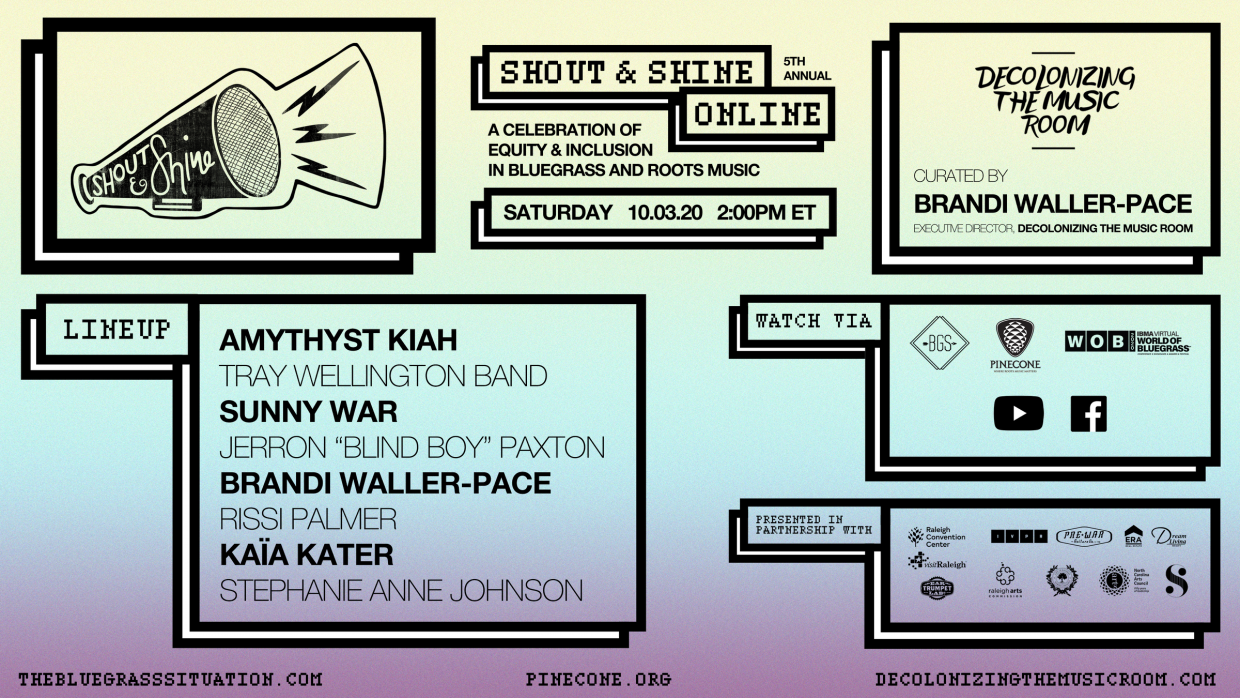
The Bluegrass Situation will proudly present our fifth annual Shout & Shine Online on Saturday, October 3rd at 2pm ET. And at press time, 30 artists have also been confirmed for a series of showcases known as the Bluegrass Ramble.

The virtual music festival IBMA Bluegrass Live! powered by PNC, will take place Oct. 2-3. Special performances by The Travelin’ McCourys with special guest Del McCoury; Steep Canyon Rangers; Jerry Douglas & Odessa Settles; Sierra Hull & Molly Tuttle are just some of the highlights that bluegrass fans can look forward to.


In addition, PNC Bank is boosting its support for the IBMA and bluegrass artists experiencing financial hardship due to pandemic-related performance cancellations. PNC Bank, the presenting sponsor of IBMA Bluegrass Live! powered by PNC, has announced it will match all 2020 donations made to the IBMA organization and the IBMA Trust Fund, for a total up to $50,000. (Donate now.)

IBMA is the nonprofit professional organization for the global bluegrass music community — connecting, educating and empowering bluegrass professionals and enthusiasts while honoring tradition and encouraging innovation worldwide. The organization has suffered financially this year due to pandemic-related health precautions that are preventing the IBMA World of Bluegrass event from being held in Raleigh, N.C. The IBMA Trust Fund, which is administered by IBMA, was established in 1987 as a means to offer emergency financial assistance to bluegrass music professionals. In 2020, requests for assistance have increased tenfold due in large part to COVID-19.

As the presenting sponsor of IBMA Bluegrass Live! powered by PNC since 2013, PNC Bank has helped bring bluegrass music and culture to Raleigh for what has become one of the city’s most beloved live, free events. While IBMA Bluegrass Live! powered by PNC cannot be presented as an in-person event in 2020, PNC remains committed to supporting this event and community tradition by helping deliver bluegrass programming in a virtual setting, Oct. 2-3.

Donations may be made online; additionally, those registering for the free IBMA Virtual World of Bluegrass Music Pass have the opportunity to make a donation during the online registration process. The Music Pass includes access to all music performances during the week, including IBMA Bluegrass Live! powered by PNC, the IBMA Bluegrass Music Awards presented by Count On Me NC, and IBMA Bluegrass Ramble presented by Count On Me NC.